Article

Candidate Key Proteins in Thalamo-Amygdala Signaling in Tinnitus: A Bioinformatics Study

1
Tinnitus Center, Charité-Universitätsmedizin Berlin, 10117 Berlin, Germany
2
Leibniz Society of Science Berlin, 10117 Berlin, Germany
3
Department of Otolaryngology, Head and Neck Surgery, Tübingen Hearing Research Center (THRC), Molecular Physiology of Hearing, University of Tübingen, 72076 Tübingen, Germany
*
Author to whom correspondence should be addressed.
Int. J. Mol. Sci. 2026, 27(4), 1854; https://doi.org/10.3390/ijms27041854
Submission received: 24 November 2025 / Revised: 9 February 2026 / Accepted: 11 February 2026 / Published: 14 February 2026
(This article belongs to the Special Issue New Insights into Neuroproteins)

Abstract

With the aim of identifying key proteins that play a role in the disorder tinnitus, interactions between proteins involved in thalamo-amygdala signaling under conditions of normal hearing (NH), acoustic stimulation (AS), and tinnitus (Tin) were studied. Three gene lists compiled from the GeneCards database using keywords were characterized by analyses of overlap, protein–protein interaction (PPI) networks, and by protein-enrichment analysis. Key proteins were selected on the basis of the degree and combined score value of the corresponding PPI network. In the NH process, BDNF, CASP3, and PVALB were identified as high-degree proteins (HDPs). In the AS process, BDNF, PVALB, and DLG4 are the top three HDPs; in the Tin process, these are BDNF, APP, and TNF. In the Tin process, key proteins appear that differ pre- and postsynaptically from those detectable in NH or AS. The glucocorticoid receptor NR3C1 and its interaction with FKBP5, a glucocorticoid receptor-induced co-chaperone, appear to be of particular importance for the emotional aspects of tinnitus. In tinnitus, the HDPs, together with their high-score interaction proteins, indicate processes of chronic neurodegeneration and of changes in transcription, intercellular communication, and in the survival and growth of neurons.

1. Introduction

Tinnitus is the perception of sound (ringing, buzzing, hissing, etc.) in the ears or head without any external sound source; it is often a symptom of other issues, such as hearing loss or exposure to ototoxic medications, and is often associated with emotional dysfunction [1,2,3]. In about 1–5% of patients, tinnitus leads to emotional distress or cognitive dysfunction or interferes with daily life; this condition is termed tinnitus disorder. Around 10–20% of people with tinnitus experience a significant impact on their quality of life, often accompanied by anxiety, depression, or insomnia [4,5,6].
Several brain centers are involved in the acoustic signaling pathway from the cochlea to the cortex [7,8,9,10]. Sound waves are transformed into neural signals by hair cells in the Organ of Corti. These signals are carried via spiral ganglion neurons and their axons, forming the cochlear nerve, to the cochlear nuclei in the brainstem, the first central relay station. Signals are decoded for the sound frequency, level, and duration and transferred to the thalamus via the inferior colliculus (midbrain), a major integration center for auditory information.
The thalamus, specifically the medial geniculate body (MGB), is the main thalamic relay center for auditory information [11,12,13,14]. It refines and integrates signals before sending them to the cortex and other centers. Key functions of the thalamus in auditory perception are to transform sound for conscious perception. The MGB maintains dynamic communication loops with the auditory cortex in the form of the thalamocortical circuitry [15,16]. These loops support predictive coding and focus attention on important signals [17]. The MGB is highly plastic; changes in bottom-up signaling have been linked to tinnitus, where altered functional connectivity influences sound perception [18,19].
The amygdala is central to processing emotions like fear, anxiety, and stress, and it plays an important role in the emotional dimension of tinnitus. Tinnitus is being increasingly understood not just as an auditory issue but as a disorder involving the limbic system, which includes the amygdala [6,20,21]. The limbic system is involved in emotional responses, and its increased activity can amplify the perceived severity of tinnitus. Studies using fMRI have shown that compared to controls, people with chronic tinnitus may have reduced amygdala activation in response to emotionally evocative sounds [22,23]. This suggests a kind of neural adaptation, possibly to avoid constant emotional overload from the persistent phantom noise. Interestingly, the distress caused by tinnitus often correlates more strongly with limbic system activity than with the actual loudness of the sound [13,19,24].
While direct studies on this specific signaling route in tinnitus are still emerging, bioinformatics has already proven its worth in identifying key proteins and biological processes in related brain regions such as the thalamus and auditory system [25,26,27]. Databases like STRING (Search Tool for the Retrieval of Interacting Genes) and Cytoscape 3.9.1 help analyze and visualize how proteins interact via protein–protein interaction networks (PPI) in tinnitus-affected regions. This can highlight key proteins that may regulate synaptic transmission or neuroplasticity. Databases like DAVID (Database for Annotation, Visualization, and Integrated Discovery) and GeneCards (GC) allow researchers to identify biological processes via Gene Ontology (GO) enrichment analyses that are also relevant for understanding tinnitus. For diagnostics and therapy, it is important to understand the molecular processes in thalamo-amygdala signaling [28,29]. Bioinformatic analysis may illuminate which proteins contribute significantly to thalamo-amygdala signaling in tinnitus.

2. Results

2.1. Gene Lists Under Normal Hearing, Acoustic Stimulation, and Tinnitus

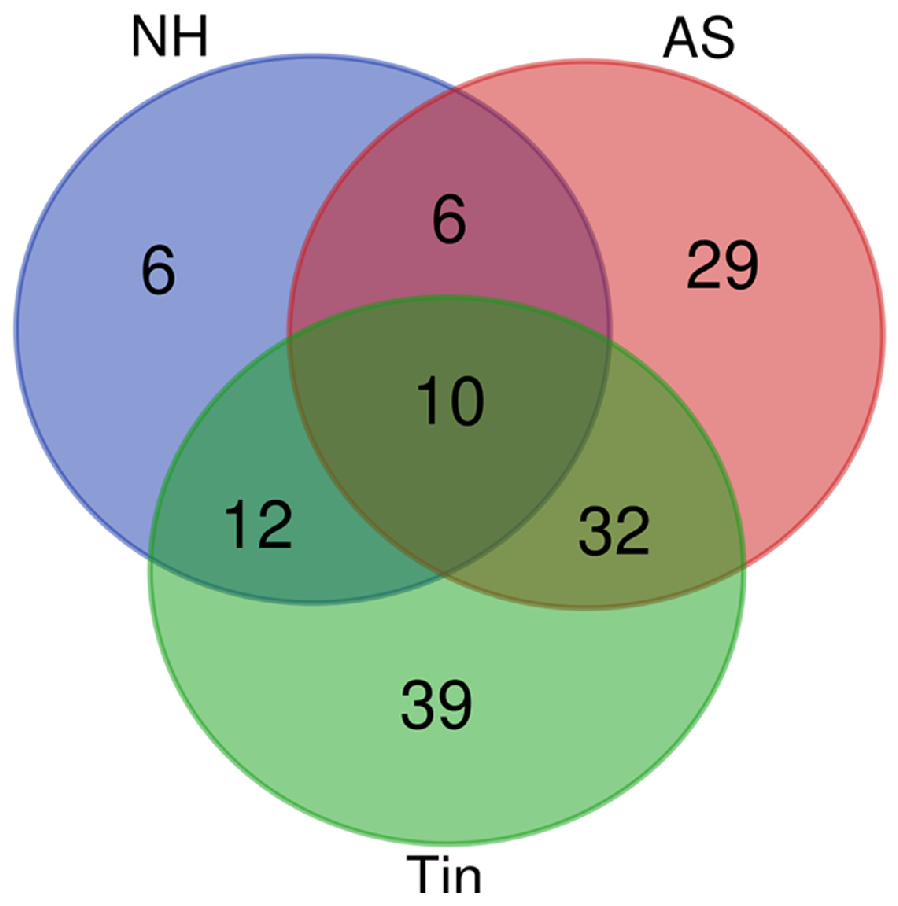
The number of genes involved in synaptic activity differs for normal hearing (NH, n = 34), acoustic stimulation (AS, n = 77), and tinnitus (Tin, n = 93), most probably limited by the current state of knowledge. The Venn diagram (Figure 1) indicates a remarkable overlap: 32 genes are present in the AS and Tin processes, indicating a clear overlap between them. The ten genes that belong to all three processes play an important role in the following aspects of synaptic activity: (a). BDNF-AS, BDNF, DLG4 and SLC6A4 are involved in synaptic transmission and plasticity. BDNF-AS is a long, non-coding RNA that suppresses BDNF transcription, with the consequence of potentially reducing synaptic transmission. Inhibition of BDNF-AS increases BDNF mRNA and activates neuronal development and differentiation. BDNF is a key protein in synaptic transmission and plasticity in the central nervous system, including in the auditory thalamus [30,31]. Both BDNF and BDNF-AS play important roles in the auditory pathway [32]. DLG4 (discs large MAGUK scaffold protein 4, PSD 95) is a postsynaptic scaffolding protein; it anchors NMDA and AMPA receptors and thus regulates excitatory synaptic strength and plasticity at glutamatergic synapses [33]. SLC6A4 is a serotonin transporter that influences serotonin levels in the synaptic cleft; it regulates serotonin reuptake and thus affects neurotransmission in the auditory thalamic circuits. The serotonin (5-HT) system seems to be a key regulator of emotional behavior in the amygdala [34]. It modulates circuits involved in mood, cognition, movement, arousal, and autonomic function [35]. (b). KCNH2 (ERG1; voltage-gated K+ channel) and CACNA1A (voltage-gated calcium channel) influence membrane excitability, firing patterns, and synaptic integration [36,37,38]. (c). IGF1, APOE, CASP3 and NR3C1 are expressed in normally functioning neurons and are important proteins in synaptic plasticity [39,40,41,42]. Specifically, IGF-1 (insulin-like growth factor 1) is a powerful regulator of synaptic activity, and a deficit in this protein has a profound impact on neurotransmission, mostly on excitatory synapses in both the developing and mature auditory system [39]. ApoE transports cholesterol and other lipids in the brain; it is mainly synthesized by astrocytes. ApoE is involved in several neuropathological changes such as neurogenesis and the modulation of synaptic plasticity [36,43]. CASP3 has been recognized as an “apoptotic” protein; however, in nervous tissue, it may be involved in important cellular processes not necessarily related to cell death. A concept on a new mechanism of synaptic plasticity modulation involving caspase-3 has been formulated, postulating a specific role of CASP3 in normal brain functioning [42]. NR3C1 is a glucocorticoid receptor responsible for stress-hormone signaling; it may affect auditory sensitivity and auditory learning. Altered NR3C1 expression has been observed in hearing disorders [44].

2.2. Networks and Key Proteins of Synaptic Activity Proteins

The structure of the three networks (NH, AS, and Tin;) is well reflected in the topological criteria (Table 1); they correspond to heterogenous (scale-free) networks of different sizes. Nodes and edges increase markedly from NH to AS to Tin, suggesting the progressive recruitment and integration of other proteins. Characteristic path length decreases in AS and Tin compared to NH, and the clustering coefficient rises from NH to Tin, suggesting increased local connectivity. The Tin network appears larger and more tightly clustered than the NH network.
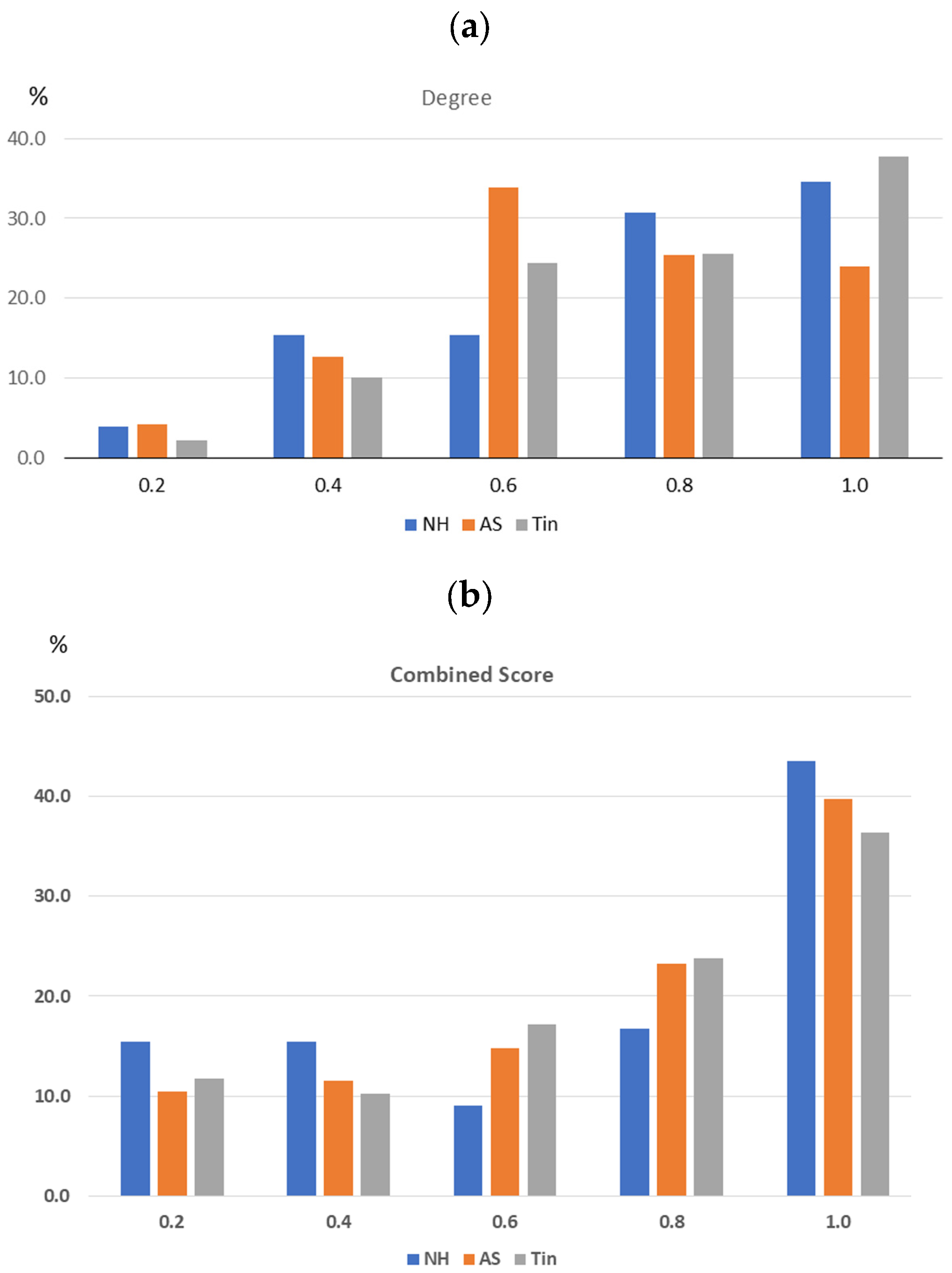
Proteins with high-degree values (HDPs) and their high-score interaction proteins (HSIPs) are regarded as functionally important proteins in a PPI network, because they either connect many other proteins or indicate critical interaction paths. The combined score (CS) was used as an indicator for the HSIPs, because it integrates multiple types of evidence (experimental, curated, text mining, etc.) and is, for us, the most plausible criterion to obtain clinically important insights into the complex regulatory mechanisms characteristic of tinnitus. To select critical values for the HDPs and the HSIPs, we analyzed the frequency distribution of the degree and combined score (CS) values, creating five classes ranging from 0.2 to 1.0 (class 0.2 corresponds to the highest 20% of values of degree and CS) (Figure 2). Degree values increase steadily with class level, whereas the CS values are not as tightly coupled to the CS class. Correlation analysis indicates a moderate positive linear relationship between the two variables (Pearson correlation coefficient (r): 0.59, p-value = 0.02). The 0.2 quantile class of degrees corresponds to one (NH), three (AS) and two (Tin) proteins; the 0.2 quantile class of interactions corresponds to 12 (NH), 79 (AS), and 124 interactions. To limit the study, we selected the top three HDPs and their HSIPs with a CS value > 90th percentile as key proteins (Table 2). In previous work, we showed that the top two to three HDPs with their HSIPs can be used as key proteins indicating important biological functions [26].
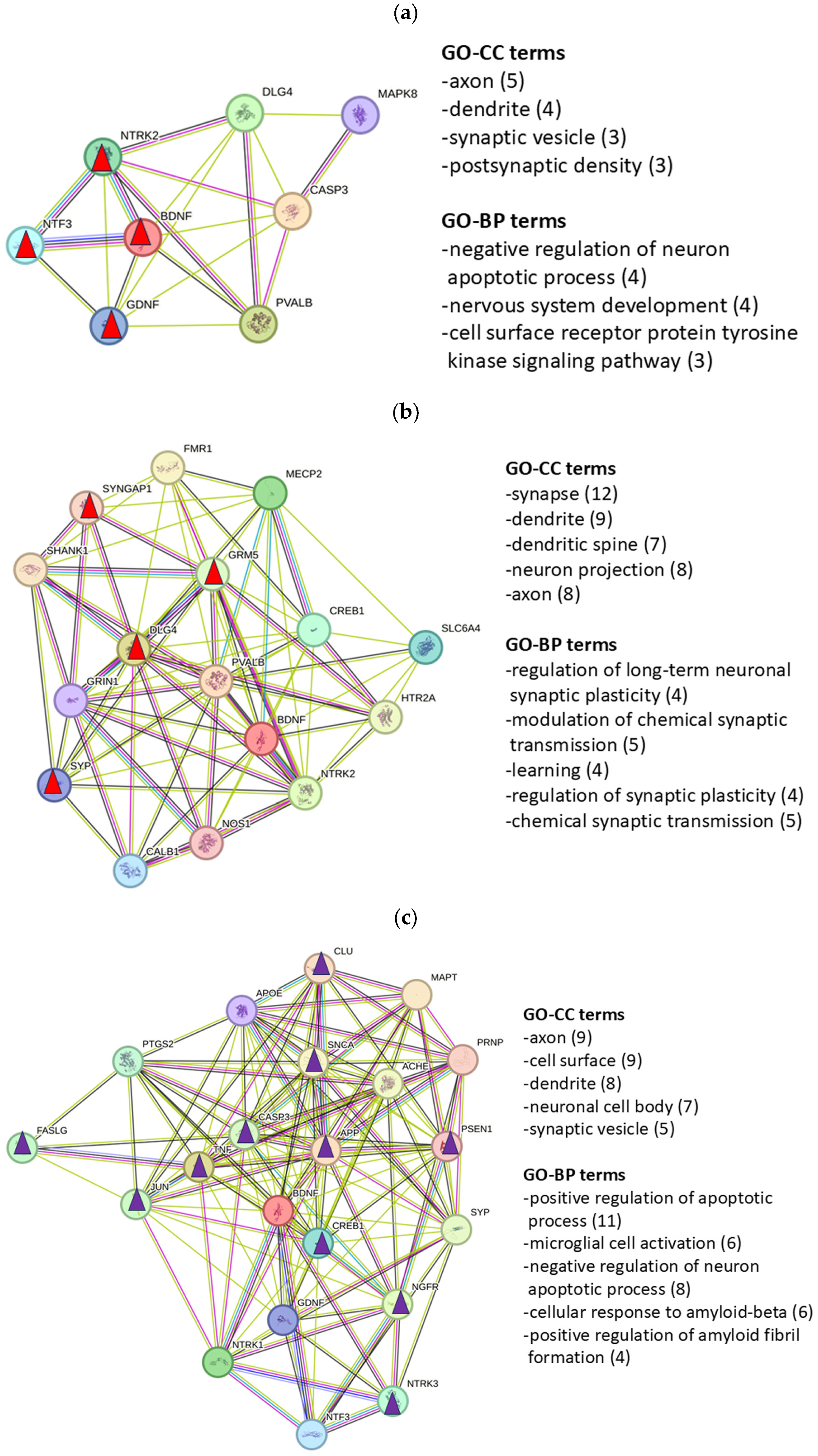
In the NH process, BDNF, CASP3 and PVALB appear as the top three HDPs, respectively (Table 2). BDNF (brain-derived neurotrophic factor) is an important growth factor in the CNS. It regulates fundamental processes such as growth, differentiation, synaptic transmission, synaptic plasticity, and neuronal survival under normal and pathological conditions. In the auditory system, BDNF interacts closely with NTRK2 (neurotrophic receptor tyrosine kinase 2, TrkB) and GDNF (glial cell line-derived neurotrophic factor). The binding of BDNF to NTRK2 initiates intracellular signaling cascades in the MAPK, PI3K/Akt, and PLCγ pathways and strongly influences synaptic transmission and plasticity. GDNF supports synaptic maintenance, function, and plasticity. CASP3 (caspase 3) can play an important non-apoptotic role in synaptic transmission, and it is now recognized as a regulator of synaptic plasticity [42,43,45]. It interacts closely with MAPK8, a member of the MAP kinase family [46]. CASP3 can be active at synapses without killing the neuron, influencing transmission by modifying receptors and structural proteins. MAP kinases are involved in a wide variety of cellular processes, such as proliferation, differentiation, the regulation of transcription, and development. This kinase is activated by various cellular stimuli and targets specific transcription factors; it thus mediates immediate-early gene expression in response to cell stimuli. PVALB (Parvalbumin) is a calcium buffer in fast-spiking interneurons. It regulates intracellular calcium levels during neuronal firing and plays an important role in normal synaptic transmission [47].
In the AS process, BDNF, PVALB and DLG4 appear as the top three proteins, respectively. Similarly to the NH process, BDNF interacts closely with NTRK2 and, in addition, with MECP2 (methyl-CpG binding protein 2, epigenetic regulator), CREB1 (cAMP responsive element binding protein 1, transcription factor), and SLC6A4 (solute carrier family 6 member 4, serotonin transporter). PVALB interacts closely with CALB1, and both proteins are markers of inhibitory GABAergic neurons [38]. DLG4 (discs large MAGUK scaffold protein 4) interacts closely with SYP (Synaptophysin) and GRIN1 (glutamate ionotropic receptor NMDA type subunit 1), which is central to synaptic plasticity and long-term potentiation (LTP) [48]. NOS1 (nitric oxide synthase 1) produces NO as a retrograde messenger and is involved in synaptic plasticity and LTP [49]. SYNGAP1 is a GTPase-activating protein and is involved in the regulation of synaptic plasticity and neuronal excitability [50]. SHANK1 (SH3 and multiple ankyrin repeat domains 1) is a scaffolding protein, particularly at the postsynaptic density at glutamatergic synapses [51]. FMR1 (fragile X messenger ribonucleoprotein 1) is a multifunctional RNA-binding protein and is important for synaptic plasticity [52]. The serotonin receptor HTR2A (5-hydroxytryptamine receptor 2A) is involved in presynaptic modulation of chemical synaptic transmission, and GRM5 (glutamate metabotropic receptor 5) is a metabotropic glutamate receptor, whose signaling activates a phosphatidylinositol–calcium second messenger system; both play an important role in schizophrenia [53].
In the Tin process, BDNF, APP and TNF appear as the top three proteins, respectively. BDNF interacts closely with NTRK1, NTRK3, and, in addition, with CREB1, NTF3 (neurotrophin 3) and GDNF (glial cell line-derived neurotrophic factor). APP (amyloid precursor protein) regulates synapse formation and plasticity and is involved in Alzheimer’s disease [54,55]. APP interacts closely with ten proteins that participate in diverse biological pathways, including those implicated in neurodegenerative disease mechanisms [54]. TNF (tumor necrosis factor) interacts closely with JUN, FASLG, CASP3 and PTGS2. TNF is a multifunctional proinflammatory cytokine; it is released by glia and, in some cases, by neurons and can influence homeostatic plasticity by increasing the AMPA receptor content at excitatory synapses and decreasing the GABAA receptor content at inhibitory synapses [56]. FASLG (Fas ligand) is a TNF superfamily ligand that binds Fas (CD95); the primary function of this transmembrane protein is the induction of apoptosis triggered by binding to FAS [57]. FASLG activation of Fas receptors on neurons and glia can trigger apoptotic cascades via caspase-3. Low activation levels of CASP3 can modify cytoskeletal and scaffold proteins and can prune synapses and spines [58]. The prostaglandin synthase PTGS2 (COX-2) is upregulated in neuroinflammatory states and modulates neuroinflammation and cognitive dysfunction [59].
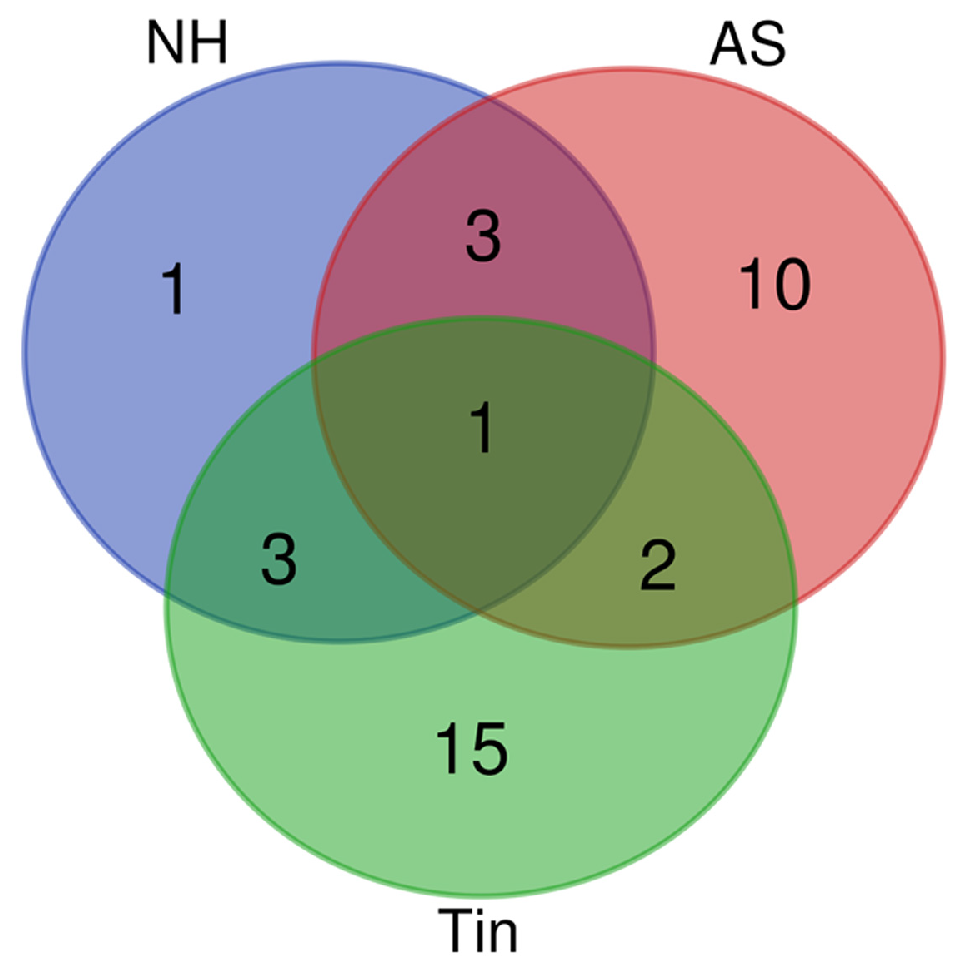
In contrast to the multiple overlaps seen in the complete gene lists, the overlap of key proteins between NH, AS, and Tin in the Venn diagram is low, indicating that these proteins are specific to the respective processes. Only two proteins (SYP and CREB1) overlap between AS and Tin processes (Figure 3).

2.3. Genes Related to Cellular Components and Biological Processes in Normal Hearing, Acoustic Stimulation, and Tinnitus

To characterize the functional role of the genes and proteins present in the complete GC lists (Appendix A, Table A1) and the key protein lists (Table 2), we used the DAVID database for assignment of the enrichment of Gene Ontology terms for cellular components (CCs) and biological processes (BPs; Table 3 and Figure 4; Fisher’s test p < 0.01 and Benjamini–Hochberg p-value < 0.05). The cellular structures correspond in NH, AS, and Tin to GO-CC terms that characterize synaptic components involved in the hearing process. The GO-BP terms that characterize biological functions show clear differences in NH, AS, and Tin. The term “cellular response to amyloid-beta” in NH is unexpected; this GO term could reflect the diverse physiological functions of amyloid-beta, including its role in modulating synaptic transmission [60].

2.4. Networks of Key Proteins and Their Biological Processes in NH, AS, and Tin

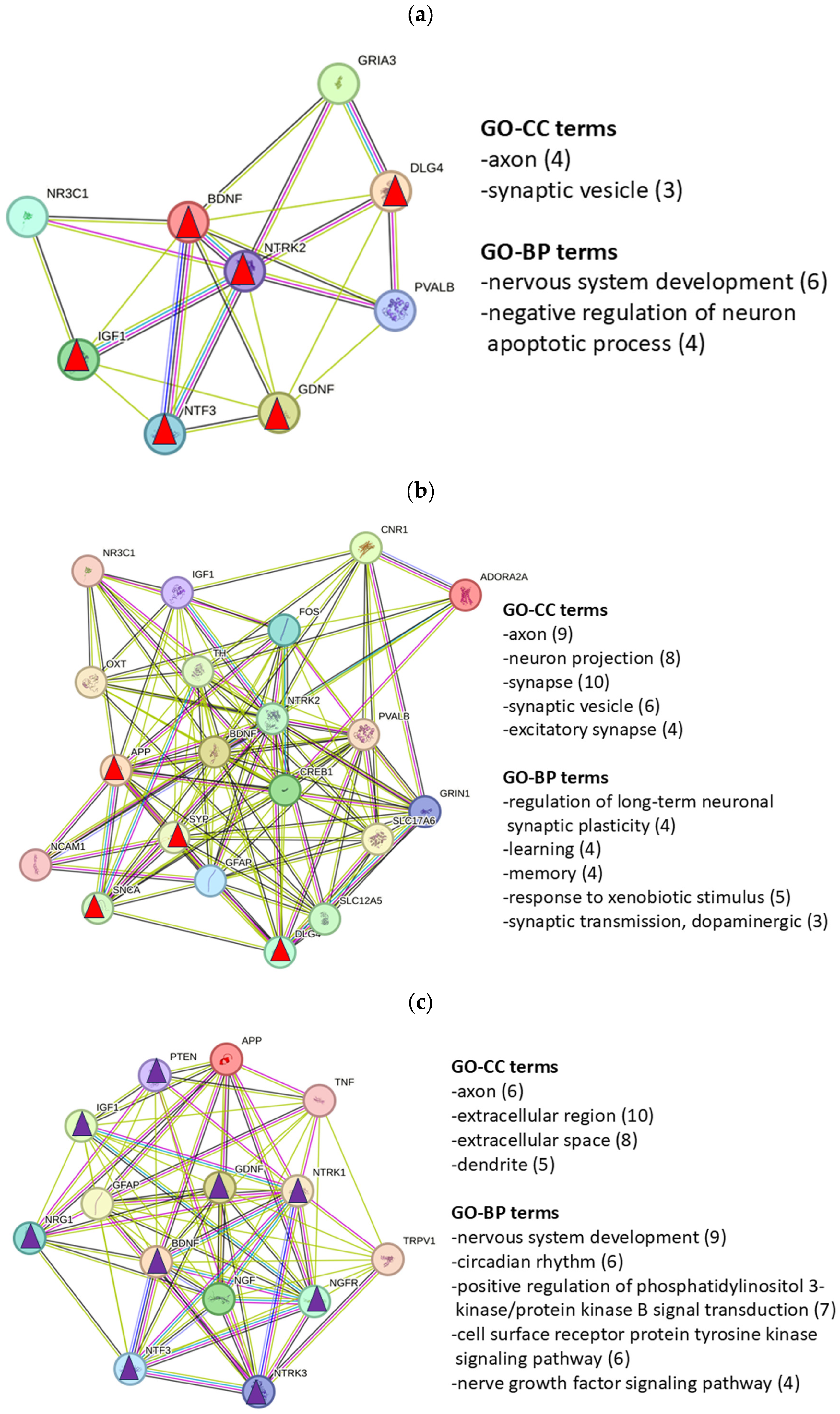
To characterize the relevance of key proteins, the networks (NWs) of key proteins were constructed and the associated GO enrichment terms were determined (Figure 4a–c). The GO terms are partly identical to those of the complete networks (Table 3) but they partly differ in the sense of specifying the processes. The NH-NW (Figure 4a) corresponds to GO terms indicating protective and developmental processes important for normal functioning of the auditory system. The AS-NW (Figure 4b) comprises significantly more proteins than the NH-NW; the proteins of this NW correspond to GO terms such as “regulation of long-term neuronal synaptic plasticity” and “modulation of chemical synaptic transmission”, terms that are associated with adaptive processes to acoustic stimulation. The Tin-NW (Figure 4c) includes even more proteins than the AS-NW and focuses in particular on processes of apoptosis regulation and microglial cell activation.

2.5. NTRK2-, NTRK1- and NTRK3-Specific Networks Among NH, AS and Tin

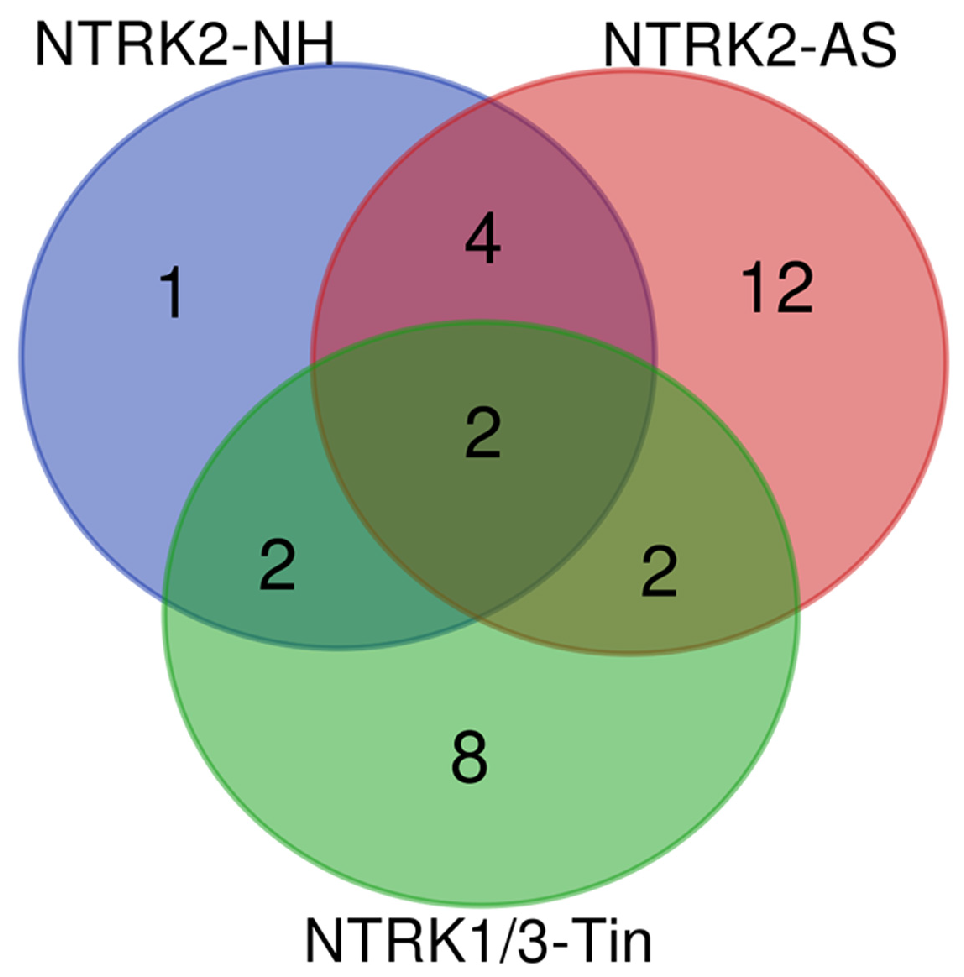
It is remarkable that NTRK2 is an important key protein in NH and AS processes but not in the Tin process; instead, NTRK1 and NTRK3 (NTRK1/3) play the dominant neurotrophic role, probably indicating unchanged NTRK2 activity compared to NH. Thus, we analyzed important protein interactions (CS value > median) of NTRK2 in NH and AS and the interactions of NTRK1/3 in Tin. Two proteins, BDNF and IGF1, interact with NTRK1, NTRK2, and NTRK3 (Figure 5). The Venn diagram also shows that NTRK1/2/3 interact in NH, AS, and Tin with different proteins.
PPI networks of NTRK2 in the NH and AS processes and the network of NTRK1/3 in Tin were constructed to illustrate the interactions for characteristic GO terms. In the center of the NTRK2-associated NH and AS networks, BDNF and NTRK2 appear, and both show identical degree values (Figure 6a,b; NH–8 degrees; AS—19 degrees). In the center of the NTRK1/3 Tin network, BDNF, NGF, NTRK1 and GFAP appear, also with identical degree values (Figure 6c; 16 degrees).
The assignment of GO terms of the NTRK2-NWs and of the NTRK1/3-NW interacting proteins overlaps with the terms identified from the corresponding complete gene list and key protein list (Table 3 and Figure 4). Remarkably, the term “nervous system development” is associated with six genes in the NTRK2-NH network (BDNF, DLG4, GDNF, IGF1, NTRK2, and NTF3) and nine genes in the NTRK1/3-Tin network (instead of DLG4 and NTRK2, the genes NGFR, NRG1, NTRK1, NTRK3, and PTEN).

3. Discussion

Characterizing and quantifying protein–protein interactions within PPI networks associated with NH, AS, and Tin can provide valuable insights into the molecular mechanisms that influence tinnitus pathogenesis. Proteins (nodes) that have a particularly large number of connections (degrees) to other proteins and their high-score interaction proteins, together named key proteins, appear to play a special role in the molecular mechanism of biological processes. The analyses of appropriate protein lists using a combination of PPI networks and the enrichment analyses of the complete GC lists and key protein lists allows for predictions about key proteins that are involved in tinnitus.

3.1. PPI Networks and Their Topological Constants

The different numbers of proteins available for NH, AS, and Tin lead to networks of different sizes (Appendix A, Table A1). Comparing the topological constants of the NH, AS, and Tin networks reveals notable changes associated with tinnitus. The characteristic path length decreases in Tin compared to NH, implying the integration of new proteins and more efficient communication across the network through shorter average paths; this may reflect heightened synchrony or hyperactivity. The clustering coefficient increases in Tin relative to NH, indicating stronger local connectivity and suggesting the emergence of additional functional modules or feedback loops. This pattern suggests that Tin relies more on parallel processing rather than the hierarchical control observed in NH, where BDNF and NTRK2 emerge as the dominant single-node regulators.

3.2. GO Enrichment Analysis

GO enrichment analysis helps to identify biological processes, molecular functions, or cellular components in gene or protein lists. The results of the GO enrichment analyses of the complete GC gene list and the key protein list indicate similarities but also differences (Table 3 and Figure 4). The GO-CC terms of the NH, AS, and Tin complete protein lists indicate the important role of axons, synapses, and dendrites without characteristic differences between the three processes. In contrast, clear differences are observed in the GO-BP processes between NH, AS, and Tin. In NH (GC list), processes like the “cellular response to amyloid-beta” and “negative regulation of apoptotic processes,” appear, whereas in AS, the GO-BP terms “response to xenobiotic stimulus” and “locomotor behavior” appear, changes which could be induced by acoustic stimulation. In addition, the key protein list indicates more specific GO-BP terms such as “regulation of long-term neuronal synaptic plasticity” and “modulation of chemical synaptic transmission,” cellular activities induced by acoustic stimulation. The GO-BP terms associated with tinnitus show processes present in the NH (“cellular response to amyloid-beta”) and AS processes (“response to xenobiotic stimulus”) but also the GO-BP “positive regulation of apoptotic process” (in contrast to the term “negative regulation of apoptotic process” in NH). As a highly significant GO-BP process, the GO-BP term “microglial cell activation” appears in the key protein list and includes the proteins JUN (Jun proto-oncogene), AP-1 transcription factor subunit, APP (amyloid-beta precursor protein), CLU (clusterin), MAPT (microtubule-associated protein tau), SNCA (synuclein alpha) and TNF (tumor necrosis factor). Each of these proteins plays a distinct role in pathophysiological processes like neurodegeneration, inflammation, and cellular stress responses [61].

3.3. Role of NTRK1 and NTRK3 for Tin Networks

The present study suggests that in synaptic transmission under normal conditions, BDNF interacts primarily with NTRK2 and, under Tin conditions, primarily with NTRK1 and NTRK3. NTRK2 is the high-affinity receptor for BDNF, and under normal physiological conditions, this is the dominant signaling pathway. Under these conditions, BDNF has low or negligible affinity for NTRK1 (TrkA) and NTRK3 (TrkC) [62]. These receptors primarily bind other neurotrophins with high activity: NTRK1 shows high affinity for NGF (nerve growth factor) and NTRK3 shows high affinity for NT-3 (neurotrophin-3) [63,64]. The absence of NTRK2 and the presence of NTRK1 and NTRK3 in the Tin gene lists lead to the assumption of a special role for NTRK1 and NTRK3 in the Tin process (Figure 6). Overactivation of NTRK pathways has been implicated in neurological disorders such as epilepsy and in some neurodevelopmental conditions [65]. In the thalamus, this could manifest as abnormal rhythmic activity or sensory misprocessing. Both neurotrophins interact in tinnitus with NGF, NTF3, NRG1, and PTEN (Figure 6c). In the thalamo-amygdala signaling context, these interactions may influence the survival and connectivity of sensory neurons projecting from the thalamus to the amygdala, and NTF3 and NTRK3 may fine-tune synaptic strength and axonal targeting in this circuit [66,67,68,69]. In the NTRK1/NTRK3 network (Figure 6c), the proteins NGF, BDNF, NTRK1, NRG1, IGF1, NTF3, and GDNF show similar high-degree values. It may be that under these overlapping and dysregulated conditions of expression or activities of growth and neurotrophic factors, significant changes in synaptic activity and plasticity follow [5,70,71,72].
Of special interest is the appearance of APP (second highest HDP in Tin) and TRPV1 (transient receptor potential vanilloid 1) in the NTRK1/3 network. APP (amyloid precursor protein) is best known for its link to Alzheimer’s disease and is involved in neurite outgrowth, synaptogenesis, and synaptic stabilization [73]. Cleavage products of APP were used as neurotrauma biomarkers among military and law enforcement personnel exposed to occupational overpressure [74]. APP and its cleavage products may modulate synaptic transmission and plasticity. TRPV1 is a nonselective cation channel activated by capsaicin and endogenous lipids [75,76]. It can regulate neurotransmitter release at presynaptic terminals and affect postsynaptic excitability. TRPV1 is expressed in the amygdala and may modulate emotional responses by altering synaptic strength in thalamo-amygdala circuits.

3.4. Role of Key Proteins in Thalamo-Amygdala Signaling in NH, AS and Tin

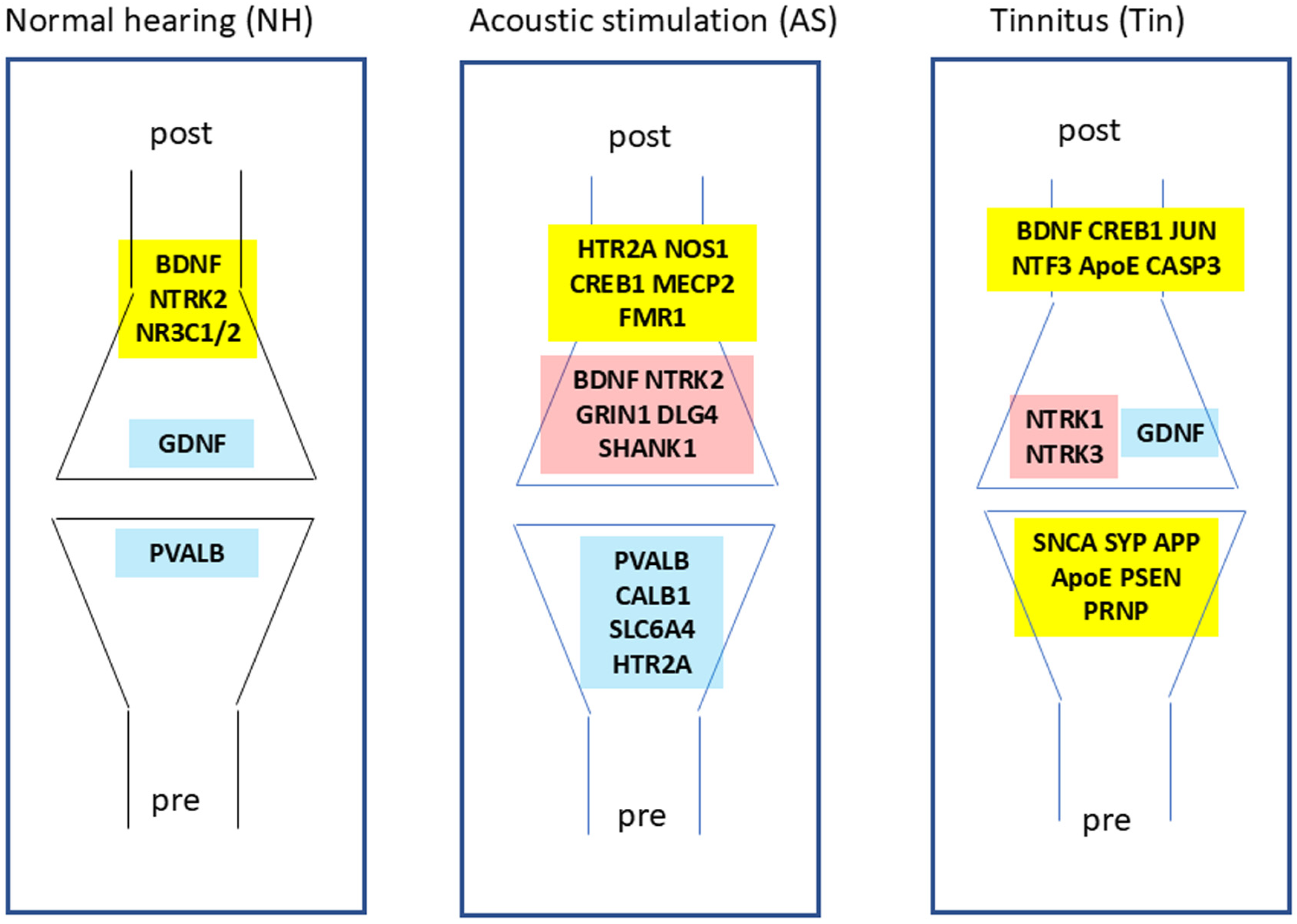
Because key proteins appear to be indicators of important biological processes, we analyzed their distribution at the pre- and postsynaptic level of the synapse (Figure 7). In the NH process, PVALB (Parvalbumin) appears in the presynapse; it is a calcium-binding protein in fast-spiking GABAergic interneurons and regulates timing and inhibition in amygdala circuits [47]. PVALB interneurons gate thalamic sensory input to the amygdala, ensuring precise timing and preventing overexcitation. At the postsynaptic site, proteins appear that play an important role in the thalamo-amygdala pathway: BDNF/NTRK2 signaling enhances LTP in the lateral amygdala and is crucial for the learning of fear [77,78]. GDNF supports the survival of the GABAergic neurons responsible for inhibitory tone in the amygdala [79]; it may thus help maintain inhibitory balance, preventing hyperactivation of the amygdala in response to benign stimuli.
In the AS process, PVALB, CALB1, SLC6A4, and HTR2A appear in the presynapse. Similarly to the NH process, PVALB and CALB1 (Calbindin) act as calcium buffers that modulate excitability and protect neurons from calcium overload [47,80]. PVALB may ensure fast, inhibitory control over excitatory inputs, and CALB1 stabilizes calcium signaling for consistent neurotransmission. SLC6A4 (serotonin transporter) and HTR2A (5-hydroxytryptamine receptor 2A) mediate serotonin signaling, which enhances neural plasticity and affects sensitivity to environmental cues. SLC6A4 controls the serotonin reuptake at presynaptic terminals, clears serotonin from the synaptic cleft, and modulates serotonergic tone and presynaptic excitability in thalamic and amygdala circuits [81]. In the postsynapse, BDNF, NTRK2, GRIN1, DLG4, and SHANK1 appear as primarily excitatory key proteins [20,82,83]. Carrying out modulating functions within the thalamo-amygdala pathway are the key proteins NOS1, CREB1, MECP2, and FMR1 [84,85,86,87]. Together, these proteins can play an important role in the transmission and modulation of acoustic signals from the thalamus to the amygdala, influencing fear, anxiety, and emotion.
In the Tin process, key proteins that appear pre- and postsynaptically differ clearly from those detectable in NH or AS. At the presynaptic site, the proteins SNCA, SYP, APP, ApoE, PSEN and PRNP are active (Figure 7). SNCA (alpha-synuclein) and SYP (synaptophysin) are synaptic vesicle membrane proteins and are involved in the modulation of chemical synaptic transmission. APP (amyloid-beta precursor protein) is a cell-surface receptor and transmembrane precursor protein that is cleaved by secretases to form a number of peptides. ApoE (apolipoprotein) is associated with high-density lipoproteins (HDLs), and both APP and ApoE influence synapse formation and synapse organization. Both are integral components of the presynaptic membrane and contribute to the regulation of the synaptic vesicle cycle. PSEN (presenilin 1/2) is part of the γ-secretase complex that is involved in APP cleavage [55]. PRNP (prion protein) is involved in neurotransmission and plasticity [88,89]. The proteins APP, ApoE, and PSEN1 correspond in GO enrichment analysis to the biological processes “positive regulation of amyloid fibril formation” and “response to oxidative stress”. Together, these proteins indicate changes in the vesicle membrane proteins at the bases of neurodegenerative processes [90,91].
On the postsynaptic level, proteins appear that are involved in several regulatory networks. BDNF, NTRK1/3, and CREB1 proteins are involved in activity-dependent gene expression and synaptic strengthening; NTRK3 is an integral component of the postsynaptic membrane and is involved in the regulation of synaptic assembly. GDNF (glial cell line-derived neurotrophic factor) maintains inhibitory balance, preventing hyperactivation of the amygdala in response to excitatory stimuli. GDNF is also an important trophic factor essential for the survival of neurons [92]. The role of NTF3 is less clear. Following auditory deprivation of adult rats, changes in gene expression and interactions with specific gene promoters in the auditory cortex were observed [93]. The proteins BDNF, GDNF, MECP2, NTRK1, NTF3, and PSEN1 belong to the GO biological process “negative regulation of neuron apoptotic process”, and the proteins BDNF, NTRK1, NTRK3, and NTF3 belong to the term “cell-surface receptor protein tyrosine kinase signaling pathway”, indicating roles in neurogenesis and growth, transcription, and intercellular communication in tinnitus. Key proteins that are pre- and postsynaptically active indicate processes of chronic neurodegeneration in thalamo-amygdala signaling, which include the activation or the increase in the extent of amyloid fibril formation. Although the deposition of amyloid fibrils is a characteristic process in Alzheimer’s disease, amyloid formation is a normal process and it seems that the balance between amyloid formation and clearance in the thalamus is disrupted [73,74]. The aberrant signal transduction in the auditory centers in tinnitus and the imbalances in excitation and inhibition could induce excessive cell death, neurogenesis, and glia-supported neuroinflammation [91].

3.5. Role of Other Proteins in Thalamo-Amygdala Signaling

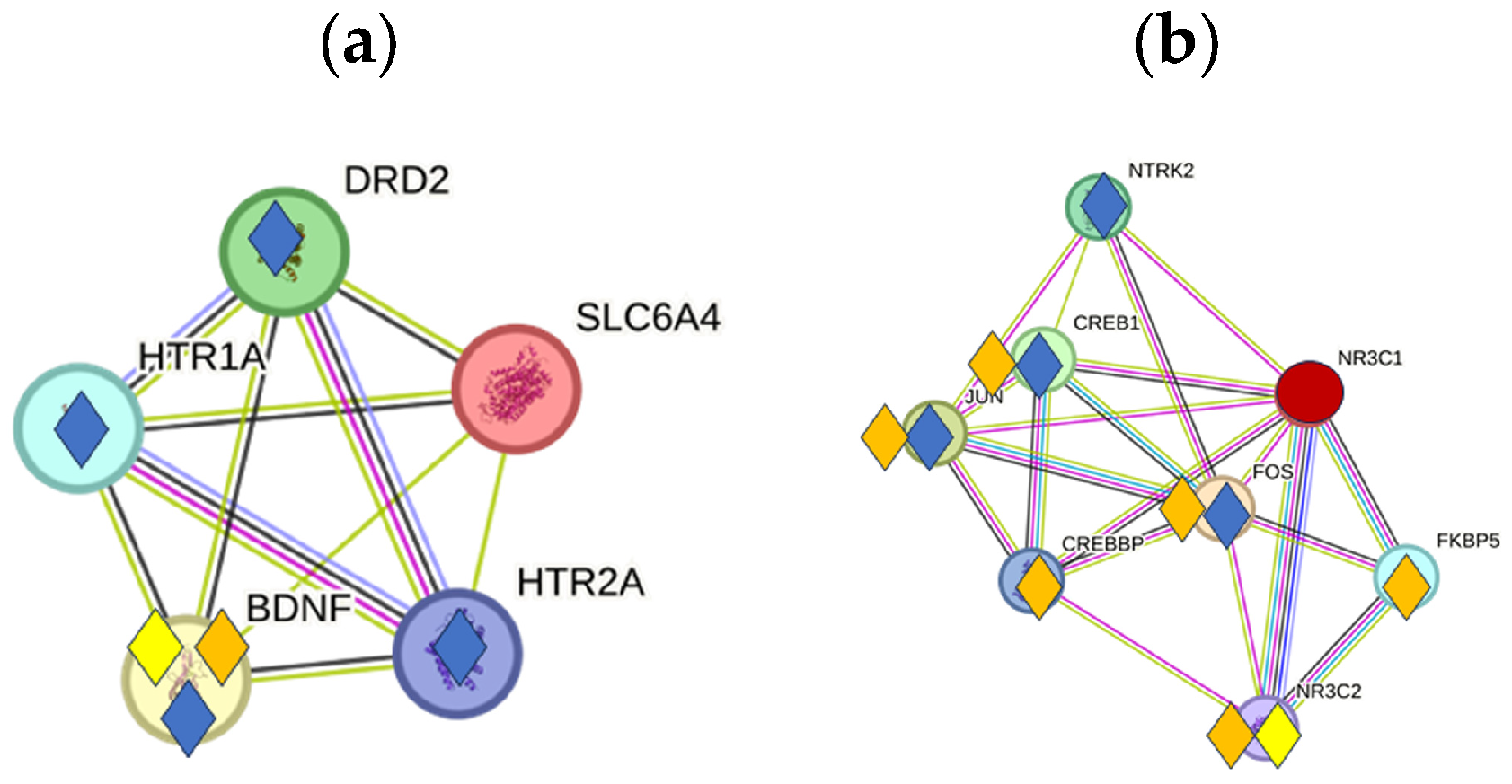
The genes SLC6A4, HTR2A, and NR3C1 may play a special role in the emotional aspect of acoustic signals and tinnitus in the thalamo-amygdala circuitry. SLC6A4 (serotonin transporter) and NR3C1 (glucocorticoid receptor gene) are present in all three GC lists, both with a relatively high GC score, indicating a role in hearing under normal, stimulated, and tinnitus conditions. HTR2A only appears in the AS-GC list (Appendix A, Table A1). Possible relationships between SLC6A4 and the psychological symptoms of tinnitus are inferred from the influence of 5-HTTLPR polymorphism and selective serotonin reuptake inhibitors (SSRIs) on cognitive function and tinnitus distress [94,95]. The interactions of SLC6A4 and NR3C1 with other proteins in the NH, AS, and Tin processes are shown in Figure 8a. SLC6A4 shows close associations with BDNF under all conditions, with DRD2 and HTR1A or HTR2A2A only in the AS process.
The glucocorticoid receptor NR3C1 is a key player in the brain’s response to stress via the hypothalamic–pituitary–adrenal axis. NR3C1 at the postsynaptic level likely mediates stress hormone effects and acts as a potent regulator of transcription in the thalamus–amygdala circuit [96,97]. NR3C1 and NR3C2 integrate hormonal signals with neural activity, modulate synaptic plasticity and gene expression in neurons, and influence excitability and stress reactivity [96,98]. It is noteworthy that NR3C1 is detectable in all three GC lists (Appendix A, Table A1, Table A2 and Table A3) with a relatively high GC score but not in the key protein list. A more detailed analysis shows that the interactions of NR3C1 with the identified HDPs are below the selected critical value for HSIPs (>90th percentile). Because of its relevance for stress and emotion, we analyzed the interactions of NR3C1 in a separate subnetwork (Figure 8b). Using the 90th percentile as the critical CS value, NR3C1 interacts in NH with NR3C2, in AS with NTRK2 and different transcription factors (CREB1, JUN, CREBBP, and FOS), and in the Tin process with these previously mentioned transcription factors, NR3C2 and the protein FKBP5 (FKBP prolyl isomerase 5). FKBP5 is a glucocorticoid receptor-induced co-chaperone that reduces glucocorticoid receptor sensitivity and shapes stress reactivity [99,100]. NR3C1-FKBP5 interactions are only present in the Tin list (Table A3) and could be of importance in the stress perception in tinnitus [101,102].
To the best of our knowledge, none of these genes or proteins (NR3C1, SLC6A4, and HTR2A) are currently confirmed as tinnitus-susceptibility genes by GWAS or case reports. However, these proteins are clearly involved in some pathophysiological processes (stress response, synaptic signaling, and neurotransmission pathways) of tinnitus. NR3C1 modulates stress hormone signaling. Recently, it was shown that in a tinnitus group experiencing panic attacks, consistently higher mean methylation values of NR3C1 were observed across all CpGs compared to the tinnitus-only and control groups [103]. SLC6A4 and HTR2A regulate serotonergic signaling in auditory pathways (dorsal cochlear nucleus and inferior colliculus), but no association between the psychoacoustic parameters of tinnitus and SLC6A4 polymorphism has been observed [104]. Clifford et al. [105] identified 39 tinnitus loci, among them SLC6A4 but also BDNF, GDNF and FOS, identified here as key proteins.
The molecular mechanisms of stress perception in tinnitus are complex and include other receptors and, in addition to the thalamus and amygdala, other brain regions (e.g., cortex and hippocampus) [106,107,108]. In the present analysis, the distribution of glutamate receptors differs between NH, AS, and Tin processes (Appendix A, Table A1). In NH, GRIA3 appears; it is a subunit of AMPA-type glutamate receptors that are crucial for fast excitatory neurotransmission in the brain. Due to its expression in both the thalamus and amygdala, its role in thalamo-amygdala signaling is particularly relevant. In the AS gene list, GRIN1 appears as a key protein, together with GRM5 and GRM1. The interaction between GRIN1 and GRM1/GRM5 facilitates the induction of LTP and long-term depression (LTD), key mechanisms underlying learning and memory [109,110]. In the Tin process, six glutamate receptors are present in the corresponding list: four glutamate receptors also present in the NH and AS processes (GRIA3, GRIN1, GRM1, and GRM5) and two glutamate receptors that were not observed in the NH and AS processes (GRIA2 and GRIN2A). None of these receptors appear in the Tin process as key proteins.
The results are in agreement both with tinnitus theories that point to the role of neurodegeneration in tinnitus [13,111,112,113,114] and with theories that stress thalamocortical dysrhythmia, the interaction of separable subnetworks, and the topographic organization of neurons in the acoustic thalamus that project to the amygdala. [13,18,115,116,117,118].

3.6. Limitations

Bioinformatics is a powerful field for studying molecular mechanisms. Its principal limitation is the quality and actuality of the data: our results reflect the present state of scientific knowledge. We used databases that are well known and have been checked by the scientific community. By using a specific score, the GeneCards database selects genes that are specifically involved in biological symptoms, processes, and diseases. The present study is based on gene lists for NH, AS, and Tin, which were selected by keywords. Gene lists comprise genes that show relationships to the chosen keywords, in the sense of genetic relations, differential gene expression, and inferred knowledge from the scientific literature. The combination of keywords determines the number of genes that are involved in the process of interest; too large networks are unspecific, and too small networks are not representative. Key proteins, as used in this study, reflect dominant cellular components and biological processes in the tissues indicated, not in specific auditory centers or individual neurons. The fact that the GO terms between the complete list and the key protein list are in good agreement and that the results are in agreement with the literature knowledge supports the present approach. However, the results of a bioinformatic study cannot replace experimental data. They can give valuable hints for experimental studies, but these need to be confirmed experimentally, and our labs are not able to carry out these studies. In a previous study, we found that synaptic transmission in the thalamus is region-specific for NH, AS, and Tin for signaling to the auditory system and to the motor system in the cortex [26].

4. Material and Methods

In the present study, the presence of PPI networks, of key proteins, and of GO enrichment terms were analyzed under conditions of normal hearing (NH), acoustic stimulation (AS), and tinnitus (Tin), with the aim of better understanding the molecular processes of thalamo-amygdala signaling. Three gene lists were compiled from the GeneCards database (GC; https://www.genecards.org/) for the following keywords: (a). thalamus, “synaptic activity”, amygdala, and “normal hearing” (NH, 34 results); (b). thalamus, “synaptic activity”, amygdala, and “acoustic stimulation” (AS, 77 results); (c). thalamus, “synaptic activity”, amygdala, and tinnitus (Tin, 93 results). For the term “medial geniculate nucleus”, not enough data were available in the GC database (downloaded on 8 January 2026). These gene lists were characterized by analyses of gene overlap using Venn diagrams (http://bioinformatics.psb.ugent.be/webtools/Venn/, accessed on 10 February 2026) and by the construction of protein–protein interaction networks using the STRING database (Search Tool for the Retrieval of Interacting Genes; https://string-db.org/) [119]. For protein-enrichment analysis, we used the Database for Annotation, Visualization, and Integrated Discovery (DAVID; https://davidbioinformatics.nih.gov/tools.jsp, accessed on 10 February 2026) [120]. Fisher’s exact test and the Benjamini–Hochberg value were used for the significance of the GO terms (p < 0.01 for the gene lists and p < 0.05 for the keyword lists). The top five significant GO terms are indicated in the tables and figures; the total numbers of significant terms are indicated in the legends. The Cytoscape data analyzer (https://cytoscape.org/) was used to identify key proteins in the PPI network [121]. Key proteins were identified based on two criteria: node degree and edge combined score (CS). We hypothesized and found that the HDPs and the corresponding high-score interaction proteins (HSIPs), together named key proteins, play a functionally important role in the regulation of protein–protein networks [122,123]. Because of different biases within the list of proteins, and to limit the study, only the top three high-degree proteins (HDPs) were selected for analysis. We used the CS value of a protein pair as a criterion to identify HSIPs, with CS values > 90th percentile. The following databases were used for the brief definition and characterization of proteins and genes: https://www.ncbi.nlm.nih.gov/ (accessed on 13 December 2025); https://www.uniprot.org/uniprotkb/ (accessed on 27 November 2025); https://syngoportal.org (accessed on 13 December 2025); https://thebiogrid.org/ (accessed on 27 November 2025)

5. Conclusions

Key proteins that appear pre- and postsynaptically in the Tin process differ clearly from those detectable in NH or AS processes. On the presynaptic side, the proteins SNCA, SYP, APP, APOE, and PSEN are active. The proteins SNCA and SYP indicate changes in the vesicle membranes and activities. The proteins APP, APOE, PSEN1 intersect with tinnitus-related neurodegenerative processes, which include the activation of amyloid fibril formation. Postsynaptically active key proteins indicate changes in synaptic transmission by promoting long-term potentiation via increased NTRK1/NTRK3 activity, in combination with the activation of transcription and growth factors. In the thalamus, this might lead to increased synaptic density or the reorganization of circuits, potentially altering sensory processing. The interactions of the glucocorticoid receptor NR3C1 with transcription factors and FKBP5 appear as important proteins in thalamo-amygdala signaling that are responsible for the emotional aspects of tinnitus. The high interconnectivity between NTRK1/NTRK3, growth, and transcription factors may induce perturbations in the PPI network that are responsible for thalamo-amygdala signaling in tinnitus.

Author Contributions

J.G., M.K. and B.M.; writing—original draft, J.G.; review and editing, M.K. and B.M. All authors have read and agreed to the published version of the manuscript.

Funding

We thank the “Deutsche Stiftung Tinnitus und Hören Charité” for covering the publication costs.

Institutional Review Board Statement

Not applicable.

Informed Consent Statement

Not applicable.

Data Availability Statement

The original contributions presented in this study are included in the article. Further inquiries can be directed to the corresponding author.

Conflicts of Interest

The authors declare no conflicts of interest.

Appendix A

Table A1. Gene list for the normal hearing process in thalamo-amygdala signaling (NH, n = 34).
GeneNameScore
SLC6A4Solute Carrier Family 6 Member 425.44
BDNF-ASBDNF Antisense RNA20.15
BDNFBrain-Derived Neurotrophic Factor13.66
CERNA3Competing Endogenous LncRNA 3 For MiR-6458.76
DLG4Discs Large MAGUK Scaffold Protein 48.3
APOEApolipoprotein E8.2
PVALBParvalbumin7.62
CHATCholine O-Acetyltransferase7.53
CACNA1ACalcium Voltage-Gated Channel Subunit Alpha1 A6.49
NR3C1Nuclear Receptor Subfamily 3 Group C Member 15.79
NR3C2Nuclear Receptor Subfamily 3 Group C Member 25.71
NTRK2Neurotrophic Receptor Tyrosine Kinase 25.4
UCNUrocortin5.08
GJA1Gap Junction Protein Alpha 14.79
SNORD15ASmall Nucleolar RNA, C/D Box 15A4.01
TRA-TGC7-1TRNA-Ala (Anticodon TGC) 7-13.76
GPHNGephyrin3.44
CAMK2GCalcium/Calmodulin Dependent Protein Kinase II Gamma3.36
GDNFGlial Cell Derived Neurotrophic Factor3.13
DNMT1DNA Methyltransferase 13.09
NTF3Neurotrophin 33.09
CASP3Caspase 33.09
AQP4Aquaporin 42.59
SOD2-OT1SOD2 Overlapping Transcript 12.38
IGF1Insulin Like Growth Factor 12.13
GRIA3Glutamate Ionotropic Receptor AMPA Type Subunit 32.09
SMN1Survival Of Motor Neuron 1, Telomeric2.01
ATP6V1C1ATPase H+ Transporting V1 Subunit C11.87
CYLDCYLD Lysine 63 Deubiquitinase1.34
MAPK8Mitogen-Activated Protein Kinase 81.28
SLC8A1Solute Carrier Family 8 Member A11.04
KCNH2Potassium Voltage-Gated Channel Subfamily H Member 20.86
SLC12A2Solute Carrier Family 12 Member 20.82
KCNJ6Potassium Inwardly Rectifying Channel Subfamily J Member 60.79
Table A2. Gene list for the acoustic stimulation process in thalamo-amygdala signaling (AS, n = 77).
GeneNameScore
SLC6A4Solute Carrier Family 6 Member 428.09
BDNF-ASBDNF Antisense RNA21.43
MAPTMicrotubule Associated Protein Tau15.56
SNCASynuclein Alpha15.38
LOC110806262Solute Carrier Family 6 Member 4 Gene Promoter15.04
BDNFBrain-Derived Neurotrophic Factor14.66
PSEN1Presenilin 113.14
APPAmyloid-Beta Precursor Protein11.82
CRHCorticotropin-Releasing Hormone11.11
CALB1Calbindin 110.8
FOSFos Proto-Oncogene, AP-1 Transcription Factor Subunit10.62
DRD2Dopamine Receptor D210.4
PVALBParvalbumin9.76
HTR1A5-Hydroxytryptamine Receptor 1A9.36
SLC6A3Solute Carrier Family 6 Member 39.31
HTR3A5-Hydroxytryptamine Receptor 3A9.22
GRIN1Glutamate Ionotropic Receptor NMDA Type Subunit 18.87
APOEApolipoprotein E8.76
HTR2A5-Hydroxytryptamine Receptor 2A8.56
DLG4Discs Large MAGUK Scaffold Protein 48.43
CERNA3Competing Endogenous LncRNA 3 For MiR-6458.22
GFAPGlial Fibrillary Acidic Protein7.66
SLC17A6Solute Carrier Family 17 Member 67.6
OPRM1Opioid Receptor Mu 17.34
MECP2Methyl-CpG Binding Protein 27.3
GRM5Glutamate Metabotropic Receptor 57.11
GABBR1Gamma-Aminobutyric Acid Type B Receptor Subunit 17.09
CREB1CAMP Responsive Element Binding Protein 16.86
THTyrosine Hydroxylase6.84
NR3C1Nuclear Receptor Subfamily 3 Group C Member 16.55
GABRA1Gamma-Aminobutyric Acid Type A Receptor Subunit Alpha16.52
ACHEAcetylcholinesterase (Yt Blood Group)6.24
CRHR1Corticotropin-Releasing Hormone Receptor 16.13
CACNA1ACalcium Voltage-Gated Channel Subunit Alpha1 A5.86
MAPK1Mitogen-Activated Protein Kinase 15.85
GRM1Glutamate Metabotropic Receptor 15.75
CNR1Cannabinoid Receptor 15.72
RELNReelin5.66
SYPSynaptophysin5.53
SRRSerine Racemase5.52
FMR1Fragile X Messenger Ribonucleoprotein 15.51
EGR1Early Growth Response 15.44
OXTOxytocin/Neurophysin I Prepropeptide5.19
PPP1R1BProtein Phosphatase 1 Regulatory Inhibitor Subunit 1B5.03
NTRK2Neurotrophic Receptor Tyrosine Kinase 24.99
DISC1DISC1 Scaffold Protein4.8
AVPR1AArginine Vasopressin Receptor 1A4.73
ASIC1Acid-Sensing Ion Channel Subunit 14.54
JUNJun Proto-Oncogene, AP-1 Transcription Factor Subunit4.45
NRG1Neuregulin 14.3
NCAM1Neural Cell Adhesion Molecule 14.13
UBE3AUbiquitin Protein Ligase E3A3.99
SCN1ASodium Voltage-Gated Channel Alpha Subunit 13.84
DRD1Dopamine Receptor D13.78
TIRAPTIR Domain-Containing Adaptor Protein3.76
MAP2Microtubule-Associated Protein 23.56
CHRNA7Cholinergic Receptor Nicotinic Alpha 7 Subunit3.49
CASP3Caspase 33.49
NOS1Nitric Oxide Synthase 13.38
PTENPhosphatase And Tensin Homolog3.38
SOD1Superoxide Dismutase 13.22
AQP4Aquaporin 42.99
SYNGAP1Synaptic Ras GTPase-Activating Protein 12.97
NCANNeurocan2.86
SOD2-OT1SOD2 Overlapping Transcript 12.78
ABCC1ATP Binding Cassette Subfamily C Member 12.71
SLC12A5Solute Carrier Family 12 Member 52.71
SHANK1SH3 And Multiple Ankyrin Repeat Domains 12.65
ABCB1ATP Binding Cassette Subfamily B Member 12.24
IGF1Insulin-Like Growth Factor 12.23
ADORA2AAdenosine A2a Receptor2.08
ANKK1Ankyrin Repeat And Kinase Domain Containing 11.81
KCNH2Potassium Voltage-Gated Channel Subfamily H Member 21.69
NOS2Nitric Oxide Synthase 21.57
CHRM2Cholinergic Receptor Muscarinic 21.55
GSRGlutathione Disulfide Reductase1.36
KCNJ6Potassium Inwardly Rectifying Channel Subfamily J Member 61.27
Table A3. Gene list for the tinnitus process in thalamo-amygdala signaling (Tin, n = 93).
GeneNameScore
SLC6A4Solute Carrier Family 6 Member 428.6
BDNF-ASBDNF Antisense RNA24.37
BDNFBrain-Derived Neurotrophic Factor18.2
SNCASynuclein Alpha16.03
LOC110806262Solute Carrier Family 6 Member 4 Gene Promoter15.29
MAPTMicrotubule-Associated Protein Tau15.15
PSEN1Presenilin 112.38
CACNA1ACalcium Voltage-Gated Channel Subunit Alpha1 A11.81
APPAmyloid-Beta Precursor Protein10.91
CALB1Calbindin 19.1
NPYNeuropeptide Y9.01
PRNPPrion Protein (Kanno Blood Group)8.86
GFAPGlial Fibrillary Acidic Protein8.71
FOSFos Proto-Oncogene, AP-1 Transcription Factor Subunit8.51
DLG4Discs Large MAGUK Scaffold Protein 48.39
SLC1A3Solute Carrier Family 1 Member 38.36
APOEApolipoprotein E8.34
GRIN1Glutamate Ionotropic Receptor NMDA Type Subunit 18.03
GDNFGlial Cell-Derived Neurotrophic Factor7.87
GABBR1Gamma-Aminobutyric Acid Type B Receptor Subunit 17.79
GRIN2AGlutamate Ionotropic Receptor NMDA Type Subunit 2A7.46
MAPK1Mitogen-Activated Protein Kinase 17.35
SLC17A6Solute Carrier Family 17 Member 67.2
THTyrosine Hydroxylase6.98
CREB1CAMP Responsive Element Binding Protein 16.82
GRM5Glutamate Metabotropic Receptor 56.52
GRM1Glutamate Metabotropic Receptor 16.51
GRIA2Glutamate Ionotropic Receptor AMPA Type Subunit 26.5
SLC1A2Solute Carrier Family 1 Member 26.45
SYPSynaptophysin6.34
NR3C1Nuclear Receptor Subfamily 3 Group C Member 16.23
FKBP5FKBP Prolyl Isomerase 56.22
EGR1Early Growth Response 16.17
NGFNerve Growth Factor6.15
NR3C2Nuclear Receptor Subfamily 3 Group C Member 26
SCN1ASodium Voltage-Gated Channel Alpha Subunit 15.97
PTENPhosphatase And Tensin Homolog5.91
ACHEAcetylcholinesterase (Yt Blood Group)5.82
TNFTumor Necrosis Factor5.81
RELNReelin5.49
MTORMechanistic Target Of Rapamycin Kinase5.21
NCAM1Neural Cell Adhesion Molecule 14.95
IGF1Insulin-Like Growth Factor 14.9
GPHNGephyrin4.77
GJA1Gap Junction Protein Alpha 14.62
SOD1Superoxide Dismutase 14.51
GDF15Growth Differentiation Factor 154.34
SLC12A2Solute Carrier Family 12 Member 24.24
JUNJun Proto-Oncogene, AP-1 Transcription Factor Subunit4.16
FMR1Fragile X Messenger Ribonucleoprotein 14.07
NTF3Neurotrophin 34.02
SNORD15ASmall Nucleolar RNA, C/D Box 15A3.9
SLC1A1Solute Carrier Family 1 Member 13.89
ABCC1ATP Binding Cassette Subfamily C Member 1 (ABCC1 Blood Group)3.88
CREBBPCREB Binding Lysine Acetyltransferase3.81
CASP3Caspase 33.74
NRG1Neuregulin 13.61
CAMK2GCalcium/Calmodulin-Dependent Protein Kinase II Gamma3.45
MAP2Microtubule-Associated Protein 23.41
CASP9Caspase 93.38
CLUClusterin3.37
UCNUrocortin3.35
CYP46A1Cytochrome P450 Family 46 Subfamily A Member 12.82
SNAP25Synaptosome-Associated Protein 252.81
GSK3BGlycogen Synthase Kinase 3 Beta2.77
NTRK1Neurotrophic Receptor Tyrosine Kinase 12.69
SIRT1Sirtuin 12.59
SLC12A5Solute Carrier Family 12 Member 52.56
CXCR4C-X-C Motif Chemokine Receptor 42.55
GBA1Glucosylceramidase Beta 12.47
CALCACalcitonin-Related Polypeptide Alpha2.41
ABCB1ATP Binding Cassette Subfamily B Member 12.39
PLATPlasminogen Activator, Tissue Type2.38
VEGFAVascular Endothelial Growth Factor A2.34
RAD51RAD51 Recombinase2.2
NGFRNerve Growth Factor Receptor2.19
DNMT1DNA Methyltransferase 12.16
SMN1Survival Of Motor Neuron 1, Telomeric2.1
SYNGAP1Synaptic Ras GTPase-Activating Protein 12.06
DNM3Dynamin 32.03
PTGS2Prostaglandin-Endoperoxide Synthase 21.97
ITPR1Inositol 1,4,5-Trisphosphate Receptor Type 11.75
MAPK8Mitogen-Activated Protein Kinase 81.53
TRPV1Transient Receptor Potential Cation Channel Subfamily V Member 11.51
DNM1Dynamin 11.49
KCNH2Potassium Voltage-Gated Channel Subfamily H Member 21.38
UCHL1Ubiquitin C-Terminal Hydrolase L11.32
FASLGFas Ligand1.2
BIN1Bridging Integrator 11.05
NFE2L2NFE2-Like BZIP Transcription Factor 21.05
NTRK3Neurotrophic Receptor Tyrosine Kinase 31.03
ABCA2ATP Binding Cassette Subfamily A Member 20.86
AMPHAmphiphysin0.85

References

  1. Baguley, D.; McFerran, D.; Hall, D. Tinnitus. Lancet Lond. Engl. 2013, 382, 1600–1607. [Google Scholar] [CrossRef]
  2. De Ridder, D.; Schlee, W.; Vanneste, S.; Londero, A.; Weisz, N.; Kleinjung, T.; Shekhawat, G.S.; Elgoyhen, A.B.; Song, J.-J.; Andersson, G.; et al. Tinnitus and Tinnitus Disorder: Theoretical and Operational Definitions (an International Multidisciplinary Proposal). Prog. Brain Res. 2021, 260, 1–25. [Google Scholar] [CrossRef]
  3. Tziridis, K.; Friedrich, J.; Brüeggemann, P.; Mazurek, B.; Schulze, H. Estimation of Tinnitus-Related Socioeconomic Costs in Germany. Int. J. Environ. Res. Public Health 2022, 19, 10455. [Google Scholar] [CrossRef]
  4. Mazurek, B.; Haupt, H.; Olze, H.; Szczepek, A.J. Stress and Tinnitus-from Bedside to Bench and Back. Front. Syst. Neurosci. 2012, 6, 47. [Google Scholar] [CrossRef] [PubMed]
  5. Shore, S.E.; Roberts, L.E.; Langguth, B. Maladaptive Plasticity in Tinnitus-Triggers, Mechanisms and Treatment. Nat. Rev. Neurol. 2016, 12, 150–160. [Google Scholar] [CrossRef]
  6. Chen, X.; Ren, L.; Xue, X.; Yu, N.; Liu, P.; Shen, W.; Zhou, H.; Wang, B.; Zhou, J.; Yang, S.; et al. The Comorbidity of Depression and Anxiety Symptoms in Tinnitus Sufferers: A Network Analysis. Brain Sci. 2023, 13, 583. [Google Scholar] [CrossRef]
  7. Caspary, D.M.; Ling, L.; Turner, J.G.; Hughes, L.F. Inhibitory Neurotransmission, Plasticity and Aging in the Mammalian Central Auditory System. J. Exp. Biol. 2008, 211, 1781–1791. [Google Scholar] [CrossRef] [PubMed]
  8. Marchetta, P.; Rüttiger, L.; Hobbs, A.J.; Singer, W.; Knipper, M. The Role of cGMP Signalling in Auditory Processing in Health and Disease. Br. J. Pharmacol. 2022, 179, 2378–2393. [Google Scholar] [CrossRef] [PubMed]
  9. Pollak, G.D. The Dominant Role of Inhibition in Creating Response Selectivities for Communication Calls in the Brainstem Auditory System. Hear. Res. 2013, 305, 86–101. [Google Scholar] [CrossRef][Green Version]
  10. Pyott, S.J.; Pavlinkova, G.; Yamoah, E.N.; Fritzsch, B. Harmony in the Molecular Orchestra of Hearing: Developmental Mechanisms from the Ear to the Brain. Annu. Rev. Neurosci. 2024, 47, 1–20. [Google Scholar] [CrossRef]
  11. Almasabi, F.; Alosaimi, F.; Corrales-Terrón, M.; Wolters, A.; Strikwerda, D.; Smit, J.V.; Temel, Y.; Janssen, M.L.F.; Jahanshahi, A. Post-Mortem Analysis of Neuropathological Changes in Human Tinnitus. Brain Sci. 2022, 12, 1024. [Google Scholar] [CrossRef] [PubMed]
  12. Brinkmann, P.; Kotz, S.A.; Smit, J.V.; Janssen, M.L.F.; Schwartze, M. Auditory Thalamus Dysfunction and Pathophysiology in Tinnitus: A Predictive Network Hypothesis. Brain Struct. Funct. 2021, 226, 1659–1676. [Google Scholar] [CrossRef] [PubMed]
  13. Knipper, M.; Van Dijk, P.; Nunes, I.; Rüttiger, L.; Zimmermann, U. Advances in the Neurobiology of Hearing Disorders: Recent Developments Regarding the Basis of Tinnitus and Hyperacusis. Prog. Neurobiol. 2013, 111, 17–33. [Google Scholar] [CrossRef]
  14. Vanneste, S.; De Ridder, D. The Auditory and Non-Auditory Brain Areas Involved in Tinnitus. An Emergent Property of Multiple Parallel Overlapping Subnetworks. Front. Syst. Neurosci. 2012, 6, 31. [Google Scholar] [CrossRef]
  15. Hockley, A.; Malmierca, M.S. Auditory Processing Control by the Medial Prefrontal Cortex: A Review of the Rodent Functional Organisation. Hear. Res. 2024, 443, 108954. [Google Scholar] [CrossRef]
  16. Antunes, F.M.; Malmierca, M.S. Corticothalamic Pathways in Auditory Processing: Recent Advances and Insights From Other Sensory Systems. Front. Neural Circuits 2021, 15, 721186. [Google Scholar] [CrossRef]
  17. Auksztulewicz, R.; Garrido, M.I.; Malmierca, M.S.; Tavano, A.; Todd, J.; Winkler, I. Editorial: Sensing the World Through Predictions and Errors. Front. Hum. Neurosci. 2022, 16, 899529. [Google Scholar] [CrossRef]
  18. De Ridder, D.; Vanneste, S.; Langguth, B.; Llinas, R. Thalamocortical Dysrhythmia: A Theoretical Update in Tinnitus. Front. Neurol. 2015, 6, 124. [Google Scholar] [CrossRef] [PubMed]
  19. Arsenault, V.; Larouche, J.; Désilets, M.; Hudon, M.-A.; Hudon, A. When the Mind Meets the Ear: A Scoping Review on Tinnitus and Clinically Measured Psychiatric Comorbidities. J. Clin. Med. 2025, 14, 3785. [Google Scholar] [CrossRef]
  20. Ferrara, N.C.; Cullen, P.K.; Pullins, S.P.; Rotondo, E.K.; Helmstetter, F.J. Input from the Medial Geniculate Nucleus Modulates Amygdala Encoding of Fear Memory Discrimination. Learn. Mem. Cold Spring Harb. N 2017, 24, 414–421. [Google Scholar] [CrossRef]
  21. De Ridder, D.; Adhia, D.; Vanneste, S. The Brain’s Duck Test in Phantom Percepts: Multisensory Congruence in Neuropathic Pain and Tinnitus. Brain Res. 2024, 1844, 149137. [Google Scholar] [CrossRef]
  22. Davies, J.E.; Gander, P.E.; Hall, D.A. Does Chronic Tinnitus Alter the Emotional Response Function of the Amygdala?: A Sound-Evoked fMRI Study. Front. Aging Neurosci. 2017, 9, 31. [Google Scholar] [CrossRef]
  23. Simonetti, P.; Oiticica, J. Tinnitus Neural Mechanisms and Structural Changes in the Brain: The Contribution of Neuroimaging Research. Int. Arch. Otorhinolaryngol. 2015, 19, 259–265. [Google Scholar] [CrossRef]
  24. Koning, H.M. Psychosocial Consequences of the Loudness of Tinnitus. Int. Tinnitus J. 2019, 23, 103–107. [Google Scholar] [CrossRef]
  25. Ashtiani, M.; Salehzadeh-Yazdi, A.; Razaghi-Moghadam, Z.; Hennig, H.; Wolkenhauer, O.; Mirzaie, M.; Jafari, M. A Systematic Survey of Centrality Measures for Protein-Protein Interaction Networks. BMC Syst. Biol. 2018, 12, 80. [Google Scholar] [CrossRef] [PubMed]
  26. Gross, J.; Knipper, M.; Mazurek, B. Candidate Key Proteins of Tinnitus in the Auditory and Motor Systems of the Thalamus. Int. J. Mol. Sci. 2025, 26, 5804. [Google Scholar] [CrossRef] [PubMed]
  27. Stelzer, G.; Rosen, N.; Plaschkes, I.; Zimmerman, S.; Twik, M.; Fishilevich, S.; Stein, T.I.; Nudel, R.; Lieder, I.; Mazor, Y.; et al. The GeneCards Suite: From Gene Data Mining to Disease Genome Sequence Analyses. Curr. Protoc. Bioinforma. 2016, 54, 1–30. [Google Scholar] [CrossRef]
  28. Haider, H.F.; Bojić, T.; Ribeiro, S.F.; Paço, J.; Hall, D.A.; Szczepek, A.J. Pathophysiology of Subjective Tinnitus: Triggers and Maintenance. Front. Neurosci. 2018, 12, 866. [Google Scholar] [CrossRef] [PubMed]
  29. Haider, H.F.; Hoare, D.J.; Ribeiro, S.F.; Ribeiro, D.; Caria, H.; Trigueiros, N.; Borrego, L.M.; Szczepek, A.J.; Papoila, A.L.; Elarbed, A.; et al. Evidence for Biological Markers of Tinnitus: A Systematic Review. Prog. Brain Res. 2021, 262, 345–398. [Google Scholar] [CrossRef]
  30. Singer, W.; Panford-Walsh, R.; Knipper, M. The Function of BDNF in the Adult Auditory System. Neuropharmacology 2014, 76, 719–728. [Google Scholar] [CrossRef]
  31. Pisani, A.; Paciello, F.; Del Vecchio, V.; Malesci, R.; De Corso, E.; Cantone, E.; Fetoni, A.R. The Role of BDNF as a Biomarker in Cognitive and Sensory Neurodegeneration. J. Pers. Med. 2023, 13, 652. [Google Scholar] [CrossRef]
  32. Yuksel, B.; Dogan, M.; Boyacioglu, O.; Sahin, M.; Orenay-Boyacioglu, S. Association between Chronic Tinnitus and Brain-Derived Neurotrophic Factor Antisense RNA Polymorphisms Linked to the Val66Met Polymorphism in BDNF. Gene 2023, 875, 147507. [Google Scholar] [CrossRef] [PubMed]
  33. McEachern, E.P.; Coley, A.A.; Yang, S.-S.; Gao, W.-J. PSD-95 Deficiency Alters GABAergic Inhibition in the Prefrontal Cortex. Neuropharmacology 2020, 179, 108277. [Google Scholar] [CrossRef]
  34. Sengupta, A.; Bocchio, M.; Bannerman, D.M.; Sharp, T.; Capogna, M. Control of Amygdala Circuits by 5-HT Neurons via 5-HT and Glutamate Cotransmission. J. Neurosci. Off. J. Soc. Neurosci. 2017, 37, 1785–1796. [Google Scholar] [CrossRef]
  35. Brindley, R.L.; Bauer, M.B.; Blakely, R.D.; Currie, K.P.M. Serotonin and Serotonin Transporters in the Adrenal Medulla: A Potential Hub for Modulation of the Sympathetic Stress Response. ACS Chem. Neurosci. 2017, 8, 943–954. [Google Scholar] [CrossRef]
  36. Bauer, C.K.; Schwarz, J.R. Ether-à-Go-Go K+ Channels: Effective Modulators of Neuronal Excitability. J. Physiol. 2018, 596, 769–783. [Google Scholar] [CrossRef]
  37. Bomben, V.C.; Aiba, I.; Qian, J.; Mark, M.D.; Herlitze, S.; Noebels, J.L. Isolated P/Q Calcium Channel Deletion in Layer VI Corticothalamic Neurons Generates Absence Epilepsy. J. Neurosci. Off. J. Soc. Neurosci. 2016, 36, 405–418. [Google Scholar] [CrossRef] [PubMed]
  38. Hommersom, M.P.; Doorn, N.; Puvogel, S.; Lewerissa, E.I.; Mordelt, A.; Ciptasari, U.; Kampshoff, F.; Dillen, L.; van Beusekom, E.; Oudakker, A.; et al. CACNA1A Haploinsufficiency Leads to Reduced Synaptic Function and Increased Intrinsic Excitability. Brain J. Neurol. 2025, 148, 1286–1301. [Google Scholar] [CrossRef]
  39. Fuentes-Santamaría, V.; Alvarado, J.C.; Rodríguez-de la Rosa, L.; Juiz, J.M.; Varela-Nieto, I. Neuroglial Involvement in Abnormal Glutamate Transport in the Cochlear Nuclei of the Igf1−/− Mouse. Front. Cell. Neurosci. 2019, 13, 67. [Google Scholar] [CrossRef] [PubMed]
  40. García-Magro, N.; Mesa-Lombardo, A.; Nuñez, Á. Modulatory Action of Insulin-like Growth Factor I (IGF-I) on Cortical Activity: Entrainment of Metabolic and Brain Functions. Cells 2025, 14, 1325. [Google Scholar] [CrossRef]
  41. Soto, I.; Graham, L.C.; Richter, H.J.; Simeone, S.N.; Radell, J.E.; Grabowska, W.; Funkhouser, W.K.; Howell, M.C.; Howell, G.R. APOE Stabilization by Exercise Prevents Aging Neurovascular Dysfunction and Complement Induction. PLoS Biol. 2015, 13, e1002279. [Google Scholar] [CrossRef]
  42. Gulyaeva, N.V. Non-Apoptotic Functions of Caspase-3 in Nervous Tissue. Biochem. Biokhimiia 2003, 68, 1171–1180. [Google Scholar] [CrossRef]
  43. Kim, J.; Yoon, H.; Basak, J.; Kim, J. Apolipoprotein E in Synaptic Plasticity and Alzheimer’s Disease: Potential Cellular and Molecular Mechanisms. Mol. Cells 2014, 37, 767–776. [Google Scholar] [CrossRef] [PubMed]
  44. Chien, C.-Y.; Tai, S.-Y.; Li, K.-H.; Yang, H.-L.; Wang, L.-F.; Ho, K.-Y.; Chang, N.-C. Glucocorticoid Receptor (NR3C1) Genetic Polymorphisms and the Outcomes of Sudden Sensorineural Hearing Loss. J. Otolaryngol.-Head Neck Surg. 2023, 52, 13. [Google Scholar] [CrossRef] [PubMed]
  45. Yu, Z.; Gutu, A.; Kim, N.; O’Shea, E.K. Activity-Dependent Synapse Elimination Requires Caspase-3 Activation. eLife 2025, 13, RP101779. [Google Scholar] [CrossRef]
  46. Kelleher, R.J.; Govindarajan, A.; Jung, H.-Y.; Kang, H.; Tonegawa, S. Translational Control by MAPK Signaling in Long-Term Synaptic Plasticity and Memory. Cell 2004, 116, 467–479. [Google Scholar] [CrossRef]
  47. Klocke, B.; Krone, K.; Tornes, J.; Moore, C.; Ott, H.; Pitychoutis, P.M. Insights into the Role of Intracellular Calcium Signaling in the Neurobiology of Neurodevelopmental Disorders. Front. Neurosci. 2023, 17, 1093099. [Google Scholar] [CrossRef]
  48. Levy, A.M.; Gomez-Puertas, P.; Tümer, Z. Neurodevelopmental Disorders Associated with PSD-95 and Its Interaction Partners. Int. J. Mol. Sci. 2022, 23, 4390. [Google Scholar] [CrossRef] [PubMed]
  49. Solanki, K.; Rajpoot, S.; Bezsonov, E.E.; Orekhov, A.N.; Saluja, R.; Wary, A.; Axen, C.; Wary, K.; Baig, M.S. The Expanding Roles of Neuronal Nitric Oxide Synthase (NOS1). PeerJ 2022, 10, e13651. [Google Scholar] [CrossRef]
  50. Greco, M.R.; Chatterjee, M.; Taylor, A.M.; Gropman, A.L. SYNGAP1 Syndrome and the Brain Gene Registry. Genes 2025, 16, 405. [Google Scholar] [CrossRef]
  51. Monteiro, P.; Feng, G. SHANK Proteins: Roles at the Synapse and in Autism Spectrum Disorder. Nat. Rev. Neurosci. 2017, 18, 147–157. [Google Scholar] [CrossRef]
  52. Richter, J.D.; Zhao, X. The Molecular Biology of FMRP: New Insights into Fragile X Syndrome. Nat. Rev. Neurosci. 2021, 22, 209–222. [Google Scholar] [CrossRef] [PubMed]
  53. Sundararajan, T.; Manzardo, A.M.; Butler, M.G. Functional Analysis of Schizophrenia Genes Using GeneAnalytics Program and Integrated Databases. Gene 2018, 641, 25–34. [Google Scholar] [CrossRef]
  54. Dar, N.J.; Glazner, G.W. Deciphering the Neuroprotective and Neurogenic Potential of Soluble Amyloid Precursor Protein Alpha (sAPPα). Cell. Mol. Life Sci. CMLS 2020, 77, 2315–2330. [Google Scholar] [CrossRef] [PubMed]
  55. Hoe, H.-S.; Rebeck, G.W. Functional Interactions of APP with the apoE Receptor Family. J. Neurochem. 2008, 106, 2263–2271. [Google Scholar] [CrossRef]
  56. Heir, R.; Stellwagen, D. TNF-Mediated Homeostatic Synaptic Plasticity: From in Vitro to in Vivo Models. Front. Cell. Neurosci. 2020, 14, 565841. [Google Scholar] [CrossRef]
  57. Taylor, D.L.; Jones, F.; Kubota, E.S.F.C.S.; Pocock, J.M. Stimulation of Microglial Metabotropic Glutamate Receptor mGlu2 Triggers Tumor Necrosis Factor Alpha-Induced Neurotoxicity in Concert with Microglial-Derived Fas Ligand. J. Neurosci. 2005, 25, 2952–2964. [Google Scholar] [CrossRef]
  58. Nonaka, S.; Nakanishi, H. Microglial Clearance of Focal Apoptotic Synapses. Neurosci. Lett. 2019, 707, 134317. [Google Scholar] [CrossRef]
  59. Rauf, A.; Badoni, H.; Abu-Izneid, T.; Olatunde, A.; Rahman, M.M.; Painuli, S.; Semwal, P.; Wilairatana, P.; Mubarak, M.S. Neuroinflammatory Markers: Key Indicators in the Pathology of Neurodegenerative Diseases. Molecules 2022, 27, 3194. [Google Scholar] [CrossRef]
  60. Cai, W.; Li, L.; Sang, S.; Pan, X.; Zhong, C. Physiological Roles of β-Amyloid in Regulating Synaptic Function: Implications for AD Pathophysiology. Neurosci. Bull. 2023, 39, 1289–1308. [Google Scholar] [CrossRef] [PubMed]
  61. Mohan Kumar, D.; Talwar, P. Amyloid-β, Tau, and α-Synuclein Protein Interactomes as Therapeutic Targets in Neurodegenerative Diseases. Cell. Mol. Neurobiol. 2025, 45, 84. [Google Scholar] [CrossRef]
  62. Dahiya, S.; Sharma, P.; Sharma, B.; Saroj, P.; Kharkwal, H.; Sharma, N. The Intricate Relationship of Trk Receptors in Brain Diseases and Disorders. Mol. Neurobiol. 2025, 62, 14883–14922. [Google Scholar] [CrossRef]
  63. Becker, A.; Grecksch, G.; Schwegler, H.; Roskoden, T. Expression of mRNA of Neurotrophic Factors and Their Receptors Are Significantly Altered after Subchronic Ketamine Treatment. Med. Chem. 2008, 4, 256–263. [Google Scholar] [CrossRef]
  64. Ateaque, S.; Merkouris, S.; Wyatt, S.; Allen, N.D.; Xie, J.; DiStefano, P.S.; Lindsay, R.M.; Barde, Y.-A. Selective Activation and Down-Regulation of Trk Receptors by Neurotrophins in Human Neurons Co-Expressing TrkB and TrkC. J. Neurochem. 2022, 161, 463–477. [Google Scholar] [CrossRef]
  65. Xu, B.; Michalski, B.; Racine, R.J.; Fahnestock, M. Continuous Infusion of Neurotrophin-3 Triggers Sprouting, Decreases the Levels of TrkA and TrkC, and Inhibits Epileptogenesis and Activity-Dependent Axonal Growth in Adult Rats. Neuroscience 2002, 115, 1295–1308. [Google Scholar] [CrossRef] [PubMed]
  66. Mercader, J.M.; Saus, E.; Agüera, Z.; Bayés, M.; Boni, C.; Carreras, A.; Cellini, E.; de Cid, R.; Dierssen, M.; Escaramís, G.; et al. Association of NTRK3 and Its Interaction with NGF Suggest an Altered Cross-Regulation of the Neurotrophin Signaling Pathway in Eating Disorders. Hum. Mol. Genet. 2008, 17, 1234–1244. [Google Scholar] [CrossRef]
  67. Bi, L.-L.; Sun, X.-D.; Zhang, J.; Lu, Y.-S.; Chen, Y.-H.; Wang, J.; Geng, F.; Liu, F.; Zhang, M.; Liu, J.-H.; et al. Amygdala NRG1-ErbB4 Is Critical for the Modulation of Anxiety-like Behaviors. Neuropsychopharmacology 2015, 40, 974–986. [Google Scholar] [CrossRef] [PubMed]
  68. Thomas, K.T.; Anderson, B.R.; Shah, N.; Zimmer, S.E.; Hawkins, D.; Valdez, A.N.; Gu, Q.; Bassell, G.J. Inhibition of the Schizophrenia-Associated MicroRNA miR-137 Disrupts Nrg1α Neurodevelopmental Signal Transduction. Cell Rep. 2017, 20, 1–12. [Google Scholar] [CrossRef] [PubMed]
  69. Holford, T.W.; Letourneau, K.N.; Von-Walter, C.; Moncaleano, D.; Loomis, C.L.; Bolton, M.M. PTEN in Somatostatin Neurons Regulates Fear and Anxiety and Is Required for Inhibitory Synaptic Connectivity within Central Amygdala. Front. Cell. Neurosci. 2025, 19, 1597131. [Google Scholar] [CrossRef]
  70. Kumar, A.; Pareek, V.; Faiq, M.A.; Kumar, P.; Raza, K.; Prasoon, P.; Dantham, S.; Mochan, S. Regulatory Role of NGFs in Neurocognitive Functions. Rev. Neurosci. 2017, 28, 649–673. [Google Scholar] [CrossRef]
  71. Salvinelli, F.; Frari, V.; Rocco, M.L.; Rosso, P.; Aloe, L. Enhanced Presence of NGF and Mast Cells Number in Nasal Cavity after Autologous Stimulation: Relation with Sensorineural Hearing Deficit. Eur. Rev. Med. Pharmacol. Sci. 2015, 19, 381–391. [Google Scholar]
  72. Latina, V.; Caioli, S.; Zona, C.; Ciotti, M.T.; Amadoro, G.; Calissano, P. Impaired NGF/TrkA Signaling Causes Early AD-Linked Presynaptic Dysfunction in Cholinergic Primary Neurons. Front. Cell. Neurosci. 2017, 11, 68. [Google Scholar] [CrossRef]
  73. Wild, K.; August, A.; Pietrzik, C.U.; Kins, S. Structure and Synaptic Function of Metal Binding to the Amyloid Precursor Protein and Its Proteolytic Fragments. Front. Mol. Neurosci. 2017, 10, 21. [Google Scholar] [CrossRef]
  74. Boutté, A.M.; Thangavelu, B.; Nemes, J.; LaValle, C.R.; Egnoto, M.; Carr, W.; Kamimori, G.H. Neurotrauma Biomarker Levels and Adverse Symptoms Among Military and Law Enforcement Personnel Exposed to Occupational Overpressure Without Diagnosed Traumatic Brain Injury. JAMA Netw. Open 2021, 4, e216445. [Google Scholar] [CrossRef]
  75. Meza, R.C.; Ancatén-González, C.; Chiu, C.Q.; Chávez, A.E. Transient Receptor Potential Vanilloid 1 Function at Central Synapses in Health and Disease. Front. Cell. Neurosci. 2022, 16, 864828. [Google Scholar] [CrossRef] [PubMed]
  76. Smith, S.M.; Chen, W.; Vyleta, N.P.; Williams, C.; Lee, C.-H.; Phillips, C.; Andresen, M.C. Calcium Regulation of Spontaneous and Asynchronous Neurotransmitter Release. Cell Calcium 2012, 52, 226–233. [Google Scholar] [CrossRef] [PubMed]
  77. Meis, S.; Endres, T.; Lessmann, V. Neurotrophin Signalling in Amygdala-Dependent Cued Fear Learning. Cell Tissue Res. 2020, 382, 161–172. [Google Scholar] [CrossRef]
  78. Li, H.-Y.; Zhu, M.-Z.; Yuan, X.-R.; Guo, Z.-X.; Pan, Y.-D.; Li, Y.-Q.; Zhu, X.-H. A Thalamic-Primary Auditory Cortex Circuit Mediates Resilience to Stress. Cell 2023, 186, 1352–1368.e18. [Google Scholar] [CrossRef]
  79. Shishkina, T.V.; Mishchenko, T.A.; Mitroshina, E.V.; Shirokova, O.M.; Pimashkin, A.S.; Kastalskiy, I.A.; Mukhina, I.V.; Kazantsev, V.B.; Vedunova, M.V. Glial Cell Line-Derived Neurotrophic Factor (GDNF) Counteracts Hypoxic Damage to Hippocampal Neural Network Function in Vitro. Brain Res. 2018, 1678, 310–321. [Google Scholar] [CrossRef] [PubMed]
  80. Lee, J.H.; Yamoah, E.N.; Kersigo, J.; Elliott, K.; LaRoda, N.; Pavlinkova, G.; Fritzsch, B. The Segregation of Calb1, Calb2, and Prph Neurons Reveals Distinct and Mixed Neuronal Populations and Projections to Hair Cells in the Inner Ear and Central Nuclei. Dev. Dyn. Off. Publ. Am. Assoc. Anat. 2025, early view. [Google Scholar] [CrossRef]
  81. Lima, J.; Panayi, M.C.; Sharp, T.; McHugh, S.B.; Bannerman, D.M. More and Less Fear in Serotonin Transporter Knockout Mice. Genes Brain Behav. 2025, 24, e70016. [Google Scholar] [CrossRef]
  82. Numakawa, T.; Kajihara, R. Involvement of Brain-Derived Neurotrophic Factor Signaling in the Pathogenesis of Stress-Related Brain Diseases. Front. Mol. Neurosci. 2023, 16, 1247422. [Google Scholar] [CrossRef] [PubMed]
  83. Korinek, M.; Candelas Serra, M.; Abdel Rahman, F.; Dobrovolski, M.; Kuchtiak, V.; Abramova, V.; Fili, K.; Tomovic, E.; Hrcka Krausova, B.; Krusek, J.; et al. Disease-Associated Variants in GRIN1, GRIN2A and GRIN2B Genes: Insights into NMDA Receptor Structure, Function, and Pathophysiology. Physiol. Res. 2024, 73, S413–S434. [Google Scholar] [CrossRef]
  84. Leem, Y.-H.; Jang, J.-H.; Park, J.-S.; Kim, H.-S. Exercise Exerts an Anxiolytic Effect against Repeated Restraint Stress through 5-HT2A-Mediated Suppression of the Adenosine A2A Receptor in the Basolateral Amygdala. Psychoneuroendocrinology 2019, 108, 182–189. [Google Scholar] [CrossRef] [PubMed]
  85. Joo, K.M.; Chung, Y.H.; Shin, C.M.; Lee, Y.J.; Cha, C.I. Region-Specific Alterations of Neuronal Nitric Oxide Synthase (nNOS) Expression in the Amygdala of the Aged Rats. Brain Res. 2004, 999, 231–236. [Google Scholar] [CrossRef]
  86. Chowdhury, M.A.R.; Haq, M.M.; Lee, J.H.; Jeong, S. Multi-Faceted Regulation of CREB Family Transcription Factors. Front. Mol. Neurosci. 2024, 17, 1408949. [Google Scholar] [CrossRef] [PubMed]
  87. Hurley, M.J.; Deacon, R.M.J.; Chan, A.W.E.; Baker, D.; Selwood, D.L.; Cogram, P. Reversal of Behavioural Phenotype by the Cannabinoid-like Compound VSN16R in Fragile X Syndrome Mice. Brain J. Neurol. 2022, 145, 76–82. [Google Scholar] [CrossRef]
  88. Da Silva Correia, A.; Laginha, I.; Guimaraes, S.; Dittmar, K.; Schmitz, M.; Castilla, J.; Zerr, I.; Da Silva Correia, S. Pedigree Analysis and Genetic Inheritance of Fatal Familial Insomnia (FFI) in a Portuguese Multigenerational Family. J. Neurol. 2025, 272, 706. [Google Scholar] [CrossRef]
  89. Chrobak, A.A.; Pańczyszyn-Trzewik, P.; Król, P.; Pawelec-Bąk, M.; Dudek, D.; Siwek, M. New Light on Prions: Putative Role of PrPc in Pathophysiology of Mood Disorders. Int. J. Mol. Sci. 2024, 25, 2967. [Google Scholar] [CrossRef]
  90. Han, J.S.; Yoo, S.G.; Lee, S.J.; Lee, H.J.; Choi, I.Y.; Park, K.H. The Biphasic Impact of Apolipoprotein E Ε4 Allele on Age-Related Hearing Loss. Sci. Rep. 2024, 14, 21420. [Google Scholar] [CrossRef]
  91. Salmina, A.B.; Kharitonova, E.V.; Gorina, Y.V.; Teplyashina, E.A.; Malinovskaya, N.A.; Khilazheva, E.D.; Mosyagina, A.I.; Morgun, A.V.; Shuvaev, A.N.; Salmin, V.V.; et al. Blood-Brain Barrier and Neurovascular Unit In Vitro Models for Studying Mitochondria-Driven Molecular Mechanisms of Neurodegeneration. Int. J. Mol. Sci. 2021, 22, 4661. [Google Scholar] [CrossRef]
  92. Porcari, C.; Cattaneo, S.; Crippa, L.; Simonato, M.; Bettegazzi, B. Exploring the Diversity of Biological Processes Regulated by Glial Cell Line-Derived Neurotrophic Factor, a Pleiotropic Molecule with Therapeutic Potential. Front. Physiol. 2025, 16, 1618330. [Google Scholar] [CrossRef]
  93. Lee, S.-Y.; Lee, H.S.; Park, M.-H. Transcriptome Analysis of Deafness: Intracellular Signal Transduction Signaling Pathways Regulate Neuroplastic Changes in the Auditory Cortex. Otol. Neurotol. 2020, 41, 986–996. [Google Scholar] [CrossRef]
  94. Jeong, J.-E.; Jeon, S.; Han, J.S.; Cho, E.Y.; Hong, K.S.; Park, S.N.; Kim, J.J. The Mediating Effect of Psychological Distress on the Association between BDNF, 5-HTTLPR, and Tinnitus Severity. Psychiatry Investig. 2021, 18, 187–195. [Google Scholar] [CrossRef]
  95. Lee, H.Y.; Shin, S.-H.; Byun, S.W. Impact of Short-Term Tinnitus Treatment on Cognitive Function and Neural Synchronization. Front. Neurol. 2025, 16, 1478033. [Google Scholar] [CrossRef] [PubMed]
  96. Borczyk, M.; Zieba, M.; Korostyński, M.; Piechota, M. Role of Non-Coding Regulatory Elements in the Control of GR-Dependent Gene Expression. Int. J. Mol. Sci. 2021, 22, 4258. [Google Scholar] [CrossRef]
  97. Pagliaccio, D.; Luby, J.L.; Bogdan, R.; Agrawal, A.; Gaffrey, M.S.; Belden, A.C.; Botteron, K.N.; Harms, M.P.; Barch, D.M. Stress-System Genes and Life Stress Predict Cortisol Levels and Amygdala and Hippocampal Volumes in Children. Neuropsychopharmacology 2014, 39, 1245–1253. [Google Scholar] [CrossRef] [PubMed]
  98. Bandeira, C.E.; Grevet, E.H.; Cupertino, R.B.; Tavares, M.E.d.A.; Gusmão, C.S.; Kappel, D.B.; Vitola, E.S.; Picon, F.A.; Rohde, L.A.; da Silva, B.S.; et al. The Role of Glucocorticoid Receptor Gene in the Association between Attention Deficit-Hyperactivity Disorder and Smaller Brain Structures. J. Neural Transm. 1996, 128, 1907–1916. [Google Scholar] [CrossRef]
  99. Merkulov, V.M.; Merkulova, T.I.; Bondar, N.P. Mechanisms of Brain Glucocorticoid Resistance in Stress-Induced Psychopathologies. Biochem. Biokhimiia 2017, 82, 351–365. [Google Scholar] [CrossRef] [PubMed]
  100. Hartmann, J.; Klengel, C.; Dillmann, L.J.; Hisey, E.E.; Hafner, K.; Shukla, R.; Soliva Estruch, M.; Bajaj, T.; Ebert, T.; Mabbott, K.G.; et al. SKA2 Enhances Stress-Related Glucocorticoid Receptor Signaling through FKBP4-FKBP5 Interactions in Neurons. Proc. Natl. Acad. Sci. USA 2024, 121, e2417728121. [Google Scholar] [CrossRef]
  101. Bakusic, J.; Vrieze, E.; Ghosh, M.; Bekaert, B.; Claes, S.; Godderis, L. Increased Methylation of NR3C1 and SLC6A4 Is Associated with Blunted Cortisol Reactivity to Stress in Major Depression. Neurobiol. Stress 2020, 13, 100272. [Google Scholar] [CrossRef]
  102. Irizarry-Méndez, N.; Criado-Marrero, M.; Hernandez, A.; Colón, M.; Porter, J.T. Reducing FKBP51 Expression in the Ventral Hippocampus Decreases Auditory Fear Conditioning in Male Rats. Int. J. Mol. Sci. 2024, 25, 7097. [Google Scholar] [CrossRef]
  103. Fransen, E.; Cassiers, L.L.M.; Chubar, V.; Gilles, A.; Van Rompaey, V.; van der Werf, I.; Van de Heyning, P.; Claes, S.; Sabbe, B.; Kooy, R.F.; et al. Differential Effect of Panic on the DNA Methylation of the Glucocorticoid Receptor Gene Exon 1F in Chronic Subjective Tinnitus with Distress. Psychiatr. Genet. 2023, 33, 134–144. [Google Scholar] [CrossRef]
  104. Deniz, M.; Bayazit, Y.A.; Celenk, F.; Karabulut, H.; Yilmaz, A.; Gunduz, B.; Saridogan, C.; Dagli, M.; Erdal, E.; Menevse, A. Significance of Serotonin Transporter Gene Polymorphism in Tinnitus. Otol. Neurotol. 2010, 31, 19–24. [Google Scholar] [CrossRef] [PubMed]
  105. Clifford, R.E.; Maihofer, A.X.; Stein, M.B.; Ryan, A.F.; Nievergelt, C.M. Novel Risk Loci in Tinnitus and Causal Inference With Neuropsychiatric Disorders Among Adults of European Ancestry. JAMA Otolaryngol.-Head Neck Surg. 2020, 146, 1015–1025. [Google Scholar] [CrossRef] [PubMed]
  106. Sahley, T.L.; Anderson, D.J.; Hammonds, M.D.; Chandu, K.; Musiek, F.E. Evidence for a Dynorphin-Mediated Inner Ear Immune/Inflammatory Response and Glutamate-Induced Neural Excitotoxicity: An Updated Analysis. J. Neurophysiol. 2019, 122, 1421–1460. [Google Scholar] [CrossRef] [PubMed]
  107. Wu, C.; Wu, X.; Yi, B.; Cui, M.; Wang, X.; Wang, Q.; Wu, H.; Huang, Z. Changes in GABA and Glutamate Receptors on Auditory Cortical Excitatory Neurons in a Rat Model of Salicylate-Induced Tinnitus. Am. J. Transl. Res. 2018, 10, 3941–3955. [Google Scholar]
  108. Che, C.; Wu, Y.; Sun, S. NMDA Receptors: Next Therapeutic Targets for Tinnitus? Biochem. Biophys. Rep. 2025, 42, 102029. [Google Scholar] [CrossRef]
  109. Riedel, G.; Wetzel, W.; Reymann, K.G. Comparing the Role of Metabotropic Glutamate Receptors in Long-Term Potentiation and in Learning and Memory. Prog. Neuropsychopharmacol. Biol. Psychiatry 1996, 20, 761–789. [Google Scholar] [CrossRef] [PubMed]
  110. Cendrós, M.; Catalán, R.; Torra, M.; Penadés, R.; González-Rodríguez, A.; Brunet, M.; Perez-Blanco, J.; Cullell, N.; Serra-Llovich, A.; Hernandez, M.H.; et al. Influence of Glutamate Neurotransmission Genes on the Outcomes of Antipsychotic Treatments. Pharmacopsychiatry 2025, 58, 205–215. [Google Scholar] [CrossRef]
  111. Chai, Z.; Ma, C.; Jin, X. Homeostatic Activity Regulation as a Mechanism Underlying the Effect of Brain Stimulation. Bioelectron. Med. 2019, 5, 16. [Google Scholar] [CrossRef]
  112. Shulman, A.; Goldstein, B. Tinnitus Dyssynchrony-Synchrony Theory: A Translational Concept for Diagnosis and Treatment. Int. Tinnitus J. 2006, 12, 101–114. [Google Scholar]
  113. Shulman, A.; Goldstein, B.; Strashun, A.M. Central Nervous System Neurodegeneration and Tinnitus: A Clinical Experience. Part II: Translational Neurovascular Theory of Neurodegenerative CNS Disease and Tinnitus. Int. Tinnitus J. 2008, 14, 43–51. [Google Scholar] [PubMed]
  114. Gröschel, M.; Basta, D.; Ernst, A.; Mazurek, B.; Szczepek, A.J. Acute Noise Exposure Is Associated With Intrinsic Apoptosis in Murine Central Auditory Pathway. Front. Neurosci. 2018, 12, 312. [Google Scholar] [CrossRef]
  115. De Ridder, D.; Vanneste, S.; Weisz, N.; Londero, A.; Schlee, W.; Elgoyhen, A.B.; Langguth, B. An Integrative Model of Auditory Phantom Perception: Tinnitus as a Unified Percept of Interacting Separable Subnetworks. Neurosci. Biobehav. Rev. 2014, 44, 16–32. [Google Scholar] [CrossRef] [PubMed]
  116. LeDoux, J.E.; Farb, C.; Ruggiero, D.A. Topographic Organization of Neurons in the Acoustic Thalamus That Project to the Amygdala. J. Neurosci. 1990, 10, 1043–1054. [Google Scholar] [CrossRef] [PubMed]
  117. Boecking, B.; Mazurek, B. Chronic tinnitus from a psychological perspective. HNO 2025, 73, 367–381. [Google Scholar] [CrossRef]
  118. Langguth, B.; de Ridder, D.; Schlee, W.; Kleinjung, T. Tinnitus: Clinical Insights in Its Pathophysiology-A Perspective. J. Assoc. Res. Otolaryngol. 2024, 25, 249–258. [Google Scholar] [CrossRef]
  119. Szklarczyk, D.; Kirsch, R.; Koutrouli, M.; Nastou, K.; Mehryary, F.; Hachilif, R.; Gable, A.L.; Fang, T.; Doncheva, N.T.; Pyysalo, S.; et al. The STRING Database in 2023: Protein-Protein Association Networks and Functional Enrichment Analyses for Any Sequenced Genome of Interest. Nucleic Acids Res. 2023, 51, D638–D646. [Google Scholar] [CrossRef]
  120. Sherman, B.T.; Huang, D.W.; Tan, Q.; Guo, Y.; Bour, S.; Liu, D.; Stephens, R.; Baseler, M.W.; Lane, H.C.; Lempicki, R.A. DAVID Knowledgebase: A Gene-Centered Database Integrating Heterogeneous Gene Annotation Resources to Facilitate High-Throughput Gene Functional Analysis. BMC Bioinform. 2007, 8, 426. [Google Scholar] [CrossRef]
  121. Dahiya, S.; Saini, V.; Kumar, P.; Kumar, A. Protein-Protein Interaction Network Analyses of Human WNT Proteins Involved in Neural Development. Bioinformation 2019, 15, 307–314. [Google Scholar] [CrossRef] [PubMed]
  122. Gross, J.; Knipper, M.; Mazurek, B. Candidate Key Proteins in Tinnitus: A Bioinformatic Study of Synaptic Transmission in Spiral Ganglion Neurons. Cell. Mol. Neurobiol. 2023, 43, 4189–4207. [Google Scholar] [CrossRef] [PubMed]
  123. Gross, J.; Knipper, M.; Mazurek, B. Candidate Key Proteins in Tinnitus-A Bioinformatic Study of Synaptic Transmission in the Inferior Colliculus. Int. J. Mol. Sci. 2025, 26, 1831. [Google Scholar] [CrossRef] [PubMed]
Figure 1. The Venn diagram of the genes involved in NH, AS and Tin processes. The overall number of unique elements is n = 134. Ten genes belong to all three processes: BDNF-AS, BDNF, DLG4, SLC6A4, KCNH2, CACNA1A, IGF1, APOE, CASP3, and NR3C1.
Ijms 27 01854 g001
Figure 2. Frequency of the distribution of the degree (a) and CS (b) values of the NH, AS, and Tin networks. To calculate the frequency distribution of degree and CS values, five classes were created based on the 20th, 40th, 60th, 80th, and 100th percentiles. The 0.2 quantile class shows the highest degree and CS values.
Ijms 27 01854 g002
Figure 3. Venn diagram of the key proteins involved in normal hearing (NH), acoustic stimulation (AS), and tinnitus (Tin). The overall number of unique elements is n = 35.
Ijms 27 01854 g003
Figure 4. Networks and GO-BP terms reflected by the key proteins in the NH (a), AS (b), and Tin (c) processes. Triangles indicate HSIPs of the first-mentioned GO-BP terms (red—NH and AS; violet—Tin). In parentheses, the number of genes involved in the term are indicated. Total number of significant processes (Fisher’s test, p < 0.01): NH—8 proteins had 30 records; AS—16 proteins had 60 records; Tin—21 proteins had 166 records. Significance (Fisher’s test and Benjamini–Hochberg test): NH: GO-CC 2.6E − 6 to 2.5E − 3 and 1.4E − 4 to 3.2E − 2; GO-BP 1.2E − 5 to 6.0E − 4 and 1.6E − 3 to 3.7E − 2. AS: GO-CC 3.5E − 12 to 9.4E − 9 and 3.9E − 10 to 2.1E − 7; GO-BP 3.0E − 7 to 2.8E − 5 and 1.2E − 4 to 1.9E − 3. Tin: GO-CC 3.5E − 9 to 9.1E − 6 and 5.2E − 7 to 2.3E − 4; GO-BP 2.9E − 13 to 9.2E − 9 and 2.5E − 10 to 1.4E − 6.
Ijms 27 01854 g004
Figure 5. Venn diagram of the distribution of proteins interacting with NTRK2 and NTRK1/3. Total number of proteins with CS values > median (NH—560, AS—564, and Tin—581): 31.
Ijms 27 01854 g005
Figure 6. PPI networks of NTRK2 in the NH (a) and AS (b) processes and of NTRK1/NTRK3 in the Tin (c) process. Because of their overlap, the proteins of NTRK1 and NTRK3 are presented in one figure (c). Triangles indicate HSIPs of the first-mentioned GO-BP terms (red—NH and AS; violet—Tin). Significance (Fisher’s test and Benjamini–Hochberg test): NH: GO-CC 3.0E − 4 to 8.7E − 4 and 1.2E − 2 to 2.5E − 2; GO-BP 2.1E − 6 to 3.4E − 5 and 5.4E − 4 to 4.4E − 3. AS: GO-CC 1.9E − 9 to 2.7E − 6 and 1.7E − 7 to 7.4E – 5; GO-BP 5.3E − 7 to 8.4E − 5 and 3.1E − 4 to 1.8E – 3. Tin: GO-CC 4.3E − 7 to 2.2E − 3 and 3.5E − 5 to 3.6E − 2; GO-BP 1.3E − 8 to 5.1E − 7 and 7.6E − 6 to 6.1E − 5.
Ijms 27 01854 g006
Figure 7. Distribution of key proteins in the pre- and postsynapse. Colors: blue—inhibitory; yellow—modulatory; red—excitatory.
Ijms 27 01854 g007
Figure 8. Interactions of SLC6A4 (a) and NR3C1 (b) with proteins in the NH, AS, and Tin processes. The squares indicate proteins with which SLC6A4 and NR3C1 interact with CS values > 90th percentile (NH—930, AS—896, and Tin—908). Colors: yellow—NH, blue—AS, and dark yellow—Tin.
Ijms 27 01854 g008
Table 1. Topological criteria of the thalamo-amygdala networks.
CriteriaNHASTin
1. Number of nodes267190
2. Number of edges787511049
3. Mean number of neighbors6.0021.1623.31
4. Characteristic path length2.10 *1.77 *1.81 * #1
5. Clustering coefficient0.51 *0.58 *0.59 * #2
6. Network heterogeneity0.730.570.57
7. Network centralization0.520.480.50
* p < 0.001 (degree-preserving permutation test); #1 p < 0.02 vs. NH; #2 p < 0.001 vs. NH (Cohen’s d test).
Table 2. Key proteins involved in thalamo-amygdala synaptic activity.
NH (90th Perc. CS > 930)AS (90th Perc. CS > 896)Tin (90th Perc. CS > 908)
HDP (Degree)HSIP (CS)HDP (Degree)HSIP (CS)HDP (Degree)HSIP (CS)
BDNF (18)NTRK2 (999)BDNF (54)NTRK2 (999)BDNF (67)NGFR (999)
NTF3 (991) MECP2 (965) NTRK1 (999)
GDNF (963) CREB1 (956) NTRK3 (999)
SLC6A4 (922) CREB1 (956)
NTF3 (991)
GDNF (963)
CASP3 (14)MAPK8 (943)PVALB (45)CALB1 (964)APP (60)ApoE (999)
PSEN1 (999)
PRNP (998)
PVALB (11) DLG4 (42)SYP (998) CLU (998)
GRIN1 (998) MAPT (995)
- NOS1 (996) SNCA (993)
- SYNGAP1 (996) NGFR (959)
SHANK1 (992) ACHE (937)
FMR1 (938) SYP (918)
HTR2A (915) CASP3 (908)
GRM5 (902)TNF (52)JUN (989)
FASLG (984)
CASP3 (939)
PTGS2 (916)
In parentheses: degree values for HDPs and combined score values for HSIPs.
Table 3. GO terms for cellular components and biological processes of normal hearing, acoustic stimulation, and tinnitus.
Cellular ComponentsBiological Processes
Normal hearing (2.7E − 8 to 7.6E − 5; 3.8E- to 2.1E − 3) *Normal hearing (3.7E − 5 to 1.7E − 4; 1.3E − 2 to 2.2E − 2)
-axon (9)-cellular response to amyloid-beta (4)
-synapse (11)-positive regulation of gene expression (7)
-dendrite (8)-negative regulation of neuron apoptotic process (5)
-postsynaptic density (6)-nervous system development (7)
-neuronal cell body (6)-regulation of gene expression (6)
Acoustic stimulation (9.0E − 28 to 2.9E − 16; 2.5E − 25 to 1.4E − 14)Acoustic stimulation (7.6E − 16 to 4.7E − 12; 1.2E − 12 to 1.4E − 9)
-synapse (36)-response to xenobiotic stimulus (17)
-neuron projection (24) -locomotory behavior (13)
-dendrite (25)-chemical synaptic transmission (15)
-axon (20)-memory (11)
-neuronal cell body (19)-learning or memory (10)
Tinnitus (7.8E − 25 to 5.0E − 18; 2.5E − 22 to 3.3E − 16)Tinnitus (4.5E − 18 to 2.3E − 13; 8.8E − 15 to 9.0E − 11)
-neuron projection (27) -response to xenobiotic stimulus (20)
-axon (26)-cellular response to amyloid-beta (12)
-dendrite (27)-learning or memory (13)
-synapse (34)-positive regulation of apoptotic process (18)
-neuronal cell body (22)-chemical synaptic transmission (16)
* The GO terms are ordered according to their significance level (Fisher’s exact test p-value; Benjamini–Hochberg value); the number of genes involved in the term are given in parentheses. Total number of significant processes (Fisher’s test, p < 0.01): NH—26 proteins had 62 significant records, AS—71 proteins had 302 records, and Tin—89 proteins had 457 records.
Disclaimer/Publisher’s Note: The statements, opinions and data contained in all publications are solely those of the individual author(s) and contributor(s) and not of MDPI and/or the editor(s). MDPI and/or the editor(s) disclaim responsibility for any injury to people or property resulting from any ideas, methods, instructions or products referred to in the content.