Review

TRPM7 in Peripheral and Central Immune Cells: Emerging Roles in Neuroinflammation and Neurological Disease

Department of Neurobiology, Morehouse School of Medicine, Atlanta, GA 30310, USA
*
Author to whom correspondence should be addressed.
Int. J. Mol. Sci. 2026, 27(12), 5157; https://doi.org/10.3390/ijms27125157 (registering DOI)
Submission received: 25 April 2026 / Revised: 3 June 2026 / Accepted: 4 June 2026 / Published: 6 June 2026
(This article belongs to the Section Molecular Biology)

Abstract

Transient receptor potential cation channel, subfamily M, member 7 (TRPM7) is a unique protein that functions as both a nonselective cation channel and an alpha kinase (chanzyme). It is ubiquitously expressed across a wide range of tissues and cell types. Through its chanzyme activities, TRPM7 is implicated in many fundamental processes such as intracellular cation homeostasis, cell growth, proliferation, differentiation, and cell cycle progression. Increasing evidence has revealed a crucial role of TRPM7 in regulating immune cell development, activation, and inflammatory responses. This review summarizes recent advances in understanding TRPM7’s structure, function, pharmacology, and roles in innate and adaptive immune cells. In particular, we discuss its impact on immune cells in the central nervous system and its potential implications for neuroinflammatory and neurodegenerative diseases.

1. Introduction

Inflammation represents a coordinated biological response to infection, tissue damage, and cellular stress, involving interactions among diverse immune cell populations and signaling pathways. While acute inflammation is essential for host defense and tissue repair, chronic or dysregulated inflammation contributes to the pathogenesis of a wide range of diseases, including autoimmune disorders, cardiovascular disease, metabolic syndrome, and neurodegenerative diseases [1]. Elucidating the regulatory mechanisms governing immune cell activation and downstream inflammatory signaling is, therefore, critical for developing effective therapeutic interventions.
TRPM7 (also termed TRP-PLIK, ChaK1, or LTRPC7) is a member of the TRPM subfamily within the larger TRP ion channel superfamily [2]. It is a bifunctional “chanzyme” that combines ion channel activity with a C-terminal α-kinase domain and is one of only three such proteins identified among mammalian ion channels [3]. TRPM7 is broadly expressed across all tissues, with the highest levels reported in the heart, pituitary gland, bone, and adipose tissue [3,4]. In mice, TRPM7 is present in almost all tissues and has a strong expression in the brain [5,6]. The TRPM7 channel is a master regulator of intracellular divalent cations, particularly Mg2+, thereby influencing a wide range of physiological processes, including enzymatic activity, cell survival, and early embryonic development [7]. In parallel, TRPM7-kinase possesses the intrinsic capability to phosphorylate several downstream protein substrates, modulating diverse signaling pathways that govern cell proliferation, migration, and stress responses [8,9,10]. TRPM7 emerges as a key player in cardiovascular diseases [11,12], and various forms of cancer [13,14,15,16]. For example, TRPM7 enhances the malignant phenotype of glioblastoma, promoting proliferation, invasion, and migration [15,16]. In addition, over-activation of TRPM7 has been shown to exacerbate neuronal injury by inducing Ca2+ and Zn2+ overload [17,18].
Accumulating evidence supports that TRPM7 may also function as a critical regulator of immune function in both innate and adaptive immune cells, including macrophages, dendritic cells, neutrophils, T cells, and B cells [19,20]. Through its dual channel and kinase activities, TRPM7 orchestrates key processes such as immune cell activation, cytokine production, migration, and differentiation [21,22,23,24]. This body of evidence is derived predominantly from peripheral immune cells, and the role of TRPM7 in CNS-resident immune cells, particularly microglia, remains poorly defined. Given its established immunomodulatory functions in peripheral immune cells, TRPM7 is likely to regulate microglial activation and function, thereby contributing to the progression of CNS diseases, e.g., stroke and multiple sclerosis, which are characterized by pronounced neuroinflammation and neuronal cell death [25,26]. This review will summarize the current knowledge of TRPM7 in peripheral immune cell functions and discuss its emerging role in CNS immune cells, particularly microglia and astrocytes, as well as its potential contributions to neuroinflammatory and neurodegenerative diseases.

2. TRPM7 Structure and Function

2.1. TRPM7 Structure

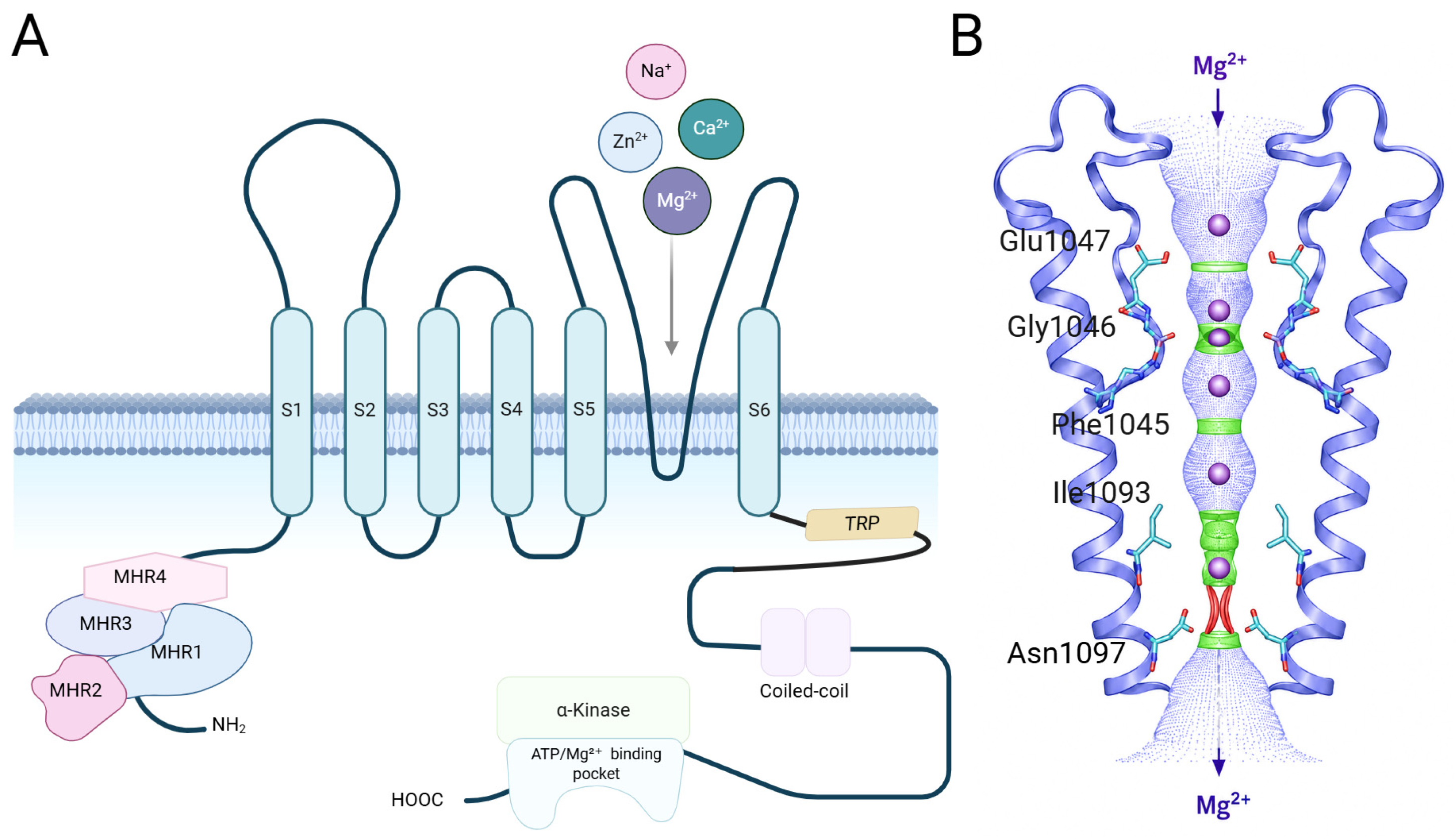
Like other TRP channels, TRPM7 is a tetramer assembled from four identical subunits [27]. Each subunit has six transmembrane-spanning domains (S1–S6), with a pore-forming loop between S5 and S6, and both C and N termini are located intracellularly (Figure 1A). The N-terminal cytosolic region, comprising approximately 600–700 amino acids, contains four melastatin homology regions (MHR1–4) that are linked to the transmembrane-spanning domain [28]. S1–S4 is the voltage-sensor-like domain, which is not as strongly voltage-sensitive as classic voltage-gated channels [27]. The selectivity filter of TRPM7 is formed by the backbone carbonyls on the side chains of Phe1045/Gly1046 and Glu1047 [27] (Figure 1B). The lower gate of the channel contains two constriction sites (Ile1093 and Asn1097), with the most constricted point at Asn1097, where S6 helices from all four subunits form a hydrophobic seal. The disulfide bond in the pore loop between Cys1056 and Cys1066 is essential for divalent cation permeability, a common feature of the TRPM family [27]. A Cryo-EM reconstruction density map of TRPM7-Mg2+ suggests that Mg2+ ion is located at the most restricted site of the selectivity filter in the ion permeation pathway [27].
The transmembrane-spanning domain ends with the amphiphilic TRP domain (TRP Loop) (Figure 1A), which runs almost parallel to the surface of the membrane near the S6 helix [27]. This domain is a signature and highly conserved within the TRP channel family. It is proposed to participate in subunit assembly or allosteric modulation of channel gating [29,30]. Upon TRPM7 channel opening, TRP helices become shorter, while the S6 helices extend, which causes the movement of S5 away from the pore center and substantial dilation of the channel pore [27]. The TRP domain is followed by a cytoplasmic coiled-coil (CC) domain, which is proposed to participate in tetrameric chanzyme assembly by bundling the membrane-proximal C-terminal [31]. The crystal structure reveals that the kinase domain of TRPM7 bears a striking resemblance to that of classical protein kinases, but there are significant differences in its C-terminal lobe, which resembles ATP-grasp fold enzymes [32]. The C-terminal lobe contains a metal ion, zinc, which is integrated into the hydrophobic core of the C-terminal lobe and is expected to be crucial for the stability of the kinase domain [32]. Disruption of the zinc-binding module results in the complete loss of kinase activity [32].

2.2. TRPM7 Channel Function

The TRPM7 channel exhibits a unitary conductance of approximately 40 pS. Under whole-cell voltage-clamp conditions, TRPM7 currents show a characteristic outward rectification, with a reversal potential close to 0 mV [33,34]. Unlike most other TRP channels, TRPM7 is permeable to divalent cations including Ca2+, Mg2+, and Zn2+, in addition to monovalent cations such as Na+ and K+ [33]. The channel displays constitutive activity and is tightly regulated by Mg2+, ATP, pH, and PIP2. The inactivation/deactivation of TRPM7 is enhanced by PIP2 hydrolysis, intracellular Mg2+, and intracellular acidification [28,35,36]. In contrast, removal of external divalent cations, extracellular acidosis, or addition of glutathione can potentiate TRPM7 currents by increasing their permeability to monovalent cations [28,37,38]. Under physiological concentrations of Mg2+, TRPM7 currents are typically small; however, when extracellular Mg2+ is reduced, and cells are dialyzed with Mg2-free intracellular solution during whole-cell patch-clamp recordings, large outwardly rectifying currents are elicited [39]. Through control of cation influx, TRPM7 influences numerous cellular processes, including enzymatic activity, cytoskeletal organization, cell proliferation, migration, and survival [40,41]. Dysregulation of TRPM7 channel activity has been implicated in various pathological conditions [42,43,44].

2.3. TRPM7 Kinase Function

Each TRPM7 subunit has a C-terminal protein kinase domain with activity modulated by divalent cations: it is enhanced by Mg2+, inhibited by Zn2+, and is unaffected by Ca2+ [45]. TRPM7 kinase phosphorylates several protein substrates, including phospholipase C (PLC), nuclear histones, annexin I, and myosin IIA-C, that are involved in embryogenesis, lymphopoiesis, and cell adhesion and migration [8,9,33]. A screen of the rat library identified PLC as a partner interacting with the TRPM7 kinase [33]. Furthermore, TRPM7-kinase-regulated Ser/Thr phosphorylation in the C2 domain of PLCγ2 leads to reduced Ca2+ signaling in low Mg2+ conditions [46]. SMAD2 is a protein that plays a central role in the signaling pathway of transforming growth factor-beta (TGF-β) and is particularly important in driving the differentiation of T helper 17 (Th17) cells. An in vitro kinase assay using recombinant TRPM7 kinase, SMAD2, as well as C-terminal truncated SMAD2, revealed that TRPM7 phosphorylates normal SMAD2 but not the truncated SMAD2 in a dose-dependent manner [23]. Furthermore, the C-terminal Ser465/467-motif of SMAD2 was identified as a novel substrate for the TRPM7 kinase. The kinase can also phosphorylate myelin basic protein as well as histone H3 on serine and threonine residues [47]. Two major sites of autophosphorylation (Ser1511 and Ser1567) were identified in vitro by mass spectrometry, and these sites were found to be phosphorylated in intact cells [45]. The channel can autophosphorylate but autophosphorylation did not alter channel activity measured by whole-cell recording or Ca2+ influx [45].

2.4. TRPM7 Inhibitors and Activators

2.4.1. TRPM7 Channel Inhibitors and Activators

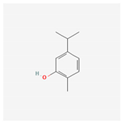
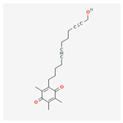
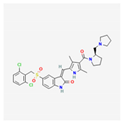
TRPM7 channel inhibitors are structurally diverse and include both endogenous and exogenous molecules, with the majority being exogenous (see Table 1. compound structures acquired from PubChem compound database) [48]. Carvacrol (IC50 306 µM), a natural monoterpenoid phenol, is a non-specific TRPM7 channel inhibitor [49]. Its suppression of TRPM7 causes cell cycle arrest at G0/G1 phases in cancer cells [50]. Another commonly used non-specific inhibitor is 2-APB (IC50 70–170 µM) [34,51,52]. Its mechanism of action is acidifying the cytoplasm and consequently suppressing the TRPM7 channels [53]. SKF-96365, at 20 µM, has been reported to irreversibly inhibit the Mg2+-inhibited cation (MIC) current in basophilic leukemia cells [54,55]. The delayed onset of inhibition supports an indirect mechanism, rather than a direct interaction with the channel [54,55]. The biophysical properties of the MIC closely resemble those of cloned and heterologously expressed TRPM7 channels, suggesting that MIC current is mediated by TRPM7. However, more rigorous validation is required, including genetic approaches such as TRPM7 knockdown or knockout, as well as reconstitution experiments using heterologously expressed TRPM7 channels. Several 5-lipoxygenase inhibitors have been tested for their effects on TRPM7 in HEK-293 cells. Among them, NDGA, AA861, and MK886 potently inhibit TRPM7 channels [56]. In contrast, 5,6-dehydroarachidonic acid and zileuton are ineffective in suppressing TRPM7 activity. These data suggest that TRPM7 inhibition may not be directly linked to 5-lipoxygenase pathway blockade, but rather depends on the structural or pharmacological properties of individual inhibitors [56].
Waixenicin A, a natural marine product isolated from the soft coral Sarcothelia edmondsoni, is a potent inhibitor of both heterologously expressed and native TRPM7 channels [41]. Its inhibitory effect is strongly dependent on intracellular Mg2+, showing marked synergy with Mg2+ levels. Under physiological conditions (~700 μM Mg2+), waixenicin A inhibits TRPM7 with high potency (IC50 ≈ 16 nM), whereas removal of Mg2+ significantly reduces its efficacy (IC50 ≈ 7 μM) [41]. With physiological concentrations of intracellular Mg2+, waixenicin A (10 μM) completely abolished TRPM7 current; however, its inhibitory effect was reduced to ~50% upon intracellular Mg2+ depletion. This Mg2+-dependent modulation appears to involve the TRPM7 kinase domain, with Lys-1648 identified as a critical residue. Notably, waixenicin A exhibits relative selectivity for TRPM7 over TRPM6 and other TRP channels, making it one of the first relatively specific pharmacological inhibitors of TRPM7 [57]. Bioassays demonstrated that it inhibited cell proliferation by blocking the TRPM7 channel [41,57]. TRPM7 channel activity is also suppressed by endogenous regulators, including spermine and sphingosine, as well as by the immunosuppressant FTY720 (fingolimod), all of which exhibit IC50 values in the low micromolar range [58]. NS8593 is a TRPM7 channel antagonist that produces a full and reversible block of native TRPM7-like currents in HEK293 cells, smooth muscle cells, primary podocytes, and ventricular myocytes [59,60,61]. The inhibitory effect of NS8593 on TRPM7 is modulated by intracellular Mg2+ levels. Increasing intracellular Mg2+ (e.g., 300 μM) reduces its potency, resulting in a ~3.7-fold increase in IC50. In contrast, a pore-region mutation (Y1049P) enhances channel sensitivity to NS8593, producing an approximately fourfold decrease in IC50, indicating that the pore loop contributes to drug–channel interactions. Structure–activity relationship analysis further suggests that the benzimidazole moiety is critical for the pharmacological action of NS8593 on TRPM7 [59,60,61].
In contrast to TRPM7 channel inhibitors, small molecule compounds such as mibefradil, naltriben, and NNC55-0396 have been reported to activate the TRPM7 channels [62]. Interestingly, mibefradil and its homolog NNC 55–0396 share structural similarity with NS8593, a known inhibitor of TRPM7, suggesting that these compounds may interact with a common ligand-binding site but produce distinct functional effects on the channel activity [63]. Mibefradil enhances TRPM7 channel activity in a rapid, partially transient, and fully reversible manner. Its effect occurs at physiological concentrations of intracellular Mg2+ but is abolished by elevated Mg2+, indicating strong Mg2+ dependence [27]. By comparison, naltriben has been identified as the first drug-like activator of TRPM7 and can stimulate the channel activity even in the presence of high intracellular Mg2+ levels [62]. These findings support the existence of at least two classes of TRPM7 agonists: Mg2+-independent, exemplified by naltriben, and Mg2+-dependent, represented by mibefradil.

2.4.2. TRPM7 Kinase Modulators

Pharmacological targeting of the TRPM7 kinase domain has been explored using high-throughput screening approaches. A kinase inhibitor library comprising 172 compounds was evaluated using an in vitro TRPM7 kinase assay, with rottlerin serving as a reference inhibitor. Compounds that reduced TRPM7 kinase activity to ≤70% at 10 μM were classified as hits, including TG100-115, TG100713, JNJ-07706621, PHA-665752, and butein [64]. Among these, TG100-115 emerged as the most potent inhibitor, with an IC50 of approximately 1.07 μM, markedly lower than that of rottlerin (IC50 ≈ 79 μM) [64,65]. Further docking analysis indicated that TG100-115 fits well within the ATP-binding pocket of the TRPM7 kinase domain. Consistent with this, increasing ATP concentrations resulted in a corresponding increase in IC50 values, indicating that TG100-115 acts as a competitive inhibitor at the ATP-binding site [65]. Notably, this study also demonstrated that TG100-115 inhibits TRPM7 channel activity, although the role of the TRPM7 kinase domain in regulating channel function remains controversial, with conflicting evidence from in vitro and in vivo studies suggesting that such effects may arise from direct or off-target actions. Collectively, these findings highlight TG100-115 as a relatively potent pharmacological tool for investigating TRPM7 kinase function, suggesting that it may serve as a lead compound for the development of more potent TRPM7 kinase inhibitors [64].
Despite the increasing availability of TRPM7 modulators, caution is needed when interpreting pharmacological studies because many compounds, including 2-APB, SKF-96365, and carvacrol, lack high selectivity and may affect multiple molecular targets. Even relatively selective agents such as waixenicin A, NS8593, and TG100-115 have important limitations, including Mg2+-dependent activity or potential off-target effects. Therefore, pharmacological findings should be complemented by genetic approaches, such as TRPM7 knockout, knockdown, or kinase-dead mutations, to more definitively establish TRPM7-dependent mechanisms.
Table 1. TRPM7 Modulators and Mechanisms of Action.
Modulatory FunctionCompound NameStructureIC50/EC50 or
Concentration Range
Mechanism of ActionRef.
Channel Inhibitors
CarvacrolIjms 27 05157 i001306 µMDirect channel blockade[49]
2-APBIjms 27 05157 i00270–170 µMReversible inhibition through an intracellular acidification[53]
SKF-96365Ijms 27 05157 i00320 µM tested; IC50 not determinedLikely indirect channel blockade[54,55]
NDGAIjms 27 05157 i00410 µM tested; IC50 not determinedDirect channel blockade[44,56]
AA861Ijms 27 05157 i00510 µM tested; IC50 not determinedDirect channel blockade[44,56]
MK886Ijms 27 05157 i00620 µM tested; IC50 not determinedDirect channel blockade[44,56]
Waixenicin AIjms 27 05157 i00716 nM and 7.0 µM depending on intracellular Mg2+ levelsMg2+-dependent reversible inhibition[41]
SpermineIjms 27 05157 i0080.2–20 µM tested; IC50 not determinedDirect voltage-dependent channel blockade[66]
NS8593Ijms 27 05157 i0091.6 µMMg2+-dependent inhibition[59,60,61]
FTY720Ijms 27 05157 i0100.72 µMDirect channel inhibition by reducing the open probability[58]
SphingosineIjms 27 05157 i0110.59 µMDirect channel inhibition by reducing the open probability [58]
Channel Activators
MibefradilIjms 27 05157 i01253 µMMg2+-dependent channel agonist [63]
NaltribenIjms 27 05157 i01320.7 µMMg2+-independent, direct agonist[62]
NNC55-0396Ijms 27 05157 i01450 µM tested; EC50 not determinedDirect agonist[63]
Kinase Inhibitor
RottlerinIjms 27 05157 i01579 µMInhibits the phosphotransferase activity, may involve competition at ATP binding site[64]
NH125Ijms 27 05157 i01655 µMInhibits the phosphotransferase activity, likely functions as a non-specific colloidal aggregator[67]
TG100-115Ijms 27 05157 i0171.07 µMATP-competitive inhibitor[64]
TG100713Ijms 27 05157 i0189.06 µMATP-competitive inhibitor[64]
JNJ-07706621Ijms 27 05157 i01916.24 µMATP-competitive inhibitor[64]
PHA-665752Ijms 27 05157 i02042.18 µMATP-competitive inhibitor[64]
ButeinIjms 27 05157 i02171.28 µMATP-competitive inhibitor[64]

3. Role of TRPM7 in Immune Cells

3.1. TRPM7 Modulates Neutrophil Function

Neutrophils are polymorphonuclear leukocytes derived from myeloid progenitors found in the bone marrow [68]. They are constantly produced by bone marrow and account for up to 50–70% of all circulating leukocytes. Neutrophils are an important component of the innate immunity and respond rapidly to inflammatory signals and pathogens, contributing to the clearance of acute inflammation and bacterial infection; however, excessive neutrophil infiltration accelerates tissue damage due to unrestrained inflammation in pro-inflammatory as well as autoimmune diseases [68]. Compelling evidence has highlighted that Ca2+-signaling governs the key processes associated with neutrophil functions, such as NADPH oxidase activation and phagocytosis [69], suggesting that targeting Ca2+ influx in neutrophils has therapeutic potential for inflammatory diseases associated with excessive neutrophil activation. A precise understanding of calcium signaling mechanisms in neutrophils is therefore needed. In addition to Mg2+ and Zn2+, the TRPM7 channel is permeable to Ca2+ [33]. A TRPM7-mediated Ca2+ signal has been shown to regulate the migration of several cell types [70,71]. In neutrophils isolated from patients with rheumatoid arthritis (RA), TRPM7 was observed to mediate the CD147-driven enhancement of calcium-induced chemotaxis, adhesion, and invasiveness [72]. Another study showed the protective effects of salvianolic acid B on sepsis-induced acute lung injury through decreasing the expressions of TRPM7, probably due to a downregulation of TRPM7-mediated neutrophil migration and infiltration [73].
In addition to the TRPM7 channel-mediated Ca2+ signaling, TRPM7 kinase has also been suggested to contribute to neutrophil activation. When TRPM7 channel activity is inhibited by NS8593 or its kinase activity by TG100-115, human neutrophils are unable to transmigrate along a CXCL8 chemokine gradient or generate reactive oxygen species in response to Gram-negative bacterial lipopolysaccharide (LPS) [65]. TRPM7 kinase-deficient murine neutrophils also displayed a similar phenotype [65]. TG100-115 effectively reduced LPS-induced neutrophil chemotaxis as well as ROS production, most likely due to an inhibition of TRPM7-kinase/Akt/mTOR signaling pathways [65]. These studies highlight that TRPM7 may represent a potential target for treating unwanted excessive neutrophil activation.

3.2. TRPM7 Modulates Lymphocyte Function

Lymphocytes originate from bone marrow and differentiate from hematopoietic stem cells. Broadly, lymphocytes are categorized into B cells, T cells, and natural killer (NK) cells. They play a crucial role in the adaptive immune system, responsible for recognizing, responding to, and remembering specific antigens [74].
Evidence suggests that TRPM7 is fundamental to B cell biology, including cell development, antigen internalization, and presentation. Deletion of TRPM7, for example, caused Mg2+ deficiency, growth arrest, and cell death in DT40 B-lymphocytes within 24–48 h [75]. Animal studies also showed that expression of TRPM7 was required for B-cell development in vivo [21]. Supplementation with a high concentration of extracellular Mg2+ partially rescued the development of TRPM7-deficient B-cells in vitro [21]. The loss of TRPM7 kinase activity alone did not affect the development of B cells in the bone marrow. These findings highlight the TRPM7 channel’s indispensable role in B-cell development, primarily by maintaining intracellular Mg2+ homeostasis required for proliferation and survival. TRPM7 has also been demonstrated to play a role in B-cell antigen uptake and presentation [22]. DT40 B cells deficient in TRPM7 channel or kinase activity showed defective gathering of antigen [22]. Blocking TRPM7 function also compromised antigen internalization and presentation to T-cells [22]. These findings suggest that TRPM7 plays an important role in the processes required for B-cell maturation and the production of high-affinity antibodies.
In addition to B-cells, the TRPM7 channel-kinase is also crucial for T-cell function. Deletion of Trpm7 in the T-cell lineage resulted in impairment of T-cell development in the thymus and altered chemokine and cytokine expression profiles [76]. In mice with kinase-dead Trpm7R/R (K1646R point mutation), the number of T-cells within intra-epithelial lymphocytes (IELs) and lamina propria lymphocytes (LPLs) was decreased, with CD4+ T-cells the most significantly affected compared to WT mice. Furthermore, in the few CD4+ cells recovered from the gut of Trpm7R/R mice, the analysis of functional subsets revealed a dramatic reduction of TH17 cells, indicating that TRPM7 kinase activity is essential for gut colonization by T cells and TH17 cell differentiation [23]. TGF-β/SMAD pathways are crucial for the polarization of CD4+ T-cells into TH17 cells [77]. A reduction in SMAD2 (Ser465/467) phosphorylation, which is essential for its transcriptional activity, was revealed in TGF-β1-treated Trpm7R/R naive CD4+ T cells [77]. It has been shown that TRPM7 kinase can modulate SMAD2 signaling via direct phosphorylation at the C-terminal Ser465/467 motif. These findings suggest that the TRPM7 kinase regulates TH17 cell differentiation via TGF-β/SMAD2-dependent pathways [23].

3.3. TRPM7 Modulates Macrophage Function

Macrophages are a highly diverse group of plastic leukocytes. They participate in various immune responses, mounting distinct M1 or M2 phenotypes to maintain homeostasis. Stimulation with pro-inflammatory particles, LPS, or IFN-γ, promotes polarization toward the M1 pro-inflammatory phenotype, while stimulation with interleukin-4 (IL-4) drives polarization toward the anti-inflammatory M2 phenotype [78]. Emerging evidence indicates that TRPM7 plays a critical role in regulating macrophage function. TRPM7 expression is preferentially elevated in M1 macrophages compared with M2 macrophages, suggesting its association with pro-inflammatory activation [78]. Pharmacological blockade of TRPM7 shifts macrophage polarization toward an anti-inflammatory phenotype, characterized by reduced expression of M1 markers, including TNF-α and nitric oxide synthase (iNOS), and increased expression of M2 markers such as arginase-1 (Arg-1) and CD206 [78]. Consistent with this role, another study reported that TRPM7-deficient macrophages exhibit significantly reduced LPS-induced inflammatory gene expression and production of key pro-inflammatory cytokines such as IL-1β [79]. TRPM7-mediated Ca2+ influx is required for TLR4 endocytosis and downstream IRF3 and NF-κB activation, and mice with myeloid-specific deletion of Trpm7 are protected from LPS-induced peritonitis [79]. Collectively, these findings identify TRPM7 as a key regulator of macrophage activation/polarization and highlight its potential as a therapeutic target for inflammatory diseases [78].

3.4. TRPM7 Modulates Microglia Function

In contrast to the peripheral immune cell populations, the functions of TRPM7 in the CNS immune cells, particularly microglia, remain comparatively underexplored. Microglia comprise approximately 5–15% of all brain cells and serve as the resident innate immune sentinels of the CNS [80]. Through continuous surveillance of the neural microenvironment, they balance host defense and maintain tissue homeostasis. When dysregulated, microglia become potent drivers of neuroinflammation, contributing to neurodegeneration in both acute neurological conditions such as stroke and traumatic brain injury, and chronic disorders such as Alzheimer’s disease, PD, and amyotrophic lateral sclerosis [80,81,82,83]. Modulating microglia reactive states is an attractive therapeutic strategy to mitigate neuroinflammation and slow disease progression. TRPM7 transcripts and TRPM7-like currents were originally identified in the rat microglia cells [84]. The recorded currents display hallmark biophysical and pharmacological features of TRPM7 currents, including strong outward rectification above +50 mV, inhibition by intracellular Mg2+, and sensitivity to the non-specific TRPM7 inhibitor 2-APB [53]. Given the channels’ permeability to Ca2+, which is crucial for microglia function, TRPM7-mediated calcium entry may contribute to microglia functions that rely on intracellular Ca2+ signaling [85]. The newly identified TRPM7 channel inhibitor VPC01091.4 (VPC), which can effectively accumulate in the brain, exerts robust anti-inflammatory effects on microglia by reducing LPS-induced expression of IL-1β and IL-6 in the brain [86]. Our own studies demonstrate that the TRPM7-selective channel inhibitor waixenicin A and TRPM7-kinase inhibitor TG100-115 significantly reduce LPS-stimulated migration, phagocytosis, and IL-6 secretion in human HMC3 microglia [87]. These pharmacological studies support a potential role for TRPM7 in regulating microglial inflammatory responses.

3.5. Role of TRPM7 in Astrocytes

Astrocytes or astroglia are star-shaped glia in the CNS, ensheathing synapses and blood vessels, where they maintain ionic, metabolic, and neurotransmitter homeostasis. In response to inflammatory cues, they switch to context-dependent reactive states that can support tissue protection and repair; however, when dysregulated, these states can amplify proinflammatory signaling, disrupting CNS homeostasis [88]. In reactive astrocytes within multiple sclerosis (MS) lesions and in primary astrocytes under chronic inflammatory conditions, TRPM7 expression was markedly enriched [58,89]. Overexpression of TRPM7 in astrocytes impaired neuronal outgrowth in vitro by increasing the production of chondroitin sulfate proteoglycans, a major structural component of the gliotic scar [89]. These findings indicate that astrocytic TRPM7 is a critical regulator of glia scar formation, revealing a novel mechanism by which reactive astrocytes affect neuronal outgrowth. Furthermore, TRPM7 was markedly upregulated in astrocytes after spinal cord injury; inhibiting TRPM7 downregulated the production of TNF-α, IL-6, IL-1β, and matrix metalloproteinase 9 (MMP9), which are known inflammatory factors involved in the induction and/or maintenance of neuropathic pain after injury [90].

4. Role of TRPM7 in Inflammatory Modulation in Neurological Diseases

Epidemiologic studies have performed comparative gene expression analyses that link TRPM7 to brain-related diseases such as multiple sclerosis, Alzheimer’s disease, and stroke [91]. Based on the emerging evidence of TRPM7 in microglia and astrocytes as discussed above [86,90], dysregulated TRPM7 activity may contribute to neuroinflammatory processes associated with neurodegeneration. However, much of the current evidence is derived from pharmacological studies, and future investigations using cell-specific genetic models will be required to establish the causal role of TRPM7 in disease pathogenesis. Microglia during neurological disorders have been shown to experience excessive reactivity [92]. Activated microglia release a range of cytokines, including TNF-α, IL-1β, and IL-6, that dynamically regulate neuroinflammatory responses [80,93,94]. In addition, they also release MMP9, which can cause the degradation of the BBB [93,95]. BBB disruption is observed in both acute brain injuries (e.g., stroke and traumatic brain injury) and neurodegenerative diseases (e.g., AD and MS). It permits peripheral immune cell infiltration into the brain, further amplifying inflammatory responses and contributing to secondary neuronal injury/degeneration.
Neuroimmune interactions involve complex communication among microglia, astrocytes, neurons, and infiltrating peripheral immune cells that collectively regulate inflammatory responses within the CNS. Activated microglia release pro-inflammatory cytokines and chemokines through signaling pathways such as NF-κB, MAPK, and NLRP3 inflammasome activation, which promote astrocytic activation and inflammatory reactivity [82,96]. Astrocytes further modulate neuroimmune responses through JAK/STAT3-mediated signaling [88]. Dysregulation of these microglial and astrocytic signaling pathways has been implicated in persistent neuroinflammation, BBB disruption, and progressive neuronal injury in both acute and chronic neurological disorders [94,96].
For example, the interactions between CNS-resident astrocytes and microglia, and infiltrating T cells, have been linked to the persistence of inflammation and impaired tissue repair in ischemic stroke [97]. These CNS-infiltrating T cells express activation markers (e.g., CD44 and CD25) and produce high levels of inflammatory cytokines, including IFN-γ, IL-17, and TNF-α [97]. These cytokines will interact with astrocytes and microglia, leading to their pro-inflammatory activation, prolonging injury, and preventing anti-inflammatory reactivity. It should also be noted that ischemic stroke induces the long-term activation of T cells that persists for years after injury, leading to continued inflammation in the CNS [97]. Similarly, neutrophils and B cells also migrate and invade the brain in both acute and chronic CNS diseases, and have been shown to contribute to CNS inflammation and neurodegeneration [98]. Considering that both the TRPM7 channel and the kinase are implicated in the immune responses, a combination of inhibitors for both the TRPM7 channel and the kinase may obtain a maximal anti-inflammatory activity. However, considering that TRPM7 also plays a critical physiological role in neuronal activity, such as synaptic transmission and astrocyte physiology [62,89,99,100], the allosteric modulators that can suppress the over-activation of TRPM7, but keep a basal activity, may help reduce the potential side effects.

5. Conclusions and Perspectives

This review provides an overview of the current understanding of TRPM7 structure, function, and pharmacology, with particular emphasis on its emerging roles in both peripheral and central immune cells. Compared with TRPM7’s role in peripheral immune cells, its function in central immune cells is poorly understood, particularly under various CNS disease conditions. Accumulating evidence implicates TRPM7 in the pathophysiology of several neurological diseases, including ischemic brain injury, ALS, PD, and AD, although the underlying mechanisms remain incompletely understood [101,102,103]. Previous studies focused on the neuroprotective activity of the TRPM7 channel blockade, e.g., via reducing the Ca2+ and Zn2+ toxicity [17,18]. However, this neuron-centric view may be incomplete, as TRPM7 also regulates signaling pathways in immune cells, as well as cytokine production and inflammatory activation. As a chanzyme, TRPM7 is uniquely positioned at the intersection of ion homeostasis and intracellular signaling, potentially linking ionic dysregulation to immune responses in the central nervous system. Future studies focusing on cell-type-specific functions, as well as distinguishing between its channel and kinase activities, will be critical for advancing our understanding of TRPM7 biology and its therapeutic potential.

Author Contributions

Conceptualization, T.L. and K.S.B.; writing—original draft preparation, K.S.B.; writing—review and editing, K.S.B., T.L. and Z.-G.X.; supervision, T.L.; funding acquisition, T.L. and Z.-G.X. All authors have read and agreed to the published version of the manuscript.

Funding

The research in our laboratories was funded by National Institute of Neurological Disorders and Stroke (NIH R01NS128018), National Institute of Allergy and Infectious Diseases (R21 AI185572), National Institute of General Medical Sciences (R25GM058268), and U.S. National Science Foundation (NSF 2401892).

Institutional Review Board Statement

Not applicable.

Informed Consent Statement

Not applicable.

Data Availability Statement

No new data were created or analyzed in this study. Data sharing is not applicable to this article.

Conflicts of Interest

The authors declare no conflicts of interest.

Abbreviations

The following abbreviations are used in this manuscript:
ChaK1Channel-Kinase 1
LTRPC7Long Transient Receptor Potential Channel 7
MHRMelastatin Homology Region
TRP-PLIKTransient Receptor Potential-Phospholipase C-Linked Kinase

References

  1. Chavda, V.P.; Feehan, J.; Apostolopoulos, V. Inflammation: The Cause of All Diseases. Cells 2024, 13, 1906. [Google Scholar] [CrossRef] [PubMed]
  2. Huang, Y.; Fliegert, R.; Guse, A.H.; Lü, W.; Du, J. A structural overview of the ion channels of the TRPM family. Cell Calcium 2020, 85, 102111. [Google Scholar] [CrossRef]
  3. Fleig, A.; Chubanov, V. TRPM7. Handb. Exp. Pharmacol. 2014, 222, 521–546. [Google Scholar] [CrossRef]
  4. Fonfria, E.; Murdock, P.R.; Cusdin, F.S.; Benham, C.D.; Kelsell, R.E.; McNulty, S. Tissue distribution profiles of the human TRPM cation channel family. J. Recept. Signal Transduct. Res. 2006, 26, 159–178. [Google Scholar] [CrossRef]
  5. Kunert-Keil, C.; Bisping, F.; Krüger, J.; Brinkmeier, H. Tissue-specific expression of TRP channel genes in the mouse and its variation in three different mouse strains. BMC Genomics 2006, 7, 159. [Google Scholar] [CrossRef] [PubMed]
  6. Vandewauw, I.; Owsianik, G.; Voets, T. Systematic and quantitative mRNA expression analysis of TRP channel genes at the single trigeminal and dorsal root ganglion level in mouse. BMC Neurosci. 2013, 14, 21. [Google Scholar] [CrossRef]
  7. Jin, J.; Wu, L.J.; Jun, J.; Cheng, X.; Xu, H.; Andrews, N.C.; Clapham, D.E. The channel kinase, TRPM7, is required for early embryonic development. Proc. Natl. Acad. Sci. USA 2012, 109, E225–E233. [Google Scholar] [CrossRef]
  8. Dorovkov, M.V.; Ryazanov, A.G. Phosphorylation of annexin I by TRPM7 channel-kinase. J. Biol. Chem. 2004, 279, 50643–50646. [Google Scholar] [CrossRef]
  9. Clark, K.; Middelbeek, J.; Dorovkov, M.V.; Figdor, C.G.; Ryazanov, A.G.; Lasonder, E.; van Leeuwen, F.N. The alpha-kinases TRPM6 and TRPM7, but not eEF-2 kinase, phosphorylate the assembly domain of myosin IIA, IIB and IIC. FEBS Lett. 2008, 582, 2993–2997. [Google Scholar] [CrossRef] [PubMed]
  10. Leng, T.; Shi, Y.; Xiong, Z.G.; Sun, D. Proton-sensitive cation channels and ion exchangers in ischemic brain injury: New therapeutic targets for stroke? Prog. Neurobiol. 2014, 115, 189–209. [Google Scholar] [CrossRef]
  11. Du, J.; Xie, J.; Zhang, Z.; Tsujikawa, H.; Fusco, D.; Silverman, D.; Liang, B.; Yue, L. TRPM7-mediated Ca2+ signals confer fibrogenesis in human atrial fibrillation. Circ. Res. 2010, 106, 992–1003. [Google Scholar] [CrossRef]
  12. Touyz, R.M.; He, Y.; Montezano, A.C.; Yao, G.; Chubanov, V.; Gudermann, T.; Callera, G.E. Differential regulation of transient receptor potential melastatin 6 and 7 cation channels by ANG II in vascular smooth muscle cells from spontaneously hypertensive rats. Am. J. Physiol. Regul. Integr. Comp. Physiol. 2006, 290, R73–R78. [Google Scholar] [CrossRef]
  13. Jiang, J.; Li, M.H.; Inoue, K.; Chu, X.P.; Seeds, J.; Xiong, Z.G. Transient receptor potential melastatin 7-like current in human head and neck carcinoma cells: Role in cell proliferation. Cancer Res. 2007, 67, 10929–10938. [Google Scholar] [CrossRef]
  14. Meng, X.; Cai, C.; Wu, J.; Cai, S.; Ye, C.; Chen, H.; Yang, Z.; Zeng, H.; Shen, Q.; Zou, F. TRPM7 mediates breast cancer cell migration and invasion through the MAPK pathway. Cancer Lett. 2013, 333, 96–102. [Google Scholar] [CrossRef]
  15. Leng, T.D.; Li, M.H.; Shen, J.F.; Liu, M.L.; Li, X.B.; Sun, H.W.; Branigan, D.; Zeng, Z.; Si, H.F.; Li, J.; et al. Suppression of TRPM7 inhibits proliferation, migration, and invasion of malignant human glioma cells. CNS Neurosci. Ther. 2015, 21, 252–261. [Google Scholar] [CrossRef]
  16. Liu, M.; Inoue, K.; Leng, T.; Guo, S.; Xiong, Z.G. TRPM7 channels regulate glioma stem cell through STAT3 and Notch signaling pathways. Cell. Signal. 2014, 26, 2773–2781. [Google Scholar] [CrossRef]
  17. Inoue, K.; Branigan, D.; Xiong, Z.G. Zinc-induced neurotoxicity mediated by transient receptor potential melastatin 7 channels. J. Biol. Chem. 2010, 285, 7430–7439. [Google Scholar] [CrossRef] [PubMed]
  18. Aarts, M.; Iihara, K.; Wei, W.L.; Xiong, Z.G.; Arundine, M.; Cerwinski, W.; MacDonald, J.F.; Tymianski, M. A key role for TRPM7 channels in anoxic neuronal death. Cell 2003, 115, 863–877. [Google Scholar] [CrossRef] [PubMed]
  19. Karner-Hoeger, B.; Madlmayr, A.; Zierler, S. TRPM7 channel-kinase in immunity: New frontiers of an emerging therapeutic target. Curr. Opin. Immunol. 2026, 99, 102734. [Google Scholar] [CrossRef]
  20. Nadolni, W.; Zierler, S. The Channel-Kinase TRPM7 as Novel Regulator of Immune System Homeostasis. Cells 2018, 7, 109. [Google Scholar] [CrossRef] [PubMed]
  21. Krishnamoorthy, M.; Buhari, F.H.M.; Zhao, T.; Brauer, P.M.; Burrows, K.; Cao, E.Y.; Moxley-Paquette, V.; Mortha, A.; Zúñiga-Pflücker, J.C.; Treanor, B. The ion channel TRPM7 is required for B cell lymphopoiesis. Sci. Signal. 2018, 11, eaan2693. [Google Scholar] [CrossRef]
  22. Krishnamoorthy, M.; Wasim, L.; Buhari, F.H.M.; Zhao, T.; Mahtani, T.; Ho, J.; Kang, S.; Deason-Towne, F.; Perraud, A.L.; Schmitz, C.; et al. The channel-kinase TRPM7 regulates antigen gathering and internalization in B cells. Sci. Signal. 2018, 11, eaah6692. [Google Scholar] [CrossRef]
  23. Romagnani, A.; Vettore, V.; Rezzonico-Jost, T.; Hampe, S.; Rottoli, E.; Nadolni, W.; Perotti, M.; Meier, M.A.; Hermanns, C.; Geiger, S.; et al. TRPM7 kinase activity is essential for T cell colonization and alloreactivity in the gut. Nat. Commun. 2017, 8, 1917. [Google Scholar] [CrossRef]
  24. Mendu, S.K.; Stremska, M.E.; Schappe, M.S.; Moser, E.K.; Krupa, J.K.; Rogers, J.S.; Stipes, E.J.; Parker, C.A.; Braciale, T.J.; Perry, J.S.A.; et al. Targeting the ion channel TRPM7 promotes the thymic development of regulatory T cells by promoting IL-2 signaling. Sci. Signal. 2020, 13, eabb0619. [Google Scholar] [CrossRef] [PubMed]
  25. Luo, Z.; Zhang, X.; Fleig, A.; Romo, D.; Hull, K.G.; Horgen, F.D.; Sun, H.-S.; Feng, Z.-P. TRPM7 in neurodevelopment and therapeutic prospects for neurodegenerative disease. Cell Calcium 2024, 120, 102886. [Google Scholar] [CrossRef] [PubMed]
  26. Sun, Y.; Sukumaran, P.; Schaar, A.; Singh, B.B. TRPM7 and its role in neurodegenerative diseases. Channels 2015, 9, 253–261. [Google Scholar] [CrossRef] [PubMed]
  27. Schmidt, E.; Narangoda, C.; Nörenberg, W.; Egawa, M.; Rössig, A.; Leonhardt, M.; Schaefer, M.; Zierler, S.; Kurnikova, M.G.; Gudermann, T.; et al. Structural mechanism of TRPM7 channel regulation by intracellular magnesium. Cell. Mol. Life Sci. 2022, 79, 225. [Google Scholar] [CrossRef]
  28. Nadler, M.J.; Hermosura, M.C.; Inabe, K.; Perraud, A.L.; Zhu, Q.; Stokes, A.J.; Kurosaki, T.; Kinet, J.P.; Penner, R.; Scharenberg, A.M.; et al. LTRPC7 is a Mg.ATP-regulated divalent cation channel required for cell viability. Nature 2001, 411, 590–595, Erratum in Nature 2001, 412, 660. [Google Scholar] [CrossRef]
  29. Minke, B.; Cook, B. TRP channel proteins and signal transduction. Physiol. Rev. 2002, 82, 429–472. [Google Scholar] [CrossRef]
  30. García-Sanz, N.; Valente, P.; Gomis, A.; Fernández-Carvajal, A.; Fernández-Ballester, G.; Viana, F.; Belmonte, C.; Ferrer-Montiel, A. A role of the transient receptor potential domain of vanilloid receptor I in channel gating. J. Neurosci. 2007, 27, 11641–11650. [Google Scholar] [CrossRef]
  31. Fujiwara, Y.; Minor, D.L., Jr. X-ray crystal structure of a TRPM assembly domain reveals an antiparallel four-stranded coiled-coil. J. Mol. Biol. 2008, 383, 854–870. [Google Scholar] [CrossRef] [PubMed]
  32. Yamaguchi, H.; Matsushita, M.; Nairn, A.C.; Kuriyan, J. Crystal structure of the atypical protein kinase domain of a TRP channel with phosphotransferase activity. Mol. Cell 2001, 7, 1047–1057. [Google Scholar] [CrossRef]
  33. Runnels, L.W.; Yue, L.; Clapham, D.E. TRP-PLIK, a bifunctional protein with kinase and ion channel activities. Science 2001, 291, 1043–1047. [Google Scholar] [CrossRef]
  34. Li, M.; Jiang, J.; Yue, L. Functional characterization of homo- and heteromeric channel kinases TRPM6 and TRPM7. J. Gen. Physiol. 2006, 127, 525–537. [Google Scholar] [CrossRef] [PubMed]
  35. Runnels, L.W.; Yue, L.; Clapham, D.E. The TRPM7 channel is inactivated by PIP(2) hydrolysis. Nat. Cell Biol. 2002, 4, 329–336. [Google Scholar] [CrossRef]
  36. Chokshi, R.; Matsushita, M.; Kozak, J.A. Detailed examination of Mg2+ and pH sensitivity of human TRPM7 channels. Am. J. Physiol. Cell Physiol. 2012, 302, C1004–C1011. [Google Scholar] [CrossRef]
  37. Jiang, J.; Li, M.; Yue, L. Potentiation of TRPM7 inward currents by protons. J. Gen. Physiol. 2005, 126, 137–150. [Google Scholar] [CrossRef]
  38. Abiria, S.A.; Krapivinsky, G.; Sah, R.; Santa-Cruz, A.G.; Chaudhuri, D.; Zhang, J.; Adstamongkonkul, P.; DeCaen, P.G.; Clapham, D.E. TRPM7 senses oxidative stress to release Zn2+ from unique intracellular vesicles. Proc. Natl. Acad. Sci. USA 2017, 114, E6079–E6088. [Google Scholar] [CrossRef]
  39. Bates-Withers, C.; Sah, R.; Clapham, D.E. TRPM7, the Mg2+ inhibited channel and kinase. Adv. Exp. Med. Biol. 2011, 704, 173–183. [Google Scholar] [CrossRef]
  40. Clark, K.; Middelbeek, J.; Lasonder, E.; Dulyaninova, N.G.; Morrice, N.A.; Ryazanov, A.G.; Bresnick, A.R.; Figdor, C.G.; van Leeuwen, F.N. TRPM7 regulates myosin IIA filament stability and protein localization by heavy chain phosphorylation. J. Mol. Biol. 2008, 378, 790–803. [Google Scholar] [CrossRef] [PubMed]
  41. Zierler, S.; Yao, G.; Zhang, Z.; Kuo, W.C.; Pörzgen, P.; Penner, R.; Horgen, F.D.; Fleig, A. Waixenicin A inhibits cell proliferation through magnesium-dependent block of transient receptor potential melastatin 7 (TRPM7) channels. J. Biol. Chem. 2011, 286, 39328–39335. [Google Scholar] [CrossRef] [PubMed]
  42. Sun, H.S. Role of TRPM7 in cerebral ischaemia and hypoxia. J. Physiol. 2017, 595, 3077–3083. [Google Scholar] [CrossRef]
  43. Auwercx, J.; Neve, B.; Vanlaeys, A.; Fourgeaud, M.; Bourrin-Reynard, I.; Souidi, M.; Brassart-Pasco, S.; Hague, F.; Guenin, S.; Duchene, B.; et al. The kinase domain of TRPM7 interacts with PAK1 and regulates pancreatic cancer cell epithelial-to-mesenchymal transition. Cell Death Dis. 2025, 16, 335. [Google Scholar] [CrossRef]
  44. Liu, L.; Wu, N.; Wang, Y.; Zhang, X.; Xia, B.; Tang, J.; Cai, J.; Zhao, Z.; Liao, Q.; Wang, J. TRPM7 promotes the epithelial-mesenchymal transition in ovarian cancer through the calcium-related PI3K/AKT oncogenic signaling. J. Exp. Clin. Cancer Res. 2019, 38, 106, Erratum in J. Exp. Clin. Cancer Res. 2024, 43, 291. [Google Scholar] [CrossRef]
  45. Matsushita, M.; Kozak, J.A.; Shimizu, Y.; McLachlin, D.T.; Yamaguchi, H.; Wei, F.Y.; Tomizawa, K.; Matsui, H.; Chait, B.T.; Cahalan, M.D.; et al. Channel function is dissociated from the intrinsic kinase activity and autophosphorylation of TRPM7/ChaK1. J. Biol. Chem. 2005, 280, 20793–20803. [Google Scholar] [CrossRef]
  46. Deason-Towne, F.; Perraud, A.L.; Schmitz, C. Identification of Ser/Thr phosphorylation sites in the C2-domain of phospholipase C γ2 (PLCγ2) using TRPM7-kinase. Cell. Signal. 2012, 24, 2070–2075. [Google Scholar] [CrossRef]
  47. Ryazanova, L.V.; Dorovkov, M.V.; Ansari, A.; Ryazanov, A.G. Characterization of the protein kinase activity of TRPM7/ChaK1, a protein kinase fused to the transient receptor potential ion channel. J. Biol. Chem. 2004, 279, 3708–3716. [Google Scholar] [CrossRef]
  48. Kim, S.; Chen, J.; Cheng, T.; Gindulyte, A.; He, J.; He, S.; Li, Q.; Shoemaker, B.A.; Thiessen, P.A.; Yu, B.; et al. PubChem 2025 update. Nucleic Acids Res. 2025, 53, D1516–D1525. [Google Scholar] [CrossRef] [PubMed]
  49. Parnas, M.; Peters, M.; Dadon, D.; Lev, S.; Vertkin, I.; Slutsky, I.; Minke, B. Carvacrol is a novel inhibitor of Drosophila TRPL and mammalian TRPM7 channels. Cell Calcium 2009, 45, 300–309. [Google Scholar] [CrossRef]
  50. Li, L.; He, L.; Wu, Y.; Zhang, Y. Carvacrol affects breast cancer cells through TRPM7 mediated cell cycle regulation. Life Sci. 2021, 266, 118894. [Google Scholar] [CrossRef] [PubMed]
  51. Prakriya, M.; Lewis, R.S. Separation and characterization of currents through store-operated CRAC channels and Mg2+-inhibited cation (MIC) channels. J. Gen. Physiol. 2002, 119, 487–507, Correction in J. Gen. Physiol. 2002, 119, 613. [Google Scholar] [CrossRef]
  52. Mishra, R.; Rao, V.; Ta, R.; Shobeiri, N.; Hill, C.E. Mg2+- and MgATP-inhibited and Ca2+/calmodulin-sensitive TRPM7-like current in hepatoma and hepatocytes. Am. J. Physiol.-Gastrointest. Liver Physiol. 2009, 297, G687–G694. [Google Scholar] [CrossRef]
  53. Chokshi, R.; Fruasaha, P.; Kozak, J.A. 2-Aminoethyl diphenyl borinate (2-APB) inhibits TRPM7 channels through an intracellular acidification mechanism. Channels 2012, 6, 362–369. [Google Scholar] [CrossRef]
  54. Kozak, J.A.; Kerschbaum, H.H.; Cahalan, M.D. Distinct properties of CRAC and MIC channels in RBL cells. J. Gen. Physiol. 2002, 120, 221–235. [Google Scholar] [CrossRef] [PubMed]
  55. Dubourg, A.; Harnois, T.; Cousin, L.; Constantin, B.; Bourmeyster, N. SKF-96365 Expels Tyrosine Kinase Inhibitor-Treated CML Stem and Progenitor Cells from the HS27A Stromal Cell Niche in a RhoA-Dependent Mechanism. Cancers 2024, 16, 2791. [Google Scholar] [CrossRef]
  56. Chen, H.C.; Xie, J.; Zhang, Z.; Su, L.T.; Yue, L.; Runnels, L.W. Blockade of TRPM7 channel activity and cell death by inhibitors of 5-lipoxygenase. PLoS ONE 2010, 5, e11161. [Google Scholar] [CrossRef] [PubMed]
  57. Sun, H.S.; Horgen, F.D.; Romo, D.; Hull, K.G.; Kiledal, S.A.; Fleig, A.; Feng, Z.P. Waixenicin A, a marine-derived TRPM7 inhibitor: A promising CNS drug lead. Acta Pharmacol. Sin. 2020, 41, 1519–1524. [Google Scholar] [CrossRef]
  58. Qin, X.; Yue, Z.; Sun, B.; Yang, W.; Xie, J.; Ni, E.; Feng, Y.; Mahmood, R.; Zhang, Y.; Yue, L. Sphingosine and FTY720 are potent inhibitors of the transient receptor potential melastatin 7 (TRPM7) channels. Br. J. Pharmacol. 2013, 168, 1294–1312. [Google Scholar] [CrossRef]
  59. Suzuki, S.; Penner, R.; Fleig, A. TRPM7 contributes to progressive nephropathy. Sci. Rep. 2020, 10, 2333. [Google Scholar] [CrossRef]
  60. Nadezhdin, K.D.; Correia, L.; Narangoda, C.; Patel, D.S.; Neuberger, A.; Gudermann, T.; Kurnikova, M.G.; Chubanov, V.; Sobolevsky, A.I. Structural mechanisms of TRPM7 activation and inhibition. Nat. Commun. 2023, 14, 2639. [Google Scholar] [CrossRef] [PubMed]
  61. Chubanov, V.; Mederos y Schnitzler, M.; Meißner, M.; Schäfer, S.; Abstiens, K.; Hofmann, T.; Gudermann, T. Natural and synthetic modulators of SK (Kca2) potassium channels inhibit magnesium-dependent activity of the kinase-coupled cation channel TRPM7. Br. J. Pharmacol. 2012, 166, 1357–1376. [Google Scholar] [CrossRef]
  62. Hofmann, T.; Schäfer, S.; Linseisen, M.; Sytik, L.; Gudermann, T.; Chubanov, V. Activation of TRPM7 channels by small molecules under physiological conditions. Pflügers Arch.-Eur. J. Physiol. 2014, 466, 2177–2189. [Google Scholar] [CrossRef]
  63. Schäfer, S.; Ferioli, S.; Hofmann, T.; Zierler, S.; Gudermann, T.; Chubanov, V. Mibefradil represents a new class of benzimidazole TRPM7 channel agonists. Pflügers Arch.-Eur. J. Physiol. 2016, 468, 623–634. [Google Scholar] [CrossRef]
  64. Song, C.; Bae, Y.; Jun, J.; Lee, H.; Kim, N.D.; Lee, K.-B.; Hur, W.; Park, J.-Y.; Sim, T. Identification of TG100-115 as a new and potent TRPM7 kinase inhibitor, which suppresses breast cancer cell migration and invasion. Biochim. Biophys. Acta (BBA)–Gen. Subj. 2017, 1861, 947–957. [Google Scholar] [CrossRef] [PubMed]
  65. Nadolni, W.; Immler, R.; Hoelting, K.; Fraticelli, M.; Ripphahn, M.; Rothmiller, S.; Matsushita, M.; Boekhoff, I.; Gudermann, T.; Sperandio, M.; et al. TRPM7 Kinase Is Essential for Neutrophil Recruitment and Function via Regulation of Akt/mTOR Signaling. Front. Immunol. 2020, 11, 606893. [Google Scholar] [CrossRef] [PubMed]
  66. Kerschbaum, H.H.; Kozak, J.A.; Cahalan, M.D. Polyvalent Cations as Permeant Probes of MIC and TRPM7 Pores. Biophys. J. 2003, 84, 2293–2305. [Google Scholar] [CrossRef]
  67. Devkota, A.K.; Tavares, C.D.J.; Warthaka, M.; Abramczyk, O.; Marshall, K.D.; Kaoud, T.S.; Gorgulu, K.; Ozpolat, B.; Dalby, K.N. Investigating the Kinetic Mechanism of Inhibition of Elongation Factor 2 Kinase by NH125: Evidence of a Common in Vitro Artifact. Biochemistry 2012, 51, 2100–2112. [Google Scholar] [CrossRef]
  68. Liew, P.X.; Kubes, P. The Neutrophil’s Role During Health and Disease. Physiol. Rev. 2019, 99, 1223–1248. [Google Scholar] [CrossRef] [PubMed]
  69. Hann, J.; Bueb, J.L.; Tolle, F.; Bréchard, S. Calcium signaling and regulation of neutrophil functions: Still a long way to go. J. Leukoc. Biol. 2020, 107, 285–297. [Google Scholar] [CrossRef]
  70. Chen, J.P.; Luan, Y.; You, C.X.; Chen, X.H.; Luo, R.C.; Li, R. TRPM7 regulates the migration of human nasopharyngeal carcinoma cell by mediating Ca2+ influx. Cell Calcium 2010, 47, 425–432. [Google Scholar] [CrossRef]
  71. Wei, C.; Wang, X.; Chen, M.; Ouyang, K.; Song, L.S.; Cheng, H. Calcium flickers steer cell migration. Nature 2009, 457, 901–905. [Google Scholar] [CrossRef] [PubMed]
  72. Wang, C.H.; Rong, M.Y.; Wang, L.; Ren, Z.; Chen, L.N.; Jia, J.F.; Li, X.Y.; Wu, Z.B.; Chen, Z.N.; Zhu, P. CD147 up-regulates calcium-induced chemotaxis, adhesion ability and invasiveness of human neutrophils via a TRPM-7-mediated mechanism. Rheumatology 2014, 53, 2288–2296. [Google Scholar] [CrossRef]
  73. Yang, C.W.; Liu, H.; Li, X.D.; Sui, S.G.; Liu, Y.F. Salvianolic acid B protects against acute lung injury by decreasing TRPM6 and TRPM7 expressions in a rat model of sepsis. J. Cell. Biochem. 2018, 119, 701–711. [Google Scholar] [CrossRef]
  74. Iwasaki, A.; Medzhitov, R. Control of adaptive immunity by the innate immune system. Nat. Immunol. 2015, 16, 343–353. [Google Scholar] [CrossRef]
  75. Schmitz, C.; Dorovkov, M.V.; Zhao, X.; Davenport, B.J.; Ryazanov, A.G.; Perraud, A.L. The channel kinases TRPM6 and TRPM7 are functionally nonredundant. J. Biol. Chem. 2005, 280, 37763–37771. [Google Scholar] [CrossRef]
  76. Jin, J.; Desai, B.N.; Navarro, B.; Donovan, A.; Andrews, N.C.; Clapham, D.E. Deletion of Trpm7 disrupts embryonic development and thymopoiesis without altering Mg2+ homeostasis. Science 2008, 322, 756–760. [Google Scholar] [CrossRef]
  77. Yang, X.O.; Panopoulos, A.D.; Nurieva, R.; Chang, S.H.; Wang, D.; Watowich, S.S.; Dong, C. STAT3 regulates cytokine-mediated generation of inflammatory helper T cells. J. Biol. Chem. 2007, 282, 9358–9363. [Google Scholar] [CrossRef]
  78. Li, L.; Wei, C.; Cai, S.; Fang, L. TRPM7 modulates macrophage polarization by STAT1/STAT6 pathways in RAW264.7 cells. Biochem. Biophys. Res. Commun. 2020, 533, 692–697. [Google Scholar] [CrossRef]
  79. Schappe, M.S.; Szteyn, K.; Stremska, M.E.; Mendu, S.K.; Downs, T.K.; Seegren, P.V.; Mahoney, M.A.; Dixit, S.; Krupa, J.K.; Stipes, E.J.; et al. Chanzyme TRPM7 Mediates the Ca2+ Influx Essential for Lipopolysaccharide-Induced Toll-Like Receptor 4 Endocytosis and Macrophage Activation. Immunity 2018, 48, 59–74.e55. [Google Scholar] [CrossRef] [PubMed]
  80. Colonna, M.; Butovsky, O. Microglia Function in the Central Nervous System During Health and Neurodegeneration. Annu. Rev. Immunol. 2017, 35, 441–468. [Google Scholar] [CrossRef] [PubMed]
  81. Xu, S.; Lu, J.; Shao, A.; Zhang, J.H.; Zhang, J. Glial Cells: Role of the Immune Response in Ischemic Stroke. Front. Immunol. 2020, 11, 294. [Google Scholar] [CrossRef] [PubMed]
  82. Guo, S.; Wang, H.; Yin, Y. Microglia Polarization From M1 to M2 in Neurodegenerative Diseases. Front. Aging Neurosci. 2022, 14, 815347. [Google Scholar] [CrossRef]
  83. Hansen, D.V.; Hanson, J.E.; Sheng, M. Microglia in Alzheimer’s disease. J. Cell Biol. 2018, 217, 459–472. [Google Scholar] [CrossRef]
  84. Jiang, X.; Newell, E.W.; Schlichter, L.C. Regulation of a TRPM7-like current in rat brain microglia. J. Biol. Chem. 2003, 278, 42867–42876. [Google Scholar] [CrossRef]
  85. Ito, D.; Imai, Y.; Ohsawa, K.; Nakajima, K.; Fukuuchi, Y.; Kohsaka, S. Microglia-specific localisation of a novel calcium binding protein, Iba1. Mol. Brain Res. 1998, 57, 1–9. [Google Scholar] [CrossRef]
  86. Busey, G.W.; Manjegowda, M.C.; Huang, T.; Iobst, W.H.; Naphade, S.S.; Kennedy, J.A.; Doyle, C.A.; Seegren, P.V.; Lynch, K.R.; Desai, B.N. Novel TRPM7 inhibitors with potent anti-inflammatory effects in vivo. bioRxiv 2023. bioRxiv:2023.05.22.541802. [Google Scholar] [CrossRef]
  87. Brewer, K.; Yang, T.; Xiong, Z.-G.; Leng, T. The role of trpm7 in the immunological manifestations in ischemic stroke. PSTR215.12/C119. In Proceedings of the Society for Neuroscience, Chicago, IL, USA, 5–9 October 2024. [Google Scholar]
  88. Liddelow, S.A.; Barres, B.A. Reactive Astrocytes: Production, Function, and Therapeutic Potential. Immunity 2017, 46, 957–967. [Google Scholar] [CrossRef] [PubMed]
  89. Kamermans, A.; Planting, K.E.; Jalink, K.; van Horssen, J.; de Vries, H.E. Reactive astrocytes in multiple sclerosis impair neuronal outgrowth through TRPM7-mediated chondroitin sulfate proteoglycan production. Glia 2019, 67, 68–77. [Google Scholar] [CrossRef] [PubMed]
  90. Kim, I.Y.; Park, C.S.; Seo, K.J.; Lee, J.Y.; Yune, T.Y. TRPM7 Mediates Neuropathic Pain by Activating mTOR Signaling in Astrocytes after Spinal Cord Injury in Rats. Mol. Neurobiol. 2024, 61, 5265–5281. [Google Scholar] [CrossRef]
  91. Tseveleki, V.; Rubio, R.; Vamvakas, S.S.; White, J.; Taoufik, E.; Petit, E.; Quackenbush, J.; Probert, L. Comparative gene expression analysis in mouse models for multiple sclerosis, Alzheimer’s disease and stroke for identifying commonly regulated and disease-specific gene changes. Genomics 2010, 96, 82–91. [Google Scholar] [CrossRef]
  92. Szepesi, Z.; Manouchehrian, O.; Bachiller, S.; Deierborg, T. Bidirectional Microglia-Neuron Communication in Health and Disease. Front. Cell. Neurosci. 2018, 12, 323. [Google Scholar] [CrossRef]
  93. Qin, C.; Zhou, L.Q.; Ma, X.T.; Hu, Z.W.; Yang, S.; Chen, M.; Bosco, D.B.; Wu, L.J.; Tian, D.S. Dual Functions of Microglia in Ischemic Stroke. Neurosci. Bull. 2019, 35, 921–933. [Google Scholar] [CrossRef]
  94. Qiu, Y.M.; Zhang, C.L.; Chen, A.Q.; Wang, H.L.; Zhou, Y.F.; Li, Y.N.; Hu, B. Immune Cells in the BBB Disruption After Acute Ischemic Stroke: Targets for Immune Therapy? Front. Immunol. 2021, 12, 678744. [Google Scholar] [CrossRef]
  95. Faustino, J.; Chip, S.; Derugin, N.; Jullienne, A.; Hamer, M.; Haddad, E.; Butovsky, O.; Obenaus, A.; Vexler, Z.S. CX3CR1-CCR2-dependent monocyte-microglial signaling modulates neurovascular leakage and acute injury in a mouse model of childhood stroke. J. Cereb. Blood Flow. Metab. 2019, 39, 1919–1935. [Google Scholar] [CrossRef]
  96. Daneman, R.; Prat, A. The blood-brain barrier. Cold Spring Harb. Perspect. Biol. 2015, 7, a020412. [Google Scholar] [CrossRef]
  97. Zheng, Y.; Ren, Z.; Liu, Y.; Yan, J.; Chen, C.; He, Y.; Shi, Y.; Cheng, F.; Wang, Q.; Li, C.; et al. T cell interactions with microglia in immune-inflammatory processes of ischemic stroke. Neural Regen. Res. 2025, 20, 1277–1292. [Google Scholar] [CrossRef]
  98. El Amki, M.; Glück, C.; Binder, N.; Middleham, W.; Wyss, M.T.; Weiss, T.; Meister, H.; Luft, A.; Weller, M.; Weber, B.; et al. Neutrophils Obstructing Brain Capillaries Are a Major Cause of No-Reflow in Ischemic Stroke. Cell Rep. 2020, 33, 108260. [Google Scholar] [CrossRef] [PubMed]
  99. Zeng, Z.; Leng, T.; Feng, X.; Sun, H.; Inoue, K.; Zhu, L.; Xiong, Z.G. Silencing TRPM7 in mouse cortical astrocytes impairs cell proliferation and migration via ERK and JNK signaling pathways. PLoS ONE 2015, 10, e0119912. [Google Scholar] [CrossRef] [PubMed]
  100. Turlova, E.; Wong, R.; Xu, B.; Li, F.; Du, L.; Habbous, S.; Horgen, F.D.; Fleig, A.; Feng, Z.-P.; Sun, H.-S. TRPM7 Mediates Neuronal Cell Death Upstream of Calcium/Calmodulin-Dependent Protein Kinase II and Calcineurin Mechanism in Neonatal Hypoxic-Ischemic Brain Injury. Transl. Stroke Res. 2021, 12, 164–184. [Google Scholar] [CrossRef]
  101. Zhang, S.; Cao, F.; Li, W.; Abumaria, N. TRPM7 kinase activity induces amyloid-β degradation to reverse synaptic and cognitive deficits in mouse models of Alzheimer’s disease. Sci. Signal. 2023, 16, eade6325. [Google Scholar] [CrossRef]
  102. Hermosura, M.C.; Nayakanti, H.; Dorovkov, M.V.; Calderon, F.R.; Ryazanov, A.G.; Haymer, D.S.; Garruto, R.M. A TRPM7 variant shows altered sensitivity to magnesium that may contribute to the pathogenesis of two Guamanian neurodegenerative disorders. Proc. Natl. Acad. Sci. USA 2005, 102, 11510–11515. [Google Scholar] [CrossRef]
  103. Sun, H.S.; Jackson, M.F.; Martin, L.J.; Jansen, K.; Teves, L.; Cui, H.; Kiyonaka, S.; Mori, Y.; Jones, M.; Forder, J.P.; et al. Suppression of hippocampal TRPM7 protein prevents delayed neuronal death in brain ischemia. Nat. Neurosci. 2009, 12, 1300–1307. [Google Scholar] [CrossRef]
Figure 1. Structure of TRPM7. (A) TRPM7 forms a tetramer, and each subunit is made up of an N-terminal cytosolic region containing melastatin homology regions (MHR1–4), six transmembrane domains (S1-S6), a TRP domain, a coiled-coil domain, and a C-terminal domain. MHR Domain: This is unique to TRPM channels. The transmembrane domains include the voltage-sensor-like domain (S1–S4) and channel conducting pore loop (S5–S6). The channel pore conducts Mg2+, Ca2+, Zn2+, and Na+. TRP domain: This is a short helix just after S6 that stabilizes the channel and links to gating mechanisms. Coiled-Coil domain: This is immediately after the TRP domain in the cytoplasm. Acts like a “hub” to hold the four subunits together. It helps in channel gating and kinase–channel communication. α-Kinase Domain: This is an α-kinase (recognizes α-helical substrates) instead of a classical serine/threonine kinase fold. It phosphorylates intracellular proteins (including myosin IIA heavy chain) to regulate the cytoskeleton, migration, and proliferation. ATP-binding pocket: In crystal structures, it resembles other α-kinases but has TRPM7-specific loops for channel–enzyme coupling; the linker between channel and kinase transduces conformational changes from the channel opening to modulate kinase activity, and vice versa. It also senses metabolic state (e.g., Mg2+/ATP levels) to tune channel function. (B) Ion conduction pathway. The funnel-shaped selectivity filter is formed by Glu1047, Gly1046, and Phe1045 in the pore helix. Asn1097 forms narrow constriction sites at the lower gate.
Ijms 27 05157 g001
Disclaimer/Publisher’s Note: The statements, opinions and data contained in all publications are solely those of the individual author(s) and contributor(s) and not of MDPI and/or the editor(s). MDPI and/or the editor(s) disclaim responsibility for any injury to people or property resulting from any ideas, methods, instructions or products referred to in the content.