Efavirenz-Altered Gut-Microbiota, Tph1, and Systemic 5-HT Levels: Could They Affect Depression Mechanisms in Mice?
 , , , ,
  , , ,
, , ,  ,
,  , and
, and
Abstract
1. Introduction
2. Results
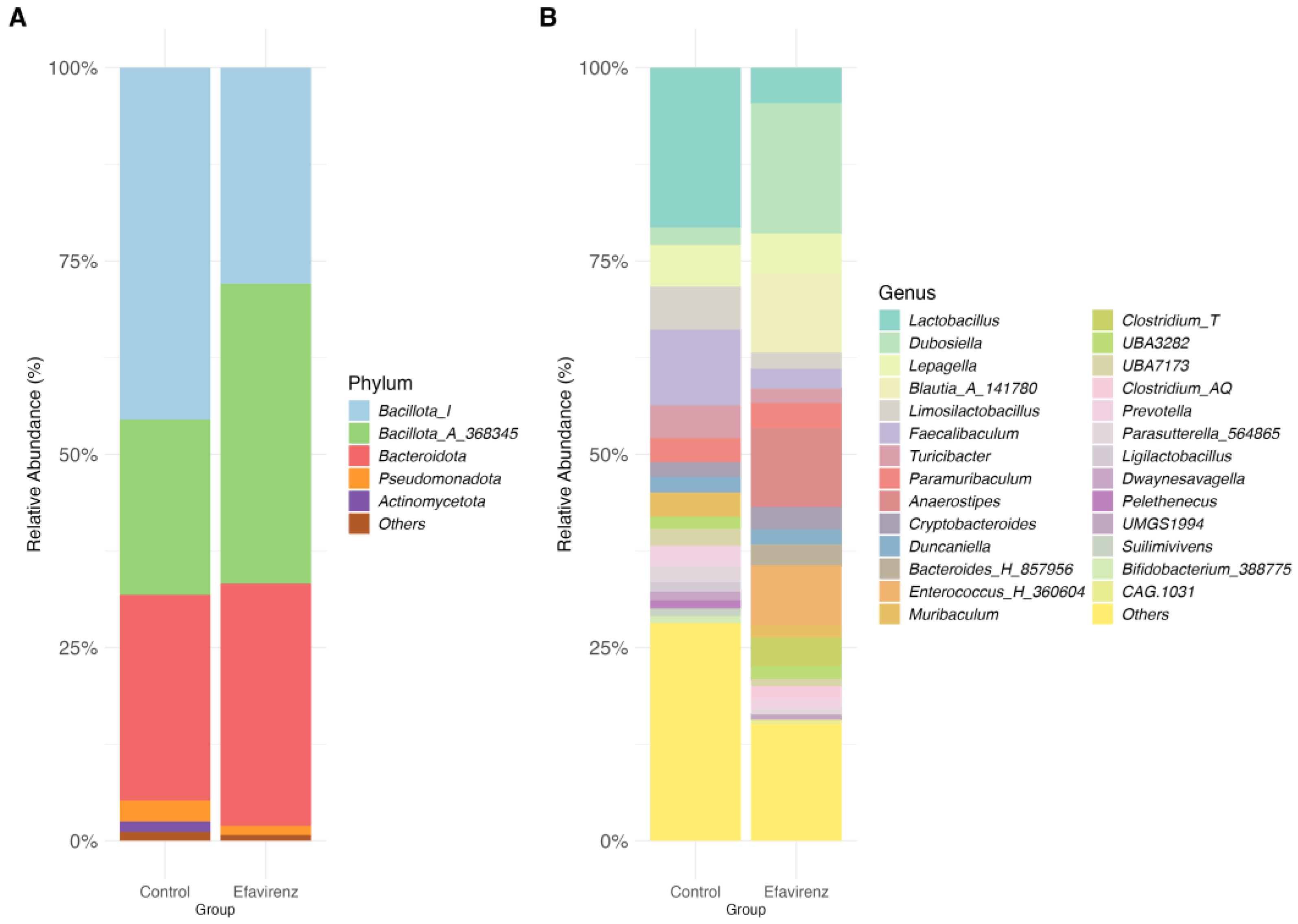
2.1. Characterization of the Gut Microbiota
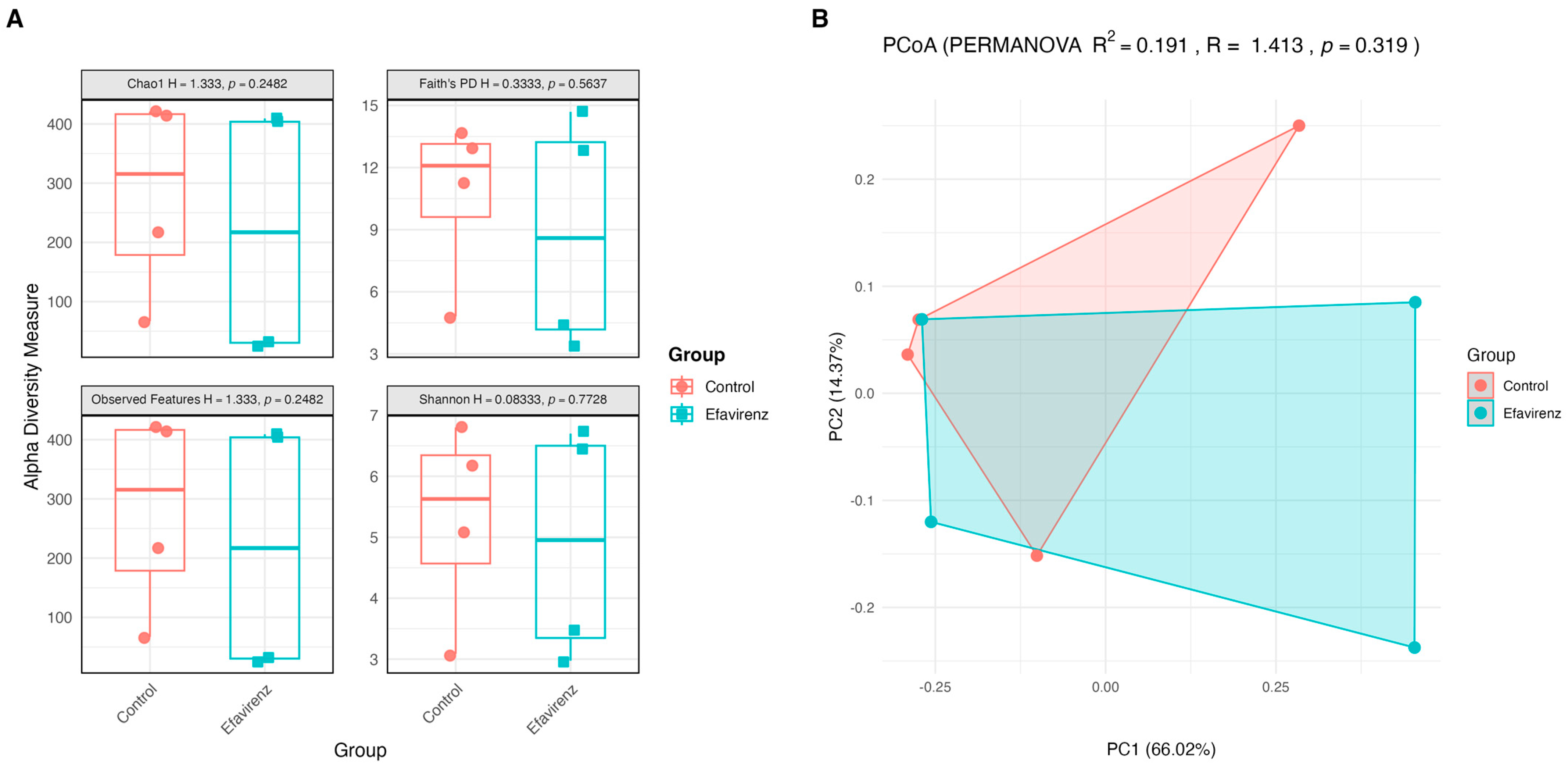
2.2. Comparative Analysis of Intestinal Microbial Diversity
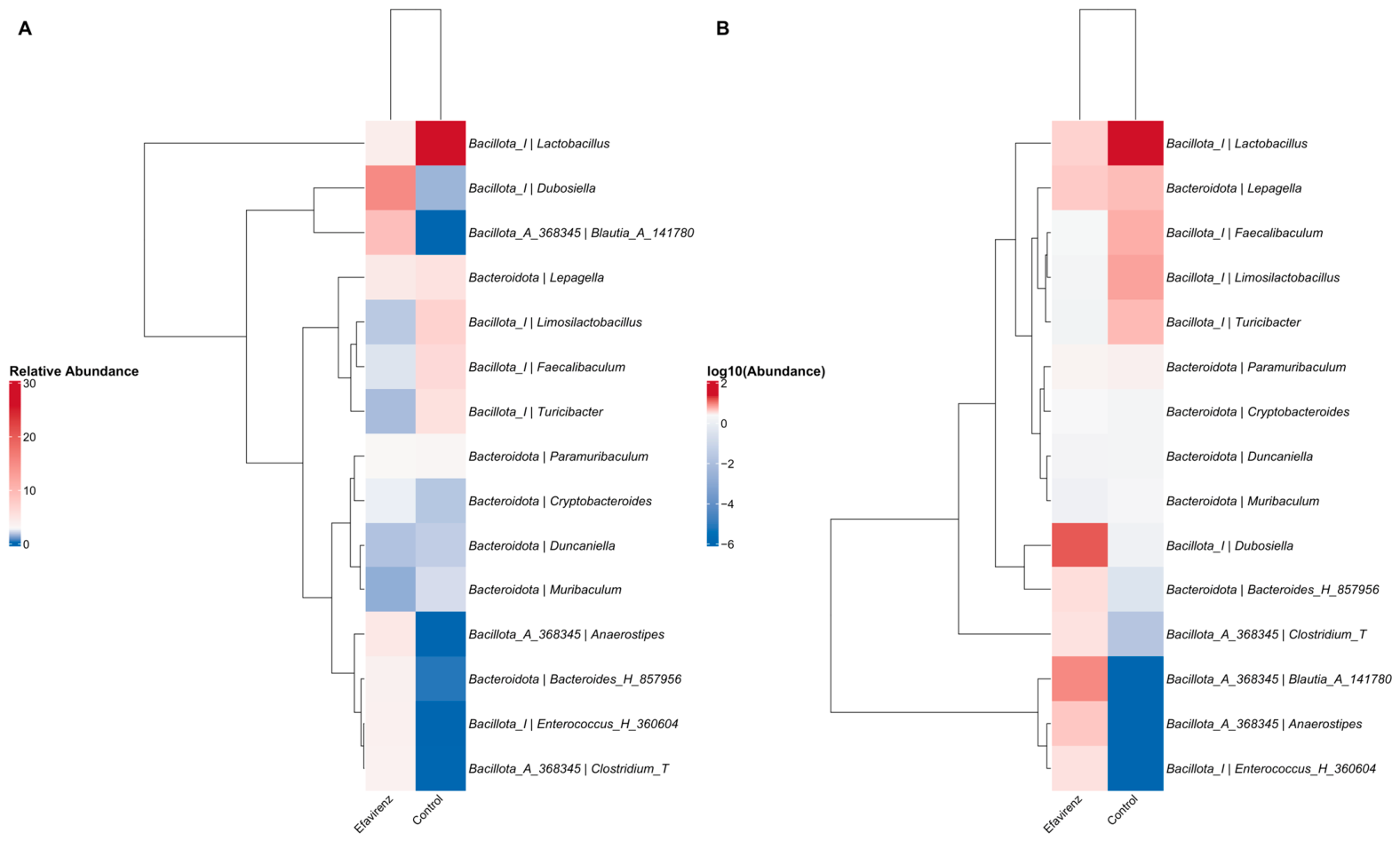
2.3. Exploratory Analysis Using Heat Maps
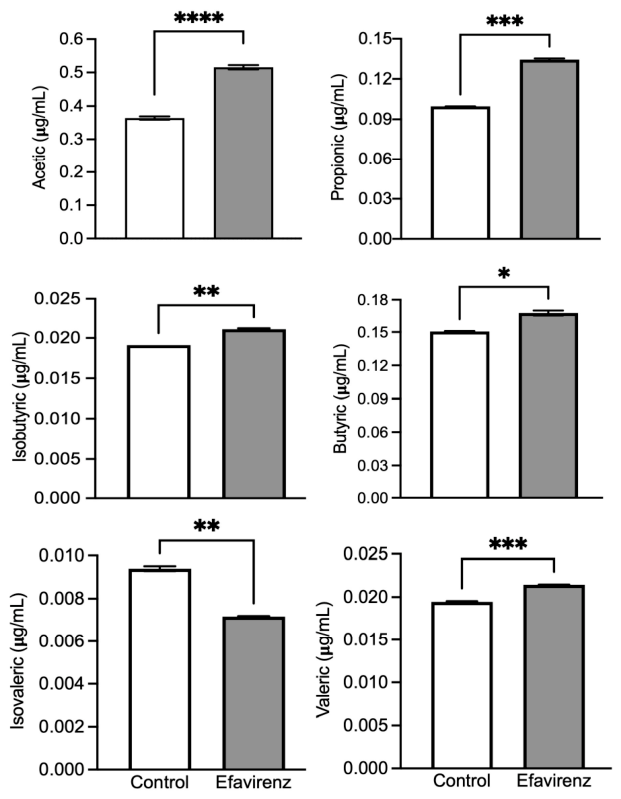
2.4. Short Chain Fatty Acids (SCFA)
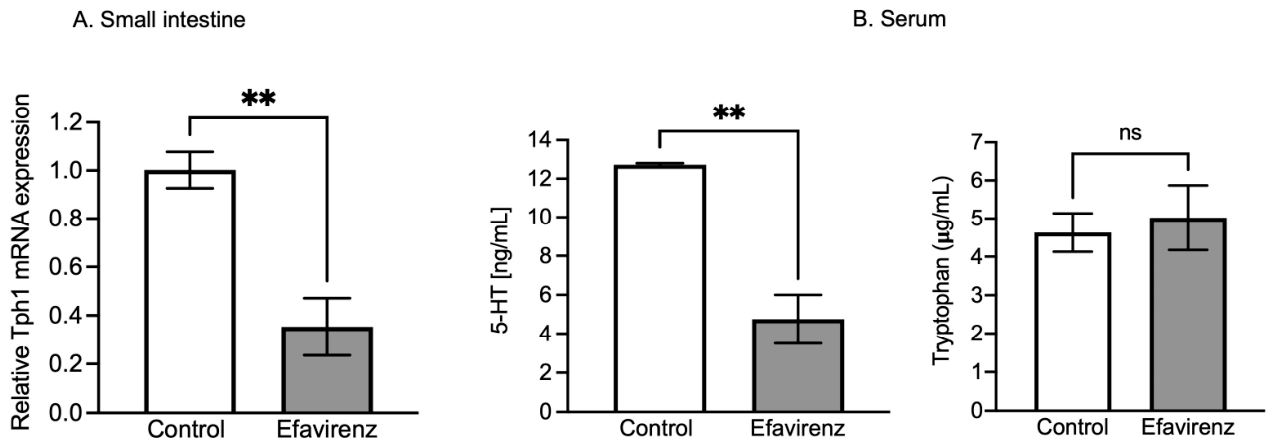
2.5. Effect of EFV on Tph1 Expression in the Gut, and on Serum 5-HT and Trp Levels
3. Discussion
4. Materials and Methods
4.1. Mice and Ethical Considerations
4.2. Pharmacological Treatment
4.3. Intestinal Preparation Techniques for qPCR Analysis
4.4. RNA Preparation and Tph1 Expression via qPCR Analysis
4.5. Fecal Sampling for Gut Microbiota Analyses
4.6. Measurements of Serum Serotonin and Tryptophan Levels by ELISA
4.7. DNA Extraction and 16S rRNA Sequencing
4.8. Measurement of SCFAs in Fecal Samples
4.9. Preparation of the SCFA Curve
4.10. SCFA Quantification
4.11. Bioinformatics and Statistical Analysis
5. Conclusions
Author Contributions
Funding
Institutional Review Board Statement
Informed Consent Statement
Data Availability Statement
Acknowledgments
Conflicts of Interest
References
- Huang, L.; Hong, Y.; Fu, X.; Tan, H.; Chen, Y.; Wang, Y.; Chen, D. The role of the microbiota in glaucoma. Mol. Asp. Med. 2023, 94, 101221. [Google Scholar] [CrossRef]
- Zheng, M.; Ye, H.; Yang, X.; Shen, L.; Dang, X.; Liu, X.; Gong, Y.; Wu, Q.; Wang, L.; Ge, X.; et al. Probiotic Clostridium butyricum ameliorates cognitive impairment in obesity via the microbiota-gut-brain axis. Brain Behav. Immun. 2024, 115, 565–587. [Google Scholar] [CrossRef] [PubMed]
- Pan, Y.; Jiao, F.Y. Link between childhood obesity and gut microbiota. World J. Gastroenterol. 2024, 30, 3560–3563. [Google Scholar] [CrossRef]
- Vamanu, E.; Rai, S.N. The Link between Obesity, Microbiota Dysbiosis, and Neurodegenerative Pathogenesis. Diseases 2021, 9, 45. [Google Scholar] [CrossRef]
- Chang, Y.; Chen, J.; Peng, Y.; Zhang, K.; Zhang, Y.; Zhao, X.; Wang, D.; Li, L.; Zhu, J.; Liu, K.; et al. Gut-derived macrophages link intestinal damage to brain injury after cardiac arrest through TREM1 signaling. Cell. Mol. Immunol. 2025, 22, 437–455. [Google Scholar] [CrossRef]
- Dinakis, E.; O’Donnell, J.A.; Marques, F.Z. The gut-immune axis during hypertension and cardiovascular diseases. Acta Physiol. 2024, 240, e14193. [Google Scholar] [CrossRef]
- Ahmadmehrabi, S.; Tang, W.H.W. Gut microbiome and its role in cardiovascular diseases. Curr. Opin. Cardiol. 2017, 32, 761–766. [Google Scholar] [CrossRef] [PubMed]
- Batagianni, M.; Papazoglou, A.; Galiatsatos, P.; Linos, D. Assessing the relationship of gut microbiota with neurological, psychiatric, and neurodegenerative disorders: A narrative review. World J. Biol. Psychiatry 2025, 26, 409–421. [Google Scholar] [CrossRef] [PubMed]
- Aijaz, M.; Ahmad, M.; Ahmad, S.; Afzal, M.; Kothiyal, P. The gut-brain axis: Role of gut microbiota in neurological disease pathogenesis and pharmacotherapeutics. Naunyn-Schmiedeberg’s Arch. Pharmacol. 2026, 399, 4879–4905. [Google Scholar] [CrossRef]
- Li, J.; Zhao, F.; Wang, Y.; Chen, J.; Tao, J.; Tian, G.; Wu, S.; Liu, W.; Cui, Q.; Geng, B.; et al. Gut microbiota dysbiosis contributes to the development of hypertension. Microbiome 2017, 5, 14. [Google Scholar] [CrossRef]
- Nigam, M.; Devi, K.; Coutinho, H.D.M.; Mishra, A.P. Exploration of gut microbiome and inflammation: A review on key signalling pathways. Cell Signal. 2024, 118, 111140. [Google Scholar] [CrossRef] [PubMed]
- Al Bander, Z.; Nitert, M.D.; Mousa, A.; Naderpoor, N. The Gut Microbiota and Inflammation: An Overview. Int. J. Environ. Res. Public Health 2020, 17, 7618. [Google Scholar] [CrossRef]
- Bustos-Fernández, L.; Hanna, I. Eje cerebro intestino microbiota. Importancia en la práctica clínica. Rev. Gastroenterol. Perú 2022, 42, 106–116. [Google Scholar] [CrossRef] [PubMed]
- Recker, J. Scientists Find a Possible Link Between Gut Bacteria and Depression. Smithsonian Magazine, 5 February 2019.
- Kamble, S.R.; Dandekar, M.P. Implication of microbiota gut-brain axis in the manifestation of obsessive-compulsive disorder: Preclinical and clinical evidence. Eur. J. Pharmacol. 2023, 957, 176014. [Google Scholar] [CrossRef]
- Bosch, J.A.; Nieuwdorp, M.; Zwinderman, A.H.; Deschasaux, M.; Radjabzadeh, D.; Kraaij, R.; Davids, M.; de Rooij, S.R.; Lok, A. The gut microbiota and depressive symptoms across ethnic groups. Nat. Commun. 2022, 13, 7129. [Google Scholar] [CrossRef]
- Tian, P.; Wang, G.; Zhao, J.; Zhang, H.; Chen, W. Bifidobacterium with the role of 5-hydroxytryptophan synthesis regulation alleviates the symptom of depression and related microbiota dysbiosis. J. Nutr. Biochem. 2019, 66, 43–51. [Google Scholar] [CrossRef]
- Gao, K.; Pi, Y.; Mu, C.L.; Farzi, A.; Liu, Z.; Zhu, W.Y. Increasing carbohydrate availability in the hindgut promotes hypothalamic neurotransmitter synthesis: Aromatic amino acids linking the microbiota-brain axis. J. Neurochem. 2019, 149, 641–659. [Google Scholar] [CrossRef] [PubMed]
- Gao, K.; Pi, Y.; Mu, C.L.; Peng, Y.; Huang, Z.; Zhu, W.Y. Antibiotics-induced modulation of large intestinal microbiota altered aromatic amino acid profile and expression of neurotransmitters in the hypothalamus of piglets. J. Neurochem. 2018, 146, 219–234. [Google Scholar] [CrossRef]
- Sherwin, E.; Dinan, T.G.; Cryan, J.F. Recent developments in understanding the role of the gut microbiota in brain health and disease. Ann. N. Y. Acad. Sci. 2018, 1420, 5–25. [Google Scholar] [CrossRef]
- Rothhammer, V.; Mascanfroni, I.D.; Bunse, L.; Takenaka, M.C.; Kenison, J.E.; Mayo, L.; Chao, C.C.; Patel, B.; Yan, R.; Blain, M.; et al. Type I interferons and microbial metabolites of tryptophan modulate astrocyte activity and central nervous system inflammation via the aryl hydrocarbon receptor. Nat. Med. 2016, 22, 586–597. [Google Scholar] [CrossRef] [PubMed]
- Gutiérrez, F.; García, L.; Padilla, S.; Alvarez, D.; Moreno, S.; Navarro, G.; Gómez-Sirvent, J.; Vidal, F.; Asensi, V.; Masiá, M. Risk of clinically significant depression in HIV infected patients: Effect of antiretroviral drugs. HIV Med. 2014, 15, 213–223. [Google Scholar] [CrossRef]
- Jin, J.; Grimmig, B.; Izzo, J.; Brown, L.A.M.; Hudson, C.; Smith, A.J.; Tan, J.; Bickford, P.C.; Giunta, B. HIV Non-Nucleoside Reverse Transcriptase Inhibitor Efavirenz Reduces Neural Stem Cell Proliferation in Vitro and in Vivo. Cell Transplant. 2016, 25, 1967–1977. [Google Scholar] [CrossRef]
- Sumari-de Boer, M.; Schellekens, A.; Duinmaijer, A.; Lalashowi, J.M.; Swai, H.J.; de Mast, Q.; van der Ven, A.; Kinabo, G. Efavirenz is related to neuropsychiatric symptoms among adults, but not among adolescents livin with human immunodeficiency virus in Kilimanjaro, Tanzania. Trop. Med. Int. Health 2018, 23, 164–172. [Google Scholar] [CrossRef]
- Streck, E.L.; Ferreira, G.K.; Scaini, G.; Rezin, G.T.; Gonçalves, C.L.; Jeremias, I.C.; Zugno, A.I.; Ferreira, G.C.; Moreira, J.; Fochesato, C.M.; et al. Non-nucleoside reverse transcriptase inhibitors efavirenz and nevirapine inhibit cytochrome C oxidase in mouse brain regions. Neurochem. Res. 2011, 36, 962–966. [Google Scholar] [CrossRef]
- Montenegro-Burke, J.R.; Woldstad, C.J.; Fang, M.; Bade, A.N.; McMillan, J.; Edagwa, B.; Boska, M.D.; Gendelman, H.E.; Siuzdak, G. Nanoformulated Antiretroviral Therapy Attenuates Brain Metabolic Oxidative Stress. Mol. Neurobiol. 2019, 56, 2896–2907. [Google Scholar] [CrossRef]
- Dalwadi, D.A.; Ozuna, L.; Harvey, B.H.; Viljoen, M.; Schetz, J.A. Adverse Neuropsychiatric Events and Recreational Use of Efavirenz and Other HIV-1 Antiretroviral Drugs. Pharmacol. Rev. 2018, 70, 684–711. [Google Scholar] [CrossRef] [PubMed]
- Huang, C.; Hoque, T.; Bendayan, R. Antiretroviral drugs efavirenz, dolutegravir and bictegravir dysregulate blood-brain barrier integrity and function. Front. Pharmacol. 2023, 14, 1118580. [Google Scholar] [CrossRef] [PubMed]
- Rojas-Osornio, S.A.; Crespo-Ramírez, M.; Paredes-Cervantes, V.; Mata-Marín, A.; Martínez-Lara, R.; Pérez de la Mora, M.; Tesoro-Cruz, E. Oral Administration of Efavirenz Dysregulates the Tph2 Gene in Brain Serotonergic Areas and Alters Weight and Mood in Mice. Pharmaceuticals 2024, 801, 17. [Google Scholar] [CrossRef]
- Ray, S.; Narayanan, A.; Giske, C.G.; Neogi, U.; Sönnerborg, A.; Nowak, P. Altered Gut Microbiome under Antiretroviral Therapy: Impact of Efavirenz and Zidovudine. ACS Infect. Dis. 2021, 7, 1104–1115. [Google Scholar] [CrossRef]
- Huang, Y.X.; Tang, Q.; Fu, S.H.; Zhong, H.J.; Liu, Z.; Zhong, Q.Y.; Wang, Y.H.; Luo, Y.D.; Li, X.Y.; Chen, S.; et al. Comparison of Efavirenz and Dolutegravir on Gut Microbiome and Gut Barrier Functions. ACS Omega 2025, 10, 23099–23110. [Google Scholar] [CrossRef]
- Mordhorst, A.; Dhandapani, P.; Matthes, S.; Mosienko, V.; Rothe, M.; Todiras, M.; Self, J.; Schunck, W.H.; Schütz, A.; Bader, M.; et al. Phenylalanine hydroxylase contributes to serotonin synthesis in mice. FASEB J. 2021, 35, e21648. [Google Scholar] [CrossRef] [PubMed]
- Carkaci-Salli, N.; Salli, U.; Tekin, I.; Hengst, J.A.; Zhao, M.K.; Gilman, T.L.; Andrews, A.M.; Vrana, K.E. Functional characterization of the S41Y (C2755A) polymorphism of tryptophan hydroxylase 2. J. Neurochem. 2014, 130, 748–758. [Google Scholar] [CrossRef]
- Carkaci-Salli, N.; Salli, U.; Kuntz-Melcavage, K.L.; Pennock, M.M.; Ozgen, H.; Tekin, I.; Freeman, W.M.; Vrana, K.E. TPH2 in the ventral tegmental area of the male rat brain. Brain Res. Bull. 2011, 84, 376–380. [Google Scholar] [CrossRef]
- Zareifopoulos, N.; Lagadinou, M.; Karela, A.; Pouliasi, F.; Economou, I.; Tsigkou, A.; Velissaris, D. Efavirenz as a psychotropic drug. Eur. Rev. Med. Pharmacol. Sci. 2020, 24, 10729–10735. [Google Scholar] [PubMed]
- Apostolova, N.; Funes, H.A.; Blas-Garcia, A.; Alegre, F.; Polo, M.; Esplugues, J.V. Involvement of nitric oxide in the mitochondrial action of efavirenz: A differential effect on neurons and glial cells. J. Infect. Dis. 2015, 21, 1953–1958. [Google Scholar] [CrossRef]
- Cavalcante, G.I.; Chaves, A.J.; Linhares, M.I.; de Carvalho, C.N.; Venâncio, E.T.; Rios, E.R.; de Souza, F.C.; Vasconcelos, S.M.; Macêdo, D.; de França, M.M. HIV antiretroviral drug Efavirenz induces anxiety-like and depression-like behavior in rats: Evaluation of neurotransmitter alterations in the striatum. Eur. J. Pharmacol. 2017, 799, 7–15. [Google Scholar] [CrossRef]
- Wang, P.F.; Neiner, A.; Kharasch, E.D. Efavirenz Metabolism: Influence of Polymorphic CYP2B6 Variants and Stereochemistry. Drug Metab. Dispos. 2019, 47, 1195–1205, Erratum in Drug Metab. Dispos. 2019, 47, 1231. https://doi.org/10.1124/dmd.119.086348err. [Google Scholar] [CrossRef] [PubMed] [PubMed Central]
- Zhao, M.; Chu, J.; Feng, S.; Guo, C.; Xue, B.; He, J.K.; Li, L. Immunological mechanisms of inflammatory diseases caused by gut microbiota dysbiosis: A review. Biomed. Pharmacother. 2023, 164, 114985. [Google Scholar] [CrossRef] [PubMed]
- Choi, J.; Kim, Y.K.; Han, P.L. Extracellular Vesicles Derived from Lactobacillus plantarum Increase BDNF Expression in Cultured Hippocampal Neurons and Produce Antidepressant-like Effects in Mice. Exp. Neurobiol. 2019, 28, 158–171. [Google Scholar] [CrossRef]
- Skowrońska, A.; Gawlik-Kotelnicka, O.; Margulska, A.; Strzelecki, D. The Influence of Probiotic Supplementation on the Severity of Anxiety and Depressive Symptoms; Function and Composition of Gut Microbiota; and Metabolic, Inflammation, and Oxidative Stress Markers in Patients with Depression-A Study Protocol. Metabolites 2023, 13, 182. [Google Scholar] [CrossRef] [PubMed]
- Vijayaram, S.; Mahendran, K.; Razafindralambo, H.; Ringø, E.; Kannan, S.; Sun, Y.Z. Probiotics, gut microbiota, and brain health: Exploring therapeutic pathways. AIMS Microbiol. 2025, 11, 501–541. [Google Scholar] [PubMed]
- Knezevic, E.; Nenic, K.; Milanovic, V.; Knezevic, N.N. The Role of Cortisol in Chronic Stress, Neurodegenerative Diseases, and Psychological Disorders. Cells 2023, 12, 2726. [Google Scholar] [CrossRef]
- Shen, Y.; Fan, N.; Ma, S.X.; Cheng, X.; Yang, X.; Wang, G. Gut Microbiota Dysbiosis: Pathogenesis, Diseases, Prevention, and Therapy. MedComm 2025, 6, e70168. [Google Scholar] [CrossRef]
- Arora, I.; Mal, P.; Arora, P.; Paul, A.; Kumar, M. GABAergic implications in anxiety and related disorders. Biochem. Biophys. Res. Commun. 2024, 724, 150218. [Google Scholar] [CrossRef]
- Alkhalaf, L.M.; Ryan, K.S. Biosynthetic manipulation of tryptophan in bacteria: Pathways and mechanisms. Chem. Biol. 2015, 22, 317–328. [Google Scholar] [CrossRef] [PubMed]
- da Fonseca, S.; Alves, C.; Dias, C.; Mendes-da-Silva, C. Probiotics and undernourishment impact on brain 5-Hydroxytryptamine system and neurotrophin BDNF in rats: Risk of depression and anxiety? Nutrition 2025, 132, 112680. [Google Scholar] [CrossRef]
- Zagato, E.; Pozzi, C.; Bertocchi, A.; Schioppa, T.; Saccheri, F.; Guglietta, S.; Fosso, B.; Melocchi, L.; Nizzoli, G.; Troisi, J.; et al. Endogenous murine microbiota member Faecalibaculum rodentium and its human homologue protect from intestinal tumour growth. Nat. Microbiol. 2020, 5, 511–524. [Google Scholar] [CrossRef]
- Rojas-Osornio, S.A.; Manuel-Apolinar, L.; Crespo-Ramírez, M.; Paredes-Cervantes, V.; Mata-Marín, A.; Molina-López, J.; Pérez de la Mora, M.; Borroto-Escuela, D.; Martínez-Lara, R.; Tesoro-Cruz, E. Efavirenz Interacts with Hormones Involved in Appetite and Satiety, Affecting Body Weight in Mice. Int. J. Mol. Sci. 2026, 27, 735. [Google Scholar] [CrossRef]
- O’Riordan, K.J.; Collins, M.K.; Moloney, G.M.; Knox, E.G.; Aburto, M.R.; Fülling, C.; Morley, S.J.; Clarke, G.; Schellekens, H.; Cryan, J.F. Short chain fatty acids: Microbial metabolites for gut-brain axis signalling. Mol. Cell. Endocrinol. 2022, 546, 111572. [Google Scholar] [CrossRef]
- Fusco, W.; Lorenzo, M.B.; Cintoni, M.; Porcari, S.; Rinninella, E.; Kaitsas, F.; Lener, E.; Mele, M.C.; Gasbarrini, A.; Collado, M.C.; et al. Short-Chain Fatty-Acid-Producing Bacteria: Key Components of the Human Gut Microbiota. Nutrients 2023, 15, 2211. [Google Scholar] [CrossRef]
- Chapp, A.D.; Shan, Z.; Chen, Q.H. Ácido acético: Un metabolito subestimado en los cambios inducidos por el etanol en la regulación de la función cardiovascular. Antioxidantes 2024, 13, 139. [Google Scholar] [CrossRef]
- Lobzhanidze, G.; Lordkipanidze, T.; Zhvania, M.; Japaridze, N.; MacFabe, D.F.; Pochkidze, N.; Gasimov, E.; Rzaev, F. Effect of propionic acid on the morphology of the amygdala in adolescent male rats and their behavior. Micron 2019, 125, 102732. [Google Scholar] [CrossRef]
- Aires, J.V.; Souza, E. Use of microbial fuel cell systems in wastewater treatment in connection with bioenergy generation. Rev. Desafios 2025, 12, 1–20. [Google Scholar]
- Zhu, H.; Yang, D.; Du, P.; Qian, H.; Yang, Z. 6-shogaol improves the cognitive and memory declines of natural aging mice by modulating butyrate-producing microbiota and intestinal barrier. Phytomedicine 2025, 148, 157381. [Google Scholar] [CrossRef] [PubMed]
- Cao, J.; Ma, J.; Zha, X.; Bian, X.; Wang, W.; Liu, X. Gut Microbiota Dysbiosis in Depression: Pathological Correlations, Molecular Pathways, and Therapeutic Interventions. Int. J. Mol. Sci. 2026, 27, 1530. [Google Scholar] [CrossRef]
- Yeo, L.F.; Palmu, J.; Havulinna, A.S.; Pärnänen, K.; Salomaa, V.; Lahti, L.; Knight, R.; Niiranen, T. Prospective association between the gut microbiome and incident hypertension: A 20-year cohort study. J. Hypertens. 2026, 44, 673–681. [Google Scholar] [CrossRef]
- Liu, D.; Xie, L.-S.; Lian, S.; Li, K.; Yang, Y.; Wang, W.-Z.; Hu, S.; Liu, S.-J.; Liu, C.; He, Z. Anaerostipes hadrus, a butyrate-producing bacterium capable of metabolizing 5-fluorouracil. mSphere 2024, 9, e0081623. [Google Scholar] [CrossRef] [PubMed]
- Coetzee, O.; Arnold, D. Anaerostipes caccae CLB101TM, a Novel Probiotic and Key Butyrate Producer, Aids in the Resolution of Long-Term Food Intolerances in a Patient in 12 Weeks: A Case Report. Ann. Case Rep. 2026, 11, 102510. [Google Scholar]
- Banks, W.A.; Rhea, E.M.; Reed, M.J.; Erickson, M.A. The penetration of therapeutics across the blood-brain barrier: Classic case studies and clinical implications. Cell Rep. Med. 2024, 5, 101760. [Google Scholar] [CrossRef]
- Deng, Y.; Zhou, M.; Wang, J.; Yao, J.; Yu, J.; Liu, W.; Wu, L.; Wang, J.; Gao, R. Involvement of the microbiota-gut-brain axis in chronic restraint stress: Disturbances of the kynurenine metabolic pathway in both the gut and brain. Gut Microbes 2021, 13, 1–16. [Google Scholar] [CrossRef] [PubMed]
- NOM-062-Z00-1999; Norma Oficial Mexicana Para la Producción, Cuidado y Uso de los Animales de Laboratorio; Chapter 9. NOM: Mexico, México, 1999.
- NRC National Research Council. Guide for the Care and Use of Laboratory Animals, 8th ed.; Fletcher, C., Crossgrove, R., Eds.; The National Academy Press: Washington, DC, USA, 2011. Available online: https://www.ncbi.nlm.nih.gov/books/NBK54050/ (accessed on 10 February 2026).
- NC3Rs. National Centre for the Replacement, Refinement and Reduction of Animals in Research. ARRIVE Guidelines. 2010. Available online: https://arriveguidelines.org/ (accessed on 10 February 2026).
- Romão, P.R.; Lemos, J.C.; Moreira, J.; de Chaves, G.; Moretti, M.; Castro, A.A.; Andrade, V.M.; Boeck, C.R.; Quevedo, J.; Gavioli, E.C. Anti-HIV drugs nevirapine and efavirenz affect anxiety-related behavior and cognitive performance in mice. Neurotox. Res. 2011, 19, 73–80. [Google Scholar] [CrossRef]
- Streck, E.L.; Scaini, G.; Rezin, G.T.; Moreira, J.; Fochesato, C.M.; Romão, P.R.T. Effects of the HIV treatment drugs nevirapine and efavirenz on brain creatine kinase activity. Metab. Brain Dis. 2008, 23, 485–492. [Google Scholar] [CrossRef] [PubMed]
- Magzal, F.; Even, C.; Haimov, I.; Agmon, M.; Asraf, K.; Shochat, T.; Tami, S. Associations between fecal short-chain fatty acids and sleep continuity in older adults with insomnia symptoms. Sci. Rep. 2021, 11, 4052. [Google Scholar] [CrossRef] [PubMed]


Disclaimer/Publisher’s Note: The statements, opinions and data contained in all publications are solely those of the individual author(s) and contributor(s) and not of MDPI and/or the editor(s). MDPI and/or the editor(s) disclaim responsibility for any injury to people or property resulting from any ideas, methods, instructions or products referred to in the content. |
© 2026 by the authors. Licensee MDPI, Basel, Switzerland. This article is an open access article distributed under the terms and conditions of the Creative Commons Attribution (CC BY) license.
Share and Cite
Rojas-Osornio, S.A.; Paredes-Cervantes, V.; Aguirre-García, M.M.; Crespo-Ramírez, M.; Márquez-Mota, C.C.; Aguilar-Rosales, R.; Talamantes-Gómez, J.M.; Escalona-Montaño, A.R.; García-Pérez, Á.; Pérez de la Mora, M.; et al. Efavirenz-Altered Gut-Microbiota, Tph1, and Systemic 5-HT Levels: Could They Affect Depression Mechanisms in Mice? Int. J. Mol. Sci. 2026, 27, 4504. https://doi.org/10.3390/ijms27104504
Rojas-Osornio SA, Paredes-Cervantes V, Aguirre-García MM, Crespo-Ramírez M, Márquez-Mota CC, Aguilar-Rosales R, Talamantes-Gómez JM, Escalona-Montaño AR, García-Pérez Á, Pérez de la Mora M, et al. Efavirenz-Altered Gut-Microbiota, Tph1, and Systemic 5-HT Levels: Could They Affect Depression Mechanisms in Mice? International Journal of Molecular Sciences. 2026; 27(10):4504. https://doi.org/10.3390/ijms27104504
Chicago/Turabian StyleRojas-Osornio, Sandra Angélica, Vladimir Paredes-Cervantes, María Magdalena Aguirre-García, Minerva Crespo-Ramírez, Claudia C. Márquez-Mota, Raquel Aguilar-Rosales, José Moisés Talamantes-Gómez, Alma Reyna Escalona-Montaño, Águeda García-Pérez, Miguel Pérez de la Mora, and et al. 2026. "Efavirenz-Altered Gut-Microbiota, Tph1, and Systemic 5-HT Levels: Could They Affect Depression Mechanisms in Mice?" International Journal of Molecular Sciences 27, no. 10: 4504. https://doi.org/10.3390/ijms27104504
APA StyleRojas-Osornio, S. A., Paredes-Cervantes, V., Aguirre-García, M. M., Crespo-Ramírez, M., Márquez-Mota, C. C., Aguilar-Rosales, R., Talamantes-Gómez, J. M., Escalona-Montaño, A. R., García-Pérez, Á., Pérez de la Mora, M., Borroto-Escuela, D. O., Manuel-Apolinar, L., Pérez-Sánchez, G., Vazquez-Vega, S., Martínez-Lara, R., & Tesoro-Cruz, E. (2026). Efavirenz-Altered Gut-Microbiota, Tph1, and Systemic 5-HT Levels: Could They Affect Depression Mechanisms in Mice? International Journal of Molecular Sciences, 27(10), 4504. https://doi.org/10.3390/ijms27104504