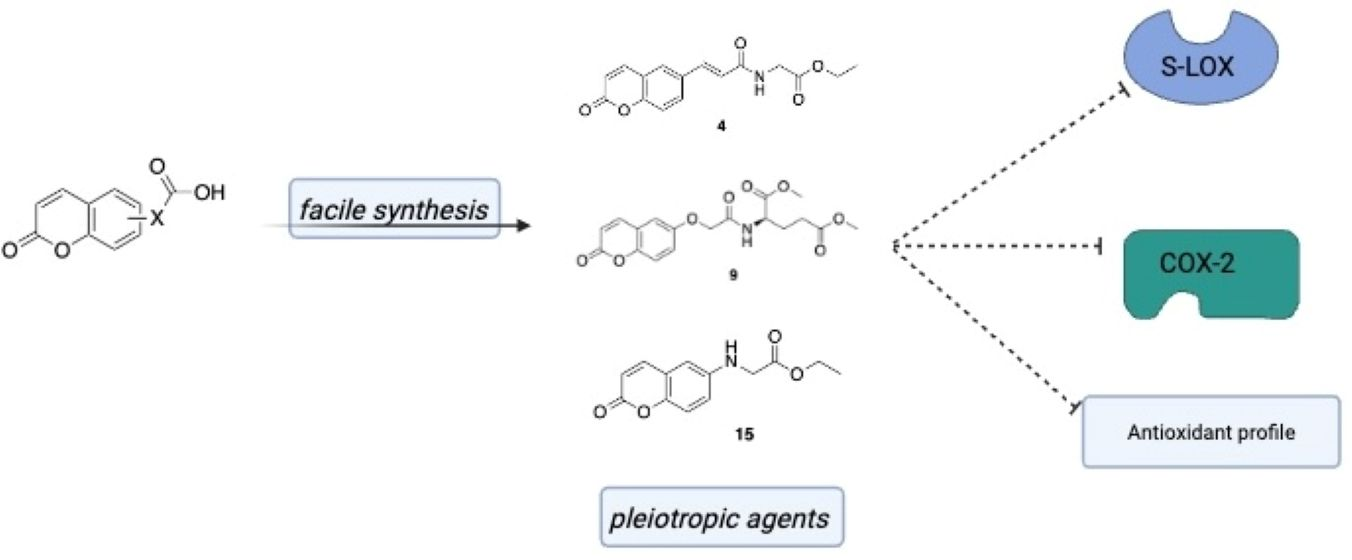
Coumarin–Amino Acid Hybrids Used as Possible Multifactorial Anti-Inflammatory Agents



Abstract
1. Introduction
2. Results and Discussion
2.1. Chemistry
2.2. Biology
2.2.1. AAPH-Induced Peroxidation Inhibition Assay
2.2.2. Soybean Lipoxygenase Inhibitory Activity Assay
2.2.3. Ovine Cyclooxygenase 2 (COX-2) Inhibitory Activity Assay
2.3. Computational Experiments
2.4. Prediction of Anti-Inflammatory Activity
3. Materials and Methods
3.1. Chemistry
3.1.1. Instrumentation
3.1.2. Chemical Reagents
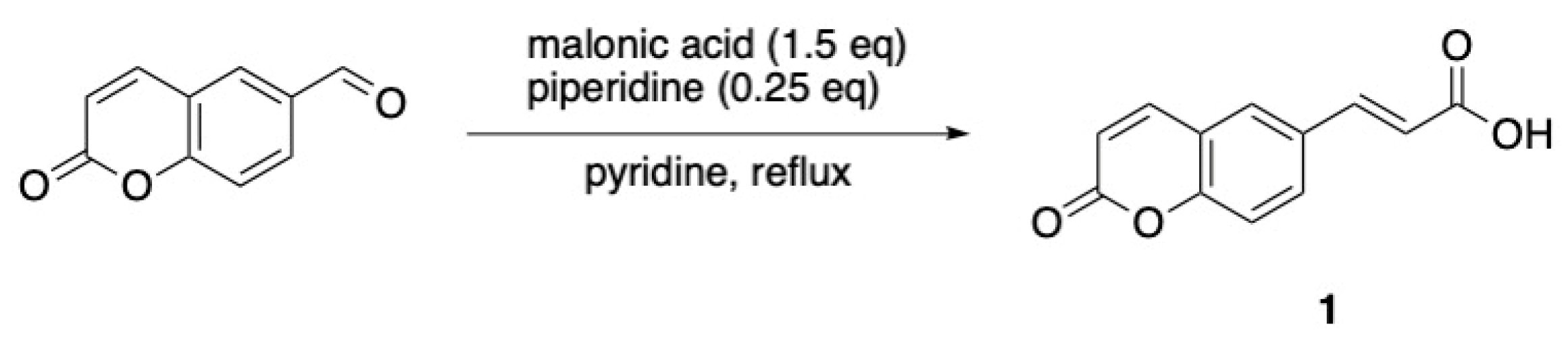
3.1.3. Synthesis of (E)–(3–(2–Oxo-2H-Chromen-6-yl)) Acrylic Acid (1) [66]
(E)–(3–(2–Oxo-2H-Chromen-6-yl))Acrylic Acid (1)
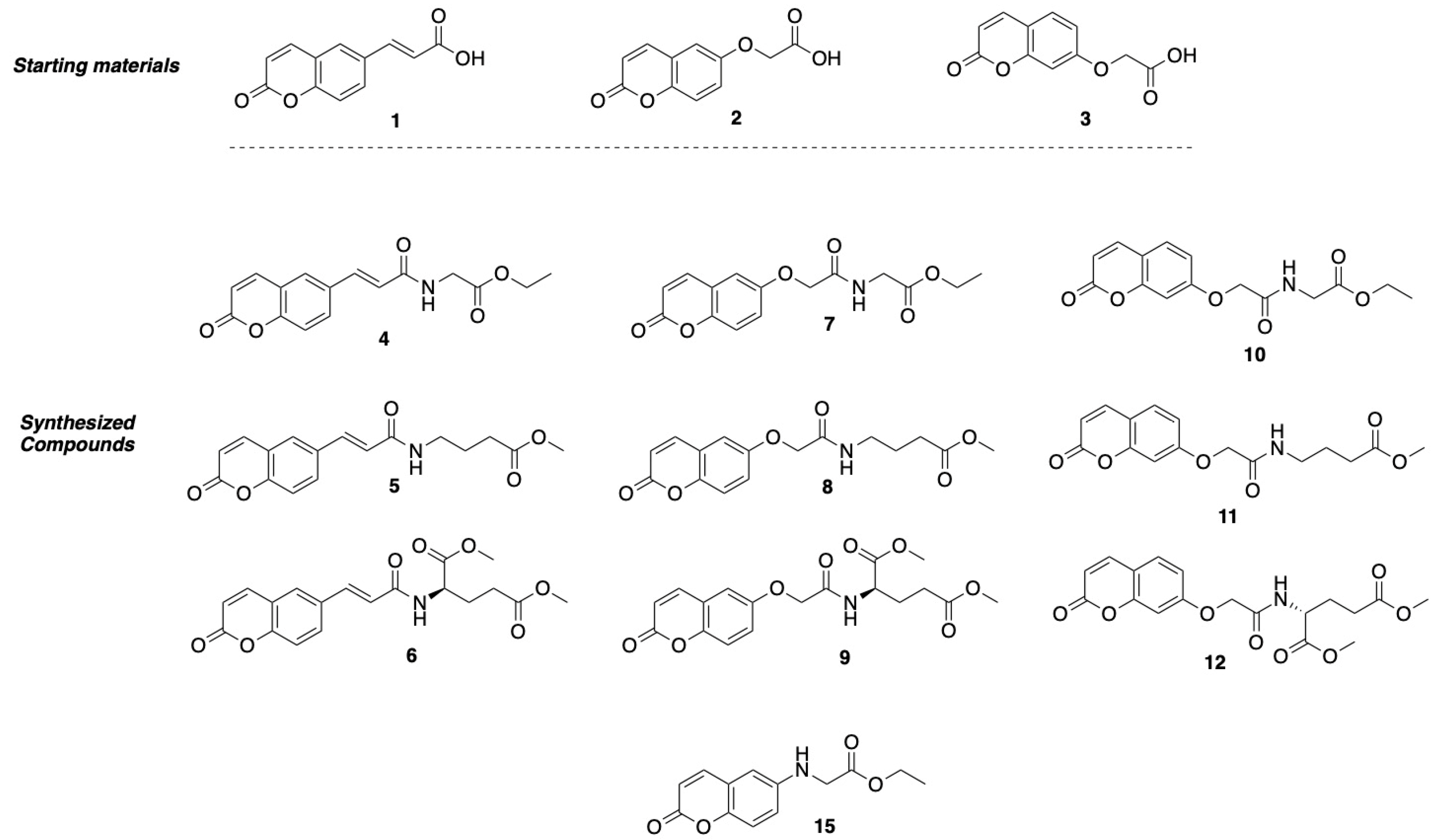
3.1.4. General Method for the Synthesis of Acrylic and Oxo Amides 4–12 [47]
Ethyl (E)-(3-(2-Oxo-2H-Chromen-6-yl)Acryloyl)Glycinate (4)
Methyl (E)-4-(3-(2-Oxo-2H-Chromen-6-yl)Acrylamido)Butanoate (5)
(-)-Dimethyl (E)-(3-(2-Oxo-2H-Chromen-6-yl)Acryloyl)-L-Glutamate (6)
Ethyl (2-((2-Oxo-2H-Chromen-6-yl)Oxy)Acetyl)Glycinate (7)
Methyl 4-(2-((2-Oxo-2H-Chromen-6-yl)Oxy)Acetamido)Butanoate (8)
(-)-Dimethyl (2-((2-Oxo-2H-Chromen-6-yl)Oxy)Acetyl)-L-Glutamate (9)
Ethyl (2-((2-Oxo-2H-Chromen-7-yl)Oxy)Acetyl)Glycinate (10)
Methyl 4-(2-((2-Oxo-2H-Chromen-7-yl)Oxy)Acetamido)Butanoate (11)
(-)-Dimethyl (2-((2-Oxo-2H-Chromen-7-yl)Oxy)Acetyl)-L-Glutamate (12)
3.1.5. Synthesis of 6-Nitro-2H-Chromen-2-One (13) [67]
6-Nitro-2H-Chromen-2-One (13)
3.1.6. Synthesis of 6-Amino-2H-Chromen-2-One (14) [69]
3.1.7. Synthesis of Ethyl (2-Oxo-2H-Chromen-6-yl)Glycinate (15) [47]
Ethyl (2-Oxo-2H-Chromen-6-yl)Glycinate (15)
3.2. Biology
3.2.1. Instrumentation
3.2.2. Biological Reagents
3.2.3. Biological Assays
In Vitro AAPH-Induced Sodium Linoleate Peroxidation Inhibition Assay
In Vitro Soybean Lipoxygenase Inhibitory Activity
Ovine Cyclooxygenase 2 (COX-2) Inhibitory Activity
3.3. In Silico Software
4. Conclusions
Supplementary Materials
Author Contributions
Funding
Institutional Review Board Statement
Informed Consent Statement
Data Availability Statement
Acknowledgments
Conflicts of Interest
Abbreviations
| AD | Alzheimer’s Disease |
| ADMET | Absorption, Distribution, Metabolism, Excretion, Toxicity |
| CNS | Central Nervous System |
| COX | Cyclooxygenase |
| CPE | Carrageenin-induced rat paw edema |
| DMSO | Dimethyl sulfoxide |
| EA | Ethyl acetate |
| GABA | gamma aminobutyric acid |
| FT–IR | Fourier-Transformation Infrared Spectroscopy |
| LOX | Lipoxygenase |
| MeOH | Methanol |
| PGG2 | Prostaglandin G2 |
| PGH2 | Prostaglandin H2 |
| PLA2 | Phospholipase A2 |
| PS | Petroleum Spirit |
| PTGS2 | Prostaglandin-endoperoxide synthase 2 |
| PUFA | Poly-Unsaturated Fatty Acid |
| ROS | Reactive Oxygen Species |
| RNS | Reactive Nitrogen Species |
| TLC | Thin Layer Chromatography |
| Tris-HCl | Tris(hydroxymethyl)aminomethane hydrochloride |
| TXA2 | Thromboxane A2 |
| VEGFR-2 | Vascular Endothelial Growth Factor Receptor 2 |
| QED | Quantitative Estimate of Druglikeness |
References
- Christie, W.W.; Harwood, J.L. Oxidation of polyunsaturated fatty acids to produce lipid mediators. Essays Biochem. 2020, 64, 401–421. [Google Scholar] [CrossRef] [PubMed]
- Horn, T.; Susan, A.; Schumann, R.; Sur, S.; Kukularam, K.R.; Polamarasetty, A.; Redanna, P.; Hartmut, K.; Heydeck, D. Evolutionary aspects of lipoxygenases and genetic diversity of human leukotriene signaling. Prog. Lipid Res. 2015, 57, 13–39. [Google Scholar] [CrossRef] [PubMed]
- Schmid, T.; Brüne, B. Prostanoids and Resolution of Inflammation—Beyond the Lipid-Mediator Class Switch. Front. Immunol. 2021, 12, 714042. [Google Scholar] [CrossRef]
- Ricciotti, E.; FitzGerald, G.A. Prostaglandins and Inflammation. Arterioscler. Thromb. Vasc. Biol. 2011, 31, 986–1000. [Google Scholar] [CrossRef][Green Version]
- Laube, B.; Hirai, H.; Sturgess, M.; Betz, H.; Kuhse, J. Molecular Determinants of Agonist Discrimination by NMDA Receptor Subunits: Analysis of the Glutamate Binding Site on the NR2B Subunit. Neuron 1997, 18, 493–503. [Google Scholar] [CrossRef]
- Söderpalm, B.; Lidö, H.H.; Ericson, M. The Glycine Receptor—A Functionally Important Primary Brain Target of Ethanol. Alcohol. Clin. Exp. Res. 2017, 41, 1816–1830. [Google Scholar] [CrossRef]
- Verma, M.; Lizama, B.N.; Chu, C.T. Excitotoxicity, calcium and mitochondria: A triad in synaptic neurodegeneration. Transl. Neurodegener. 2022, 11, 3. [Google Scholar] [CrossRef] [PubMed]
- Harvey, R.J.; Depner, U.B.; Wassle, H.; Ahmadi, S.; Heindl, C.; Reinold, H.; Smart, T.G.; Harvey, K.; Schultz, B.; Abo-Salem, O.M.; et al. GlyR α3: An Essential Target for Spinal PGE2-Mediated Inflammatory Pain Sensitization. Science 2004, 304, 884–887. [Google Scholar] [CrossRef]
- Papazian, I.; Kyrargyzi, V.; Evangelidou, M.; Voulgari-Kokota, A.; Probert, L. Mesenchymal Stem Cell Protection of Neurons against Glutamate Excitotoxicity Involves Reduction of NMDA-Triggered Calcium Responses and Surface GluR1, and Is Partly Mediated by TNF. Int. J. Mol. Sci. 2018, 19, 651. [Google Scholar] [CrossRef]
- Verma, M.; Wills, Z.; Chu, C.T. Excitatory Dendritic Mitochondrial Calcium Toxicity: Implications for Parkinson’s and Other Neurodegenerative Diseases. Front. Neurosci. 2018, 11, 523. [Google Scholar] [CrossRef]
- Nishiham, I.; Minami, T.; Watanabem, Y.; Ito, S.; Hayaishi, O. Prostaglandin E2 stimulates glutamate release from synaptosomes of rat spinal cord. Neurosci. Lett. 1995, 196, 57–60. [Google Scholar] [CrossRef]
- Collard, C.D.; Park, K.A.; Montalto, M.C.; Buras, J.A.; Stahl, G.L.; Colgan, S.P. Neutrophil-derived glutamate regulates vascular endothelial barrier function. J. Biol. Chem. 2002, 277, 14801–14811. [Google Scholar] [CrossRef]
- Stauss, K.I.; Marini, A.M. Cyclooxygenase-2 Inhibition Protects Cultured Cerebellar Granule Neurons from Glutamate-Mediated Cell Death. J. Neurotrauma 2004, 19, 627–638. [Google Scholar] [CrossRef] [PubMed]
- Dixon, S.J.; Lemberg, K.M.; Lamprecht, M.R.; Skouta, R.; Zaitsev, E.M.; Gleason, C.E.; Patel, D.N.; Bauer, A.J.; Cantley, A.M.; Yang, W.S.; et al. Ferroptosis: An iron-dependent form of nonapoptotic cell death. Cell 2012, 149, 1060–1072. [Google Scholar] [CrossRef] [PubMed]
- Bazinet, R.P.; Layé, S. Polyunsaturated fatty acids and their metabolites in brain function and disease. Nat. Rev. Neurosci. 2014, 15, 771–785. [Google Scholar] [CrossRef]
- Gaschler, M.M.; Stockwell, B.R. Lipid peroxidation in cell death. Biochem. Biophys. Res. Commun. 2017, 482, 419–425. [Google Scholar] [CrossRef] [PubMed]
- D’Herde, K.; Krysko, D.V. Ferroptosis: Oxidized PEs triger cell death. Nat. Chem. Biol. 2017, 13, 4–5. [Google Scholar]
- Yang, W.S.; SriRamaratnam, R.; Welsch, M.E.; Shimada, K.; Skouta, R.; Viswanathan, V.S.; Cheah, J.H.; Clemons, P.A.; Shamji, A.F.; Clish, C.B.; et al. Regulation of ferroptotic cancer cell death by GPX4. Cell 2014, 156, 317–331. [Google Scholar] [CrossRef]
- Pratt, D.A. Targeting lipoxygenases to suppress ferroptotic cell death. Proc. Natl. Acad. Sci. USA 2023, 120, e2309317120. [Google Scholar] [CrossRef]
- Shah, R.; Shchepinov, M.S.; Pratt, D.A. Resolving the Role of Lipoxygenases in the Initiation and Execution of Ferroptosis. ACS Cent. Sci. 2018, 4, 387–396. [Google Scholar] [CrossRef]
- Sun, Y.; Chen, P.; Zhai, B.; Zhang, M.; Xiang, Y.; Fang, J.; Xu, S.; Gao, Y.; Sui, X.; Li, G. The emerging role of ferroptosis in inflammation. Biomed. Pharmacother. 2020, 127, 110108. [Google Scholar] [CrossRef]
- Khan, K.M.; Saify, Z.S.; Khan, M.Z.; Ullah, Z.; Choudhary, M.I.; Rahman, R.A.; Perveen, S.; Chohan, Z.H.; Supuran, C.T. Synthesis of Coumarin Derivatives with Cytotoxic, Antibacterial and Antifungal Activity. J. Enzym. Inhib. 2004, 19, 373–379. [Google Scholar] [CrossRef] [PubMed]
- Bubols, G.B.; da Rocha Vianna, D.; Medina-Remon, A.; von Poser, G.; Maria Lamuela-Raventos, R.; Lucia Eifler-Lima, V.; Christina Garciam, S. The antioxidant activity of coumarins and flavonoids. Mini Rev. Med. Chem. 2013, 13, 318–334. [Google Scholar]
- Kontogiorgis, C.A.; Hadjipavlou-Litina, D.J. Synthesis and Antiinflammatory Activity of Coumarin Derivatives. J. Med. Chem. 2005, 48, 6400–6408. [Google Scholar] [CrossRef]
- Borges, F.; Roleira, F.; Milhazes, N.; Santana, L.; Uriarte, E. Simple Coumarins and Analogues in Medicinal Chemistry: Occurrence, Synthesis and Biological Activity. Curr. Med. Chem. 2005, 12, 887–916. [Google Scholar] [CrossRef] [PubMed]
- Curini, M.; Cravotto, G.; Epifano, F.; Giannone, G. Chemistry and Biological Activity of Natural and Synthetic Prenyloxycoumarins. Curr. Med. Chem. 2006, 13, 199–222. [Google Scholar] [CrossRef]
- Wu, L.; Wang, X.; Xu, W.; Farzaneh, F.; Xu, R. The Structure and Pharmacological Functions of Coumarins and Their Derivatives. Curr. Med. Chem. 2009, 16, 4236–4260. [Google Scholar] [CrossRef]
- Dissanayake, A.A.; Ameen, B.A.H.; Nair, M.G. Lipid Peroxidation and Cyclooxygenase Enzyme Inhibitory Compounds from Prangos haussknechtii. J. Nat. Prod. 2017, 80, 2472–2477. [Google Scholar] [CrossRef]
- Aoife, L. Studies on Coumarins and Coumarin-Related Compounds to Determine their Therapeutic Role in the Treatment of Cancer. Curr. Pharm. Des. 2004, 10, 3797–3811. [Google Scholar] [CrossRef] [PubMed]
- Ahmed, E.Y.; Latif, N.A.A.; El-Mansy, M.F.; Elserwy, W.S.; Abdelhafez, O.M. VEGFR-2 inhibiting effect and molecular modeling of newly synthesized coumarin derivatives as anti-breast cancer agents. Bioorg. Med. Chem. 2020, 28, 115328. [Google Scholar] [CrossRef]
- Batran, R.Z.; Kassem, A.F.; Abbas, E.M.H.; Elseginy, S.A.; Mounier, M.M. Design, synthesis and molecular modeling of new 4-phenylcoumarin derivatives as tubulin polymerization inhibitors targeting MCF-7 breast cancer cells. Bioorg. Med. Chem. 2018, 26, 3474–3490. [Google Scholar] [CrossRef]
- Batran, R.Z.; Dawood, D.H.; El-Seginy, S.A.; Ali, M.M.; Maher, T.J.; Gugnani, K.S.; Rondon-Ortiz, A.N. New Coumarin Derivatives as Anti-Breast and Anti-Cervical Cancer Agents Targeting VEGFR-2 and p38α MAPK. Arch. Pharm. Chem. Life Sci. 2017, 350, e1700064. [Google Scholar] [CrossRef]
- Yadav, A.K.; Shrestha, R.M.; Yadav, P.N. Anticancer mechanism of coumarin-based derivatives. Eur. J. Med. Chem. 2024, 267, 116174. [Google Scholar] [CrossRef] [PubMed]
- Hacholli, V.B.; Shubha, M.R.; Prabhanajan, B.H.; Lavanya, M.; Pramod, S.; Kumar, A.; Szeleszczuk, L.; Gackowski, M. Coumarin Derivatives as Anticancer Agents: Mechanistic Landscape with an Emphasis on Breast Cancer. Molecules 2025, 30, 4167. [Google Scholar] [CrossRef] [PubMed]
- Viegas-Junior, C.; Danuello, A.; Bolzani, V.d.S.; Barreiro, E.J.; Fraga, C.A.M. Molecular Hybridization: A Useful Tool in the Design of New Drug Prototypes. Curr. Med. Chem. 2007, 14, 1829–1852. [Google Scholar] [CrossRef]
- Zimmermann, G.R.; Lehár, J.; Keith, C.T. Multi-target therapeutics: When the whole is greater than the sum of the parts. Drug Discov. Today 2007, 12, 34–42. [Google Scholar] [CrossRef]
- Mishra, S.; Singh, P. Hybrid molecules: The privileged scaffolds for various pharmaceuticals. Eur. J. Med. Chem. 2016, 124, 500–536. [Google Scholar] [CrossRef] [PubMed]
- Gontijo, V.S.; Dias Viegas, F.P.; Cristancho Ortiz, C.J.; de Freitas Silva, M.; Damasio, C.M.; Rosa, M.C.; Campos, T.G.; Couto, D.S.; Tranches Dias, K.S.; Viegas, C. Molecular Hybridization as a Tool in the Design of Multi-target Directed Drug Candidates for Neurodegenerative Diseases. Curr. Neuropharmacol. 2020, 18, 348–407. [Google Scholar] [CrossRef]
- Aguayo-Cerón, K.A.; Sánchez-Muñoz, F.; Gutierrez-Rojas, R.A.; Acevedo-Villavicencio, L.N.; Flores-Zarate, A.V.; Huang, F.; Giacoman-Martinez, A.; Villafaña, S.; Romero-Nava, R. Glycine: The smallest anti-inflammatory micronutrient. Int. J. Mol. Sci. 2023, 24, 11236. [Google Scholar] [CrossRef]
- Wheeler, M.D.; Ikejema, K.; Stacklewitz, R.F.; Seabra, V.; Zhong, Z.; Yin, M.; Schemmer, P.; Rose, M.L.; Rusyn, I.; Bradford, B.; et al. Glycine: A new anti-inflammatory micronutrient. Cell. Mol. Life Sci. 1999, 56, 843–856. [Google Scholar] [CrossRef]
- Liu, R.; Liao, X.-Y.; Pan, M.-X.; Tang, J.-C.; Chen, S.-F.; Zhang, Y.; Lu, P.-X.; Lu, L.J.; Zou, Y.-Y.; Qin, X.-P.; et al. Glycine Exhibits Neuroprotective Effects in Ischemic Stroke in Rats through the Inhibition of M1 Microglial Polarization via the NF-κB p65/Hif-1α Signaling Pathway. J. Immunol. 2019, 202, 1704–1714. [Google Scholar] [CrossRef]
- Bhat, R.; Axtel, R.; Mitra, A.; Miranda, M.; Lock, C.; Tsien, R.W.; Steinman, L. Inhibitory role of GABA in autoimmune inflammation. Proc. Natl. Acad. Sci. USA 2010, 107, 2580–2585. [Google Scholar] [CrossRef] [PubMed]
- Tian, J.; Kaufman, D.L. The GABA and GABA-Receptor System in Inflammation, Anti-tumor Immune Responses, and COVID-19. Biomedicines 2023, 11, 254. [Google Scholar] [CrossRef]
- Sivakumar, R.; Anandh Babu, P.V.; Shyamaladevi, C.S. Asparate and glutamate revents isoproterenol-induced cardiac toxicity by alleviating oxidative stress in rats. Exp. Toxicol. Pathol. 2011, 63, 137–142. [Google Scholar] [CrossRef] [PubMed]
- Yin, J.; Liu, M.; Ren, W.; Duan, J.; Zhao, Y.; Fang, R.; Chen, L.; Li, T.; Yin, Y. Effects of Dietary Supplementation with Glutamate and Aspartate on Diquat-Induced Oxidative Stress in Piglets. PLoS ONE 2015, 10, e0122893. [Google Scholar] [CrossRef]
- Fotopoulos, I.; Pontiki, E.; Hadjipavlou-Litina, D. Pharmacochemical Study of Multitarget Amino Acids’ Hybrids: Design, Synthesis, In vitro, and In silico Studies. Med. Chem. 2024, 20, 709–720. [Google Scholar] [CrossRef] [PubMed]
- Peperidou, A.; Bua, S.; Bozdag, M.; Hadjipavlou-Litina, D.; Supuran, C.T. Novel 6- and 7-Substituted Coumarins with Inhibitory Action against Lipoxygenase and Tumor-Associated Carbonic Anhydrase IX. Molecules 2018, 23, 153. [Google Scholar] [CrossRef]
- König, W.; Geiger, R. Eine neue Methode zur Synthese von Peptiden: Aktivierung der Carboxylgruppe mit Dicyclohexylcarbodiimid unter Zusatz von 1-Hydroxy-benzotriazolen. Chem. Berichte 1970, 103, 788–798. [Google Scholar] [CrossRef]
- König, W.; Geiger, R. Racemisierung bei Peptidsynthesen. Chem. Berichte 1970, 103, 2024–2033. [Google Scholar] [CrossRef]
- Chu, J.; Praticò, D. 5-lipoxygenase as an endogenous modulator of amyloid beta formation in vivo. Ann. Neurol. 2010, 69, 34–46. [Google Scholar] [CrossRef]
- Veldink, G.A.; Vliegenthart, J.F.G.; Boldingh, J. Plant lipoxygenases. Prog. Chem. Fats Other Lipids 1977, 15, 131–166. [Google Scholar] [CrossRef] [PubMed]
- Gleason, M.M.; Rojas, C.J.; Perrone, M.H.; Bilder, G.E. Characterization and inhibition of 15-lipoxygenase in human monocytes: Comparison with soybean 15-lipoxygenase. Am. J. Physiol. Cell Physiol. 1995, 268, C1301–C1307. [Google Scholar] [CrossRef]
- Reddy, K.K.; Rajan, V.K.V.; Gupta, A.; Aparoy, P.; Reddanna, P. Exploration of binding site pattern in arachidonic acid metabolizing enzymes, Cyclooxygenases and Lipoxygenases. BMC Res. Notes 2015, 8, 152. [Google Scholar] [CrossRef]
- Wiley, J. Proteins: Structure, Function, and Genetics; John Wiley & Sons: Hoboken, NJ, USA, 2002. [Google Scholar]
- Srivastava, P.; Vyas, V.K.; Variya, B.; Patel, P.; Qureshi, G.; Ghate, M. Synthesis, anti-inflammatory, analgesic, 5-lipoxygenase (5-LOX) inhibition activities, and molecular docking study of 7-substituted coumarin derivatives. Bioorganic Chem. 2016, 67, 130–138. [Google Scholar] [CrossRef]
- Mitchel, J.A.; Akarasereenont, P.; Thiemermann, C.; Flower, R.J.; Vane, J.R. Selectivity of nonsteroidal antiinflammatory drugs as inhibitors of constitutive and inducible cyclooxygenase. Proc. Natl. Acad. Sci. USA 1993, 90, 11693–11697. [Google Scholar] [CrossRef] [PubMed]
- Patrigani, P.; Panara, M.R.; Greco, A.; Fusco, O.; Natoli, C.; Iacobelli, S.; Cipollone, F.; Ganci, A.; Creminon, C.; Maclouf, J. Biochemical and pharmacological characterization of the cyclooxygenase activity of human blood prostaglandin endoperoxide synthases. J. Pharmacol. Exp. Ther. 1994, 271, 1705-12. [Google Scholar] [CrossRef]
- de Leval, X.; Delarge, J.; Devel, P.; Neven, P.; Michaux, C.; Masereel, B.; Pirotte, B.; David, J.L.; Henrotin, Y.; Dogne, J.M. Evaluation of classical NSAIDs and COX-2 selective inhibitors on purified ovine enzymes and human whole blood. Prostaglandins Leukot. Essent. Fat. Acids 2001, 64, 211–216. [Google Scholar] [CrossRef] [PubMed]
- Smith, W.L.; Garavito, R.M.; DeWitt, D.L. Prostaglandin endoperoxide H synthases (cyclooxygenases)-1 and -2. J. Biol. Chem. 1996, 271, 33157–33160. [Google Scholar] [CrossRef]
- Bickerton, G.R.; Paolini, G.V.; Besnard, J.; Muresan, S.; Hopkins, A.L. Quantifying the chemical beauty of drugs. Nat. Chem. 2012, 4, 90–98. [Google Scholar] [CrossRef]
- Daiana, A.; Zoete, V. A BOILED-Egg To Predict Gastrointestinal Absorption and Brain Penetration of Small Molecules. ChemMedChem 2016, 11, 1117–1121. [Google Scholar] [CrossRef]
- Lake, B.G. Coumarin Metabolism, Toxicity and Carcinogenicity: Relevance for Human Risk Assessment. Food Chem. Toxicol. 1999, 37, 423–453. [Google Scholar] [CrossRef]
- Keisu, M.; Andersson, T.B. Drug-Induced Liver Injury in Humans: The Case of Ximelagatran BT–Adverse Drug Reactions; Uetrecht, J., Ed.; Springer: Berlin/Heidelberg, Germany, 2010; pp. 407–418. [Google Scholar]
- Michaelidou, A.S.; Hadjipavlou-Litina, D. Nonsteroidal Anti-Inflammatory Drugs (NSAIDs): A Comparative QSAR Study. Chem. Rev. 2005, 105, 3235–3271. [Google Scholar] [CrossRef] [PubMed]
- Bioloom Suite. Available online: http://biobyte.com/index.html (accessed on 27 April 2026).
- Pontiki, E.; Hadjipavlou-Litina, D.; Litinas, K.; Geromichalos, G. Novel cinnamic acid derivatives as antioxidant and anticancer agents: Design, synthesis and modeling studies. Molecules 2014, 19, 9655–9674. [Google Scholar] [CrossRef] [PubMed]
- Aldabaldetrecu, M.; Parra, M.; Soto, S.; Arce, P.; Tello, M.; Guerrero, J.; Modak, B. New Copper(I) Complex with a Coumarin as Ligand with Antibacterial Activity against Flavobacterium psychrophilum. Molecules 2020, 25, 3183. [Google Scholar] [CrossRef]
- Yang, L.S.; Wang, Y.; Wang, E.H.; Yang, J.; Pan, X.; Liao, X.; Yang, X.S. Polyphosphoric acid-promoted synthesis of coumarins lacking substituents at positions 3 and 4. Synth. Commun. 2020, 50, 3080–3085. [Google Scholar] [CrossRef]
- Heinrich, T.; Bottcher, H.; Schiemann, K.; Holzemann, G.; Schwarz, M.; Bartoszyk, G.D.; van Amsterdam, C.; Greiner, H.E.; Seyfried, C.A. Dual 5-HT1A agonists and 5-HT re-uptake inhibitors by combination of indole-butyl-amine and chromenonyl-piperazine structural elements in a single molecular entity. Bioorg. Med. Chem. 2004, 12, 4843–4852. [Google Scholar] [CrossRef]
- Jin, Y.; Ding, Y.H.; Dong, J.J.; Wei, Y.; Hao, S.H.; Feng, B.C. Design, synthesis and agricultural evaluation of derivatives of N-Acyl-N-(m-fluoro-benzyl)-6-amino-coumarin. Nat. Prod. Res. 2020, 36, 798–804. [Google Scholar] [CrossRef]
- Tsopka, I.-C.; Pontiki, E.; Sigala, I.; Nikolakaki, E.; Prousis, K.C.; Hadjipavlou-Litina, D. Design, Synthesis, Biological Evaluation and In Silico Studies of Novel Multitarget Cinnamic Acid Hybrids. Molecules 2025, 30, 4582. [Google Scholar] [CrossRef]
- Pérez-Torres, I.; Ibarra, B.; Soria-Castro, E.; Torrico-Lavayen, R.; Pavón, N.; Diaz-Diaz, E.; Flores, P.L.; Infante, O.; Baños, G. Effect of glycine on the cyclooxygenase pathway of the kidney arachidonic acid metabolism in a rat model of metabolic syndrome. Can. J. Physiol. Pharmacol. 2011, 89, 899–910. [Google Scholar] [CrossRef]
- Garcia-Macedo, R.; Sanchez-Muñoz, F.; Almanza-Perez, J.C.; Duran-Reyes, G.; Alarcon-Aguilar, F.; Cruz, M. Glycine increases mRNA adiponectin and diminishes pro-inflammatory adipokines expression in 3T3-L1 cells. Eur. J. Pharmacol. 2008, 587, 317–321. [Google Scholar] [CrossRef]
- Spittler, A.; Reissner, C.M.; Oehler, R.; Gornikiewicz, A.; Gruenberger, T.; Manhart, N.; Brodowicz, T.; Mittlboeck, M.; Boltz-Nitulescu, G.; Roth, E. Immunomodulatory effects of glycine on LPS-treated monocytes: Reduced TNF-α production and accelerated IL-10 expression. FASEB J. 1999, 13, 563–571. [Google Scholar] [CrossRef]
- Wheeler, M.D.; Thurman, R.G. Production of superoxide and TNF-alpha from alveolar macrophages is blunted by glycine. Am. J. Physiol. 1999, 277, 952–959. [Google Scholar]



| Compound | Structure | % Lipid Peroxidation Inhib. (±SD) | %SLOX Inhib. (100 μM) or IC50 Value µM (±SD) | %COX-2 Inhib. (100 μM) or IC50 Value µM (±SD) |
|---|---|---|---|---|
| 1 |  | n.a. | 31% (±0.5) | n.a. |
| 4 |  | 37% (±0.9) | 58 μΜ (±0.4) | 55 μΜ (±1.3) |
| 5 |  | n.a. | 41% (±1.6) | 55 μΜ (±0.8) |
| 6 |  | 23% (±1.1) | 32% (±1.3) | n.a. |
| 2 |  | 45% (±1.9) | 100 μΜ [47] | n.a. |
| 7 |  | 39% (±1.2) | n.a. | n.a. |
| 8 |  | 32% (±0.6) | n.a. | 44% (±1.4) |
| 9 |  | 59% (±2.3) | 100 μΜ (±3.2) | 60 μΜ (±1.8) |
| 3 |  | 1% (±0.02) | 100 μΜ [47] | n.a. |
| 10 |  | 28% (±0.8) | n.a. | 17% (±0.2) |
| 11 |  | 13% (±0.1) | n.a. | n.a. |
| 12 |  | 22% (±0.4) | n.a. | n.a. |
| 15 |  | 93% (±2.1) | 29% (±0.5) | 70.5 μΜ (±1.9) |
| Trolox | 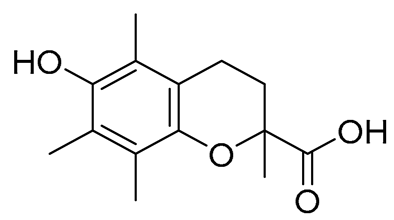 | 92% (±2.8) | n.t. | n.t. |
| NDGA |  | n.t. | 0.45 μΜ (±0.013) | n.t. |
| Indomethacin |  | n.t. | n.t. | 1.12 μΜ (±0.4) |
Disclaimer/Publisher’s Note: The statements, opinions and data contained in all publications are solely those of the individual author(s) and contributor(s) and not of MDPI and/or the editor(s). MDPI and/or the editor(s) disclaim responsibility for any injury to people or property resulting from any ideas, methods, instructions or products referred to in the content. |
© 2026 by the authors. Licensee MDPI, Basel, Switzerland. This article is an open access article distributed under the terms and conditions of the Creative Commons Attribution (CC BY) license.
Share and Cite
Fotopoulos, I.; Hadjipavlou-Litina, D. Coumarin–Amino Acid Hybrids Used as Possible Multifactorial Anti-Inflammatory Agents. Int. J. Mol. Sci. 2026, 27, 4443. https://doi.org/10.3390/ijms27104443
Fotopoulos I, Hadjipavlou-Litina D. Coumarin–Amino Acid Hybrids Used as Possible Multifactorial Anti-Inflammatory Agents. International Journal of Molecular Sciences. 2026; 27(10):4443. https://doi.org/10.3390/ijms27104443
Chicago/Turabian StyleFotopoulos, Ioannis, and Dimitra Hadjipavlou-Litina. 2026. "Coumarin–Amino Acid Hybrids Used as Possible Multifactorial Anti-Inflammatory Agents" International Journal of Molecular Sciences 27, no. 10: 4443. https://doi.org/10.3390/ijms27104443
APA StyleFotopoulos, I., & Hadjipavlou-Litina, D. (2026). Coumarin–Amino Acid Hybrids Used as Possible Multifactorial Anti-Inflammatory Agents. International Journal of Molecular Sciences, 27(10), 4443. https://doi.org/10.3390/ijms27104443