The Reversible Neurotoxic Effects of Methylmercury on the Dorsal Root Ganglion: Temporal Dynamics in Rats

 ,
,  , , ,
, , ,  and
and 
Abstract
1. Introduction
2. Results
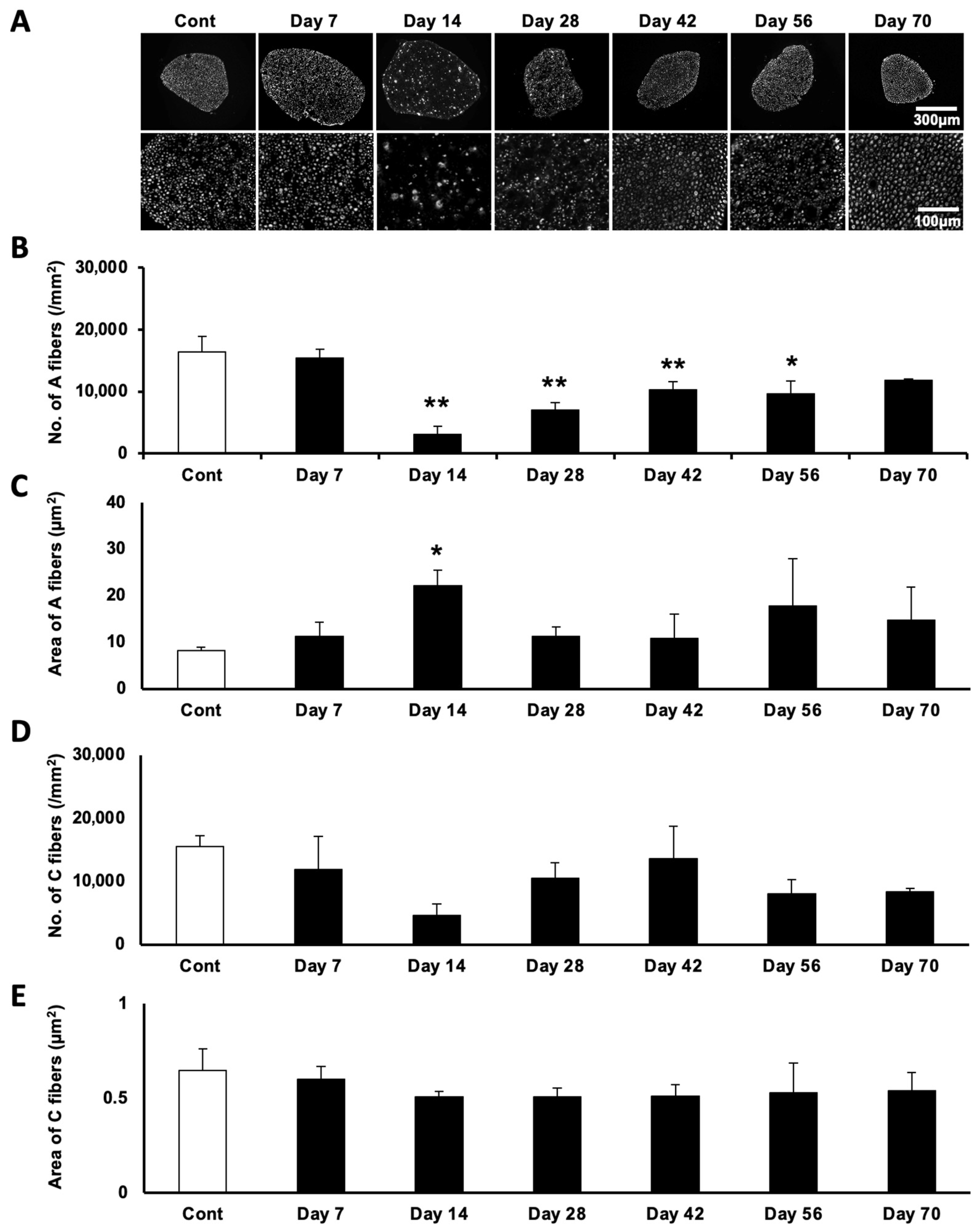
2.1. Temporal Dynamics of Peripheral Sensory Fibers
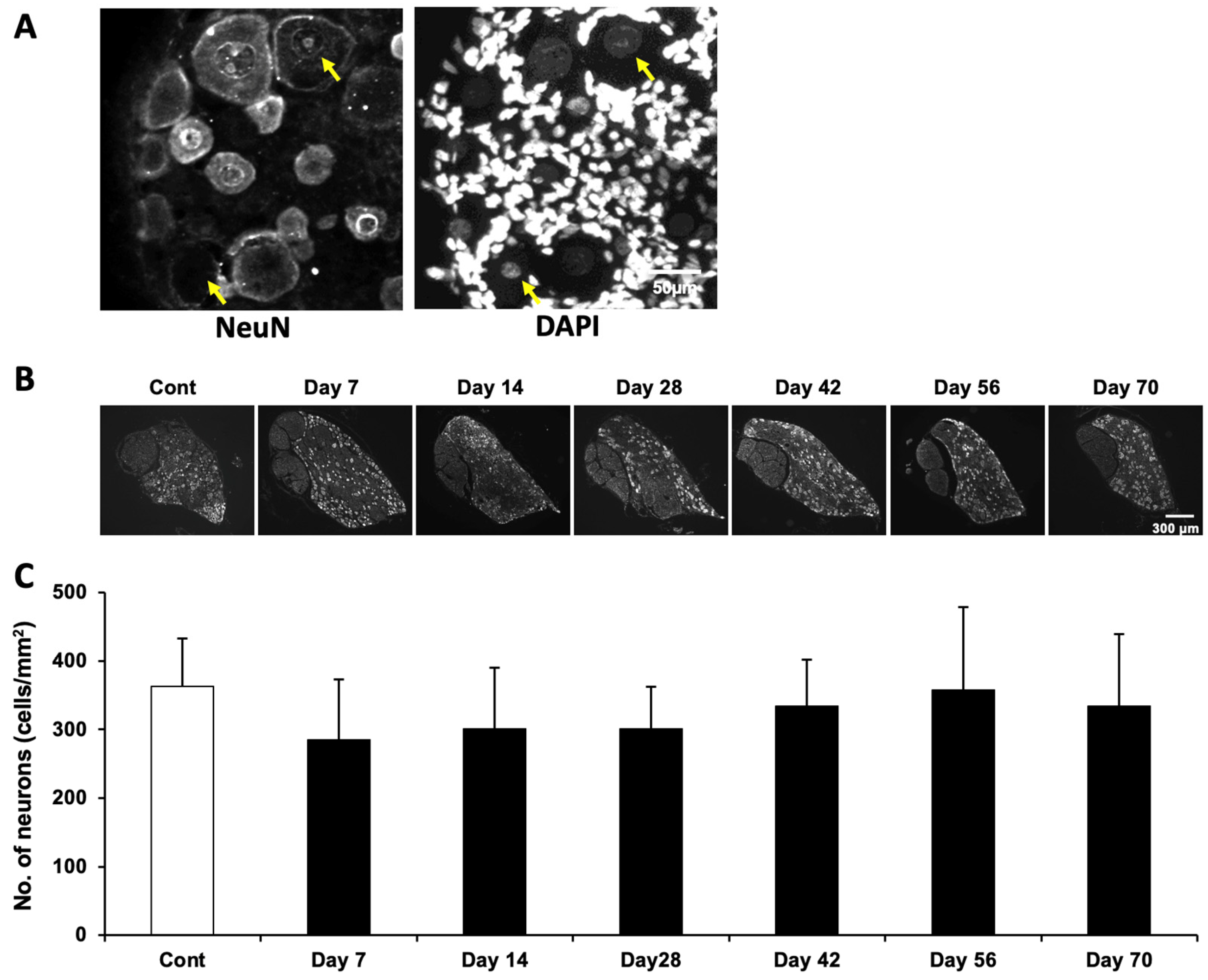
2.2. Temporal Dynamics of DRG Neurons
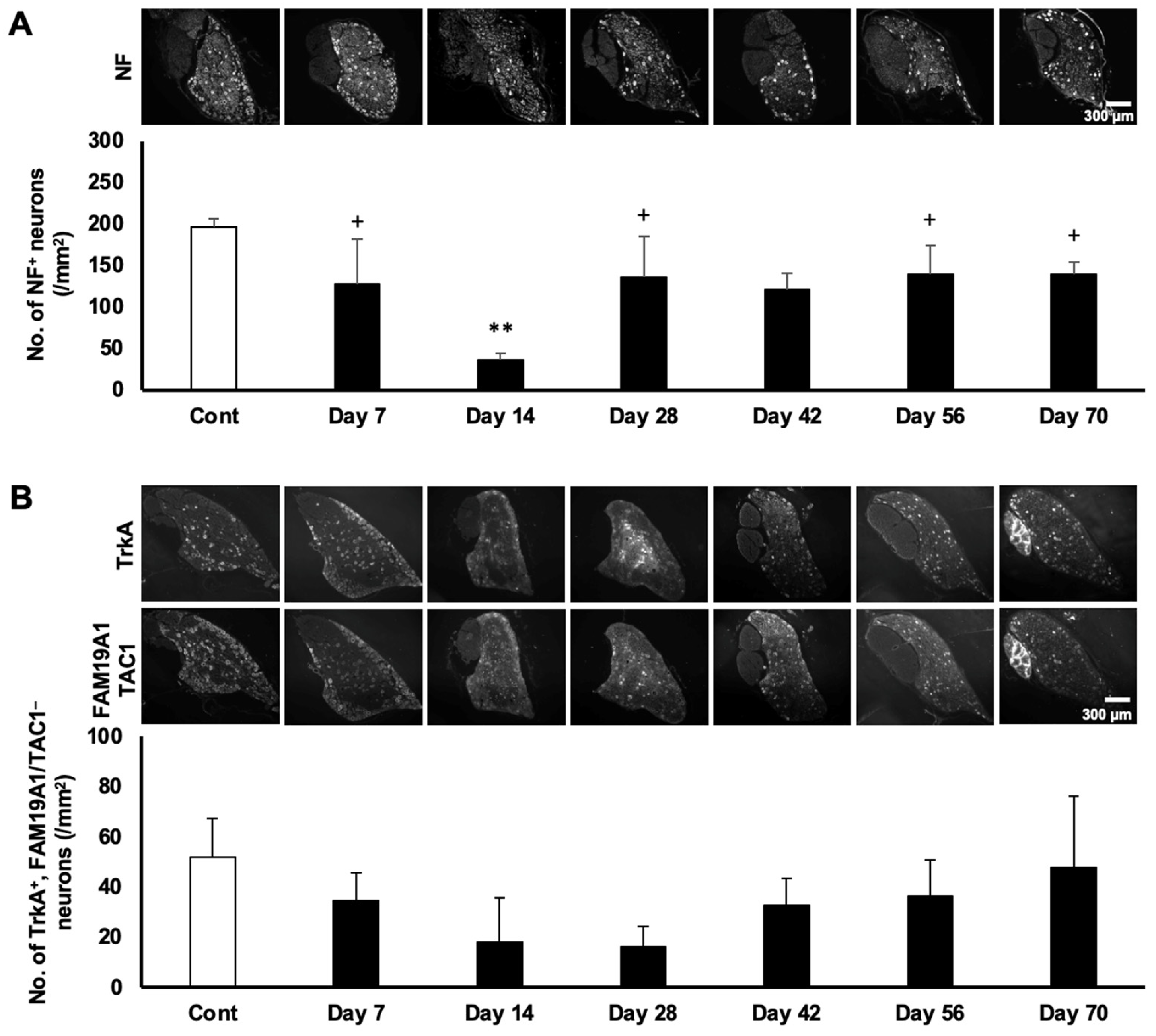
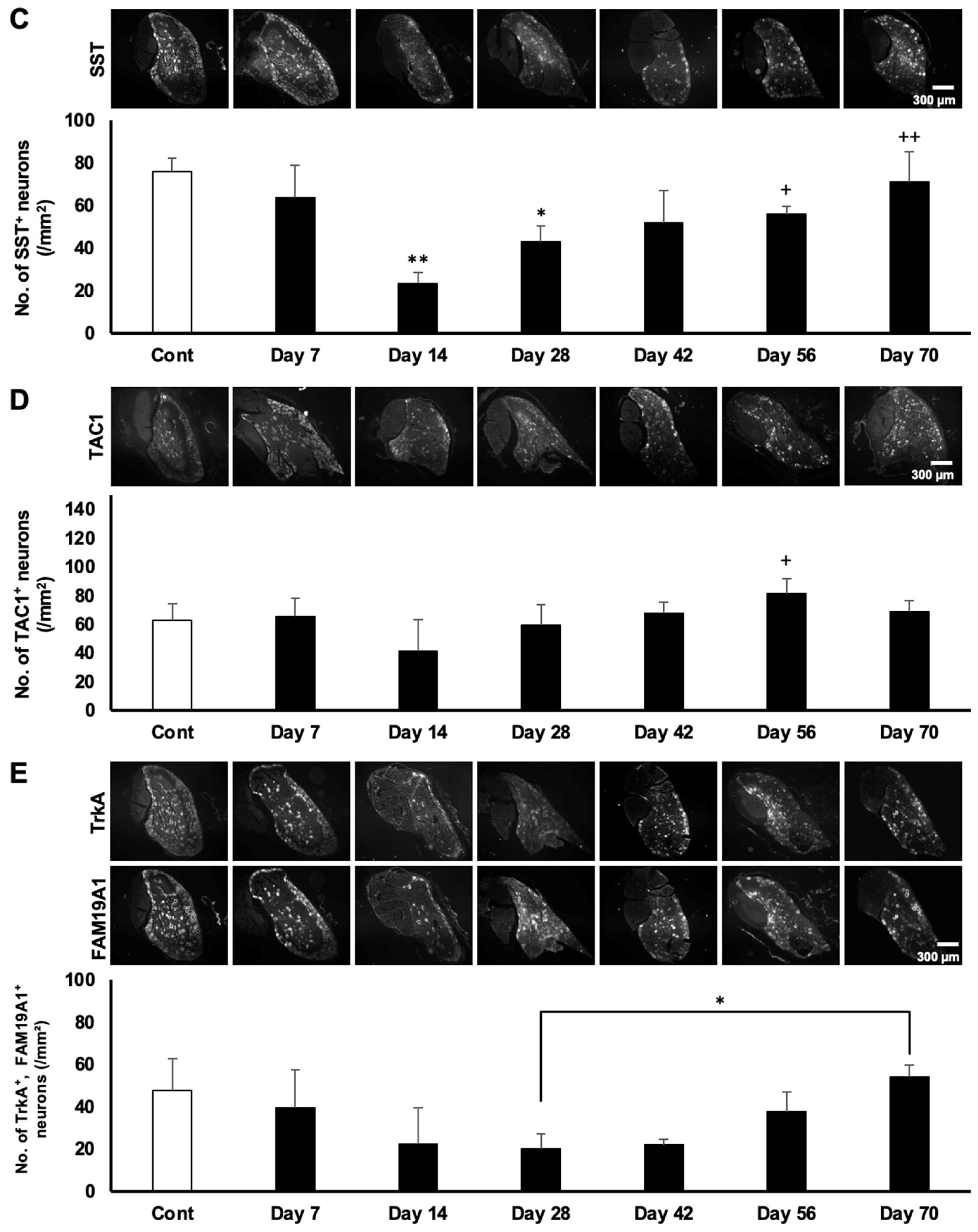
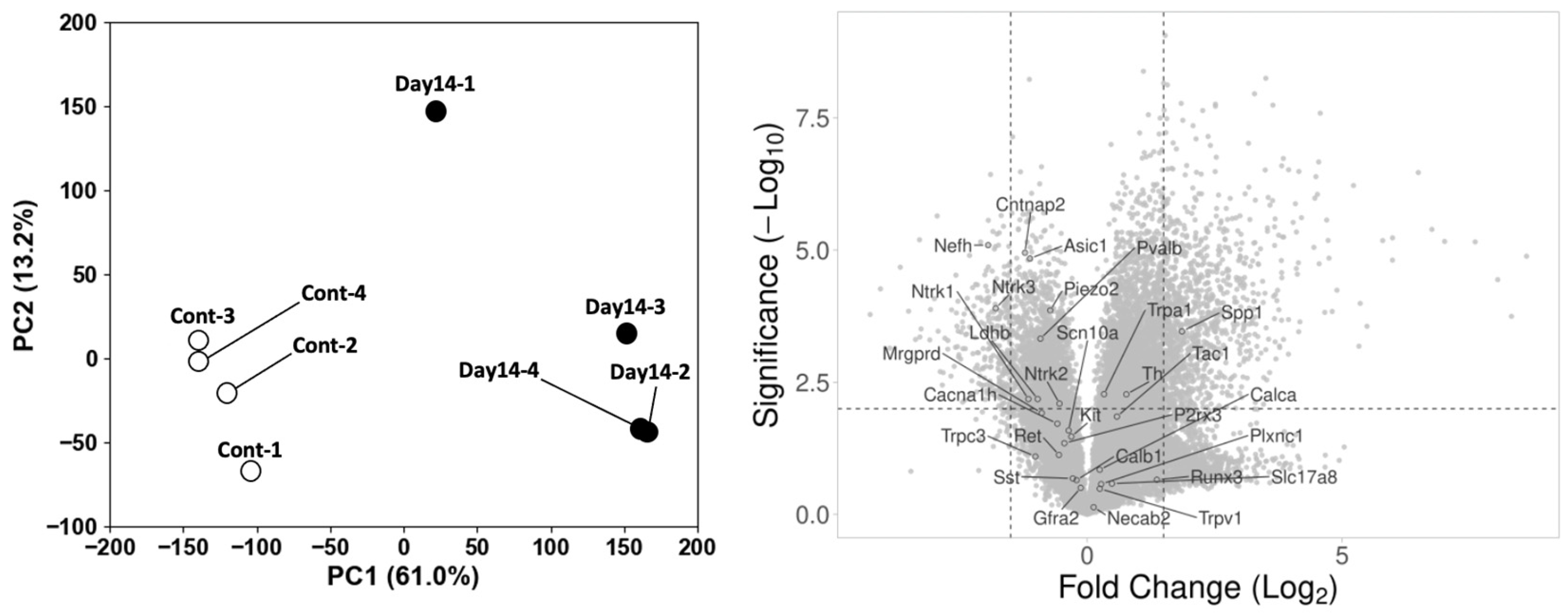
2.3. Temporal Dynamics of Subtype Marker Genes in DRG Neurons
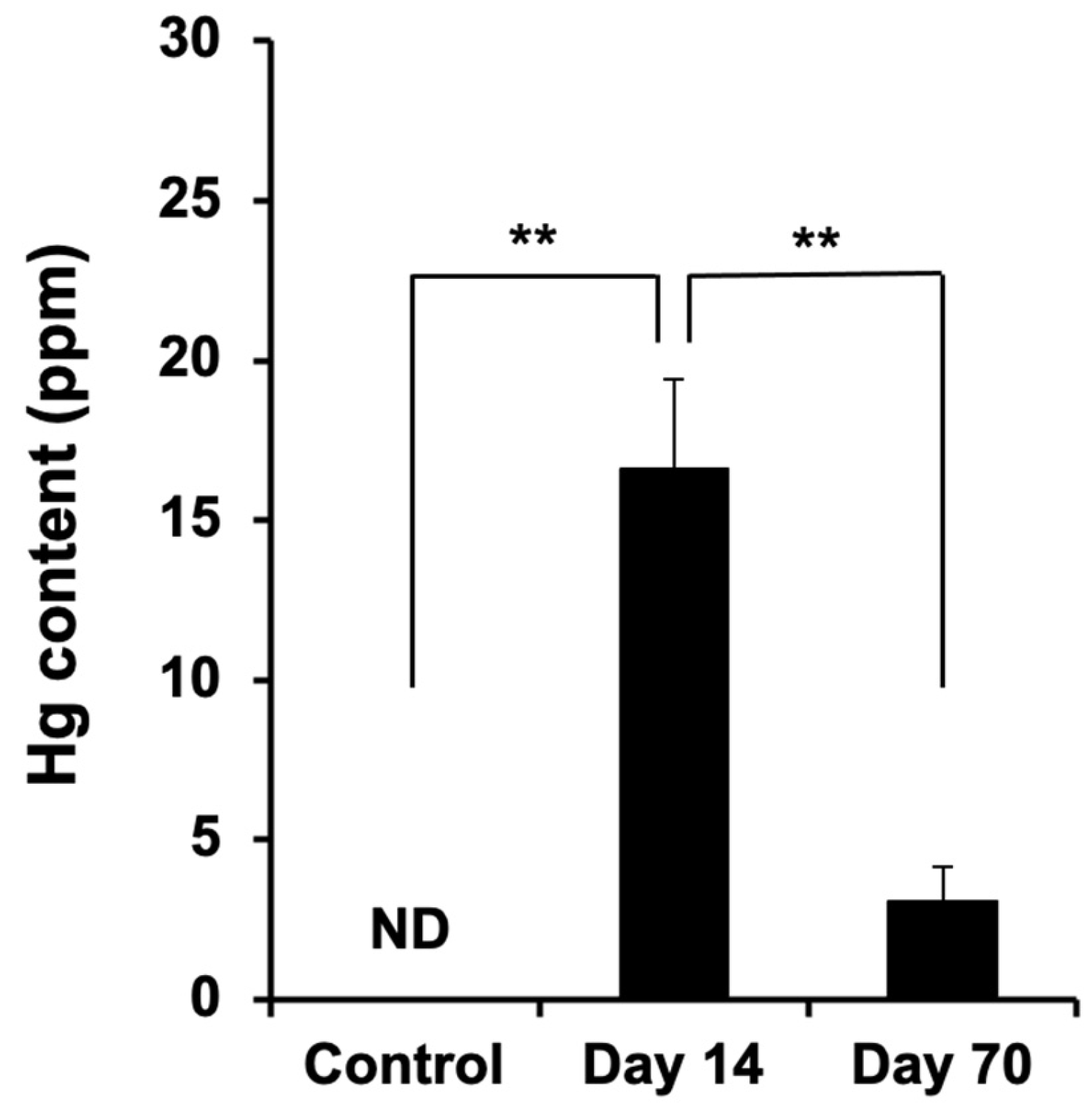
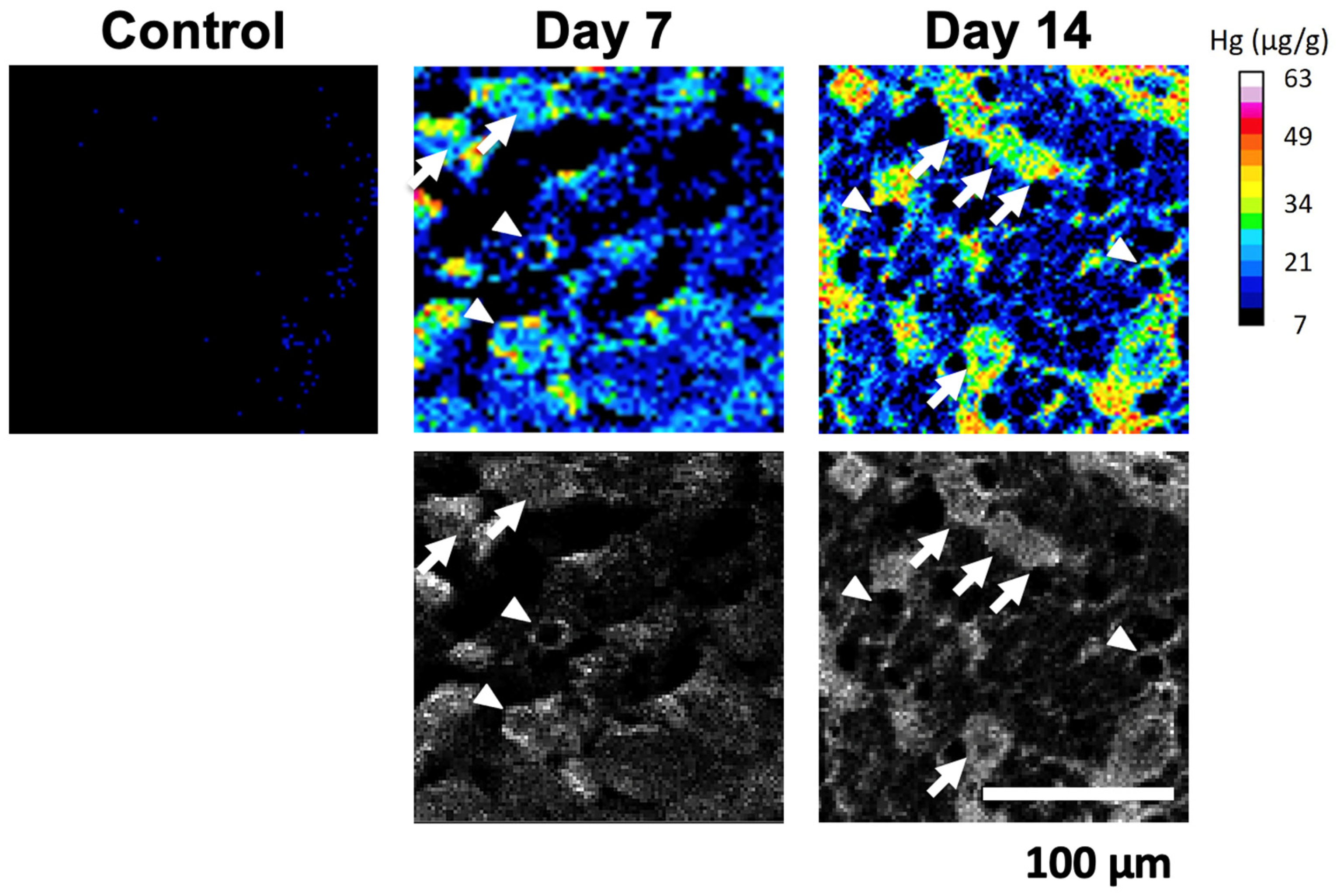
2.4. Spatiotemporal Dynamics of Hg Accumulation in the DRG
3. Discussion
4. Materials and Methods
4.1. Animals, MeHg Administration, and Study Design
4.2. Immunohistochemistry
4.3. DNA Microarray and Bioinformatics
4.4. Determination of Total Mercury in DRG
4.5. Spatiotemporal Distribution of Hg in DRG
4.6. Statistical Analysis
5. Conclusions
Author Contributions
Funding
Institutional Review Board Statement
Informed Consent Statement
Data Availability Statement
Acknowledgments
Conflicts of Interest
References
- Harada, M. Minamata disease: Methylmercury poisoning in Japan caused by environmental pollution. Crit. Rev. Toxicol. 1995, 25, 1–24. [Google Scholar] [CrossRef]
- Jackson, A.C. Chronic Neurological Disease Due to Methylmercury Poisoning. Can. J. Neurol. Sci. 2018, 45, 620–623. [Google Scholar] [CrossRef] [PubMed]
- Snyder, R.D.; Seelinger, D.F. Methylmercury poisoning, Clinical follow-up and sensory nerve conduction studies. J. Neurol. Neurosurg. Psychiatry 1976, 39, 701–704. [Google Scholar] [CrossRef] [PubMed]
- Eto, K. Minamata disease. Neuropathology 2000, 20, 14–19. [Google Scholar] [CrossRef] [PubMed]
- Takeuchi, T.; Eto, K.; Oyanag, S.; Miyajima, H. Ultrastructural changes of human sural nerves in the neuropathy induced by intrauterine methylmercury poisoning (so-called fetal Minamata disease). Virchows Arch. B Cell Pathol. 1978, 27, 137–154. [Google Scholar] [CrossRef]
- Eto, K.; Marumoto, M.; Takeya, M. The pathology of methylmercury poisoning (Minamata disease): The 50th Anniversary of Japanese Society of Neuropathology. Neuropathology 2010, 30, 471–479. [Google Scholar] [CrossRef]
- Eto, K.; Tokunaga, H.; Nagashima, K.; Takeuchi, T. An autopsy case of minamata disease (methylmercury poisoning)--pathological viewpoints of peripheral nerves. Toxicol. Pathol. 2002, 30, 714–722. [Google Scholar] [CrossRef]
- Shinoda, Y.; Ehara, S.; Tatsumi, S.; Yoshida, E.; Takahashi, T.; Eto, K.; Kaji, T.; Fujiwara, Y. Methylmercury-induced neural degeneration in rat dorsal root ganglion is associated with the accumulation of microglia/macrophages and the proliferation of Schwann cells. J. Toxicol. Sci. 2019, 44, 191–199. [Google Scholar] [CrossRef]
- Shinoda, Y.; Yamada, Y.; Yoshida, E.; Takahashi, T.; Tsuneoka, Y.; Eto, K.; Kaji, T.; Fujiwara, Y. Hypoalgesia and recovery in methylmercury-exposed rats. J. Toxicol. Sci. 2021, 46, 303–309. [Google Scholar] [CrossRef]
- Nakano, T.; Yoshida, E.; Sasaki, Y.; Kazama, S.; Katami, F.; Aoki, K.; Fujie, T.; Du, K.; Hara, T.; Yamamoto, C.; et al. Mechanisms Underlying Sensory Nerve-Predominant Damage by Methylmercury in the Peripheral Nervous System. Int. J. Mol. Sci. 2024, 25, 11672. [Google Scholar] [CrossRef]
- Basbaum, A.I.; Bautista, D.M.; Scherrer, G.; Julius, D. Cellular and molecular mechanisms of pain. Cell 2009, 139, 267–284. [Google Scholar] [CrossRef] [PubMed]
- Dubin, A.E.; Patapoutian, A. Nociceptors: The sensors of the pain pathway. J. Clin. Investig. 2010, 120, 3760–3772. [Google Scholar] [CrossRef] [PubMed]
- Le Pichon, C.E.; Chesler, A.T. The functional and anatomical dissection of somatosensory subpopulations using mouse genetics. Front. Neuroanat. 2014, 8, 21. [Google Scholar] [CrossRef] [PubMed]
- Haberberger, R.V.; Kuramatilake, J.; Barry, C.M.; Matusica, D. Ultrastructure of dorsal root ganglia. Cell Tissue Res. 2023, 393, 17–36. [Google Scholar] [CrossRef]
- Koike, T. Distinctive glial cells in the dorsal root ganglion: Their morphology and functions. Anat. Sci. Int. 2025, 100, 261–269. [Google Scholar] [CrossRef]
- Armati, P.J.; Mathey, E.K. An update on Schwann cell biology--immunomodulation, neural regulation and other surprises. J. Neurol. Sci. 2013, 333, 68–72. [Google Scholar] [CrossRef]
- Usoskin, D.; Furlan, A.; Islam, S.; Abdo, H.; Lonnerberg, P.; Lou, D.; Hjerling-Leffler, J.; Haeggstrom, J.; Kharchenko, O.; Kharchenko, P.V.; et al. Unbiased classification of sensory neuron types by large-scale single-cell RNA sequencing. Nat. Neurosci. 2015, 18, 145–153. [Google Scholar] [CrossRef]
- Zeisel, A.; Hochgerner, H.; Lonnerberg, P.; Johnsson, A.; Memic, F.; van der Zwan, J.; Haring, M.; Braun, E.; Borm, L.E.; La Manno, G.; et al. Molecular Architecture of the Mouse Nervous System. Cell 2018, 174, 999–1014.e22. [Google Scholar] [CrossRef]
- Nguyen, M.Q.; von Buchholtz, L.J.; Reker, A.N.; Ryba, N.J.; Davidson, S. Single-nucleus transcriptomic analysis of human dorsal root ganglion neurons. eLife 2021, 10, e71752. [Google Scholar] [CrossRef]
- Reinhold, A.K.; Rittner, H.L. Characteristics of the nerve barrier and the blood dorsal root ganglion barrier in health and disease. Exp. Neurol. 2020, 327, 113244. [Google Scholar] [CrossRef]
- Jang, K.; Garraway, S.M. A review of dorsal root ganglia and primary sensory neuron plasticity mediating inflammatory and chronic neuropathic pain. Neurobiol. Pain 2024, 15, 100151. [Google Scholar] [CrossRef] [PubMed]
- Haberberger, R.V.; Barry, C.; Dominguez, N.; Matusica, D. Human Dorsal Root Ganglia. Front. Cell. Neurosci. 2019, 13, 271. [Google Scholar] [CrossRef] [PubMed]
- Ege, E.; Briggi, D.; Vu, P.; Cheng, J.; Lin, F.; Xu, J. Targeting dorsal root ganglia for chemotherapy-induced peripheral neuropathy: From bench to bedside. Ther. Adv. Neurol. Disord. 2024, 17, 17562864241252718. [Google Scholar] [PubMed]
- Hu, Y.; Girdenyte, M.; Roest, L.; Liukkonen, I.; Siskou, M.; Ballgren, F.; Hammarlund-Udenaes, M.; Loryan, I. Analysis of the contributing role of drug transport across biological barriers in the development and treatment of chemotherapy-induced peripheral neuropathy. Fluids Barriers CNS 2024, 21, 13. [Google Scholar] [CrossRef]
- Yoshida, E.; Aoki, K.; Sasaki, Y.; Izuhara, H.; Takahashi, T.; Fujiwara, Y.; Fujie, T.; Du, K.; Eto, K.; Shinoda, Y.; et al. Comparative study of susceptibility to methylmercury cytotoxicity in cell types composing rat peripheral nerves: A higher susceptibility of dorsal root ganglion neurons. J. Toxicol. Sci. 2024, 49, 241–248. [Google Scholar] [CrossRef]
- Rambourg, A.; Clermont, Y.; Beaudet, A. Ultrastructural features of six types of neurons in rat dorsal root ganglia. J. Neurocytol. 1983, 12, 47–66. [Google Scholar] [CrossRef]
- Tandrup, T. Unbiased estimates of number and size of rat dorsal root ganglion cells in studies of structure and cell survival. J. Neurocytol. 2004, 33, 173–192. [Google Scholar] [CrossRef]
- Tandrup, T. A method for unbiased and efficient estimation of number and mean volume of specified neuron subtypes in rat dorsal root ganglion. J. Comp. Neurol. 1993, 329, 269–276. [Google Scholar] [CrossRef]
- Szigeti, C.; Santha, P.; Kortvely, E.; Nyari, T.; Horvath, V.J.; Deak, E.; Dux, M.; Gulya, K.; Jancso, G. Disparate changes in the expression of transient receptor potential vanilloid type 1 receptor mRNA and protein in dorsal root ganglion neurons following local capsaicin treatment of the sciatic nerve in the rat. Neuroscience 2012, 201, 320–330. [Google Scholar] [CrossRef]
- Hayward, R.; Moore, S.; Artun, D.; Madhavan, A.; Harte, E.; Torres-Perez, J.V.; Nagy, I. Transcriptional reprogramming post-peripheral nerve injury: A systematic review. Neurobiol. Dis. 2024, 200, 106624. [Google Scholar] [CrossRef]
- Uchino, M.; Hirano, T.; Satoh, H.; Arimura, K.; Nakagawa, M.; Wakamiya, J. The severity of Minamata disease declined in 25 years: Temporal profile of the neurological findings analyzed by multiple logistic regression model. Tohoku J. Exp. Med. 2005, 205, 53–63. [Google Scholar] [CrossRef]
- Eto, K.; Takeuchi, T. Pathological changes of human sural nerves in Minamato disease (methylmercury poisoning). Light and electron microscopic studies. Virchows Arch. B Cell Pathol. 1977, 23, 109–128. [Google Scholar] [CrossRef] [PubMed]
- Ekino, S.; Susa, M.; Ninomiya, T.; Imamura, K.; Kitamura, T. Minamata disease revisited: An update on the acute and chronic manifestations of methyl mercury poisoning. J. Neurol. Sci. 2007, 262, 131–144. [Google Scholar] [CrossRef] [PubMed]
- Nakamura, M.; Taulu, S.; Tachimori, H.; Tomo, Y.; Kawashima, T.; Miura, Y.; Itatani, M.; Tobimatsu, S. Single-trial neuromagnetic analysis reveals somatosensory dysfunction in chronic Minamata disease. Neuroimage Clin. 2023, 38, 103422. [Google Scholar] [CrossRef] [PubMed]
- Meriau, P.; Kuruvilla, R.; Cavalli, V. Satellite glial cells: Shaping peripheral input into the brain-body axis? Neuron 2025, 113, 3333–3351. [Google Scholar] [CrossRef]
- Andreeva, D.; Murashova, L.; Burzak, N.; Dyachuk, V. Satellite Glial Cells: Morphology, functional heterogeneity, and role in pain. Front. Cell. Neurosci. 2022, 16, 1019449. [Google Scholar] [CrossRef]
- Nogara, P.A.; Oliveira, C.S.; Schmitz, G.L.; Piquini, P.C.; Farina, M.; Aschner, M.; Rocha, J.B.T. Methylmercury’s chemistry: From the environment to the mammalian brain. Biochim. Biophys. Acta Gen. Subj. 2019, 1863, 129284. [Google Scholar] [CrossRef]
- Madejczyk, M.S.; Aremu, D.A.; Simmons-Willis, T.A.; Clarkson, T.W.; Ballatori, N. Accelerated urinary excretion of methylmercury following administration of its antidote N-acetylcysteine requires Mrp2/Abcc2, the apical multidrug resistance-associated protein. J. Pharmacol. Exp. Ther. 2007, 322, 378–384. [Google Scholar] [CrossRef]
- Charleston, J.S.; Bolender, R.P.; Mottet, N.K.; Body, R.L.; Vahter, M.E.; Burbacher, T.M. Increases in the number of reactive glia in the visual cortex of Macaca fascicularis following subclinical long-term methyl mercury exposure. Toxicol. Appl. Pharmacol. 1994, 129, 196–206. [Google Scholar] [CrossRef]
- Vahter, M.E.; Mottet, N.K.; Friberg, L.T.; Lind, S.B.; Charleston, J.S.; Burbacher, T.M. Demethylation of methyl mercury in different brain sites of Macaca fascicularis monkeys during long-term subclinical methyl mercury exposure. Toxicol. Appl. Pharmacol. 1995, 134, 273–284. [Google Scholar] [CrossRef]
- Yasutake, A.; Hirayama, K. Evaluation of methylmercury biotransformation using rat liver slices. Arch. Toxicol. 2001, 75, 400–406. [Google Scholar] [CrossRef]
- Shapiro, A.M.; Chan, H.M. Characterization of demethylation of methylmercury in cultured astrocytes. Chemosphere 2008, 74, 112–118. [Google Scholar] [CrossRef] [PubMed]
- Aschner, M.; Aschner, J.L. Mercury neurotoxicity: Mechanisms of blood-brain barrier transport. Neurosci. Biobehav. Rev. 1990, 14, 169–176. [Google Scholar] [CrossRef] [PubMed]
- Allen, J.W.; Mutkus, L.A.; Aschner, M. Mercuric chloride, but not methylmercury, inhibits glutamine synthetase activity in primary cultures of cortical astrocytes. Brain Res. 2001, 891, 148–157. [Google Scholar] [CrossRef] [PubMed]
- Basu, N.; Stamler, C.J.; Loua, K.M.; Chan, H.M. An interspecies comparison of mercury inhibition on muscarinic acetylcholine receptor binding in the cerebral cortex and cerebellum. Toxicol. Appl. Pharmacol. 2005, 205, 71–76. [Google Scholar] [CrossRef]
- Shinoda, Y.; Tatsumi, S.; Yoshida, E.; Takahashi, T.; Eto, K.; Kaji, T.; Fujiwara, Y. Gene expression profiles in the dorsal root ganglia of methylmercury-exposed rats. J. Toxicol. Sci. 2019, 44, 549–558. [Google Scholar] [CrossRef]
- Koebis, M.; Urata, S.; Shinoda, Y.; Okabe, S.; Yamasoba, T.; Nakao, K.; Aiba, A.; Furuichi, T. LAMP5 in presynaptic inhibitory terminals in the hindbrain and spinal cord: A role in startle response and auditory processing. Mol. Brain 2019, 12, 20. [Google Scholar] [CrossRef]
- Yoshikawa, F.; Banno, Y.; Otani, Y.; Yamaguchi, Y.; Nagakura-Takagi, Y.; Morita, N.; Sato, Y.; Saruta, C.; Nishibe, H.; Sadakata, T.; et al. Phospholipase D family member 4, a transmembrane glycoprotein with no phospholipase D activity, expression in spleen and early postnatal microglia. PLoS ONE 2010, 5, e13932. [Google Scholar] [CrossRef]
- Furuichi, T.; Shiraishi-Yamaguchi, Y.; Sato, A.; Sadakata, T.; Huang, J.; Shinoda, Y.; Hayashi, K.; Mishima, Y.; Tomomura, M.; Nishibe, H.; et al. Systematizing and cloning of genes involved in the cerebellar cortex circuit development. Neurochem. Res. 2011, 36, 1241–1252. [Google Scholar] [CrossRef]
- Sadakata, T.; Shinoda, Y.; Ishizaki, Y.; Furuichi, T. Analysis of gene expression in Ca(2+)-dependent activator protein for secretion 2 (Cadps2) knockout cerebellum using GeneChip and KEGG pathways. Neurosci. Lett. 2017, 639, 88–93. [Google Scholar] [CrossRef]
- Sato, A.; Sekine, Y.; Saruta, C.; Nishibe, H.; Morita, N.; Sato, Y.; Sadakata, T.; Shinoda, Y.; Kojima, T.; Furuichi, T. Cerebellar development transcriptome database (CDT-DB): Profiling of spatio-temporal gene expression during the postnatal development of mouse cerebellum. Neural Netw. 2008, 21, 1056–1069. [Google Scholar] [CrossRef]
- Akiyama, M.; Shinkai, Y.; Yamakawa, H.; Kim, Y.G.; Kumagai, Y. Potentiation of methylmercury toxicity by combined metal exposure: In vitro and in vivo models of a restricted metal exposome. Chemosphere 2022, 299, 134374. [Google Scholar] [CrossRef]
- Nitta, K.; Suga, H.; Sekizawa, O. Present status of micro-spectroscopy at BL37XU. Radiat. Phys. Chem. 2023, 211, 111028. [Google Scholar] [CrossRef]
- Homma-Takeda, S.; Nishimura, Y.; Iso, H.; Ishikawa, T.; Imaseki, H.; Yukawa, M. A new approach for standard preparation in microbeam analysis: Development and validation. J. Radioanal. Nucl. Chem. 2009, 279, 627–631. [Google Scholar] [CrossRef]


Disclaimer/Publisher’s Note: The statements, opinions and data contained in all publications are solely those of the individual author(s) and contributor(s) and not of MDPI and/or the editor(s). MDPI and/or the editor(s) disclaim responsibility for any injury to people or property resulting from any ideas, methods, instructions or products referred to in the content. |
© 2025 by the authors. Licensee MDPI, Basel, Switzerland. This article is an open access article distributed under the terms and conditions of the Creative Commons Attribution (CC BY) license.
Share and Cite
Shinoda, Y.; Yamashiro, K.; Matsuki, A.; Sekiguchi, Y.; Tatsumi, S.; Homma-Takeda, S.; Sekizawa, O.; Abe, M.; Ozawa, M.; Yoshida, E.; et al. The Reversible Neurotoxic Effects of Methylmercury on the Dorsal Root Ganglion: Temporal Dynamics in Rats. Int. J. Mol. Sci. 2026, 27, 116. https://doi.org/10.3390/ijms27010116
Shinoda Y, Yamashiro K, Matsuki A, Sekiguchi Y, Tatsumi S, Homma-Takeda S, Sekizawa O, Abe M, Ozawa M, Yoshida E, et al. The Reversible Neurotoxic Effects of Methylmercury on the Dorsal Root Ganglion: Temporal Dynamics in Rats. International Journal of Molecular Sciences. 2026; 27(1):116. https://doi.org/10.3390/ijms27010116
Chicago/Turabian StyleShinoda, Yo, Kaito Yamashiro, Ayaka Matsuki, Yuka Sekiguchi, Satoshi Tatsumi, Shino Homma-Takeda, Oki Sekizawa, Marika Abe, Misaki Ozawa, Eiko Yoshida, and et al. 2026. "The Reversible Neurotoxic Effects of Methylmercury on the Dorsal Root Ganglion: Temporal Dynamics in Rats" International Journal of Molecular Sciences 27, no. 1: 116. https://doi.org/10.3390/ijms27010116
APA StyleShinoda, Y., Yamashiro, K., Matsuki, A., Sekiguchi, Y., Tatsumi, S., Homma-Takeda, S., Sekizawa, O., Abe, M., Ozawa, M., Yoshida, E., Shinkai, Y., Takahashi, T., Fujiwara, Y., & Kaji, T. (2026). The Reversible Neurotoxic Effects of Methylmercury on the Dorsal Root Ganglion: Temporal Dynamics in Rats. International Journal of Molecular Sciences, 27(1), 116. https://doi.org/10.3390/ijms27010116