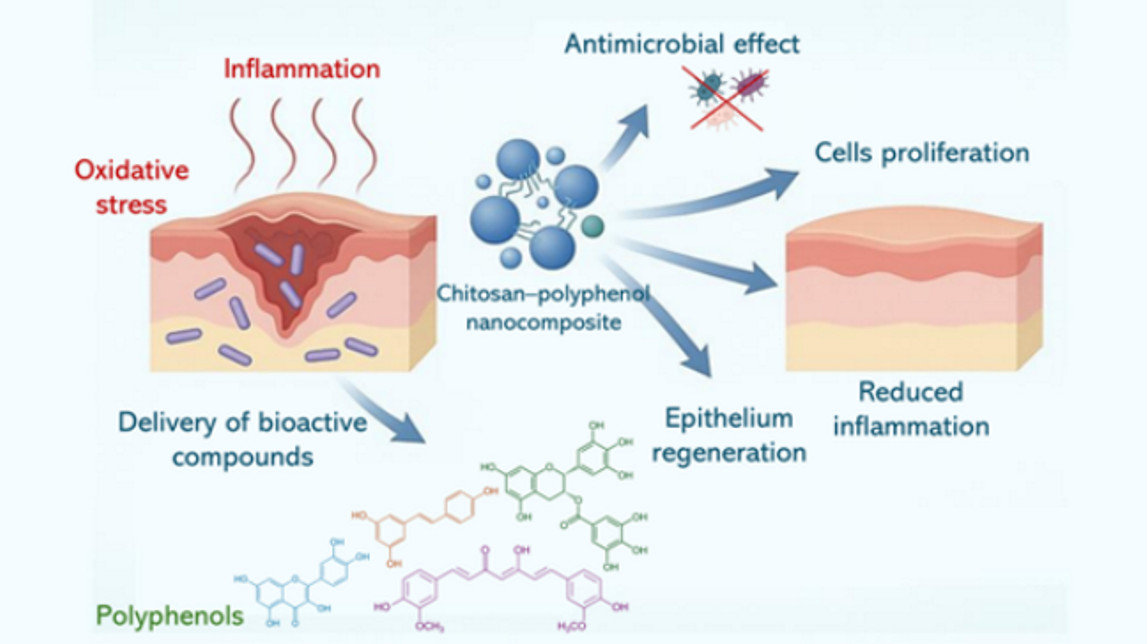
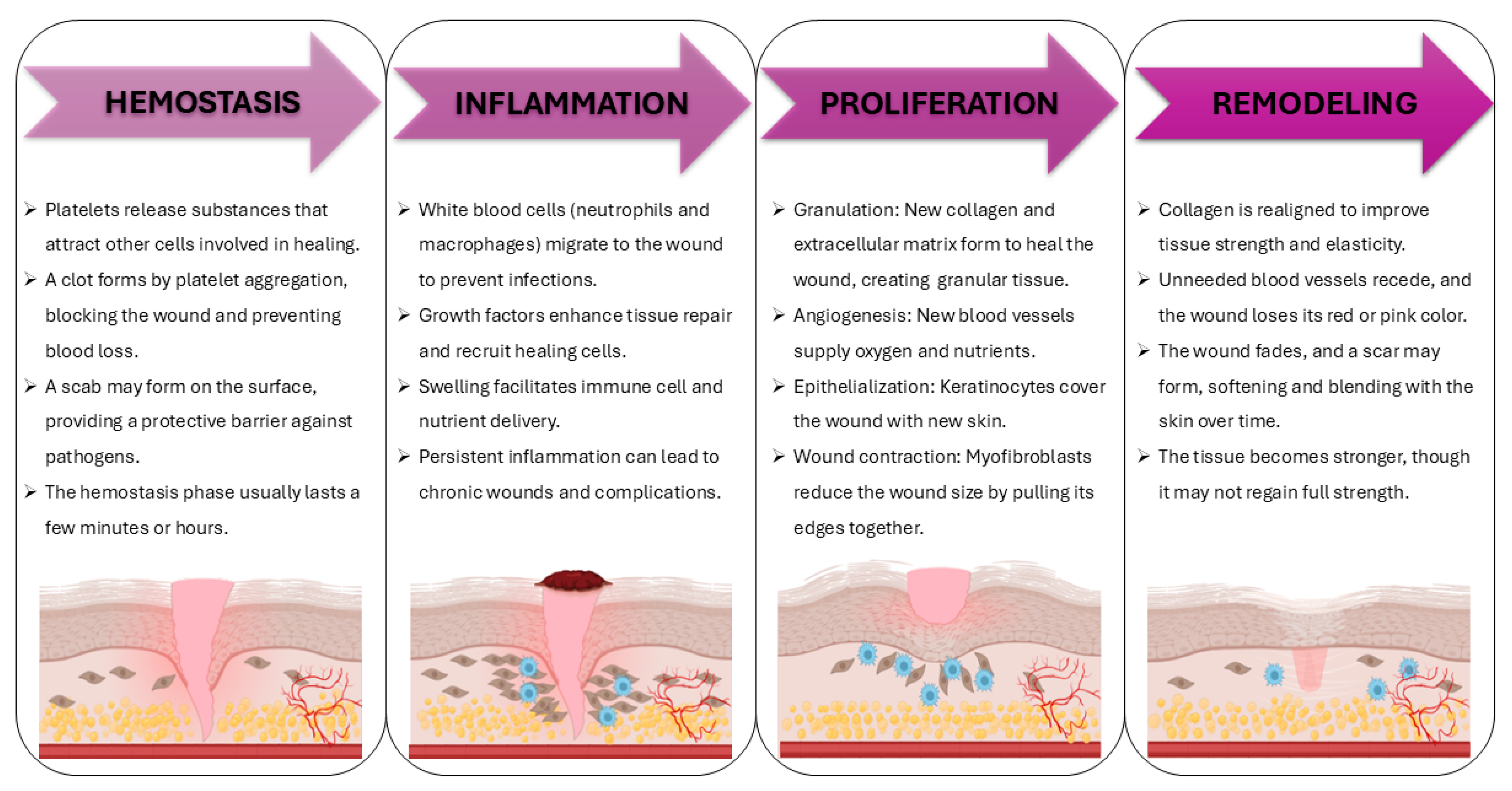
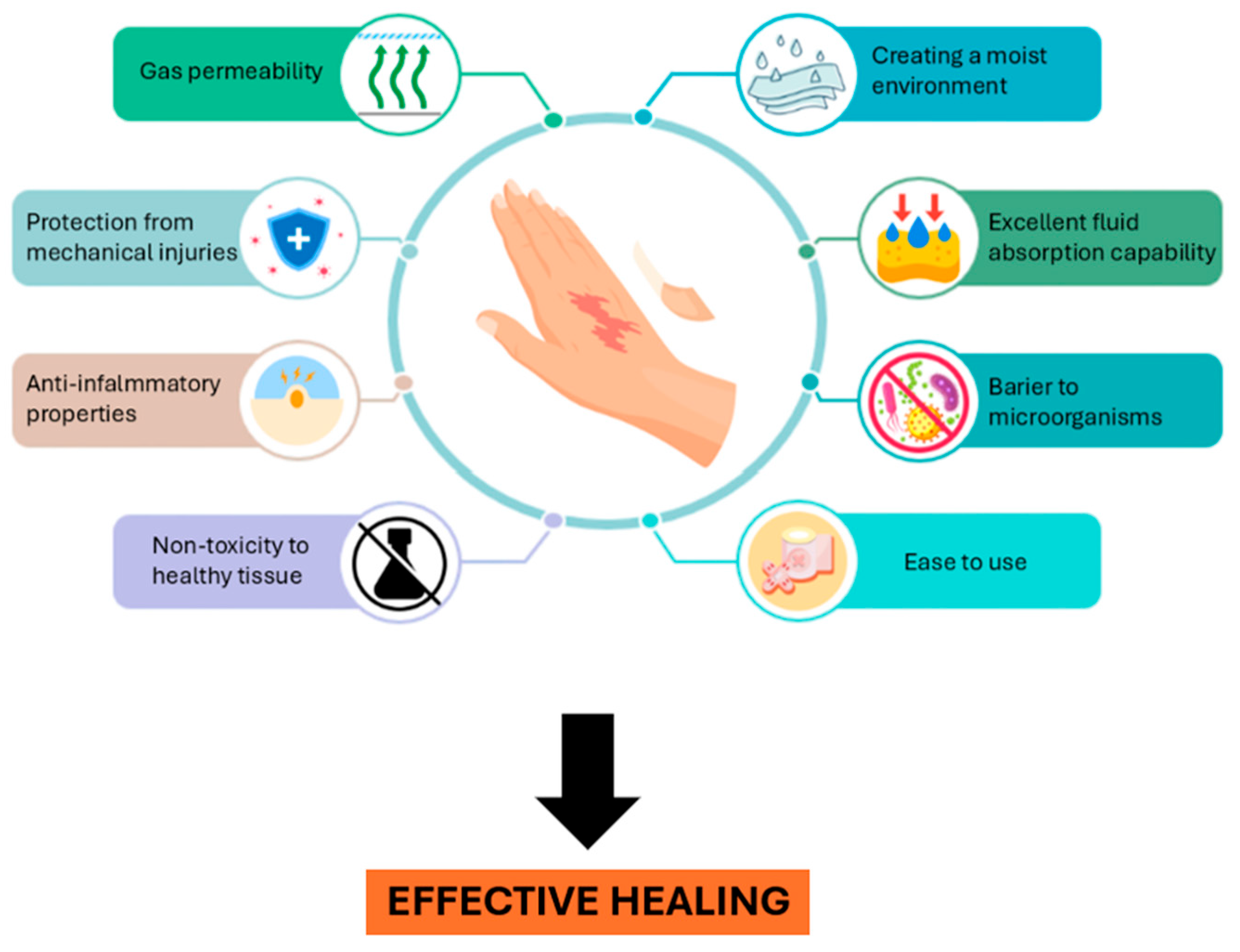
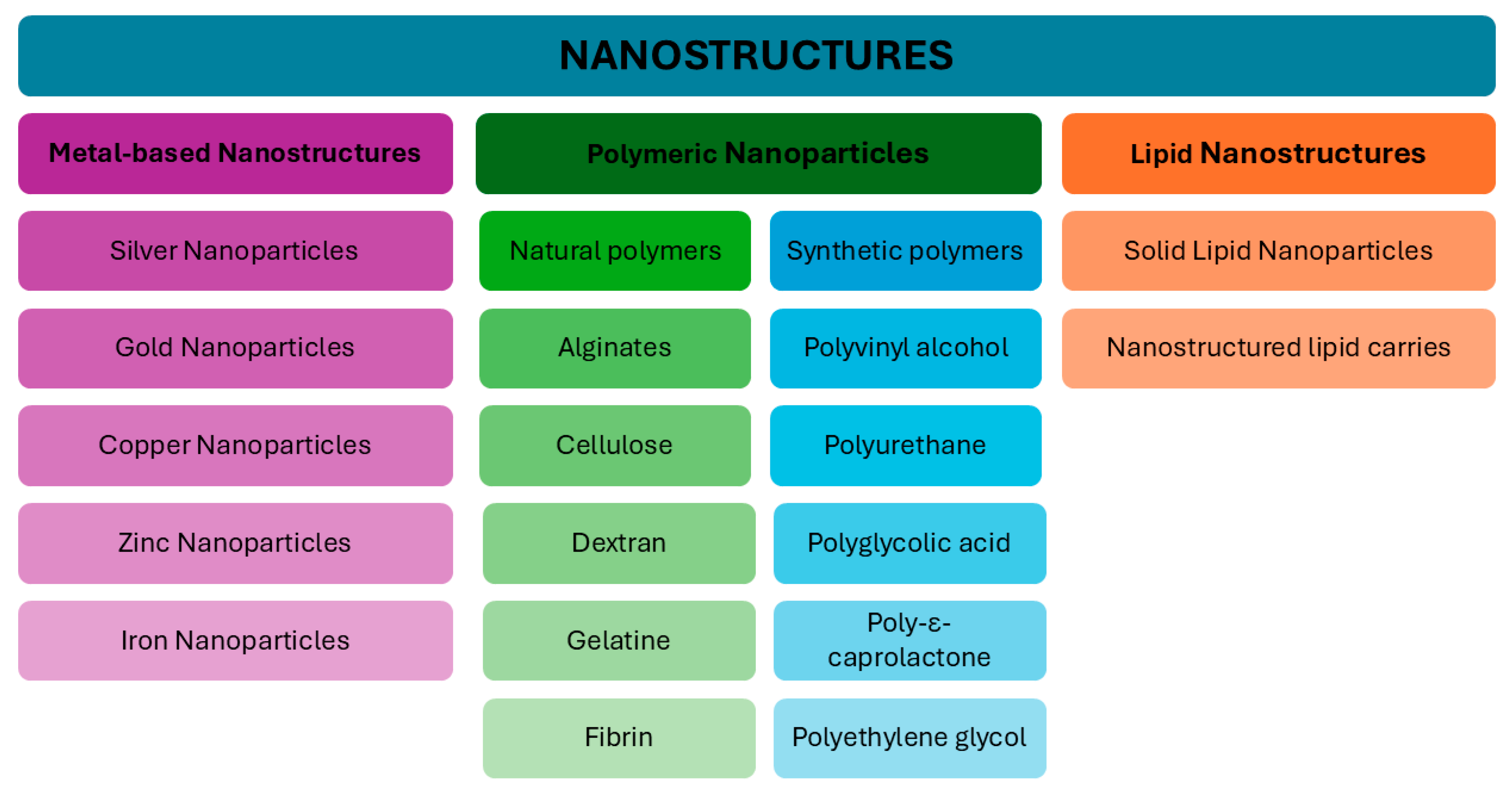
Therapeutic Potential of Chitosan-Based and Related Nanocomposite Systems in Wound Management: A Review


Abstract
1. Introduction
2. Nanostructures
3. Polymeric Nanomaterials
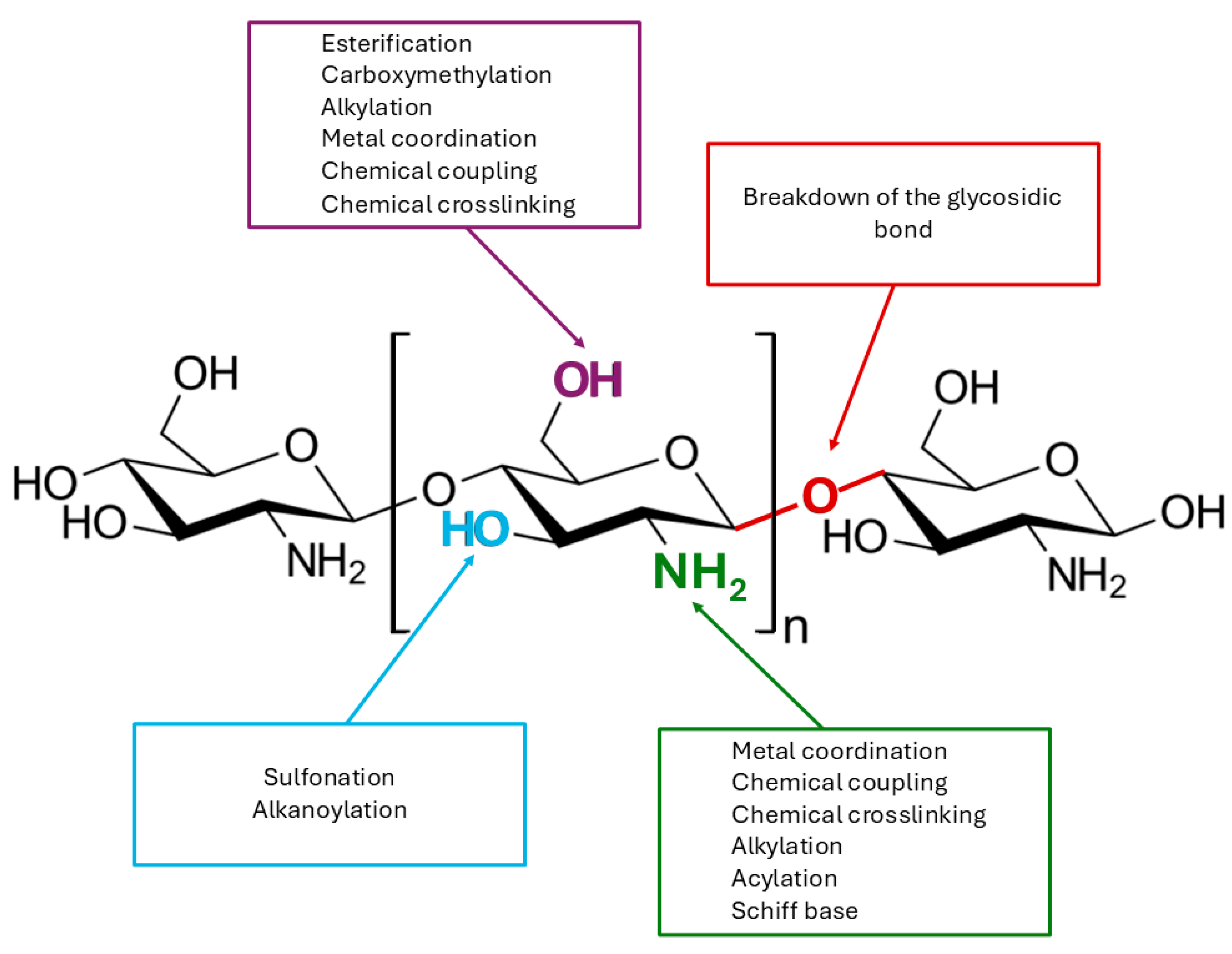
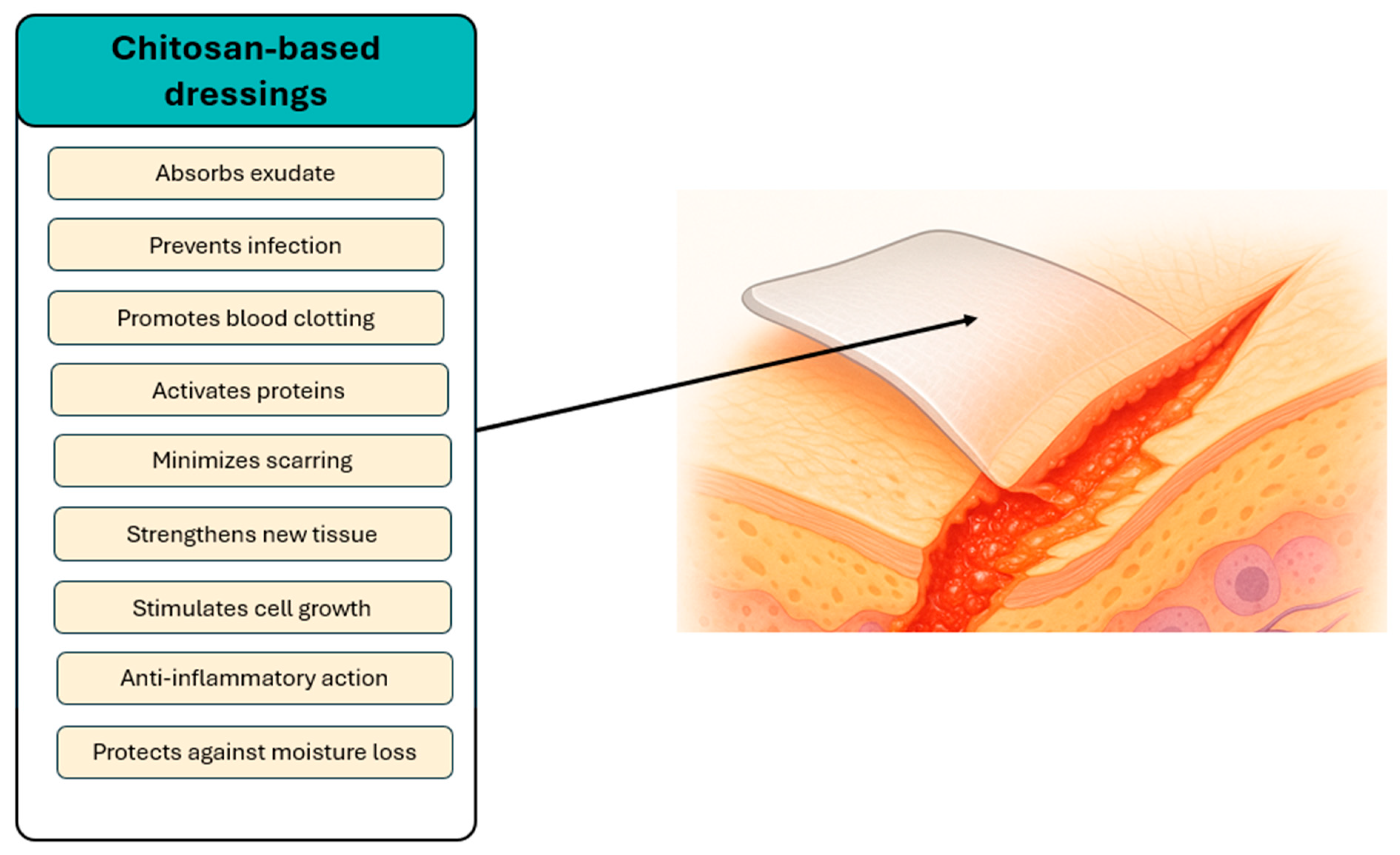
3.1. Chitosan
3.2. Other Natural Polymers
3.3. Synthetic Polymers
4. Metal-Based Nanoparticles

| Type of Nanoparticles | Biological Properties | Mechanisms of Action | Advantages in Wound Therapy | Limitations/Toxicity | Examples of Applications |
|---|---|---|---|---|---|
| Silver (AgNPs) | Antibacterial, anti-inflammatory, promoting keratinocyte proliferation and fibroblast differentiation [64] | (a) Increasing bacterial membrane permeability and protein loss (b) ROS generation (c) DNA replication disruption [21,64,67] | Active against Gram+ and Gram– bacteria, including resistant strains; long-lasting efficacy; synergy with collagen [20] | Systemic Ag+ accumulation in vital organs poses toxicity risks; cytotoxicity risk at high doses (>10 µg/mL) [21] | AgNP-based dressings, penetration of E. coli biofilms (20 nm) [67] |
| Gold (AuNPs) | Biocompatible, anti-inflammatory, angiogenesis-modulating, antibacterial [72] | Surface functionalization (ligands, drugs, growth factors); cytokine regulation (IL-6, TNF-α) [69,70] | Multifunctionality: stimulation of angiogenesis, proliferation, stem cell differentiation; improved mechanical stability of composites [75,76,77] | Debated toxicity; some gold compounds harmful (AuCl3, KAu(CN)2) [71] | Collagen composites, AuNPs + KGF coatings, APA-AuNPs wound dressings active in vivo [73,74] |
| Copper (CuNPs) | Antibacterial, anti-inflammatory, pro-angiogenic, regenerative [78] | Cu2+ release damages bacterial membranes; cofactor for enzymes (SOD, cytochrome oxidase); VEGF induction [79,80] | Supports fibroblast proliferation, endothelial cell migration; accelerates granulation tissue formation [81] | Excess copper → oxidative stress, lipid peroxidation, cytotoxicity [78] | CuNP-based dressings (40–80 nm, non-toxic), active against biofilms [81,82] |
| Zinc (ZnO-NPs) | Antibacterial, antioxidant, supports keratinocyte proliferation and metabolic processes [85] | Alkaline phosphatase activity → adenosine formation (anti-inflammatory); ROS; UV blocking [85] | Wide dermatological use; accelerates wound contraction; antimicrobial and photoprotective [84,87] | Small ZnO-NPs (<50 nm) may be cytotoxic (apoptosis, ROS, genotoxicity); larger (>100 nm) are biocompatible [88,89] | Modified ZnO-NPs in wound dressings, beneficial in infected wounds [90,91] |
| Iron (IONPs) | Antibacterial, antioxidant, antifungal, promotes proliferation and angiogenesis [94,96] | Involvement in metabolism (heme, DNA, cell cycle); ROS regulation; α-amylase inhibition (benefits in diabetes) [92,93] | Accelerates diabetic wound healing; supports angiogenesis; difficult for bacteria to develop resistance [94,95] | Excess iron → oxidative stress, tissue damage; deficiency → anemia, slower healing [92,93] | Hydrogels with IONPs (cellulose + gelatin), antibacterial activity against MDR strains [94] |
5. Lipid Nanoparticles
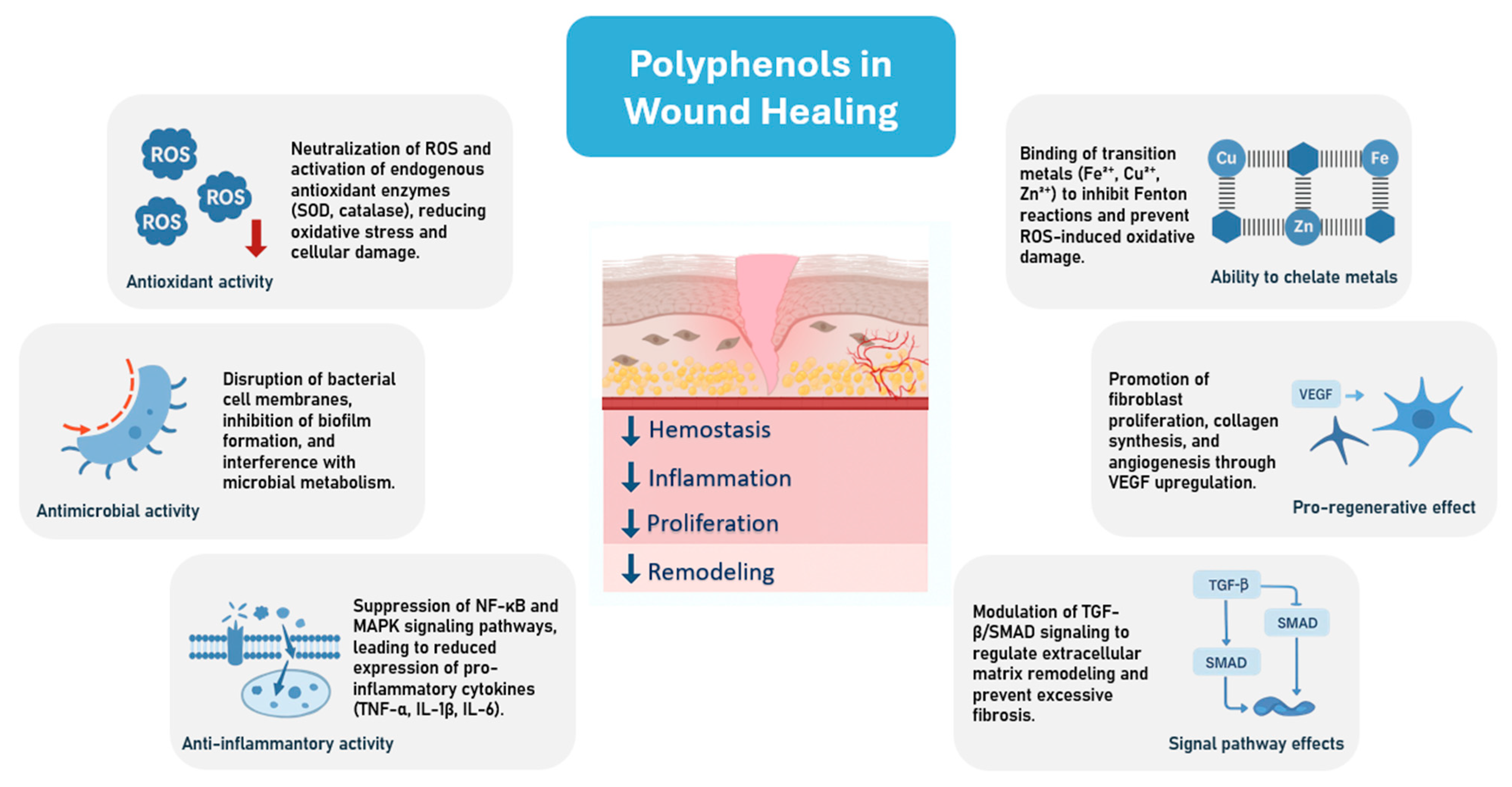
6. Polyphenols
| Polyphenol | Solubility | Bioavailability | Main Biological Effects | Limitations |
|---|---|---|---|---|
| Curcumin | Very low in water [120] | Low [122] | Antioxidant, antimicrobial, anti-inflammatory, supports tissue regeneration [120,121] | Poor solubility, chemical instability, low absorption [120,122,127] |
| Quercetin | Low [117] | Low–moderate (improved when encapsulated) [126] | Antioxidant, reduces fibrosis, promotes fibroblast proliferation [117,126] | Low solubility, photo-instability, limited permeability [122] |
| Tannic acid | Mederaye (hydrophilic) [116,119] | Moderate [116] | Antimicrobial, antioxidant, hemostatic, enhances fibroblast activity [116,118,119] | Astringency, potential for protein binding [108] |
| Resveratrol | Poor [128] | Very low [128] | Antioxidant, anti-inflammatory, promotes angiogenesis [128] | Unstable, low water solubility, rapid degradation [128] |
| EGCG | High [109] | Moderate to high [109] | Antioxidant, antibacterial (incl. against MRSA), anti-inflammatory [109] | Light-sensitive, requires stabilization [122] |
7. Integrated Approach to Wound Healing—Modification of Chitosan Nanocomposites
| Material | Experimental Model | Key Mechanisms | Outcomes | References |
|---|---|---|---|---|
| Chitosan–AgNPs with calendula extract | Clinical trials (patient with chronic wounds) | Antibacterial, anti-inflammatory, pro-regenerative | Reduced infection rate and inflammation, accelerated wound closure (fully healed after 4 months) | [28] |
| Chitosan–Zn complex films | In vitro (ST-2, RAW 264.7, HaCaT, MEF cells) | Antibacterial, angiogenic, anti-inflammatory | Antibacterial activity against S. aureus (near-complete elimination at 24 h) increased (~30%) VEGF secretion, moderately decreased NO release, low cytotoxicity, improved wound closure (88% closure) | [130] |
| Chitosan-based matrices containing silver nanoparticles (AgNPs@Chi) | In vitro (HaCaT, NIH/3T3 cells), in vivo (mouse model) | Sustained Ag+ release, antifungal activity, biocompatible, reduced hemolysis | Continuous Ag+ release over 52 days, reduced infection, enhanced fibroblast and keratinocyte proliferation, accelerated regeneration, inhibition of fungal growth (90%) | [131] |
| Chitosan–PVA–Ag nanoparticles | In vitro (CHO-K1 cells), in vivo (rat model) | Antibacterial, antioxidant | Low cytotoxicity (5–200 μg/mL), promoted re-epithelialization, accelerated early-stage wound healing (100% of wound closure after 12 days) | [132] |
| Chitosan–graphene hydrogel | In vivo (rat model) | Self-healing, hemostasis, adhesive | Accelerated re-epithelialization, complete wound closure in 10 days, improved mechanical properties and biocompatibility | [133] |
| Chitosan–collagen sponge | In vitro (NIH3T3 cells), in vivo (rat model) | ECM support, enhanced fibroblast proliferation, improved cell adhesion, antibacterial | Enhanced epithelialization (95%) and antibacterial activity against E. coli i S. aureus, high water retention, low cytotoxicity | [134] |
| Chitosan–alginate–ZnO | In vitro (3T3, 293T cells), in vivo (rat model) | Broad-spectrum antibacterial, biocompatibility | Biocompatible, strong antibacterial activity against Gram-positive and Gram-negative bacteria, antifungal activity against C. albicans, sustained Zn2+ release, accelerated wound healing | [135] |
| Chitosan–polyvinylpyrrolidone–dihydroquercetin | In vitro (HaCaT cells), in vivo (mouse model) | Antioxidant, antibacterial, pro-angiogenic, supported re-epithelialization | Fast wound closure, ↑ VEGF, CD31, pan-keratin expression, enhanced tissue regeneration | [136] |
| Chitosan–hyaluronate–resveratrol sponge | In vitro (HFL cells), in vivo (mouse model) | Biocompatible (~80% viability), pro-regenerative, bacteriostatic, accelerated re-epithelialization | Enhanced granulation tissue formation and vascularization, promoting angiogenesis, accelerated wound closure (>50% wound area reduction by day 10 vs. control) | [137] |
| Chitosan–gelatin nanoparticles with EGCG and ascorbic acid | Diabetic mice (ICR) | Anti-inflammatory, angiogenic, accelerated re-epithelialization | Promoted collagen accumulation, angiogenesis, ↓ inflammation (reduced macrophage infiltration), improved wound closure | [138] |
| Chitosan–quercetin nanoparticles | In vivo (rat model) | Angiogenic, modulation of the inflammatory phase, accelerated fibroblast activity and ECM remodelling. | ↓ TNF-α, ↑ IL-10, VEGF, and TGF-β1 expression, improved granulation and collagen deposition | [139] |
| Chitosan–clotrimazole–grape extract nanoparticles | In vivo (rat model) | Antifungal, antioxidant, hemocompatibility, synergistic bioactivity | Sustained release, improved bioavailability, complete tissue repair after 7 days, antifungal activity—inhibition zones of 72 mm (A. niger) and 74 mm (C. albicans), high entrapment efficiency (94.7%) | [140] |
| Tripolyphosphate–chitosan–curcumin nanoparticles | In vitro (HDF cells), in vivo (rat model) | Antibacterial, antioxidant, pro-regenerative, re-epithelialization | Enhanced cell proliferation, reduced infection (99% inhibition), improved tissue organization and wound healing (96–99% wound closure) | [141] |
8. Conclusions
Funding
Data Availability Statement
Conflicts of Interest
Abbreviations
| AgNPs | silver nanoparticles |
| AgNPs@Chi | chitosan-based matrices containing silver nanoparticles |
| Akt | protein kinase B |
| APA-AuNPs | 6-aminopenicillanic acid–coated gold nanoparticles |
| AuNPs | gold nanoparticles |
| bFGF | basic fibroblast growth factor |
| CA | carboxylic acid |
| CCS | chitosan sponge |
| CD31 | cluster of differentiation 31 |
| CD34 | cluster of differentiation 34 |
| ChiZn | chitosan–zinc complexes |
| CMCS | carboxymethyl chitosan |
| CS-AgNPs | chitosan–PVA–silver nanoparticles |
| CS-NPs | chitosan nanoparticles |
| CuNPs | copper nanoparticles |
| DHQ | dihydroquercetin |
| ECM | extracellular matrix |
| EGCG | epigallocatechin gallate |
| EV NPS | extracellular vesicle nanoparticles |
| FDA | Food and Drug Administration |
| FGF-2 | fibroblast growth factor-2 |
| GAGs | glycosaminoglycans |
| GO | graphene oxide |
| IL-10 | interleukin-10 |
| IL-1β | interleukin-1 beta |
| IL-6 | interleukin-6 |
| IONPs | iron oxide nanoparticles |
| KGF | keratinocyte growth factor |
| Ki67 | cell proliferation marker |
| LL37 | lactoferricin-like peptide 37 |
| MACS | hemostatic sponges |
| MAPK | mitogen-activated protein kinase |
| MDR | multidrug resistance |
| MMP-3 | matrix metalloproteinase-3 |
| MNPs | metal-based nanoparticles |
| mRNA | messenger ribonucleic acid |
| MRSA | methicillin-resistant Staphylococcus aureus |
| MTT | 3-(4,5-dimethylthiazol-2-yl)-2,5-diphenyltetrazolium bromide |
| NFs | nanofibres |
| NF-κB | nuclear factor kappa-light-chain-enhancer of activated B cell |
| NLCs | nanostructured lipid carriers |
| NPs | nanoparticles |
| p53 | tumor protein p53 |
| PAA | polyacrylic acid |
| PCL | poly-ε-caprolactone |
| PEG | polyethylene glycol |
| PGA | polyglycolic acid |
| PI3K | phosphoinositide 3-kinase |
| PU | polyurethane |
| PVA | polyvinyl alcohol |
| PVP | polyvinylpyrrolidone |
| Q | quercetin |
| QSAR | quantitative structure–activity relationship |
| REO | rosemary essential oil |
| ROS | reactive oxygen species |
| SLNs | solid lipid nanoparticles |
| SOD | superoxide dismutase |
| TA | tannic acid |
| TGF-β1 | transforming growth factor beta 1 |
| TNF-α | tumor necrosis factor alpha |
| UsAuNPs | ultrasmall gold nanoparticles |
| VEGF | vascular endothelial growth factor |
| ZnO-NPs | zinc oxide nanoparticles |
References
- Zhou, L.; Zhao, X.; Li, M.; Yan, L.; Lu, Y.; Jiang, C.; Liu, Y.; Pan, Z.; Shi, J. Antibacterial and wound healing–promoting effect of sponge-like chitosan-loaded silver nanoparticles biosynthesized by iturin. Int. J. Biol. Macromol. 2021, 181, 1183–1195. [Google Scholar] [CrossRef]
- Almadani, Y.H.; Vorstenbosch, J.; Davison, P.G.; Murphy, A.M. Wound healing: A comprehensive review. Semin. Plast. Surg. 2021, 35, 141–144. [Google Scholar] [CrossRef]
- Qi, J.; Zhang, J.; Jia, H.; Guo, X.; Yue, Y.; Yuan, Y.; Yue, T. Synthesis of silver/Fe3O4@chitosan@polyvinyl alcohol magnetic nanoparticles as an antibacterial agent for accelerating wound healing. Int. J. Biol. Macromol. 2022, 221, 1404–1414. [Google Scholar] [CrossRef]
- Guimarães, I.; Baptista-Silva, S.; Pintado, M.; Oliveira, A.L. Polyphenols: A promising avenue in therapeutic solutions for wound care. Appl. Sci. 2021, 11, 1230. [Google Scholar] [CrossRef]
- Data Bridge Market Research. Wound Dressings Market—Industry Trends and Forecast to 2031. Available online: https://www.databridgemarketresearch.com/reports/global-wound-dressings-market (accessed on 2 July 2025).
- Rahimi, M.; Ahmadi, R.; Samadi Kafil, H.; Shafiei-Irannejad, V. A novel bioactive quaternized chitosan and its silver-containing nanocomposites as a potent antimicrobial wound dressing: Structural and biological properties. Mater. Sci. Eng. C 2019, 101, 360–369. [Google Scholar] [CrossRef] [PubMed]
- Gowda, B.H.J.; Mohanto, S.; Singh, A.; Bhunia, A.; Abdelgawad, M.A.; Ghosh, S.; Ansari, M.J.; Pramanik, S. Nanoparticle-based therapeutic approaches for wound healing: A review of the state-of-the-art. Mater. Today Chem. 2023, 27, 101319. [Google Scholar] [CrossRef]
- World Health Organization (WHO). Diabetes. Available online: https://www.who.int/health-topics/diabetes#tab=tab_1 (accessed on 2 July 2025).
- Reddy, V.N.; Nyamathulla, S.; Pahirulzaman, K.A.K.; Mokhtar, S.I.; Giribabu, N.; Pasupuleti, V.R. Gallocatechin-silver nanoparticles embedded in cotton gauze patches accelerated wound healing in diabetic rats by promoting proliferation and inhibiting apoptosis through the Wnt/β-catenin signaling pathway. PLoS ONE 2022, 17, e0268505. [Google Scholar]
- Falanga, V. Wound healing and its impairment in the diabetic foot. Lancet 2005, 366, 1736–1743. [Google Scholar] [CrossRef]
- Luo, Y.; Liu, C.; Li, C.; Jin, M.; Pi, L.; Jin, Z. The incidence of lower extremity amputation and its associated risk factors in patients with diabetic foot ulcers: A meta-analysis. Int. Wound J. 2024, 21, e14931. [Google Scholar] [CrossRef]
- Chang, G.; Dang, Q.; Liu, C.; Wang, X.; Song, H.; Gao, H.; Sun, H.; Zhang, B.; Cha, D. Carboxymethyl chitosan and carboxymethyl cellulose based self-healing hydrogel for accelerating diabetic wound healing. Carbohydr. Polym. 2022, 292, 119687. [Google Scholar] [CrossRef]
- Wang, F.; Zhang, W.; Li, H.; Chen, X.; Feng, S.; Mei, Z. How effective are nano-based dressings in diabetic wound healing? A comprehensive review of literature. Int. J. Nanomed. 2023, 17, 2097–2119. [Google Scholar] [CrossRef] [PubMed]
- Peña, O.A.; Martin, P. Cellular and molecular mechanisms of skin wound healing. Nat. Rev. Mol. Cell Biol. 2024, 25, 599–616. [Google Scholar] [CrossRef] [PubMed]
- El-Aassar, M.R.; Ibrahim, O.M.; Fouda, M.M.G.; El-Beheri, N.G.; Agwa, M.M. Wound healing of nanofiber comprising polygalacturonic/hyaluronic acid embedded silver nanoparticles: In-vitro and in-vivo studies. Carbohydr. Polym. 2020, 238, 116175. [Google Scholar] [CrossRef] [PubMed]
- Kness-Knezinskis, E.; Sheckley, M.; Hostler, A.C.; Mora Pinos, M.G.; Chen, K.; Gurtner, G.C. Translational approaches manipulating mechanobiology to promote scarless healing in humans. J. Plast. Reconstr. Aesthetic Surg. 2025; Advance online publication. [Google Scholar]
- Zulkefli, N.; Che Zahari, C.N.M.; Sayuti, N.H.; Kamarudin, A.A.; Saad, N.; Hamezah, H.S.; Bunawan, H.; Baharum, S.N.; Mediani, A.; Ahmed, Q.U.; et al. Flavonoids as potential wound-healing molecules: Emphasis on pathways perspective. Int. J. Mol. Sci. 2023, 24, 4607. [Google Scholar] [CrossRef]
- Dhivya, S.; Padma, V.V.; Santhini, E. Wound dressings—A review. Biomedicine 2015, 5, 22. [Google Scholar] [CrossRef]
- Liu, Z.; Lv, Y.; Zheng, G.; Wu, W.; Che, X. Chitosan/Polylactic Acid Nanofibers Containing Astragaloside IV as a New Biodegradable Wound Dressing for Wound Healing. AAPS PharmSciTech 2023, 24, 202. [Google Scholar] [CrossRef]
- Bruna, T.; Maldonado-Bravo, F.; Jara, P.; Caro, N. Silver nanoparticles and their antibacterial applications. Int. J. Mol. Sci. 2021, 22, 7202. [Google Scholar] [CrossRef]
- Yin, I.X.; Zhang, J.; Zhao, I.S.; Mei, M.L.; Li, Q.; Chu, C.H. The antibacterial mechanism of silver nanoparticles and its application in dentistry. Int. J. Nanomed. 2020, 15, 2555–2562. [Google Scholar] [CrossRef]
- Lin, Y.-J.; Lee, G.-H.; Chou, C.-W.; Chen, Y.-P.; Wu, T.-H.; Lin, H.-R. Stimulation of wound healing by PU/hydrogel composites containing fibroblast growth factor-2. J. Mater. Chem. B 2015, 3, 1865–1874. [Google Scholar] [CrossRef]
- Persinal-Medina, M.; Llames, S.; Chacón, M.; Vázquez, N.; Pevida, M.; Alcalde, I.; Alonso-Alonso, S.; Martínez-López, L.M.; Merayo-Lloves, J.; Meana, Á. Polymerizable skin hydrogel for full thickness wound healing. Int. J. Mol. Sci. 2022, 23, 4837. [Google Scholar] [CrossRef]
- Singh, R.; Shitiz, K.; Singh, A. Chitin and chitosan: Biopolymers for wound management. Int. Wound J. 2017, 14, 1276–1289. [Google Scholar] [CrossRef]
- Younes, I.; Rinaudo, M. Chitin and chitosan preparation from marine sources. Structure, properties, and applications. Mar. Drugs 2015, 13, 1133–1174. [Google Scholar] [CrossRef]
- Song, J.; Feng, H.; Wu, M.; Chen, L.; Xia, W.; Zhang, W. Preparation and characterization of arginine-modified chitosan/hydroxypropyl methylcellose antibacterial film. Int. J. Biol. Macromol. 2020, 145, 750–758. [Google Scholar] [CrossRef]
- US Food and Drug Administration. GRAS Notices. Available online: https://www.hfpappexternal.fda.gov/scripts/fdcc/index.cfm?set=grasnotices&sort=GRN_No&order=DESC&showAll=true&type=basic&search= (accessed on 3 July 2025).
- Rodríguez-Acosta, H.; Tapia-Rivera, J.M.; Guerrero-Guzmán, A.; Hernández-Elizarraráz, E.; Hernández-Díaz, J.A.; Garza-García, J.J.O.; Pérez-Ramírez, P.E.; Velasco-Ramírez, S.F.; Ramírez-Anguiano, A.C.; Velázquez-Juárez, G.; et al. Chronic wound healing by controlled release of chitosan hydrogels loaded with silver nanoparticles and calendula extract. J. Tissue Viability 2022, 31, 173–179. [Google Scholar] [CrossRef]
- Howling, G.I.; Dettmar, P.W.; Goddard, P.A.; Hampson, F.C.; Dornish, M.; Wood, E.J. The effect of chitin and chitosan on the proliferation of human skin fibroblasts and keratinocytes in vitro. Biomaterials 2001, 22, 2959–2966. [Google Scholar] [CrossRef] [PubMed]
- Sela, A.; Shkuri, N.; Tish, N.; Vinokur, Y.; Rodov, V.; Poverenov, E. Carboxymethyl chitosan-quercetin conjugate: A sustainable one-step synthesis and use for food preservation. Carbohydr. Polym. 2023, 316, 121084. [Google Scholar] [CrossRef]
- Kłosiński, K.K.; Wach, R.A.; Kruczkowska, W.; Duda, Ł.; Kołat, D.; Kałuzińska-Kołat, Ż.; Arkuszewski, P.T.; Pasieka, Z.W. Carboxymethyl chitosan hydrogels for effective wound healing—An animal study. J. Funct. Biomater. 2023, 14, 473. [Google Scholar] [CrossRef] [PubMed]
- Dong, H.; Feng, C.; Zhu, J.; Gu, X.; Cai, X.; Qian, H.; Gao, Y.; Tan, Z.; Cao, Y.; Xie, W.; et al. Ultrasmall gold nanoparticles/carboxymethyl chitosan composite hydrogel: Tough, restorable, biocompatible antimicrobial dressing for wound healing. Appl. Mater. Today 2024, 38, 102206. [Google Scholar] [CrossRef]
- Du, X.; Wu, L.; Yan, H.; Jiang, Z.; Li, S.; Li, W.; Bai, Y.; Wang, H.; Cheng, Z.; Kong, D.; et al. Microchannelled alkylated chitosan sponge to treat noncompressible hemorrhages and facilitate wound healing. Nat. Commun. 2021, 12, 4733. [Google Scholar] [CrossRef]
- Prasathkumar, M.; Sadhasivam, S. Chitosan/hyaluronic acid/alginate and assorted polymers loaded with honey, plant, and marine compounds for progressive wound healing—Know-how. Int. J. Biol. Macromol. 2021, 186, 656–685. [Google Scholar] [CrossRef]
- Gao, Y.; Kang, Y.; Wang, T.; Li, C.; Shen, S.; Qu, C.; Gong, S.; Liu, P.; Yang, L.; Liu, J.; et al. Alginate microspheres-collagen hydrogel, as a novel 3D culture system, enhanced skin wound healing of hUCMSCs in a rat model. Colloids Surf. B Biointerfaces 2022, 219, 112799. [Google Scholar] [CrossRef] [PubMed]
- Fayyazbakhsh, F.; Khayat, M.J.; Leu, M.C. 3D-Printed gelatin-alginate hydrogel dressings for burn wound healing: A comprehensive study. Int. J. Bioprinting 2022, 8, 618. [Google Scholar] [CrossRef] [PubMed]
- Oliveira, C.; Sousa, D.; Teixeira, J.A.; Ferreira-Santos, P.; Botelho, C.M. Polymeric biomaterials for wound healing. Front. Bioeng. Biotechnol. 2023, 11, 1136077. [Google Scholar] [CrossRef]
- Wahid, F.; Zhao, X.-J.; Zhao, X.-Q.; Ma, X.-F.; Xue, N.; Liu, X.-Z.; Wang, F.-P.; Jia, S.-R.; Zhong, C. Fabrication of bacterial cellulose-based dressings for promoting infected wound healing. ACS Appl. Mater. Interfaces 2021, 13, 32716–32728. [Google Scholar] [CrossRef]
- Biranje, S.S.; Sun, J. Development of cellulose nanofibril/casein-based 3D composite hemostasis scaffold for potential wound-healing application. ACS Appl. Mater. Interfaces 2022, 14, 3792–3808. [Google Scholar] [CrossRef] [PubMed]
- Möller, S.; Weisser, J.; Bischoff, S.; Schnabelrauch, M. Dextran and hyaluronan methacrylate-based hydrogels as matrices for soft tissue reconstruction. Biomol. Eng. 2007, 24, 496–504. [Google Scholar] [CrossRef]
- Sun, G.; Zhang, X.; Shen, Y.-I.; Gerecht, S.; Langer, R. Dextran hydrogel scaffolds enhance angiogenic responses and promote complete skin regeneration during burn wound healing. Proc. Natl. Acad. Sci. USA 2011, 108, 20976–20981. [Google Scholar] [CrossRef]
- Suamte, L.; Tirkey, A.; Babu, P.J. Design of 3D smart scaffolds using natural, synthetic, and hybrid-derived polymers for skin regenerative applications. Smart Mater. Med. 2023, 4, 243–256. [Google Scholar] [CrossRef]
- Bencherif, S.A.; Gsib, O.; Egles, C. Fibrin: An underrated biopolymer for skin tissue engineering. J. Mol. Biol. Biotechnol. 2017, 2, 1–4. [Google Scholar]
- Ndlovu, S.P.; Ngece, K.; Alven, S.; Aderibigbe, B.A. Gelatin-based hybrid scaffolds: Promising wound dressings. Polymers 2021, 13, 2959. [Google Scholar] [CrossRef]
- Kohli, N.; Sharma, V.; Brown, S.J.; García-Gareta, E. Synthetic polymers for skin biomaterials. In Biomaterials for Skin Repair and Regeneration; Woodhead Publishing: Cambridge, UK, 2019; pp. 125–149. [Google Scholar]
- Jin, S.G. Production and application of biomaterials based on polyvinyl alcohol (PVA) as wound dressing. Chem. Asian J. 2022, 17, e202200595. [Google Scholar] [CrossRef]
- Saraiva, M.M.; Campelo, M.S.; Câmara Neto, J.F.; Lima, A.B.N.; Silva, G.A.; Dias, A.T.F.F.; Ricardo, N.M.P.S.; Kaplan, D.L.; Ribeiro, M.E.N.P. Alginate/polyvinyl alcohol films for wound healing: Advantages and challenges. J. Biomed. Mater. Res. Part B Appl. Biomater. 2022, 111, 220–233. [Google Scholar] [CrossRef] [PubMed]
- Yi, X.; He, J.; Wei, X.; Li, H.; Liu, X.; Cheng, F. A polyphenol and ε-polylysine functionalized bacterial cellulose/PVA multifunctional hydrogel for wound healing. Int. J. Biol. Macromol. 2023, 247, 125663. [Google Scholar] [CrossRef]
- Jayabal, P.; Kannan, V.; Vinothkumar, A.; Mathapati, S.; Pannerselvam, B.; Achiraman, S.; Venkatasubbu, G.D. Fabrication of a chitosan-based wound dressing patch for enhanced antimicrobial, hemostatic, and wound healing application. ACS Appl. Bio Mater. 2023, 6, 615–627. [Google Scholar] [CrossRef]
- Kamoun, E.A.; Kenawy, E.S.; Chen, X. A review on polymeric hydrogel membranes for wound dressing applications: PVA-based hydrogel dressings. J. Adv. Res. 2017, 8, 217–233. [Google Scholar] [CrossRef]
- Morales-González, M.; Díaz, L.E.; Dominguez-Paz, C.; Valero, M.F. Insights into the design of polyurethane dressings suitable for the stages of skin wound-healing: A systematic review. Polymers 2022, 14, 2990. [Google Scholar] [CrossRef]
- Rather, A.H.; Khan, R.S.; Wani, T.U.; Rafiq, M.; Jadhav, A.H.; Srinivasappa, P.M.; Abdal-hay, A.; Sultan, P.; Rather, S.; Macossay, J.; et al. Polyurethane and cellulose acetate micro-nanofibers containing rosemary essential oil, and decorated with silver nanoparticles for wound healing application. Int. J. Biol. Macromol. 2023, 226, 690–705. [Google Scholar] [CrossRef]
- Ulery, B.D.; Nair, L.S.; Laurencin, C.T. Biomedical applications of biodegradable polymers. J. Polym. Sci. Part B Polym. Phys. 2011, 49, 832–864. [Google Scholar] [CrossRef] [PubMed]
- Ceonzo, K.; Gaynor, A.; Shaffer, L.; Kojima, K.; Vacanti, C.A.; Stahl, G.L. Polyglycolic acid induced inflammation: Role of hydrolysis and resulting complement activation. Tissue Eng. 2006, 12, 301–308. [Google Scholar] [CrossRef]
- Ge, F.; Wan, T.; Kong, L.; Xu, B.; Sun, M.; Wang, B.; Liang, S.; Wang, H.; Zhao, X. Non-isocyanate polyurethane-co-polyglycolic acid electrospun nanofiber membrane wound dressing with high biocompatibility, hemostasis, and prevention of chronic wound formation. Heliyon 2024, 10, e33693. [Google Scholar] [CrossRef] [PubMed]
- Raina, N.; Pahwa, R.; Khosla, J.K.; Sharma, R. Polycaprolactone-based materials in wound healing applications. Polym. Bull. 2022, 79, 7041–7063. [Google Scholar] [CrossRef]
- Rathinavel, S.; Korrapati, P.S.; Kalaiselvi, P.; Dharmalingam, S. Mesoporous silica incorporated PCL/Curcumin nanofiber for wound healing application. Eur. J. Pharm. Sci. 2021, 167, 106021. [Google Scholar] [CrossRef]
- Chen, R.; Liu, Z.; Cui, T.; Zhang, X.; Wang, C.-F.; Li, G.-X.; Wang, G.; Chen, S. HE@PCL/PCE gel-nanofiber dressing with robust self-adhesion toward high wound-healing rate via microfluidic electrospinning technology. ACS Appl. Mater. Interfaces 2023, 15, 46322–46332. [Google Scholar] [CrossRef]
- Faraji, S.; Nowroozi, N.; Nouralishahi, A.; Shayeh, J.S. Electrospun poly-caprolactone/graphene oxide/quercetin nanofibrous scaffold for wound dressing: Evaluation of biological and structural properties. Life Sci. 2020, 257, 118062. [Google Scholar] [CrossRef] [PubMed]
- Qian, Q.; Zhu, L.; Zhu, X.; Sun, M.; Yan, D. Drug-polymer hybrid macromolecular engineering: Degradable PEG integrated by Platinum(IV) for cancer therapy. Matter 2019, 1, 1618–1630. [Google Scholar] [CrossRef]
- Mishra, S.K.; Mary, D.S.; Kannan, S. Copper incorporated microporous chitosan-polyethylene glycol hydrogels loaded with naproxen for effective drug release and anti-infection wound dressing. Int. J. Biol. Macromol. 2017, 95, 928–937. [Google Scholar] [CrossRef] [PubMed]
- Andrade del Olmo, J.; Alonso, J.M.; Sáez-Martínez, V.; Benito-Cid, S.; Moreno-Benítez, I.; Bengoa-Larrauri, M.; Pérez-González, R.; Vilas-Vilela, J.L.; Pérez-Álvarez, L. Self-healing, antibacterial and anti-inflammatory chitosan-PEG hydrogels for ulcerated skin wound healing and drug delivery. Biomater. Adv. 2022, 139, 212992. [Google Scholar] [CrossRef]
- Koochaki, A.; Shahgholi, M.; Sajadi, S.M.; Babadi, E.; Inc, M. Investigation of the mechanical stability of polyethylene glycol hydrogel reinforced with cellulose nanofibrils for wound healing: Molecular dynamics simulation. Eng. Anal. Bound. Elem. 2023, 151, 1–7. [Google Scholar] [CrossRef]
- Marambio-Jones, C.; Hoek, E.M.V. A review of the antibacterial effects of silver nanoparticles and potential implications for human health and the environment. J. Nanoparticle Res. 2010, 12, 1531–1551. [Google Scholar] [CrossRef]
- Konop, M.; Damps, T.; Misicka, A.; Rudnicka, L. Certain aspects of silver and silver nanoparticles in wound care: A minireview. J. Nanomater. 2016, 2016, 7614753. [Google Scholar] [CrossRef]
- Cavanagh, M.H.; Burrell, R.E.; Nadworny, P.L. Evaluating antimicrobial efficacy of new commercially available silver dressings. Int. Wound J. 2010, 7, 394–405. [Google Scholar] [CrossRef]
- Percival, S.L.; Bowler, P.G.; Dolman, J. Antimicrobial activity of silver-containing dressings on wound microorganisms using an in vitro biofilm model. Int. Wound J. 2007, 4, 186–191. [Google Scholar] [CrossRef]
- Daniel, M.C.; Astruc, D. Gold nanoparticles: Assembly, supramolecular chemistry, quantum size-related properties, and applications in biology, catalysis, and nanotechnology. Chem. Rev. 2004, 104, 293–346. [Google Scholar] [CrossRef]
- Mendes, C.; Haupenthal, D.P.D.S.; Zaccaron, R.P.; de Bem Silveira, G.; Borges Corrêa, M.E.A.; Casagrande, L.D.R.; Mariano, S.D.S.; de Souza Silva, J.I.; de Andrade, T.A.M.; Feuser, P.E.; et al. Effects of the association between photobiomodulation and hyaluronic acid linked gold nanoparticles in wound healing. ACS Biomater. Sci. Eng. 2020, 6, 5132–5144. [Google Scholar] [CrossRef]
- Lau, P.S.; Bidin, N.; Islam, S.; Shukri, W.N.B.W.M.; Zakaria, N.; Musa, N.; Krishnan, G. Influence of gold nanoparticles on wound healing treatment in rat model: Photobiomodulation therapy. Lasers Surg. Med. 2017, 49, 380–386. [Google Scholar] [CrossRef]
- Panyala, N.R.; Pena-Mendez, E.M.; Havel, J. Gold and gold nanoparticles in medicine: A review, toxicology, and perspectives. J. Appl. Biomed. 2009, 7, 75–91. [Google Scholar] [CrossRef]
- Pivodová, V.; Franková, J.; Galandáková, A.; Ulrichová, J. In vitro AuNPs’ cytotoxicity and their effect on wound healing. Nanobiomedicine 2015, 2, 7. [Google Scholar] [CrossRef]
- Yang, X.; Yang, J.; Wang, L.; Ran, B.; Jia, Y.; Zhang, L.; Yang, G.; Shao, H.; Jiang, X. Pharmaceutical intermediate-modified gold nanoparticles: Against multidrug-resistant bacteria and wound-healing application via an electrospun scaffold. ACS Nano 2017, 11, 5737–5745. [Google Scholar] [CrossRef] [PubMed]
- Pan, A.; Zhong, M.; Wu, H.; Peng, Y.; Xia, H.; Tang, Q.; Huang, Q.; Wei, L.; Xiao, L.; Peng, C. Topical application of keratinocyte growth factor conjugated gold nanoparticles accelerates wound healing. Nanomed. Nanotechnol. Biol. Med. 2018, 14, 1619–1628. [Google Scholar] [CrossRef]
- Akturk, O.; Kismet, K.; Yasti, A.C.; Kuru, S.; Duymus, M.E.; Kaya, F.; Caydere, M.; Hucumenoglu, S.; Keskin, D. Collagen/gold nanoparticle nanocomposites: A potential skin wound healing biomaterial. J. Biomater. Appl. 2016, 31, 283–295. [Google Scholar] [CrossRef] [PubMed]
- Yadid, M.; Feiner, R.; Dvir, T. Gold nanoparticle-integrated scaffolds for tissue engineering and regenerative medicine. Nano Lett. 2019, 19, 2198–2206. [Google Scholar] [CrossRef]
- Darweesh, R.S.; Ayoub, N.M.; Nazzal, S. Gold nanoparticles and angiogenesis: Molecular mechanisms and biomedical applications. Int. J. Nanomed. 2019, 14, 7643–7663. [Google Scholar] [CrossRef]
- Salvo, J.; Sandoval, C. Role of copper nanoparticles in wound healing for chronic wounds: Literature review. Burn. Trauma 2022, 10, tkab047. [Google Scholar] [CrossRef]
- Hopkins, R.G.; Failla, M.L. Copper deficiency reduces interleukin-2 (IL-2) production and IL-2 mRNA in human T-lymphocytes. J. Nutr. 1997, 127, 257–262. [Google Scholar] [CrossRef]
- Tiwari, M.; Narayanan, K.; Thakar, M.B.; Jagani, H.V.; Rao, J.V. Biosynthesis and wound healing activity of copper nanoparticles. IET Nanobiotechnol. 2014, 8, 230–237. [Google Scholar] [CrossRef]
- Alizadeh, S.; Seyedalipour, B.; Shafieyan, S.; Kheime, A.; Mohammadi, P.; Aghdami, N. Copper nanoparticles promote rapid wound healing in acute full thickness defect via acceleration of skin cell migration, proliferation, and neovascularization. Biochem. Biophys. Res. Commun. 2019, 517, 684–690. [Google Scholar] [CrossRef]
- Sandoval, C.; Ríos, G.; Sepúlveda, N.; Salvo, J.; Souza-Mello, V.; Farías, J. Effectiveness of copper nanoparticles in wound healing process using in vivo and in vitro studies: A systematic review. Pharmaceutics 2022, 14, 1838. [Google Scholar] [CrossRef] [PubMed]
- Zangeneh, M.M.; Ghaneialvar, H.; Akbaribazm, M.; Ghanimatdan, M.; Abbasi, N.; Goorani, S.; Pirabbasi, E.; Zangeneh, A. Novel synthesis of Falcaria vulgaris leaf extract conjugated copper nanoparticles with potent cytotoxicity, antioxidant, antifungal, antibacterial, and cutaneous wound healing activities under in vitro and in vivo conditions. J. Photochem. Photobiol. B Biol. 2019, 197, 111556. [Google Scholar] [CrossRef] [PubMed]
- Blinov, A.V.; Kachanov, M.D.; Gvozdenko, A.A.; Nagdalian, A.A.; Blinova, A.A.; Rekhman, Z.A.; Golik, A.B.; Vakalov, D.S.; Maglakelidze, D.G.; Nagapetova, A.G.; et al. Synthesis and characterization of zinc oxide nanoparticles stabilized with biopolymers for application in wound-healing mixed gels. Gels 2023, 9, 57. [Google Scholar] [CrossRef] [PubMed]
- Jiang, J.; Pi, J.; Cai, J. The advancing of zinc oxide nanoparticles for biomedical applications. Bioinorg. Chem. Appl. 2018, 2018, 1062562. [Google Scholar] [CrossRef] [PubMed]
- Kanwar, A.; Sharma, A. A review on role of zinc as a potent immunity boosting agent. Mater. Today Proc. 2022, 68 Pt 4, 880–885. [Google Scholar] [CrossRef]
- Sheferov, I.; Balakireva, A.; Panteleev, D.; Spitskaya, I.; Orekhov, S.; Kazantsev, O.; Solovyeva, A.; Novopoltsev, D.; Melnikova, N. The effect of zinc oxide nanoparticles on properties and burn wound healing activity of thixotropic xymedone gels. Sci. Pharm. 2022, 90, 61. [Google Scholar] [CrossRef]
- Pandurangan, M.; Kim, D.H. In vitro toxicity of zinc oxide nanoparticles: A review. J. Nanoparticle Res. 2015, 17, 158. [Google Scholar] [CrossRef]
- Kaushik, M.; Niranjan, R.; Thangam, R.; Madhan, B.; Pandiyarasan, V.; Ramachandran, C.; Oh, D.-H.; Venkatasubbu, G.D. Investigations on the antimicrobial activity and wound healing potential of ZnO nanoparticles. Appl. Surf. Sci. 2019, 479, 1169–1177. [Google Scholar] [CrossRef]
- Saddik, M.S.; Elsayed, M.M.A.; El-Mokhtar, M.A.; Sedky, H.; Abdel-Aleem, J.A.; Abu-Dief, A.M.; Al-Hakkani, M.F.; Hussein, H.L.; Al-Shelkamy, S.A.; Meligy, F.Y.; et al. Tailoring of novel azithromycin-loaded zinc oxide nanoparticles for wound healing. Pharmaceutics 2022, 14, 111. [Google Scholar] [CrossRef] [PubMed]
- Batool, M.; Khurshid, S.; Qureshi, Z.; Daoush, W.M. Adsorption, antimicrobial, and wound healing activities of biosynthesized zinc oxide nanoparticles. Chem. Pap. 2021, 75, 893–907. [Google Scholar] [CrossRef]
- Wright, J.A.; Richards, T.; Srai, S.K.S. The role of iron in the skin and cutaneous wound healing. Front. Pharmacol. 2014, 5, 156. [Google Scholar] [CrossRef]
- Lu, Z.; Yu, D.; Nie, F.; Wang, Y.; Chong, Y. Iron nanoparticles open up new directions for promoting healing in chronic wounds in the context of bacterial infection. Pharmaceutics 2023, 15, 2327. [Google Scholar] [CrossRef] [PubMed]
- Nandi Shoudho, K.; Uddin, S.; Hasan Rumon, M.; Shakil, M.S. Influence of physicochemical properties of iron oxide nanoparticles on their antibacterial activity. ACS Omega 2024, 9, 33303–33334. [Google Scholar] [CrossRef]
- Zangeneh, M.M.; Zangeneh, A. Biosynthesis of iron nanoparticles using Allium eriophyllum Boiss extract: Chemical characterization, antioxidant, cytotoxicity, antibacterial, antifungal, and cutaneous wound healing effects. Appl. Organomet. Chem. 2019, 34, e5304. [Google Scholar] [CrossRef]
- Suriya, R.; Manjusha, V.; Rajeev, M.R.; Anirudhan, T.S. Synthesis and characterization of a novel dual sensitive iron nanoparticles incorporated Schiff base composite hydrogel for diabetic wound healing therapy. Sustain. Mater. Technol. 2024, 42, e01121. [Google Scholar] [CrossRef]
- Choi, J.U.; Lee, S.W.; Pangeni, R.; Byun, Y.; Yoon, I.-S.; Park, J.W. Preparation and in vivo evaluation of cationic elastic liposomes comprising highly skin-permeable growth factors combined with hyaluronic acid for enhanced diabetic wound-healing therapy. Acta Biomater. 2017, 57, 197–215. [Google Scholar] [CrossRef] [PubMed]
- Weber, S.; Zimmer, A.; Pardeike, J. Solid Lipid Nanoparticles (SLN) and Nanostructured Lipid Carriers (NLC) for pulmonary application: A review of the state of the art. Eur. J. Pharm. Biopharm. 2014, 86, 7–22. [Google Scholar] [CrossRef]
- Mehnert, W.; Mäder, K. Solid lipid nanoparticles: Production, characterization and applications. Adv. Drug Deliv. Rev. 2001, 47, 165–196. [Google Scholar] [CrossRef]
- Wathoni, N.; Suhandi, C.; Elamin, K.M.; Lesmana, R.; Hasan, N.; Mohammed, A.F.A.; El-Rayyes, A.; Wilar, G. Advancements and challenges of nanostructured lipid carriers for wound healing applications. Int. J. Nanomed. 2024, 19, 8091–8113. [Google Scholar] [CrossRef] [PubMed]
- Sanad, R.A.-B.; Abdel-Bar, H.M. Chitosan–hyaluronic acid composite sponge scaffold enriched with Andrographolide-loaded lipid nanoparticles for enhanced wound healing. Carbohydr. Polym. 2017, 173, 441–450. [Google Scholar] [CrossRef] [PubMed]
- Reczyńska-Kolman, K.; Ochońska, D.; Brzychczy-Włoch, M.; Pamuła, E. Stearic acid-based nanoparticles loaded with antibacterial peptides—Bacitracin and LL-37: Selection of manufacturing parameters, cytocompatibility, and antibacterial efficacy. Int. J. Pharm. 2024, 667 Pt A, 124876. [Google Scholar] [CrossRef]
- Tazehjani, D.A.J.; Farahpour, M.R.; Hamishehkar, H. Effectiveness of topical caraway essential oil loaded into nanostructured lipid carrier as a promising platform for the treatment of infected wounds. Colloids Surf. A Physicochem. Eng. Asp. 2021, 610, 125748. [Google Scholar] [CrossRef]
- Motsoene, F.; Abrahamse, H.; Kumar, S.S.D. Multifunctional lipid-based nanoparticles for wound healing and antibacterial applications: A review. Adv. Colloid Interface Sci. 2023, 321, 103002. [Google Scholar] [CrossRef]
- Gad, H.A.; Abd El-Rahman, F.A.A.; Hamdy, G.M. Chamomile oil loaded solid lipid nanoparticles: A naturally formulated remedy to enhance the wound healing. J. Drug Deliv. Sci. Technol. 2019, 50, 329–338. [Google Scholar] [CrossRef]
- Garcia-Orue, I.; Gainza, G.; Garcia-Garcia, P.; Gutierrez, F.B.; Aguirre, J.J.; Hernandez, R.M.; Delgado, A.; Igartua, M. Composite nanofibrous membranes of PLGA/Aloe vera containing lipid nanoparticles for wound dressing applications. Int. J. Pharm. 2019, 556, 320–329. [Google Scholar] [CrossRef]
- Mukherjee, C.; Chakraborty, S. Study of dietary polyphenols from natural herbal sources for providing protection against human degenerative disorders. Biocatal. Agric. Biotechnol. 2021, 33, 101956. [Google Scholar] [CrossRef]
- Pandey, K.B.; Rizvi, S.I. Plant polyphenols as dietary antioxidants in human health and disease. Oxidative Med. Cell. Longev. 2009, 2, 270–278. [Google Scholar] [CrossRef]
- Cutrim, C.S.; Cortez, M.A.S. A review on polyphenols: Classification, beneficial effects and their application in dairy products. Int. J. Dairy Technol. 2018, 71, 564–578. [Google Scholar] [CrossRef]
- Ghuman, S.; Ncube, B.; Finnie, J.; McGaw, L.; Njoya, E.M.; Coopoosamy, R.; Van Staden, J. Antioxidant, anti-inflammatory and wound healing properties of plant extracts used in the treatment of wounds and dermatological diseases. S. Afr. J. Bot. 2019, 126, 232–240. [Google Scholar] [CrossRef]
- Działo, M.A.; Mierziak, J.; Korzun, U.; Preisner, M.; Szopa, J.; Kulma, A. The potential of plant phenolics in prevention and therapy of skin disorders. Int. J. Mol. Sci. 2016, 17, 160. [Google Scholar] [CrossRef] [PubMed]
- Bouarab-Chibane, L.; Forquet, V.; Lantéri, P.; Clément, Y.; Léonard-Akkari, L.; Oulahal, N.; Degraeve, P.; Bordes, C. Antibacterial properties of polyphenols: Characterization and QSAR models (Quantitative Structure-Activity Relationship). Front. Microbiol. 2019, 10, 829. [Google Scholar] [CrossRef] [PubMed]
- Negut, I.; Grumezescu, V.; Grumezescu, A.M. Strategies for treating infected wounds. Molecules 2018, 23, 2392. [Google Scholar] [CrossRef]
- Cherrak, S.A.; Mokhtari-Soulimane, N.; Berroukeche, F.; Bensenane, B.; Cherbonnel, A.; Merzouk, H.; Elhabiri, M. In vitro antioxidant versus metal ion chelating properties of flavonoids: A structure-activity investigation. PLoS ONE 2016, 11, e0165575. [Google Scholar] [CrossRef]
- Pietta, P.-G. Flavonoids as antioxidants. J. Nat. Prod. 2000, 63, 1035–1042. [Google Scholar] [CrossRef]
- Jiji, S.; Udhayakumar, S.; Rose, C.; Muralidharan, C.; Kadirvelu, K. Thymol enriched bacterial cellulose hydrogel as effective material for third degree burn wound repair. Int. J. Biol. Macromol. 2019, 122, 452–460. [Google Scholar] [CrossRef]
- Sahiner, N.; Sagbas, S.; Sahiner, M.; Silan, C.; Aktas, N.; Turk, M. Biocompatible and biodegradable poly(tannic acid) hydrogel with antimicrobial and antioxidant properties. Int. J. Biol. Macromol. 2016, 82, 150–159. [Google Scholar] [CrossRef]
- Doersch, K.M.; Newell-Rogers, M.K. The impact of quercetin on wound healing relates to changes in αV and β1 integrin expression. Exp. Biol. Med. 2017, 242, 1424–1431. [Google Scholar] [CrossRef]
- Tan, L.; Zhou, X.; Wu, K.; Yang, D.; Jiao, Y.; Zhou, C. Tannic acid/CaII anchored on the surface of chitin nanofiber sponge by layer-by-layer deposition: Integrating effective antibacterial and hemostatic performance. Int. J. Biol. Macromol. 2020, 159, 304–315. [Google Scholar] [CrossRef]
- Xu, F.; Weng, B.; Gilkerson, R.; Materon, L.A.; Lozano, K. Development of tannic acid/chitosan/pullulan composite nanofibers from aqueous solution for potential applications as wound dressing. Carbohydr. Polym. 2015, 115, 16–24. [Google Scholar] [CrossRef] [PubMed]
- Krausz, A.E.; Adler, B.L.; Cabral, V.; Navati, M.; Doerner, J.; Charafeddine, R.A.; Chandra, D.; Liang, H.; Gunther, L.; Clendaniel, A.; et al. Curcumin-encapsulated nanoparticles as innovative antimicrobial and wound healing agent. Nanomed. Nanotechnol. Biol. Med. 2015, 11, 195–206. [Google Scholar] [CrossRef] [PubMed]
- Anjum, S.; Gupta, A.; Sharma, D.; Gautam, D.; Bhan, S.; Sharma, A.; Kapil, A.; Gupta, B. Development of novel wound care systems based on nanosilver nanohydrogels of polymethacrylic acid with Aloe vera and curcumin. Mater. Sci. Eng. C 2016, 64, 157–166. [Google Scholar] [CrossRef] [PubMed]
- Chen, L.; Gnanaraj, C.; Arulselvan, P.; El-Seedi, H.; Teng, H. A review on advanced microencapsulation technology to enhance bioavailability of phenolic compounds: Based on its activity in the treatment of Type 2 Diabetes. Trends Food Sci. Technol. 2019, 85, 149–162. [Google Scholar] [CrossRef]
- Spagnol, C.M.; Zaera, A.M.; Isaac, V.L.B.; Corrêa, M.A.; Salgado, H.R.N. Release and permeation profiles of spray-dried chitosan microparticles containing caffeic acid. Saudi Pharm. J. 2018, 26, 410–415. [Google Scholar] [CrossRef]
- Ribeiro, A.M.; Estevinho, B.N.; Rocha, F. Microencapsulation of polyphenols—The specific case of the microencapsulation of Sambucus nigra L. extracts: A review. Trends Food Sci. Technol. 2020, 105, 454–467. [Google Scholar] [CrossRef]
- Bairagi, U.; Mittal, P.; Singh, J.; Mishra, B. Preparation, characterization, and in vivo evaluation of nano formulations of ferulic acid in diabetic wound healing. Drug Dev. Ind. Pharm. 2018, 44, 1783–1796. [Google Scholar] [CrossRef] [PubMed]
- Potphode, N.D.; Daunde, J.A.; Desai, S.S.; Walvekar, M.V. Nano-curcumin: A potent booster of the body’s antioxidant system in diabetic mice. Int. J. Phytomed. 2018, 10, 162. [Google Scholar] [CrossRef]
- Huang, X.; Dai, Y.; Cai, J.; Zhong, N.; Xiao, H.; McClements, D.J.; Hu, K. Resveratrol encapsulation in core-shell biopolymer nanoparticles: Impact on antioxidant and anticancer activities. Food Hydrocoll. 2017, 64, 157–165. [Google Scholar] [CrossRef]
- Orłowski, P.; Świderska-Burek, U.; Tarnawska, M.; Lechowska, A.; Szustakiewicz, K.; Thor, P.J.; Szczerbak, A. Polyphenol-conjugated bimetallic Au@Ag nanoparticles for improved wound healing. Int. J. Nanomed. 2020, 15, 4969–4990. [Google Scholar] [CrossRef]
- Mutlu, N.; Liverani, L.; Kurtuldu, F.; Galusek, D.; Boccaccini, A.R. Zinc improves antibacterial, anti-inflammatory and cell motility activity of chitosan for wound healing applications. Int. J. Biol. Macromol. 2022, 213, 845–857. [Google Scholar] [CrossRef]
- Bonilla, J.J.A.; Honorato, L.; Guimarães, A.J.; Miranda, K.; Nimrichter, L. Silver chitosan nanocomposites are effective to combat sporotrichosis. Front. Nanotechnol. 2022, 4, 857681. [Google Scholar] [CrossRef]
- Hajji, S.; Ben Khedir, S.; Hamza-Mnif, I.; Hamdi, M.; Jedidi, I.; Kallel, R.; Boufi, S.; Nasri, M. Biomedical potential of chitosan-silver nanoparticles with special reference to antioxidant, antibacterial, hemolytic and in vivo cutaneous wound healing effects. Biochim. Biophys. Acta Gen. Subj. 2019, 1863, 241–254. [Google Scholar] [CrossRef]
- Feng, W.; Wang, Z. Shear-thinning and self-healing chitosan-graphene oxide hydrogel for hemostasis and wound healing. Carbohydr. Polym. 2022, 294, 119824. [Google Scholar] [CrossRef]
- Zhang, M.-X.; Zhao, W.-Y.; Fang, Q.-Q.; Wang, X.-F.; Chen, C.-Y.; Shi, B.-H.; Zheng, B.; Wang, S.-J.; Tan, W.-Q.; Wu, L.-H. Effects of chitosan-collagen dressing on wound healing in vitro and in vivo assays. J. Appl. Biomater. Funct. Mater. 2021, 19, 22808000211013559. [Google Scholar] [CrossRef]
- Zhang, M.; Qiao, X.; Han, W.; Jiang, T.; Liu, F.; Zhao, X. Alginate-chitosan oligosaccharide-ZnO composite hydrogel for accelerating wound healing. Carbohydr. Polym. 2021, 266, 118100. [Google Scholar] [CrossRef]
- Zhang, J.; Chen, K.; Ding, C.; Sun, S.; Zheng, Y.; Ding, Q.; Hong, B.; Liu, W. Fabrication of chitosan/PVP/dihydroquercetin nanocomposite film for in vitro and in vivo evaluation of wound healing. Int. J. Biol. Macromol. 2022, 206, 591–604. [Google Scholar] [CrossRef] [PubMed]
- Berce, C.; Muresan, M.-S.; Soritau, O.; Petrushev, B.; Tefas, L.; Rigo, I.; Ungureanu, G.; Catoi, C.; Irimie, A.; Tomuleasa, C. Cutaneous wound healing using polymeric surgical dressings based on chitosan, sodium hyaluronate, and resveratrol: A preclinical experimental study. Colloids Surf. B Biointerfaces 2018, 163, 155–166. [Google Scholar] [CrossRef]
- Sun, M.; Xie, Q.; Cai, X.; Liu, Z.; Wang, Y.; Dong, X.; Xu, Y. Preparation and characterization of epigallocatechin gallate, ascorbic acid, gelatin, chitosan nanoparticles and their beneficial effect on wound healing of diabetic mice. Int. J. Biol. Macromol. 2020, 148, 777–784. [Google Scholar] [CrossRef]
- Choudhary, A.; Kant, V.; Jangir, B.L.; Joshi, V.G. Quercetin loaded chitosan tripolyphosphate nanoparticles accelerated cutaneous wound healing in Wistar rats. Eur. J. Pharmacol. 2020, 880, 173172. [Google Scholar] [CrossRef] [PubMed]
- Elshaer, E.E.; Elwakil, B.H.; Eskandrani, A.; Elshewemi, S.S.; Olama, Z.A. Novel clotrimazole and Vitis vinifera loaded chitosan nanoparticles: Antifungal and wound healing efficiencies. Saudi J. Biol. Sci. 2022, 29, 1832–1841. [Google Scholar] [CrossRef]
- Fahimirad, S.; Abtahi, H.; Satei, P.; Ghaznavi-Rad, E.; Moslehi, M.; Ganji, A. Wound healing performance of PCL/chitosan based electrospun nanofiber electrosprayed with curcumin loaded chitosan nanoparticles. Carbohydr. Polym. 2021, 259, 117640. [Google Scholar] [CrossRef] [PubMed]
- Torkaman, S.; Rahmani, H.; Ashori, A.; Mahmoudi Najafi, S.H. Modification of chitosan using amino acids for wound healing purposes: A review. Carbohydr. Polym. 2021, 258, 117675. [Google Scholar] [CrossRef]
- Aranaz, I.; Alcántara, A.R.; Civera, M.C.; Arias, C.; Elorza, B.; Heras Caballero, A.; Acosta, N. Chitosan: An overview of its properties and applications. Polymers 2021, 13, 3256. [Google Scholar] [CrossRef]
- Strupiechonski, E.; Moreno-Ríos, M.; Ávila-Dávila, E.O.; Román-Doval, R.; Prokhorov, E.; Kovalenko, Y.; Zárate-Triviño, D.G.; Medina, D.I.; Luna-Barcenas, G. Relaxation phenomena in chitosan-Au nanoparticle thin films. Polymers 2021, 13, 3214. [Google Scholar] [CrossRef]
- Weng, H.; Jia, W.; Li, M.; Chen, Z. New injectable chitosan-hyaluronic acid based hydrogels for hemostasis and wound healing. Carbohydr. Polym. 2022, 294, 119767. [Google Scholar] [CrossRef]
- Affes, S.; Maalej, H.; Aranaz, I.; Kchaou, H.; Acosta, N.; Heras, Á.; Nasri, M. Controlled size green synthesis of bioactive silver nanoparticles assisted by chitosan and its derivatives and their application in biofilm preparation. Carbohydr. Polym. 2020, 236, 116063. [Google Scholar] [CrossRef] [PubMed]
- Varaprasad, K.; Jayaramudu, T.; Kanikireddy, V.; Toro, C.; Sadiku, E.R. Alginate-based composite materials for wound dressing application: A mini review. Carbohydr. Polym. 2020, 236, 116025. [Google Scholar] [CrossRef]
- Reshmi, C.R.; Suja, P.S.; Manaf, O.; Sanu, P.P.; Sujith, A. Nanochitosan enriched poly ε-caprolactone electrospun wound dressing membranes: A fine tuning of physicochemical properties, hemocompatibility and curcumin release profile. Int. J. Biol. Macromol. 2018, 108, 1261–1272. [Google Scholar] [CrossRef] [PubMed]
- Baspinar, Y.; Üstündas, M.; Bayraktar, O.; Sezgin, C. Curcumin and piperine loaded zein-chitosan nanoparticles: Development and in-vitro characterisation. Saudi Pharm. J. 2018, 26, 323–334. [Google Scholar] [CrossRef]
- Hao, Y.; Zhao, W.; Zhang, H.; Zheng, W.; Zhou, Q. Carboxymethyl chitosan-based hydrogels containing fibroblast growth factors for triggering diabetic wound healing. Carbohydr. Polym. 2022, 287, 119336. [Google Scholar] [CrossRef] [PubMed]
- Utpal, B.K.; Sutradhar, B.; Zehravi, M.; Sweilam, S.H.; Panigrahy, U.P.; Urs, D.; Fatima, A.F.; Nallasivan, P.K.; Chhabra, G.S.; Sayeed, M.; et al. Polyphenols in wound healing: Unlocking prospects with clinical applications. Naunyn–Schmiedeberg’s Arch. Pharmacol. 2025, 398, 2459–2485. [Google Scholar] [CrossRef]
- Lawson, M.K. Improvement of therapeutic value of quercetin with chitosan nanoparticle delivery systems and potential applications. Int. J. Mol. Sci. 2023, 24, 3293. [Google Scholar] [CrossRef]
- Divya, K.; Jisha, M.S. Chitosan nanoparticles: Preparation and applications. Environ. Chem. Lett. 2018, 16, 101–112. [Google Scholar] [CrossRef]
- Yanat, M.; Schroën, K. Preparation methods and applications of chitosan nanoparticles; with an outlook toward reinforcement of biodegradable packaging. React. Funct. Polym. 2021, 161, 104849. [Google Scholar] [CrossRef]
- Reina, G.; Gismondi, A.; Carcione, R.; Nanni, V.; Peruzzi, C.; Angjellari, M.; Tamburri, E. Oxidized and amino-functionalized nanodiamonds as shuttles for delivery of plant secondary metabolites: Interplay between chemical affinity and bioactivity. Appl. Surf. Sci. 2019, 470, 744–754. [Google Scholar] [CrossRef]
- Carbonaro, M.; Grant, G.; Pusztai, A. Evaluation of polyphenol bioavailability in rat small intestine. Eur. J. Nutr. 2001, 40, 84–90. [Google Scholar] [CrossRef]
- Naidu, K.A. Vitamin C in human health and disease is still a mystery? An overview. Nutr. J. 2003, 2, 7. [Google Scholar] [CrossRef]
- Lin, Y.H.; Lin, J.H.; Li, T.S.; Wang, S.H.; Yao, C.H.; Chung, W.Y.; Ko, T.H. Dressing with epigallocatechin gallate-nanoparticles for wound regeneration. Wound Repair Regen. 2016, 24, 287–301. [Google Scholar] [CrossRef] [PubMed]
- Valencia, M.S.; da Silva Júnior, M.F.; Xavier Júnior, F.H.; Veras, B.d.O.; de Oliveira Borba, E.F.; da Silva, T.G.; Lansky Xavier, V.; de Souza, M.P.; Carneiro-da-Cunha, M.d.G. Bioactivity and cytotoxicity of quercetin-loaded, lecithin-chitosan nanoparticles. Biocatal. Agric. Biotechnol. 2021, 31, 101879, Correction in Biocatal. Agric. Biotechnol. 2021, 36, 101916. [Google Scholar] [CrossRef]
- Moreno-Vásquez, M.J.; Plascencia-Jatomea, M.; Sánchez-Valdes, S.; Tanori-Córdova, J.C.; Castillo-Yañez, F.J.; Quintero-Reyes, I.E.; Graciano-Verdugo, A.Z. Characterization of epigallocatechin-gallate-grafted chitosan nanoparticles and evaluation of their antibacterial and antioxidant potential. Polymers 2021, 13, 1375, Erratum in Biocatal. Agric. Biotechnol. 2021, 36, 101916. [Google Scholar] [CrossRef] [PubMed]


Disclaimer/Publisher’s Note: The statements, opinions and data contained in all publications are solely those of the individual author(s) and contributor(s) and not of MDPI and/or the editor(s). MDPI and/or the editor(s) disclaim responsibility for any injury to people or property resulting from any ideas, methods, instructions or products referred to in the content. |
© 2025 by the authors. Licensee MDPI, Basel, Switzerland. This article is an open access article distributed under the terms and conditions of the Creative Commons Attribution (CC BY) license (https://creativecommons.org/licenses/by/4.0/).
Share and Cite
Bielska, B.; Miłowska, K. Therapeutic Potential of Chitosan-Based and Related Nanocomposite Systems in Wound Management: A Review. Int. J. Mol. Sci. 2025, 26, 11748. https://doi.org/10.3390/ijms262311748
Bielska B, Miłowska K. Therapeutic Potential of Chitosan-Based and Related Nanocomposite Systems in Wound Management: A Review. International Journal of Molecular Sciences. 2025; 26(23):11748. https://doi.org/10.3390/ijms262311748
Chicago/Turabian StyleBielska, Beata, and Katarzyna Miłowska. 2025. "Therapeutic Potential of Chitosan-Based and Related Nanocomposite Systems in Wound Management: A Review" International Journal of Molecular Sciences 26, no. 23: 11748. https://doi.org/10.3390/ijms262311748
APA StyleBielska, B., & Miłowska, K. (2025). Therapeutic Potential of Chitosan-Based and Related Nanocomposite Systems in Wound Management: A Review. International Journal of Molecular Sciences, 26(23), 11748. https://doi.org/10.3390/ijms262311748