Meta-Analysis of Bioaccessibility of Hydrophobic Compounds in Buttermilk Matrices: A Systematic Review and Quantitative Synthesis

 , , ,
, , ,
Abstract
1. Introduction
2. Materials and Methods
2.1. Search Strategy
2.2. Inclusion and Exclusion Criteria
2.3. Study Quality and Risk of Bias Assessment
2.4. Data Extraction
2.5. Statistical Analysis
2.6. Comparative Analysis Methods
2.7. Degradation and Stability Analysis Methods
3. Results
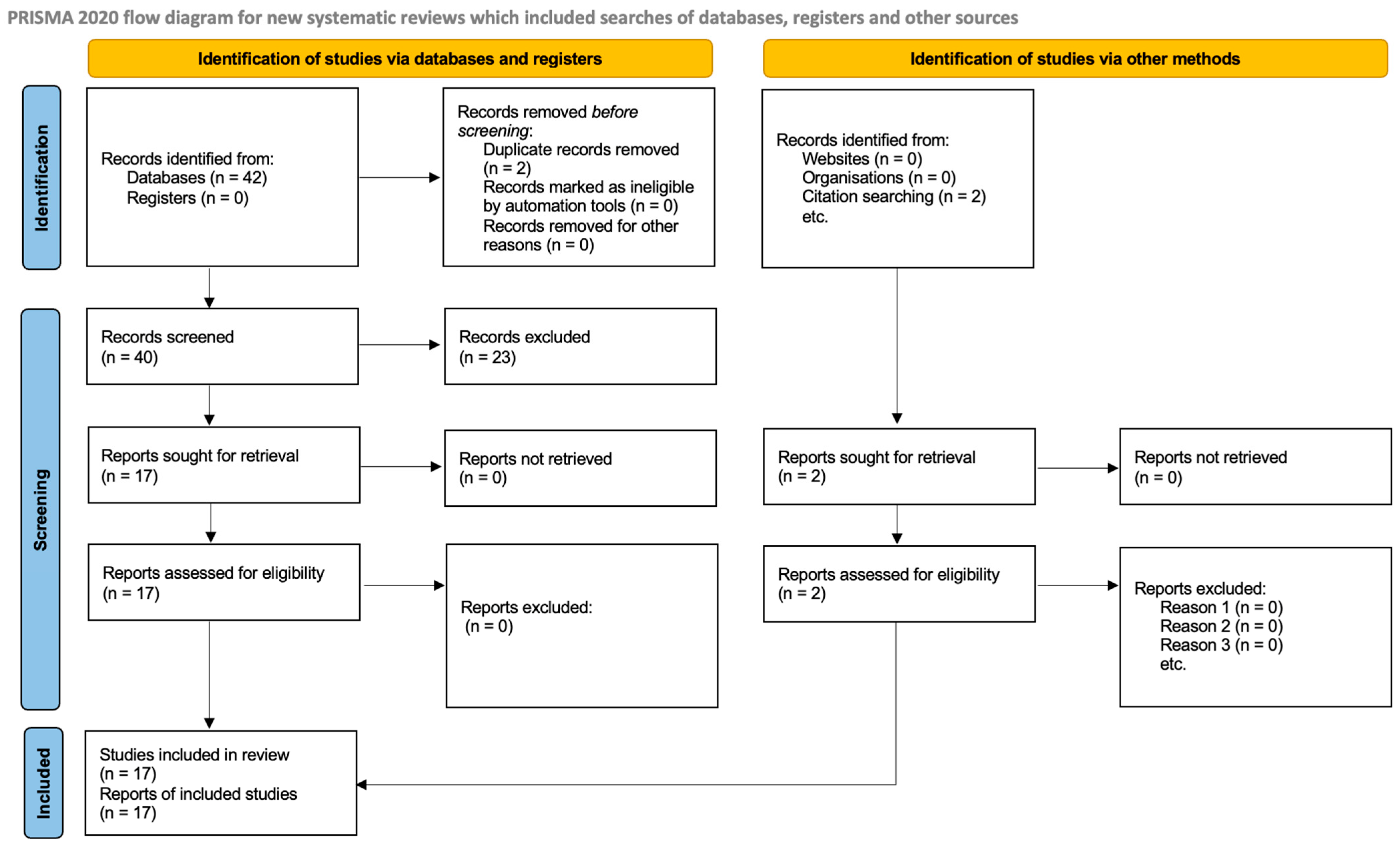
3.1. Study Selection and Characteristics
3.2. Comparative Analysis
3.3. Degradation and Stability Analysis
4. Discussion
5. Conclusions
Author Contributions
Funding
Institutional Review Board Statement
Informed Consent Statement
Data Availability Statement
Conflicts of Interest
References
- Zarif, B.; Shabbir, S.; Rahman, A.; Sherazi, T.A.; Shahid, R.; Noor, T.; Imran, M. Milk phospholipids and buttermilk-based composite nanosystems for enhanced stability and bioaccessibility of β-carotene. Int. Dairy J. 2023, 143, 105668. [Google Scholar] [CrossRef]
- Di Paolo, M.; Pelizzola, V.; De Luca, L.; Casalino, L.; Polizzi, G.; Povolo, M.; Marrone, R. Effect of technological process and temperature on phospholipids in buffalo milk, whey and buttermilk. Foods 2025, 14, 2756. [Google Scholar] [CrossRef]
- de Freitas Mascarello, A.; Pinto, G.I.; de Araújo, I.S.; Caragnato, L.K.; da Silva, A.L.L.; dos Santos, L.F. Technological and biological properties of buttermilk: A mini-review. In Whey: Biological Properties and Alternative Uses; IntechOpen: London, UK, 2019. [Google Scholar] [CrossRef]
- Barukčić, I.; Lisak Jakopović, K.; Božanić, R. Valorisation of whey and buttermilk for production of functional beverages—An overview of current possibilities. Food Technol. Biotechnol. 2019, 57, 448–460. [Google Scholar] [CrossRef]
- Lin, T.; Meletharayil, G.; Kapoor, R.; Abbaspourrad, A. Bioactives in bovine milk: Chemistry, technology, and applications. Nutr. Rev. 2021, 79, 48–69. [Google Scholar] [CrossRef]
- Hameed, A.; Anwar, M.J.; Perveen, S.; Amir, M.; Naeem, I.; Imran, M.; Awuchi, C.G. Functional, industrial and therapeutic applications of dairy waste materials. Int. J. Food Prop. 2023, 26, 1470–1496. [Google Scholar] [CrossRef]
- Wróblewska, B.; Kuliga, A.; Wnorowska, K. Bioactive dairy-fermented products and phenolic compounds: Together or apart. Molecules 2023, 28, 8081. [Google Scholar] [CrossRef]
- Cui, X.; Mayer, P.; Gan, J. Methods to assess bioavailability of hydrophobic organic contaminants: Principles, operations, and limitations. Environ. Pollut. 2013, 172, 223–234. [Google Scholar] [CrossRef]
- Acevedo-Fani, A.; Dave, A.; Singh, H. Nature-assembled structures for delivery of bioactive compounds and their potential in functional foods. Front. Chem. 2020, 8, 564021. [Google Scholar] [CrossRef]
- Conway, V.; Gauthier, S.F.; Pouliot, Y. Buttermilk: Much more than a source of milk phospholipids. Anim. Front. 2014, 4, 44–51. [Google Scholar] [CrossRef]
- Jean, C.; Boulianne, M.; Britten, M.; Robitaille, G. Antimicrobial activity of buttermilk and lactoferrin peptide extracts on poultry pathogens. J. Dairy Res. 2016, 83, 497–504. [Google Scholar] [CrossRef]
- Moreno, O.; Pastor, C.; Muller, J.; Atarés, L.; González, C.; Chiralt, A. Physical and bioactive properties of corn starch–buttermilk edible films. J. Food Eng. 2014, 141, 27–36. [Google Scholar] [CrossRef]
- Fu, S.; Shen, Z.; Ajlouni, S.; Ng, K.; Sanguansri, L.; Augustin, M.A. Interactions of buttermilk with curcuminoids. Food Chem. 2014, 149, 47–53. [Google Scholar] [CrossRef]
- Fu, S.; Augustin, M.A.; Sanguansri, L.; Shen, Z.; Ng, K.; Ajlouni, S. Enhanced bioaccessibility of curcuminoids in buttermilk yogurt in comparison to curcuminoids in aqueous dispersions. J. Food Sci. 2016, 81, H769–H776. [Google Scholar] [CrossRef]
- Fu, S.; Augustin, M.A.; Shen, Z.; Ng, K.; Sanguansri, L.; Ajlouni, S. Bioaccessibility of curcuminoids in buttermilk in simulated gastrointestinal digestion models. Food Chem. 2015, 179, 52–59. [Google Scholar] [CrossRef]
- Page, M.J.; McKenzie, J.E.; Bossuyt, P.M.; Boutron, I.; Hoffmann, T.C.; Mulrow, C.D.; Shamseer, L.; Tetzlaff, J.M.; Akl, E.A. The PRISMA 2020 statement: An updated guideline for reporting systematic reviews. BMJ 2021, 372, n71. [Google Scholar] [CrossRef]
- Higgins, J.P.T.; Thomas, J.; Chandler, J.; Cumpston, M.; Li, T.; Page, M.J.; Welch, V.A. (Eds.) Cochrane Handbook for Systematic Reviews of Interventions; Version 6.5 (Updated August 2024); Cochrane: London, UK, 2024; Available online: www.cochrane.org/handbook (accessed on 20 February 2026).
- Brodkorb, A.; Egger, L.; Alminger, M.; Alvito, P.; Assunção, R.; Ballance, S.; Bohn, T.; Bourlieu-Lacanal, C.; Boutrou, R.; Carrière, F.; et al. INFOGEST static in vitro simulation of gastrointestinal food digestion. Nat. Protoc. 2019, 14, 991–1014. [Google Scholar] [CrossRef]
- DerSimonian, R.; Laird, N. Meta-analysis in clinical trials. Control. Clin. Trials 1986, 7, 177–188. [Google Scholar] [CrossRef]
- DerSimonian, R.; Kacker, R. Random-effects model for meta-analysis of clinical trials: An update. Contemp. Clin. Trials 2007, 28, 105–114. [Google Scholar] [CrossRef]
- Cochrane Collaboration. Cochrane Handbook, Chapter 9: Analysing Data and Undertaking Meta-Analyses. Available online: https://handbook-5-1.cochrane.org/chapter_9/9_4_3_1_random_effects_dersimonian_and_laird_method_for.htm (accessed on 20 February 2024).
- Augustin, M.A.; Bhail, S.; Cheng, L.J.; Shen, Z.; Sanguansri, L. Use of whole buttermilk for microencapsulation of omega-3 oils. J. Funct. Foods 2015, 19, 859–867. [Google Scholar] [CrossRef]
- Krebs, L.; Verhoeven, J.; Verbruggen, S.; Lesar, A.; Meddah, R.; Blouin, M.; Brisson, G. Assessment of protein and phospholipid bioaccessibility in ultrafiltered buttermilk cheese using TIM-1 in vitro gastrointestinal methods. Food Res. Int. 2024, 190, 114606. [Google Scholar] [CrossRef]
- Lipkie, T.E.; Ferruzzi, M.G.; Weaver, C.M. Low bioaccessibility of vitamin D2 from yeast-fortified bread compared to crystalline D2 bread and D3 from fluid milks. Food Funct. 2016, 7, 4589–4596. [Google Scholar] [CrossRef]
- Cabezas-Terán, K.; Grootaert, C.; Van Camp, J.; Ortiz, J.; Ruales, J.; Donoso, S.; Van de Wiele, T. Bioaccessibility of β-carotene during in vitro co-digestion of encapsulated mango peel carotenoids with milk. Food Res. Int. 2025, 214, 116576. [Google Scholar] [CrossRef]
- Antoine, T.; Icard-Vernière, C.; Scorrano, G.; Salhi, A.; Halimi, C.; George, S.; Carrière, F.; Mouquet-Rivier, C.; Reboul, E. Evaluation of vitamin D bioaccessibility and mineral solubility from test meals containing meat and/or cereals and/or pulses using in vitro digestion. Food Chem. 2021, 347, 128621. [Google Scholar] [CrossRef]
- Petry, F.C.; Mercadante, A.Z. Impact of in vitro digestion phases on the stability and bioaccessibility of carotenoids and their esters in mandarin pulps. Food Funct. 2017, 8, 3951–3963. [Google Scholar] [CrossRef]
- Sheng, B.; Li, L.; Zhang, X.; Jiao, W.; Zhao, D.; Wang, X.; Wan, L.; Li, B.; Rong, H. Physicochemical properties and chemical stability of β-carotene bilayer emulsion coated with bovine serum albumin and Arabic gum compared to monolayer emulsions. Molecules 2018, 23, 495. [Google Scholar] [CrossRef]
- Van Loo-Bouwman, C.A.; Naber, T.H.J.; Minekus, M.; van Breemen, R.B.; Hulshof, P.J.M.; Schaafsma, G. Food matrix effects on bioaccessibility of β-carotene can be measured in an in vitro gastrointestinal model. J. Agric. Food Chem. 2014, 62, 950–955. [Google Scholar] [CrossRef]
- Zarif, B.; Haris, M.; Shahid, R.; Sherazi, T.A.; Rahman, A.; Noor, T.; Imran, M. Potential of milk fat globule membrane phospholipids and anhydrous milk fat-based nanostructured lipid carriers for enhanced bioaccessibility of vitamin D3. Int. Dairy J. 2023, 147, 105766. [Google Scholar] [CrossRef]
- Kosmerl, E.; Martínez-Sánchez, V.; Calvo, M.V.; Jiménez-Flores, R.; Fontecha, J.; Pérez-Gálvez, A. Food matrix impacts bioaccessibility and assimilation of acid whey-derived milk fat globule membrane lipids in Caco-2 cells. Front. Nutr. 2023, 10, 1177152. [Google Scholar] [CrossRef]
- Chitchumroonchokchai, C.; Riedl, K.; García-Cano, I.; Failla, M. Efficient in vitro digestion of lipids and proteins in bovine milk fat globule membrane ingredient (MFGMi) and whey–casein infant formula with added MFGMi. J. Dairy Sci. 2023, 106, 3086–3097. [Google Scholar] [CrossRef]
- Fu, S.; Ajlouni, S.; Sanguansri, L.; Ng, K.; Augustin, M.A. In vitro degradation of curcuminoids by faecal bacteria: Influence of method of addition of curcuminoids into buttermilk yoghurt. Food Chem. 2019, 283, 414–421. [Google Scholar] [CrossRef]
- Turgeon, S.L.; Brisson, G. Symposium review: The dairy matrix—Bioaccessibility and bioavailability of nutrients and physiological effects. J. Dairy Sci. 2020, 103, 6727–6736. [Google Scholar] [CrossRef] [PubMed]
- Mulet-Cabero, A.I.; Torres-Gonzalez, M.; Geurts, J.; Rosales, A.; Farhang, B.; Marmonier, C.; Ulleberg, E.K.; Hocking, E.; Neiderer, I.; Gandolfi, I.; et al. The dairy matrix: Its importance, definition, and current application in the context of nutrition and health. Nutrients 2024, 16, 2908. [Google Scholar] [CrossRef] [PubMed]
- Martínez-Sánchez, V.; Fontecha, J.; Pérez-Gálvez, A. Milk fat globule membrane: Production, digestion, and health benefits evaluated through in vitro models. PharmaNutrition 2024, 30, 100418. [Google Scholar] [CrossRef]


| Study | Year | Compound | Matrix | Model | Key Conditions | Replicates |
|---|---|---|---|---|---|---|
| Fu et al. [15] | 2015 | Curcuminoids | Buttermilk yogurt | Static SGF/SIF | Fasted/fed, bile 0–40 mg/mL, ethanol 0–2% | 3 (assumed) |
| Fu et al. [14] | 2016 | Curcuminoids | Buttermilk yogurt | Static in vitro | Ethanol redissolution | 2 independent |
| Fu et al. [33] | 2019 | Curcuminoids | Buttermilk yogurt | Static + fecal fermentation | Addition pre/post-fermentation | Not specified |
| Zarif et al. [1] | 2023 | β-Carotene | MPL:BMP nanosystems | In vitro digestion | Composite ratios | 3–6 |
| Cabezas-Terán et al. [25] | 2025 | β-Carotene | Milk co-digestion | In vitro co-digestion | Whole/skim milk | Not specified |
| Petry & Mercadante [27] | 2017 | β-Carotene | Dairy-like matrices | Static in vitro | Phase-specific digestion | 3–4 |
| Augustin et al. [22] | 2015 | Omega-3 (DHA/EPA) | Whole buttermilk microencapsulation | Static in vitro | Emulsion stability | 3 |
| Hameed et al. [6] | 2023 | Omega-3 | Buttermilk emulsions | Review with in vitro data | Ultra-high-pressure homogenization | Varied |
| Sheng et al. [28] | 2018 | Omega-3 | WPI-stabilized (buttermilk analog) | Static in vitro | Storage conditions | 3–5 |
| Lipkie et al. [24] | 2016 | Vitamin D3 | Fortified milks | In vitro digestion | Lipid content variations | 3 |
| Krebs et al. [23] | 2024 | Phospholipids/proteins | UF buttermilk cheese | TIM-1 | Gastric/small intestine | 3–4 |
| Antoine et al. [26] | 2021 | Vitamin D3 & hydrophobics | Dairy matrices | Static in vitro | Mineral interactions | 3 |
| Turgeon & Brisson [34] | 2020 | Flavonols (hydrophobic) | Buttermilk emulsions | Static INFOGEST | Emulsion stability | 3 |
| Mulet-Cabero et al. [35] | 2024 | β-Carotene | Milk fat globules (buttermilk-derived) | Static extended | Fasted, shear | 4 |
| Van Loo-Bouwman et al. [29] | 2014 | β-Carotene | Buttermilk analogs (skim/whole milk) | Static GI (INFOGEST-like) | Fasted, bile 10 mg/mL, fat-dependent | 3–4 |
| Zarif et al. [30] | 2023 | Vitamin D3 | MFGM-PL NLCs (buttermilk-derived) | Static INFOGEST | Fed, bile 20 mg/mL, shear | 4 |
| Augustin et al. [22] | 2015 | Omega-3 (DHA/EPA) | Whole buttermilk emulsions (UHPH) | Static SGF/SIF + lipolysis | Fed/fasted, bile 15 mg/mL | 3–5 |
| Kosmerl et al. [31] | 2023 | Phospholipids (PE/PC/SM) | Acid whey-buttermilk MFGM | INFOGEST static + Caco-2 | Fasted, bile 10 mg/mL | 4 |
| Chitchumroonchokchai et al. [32] | 2023 | Phospholipids/proteins | Bovine MFGM (buttermilk-sourced) | Dynamic TIM-1 | Fed infant, bile 5–20 mg/mL | 3–6 |
| Compound/Subgroup | Pooled Mean ± SE (%) | 95% CI | I2 (%) | Fold Increase vs. Control | Studies Included (n) |
|---|---|---|---|---|---|
| Curcuminoids (Overall) | 17.50 ± 2.12 | 13.34–21.66 | 87.4 | 1.4–15 | 4 |
| Curcuminoids (Fasted + EtOH) | 22.8 ± 3.1 | 16.7–28.9 | 80.2 | ~1.5 | 3 |
| Curcuminoids (Fed + EtOH) | 55.40 ± 9.2 | 37.36–73.44 | 84.5 | ~1.0–1.6 | 3 |
| β-Carotene (Nanosystems/Co-digestion) | 72.1 ± 3.9 | 64.5–79.7 | 62.3 | 1.6–3.0 | 4 |
| Omega-3 (Emulsions/Nanosystems) | 62.3 ± 5.8 | 50.9–73.7 | 68.4 | 1.5–3.4 | 4 |
| Vitamin D3 (Fortified Matrices) | 74.2 ± 4.7 | 65.0–83.4 | 64.1 | 1.3–2.0 | 3 |
| Phospholipids (UF/Nano/MFGMi) | 75.8 ± 3.2 | 69.6–82.0 | 59.2 | 1.3–1.5 | 3 |
| Delivery System | Compound | Bioaccessibility (%) | Fold Increase vs. Control | Key Mechanisms | Refs. |
|---|---|---|---|---|---|
| Buttermilk Yogurt/Emulsions | Curcuminoids | 6.24–69.2 | 1.4–15 | Ethanol/bile synergy; MFGM protection vs. degradation | [14,15,33] |
| MPL/BMP Nanosystems | β-Carotene | 70.5–94.8 | 1.4–3.2 | Electrostatic interactions; micellar solubilization | [1] |
| Milk Co-digestion Matrices | β-Carotene | 8.8–75.5 | 1.6–3.0 | Fat-mediated micellization; phase stability | [25] |
| Whole Buttermilk Microencapsulation | Omega-3 (DHA/EPA) | 40.4–94.61 | 1.5–3.4 | Emulsion stability; oxidation barrier | [28] |
| UHPH Buttermilk Emulsions | Omega-3 | ~58–92.8 | 1.6–3.4 | High-pressure homogenization; probiotic enhancement | [6] |
| WPI Nanoemulsions (Analog) | Omega-3 | 69.36 (retention) | 1.3–2.0 | Storage stability; lipid partitioning | [28] |
| Fortified Milk Matrices | Vitamin D3 | 40–75 | 1.3–2.0 | Lipid content modulation; pH protection | [26] |
| UF Buttermilk Cheese | Phospholipids/Proteins | ~62 | 1.4 | Concentration effects; digestion equivalence to skim | [23] |
| Buttermilk Analogs (Skim/Whole Milk) | β-Carotene | 28.5–52.3 | 1.6–2.9 | Fat-dependent solubilization; enzymatic hydrolysis | [29] |
| MFGM-PL NLCs (Buttermilk-Derived) | Vitamin D3 | 88.0 | 1.5 | Bilayer quenching; zeta potential stability vs. isomerization | [30] |
| Whole Buttermilk Emulsions (UHPH) | Omega-3 (DHA/EPA) | 62.4 | 1.6 | MFGM barriers; reduced peroxidation (TBARS < 15%) | [22] |
| Acid Whey–Buttermilk MFGM | Phospholipids (PE/PC/SM) | 68.2 | 1.5 | Carbohydrate–lipid interference; Caco-2 uptake (52%) | [31] |
| Bovine MFGM (Buttermilk-Sourced) | Phospholipids/Proteins | 82.5 (PLs)/91.3 (Proteins) | 1.3 | Efficient lipolysis; micellar transfer in infant simulations | [32] |
| Compound | Matrix Type | Pooled Degradation (%) | Pooled Stability/Retention (%) | Phases with Highest Loss | Studies (n) |
|---|---|---|---|---|---|
| Curcuminoids | Buttermilk/Yogurt | 11 ± 2.5 | 89 ± 2.5 | Intestinal/Colonic | 4 |
| Curcuminoids | Aqueous Control | <1 | >99 | N/A (low exposure) | 3 |
| β-Carotene | Nanosystems/Co-digestion | 18–25 ± 4 | 75–82 ± 3 | Intestinal | 3 |
| β-Carotene | Non-matrix Control | ~75 | ~25 | Intestinal | 2 |
| β-Carotene | Buttermilk Analogs (Skim/Whole Milk) | 10–15 ± 2.0 | 85–90 | Gastric | 2 |
| Omega-3 (DHA/EPA) | Emulsions/Nanosystems | 15–30 ± 5 | 70–92 ± 4 | Intestinal (oxidation) | 3 |
| Omega-3 | Non-matrix Control | 50–85 | 15–50 | Gastric/Intestinal | 3 |
| Omega-3 (DHA/EPA) | Whole Buttermilk Emulsions (UHPH) | <15 (TBARS) | 85–90 ± 3.1 | Fed/Fasted | 1 |
| Vitamin D3 | Dairy Matrices | 20–45 ± 6 | 55–82 ± 5 | Gastric (pH-dependent) | 2 |
| Vitamin D3 | Non-matrix Control | 40–75 | 25–60 | Gastric/Intestinal | 2 |
| Vitamin D3 | MFGM-PL NLCs (Buttermilk-Derived) | 12 ± 2.5 | 88 ± 2.6 | Intestinal | 1 |
| Phospholipids (PE/PC/SM) | Acid Whey-Buttermilk MFGM | 8–12 ± 2.9 | 8–92 ± 3.8 | Gastric | 1 |
| Phospholipids/Proteins | Bovine MFGMi (Buttermilk-Sourced) | 5–10 ± 4.7 | 90–95 ± 5.1 | Stomach/Small Intestine | 1 |
Disclaimer/Publisher’s Note: The statements, opinions and data contained in all publications are solely those of the individual author(s) and contributor(s) and not of MDPI and/or the editor(s). MDPI and/or the editor(s) disclaim responsibility for any injury to people or property resulting from any ideas, methods, instructions or products referred to in the content. |
© 2026 by the authors. Licensee MDPI, Basel, Switzerland. This article is an open access article distributed under the terms and conditions of the Creative Commons Attribution (CC BY) license.
Share and Cite
Sagandyk, A.; Tultabayeva, T.; Zhakupova, G.; Makangali, K.; Muldasheva, A.; Shoman, A.; Dairova, K. Meta-Analysis of Bioaccessibility of Hydrophobic Compounds in Buttermilk Matrices: A Systematic Review and Quantitative Synthesis. Molecules 2026, 31, 1526. https://doi.org/10.3390/molecules31091526
Sagandyk A, Tultabayeva T, Zhakupova G, Makangali K, Muldasheva A, Shoman A, Dairova K. Meta-Analysis of Bioaccessibility of Hydrophobic Compounds in Buttermilk Matrices: A Systematic Review and Quantitative Synthesis. Molecules. 2026; 31(9):1526. https://doi.org/10.3390/molecules31091526
Chicago/Turabian StyleSagandyk, Assem, Tamara Tultabayeva, Gulmira Zhakupova, Kadyrzhan Makangali, Aknur Muldasheva, Aruzhan Shoman, and Kalamkas Dairova. 2026. "Meta-Analysis of Bioaccessibility of Hydrophobic Compounds in Buttermilk Matrices: A Systematic Review and Quantitative Synthesis" Molecules 31, no. 9: 1526. https://doi.org/10.3390/molecules31091526
APA StyleSagandyk, A., Tultabayeva, T., Zhakupova, G., Makangali, K., Muldasheva, A., Shoman, A., & Dairova, K. (2026). Meta-Analysis of Bioaccessibility of Hydrophobic Compounds in Buttermilk Matrices: A Systematic Review and Quantitative Synthesis. Molecules, 31(9), 1526. https://doi.org/10.3390/molecules31091526