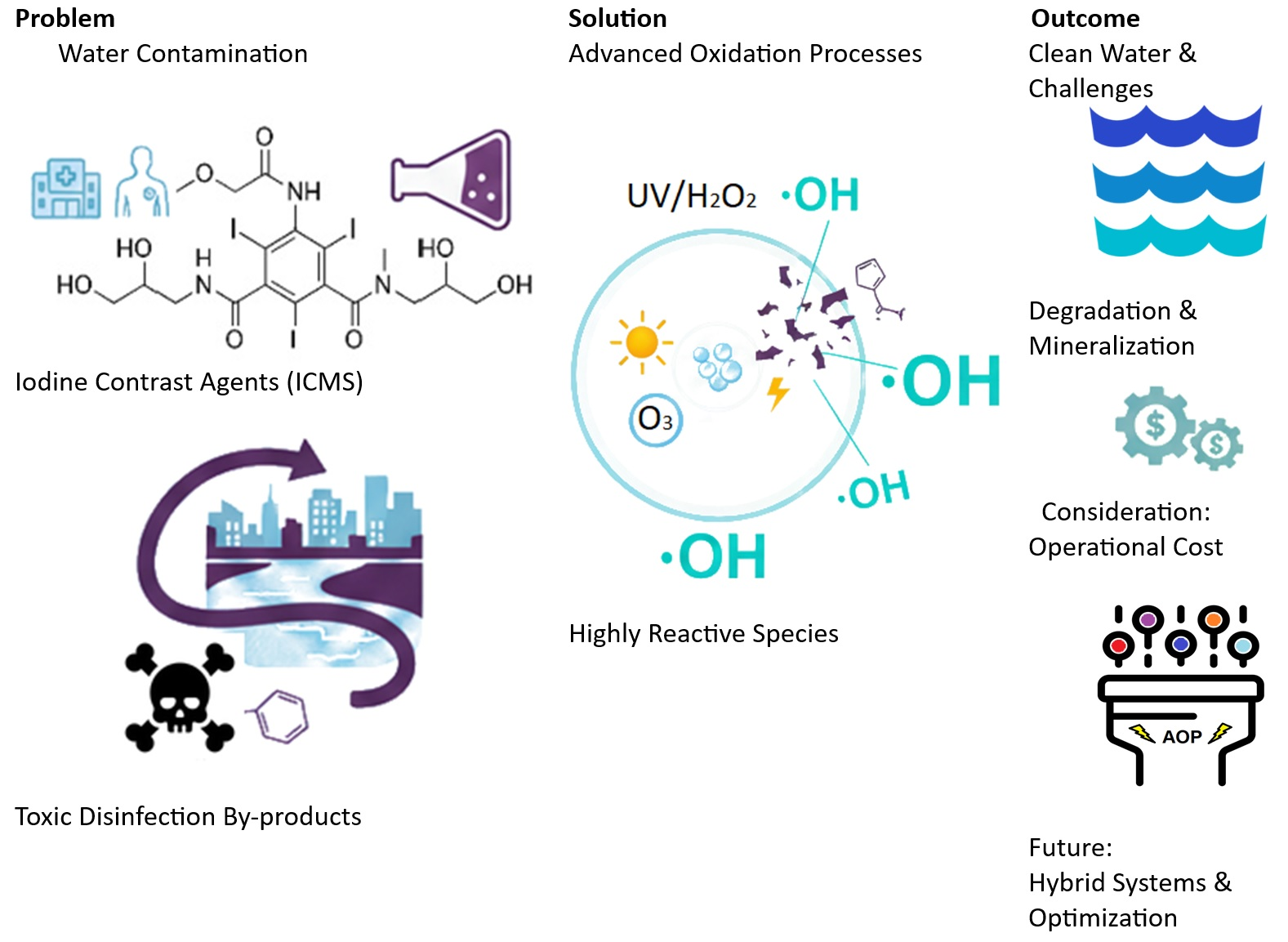
Iodinated Contrast Media—From Clinical Use to Environmental Concern and Treatment Possibilities

 , , , , ,
  ,
,  , ,
, ,  , and
, and 
Abstract
1. Introduction
2. ICM
2.1. Development of Iodinated Contrast Agents
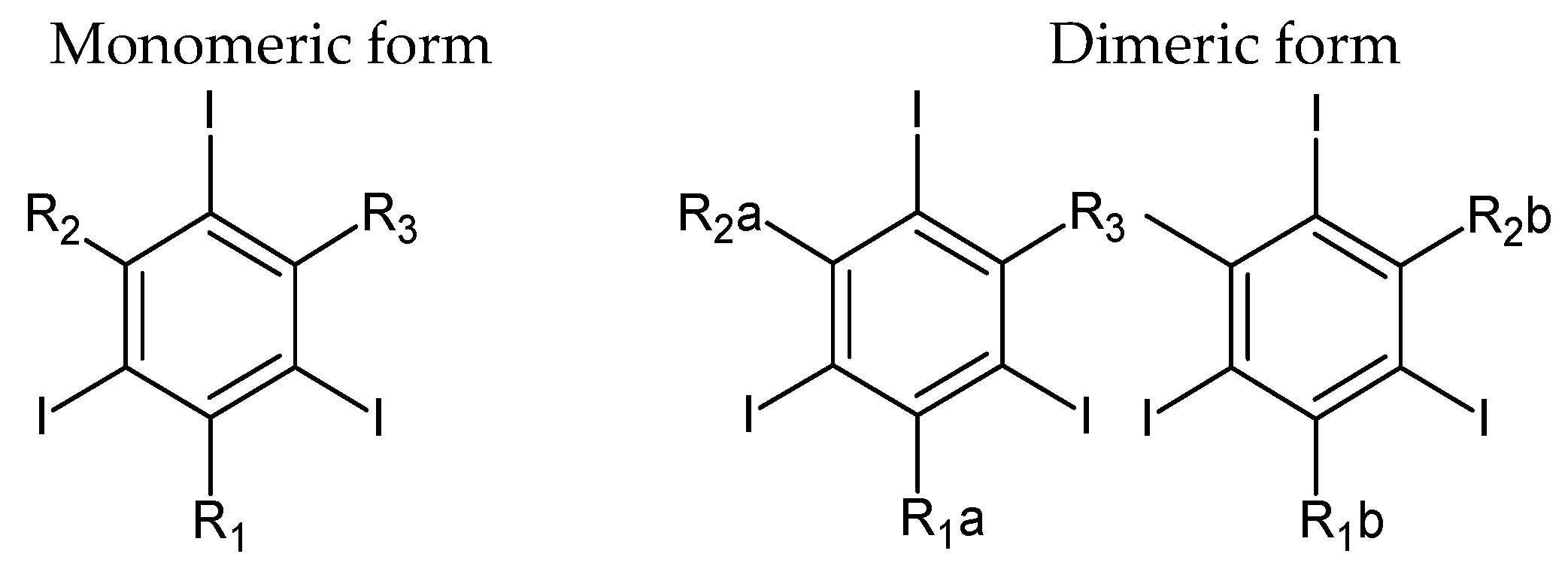
2.2. Structure of Iodine Contrast Media
2.3. Application of Iodine Contrast Media
2.4. The Impact of ICM on the Human Body
2.5. Iodine Contrast Media in the Environment
3. Chemical Fate of ICMs
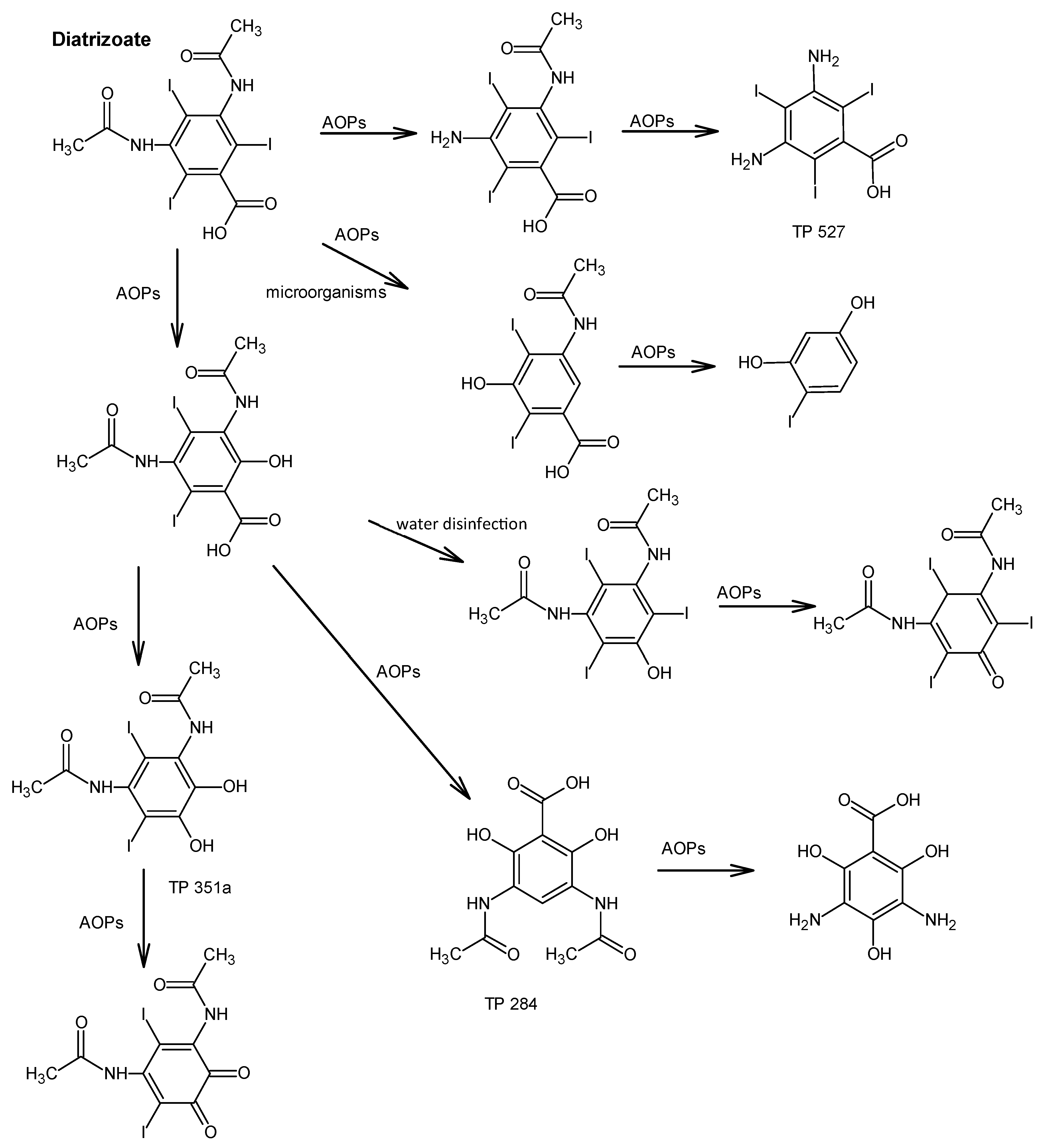
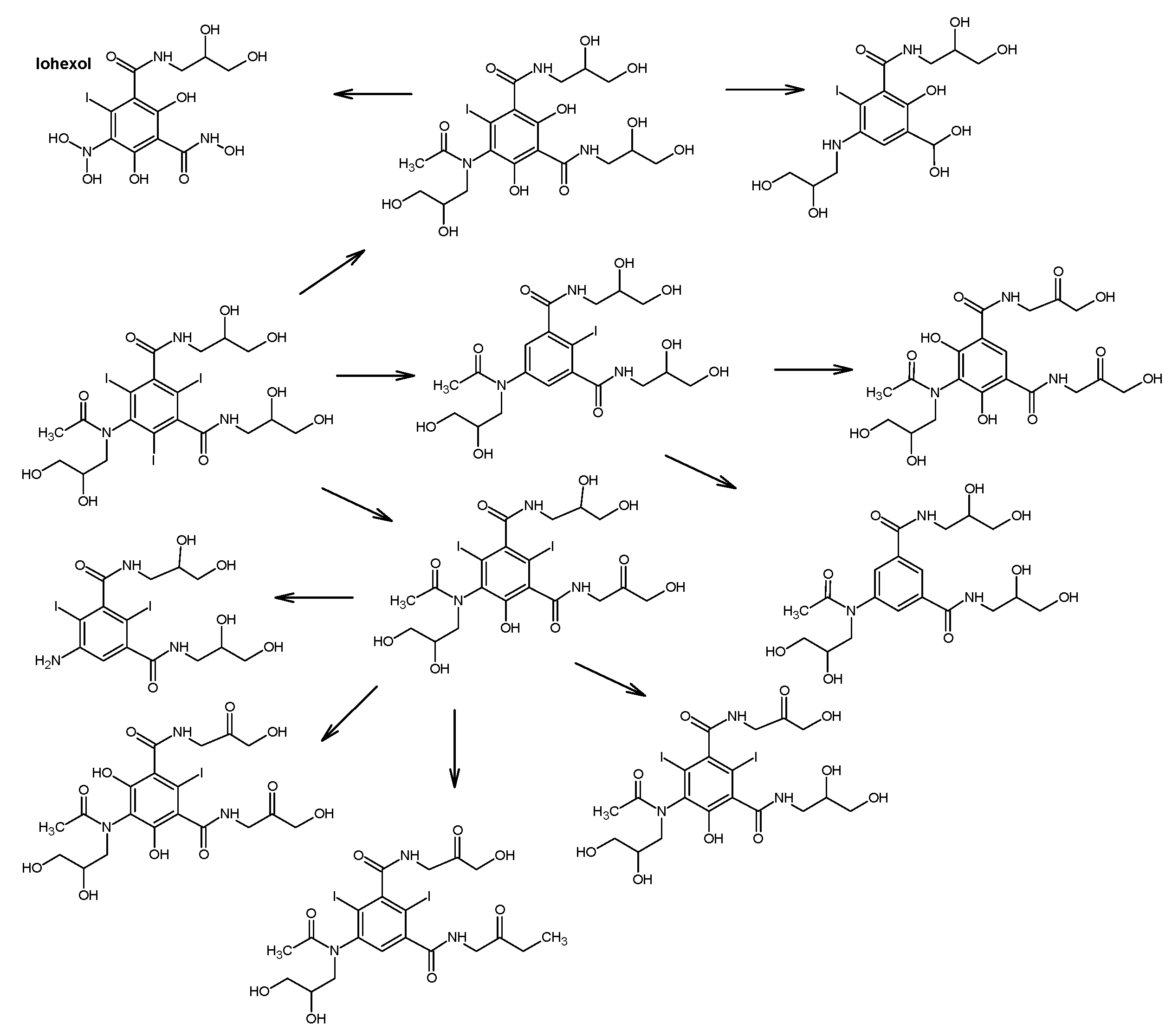
Transformations of Commonly Used Iodine Contrast Media
4. Advanced Oxidation Processes (AOPs)
4.1. Ozonation (O3)
4.2. UV/H2O2
4.3. UV/Cl
4.4. Photocatalysis (UV/TiO2)
4.5. Fenton Processes
4.6. Electrochemical Processes
4.7. Synthetic Remarks on AOPs for ICMs Treatment
5. Conventional Methods
6. Conclusions
Author Contributions
Funding
Institutional Review Board Statement
Informed Consent Statement
Data Availability Statement
Acknowledgments
Conflicts of Interest
References
- Ungureanu, N.; Vlăduț, V.; Voicu, G. Water Scarcity and Wastewater Reuse in Crop Irrigation. Sustainability 2020, 12, 9055. [Google Scholar] [CrossRef]
- Sato, T.; Qadir, M.; Yamamoto, S.; Endo, T.; Zahoor, A. Global, Regional, and Country Level Need for Data on Wastewater Generation, Treatment, and Use. Agric. Water Manag. 2013, 130, 1–13. [Google Scholar] [CrossRef]
- Qadir, M.; Drechsel, P.; Jiménez Cisneros, B.; Kim, Y.; Pramanik, A.; Mehta, P.; Olaniyan, O. Global and Regional Potential of Wastewater as a Water, Nutrient and Energy Source. Nat. Resour. Forum 2020, 44, 40–51. [Google Scholar] [CrossRef]
- Hirsch, R.; Ternes, T.A.; Lindart, A.; Haberer, K.; Wilken, R.D. A Sensitive Method for the Determination of Iodine Containing Diagnostic Agents in Aqueous Matrices Using LC-Electrospray-Tandem-MS Detection. Fresenius J. Anal. Chem. 2000, 366, 835–841. [Google Scholar] [CrossRef]
- Yu, S.B.; Watson, A.D. Metal-Based X-Ray Contrast Media. Chem. Rev. 1999, 99, 2353–2377. [Google Scholar] [CrossRef]
- Lim, E.; Jang, J.H.; Yoon, D.; Min, Y.G.; Kim, H.H. Does Exposure to Computed Tomography Contrast Media Increase Risk of End-Stage Renal Disease? Med. Sci. Monit. 2020, 26, e921303. [Google Scholar] [CrossRef]
- Rusandu, A.; Sjøvold, B.H.; Hofstad, E.; Reidunsdatter, R.J. Iodinated Contrast Media and Their Effect on Thyroid Function—Routines and Practices among Diagnostic Imaging Departments in Norway. J. Med. Radiat. Sci. 2020, 67, 111–118. [Google Scholar] [CrossRef]
- Arman, N.Z.; Salmiati, S.; Aris, A.; Salim, M.R.; Nazifa, T.H.; Muhamad, M.S.; Marpongahtun, M. A Review on Emerging Pollutants in the Water Environment: Existences, Health Effects and Treatment Processes. Water 2021, 13, 3258. [Google Scholar] [CrossRef]
- Khan, S.; Naushad, M.; Govarthanan, M.; Iqbal, J.; Alfadul, S.M. Emerging Contaminants of High Concern for the Environment: Current Trends and Future Research. Environ. Res. 2022, 207, 112609. [Google Scholar] [CrossRef]
- Giannakis, S.; Jovic, M.; Gasilova, N.; Pastor Gelabert, M.; Schindelholz, S.; Furbringer, J.M.; Girault, H.; Pulgarin, C. Iohexol Degradation in Wastewater and Urine by UV-Based Advanced Oxidation Processes (AOPs): Process Modeling and by-Products Identification. J. Environ. Manag. 2017, 195, 174–185. [Google Scholar] [CrossRef]
- Santos, L.H.M.L.M.; Araújo, A.N.; Fachini, A.; Pena, A.; Delerue-Matos, C.; Montenegro, M.C.B.S.M. Ecotoxicological Aspects Related to the Presence of Pharmaceuticals in the Aquatic Environment. J. Hazard. Mater. 2010, 175, 45–95. [Google Scholar] [CrossRef]
- Lusic, H.; Grinstaff, M.W. X-ray-Computed Tomography Contrast Agents. Chem. Rev. 2013, 113, 1641–1666. [Google Scholar] [CrossRef] [PubMed]
- Barry, C.N.; Rose, D.K. Urokon Sodium 70 per Cent in Excretory Urography. J. Urol. 1953, 69, 849–855. [Google Scholar] [CrossRef] [PubMed]
- Spampinato, M.V.; Abid, A.; Matheus, M.G. Current Radiographic Iodinated Contrast Agents. Magn. Reson. Imaging Clin. N. Am. 2017, 25, 697–704. [Google Scholar] [CrossRef] [PubMed]
- Bryan, R.N.; Centeno, R.S.; Hershkowitz, N.; Poelstra, R.J.; Osato, M.S. Neurotoxicity of Iohexol: A New Nonionic Contrast Medium. Radiology 1982, 145, 379–382. [Google Scholar] [CrossRef]
- Heinrich, M.C.; Häberle, L.; Müller, V.; Bautz, W.; Uder, M. Nephrotoxicity of Iso-Osmolar Iodixanol Compared with Nonionic Low-Osmolar Contrast Media: Meta-Analysis of Randomized Controlled Trials. Radiology 2009, 250, 68–86. [Google Scholar] [CrossRef]
- Christensen, J.D.; Meyer, L.T.; Hurwitz, L.M.; Boll, D.T. Effects of Iopamidol-370 versus Iodixanol-320 on Coronary Contrast, Branch Depiction, and Heart Rate Variability in Dual-Source Coronary MDCT Angiography. Am. J. Roentgenol. 2011, 197, 445–451. [Google Scholar] [CrossRef]
- Pasternak, J.J.; Williamson, E.E. Clinical Pharmacology, Uses, and Adverse Reactions of Iodinated Contrast Agents: A Primer for the Non-Radiologist. Mayo Clin. Proc. 2012, 87, 390–402. [Google Scholar] [CrossRef]
- Han, S.; Yoon, S.H.; Lee, W.; Choi, Y.H.; Kang, D.Y.; Kang, H.R. Management of Adverse Reactions to Iodinated Contrast Media for Computed Tomography in Korean Referral Hospitals: A Survey Investigation. Korean J. Radiol. 2019, 20, 148–157. [Google Scholar] [CrossRef]
- Putschew, A.; Wischnack, S.; Jekel, M. Occurrence of Triiodinated X-Ray Contrast Agents in the Aquatic Environment. Sci. Total Environ. 2000, 255, 129–134. [Google Scholar] [CrossRef]
- Xiao, Y.D.; Paudel, R.; Liu, J.; Ma, C.; Zhang, Z.S.; Zhou, S.K. MRI Contrast Agents: Classification and Application (Review). Int. J. Mol. Med. 2016, 38, 1319–1326. [Google Scholar] [CrossRef] [PubMed]
- Ternes, T.A.; Bonerz, M.; Herrmann, N.; Löffler, D.; Keller, E.; Lacida, B.B.; Alder, A.C. Determination of Pharmaceuticals, Iodinated Contrast Media and Musk Fragrances in Sludge by LC Tandem MS and GC/MS. J. Chromatogr. A 2005, 1067, 213–223. [Google Scholar] [CrossRef] [PubMed]
- Christiansen, C. X-Ray Contrast Media—An Overview. Toxicology 2005, 209, 185–187. [Google Scholar] [CrossRef] [PubMed]
- Mirakian, R.; Ewan, P.W.; Durham, S.R.; Youlten, L.J.F.; Dugué, P.; Friedmann, P.S.; English, J.S.; Huber, P.A.J.; Nasser, S.M. BSACI Guidelines for the Management of Drug Allergy. Clin. Exp. Allergy 2009, 39, 43–61. [Google Scholar] [CrossRef]
- Brockow, K.; Garvey, L.H.; Aberer, W.; Atanaskovic-Markovic, M.; Barbaud, A.; Bilo, M.B.; Bircher, A.; Blanca, M.; Bonadonna, B.; Campi, P.; et al. Skin Test Concentrations for Systemically Administered Drugs—An ENDA/EAACI Drug Allergy Interest Group Position Paper. Allergy Eur. J. Allergy Clin. Immunol. 2013, 68, 702–712. [Google Scholar] [CrossRef]
- Kvedariene, V.; Martins, P.; Rouanet, L.; Demoly, P. Diagnosis of Iodinated Contrast Media Hypersensitivity: Results of a 6-Year Period. Clin. Exp. Allergy 2006, 36, 1072–1077. [Google Scholar] [CrossRef]
- Arnold, A.W.; Häusermann, P.; Bach, S.; Bircher, A.J. Recurrent Flexural Exanthema (SDRIFE or Baboon Syndrome) after Administration of Two Different Iodinated Radio Contrast Media. Dermatology 2006, 214, 89–93. [Google Scholar] [CrossRef]
- Trcka, J.; Schmidt, C.; Seitz, C.S.; Bröcker, E.B.; Gross, G.E.; Trautmann, A. Anaphylaxis to Iodinated Contrast Material: Nonallergic Hypersensitivity or IgE-Mediated Allergy? Am. J. Roentgenol. 2008, 190, 666–670. [Google Scholar] [CrossRef]
- Vernassiere, C.; Trechot, P.; Commun, N.; Schmutz, J.L.; Barbaud, A. Low Negative Predictive Value of Skin Tests in Investigating Delayed Reactions to Radio-Contrast Media. Contact Dermat. 2004, 50, 359–366. [Google Scholar] [CrossRef]
- Owen, R.J.; Hiremath, S.; Myers, A.; Fraser-Hill, M.; Barrett, B.J. Canadian Association of Radiologists Consensus Guidelines for the Prevention of Contrast-Induced Nephropathy: Update 2012. Can. Assoc. Radiol. J. 2014, 65, 96–105. [Google Scholar] [CrossRef]
- Ternes, T.A. Occurrence of Drugs in German Sewage Treatment Plants and Rivers. Water Res. 1998, 32, 3245–3260. [Google Scholar] [CrossRef]
- Kormos, J.L.; Schulz, M.; Ternes, T.A. Occurrence of Iodinated X-Ray Contrast Media and Their Biotransformation Products in the Urban Water Cycle. Environ. Sci. Technol. 2011, 45, 8723–8732. [Google Scholar] [CrossRef] [PubMed]
- Richardson, S.D.; Plewa, M.J.; Wagner, E.D.; Schoeny, R.; Demarini, D.M. Occurrence, Genotoxicity, and Carcinogenicity of Regulated and Emerging Disinfection by-Products in Drinking Water: A Review and Roadmap for Research. Mutat. Res./Rev. Mutat. Res. 2007, 636, 178–242. [Google Scholar] [CrossRef] [PubMed]
- Plewa, M.J.; Wagner, E.D.; Richardson, S.D.; Thruston, A.D.; Woo, Y.T.; McKague, A.B. Chemical and Biological Characterization of Newly Discovered Iodoacid Drinking Water Disinfection Byproducts. Environ. Sci. Technol. 2004, 38, 4713–4722. [Google Scholar] [CrossRef]
- Mendoza, A.; Aceña, J.; Pérez, S.; López de Alda, M.; Barceló, D.; Gil, A.; Valcárcel, Y. Pharmaceuticals and Iodinated Contrast Media in a Hospital Wastewater: A Case Study to Analyse Their Presence and Characterise Their Environmental Risk and Hazard. Environ. Res. 2015, 140, 225–241. [Google Scholar] [CrossRef]
- Lee, Y.; Gunten, U. Von Oxidative Transformation of Micropollutants during Municipal Wastewater Treatment: Comparison of Kinetic Aspects of Selective (Chlorine, Chlorine Dioxide, Ferrate VI, and Ozone) and Non-Selective Oxidants (Hydroxyl Radical). Water Res. 2010, 44, 555–566. [Google Scholar] [CrossRef]
- Weissbrodt, D.; Kovalova, L.; Ort, C.; Pazhepurackel, V.; Moser, R.; Hollender, J.; Siegrist, H.; Mcardell, C.S. Mass Flows of X-Ray Contrast Media and Cytostatics in Hospital Wastewater. Environ. Sci. Technol. 2009, 43, 4810–4817. [Google Scholar] [CrossRef]
- Kümmerer, K.; Erbe, T.; Gartiser, S.; Brinker, L. AOX-Emissions from Hospitals into Municipal Waste Water. Chemosphere 1998, 36, 2437–2445. [Google Scholar] [CrossRef]
- Kwarciak-Kozłowska, A.; Fijałkowski, K.L. Efficiency Assessment of Municipal Landfill Leachate Treatment during Advanced Oxidation Process (AOP) with Biochar Adsorption (BC). J. Environ. Manag. 2021, 287, 112309. [Google Scholar] [CrossRef]
- Quiros, Y.; Sánchez-gonzález, P.D.; López-herńandez, F.J.; Morales, A.I.; López-Novoa, J.M. Cardiotrophin-1 Administration Prevents the Renal Toxicity of Iodinated Contrast Media in Rats. Toxicol. Sci. 2013, 132, 493–501. [Google Scholar] [CrossRef]
- Steger-Hartmann, T.; Länge, R.; Schweinfurth, H. Environmental Risk Assessment for the Widely Used Iodinated X-Ray Contrast Agent Iopromide (Ultravist). Ecotoxicol. Environ. Saf. 1999, 42, 274–281. [Google Scholar] [CrossRef] [PubMed]
- Lopez-Prieto, I.J.; Park, M.; AzadiAghdam, M.; Pan, H.; Jones, S.L.; Snyder, S.A. Formation and Control of Disinfection By-Products from Iodinated Contrast Media Attenuation through Sequential Treatment Processes of Ozone-Low Pressure Ultraviolet Light Followed by Chlorination. Chemosphere 2021, 278, 130394. [Google Scholar] [CrossRef] [PubMed]
- Li, M.; Zhang, T.Y.; Xu, B.; Hu, C.Y.; Dong, Z.Y.; Wang, Z.; Tang, Y.L.; Yu, S.L.; Pan, Y.; Xian, Q. Iodinated Trihalomethanes Formation in Iopamidol-Contained Water during Ferrate/Chlor(Am)Ination Treatment. Chemosphere 2021, 272, 129568. [Google Scholar] [CrossRef] [PubMed]
- Ternes, T.A.; Hirsch, R. Occurrence and Behavior of X-Ray Contrast Media in Sewage Facilities and the Aquatic Environment. Environ. Sci. Technol. 2000, 34, 2741–2748. [Google Scholar] [CrossRef]
- Kosjek, T.; Negreira, N.; Heath, E.; López de Alda, M.; Barceló, D. Aerobic Activated Sludge Transformation of Vincristine and Identification of the Transformation Products. Sci. Total Environ. 2018, 610–611, 892–904. [Google Scholar] [CrossRef]
- Seitz, W.; Jiang, J.Q.; Weber, W.H.; Lloyd, B.J.; Maier, M.; Maier, D. Removal of Iodinated X-Ray Contrast Media During Drinking Water Treatment. Environ. Chem. 2006, 3, 35–39. [Google Scholar] [CrossRef]
- Huber, M.M.; Go, A.; Joss, A.; Hermann, N. Oxidation of Pharmaceuticals during Ozonation of Municipal Wastewater Effluents: A Pilot Study. Environ. Sci. Technol. 2005, 39, 4290–4299. [Google Scholar] [CrossRef]
- Kormos, J.L.; Schulz, M.; Kohler, H.P.E.; Ternes, T.A. Biotransformation of Selected Iodinated X-Ray Contrast Media and Characterization of Microbial Transformation Pathways. Environ. Sci. Technol. 2010, 44, 4998–5007. [Google Scholar] [CrossRef]
- Richardson, S.D.; Fasano, F.; Ellington, J.J.; Crumley, F.G.; Buettner, K.M.; Evans, J.J.; Blount, B.C.; Silva, L.K.; Waite, T.J.; Luther, G.W.; et al. Occurrence and Mammalian Cell Toxicity of Iodinated Disinfection Byproducts in Drinking Water. Environ. Sci. Technol. 2008, 42, 8330–8338. [Google Scholar] [CrossRef]
- Bae, K.T. Intravenous Contrast Medium Administration and Scan Timing at CT: Considerations and Approaches. Radiology 2010, 256, 32–61. [Google Scholar] [CrossRef]
- Sanderson, H.; Thomsen, M. Comparative Analysis of Pharmaceuticals versus Industrial Chemicals Acute Aquatic Toxicity Classification According to the United Nations Classification System for Chemicals. Assessment of the (Q)SAR Predictability of Pharmaceuticals Acute Aquatic Toxicit. Toxicol. Lett. 2009, 187, 84–93. [Google Scholar] [CrossRef]
- Gutiérrez, S.; Fernández, C.; Escher, B.I.; Tarazona, J.V. A New Hazard Index of Complex Mixtures Integrates Bioconcentration and Toxicity to Refine the Environmental Risk Assessment of Effluents. Environ. Int. 2008, 34, 773–781. [Google Scholar] [CrossRef] [PubMed]
- Dix, D.J.; Houck, K.A.; Martin, M.T.; Richard, A.M.; Setzer, R.W.; Kavlock, R.J. The Toxcast Program for Prioritizing Toxicity Testing of Environmental Chemicals. Toxicol. Sci. 2007, 95, 5–12. [Google Scholar] [CrossRef] [PubMed]
- Houtman, C.J.; Van Houten, Y.K.; Leonards, P.E.G.; Brouwer, A.; Lamoree, M.H.; Legler, J. Biological Validation of a Sample Preparation Method for ER-CALUX Bioanalysis of Estrogenic Activity in Sediment Using Mixtures of Xeno-Estrogens. Environ. Sci. Technol. 2006, 40, 2455–2461. [Google Scholar] [CrossRef] [PubMed]
- Escher, B.I.; Bramaz, N.; Eggen, R.I.L.; Richter, M. In Vitro Assessment of Modes of Toxic Action of Pharmaceutical in Aquatic Life. Environ. Sci. Technol. 2005, 39, 3090–3100. [Google Scholar] [CrossRef]
- Rühmland, S.; Wick, A.; Ternes, T.A.; Barjenbruch, M. Fate of Pharmaceuticals in a Subsurface Flow Constructed Wetland and Two Ponds. Ecol. Eng. 2015, 80, 125–139. [Google Scholar] [CrossRef]
- Morley, N.J. Environmental Risk and Toxicology of Human and Veterinary Waste Pharmaceutical Exposure to Wild Aquatic Host-Parasite Relationships. Environ. Toxicol. Pharmacol. 2009, 27, 161–175. [Google Scholar] [CrossRef]
- Cunningham, V.L.; Binks, S.P.; Olson, M.J. Human Health Risk Assessment from the Presence of Human Pharmaceuticals in the Aquatic Environment. Regul. Toxicol. Pharmacol. 2009, 53, 39–45. [Google Scholar] [CrossRef]
- Rastogi, T.; Leder, C.; Kümmerer, K. Qualitative Environmental Risk Assessment of Photolytic Transformation Products of Iodinated X-Ray Contrast Agent Diatrizoic Acid. Sci. Total Environ. 2014, 482–483, 378–388. [Google Scholar] [CrossRef]
- Grung, M.; Källqvist, T.; Sakshaug, S.; Skurtveit, S.; Thomas, K.V. Environmental Assessment of Norwegian Priority Pharmaceuticals Based on the EMEA Guideline. Ecotoxicol. Environ. Saf. 2008, 71, 328–340. [Google Scholar] [CrossRef]
- Struik, F.; Futterer, J.J.; Prokop, W.M. Performance of Single-Use Syringe versus Multi-Use MR Contrast Injectors: A Prospective Comparative Study. Sci. Rep. 2020, 10, 3946. [Google Scholar] [CrossRef] [PubMed]
- Batelaan, M.; van den Berg, E.A.; Koetse, E.; Wortel, N.C.; Rimmelzwaan, J.; Vellinga, S. Evaluation Report Pharmafilter. Stowa 2013, 2013, 219–246. [Google Scholar]
- Bekker, C.; Van Den Bemt, B.; Egberts, T.C.G.; Bouvy, M.; Gardarsdottir, H. Willingness of Patients to Use Unused Medication Returned to the Pharmacy by Another Patient: A Cross-Sectional Survey. BMJ Open 2019, 9, e024767. [Google Scholar] [CrossRef] [PubMed]
- Joseph, L.; Jun, B.M.; Jang, M.; Park, C.M.; Muñoz-Senmache, J.C.; Hernández-Maldonado, A.J.; Heyden, A.; Yu, M.; Yoon, Y. Removal of Contaminants of Emerging Concern by Metal-Organic Framework Nanoadsorbents: A Review. Chem. Eng. J. 2019, 369, 928–946. [Google Scholar] [CrossRef]
- Peng, J.; Wang, X.; Yin, F.; Xu, G. Characterizing the Removal Routes of Seven Pharmaceuticals in the Activated Sludge Process. Sci. Total Environ. 2019, 650, 2437–2445. [Google Scholar] [CrossRef]
- Tiwari, B.; Sellamuthu, B.; Ouarda, Y.; Drogui, P.; Tyagi, R.D.; Buelna, G. Review on Fate and Mechanism of Removal of Pharmaceutical Pollutants from Wastewater Using Biological Approach. Bioresour. Technol. 2017, 224, 1–12. [Google Scholar] [CrossRef]
- Suarez, S.; Lema, J.M.; Omil, F. Removal of Pharmaceutical and Personal Care Products (PPCPs) under Nitrifying and Denitrifying Conditions. Water Res. 2010, 44, 3214–3224. [Google Scholar] [CrossRef]
- Serna-Galvis, E.A.; Lee, J.; Hernández, F.; Botero-Coy, A.M.; Torres-Palma, R.A. Sonochemical Advanced Oxidation Processes for the Removal of Pharmaceuticals in Wastewater Effluents. In Removal and Degradation of Pharmaceutically Active Compounds in Wastewater Treatment; Springer International Publishing: Berlin/Heidelberg, Germany, 2021; Volume 108, pp. 349–381. [Google Scholar] [CrossRef]
- Radjenovic, J.; Petrovic, M. Sulfate-Mediated Electrooxidation of X-Ray Contrast Media on Boron-Doped Diamond Anode. Water Res. 2016, 94, 128–135. [Google Scholar] [CrossRef]
- Helbling, D.E.; Hollender, J.; Kohler, H.P.E.; Fenner, K. Structure-Based Interpretation of Biotransformation Pathways of Amide-Containing Compounds in Sludge-Seeded Bioreactors. Environ. Sci. Technol. 2010, 44, 6628–6635. [Google Scholar] [CrossRef]
- Martínez-Alcalá, I.; Guillén-Navarro, J.M.; Fernández-López, C. Pharmaceutical Biological Degradation, Sorption and Mass Balance Determination in a Conventional Activated-Sludge Wastewater Treatment Plant from Murcia, Spain. Chem. Eng. J. 2017, 316, 332–340. [Google Scholar] [CrossRef]
- Kagle, J.; Porter, A.W.; Murdoch, R.W.; Rivera-Cancel, G.; Hay, A.G. Chapter 3 Biodegradation of Pharmaceutical and Personal Care Products, 1st ed.; Elsevier Inc.: Amsterdam, The Netherlands, 2009; Volume 67. [Google Scholar]
- Ashokkumar, M.; Cavalieri, F.; Chemat, F.; Okitsu, K.; Sambandam, A.; Yasui, K.; Zisu, B. Handbook of Ultrasonics and Sonochemistry; Springer: Singapore, 2016; ISBN 9789812872784. [Google Scholar]
- Ning, B.; Graham, N.J.D.; Lickiss, P.D. Degradation of X-Ray Contrast Media Compounds by Combined Ozone and Ultrasound. Water Environ. Res. 2007, 79, 2427–2436. [Google Scholar] [CrossRef]
- Radjenović, J.; Petrović, M.; Barceló, D. Fate and Distribution of Pharmaceuticals in Wastewater and Sewage Sludge of the Conventional Activated Sludge (CAS) and Advanced Membrane Bioreactor (MBR) Treatment. Water Res. 2009, 43, 831–841. [Google Scholar] [CrossRef]
- Velo-Gala, I.; López-Peñalver, J.J.; Sánchez-Polo, M.; Rivera-Utrilla, J. Ionic X-Ray Contrast Media Degradation in Aqueous Solution Induced by Gamma Radiation. Chem. Eng. J. 2012, 195–196, 369–376. [Google Scholar] [CrossRef]
- Hapeshi, E.; Lambrianides, A.; Koutsoftas, P.; Kastanos, E.; Michael, C.; Fatta-Kassinos, D. Investigating the Fate of Iodinated X-Ray Contrast Media Iohexol and Diatrizoate during Microbial Degradation in an MBBR System Treating Urban Wastewater. Environ. Sci. Pollut. Res. 2013, 20, 3592–3606. [Google Scholar] [CrossRef] [PubMed]
- Babuponnusami, A.; Muthukumar, K. A Review on Fenton and Improvements to the Fenton Process for Wastewater Treatment. J. Environ. Chem. Eng. 2014, 2, 557–572. [Google Scholar] [CrossRef]
- Borowska, E.; Felis, E.; Zabczyński, S. Degradation of Iodinated Contrast Media in Aquatic Environment by Means of UV, UV/TiO2 Process, and by Activated Sludge. Water Air Soil Pollut. 2015, 226, 151. [Google Scholar] [CrossRef]
- Putschew, A.; Miehe, U.; Tellez, A.S.; Jekel, M. Ozonation and Reductive Deiodination of Iopromide to Reduce the Environmental Burden of Iodinated X-Ray Contrast Media. Water Sci. Technol. 2007, 56, 159–165. [Google Scholar] [CrossRef]
- Schneider, A.L.; Tisler, S.; Schell, H.; Matthée, T.; Behrendt-Fryda, B.; Tiehm, A. Electrochemical Oxidation of Iodinated X-Ray Contrast Media by Boron-Doped Diamond Electrodes. Desalination Water Treat. 2017, 91, 268–272. [Google Scholar] [CrossRef]
- Zhang, W.; Soutrel, I.; Amrane, A.; Fourcade, F.; Geneste, F. Electrochemical Processes Coupled to a Biological Treatment for the Removal of Iodinated X-Ray Contrast Media Compounds. Front. Chem. 2020, 8, 646. [Google Scholar] [CrossRef]
- Zhang, W.; Fourcade, F.; Amrane, A.; Geneste, F. Removal of Iodine-Containing X-Ray Contrast Media from Environment: The Challenge of a Total Mineralization. Molecules 2023, 28, 341. [Google Scholar] [CrossRef]
- Ye, T.; Xu, B.; Wang, Z.; Zhang, T.Y.; Hu, C.Y.; Lin, L.; Xia, S.J.; Gao, N.Y. Comparison of Iodinated Trihalomethanes Formation during Aqueous Chlor(Am)Ination of Different Iodinated X-Ray Contrast Media Compounds in the Presence of Natural Organic Matter. Water Res. 2014, 66, 390–398. [Google Scholar] [CrossRef] [PubMed]
- Malik, S.N.; Ghosh, P.C.; Vaidya, A.N.; Mudliar, S.N. Hybrid Ozonation Process for Industrial Wastewater Treatment: Principles and Applications: A Review. J. Water Process Eng. 2020, 35, 101193. [Google Scholar] [CrossRef]
- Seitz, W.; Jiang, J.Q.; Schulz, W.; Weber, W.H.; Maier, D.; Maier, M. Formation of Oxidation By-Products of the Iodinated X-Ray Contrast Medium Iomeprol during Ozonation. Chemosphere 2008, 70, 1238–1246. [Google Scholar] [CrossRef] [PubMed]
- Yan, P.; Chen, Z.; Wang, S.; Zhou, Y.; Li, L.; Yuan, L.; Shen, J.; Jin, Q.; Zhang, X.; Kang, J. Catalytic Ozonation of Iohexol with α-Fe0.9Mn0.1OOH in Water: Efficiency, Degradation Mechanism and Toxicity Evaluation. J. Hazard. Mater. 2021, 402, 123574. [Google Scholar] [CrossRef]
- Ning, B.; Graham, N.J. Ozone Degradation of Iodinated Pharmaceutical Compounds. J. Environ. Eng. 2008, 134, 944–953. [Google Scholar] [CrossRef]
- Wu, D.; Lu, G.; Zhang, R.; Lin, Q.; Yao, J.; Shen, X.; Wang, W. Effective Degradation of Diatrizoate by Electro-Peroxone Process Using Ferrite/Carbon Nanotubes Based Gas Diffusion Cathode. Electrochim. Acta 2017, 236, 297–306. [Google Scholar] [CrossRef]
- Hu, C.Y.; Hou, Y.Z.; Lin, Y.L.; Deng, Y.G.; Hua, S.J.; Du, Y.F.; Chen, C.W.; Wu, C.H. Kinetics and Model Development of Iohexol Degradation during UV/H2O2 and UV/S2O82− Oxidation. Chemosphere 2019, 229, 602–610. [Google Scholar] [CrossRef]
- Miklos, D.B.; Wang, W.L.; Linden, K.G.; Drewes, J.E.; Hübner, U. Comparison of UV-AOPs (UV/H2O2, UV/PDS and UV/Chlorine) for TOrC Removal from Municipal Wastewater Effluent and Optical Surrogate Model Evaluation. Chem. Eng. J. 2019, 362, 537–547. [Google Scholar] [CrossRef]
- Wu, Y.; Zhu, S.; Zhang, W.; Bu, L.; Zhou, S. Comparison of Diatrizoate Degradation by UV/Chlorine and UV/Chloramine Processes: Kinetic Mechanisms and Iodinated Disinfection Byproducts Formation. Chem. Eng. J. 2019, 375, 121972. [Google Scholar] [CrossRef]
- Fenton, H.J.H. Oxidation of Tartaric Acid in Presence of Iron. J. Chem. Soc. Trans. 1894, 65, 899–910. [Google Scholar] [CrossRef]
- Zhou, L.; Ferronato, C.; Chovelon, J.M.; Sleiman, M.; Richard, C. Investigations of Diatrizoate Degradation by Photo-Activated Persulfate. Chem. Eng. J. 2017, 311, 28–36. [Google Scholar] [CrossRef]
- Chan, T.W.; Graham, N.J.D.; Chu, W. Degradation of Iopromide by Combined UV Irradiation and Peroxydisulfate. J. Hazard. Mater. 2010, 181, 508–513. [Google Scholar] [CrossRef] [PubMed]
- Real, F.J.; Javier Benitez, F.; Acero, J.L.; Sagasti, J.J.P.; Casas, F. Kinetics of the Chemical Oxidation of the Pharmaceuticals Primidone, Ketoprofen, and Diatrizoate in Ultrapure and Natural Waters. Ind. Eng. Chem. Res. 2009, 48, 3380–3388. [Google Scholar] [CrossRef]
- Polo, A.M.S.; López-Peñalver, J.J.; Sánchez-Polo, M.; Rivera-Utrilla, J.; Velo-Gala, I.; Salazar-Rábago, J.J. Oxidation of Diatrizoate in Aqueous Phase by Advanced Oxidation Processes Based on Solar Radiation. J. Photochem. Photobiol. A Chem. 2016, 319–320, 87–95. [Google Scholar] [CrossRef]
- Elmolla, E.S.; Chaudhuri, M. Degradation of Amoxicillin, Ampicillin and Cloxacillin Antibiotics in Aqueous Solution by the UV/ZnO Photocatalytic Process. J. Hazard. Mater. 2010, 173, 445–449. [Google Scholar] [CrossRef]
- Korshin, G.; Yan, M. Electrochemical Dehalogenation of Disinfection By-Products and Iodine-Containing Contrast Media: A Review. Environ. Eng. Res. 2018, 23, 345–353. [Google Scholar] [CrossRef]
- Zhang, L.; Hu, J.; Zhu, R.; Zhou, Q.; Chen, J. Degradation of Paracetamol by Pure Bacterial Cultures and Their Microbial Consortium. Appl. Microbiol. Biotechnol. 2013, 97, 3687–3698. [Google Scholar] [CrossRef]
- Rizzo, L.; Manaia, C.; Merlin, C.; Schwartz, T.; Dagot, C.; Ploy, M.C.; Michael, I.; Fatta-Kassinos, D. Urban Wastewater Treatment Plants as Hotspots for Antibiotic Resistant Bacteria and Genes Spread into the Environment: A Review. Sci. Total Environ. 2013, 447, 345–360. [Google Scholar] [CrossRef]
- Margot, J.; Kienle, C.; Magnet, A.; Weil, M.; Rossi, L.; de Alencastro, L.F.; Abegglen, C.; Thonney, D.; Chèvre, N.; Schärer, M.; et al. Treatment of Micropollutants in Municipal Wastewater: Ozone or Powdered Activated Carbon? Sci. Total Environ. 2013, 461–462, 480–498. [Google Scholar] [CrossRef]
- Hasan, M.N.; Salman, M.S.; Islam, A.; Znad, H.; Hasan, M.M. Sustainable Composite Sensor Material for Optical Cadmium(II) Monitoring and Capturing from Wastewater. Microchem. J. 2021, 161, 105800. [Google Scholar] [CrossRef]
- Zuorro, A.; Maffei, G.; Lavecchia, R. Kinetic Modeling of Azo Dye Adsorption on Non-Living Cells of Nannochloropsis Oceanica. J. Environ. Chem. Eng. 2017, 5, 4121–4127. [Google Scholar] [CrossRef]
- Haiß, A.; Kümmerer, K. Biodegradability of the X-Ray Contrast Compound Diatrizoic Acid, Identification of Aerobic Degradation Products and Effects against Sewage Sludge Micro-Organisms. Chemosphere 2006, 62, 294–302. [Google Scholar] [CrossRef]
- Kovalova, L.; Siegrist, H.; Singer, H.; Wittmer, A.; McArdell, C.S. Hospital Wastewater Treatment by Membrane Bioreactor: Performance and Efficiency for Organic Micropollutant Elimination. Environ. Sci. Technol. 2012, 46, 1536–1545. [Google Scholar] [CrossRef]
- Redeker, M.; Wick, A.; Meermann, B.; Ternes, T.A. Removal of the Iodinated X-Ray Contrast Medium Diatrizoate by Anaerobic Transformation. Environ. Sci. Technol. 2014, 48, 10145–10154. [Google Scholar] [CrossRef]






| Molecular Formula | Weight, g/mol | Charge | Solubility, mg/mL | Melting Point, °C | Osmolality | |
|---|---|---|---|---|---|---|
| Diatrizoate | C11H9I3N2O4 | 613.916 | Ionic | 0.107 | 261–262 | High |
| Iohexol | C19H26I3N3O9 | 821.142 | Non-ionic | 0.796 | 174–180 | Low |
| Iopamidol | C17H22I3N3O8 | 777.089 | Non-ionic | 0.117 | 300 | Low |
| Iomeprol | C17H22I3N3O8 | 777.089 | Non-ionic | 0.107 | 261–262 | Low |
| Iopromide | C18H24I3N3O8 | 791.116 | Non-ionic | 0.796 | 174–180 | Low |
| Concentrations (μg L−1) | ||||
|---|---|---|---|---|
| Diatrizoate | Iohexol | Iopamidol | Iomeprol | |
| Hospital wastewater | 17.1–61 | 0.07–3810 | 0.03–2599 | 0.05–2400 |
| Ground water | 0.02–9.6 | 0.003–0.187 | 0.006–0.47 | 0.003–1.655 |
| Surface water | 0.032–4.55 | 0.01–1.326 | 0.008–3.2 | 0.023–6.1 |
| Drinking water | 0.0009–1.2 | 0.001–0.034 | 0.02–0.27 | 0.0013–0.034 |
| (A) | ||||||
|---|---|---|---|---|---|---|
| ICM Degradation Process | Experimental Conditions | Results | Intermediate Products | Toxicity Monitoring | Advantages | Disadvantages |
| UV Photolysis and UV/TiO2 Photocatalysis | UV low pressure lamp, TiO2: 500 mg/L, pH: 7, matrix: model solution, time 60–120 min | ICM removal without TiO2: iodipamide 29%, iohexol: 27%, diatrizoate: 30%, removal with TiO2: iodipamide 28%, iohexol 38%, diatrizoate 40% | They contained partially deiodinated structures with transformed aromatic rings and hydrophilic groupings | Toxicity identification has not been carried out | Capable of degrading a wide range of organic micropollutants; UV/TiO2 photocatalysis enables the generation of hydroxyl radicals (·OH); TiO2 is chemically stable, inexpensive, and non-toxic. | Direct UV photolysis is often ineffective for persistent compounds such as iodinated contrast media (ICM); Limited light penetration in turbid or organic-rich waters; Electron–hole recombination in TiO2 reduces process efficiency. |
| UV/H2O2 and UV/H2O2/Fe2+ processes (Fenton, photo-Fenton) | Medium pressure UV lamp, H2O2: 10–50 mg/L, Fe2+: 1–5 mg/L, pH: 3.5–6, matrix: distilled water, wastewater, urine, time up to 60 min | Removal of iohexol in distilled water > 90%, wastewater about 60%. | Carboxylic acid derivatives and aromatic amines formed by partial degradation of the ring structure and functional groups of iohexol have been identified | Toxicity identification was carried out using the Microtox test—luminescent bacteria Aliivibrio fischeri—by LC-MS/MS | Highly efficient generation of hydroxyl radicals; Effective degradation of persistent pharmaceuticals and iodinated compounds; Photo-Fenton enhances degradation rates and reduces reagent consumption. | High consumption of hydrogen peroxide; Classical Fenton reactions require acidic conditions (pH ≈ 2.5–3); Formation of iron-containing sludge requiring disposal. |
| UV/S2O82− | UV lamp, S2O82−: 10–100 mg/L, pH: 5–7, temperature: 25 °C, matrix: distilled water, time: up to 90 min. | 100% degradation of iopromide, 90% mineralization of iohexol were obtained | Toxic CHI3 was created | Toxicity was monitored with Vibrio fischeri and Daphnia magna—using LC-QTOF MS/MS | Generation of sulfate radicals (SO4−), which are strong and more selective oxidants than ·OH; Effective for compounds resistant to hydroxyl radical oxidation; Operates over a broader pH range. | High cost of persulfate reagents; Potential increase in sulfate concentration in treated water; Often incomplete mineralization and accumulation of transformation products. |
| Ozonation and reductive dehalogenation | O3: 1–3 mg/L, pH: 7 (ozonation), pH: 2–3 (reductive dehalogenation), matrix: hospital wastewater, urine, time up to 60 min | Degradation of iopromide, diatrizoate 60–80% | Iodinated phenols, aldehydes, carboxylic acids were formed | No complete analysis—monitored by GC-MS and HPLC | Rapid reaction kinetics with many pharmaceuticals; Effective cleavage of aromatic structures and carbon–iodine bonds; Easily integrated into existing water treatment infrastructure. | Selective reactivity; some compounds react slowly with ozone; Formation of toxic by-products, including iodinated DBPs; High energy and capital costs. |
| Electrochemical reduction and electrochemical oxidation | Cathode: graphite felt/Pd Anode: boron doped diamond, pH: 7–8.5, current: 10–50 mA/cm2, matrix: model water, wastewater, time: 120–240 min | Total deiodination of diatrizoate, mineralization of intermediates > 95% | 3,5-diacetamidobenzene acid was formed | Monitoring by HPLC and with Vibrio fischeri and Daphnia magna | In situ generation of hydroxyl radicals without chemical additives; High efficiency for persistent and recalcitrant contaminants; Easily automated and precisely controlled. | High energy demand; Electrode degradation (e.g., boron-doped diamond electrodes); Formation of chlorinated by-products in chloride-containing waters. |
| (B) | ||||||
| Method | Mechanism | Oxidative vs. Reductive | Mineralization | |||
| UV Photolysis (direct UV) | Direct photolytic excitation → bond cleavage and radical formation | Primarily oxidative/direct photolysis | Partial removal: e.g., ~27–30% decay for iohexol/diatrizoate via UV alone (not full mineralization) | |||
| UV/TiO2 Photocatalysis | UV excitation of TiO2 → e−/h+ → ∙OH and oxidative radical formation | Oxidative (photocatalytic oxidation) | Partial degradation but generally low mineralization of ICM alone; improves biodegradability | |||
| UV/H2O2 Advanced Oxidation | UV splits H2O2 → 2 × ∙OH radicals | Oxidative (AOP) | Often increases degradation vs. UV alone; specific ICM mineralization % under UV/H2O2 alone rarely reported but TOC/complete mineralization is limited unless optimized; requires ideal conditions. | |||
| UV/H2O2/Fe2+ (Photo-Fenton) | UV + H2O2 + Fe2+ → enhanced ∙OH production | Oxidative (photo-Fenton AOP) | Photo-Fenton improves overall oxidation and can improve mineralization relative to H2O2 only; mineralization strongly depends on conditions (pH, Fe2+, etc.); reported mineralization up to ~64.7% for diatrizoate (in related studies) | |||
| UV/S2O82− (UV/Peroxydisulfate) | UV generates sulfate radicals (SO4∙−) + some ∙OH | Oxidative (AOP) | Can achieve rapid degradation and near-complete mineralization under optimal conditions (e.g., complete iopromide removal, near-complete TOC loss within ~80 min, dependent on oxidant dosing) | |||
| Ozonation (O3) | Ozone oxidation + radical formation (e.g., ∙OH) | Oxidative | Fast parent compound loss but incomplete mineralization; produces oxidation products and inorganic iodate; organics remain partially transformed | |||
| Reductive Dehalogenation (e.g., zero-valent metals, specialized reduced media) | Electron-driven removal of I from aromatic rings | Reductive | Reductive deiodination removes iodine substituents → simpler compounds which may be more biodegradable; does not fully mineralize carbon skeleton unless followed by oxidative/bio step | |||
| Electrochemical Oxidation (Anodic) | High-potential oxidation at anode produces ∙OH and other oxidants | Oxidative | High degradation; mineralization varies ~60–80% DOC reduction in some reports after prolonged treatment | |||
| Electrochemical Reduction (Cathodic) | Electron addition at cathode supports deiodination and reductive break-down | Reductive | Deiodination improves biodegradability and partial transformation; does not inherently fully mineralize organics | |||
| Electrochemical Reduction + Oxidation (Sequential) | First reductive deiodination, then oxidative mineralization | Reductive then Oxidative | Combined approach improves biodegradability and overall mineralization yields vs. single steps; mineralization can increase significantly vs. reduction alone | |||
Disclaimer/Publisher’s Note: The statements, opinions and data contained in all publications are solely those of the individual author(s) and contributor(s) and not of MDPI and/or the editor(s). MDPI and/or the editor(s) disclaim responsibility for any injury to people or property resulting from any ideas, methods, instructions or products referred to in the content. |
© 2026 by the authors. Licensee MDPI, Basel, Switzerland. This article is an open access article distributed under the terms and conditions of the Creative Commons Attribution (CC BY) license.
Share and Cite
Wrzesińska, K.; Kwiatkowski, M.; Terebun, P.; Zarzeczny, D.; Sumara, A.; Murakami, T.; Hayashi, N.; Krcma, F.; Benova, E.; Hensel, K.; et al. Iodinated Contrast Media—From Clinical Use to Environmental Concern and Treatment Possibilities. Molecules 2026, 31, 551. https://doi.org/10.3390/molecules31030551
Wrzesińska K, Kwiatkowski M, Terebun P, Zarzeczny D, Sumara A, Murakami T, Hayashi N, Krcma F, Benova E, Hensel K, et al. Iodinated Contrast Media—From Clinical Use to Environmental Concern and Treatment Possibilities. Molecules. 2026; 31(3):551. https://doi.org/10.3390/molecules31030551
Chicago/Turabian StyleWrzesińska, Katarzyna, Michał Kwiatkowski, Piotr Terebun, Dawid Zarzeczny, Agata Sumara, Tomoyuki Murakami, Nobuya Hayashi, Frantisek Krcma, Evgenia Benova, Karol Hensel, and et al. 2026. "Iodinated Contrast Media—From Clinical Use to Environmental Concern and Treatment Possibilities" Molecules 31, no. 3: 551. https://doi.org/10.3390/molecules31030551
APA StyleWrzesińska, K., Kwiatkowski, M., Terebun, P., Zarzeczny, D., Sumara, A., Murakami, T., Hayashi, N., Krcma, F., Benova, E., Hensel, K., Machala, Z., Fornal, E., & Pawłat, J. (2026). Iodinated Contrast Media—From Clinical Use to Environmental Concern and Treatment Possibilities. Molecules, 31(3), 551. https://doi.org/10.3390/molecules31030551