Refined Design and Liquid-Phase Assembly of GalNAc-siRNA Conjugates: Comparative Efficiency Validation in PCSK9 Targeting

 , , , , , , , and
Abstract
1. Introduction
2. Results
2.1. Design of siRNA Sequences
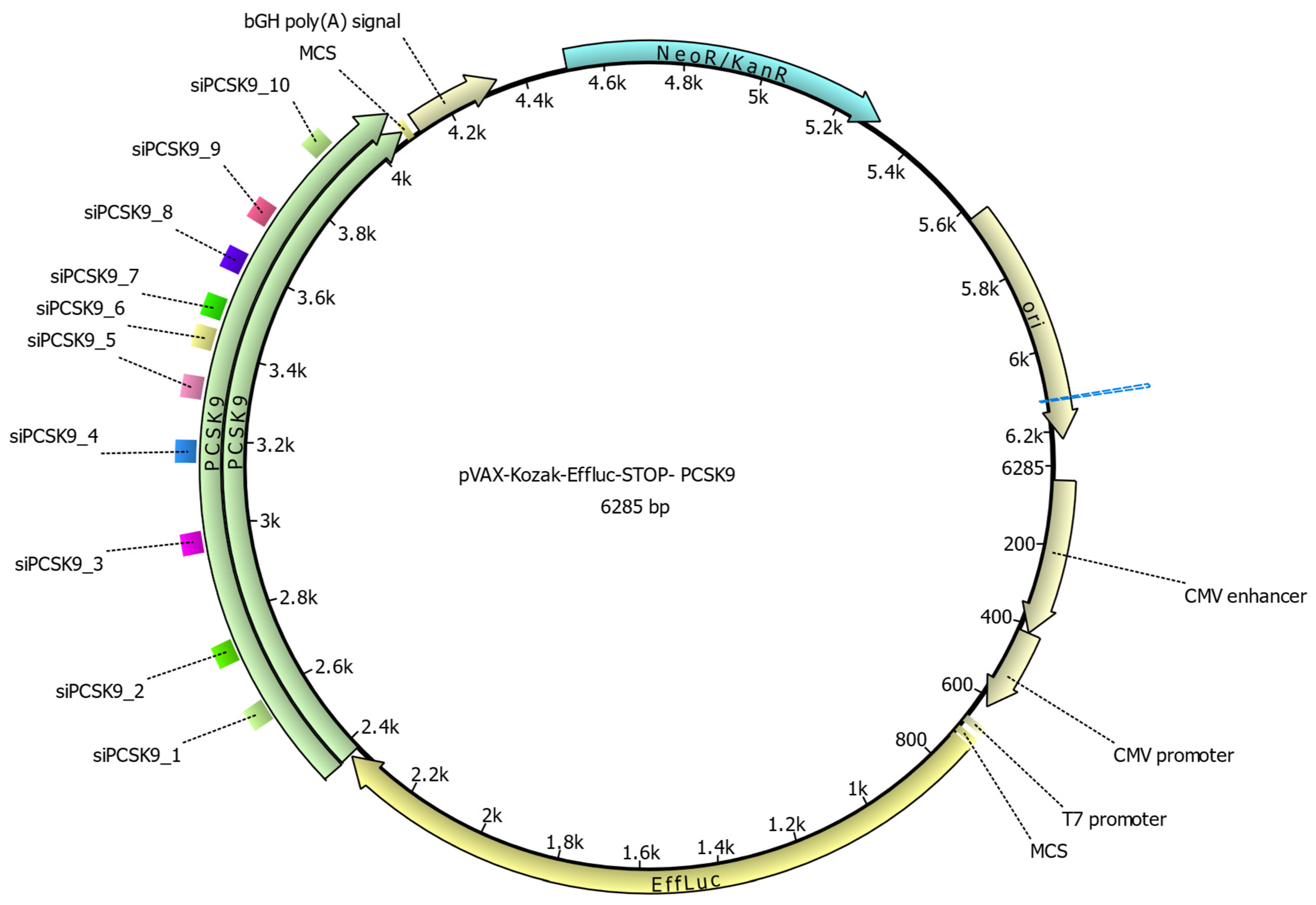
2.2. Synthesis and In Vitro Testing of Unmodified siRNA Sequences
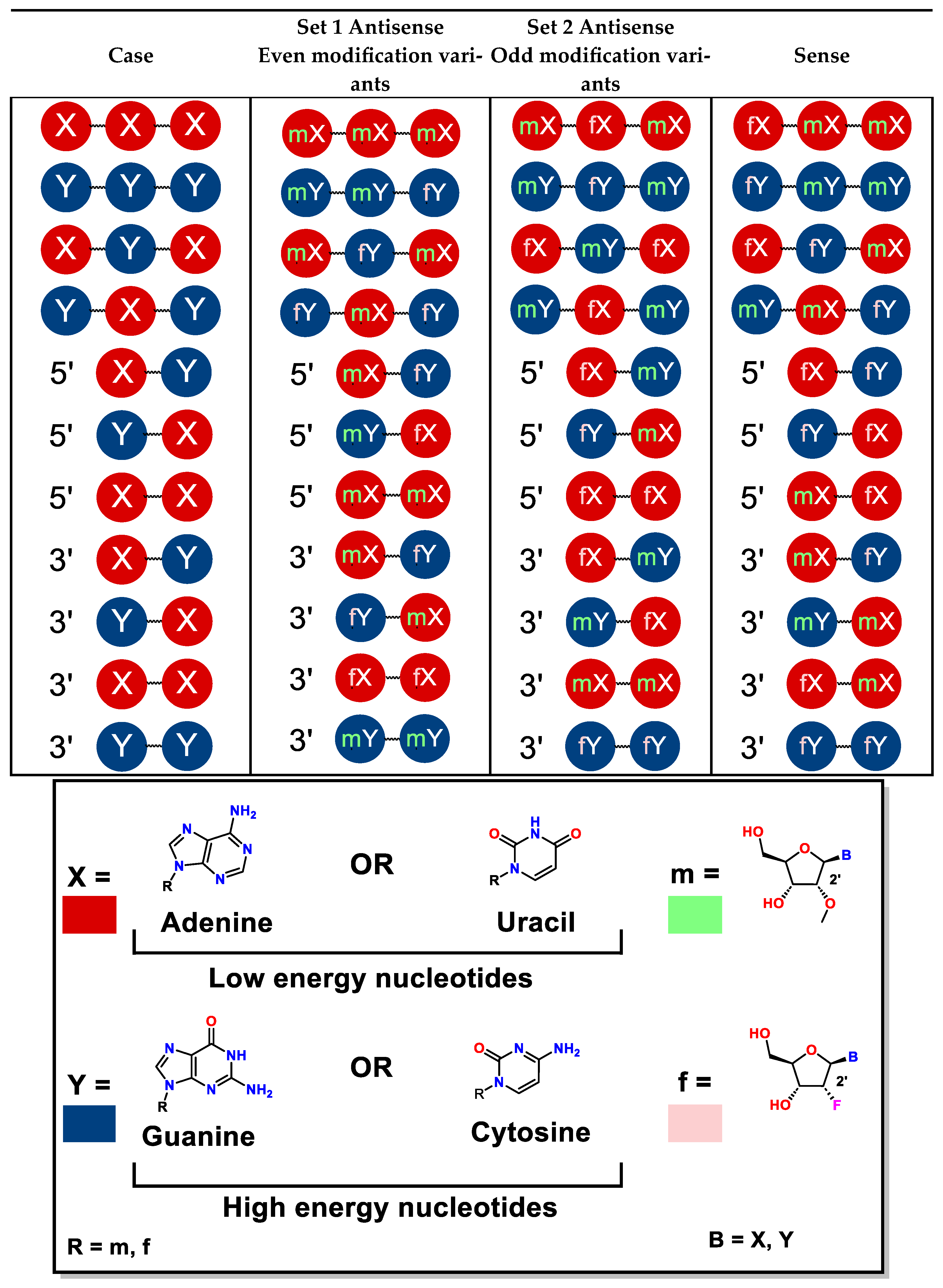
2.3. Synthesis and In Vitro Testing of Modified siRNA Sequences
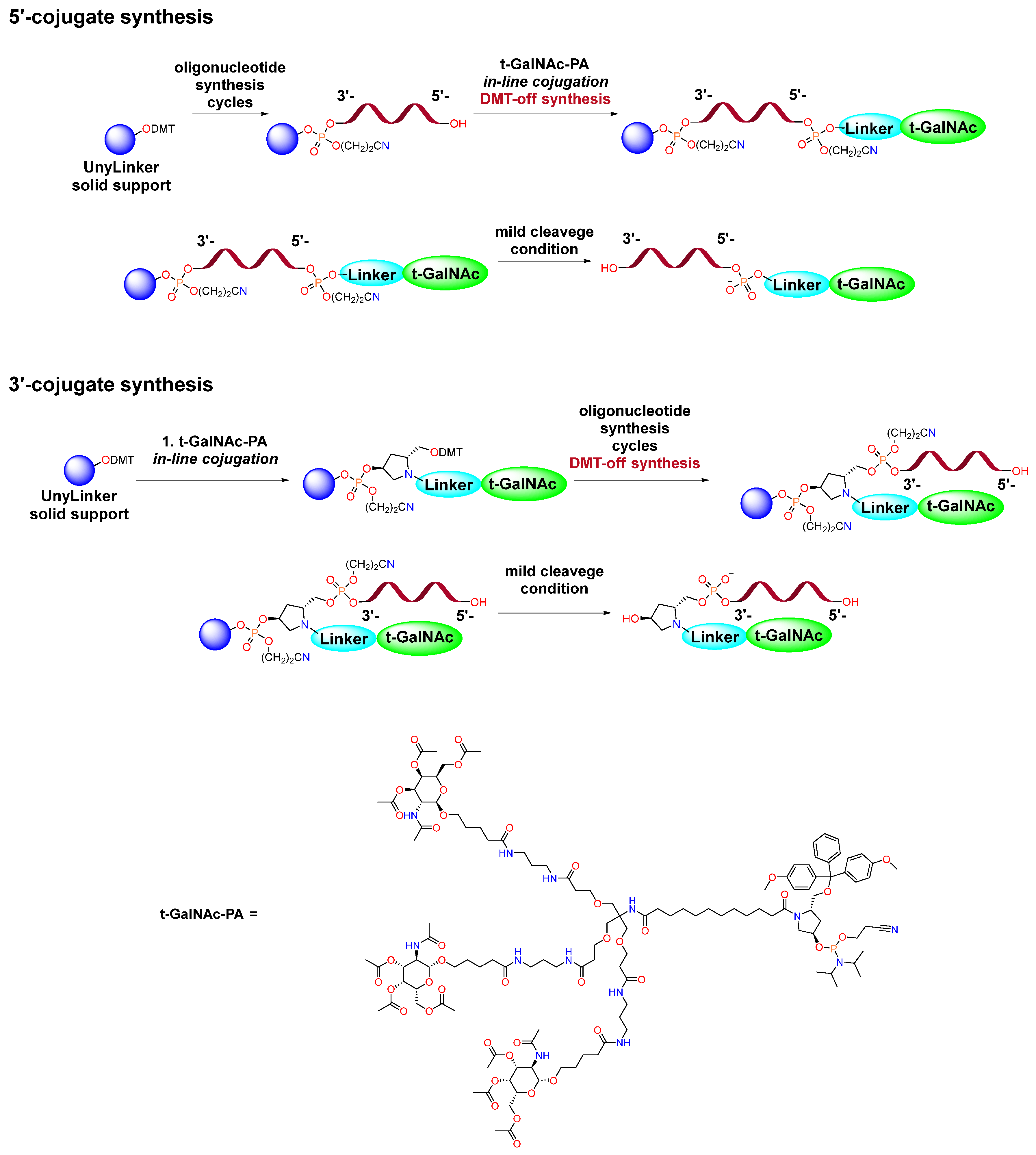
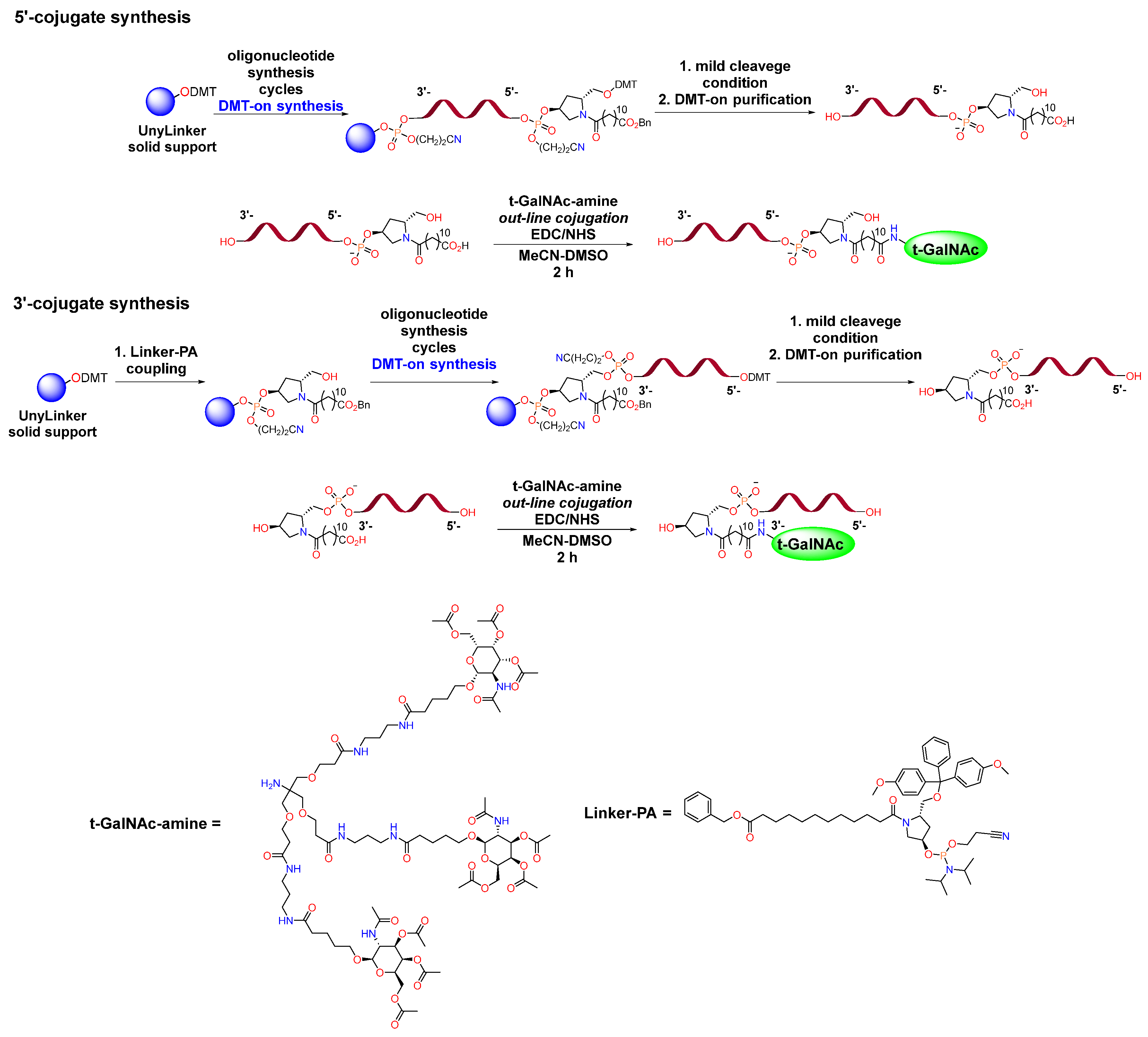
2.4. Synthesis of GalNAc-siRNA Conjugates
- Cleavage from the solid phase;
- Removal of protective groups from nucleotides;
- Hydrolysis of the ester group.
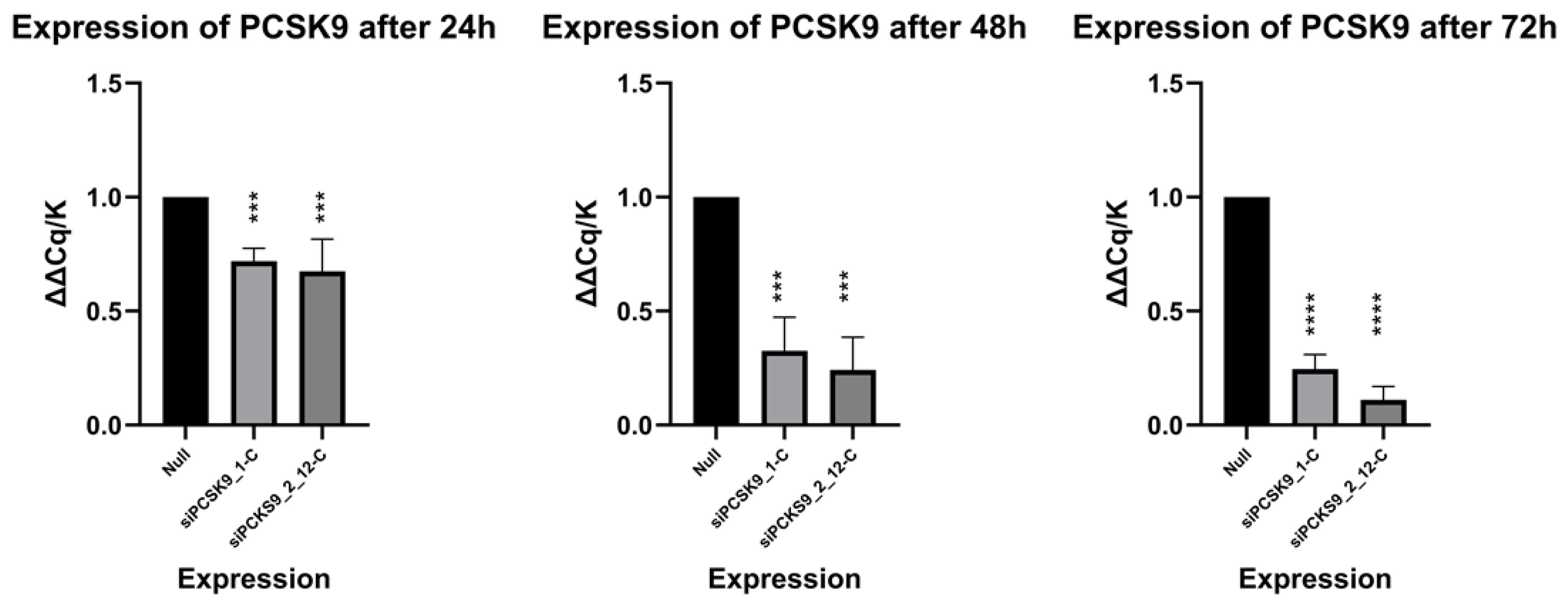
2.5. Results of In Vitro Testing of Target GalNAc-Oligonucleotide Conjugates
3. Discussion
3.1. Additional Criteria for Selecting Sequences and Modifications
3.2. Experimental Validation of siRNA Sequences Design
3.3. Comparison of Approaches to Synthesis of GalNAc-siRNA Conjugates
3.4. Results of In Vitro Testing of Target GalNAc-Oligonucleotide Conjugates
4. Materials and Methods
4.1. Materials
4.2. Oligonucleotide Synthesis Protocols
- Deblock: 3% (w/v) trichloroacetic acid (TCA) in anhydrous toluene
- Activator: 0.3 M 4,5-dicyanoimidazole (DCI) in anhydrous acetonitrile
- Cap A: 20% (v/v) 1-methylimidazole (NMI) in anhydrous acetonitrile
- Cap B: 30% (v/v) propionic anhydride and 30% (v/v) 2,6-lutidine in anhydrous acetonitrile
- Oxidation: 0.05 M iodine in pyridine/water (9:1, v/v)
4.3. siRNA Design
4.4. siRNA Modification
4.5. Post-Synthetic Liquid-Phase GalNAc Conjugation
- 2 cv of pure buffer A
- Sample addition
- 3 cv of pure buffer A
- 20 cv of gradient 0–100% B
- Column wash by 100% buffer B
- Column equilibration by pure buffer A
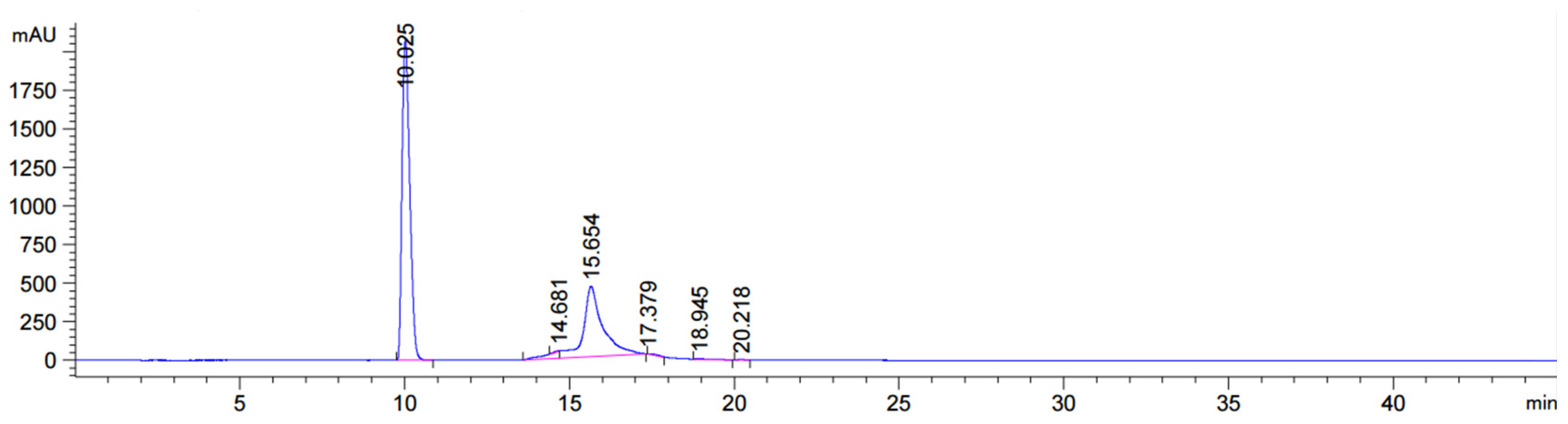
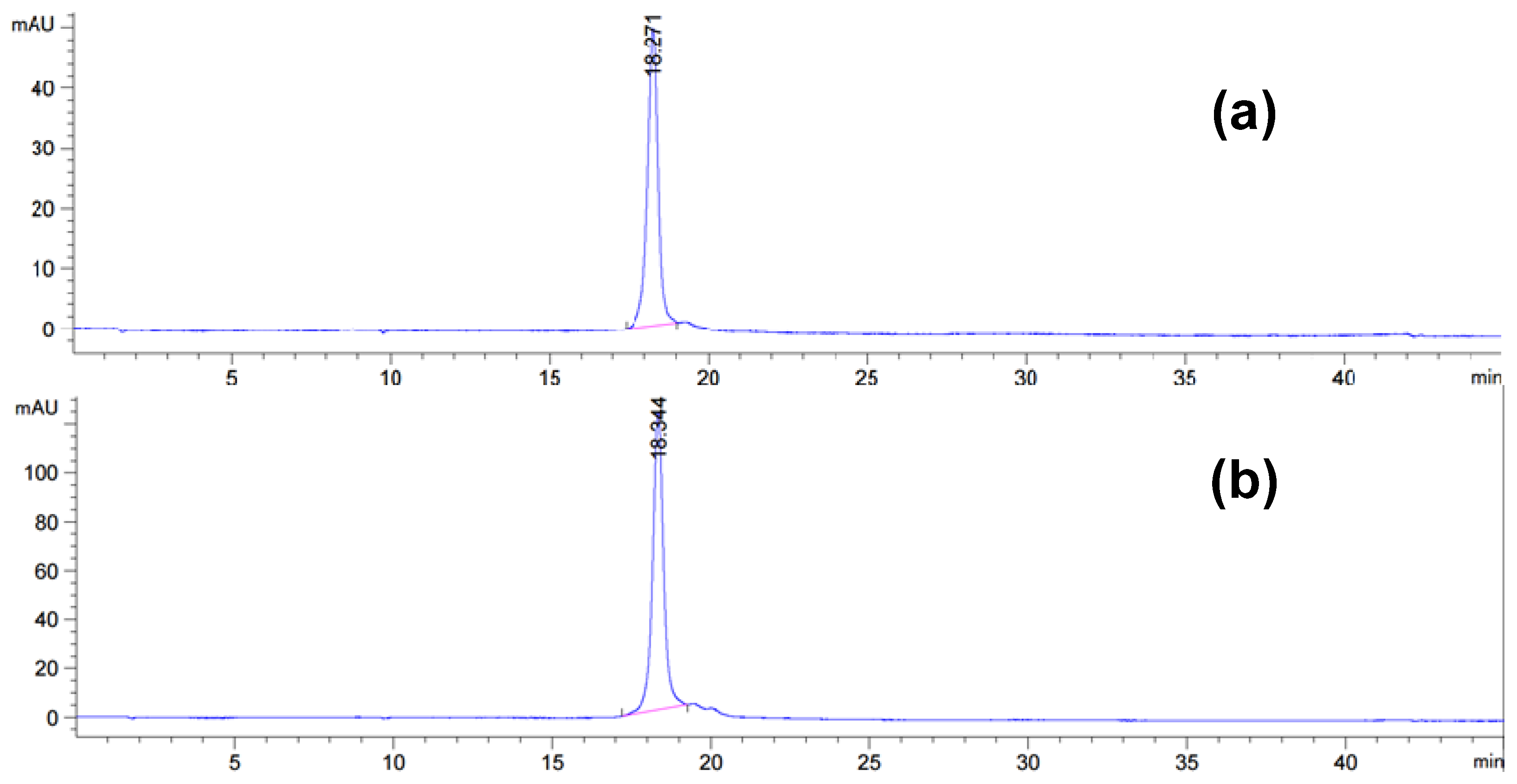
- siPCSK9_1-C-aS: calculated Mw (H+ form) = 7710.25, founded Mw = 7772.123
- siPCSK9_1-C-S: calculated Mw (H+ form) = 8657.57, founded Mw = 8631.495
- siPCSK9_2_12-aS: calculated Mw (H+ form) = 6889.34, founded Mw = 6873.91
- siPCSK9_2_12-S: calculated Mw (H+ form) = 8761.82, calculated Mw (Na salt) = 9221.82, founded Mw = 9006.2
4.6. Screening of Biological Activity of Unmodified siRNA Sequences
4.7. Screening of Biological Activity of Modified siRNA Sequences
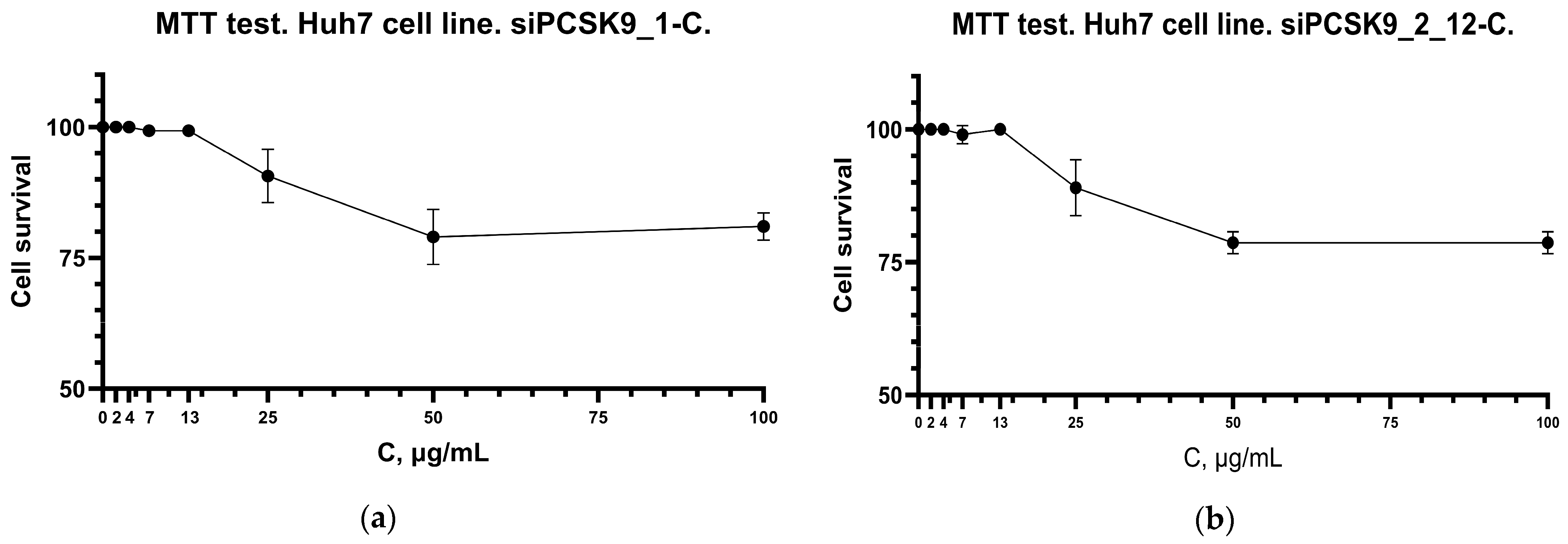
4.8. In Vitro Cytotoxicity of GalNAc-siRNA Conjugate
4.9. Study of the Biological Activity of the GalNac-siRNA Complex in In Vitro Experiments
5. Conclusions
Supplementary Materials
Author Contributions
Funding
Institutional Review Board Statement
Informed Consent Statement
Data Availability Statement
Conflicts of Interest
Abbreviations
| AE IEX | Anion Exchange Ion Exchange Chromatography |
| ASGPR | Asialoglycoprotein Receptor |
| ASO | Antisense Oligonucleotide |
| BOP | Benzotriazol-1-yloxy-tris(dimethylamino)phosphonium hexafluorophosphate |
| cDNA | Complementary DNA |
| CDI | Carbonyldiimidazole |
| DCM | Dichloromethane |
| DIPEA | N,N-Diisopropylethylamine |
| DMF | Dimethylformamide |
| DMSO | Dimethyl Sulfoxide |
| DMT | Dimethoxytrityl |
| DMT-off synthesis | Oligonucleotide synthesis with the final 5′-DMT group removed on the synthesizer |
| DMT-on synthesis | Oligonucleotide synthesis with the final 5′-dimethoxytrityl (DMT) group retained. |
| EDC | 1-Ethyl-3-(3-dimethylaminopropyl)carbodiimide |
| EtOH | Ethanol |
| GalNAc | N-Acetylgalactosamine |
| HBTU | O-(Benzotriazol-1-yl)-N,N,N’,N’-tetramethyluronium hexafluorophosphate |
| HPLC | High-Performance Liquid Chromatography |
| LDL | Low-Density Lipoprotein |
| MeCN | Acetonitrile |
| mRNA | Messenger ribonucleic acid (Messenger RNA) |
| miRNA | Micro ribonucleic acid (microRNA) |
| NHS | N-Hydroxysuccinimide |
| PA | Phosphoramidite |
| qRT-PCR | Quantitative Reverse Transcription Polymerase Chain Reaction |
| RISC | RNA-Induced Silencing Complex |
| ROX | Carboxy-X-Rhodamine |
| RP HPLC | Reversed-Phase High-Performance Liquid Chromatography |
| RQ | Relative Quantity |
| RTQ-2 | Real Time Quencher-2 |
| siRNA | Small Interfering RNA |
| THF | Tetrahydrofuran |
References
- Tani, H. Recent Advances and Prospects in RNA Drug Development. Int. J. Mol. Sci. 2024, 25, 12284. [Google Scholar] [CrossRef]
- Zhang, Y.; Liu, H.; Zhen, W.; Jiang, T.; Cui, J. Advancement of Drugs Conjugated with GalNAc in the Targeted Delivery to Hepatocytes Based on Asialoglycoprotein Receptor. Carbohydr. Res. 2025, 552, 109426. [Google Scholar] [CrossRef]
- Chernov, P.V.; Dmitriev, N.A.; Gusev, A.E.; Kholstov, A.V.; Khodzhava, M.V.; Kovchina, V.I.; Rusak, T.E.; Kudlay, D.A.; Shilovskiy, I.P.; Kofiadi, I.A. Development and Validation of Algorithms for the Search, Evaluation and Modification of SiRNAs Applicable to the Treatment of Pathologies of the Immune System Using the Model of the APOB Gene. Immunologiya 2025, 46, 483–497. [Google Scholar] [CrossRef]
- Roberts, T.C.; Langer, R.; Wood, M.J.A. Advances in Oligonucleotide Drug Delivery. Nat. Rev. Drug Discov. 2020, 19, 673–694. [Google Scholar] [CrossRef]
- Ruan, H.; Dou, D.; Lu, J.; Xiao, X.; Gong, X.; Zhang, X. Off-Target Effects of Oligonucleotides and Approaches of Preclinical Assessments. SLAS Discov. 2025, 35, 100254. [Google Scholar] [CrossRef]
- Fakhr, E.; Zare, F.; Teimoori-Toolabi, L. Precise and Efficient SiRNA Design: A Key Point in Competent Gene Silencing. Cancer Gene Ther. 2016, 23, 73–82. [Google Scholar] [CrossRef]
- Martinelli, D.D. Machine Learning for SiRNA Efficiency Prediction: A Systematic Review. Health Sci. Rev. 2024, 11, 100157. [Google Scholar] [CrossRef]
- Reynolds, A.; Leake, D.; Boese, Q.; Scaringe, S.; Marshall, W.S.; Khvorova, A. Rational SiRNA Design for RNA Interference. Nat. Biotechnol. 2004, 22, 326–330. [Google Scholar] [CrossRef] [PubMed]
- Debacker, A.J.; Voutila, J.; Catley, M.; Blakey, D.; Habib, N. Delivery of Oligonucleotides to the Liver with GalNAc: From Research to Registered Therapeutic Drug. Mol. Ther. 2020, 28, 1759–1771. [Google Scholar] [CrossRef] [PubMed]
- Springer, A.D.; Dowdy, S.F. GalNAc-SiRNA Conjugates: Leading the Way for Delivery of RNAi Therapeutics. Nucleic Acid. Ther. 2018, 28, 109–118. [Google Scholar] [CrossRef]
- Nie, H.J.; Hu, H.; Qi, X.; Zhou, Y.J.; Liu, L.; Chen, X.H. General Platform for Efficient and Modular Assembly of GalNAc-SiRNA Conjugates via Primary Amines and o-Nitrobenzyl Alcohol Cyclization Photoclick Chemistry Enabling Rapid Access to Therapeutic Oligonucleotides. JACS Au 2025, 5, 1402–1412. [Google Scholar] [CrossRef] [PubMed]
- Ulashchik, E.A.; Martynenko-Makaev, Y.V.; Akhlamionok, T.P.; Melnik, D.M.; Shmanai, V.V.; Zatsepin, T.S. Synthesis of GalNAc-Oligonucleotide Conjugates Using GalNAc Phosphoramidite and Triple-GalNAc CPG Solid Support. In Design and Delivery of SiRNA Therapeutics; Ditzel, H.J., Tuttolomondo, M., Kauppinen, S., Eds.; Springer US: New York, NY, USA, 2021; pp. 101–118. ISBN 978-1-0716-1298-9. [Google Scholar]
- Prakash, T.P.; Brad Wan, W.; Low, A.; Yu, J.; Chappell, A.E.; Gaus, H.; Kinberger, G.A.; Østergaard, M.E.; Migawa, M.T.; Swayze, E.E.; et al. Solid-Phase Synthesis of 5′-Triantennary N-Acetylgalactosamine Conjugated Antisense Oligonucleotides Using Phosphoramidite Chemistry. Bioorg Med. Chem. Lett. 2015, 25, 4127–4130. [Google Scholar] [CrossRef] [PubMed]
- Cedillo, I.; Chreng, D.; Engle, E.; Chen, L.; McPherson, A.K.; Rodriguez, A.A. Synthesis of 5-GalNAc-Conjugated Oligonucleotides: A Comparison of Solid and Solution-Phase Conjugation Strategies. Molecules 2017, 22, 1356. [Google Scholar] [CrossRef]
- FDA. Center for Drug Evaluation and Research Application Number: 214012Orig1s000 Product Quality Review(s). Available online: https://www.accessdata.fda.gov/drugsatfda_docs/nda/2022/214012Orig1s000OtherR.pdf (accessed on 7 January 2026).
- Francis, A.J.; Resendiz, M.J.E. Protocol for the Solid-Phase Synthesis of Oligomers of RNA Containing a 2′-Othiophenylmethyl Modification and Characterization via Circular Dichroism. J. Vis. Exp. 2017, 2017, 56189. [Google Scholar] [CrossRef]
- Ui-Tei, K.; Naito, Y.; Zenno, S.; Nishi, K.; Yamato, K.; Takahashi, F.; Juni, A.; Saigo, K. Functional Dissection of SiRNA Sequence by Systematic DNA Substitution: Modified SiRNA with a DNA Seed Arm Is a Powerful Tool for Mammalian Gene Silencing with Significantly Reduced off-Target Effect. Nucleic Acids Res. 2008, 36, 2136–2151. [Google Scholar] [CrossRef]
- Kobayashi, Y.; Fukuhara, D.; Akase, D.; Aida, M.; Ui-Tei, K. SiRNA Seed Region Is Divided into Two Functionally Different Domains in RNA Interference in Response to 2′-OMe Modifications. ACS Omega 2022, 7, 2398–2410. [Google Scholar] [CrossRef]
- Andersson, P.; Burel, S.A.; Estrella, H.; Foy, J.; Hagedorn, P.H.; Harper, T.A.; Henry, S.P.; Hoflack, J.C.; Holgersen, E.M.; Levin, A.A.; et al. Assessing Hybridization-Dependent Off-Target Risk for Therapeutic Oligonucleotides: Updated Industry Recommendations. Nucleic Acid. Ther. 2025, 35, 16–33. [Google Scholar]
- Kliuchnikov, E.; Maksudov, F.; Zuber, J.; Hyde, S.; Castoreno, A.; Waldron, S.; Schlegel, M.K.; Marx, K.A.; Maier, M.A.; Barsegov, V. Improving the Potency Prediction for Chemically Modified SiRNAs through Insights from Molecular Modeling of Individual Sequence Positions. Mol. Ther. Nucleic Acids 2025, 36, 102415. [Google Scholar] [CrossRef]
- Li, Z.; Xu, Q.; Zhang, Y.; Zhong, J.; Zhang, T.; Xue, J.; Liu, S.; Gao, H.; Zhang, Z.Z.Z.; Wu, J.; et al. Mechanistic Insights into RNA Cleavage by Human Argonaute2–SiRNA Complex. Cell Res. 2025, 35, 453–464. [Google Scholar] [CrossRef]
- Bereczki, Z.; Benczik, B.; Balogh, O.M.; Marton, S.; Puhl, E.; Pétervári, M.; Váczy-Földi, M.; Papp, Z.T.; Makkos, A.; Glass, K.; et al. Mitigating Off-Target Effects of Small RNAs: Conventional Approaches, Network Theory and Artificial Intelligence. Br. J. Pharmacol. 2025, 182, 340–379. [Google Scholar] [CrossRef] [PubMed]
- Martinelli, D.D. From Sequences to Therapeutics: Using Machine Learning to Predict Chemically Modified SiRNA Activity. Genomics 2024, 116, 110815. [Google Scholar] [CrossRef]
- Datta, D.; Kumar, P.; Kundu, J.; Qin, J.; Gilbert, J.A.; Schofield, S.; Donnelly, D.P.; Liu, J.; Degaonkar, R.; Egli, M.; et al. Improved In Vivo Metabolic Stability and Silencing Efficacy of SiRNAs with Phosphorothioate Linkage-Free, GalNAc-Conjugated Sense Strands Containing Morpholino-LNA Modifications. Org. Lett. 2024, 26, 10061–10065. [Google Scholar] [CrossRef] [PubMed]
- Ryan, D.A.; Gin, D.Y. Ring-Opening of Aziridine-2-Carboxamides with Carbohydrate C1-O-Nucleophiles. Stereoselective Preparation of α- and β-O-Glycosyl Serine Conjugates. J. Am. Chem. Soc. 2008, 130, 15228–15229. [Google Scholar] [CrossRef]
- Li, X.; Wang, X.; Liu, N.; Wang, Q.; Hu, J. Inhibition of Metastatic Hepatocarcinoma by Combined Chemotherapy with Silencing VEGF/VEGFR2 Genes through a GalNAc-Modified Integrated Therapeutic System. Molecules 2022, 27, 2082. [Google Scholar] [CrossRef]
- Weingärtner, A.; Bethge, L.; Weiss, L.; Sternberger, M.; Lindholm, M.W. Less Is More: Novel Hepatocyte-Targeted SiRNA Conjugates for Treatment of Liver-Related Disorders. Mol. Ther. Nucleic Acids 2020, 21, 242–250. [Google Scholar] [CrossRef] [PubMed]
- Naito, Y.; Yoshimura, J.; Morishita, S.; Ui-Tei, K. SiDirect 2.0: Updated Software for Designing Functional SiRNA with Reduced Seed-Dependent off-Target Effect. BMC Bioinform. 2009, 10, 392. [Google Scholar] [CrossRef]
- Ui-Tei, K.; Naito, Y.; Takahashi, F.; Haraguchi, T.; Ohki-Hamazaki, H.; Juni, A.; Ueda, R.; Saigo, K. Guidelines for the Selection of Highly Effective SiRNA Sequences for Mammalian and Chick RNA Interference. Nucleic Acids Res. 2004, 32, 936–948. [Google Scholar] [CrossRef] [PubMed]
- Amarzguioui, M.; Prydz, H. An Algorithm for Selection of Functional SiRNA Sequences. Biochem. Biophys. Res. Commun. 2004, 316, 1050–1058. [Google Scholar] [CrossRef]
- Markham, N.R.; Zuker, M. UNAFold. In Bioinformatics: Structure, Function and Applications; Keith, J.M., Ed.; Humana Press: Totowa, NJ, USA, 2008; pp. 3–31. ISBN 978-1-60327-429-6. [Google Scholar]
- Jaeger, J.A.; Turner, D.H.; Zuker, M. Improved Predictions of Secondary Structures for RNA. Proc. Natl. Acad. Sci. USA 1989, 86, 7706–7710. [Google Scholar] [CrossRef]
- Lorenz, R.; Hofacker, I.L.; Stadler, P.F. RNA Folding with Hard and Soft Constraints. Algorithms Mol. Biol. 2016, 11, 8. [Google Scholar] [CrossRef]
- Morgulis, A.; Coulouris, G.; Raytselis, Y.; Madden, T.L.; Agarwala, R.; Schäffer, A.A. Database Indexing for Production MegaBLAST Searches. Bioinformatics 2008, 24, 1757–1764. [Google Scholar] [PubMed]
- Okonechnikov, K.; Golosova, O.; Fursov, M.; Varlamov, A.; Vaskin, Y.; Efremov, I.; German Grehov, O.G.; Kandrov, D.; Rasputin, K.; Syabro, M.; et al. Unipro UGENE: A Unified Bioinformatics Toolkit. Bioinformatics 2012, 28, 1166–1167. [Google Scholar] [CrossRef] [PubMed]
- Livak, K.J.; Schmittgen, T.D. Analysis of Relative Gene Expression Data Using Real-Time Quantitative PCR and the 2-ΔΔCT Method. Methods 2001, 25, 402–408. [Google Scholar] [CrossRef] [PubMed]




| Name | Sequence 5′-3′ | Relative Luciferse Activity 1 | |
|---|---|---|---|
| siPCSK9_2 (unmodified) | aS | rArUrArArArUrGrUrCrUrGrCrUrUrGrCrUrUrGrGrG | 0.2706 ± 0.0322 |
| S | rCrArArGrCrArArGrCrArGrArCrArUrUrUrArUrCrU | ||
| siPCK9-2-12 2 | aS | mAfUmAfAmAfUmGmUmCmUmGfCmUfUmGfCmUfUmGfGmG | 0.0628 ± 0.0338 |
| S | fCmAmAmGmCmAmAmGmCmAfGfAfCmAmUmUmUmAmUmCmU | ||
| siPCSK9-2-4 | aS | mAfUfAfAmAmUmGmUmCmUmGmCmUmUmGmCmUfUfGfGmG | 0.1303 ± 0.0247 |
| S | mCmAmAmGmCmAmAmGmCmAfGfAfCmAmUmUmUmAmUmCmU | ||
| siPCSK9-2-1 | aS | mAmUmAmAmAmUmGmUmCmUmGmCmUmUmGmCmUmUmGmGmG | 0.1358 ± 0.0369 |
| S | mCmAmAmGmCmAmAmGmCmAmGmAmCmAmUmUmUmAmUmCmU | ||
| siPCSK9-2-10 | aS | mAmUmAmAmAmUmGmUfCfUfGmCmUmUmGmCmUmUmGmGmG | 0.1368 ± 0.0245 |
| S | mCmAmAmGmCmAmAmGmCmAfGfAfCmAmUmUmUmAmUmCmU | ||
| siPCSK9-2-3 | aS | mAfUmAfAmAfUmGfUmCmUmGfCmUfUmGfCmUfUmGfGmG | 0.1383 ± 0.0245 |
| S | mCmAmAmGmCmAmAmGmCmAfGfAfCmAmUmUmUmAmUmCmU | ||
| siPCSK9_6 (unmodified) | aS | rUrArArArUrGrUrCrUrGrCrUrUrGrCrUrUrGrGrGrU | 0.3249 ± 0.1326 |
| S | rCrCrArArGrCrArArGrCrArGrArCrArUrUrUrArUrC | ||
| siPCSK9-6-1 | aS | mUmAmAmAmUmGmUmCmUmGmCmUmUmGmCmUmUmGmGmGmU | 0.0334 ± 0.0312 |
| S | mCmCmAmAmGmCmAmAmGmCmAmGmAmCmAmUmUmUmAmUmC | ||
| siPCSK9-6-9 | aS | mUfAmAmAmUfGmUfCmUmGmCfUmUfGmCmUmUmGmGfGmUmAmA | 0.0574 ± 0.0368 |
| S | mCmCmAmAmGmCmAmAmGmCfAfGfAmCmAmUmUmUmAmUmC | ||
| siPCSK9-6-5 | aS | mUfAmAfAfUfGmUmCmUmGmCmUmUmGmCfUfUfGmGfGmU | 0.1192 ± 0.0593 |
| S | mCmCmAmAmGmCmAmAmGmCfAfGfAmCmAmUmUmUmAmUmC | ||
| siPCSK9-6-3 | aS | mUfAmAfAmUfGmUfCmUmGmCfUmUfGmCfUmUfGmGfGmU | 0.1224 ± 0.0603 |
| S | mCmCmAmAmGmCmAmAmGmCfAfGfAmCmAmUmUmUmAmUmC | ||
| siPCSK9-6-7 | aS | mUmAmAmAfUfGfUmCmUmGmCmUfUfGfCmUmUmGmGmGmU | 0.1617 ± 0.0731 |
| S | mCmCmAmAmGmCmAmAmGmCfAfGfAmCmAmUmUmUmAmUmC |
| Reagent | Conditions | Product |
|---|---|---|
| Ammonium hydroxide | 55 °C/2 h | Desired product * |
| r.t./12 h | Desired product | |
| AMA 1 | 65 °C/30 min | Desired product ** |
| 0.05 M K2CO3 in EtOH-H2O (v/v = 1:1) | r.t./18 h | Desired product |
| r.t./24 h | Desired product ** |
| Reagent | Temperature | Time | Product |
|---|---|---|---|
| AMA 1 | 55 °C | 30 min | Benzylic ester or amide (major)/acid (minor) |
| Ammonium hydroxide | r.t. | 6 h * | - |
| 12 h ** | Acid (major)/benzylic ester or amide(minor) | ||
| 55 °C | 6 h ** | Acid (major)/benzylic ester or amide (minor) | |
| 12 h | Benzylic ester or amide (major)/acid (minor) | ||
| 0.05 M K2CO3 EtOH-H2O (v/v = 1:1) | r.t. | 2–12 h * | - |
| 24 h ** | Benzylic ester | ||
| 55 °C | 8–12 h ** | Benzylic ester | |
| 24 h | Benzylic ester | ||
| 0.4 M NaOH EtOH-H2O (v/v = 4:1) | 80 °C | 5–10 min | Acid |
| Reagents | Conditions | Yield |
|---|---|---|
| CDI THF-DMF | r.t./2 h | Desired product was not observed |
| HBTU, DIPEA DMF-MeCN | r.t./30 min | Trace |
| EDC·HCl DMSO-MeCN | r.t./2 h | Trace |
| EDC/NHS DMSO-MeCN | r.t./ 2 h | 70–95% * |
| AG/UC ~50% |
|---|
| Distribution of AU and GC by islets of 2–3 nucleotides |
| The presence of a 4–6-mer sequence A/U or G/C |
| The first and last 2 nucleotides are A/U and G/C |
| If the first 2 nucleotides are A/U, 3–4 are C/G |
| If the first 2 nucleotides are G/C, 3–4–A/U |
| Stage | In-Line Conjugation | Out-Line Conjugation | ||
|---|---|---|---|---|
| 3′-End | 5′-End | 3′-End | 5′-End | |
| 1. Solid-phase synthesis | Synthesis of 22 repeating cycles, including the conjugation stage | Synthesis of 22 repetitive cycles, including the stage of introducing modification for PSLPC 1 | ||
| Efficacy (1) | 49% * | 37% * | >90% * | |
| 2. Chromatography | AE IEX chromatography of DMT-off product | Reverse phase chromatography of DMT-on product on GlenPak cartridges | ||
| Efficacy (2) | 55% * | >95% * | ||
| 3. Desalting | SEC chromatography | Not required | ||
| Efficacy (3) | >95% * | – | ||
| 4. Post-synthetic liqud-phase conjugation | Not required | EDC/NHS, DMSO-MeCN, 2 h., r.t. | ||
| Efficacy (4) | – | 70–95% * | ||
| 5. Chromatography | Not required | AE IEX chromatography of conjugate | ||
| Efficacy (5) | – | >90% * | ||
| 6. Desalting | Not required | SEC chromatography | ||
| Efficacy (6) | – | >95% * | ||
| Total yield | 26% | 19% ** | 56–81% | |
| Duplex | AS Off-Target, Gene (% Homology) | S Off-Target, Gene (% Homology) |
|---|---|---|
| siPCSK9_2 | NG_047156.1 (90%), | NG_021195.2 (81%), |
| NG_012232.1 (90%) | NG_012971.2 (81%) | |
| siPCSK9_6 | NG_029777.2 (95%), | NG_009191.3 (95%), |
| NG_051831.2 (95%), | NG_047156.1 (90%) | |
| NG_012232.1 (90%) |
| Case | Set 1 Antisense Even Modification Variants | Set 2 Antisense Odd Modification Variants | Sense |
|---|---|---|---|
| XXX | mXmXfX | mXfXmX | fXmXmX |
| YYY | mYmYfY | mYfYmY | fYmYmY |
| XYX | mXfYmX | fXmYfX | fXfYmX |
| YXY | fYmXfY | mYfXmY | mYmXfY |
| 5′XY | 5′mXfY | 5′fXmY | 5′fXfX |
| 5′YX | 5′mYfX | 5′fYmX | 5′fYfX |
| 5′XX | 5′mXmX | 5′fXfX | 5′mXfX |
| 3′XY | 3′mXfY | 3′fXmY | 3′mXfX |
| 3′YX | 3′fYmX | 3′mYfX | 3′mYmX |
| 3′XX | 3′fXfX | 3′mXmX | 3′fXmX |
| 3′YY | 3′mYmY | 3′fYfY | 3′fYmY |
| Stage Number | Temperature | Time | Number of Cycles |
|---|---|---|---|
| 1 | 95.0 °C | 300 s. | 1 |
| 2 | 95.0 °C | 30 s. | 40 |
| 65.2 °C * | 15 s. | ||
| 72.0 °C | 30 s. |
| Target Gene | Primers/ Probes | Sequence (5′-3′) |
|---|---|---|
| ACTB | F | CATCACCATTGGCAATGAG |
| R | CACACTTCATGATGGAGTTGAAG | |
| Z | (ROX)CTTCCTTCCTGGGCATGGAGTCCTGTG(RTQ2) | |
| PCSK9 | F | GGTGTATCTCCTAGACACCAGCATAC |
| R | GGAGTAGAGGCAGGCATCGT |
Disclaimer/Publisher’s Note: The statements, opinions and data contained in all publications are solely those of the individual author(s) and contributor(s) and not of MDPI and/or the editor(s). MDPI and/or the editor(s) disclaim responsibility for any injury to people or property resulting from any ideas, methods, instructions or products referred to in the content. |
© 2026 by the authors. Licensee MDPI, Basel, Switzerland. This article is an open access article distributed under the terms and conditions of the Creative Commons Attribution (CC BY) license.
Share and Cite
Dmitriev, N.A.; Chernov, P.V.; Gongadze, I.S.; Kovchina, V.I.; Ivanov, V.N.; Gusev, A.E.; Shilovskiy, I.P.; Kofiadi, I.A.; Khaitov, M.R. Refined Design and Liquid-Phase Assembly of GalNAc-siRNA Conjugates: Comparative Efficiency Validation in PCSK9 Targeting. Molecules 2026, 31, 476. https://doi.org/10.3390/molecules31030476
Dmitriev NA, Chernov PV, Gongadze IS, Kovchina VI, Ivanov VN, Gusev AE, Shilovskiy IP, Kofiadi IA, Khaitov MR. Refined Design and Liquid-Phase Assembly of GalNAc-siRNA Conjugates: Comparative Efficiency Validation in PCSK9 Targeting. Molecules. 2026; 31(3):476. https://doi.org/10.3390/molecules31030476
Chicago/Turabian StyleDmitriev, Nikolai A., Petr V. Chernov, Ivan S. Gongadze, Valeriia I. Kovchina, Vladimir N. Ivanov, Artem E. Gusev, Igor P. Shilovskiy, Ilya A. Kofiadi, and Musa R. Khaitov. 2026. "Refined Design and Liquid-Phase Assembly of GalNAc-siRNA Conjugates: Comparative Efficiency Validation in PCSK9 Targeting" Molecules 31, no. 3: 476. https://doi.org/10.3390/molecules31030476
APA StyleDmitriev, N. A., Chernov, P. V., Gongadze, I. S., Kovchina, V. I., Ivanov, V. N., Gusev, A. E., Shilovskiy, I. P., Kofiadi, I. A., & Khaitov, M. R. (2026). Refined Design and Liquid-Phase Assembly of GalNAc-siRNA Conjugates: Comparative Efficiency Validation in PCSK9 Targeting. Molecules, 31(3), 476. https://doi.org/10.3390/molecules31030476