Sub-Minimum Inhibitory Concentrations of Amoxicillin Modulate Biofilm Formation and the Expression of Biofilm-Associated Genes in Enterococcus faecalis


Abstract
1. Introduction
2. Results
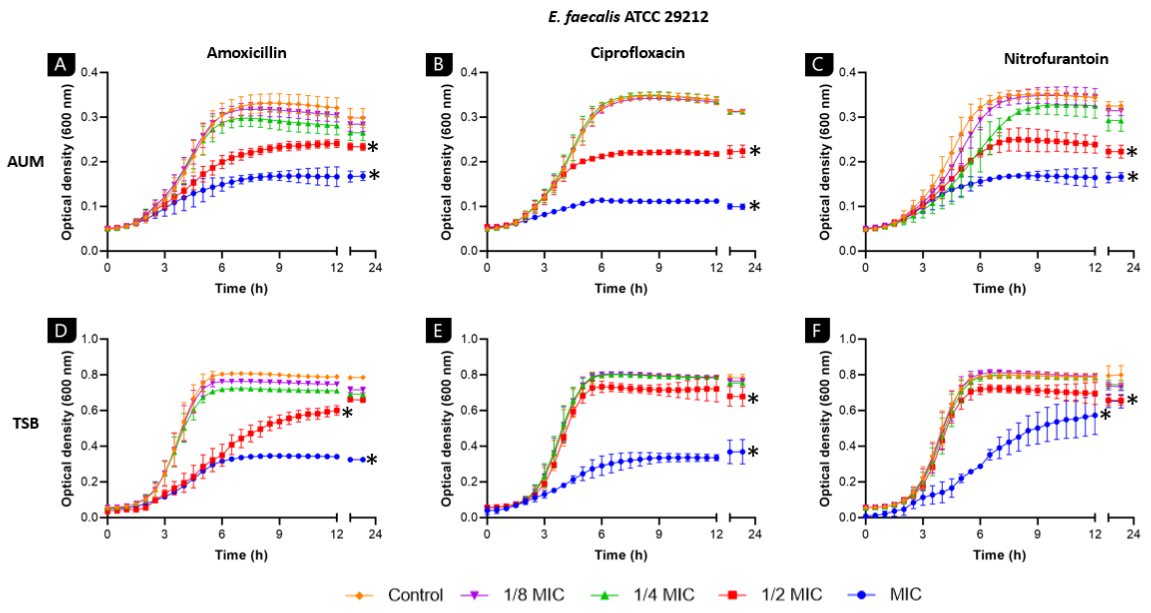
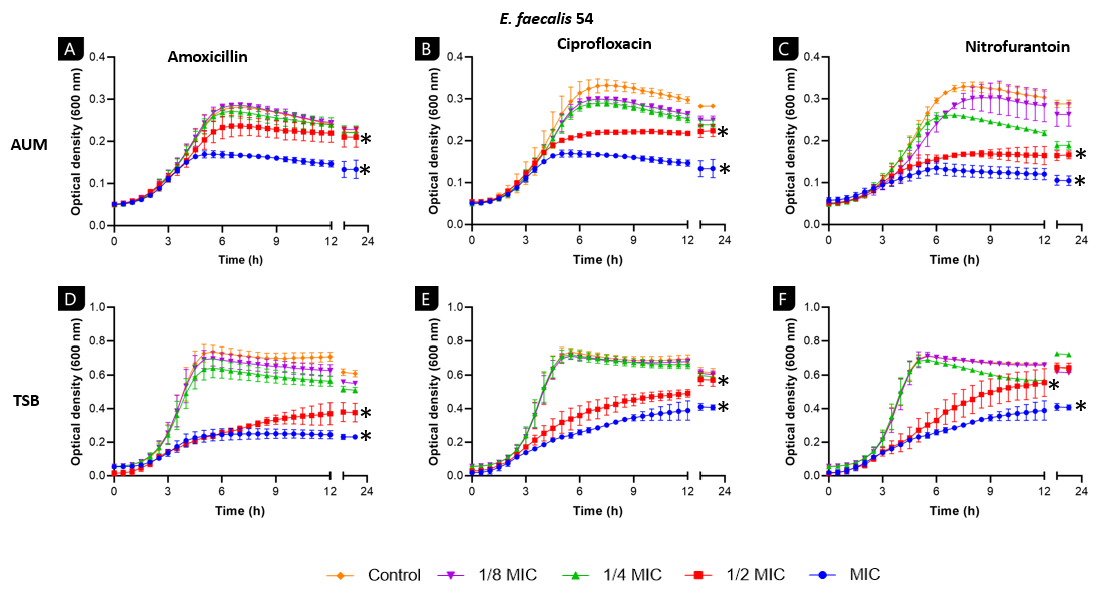
2.1. Effect of Sub-MICs of Antimicrobials on Bacterial Growth Dynamics
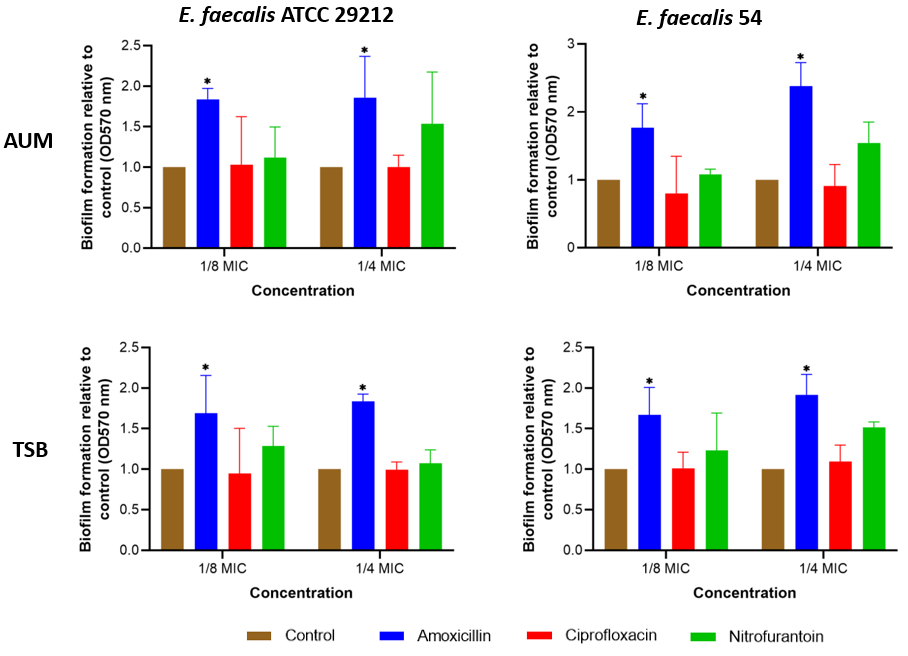
2.2. Effects of Sub-MICs of Antimicrobials on Biofilm Formation in E. faecalis
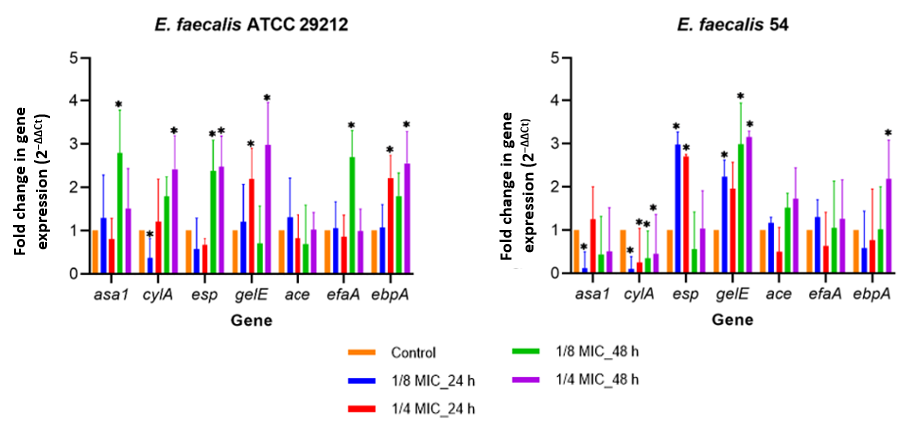
2.3. Expression of Genes Associated with Sub-MICs of Amoxicillin Exposure
3. Discussion
4. Materials and Methods
4.1. Bacterial Strains, Culture Media, and Antimicrobials
4.2. Effect of Sub-MICs of Antimicrobials on Bacterial Growth Kinetics
4.3. Effect of Sub-MICs of Antimicrobials on Biofilm Formation Under Static Conditions
4.4. Effect of Sub-MICs of Amoxicillin on Biofilm-Associated Gene Expression
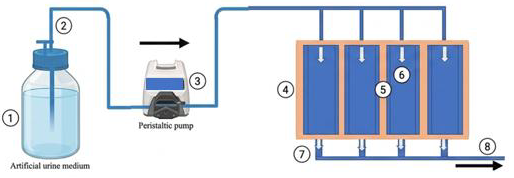
4.4.1. Biofilm Culture in a Drip-Flow Biofilm Reactor
4.4.2. RNA Isolation
4.4.3. Reverse Transcription and Quantitative Real-Time PCR
4.5. Statistical Analysis
5. Conclusions
Supplementary Materials
Author Contributions
Funding
Institutional Review Board Statement
Informed Consent Statement
Data Availability Statement
Conflicts of Interest
References
- Nicolle, L.E. Catheter associated urinary tract infections. Antimicrob. Resist. Infect. Control 2014, 3, 23. [Google Scholar] [CrossRef] [PubMed]
- Cox, L.; Drerup, J.; Prickett, M. Urinary Tract Infection (UTI) Prevention in Patients with Chronic Indwelling Catheters. Curr. Bladder Dysfunct. Rep. 2024, 19, 317–323. [Google Scholar] [CrossRef]
- So, B.; Kim, J.; Jo, J.K.; So, H. Recent developments in preventing catheter-related infections based on biofilms: A comprehensive review. Biomicrofluidics 2024, 18, 051506. [Google Scholar] [CrossRef] [PubMed]
- Arias, C.A.; Murray, B.E. The rise of the Enterococcus: Beyond vancomycin resistance. Nat. Rev. Microbiol. 2012, 10, 266–278. [Google Scholar] [CrossRef]
- Hollenbeck, B.L.; Rice, L.B. Intrinsic and acquired resistance mechanisms in enterococcus. Virulence 2012, 3, 421–569. [Google Scholar] [CrossRef]
- Hidron, A.I.; Edwards, J.R.; Patel, J.; Horan, T.C.; Sievert, D.M.; Pollock, D.A.; Fridkin, S.K. Antimicrobial-resistant pathogens associated with healthcare-associated infections: Annual summary of data reported to the National Healthcare Safety Network at the Centers for Disease Control and Prevention, 2006–2007. Infect. Control Hosp. Epidemiol. 2008, 29, 996–1011. [Google Scholar] [CrossRef]
- Tibúrcio, A.A.C.M.; Paiva, A.D.; Pedrosa, A.L.; Rodrigues, W.F.; da Silva, R.B.; Oliveira, A.G. Effect of sub-inhibitory concentrations of antibiotics on biofilm formation and expression of virulence genes in penicillin-resistant, ampicillin-susceptible Enterococcus faecalis. Heliyon 2022, 8, e11154. [Google Scholar] [CrossRef]
- Goh, H.S.; Yong, M.A.; Chong, K.K.L.; Kline, K.A. Model systems for the study of Enterococcal colonization and infection. Virulence 2017, 8, 1525–1562. [Google Scholar] [CrossRef]
- Dunny, G.M.; Hancock, L.E.; Shankar, N. Enterococcal Biofilm Structure and Role in Colonization and Disease; Massachusetts Eye and Ear Infirmary: Boston, MA, USA, 2014. Available online: https://www.ncbi.nlm.nih.gov/books/NBK190433 (accessed on 26 April 2026). [PubMed]
- Tamrat, E.; Asmare, Z.; Geteneh, A.; Sisay, A.; Getachew, E.; Kassanew, B.; Dessale, M.; Gashaw, Y.; Jemal, A.; Gashaw, M. The global prevalence of biofilm-forming Enterococcus faecalis in clinical isolates: A systematic review and meta-analysis. BMC Infect. Dis. 2025, 25, 981. [Google Scholar] [CrossRef] [PubMed]
- Colaco, A.S. Extreme resistance of Enterococcus faecalis and its role in endodontic treatment failure. Prog. Med. Sci. 2018, 2, 9–13. [Google Scholar] [CrossRef]
- Sava, I.G.; Heikens, E.; Huebner, J. Pathogenesis and immunity in enterococcal infections. Clin. Microbiol. Infect. 2010, 16, 533–540. [Google Scholar] [CrossRef] [PubMed]
- Pugazhendhi, A.S.; Wei, F.; Hughes, M.; Coathup, M. Bacterial adhesion, virulence, and biofilm formation. In Musculoskeletal Infection; Springer: Berlin/Heidelberg, Germany, 2022; pp. 19–64. [Google Scholar] [CrossRef]
- Sadanandan, B.; Yogendraiah, K.M. Enterococcus faecalis biofilm: A clinical and environmental hazard. Med. Sci. Forum 2025, 35, 5. [Google Scholar] [CrossRef]
- Flemming, H.-C.; van Hullebusch, E.D.; Neu, T.R.; Nielsen, P.H.; Seviour, T.; Stoodley, P.; Wingender, J.; Wuertz, S. The biofilm matrix: Multitasking in a shared space. Nat. Rev. Microbiol. 2023, 21, 70–86. [Google Scholar] [CrossRef]
- Ramos, S.; Silva, V.; Dapkevicius, M.d.L.E.; Igrejas, G.; Poeta, P. Enterococci, from harmless bacteria to a pathogen. Microorganisms 2020, 8, 1118. [Google Scholar] [CrossRef]
- Garsin, D.A.; Frank, K.L.; Silanpää, J.; Ausubel, F.M.; Hartke, A.; Shankar, N.; Murray, B.E. Pathogenesis and models of enterococcal infection. In Enterococci: From Commensals to Leading Causes of Drug-Resistant Infection [Internet]; Massachusetts Eye and Ear Infirmary: Boston, MA, USA, 2014. Available online: https://www.ncbi.nlm.nih.gov/sites/books/NBK190426/ (accessed on 3 February 2026).
- Sillanpaa, J.; Nallapareddy, S.R.; Houston, J.; Ganesh, V.K.; Bourgogne, A.; Singh, K.V.; Murray, B.E.; Hook, M. A family of fibrinogen-binding MSCRAMMs from Enterococcus faecalis. Microbiology 2009, 155, 2390–2400. [Google Scholar] [CrossRef]
- Khatoon, Z.; McTiernan, C.D.; Suuronen, E.J.; Mah, T.-F.; Alarcon, E.I. Bacterial biofilm formation on implantable devices and approaches to its treatment and prevention. Heliyon 2018, 4, e01067. [Google Scholar] [CrossRef]
- Rumbaugh, K.P.; Sauer, K. Biofilm dispersion. Nat. Rev. Microbiol. 2020, 18, 571–586. [Google Scholar] [CrossRef]
- Amankwah, S.; Abdella, K.; Kassa, T. Bacterial biofilm destruction: A focused review on the recent use of phage-based strategies with other antibiofilm agents. Nanotechnol. Sci. Appl. 2021, 14, 161–177. [Google Scholar] [CrossRef]
- Gupta, K.; Hooton, T.M.; Naber, K.G.; Wullt, B.; Colgan, R.; Miller, L.G.; Moran, G.J.; Nicolle, L.E.; Raz, R.; Schaeffer, A.J. International clinical practice guidelines for the treatment of acute uncomplicated cystitis and pyelonephritis in women: A 2010 update by the Infectious Diseases Society of America and the European Society for Microbiology and Infectious Diseases. Clin. Infect. Dis. 2011, 52, e103–e120. [Google Scholar] [CrossRef] [PubMed]
- Kaur, R.; Singh, V.K.S.H.; Sehgal, A. Evaluation of efficacy and tolerability of nitrofurantoin versus ciprofloxacin in patients of urinary tract infection: A comparative study. Int. J. Basic Clin. Pharmacol. 2017, 6, 2690. [Google Scholar] [CrossRef][Green Version]
- Odenholt, I.; Gustafsson, I.; Löwdin, E.; Cars, O. Suboptimal antibiotic dosage as a risk factor for selection of penicillin-resistant Streptococcus pneumoniae: In vitro kinetic model. Antimicrob. Agents Chemother. 2003, 47, 518–523. [Google Scholar] [CrossRef]
- Kubicek-Sutherland, J.Z.; Heithoff, D.M.; Ersoy, S.C.; Shimp, W.R.; House, J.K.; Marth, J.D.; Smith, J.W.; Mahan, M.J. Host-dependent induction of transient antibiotic resistance: A prelude to treatment failure. EBioMedicine 2015, 2, 1169–1178. [Google Scholar] [CrossRef]
- Kaplan, J.B. Antibiotic-induced biofilm formation. Int. J. Artif. Organs 2011, 34, 737–751. [Google Scholar] [CrossRef]
- Hoffman, L.R.; D’Argenio, D.A.; MacCoss, M.J.; Zhang, Z.; Jones, R.A.; Miller, S.I. Aminoglycoside antibiotics induce bacterial biofilm formation. Nature 2005, 436, 1171–1175. [Google Scholar] [CrossRef]
- Andersson, D.I.; Hughes, D. Microbiological effects of sublethal levels of antibiotics. Nat. Rev. Microbiol. 2014, 12, 465–478. [Google Scholar] [CrossRef] [PubMed]
- Suleman, L.; Archer, D.; Cochrane, C.A.; Percival, S.L. Healthcare-associated infections and biofilms. In Biofilms in Infection Prevention and Control; Elsevier: Amsterdam, The Netherlands, 2014; pp. 165–184. [Google Scholar] [CrossRef]
- Tegegne, D.T.; Abbott, I.J.; Poźniak, B. Catheter-Associated Urinary Tract Infections: Understanding the Interplay Between Bacterial Biofilm and Antimicrobial Resistance. Int. J. Mol. Sci. 2025, 26, 9193. [Google Scholar] [CrossRef] [PubMed]
- Mohamed, J.A.; Huang, D.B. Biofilm formation by enterococci. J. Med. Microbiol. 2007, 56, 1581–1588. [Google Scholar] [CrossRef]
- Vestby, L.K.; Grønseth, T.; Simm, R.; Nesse, L.L. Bacterial biofilm and its role in the pathogenesis of disease. Antibiotics 2020, 9, 59. [Google Scholar] [CrossRef] [PubMed]
- Srivastava, S.; Bhargava, A. Biofilms and human health. Biotechnol. Lett. 2016, 38, 1–22. [Google Scholar] [CrossRef]
- Wang, D.; Wang, L.; Liu, Q.; Zhao, Y. Virulence factors in biofilm formation and therapeutic strategies for Staphylococcus aureus: A review. Anim. Zoonoses 2025, 1, 188–202. [Google Scholar] [CrossRef]
- Flemming, H.-C.; Wingender, J. The biofilm matrix. Nat. Rev. Microbiol. 2010, 8, 623–633. [Google Scholar] [CrossRef]
- Hall-Stoodley, L.; Costerton, J.W.; Stoodley, P. Bacterial biofilms: From the natural environment to infectious diseases. Nat. Rev. Microbiol. 2004, 2, 95–108. [Google Scholar] [CrossRef]
- Yang, S.; Li, X.; Cang, W.; Mu, D.; Ji, S.; An, Y.; Wu, R.; Wu, J. Biofilm tolerance, resistance and infections increasing threat of public health. Microb. Cell 2023, 10, 233. [Google Scholar] [CrossRef] [PubMed]
- Prestinaci, F.; Pezzotti, P.; Pantosti, A. Antimicrobial resistance: A global multifaceted phenomenon. Pathog. Glob. Health 2015, 109, 309–318. [Google Scholar] [CrossRef]
- Bernardi, S.; Anderson, A.; Macchiarelli, G.; Hellwig, E.; Cieplik, F.; Vach, K.; Al-Ahmad, A. Subinhibitory antibiotic concentrations enhance biofilm formation of clinical Enterococcus faecalis isolates. Antibiotics 2021, 10, 874. [Google Scholar] [CrossRef]
- Aka, S.T.; Haji, S.H. Sub-MIC of antibiotics induced biofilm formation of Pseudomonas aeruginosa in the presence of chlorhexidine. Braz. J. Microbiol. 2015, 46, 149–154. [Google Scholar] [CrossRef]
- Tsai, S.-H.; Lai, H.-C.; Hu, S.-T. Subinhibitory doses of aminoglycoside antibiotics induce changes in the phenotype of Mycobacterium abscessus. Antimicrob. Agents Chemother. 2015, 59, 6161–6169. [Google Scholar] [CrossRef]
- Hathroubi, S.; Mekni, M.A.; Domenico, P.; Nguyen, D.; Jacques, M. Biofilms: Microbial shelters against antibiotics. Microb. Drug Resist. 2017, 23, 147–156. [Google Scholar] [CrossRef] [PubMed]
- Craig, W.A. Pharmacokinetic/pharmacodynamic parameters: Rationale for antibacterial dosing of mice and men. Clin. Infect. Dis. 1998, 26, 1–10. [Google Scholar] [CrossRef] [PubMed]
- Davies, J.; Spiegelman, G.B.; Yim, G. The world of subinhibitory antibiotic concentrations. Curr. Opin. Microbiol. 2006, 9, 445–453. [Google Scholar] [CrossRef]
- Ranieri, M.R.; Whitchurch, C.B.; Burrows, L.L. Mechanisms of biofilm stimulation by subinhibitory concentrations of antimicrobials. Curr. Opin. Microbiol. 2018, 45, 164–169. [Google Scholar] [CrossRef] [PubMed]
- Drlica, K.; Zhao, X. DNA gyrase, topoisomerase IV, and the 4-quinolones. Microbiol. Mol. Biol. Rev. 1997, 61, 377–392. [Google Scholar] [CrossRef]
- Toledo-Arana, A.; Valle, J.; Solano, C.; Arrizubieta, M.a.J.s.; Cucarella, C.; Lamata, M.; Amorena, B.; Leiva, J.; Penadés, J.R.; Lasa, I.i. The enterococcal surface protein, Esp, is involved in Enterococcus faecalis biofilm formation. Appl. Environ. Microbiol. 2001, 67, 4538–4545. [Google Scholar] [CrossRef]
- Jett, B.D.; Huycke, M.M.; Gilmore, M.S. Virulence of enterococci. Clin. Microbiol. Rev. 1994, 7, 462–478. [Google Scholar] [CrossRef]
- Singh, K.V.; Nallapareddy, S.R.; Sillanpää, J.; Murray, B.E. Importance of the collagen adhesin ace in pathogenesis and protection against Enterococcus faecalis experimental endocarditis. PLoS Pathog. 2010, 6, e1000716. [Google Scholar] [CrossRef]
- Montealegre, M.C.; La Rosa, S.L.; Roh, J.H.; Harvey, B.R.; Murray, B.E. The Enterococcus faecalis EbpA pilus protein: Attenuation of expression, biofilm formation, and adherence to fibrinogen start with the rare initiation codon ATT. mBio 2015, 6, 10–1128. [Google Scholar] [CrossRef]
- Nallapareddy, S.R.; Singh, K.V.; Sillanpää, J.; Garsin, D.A.; Höök, M.; Erlandsen, S.L.; Murray, B.E. Endocarditis and biofilm-associated pili of Enterococcus faecalis. J. Clin. Investig. 2006, 116, 2799–2807. [Google Scholar] [CrossRef]
- Coburn, P.S.; Gilmore, M.S. The Enterococcus faecalis cytolysin: A novel toxin active against eukaryotic and prokaryotic cells. Cell. Microbiol. 2003, 5, 661–669. [Google Scholar] [CrossRef] [PubMed]
- Rich, R.L.; Kreikemeyer, B.; Owens, R.T.; LaBrenz, S.; Narayana, S.V.; Weinstock, G.M.; Murray, B.E.; Höök, M. Ace is a collagen-binding MSCRAMM from Enterococcus faecalis. J. Biol. Chem. 1999, 274, 26939–26945. [Google Scholar] [CrossRef] [PubMed]
- Coburn, P.S.; Pillar, C.M.; Jett, B.D.; Haas, W.; Gilmore, M.S. Enterococcus faecalis senses target cells and in response expresses cytolysin. Science 2004, 306, 2270–2272. [Google Scholar] [CrossRef]
- Haas, W.; Shepard, B.D.; Gilmore, M.S. Two-component regulator of Enterococcus faecalis cytolysin responds to quorum-sensing autoinduction. Nature 2002, 415, 84–87. [Google Scholar] [CrossRef]
- Shankar, N.; Lockatell, C.V.; Baghdayan, A.S.; Drachenberg, C.; Gilmore, M.S.; Johnson, D.E. Role of Enterococcus faecalis surface protein Esp in the pathogenesis of ascending urinary tract infection. Infect. Immun. 2001, 69, 4366–4372. [Google Scholar] [CrossRef] [PubMed]
- Vankerckhoven, V.; Van Autgaerden, T.; Vael, C.; Lammens, C.; Chapelle, S.; Rossi, R.; Jabes, D.; Goossens, H. Development of a multiplex PCR for the detection of asa1, gelE, cylA, esp, and hyl genes in enterococci and survey for virulence determinants among European hospital isolates of Enterococcus faecium. J. Clin. Microbiol. 2004, 42, 4473–4479. [Google Scholar] [CrossRef]
- Clewell, D.B.; Weaver, K.E.; Dunny, G.M.; Coque, T.M.; Francia, M.V.; Hayes, F. Extrachromosomal and mobile elements in enterococci: Transmission, maintenance, and epidemiology. In Enterococci: From Commensals to Leading Causes of Drug-Resistant Infection [Internet]; Massachusetts Eye and Ear Infirmary: Boston, MA, USA, 2014. Available online: https://www.ncbi.nlm.nih.gov/books/NBK190430/ (accessed on 7 March 2026).
- Valle, J.; Da Re, S.; Henry, N.; Fontaine, T.; Balestrino, D.; Latour-Lambert, P.; Ghigo, J.-M. Broad-spectrum biofilm inhibition by a secreted bacterial polysaccharide. Proc. Natl. Acad. Sci. USA 2006, 103, 12558–12563. [Google Scholar] [CrossRef]
- Nzakizwanayo, J.; Pelling, H.; Milo, S.; Jones, B.V. An in vitro bladder model for studying catheter-associated urinary tract infection and associated analysis of biofilms. In Proteus mirabilis: Methods and Protocols; Springer: Berlin/Heidelberg, Germany, 2019; pp. 139–158. [Google Scholar] [CrossRef]
- Oleksy-Wawrzyniak, M.; Junka, A.; Brożyna, M.; Paweł, M.; Kwiek, B.; Nowak, M.; Mączyńska, B.; Bartoszewicz, M. The in vitro ability of Klebsiella pneumoniae to form biofilm and the potential of various compounds to eradicate it from urinary catheters. Pathogens 2021, 11, 42. [Google Scholar] [CrossRef]
- Geerlings, S.E. Urinary tract infections in patients with diabetes mellitus: Epidemiology, pathogenesis and treatment. Int. J. Antimicrob. Agents 2008, 31, 54–57. [Google Scholar] [CrossRef] [PubMed]
- Geerlings, S.E.; Brouwer, E.C.; Gaastra, W.; Verhoef, J.; Hoepelman, A.I. Effect of glucose and pH on uropathogenic and non-uropathogenic Escherichia coli: Studies with urine from diabetic and non-diabetic individuals. J. Med. Microbiol. 1999, 48, 535–539. [Google Scholar] [CrossRef]
- Humphries, R.M.; Ambler, J.; Mitchell, S.L.; Castanheira, M.; Dingle, T.; Hindler, J.A.; Koeth, L.; Sei, K. CLSI methods development and standardization working group best practices for evaluation of antimicrobial susceptibility tests. J. Clin. Microbiol. 2018, 56, 10–1128. [Google Scholar] [CrossRef]
- Campbell, J. High-throughput assessment of bacterial growth inhibition by optical density measurements. Curr. Protoc. Chem. Biol. 2010, 2, 195–208. [Google Scholar] [CrossRef]
- Mirzaei, R.; Yousefimashouf, R.; Arabestani, M.R.; Sedighi, I.; Alikhani, M.Y. The issue beyond resistance: Methicillin-resistant Staphylococcus epidermidis biofilm formation is induced by subinhibitory concentrations of cloxacillin, cefazolin, and clindamycin. PLoS ONE 2022, 17, e0277287. [Google Scholar] [CrossRef] [PubMed]
- Stepanović, S.; Vuković, D.; Dakić, I.; Savić, B.; Švabić-Vlahović, M. A modified microtiter-plate test for quantification of staphylococcal biofilm formation. J. Microbiol. Methods 2000, 40, 175–179. [Google Scholar] [CrossRef]
- O’Toole, G.A. Microtiter dish biofilm formation assay. J. Vis. Exp. JoVE 2011, 47, 2437. [Google Scholar] [CrossRef]
- Goeres, D.M.; Hamilton, M.A.; Beck, N.A.; Buckingham-Meyer, K.; Hilyard, J.D.; Loetterle, L.R.; Lorenz, L.A.; Walker, D.K.; Stewart, P.S. A method for growing a biofilm under low shear at the air–liquid interface using the drip flow biofilm reactor. Nat. Protoc. 2009, 4, 783–788. [Google Scholar] [CrossRef] [PubMed]
- Jordan, R.P.; Malic, S.; Waters, M.G.J.; Stickler, D.J.; Williams, D.W. Development of an antimicrobial urinary catheter to inhibit urinary catheter encrustation. Microbiol. Discov. 2015, 3, 1. [Google Scholar] [CrossRef][Green Version]
- Parga, A.; Manoil, D.; Brundin, M.; Otero, A.; Belibasakis, G.N. Gram-negative quorum sensing signalling enhances biofilm formation and virulence traits in gram-positive pathogen Enterococcus faecalis. J. Oral Microbiol. 2023, 15, 2208901. [Google Scholar] [CrossRef]
- Zheng, J.-x.; Bai, B.; Lin, Z.-w.; Pu, Z.-y.; Yao, W.-m.; Chen, Z.; Li, D.-y.; Deng, X.-b.; Deng, Q.-w.; Yu, Z.-j. Characterization of biofilm formation by Enterococcus faecalis isolates derived from urinary tract infections in China. J. Med. Microbiol. 2018, 67, 60–67. [Google Scholar] [CrossRef] [PubMed]
- Bustin, S.A.; Beaulieu, J.-F.; Huggett, J.; Jaggi, R.; Kibenge, F.S.; Olsvik, P.A.; Penning, L.C.; Toegel, S. MIQE precis: Practical implementation of minimum standard guidelines for fluorescence-based quantitative real-time PCR experiments. BMC Mol. Biol. 2010, 11, 74. [Google Scholar] [CrossRef]
- Wang, X.; Wang, S.; Yuan, L.; Liang, Z.; Zhang, X.; Lin, D.; Hu, X. Influence of adhesion force on croRS gene expression and antibiotic resistance of Enterococcus faecalis. J. Biomed. Mater. Res. Part A 2024, 112, 44–52. [Google Scholar] [CrossRef]
- Livak, K.J.; Schmittgen, T.D. Analysis of relative gene expression data using real-time quantitative PCR and the 2− ΔΔCT method. Methods 2001, 25, 402–408. [Google Scholar] [CrossRef]
- Maues, J.H.d.S.; Ribeiro, H.F.; Pinto, G.R.; Lopes, L.d.O.; Lamarao, L.M.; Pessoa, C.M.F.; Moreira-Nunes, C.d.F.A.; Carvalho, R.M.d.; Assumpcao, P.P.; Rey, J.A. Gastric Cancer Cell Lines Have Different MYC-Regulated Expression Patterns but Share a Common Core of Altered Genes. Can. J. Gastroenterol. Hepatol. 2018, 2018, 5804376. [Google Scholar] [CrossRef]




| Gene | Encoded Product | Primers Sequence (5′→3′) | Amplicon Size (bp) | References |
|---|---|---|---|---|
| 16S rRNA | 16S ribosomal RNA | 16SF: GTGAGGTAACGGCTCACCAAG 16SR: TGTCTCAGTCCCAGTGTGGC | 76 | This study |
| asa1 | Aggregation substance protein | asaF: AAACACCCGCTACACCAGAA asaR: GGCGTAGCATCTGTTGGGAT | 70 | This study |
| gelE | Gelatinase | gelF: GCTCCGATTCCAGCAGAGTT gelR: AGTGATGCTCGTGATGCGAT | 101 | This study |
| ace | Collagen-binding adhesin E. faecalis | aceF: CGGATCGACAAGGAAGTGGT aceR: CCTTGTTGCTCAAACTCGGC | 109 | [71] |
| cylA | Cytolysin activator A | cylF: CCACTAGGCAAAGCTGCTGA cylR: AGCTGCGCTTACTTCTGGAG | 58 | [71] |
| ebpA | Endocarditis and biofilm-associated pili subunit A | ebpF: CGTTTCAGCCATTAGCCACG ebpR: CTTCACGCCAGGTGCTTTTC | 74 | [71] |
| efaA | E. faecalis antigen A | efaF: CCGTTACCAGAAGACATTGCG efaR: TAAACCAGCCATTTCCGCCT | 91 | [71] |
| esp | Enterococcal surface protein | espF: GCATCAGTATTAGTTGGT espR: TTCCTTGTAACACATCAC | 196 | [72] |
Disclaimer/Publisher’s Note: The statements, opinions and data contained in all publications are solely those of the individual author(s) and contributor(s) and not of MDPI and/or the editor(s). MDPI and/or the editor(s) disclaim responsibility for any injury to people or property resulting from any ideas, methods, instructions or products referred to in the content. |
© 2026 by the authors. Licensee MDPI, Basel, Switzerland. This article is an open access article distributed under the terms and conditions of the Creative Commons Attribution (CC BY) license.
Share and Cite
Tegegne, D.T.; Banaszkiewicz, S.; Bania, J.; Poźniak, B. Sub-Minimum Inhibitory Concentrations of Amoxicillin Modulate Biofilm Formation and the Expression of Biofilm-Associated Genes in Enterococcus faecalis. Molecules 2026, 31, 1986. https://doi.org/10.3390/molecules31121986
Tegegne DT, Banaszkiewicz S, Bania J, Poźniak B. Sub-Minimum Inhibitory Concentrations of Amoxicillin Modulate Biofilm Formation and the Expression of Biofilm-Associated Genes in Enterococcus faecalis. Molecules. 2026; 31(12):1986. https://doi.org/10.3390/molecules31121986
Chicago/Turabian StyleTegegne, Desiye T., Sylwia Banaszkiewicz, Jacek Bania, and Błażej Poźniak. 2026. "Sub-Minimum Inhibitory Concentrations of Amoxicillin Modulate Biofilm Formation and the Expression of Biofilm-Associated Genes in Enterococcus faecalis" Molecules 31, no. 12: 1986. https://doi.org/10.3390/molecules31121986
APA StyleTegegne, D. T., Banaszkiewicz, S., Bania, J., & Poźniak, B. (2026). Sub-Minimum Inhibitory Concentrations of Amoxicillin Modulate Biofilm Formation and the Expression of Biofilm-Associated Genes in Enterococcus faecalis. Molecules, 31(12), 1986. https://doi.org/10.3390/molecules31121986