1. Introduction
With the rapid development of the chemical industry, dyes (e.g., MB) are widely used in textile, paper, and printing industries and generate a large amount of wastewater [
1]. However, some of the untreated dye wastewater is often discharged directly or indirectly into natural water bodies for different reasons [
2], leading to water pollution and ecological damage and posing a serious threat to human health [
3].
Due to the stable molecular structure and difficult biodegradation of MB, its cumulative effect in the environment makes the efficient removal of MB an urgent problem in the field of water treatment [
4]. Among the existing MB removal methods, adsorption has attracted much attention due to its easy operation, low cost, and good regeneration performance [
5,
6]. The adsorption behaviors of MB on various adsorbents, such as activated carbon [
7,
8], mesoporous silica [
9], layered porous MgO [
10], porous geopolymer [
11], and iron oxide [
12], have been extensively studied. The results of adsorbents in terms of adsorption capacity [
13], adsorption efficiency [
14], mechanical properties, and recoverability [
15] indicate that material components, structural configurations, and synthesizing methods have an important influence on adsorption properties [
16]. But, traditional adsorbents such as clay [
17] and activated carbon [
18] generally face issues of limited capacity and slow kinetics, and they also have poor selectivity for removing MB, combined with weak affinity. In contrast, 2D materials have richer active adsorption sites, which can effectively bind to pollutant molecules, resulting in rapid adsorption, which may be better for MB [
19]. Nevertheless, the surface hydrophobicity of many 2D materials severely hinders their adsorption of aqueous-phase pollutants, necessitating chemical modifications to achieve effective dye removal [
20], and current studies on 2D materials are mainly focused on catalysis and electrochemistry. Nano-MoS
2 has attracted attention due to its excellent chemical, electronic, catalytic, optical, and mechanical properties, but, when used for heavy metal adsorption, its hydrophobicity and relatively low dispersion pose some challenges to adsorption performance [
21]. Some studies have been conducted to improve their hydrophilicity through surface modification (e.g., introduction of sulfur vacancies or metal doping), but these methods are often accompanied by complex synthesis steps or decreased material stability [
20]. Therefore, hydrophilic 2D materials are of great interest in the treatment of aqueous-phase pollutants.
SnS
2 is a layered material with broad spectral response, good dispersion, and a large specific surface area and has been widely used in gas-sensitive devices [
22], solar cells [
23], and photocatalysis [
24]. More importantly, the natural hydrophilic nature of SnS
2 may give it a unique advantage in the adsorptive removal of pollutants in the aqueous phase. The Sn–S bonding characteristics of SnS
2, along with the formation of polar sites and unsaturated bonds due to surface sulfur vacancies, endow it with significantly greater surface hydrophilicity than MoS
2. This strong hydrophilicity has important practical implications—SnS
2 can rapidly draw dye solutions into its interior via capillary action. Recent studies have demonstrated that the nanogully structure of SnS
2 can overcome conventional diffusion limitations, enabling capillary-driven enrichment of dyes, a phenomenon not observed in MoS
2 under comparable conditions. Moreover, SnS
2 surfaces can spontaneously adsorb cationic species, whereas MoS
2 generally requires surface functionalization to effectively bind cationic dyes. Notably, SnS
2 can be synthesized in various morphologies, such as nanosheets, flower-like structures, and particles, by adjusting synthesis conditions. This morphological tunability enables precise control over specific surface area, pore structure, and the density of active edge sites, all of which play a critical role in determining its adsorption performance [
25]. It has been shown that some SnS
2 exhibits excellent performance in the photocatalytic degradation of MB [
26,
27]. Meanwhile, SnS
2 exhibits higher catalytic degradation of MB when the SnS
2 become thinner [
28]. However, most current studies mainly focus on the photocatalytic efficiency of SnS
2, while few studies examine the differences in pollutants on the surfaces of different morphologies of SnS
2 before the photocatalytic reaction.
Therefore, understanding the surface interactions between varying SnS2 micro-architectures and aqueous pollutants prior to photocatalytic degradation is of critical significance. The main objective of this study is to systematically investigate the precise role of SnS2 micromorphology on its interfacial adsorption behavior toward MB. To accomplish this, three specific tasks were undertaken: (1) controlled synthesis of flake, flower-like, and granular SnS2 via a one-step hydrothermal method and their structural confirmation via XRD, SEM, and BET; (2) comprehensive evaluation of their adsorption properties through pH dependency, kinetic, isothermal, and thermodynamic experiments; and (3) atomic-level elucidation of the adsorption mechanisms utilizing FT-IR spectroscopy and density functional theory (DFT) calculations. By explicitly linking macroscopic adsorption capacities with specific surface areas and ab initio interaction energies of different crystal facets, this work provides empirical and theoretical insights essential for the targeted design of high-performance SnS2-based environmental materials.
2. Experiment
2.1. Materials and Reagents
Stannic chloride pentahydrate (SnCl4·5H2O), thiourea (CH4N2S), oleylamine (C18H37NH2), solvents (deionized water, ethanol), methylene blue (MB), sodium hydroxide (NaOH), and hydrochloric acid (HCl) were purchased from Sinopharm Chemical Reagent Co., Ltd. (Shanghai, China). Ultrapure water with a resistivity of 18.2 M Ω·cm (prepared using a Millipore Super Q system, Burlington, MA, USA) was used throughout the experiments. All solutions were prepared with ultrapure water as the solvent.
2.2. Synthesis of SnS2 and MB Adsorption
Flake SnS
2: 0.4 mmol of SnCl
4·5H
2O and 2 mL of oleylamine were added into 37 mL of anisole at room temperature, and the mixture was heated to 70 °C and stirred for 30 min. The reaction solution was poured into a 50 mL PTFE container, 1.0 mL of CS
2 was added, and it was placed into a steel autoclave and sealed. After heating at 180 °C for 24 h, the reaction kettle was removed, naturally cooled to 50–60 °C, centrifuged, washed repeatedly with anhydrous ethanol, and dried under vacuum [
29].
Flower-like SnS
2: SnCl
4·5H
2O was used as the tin source, 0.701 g was weighed, thiourea was used as the sulfur source, 0.457 g was weighed, the solvent used was deionized water, 35 mL was measured, and 20 mL of Polyethylene Glycol 400 (PEG 400) with a volume fraction of 40% was added and stirred homogeneously to obtain a clarified solution. The solution was placed in a 100 mL hydrothermal kettle liner and kept warm at 180 °C in an electrothermal thermostat for 15 h and then naturally cooled to room temperature. The sample was washed with deionized water and alcohol three times and finally dried at 60 °C for 12 h in a vacuum chamber [
30].
Granular SnS
2: 1.75 g of SnCl
4·5H
2O and 1.5 g of thiourea were sequentially weighed and added to 35 mL of deionized water; after stirring to make it fully mixed, the resulting solution was transferred to a stainless steel reactor with a volume of 50 mL lined with PTFE, the volume was filled to 70%, and the reaction was hydrothermal at 160 °C for 8 h. After the reaction, the reactor was cooled to room temperature, and the yellow precipitate was washed through centrifugation repeatedly and dried under vacuum at 70 °C for 5 h. The reaction was carried out in a stainless steel reactor lined with PTFE [
31].
2.3. MB Adsorption Experiment
In a typical adsorption experiment, MB concentration 10 mg/L, MB volume 50 mL, stirring speed 600 r/min, adsorbent dosage 25 mg, pH 7, adsorption time 480 min, and 2 mL of the solution was taken at certain intervals between adsorptions, filtered through 0.22 μm filter membrane, and the concentration was tested in a spectrophotometer. The adsorption of SnS
2 on MB was calculated according to Equation (1).
In the equation, q is the adsorbed amount at adsorption equilibrium, mg/g; C0 is the initial concentration of MB solution, mg/L; Ce is the concentration of MB solution at equilibrium time, mg/L; m is the amount of SnS2, g; and V is the volume of MB solution, L. The adsorption equilibrium is the time of adsorption equilibrium.
2.4. Characterization Methods
A UV-vis spectrophotometer was used to monitor the adsorption effect of the samples on MB. The crystalline structures of the samples were examined using an X-ray diffractometer (XRD, D8 Advance, Bruker, Billerica, MA, USA). The morphologies were observed with a scanning electron microscope (SEM, Ultra Plus, Zeiss, Jena, Germany). Specific surface areas and pore structures were determined by a surface area and porosity analyzer (BET, TriStar II Plus, Micromeritics, Norcross, GA, USA). The functional groups on the SnS2 after MB adsorption were analyzed by Fourier transform infrared spectroscopy (FTIR, [Nicolet iS50, Thermo Fisher Scientific, Waltham, MA, USA]). The adsorption of MB was monitored using a UV–vis spectrophotometer ([UV-2600, Shimadzu, Kyoto, Japan]).
2.5. DFT Parameter Settings
In order to study the adsorption of SnS2 on MB, three surface structure models of SnS2, flake, flower-like, and granular were constructed to calculate the adsorption energy of MB on the surface of SnS2. The thicknesses of SnS2 were all above 10 Å, and a vacuum layer of 15 Å was set up. During the calculation, the top 3 layers of atoms were in the relaxation state and the bottom layer was fixed. The parameters were set as follows: the truncation energy was 650 eV when the convergence accuracy of the self-consistent cycle was 1.0 × 10⁻⁶ eV/atom, the interatomic stress error was less than 0.05 GPa, the maximum interatomic displacement convergence criterion was set to 1.0 × 10⁻³ Å, the total energy convergence of the system was controlled at the criterion of 1.0 × 10⁻⁵ eV/atom, and the system reached equilibrium when the above conditions were satisfied.
3. Results and Discussions
3.1. Structure and Morphology Differences of the SnS2
The crystal structures of SnS
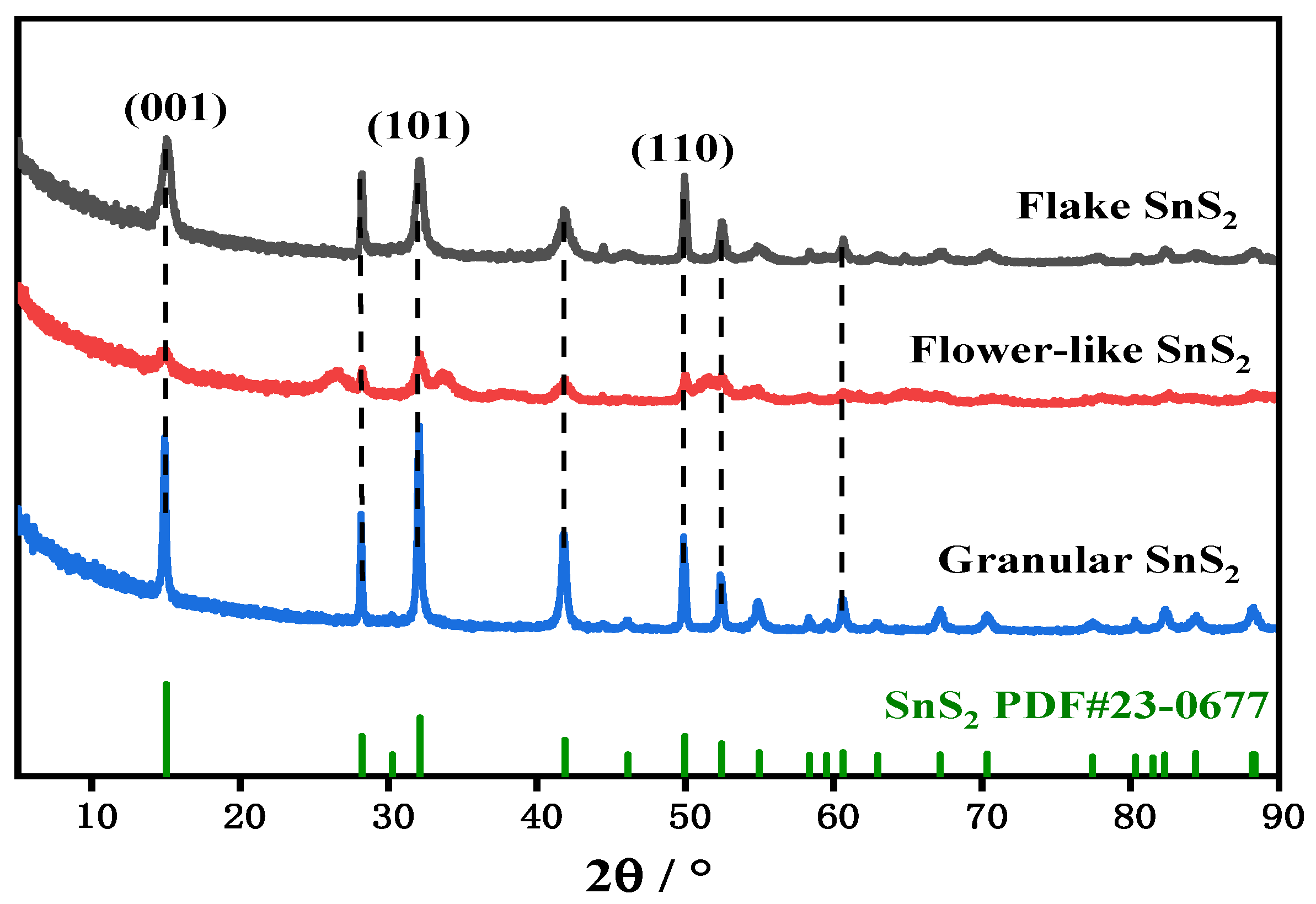
2 with different morphologies were analyzed through XRD, and the results are shown in
Figure 1. Among them, the peaks corresponding to crystal faces (001), (101), and (110) were located at 15.0°, 32.1°, and 50.0°, respectively [
32,
33]. The peaks of all samples matched exactly with the standard card (PDF#23-0677) of hexagonal crystal system SnS
2, confirming the integrity of the crystal structure; meanwhile, no impurity peaks (e.g., SnO
2 or monomorphic S) were observed, indicating that the SnS
2 was successfully prepared. Although the peaks of the three samples have similar positions on each crystal surface, the shapes of the peaks have large differences, which could be observed under the SEM.
The morphology of the three SnS
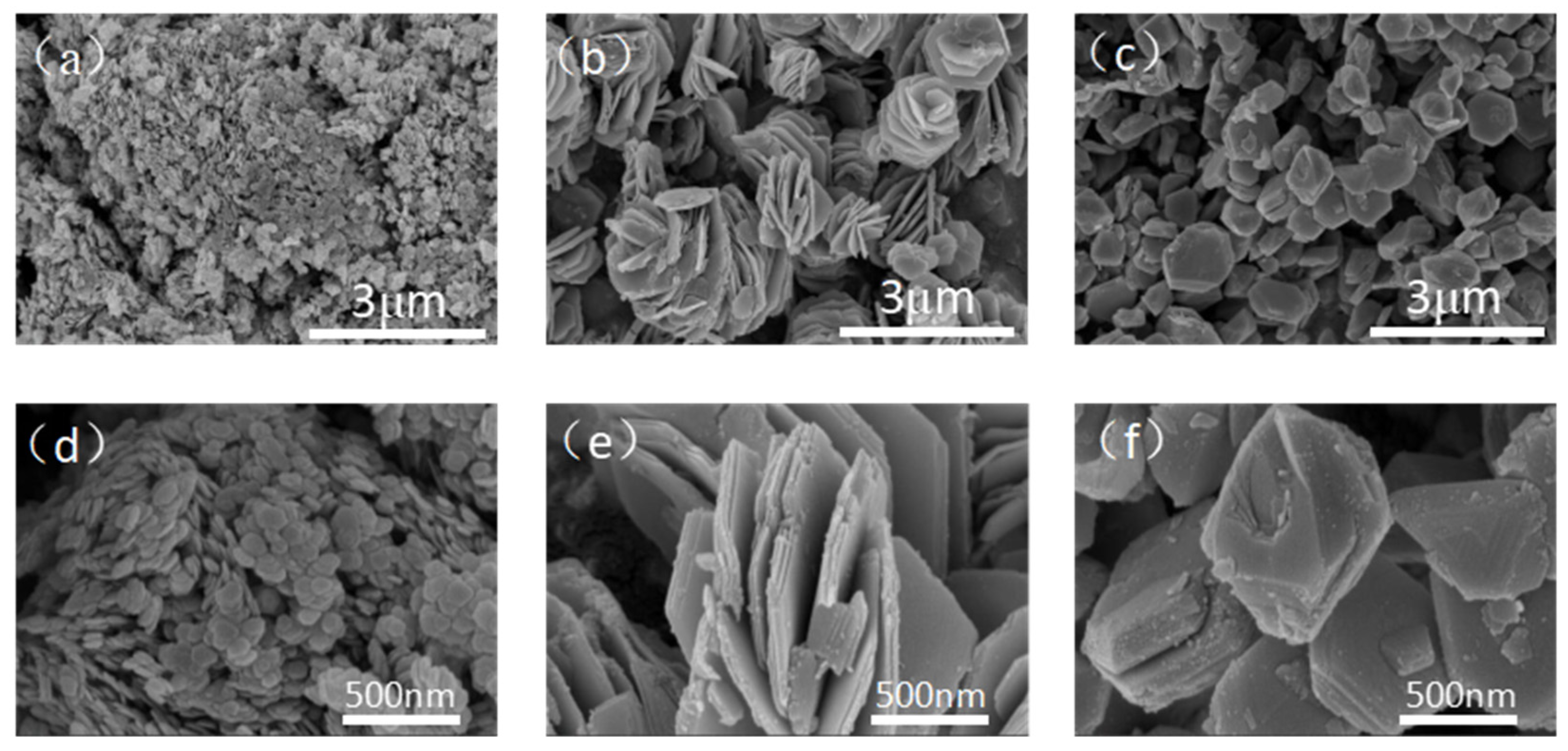
2 samples was analyzed through SEM, as shown in
Figure 2. The SnS
2 samples demonstrated pronounced distinctions in both morphological characteristics and particle dimensions. For the flake SnS
2 (
Figure 2a), it mainly showed uniform flakes with a size of about 200 nm and a thickness of about 20 nm and no tendency of agglomeration between the flakes. For the flower-like SnS
2 (
Figure 2b), it is mainly assembled by relatively thicker and larger SnS
2 flakes in an undirected manner, with relative independence flower to flower, a wide size distribution of about 1~3 μm, and a thickness of its SnS
2 flakes of about 100 nm. For granular SnS
2, the surface is very smooth and dense, the outline is sharp, and the particle size distributed at about 0.5~1 μm. From the above, it can be seen that the prepared SnS
2 samples have obvious differences in morphology and structure, and the morphology and surface area of the SnS
2 sample may have a great influence on the adsorption process of MB.
The specific surface areas and pore structures of the samples were analyzed using a surface area and porosity analyzer, and the results are summarized in
Table 1. Among the three samples, flower-like SnS
2 exhibited the highest specific surface area of 31.70 m
2/g, indicating the presence of abundant exposed active sites and hierarchical porous structures. Such characteristics are favorable for adsorption processes and can effectively enhance the interaction between adsorbent and adsorbate molecules. In comparison, flake SnS
2 and granular SnS
2 showed relatively lower specific surface areas of 18.45 m
2/g and 19.85 m
2/g, respectively. Although the granular structure possessed smaller particle sizes, its surface area remained lower than that of flower-like SnS
2, suggesting that the self-assembled flower-like architecture contributes more significantly to surface exposure and pore accessibility.
Furthermore, the BJH pore size distribution analysis revealed that flower-like SnS2 possessed a broader mesoporous distribution with an average pore diameter of approximately 9.70 nm. The interconnected mesoporous channels can facilitate mass transfer and provide more accessible adsorption sites for methylene blue molecules. In contrast, flake SnS2 exhibited larger pore diameters but fewer accessible pores, while granular SnS2 showed intermediate characteristics.
These results demonstrate that the morphology of SnS2 plays a crucial role in determining both specific surface area and pore structure, which subsequently influence adsorption performance.
3.2. Effect of SnS2 Morphology on the Adsorption of MB at Different pH
To investigate the effect of SnS
2 morphology on MB adsorption at different pH values, experiments were carried out under fixed conditions. At room temperature, MB solution of 10 mg/L, dosage of SnS
2 0.5 g/L, stirring speed of 600 r/min, and adsorption time of 240 min, the effect of solution pH on the MB adsorption of different SnS
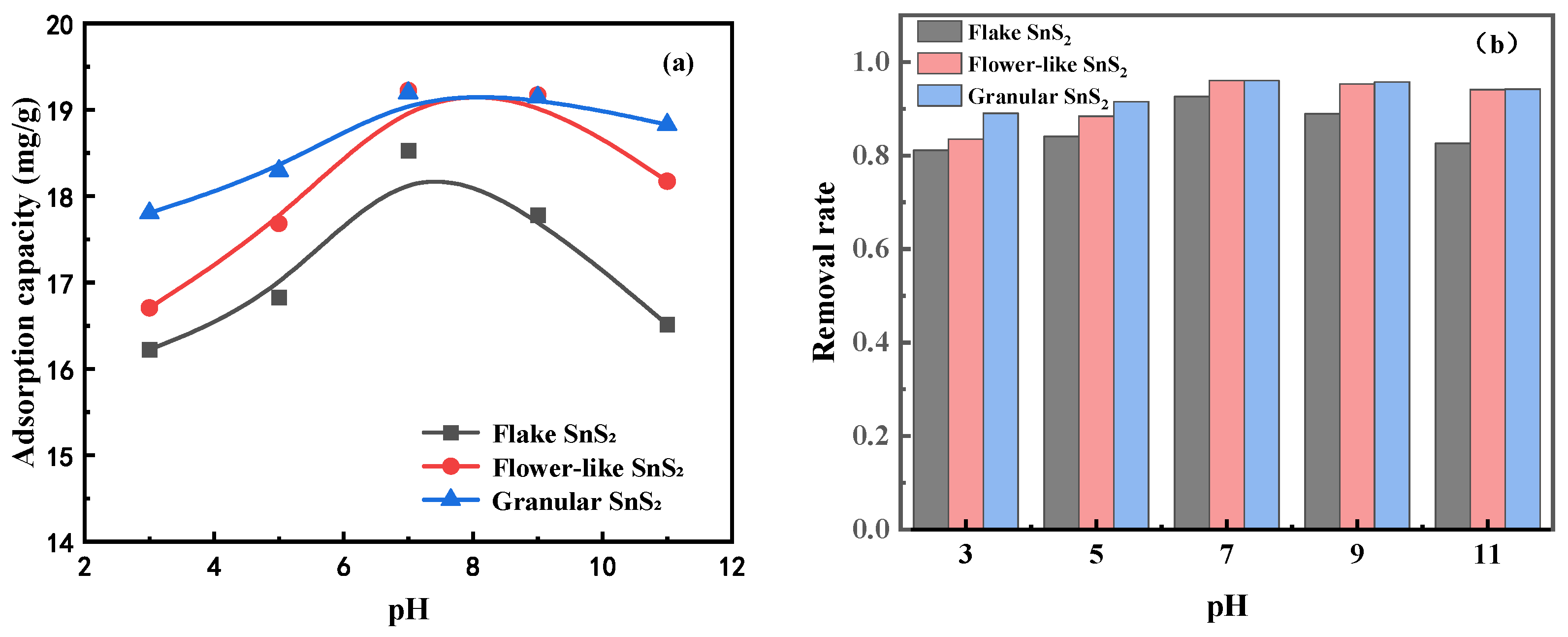
2 is shown in
Figure 3. As can be seen, the adsorption of MB on each SnS
2 at different pH values showed a similar trend; with the increase in pH, the adsorption capacity first increases and then decreases, and the adsorption amount under alkaline conditions is higher than that under acidic conditions. At pH < 7, the adsorption capacity of all SnS
2 showed an increasing trend, the adsorption capacity of granular SnS
2 was bigger than that of flower-like SnS
2, and the adsorption capacity of flake SnS
2 was the smallest. The maximum adsorption of each SnS
2 was obtained at pH = 7, with maximum adsorption of 19.2 mg/g for granular SnS
2 and 19.2 mg/g for flower-like SnS
2, for which the removal rates are 96% and 18.5 mg/g. For flake SnS
2, the removal rate is 92%. At pH > 7, every sample exhibits a decreasing trend of adsorption and removal rate. It can be seen that the morphology of SnS
2 and pH made a great difference in the effect on MB adsorption.
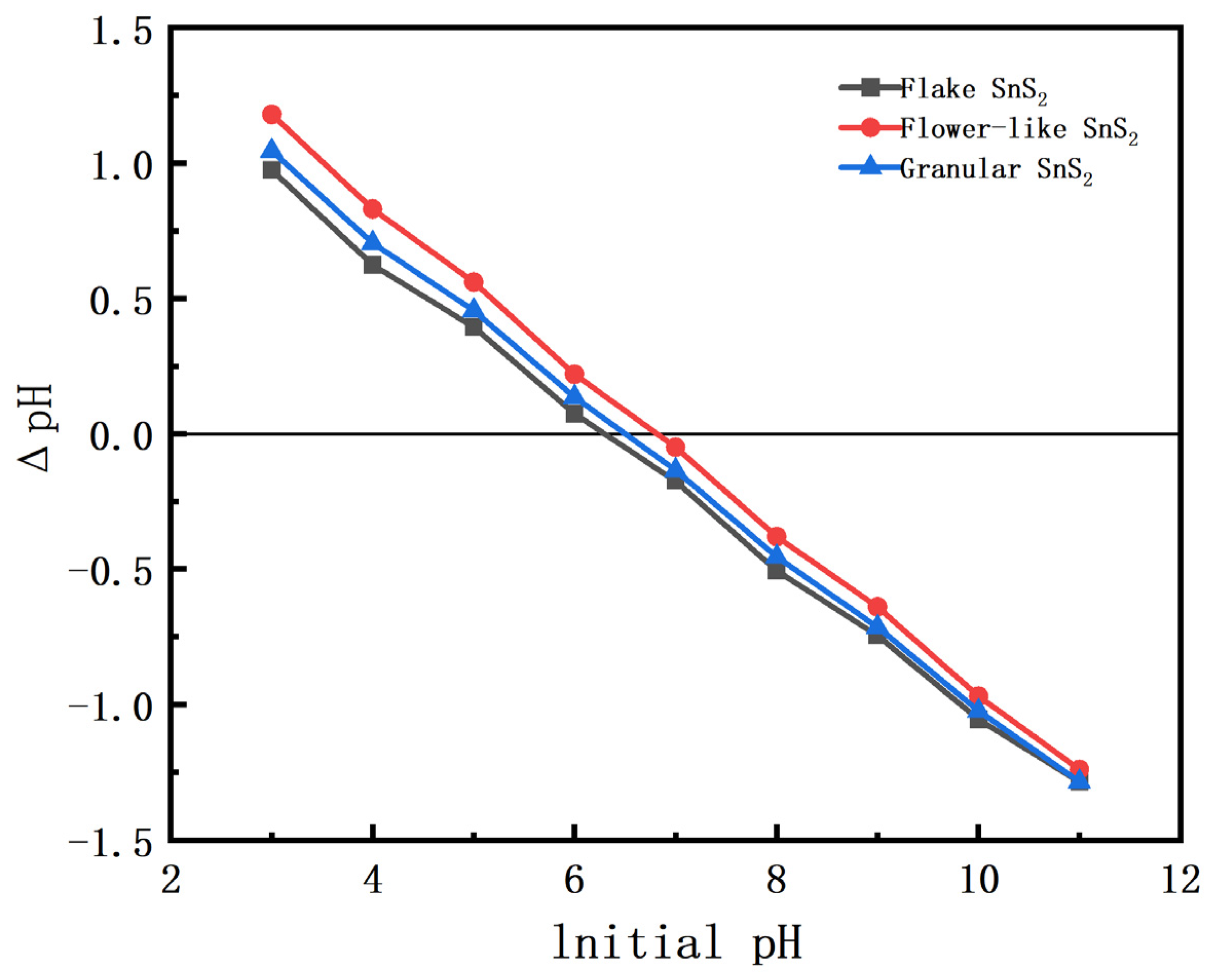
The point of zero charge (pH
pzc) of SnS
2 samples with different morphologies was determined using the pH drift method. The initial pH of the solution was adjusted from 3 to 11, and the final pH after equilibrium was recorded. As shown in
Figure 4, the pH
pzc values of flake, flower-like, and granular SnS
2 were determined to be approximately 6.3, 6.8, and 6.5, respectively. When the solution pH is higher than the pH
pzc, the surface of SnS
2 becomes negatively charged, which enhances the electrostatic attraction toward cationic methylene blue molecules. This result explains why the adsorption capacity reaches its maximum near neutral conditions (pH ≈ 7), as observed in the adsorption experiments.
3.3. Effect of SnS2 Morphology on the Adsorption Kinetics of MB
Subsequently, the effect of adsorption time on the adsorption capacity of different shapes of SnS
2 was investigated to better understand the adsorption kinetics.
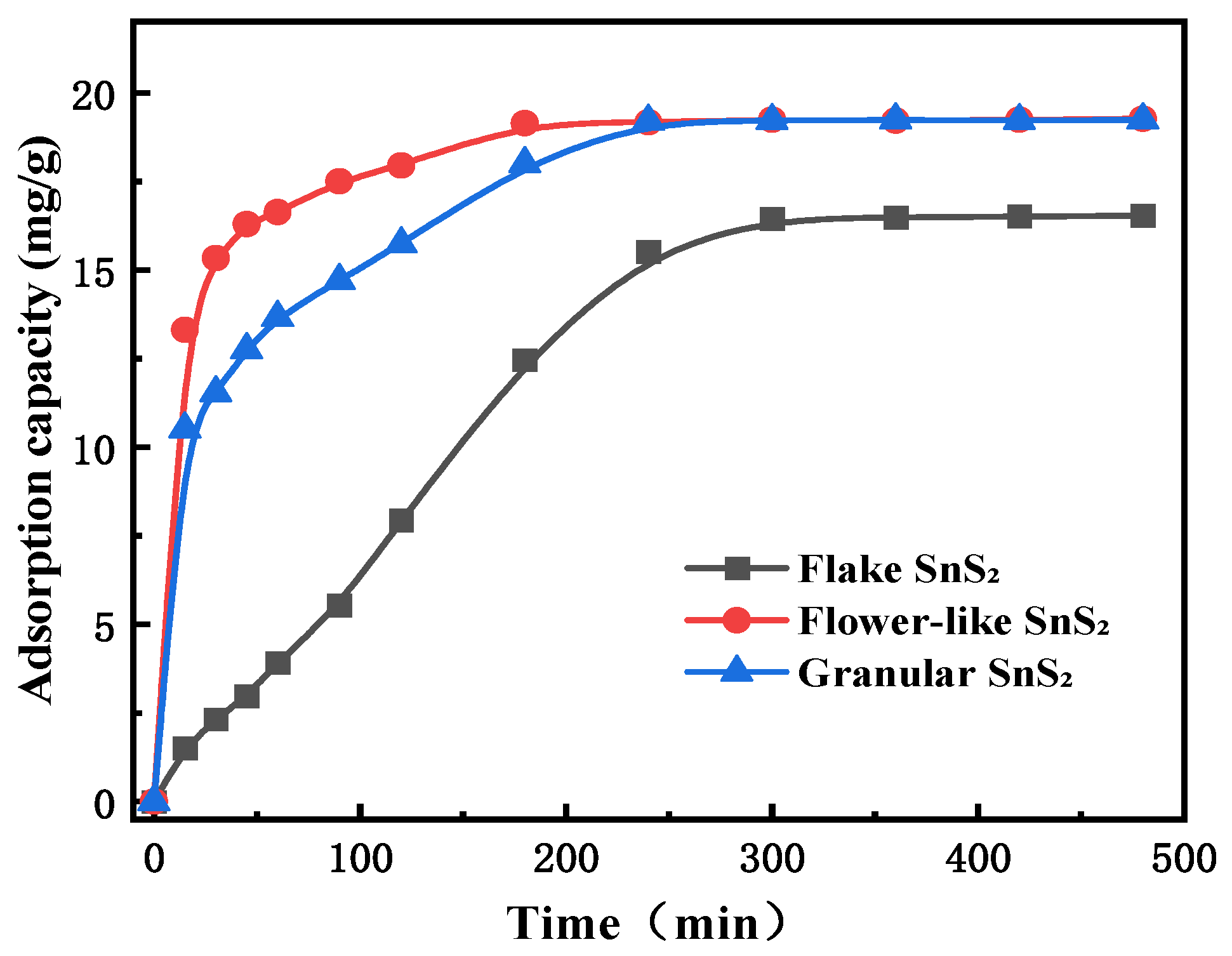
Figure 5 shows the effect of adsorption time on the adsorption capacity of different shapes of SnS
2 under the conditions of MB solution 10 mg/L, adsorbent dosage 0.5 g/L, pH 7, and stirring speed 600 r/min. It can be seen that with increasing adsorption time, the adsorption capacity of each SnS
2 showed a trend of rapid increase and then tended to equilibrium. In the first 200 min, the adsorption rate of MB on SnS
2 was flower-like SnS
2 > granular SnS
2 > flake SnS
2. For flower-like SnS
2, with the increase in time, its adsorption capacity gradually increased from 13.3 mg/g to 240 min, began to level off, and reached the maximum adsorption capacity of 19.3 mg/g at 480 min. For granular SnS
2, with the increase in time, its adsorption capacity gradually increased from 10.5 mg/g to 240 min, began to level off, and reached the maximum of 19.3 mg/g at 480 min. And, for flake SnS
2, the adsorption capacity gradually increased from 1.5 mg/g to 240 min with increasing time and then leveled off at 480 min and reached its maximum 16.5 mg/g. The adsorption capacity of granular SnS
2 was similar to that of flower-like SnS
2 in the growth period, while both were higher than that of flake SnS
2.
In order to further evaluate the adsorption of MB on the surface of SnS
2 with different morphologies, the adsorption data were fitted using the pseudo-first-order kinetic model and pseudo-second-order kinetic model, as shown in Equations (2) and (3), respectively.
In these equations, qe is the equilibrium adsorption capacity, mg·g−1; qt is the adsorption capacity at time t, mg·g−1; k1 is the rate constant fitted to the pseudo-first-order kinetic model, min−1; and k2 is the rate constant fitted to the pseudo-second-order kinetic model, g·mg−1·min−1.
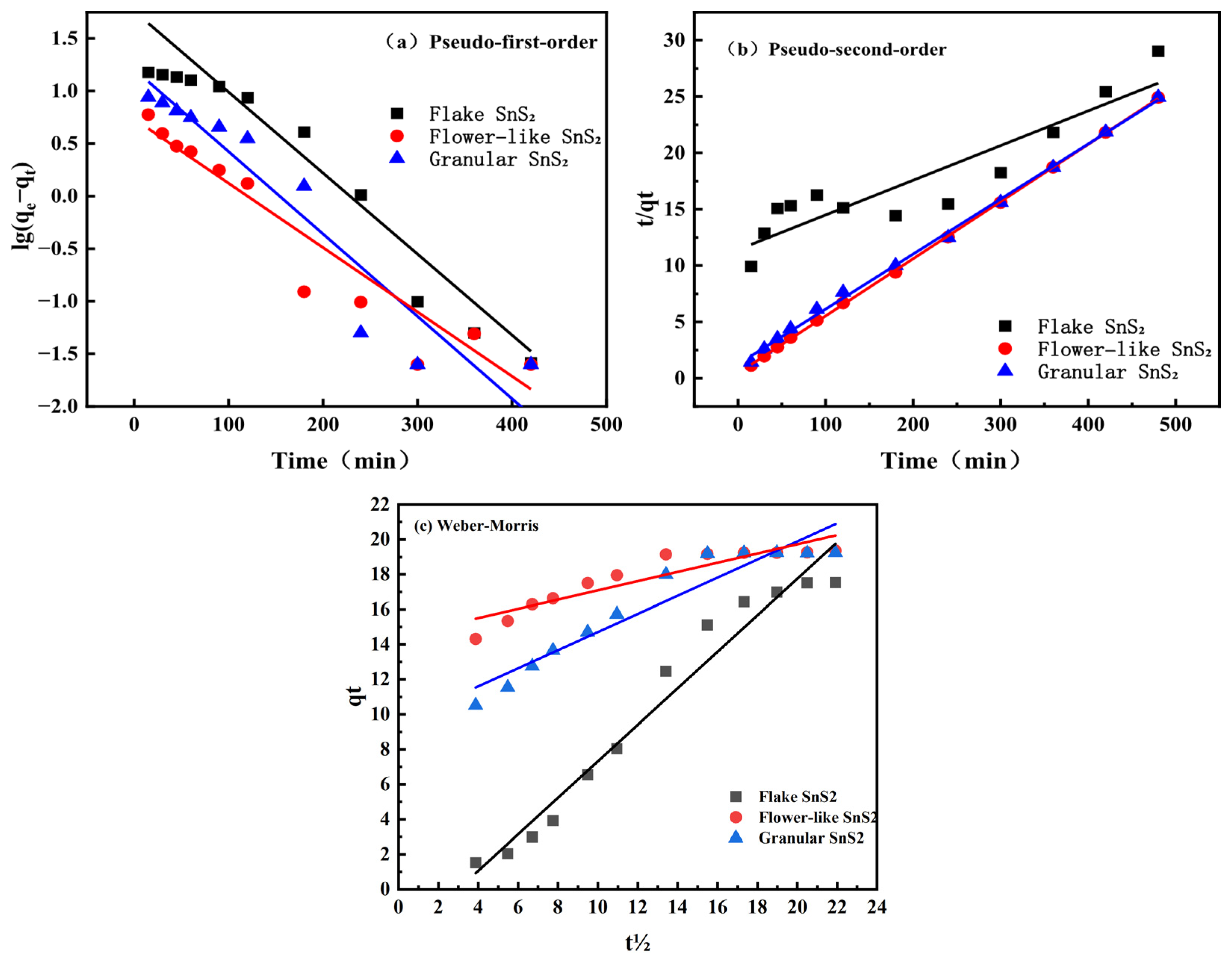
The fitting results are shown in
Figure 6 and
Table 2. From the correlation coefficients, the fitted pseudo-first-order kinetic model for the flake SnS
2 is 0.941, while the fitted pseudo-second-order kinetic model is 0.829. We fitted flake SnS
2 with the Weber–Morris model, and the fitting coefficient 0.960 and its adsorption rate slowed down, limiting intraparticle diffusion. The intraparticle diffusion model (Weber–Morris model) was applicable. The correlation coefficients of the fitted pseudo-second-order kinetic model are 0.999 for the flower-like SnS
2 and 0.998 for the granular SnS
2. The correlation coefficients of 0.999 for flower-like SnS
2 and 0.998 for granular SnS
2 are larger than those of the pseudo-first-order kinetic model, so they are more consistent with the pseudo-second-order kinetic model. The 2D flake structures tend to stack and agglomerate in the aqueous solution. This stacking creates narrow, restricted channels that heavily limit the intraparticle diffusion of the relatively large MB molecules.
3.4. Effect of SnS2 Morphology on the Adsorption Isotherm of MB
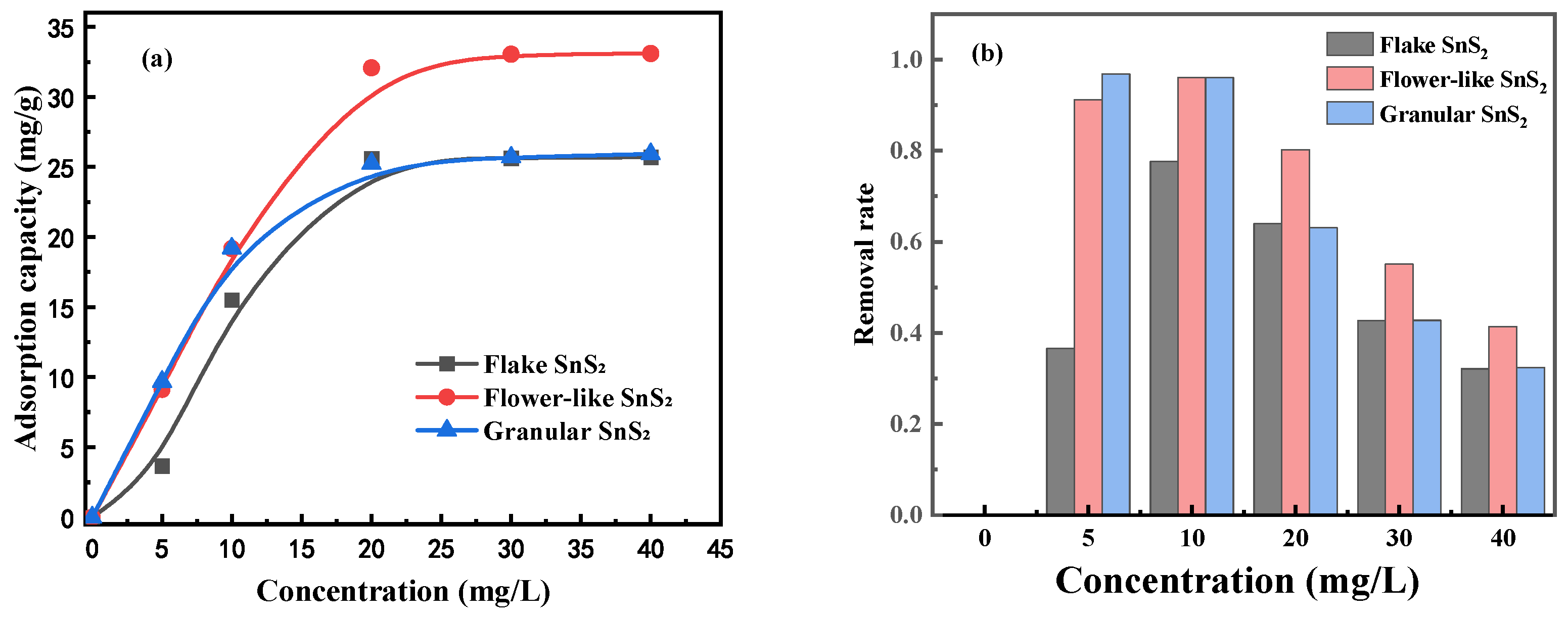
The effect of SnS
2 morphology on MB adsorption isotherm was studied under room temperature, adsorbent 25 mg, pH 7, adsorption time 240 min, and stirring speed 600 r/min. The effect of the initial concentration of MB on the adsorption capacity is shown in
Figure 7. The adsorption capacity of all SnS
2 initially increased and then leveled off, and the removal rate of SnS
2 on MB increased first and then decreased. In the range of initial MB solution concentrations from 5 to 10 mg/L, the adsorption capacity of flower-like SnS
2 and granular SnS
2 was quite similar, both increasing from 9 mg/g to 19 mg/g, and the removal rate of MB reached 96%. In the range of 10 to 20 mg/L, the growth rate of flower-like SnS
2 was significantly higher than that of granular SnS
2, with the adsorption capacity of flower-like SnS
2 increasing from 19 mg/g to 32.1 mg/g, and the removal rate dropped to 95.3% while the adsorption capacity of granular SnS
2 increased to 25.2 mg/g and the removal rate dropped to 63.1%. After 20 mg/L, both flower-like SnS
2 and granular SnS
2 tended to level off. Compared to flower-like SnS
2, flake SnS
2 had a smaller adsorption capacity, increasing from 3.7 mg/g at 5 mg/L to 25.6 mg/g at 20 mg/L and then leveling off to reach an adsorption capacity similar to that of granular SnS
2.
The Langmuir and Freundlich adsorption isotherm models were used to analyze the adsorption process of MB adsorption on SnS
2. The equations for the two adsorption isotherm models are as follows:
In these equations, C0 is the initial MB concentration, mg/L; Ce is the concentration of MB at equilibrium, mg/L; qe is the equilibrium adsorption capacity, mg/g; qmax is the maximum adsorption capacity, mg/g; b is the Langmuir constant; RL is the separation factor that characterizes adsorption performance; KF is the constant in the isotherm equation; and n is a constant related to temperature.
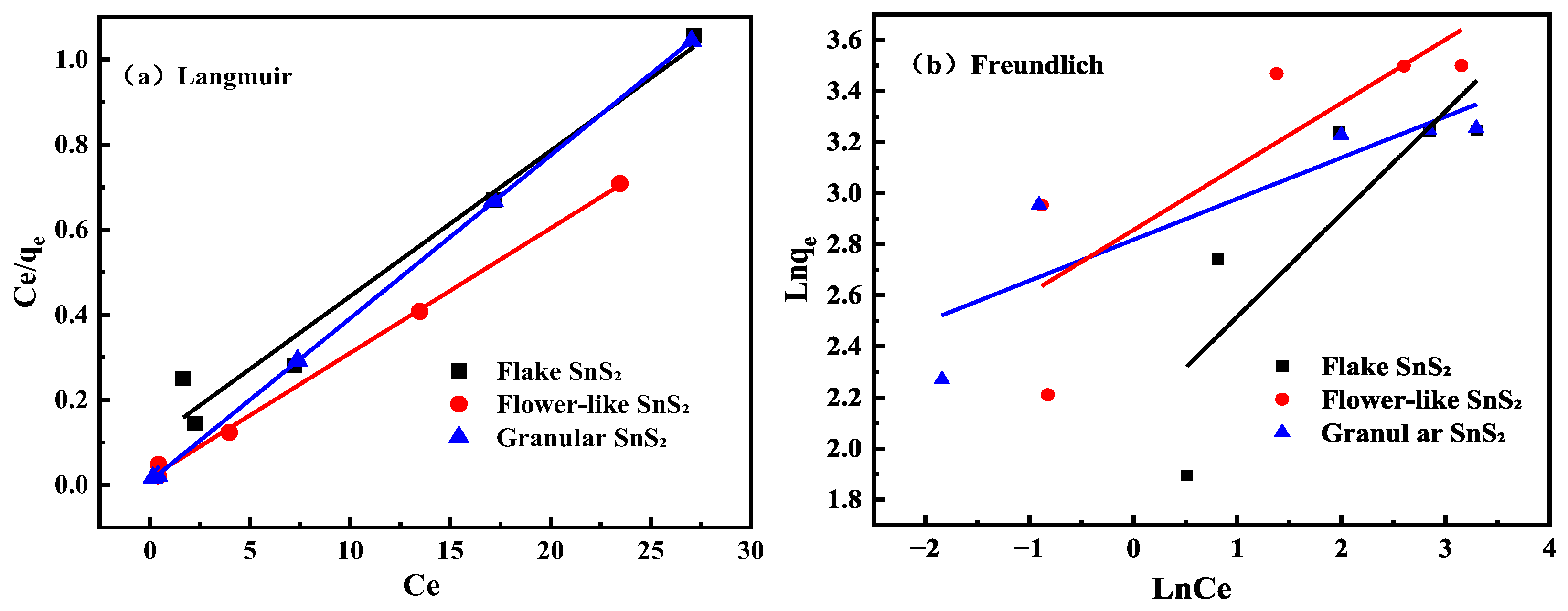
The fitting results of the experimental data are shown in
Figure 8 and
Table 3. It can be seen that the correlation coefficient of the Langmuir adsorption isotherm model for flake SnS
2 is 0.965, flower-like SnS
2 is 0.998, and granular SnS
2 is 0.999. All of the values are greater than that of the Freundlich adsorption isotherm model, indicating that adsorption processes of MB on different morphologies of SnS
2 are more consistent with the Langmuir adsorption isotherm model. This demonstrates that the adsorption process of MB on different morphologies SnS
2 belongs to monolayer adsorption.
To evaluate the adsorption performance of SnS
2, a comparison with previously reported adsorbents is presented in
Table 4 [
34,
35,
36,
37]. It can be observed that the adsorption capacity of flower-like SnS
2 (33.1 mg/g) is higher than that of many conventional adsorbents, such as activated carbon, and comparable to other SnS
2-based nanostructures. Compared with MoS
2 and WS
2, SnS
2 shows competitive adsorption performance, which can be attributed to its intrinsic hydrophilicity and favorable surface properties. Furthermore, the enhanced performance of flower-like SnS
2 indicates that morphology engineering is an effective strategy to improve adsorption efficiency. These results demonstrate that the prepared SnS
2, especially the flower-like structure, is a promising adsorbent for dye removal in aqueous systems.
3.5. Effect of SnS2 Morphology on the Adsorption Thermodynamics of MB
Next, in order to evaluate the effect of SnS
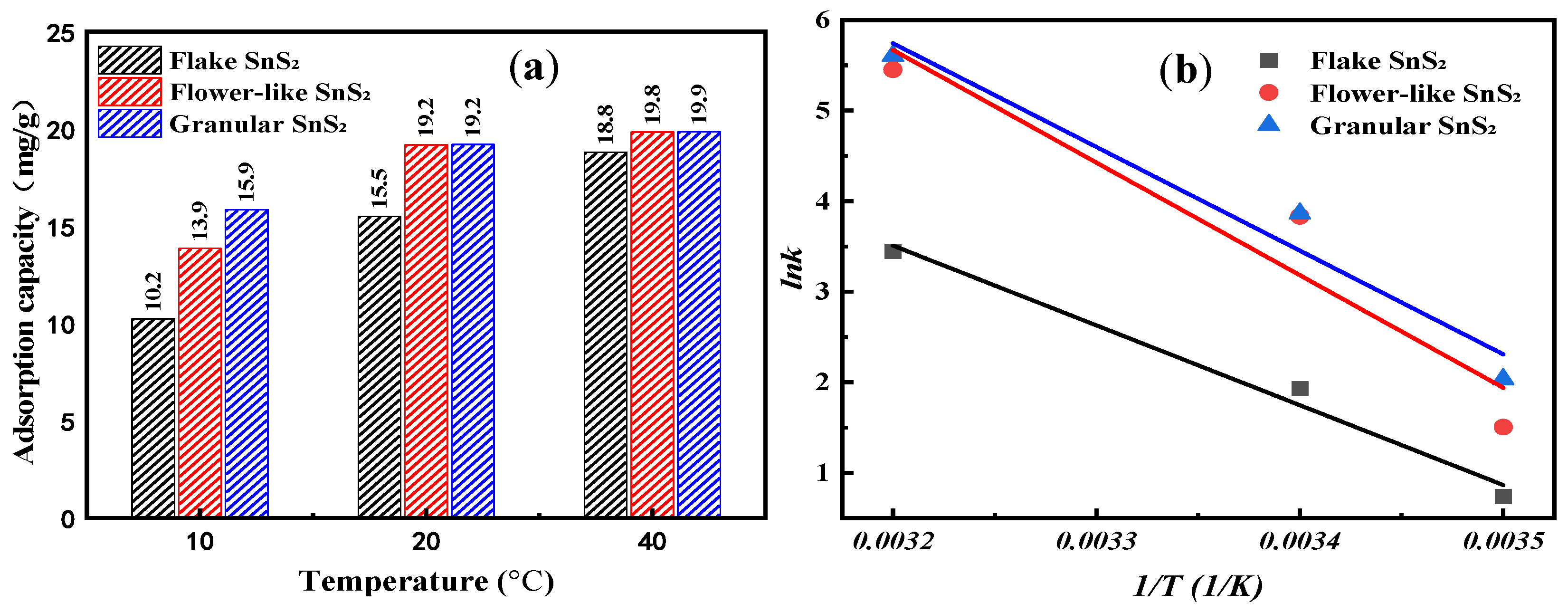
2 morphology on the thermodynamics of MB adsorption, experiments were carried out at different temperatures. Other parameters remained the same. Under MB concentration 10 mg/L, adsorbent dosage 0.5 g/L, adsorption time 240 min, pH 7, and stirring speed 600 r/min, the effect of temperature on the equilibrium adsorption capacity is shown in
Figure 9a. When the temperature ranges from 10 °C to 40 °C, the equilibrium adsorption capacity of flake SnS
2, flower-like SnS
2, and granular SnS
2 gradually increases with rising temperature. This may be due to the temperature promoting molecular diffusion and the activity of surface-active sites. When the temperature reaches 40 °C, the equilibrium adsorption capacities of all SnS
2 reach their maximum values, with the maximum equilibrium adsorption capacity of flower-like SnS
2 19.8 mg/g and granular SnS
2 19.9 mg/g, which are greater than the maximum adsorption capacity of flake SnS
2 18.8 mg/g.
To explore the thermodynamics of different morphologies of SnS
2 in MB adsorption, the experimental data were fitted using an adsorption thermodynamic equation. The calculation equation for the thermodynamic equilibrium constant K
d is as follows:
The equation for the thermodynamic parameters Δ
Gθ, Δ
Sθ, and Δ
Hθ are as follows:
where
T is the thermodynamic temperature of adsorption, K.
R is the ideal gas constant, J·mol
−1·K
−1.
m is the mass of the adsorbent, g.
V is the volume of the adsorbate solution, L. By using this equation,
Kd becomes dimensionless [
38].
Using Equation (9) to fit the experimental data of the graph and calculate the relevant parameters, the fitting and calculation results are shown in
Figure 9b and
Table 5, respectively. From the contents, it can be seen that at temperature 283 K, Δ
Gθ for flake SnS
2 is −0.115 KJ·mol
−1, for flower-like SnS
2 is −1.912 KJ·mol
−1, and for granular SnS
2 is −3.156 KJ·mol
−1. At temperature 293 K, Δ
Gθ for flake SnS
2 is −3.021 KJ·mol
−1, for flower-like SnS
2 is −7.648 KJ·mol
−1, and for granular SnS
2 is −7.729 KJ·mol
−1. At a temperature of 313 K, Δ
Gθ for flake SnS
2 is −7.170 KJ·mol
−1, for flower-like SnS
2 is −12.385 KJ·mol
−1, and for granular SnS
2 is −12.784 KJ·mol
−1. Therefore, Δ
Gθ for the adsorption of MB by SnS
2 with different morphologies are all negative, indicating that the adsorption process is spontaneous. As the temperature increases, Δ
Gθ decrease, suggesting that raising the temperature is favorable for adsorption. In addition, both the values of Δ
Hθ and the Δ
Sθ for MB adsorption on SnS
2 performed in the order of flower-like SnS
2 > granular SnS
2 > flake SnS
2, suggesting that MB is more easily absorbed on the flower-like SnS
2 than granular SnS
2 and final flake SnS
2.
3.6. Mechanism Difference of MB Adsorption on Various Morphologies SnS2
Finally, in order to further elucidate the adsorption mechanism, Fourier transform infrared spectroscopy was performed on the SnS
2 samples after adsorption of MB. FT-IR was used to analyze SnS
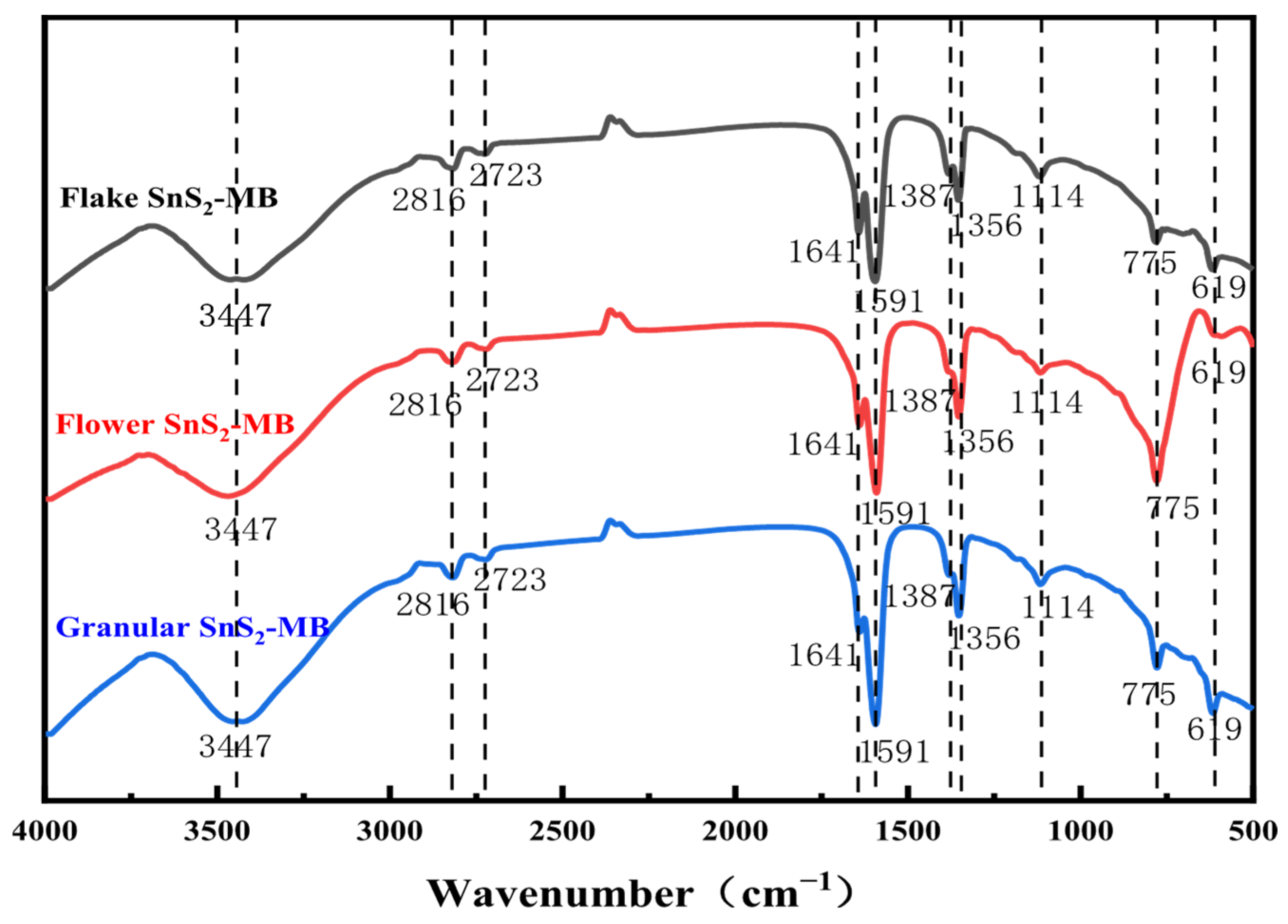
2 after MB adsorption, and the results are shown in
Figure 10. Regardless of whether the SnS
2 is in a flake, flower-like, or granular form, many significant absorption peaks were observed at some same positions after the adsorption of MB. The broad absorption peak at 3345 cm
−1 corresponds to the stretching vibration of –OH, the peak at 2702 cm
−1 corresponds to the stretching vibration of the –CH
3, and the peak at 1654 cm
−1 is attributed to the key characteristic peaks of the MB molecule, specifically the stretching vibration of C=N in the aromatic and heterocyclic structures. The peaks at 1594 cm
−1 and 1389 cm
−1 are attributed to the stretching vibrations of C=C and C–H, respectively, while the peak at 1139 cm
−1 reflects the bending vibration of C–H in the heterocycle [
39]. These results confirm the successful adsorption of MB on the surface of SnS
2.
To investigate the mechanism of the differences in MB adsorption on the surfaces of SnS
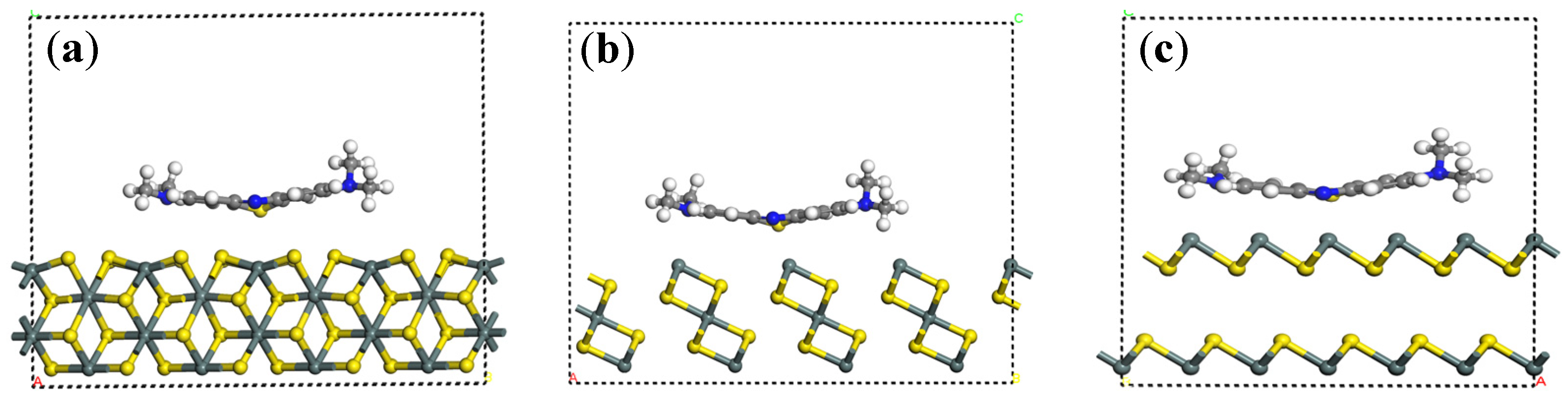
2 with different morphologies, DFT simulations were conducted to simulate the adsorption process of the MB molecule on the surfaces of different SnS
2 morphologies, with their adsorption structures shown in
Figure 11. The DFT figures are established through the adsorption of MB molecules on the different crystal surfaces of SnS
2. The crystal surfaces were built based on the different morphologies of SnS
2 and the flower-like, flake, and granular morphologies are pointed out corresponding to the crystal surfaces (110), (101), and (001), respectively [
29,
31]. The MB molecules seem to be sitting on the top of the crystal surfaces according to the calculation results of the DFT simulation. Their adsorption energies were very different and are listed in the
Table 6, which indicates their interactions.
In order to study the mechanism of the adsorption differences of MB on SnS
2 with different morphologies, the adsorption energies of MB on the surfaces of SnS
2 were calculated through DFT. The adsorption energy was calculated using Equation (10).
Adsorbent represents the different morphology SnS2, ΔAdsorbent/MB denotes the adsorption energy between SnS2 and MB, and EAdsorbent/MB and EAdsorbent represent the energy of the adsorbent–MB system and the adsorbent system, respectively.
The results of the adsorption energies are show in
Table 6. Before the adsorption of MB, the surface energies of flake SnS
2, flower-like SnS
2, and granular SnS
2 were −51,173.330 eV, −38,463.866 eV, and −28,909.948 eV, respectively. After the adsorption of MB, the surface energies of flake SnS
2, flower-like SnS
2, and granular SnS
2 were −52,355.652 eV, −39,646.141 eV, and −30,092.254 eV, respectively. Compared to before adsorption, their differences were −0.222 eV, −0.175 eV, and −0.206 eV, respectively. The larger the difference, the stronger the adsorption capacity. Therefore, it can be concluded that the adsorption energy of MB on different morphologies of SnS
2 is flower-like > granular > flake SnS
2. The big difference in adsorption energy of MB on SnS
2 surfaces with different morphologies may be the main reason for their different adsorption properties.
3.7. Reusability
The reusability of SnS
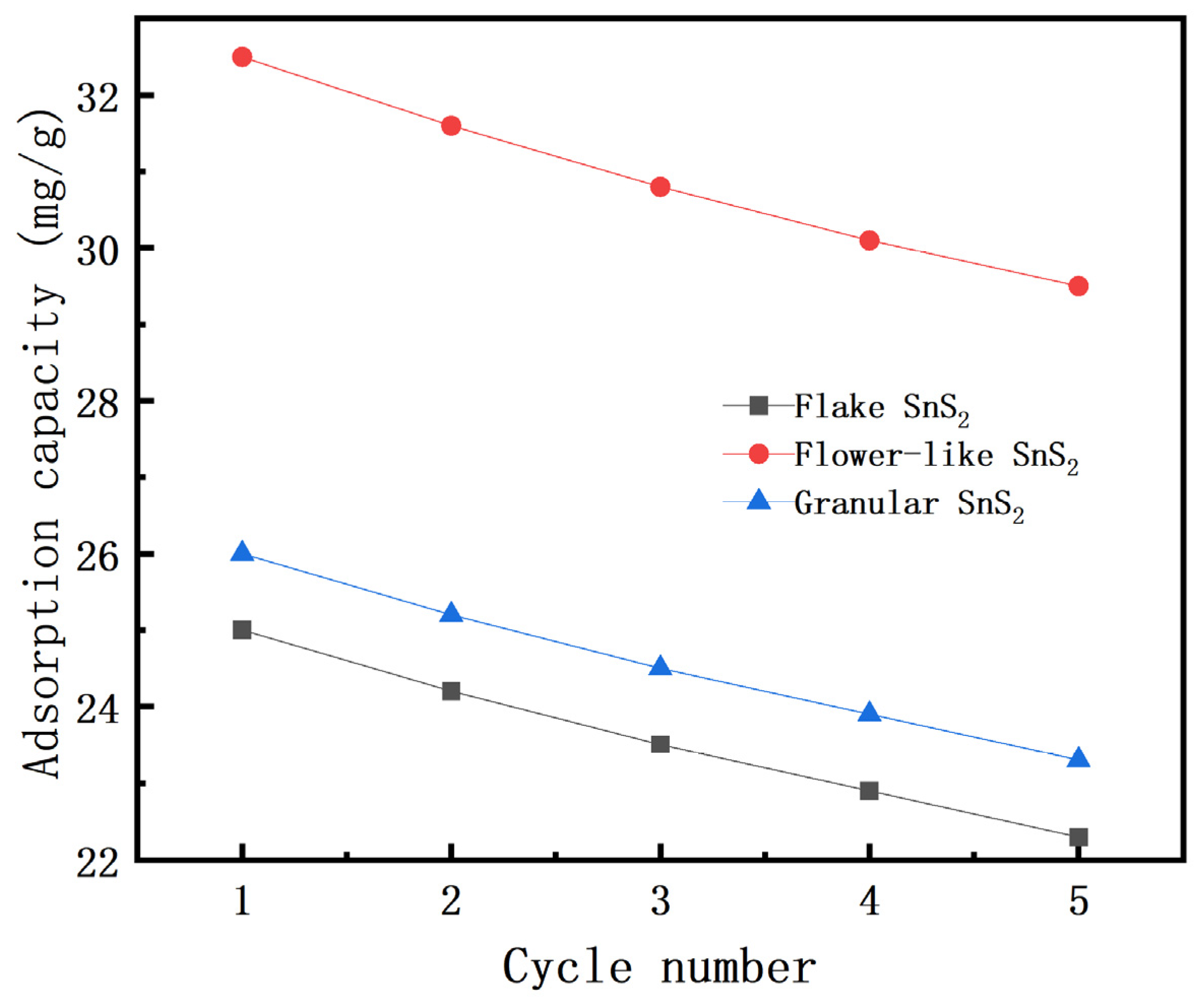
2 was evaluated over five adsorption–desorption cycles. As shown in
Figure 12, the adsorption capacity of flower-like SnS
2 decreased from 32.5 mg/g in the first cycle to 29.5 mg/g after five cycles, retaining approximately 90.8% of its initial performance.
Similarly, flake and granular SnS2 retained about 89.2% and 89.6%, respectively. The slight decrease in adsorption capacity may be attributed to incomplete desorption of MB molecules and partial blockage of active sites.
These results indicate that SnS2 exhibits good structural stability and reusability, demonstrating its potential for practical wastewater treatment applications.