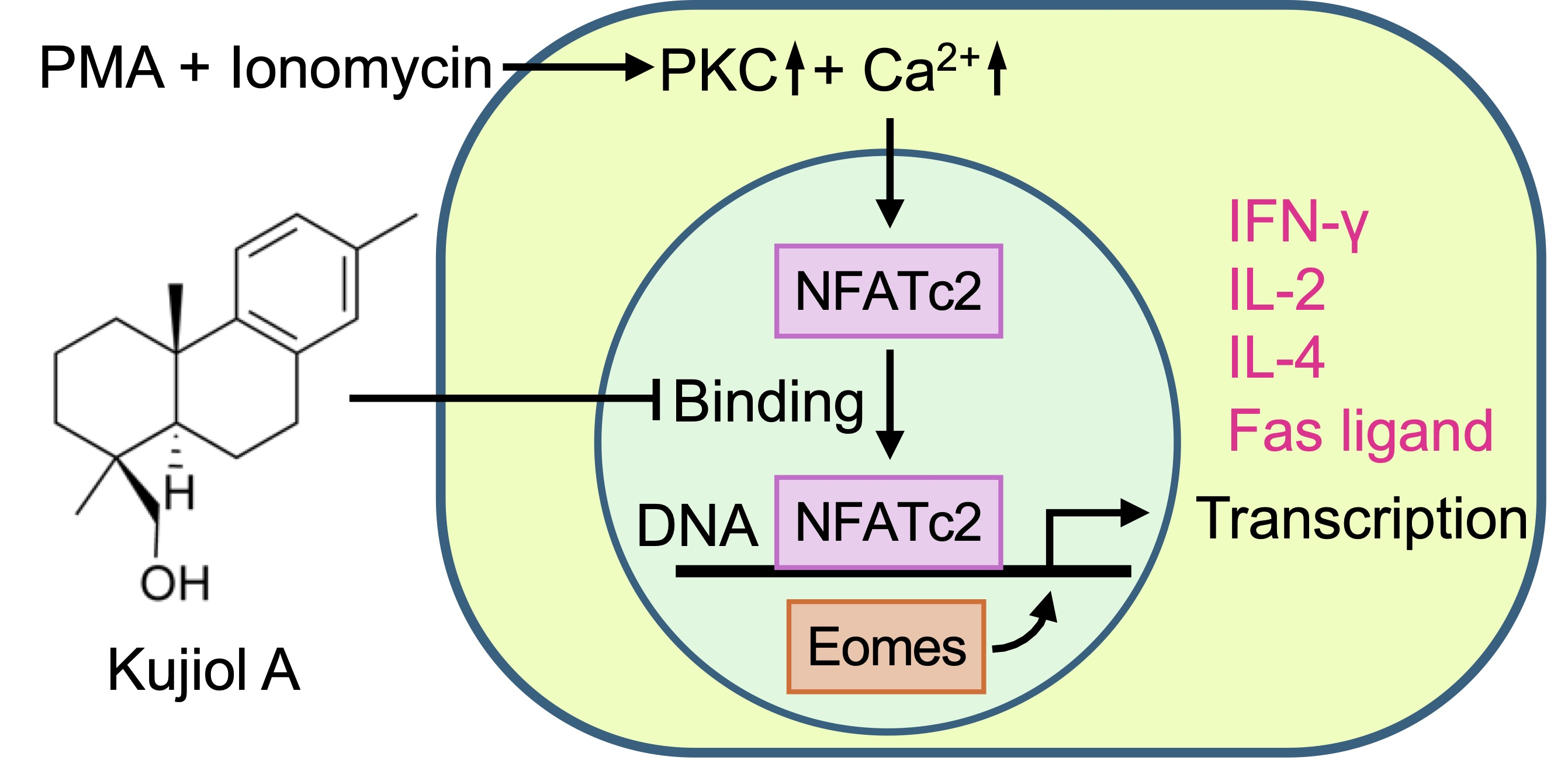
Kujiol A Inhibits Interferon-γ and Interleukin-2 Expression and the NFATc2 Interaction with Their Promoters in T Cells

 , , ,
, , ,
Abstract
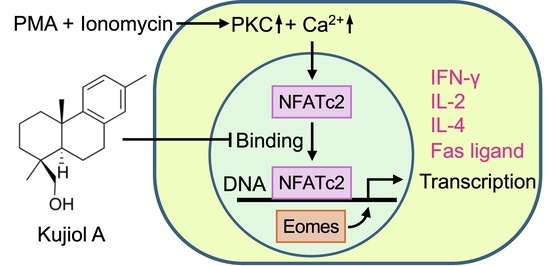
1. Introduction
2. Results
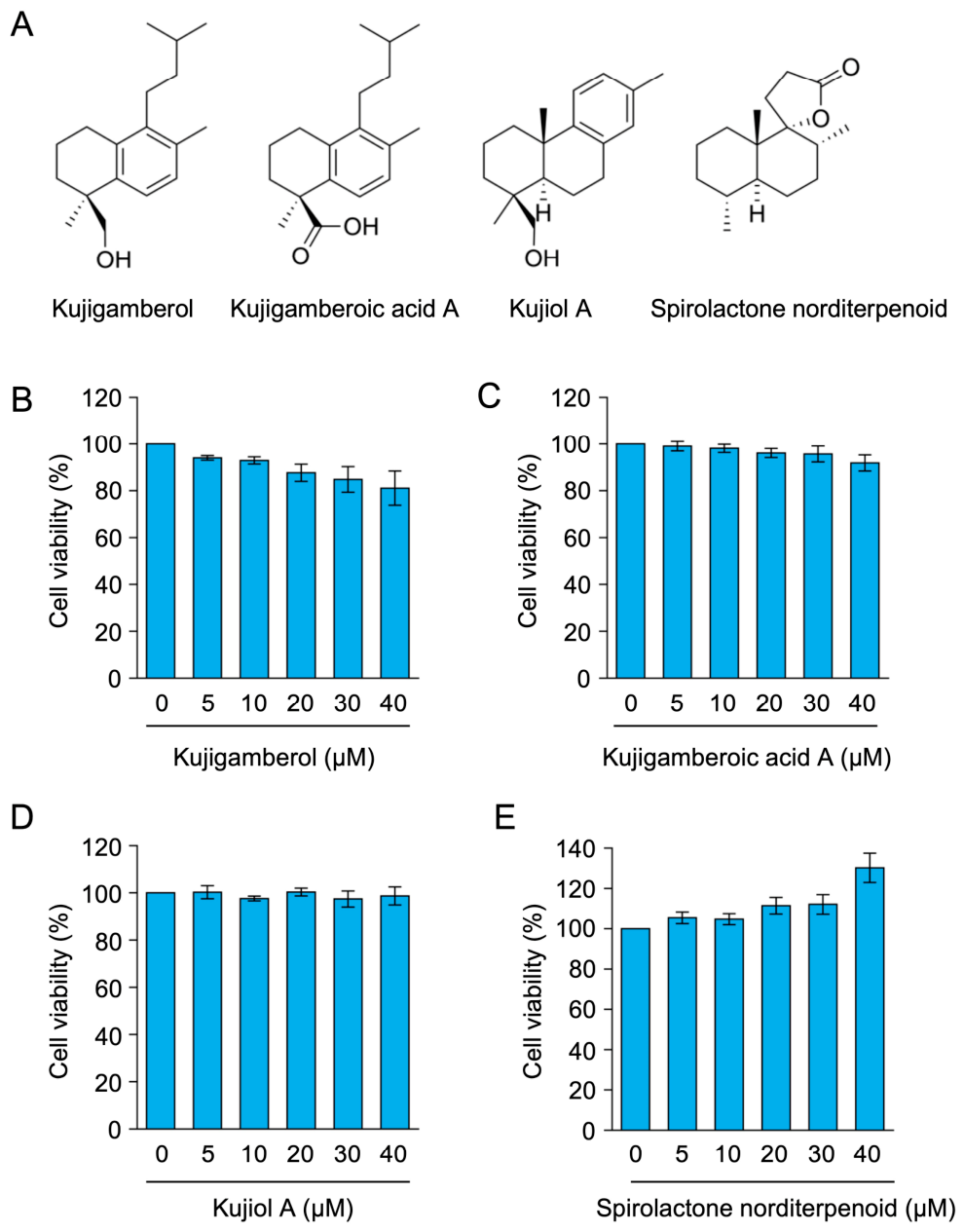
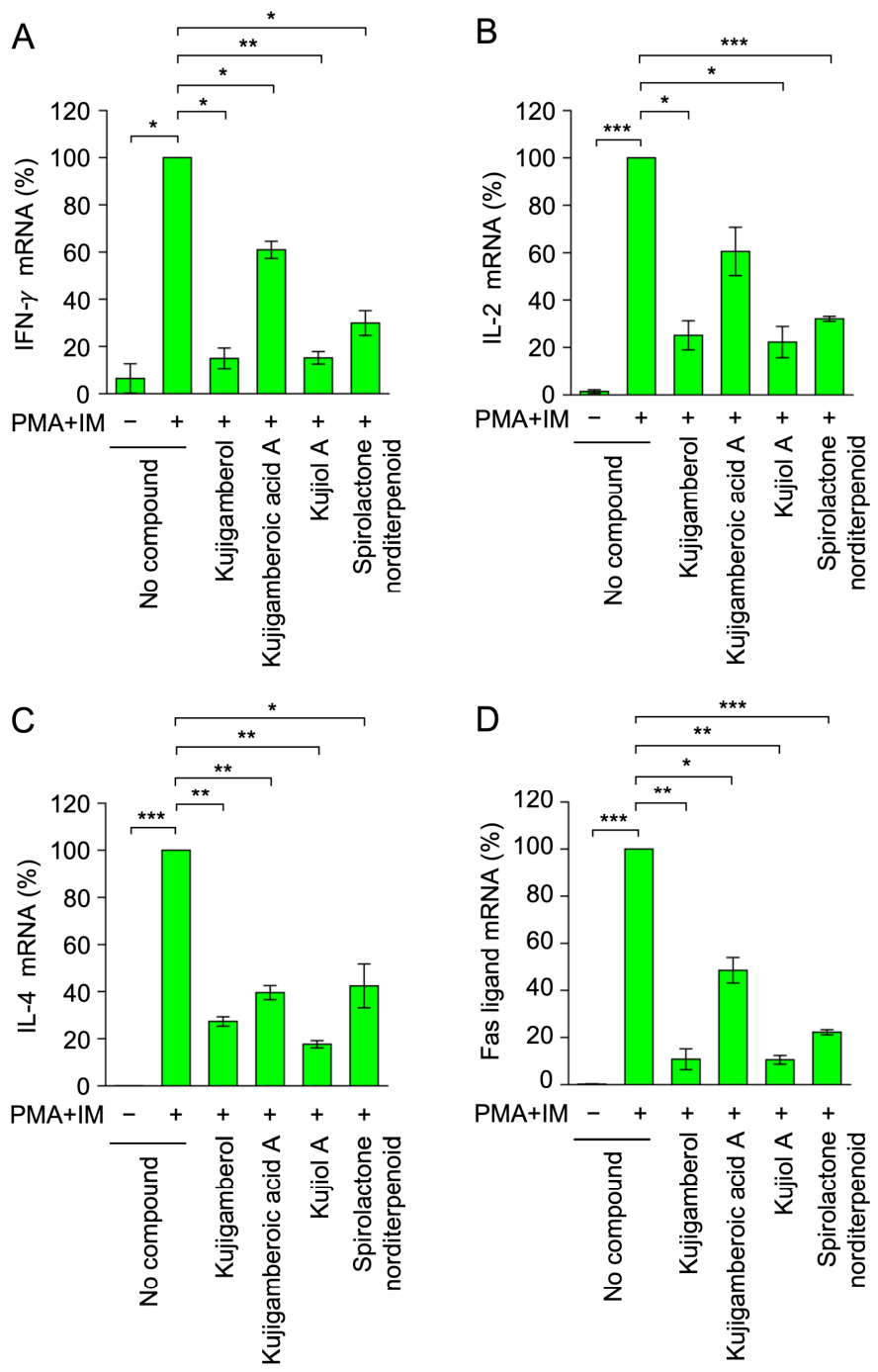
2.1. Kujiol A Exerted Strong Inhibitory Effects on Cytokine Expression in Eomesodermin (Eomes)-Transfected BW5147 Cells
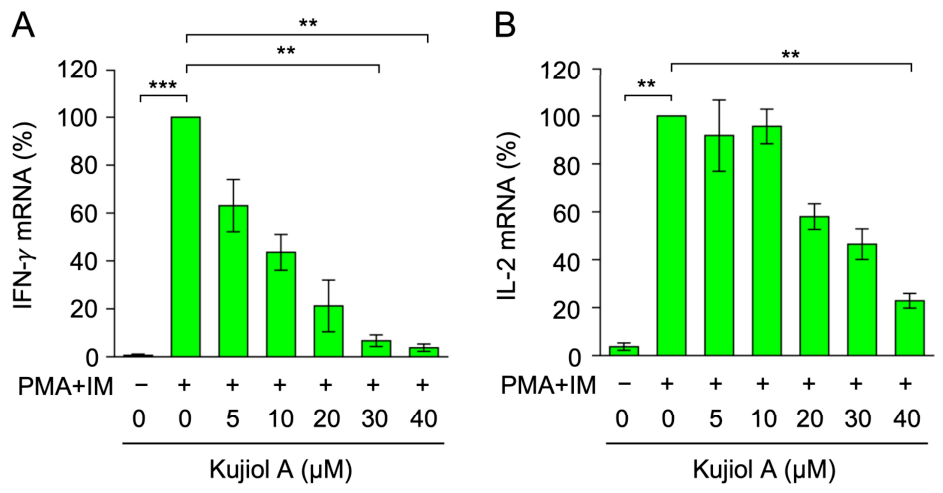
2.2. Kujiol A Inhibited IFN-γ and IL-2 mRNA Levels in Eomes-BW5147 Cells
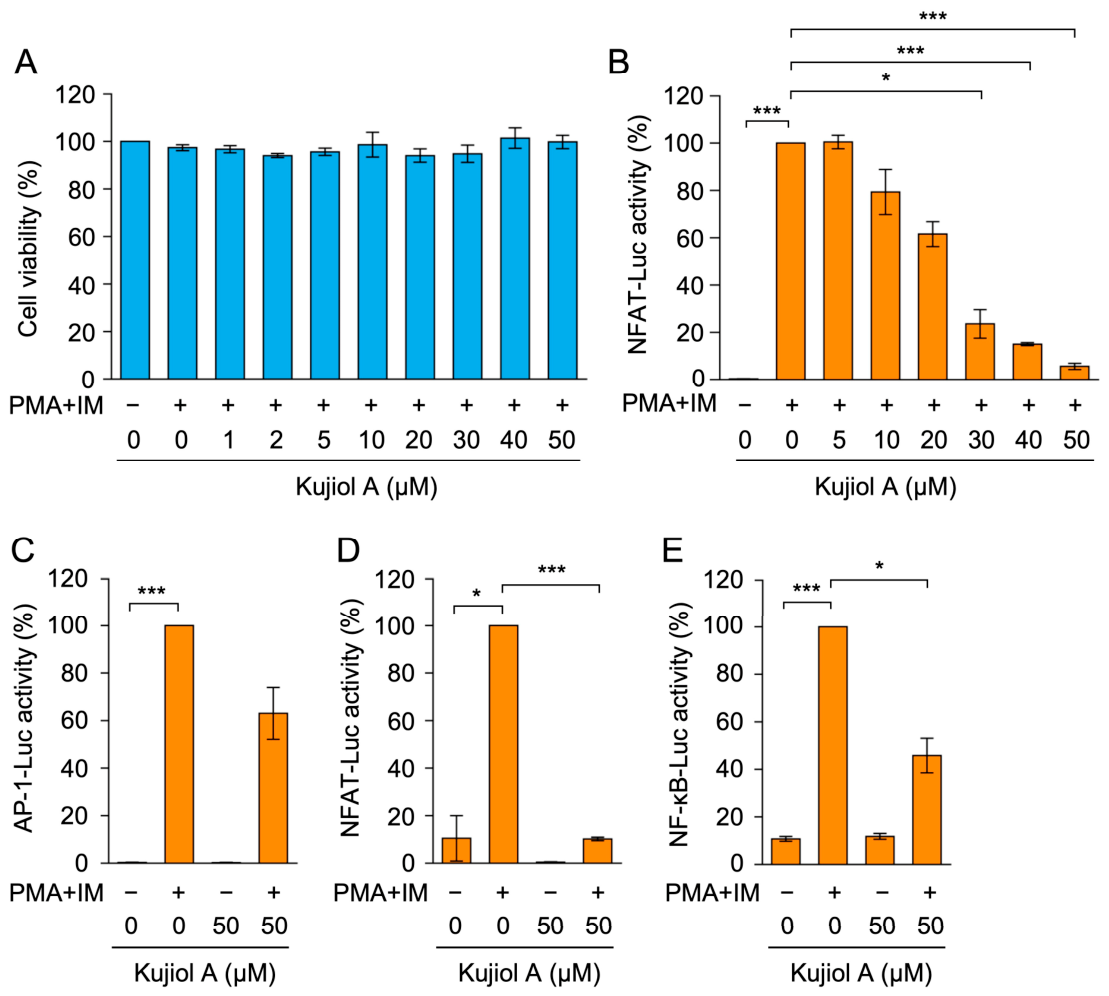
2.3. Kujiol A Preferentially Inhibited NFAT-Dependent Promoter Activity in 293T Cells
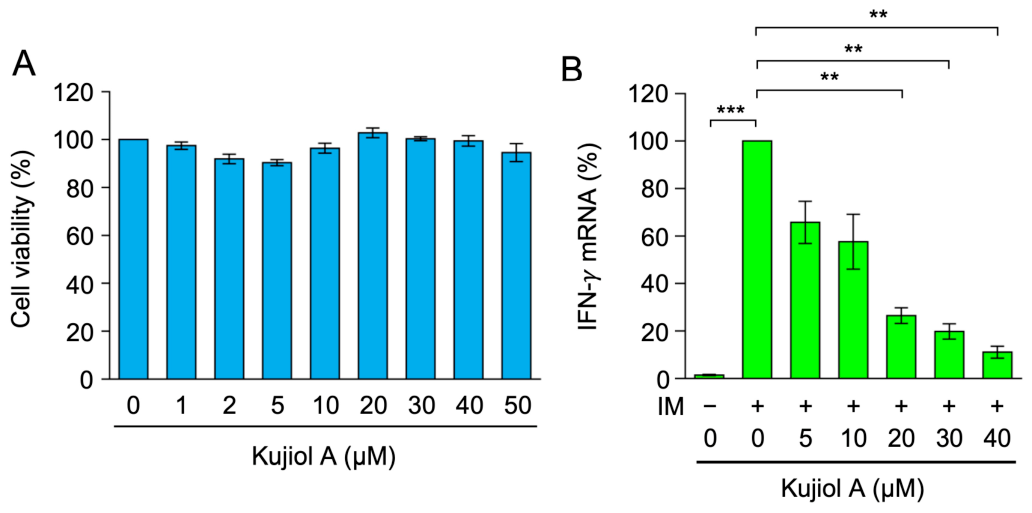
2.4. Kujiol A Reduced IFN-γ mRNA Expression in CTLL-2 Cells
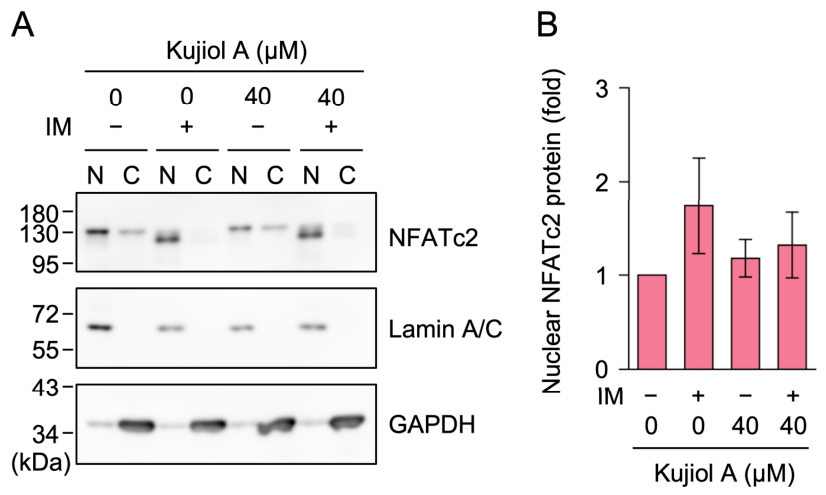
2.5. Kujiol A Did Not Affect Nuclear NFATc2 Protein Expression in CTLL-2 Cells
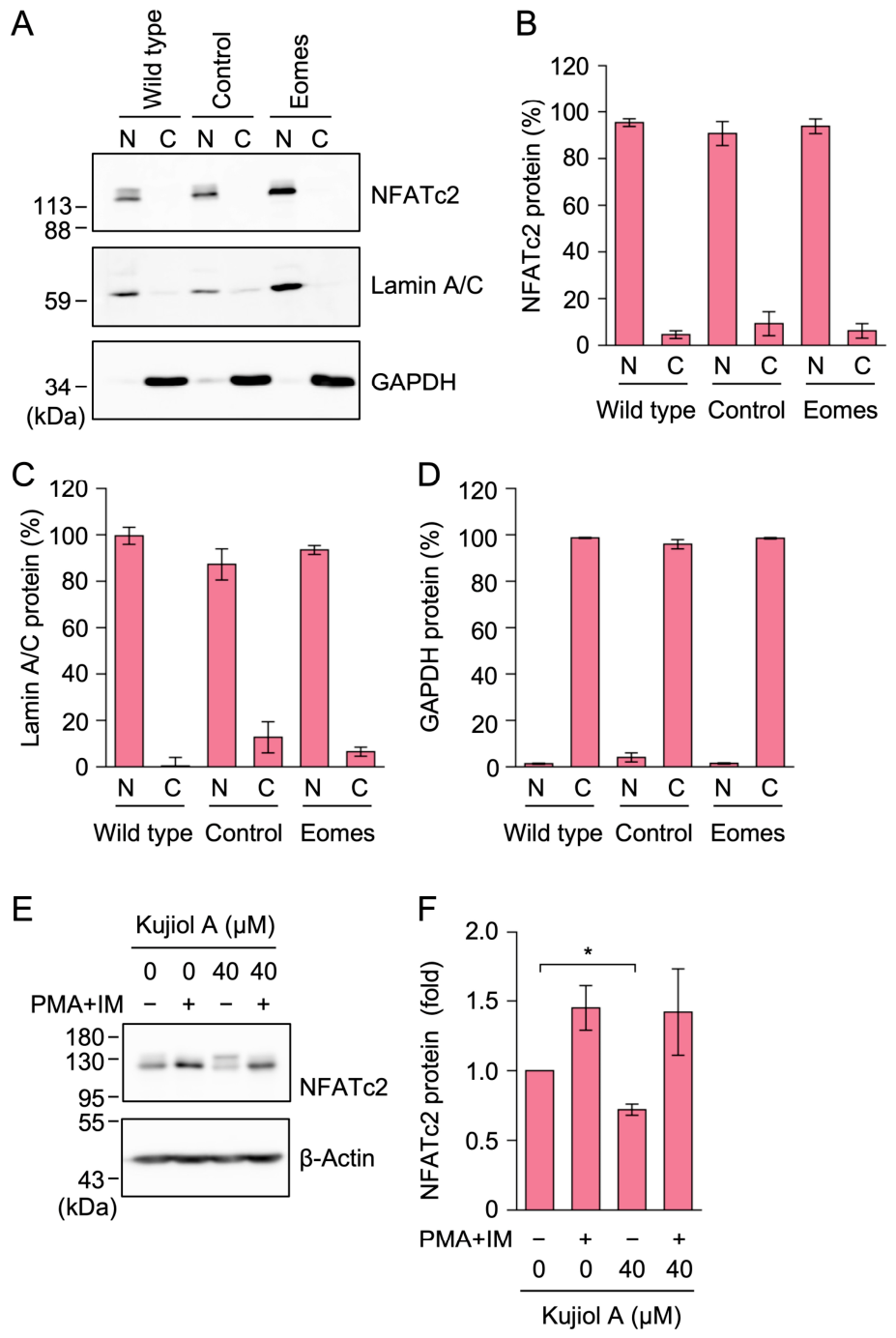
2.6. Kujiol A Did Not Affect NFATc2 Protein Levels in Eomes-BW5147 Cells
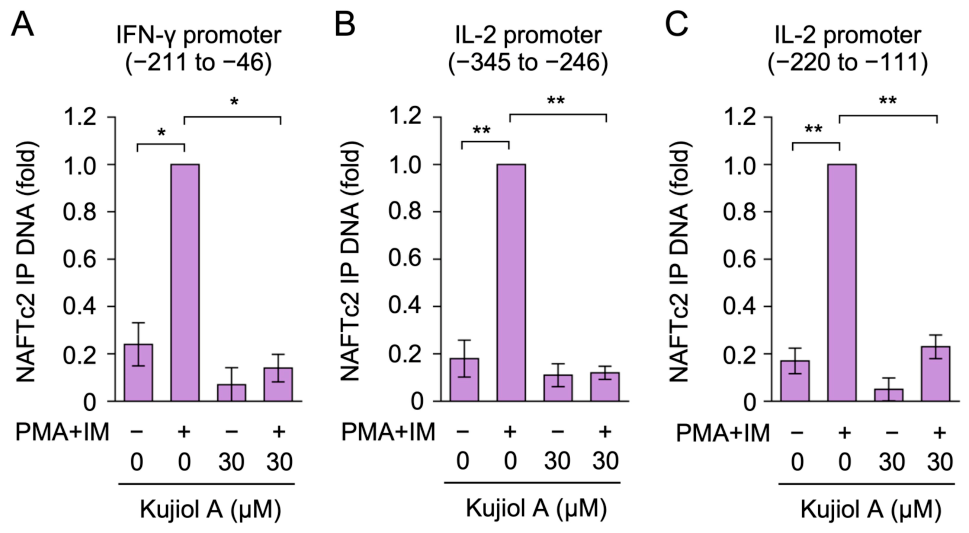
2.7. Kujiol A Suppressed the Interaction of the NFATc2 Protein with IFN-γ and IL-2 Promoters in Eomes-BW5147 Cells
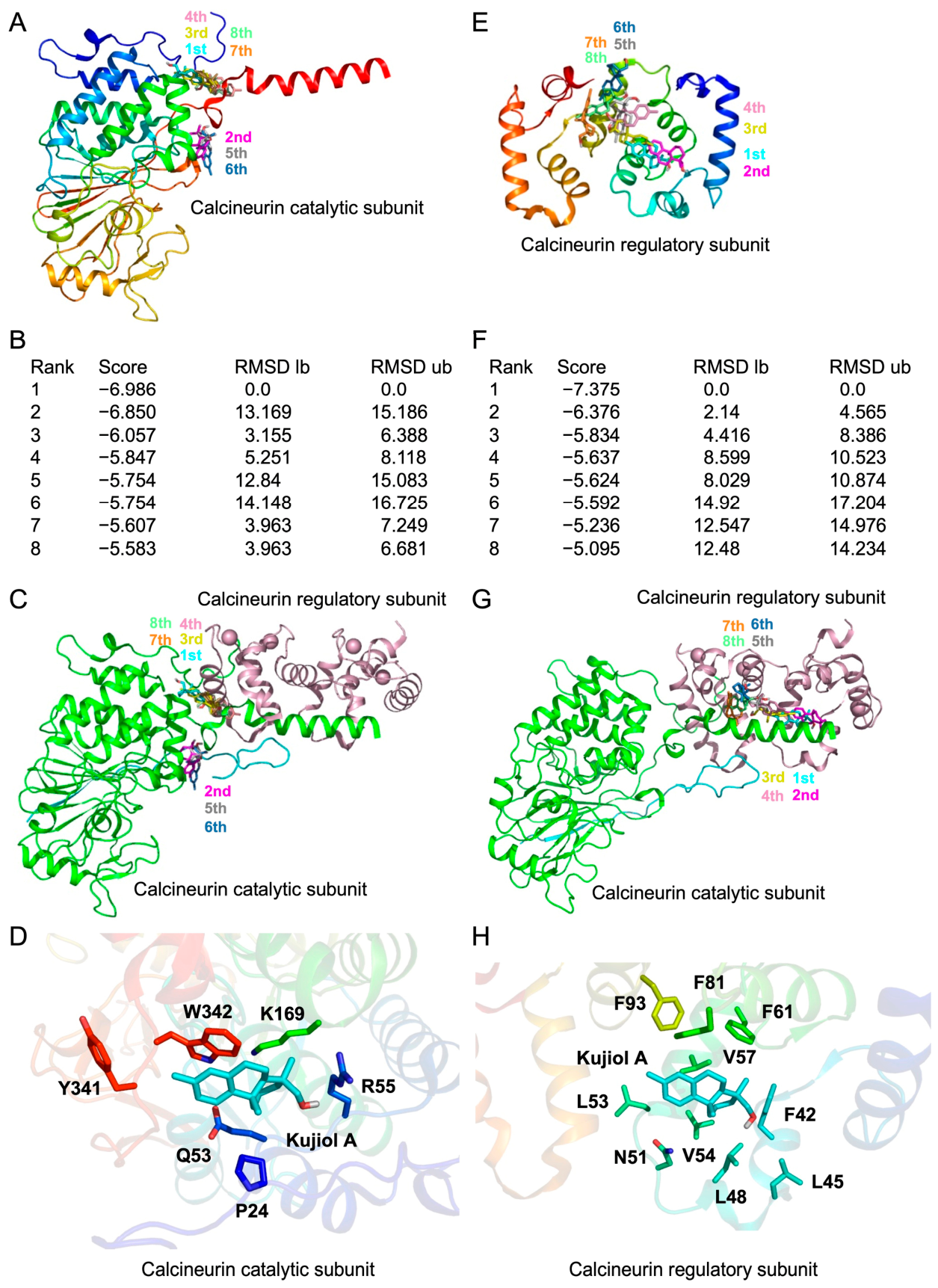
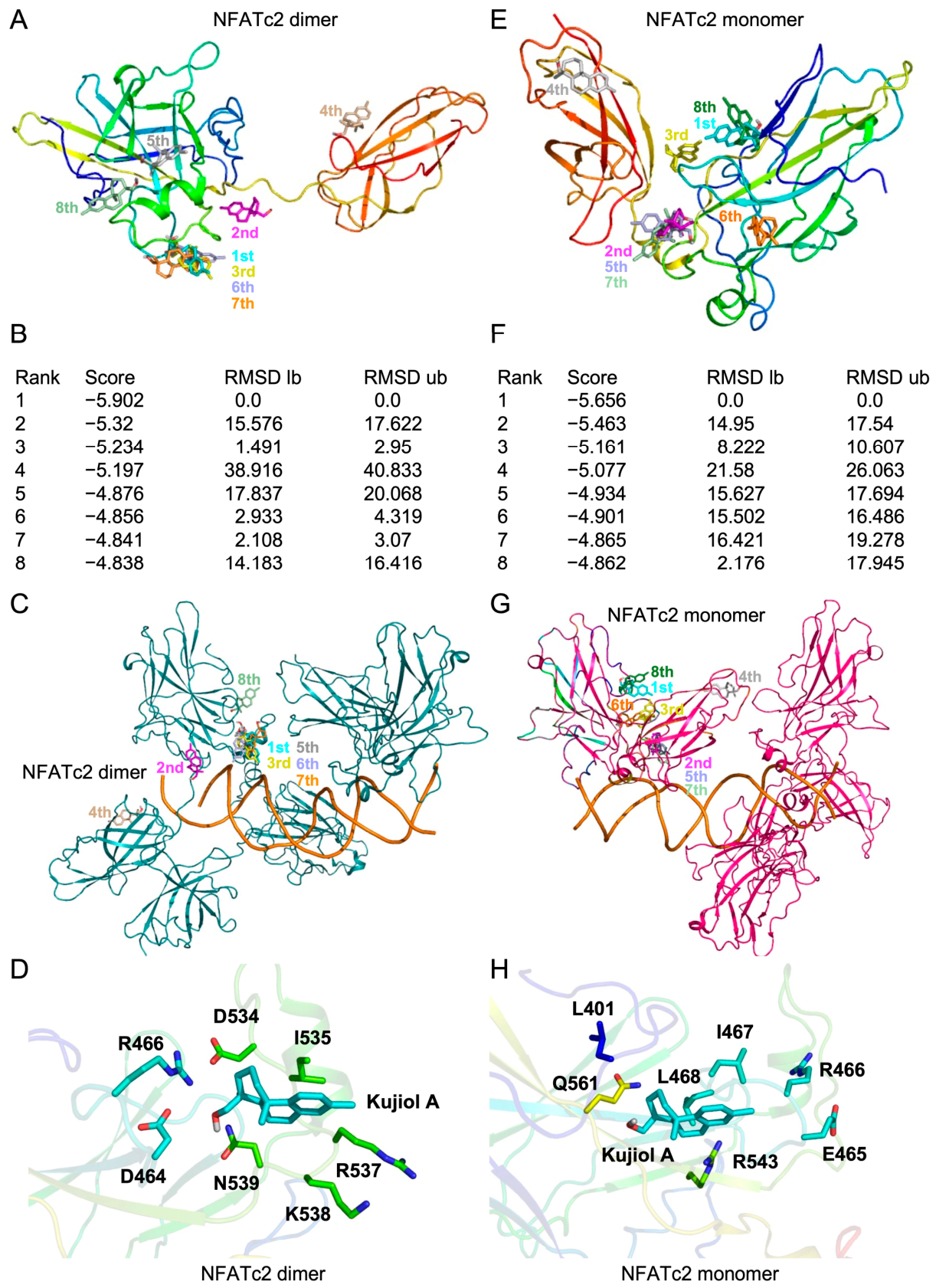
2.8. An In Silico Molecular Docking Analysis Showed the Potential Binding of Kujiol A to Calcineurin and NFATc2
3. Discussion
4. Materials and Methods
4.1. Cells
4.2. Reagents
4.3. Antibodies
4.4. Plasmid Vectors
4.5. Cell Viability Assay
4.6. RT-qPCR
4.7. Reporter Assay
4.8. Western Blotting
4.9. ChIP Assay
4.10. Statistical Analysis
4.11. In Silico Docking Analysis
5. Conclusions
Supplementary Materials
Author Contributions
Funding
Institutional Review Board Statement
Informed Consent Statement
Data Availability Statement
Acknowledgments
Conflicts of Interest
Abbreviations
| IFN-γ | Interferon-γ |
| Th1 | T helper type 1 |
| IL | Interleukin |
| Th2 | T helper type 2 |
| AP-1 | Activated protein-1 |
| NF-κB | Nuclear factor κB |
| NFAT | Nuclear factor of activated T cells |
| HUVEC | Human umbilical vein endothelial cells |
| Eomes | Eomesodermin |
| PMA | Phorbol 12-myristate 13-acetate |
| IM | Ionomycin |
| SEM | Standard error of the mean |
| IC50 | 50% inhibitory concentration |
| RMSD | Root mean square deviation |
| lb | Lower bound |
| ub | Upper bound |
| RT-qPCR | Reverse transcription quantitative polymerase chain reaction |
| GAPDH | Glyceraldehyde-3-phosphate dehydrogenase |
| ChIP | Chromatin immunoprecipitation |
| MEKA | Methanol extract of Kuji amber |
References
- Castro, F.; Cardoso, A.P.; Gonçalves, R.M.; Serre, K.; Oliveira, M.J. Interferon-gamma at the crossroads of tumor immune surveillance or evasion. Front. Immunol. 2018, 9, 847. [Google Scholar] [CrossRef]
- Rožman, P.; Švajger, U. The tolerogenic role of IFN-γ. Cytokine Growth Factor Rev. 2018, 41, 40–53. [Google Scholar] [CrossRef]
- Burke, J.D.; Young, H.A. IFN-γ: A cytokine at the right time, is in the right place. Semin. Immunol. 2019, 43, 101280. [Google Scholar] [CrossRef]
- Jorgovanovic, D.; Song, M.; Wang, L.; Zhang, Y. Roles of IFN-γ in tumor progression and regression: A review. Biomark. Res. 2020, 8, 49. [Google Scholar] [CrossRef] [PubMed]
- Ruterbusch, M.; Pruner, K.B.; Shehata, L.; Pepper, M. In vivo CD4+ T cell differentiation and function: Revisiting the Th1/Th2 paradigm. Annu. Rev. Immunol. 2020, 38, 705–725. [Google Scholar] [CrossRef] [PubMed]
- Wang, W.; Sung, N.; Gilman-Sachs, A.; Kwak-Kim, J. T helper (Th) cell profiles in pregnancy and recurrent pregnancy losses: Th1/Th2/Th9/Th17/Th22/Tfh cells. Front. Immunol. 2020, 11, 2025. [Google Scholar] [CrossRef] [PubMed]
- Dong, C. Cytokine regulation and function in T cells. Annu. Rev. Immunol. 2021, 39, 51–76. [Google Scholar] [CrossRef]
- Rogozynski, N.P.; Dixon, B. The Th1/Th2 paradigm: A misrepresentation of helper T cell plasticity. Immunol. Lett. 2024, 268, 106870. [Google Scholar] [CrossRef] [PubMed]
- Jiang, T.; Zhou, C.; Ren, S. Role of IL-2 in cancer immunotherapy. OncoImmunology 2016, 5, e1163462. [Google Scholar] [CrossRef]
- Damoiseaux, J. The IL-2—IL-2 receptor pathway in health and disease: The role of the soluble IL-2 receptor. Clin. Immunol. 2020, 218, 108515. [Google Scholar] [CrossRef] [PubMed]
- Kalia, V.; Sarkar, S. Regulation of effector and memory CD8 T cell differentiation by IL-2—A balancing act. Front. Immunol. 2018, 9, 2987. [Google Scholar] [CrossRef]
- Spolski, R.; Li, P.; Leonard, W.J. Biology and regulation of IL-2: From molecular mechanisms to human therapy. Nat. Rev. Immunol. 2018, 18, 648–659. [Google Scholar] [CrossRef] [PubMed]
- Pol, J.G.; Caudana, P.; Paillet, J.; Piaggio, E.; Kroemer, G. Effects of interleukin-2 in immunostimulation and immunosuppression. J. Exp. Med. 2020, 217, e20191247. [Google Scholar] [CrossRef]
- Shouse, A.N.; LaPorte, K.M.; Malek, T.R. Interleukin-2 signaling in the regulation of T cell biology in autoimmunity and cancer. Immunity 2024, 57, 414–428. [Google Scholar] [CrossRef]
- Bhattacharyya, N.D.; Feng, C.G. Regulation of T helper cell fate by TCR signal strength. Front. Immunol. 2020, 11, 624. [Google Scholar] [CrossRef]
- Hwang, J.R.; Byeon, Y.; Kim, D.; Park, S.G. Recent insights of T cell receptor-mediated signaling pathways for T cell activation and development. Exp. Mol. Med. 2020, 52, 750–761. [Google Scholar] [CrossRef] [PubMed]
- Shah, K.; Al-Haidari, A.; Sun, J.; Kazi, J.U. T cell receptor (TCR) signaling in health and disease. Signal Transduct. Target. Ther. 2021, 6, 412. [Google Scholar] [CrossRef] [PubMed]
- Dewenter, M.; von der Lieth, A.; Katus, H.A.; Backs, J. Calcium signaling and transcriptional regulation in cardiomyocytes. Circ. Res. 2017, 121, 1000–1020. [Google Scholar] [CrossRef] [PubMed]
- Park, Y.J.; Yoo, S.A.; Kim, M.; Kim, W.U. The role of calcium-calcineurin-NFAT signaling pathway in health and autoimmune diseases. Front. Immunol. 2020, 11, 195. [Google Scholar] [CrossRef] [PubMed]
- Ren, R.; Guo, J.; Chen, Y.; Zhang, Y.; Chen, L.; Xiong, W. The role of Ca2+/Calcineurin/NFAT signalling pathway in osteoblastogenesis. Cell Prolif. 2021, 54, e13122. [Google Scholar] [CrossRef] [PubMed]
- Hermann-Kleiter, N.; Baier, G. NFAT pulls the strings during CD4+ T helper cell effector functions. Blood 2010, 115, 2989–2997. [Google Scholar] [CrossRef] [PubMed]
- Fric, J.; Zelante, T.; Wong, A.Y.W.; Mertes, A.; Yu, H.B.; Ricciardi-Castagnoli, P. NFAT control of innate immunity. Blood 2012, 120, 1380–1389. [Google Scholar] [CrossRef]
- Lee, J.U.; Kim, L.K.; Choi, J.M. Revisiting the concept of targeting NFAT to control T cell immunity and autoimmune diseases. Front. Immunol. 2018, 9, 2747. [Google Scholar] [CrossRef]
- Zhang, P.; Huang, C.; Liu, H.; Zhang, M.; Liu, L.; Zhai, Y.; Zhang, J.; Yang, J.; Yang, J. The mechanism of the NFAT transcription factor family involved in oxidative stress response. J. Cardiol. 2024, 83, 30–36. [Google Scholar] [CrossRef] [PubMed]
- Kimura, K.; Minamikawa, Y.; Ogasawara, Y.; Yoshida, J.; Saitoh, K.; Shinden, H.; Ye, Y.Q.; Takahashi, S.; Miyakawa, T.; Koshino, H. Kujigamberol, a new dinorlabdane diterpenoid isolated from 85 million years old Kuji amber using a biotechnological assay. Fitoterapia 2012, 83, 907–912. [Google Scholar] [CrossRef]
- Maruyama, M.; Kobayashi, M.; Uchida, T.; Shimizu, E.; Higashio, H.; Ohno, M.; Uesugi, S.; Kimura, K. Anti-allergy activities of Kuji amber extract and kujigamberol. Fitoterapia 2018, 127, 263–270. [Google Scholar] [CrossRef] [PubMed]
- Fukuhara, S.; Tanigaki, R.; Kimura, K.; Kataoka, T. Kujigamberol interferes with pro-inflammatory cytokine-induced expression of and N-glycan modifications to cell adhesion molecules at different stages in human umbilical vein endothelial cells. Int. Immunopharmacol. 2018, 62, 313–325. [Google Scholar] [CrossRef]
- Yodweerapong, T.; Ueno, Y.; Yamaguchi, R.; Yarangsee, P.; Kimura, K.; Kataoka, T. Kujigamberol inhibits IFN-γ and IL-2 mRNA expression and NFATc2 binding to their promoters in response to a phorbol ester and ionomycin stimulation. Molecules 2025, 30, 2214. [Google Scholar] [CrossRef] [PubMed]
- Uchida, T.; Koshino, H.; Takahashi, S.; Shimizu, E.; Takahashi, H.; Yoshida, J.; Shinden, H.; Tsujimura, M.; Kofujita, H.; Uesugi, S.; et al. Ca2+-signal transduction inhibitors, kujiol A and kujigamberol B, isolated from Kuji amber using a mutant yeast. J. Nat. Prod. 2018, 81, 1070–1074. [Google Scholar] [CrossRef] [PubMed]
- Shimizu, E.; Koshino, H.; Noro, A.; Maruyama, M.; Shimoda, N.; Uesugi, S.; Ohnishi, M.; Kimura, K. Isolation of a spirolactone norditerpenoid as a yeast Ca2+ signal transduction inhibitor from Kuji amber and evaluation of its effects on PPM1A activity. Fitoterapia 2019, 134, 290–296. [Google Scholar] [CrossRef]
- Takahashi, H.; Shimoda, N.; Koshino, H.; Kimura, K. Kujigamberoic acid A, a carboxylic acid derivative of kujigamberol, has potent inhibitory activity against the degranulation of RBL-2H3 cells. Biosci. Biotechnol. Biochem. 2019, 83, 1193–1196. [Google Scholar] [CrossRef]
- Hagiwara, H.; Yokota, T.; Luh, J.; Lee, F.; Arai, K.; Arai, N.; Zlotnik, A. The AKR thymoma BW5147 is able to produce lymphokines when stimulated with calcium ionophore and phorbol ester. J. Immunol. 1988, 140, 1561–1565. [Google Scholar] [CrossRef] [PubMed]
- Li, Y.Q.; Kobayashi, M.; Yuan, L.; Wang, J.; Matsushita, K.; Hamada, J.I.; Kimura, K.; Yagita, H.; Okumura, K.; Hosokawa, M. Protein kinase C mediates the signal for interferon-γ mRNA expression in cytotoxic T cells after their adhesion to laminin. Immunology 1998, 93, 455–461. [Google Scholar] [CrossRef] [PubMed]
- Lv, S.; Yi, P.F.; Shen, H.Q.; Zhang, L.Y.; Dong, H.B.; Wu, S.C.; Xia, F.; Guo, X.; Wei, X.B.; Fu, B.D. Ginsenoside Rh2-B1 stimulates cell proliferation and IFN-γ production by activating the p38 MAPK and ERK-dependent signaling pathways in CTLL-2 cells. Immunopharmacol. Immunotoxicol. 2014, 36, 43–51. [Google Scholar] [CrossRef] [PubMed]
- Qin, J.J.; Nag, S.; Wang, W.; Zhou, J.; Zhang, W.D.; Wang, H.; Zhang, R. NFAT as cancer target: Mission possible? Biochim. Biophys. Acta 2014, 1846, 297–311. [Google Scholar] [CrossRef] [PubMed]
- Mognol, G.P.; Carneiro, F.R.G.; Robbs, B.K.; Faget, D.V.; Viola, J.P.B. Cell cycle and apoptosis regulation by NFAT transcription factors: New roles for an old player. Cell Death Dis. 2016, 7, e2199. [Google Scholar] [CrossRef]
- Kitamura, N.; Kaminuma, O. Isoform-selective isoform-selective NFAT inhibitor: Potential usefulness and development. Int. J. Mol. Sci. 2021, 22, 2725. [Google Scholar] [CrossRef]
- Hodge, M.R.; Ranger, A.M.; Charles de la Brousse, F.; Hoey, T.; Grusby, M.J.; Glimcher, L.H. Hyperproliferation and dysregulation of IL-4 expression in NF-ATp-deficient mice. Immunity 1996, 4, 397–405. [Google Scholar] [CrossRef] [PubMed]
- Kiani, A.; García-Cózar, F.J.; Habermann, I.; Laforsch, S.; Aebischer, T.; Ehninger, G.; Rao, A. Regulation of interferon-γ gene expression by nuclear factor of activated T cells. Blood 2001, 98, 1480–1488. [Google Scholar] [CrossRef] [PubMed]
- Teixeira, L.K.; Fonseca, B.P.; Vieira-de-Abreu, A.; Barboza, B.A.; Robbs, B.K.; Bozza, P.T.; Viola, J.P.B. IFN-γ production by CD8+ T cells depends on NFAT1 transcription factor and regulates Th differentiation. J. Immunol. 2005, 175, 5931–5939. [Google Scholar] [CrossRef]
- Grigoriu, S.; Bond, R.; Cossio, P.; Chen, J.A.; Ly, N.; Hummer, G.; Page, R.; Cyert, M.S.; Peti, W. The molecular mechanism of substrate engagement and immunosuppressant inhibition of calcineurin. PLoS Biol. 2013, 11, e1001492. [Google Scholar] [CrossRef] [PubMed]
- Bates, D.L.; Barthel, K.K.B.; Wu, Y.; Kalhor, R.; Stroud, J.C.; Giffin, M.J.; Chen, L. Crystal structure of NFAT bound to the HIV-1 LTR tandem κB enhancer element. Structure 2008, 16, 684–694. [Google Scholar] [CrossRef] [PubMed][Green Version]
- Wilson, C.B.; Rowell, E.; Sekimata, M. Epigenetic control of T-helper-cell differentiation. Nat. Rev. Immunol. 2009, 9, 91–105. [Google Scholar] [CrossRef]
- Balasubramani, A.; Mukasa, R.; Hatton, R.D.; Weaver, C.T. Regulation of the Ifng locus in the context of T-lineage specification and plasticity. Immunol. Rev. 2010, 238, 216–232. [Google Scholar] [CrossRef]
- Aune, T.M.; Collins, P.L.; Collier, S.P.; Henderson, M.A.; Chang, S. Epigenetic activation and silencing of the gene that encodes IFN-γ. Front. Immunol. 2013, 4, 112. [Google Scholar] [CrossRef] [PubMed]
- Rooney, J.W.; Sun, Y.L.; Glimcher, L.H.; Hoey, T. Novel NFAT sites that mediate activation of the interleukin-2 promoter in response to T-cell receptor stimulation. Mol. Cell. Biol. 1995, 15, 6299–6310. [Google Scholar] [CrossRef] [PubMed]
- Aune, T.M.; Penix, L.A.; Rincón, M.R.; Flavell, R.A. Differential transcription directed by discrete gamma interferon promoter elements in naive and memory (effector) CD4 T cells and CD8 T cells. Mol. Cell. Biol. 1997, 17, 199–208. [Google Scholar] [CrossRef]
- Sica, A.; Dorman, L.; Viggiano, V.; Cippitelli, M.; Ghosh, P.; Rice, N.; Young, H.A. Interaction of NF-κB and NFAT with the interferon-γ promoter. J. Biol. Chem. 1997, 272, 30412–30420. [Google Scholar] [CrossRef]
- Walters, R.D.; Drullinger, L.F.; Kugel, J.F.; Goodrich, J.A. NFATc2 recruits cJun homodimers to an NFAT site to synergistically activate interleukin-2 transcription. Mol. Immunol. 2013, 56, 48–56. [Google Scholar] [CrossRef] [PubMed]
- Fukuoka, N.; Harada, M.; Nishida, A.; Ito, Y.; Shiota, H.; Kataoka, T. Eomesodermin promotes interferon-γ expression and binds to multiple conserved noncoding sequences across the Ifng locus in mouse thymoma cell lines. Genes Cells 2016, 21, 146–162. [Google Scholar] [CrossRef]
- Harada, M.; Nghia, V.T.; Nakao, A.; Tanigaki, R.; Fukuoka, N.; Nishida, A.; Kataoka, T. Eomesodermin promotes interaction of RelA and NFATc2 with the Ifng promoter and multiple conserved noncoding sequences across the Ifng locus in mouse lymphoma BW5147 cells. Immunol. Lett. 2020, 225, 33–43. [Google Scholar] [CrossRef]
- Li-Weber, M.; Giaisi, M.; Baumann, S.; Pálfi, K.; Krammer, P.H. NF-κB synergizes with NF-AT and NF-IL6 in activation of the IL-4 gene in T cells. Eur. J. Immunol. 2004, 34, 1111–1118. [Google Scholar] [CrossRef] [PubMed]
- Kavurma, M.M.; Khachigian, L.M. Signaling and transcriptional control of Fas ligand gene expression. Cell Death Differ. 2003, 10, 36–44. [Google Scholar] [CrossRef]
- Peng, S.L.; Gerth, A.J.; Ranger, A.M.; Glimcher, L.H. NFATc1 and NFATc2 together control both T and B cell activation and differentiation. Immunity 2001, 14, 13–20. [Google Scholar] [CrossRef] [PubMed]
- Okamura, H.; Aramburu, J.; García-Rodríguez, C.; Viola, J.P.B.; Raghavan, A.; Tahiliani, M.; Zhang, X.; Qin, J.; Hogan, P.G.; Rao, A. Concerted dephosphorylation of the transcription factor NFAT1 induces a conformational switch that regulates transcriptional activity. Mol. Cell 2000, 6, 539–550. [Google Scholar] [CrossRef]
- Lee, M.; Park, J. Regulation of NFAT activation: A potential therapeutic target for immunosuppression. Mol. Cells 2006, 22, 1–7. [Google Scholar] [CrossRef] [PubMed]
- Mancini, M.; Toker, A. NFAT proteins: Emerging roles in cancer progression. Nat. Rev. Cancer 2009, 9, 810–820. [Google Scholar] [CrossRef]
- Wu, Y.; Borde, M.; Heissmeyer, V.; Feuerer, M.; Lapan, A.D.; Stroud, J.C.; Bates, D.L.; Guo, L.; Han, A.; Ziegler, S.F.; et al. FOXP3 controls regulatory T cell function through cooperation with NFAT. Cell 2006, 126, 375–387. [Google Scholar] [CrossRef]
- Ishihara, S.; Schwartz, R.H. Two-step binding of transcription factors causes sequential chromatin structural changes at the activated IL-2 promoter. J. Immunol. 2011, 187, 3292–3299. [Google Scholar] [CrossRef]
- Boss, V.; Abbott, K.L.; Wang, X.F.; Pavlath, G.K.; Murphy, T.J. The cyclosporin A-sensitive nuclear factor of activated T cells (NFAT) proteins are expressed in vascular smooth muscle cells: Differential localization of NFAT isoforms and induction of NFAT-mediated transcription by phospholipase C-coupled cell surface receptors. J. Biol. Chem. 1998, 273, 19664–19671. [Google Scholar]
- Singh, S.K.; Baumgart, S.; Singh, G.; König, A.O.; Reutlinger, K.; Hofbauer, L.C.; Barth, P.; Gress, T.M.; Lomberk, G.; Urrutia, R.; et al. Disruption of a nuclear NFATc2 protein stabilization loop confers breast and pancreatic cancer growth suppression by zoledronic acid. J. Biol. Chem. 2011, 286, 28761–28771. [Google Scholar] [CrossRef] [PubMed]
- Li, Q.; Shakya, A.; Guo, X.; Zhang, H.; Tantin, D.; Jensen, P.E.; Chen, X. Constitutive nuclear localization of NFAT in Foxp3+ regulatory T cells independent of calcineurin activity. J. Immunol. 2012, 188, 4268–4277. [Google Scholar] [CrossRef]
- Casteels, K.M.; Mathieu, C.; Waer, M.; Valckx, D.; Overbergh, L.; Laureys, J.M.; Bouillon, R. Prevention of type I diabetes in nonobese diabetic mice by late intervention with nonhypercalcemic analogs of 1,25-dihydroxyvitamin D3 in combination with a short induction course of cyclosporin A. Endocrinology 1998, 139, 95–102. [Google Scholar] [CrossRef]
- Orsatti, C.L.; Missima, F.; Pagliarone, A.C.; Sforcin, J.M. Th1/Th2 cytokines’ expression and production by propolis-treated mice. J. Ethnopharmacol. 2010, 129, 314–318. [Google Scholar] [CrossRef]
- Pinhu, L.; Qin, Y.; Xiong, B.; You, Y.; Li, J.; Sooranna, S.R. Overexpression of Fas and FasL is associated with infectious complications and severity of experimental severe acute pancreatitis by promoting apoptosis of lymphocytes. Inflammation 2014, 37, 1202–1212. [Google Scholar] [CrossRef]
- Chang, S.; Aune, T.M. Dynamic changes in histone-methylation ‘marks’ across the locus encoding interferon-γ during the differentiation of T helper type 2 cells. Nat. Immunol. 2007, 8, 723–731. [Google Scholar] [CrossRef]
- Trott, O.; Olson, A.J. AutoDock Vina: Improving the speed and accuracy of docking with a new scoring function, efficient optimization, and multithreading. J. Comput. Chem. 2010, 31, 455–461. [Google Scholar] [CrossRef] [PubMed]
- Eberhardt, J.; Santos-Martins, D.; Tillack, A.F.; Forli, S. AutoDock Vina 1.2.0: New docking methods, expanded force field, and python bindings. J. Chem. Inf. Model. 2021, 61, 3891–3898. [Google Scholar] [CrossRef] [PubMed]



Disclaimer/Publisher’s Note: The statements, opinions and data contained in all publications are solely those of the individual author(s) and contributor(s) and not of MDPI and/or the editor(s). MDPI and/or the editor(s) disclaim responsibility for any injury to people or property resulting from any ideas, methods, instructions or products referred to in the content. |
© 2026 by the authors. Licensee MDPI, Basel, Switzerland. This article is an open access article distributed under the terms and conditions of the Creative Commons Attribution (CC BY) license.
Share and Cite
Yodweerapong, T.; Yamaguchi, R.; Nakao, A.; Kitajima, S.; Shiba, T.; Kimura, K.-i.; Kataoka, T. Kujiol A Inhibits Interferon-γ and Interleukin-2 Expression and the NFATc2 Interaction with Their Promoters in T Cells. Molecules 2026, 31, 1613. https://doi.org/10.3390/molecules31101613
Yodweerapong T, Yamaguchi R, Nakao A, Kitajima S, Shiba T, Kimura K-i, Kataoka T. Kujiol A Inhibits Interferon-γ and Interleukin-2 Expression and the NFATc2 Interaction with Their Promoters in T Cells. Molecules. 2026; 31(10):1613. https://doi.org/10.3390/molecules31101613
Chicago/Turabian StyleYodweerapong, Tanpitcha, Rikako Yamaguchi, Ayaka Nakao, Sakihito Kitajima, Tomoo Shiba, Ken-ichi Kimura, and Takao Kataoka. 2026. "Kujiol A Inhibits Interferon-γ and Interleukin-2 Expression and the NFATc2 Interaction with Their Promoters in T Cells" Molecules 31, no. 10: 1613. https://doi.org/10.3390/molecules31101613
APA StyleYodweerapong, T., Yamaguchi, R., Nakao, A., Kitajima, S., Shiba, T., Kimura, K.-i., & Kataoka, T. (2026). Kujiol A Inhibits Interferon-γ and Interleukin-2 Expression and the NFATc2 Interaction with Their Promoters in T Cells. Molecules, 31(10), 1613. https://doi.org/10.3390/molecules31101613