
Article

Deep Eutectic Solvents as a Sustainable Approach for Silica Recovery from Rice Husk

by
Célio S. Faria-Júnior
,
Lucas dos Santos Silva
,
Armando L. C. Cunha
,
Filipe S. Buarque
* and
Bernardo Dias Ribeiro
School of Chemistry, Federal University of Rio de Janeiro, Av. Athos da Silveira Ramos, 149. Ilha do Fundão, Rio de Janeiro 21941-909, Brazil
*
Author to whom correspondence should be addressed.
Molecules 2025, 30(24), 4697; https://doi.org/10.3390/molecules30244697
Submission received: 14 November 2025 / Revised: 2 December 2025 / Accepted: 6 December 2025 / Published: 8 December 2025

Abstract

Rice husk is a lignocellulosic biomass rich in silica, which, when disposed of inappropriately, represents an environmental hazard. This study investigated the application of deep eutectic solvents (DES) as a green and efficient approach to the rice husk fractionation, combining the selective dissolution of lignin and sugars with the purification of the silica-rich inorganic fraction. Six different DES were produced from choline chloride or betaine with different hydrogen bond donors and characterized for water content and pH. The DES based on carboxylic acids was more acidic, which favored the cleavage of ester and glycosidic bonds in the biomass. The TGA, XRF, SEM, and XRD analyses revealed that the lactic acid-based DES promoted better removal of lignin and mineral impurities, resulting in a purer silica with an amorphous morphology. The 110 °C condition was the most effective in preserving the thermal integrity of the organic (sugars and lignin) and inorganic (silica-rich ash) fractions. The results highlight the potential of DES as selective, sustainable, and tunable solvents for the valorization of agricultural waste, achieving biosilica with SiO2 purity exceeding 80% and lignin removal above 70%, reinforcing the potential of DES as sustainable solvents for agricultural waste valorization.

1. Introduction

The agro-industrial sector plays a crucial role in a nation’s socioeconomic development, responsible for producing food, fiber, and bioenergy [1]. With the increasing adoption of the circular economy concept, this sector has evolved toward a more sustainable and efficient production model [2]. The valorization of agro-industrial waste as an alternative source of high-value-added products is a promising strategy for reducing environmental impacts and increasing industrial competitiveness, aligning with the Green Chemistry guidelines [3,4].
Rice (Oryza sativa) is a staple food consumed globally and holds a vital position in the international agro-industrial market. It is the second most consumed cereal and generates valuable by-products that can be utilized within the circular economic framework [5]. In 2023–2024, global rice production is projected to range between 513.5 and 523.9 million metric tons [6]. Brazil, the world’s ninth-largest producer and exporter of this grain, is expected to produce approximately 10.8 million metric tons, an increase from the previous year [7]. About 20% of the rice grain’s weight consists of the husk, an abundant and low-cost agro-industrial by-product [8]. However, a significant portion of rice waste, particularly the husk, remains unutilized, leading to considerable environmental impacts. Therefore, the efficient processing of rice husks can provide economic and environmental benefits by converting them into value-added materials [9,10].
This residue possesses properties that make it suitable as a raw material for bioethanol production, as its composition includes cellulose, hemicelluloses, and lignin, common characteristics of lignocellulosic biomass [10]. Additionally, rice husks can be utilized within the rice industry itself as an energy source for boilers, dryers, and autoclaves due to their high calorific value, reaching temperatures of up to 1000 °C (approximately 16,720 kJ kg−1), equivalent to 33% of the thermal capacity of oil. However, the high temperatures used in this process degrade the organic matter in the husk, resulting in the formation of ash, which constitutes its inorganic fraction (15–28%). This ash primarily comprises 87–97% silica, a highly porous, lightweight material with a large surface area, making it highly valuable for industrial applications [11,12].
Silica (SiO2) is a naturally occurring mineral that is water-insoluble and widely utilized in glassware, polymer, ceramics, and construction industries due to its unique properties. Additionally, silica serves as a primary raw material for the production of various organic and inorganic compounds used as catalysts in chemical processes, as well as in electronic and optical coatings [13,14]. However, extracting silica from rice husks presents several challenges. Conventional methods involve burning the husk to obtain ash, but improper combustion can release atmospheric pollutants and reduce silica reactivity due to particle sintering. Alternatively, chemical extraction using acids or bases can generate liquid waste with significant environmental impacts [15,16].
To address these challenges, innovative silica extraction methods aligned with Green Chemistry principles have been explored to minimize hazardous waste generation and energy consumption [17]. One such approach involves the use of deep eutectic solvents (DES), first described by Abbott et al. [18] as liquid mixtures composed of two or more components, including a hydrogen bond acceptor (HBA) and a hydrogen bond donor (HBD). These components form intermolecular associations through hydrogen bonds, lowering the system’s melting point compared to its pure constituents due to charge delocalization facilitated by hydrogen bonding [19,20,21]. DES are considered design solvents due to their tunable physicochemical properties, which can be tailored for specific applications [22,23]. Recent studies have highlighted their potential in biomass delignification, particularly their ability to cleave β-O-4 bonds in lignin [24,25]. Alvarez-Vasco et al. [26] demonstrated that a mixture of choline chloride (ChCl) and lactic acid exhibits high selectivity in breaking ether bonds within the lignin structure, leading to the formation of Hibbert ketones, a mechanism analogous to conventional acidolysis. Furthermore, recent research suggests that the halide anion in ChCl can function as a nucleophile, facilitating the substitution of hydroxyl groups adjacent to ether bonds. This interaction promotes the formation of stable intermediates, ultimately enhancing lignin degradation efficiency.
Given this context, the main objective of this work was to investigate the application of DES for the fractionation of rice husks, combining the selective solubilization of the organic fraction (lignin and sugars) with the recovery and purification of the silica-rich inorganic fraction. For this purpose, the efficiency of different DES in solubilizing lignin and sugars was evaluated, while the treated biomass and the resulting biosilica were characterized using physicochemical techniques (TGA, XRF, SEM, and XRD), and the process operating conditions, such as temperature and solvent composition, were optimized.

2. Results and Discussion

The DES characterization (water content, pH, and thermal stability by TGA) is displayed in the Supporting File, Tables S1 and S2.

2.1. Characterization of Rice Husks

2.1.1. Physico-Chemical Characterization

The chemical composition of rice husk limits its direct use in food applications, and it is predominantly utilized in industrial processes. Although rich in fiber, its high silica and lignin contents restrict its incorporation into animal feed, as these substances can cause abrasion in the gastrointestinal tract [7]. As expected, low concentrations of proteins (1.95%) and lipids (0.79%) were quantified in raw rice husk, values consistent with those reported in the literature [27]. The carbohydrates present in rice husk are primarily composed of cellulose, hemicellulose, and lignin, which are essential components of the lignocellulosic structure. The indirect quantification of these compounds can be performed using the following formula:
Carbohydrates (%) = 100% − (lipids (%) + proteins (%) + ash (%) + moisture (%))
Regarding the inorganic components, in natura rice husks have a low moisture content (7.52%), a feature that favors their application in the production of biofuels and in chemical processes that require less interference from moisture, such as pyrolysis and carbonization [28,29]. This factor is crucial for the efficiency of amorphous silica extraction, which is directly affected by the moisture content of the biomass. The ash content of rice husks in natura is considerable, reaching values of around 18.61%, which is above the average reported in the literature, which varies between 14% and 18% [30,31]. This high ash content contributes to the low biodegradability of biomass, which generates environmental concern [32]. The silica present in the ash could be a viable solution to mitigate the environmental impacts associated with the accumulation of this waste, in addition to adding value to the by-product of the rice industry.
Table 1 shows the physicochemical characterization of rice husks before and after carbonization. The drastic increase in the ash content of the carbonized husk (91.36%) is evidence of the removal of the organic fraction, leaving predominantly silica and other minerals. These results are in agreement with the literature, in which Shen et al. [33] describes carbonization as an effective process for concentrating the silica in the residual biomass matrix. The impact of the chemical treatment on the composition of the rice husk is also evident in the significant reduction in the carbohydrate content, from 71.13% in the raw husk to just 5.18% in the carbonized husk. This phenomenon is associated with the thermal degradation of cellulose and hemicellulose, leading to greater exposure of silica and facilitating its extraction.

2.1.2. Thermogravimetric Analysis (TGA)

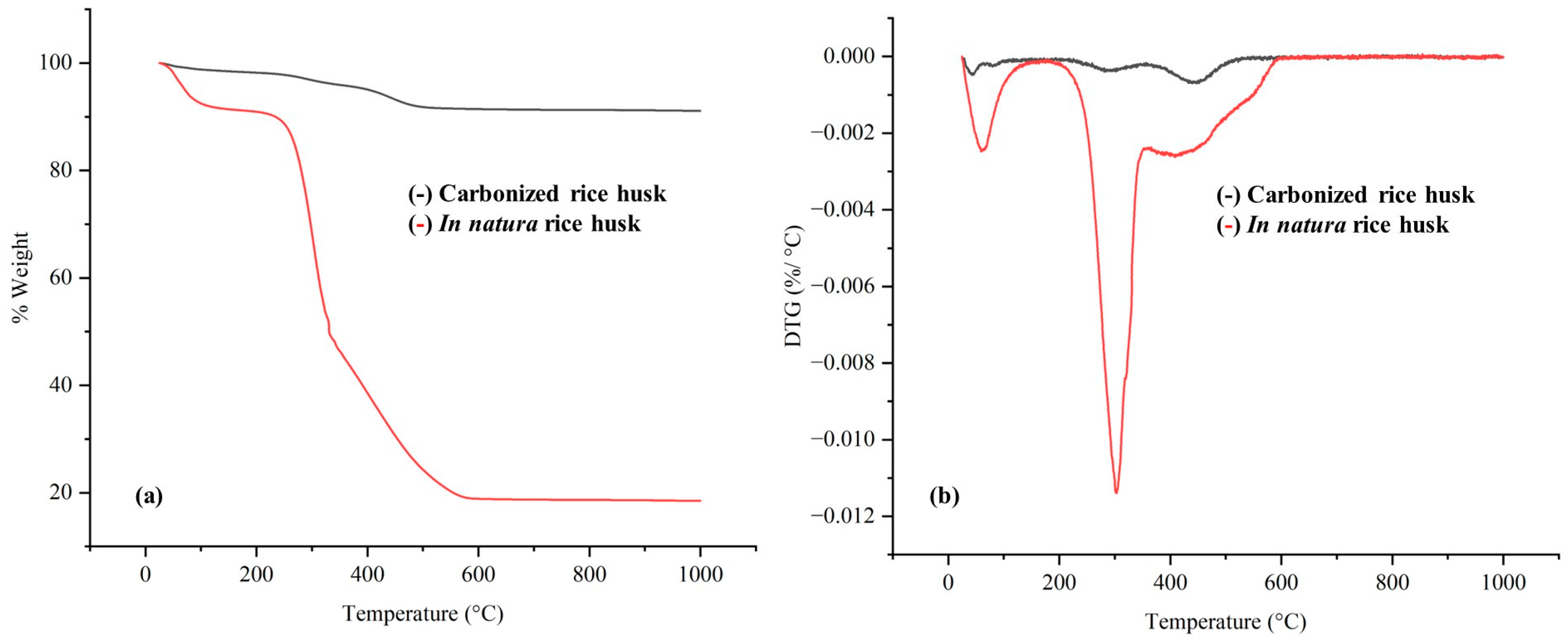
TGA was used to characterize the rice husk, providing valuable information on its thermal stability and the decomposition processes associated with the biopolymers present. The analysis of the rice husk in natura revealed two significant mass losses in the temperature ranges of 25–120 °C and 300–450 °C. As shown in Figure 1 and Table 2, the first is related to the evaporation of residual moisture, while the second corresponds to the degradation of the organic components of the biomass. The decomposition process takes place in three main stages: hemicellulose, due to its amorphous structure, degrades between 200–260 °C; cellulose degrades between 240–260 °C; and lignin, due to its highly aromatic and polymerized structure, degrades more slowly and progressively, and can occur from lower temperatures to approximately 950 °C [34,35]. The higher thermal stability of lignin is attributed to its structural complexity and the presence of cross-links [36]. The TGA results corroborate these observations, showing that the rice husk has a total mass loss of approximately 59.92% up to 500 °C, indicating the conversion of the organic constituents. Nevertheless, the thermal decomposition of rice husk chemically treated with DES revealed a different thermal behavior. The interaction between the biopolymers and the solvents modified their thermal properties, possibly due to the formation of hydrogen bonds and alteration of the crystalline structure of the cellulose [35]. The treatment reduced the overlap of the hemicellulose and cellulose degradation bands, suggesting a structural modification caused by the extraction process.
On the other hand, the carbonized rice husk showed a TGA profile similar to that of the raw husk, but with significantly lower mass losses. This indicates that carbonization removes a large part of the organic material, leaving predominantly carbonaceous and mineral residues. However, the presence of small amounts of moisture and residual organic matter suggests that the carbonization process was not totally efficient, as evidenced by the detection of granules with a color characteristic of the bark in natura. In addition, TGA of the samples revealed that the carbonized material maintains greater thermal resistance, due to the high concentration of fixed carbon and silica in the final structure. Nguyen et al. [8] also found similar results when analyzing the thermal decomposition of rice husks. In their study, it was observed that hemicellulose degrades at lower temperatures, while cellulose degrades at a slightly higher range, and lignin shows a broader and more gradual decomposition. In addition, this study highlighted the influence of the purification of the lignocellulosic components on the thermal stability of the samples, which corroborates the findings of the present work. The similarity between the results reinforces the reliability of TGA analyses in characterizing rice husks and their treated derivatives.

2.1.3. X-Ray Fluorescence (XRF)

Chemical analysis by XRF was used to determine the elemental composition in natura and carbonized rice husks, as shown in Table 3. The XRF technique is widely used due to its high sensitivity and precision in identifying the elements present in materials. The silica contents obtained were 76.36% for the carbonized rice husk and 27.6% for the raw husk, values which are in line with those as previously reported by Sathyamoorthi et al. [37]. The significant increase in silica concentration after carbonization is directly related to the elimination of the organic fraction of the biomass, reducing the total mass of the material and consequently increasing the proportion of mineral components. This enrichment of silica turns carbonized bark into a promising material for technological applications, such as the production of ceramic materials, catalysts, and high-performance compounds [38].
The results indicated that carbonized rice husk, without additional treatment, contains approximately 24% of other minerals, composed mainly of potassium, calcium, silver, iron, aluminum, and phosphorus. The presence of these elements can have a significant impact on the industrial application of the extracted silica, especially in processes that require high purity of the material, such as the manufacture of electronic devices and catalysts. These impurities can interfere with thermal stability, electrical conductivity, and surface chemistry of the silica, thus limiting its applicability. Furthermore, the high percentage of SiO2 observed in the carbonized sample highlights the efficiency of the thermal process in concentrating the mineral phase. However, to achieve silica purity levels greater than 95–99%, which are required for advanced materials (e.g., semiconductors), complementary chemical purification steps are necessary.
In addition, TGA of the carbonized rice husk showed that the thermal process promotes the gradual removal of organic compounds, resulting predominantly in mineral residues, especially silica. Studies such as that by Lee et al. [10] emphasize the relevance of using alternative solvents, such as ionic liquids and deep eutectic solvents, for removing metallic impurities. In this context, XRF provides a fundamental baseline for assessing the efficiency of both the thermal pre-treatment and any subsequent purification strategy. The reduction of undesirable oxides and the relative increase in SiO2 content serve as key indicators of process success in biomass valorization strategies.
Table 3 shows that treatment with the betaine: lactic acid system (1:2) led to a significant increase in the relative SiO2 content (from 76.36% in the untreated carbonized sample to 83.10% after treatment with this DES), which is evidence of its effectiveness in removing competing mineral impurities. Moreover, when using DES, there was a significant reduction in the concentrations of metal oxides such as K2O, CaO, and Ag2O, indicating that the process not only preserves the silica fraction, but also acts selectively in the elimination of alkali and alkaline earth metals. For example, the K2O content was reduced from 13.02% to 8.31% with the use of betaine: lactic acid, while CaO fell from 1.78% to 1.12% and Ag2O from 2.23% to 1.03%. These results are relevant since the presence of potassium and calcium can compromise the thermal and structural properties of silica.
Among the different DES evaluated, solvents based on lactic and oxalic acid showed the best performance in purifying silica, probably due to their moderate acidity and complexing capacity, which favor the solubilization of metal ions without degrading the inorganic matrix. On the other hand, DES with urea showed lower selectivity, which is reflected in higher levels of residual impurities. The data reinforce the hypothesis that DES act through selective extraction mechanisms mediated by acid-base interactions and the formation of soluble complexes with metal cations. This selectivity is crucial for biomass purification processes that seek to obtain materials with a high silica content and low metal contamination. Padwal et al. [39] evaluated the influence of DES based on ChCl with different HBDs (oxalic acid (OA), ethylene glycol (EG), and urea) on the extraction of metals present in carbonized rice husk. The results indicated that silicon dioxide (SiO2) is the main component of the biomass, accounting for approximately 80.24%, followed by smaller proportions of metal oxides such as K2O (4.79%), P2O5 (2.64%), CaO (0.57%), and MgO (0.89%). These XRF data confirm the high potential of rice husks as a sustainable source of silica, in line with the literature, which highlights the abundance of SiO2 in agro-industrial waste.

2.1.4. Scanning Electron Microscopy (SEM)

The morphological characterization of rice husks, both in natura and carbonized, by scanning electron microscopy (SEM) provides essential information on the structural organization of the biomass and the morphological changes induced by heat treatment. SEM images at different magnifications reveal the surface topography, pore distribution, and presence of impurities, all of which may influence the properties and potential applications of the silica extracted from this material [40,41].
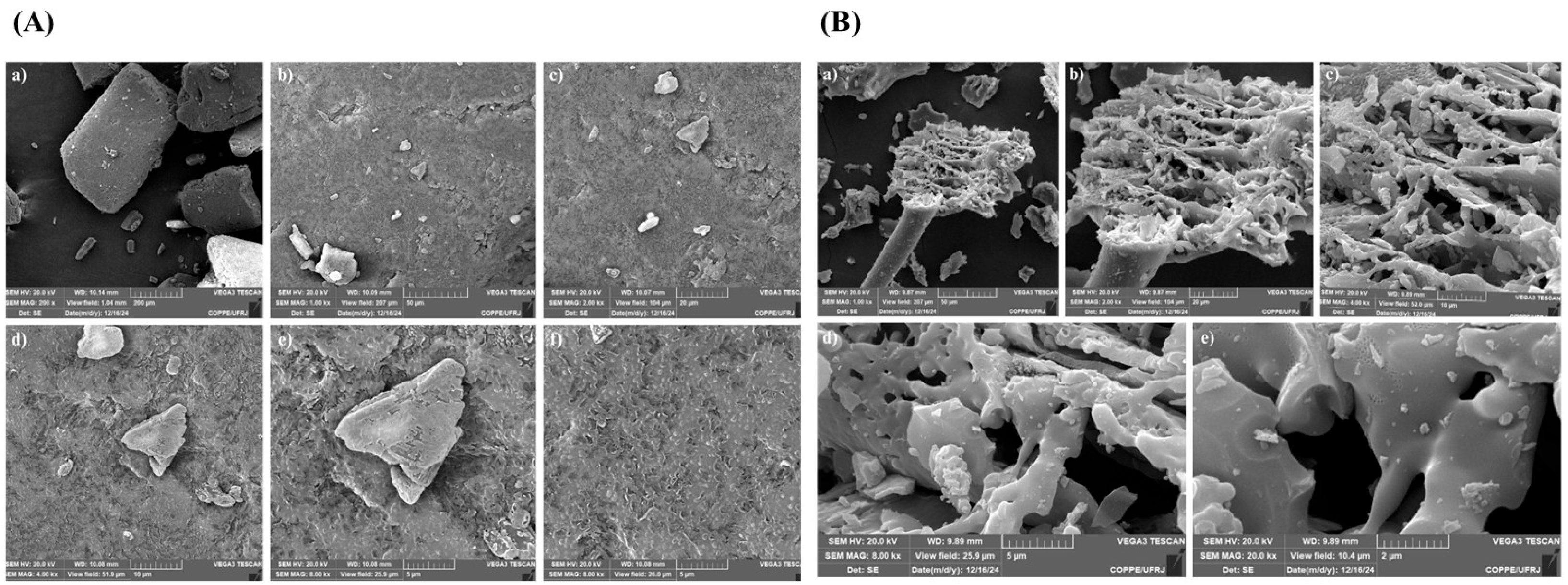
The images of in natura rice husks, shown in Figure 2A, reveal a fibrous and highly structured morphology, typical of the lignocellulosic composition of this material. At magnifications of 200× to 1000×, a relatively compact and organized surface can be seen with interconnected layers that act as a protective barrier for the rice grains. The SEM micrographs reveal a heterogeneous lignocellulosic matrix, while XRF and XRD results indicate that a silica-rich inorganic phase is embedded in this structure, in agreement with previous studies on rice husk composition [39,40,41]. As the magnification increases to 2000× and 4000×, the presence of microcavities and porous regions becomes evident, indicating that the silica is not evenly distributed, but rather deposited irregularly in the structure of the husk. This behavior is expected, as the rice husk acts as a natural biosilicate, accumulating silica from the soil during plant growth. At 8000×, it can be seen that some areas of the surface show agglomerated silica particles, while others still contain residues of organic material, which can affect the efficiency of extracting compounds in industrial processes. The heterogeneity of the surface and the presence of metallic impurities indicate the need for additional chemical treatments to selectively remove these components and improve the purity of the extracted silica.
It is important to highlight that betaine: lactic acid DES was selected for morphological and structural analyses due to its higher removal of the organic fraction, as indicated by the lower residual mass in the thermal analyses and the relative increase in silica content in the carbonized samples. Furthermore, SEM micrographs showed a more homogeneous and porous surface, favoring the characterization of the morphology of the silica exposed after treatment.
Figure 2B shows the analysis of in natura rice husks treated with DES betaine: lactic acid. which reveals changes in the surface morphology of the material. Compared to the untreated sample, there is a partial removal of the outer layer of the husk, which may be associated with the degradation of lignin and other organic components. This modification can be attributed to the combined action of DES in the degradation of lignin and hemicellulose, promoting greater exposure of pores and facilitating adsorption processes and increased efficiency in the removal of metallic impurities. DES are known for their ability to act as efficient extractive agents due to their unique properties, including strong interaction by hydrogen bonds and high solubility for organic and inorganic compounds.
Padwal et al. [39] highlighted that, compared to strong inorganic acids such as HCl, DES offer a more environmentally friendly, efficient and selective approach to the removal of impurities without compromising the structural integrity of the biomass. The results showed that the choice of DES directly influenced the efficiency of metal extraction, with emphasis on the use of systems based on choline-chloride and different hydrogen bond donors (HBD), such as oxalic acid and urea. These solvents demonstrated a superior capacity for removing metal impurities such as Mg, Ca, and Mn, without causing substantial losses in the concentration of silicon in the rice husk.
Similar results were found in this study with the treatment of raw rice husks with DES betaine: lactic acid, resulting in a substantial reduction in the concentration of metallic impurities such as Fe2O3 and K2O, while increasing the relative proportion of the silica fraction in the biomass. This trend suggests that DES act in the selective degradation of organic components such as lignin and hemicellulose, promoting greater accessibility of silica and facilitating its subsequent extraction.
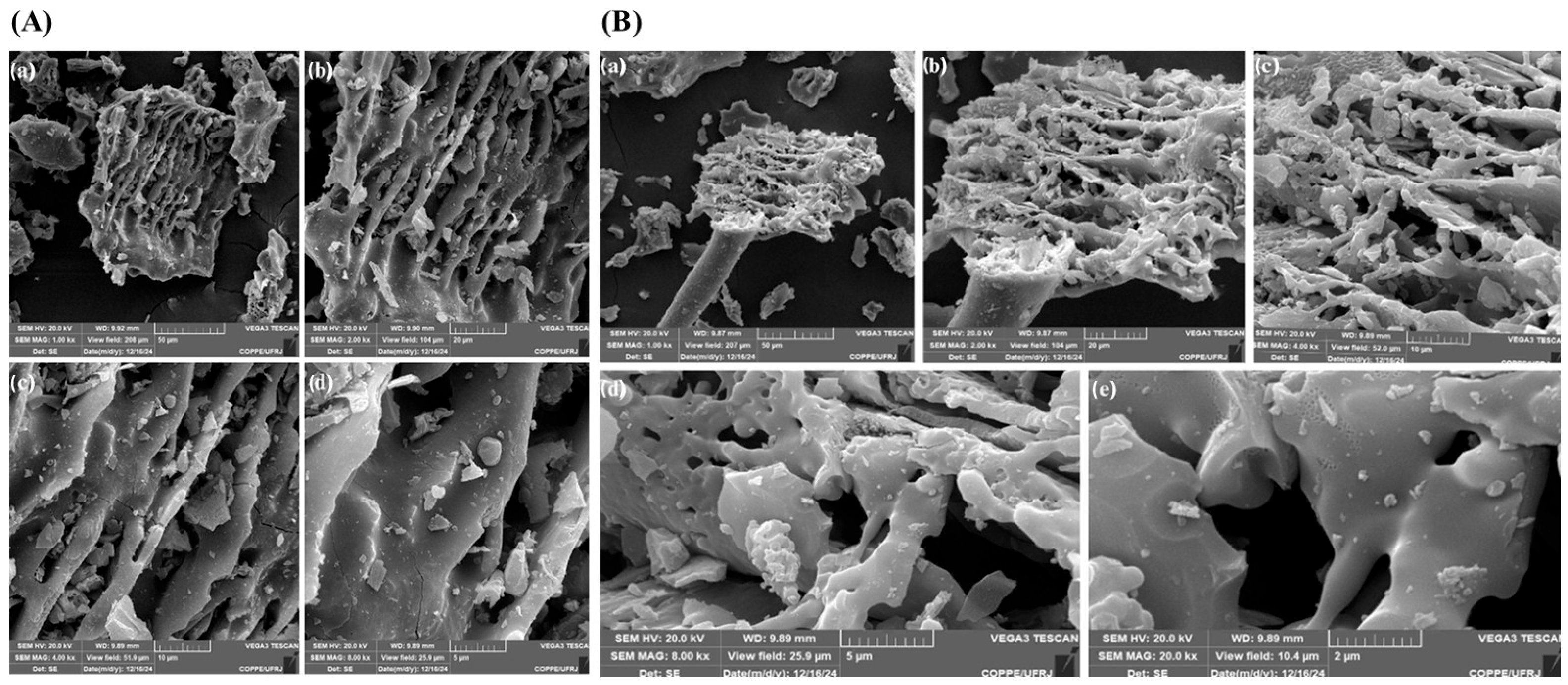
Figure 3A illustrates the morphology of the rice husk after the carbonization process. At magnifications of 2000× and 4000×, it is possible to see a significant change in the surface structure, with the appearance of cavities and a significant increase in porosity. This phenomenon occurs due to the elimination of the organic fraction of the biomass during pyrolysis, leaving a structure predominantly composed of silica and other residual minerals. In the 8000× images, the carbonized bark shows a highly fragmented morphology, with silica particles dispersed in the carbon matrix. The presence of fissures and interconnected pores suggests an increase in the material’s surface area, potentially making it a candidate for applications as a catalytic support and adsorbent for removing pollutants.
Analysis of the carbonized rice husk treated with betaine: lactic acid DES (Figure 2B) indicates additional structural refinement, possibly due to the removal of remaining impurities. At magnifications of 1000× to 20,000×, a more homogeneous surface and a reduction in the amount of aggregated particles can be seen, indicating that the chemical treatment favors the purification of the silica. In addition, the effects observed after carbonization suggest that the betaine: lactic acid DES treatment influenced the final structure of the carbonized material, reducing the amount of aggregated particles, a higher surface area, a more homogeneous distribution of silica, and increasing the purity of the extracted silica. According to Table 3, there was an increase in the concentration of SiO2 in the carbonized bark after treatment with different DES, compared to the untreated sample. This result corroborates the morphological characterization carried out by SEM, which indicated higher porosity and a more homogeneous distribution of silica on the surface of the treated material. Di et al. [42] demonstrated that the treatment of rice husks with DES based on ChCl: oxalic acid-SiO2) resulted in modifications to the structural properties of biomass. In addition, the functionalization of silica with DES promotes the development of highly porous and thermally stable surfaces, desirable characteristics for obtaining materials with high purity and chemical reactivity.

2.1.5. X-Ray Diffraction (XRD)

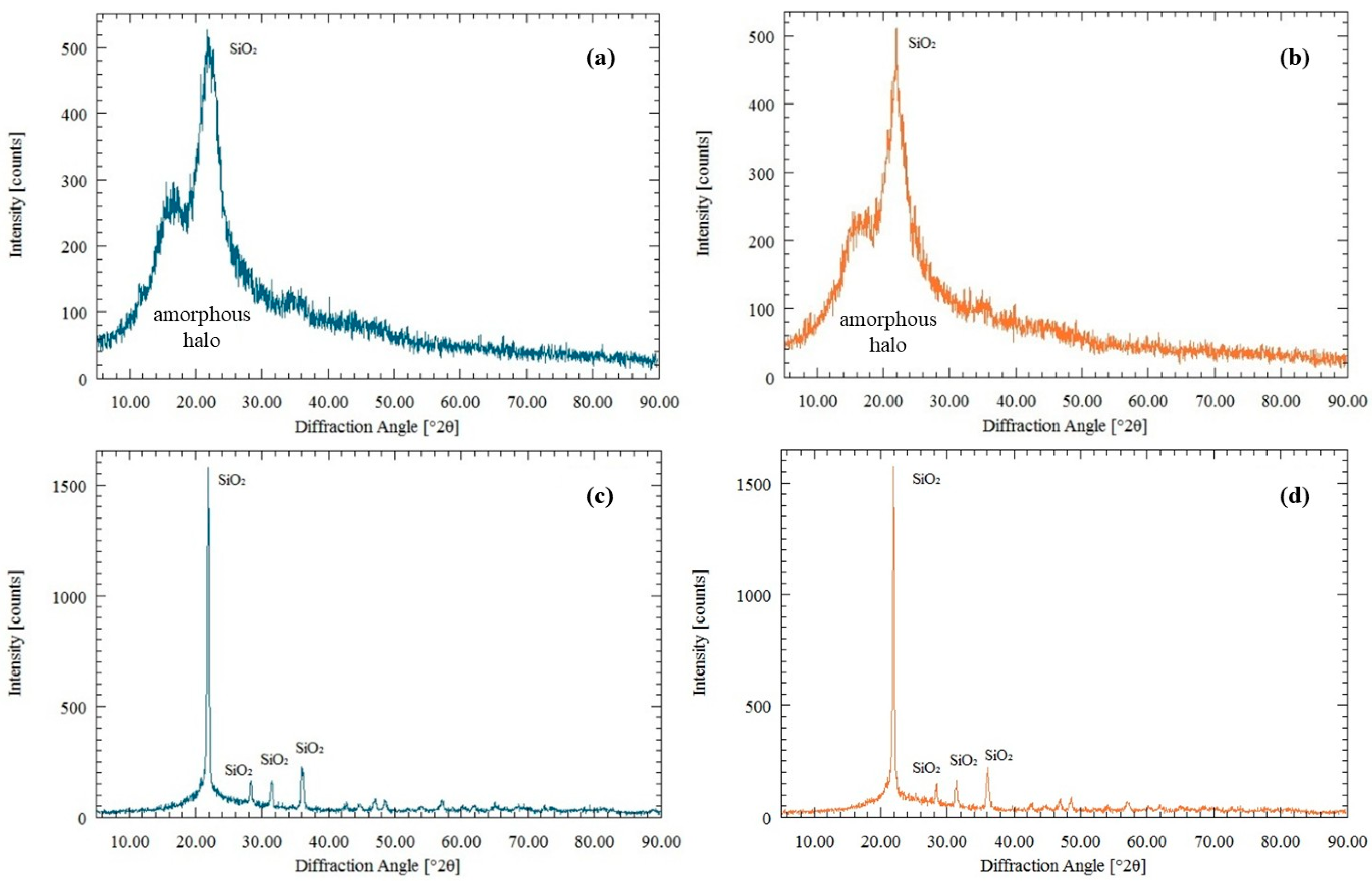
Silica can occur either in an amorphous form, which is generally more reactive due to its higher specific surface area and larger number of silanol groups, or in crystalline forms, which are comparatively more inert under typical processing conditions. The relative proportion between these forms depends strongly on the processing method and the temperature applied to the rice husk [43]. For in natura rice husks, an amorphous halo is observed in the 2θ range between 15° and 30°, as shown in Figure 4a. This behaviour is characteristic of predominantly amorphous materials, indicating that the silica present in the raw husk has not undergone significant crystallization. This morphology is maintained due to the mild heat treatments used in the extraction processes. Figure 4b shows the diffractogram of in natura rice husks treated with betaine: lactic acid DES. The treated sample shows a more pronounced amorphous halo, which can be attributed to the combined contribution of the amorphous silica-rich inorganic fraction and residual amorphous organic polymers (cellulose, hemicellulose, and lignin) that are not fully removed by the DES treatment. This observation, together with the lignin and sugar dissolution results, indicates that the DES preserves the amorphous character of the silica while only partially extracting the organic matrix [44]. This behavior is desirable for applications requiring high surface reactivity. Nguyen et al. [8] also observed that silica extracted by conventional chemical treatment predominantly has an amorphous structure, similar to the results observed in the DES-treated samples in this study. The investigation by Di et al. [42] reinforces this approach by demonstrating that DES and silica can be used to optimize biomass conversion processes, promoting greater thermal stability and selectivity in obtaining value-added products. The incorporation of DES into silica improves the dispersion of reagents and favors more efficient catalytic reactions. In the context of extracting silica from rice husks, this type of approach can result in a material with a larger surface area and greater efficiency in removing impurities. consolidating the application of DES in optimizing the quality of the final material.
Figure 4c shows the XRD diffractogram of carbonized rice husk. The peaks at angles of 2θ, 21° and 36° are characteristic of the high-temperature polymorphic phase of silica, known as cristobalite. This result indicates that carbonization at high temperatures promotes the crystallization of amorphous silica into a less reactive phase. As the XRF analysis showed, rice husks contain potassium. This element accelerates the fusion of particles and the crystallization of amorphous silica into cristobalite, as it lowers the melting point of the material [45]. This effect is relevant because controlling the potassium content can directly influence whether amorphous or crystalline silica is obtained during the thermal processes. The influence of the betaine: lactic acid DES treatment can also be seen in Figure 4d. A reduction in the intensity of the crystalline peaks for the treated sample is observed, indicating a higher proportion of amorphous silica. This effect is consistent with studies showing that the use of DES contributes to the removal of metallic impurities, which can catalyze the silica’s crystallization [10,46]. Padwal et al. [39] studied the effect of DES based on ChCl: OA (1:2), ChCl: EG (1:1), and ChCl: urea (1:1) on rice husk. The results showed that the XRD patterns revealed peaks characteristic of crystalline silicon, indicating the preservation of the crystalline structure of Si after treatment. Furthermore, a broadband was observed between 20° and 26°, attributed to the presence of amorphous carbon in the samples.

2.2. Lignin Dissolution

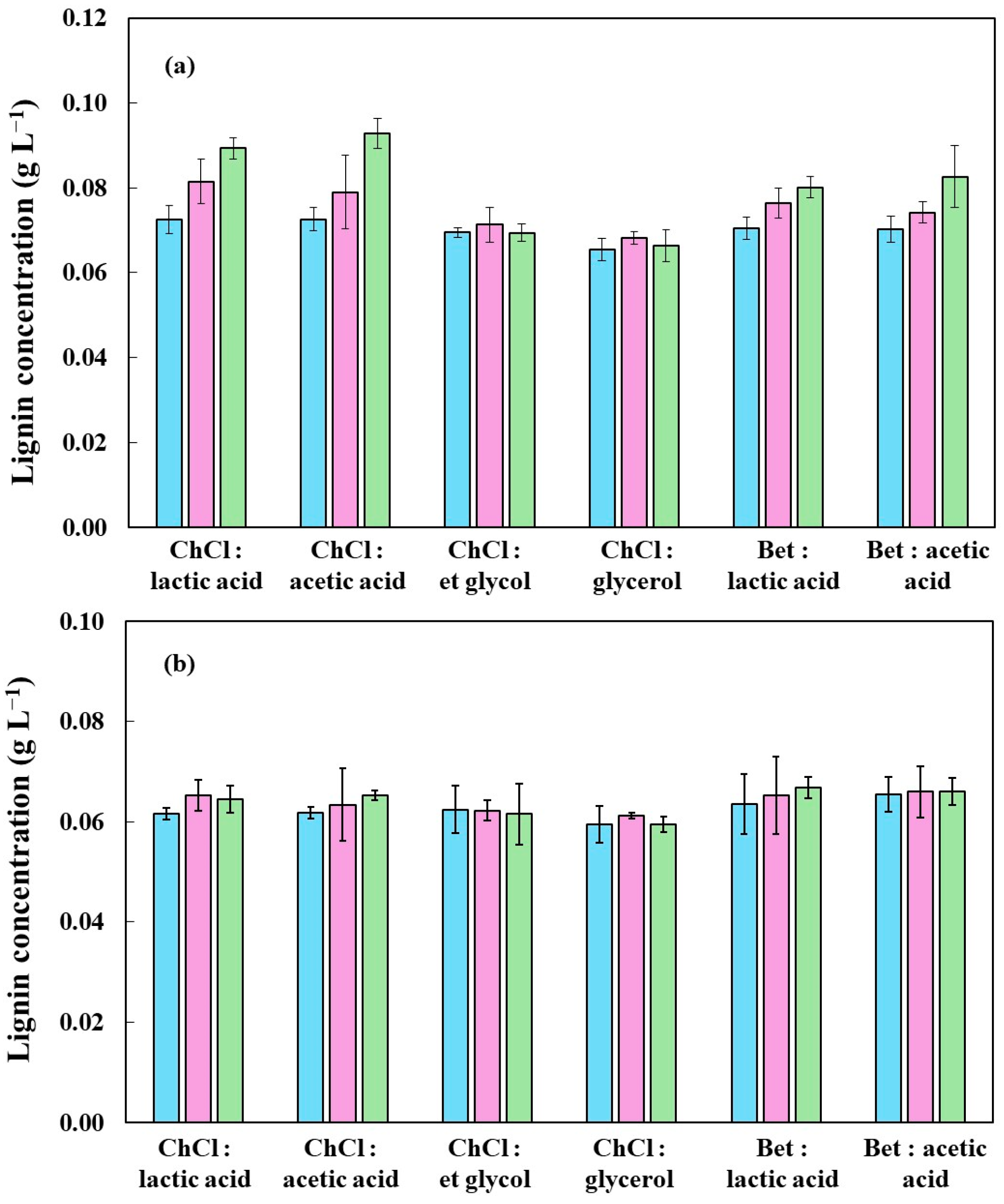
Figure 5 displays the lignin concentration in solution after dissolution of rice husk biomass with various DES at three different temperatures: 110 °C, 130 °C, and 150 °C. The results are presented for both raw (a) and carbonized (b) rice husk, enabling an assessment of how both temperature and biomass influence lignin solubilization.
In general, for all solvents tested, higher temperatures consistently promote greater lignin dissolution, with the most pronounced increases observed between 110 °C and 150 °C. This behavior can be attributed to two primary factors: (i) increasing temperature reduces the viscosity of DES, facilitating its penetration into the lignocellulosic matrix; and (ii) higher thermal energy enhances the cleavage of lignin’s ester and ether bonds, leading to improved solubilization [47,48]. In in natura rice husk, which retains more native lignin, lignin dissolution was significantly higher than in carbonized biomass across all conditions. This reflects the partial degradation and condensation of lignin during pyrolysis, which renders it less accessible to solvent interaction, enhancing the accessibility of cellulose and hemicellulose, enabling the recovery of high-value-added compounds from rice husk biomass [49,50,51]. This behavior is in agreement with studies by Su et al. [52] and Yu et al. [47], which reported reduced delignification in thermally altered lignocellulosic structures due to pseudo-lignin formation and increased recalcitrance.
Among the DES systems evaluated, ChCl: lactic acid and betaine: lactic acid exhibited the highest lignin solubilization yields at all temperatures, particularly at 150 °C. The superior performance of these systems can be linked to the moderate acidity and strong hydrogen bond donor ability of lactic acid, which enhances the disruption of lignin’s complex macromolecular network. Conversely, DES containing glycerol and ethylene glycol as HBDs demonstrated lower delignification efficiency, likely due to their reduced capacity to cleave covalent bonds within the lignin polymer. Interestingly, while ChCl-based DES performed better in carbonized samples, betaine-based DES showed competitive or superior efficiency in raw husk, suggesting that this solvent’s effectiveness is biomass-dependent. Factors such as lignin condensation degree, accessibility of aromatic subunits, and residual hemicellulose content may modulate solvent interaction. The role of temperature in modulating DES performance has also been highlighted by Mamilla et al. [53], who demonstrated that elevated temperatures improve mass transfer kinetics and surface reactivity, consistent with Arrhenius’ law. Additionally, the possible water trace in DES formulations can modulate solvation dynamics, influencing lignin extraction. As observed by Hammond et al. [54] and Buarque et al. [55], low water content (<5 wt%) may enhance hydrogen bonding within DES, lowering viscosity and improving solubilization. However, excess water disrupts the eutectic structure, reducing extraction efficiency.

2.3. Total Sugar Content Quantification

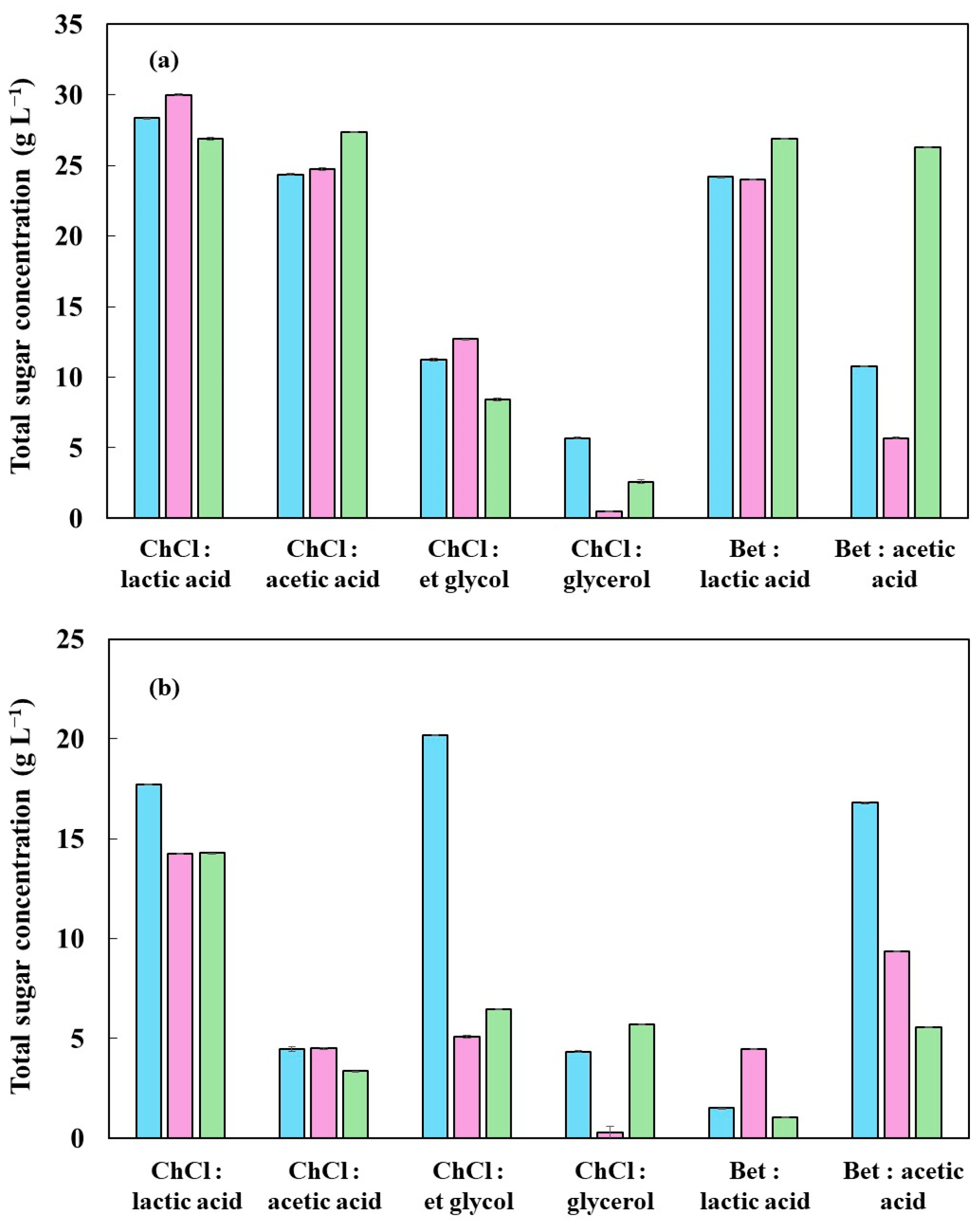
From an analysis of Figure 6, it can be seen that the extraction of total sugars was more efficient with the higher acidity solvents, notably the ChCl: acetic acid, ChCl: lactic acid, betaine: lactic acid, and betaine: acetic acid DES. The remarkable results with acidic DES are associated with their ability to promote the cleavage of glycosidic bonds and to solubilize the polysaccharides in lignocellulosic biomass [56]. Unlike the behavior observed in lignin extraction, the influence of temperature on sugar extraction was not linear. Higher temperatures (130–150 °C) did not result in proportional increases in extraction yield. On the contrary, some DES showed a reduction in yield after 130 °C, possibly due to the thermal degradation of solubilized sugars, such as the formation of furfural and 5-HMF in acidic media, which explains the selection of 110 °C as the ideal condition, as it balances extraction efficiency and the stability of the products obtained [57,58].
In general, the highest sugar extraction yields were obtained from fresh biomass, regardless of the type of DES used. This behavior is to be expected, since fresh biomass preserves its original lignocellulosic structure, containing higher proportions of polysaccharides, especially cellulose and hemicellulose. These fractions are more susceptible to solubilization when exposed to acidic solvents. The presence of accessible glycosidic bonds with a lower degree of condensation favors the hydrolytic action of DES, especially at moderate temperatures (110–130 °C). Carbonized biomass exhibited considerably lower extraction yields, which can be attributed to the partial thermal degradation of carbohydrates during carbonization. The hemicellulose fraction and part of the cellulose are pyrolyzed at high temperatures (>200 °C), forming condensed aromatic compounds and recalcitrant structures such as pseudo-lignin. These residues are less soluble in DES and hinder the release of structural sugars [59].
Another factor to consider is that although carbonization facilitates the removal of the volatile fraction and reduces the total mass of the biomass, it also reduces the organic fraction available for extraction, especially the carbohydrates. Despite its lower efficiency in extracting sugars, carbonized biomass can have advantages in other stages of the valorization process, such as silica purification. Therefore, the choice between using in natura or carbonized biomass must take into account the fractionation objectives, balancing carbohydrate extraction yield with the quality and accessibility of the inorganic matrix.
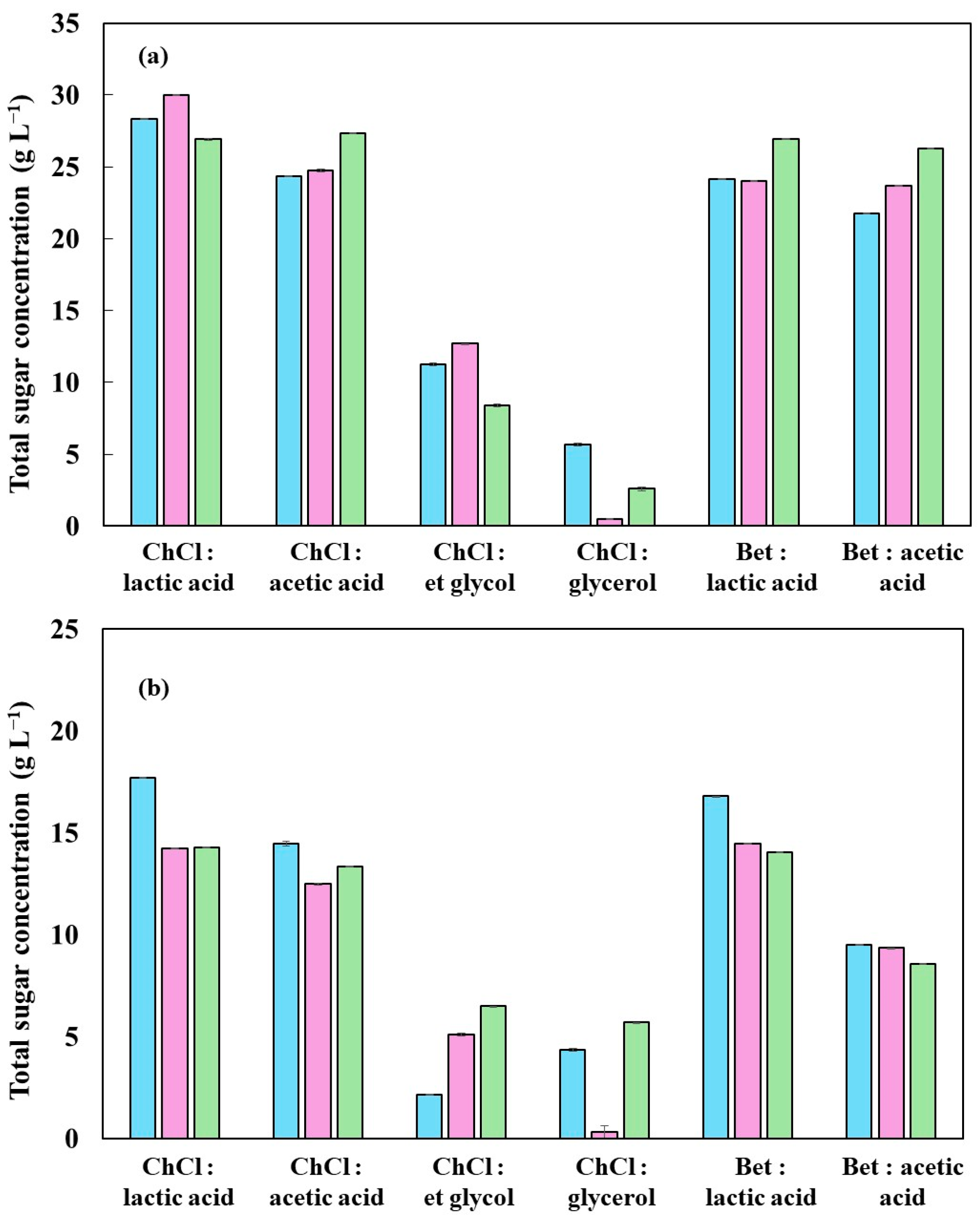
Figure 7 displays the glucose extraction results, by enzymatic hydrolysis, from rice husk samples previously treated with different DES, under three thermal conditions (110 °C, 130 °C, and 150 °C), for (a) in natura and (b) carbonized biomass. In order to validate the results obtained in the total sugar quantification, monomeric glucose was analyzed by HPLC. For this purpose, the residual sample from dissolving the biomass was subjected to enzymatic hydrolysis with the commercial cellulolytic cocktail Cellic CTec2 (Novozymes, containing cellulases, β-glucosidases, and hemicellulases), and the released glucose was quantified. This approach enables a complementary assessment of the treatment’s efficiency, where the lower the amount of glucose produced, the higher the solvent’s efficiency in previously extracting the polysaccharides from the biomass. This behavior is due to the action of DES, which reduces the fraction of structural carbohydrates available for conversion, directly reflecting the low levels of glucose detected.
The results indicate that, in both biomasses, the lowest levels of enzymatically extracted glucose were observed in the samples treated with the acidic DES. This data confirms the high efficiency of these DES in solubilizing structural carbohydrates, reinforcing the findings obtained in the analyses of total sugars (Figure 6). It is noteworthy that the betaine: lactic acid solvents presented the best overall performance, which highlights its favorable combination of acidity, ability to interact with biomass, and extraction selectivity. The tendency for glucose release to increase after 130 °C in some DES may indicate partial thermal degradation of the polysaccharides or structural rearrangements that hinder enzymatic action, an effect already reported in the literature in processes under acidic and high-temperature conditions.
To complement the previous analysis, glucan and xylan were quantified in order to determine the remaining cellulose and hemicellulose content in the biomass treated in natura. The data shown in Table 4 details the composition of the residual biomass after hydrolysis of the material previously treated with DES betaine: lactic acid. The biomass displayed high levels of glucan (26.05%) and xylan (13.96%), indicating the considerable presence of cellulose and hemicellulose. It is important to note that the cellulose and hemicellulose contents correspond to the glucan and xylan fractions, respectively. These results confirm that thermal pre-treatment, combined with the use of DES, results in biomass with a lower content of structural carbohydrates, a highly satisfactory effect when the aim is to purify the mineral fraction (biosilica).

3. Materials and Methods

3.1. Materials

The rice husk was obtained from Projeto Raiz, located in Porto Alegre, RS, Brazil. Cellic CTec2 was purchased from Novozymes. All the HBA (choline chloride (ChCl) and betaine) and HBD (acetic acid, lactic acid, ethylene glycol, and glycerol) used in the DES formation were purchased from Sigma-Aldrich with purity ≥ 99 wt%. The solvents sulfuric acid, acetone, petroleum ether, phenol, and 1,4-dioxane were purchased from Isofar with purity ≥ 99 wt%.

3.2. Preparation of DES

DES were prepared by combining the hydrogen bond acceptor (HBA; choline chloride or betaine) and the hydrogen bond donor (HBD; glycerol, ethylene glycol, lactic acid or acetic acid) in an HBA:HBD molar ratio of 1:2. The mixtures were weighed gravimetrically, placed in sealed vials, and heated in a heat block at 80 °C for 1 h with continuous stirring to ensure homogeneity [60].

3.3. Dissolution Process and Biomass Characterization

The raw and carbonized rice husks were milled and sieved using a 32-mesh screen to ensure uniform particle size. The resulting biomass was then characterized by its protein, lipid, ash, and moisture contents using standardized physicochemical methods [61].
TGA Shimadzu (Kyoto, Japan) was also performed to characterize the biomass, following the previously described methodology [62]. The XRF analysis was performed on Rigaku equipment, Miniflex II model, and elemental coal analysis was performed on PerkinElmer equipment, model 2400 Series II CHNS/O Analyzer. XRD analysis of the pastes was taken using a Shimadzu diffractometer (Kyoto, Japan) with a CuKα radiation filter (λ = 1.54059 Å) and operating at 30 kV and 10 mA. Scans were performed with two theta ranges of 5–90 °C with a step increment of 0.05 °C s−1. The morphological and crystallographic particle characteristics were investigated using scanning electron microscopy (SEM, Hitachi TM3000 operating at 15 kV, Hitachi High-Technologies Corporation, Tokyo, Japan). Afterwards, DES were added to raw and carbonized rice husks in a biomass-to-solvent ratio of 1:10 (m/m). Then, the samples were inserted into the dry bath without agitation at temperatures of 110, 130, and 150 °C for 1 h. Finally, the samples were centrifuged, the supernatant was separated, and the dissolution yield was determined using Equation (2).
%   D i s s o l u t i o n = C i   ×   V m t i
where C i is the biomass concentration in mg mL−1, V is the system volume in mL, m t i is the total mass of the lignin.

3.4. Lignin Determination

Lignin content was quantified following the method proposed by Ibrahim et al. [63]. The lignin residue was solubilized in a 90 wt% aqueous dioxane solution. All analyses were performed in triplicate to ensure accuracy and reproducibility. The lignin dissolution process was evaluated using the alkaline lignin standard (Aldrich cod. 370959, lot#MKBJ0452V).

3.5. Total Sugar Determination

Total sugar content was determined using the phenol-sulfuric acid method described by Dubois et al. [64]. In this procedure, 10 mg of the supernatant was mixed with 270 μL of distilled water, 270 μL of 5 wt% phenol solution, and 1460 μL of 98 wt% sulfuric acid. The mixture was allowed to stand for 30 min at room temperature to ensure complete reaction. Absorbance measurements were recorded at 490 nm using a spectrophotometer to quantify total sugar content.

3.6. Determination of Sugars Using HPLC

According to the supplier, the enzyme Cellic CTec2 from Novozymes contains cellulases, beta-glycosidases, and hemicellulases in its composition. Therefore, the enzymatic hydrolysis of the residual biomass was performed following the protocol described by Pin et al. [65]. In the reaction, 10 mg of substrate was mixed with 0.9 mL of 50 mM citrate buffer (pH 5) and 100 μL of Cellic CTec2 enzyme. The reaction was conducted at 50 °C with 300 rpm agitation for 48 h using a Thermomixer Eppendorf. After incubation, the samples were centrifuged and filtered through 0.22 μm membrane filters before being analyzed by HPLC (Shimadzu, Kyoto, Japan). Chromatographic analysis was carried out using an Aminex HPX-87H column (BioRad, 300 × 7.8 mm), with detection performed using a RID-10A refractive index detector and a LC-20ADSP binary pump. The mobile phase consisted of a 5 mM H2SO4 aqueous solution, with a flow rate of 0.6 mL min−1, an oven temperature of 55 °C, and an injection volume of 20 μL, using glucose as the standard.

4. Conclusions

This study demonstrated the feasibility of using DES as sustainable and selective media for rice husk fractionation. Acidic DES, particularly those based on lactic acid, achieved high efficiency in removing lignin (>70%) and solubilizing structural sugars, while simultaneously increasing the purity of the inorganic fraction. XRF analyses confirmed that the betaine: lactic acid DES promoted biosilica with SiO2 content above 80%, a significant improvement compared to untreated carbonized husks (76.36%). Furthermore, TGA, SEM, and XRD results showed that DES treatment enhanced porosity and surface homogeneity, while preserving the amorphous structure of silica, an essential characteristic for high-reactivity applications. The controlled acidity of DES proved decisive in cleaving ester and glycosidic bonds in the lignocellulosic matrix without compromising silica integrity. The optimized condition of 110 °C balanced extraction efficiency with product stability, minimizing sugar degradation. This work highlights DES as a versatile, tunable, and environmentally compatible platforms that surpass conventional thermal and chemical methods by reducing impurities and improving silica quality. In addition to advancing the sustainable valorization of agricultural residues, it also establishes DES as a promising route for producing high-purity biosilica within the framework of green chemistry and the circular bioeconomy.

Supplementary Materials

The following supporting information can be downloaded at: https://www.mdpi.com/article/10.3390/molecules30244697/s1, Table S1: Water content and pH of DES preparations.; Table S2: Weight loss by temperature (T.—°C) range and decomposition temperature (Tdec—°C) for green solvents based on choline chloride.

Author Contributions

Conceptualization, A.L.C.C., F.S.B. and B.D.R.; methodology, C.S.F.-J.; validation, C.S.F.-J. and L.d.S.S.; formal analysis, C.S.F.-J. and L.d.S.S.; investigation, C.S.F.-J. and L.d.S.S.; data curation, C.S.F.-J., L.d.S.S. and F.S.B.; writing—original draft preparation, F.S.B.; writing—review and editing, B.D.R.; visualization, A.L.C.C. and B.D.R.; supervision, A.L.C.C., F.S.B. and B.D.R.; project administration, B.D.R.; funding acquisition, B.D.R. All authors have read and agreed to the published version of the manuscript.

Funding

This work was financed by national funds through the National Council for Scientific and Technological Development (CNPq), Coordination for the Improvement of Higher-Level Personnel (CAPES), and Foundation for Research Support and Technological Innovation of the State of Rio de Janeiro (FAPERJ). Buarque, F.S. acknowledges the scholarship grant from FAPERJ: E-26/204.344/2021.

Institutional Review Board Statement

Not applicable.

Data Availability Statement

Data will be made available on reasonable request.

Conflicts of Interest

The authors declare no conflicts of interest.

References

  1. Freitas, L.C.; Barbosa, J.R.; da Costa, A.L.C.; Bezerra, F.W.F.; Pinto, R.H.H.; de Carvalho Junior, R.N. From Waste to Sustainable Industry: How Can Agro-Industrial Wastes Help in the Development of New Products? Resour. Conserv. Recycl. 2021, 169, 105466. [Google Scholar] [CrossRef]
  2. Rajesh Banu, J.; Preethi; Kavitha, S.; Tyagi, V.K.; Gunasekaran, M.; Karthikeyan, O.P.; Kumar, G. Lignocellulosic Biomass Based Biorefinery: A Successful Platform Towards Circular Bioeconomy. Fuel 2021, 302, 121086. [Google Scholar] [CrossRef]
  3. Bhat, M.A.; Bhat, M.A.; Jan, S.; Shah, A.A.; Jan, A.T. Lignocellulosic Biomass in Circular Economy: A Techno-Transition in Carbon Neutrality Towards Sustainable Energy Production: Biofuels in Circular Economy. Biomass Bioenergy 2024, 189, 107349. [Google Scholar] [CrossRef]
  4. Velvizhi, G.; Balakumar, K.; Shetti, N.P.; Ahmad, E.; Kishore Pant, K.; Aminabhavi, T.M. Integrated Biorefinery Processes for Conversion of Lignocellulosic Biomass to Value Added Materials: Paving a Path Towards Circular Economy. Bioresour. Technol. 2022, 343, 126151. [Google Scholar] [CrossRef]
  5. Bhattacharyya, S.C. Viability of Off-Grid Electricity Supply Using Rice Husk: A Case Study from South Asia. Biomass Bioenergy 2014, 68, 44–54. [Google Scholar] [CrossRef]
  6. Kook, J.W.; Choi, H.M.; Kim, B.H.; Ra, H.W.; Yoon, S.J.; Mun, T.Y.; Kim, J.H.; Kim, Y.K.; Lee, J.G.; Seo, M.W. Gasification and Tar Removal Characteristics of Rice Husk in a Bubbling Fluidized Bed Reactor. Fuel 2016, 181, 942–950. [Google Scholar] [CrossRef]
  7. Empresa Brasileira de Pesquisa Agropecuária—EMBRAPA. Utilização de Subprodutos do arroz na Alimentação Animal. 2005. Available online: https://www.embrapa.br/busca-de-publicacoes/-/publicacao/352207/utilizacao-de-subprodutos-do-arroz-na-alimentacao-animal (accessed on 16 May 2025).
  8. Nguyen, N.T.; Tran, N.T.; Phan, T.P.; Nguyen, A.T.; Nguyen, M.X.T.; Nguyen, N.N.; Ko, Y.H.; Nguyen, D.H.; Van, T.T.T.; Hoang, D.Q. The Extraction of Lignocelluloses and Silica from Rice Husk Using a Single Biorefinery Process and Their Characteristics. J. Ind. Eng. Chem. 2022, 108, 150–158. [Google Scholar] [CrossRef]
  9. Quispe, I.; Navia, R.; Kahhat, R. Energy Potential from Rice Husk Through Direct Combustion and Fast Pyrolysis: A Review. Waste Manag. 2017, 59, 200–210. [Google Scholar] [CrossRef] [PubMed]
  10. Lee, J.H.; Kwon, J.H.; Lee, J.W.; Lee, H.; Chang, J.H.; Sang, B.I. Preparation of High Purity Silica Originated from Rice Husks by Chemically Removing Metallic Impurities. J. Ind. Eng. Chem. 2017, 50, 79–85. [Google Scholar] [CrossRef]
  11. Chun, J.; Gu, Y.M.; Hwang, J.; Oh, K.K.; Lee, J.H. Synthesis of Ordered Mesoporous Silica with Various Pore Structures Using High-Purity Silica Extracted from Rice Husk. J. Ind. Eng. Chem. 2020, 81, 135–143. [Google Scholar] [CrossRef]
  12. Chen, Z.; Wang, X.; Xue, B.; Li, W.; Ding, Z.; Yang, X.; Qiu, J.; Wang, Z. Rice Husk-Based Hierarchical Porous Carbon for High Performance Supercapacitors: The Structure-Performance Relationship. Carbon 2020, 161, 432–444. [Google Scholar] [CrossRef]
  13. Kamari, S.; Ghorbani, F. Extraction of Highly Pure Silica from Rice Husk as an Agricultural By-Product and Its Application in the Production of Magnetic Mesoporous Silica MCM-41. Biomass Convers. Biorefinery 2021, 11, 3001–3009. [Google Scholar] [CrossRef]
  14. Nzereogu, P.U.; Omah, A.D.; Ezema, F.I.; Iwuoha, E.I.; Nwanya, A.C. Silica Extraction from Rice Husk: Comprehensive Review and Applications. Hybrid Adv. 2023, 4, 100111. [Google Scholar] [CrossRef]
  15. Dominic, M.; Joseph, R.; Sabura Begum, P.M.; Kanoth, B.P.; Chandra, J.; Thomas, S. Green Tire Technology: Effect of Rice Husk Derived Nanocellulose (RHNC) in Replacing Carbon Black (CB) in Natural Rubber (NR) Compounding. Carbohydr. Polym. 2020, 230, 115620. [Google Scholar] [CrossRef]
  16. Nuaklong, P.; Jongvivatsakul, P.; Pothisiri, T.; Sata, V.; Chindaprasirt, P. Influence of Rice Husk Ash on Mechanical Properties and Fire Resistance of Recycled Aggregate High-Calcium Fly Ash Geopolymer Concrete. J. Clean. Prod. 2020, 252, 119797. [Google Scholar] [CrossRef]
  17. Taiye, M.A.; Hafida, W.; Kong, F.; Zhou, C. A Review of the Use of Rice Husk Silica as a Sustainable Alternative to Traditional Silica Sources in Various Applications. Environ. Prog. Sustain. Energy 2024, 43, e14451. [Google Scholar] [CrossRef]
  18. Abbott, A.P.; Capper, G.; Davies, D.L.; Rasheed, R.K.; Tambyrajah, V. Novel Solvent Properties of Choline Chloride/Urea Mixtures. Chem. Commun. 2003, 1, 70–71. [Google Scholar] [CrossRef]
  19. Smith, E.L.; Abbott, A.P.; Ryder, K.S. Deep Eutectic Solvents (DES) and Their Applications. Chem. Rev. 2014, 114, 11060–11082. [Google Scholar] [CrossRef]
  20. Durand, E.; Lecomte, J.; Villeneuve, P. From Green Chemistry to Nature: The Versatile Role of Low Transition Temperature Mixtures. Biochimie 2016, 120, 119–123. [Google Scholar] [CrossRef]
  21. Martins, M.A.R.; Pinho, S.P.; Coutinho, J.A.P. Insights into the Nature of Eutectic and Deep Eutectic Mixtures. J. Solut. Chem. 2019, 48, 962–982. [Google Scholar] [CrossRef]
  22. Audeh, D.J.S.A.; Carniel, A.; Borges, C.P.; Coelho, M.A.Z.; Buarque, F.S.; Ribeiro, B.D. Hydrophobic Deep Eutectic Solvents for Ethanol, Propan-1-Ol, and Propan-2-Ol Recovery from Aqueous Solutions. Processes 2024, 12, 1255. [Google Scholar] [CrossRef]
  23. Florindo, C.; Lima, F.; Ribeiro, B.D.; Marrucho, I.M. Deep Eutectic Solvents: Overcoming 21st Century Challenges. Curr. Opin. Green. Sustain. Chem. 2019, 18, 31–36. [Google Scholar] [CrossRef]
  24. Sosa, F.H.B.; Abranches, D.O.; Da Costa Lopes, A.M.; Coutinho, J.A.P.; Da Costa, M.C. Kraft Lignin Solubility and Its Chemical Modification in Deep Eutectic Solvents. ACS Sustain. Chem. Eng. 2020, 8, 18577–18589. [Google Scholar] [CrossRef]
  25. Achinivu, E.C.; Howard, R.M.; Li, G.; Gracz, H.; Henderson, W.A. Lignin Extraction from Biomass with Protic Ionic Liquids. Green Chem. 2014, 16, 1114–1119. [Google Scholar] [CrossRef]
  26. Alvarez-Vasco, C.; Ma, R.; Quintero, M.; Guo, M.; Geleynse, S.; Ramasamy, K.K.; Wolcott, M.; Zhang, X. Unique Low-Molecular-Weight Lignin with High Purity Extracted from Wood by Deep Eutectic Solvents (DES): A Source of Lignin for Valorization. Green Chem. 2016, 18, 5133–5141. [Google Scholar] [CrossRef]
  27. Roy, S.; Chundawat, S.P.S. Ionic Liquid–Based Pretreatment of Lignocellulosic Biomass for Bioconversion: A Critical Review. Bioenergy Res. 2023, 16, 263–278. [Google Scholar] [CrossRef]
  28. Ponce, J.; da Silva Andrade, J.G.; dos Santos, L.N.; Bulla, M.K.; Barros, B.C.B.; Favaro, S.L.; Hioka, N.; Caetano, W.; Batistela, V.R. Alkali Pretreated Sugarcane Bagasse, Rice Husk and Corn Husk Wastes as Lignocellulosic Biosorbents for Dyes. Carbohydr. Polym. Technol. Appl. 2021, 2, 100061. [Google Scholar] [CrossRef]
  29. Ayeni, A.O.; Daramola, M.O.; Sekoai, P.T.; Adeeyo, O.; Garba, M.J.; Awosusi, A.A. Statistical Modelling and Optimization of Alkaline Peroxide Oxidation Pretreatment Process on Rice Husk Cellulosic Biomass to Enhance Enzymatic Convertibility and Fermentation to Ethanol. Cellulose 2018, 25, 2487–2504. [Google Scholar] [CrossRef]
  30. Barana, D.; Salanti, A.; Orlandi, M.; Ali, D.S.; Zoia, L. Biorefinery Process for the Simultaneous Recovery of Lignin, Hemicelluloses, Cellulose Nanocrystals and Silica from Rice Husk and Arundo Donax. Ind. Crops Prod. 2016, 86, 31–39. [Google Scholar] [CrossRef]
  31. Brand, M.A.; Jacinto, R.C.; Antunes, R.; da Cunha, A.B. Production of Briquettes as a Tool to Optimize the Use of Waste from Rice Cultivation and Industrial Processing. Renew. Energy 2017, 111, 116–123. [Google Scholar] [CrossRef]
  32. Baetge, S.; Kaltschmitt, M. Rice Straw and Rice Husks as Energy Sources—Comparison of Direct Combustion and Biogas Production. Biomass Convers. Biorefinery 2018, 8, 719–737. [Google Scholar] [CrossRef]
  33. Shen, X.J.; Wen, J.L.; Mei, Q.Q.; Chen, X.; Sun, D.; Yuan, T.Q.; Sun, R.C. Facile Fractionation of Lignocelluloses by Biomass-Derived Deep Eutectic Solvent (DES) Pretreatment for Cellulose Enzymatic Hydrolysis and Lignin Valorization. Green Chem. 2019, 21, 275–283. [Google Scholar] [CrossRef]
  34. Rao, J.; Lv, Z.; Chen, G.; Peng, F. Hemicellulose: Structure, Chemical Modification, and Application. Prog. Polym. Sci. 2023, 140, 101675. [Google Scholar] [CrossRef]
  35. Zhu, X.; Liu, M.; Sun, Q.; Ma, J.; Xia, A.; Huang, Y.; Zhu, X.; Liao, Q. Elucidation of the Interaction Effects of Cellulose, Hemicellulose and Lignin During Degradative Solvent Extraction of Lignocellulosic Biomass. Fuel 2022, 327, 125141. [Google Scholar] [CrossRef]
  36. Balasubramanian, S.; Venkatachalam, P. Valorization of Rice Husk Agricultural Waste Through Lignin Extraction Using Acidic Deep Eutectic Solvent. Biomass Bioenergy 2023, 173, 106776. [Google Scholar] [CrossRef]
  37. Sathyamoorthi, S.; Phattharasupakun, N.; Sawangphruk, M. Environmentally Benign Non-Fluoro Deep Eutectic Solvent and Free-Standing Rice Husk-Derived Bio-Carbon Based High-Temperature Supercapacitors. Electrochim. Acta 2018, 286, 148–157. [Google Scholar] [CrossRef]
  38. Ramalingam, G.; Priya, A.K.; Gnanasekaran, L.; Rajendran, S.; Hoang, T.K.A. Biomass and Waste Derived Silica, Activated Carbon and Ammonia-Based Materials for Energy-Related Applications—A Review. Fuel 2024, 355, 129490. [Google Scholar] [CrossRef]
  39. Padwal, C.; Pham, H.D.; Hoang, L.T.M.; Mundree, S.; Dubal, D. Deep Eutectic Solvents Assisted Biomass Pre-Treatment to Derive Sustainable Anode Materials for Lithium-Ion Batteries. Sustain. Mater. Technol. 2023, 35, e00547. [Google Scholar] [CrossRef]
  40. Hu, E.; Hu, K.; Xu, Z.; Hu, X.; Dearn, K.D.; Xu, Y.; Xu, Y.; Xu, L. Investigation into the Morphology, Composition, Structure and Dry Tribological Behavior of Rice Husk Ceramic Particles. Appl. Surf. Sci. 2016, 366, 372–382. [Google Scholar] [CrossRef]
  41. Melvin, G.J.H.; Chai, K.F.; Tamiri, F.M. Characterization of Carbonized Waste Materials: Rice Husk and Saw Dust. In IOP Conference Series: Materials Science and Engineering; Institute of Physics Publishing: Bristol, UK, 2019; Volume 606. [Google Scholar]
  42. Di, J.; Qin, L.; He, Y.C. Valorization of Biomass to Furfuryl Alcohol via Chemoenzymatic Cascade Catalysis by Deep Eutectic Solvent-Silica Heterogeneous Catalyst and Reductase Biocatalyst in the Aqueous System. Biomass Convers. Biorefinery 2023, 13, 15837–15844. [Google Scholar] [CrossRef]
  43. Gabriele, F.; Chiarini, M.; Germani, R.; Tiecco, M.; Spreti, N. Effect of Water Addition on Choline Chloride/Glycol Deep Eutectic Solvents: Characterization of Their Structural and Physicochemical Properties. J. Mol. Liq. 2019, 291, 111301. [Google Scholar] [CrossRef]
  44. Kaur, G.; Singh, N.; Rajor, A.; Kushwaha, J.P. Deep Eutectic Solvent Functionalized Rice Husk Ash for Effective Adsorption of Ofloxacin from Aqueous Environment. J. Contam. Hydrol. 2021, 242, 103847. [Google Scholar] [CrossRef] [PubMed]
  45. Kuddushi, M.; Nangala, G.S.; Rajput, S.; Ijardar, S.P.; Malek, N.I. Understanding the Peculiar Effect of Water on the Physicochemical Properties of Choline Chloride Based Deep Eutectic Solvents Theoretically and Experimentally. J. Mol. Liq. 2019, 278, 607–615. [Google Scholar] [CrossRef]
  46. Pandey, A.; Pandey, S. Solvatochromic Probe Behavior within Choline Chloride-Based Deep Eutectic Solvents: Effect of Temperature and Water. J. Phys. Chem. B 2014, 118, 14652–14661. [Google Scholar] [CrossRef]
  47. Liu, Y.; Chen, W.; Xia, Q.; Guo, B.; Wang, Q.; Liu, S.; Liu, Y.; Li, J.; Yu, H. Efficient Cleavage of Lignin–Carbohydrate Complexes and Ultrafast Extraction of Lignin Oligomers from Wood Biomass by Microwave-Assisted Treatment with Deep Eutectic Solvent. ChemSusChem 2017, 10, 1692–1700. [Google Scholar] [CrossRef]
  48. Yu, H.; Xue, Z.; Shi, R.; Zhou, F.; Mu, T. Lignin Dissolution and Lignocellulose Pretreatment by Carboxylic Acid Based Deep Eutectic Solvents. Ind. Crops Prod. 2022, 184, 115049. [Google Scholar] [CrossRef]
  49. Muley, P.D.; Mobley, J.K.; Tong, X.; Novak, B.; Stevens, J.; Moldovan, D.; Shi, J.; Boldor, D. Rapid Microwave-Assisted Biomass Delignification and Lignin Depolymerization in Deep Eutectic Solvents. Energy Convers. Manag. 2019, 196, 1080–1088. [Google Scholar] [CrossRef]
  50. Guo, Z.; Ling, Z.; Wang, C.; Zhang, X.; Xu, F. Integration of Facile Deep Eutectic Solvents Pretreatment for Enhanced Enzymatic Hydrolysis and Lignin Valorization from Industrial Xylose Residue. Bioresour. Technol. 2018, 265, 334–339. [Google Scholar] [CrossRef]
  51. Liu, Y.; Zheng, J.; Xiao, J.; He, X.; Zhang, K.; Yuan, S.; Peng, Z.; Chen, Z.; Lin, X. Enhanced Enzymatic Hydrolysis and Lignin Extraction of Wheat Straw by Triethylbenzyl Ammonium Chloride/Lactic Acid-Based Deep Eutectic Solvent Pretreatment. ACS Omega 2019, 4, 19829–19839. [Google Scholar] [CrossRef]
  52. Su, Y.; Huang, C.; Lai, C.; Yong, Q. Green Solvent Pretreatment for Enhanced Production of Sugars and Antioxidative Lignin from Poplar. Bioresour. Technol. 2021, 321, 124471. [Google Scholar] [CrossRef]
  53. Mamilla, J.L.K.; Novak, U.; Grilc, M.; Likozar, B. Natural Deep Eutectic Solvents (DES) for Fractionation of Waste Lignocellulosic Biomass and Its Cascade Conversion to Value-Added Bio-Based Chemicals. Biomass Bioenergy 2019, 120, 417–425. [Google Scholar] [CrossRef]
  54. Li, Q.; Dong, Y.; Hammond, K.D.; Wan, C. Revealing the Role of Hydrogen Bonding Interactions and Supramolecular Complexes in Lignin Dissolution by Deep Eutectic Solvents. J. Mol. Liq. 2021, 344, 117779. [Google Scholar] [CrossRef]
  55. Buarque, F.S.; de Souza, C.E.C.; Ferreira, R.M.; Sabino, T.O.; Teixeira, O.M.J.; Bandeira, L.F.M.; Fraga, A.C.; Coelho, M.A.Z.; Ribeiro, B.D. Dissolution and Enzymatic Hydrolysis of Sugarcane Bagasse Using Ionic Liquids and Deep Eutectic Solvents. Process Biochem. 2024, 147, 257–267. [Google Scholar] [CrossRef]
  56. Liu, Y.; Gao, L.; Chen, L.; Zhou, W.; Wang, C.; Ma, L. Exploring Carbohydrate Extraction from Biomass Using Deep Eutectic Solvents: Factors and Mechanisms. iScience 2023, 26, 107671. [Google Scholar] [CrossRef]
  57. Morais, E.S.; Freire, M.G.; Freire, C.S.R.; Silvestre, A.J.D. Improved Production of 5-Hydroxymethylfurfural in Acidic Deep Eutectic Solvents Using Microwave-Assisted Reactions. Int. J. Mol. Sci. 2022, 23, 1959. [Google Scholar] [CrossRef]
  58. Liu, L.; Li, Q.; Wan, C. Deep Eutectic Solvent-Based Microextraction System for Simultaneous Lignocellulose Fractionation and Furfural Production. Green Chem. 2024, 27, 1519–1528. [Google Scholar] [CrossRef]
  59. Hu, F.; Jung, S.; Ragauskas, A. Pseudo-Lignin Formation and Its Impact on Enzymatic Hydrolysis. Bioresour. Technol. 2012, 117, 7–12. [Google Scholar] [CrossRef]
  60. Buarque, F.S.; Carniel, A.; Ribeiro, B.D.; Coelho, M.A.Z. Selective Enzymes Separation from the Fermentation Broth of Yarrowia Lipolytica Using Aqueous Two-Phase System Based on Quaternary Ammonium Compounds. Sep. Purif. Technol. 2023, 324, 124539. [Google Scholar] [CrossRef]
  61. Cai, J.; He, Y.; Yu, X.; Banks, S.W.; Yang, Y.; Zhang, X.; Yu, Y.; Liu, R.; Bridgwater, A.V. Review of Physicochemical Properties and Analytical Characterization of Lignocellulosic Biomass. Renew. Sustain. Energy Rev. 2017, 76, 309–322. [Google Scholar] [CrossRef]
  62. Apaydın Varol, E.; Mutlu, Ü. TGA-FTIR Analysis of Biomass Samples Based on the Thermal Decomposition Behavior of Hemicellulose, Cellulose, and Lignin. Energies 2023, 16, 3674. [Google Scholar] [CrossRef]
  63. Mohamad Ibrahim, M.N.; Chuah, S.B.; Wan Rosli, W.D. Characterization of Lignin Precipitated From The Soda Black Liquor of Oil Palm Empty Fruit Bunch Fibers by Various Mineral Acids. ASEAN J. Sci. Technol. Dev. 2017, 21, 57. [Google Scholar] [CrossRef]
  64. Dubois, M.; Gilles, K.A.; Hamilton, J.K.; Rebers, P.A.; Smith, F. Colorimetric Method for Determination of Sugars and Related Substances. Anal. Chem. 1956, 28, 350–356. [Google Scholar] [CrossRef]
  65. Pin, T.C.; Nakasu, P.Y.S.; Mattedi, S.; Rabelo, S.C.; Costa, A.C. Screening of Protic Ionic Liquids for Sugarcane Bagasse Pretreatment. Fuel 2019, 235, 1506–1514. [Google Scholar] [CrossRef]
Figure 1. Thermogravimetric (a) and derivative thermogravimetric (DTG) (b) curves of raw and carbonized rice husks, illustrating mass loss profiles and thermal decomposition stages as a function of temperature.
Molecules 30 04697 g001
Figure 2. Scanning electron microscopy (SEM) images of in natura rice husk samples at different magnifications. (A) Untreated rice husk: (a) 200×. (b) 1000×. (c) 2000×. (d) 4000×. (e) 8000×. and (f) 10,000×. (B) Rice husk treated with betaine: lactic acid (1:2) DES: (a) 200×. (b) 1000×. (c) 2000×. (d) 4000×. (e) 10,000×.
Molecules 30 04697 g002
Figure 3. Scanning electron microscopy (SEM) images of carbonized rice husk samples at different magnifications. (A) Untreated rice husk: (a) 1000×. (b) 2000×. (c) 4000×. and (d) 8000×. (B) Rice husk treated with betaine: lactic acid (1:2) DES: (a) 1000×. (b) 2000×. (c) 4000×. (d) 8000×. and (e) 10,000×.
Molecules 30 04697 g003
Figure 4. X-ray diffractograms (XRD) of rice husk samples before and after treatment with betaine: lactic acid (1:2) DES at 110 °C. In each panel, the blue curve represents the untreated sample and the orange curve the DES-treated sample: (a) in natura rice husk; (b) in natura rice husk after DES treatment; (c) carbonized rice husk; and (d) carbonized rice husk after DES treatment.
Molecules 30 04697 g004
Figure 5. Temperature effect on the lignin dissolution yield of rice husk using deep eutectic solvents: (a) in natura and (b) carbonized; () 110 °C, () 130 °C, and () 150 °C.
Molecules 30 04697 g005
Figure 6. Temperature effect on the total sugar yield of rice husk using deep eutectic solvents: (a) in natura and (b) carbonized; () 110 °C, () 130 °C, and () 150 °C.
Molecules 30 04697 g006
Figure 7. Temperature effect on the glucose concentration of rice husk using deep eutectic solvents: (a) in natura and (b) carbonized; () 110 °C, () 130 °C, and () 150 °C.
Molecules 30 04697 g007
Table 1. Physico-chemical characterization of in natura and carbonized rice husks.
Rice HusksIn Natura (%)Carbonized (%)
Lipids0.79 ± 0.250.79 ± 0.52
Proteins1.95 ± 0.120.81 ± 0.01
Ash18.61 ± 0.4691.36 ± 0.06
Moisture7.52 ± 0.081.86 ± 0.01
Carbohydrates71.13 ± 0.085.18 ± 0.01
Table 2. Total mass loss (%) for in natura and carbonized rice husks after treatment with different DES systems at 110 °C. Values correspond to the overall mass loss measured by the TGA thermograms.
DESTotal Mass Loss—In Natura (%)Total Mass Loss—Carbonized (%)
Untreated59.848.19
ChCl: lactic acid76.897.89
ChCl: acetic acid78.458.11
ChCl: ethylene glycol84.497.37
ChCl: glycerol86.308.27
Betaine: lactic acid83.608.14
Betaine: acetic acid82.589.01
Table 3. Percentage of chemical content in rice husk obtained from XRF before and after DES treatment.
DES SiO2 K2O CaO Ag2O Fe2O3Al2O3 P2O5 LOI *
in natura rice husk
Untreated12.970.920.760.920.970.770.3081.37
ChCl: lactic acid15.100.350.771.610.840.800.6176.89
ChCl: acetic acid16.300.350.741.130.890.700.3578.45
ChCl: ethylene glycol11.690.270.680.340.810.670.4684.49
ChCl: glycerol11.800.210.380.160.430.32-86.30
Betaine: lactic acid12.370.320.67-0.870.770.3883.60
Betaine: acetic acid13.060.430.69-0.880.790.4582.58
carbonized rice husk
Untreated76.365.522.260.912.101.661.468.85
ChCl: lactic acid79.913.592.400.871.821.441.197.89
ChCl: acetic acid77.153.412.211.492.141.491.568.11
ChCl: ethylene glycol80.954.162.100.421.180.891.027.37
ChCl: glycerol78.464.042.170.931.200.790.678.27
Betaine: lactic acid80.223.432.180.651.381.140.938.14
Betaine: acetic acid77.903.682.041.642.231.470.679.01
* Loss on Ignition corresponds to the fraction of mass lost during the calcination of the sample, associated mainly with the decomposition of organic matter and the release of undetected volatile compounds.
Table 4. Compositional analysis of rice husk biomass after treatment with the betaine: lactic acid DES (1:2 molar ratio) by HPLC at 110 °C.
CharacterizationIn Natura (%)
Extractives8.11
Lignin48.16 ± 2.25
Glucan26.05 ± 0.80
Xilan13.96 ± 0.47
Disclaimer/Publisher’s Note: The statements, opinions and data contained in all publications are solely those of the individual author(s) and contributor(s) and not of MDPI and/or the editor(s). MDPI and/or the editor(s) disclaim responsibility for any injury to people or property resulting from any ideas, methods, instructions or products referred to in the content.