1. Introduction
Multi-criteria group decision-making (MCGDM) has emerged as a fundamental tool through group decision-making, structured decomposition, and multi-criteria integration [
1,
2,
3]. However, most scholars have focused on the structural decomposition, the construction of comprehensive evaluation criteria systems, and multi-criteria integration [
4,
5,
6,
7,
8,
9,
10,
11,
12,
13]. Few studies have focused on the scope of evaluative information selection in group decision-making and the full-process management of complex uncertainties. Obviously, the range of available evaluation information directly affects the decision-makers’ freedom of judgment and the reliability of information sources, while the full-process management of uncertainty determines the rigor and consistency of the evaluation process. Together, these two aspects ultimately determine the accuracy and credibility of the MCGDM results. To fill this gap, this paper focuses on extending the selection domain of evaluation information and managing complex uncertainties throughout the entire evaluation process. In terms of evaluation information expression, although previous linguistic term sets [
14,
15,
16,
17,
18,
19,
20,
21,
22,
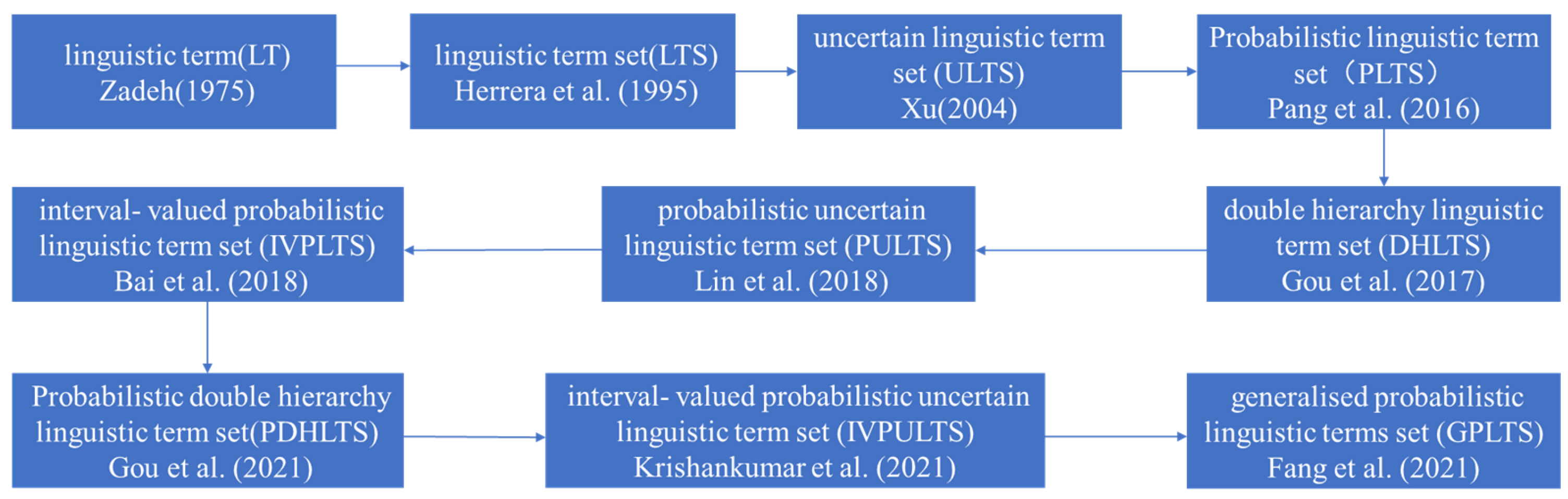
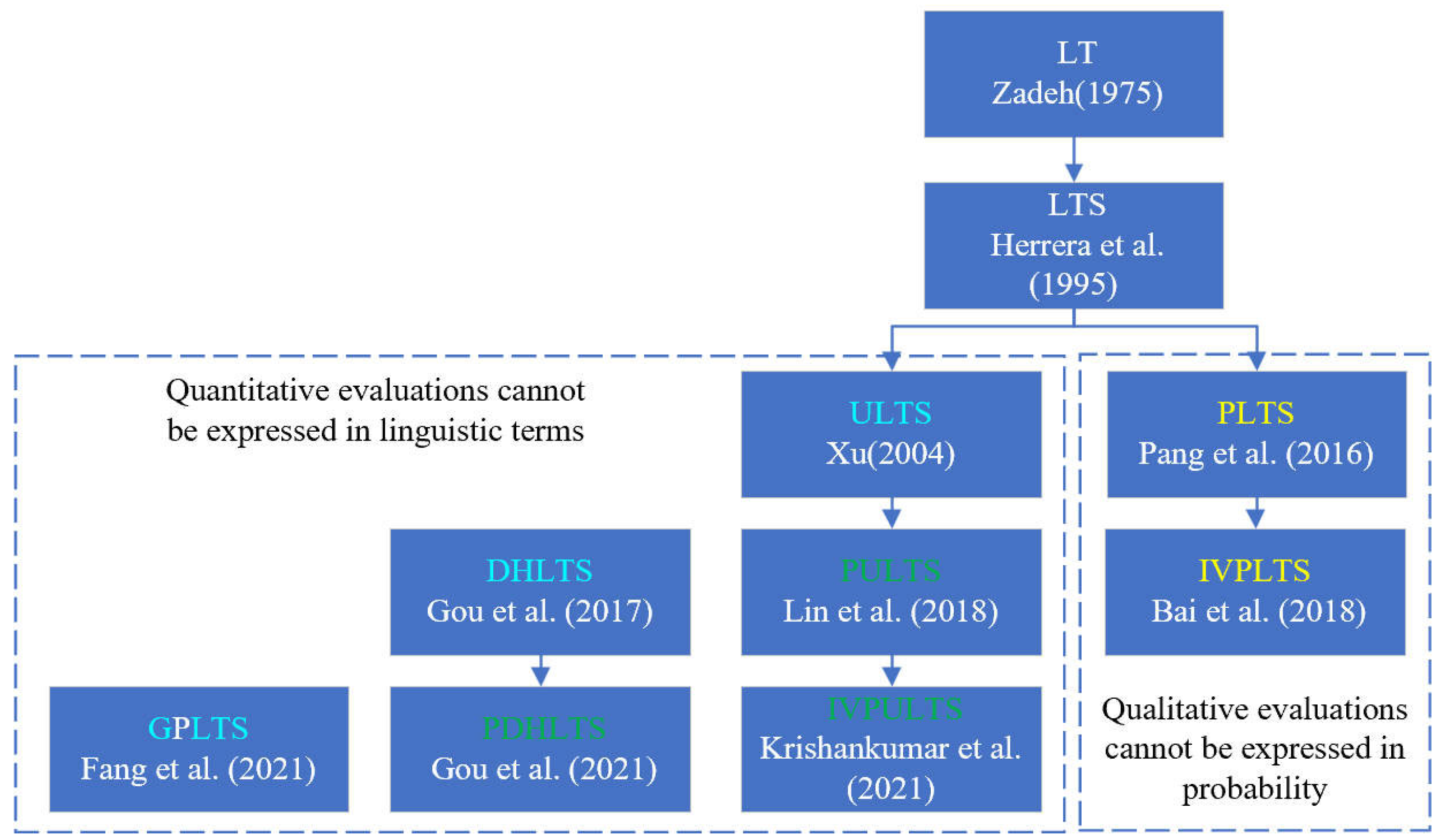
23] have greatly enriched the options available to decision-makers (DMs), they still exhibit dual structural limitations and fail to fully meet the evaluation needs of DMs.
In terms of complex uncertainty management, previous methods [
24,
25,
26,
27,
28,
29,
30,
31,
32,
33] generally suffer from information loss during the uncertainty handling process, making it difficult to ensure that uncertainty is consistently addressed throughout the entire evaluation process. Based on the above two aspects of research content, the following challenges arise:
- (1)
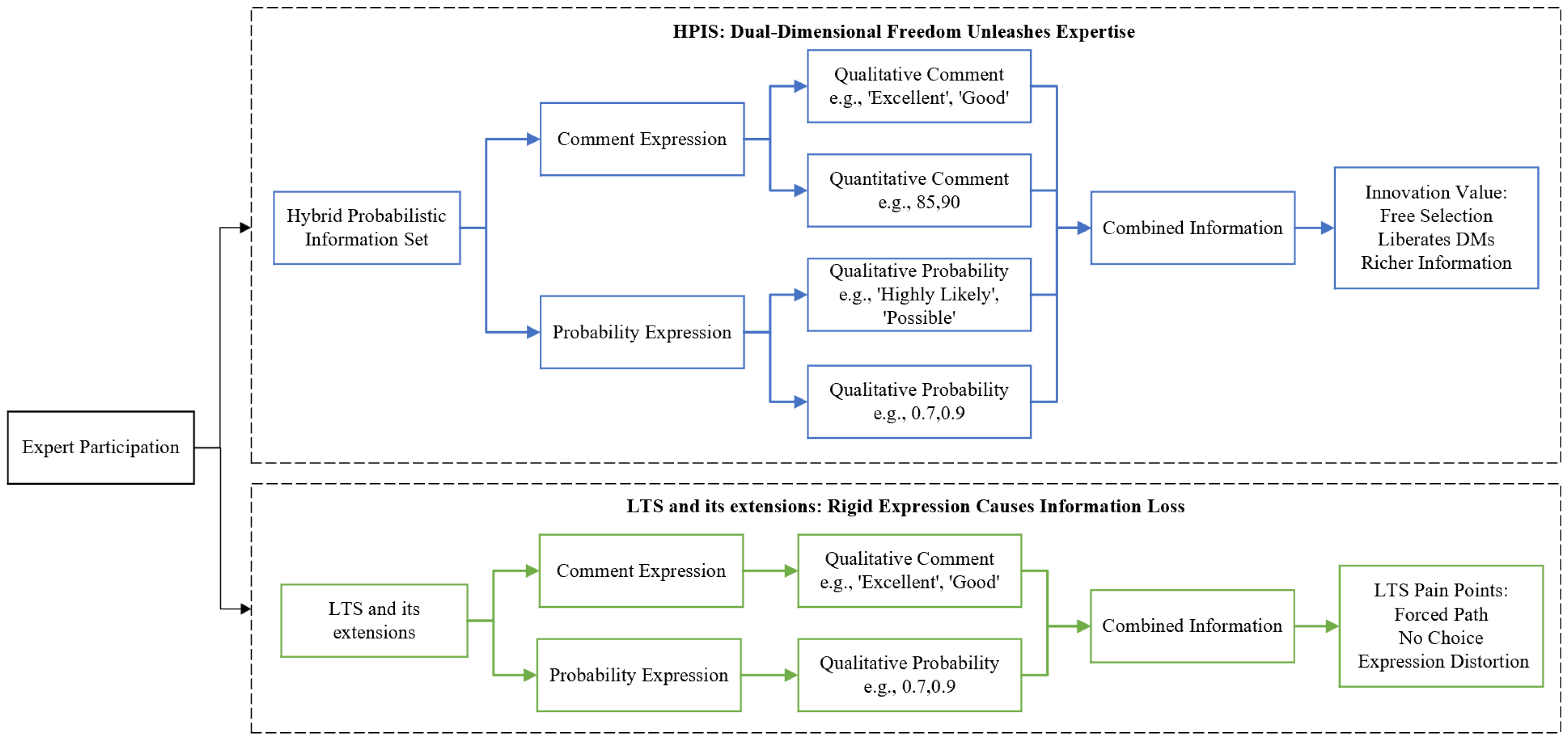
Existing linguistic term sets present a dual structural limitation when representing DMs’ judgments: comments (such as “excellent” or “good”) can only provide qualitative information, while probabilities (such as “0.8” or “0.5”) can only offer quantitative data. This overlooks the inherent differences in DMs’ cognitive patterns. The framework of structural limitations forces decision-makers to distort their natural expression habits, which may lead to information distortion or reduced engagement.
- (2)
Existing urban flood resilience assessment methods suffer from fundamental shortcomings in handling uncertainty. Some methods rely entirely on precise values throughout the process, completely discarding uncertainty and reducing complex systems to a deterministic illusion. Others consider uncertainty only at certain stages, resulting in partial information loss and inconsistencies between different phases of the assessment. Methods that rely solely on fuzziness throughout the entire process preserve only a single dimension of uncertainty (fuzziness) while neglecting other critical aspects, such as randomness, thus still representing a “partial preservation” of uncertainty.
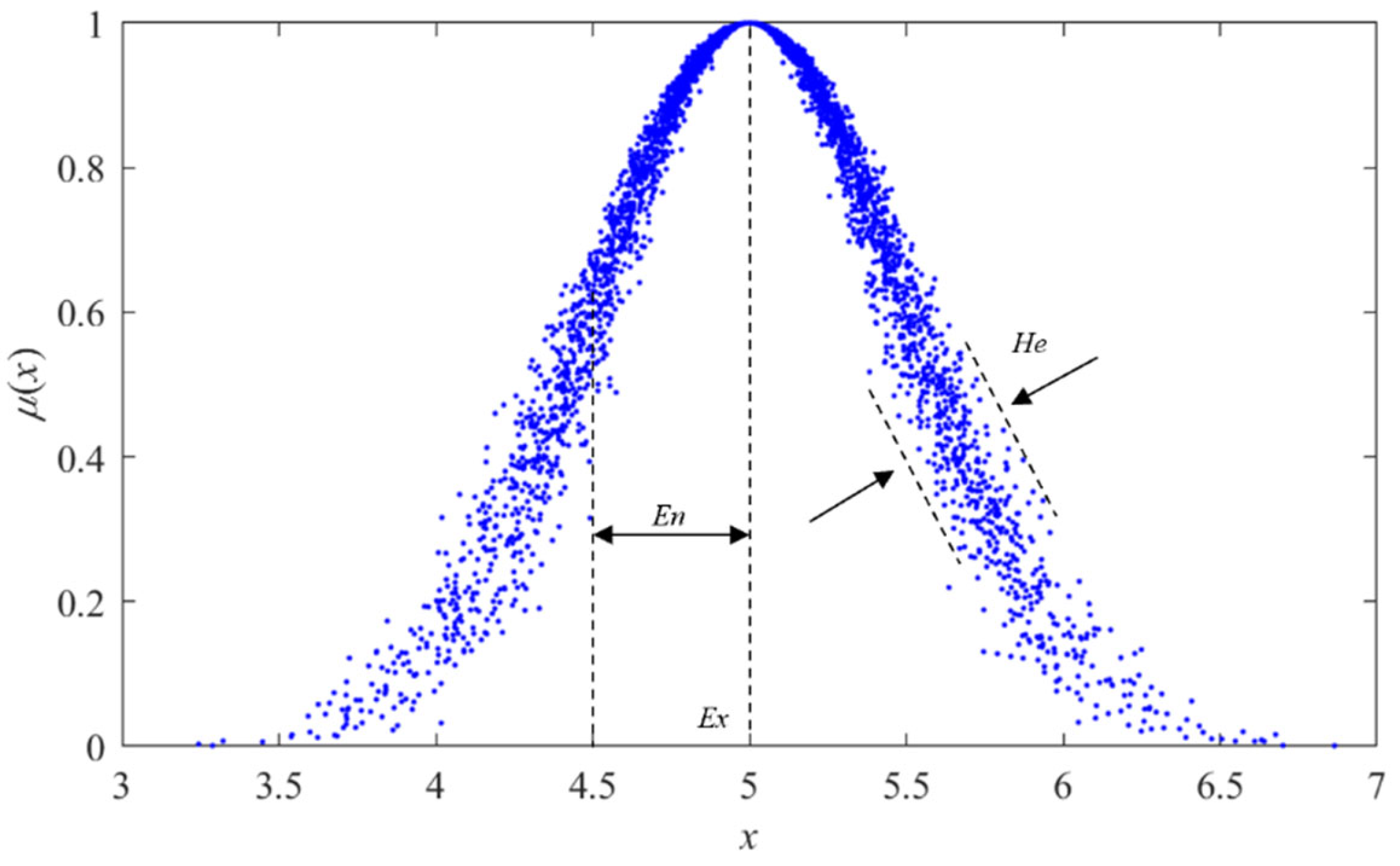
To address the above-mentioned challenges, this paper introduces a novel MCGDM framework under the hybrid probabilistic information set (HPIS) based on the Cloud-CRITIC (C-CRITIC) and Cloud-CoCoSo (C-CoCoSo) methods. On the one hand, this study develops a hybrid probabilistic information set whose core innovation lies in decoupling the expression forms of linguistic terms and probabilities. This allows DMs to freely combine qualitative/quantitative expressions for both the comments and their associated probabilities, fundamentally breaking the expressive constraints of existing methods and greatly expanding the range of choices available to DMs. On the other hand, this study innovatively extends the CRITIC and CoCoSo methods to the cloud model environment, enabling a unified representation of both fuzziness and randomness within the evaluation information. This ensures that the rich uncertainty is preserved and transmitted throughout the entire evaluation process, eliminating the fragmentation and loss of uncertainty that occur in traditional evaluation.
In summary, the main contributions of this paper are as follows:
(1) A novel evaluation information representation method, HPIS, is proposed to expand the domain of expression available to DMs. Conversion and normalization procedures, operational rules, and comparative methodologies are also defined.
(2) The improved CRITIC method is extended to the cloud model environment, enabling a unified encoding of both fuzziness and randomness within the evaluation information. The inherent uncertainty contained in the evaluation information is incorporated into the weight calculation process, resulting in a cloud weight triplet together with contrast intensity and conflict. This approach is well-suited for weight determination in complex, uncertain environments.
(3) The CoCoSo techniques are extended to the cloud model environment, where the Bhattacharyya distance is employed to precisely quantify the similarity between cloud models. This enhances the discriminative capability among the cloud models and improves the ranking performance for evaluating the flood resilience of alternative cities.
(4) A novel MCGDM framework is developed using HPIS based on the C-CRITIC and C-CoCoSo methods and is applied for the first time to the evaluation of urban flood resilience. This framework not only yields effective evaluation results but also ensures that complex uncertainty is consistently integrated throughout the entire decision-making process.
The remaining portions of this work are organized as follows:
Section 2 provides an overview of the relevant literature.
Section 3 defines HPIS along with its standardization process, operational rules, and comparison method between HPICSs.
Section 4 presents an innovative MCGDM framework.
Section 5 takes the “Beijing Peripheral Urban Agglomeration” as a case study. Subsequently,
Section 6 presents a detailed analysis and discussion, including result analysis, sensitivity analysis, comparative analysis with existing methods, and more. Finally,
Section 7 summarizes the research findings.
4. An Innovative MCGDM Approach Based on the C-CRITIC and C-CoCoSo Under HPIS
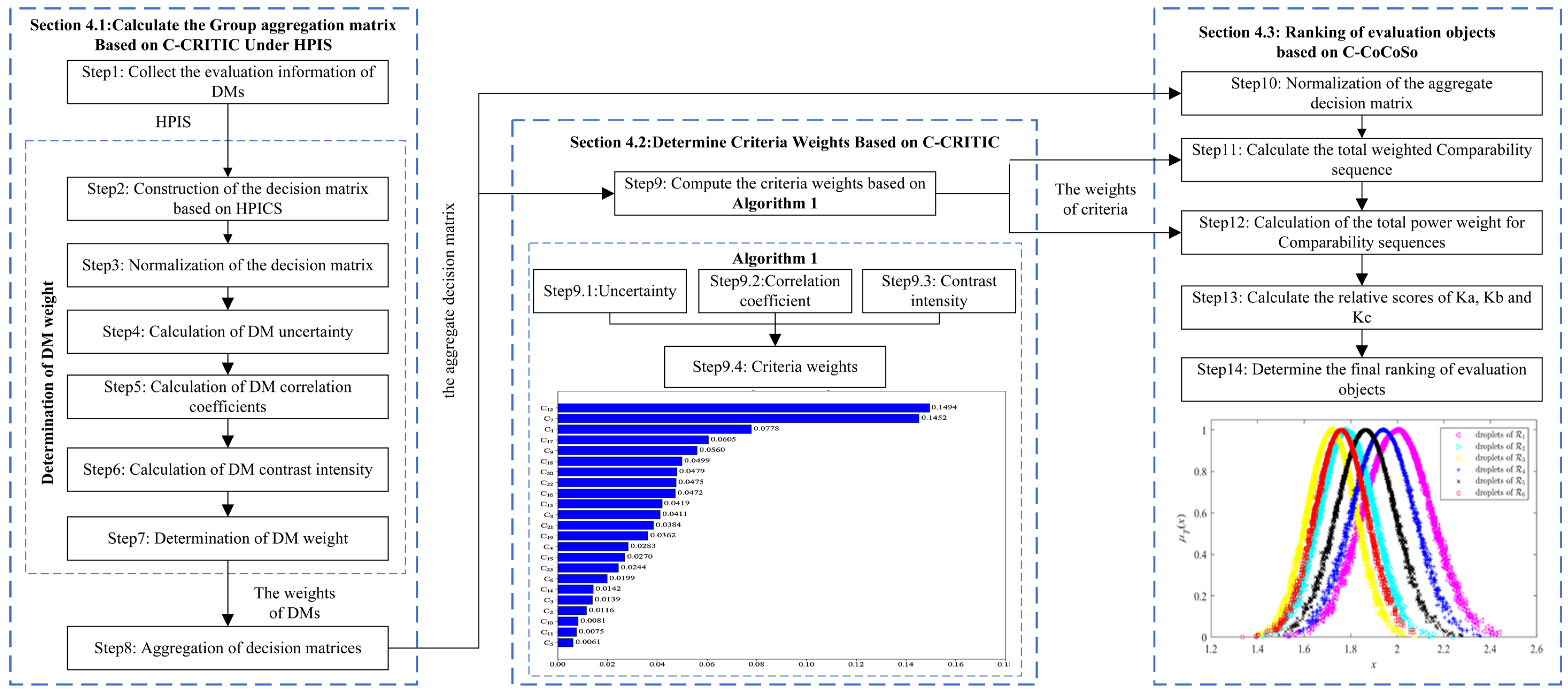
The previous section introduced the proposed HPIS, which overcomes the dual limitations of existing linguistic term sets and their extended forms. This section will introduce an innovative multi-criteria group decision-making (MCGDM) method as shown in
Figure 4. This method mainly consists of three components: hybrid probabilistic information set (HPIS), the cloud criteria importance through inter-criteria correlation (C-CRITIC), and the cloud combined compromise solution (C-CoCoSo). C-CRITIC and C-CoCoSo operate within a cloud model environment to ensure that uncertainty information is preserved throughout the evaluation process. A detailed description will be given in three parts as follows.
4.1. Calculate the Group Aggregation Matrix Based on C-CRITIC Under HPIS
This subsection will introduce the criteria importance through the inter-criteria correlation (CRITIC) method for calculating the weights of decision-makers (DMs). The steps for calculating DMs’ weights based on C-CRITIC are as follows:
Step 1. Collect the evaluation information of DMs.
Suppose there are m alternative cities , n criteria , and s decision-makers . The evaluation information of the DM is collected in the form of an HPIS.
Step 2. Construction of the decision matrix based on HPICS.
The conversion of evaluation information based on HPIS into Hybrid Probabilistic Information Cloud Set (HPICS) and its normalization is carried out using the method described in
Section 3.2. Therefore, the decision matrix is constructed from the evaluation information of the
q-th decision-maker as shown in
Equation (10).
where the evaluation information of the
q-th decision-maker (DM) in
is HPICS, and
is a hybrid probability information cloud decision matrix.
Step 3. Normalization of the decision matrix.
Let the element
in the evaluation information of the
q-th DM be standardized to an NCM
, and the benefit-type and cost-type criteria are standardized through
Equation (11).
where
and
are the values, with
as the maximum value and
as the minimum value.
Step 4. Calculation of DM uncertainty
where
is the uncertainty of the
q-th DM.
Step 5. Calculation of DM correlation coefficients.
Determine the correlation coefficient
between each DM using the formula below:
where the difference between the criterion and its average value is calculated using the distance measure BD, where
and
represent the average values of the
j-th criterion in the evaluation information of the
q-th and
y-th decision-makers, respectively. This is solved using
Equation (14).
represents the degree of association between the evaluation information of the q-th and y-th decision-makers.
Step 6. Calculation of DM contrast intensity.
Let
represent the sum of the standard deviations of all criteria in the
q-th decision. It is solved through
Equation (15).
Step 7. Determination of DM weight.
Utilize
Equation (16) to determine the index
.
Use
Equation (17) to determine the DM weight.
Step 8. Aggregation of decision matrices.
Obtain the aggregated results
of DMs’ evaluation information through arithmetic weighted averaging.
4.2. Determine Criteria Weights Based on C-CRITIC
This subsection will introduce the C-CRITIC method for calculating the weights of criteria. Since the calculation of DMs’ weights is based on three-dimensional data of criteria, and the calculation of criteria weights is based on two-dimensional data of criteria, the formulas differ. Therefore, the calculation steps for the weights of the criteria need to be introduced separately. The steps for calculating criteria weights based on C-CRITIC are as follows:
Step 9. Determination of criteria weights () by Algorithm A1.
4.3. Ranking of Alternative Cities Based on C-CoCoSo
This section will introduce the proposed cloud combined compromise solution (C-CoCoSo) algorithm to calculate the ranking results of the alternative cities. The steps are as follows:
Step 10. Normalization of the aggregate decision matrix
where
and
, the maximum value
and the minimum value
. Since
Equation (11) has already performed standardized preprocessing on the decision matrix, all criteria in this step are calculated as benefit-type criteria. To avoid the occurrence of a denominator being zero (or approaching zero) in subsequent calculations, an improved normalization formula
Equation (19) is proposed, ensuring that the normalized
Ex ranges from [1, 2].
Step 11. For each alternative city
, determine the sum of the weighted comparability sequence.
where
is weights of criteria and
is an element of the aggregated decision matrix.
Step 12. For every alternative city
, determine the total power weight of the comparability sequence.
Step 13. Calculate the relative scores and of the alternative cities.
Three scoring strategies are used to generate the relative scores of the alternative cities, as shown in the following formulas:
where
is the weighted sum method (WSM) and weighted product method (WPM) scores’ arithmetic mean,
is the sum of the WSM and WPM scores relative to the optimal, and
is the balanced compromise between the WSM and WPM scores. The balance coefficient
reflects the security and adaptability of the CoCoSo algorithm and is generally set to 0.5.
Step 14. Determine the final ranking of alternative cities.
where
represents the ranking value of the alternative city. The higher the
value, the higher the ranking of the alternative city.
5. Case Study
Beijing, Tianjin, and eleven cities at the prefecture level from Hebei province make up the Beijing–Tianjin–Hebei region. The region has a high population density, a lot of economic activity, and valuable assets and infrastructure. Since 1956, heavy rainfall and waterlogging have frequently affected urban safety in the Beijing–Tianjin–Hebei area, especially in 2016, when 9.4785 million people were affected, causing direct economic losses of 55.087 billion yuan [
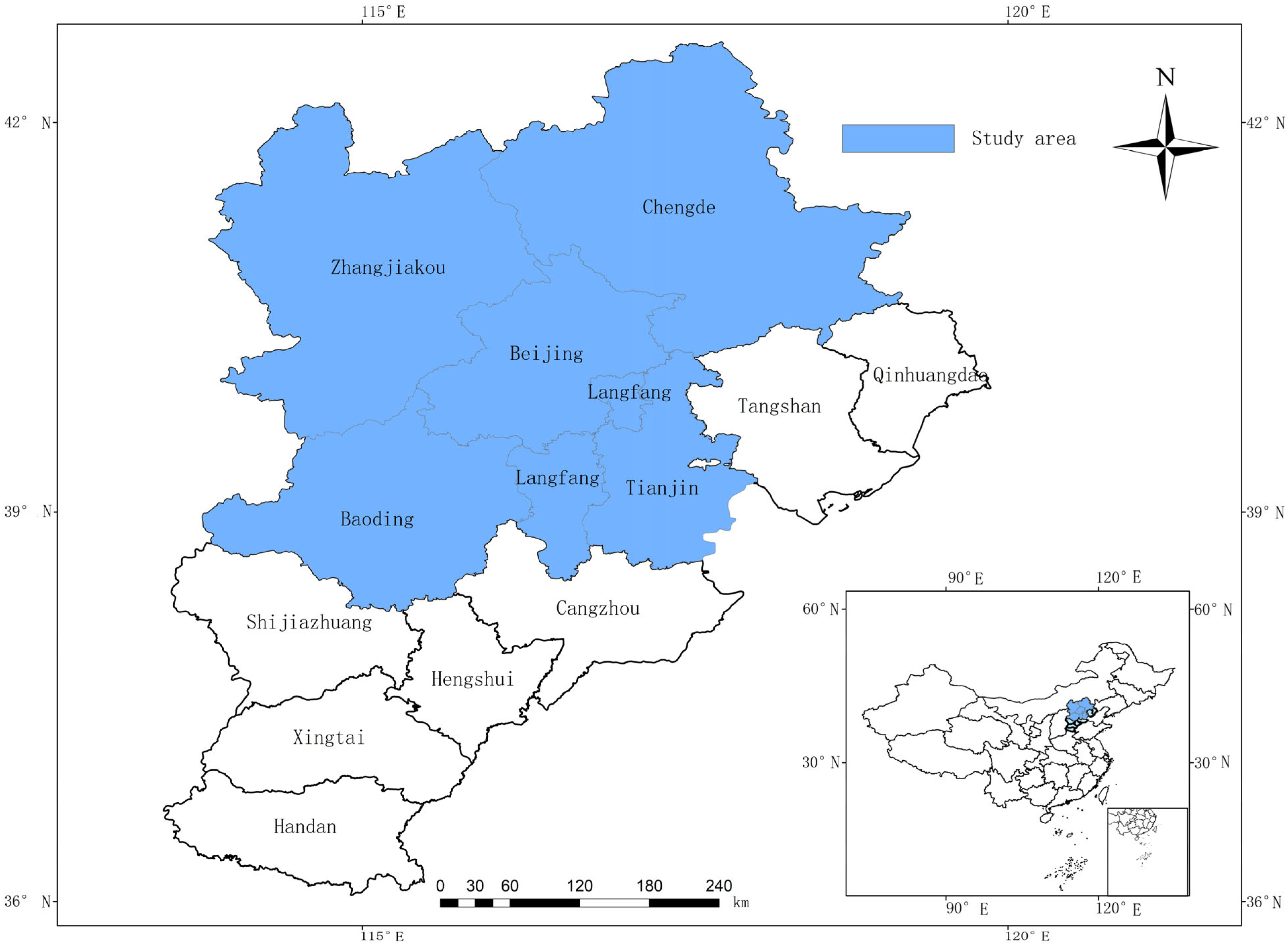
47]. This study selects the “Beijing Peripheral Urban Agglomeration” (BPUA) as the research area, which includes a total of six cities centered around Beijing and adjacent to its boundaries—namely Chengde, Langfang, Tianjin, Baoding, and Zhangjiakou—from the Beijing–Tianjin–Hebei (Jing–Jin–Ji) region, as illustrated in
Figure 5. In 2023, the per capita GDP of Beijing was approximately 200,000 yuan and Tianjin’s per capita GDP was around 123,000 yuan, while the other prefecture-level cities had a per capita GDP of less than 70,000 yuan, leading to varying levels of resilience to heavy rainfall and waterlogging in the BPUA. However, cities within the urban cluster are highly interconnected in terms of economy, transportation, resources, and other fields. When one city encounters a flood disaster, it may impact logistics, supply chains, energy, and communication systems across the entire urban cluster. Therefore, identifying the weak links in the flood resilience of the BPUA and the key factors affecting the urban flood resilience is crucial to enhancing the overall flood resilience capacity of the region.
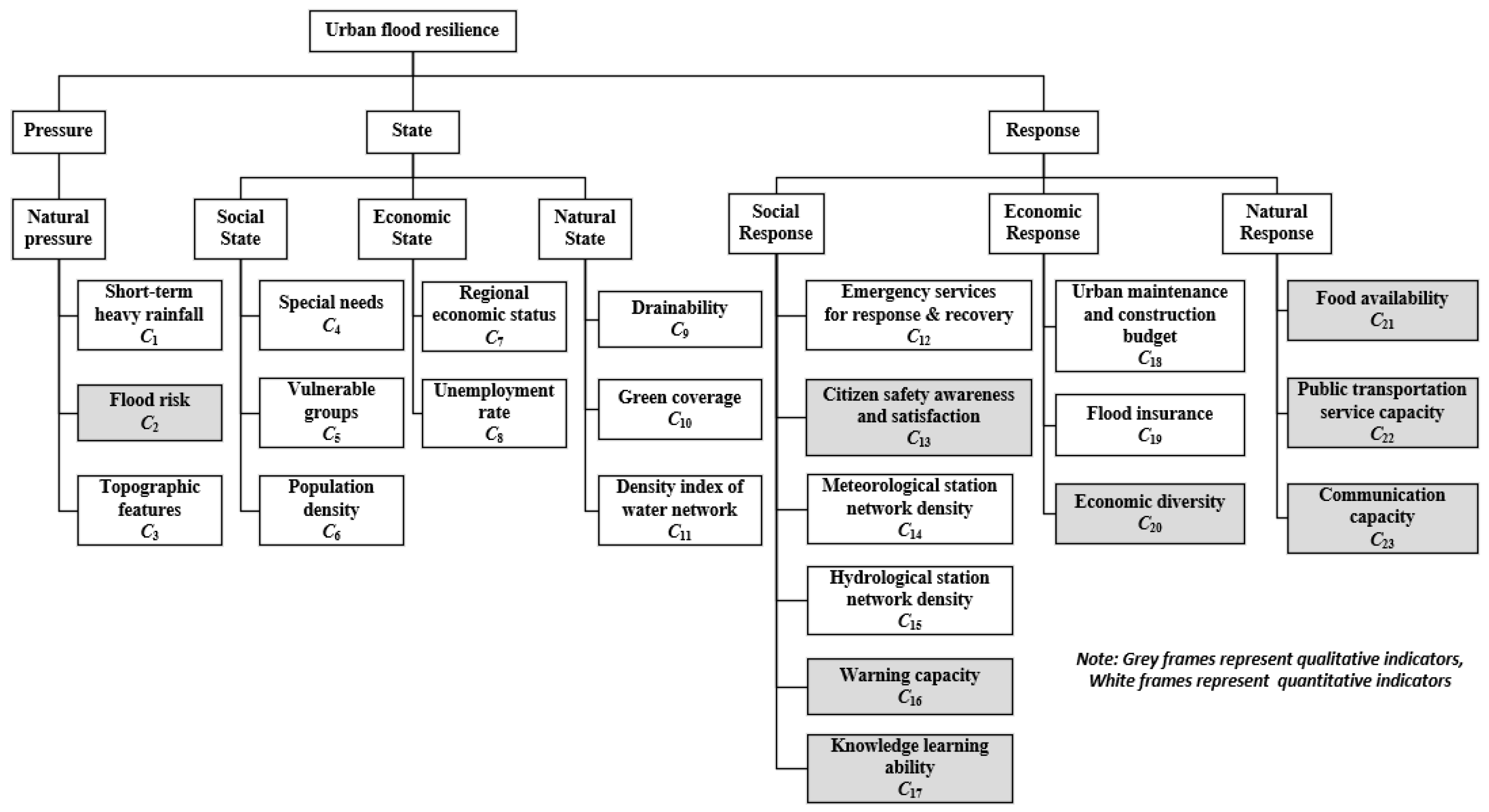
The criteria system, consisting of 23 indicators(
C1–
C23), was constructed based on the urban flood resilience evaluation framework developed by He et al. (2024) [
48] under the PSR-SENCE theoretical model, as shown in
Figure 6. Four decision-makers (DMs) (denoted as
), each with more than five years of experience in the relevant field, were invited to use HPIS to evaluate the flood resilience of the six cities in the BPUA—Beijing, Chengde, Baoding, Tianjin, Langfang, and Zhangjiakou (collectively referred to as alternative cities
)—based on the established criteria system for the year 2022. The information of the decision-makers is shown in
Table 1.
The flood resilience ranking of six cities in the study area will be conducted through a three-phase computational process comprising 14 steps, with the overall framework illustrated in
Figure 4. Phase I involves using the hybrid probabilistic information set (HPIS) to evaluate the criteria based on DMs’ evaluations, and determining the weights of DMs using the proposed C-CRITIC method, thereby obtaining the group aggregation decision matrix. In Phase II, based on the aggregated decision matrix obtained in Step 1, the criteria weights are calculated using the C-CRITIC method. Phase III employs the cloud model-extended C-CoCoSo method to rank flood resilience across six cities in the BPUA study area.
Step 1. DMs use the HPIS to express evaluation information in the way that is most familiar and comfortable for them. Collect all DMs’ evaluation information. These evaluation results are shown in
Table A2.
Step 2. The decision matrix is constructed based on the evaluation information provided by the DMs and then converted and normalized into a hybrid probabilistic information cloud decision matrix
using the methods described in
Section 3.2, as shown in
Equation (26). The remaining elements can be derived similarly.
where
Two bolded elements in
Table A2 are converted into HPICS using the exact value conversion formula in Equation (A10) and the cloud model mapping rule
.
Step 3. The HPIC decision matrix is normalized using
Equation (11), resulting in the normalized decision matrix
, where
is shown in
Equation (27). The rest can be derived similarly.
where
Step 4. Calculate the uncertainty measures for all DMs using
Equation (12). The resulting uncertainty matrix is presented below.
Step 5. Compute correlation coefficients for all DMs using
Equations (13) and
(14). The comparison matrix is presented as follows:
Step 6–Step 7. Calculate all DMs’ contrast intensity using
Equation (15). Compute the index
using
Equation (16), and determine decision-maker weights through
Equation (17), with results shown in
Table 2.
Step 8. Construct the aggregated decision matrix
, with its elements calculated using
Equation (18). The specific values are shown in
Table A3.
Step 9. The weights of all criteria are calculated using Algorithm A1, as shown in
Table A3. Since the method for determining criteria weights is the same as that for calculating DM weights, the calculation process is not repeated.
Step 10. The aggregated decision matrix is standardized using Equation (19).
Step 11–Step 12. Using the criteria weights from
Table A3: Calculate weighted comparable sequence sums
for all alternative cities using
Equation (27). Compute power-weighted comparable sequence sums
through
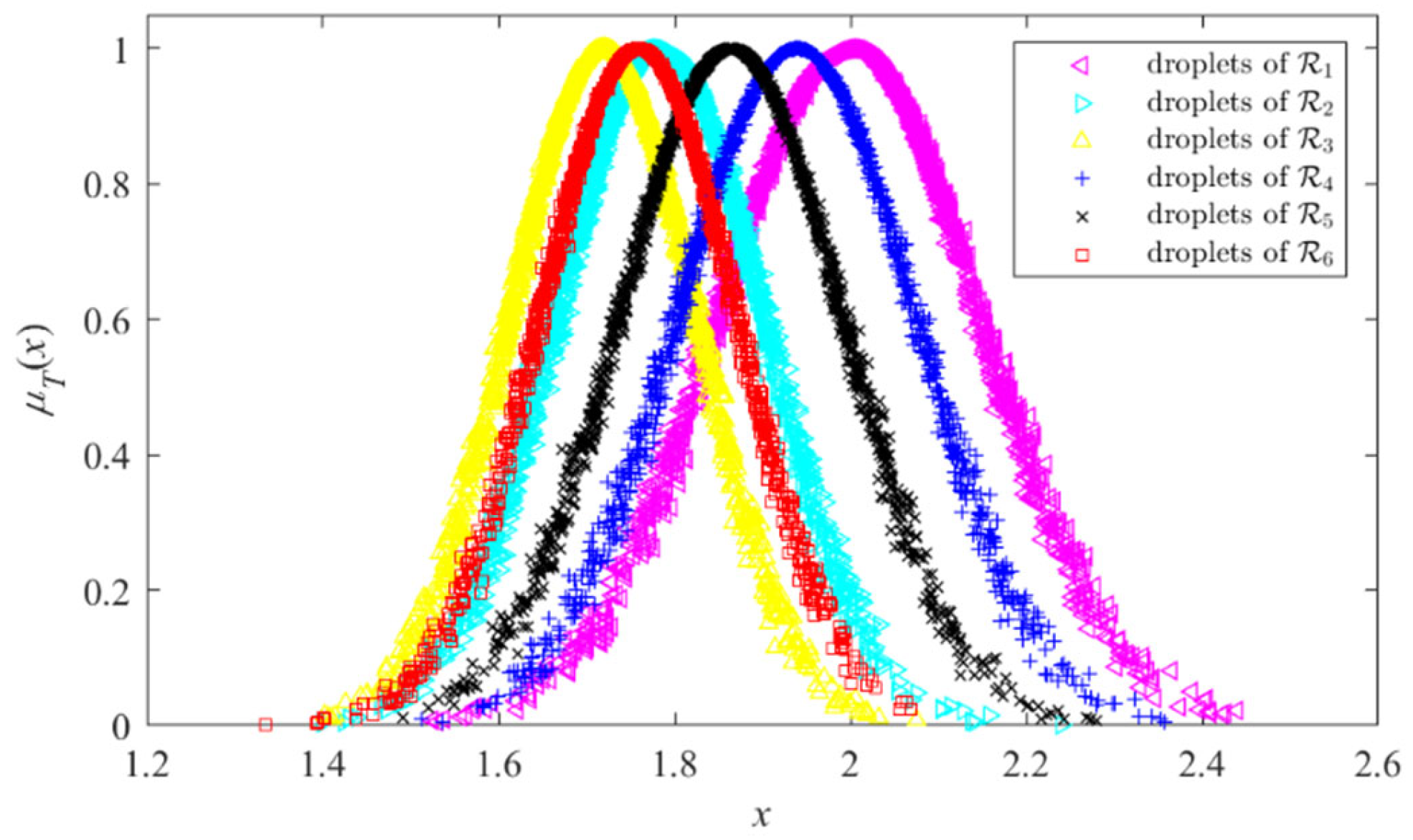
Equation (28). The calculation results are presented below.
Step 13. Calculate the relative scores for all alternative cities through three aggregation approaches: (
)
Equation (22), (
Kb)
Equation (23), and (
)
Equation (24).
Step 14. Determine the final ranking of alternative cities for
Equation (25).
7. Conclusions
To overcome the limitations of MCGDM, which restrict DMs’ ability to express their judgments and result in the loss of uncertainty information, a novel MCGDM framework is proposed. On the one hand, HPIS enables DMs to provide both qualitative/quantitative evaluation information for criteria evaluations and their associated probabilities, breaking the previous dual structural limitation and significantly expanding the choice domain for DMs. On the other hand, the improved CRITIC and CoCoSo methods are extended into the cloud model environment, comprehensively considering both randomness and fuzziness in evaluation information, thus ensuring that uncertainty information is preserved throughout the entire evaluation process.
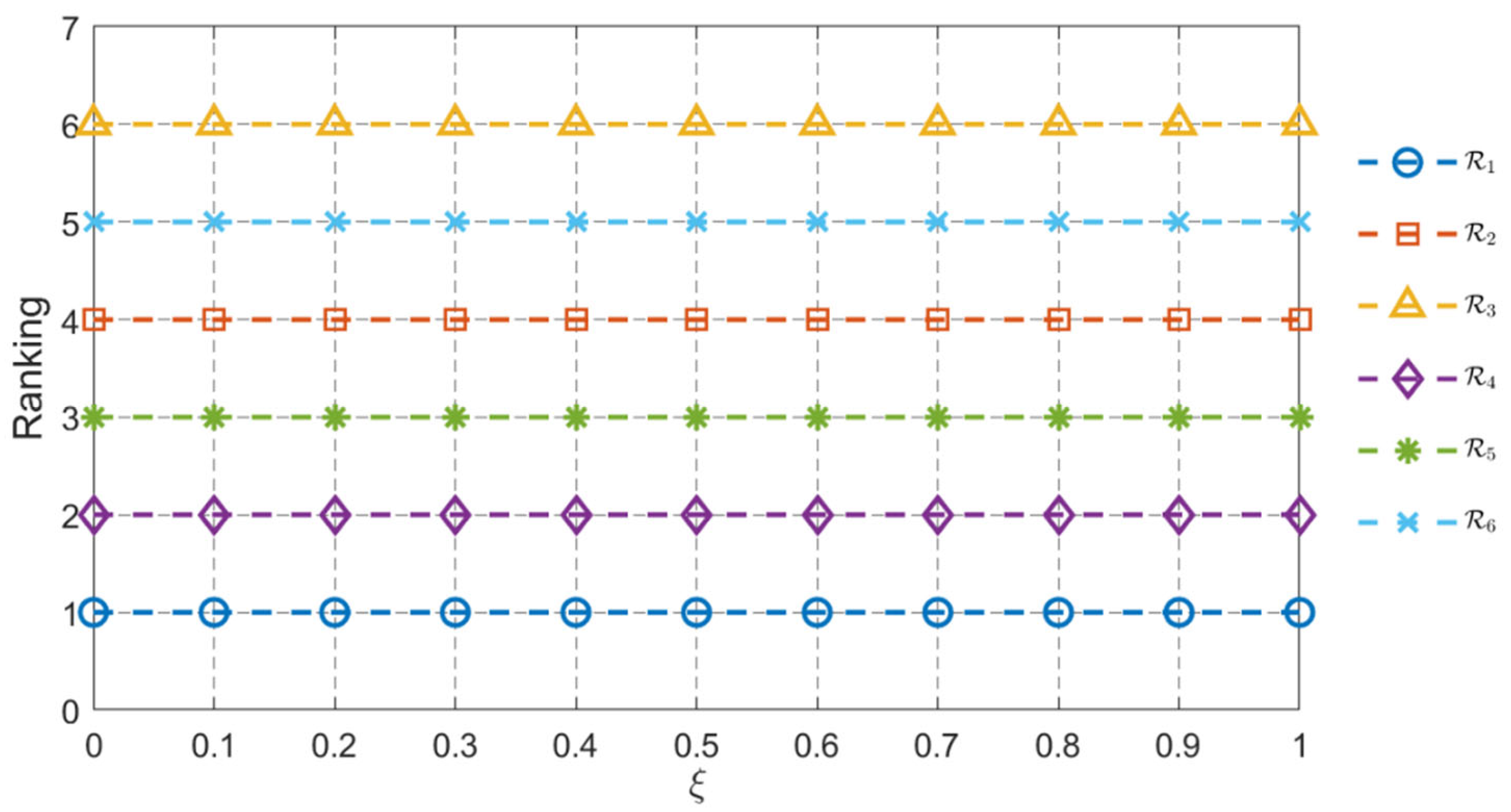
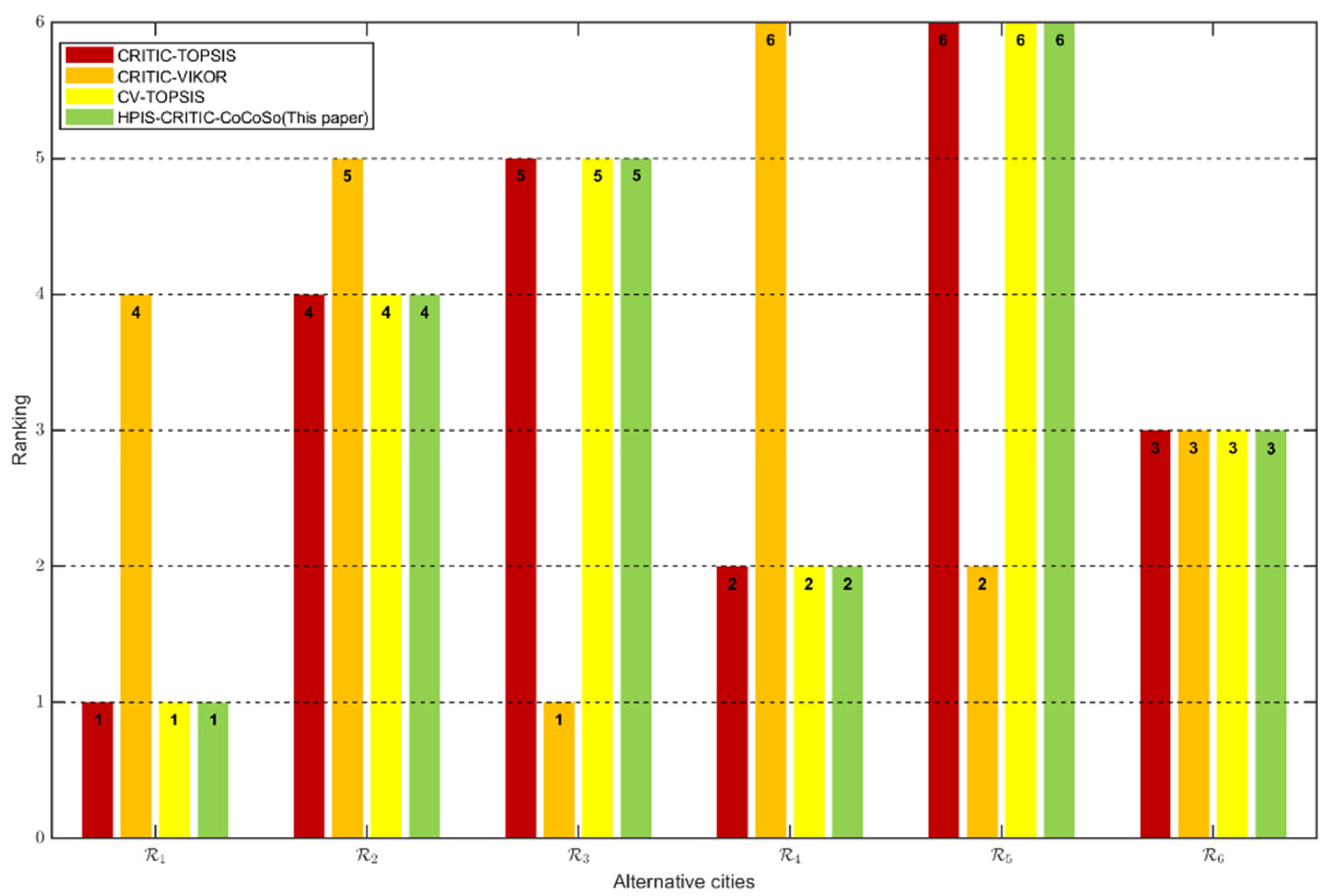
Through a case study, the proposed method is validated in the UFR evaluation process, identifying Baoding, Zhangjiakou, and Chengde as the weak links in the study area. This provides a valuable reference for enhancing the flood resilience of urban agglomerations. Sensitivity analysis shows that the ranking structure of the cities remains unchanged, with Baoding, Zhangjiakou, and Chengde consistently identified as weak links, verifying the robustness of the proposed method. The comparative analysis further verifies the effectiveness of the proposed method. Meanwhile, compared with previous methods, it demonstrates significant advantages in urban flood resilience evaluation under complex uncertainty. As with all scientific research, this work has its limitations: (1) it only considers decision-making involving a small number of DMs, without addressing large-scale group decision-making, and is therefore suitable for small expert samples; (2) it calculates DM and criteria weights solely based on objective weighting, without combining subjective weighting methods to obtain composite weights; and (3) only limited case analysis, comparative analysis, and sensitivity analysis were conducted, lacking richer external validation analysis and statistical benchmark comparisons.