1. Introduction
The explosive growth of live-streaming e-commerce is fundamentally reshaping digital marketing paradigms, with technology-enhanced promotional restriction strategies garnering significant academic and industry attention [
1]. According to Quest-Mobile (2024), the transaction volume of China’s live-streaming e-commerce reached ¥1.8 trillion in Q1 2024, marking a 42.3% year-on-year increase. Notably, live studios adopting composite “time-limited + quantity-limited” strategies contributed 78.9% of the gross merchandise volume (GMV) and achieved a 123.6 percentage point month-on-month growth. This surge highlights the pivotal role of dual restriction mechanisms in driving live-streaming conversions, yet it simultaneously underscores the limitations of traditional consumer behavior theories. Specifically, the classic “scarcity perception–purchase intention” single-path model often struggles to account for how group interaction dynamically reinforces restriction signal [
1], while traditional framing effect theories lack a systematic explanation for the synergistic rules governing dual-dimensional restrictions of time and quantity.
Existing research reveals notable theoretical gaps in analyzing live-streaming promotion restriction mechanisms. While scholars increasingly recognize the moderating value of social cues, research perspectives remain fragmented. Most studies examine the independent effects of time restrictions (e.g., countdown prompts) or quantity restrictions (e.g., inventory visualization) in isolation, overlooking the cognitive synergies between these two dimensions in real-time interactive scenarios. Furthermore, regarding mediating mechanisms, many studies focus solely on static scarcity perception pathways, failing to integrate the transmission role of dynamic mediating variables such as social presence [
2]. Moreover, research on individual differences remains limited, with a particular lack of systematic investigation into the moderating effect of Social Cue Sensitivity. This theoretical deficit hinders academia’s ability to explain the “superlinear” effects of composite restriction strategies—for instance, Taobao Live data indicates that conversion rates for promotions combining countdowns and inventory alerts are 47.2% higher than those utilizing single restrictions.
To bridge these gaps, this study constructs a “Dual-Path Social Presence” model. Unlike prior studies that often treat scarcity as a monolithic construct, we theoretically distinguish between two specific dimensions of social presence: “Collective Synchronicity” (triggered by objective time limits) and “Interactive Control” (triggered by competitive quantity limits). We propose that these distinct dimensions activate separate value pathways—Functional versus Social.
Theoretically, this study makes three key contributions. First, it overcomes the limitations of single-mediation models [
2,
3] by validating a chain transmission mechanism linking promotion type to purchase intention through the serial mediation of specific social presence and perceived value. Second, it integrates evidence from eye-tracking to provide neurobehavioral support for these psychological mechanisms. Third, it clarifies the boundary conditions of these effects by identifying how Social Cue Sensitivity differentially moderates the quantity-based pathway while leaving the time-based pathway unaffected. Practically, these findings offer a granular “matching criterion” for live-streaming strategies, recommending time constraints for utilitarian conversions and quantity constraints for social identity building.
2. Literature Review and Research Hypotheses
2.1. Literature Review
2.1.1. Promotional Restrictions and Psychological Mechanisms in Live Commerce
The investigation into promotional purchase restrictions within the live-streaming commerce ecosystem has transitioned from a purely transactional perspective to a complex psychological inquiry [
4]. Initially, scholarly attention was predominantly fixed on the quantitative impact of these restrictions on immediate sales performance and conversion metrics [
5]. However, as the digital marketplace becomes increasingly saturated, the focus has evolved toward uncovering the underlying psychological mechanisms that dictate consumer behavior [
6]. Empirical studies consistently demonstrate that Time-Limited (TL) and Quantity-Limited (QL) promotional strategies do not merely function as economic incentives; they act as potent psychological stimuli that modulate consumers’ cognitive and emotional states to drive purchase intention [
4,
7].
Specifically, TL promotions create an environment of temporal urgency, which forces consumers to simplify their cognitive processing and accelerate decision-making to avoid the “regret of inaction.” In contrast, QL promotions often trigger a sense of competitive arousal among viewers, heightening the perceived scarcity and exclusivity of the product [
4,
7]. Research indicates that these scarcity-driven promotions in live-streaming commerce positively influence purchase intention through the mediating effect of emotional experience and affective arousal [
7]. Despite these insights, a critical gap remains: much of the extant research examines these strategies in isolation, failing to account for the differentiated pathways through which they shape value perceptions in the high-frequency, interactive environment of live-streaming. The scarcity persuasion model suggests that such cues influence cognitive and affective reactions, which eventually culminate in impulsive buying tendencies [
6]. Furthermore, the effectiveness of these sales promotions is often moderated by the nature of the communication agent—whether a human streamer or an AI-driven chatbot—and the underlying psychological contracts established between the consumer and the platform [
8]. The “Fear of Missing Out” (FOMO) also serves as a critical psychological catalyst, impacting inaction inertia and compelling the transition from browsing to buying [
9].
2.1.2. Social Presence: From Telepresence to Real-Time Interaction
Social presence, rooted in telepresence theory, is defined as the psychological sensation of being “with” others in a mediated environment, emphasizing the perceived “realness” and shared participation of the experience [
10,
11]. In the realm of live-streaming, high levels of social presence are foundational to commercial success, as they effectively reduce psychological distance, cultivate interpersonal trust, and substantially bolster purchase intention [
12].
Current scholarship categorizes social presence into distinct dimensions: the social presence of the streamer and the social presence of other viewers [
3]. While the former relates to the streamer’s perceived responsiveness and intimacy, the latter involves the collective energy and social cues generated by the audience. A comprehensive study involving 7701 participants from the Douyin platform demonstrated that both forms of presence significantly and independently affect consumer purchase intention. This is further enriched by the interactivity inherent in live-streaming, where real-time feedback loops foster a sense of social presence that mediates the relationship between environmental features and consumer response [
11]. Moreover, the responsiveness of virtual or AI streamers has been shown to positively impact purchase intention by simulating human-like social presence [
13]. The broader concept of “presence” also encompasses spatial presence, where the visual and auditory complexity of the live-streaming room influences the user’s immersive experience and subsequent intent to purchase [
14].
2.1.3. Multidimensional Perceived Value as an Antecedent to Decision-Making
Perceived value is established in the literature as the core antecedent of consumer decision-making, representing a subjective, multidimensional trade-off between perceived benefits and sacrifices [
12]. In live-streaming contexts, researchers often employ the Value-based Adoption Model (VAM) to assess how perceived usefulness, enjoyment, and attachment to streamers contribute to overall perceived value.
Recent evidence suggests a sophisticated synergistic relationship between promotional cues, social presence, and perceived value. TL promotions have been found to elevate functional value by fostering a perception of “collective synchronicity”—a shared state of time pressure among viewers that validates the necessity of the purchase. Conversely, QL strategies are more likely to boost social value identification by offering consumers a sense of “interactive control” over scarce resources in a competitive social setting. Scholars have identified at least four types of perceived value—functional, emotional, social, and novel—all of which significantly influence purchase intention on platforms like TikTok. Moreover, within the Stimulus-Organism-Response (SOR) framework, environmental stimuli (such as interactivity and authenticity) are processed through the “organism” (mediators like social presence and trust), leading to the “response” of purchase intention, with perceived value serving as the primary cognitive filter [
15,
16]. Continuous purchase intention is also heavily dependent on the sustained delivery of perceived value and satisfaction [
17,
18].
2.1.4. Methodological Advancements: Neurobehavioral Insights and Eye-Tracking
A burgeoning area of research critiques the reliance on traditional self-report methods, noting their inability to capture the subconscious, real-time cognitive processing of promotional and social cues [
19]. To address this, there is an increasing call for the integration of neurobehavioral methods, specifically eye-tracking technology, to peer into the “black box” of consumer attention and physiological arousal [
19,
20].
Eye-tracking studies have begun to explore how visual complexity and the placement of scarcity cues (such as countdown timers or inventory bars) attract visual attention and influence cognitive load [
19]. This methodological shift allows researchers to analyze how specific streamer characteristics—such as attractiveness, popularity, and perceived responsiveness—interact with visual stimuli to shape purchase intention [
10,
21]. Additionally, the role of real-time user sentiment, reflected in “danmaku” (bullet screen comments), and the impact of gamification elements are being examined through more granular, data-driven lenses to understand their influence on sales and engagement [
21,
22]. By combining immersive environmental features (authenticity, entertainment) with objective physiological data, the field is moving toward a more robust, dual-pathway understanding of how social presence and perceived value jointly drive the modern live-streaming commerce experience [
23,
24].
2.1.5. Integrating Social Presence with Scarcity Cues
Traditional Social Presence Theory emphasizes the sense of being “with others” [
11]. However, within the specific context of live-streaming restrictions, this presence manifests in two distinct forms. Time-Limited cues (e.g., countdowns) create a “shared temporal reality,” which we conceptualize as Collective Synchronicity Perception—a form of presence derived from doing the same thing at the same time as others [
23]. Conversely, Quantity-Limited cues (e.g., dwindling stock) create a “shared resource rivalry,” which we conceptualize as Interactive Control Perception—a form of presence derived from competing against others [
25]. This theoretical distinction forms the basis for our dual-pathway hypotheses.
2.2. Research Hypotheses
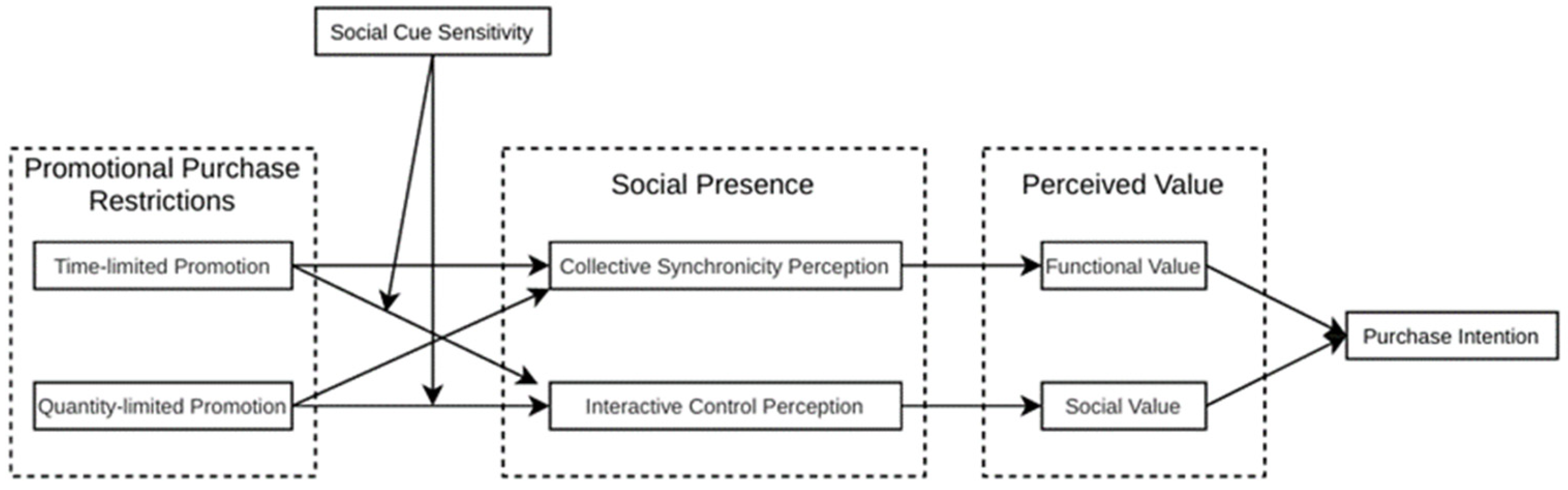
Drawing on the Stimulus-Organism-Response (S-O-R) framework, this study conceptualizes Promotional Purchase Restrictions (PPR) as external environmental stimuli (S)often manifesting as gamified interface designs [
26] that trigger consumers’ psychological organisms (O), specifically the dual dimensions of Social Presence and Perceived Value [
27], which ultimately shape their behavioral response (R), namely Purchase Intention. The conceptualized dual-path theoretical model that depicts the hierarchical interrelationships among these constructs is presented in
Figure 1.
2.2.1. Promotional Restrictions and Social Presence
Social Presence Theory posits that media environments can convey a sense of human contact and shared experience. In live-streaming commerce, promotional restrictions act as critical informational cues that activate distinct dimensions of this presence.
Time-Limited (TL) promotions (e.g., countdowns) create a shared temporal boundary for all viewers. As the countdown approaches zero, the synchronized urgency forces consumers to realize that “everyone is watching the same clock.” Research confirms that such limited-time discounts significantly elevate consumer urgency and immediate behavioral response [
28]. This objective temporal alignment fosters a strong sense of Collective Synchronicity Perception (CSP)—the feeling of being in a shared rhythm with the crowd.
Quantity-Limited (QL) promotions (e.g., real-time inventory bars), in contrast, visualize resource scarcity. As consumers watch the stock number drop, they directly perceive the competitive actions of others. Song et al. [
25] highlight that such perceived competition and the awareness of “other consumer existence” are central to the scarcity messaging effect. This dynamic depletion signals that one’s ability to obtain the product depends on outperforming others in real-time, significantly heightening Interactive Control Perception (ICP). Furthermore, limited quantities can also influence perceptions of retailer sincerity and trust [
29], which are deeply intertwined with the social presence of the seller.
Based on this, we propose:
H1. Promotional purchase restriction strategies significantly enhance consumers’ social presence.
H1a. Time-limited promotions positively impact Collective Synchronicity Perception and Interactive Control Perception.
H1b. Quantity-limited promotions positively impact Interactive Control Perception and Collective Synchronicity Perception.
2.2.2. Social Presence and Perceived Value
The psychological state of social presence serves as a diagnostic cue for value assessment, a relationship supported by Yang [
27] in the context of social commerce.
Collective Synchronicity Perception acts as a powerful social proof mechanism. When consumers feel a high degree of synchronicity, it reduces uncertainty regarding product quality. This collective validation signals that the product is useful and reliable, thereby enhancing Functional Value.
Interactive Control Perception, conversely, relates to the consumer’s agency in a competitive environment. Successfully securing a product under high interactive pressure satisfies the need for uniqueness and competence. Understanding such promotion framing effects is crucial, as distinct frames (time vs. quantity) drive different psychological value outcomes [
27]. This sense of “winning” the scarce resource transforms the transaction into a socially rewarding experience, elevating Social Value.
Thus, we hypothesize:
H2. Social presence dimensions have differentiated effects on perceived value.
H2a. Collective Synchronicity Perception positively impacts Functional Value.
H2b. Interactive Control Perception positively impacts Social Value.
2.2.3. Perceived Value and Purchase Intention
Consistent with the Theory of Consumption Values, perceived value is the primary driver of purchase behavior [
20]. Functional Value drives purchase intention through a rational pathway, where consumers calculate the benefit–cost ratio. Social Value drives purchase intention through an emotional or symbolic pathway. Both pathways serve to reduce perceived barriers and risk, a factor noted as critical in consumption decision-making [
14].
H3. Perceived value positively influences purchase intention.
H3a. Functional Value positively influences purchase intention.
H3b. Social Value positively influences purchase intention.
2.2.4. The Chain Mediation Mechanisms
Integrating the above relationships, we propose distinct serial mediation pathways for different restriction types:
For Time-Limited promotions, the countdown creates urgency [
28], fostering Collective Synchronicity that signals quality assurance (Functional Value), leading to a purchase decision.
For Quantity-Limited promotions, the dwindling stock creates a “battle for resources” [
25], fostering Interactive Control that enhances the symbolic reward (Social Value), leading to a purchase decision.
H4. Social presence and perceived value exert chain mediating effects between promotional restrictions and purchase intention.
H4a. Time-limited promotions positively influence purchase intention via the pathway: Collective Synchronicity Perception → Functional Value.
H4b. Quantity-limited promotions positively influence purchase intention via the pathway: Interactive Control Perception → Social Value.
2.2.5. The Moderating Role of Social Cue Sensitivity
Social Cue Sensitivity (SCS) refers to an individual’s ability to detect and interpret social signals. In Quantity-Limited scenarios, the stimulus (inventory depletion) represents the competitive behavior of others [
25]. Consumers with high SCS are more attuned to these competitive signals, leading to heightened Interactive Control Perception. In contrast, Time-Limited cues are more technological and objective, making them less dependent on social sensitivity for decoding.
H5. Social Cue Sensitivity moderates the impact of promotional restrictions on social presence.
H5a. Social Cue Sensitivity positively moderates the effect of Quantity-Limited promotions on Interactive Control Perception.
H5b. Social Cue Sensitivity does not significantly moderate the effect of Time-Limited promotions on Interactive Control Perception.
3. Materials and Methods
3.1. Experiment 1: Eye-Tracking and Pre-Test
3.1.1. Experimental Materials and Participants
The sample (N = 20) consisted of 11 males and 9 females, predominantly aged 18–25 (75%), with the majority being college students (95%) holding a master’s degree or above (60%).
A controlled experiment with two groups (time-limited vs. quantity-limited) was designed to investigate the influence mechanism of different promotional restriction strategies on consumers’ decision-making behavior. The experimental stimulus was the Oral-B Pro3 electric toothbrush. Core parameters included German precision 3D sonic technology (48,000 high-frequency vibrations per minute), an intelligent pressure-sensing system, and a 14-day battery life (IPX7 waterproof). The original price was ¥299, and all experimental groups were presented with a live-streaming exclusive promotional price of ¥159. This product is an AI-generated virtual experimental stimulus, with its core parameters and pricing designed according to the market features of mainstream electric toothbrushes in live-streaming commerce.
The independent variable was manipulated via two interface elements: (1) For the time-limited group, a dynamic red countdown box (initial setting: 00:03:59) was adopted, with program-controlled time-pressure prompts pushed to the danmaku (bullet chat) area (update frequency: 1 message every 15 s; e.g., “3 min left! Grab now!”); (2) For the quantity-limited group, a yellow inventory progress bar (initial display: 8/100 items) was implemented, accompanied by scarcity-related danmaku messages (e.g., “Inventory critical! 92% sold out”).
3.1.2. Experimental Procedure
This experiment employed a Tobii Pro Spectrum screen-based eye tracker to record participants’ eye-movement data during their free viewing of each experimental stimulus (promotional advertisement). The system featured a 1200 Hz sampling rate, a 16:9 screen aspect ratio, and a 1920 × 1080 pixel resolution [
30,
31]. Its 3D eye model enabled the capture of high-fidelity gaze information, while binocular eye-tracking sensors simultaneously acquired data for both bright and dark pupils [
32]. Additionally, Ergo Lab 3.2 software was utilized to program the experimental protocol, collect and process raw data, and generate visualizations of results [
33,
34].
Using the Data view module in Begaze 3.4 software, rectangular regions were defined to demarcate key elements (e.g., countdown timers, discounted prices, bullet chat areas) in the stimuli as Areas of Interest (AOIs, i.e., fixation regions). From these AOIs, eye-movement metrics—including fixation duration, fixation count, and the proportion of fixation time allocated to the product area—were extracted. Prior to the presentation of each advertisement, a 5 s gray fixation cross was displayed; this ensured participants maintained a consistent initial gaze position across all stimuli, mitigating carryover memory interference from the preceding advertisement [
35,
36].
The experimental workflow proceeded as follows: Participants first completed a pre-test scale to classify them into high and low Social Cue Sensitivity groups (consistent with the study’s core construct). They then viewed time-limited and quantity-limited promotional stimuli in a randomized sequence and completed a social presence scale immediately after engaging with each stimulus. Post-experiment, eye-tracking heatmaps were analyzed to verify the moderating effect of Social Cue Sensitivity on the relationship between promotional restriction strategies and social presence (measured via the post-stimulus scale).
3.2. Experiment 2: Verification of the Influence Mechanism on Purchase Intention
Experimental Materials
To ensure the equivalence of promotional strategies and the standardization of experimental procedures, this study employed a multi-faceted approach. To validate promotional intensity equivalence, a combination of neuroimaging, physiological measurements, and historical transaction data from e-commerce platforms was used to confirm that time-limited promotions (remaining time settings) and quantity-limited promotions (inventory ratio settings) exert comparable effects on stimulating consumers’ urgency perception. Accordingly, participants were randomly assigned to either the time-limited group or the quantity-limited group.
Three experimental conditions were manipulated via distinct interface elements:
Time-limited group: A dynamic red countdown box (initial setting: 00:03:59) paired with programmed time-pressure prompts in the danmaku area (e.g., “Only 3 min left! Grab now!”).
Quantity-limited group: A yellow inventory progress bar (initial display: 8/100 units) with concurrent scarcity-focused danmaku messages (e.g., “Inventory critical! 92% sold out!”).
Survival analysis of historical transaction data from e-commerce platforms confirmed that the configuration of promotional parameters aligns with the time-inventory dynamic relationship observed in real-world scenarios [
37], thus ensuring the ecological validity of the experiment.
The scale design strictly adhered to established theoretical frameworks and was adapted to the specific dual-pathway model constructed in this study. Social Presence was measured based on Gunawardena’s Social Presence Index (SPI) theory, but specifically operationalized into the two dimensions identified in our framework: Collective Synchronicity Perception (adapted from group chronemicity) and Interactive Control Perception (adapted from interaction control) [
38]. Perceived Value was assessed using Sweeney’s PERVAL model, specifically capturing Functional Value and Social Value to correspond with the distinct mechanisms of live-streaming restrictions [
39]. Purchase Intention was measured using a scale integrating behavioral approach and avoidance tendencies, while Social Cue Sensitivity was operationalized based on Biocca’s media cue processing theory [
40].
All scales underwent reliability and validity control via forward-backward translation balancing (for item clarity), dynamic item randomization, and logical cross-validation. Key constructs preserved their theoretical core dimensions (e.g., group synchronicity from SPI theory, price advantage evaluation from the PERVAL model), with item wording optimized to align with live e-commerce characteristics. Control variables (encompassing consumption habits and technological environment factors) were incorporated to form a multi-layered measurement framework [
8]. All scale items are presented in
Table 1.
4. Results
This section presents findings from two experiments: Experiment 1 (combining a pre-test and eye-tracking task to examine attention allocation) and Experiment 2 (using questionnaire data to test the proposed hypotheses).
4.1. Eye-Tracking Results
Experiment 1 integrated a pre-test (to measure core psychological constructs) and an eye-tracking task (to analyze attention distribution in promotional scenarios).
4.1.1. Preliminary Analysis and Multicollinearity
Prior to the eye-tracking task, a pre-test was conducted with the 20 participants to assess their baseline sensitivity and perceptions. As shown in
Table 2, descriptive statistics and correlation analysis of the pre-test data revealed a significant positive association between Social Cue Sensitivity (SCS) and Interactive Control Perception (ICP) (r = 0.62,
p < 0.01). However, SCS was not significantly correlated with other dimensions such as Group Synchronicity Perception (GCP) or Bidirectional Emotional Resonance Perception (BERP). These findings suggest that individuals with higher sensitivity to social cues are specifically more attuned to control-related stimuli (like inventory bars) rather than temporal synchronicity.
4.1.2. Eye-Tracking Heat Map Analysis
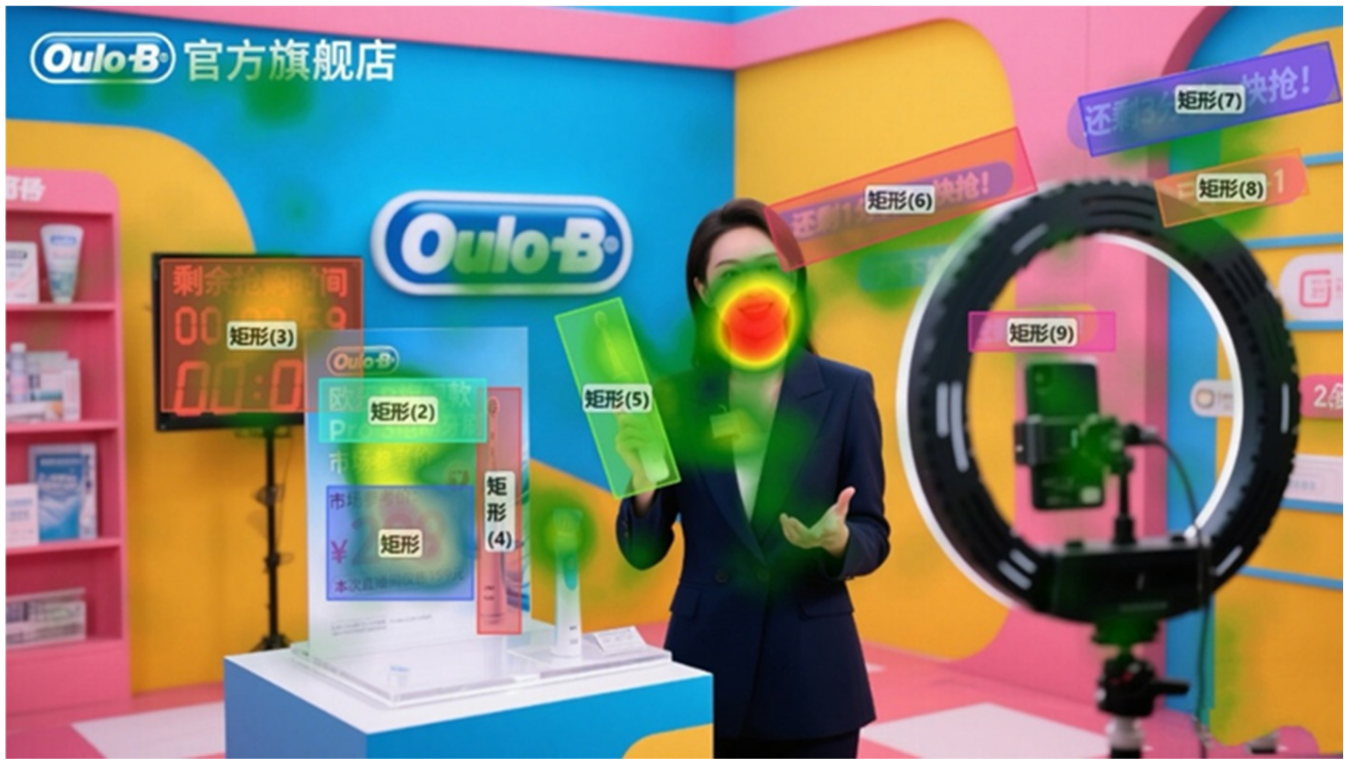
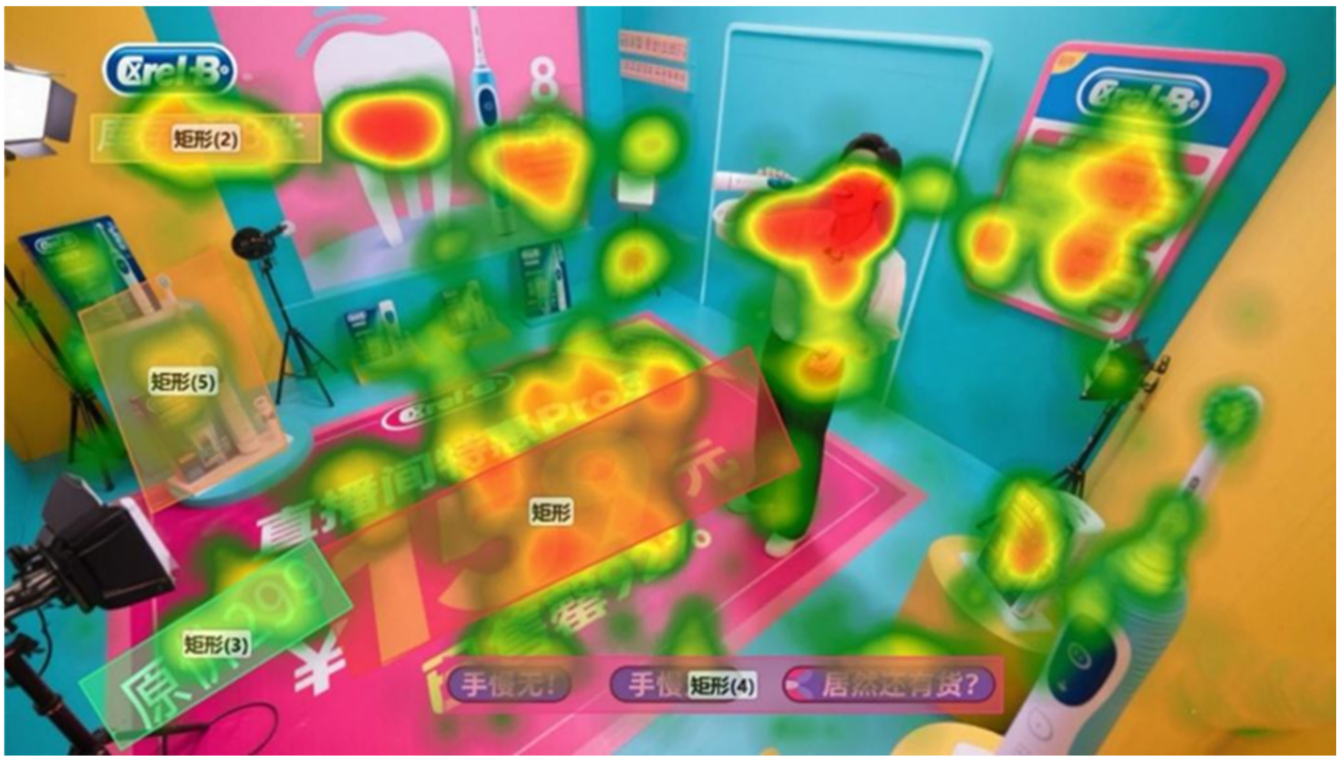
Figure 2 and
Figure 3 illustrate distinct gaze patterns. In the TL scenario, fixations were heavily concentrated on the countdown area (AOI 3), confirming a ‘synchronized gaze’ effect. Conversely, in the QL scenario, attention shifted significantly toward the inventory bar (AOI 2) and competition-focused danmaku, indicating a ‘resource monitoring’ mindset. Quantitative metrics (
Table 3) further corroborate this, showing comparable fixation durations for the inventory bar (0.17 s) and the main product (0.18 s), verifying the inventory bar’s role as a secondary visual anchor.
4.2. Experiment 2: Questionnaire-Based Hypothesis Testing
To ensure statistical power, an a priori power analysis was conducted using G*Power 3.1. For a chain mediation model (analyzed via bias-corrected bootstrapping), aiming for a medium effect size (f2 = 0.15), an alpha error probability of 0.05, and a statistical power of 0.80, the required minimum sample size was calculated to be approximately 100–120 participants. Our final valid sample consisted of 213 participants (Time-Limited group: ; Quantity-Limited group: ). This sample size exceeds the recommended threshold for detecting medium effects in consumer behavior experiments and ensures the robustness of the Hayes’ PROCESS macro analysis (5000 bootstrap samples).
4.2.1. Measurement Quality Assessment
The reliability and validity of the measurement model were evaluated through Confirmatory Factor Analysis (CFA). As reported in
Table 1 (see
Section 3.2), Cronbach’s alpha for all variables ranged from 0.849 to 0.916, indicating excellent internal consistency. Convergent validity was established as Standardized Loadings (>0.7), Composite Reliability (CR) (>0.8), and Average Variance Extracted (AVE) (>0.5) all met the established academic criteria. Furthermore, Harman’s single-factor test result (41.69%) confirmed that common method bias was not a significant threat to the study’s findings.
Descriptive statistics and Pearson correlation analysis for the main study (N = 213) are presented in
Table 4. Multicollinearity was assessed via the Variance Inflation Factor (VIF). All VIF values (GCP = 1.22, ICP = 1.67, SCS = 1.64) were well below the threshold of 5, indicating that the constructs are statistically distinct and suitable for simultaneous inclusion in the structural model.
4.2.2. Manipulation Check and Group Differences
Independent samples
t-tests (as shown in
Table 5) revealed significant differences in how consumers perceive the two restriction types:
The TL group reported a significantly higher perception of Collective Synchronicity (GCP) than the QL group (Mean TL = 4.38 vs. Mean QL = 3.86, p < 0.001), supporting H1a.
The QL group exhibited a significantly higher perception of Interactive Control (ICP) than the TL group (Mean QL = 4.37 vs. Mean TL = 3.86, p < 0.001), supporting H1b. These results confirm that while both strategies use “scarcity,” they activate entirely different social psychological mechanisms.
4.2.3. Path Analysis and Serial Mediation
We tested the dual-pathway mechanism using Hayes’ Process Model 6. As shown in
Table 6, the serial mediation hypotheses were fully supported by the indirect effect confidence intervals:
For the Time-Limited Group (H4a and H2a/H3a): The specific indirect path (Ind3: TL → GCP → FV → PI) was significant (Effect = 0.121), as the 95% Confidence Interval [0.071, 0.191] did not include zero. This confirms that Collective Synchronicity and Functional Value sequentially mediate the effect.
For the Quantity-Limited Group (H4b and H2b/H3b): The specific indirect path (Ind3: QL → ICP → SV → PI) was also significant (Effect = 0.124), with a 95% Confidence Interval of [0.079, 0.185], excluding zero. This confirms the mediating roles of Interactive Control and Social Value.
The significance of these indirect paths provides statistical support for the causal links proposed in H2 and H3 within the chain mediation framework.
4.2.4. The Moderating Role of Social Cue Sensitivity (SCS)
The moderation analysis results (
Table 7) fully supported Hypothesis 5.
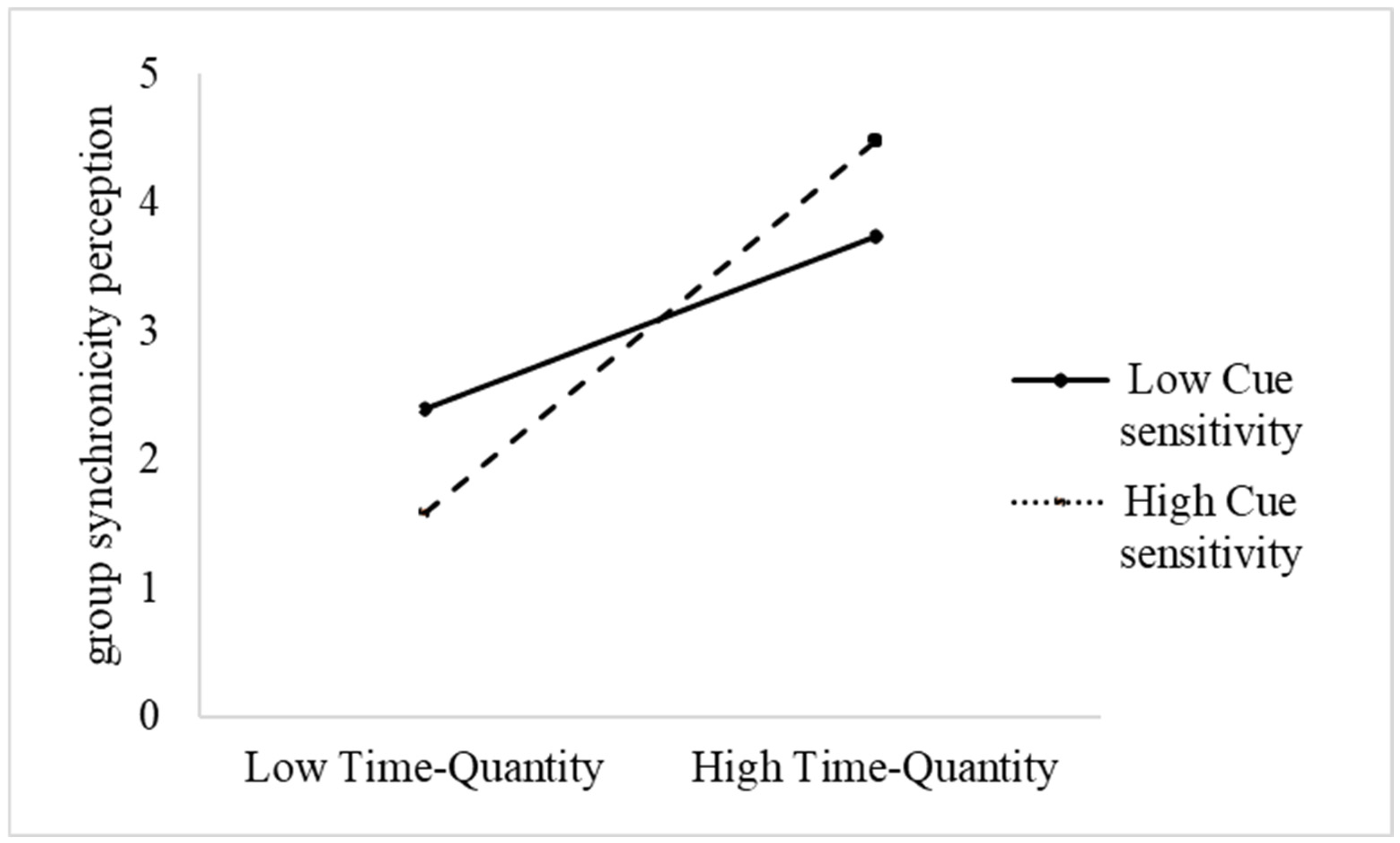
Supporting H5a. For the Quantity-Limited pathway, the interaction between Promotion Type and SCS was significant (). As illustrated in Figure 4, high-SCS individuals reported significantly higher Interactive Control Perception when facing quantity restrictions. Supporting H5b.
Crucially, for the Time-Limited pathway, the interaction effect was not statistically significant ().This null result aligns with our theoretical prediction in H5b that time cues are objective and non-social, thus their processing is not dependent on an individual’s social cue sensitivity. Therefore, the combination of a significant interaction in the QL group and a non-significant interaction in the TL group provides full support for H5.
4.2.5. Summary of Hypothesis Testing
The empirical results provide robust support for the proposed conceptual framework. As summarized in
Table 8, Hypotheses H1, H2, H3, and H4 were all fully supported, confirming the existence of differentiated mediation paths. H5 was partially supported, highlighting the critical role of individual personality traits (SCS) in processing competitive social cue.
5. Discussion
Grounded in social presence and perceived value theories, this study elucidates the differentiated mechanisms through which promotional purchase restrictions in live-streaming contexts shape consumers’ purchase intention. Time-limited and quantity-limited promotions drive perceived value through distinct dimensions of social presence, establishing parallel chain transmission mechanisms. Specifically, time-limited promotions strengthen Collective Synchronicity Perception (shared temporal urgency) to activate a rapid evaluation of product functional value. In contrast, quantity-limited promotions enhance Interactive Control Perception (perceived control over inventory scarcity) to boost social value identification. Together, these pathways constitute the core mediating chains for each strategy’s impact on purchase intention, framed as a serial mediation model linking promotion type to purchase intention through the sequential mediation of social presence and perceived value. This framework aligns with existing research confirming social presence as a critical mediator between live-streaming stimuli and purchase intention [
11,
13], while validating perceived value as a pivotal link between contextual cues and consumer decisions.
Social Cue Sensitivity (SCS) exerts heterogeneous moderating effects across these strategies. High-sensitivity consumers respond more robustly to social competition cues (e.g., inventory visualization, purchase progress alerts) in quantity-limited promotions. This group exhibits greater gains in Interactive Control Perception, which strengthens the specific pathway wherein quantity-limited promotions enhance Interactive Control Perception, which subsequently elevates social value and drives purchase intention. Similarly, these consumers demonstrate heightened responsiveness to visual countdowns in time-limited promotions, where elevated Interactive Control Perception reinforces the corresponding pathway for time-based restrictions. This resonates with findings that individual differences in social cue processing significantly moderate the effectiveness of social presence-driven marketing strategies [
3], highlighting the need to tailor promotional tactics to consumer sensitivity profiles [
41].
Further comparative analysis indicates that quantity-limited promotions generally exert a stronger impact on purchase intention than their time-limited counterparts. This disparity is attributed to divergent psychological mechanisms: time-limited promotions activate Collective Synchronicity Perception via countdowns and synchronized danmaku, emphasizing a rational functional value pathway (β = 0.350) reliant on loss-aversion calculations potentially (associated with the dorsolateral prefrontal cortex), which tends to lead to conservative decisions. Conversely, quantity-limited promotions activate Interactive Control Perception via inventory visualization and competition alerts, strengthening an emotionally driven social value pathway (β = 0.714). The dual-focus attention pattern of “inventory monitoring + social competition” likely activates the striatal dopamine reward system. Furthermore, high-sensitivity groups respond more strongly to this stimulus (moderating effect β = 0.051), driving significantly higher impulsive purchase intention (mean: 4.19 in the quantity-limited group vs. 3.25 in the time-limited group) [
7]. This efficiency advantage of the social value pathway aligns with evidence that emotional and social motivations outperform rational evaluations in driving live-streaming purchases [
25].
Notably, these findings also imply that combining time-limited and quantity-limited promotions can yield synergistic effects: eye-tracking data shows consumers’ attention distributes dually across “countdown zones + inventory bars,” indicating parallel processing (rather than mutual exclusion) that strengthens overall presence experiences; regression analyses further confirm that simultaneous high-time and high-quantity restrictions enhance both serial mediation effects, positively influencing purchase intention—suggesting combined strategies outperform single-dimensional restrictions in boosting live-streaming purchase behavior [
42]. This supports the notion that multi-dimensional scarcity cues synergistically amplify consumer responses by engaging both cognitive and emotional pathways.
Theoretically, this study addresses limitations of traditional single-mediation models [
42] by constructing a “dual social presence dimensions—dual perceived value pathways” chain transmission framework, revealing the synergistic mechanisms between technology-enabled cues (countdowns, inventory visualization) and social cues (danmaku interactions). Practically, it validates the design principle of matching high-circulation products with time-limited pressure strategies and scarce products with quantity-control cues. Specifically, platforms should strengthen social competition alerts for quantity-limited strategies targeting high-sensitivity users, while emphasizing product function visualization for low-sensitivity groups in time-limited promotions—providing a data-driven basis for optimizing real-time interactive marketing [
43]. For platform developers, algorithms could be designed to automatically detect peak traffic times and dynamically switch between countdown overlays (for high traffic) and inventory bars (for scarcity signaling), realizing an AI-driven adaptive interface. In summary, the cross-validation of experimental data and neurobehavioral evidence enables a systematic analysis of the dynamic interactions within live-streaming promotional restrictions, offering a new paradigm for both digital marketing theory and practice.
6. Conclusions
This study confirms that time-limited and quantity-limited promotions influence purchase intention through distinct ‘social presence–perceived value’ pathways. While time constraints activate functional value via collective synchronicity, quantity constraints drive social value through interactive control. Crucially, the latter pathway is amplified in consumers with high social cue sensitivity.
Regarding boundary conditions, Social Cue Sensitivity exerts heterogeneous moderating effects. High-sensitivity consumer groups exhibit stronger responsiveness to social competition cues embedded in quantity-limited promotions, which translates into significantly greater improvements in Interactive Control Perception and subsequent purchase intention.
Theoretically, this study transcends the unidimensional framework of traditional scarcity theory to construct a serial mediation model anchored in “dual social presence dimensions—dual perceived value pathways,” providing a novel paradigm for unpacking the nonlinear effects of dynamic promotional restrictions.
Practically, this work proposes that platforms deploy differentiated strategies aligned with product attributes: strategies should reinforce Collective Synchronicity Perception for high-circulation products to accelerate rational decision-making, whereas for scarce or socially symbolic products, strategies should activate social competition motivation to enhance social value identification.
Author Contributions
Conceptualization, S.J. and L.Z.; Methodology, S.J. and L.Z.; Software, L.Z.; Validation, S.J.; Formal analysis, S.J. and L.Z.; Investigation, L.Z.; Resources, L.Z.; Data curation, L.Z.; Writing – original draft, L.Z.; Writing – review & editing, L.Z.; Visualization, L.Z.; Supervision, S.J.; Project administration, S.J.; Funding acquisition, S.J. All authors have read and agreed to the published version of the manuscript.
Funding
This research was funded by the Shandong Social Science Fund Project, grant number 22CGLJ24.
Institutional Review Board Statement
The study was conducted in accordance with the Declaration of Helsinki and approved by the Ethics Committee of the School of Business, Shandong University (protocol code: SDU-BUS-2024-035; date of approval: 15 March 2024).
Informed Consent Statement
Prior to participating in the experiment and completing the questionnaire, all participants were provided with a detailed information sheet explaining the study purpose, procedures, potential risks (minimal), and data usage policy. Written informed consent was obtained from each participant, who voluntarily agreed to participate without coercion. Participants were informed of their right to withdraw at any time without penalty, and all personal data were anonymized to protect privacy. No identifiable information of participants was included in the study or publication.
Data Availability Statement
The raw data supporting the conclusions of this article are available from the corresponding author upon reasonable request. These data include experimental eye-tracking datasets, questionnaire responses, and statistical analysis files, all of which have been anonymized to protect participants’ privacy and comply with ethical guidelines. Currently, the data are retained on the authors’ local servers; plans for depositing the dataset in a publicly accessible repository (e.g., the Shandong University Research Data Repository) are underway to ensure long-term accessibility in line with FAIR principles (Findable, Accessible, Interoperable, Reusable).
Acknowledgments
The authors would like to express their gratitude to all participants who volunteered for the experiment and questionnaire. Special thanks to the School of Business, Shandong University, for providing experimental facilities and administrative support. Additionally, the corresponding author acknowledges the valuable guidance and supervision provided by Shoufen Jiang throughout the research process.
Conflicts of Interest
The authors declare no conflicts of interest.
Abbreviations
The following abbreviations are used in this manuscript:
| TL | Time-limited (promotions) |
| QL | Quantity-limited (promotions) |
| PPR | Promotional purchase restrictions |
| SCS | Social Cue Sensitivity |
| GCP | Collective Synchronicity Perception |
| ICP | Interactive Control Perception |
| BERP | Bidirectional Emotional Resonance Perception |
| SPI | Social Presence Index |
| AOI | Areas of Interest |
| GMV | Gross merchandise volume |
| VIF | Variance Inflation Factor |
| SD | Standard Deviation |
| CI | Confidence Interval |
| SE | Standard Error |
| AI | Artificial Intelligence |
| AR | Augmented Reality |
| KMO | Kaiser-Meyer-Olkin (Measure of Sampling Adequacy) |
| CNY | Chinese Yuan |
| PERVAL | Perceived Value (Model/Scale) |
References
- Xin, M.; Jian, L.; Liu, W.; Bao, Y. Exploring the Effect of Live Streaming Atmospheric Cues on Consumer Impulse Buying: A Flow Experience Perspective. J. Theor. Appl. Electron. Commer. Res. 2025, 20, 149. [Google Scholar] [CrossRef]
- Widjaja, A.; Benjaminsz, C.A.; Susanto, D.F.; Hendriana, E. Distinguishing the Effects of a Social Presence on Impulsive Buying Behavior Based on Live-Streaming Shopping Platforms. J. Organ. Comput. Electron. Commer. 2025, 36, 31–61. [Google Scholar] [CrossRef]
- Li, N.; Xuan, C.; Chen, R. Different Roles of Two Kinds of Digital Coexistence: The Impact of Social Presence on Consumers’ Purchase Intention in the Live Streaming Shopping Context. J. Retail. Consum. Serv. 2024, 80, 103890. [Google Scholar] [CrossRef]
- Ding, S. Research on the Influence of Promotion Types and Scarcity on Consumers’ Purchase Intention in The Context of E-Commerce Live Broadcasting. Front. Bus. Econ. Manag. 2023, 8, 164–171. [Google Scholar] [CrossRef]
- Laradi, S.; Alrawad, M.; Lutfi, A.; Agag, G. Understanding Factors Affecting Social Commerce Purchase Behavior: A Longitudinal Perspective. J. Retail. Consum. Serv. 2024, 78, 103751. [Google Scholar] [CrossRef]
- Lo, P.-S.; Dwivedi, Y.K.; Tan, G.W.-H.; Ooi, K.-B.; Aw, E.C.-X.; Metri, B. Why Do Consumers Buy Impulsively during Live Streaming? A Deep Learning-Based Dual-Stage SEM-ANN Analysis. J. Bus. Res. 2022, 147, 325–337. [Google Scholar] [CrossRef]
- Zhou, R. The Impact of Scarcity Promotions in Live Streaming E-Commerce on Purchase Intention: The Mediating Effect of Emotional Experience. Asia Pac. J. Mark. Logist. 2024, 37, 1733–1749. [Google Scholar] [CrossRef]
- Zhang, M.; Li, S. Online Promotion Cooling? The Influence Mechanism of Consumer Loyalty in Classic Large-Scale Online Social Promotions. Electron. Commer. Res. Appl. 2024, 67, 101429. [Google Scholar] [CrossRef]
- Kao, C.-Y.; Huang, C. Investigating the Impact of Fear of Missing out on Inaction Inertia in Live Streaming Purchase Intention. Aslib J. Inf. Manag. 2024, 77, 1152–1175. [Google Scholar] [CrossRef]
- Gao, J.; Zhao, X.; Zhai, M.; Zhang, D.; Li, G. AI or Human? The Effect of Streamer Types on Consumer Purchase Intention in Live Streaming. Int. J. Hum.–Comput. Interact. 2024, 41, 305–317. [Google Scholar] [CrossRef]
- Zhang, L.; Liu, X. Interactivity and Live-Streaming Commerce Purchase Intention: Social Presence as a Mediator. Soc. Behav. Personal. Int. J. 2023, 51, 1–7. [Google Scholar] [CrossRef]
- Chao, P.-J.; Cheng, Y.-H.; Li, C.-H.; Hsieh, M.-C. Determinants of Purchase Intention among Live Streaming Shoppers: The Roles of Technology Readiness, Social Presence, and Perceived Value. J. Asia-Pac. Bus. 2022, 23, 187–205. [Google Scholar] [CrossRef]
- Liu, X.; Zhang, L. Virtual Streamer Responsiveness and Consumer Purchase Intention in Live Streaming Commerce: Social Presence as a Mediator. Soc. Behav. Personal. Int. J. 2024, 52, 1–7. [Google Scholar] [CrossRef]
- Luo, H.; Park, S.-Y. Exploring Barriers to Secondhand Luxury Consumption among Chinese Consumers and Changes during the COVID-19 Pandemic. J. Bus. Res. 2024, 174, 114497. [Google Scholar] [CrossRef]
- Chandraa, M.; Sukmaningsih, D.W.; Sriwardiningsih, E. The Impact of Live Streaming on Purchase Intention in Social Commerce in Indonesia. Procedia Comput. Sci. 2024, 234, 987–995. [Google Scholar] [CrossRef]
- Qi, L.; Masrom, M. Role of Live E-Commerce on Consumer Purchase Intentions. J. Ecohumanism 2024, 3, 3574–3582. [Google Scholar] [CrossRef]
- Mustikasari, A.; Hurriyati, R.; Widjajanta, B.; Rahayu, A.; Wibowo, L.A.; Dirgantari, P.D. Understanding the Impact of Perceived Value on Consumers’ Continuous Purchase Intention in LiveStreaming E-Commerce Mediated by Consumer Trust and Online Shopping Satisfaction. In Proceedings of the 8th Global Conference on Business, Management, and Entrepreneurship (GCBME), Bandung, Indonesia, 7 August 2024; Atlantis Press: Dordrecht, The Netherlands, 2024. [Google Scholar]
- Wu, Y.; Huang, H. Influence of Perceived Value on Consumers’ Continuous Purchase Intention in Live-Streaming E-Commerce—Mediated by Consumer Trust. Sustainability 2023, 15, 4432. [Google Scholar] [CrossRef]
- Tang, X.; Li, X.; Hao, Z. The Impact of Live Background Visual Complexity on Consumer Purchase Intention: An Eye-Tracking Study. Asia Pac. J. Mark. Logist. 2024, 36, 2539–2557. [Google Scholar] [CrossRef]
- Shang, Q.; Ma, H.; Wang, C.; Gao, L. Effects of Background Fitting of E-Commerce Live Streaming on Consumers’ Purchase Intentions: A Cognitive-Affective Perspective. Psychol. Res. Behav. Manag. 2023, 16, 149–168. [Google Scholar] [CrossRef]
- Zhang, Y.; Li, K.; Qian, C.; Li, X.; Yuan, Q. How Real-Time Interaction and Sentiment Influence Online Sales? Understanding the Role of Live Streaming Danmaku. J. Retail. Consum. Serv. 2024, 78, 103793. [Google Scholar] [CrossRef]
- Fayola, F.; Graciela, V.; Chandra, V.; Sukmaningsih, D.W. Impact of Gamification Elements on Live Streaming E-Commerce (Live Commerce). Procedia Comput. Sci. 2024, 245, 1065–1074. [Google Scholar] [CrossRef]
- Oktaviani, R.; Murwani, F.D.; Hermawan, A. The Effect of Live Streaming Quality on Purchase Intention through Immersive Experience, Consumer Trust, and Perceived Value (Study of This Is April Consumers on TikTok). Int. J. Bus. Law Educ. 2024, 5, 765–789. [Google Scholar] [CrossRef]
- Wang, J.; Kim, J.U.; Kim, H.-M. Purchase Intention in TikTok Streaming Commerce: The Role of Recommendation Accuracy, Streamer’s Attractiveness, and Consumer-to-Consumer Interactions. Rev. Manag. Sci. 2024, 19, 2255–2278. [Google Scholar] [CrossRef]
- Song, M.; Choi, S.; Moon, J. Limited Time or Limited Quantity? The Impact of Other Consumer Existence and Perceived Competition on the Scarcity Messaging—Purchase Intention Relation. J. Hosp. Tour. Manag. 2021, 47, 167–175. [Google Scholar] [CrossRef]
- Che, T.; Peng, Y.; Zhou, Q.; Dickey, A.; Lai, F. The Impacts of Gamification Designs on Consumer Purchase: A Use and Gratification Theory Perspective. Electron. Commer. Res. Appl. 2023, 59, 101268. [Google Scholar] [CrossRef]
- Yang, X. Consumers’ Purchase Intentions in Social Commerce: The Role of Social Psychological Distance, Perceived Value, and Perceived Cognitive Effort. Inf. Technol. People 2022, 35, 330–348. [Google Scholar] [CrossRef]
- Jin, Y.; Xie, G.-X.; Zhang, J. When Product Scarcity Backfires (or Doesn’t): Limited Quantities Affect Perceived Retailer Sincerity in Online Promotions. J. Retail 2025, in press. [Google Scholar] [CrossRef]
- Vona, F.; Schorlemmer, J.; Kaulard, P.; Fischer, S.; Stemann, J.; Voigt-Antons, J.-N. Comparing User Behavior in Real vs. Virtual Supermarket Shelves: An Eye-Tracking Study Using Tobii 3 Pro and Meta Quest Pro. arXiv 2025. [Google Scholar] [CrossRef]
- Huang, Y.; Jing, J.; Sheng, S.; Wang, Z. EDSV-Net: An Efficient Defect Segmentation Network Based on Visual Attention and Visual Perception. Expert Syst. Appl. 2024, 237, 121529. [Google Scholar] [CrossRef]
- Moreno-Arjonilla, J.; López-Ruiz, A.; Jiménez-Pérez, J.R.; Callejas-Aguilera, J.E.; Jurado, J.M. Eye-Tracking on Virtual Reality: A Survey. Virtual Real. 2024, 28, 38. [Google Scholar] [CrossRef]
- Plopski, A.; Hirzle, T.; Norouzi, N.; Qian, L.; Bruder, G.; Langlotz, T. The Eye in Extended Reality: A Survey on Gaze Interaction and Eye Tracking in Head-Worn Extended Reality. ACM Comput. Surv. 2022, 55, 53. [Google Scholar] [CrossRef]
- Gunawardena, N.; Ginige, J.A.; Javadi, B. Eye-Tracking Technologies in Mobile Devices Using Edge Computing: A Systematic Review. ACM Comput. Surv. 2022, 55, 158. [Google Scholar] [CrossRef]
- Migkos, S.P.; Giannakopoulos, N.T.; Sakas, D.P. Impact of Influencer Marketing on Consumer Behavior and Online Shopping Preferences. J. Theor. Appl. Electron. Commer. Res. 2025, 20, 111. [Google Scholar] [CrossRef]
- Juárez-Varón, D.; Mengual-Recuerda, A.; Capatina, A.; Núñez Cansado, M. Footwear Consumer Behavior: The Influence of Stimuli on Emotions and Decision Making. J. Bus. Res. 2023, 164, 114016. [Google Scholar] [CrossRef]
- Gorton, M.; Marek-Andrzejewska, E.; Pang, G.; Andrzejewski, W.; Lin, Y. Users’ Processing of Online Marketplace Listings for High and Low Involvement Goods. Electron. Commer. Res. Appl. 2024, 65, 101382. [Google Scholar] [CrossRef]
- Beyan, C.; Vinciarelli, A.; Bue, A.D. Co-Located Human–Human Interaction Analysis Using Nonverbal Cues: A Survey. ACM Comput. Surv. 2023, 56, 109. [Google Scholar] [CrossRef]
- Arnet, S.; Nißen, M.; von Wangenheim, F. Don’t Be a Hamster! Social Appeals to Curb Panic Buying at the Point-of-Sale. J. Retail. Consum. Serv. 2024, 79, 103884. [Google Scholar] [CrossRef]
- Zhang, X.; Wang, T. Understanding Purchase Intention in O2O E-Commerce: The Effects of Trust Transfer and Online Contents. J. Theor. Appl. Electron. Commer. Res. 2021, 16, 125–139. [Google Scholar] [CrossRef]
- Yang, Y.; Liu, J.; Wang, Y. Consumers’ Variety-Seeking Behaviors under Time Pressure: Based on Regulatory Focus and Excitement Levels. PsyCh J. 2024, 13, 440–455. [Google Scholar] [CrossRef]
- Mishra, U. Social Presence and Purchase Intention in Live Streaming Shopping: Mediating Role of Trust and Psychological Distance. J. Adv. Account. Econ. Manag. 2025, 2, 16. [Google Scholar] [CrossRef]
- Chen, L.-R.; Chen, F.-S.; Chen, D.-F. Effect of Social Presence toward Livestream E-Commerce on Consumers’ Purchase Intention. Sustainability 2023, 15, 3571. [Google Scholar] [CrossRef]
- Kim, J.; Shin, Y.; Jung, G.; Ahn, H. A Hybrid Detection Method for YouTube Fake News Using Related Video Data. Eng. Appl. Artif. Intell. 2025, 156, 111130. [Google Scholar] [CrossRef]
| Disclaimer/Publisher’s Note: The statements, opinions and data contained in all publications are solely those of the individual author(s) and contributor(s) and not of MDPI and/or the editor(s). MDPI and/or the editor(s) disclaim responsibility for any injury to people or property resulting from any ideas, methods, instructions or products referred to in the content. |