
<?xml version="1.0" encoding="UTF-8"?>
<!DOCTYPE article PUBLIC "-//NLM//DTD Journal Publishing DTD v2.3 20070202//EN" "journalpublishing.dtd">
<article xmlns:mml="http://www.w3.org/1998/Math/MathML" xmlns:xlink="http://www.w3.org/1999/xlink" xml:lang="en" article-type="research-article">
  <front>
    <journal-meta>
      <journal-id journal-id-type="publisher-id">toxins</journal-id>
      <journal-title>Toxins</journal-title>
      <abbrev-journal-title abbrev-type="publisher">Toxins</abbrev-journal-title>
      <abbrev-journal-title abbrev-type="pubmed">Toxins</abbrev-journal-title>
      <issn pub-type="epub">2072-6651</issn>
      <publisher>
        <publisher-name>MDPI</publisher-name>
      </publisher>
    </journal-meta>
    <article-meta>
      <article-id pub-id-type="doi">10.3390/toxins4121517</article-id>
      <article-id pub-id-type="publisher-id">toxins-04-01517</article-id>
      <article-categories>
        <subj-group>
          <subject>Article</subject>
        </subj-group>
      </article-categories>
      <title-group>
        <article-title>Verotoxin A Subunit Protects Lymphocytes and T Cell Lines against X4 HIV Infection <italic>in Vitro</italic></article-title>
      </title-group>
      <contrib-group>
        <contrib contrib-type="author">
          <name>
            <surname>Shi</surname>
            <given-names>Pei Lin</given-names>
          </name>
          <xref rid="af1-toxins-04-01517" ref-type="aff">1</xref>
          <xref rid="af2-toxins-04-01517" ref-type="aff">2</xref>
        </contrib>
        <contrib contrib-type="author">
          <name>
            <surname>Binnington</surname>
            <given-names>Beth</given-names>
          </name>
          <xref rid="af2-toxins-04-01517" ref-type="aff">2</xref>
        </contrib>
        <contrib contrib-type="author">
          <name>
            <surname>Sakac</surname>
            <given-names>Darinka</given-names>
          </name>
          <xref rid="af3-toxins-04-01517" ref-type="aff">3</xref>
        </contrib>
        <contrib contrib-type="author">
          <name>
            <surname>Katsman</surname>
            <given-names>Yulia</given-names>
          </name>
          <xref rid="af3-toxins-04-01517" ref-type="aff">3</xref>
        </contrib>
        <contrib contrib-type="author">
          <name>
            <surname>Ramkumar</surname>
            <given-names>Stephanie</given-names>
          </name>
          <xref rid="af4-toxins-04-01517" ref-type="aff">4</xref>
        </contrib>
        <contrib contrib-type="author">
          <name>
            <surname>Gariepy</surname>
            <given-names>Jean</given-names>
          </name>
          <xref rid="af5-toxins-04-01517" ref-type="aff">5</xref>
          <xref rid="af6-toxins-04-01517" ref-type="aff">6</xref>
        </contrib>
        <contrib contrib-type="author">
          <name>
            <surname>Kim</surname>
            <given-names>Minji</given-names>
          </name>
          <xref rid="af3-toxins-04-01517" ref-type="aff">3</xref>
          <xref rid="af4-toxins-04-01517" ref-type="aff">4</xref>
        </contrib>
        <contrib contrib-type="author">
          <name>
            <surname>Branch</surname>
            <given-names>Donald R.</given-names>
          </name>
          <xref rid="af3-toxins-04-01517" ref-type="aff">3</xref>
          <xref rid="af4-toxins-04-01517" ref-type="aff">4</xref>
          <xref rid="af7-toxins-04-01517" ref-type="aff">7</xref>
          <xref rid="af8-toxins-04-01517" ref-type="aff">8</xref>
        </contrib>
        <contrib contrib-type="author">
          <name>
            <surname>Lingwood</surname>
            <given-names>Clifford</given-names>
          </name>
          <xref rid="af1-toxins-04-01517" ref-type="aff">1</xref>
          <xref rid="af2-toxins-04-01517" ref-type="aff">2</xref>
          <xref rid="af4-toxins-04-01517" ref-type="aff">4</xref>
          <xref rid="c1-toxins-04-01517" ref-type="corresp">*</xref>
        </contrib>
      </contrib-group>
      <aff id="af1-toxins-04-01517"><label>1 </label>Department of Biochemistry, University of Toronto, Ontario M5G 1X8, Canada; E-Mail: <email>peilinss@yahoo.ca</email></aff>
      <aff id="af2-toxins-04-01517"><label>2 </label>Division of Molecular Structure and Function and Research Institute, The Hospital for Sick Children, Ontario M5G 1X8, Canada; E-Mail: <email>bbinn@sickkids.ca</email></aff>
      <aff id="af3-toxins-04-01517"><label>3 </label>Canadian Blood Services, Toronto, Ontario M5G 2M1, Canada; E-Mails: <email>darinka.sakac@blood.ca</email> (D.S.); <email>author-yulia.katsman@utoronto.ca</email> (Y.K.)</aff>
      <aff id="af4-toxins-04-01517"><label>4 </label>Laboratory Medicine &amp; Pathology, University of Toronto, Ontario M5G 1X8, Canada; E-Mails: <email>steph.ramkumar@utoronto.ca</email> (S.R.); <email>mminji.kim@mail.utoronto.ca</email> (M.K.); <email>donald.branch@blood.ca</email> (D.R.B.)</aff>
      <aff id="af5-toxins-04-01517"><label>5 </label>Department of Medical Biophysics &amp; Pharmaceutical Sciences, University of Toronto, Ontario M5G 1X8, Canada; E-Mail: <email>gariepy@sri.utoronto.ca</email></aff>
      <aff id="af6-toxins-04-01517"><label>6 </label>Sunnybrook Research Institute, Sunnybrook Health Science Centre, Toronto M4N 3M5, Canada</aff>
      <aff id="af7-toxins-04-01517"><label>7 </label>Department of Medicine, University of Toronto, Ontario M5G 1X8, Canada</aff>
      <aff id="af8-toxins-04-01517"><label>8 </label>Division of Cell and Molecular Biology, Toronto General Research Institute of the University Health Network, Toronto, Ontario M5G 2M9, Canada</aff>
      <author-notes>
        <corresp id="c1-toxins-04-01517"><label>*</label> Author to whom correspondence should be addressed; E-Mail: <email>cling@sickkids.ca</email>; Tel.: +1-416-813-5998; Fax: +1-416-813-5993.</corresp>
      </author-notes>
      <pub-date pub-type="epub">
        <day>14</day>
        <month>12</month>
        <year>2012</year>
      </pub-date>
      <pub-date pub-type="collection">
        <month>12</month>
        <year>2012</year>
      </pub-date>
      <volume>4</volume>
      <issue>12</issue>
      <fpage>1517</fpage>
      <lpage>1534</lpage>
      <history>
        <date date-type="received">
          <day>22</day>
          <month>10</month>
          <year>2012</year>
        </date>
        <date date-type="rev-recd">
          <day>24</day>
          <month>11</month>
          <year>2012</year>
        </date>
        <date date-type="accepted">
          <day>06</day>
          <month>12</month>
          <year>2012</year>
        </date>
      </history>
      <permissions>
        <copyright-statement>© 2012 by the authors; licensee MDPI, Basel, Switzerland.</copyright-statement>
        <copyright-year>2012</copyright-year>
        <license xmlns:xlink="http://www.w3.org/1999/xlink" license-type="open-access" xlink:href="http://creativecommons.org/licenses/by/3.0/">
          <p>This article is an open-access article distributed under the terms and conditions of the Creative Commons Attribution license (http://creativecommons.org/licenses/by/3.0/).</p>
        </license>
      </permissions>
      <abstract>
        <p>Our previous genetic, pharmacological and analogue protection studies identified the glycosphingolipid, Gb<sub>3</sub> (globotriaosylceramide, P<sup>k</sup> blood group antigen) as a natural resistance factor for HIV infection. Gb<sub>3</sub> is a B cell marker (CD77), but a fraction of activated peripheral blood mononuclear cells (PBMCs) can also express Gb<sub>3</sub>. Activated PBMCs predominantly comprise CD4<sup>+</sup> T-cells, the primary HIV infection target. Gb<sub>3</sub> is the sole receptor for <italic>Escherichia coli</italic> verotoxins (VTs, Shiga toxins). VT1 contains a ribosome inactivating A subunit (VT1A) non-covalently associated with five smaller receptor-binding B subunits. The effect of VT on PHA/IL2-activated PBMC HIV susceptibility was determined. Following VT1 (or VT2) PBMC treatment during IL2/PHA activation, the small Gb<sub>3</sub><sup>+</sup>/CD4<sup>+</sup> T-cell subset was eliminated but, surprisingly, remaining CD4<sup>+</sup> T-cell HIV-1<sub>IIIB</sub> (and HIV-1<sub>Ba-L</sub>) susceptibility was significantly reduced. The Gb<sub>3</sub><sup>-</sup>Jurkat T-cell line was similarly protected by brief VT exposure prior to HIV-1<sub>IIIB</sub> infection. The efficacy of the VT1A subunit alone confirmed receptor independent protection. VT1 showed no binding or obvious Jurkat cell/PBMC effect. Protective VT1 concentrations reduced PBMC (but not Jurkat cell) proliferation by 50%. This may relate to the mechanism of action since HIV replication requires primary T-cell proliferation. Microarray analysis of VT1A-treated PBMCs indicated up regulation of 30 genes. Three of the top four were histone genes, suggesting HIV protection via reduced gene activation. VT blocked HDAC inhibitor enhancement of HIV infection, consistent with a histone-mediated mechanism. We speculate that VT1A may provide a benign approach to reduction of (X4 or R5) HIV cell susceptibility.</p>
      </abstract>
      <kwd-group>
        <kwd>verotoxin</kwd>
        <kwd>HIV</kwd>
        <kwd>AIDS</kwd>
        <kwd>PBMCs</kwd>
        <kwd>anergy </kwd>
      </kwd-group>
    </article-meta>
  </front>
  <body>
    <sec sec-type="intro">
      <title>1. Introduction</title>
      <p>Verotoxin or Shiga-like toxins are a family of AB<sub>5</sub> subunit toxins produced by enterohemorrhagic <italic>E. coli</italic> (EHEC)<italic>.</italic> Gastrointestinal infection with VT producing EHEC is the primary cause of hemolytic uremic syndrome [<xref ref-type="bibr" rid="B1-toxins-04-01517">1</xref>]. VT1 and VT2 are 60% homologous but VT2 is associated with more severe clinical disease [<xref ref-type="bibr" rid="B2-toxins-04-01517">2</xref>]. VTs belongs to a group of ribosomal inactivating proteins (RIPs) that inhibit protein synthesis in target cells by specifically removing an adenine residue in the 28S rRNA via its <italic>N</italic>-glycanase activity [<xref ref-type="bibr" rid="B3-toxins-04-01517">3</xref>,<xref ref-type="bibr" rid="B4-toxins-04-01517">4</xref>]. VTs bind, via their pentameric B subunit array, to their receptor GSL, Gb<sub>3</sub> which alone [<xref ref-type="bibr" rid="B5-toxins-04-01517">5</xref>] mediates their internalization and retrograde transport to the Golgi and then ER, where the A subunit separates from the holotoxin to be translocated into the cytosol to inhibit protein synthesis and kill the cell [<xref ref-type="bibr" rid="B6-toxins-04-01517">6</xref>]. However, without the receptor binding B subunits, the A subunit is non-toxic. Several RIPs have been shown to have anti viral activity [<xref ref-type="bibr" rid="B7-toxins-04-01517">7</xref>] but the exact mechanism is not defined. </p>
      <p>Ruminant animals naturally harbor EHEC in their digestive system without any harmful effect [<xref ref-type="bibr" rid="B8-toxins-04-01517">8</xref>] and benefit from their anti-viral effect. The enzymatic A subunit of VT has been shown to inhibit expression and replication of two bovine retroviruses, bovine leukemia virus (BLV) and bovine immunodeficiency virus (BIV) [<xref ref-type="bibr" rid="B9-toxins-04-01517">9</xref>,<xref ref-type="bibr" rid="B10-toxins-04-01517">10</xref>,<xref ref-type="bibr" rid="B11-toxins-04-01517">11</xref>]. A major characteristic of in vivo BLV infection in bovine PBMCs is spontaneous lymphocyte proliferation <italic>in vitro</italic>. VT1 treatment has been shown to inhibit this process without any cytotoxic effect or altered response to normal immune stimulants [<xref ref-type="bibr" rid="B9-toxins-04-01517">9</xref>]. The catalytic activity of the A subunit is required for the inhibition effect since the catalytically inactive mutant VT1A, E167D, was ineffective. Furthermore, the BLV p24 core protein expression was reduced by VT1A treatment. However, this reduction was only seen in the cell-associated fraction and not in the culture supernatant, which suggests VT1A specifically eliminates BLV infected cells by lysis [<xref ref-type="bibr" rid="B12-toxins-04-01517">12</xref>]. Studies with BIV also suggest VT specifically inhibits viral production by inducing apoptosis in infected cells [<xref ref-type="bibr" rid="B11-toxins-04-01517">11</xref>]. However, no direct binding of VT to bovine PBMCs or BLV has been detected [<xref ref-type="bibr" rid="B11-toxins-04-01517">11</xref>]. Since BLV infected bovine B cells showed greatly increased uptake of macromolecules &lt; 70kDa, the specificity of VT to infected cells is thought to be a result of increased cell membrane permeability caused by viral infection [<xref ref-type="bibr" rid="B12-toxins-04-01517">12</xref>]. </p>
      <p>Human CD4<sup>+</sup> T-cells contain a small subpopulation which also express Gb<sub>3</sub> [<xref ref-type="bibr" rid="B13-toxins-04-01517">13</xref>,<xref ref-type="bibr" rid="B14-toxins-04-01517">14</xref>] and Gb<sub>3</sub> has been defined as a natural resistance factor against HIV infection [<xref ref-type="bibr" rid="B15-toxins-04-01517">15</xref>,<xref ref-type="bibr" rid="B16-toxins-04-01517">16</xref>]. The effect of verotoxin on PBMC HIV infection was therefore investigated. </p>
    </sec>
    <sec sec-type="results">
      <title>2. Results</title>
      <sec>
        <title>2.1. PBMC Antigen Expression</title>
        <p>PHA/IL-2-activated PBMCs are over 95% T-cell blasts [<xref ref-type="bibr" rid="B17-toxins-04-01517">17</xref>]. This was confirmed using flow cytometry for the PBMC cell cultures used in this study. Freshly isolated PBMCs were activated with PHA/IL-2 for 4 days. Cells were then stained with anti-CD3, anti-CD14 or anti-CD19 antibody for detection of T-cells, monocytes and B cells respectively by FACS. The results (<xref ref-type="table" rid="toxins-04-01517-t001">Table 1</xref>) showed that over 97% of the cell population was T-cells. Thus, the vast majority of the PBMC cell culture is susceptible to the T-cell-tropic HIV-1<sub>IIIB</sub> virus. The PBMC cell surface staining was not affected by VT treatment (<xref ref-type="table" rid="toxins-04-01517-t001">Table 1</xref>). Although only a small percentage (&lt;2%) of CD4<sup>+</sup> T-cells co express Gb<sub>3</sub> [<xref ref-type="bibr" rid="B14-toxins-04-01517">14</xref>] we nevertheless, determined the effect of VT on activated PBMCs and their susceptibility to HIV-1 infection. </p>
        <table-wrap id="toxins-04-01517-t001" position="float">
          <object-id pub-id-type="pii">toxins-04-01517-t001_Table 1</object-id>
          <label>Table 1</label>
          <caption>
            <p>Fluorescent-activated cell sorting (FACS) analysis of peripheral blood mononuclear cell (PBMC) lymphoid antigen expression.</p>
          </caption>
          <table>
            <tbody>
              <tr>
                <td colspan="6" align="left" valign="middle">
                  <bold>(a) Markers of PHA/IL-2 activated PBMC lymphoid subsets</bold>
                </td>
              </tr>
              <tr style="border-top: solid thin">
                <td colspan="3" align="center" valign="middle">
                  <bold>Antigen</bold>
                </td>
                <td colspan="3" align="center" valign="middle">
                  <bold>% positive</bold>
                </td>
              </tr>
              <tr>
                <td colspan="3" align="center" valign="middle">CD3-T cells</td>
                <td colspan="3" align="center" valign="middle">97.4</td>
              </tr>
              <tr>
                <td colspan="3" align="center" valign="middle">CD14-monocytes</td>
                <td colspan="3" align="center" valign="middle">2.0</td>
              </tr>
              <tr>
                <td colspan="3" align="center" valign="middle">CD19-B cells</td>
                <td colspan="3" align="center" valign="middle">1.5</td>
              </tr>
              <tr style="border-top: solid thin">
                <td colspan="6" align="left" valign="middle">
                  <bold>(b) Cell surface marker labeling of VT treated PHA/IL-2 activated PBMCs</bold>
                </td>
              </tr>
              <tr style="border-top: solid thin">
                <td colspan="3" align="center" valign="middle">
                  <bold>Treatment</bold>
                </td>
                <td colspan="3" align="center" valign="middle">
                  <bold>%CD3+ve</bold>
                </td>
              </tr>
              <tr>
                <td colspan="3" align="center" valign="middle">Untreated</td>
                <td colspan="3" align="center" valign="middle">97.4</td>
              </tr>
              <tr>
                <td colspan="3" align="center" valign="middle">1 µg/mL VT1</td>
                <td colspan="3" align="center" valign="middle">95.7</td>
              </tr>
              <tr>
                <td colspan="3" align="center" valign="middle">1 µg/mL VT1A</td>
                <td colspan="3" align="center" valign="middle">94.2</td>
              </tr>
              <tr>
                <td colspan="3" align="center" valign="middle">1 µg/mL VT1B</td>
                <td colspan="3" align="center" valign="middle">97.9</td>
              </tr>
              <tr style="border-top: solid thin">
                <td colspan="6" align="left" valign="middle">
                  <bold>(c) Effect of VT1A treatment on CD4 positive vs. CD8 positive T cell composition</bold>
                </td>
              </tr>
              <tr style="border-top: solid thin">
                <td align="center" valign="middle">
                  <bold>Treatment</bold>
                </td>
                <td align="center" valign="middle">
                  <bold>% CD3<sup>+</sup> T cells *</bold>
                </td>
                <td colspan="2" align="center" valign="middle">
                  <bold>% CD4<sup>+ </sup>CD3<sup>+</sup> T cells *</bold>
                </td>
                <td align="center" valign="middle">
                  <bold>% CD8<sup>+</sup> CD3<sup>+ </sup>T cells *</bold>
                </td>
                <td align="center" valign="middle">
                  <bold>CD4<sup>+</sup> CD8<sup>+</sup> T cells *</bold>
                </td>
              </tr>
              <tr>
                <td align="center" valign="middle">Untreated Control</td>
                <td align="center" valign="middle">85.1</td>
                <td colspan="2" align="center" valign="middle">41.7</td>
                <td align="center" valign="middle">47.0</td>
                <td align="center" valign="middle">0.9</td>
              </tr>
              <tr>
                <td align="center" valign="middle">1 µg/mL VT1A</td>
                <td align="center" valign="middle">88.1</td>
                <td colspan="2" align="center" valign="middle">43.5</td>
                <td align="center" valign="middle">49.2</td>
                <td align="center" valign="middle">0.9</td>
              </tr>
            </tbody>
          </table>
		  <table-wrap-foot>
			<fn>
        <p>
          <bold>*</bold> Different T cell antigen markers.
        </p>
			</fn>
			</table-wrap-foot>
        </table-wrap>
      </sec>
      <sec>
        <title>2.2. Metabolic Labeling of PBMC GSLs</title>
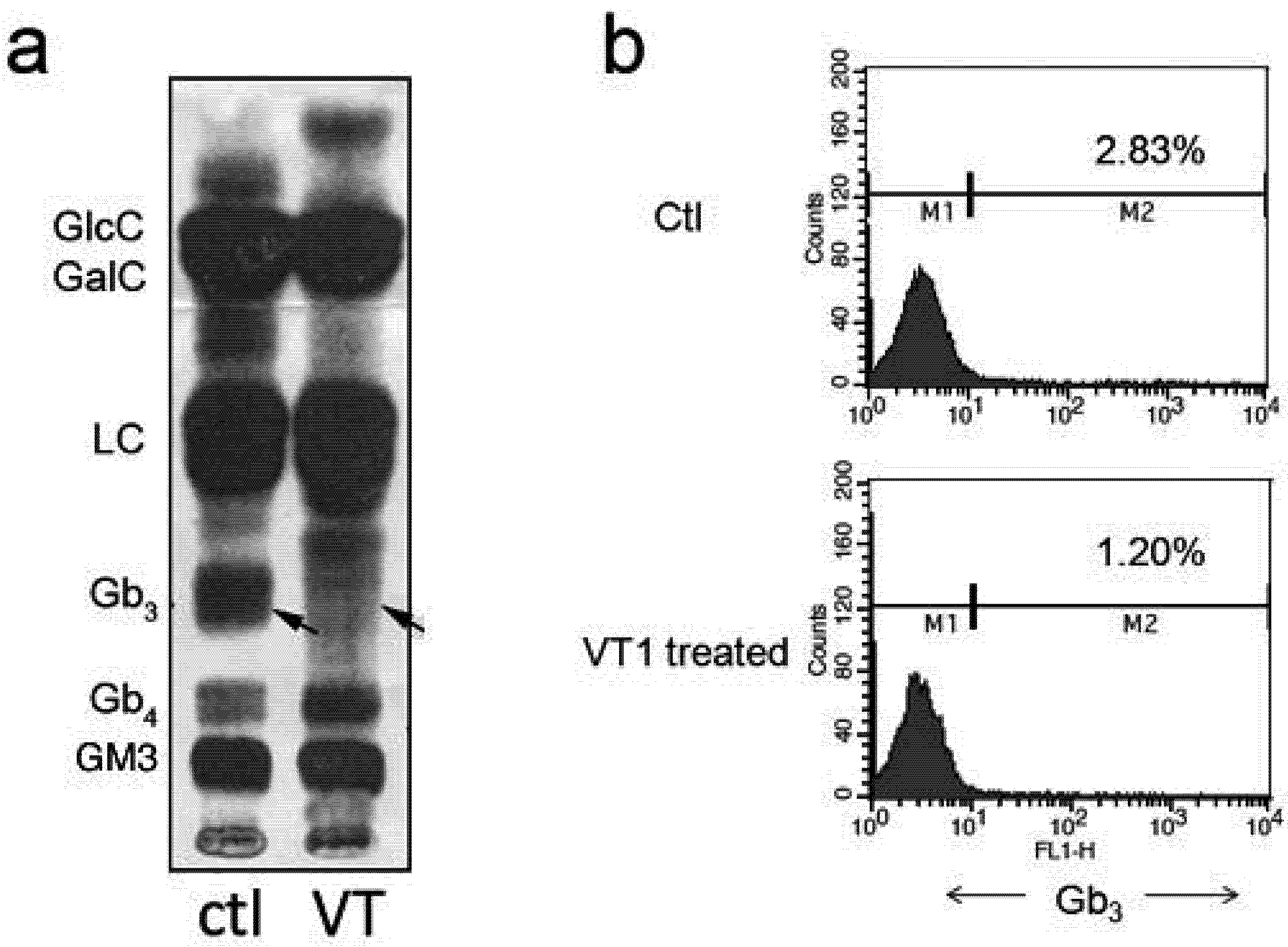
        <p>Gb<sub>3</sub> is the only known receptor for VT, which can trigger the receptor-mediated retrograde transport pathway that results in ribosomal inactivation and cell death. The effect on Gb<sub>3</sub> synthesis by activated PBMCs was first determined using <sup>14</sup>C-galactose/serine metabolic labeling. Activated PBMCs were treated with or without VT1 and then metabolically labeled with <sup>14</sup>C-galactose/serine for 18 h. GSLs were extracted, separated by TLC and detected by autoradiography (<xref ref-type="fig" rid="toxins-04-01517-f001">Figure 1</xref>a). Gb<sub>3</sub> was detected as a minor species, which was lost in the VT treated sample, suggesting VT deleted the Gb<sub>3</sub>-expressing subpopulation in activated PBMCs. Gb<sub>3</sub> staining was reduced from 2.8 to 1.2% (<xref ref-type="fig" rid="toxins-04-01517-f001">Figure 1</xref>b). This finding is in agreement with previous results, which showed PHA/IL-2 activation induced Gb<sub>3</sub> expression in PBMCs [<xref ref-type="bibr" rid="B13-toxins-04-01517">13</xref>], but that only a very small fraction of CD4<sup>+</sup> T-cells co express Gb<sub>3</sub> [<xref ref-type="bibr" rid="B14-toxins-04-01517">14</xref>]. Interestingly, although Gb<sub>3</sub> was eliminated, Gb<sub>4</sub> was increased in the VT treated PBMCs (<xref ref-type="fig" rid="toxins-04-01517-f001">Figure 1</xref>b). </p>
        <fig id="toxins-04-01517-f001" position="float">
          <label>Figure 1</label>
          <caption>
            <p>Gb<sub>3</sub> expression in PHA/IL-2 activated PBMCs. (<bold>a</bold>) PBMCs were treated with 500 ng/mL of Verotoxin-1 (VT1) and activated with PHA/IL-2. On day 2, 2 µCi/mL of <sup>14</sup>C-galactose and 0.5 µCi/mL of <sup>14</sup>C-serine were added to the cell culture overnight. The cells were then washed once with phosphate-buffered saline (PBS), subjected to total neutral GSL extraction and purified by silica chromatography. GSLs were resolved using TLC and detected by autoradiography. Position of GSL standards, glucosyl ceramide, galactosyl ceramide, lactosyl ceramide, Gb<sub>3</sub>, Gb<sub>4</sub> and GM3 ganglioside, are shown on the left. Lane 1—control untreated PBMCs, lane 2—VT1 treated PBMCs. Arrows indicate Gb<sub>3</sub>; (<bold>b</bold>) PBMCs were activated and treated ± VT1 then analyzed for Gb<sub>3</sub> expression by FACS staining with Alexa-488-VT1B on day 4. Plots represent Gb<sub>3</sub> expression profiles. Negative gate was set using unlabeled control.</p>
          </caption>
          <graphic xmlns:xlink="http://www.w3.org/1999/xlink" xlink:href="toxins-04-01517-g001.tif"/>
        </fig>
        <p>These results are consistent with a small, VT-sensitive population within activated PBMCs. VT elimination of this small population would be unlikely to have significant effect on HIV-1 susceptibility of activated PBMCs; unless, to explain the natural resistance provided by Gb<sub>3</sub> this would prove to be a key regulatory cell type. </p>
      </sec>
      <sec>
        <title>2.3. Effect of VT on HIV PBMC Infection</title>
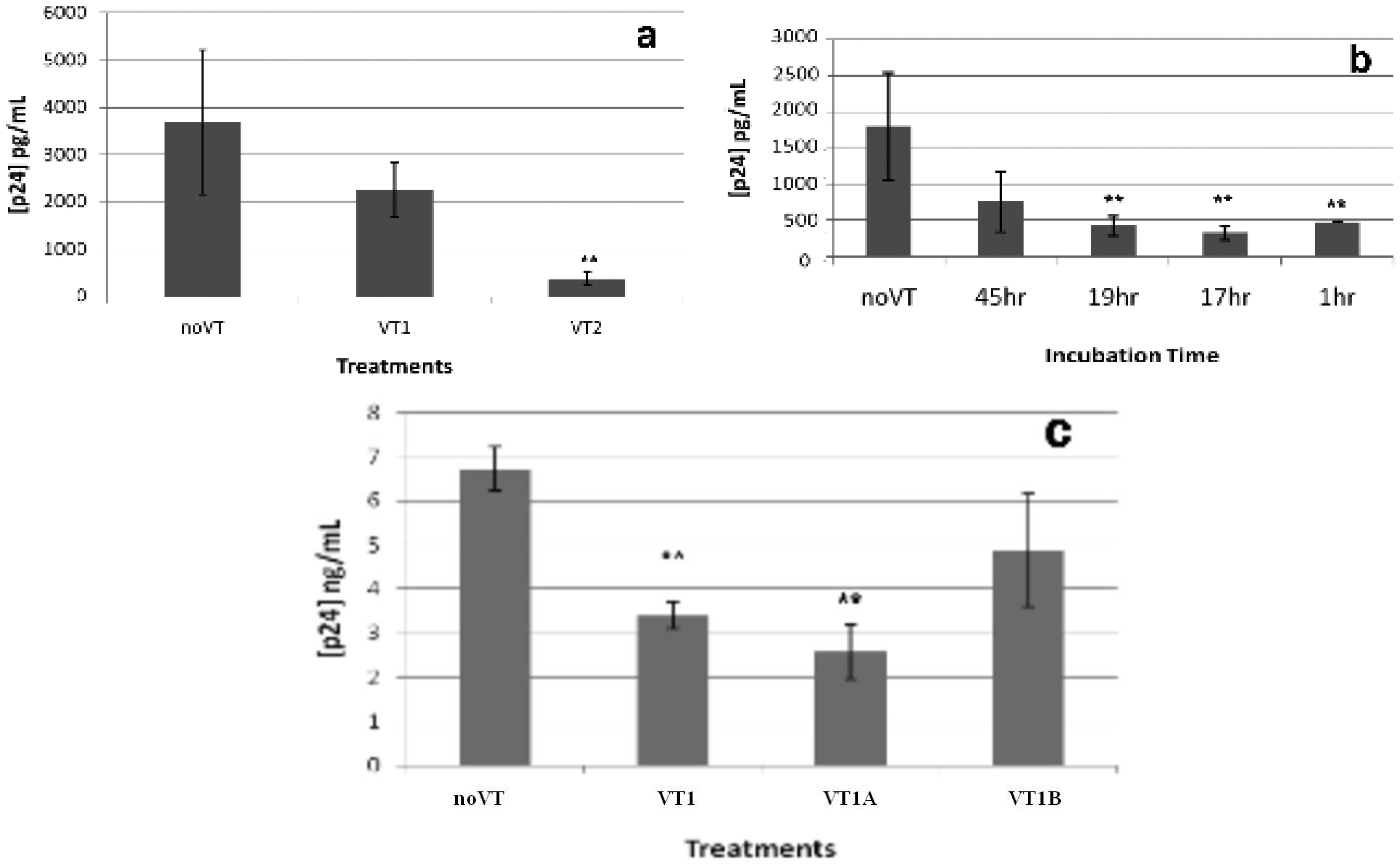
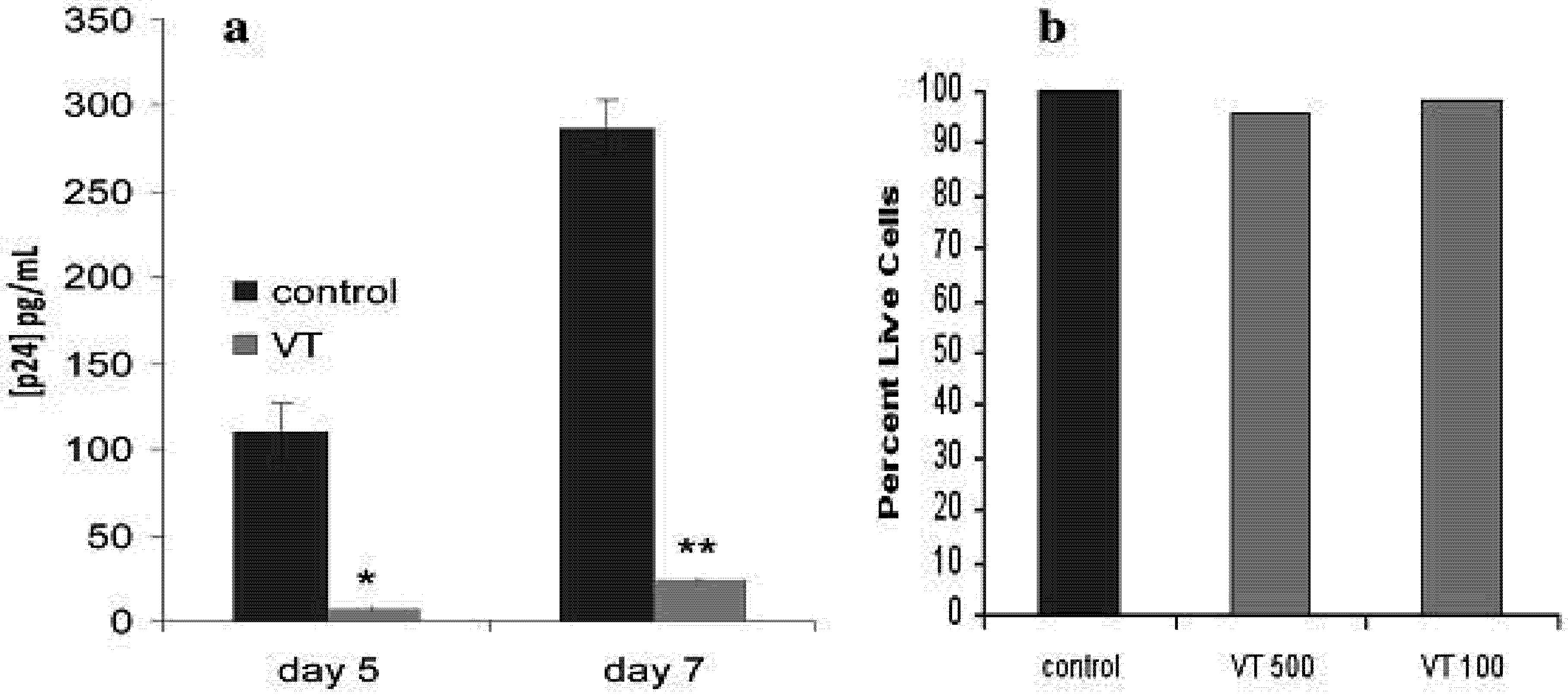
        <p>The effect of VT treatment of PBMCs on HIV susceptibility was unexpected since the HIV target cell population was unaffected by VT1 treatment (<xref ref-type="table" rid="toxins-04-01517-t001">Table 1</xref>). VT1 treated PBMCs became highly refractory to HIV infection (<xref ref-type="fig" rid="toxins-04-01517-f002">Figure 2</xref>a). Consistent with a minor Gb<sub>3</sub> expressing fraction, the viability of VT treated and control PBMCs was equivalent (<xref ref-type="fig" rid="toxins-04-01517-f002">Figure 2</xref>b).</p>
        <fig id="toxins-04-01517-f002" position="float">
          <label>Figure 2</label>
          <caption>
            <p>Effect of VT1 on PBMC susceptibility to HIV infection. Panel (<bold>a</bold>) PBMCs were treated with 500 ng/mL of VT1 and activated with PHA/IL-2 for 3 days. PBMCs were infected with HIV-1<sub>IIIB</sub> for 1 h, washed and measured by p24<sup>gag</sup> ELISA after 5 and 7 days. &gt;90% inhibition was observed. Asterisks indicate statistical significance compared to control (<bold>*</bold><italic> p</italic> &lt; 0.05; <bold>**</bold><italic> p</italic> &lt; 0.03); Panel (<bold>b</bold>) Cell viability for PBMCs activated in the presence of 500 or 100 ng/mL VT1 was monitored by trypan blue dye exclusion.</p>
          </caption>
          <graphic xmlns:xlink="http://www.w3.org/1999/xlink" xlink:href="toxins-04-01517-g002.tif"/>
        </fig>
      </sec>
      <sec>
        <title>2.4. Comparison of VT Subunits for Protection of PBMCs against HIV Infection</title>
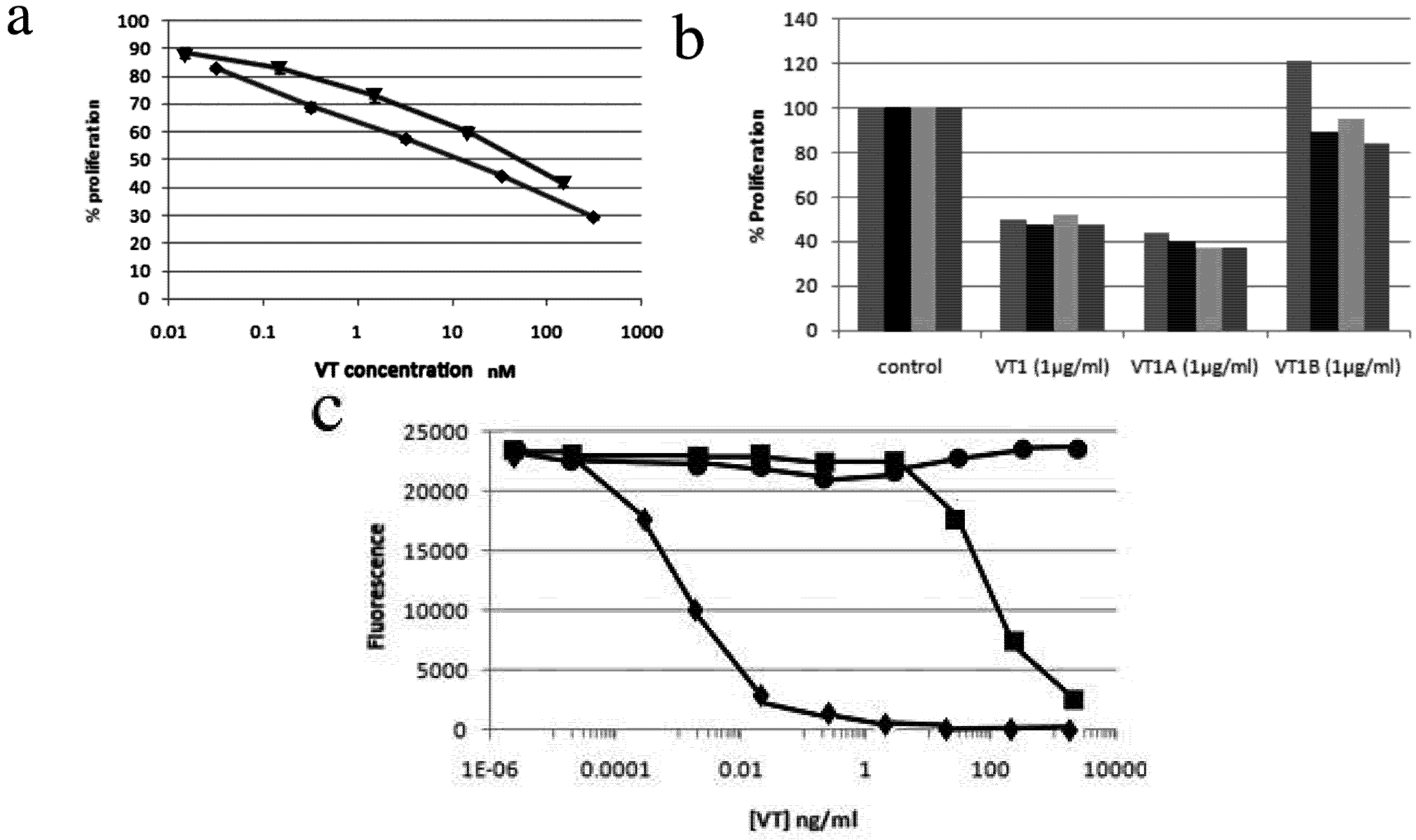
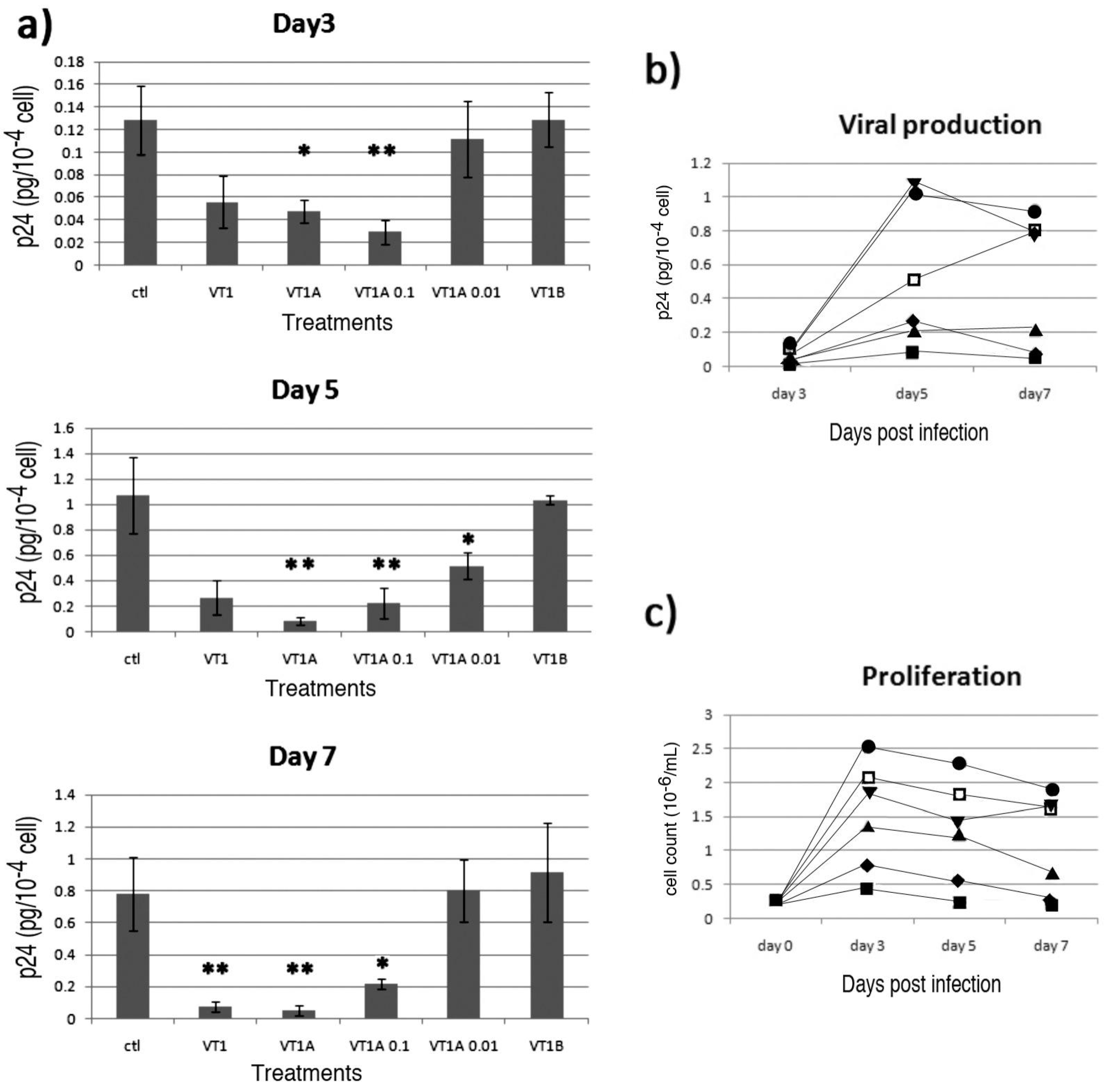
        <p>To determine whether the VT1 inhibition of HIV infection was receptor independent, we compared the effect of VT1 with that of the separated VT1A and VT1B subunits. We found that at 1 µg/mL VT1A subunit was as effective as VT1 holotoxin, and that the receptor binding VT1B subunit pentamer was not protective (<xref ref-type="fig" rid="toxins-04-01517-f003">Figure 3</xref>). VT1A subunit protection was dose dependent, showing inhibition of infection at 100 but not 10 ng/mL.</p>
        <p>VT1 and protective concentrations of VT1A reduced the proliferation of activated PBMCs (<xref ref-type="fig" rid="toxins-04-01517-f003">Figure 3</xref>c). The HIV infection monitored by p24<sup>gag</sup> is normalized to the cell number, but the correlation with efficacy implicates reduced cell growth in the mechanism of action. </p>
        <p>The reduced PBMC proliferation during PHA/IL2 activation was highly consistent and seen for VT1 and VT1A but not VT1B subunits (<xref ref-type="fig" rid="toxins-04-01517-f004">Figure 4</xref>). The dose response for PBMC was quite different from the toxicity observed for Gb<sub>3</sub> expressing cells (<xref ref-type="fig" rid="toxins-04-01517-f004">Figure 4</xref>a <italic>cf.</italic> c). Although little effect of VT1A on PBMC protein synthesis in the short-term could be detected, treatment for 4 days reduced <sup>3</sup>H-leucine incorporation into TCA insoluble material by 50% (not shown). No effect of VT1A on global phosphotyrosine content of activated PBMCs was seen (not shown).</p>
        <p>Since we found the verotoxin receptor glycosphingolipid, Gb<sub>3</sub>, to be a resistance factor for HIV infection in vitro [<xref ref-type="bibr" rid="B14-toxins-04-01517">14</xref>,<xref ref-type="bibr" rid="B15-toxins-04-01517">15</xref>], we expected that treatment of activated PBMCs with VT1 would eliminate the small fraction of Gb<sub>3</sub> expressing cells we have shown to be present and thereby increase susceptibility to subsequent HIV infection. Although this subpopulation was effectively removed by VT1 treatment, the VT1 (or VT2, not shown) treated cells became highly refractory to HIV infection and this was found to be a Gb<sub>3</sub>/B subunit independent, VT1A subunit-mediated event. Even though the VT1A subunit was removed by cell washing, the activated PBMCs remained resistant to infection. </p>
        <fig id="toxins-04-01517-f003" position="float">
          <label>Figure 3</label>
          <caption>
            <p>Verotoxin-1 A subunit protects PHA/IL-2 activated PBMCs against HIV-1<sub>IIIB</sub> infection. PBMCs were treated with VT1 (1 µg/mL), VT1A (1, 0.1, 0.01 µg/mL) or VT1B (1 µg/mL) during PHA/IL2 activation. HIV-1<sub>IIIB </sub>infection was conducted 4 days post activation (m.o.i. = 0.3, <italic>n</italic> = 4). (<bold>a</bold>) Viral production was measured by p24<sup>gag</sup> ELISA for day 3, 5 and 7 of infection. Asterisks indicate statistical significance compared to control (<bold>*</bold><italic> p</italic> &lt; 0.05; <bold>**</bold><italic> p</italic> &lt; 0.03); (<bold>b</bold>) Viral production over time. All viral production values were normalized by cell count; (<bold>c</bold>) Viable cell count over time by Trypan blue exclusion. (▼ = control, ♦ = 1 µg/mL VT1, ■ = 1 µg/mLVT1A, ▲ = 0.1 µg/mL VT1A, □ = 0.01 µg/mL VT1A, ● = 1 µg/mL VT1B). A subunit was as effective as holotoxin to induce HIV resistance.</p>
          </caption>
          <graphic xmlns:xlink="http://www.w3.org/1999/xlink" xlink:href="toxins-04-01517-g003.tif"/>
        </fig>
        <fig id="toxins-04-01517-f004" position="float">
          <label>Figure 4</label>
          <caption>
            <p>PBMC proliferation after PHA/IL-2 activation and VT or VT subunit treatment. VT was added to lymphocytes after isolation and remained present during PHA/IL-2 activation. Cell proliferation was measured on day 4 using alamarBlue<sup>®</sup> fluorescent dye indicator assay. (<bold>a</bold>) VT1 (▼), VT1A (♦) titration of percentage proliferation compared to no VT control; (<bold>b</bold>) PBMC samples were collected from 4 different donors and activated in the presence of 1 µg/mL VT1, VT1A or VT1B. Cell number was determined on day 4. (<bold>c</bold>) Cytotoxcity titration curve using VT sensitive Gb<sub>3</sub><sup>+</sup> THP-1 monocytic cell line: VT1 (♦), VT1A (■) or VT1B (●). The toxicity of the VT1A indicates a maximum holotoxin contamination of 1/50,000.</p>
          </caption>
          <graphic xmlns:xlink="http://www.w3.org/1999/xlink" xlink:href="toxins-04-01517-g004.tif"/>
        </fig>
      </sec>
      <sec>
        <title>2.5. VT also Inhibits Jurkat T-Cell Infection by HIV-1</title>
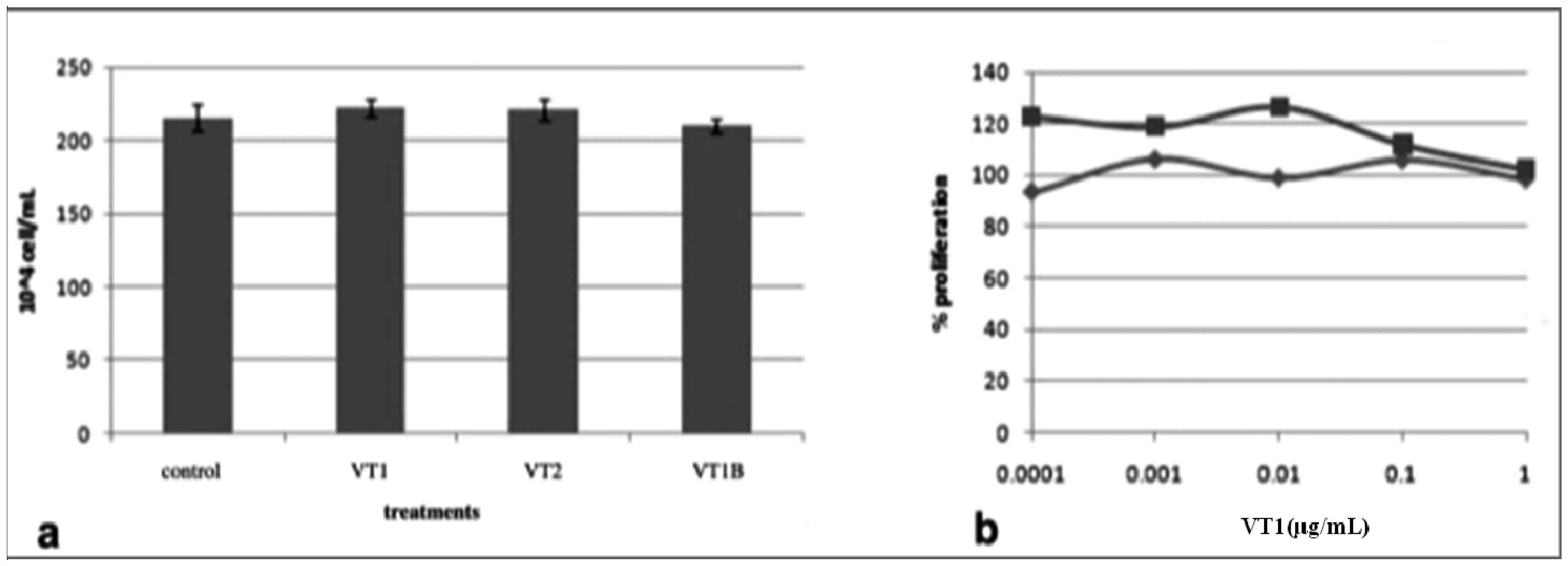
        <p>The Gb<sub>3</sub>-negative Jurkat-C human T-cell line is a standard surrogate for primary human T-lymphocyte HIV infection. VT is effective at reducing HIV Jurkat cell infection (<xref ref-type="fig" rid="toxins-04-01517-f005">Figure 5</xref>). As for PBMCs, VT1A subunit was as effective as holotoxin (not shown). Initially cells were preincubated with VT as for the PBMCs (<xref ref-type="fig" rid="toxins-04-01517-f005">Figure 5</xref>a) but this prolonged preincubation proved unnecessary (<xref ref-type="fig" rid="toxins-04-01517-f005">Figure 5</xref>b). An hour preincubation was sufficient for optimal inhibition. Unlike for PBMCs, VT had no effect on Jurkat cell proliferation or viability (<xref ref-type="fig" rid="toxins-04-01517-f006">Figure 6</xref>).</p>
        <fig id="toxins-04-01517-f005" position="float">
          <label>Figure 5</label>
          <caption>
            <p>VT treatments of Jurkat-C cells significantly reduce subsequent HIV-1<sub>IIIB </sub>infection. (<bold>a</bold>) JKT-C cells were treated for 3 days with VT1 or VT2 (1 µg/mL) and the toxins were removed by washing with culture media prior to infection with HIV-1<sub>IIIB</sub> (m.o.i. = 0.1). Post infection supernatants were collected at day 7 and HIV-1 viral production was measued by p24<sup>gag</sup> ELISA (<bold>b</bold>) A time course was conducted to determine the minimum preincubation time required for VT1 treatment to achieve viral reduction. p24 measured on day 6. Error bar represents standard error mean (<italic>n</italic> = 4). One hour pretreatment was sufficient.</p>
          </caption>
          <graphic xmlns:xlink="http://www.w3.org/1999/xlink" xlink:href="toxins-04-01517-g005.tif"/>
        </fig>
        <fig id="toxins-04-01517-f006" position="float">
          <label>Figure 6</label>
          <caption>
            <p>Verotoxin is non-toxic to Jurkat-C cells. Cells were treated with different concentrations of VT1 or VT1B in 10× serial dilutions. Cell proliferation was measured by the redox dye alamarBlue<sup>®</sup>. (<bold>a</bold>) JKT-C cell viability with 1 μg/mL VT1, VT2, or VT1B treatment for 3 days was measured by Trypan Blue dye exclusion assay. Error bars represent standard error mean (<italic>n</italic> = 4); (<bold>b</bold>) JKT-C cells were treated with VT1B (■) or VT1 (♦) for 3 days and proliferation was calculated as percentage of no VT control. One of three similar experiments is shown.</p>
          </caption>
          <graphic xmlns:xlink="http://www.w3.org/1999/xlink" xlink:href="toxins-04-01517-g006.tif"/>
        </fig>
      </sec>
      <sec>
        <title>2.6. Gene Expression Array Analysis of VT1A Treated PHA/IL-2-Activated PBMCs</title>
        <p>To further define the effects of VT1A treatment on normal function of PBMCs, gene expression array analysis was conducted. Isolated PBMCs were activated with PHA/IL-2 for 4 days. Test samples were treated with 1 µg/mL of VT1A at the time of activation and control samples were treated with vehicle only (<italic>n</italic> = 3). Total RNA was extracted using TRIzol<sup>®</sup> reagent and sent for gene expression array analysis using Human WG-6 Expression BeadChip. Array results were analyzed using the LIMMA algorithm. Genes with an adjusted p value of &lt;0.03 were considered differentially expressed. <xref ref-type="table" rid="toxins-04-01517-t002">Table 2</xref> shows the gene changes with <italic>p</italic> value of &lt;0.1. Overall, the effect of VT1A on PBMC gene expression was highly specific since only 49 genes were significantly affected out of a total of 36,604 genes. 30 genes were up-regulated (0.082%) and 19 genes were down-regulated (0.051%) (<xref ref-type="table" rid="toxins-04-01517-t002">Table 2</xref>). The most striking finding was that 10 of the upregulated genes (three of the top four) belonged to histone cluster proteins.</p>
        <table-wrap id="toxins-04-01517-t002" position="float">
          <object-id pub-id-type="pii">toxins-04-01517-t002_Table 2</object-id>
          <label>Table 2</label>
          <caption>
            <p>Differentially expressed genes of VT1A treated PBMCs <italic>vs.</italic> control PBMCs. Only genes with adjusted <italic>p</italic> value of less than 0.1 are listed. Fold change represents expression level difference between VT1A treated samples vs. control no VT samples. Positive values indicate an increase and negative values indicate a decrease. </p>
          </caption>
          <table>
            <thead>
              <tr>
                <th align="center" valign="middle">Symbol</th>
                <th align="center" valign="middle">Definition</th>
                <th align="center" valign="middle">Fold Change</th>
                <th align="center" valign="middle">adj. 
                <italic>p</italic> value</th>
              </tr>
            </thead>
            <tbody>
              <tr>
                <td align="center" valign="middle">
                  <bold>HIST1H4B</bold>
                </td>
                <td align="center" valign="middle">histone cluster 1, H4b</td>
                <td align="center" valign="middle">5.22</td>
                <td align="center" valign="middle">0.000185</td>
              </tr>
              <tr>
                <td align="center" valign="middle">
                  <bold>HIST1H4H</bold>
                </td>
                <td align="center" valign="middle">histone cluster 1, H4h</td>
                <td align="center" valign="middle">5.01</td>
                <td align="center" valign="middle">0.000192</td>
              </tr>
              <tr>
                <td align="center" valign="middle">SPP1</td>
                <td align="center" valign="middle">secreted phosphoprotein 1, transcript variant 2</td>
                <td align="center" valign="middle">−4.50</td>
                <td align="center" valign="middle">0.000192</td>
              </tr>
              <tr>
                <td align="center" valign="middle">
                  <bold>HIST1H4F</bold>
                </td>
                <td align="center" valign="middle">histone cluster 1, H4f </td>
                <td align="center" valign="middle">3.95</td>
                <td align="center" valign="middle">0.000363</td>
              </tr>
              <tr>
                <td align="center" valign="middle">INDO</td>
                <td align="center" valign="middle">indoleamine-pyrrole 2,3 dioxygenase</td>
                <td align="center" valign="middle">−3.84</td>
                <td align="center" valign="middle">0.000466</td>
              </tr>
              <tr>
                <td align="center" valign="middle">CSF2</td>
                <td align="center" valign="middle">colony stimulating factor 2 (granulocyte-macrophage)</td>
                <td align="center" valign="middle">3.63</td>
                <td align="center" valign="middle">0.000515</td>
              </tr>
              <tr>
                <td align="center" valign="middle">SPP1</td>
                <td align="center" valign="middle">secreted phosphoprotein 1, transcript variant 1.</td>
                <td align="center" valign="middle">−3.94</td>
                <td align="center" valign="middle">0.000515</td>
              </tr>
              <tr>
                <td align="center" valign="middle">LYZ</td>
                <td align="center" valign="middle">lysozyme (renal amyloidosis)</td>
                <td align="center" valign="middle">−3.51</td>
                <td align="center" valign="middle">0.000547</td>
              </tr>
              <tr>
                <td align="center" valign="middle">GADD45B</td>
                <td align="center" valign="middle">growth arrest and DNA-damage-inducible, beta </td>
                <td align="center" valign="middle">3.43</td>
                <td align="center" valign="middle">0.000547</td>
              </tr>
              <tr>
                <td align="center" valign="middle">CCL24</td>
                <td align="center" valign="middle">chemokine (C-C motif) ligand 24 </td>
                <td align="center" valign="middle">−3.45</td>
                <td align="center" valign="middle">0.000547</td>
              </tr>
              <tr>
                <td align="center" valign="middle">IL9</td>
                <td align="center" valign="middle">interleukin 9 </td>
                <td align="center" valign="middle">3.47</td>
                <td align="center" valign="middle">0.000699</td>
              </tr>
              <tr>
                <td align="center" valign="middle">IL9</td>
                <td align="center" valign="middle">interleukin 9</td>
                <td align="center" valign="middle">3.17</td>
                <td align="center" valign="middle">0.00112</td>
              </tr>
              <tr>
                <td align="center" valign="middle">TM4SF19</td>
                <td align="center" valign="middle">transmembrane 4 L six family member 19 </td>
                <td align="center" valign="middle">−3.11</td>
                <td align="center" valign="middle">0.00112</td>
              </tr>
              <tr>
                <td align="center" valign="middle">IL8</td>
                <td align="center" valign="middle">interleukin 8</td>
                <td align="center" valign="middle">−3.20</td>
                <td align="center" valign="middle">0.00151</td>
              </tr>
              <tr>
                <td align="center" valign="middle">SLC11A1</td>
                <td align="center" valign="middle">solute carrier family 11 (proton-coupled divalent metal ion transporters), member 1.</td>
                <td align="center" valign="middle">−3.33</td>
                <td align="center" valign="middle">0.00154</td>
              </tr>
              <tr>
                <td align="center" valign="middle">IL1B</td>
                <td align="center" valign="middle">interleukin 1, beta</td>
                <td align="center" valign="middle">−2.78</td>
                <td align="center" valign="middle">0.00317</td>
              </tr>
              <tr>
                <td align="center" valign="middle">MMP9</td>
                <td align="center" valign="middle">matrix metallopeptidase 9</td>
                <td align="center" valign="middle">−2.73</td>
                <td align="center" valign="middle">0.00358</td>
              </tr>
              <tr>
                <td align="center" valign="middle">
                  <bold>HIST2H4A</bold>
                </td>
                <td align="center" valign="middle">histone cluster 2, H4a</td>
                <td align="center" valign="middle">2.71</td>
                <td align="center" valign="middle">0.00569</td>
              </tr>
              <tr>
                <td align="center" valign="middle">TAC1</td>
                <td align="center" valign="middle">tachykinin, precursor 1, transcript variant alpha</td>
                <td align="center" valign="middle">2.62</td>
                <td align="center" valign="middle">0.00627</td>
              </tr>
              <tr>
                <td align="center" valign="middle">PPP1R15A</td>
                <td align="center" valign="middle">protein phosphatase 1, regulatory (inhibitor) subunit 15A </td>
                <td align="center" valign="middle">2.60</td>
                <td align="center" valign="middle">0.00627</td>
              </tr>
              <tr>
                <td align="center" valign="middle">TYROBP</td>
                <td align="center" valign="middle">TYRO protein tyrosine kinase binding protein, transcript variant 1.</td>
                <td align="center" valign="middle">−2.80</td>
                <td align="center" valign="middle">0.00627</td>
              </tr>
              <tr>
                <td align="center" valign="middle">GNLY</td>
                <td align="center" valign="middle">granulysin, transcript variant NKG5</td>
                <td align="center" valign="middle">−2.52</td>
                <td align="center" valign="middle">0.00733</td>
              </tr>
              <tr>
                <td align="center" valign="middle">OSM</td>
                <td align="center" valign="middle">oncostatin M </td>
                <td align="center" valign="middle">2.49</td>
                <td align="center" valign="middle">0.00758</td>
              </tr>
              <tr>
                <td align="center" valign="middle">TM4SF19</td>
                <td align="center" valign="middle">PREDICTED: transmembrane 4 L six family member 19, transcript variant 2 </td>
                <td align="center" valign="middle">−2.60</td>
                <td align="center" valign="middle">0.00758</td>
              </tr>
              <tr>
                <td align="center" valign="middle">
                  <bold>HIST1H2AC</bold>
                </td>
                <td align="center" valign="middle">histone cluster 1, H2ac </td>
                <td align="center" valign="middle">2.49</td>
                <td align="center" valign="middle">0.00972</td>
              </tr>
              <tr>
                <td align="center" valign="middle">OR8H2</td>
                <td align="center" valign="middle">olfactory receptor, family 8, subfamily H, member 2</td>
                <td align="center" valign="middle">2.51</td>
                <td align="center" valign="middle">0.00972</td>
              </tr>
              <tr>
                <td align="center" valign="middle">FOS</td>
                <td align="center" valign="middle">v-fos FBJ murine osteosarcoma viral oncogene homolog </td>
                <td align="center" valign="middle">2.58</td>
                <td align="center" valign="middle">0.972</td>
              </tr>
              <tr>
                <td align="center" valign="middle">TNFSF4</td>
                <td align="center" valign="middle">tumor necrosis factor (ligand) superfamily, member 4 </td>
                <td align="center" valign="middle">2.35</td>
                <td align="center" valign="middle">0.0185</td>
              </tr>
              <tr>
                <td align="center" valign="middle">IL8</td>
                <td align="center" valign="middle">interleukin 8 </td>
                <td align="center" valign="middle">−2.29</td>
                <td align="center" valign="middle">0.0185</td>
              </tr>
              <tr>
                <td align="center" valign="middle">FOSB</td>
                <td align="center" valign="middle">FBJ murine osteosarcoma viral oncogene homolog B </td>
                <td align="center" valign="middle">2.32</td>
                <td align="center" valign="middle">0.0185</td>
              </tr>
              <tr>
                <td align="center" valign="middle">
                  <bold>HIST1H2BF</bold>
                </td>
                <td align="center" valign="middle">histone cluster 1, H2bf </td>
                <td align="center" valign="middle">2.34</td>
                <td align="center" valign="middle">0.0220</td>
              </tr>
              <tr>
                <td align="center" valign="middle">GNLY</td>
                <td align="center" valign="middle">granulysin, transcript variant 519</td>
                <td align="center" valign="middle">−2.24</td>
                <td align="center" valign="middle">0.0223</td>
              </tr>
            </tbody>
          </table>
        </table-wrap>
      </sec>
      <sec>
        <title>2.7. VT1 Blocks HDAC Inhibitor Effect on HIV Infection</title>
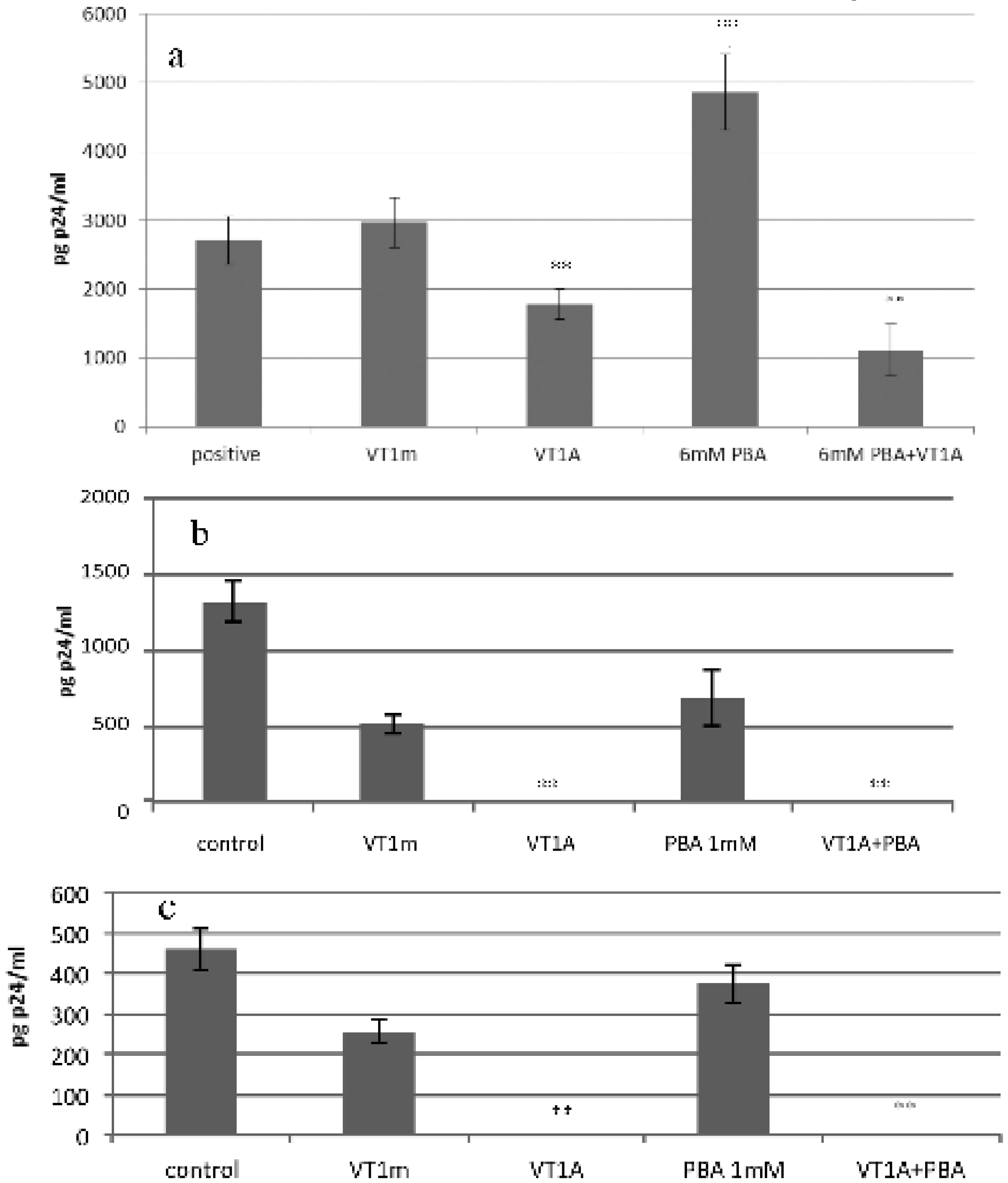
        <p>Gene activation is required for HIV infection [<xref ref-type="bibr" rid="B18-toxins-04-01517">18</xref>]. Histones regulate gene transcription via their acetylation status and histone deacetylase inhibitors have been probed as a means to activate transcription to detect and treat latent HIV provirus transcripts integrated within the target cell genome [<xref ref-type="bibr" rid="B19-toxins-04-01517">19</xref>]. A VT1A subunit effect on histone acetylation could provide a basis for its protection against HIV infection. The effect of phenyl butyrate (PBA), a known HDAC inhibitor [<xref ref-type="bibr" rid="B20-toxins-04-01517">20</xref>], on VT1 protection against HIV infection was tested (<xref ref-type="fig" rid="toxins-04-01517-f007">Figure 7</xref>). </p>
        <fig id="toxins-04-01517-f007" position="float">
          <label>Figure 7</label>
          <caption>
            <p>VT1A counters Histone deacetylase (HDAC) inhibitor effect on PBMC HIV susceptibility. PBMCs were PHA/IL2 activated in the presence of inactivated A subunit containing holotoxin (VT1m), VT1A , phenyl butyrate (PBA) or PBA + VT1A and tested for susceptibility to HIV infection (day 4). Panel (<bold>a</bold>) X4 HIV<sub>IIIB</sub> and 6mM PBA, panel (<bold>b</bold>) X4 HIV<sub>IIIB</sub> and 1mM PBA, panel (<bold>c</bold>) R5 HIV<sub>Ba-L</sub> and 1mM PBA <bold>**</bold> indicates <italic>p</italic> &lt; 0.03 (<italic>n</italic> = 4).</p>
          </caption>
          <graphic xmlns:xlink="http://www.w3.org/1999/xlink" xlink:href="toxins-04-01517-g007.tif"/>
        </fig>
        <p>VT1, but not its A subunit inactivated mutant [<xref ref-type="bibr" rid="B21-toxins-04-01517">21</xref>], reduced PBMC susceptibility to HIV, whereas PBA significantly increased infection. Combining VT1 with PBA resulted in a (even more) pronounced protection against infection. Either PBA reversal of VT1 protection or VT1 reversal of PBA enhancement of infection would serve to indicate a shared mechanism of action. VT1 blocking PBA increased HIV susceptibility supports a role for VT promotion of histone deacetylation to reduce gene activation and engender HIV resistance. At the 6 mM concentration used for HDAC inhibition, PBMC proliferation during PHA/IL2 activation was reduced. The experiment was therefore repeated at 1 mM PBA and tested against both X4 (<xref ref-type="fig" rid="toxins-04-01517-f007">Figure 7</xref>b) and R5 (<xref ref-type="fig" rid="toxins-04-01517-f007">Figure 7</xref>c) HIV. At 1mM PBA pretreatment, the stimulation of HIV infection was not maintained but the VT1A inhibition of both X4 and R5 HIV infection was clearly demonstrated.</p>
      </sec>
      <sec>
        <title>2.8. Discussion</title>
        <p>The verotoxin A subunit is an <italic>N</italic>-glycanase, removing an adenine base from position 4324 of the 28S RNA of the 60S ribosomal subunit [<xref ref-type="bibr" rid="B4-toxins-04-01517">4</xref>] to inhibit protein synthesis and kill the cell. To achieve this, the A subunit must internalize [<xref ref-type="bibr" rid="B22-toxins-04-01517">22</xref>], undergo proteolytic cleavage [<xref ref-type="bibr" rid="B23-toxins-04-01517">23</xref>], traffic to the ER [<xref ref-type="bibr" rid="B24-toxins-04-01517">24</xref>] and translocate into the cytosol [<xref ref-type="bibr" rid="B6-toxins-04-01517">6</xref>]. The A subunit can have additional effects, including increasing the half-life of selected mRNAs [<xref ref-type="bibr" rid="B25-toxins-04-01517">25</xref>,<xref ref-type="bibr" rid="B26-toxins-04-01517">26</xref>] and DNA can be a substrate for the <italic>N</italic>-glycanase activity [<xref ref-type="bibr" rid="B27-toxins-04-01517">27</xref>]. The A subunit can induce apoptosis [<xref ref-type="bibr" rid="B28-toxins-04-01517">28</xref>]. However in all these cases, A subunit cytosolic access is dependent on B subunit mediated cell binding and intracellular traffic. A subunit antiviral activity has been reported [<xref ref-type="bibr" rid="B11-toxins-04-01517">11</xref>] but prior cell infection was required to increase cell permeability to allow cell entry [<xref ref-type="bibr" rid="B28-toxins-04-01517">28</xref>]. In contrast, our studies indicate the A subunit can interact with uninfected cells to induce a state of anergy, resistant to HIV infection. </p>
        <p>The A subunit contains hydrophobic residues which can mediate cell interaction [<xref ref-type="bibr" rid="B29-toxins-04-01517">29</xref>]. However, we were unable to detect specific VT1A binding to PBMCs and fluid phase micro pinocytosis is the most likely mechanism of VT1A cell entry, but the mechanism for cytosolic access if required, is not obvious. The mechanism of A subunit cell targeting and internalization remains to be determined. Ribosome inactivating proteins have been shown to have anti-HIV activity [<xref ref-type="bibr" rid="B7-toxins-04-01517">7</xref>]. These include bacterial toxins [<xref ref-type="bibr" rid="B16-toxins-04-01517">16</xref>]. Depurination of HIV-1 RNA long terminal repeats may hinder HIV integration [<xref ref-type="bibr" rid="B30-toxins-04-01517">30</xref>]. However, RIPs can also activate the host MAP kinase pathway to counter this and increase infectivity [<xref ref-type="bibr" rid="B31-toxins-04-01517">31</xref>]. VT has been shown to activate this pathway [<xref ref-type="bibr" rid="B32-toxins-04-01517">32</xref>]. RIP-immunoconjugates have been promoted for HIV intervention [<xref ref-type="bibr" rid="B33-toxins-04-01517">33</xref>].</p>
        <p>In several animal species, verotoxin has been found to be protective against related retroviral infection [<xref ref-type="bibr" rid="B9-toxins-04-01517">9</xref>,<xref ref-type="bibr" rid="B34-toxins-04-01517">34</xref>] and the A subunit is toxic to bovine retrovirus infected cells [<xref ref-type="bibr" rid="B11-toxins-04-01517">11</xref>], although binding to such cells could not be demonstrated. In these cells, increased permeability of the infected cells was proposed as the selectivity basis. </p>
        <p>In the present studies however, the VTA subunit is added to the target human lymphocytes and removed before any HIV infection. There is no change in viability as defined by vital dye exclusion, but growth rate is reduced. Inhibition of “spontaneous lymphocyte proliferation” by VT1A in the bovine was reported [<xref ref-type="bibr" rid="B9-toxins-04-01517">9</xref>]. In our studies, PBMC proliferation during activation was clear, though reduced by 50%. PBMC proliferation post HIV infection was &lt;10% control. This inhibition correlated with, but was not proportional to, the degree of inhibition of PBMC proliferation. However, we saw no effect on Jurkat T cell proliferation, so growth inhibition may be downstream of the primary VT effect only in primary lymphocytes. VT treatment during lymphocyte activation induces a form of subsequent T cell anergy. This resistance is effective against both X4 and R5 HIV infection. VT1 increased histones, indicated from our mRNA microarray data, could increase chromatin to decrease gene activation and hence proliferation, to provide the basis of the induced prolonged HIV resistance. HDAC inhibitors are used to facilitate transcription to allow detection of latent HIV virions integrated in the genome [<xref ref-type="bibr" rid="B19-toxins-04-01517">19</xref>]. The VT blockade of HDAC inhibitor enhanced HIV infection we observed, is consistent with histone mediated VT1A protection against HIV. The PBA HDAC inhibitor reduced PBMC proliferation during activation, indicating T cell growth reduction <italic>per se</italic> can be insufficient for HIV resistance.</p>
        <p>VT1A reduced T cell division might counteract the excessive T cell proliferation characteristic of early HIV infection [<xref ref-type="bibr" rid="B35-toxins-04-01517">35</xref>] and reduced T lymphocyte proliferation might prove a small price to pay for prophylactic HIV resistance.</p>
      </sec>
    </sec>
    <sec>
      <title>3. Experimental Section</title>
      <sec>
        <title>3.1. Cell Lines</title>
        <p>Acute T-cell leukemia-derived Jurkat-FHCRC cells (JKT-C) were obtained from Dr. D. Branch. The human acute monocytic leukemia cells (THP-1) were obtained from NIH AIDS Research and Reference Reagent Program (Rockville, MD, USA). Both cell lines were cultured in complete RPMI1640 medium (Wisent Inc, St-Bruno, QC, USA) supplemented with 10% fetal bovine serum (FBS) (Sigma-Aldrich, Oakville, ON, USA), 100 IU penicillin and 100 µg/mL streptomycin (Wisent Inc., Quebec, Canada) at 37 °C in 5% CO<sub>2</sub>. </p>
      </sec>
      <sec>
        <title>3.2. Isolation and Activation of Peripheral Blood Mononuclear Cells (PBMCs)</title>
        <p>PBMCs were prepared as previously described [<xref ref-type="bibr" rid="B36-toxins-04-01517">36</xref>]. Briefly, fresh whole blood was collected from healthy donors following informed consent in acid citrate dextrose (ACD). The blood was mixed in a 1:1 ratio with complete RPMI1640 medium and overlaid on Ficoll-Paque PLUS (GE Healthcare AB, Stockholm, Sweden) and centrifuged at 1800 rpm for 45 min. The middle PBMCs layer was washed three times with Dulbecco’s PBS without MgCl<sub>2</sub> and CaCl<sub>2</sub>. Viable PBMCs were re-suspended in complete medium at ~1 × 10<sup>6</sup> cells per mL. Phytohemagglutinin (PHA) and interleukin-2 (IL2) were added to freshly isolated PBMCs to a final concentration of 5 µg/mL and 100 U/mL respectively and cells cultured at 37 °C in 5% CO<sub>2</sub> for 4 days. </p>
      </sec>
      <sec>
        <title>3.3. HIV Infection</title>
        <p>HIV-1<sub>IIIB</sub> and R5 HIV-1<sub>Ba-L</sub> were from the National Institutes of Health AIDS Research and Reference Reagent Program, Division of AIDS, National Institute of Allergy and Infectious Diseases. In the Level 3 containment facility at the University of Toronto, HIV-1<sub>IIIB</sub> viral stocks were grown in JKT-C cells, and multiplicity of infection (m.o.i.) was determined as described using MT-4 cells [<xref ref-type="bibr" rid="B13-toxins-04-01517">13</xref>]. HIV-1<sub>Ba-L</sub> viral stocks were grown in PBMCs, and infectious dose calculated from total p24<sup>gag</sup>levels [<xref ref-type="bibr" rid="B16-toxins-04-01517">16</xref>]. Infection of cells was as previously described [<xref ref-type="bibr" rid="B13-toxins-04-01517">13</xref>,<xref ref-type="bibr" rid="B16-toxins-04-01517">16</xref>]. Briefly, 5 × 10<sup>5</sup> cells were incubated with HIV-1 (m.o.i. = 0.1) for 1 h at 37 °C, the cells washed three times with phosphate-buffered saline (PBS), and cultured in complete medium (containing IL-2 (100 U/mL) for PBMCs). Culture supernatant aliquots were taken over time to determine viral production by ELISA to measure p24<sup>gag</sup>antigen levels.</p>
      </sec>
      <sec>
        <title>3.4. Preparation of VT1 and VT2</title>
        <p>Verotoxin-1 (VT1) and Verotoxin-2 (VT2) were purified as described [<xref ref-type="bibr" rid="B37-toxins-04-01517">37</xref>]. VT1B subunit was purified from <italic>E coli</italic> strain JB120 [<xref ref-type="bibr" rid="B38-toxins-04-01517">38</xref>]. Recombinant VT1A subunit was obtained by HPLC separation of the denatured toxin [<xref ref-type="bibr" rid="B39-toxins-04-01517">39</xref>]. Alexa 488-VT1B was prepared in our lab using Alexafluor-488 tetrafluorophenyl (TFP) ester (Invitrogen, Burlington, ON, Canada) according to product manual. </p>
      </sec>
      <sec>
        <title>3.5. Cytotoxicity Assay</title>
        <p>Target cells ~ 10<sup>5</sup> cells in 200 µL were dispensed into microtiter plate wells. 200 µL VT1, VT2, VT1A or VT1B solution was added in 10-fold serial dilutions. Cells were incubated for 4 days at 37 °C in 5% CO<sub>2</sub>. On day 4, cell proliferation was quantified using alamarBlue<sup>®</sup> assay. The fluorescence was measured using 540 nm excitation wavelength and read at 590 nm emission wavelength using Spectra MAX plate reader, Gemini EM (Molecular Devices, Toronto, ON, Canada)<bold>.</bold> Proliferation was calculated as a percentage in comparison to no VT control (100%).</p>
      </sec>
      <sec>
        <title>3.6. Protein Synthesis</title>
        <p><sup>3</sup>H-leucine incorporation was used to assess VT effect on nascent protein synthesis. ~6 × 10<sup>5</sup> Cells were incubated in leucine-free DMEM media without serum (Specialty media, Phillipsburg, NJ, USA) for 3 h. Jurkat-C and THP-1 cells were treated with 1 µg/mL VT1, VT1A or no VT for 3 h. PBMCs were treated with 1 µg/mL VT1A for 4 days during activation or for 3 h on day 4 of activation. 5 µCi of <sup>3</sup>H-leucine (Amersham Biosciences, Buckinghamshire, UK) were added for incorporation at 37 °C for 30 min. Cells were washed 3 times with PBS and 10% trichloroacetic acid was used to precipitate protein. The protein pellet was suspended in scintillation fluid. Incorporation was quantitated using a beta-counter (Beckman LS6500, Bioanalytical Systems Group, Mississauga, ON, USA). Alternatively cell pellets were lysed and resolved by 12% reducing SDS-PAGE gel, and proteins detected by autoradiography.</p>
      </sec>
      <sec>
        <title>3.7. Flow Cytometry</title>
        <p>Fluorescent-activated cell sorting (FACS) was used to detect cell surface receptors on PBMCs. Approximately 5 × 10<sup>5</sup> cells were incubated in 100 μL of 10% mouse serum (Sigma-Aldrich, Oakville, ON, Canada) in FACS buffer (PBS, 2% FBS, 0.1% sodium Azide, 5 mM EDTA) at 4 °C for 30 min to block F<sub>c</sub> receptors and non-specific binding. After spinning at 2000 rpm (Micromax, Buckinghamshire, UK) the cell pellets were then re-suspended in 100 μL of FACS buffer containing 1 μg of mouse anti-human CD3-FITC IgG2aκ, CD14-APC IgG2aκ or CD19-PE IgG1κ antibody and incubated at 4 °C for 30 min in the dark. FITC mouse IgG2aκ, PE mouse IgG1κ and APC mouse IgG2aκ were used as negative controls for gating. All antibodies above were purchased from BD Pharmingen, San Diego, CA, USA. Cells were then pelleted and washed once with fresh FACS buffer and then diluted in 500 μL of FACS buffer for data collection and analyses using a FACS Calibur Analyzer or Becton Dickinson LSRII (Flow cytometry facility, Toronto MarS Building) equipped with Cell Quest<sup>®</sup> or FACSDeva<sup>®</sup> 3.0 software. For CXCR4 staining a panel of three antibodies was used. Cells were blocked with 10% normal goat serum (Vector Laboratories Inc, Burlingame, CA, USA) then incubated with 0.5 μg ofmouse anti-human CXCR4 primary antibodies: 12G5 (Bioscience, San Diego, CA, USA), MAB 173 (NIH AIDS), or MAB171 (R&amp;D systems, Burlington, ON, USA) in 100 μL FACS buffer. After washing once with FACS buffer, the cells were incubated with 0.3 μg of secondary goat anti-mouse-Alexa-488 antibody (Invitrogen, Burlington, ON, Canada) in 100 μL FACS buffer for 30 min at 4 °C in the dark. A sample stained with secondary antibody only was used as negative control. For Gb<sub>3</sub> labeling, cells were directly labeled with 5 μg/mL VT1B-Alexa 488 for 30 min at 4 °C in the dark. </p>
      </sec>
      <sec>
        <title>3.8. RNA Extraction</title>
        <p>Freshly isolated PBMCs were activated with PHA/IL-2 and grown either with 1 μg/mL VT1A or no VT as control for 4 days. Cells were collected for total RNA extraction using TRIzol<sup>®</sup> reagent (Invitrogen, Burlington, ON, Canada). Approximately 5~10 × 10<sup>6</sup> cells were lysed by repetitively pipetting with 1mL of TRIzol followed by 5 min incubation at RT. 0.2 mL of chloroform was added and the sample was shaken vigorously for 15 s. After 3 min of incubation at RT the sample was centrifuged at 11,000<italic>g</italic> for 10 min at 2 °C. The white interphase was collected and incubated with 0.5 mL isopropyl alcohol for 10 min at RT. The precipitated RNA was centrifuged as before, washed once with 75% ethanol and centrifuged at 7500<italic>g</italic> for 5 min at 4 °C. RNA was re-dissolved in 0.01% diethylpyrocarbonate at 55 °C for 20 min. Concentration was determined by measuring <italic>A</italic><sub>260</sub> and quality of RNA was assessed by having an <italic>A</italic><sub>260</sub>/<italic>A</italic><sub>280</sub> ratio of ~2 [<xref ref-type="bibr" rid="B40-toxins-04-01517">40</xref>]. Samples were stored at −80 °C until further analysis.</p>
      </sec>
      <sec>
        <title>3.9. Human Gene Expression Array Analysis</title>
        <p>Purified total RNA samples were submitted to The Centre for Applied Genomics (TCAG, The Hospital for Sick Children Research Institute) for human gene expression array analysis. Total RNA was treated and amplified using the Illlumina<sup>®</sup> TotalPrep<sup>TM</sup>-96 RNA Amplification Kit (Ambion, Auston, TX, USA). Total RNA was first reverse transcribed into single stranded cDNA. Then the second DNA strand was synthesized and the double stranded cDNA was purified using magnetic beads. The dsDNA was transcribed into Biotin-labeled cRNA <italic>in vitro</italic>. Finally, the resulting cRNA was purified by capturing with RNA binding beads. </p>
        <p>Human WG-6 Expression BeadChip from Illumina<sup>®</sup> (San Diego, CA, USA) was used as the array platform. The results were analyzed at the Statistical Analysis Core Facility (The Hospital for Sick Children Research Institute, Toronto, ON, USA) with the assistance of Dr. Pingzho Hu.</p>
      </sec>
      <sec>
        <title>3.10. Statistics</title>
        <p>For microarray analysis, background correction was done with BeadStudio software (Illumina). The quantile normalization method implemented in lumi R package was used to normalize the data quantiles [<xref ref-type="bibr" rid="B41-toxins-04-01517">41</xref>]. Differentially expressed genes were identified using LIMMA (linear models for microarray data) [<xref ref-type="bibr" rid="B42-toxins-04-01517">42</xref>]. Briefly, a linear model was fitted for each gene in the data, and then an empirical Bayes (EB) method was used to moderate the standard errors for estimating the moderated <italic>t</italic>-statistics for each gene, which reduced the standard errors towards a common value. The corresponding <italic>p</italic>-values for the <italic>t</italic>-statistics were adjusted using the multiple testing procedure. Differentially expressed genes were identified by having a fold change &gt;2 and adjusted <italic>p</italic>-value &lt; 0.03.</p>
        <p>HIV-1 infection p24<sup>gag</sup> ELISA data and VT cytotoxicity assays were represented as the mean of several separate experiments, where n values are indicated in the Figure legends. Error bars represent standard error of the mean (+/− SEM). A two-tailed student’s <italic>t</italic>-test was performed where appropriate and <italic>p</italic>-values less than 0.05 were considered significant (*) and <italic>p</italic>-values less than 0.03 were considered highly significant (**).</p>
      </sec>
    </sec>
    <sec sec-type="conclusions">
      <title>4. Conclusions</title>
      <p>The ribosome inactivating A subunit of verotoxin induces resistance to subsequent X4/R5 HIV-1 exposure in primary human T-lymphocytes and the Jurkat T cell line, independent of the B subunit and Gb<sub>3</sub> receptor binding of the holotoxin. Reduced primary T cell proliferation post infection correlates with inhibition of infection.</p>
    </sec>
  </body>
  <back>
    <ack>
      <title>Acknowledgements</title>
      <p>This work has been supported by Canadian Foundation for AIDS Research (CANFAR), Ontario HIV Treatment Network (OHTN) and Mitacs in partnership with Lisi Therapeutics Inc.</p>
    </ack>
    <notes>
      <title>Conflict of Interest</title>
      <p>The authors declare no conflict of interest.</p>
    </notes>
    <ref-list>
      <title>References</title>
      <ref id="B1-toxins-04-01517">
        <label>1.</label>
        <citation citation-type="journal">
          <person-group person-group-type="author">
            <name>
              <surname>Zoja</surname>
              <given-names>C.</given-names>
            </name>
            <name>
              <surname>Buelli</surname>
              <given-names>S.</given-names>
            </name>
            <name>
              <surname>Morigi</surname>
              <given-names>M.</given-names>
            </name>
          </person-group>
          <article-title>Shiga toxin-associated hemolytic uremic syndrome: Pathophysiology of endothelial dysfunction</article-title>
          <source>Pediatr. Nephrol.</source>
          <year>2010</year>
          <volume>25</volume>
          <fpage>2231</fpage>
          <lpage>2240</lpage>
          <pub-id pub-id-type="doi">10.1007/s00467-010-1522-1</pub-id>
        </citation>
      </ref>
      <ref id="B2-toxins-04-01517">
        <label>2.</label>
        <citation citation-type="journal">
          <person-group person-group-type="author">
            <name>
              <surname>Karch</surname>
              <given-names>H.</given-names>
            </name>
            <name>
              <surname>Friedrich</surname>
              <given-names>A.W.</given-names>
            </name>
            <name>
              <surname>Gerber</surname>
              <given-names>A.</given-names>
            </name>
            <name>
              <surname>Zimmerhackl</surname>
              <given-names>L.B.</given-names>
            </name>
            <name>
              <surname>Schmidt</surname>
              <given-names>M.A.</given-names>
            </name>
            <name>
              <surname>Bielaszewska</surname>
              <given-names>M.</given-names>
            </name>
          </person-group>
          <article-title>New aspects in the pathogenesis of enteropathic hemolytic uremic syndrome</article-title>
          <source>Semin. Thromb. Hemost.</source>
          <year>2006</year>
          <volume>32</volume>
          <fpage>105</fpage>
          <lpage>112</lpage>
          <pub-id pub-id-type="doi">10.1055/s-2006-939766</pub-id>
        </citation>
      </ref>
      <ref id="B3-toxins-04-01517">
        <label>3.</label>
        <citation citation-type="journal">
          <person-group person-group-type="author">
            <name>
              <surname>Endo</surname>
              <given-names>Y.</given-names>
            </name>
            <name>
              <surname>Tsurugi</surname>
              <given-names>K.</given-names>
            </name>
            <name>
              <surname>Yutsudo</surname>
              <given-names>T.</given-names>
            </name>
            <name>
              <surname>Takeda</surname>
              <given-names>Y.</given-names>
            </name>
            <name>
              <surname>Ogasawara</surname>
              <given-names>T.</given-names>
            </name>
            <name>
              <surname>Igarashi</surname>
              <given-names>K.</given-names>
            </name>
          </person-group>
          <article-title>Site of the action of a vero toxin (VT2) from <italic>Escherichia coli</italic> O157:H7 and a Shiga toxin on eukaryotic ribosomes</article-title>
          <source>Eur. J. Biochem.</source>
          <year>1988</year>
          <volume>171</volume>
          <fpage>45</fpage>
          <lpage>50</lpage>
          <pub-id pub-id-type="doi">10.1111/j.1432-1033.1988.tb13756.x</pub-id>
        </citation>
      </ref>
      <ref id="B4-toxins-04-01517">
        <label>4.</label>
        <citation citation-type="journal">
          <person-group person-group-type="author">
            <name>
              <surname>Saxena</surname>
              <given-names>S.K.</given-names>
            </name>
            <name>
              <surname>O’Brien</surname>
              <given-names>A.D.</given-names>
            </name>
            <name>
              <surname>Ackerman</surname>
              <given-names>E.J.</given-names>
            </name>
          </person-group>
          <article-title>Shiga toxin, Shiga-like toxin II variant, and ricin are all single-site RNA <italic>N</italic>-glycosidases of 28 S RNA when microinjected into <italic>Xenopus</italic> oocytes</article-title>
          <source>J. Biol. Chem.</source>
          <year>1989</year>
          <volume>264</volume>
          <fpage>596</fpage>
          <lpage>601</lpage>
        <pub-id pub-id-type="pmid">2642481</pub-id></citation>
      </ref>
      <ref id="B5-toxins-04-01517">
        <label>5.</label>
        <citation citation-type="journal">
          <person-group person-group-type="author">
            <name>
              <surname>Okuda</surname>
              <given-names>T.</given-names>
            </name>
            <name>
              <surname>Tokuda</surname>
              <given-names>N.</given-names>
            </name>
            <name>
              <surname>Numata</surname>
              <given-names>S.</given-names>
            </name>
            <name>
              <surname>Ito</surname>
              <given-names>M.</given-names>
            </name>
            <name>
              <surname>Ohta</surname>
              <given-names>M.</given-names>
            </name>
            <name>
              <surname>Kawamura</surname>
              <given-names>K.</given-names>
            </name>
            <name>
              <surname>Wiels</surname>
              <given-names>J.</given-names>
            </name>
            <name>
              <surname>Urano</surname>
              <given-names>T.</given-names>
            </name>
            <name>
              <surname>Tajima</surname>
              <given-names>O.</given-names>
            </name>
            <name>
              <surname>Furukawa</surname>
              <given-names>K.</given-names>
            </name>
            <name>
              <surname>Furukawa</surname>
              <given-names>K.</given-names>
            </name>
          </person-group>
          <article-title>Targeted disruption of Gb3/CD77 synthase gene resulted in the complete deletion of globo-series glycosphingolipids and loss of sensitivity to verotoxins</article-title>
          <source>J. Biol. Chem.</source>
          <year>2006</year>
          <volume>281</volume>
          <fpage>10230</fpage>
          <lpage>10235</lpage>
        <pub-id pub-id-type="doi">10.1074/jbc.M600057200</pub-id><pub-id pub-id-type="pmid">16476743</pub-id></citation>
      </ref>
      <ref id="B6-toxins-04-01517">
        <label>6.</label>
        <citation citation-type="journal">
          <person-group person-group-type="author">
            <name>
              <surname>Tam</surname>
              <given-names>P.</given-names>
            </name>
            <name>
              <surname>Lingwood</surname>
              <given-names>C.</given-names>
            </name>
          </person-group>
          <article-title>Membrane-cytosolic translocation of Verotoxin A1-subunit in target cells</article-title>
          <source>Microbiol</source>
          <year>2007</year>
          <volume>153</volume>
          <fpage>2700</fpage>
          <lpage>2710</lpage>
          <pub-id pub-id-type="doi">10.1099/mic.0.2007/006858-0</pub-id>
        </citation>
      </ref>
      <ref id="B7-toxins-04-01517">
        <label>7.</label>
        <citation citation-type="journal">
          <person-group person-group-type="author">
            <name>
              <surname>Huang</surname>
              <given-names>C.Y.</given-names>
            </name>
            <name>
              <surname>Thayer</surname>
              <given-names>D.A.</given-names>
            </name>
            <name>
              <surname>Chang</surname>
              <given-names>A.Y.</given-names>
            </name>
            <name>
              <surname>Best</surname>
              <given-names>M.D.</given-names>
            </name>
            <name>
              <surname>Hoffmann</surname>
              <given-names>J.</given-names>
            </name>
            <name>
              <surname>Head</surname>
              <given-names>S.</given-names>
            </name>
            <name>
              <surname>Wong</surname>
              <given-names>C.-H.</given-names>
            </name>
          </person-group>
          <article-title>Carbohydrate microarray for profiling the antibodies interacting with Globo H tumor antigen</article-title>
          <source>Proc. Natl. Acad. Sci. USA</source>
          <year>2006</year>
          <volume>103</volume>
          <fpage>15</fpage>
          <lpage>20</lpage>
        <pub-id pub-id-type="doi">10.1073/pnas.0509693102</pub-id><pub-id pub-id-type="pmid">16373501</pub-id></citation>
      </ref>
      <ref id="B8-toxins-04-01517">
        <label>8.</label>
        <citation citation-type="journal">
          <person-group person-group-type="author">
            <name>
              <surname>Beutin</surname>
              <given-names>L.</given-names>
            </name>
            <name>
              <surname>Geier</surname>
              <given-names>D.</given-names>
            </name>
            <name>
              <surname>Steinruck</surname>
              <given-names>H.</given-names>
            </name>
            <name>
              <surname>Zimmermann</surname>
              <given-names>S.</given-names>
            </name>
            <name>
              <surname>Scheutz</surname>
              <given-names>F.</given-names>
            </name>
          </person-group>
          <article-title>Prevalence and some properties of verotoxin (Shiga-like toxin)-producing Escherichia coli in seven different species of healthy domestic animals</article-title>
          <source>J. Clin. Microbiol.</source>
          <year>1993</year>
          <volume>31</volume>
          <fpage>2483</fpage>
          <lpage>2488</lpage>
        <pub-id pub-id-type="pmid">8408571</pub-id></citation>
      </ref>
      <ref id="B9-toxins-04-01517">
        <label>9.</label>
        <citation citation-type="journal">
          <person-group person-group-type="author">
            <name>
              <surname>Ferens</surname>
              <given-names>W.A.</given-names>
            </name>
            <name>
              <surname>Hovde</surname>
              <given-names>C.J.</given-names>
            </name>
          </person-group>
          <article-title>Antiviral activity of shiga toxin 1: Suppression of bovine leukemia virus-related spontaneous lymphocyte proliferation</article-title>
          <source>Infect. Immun.</source>
          <year>2000</year>
          <volume>68</volume>
          <fpage>4462</fpage>
          <lpage>4469</lpage>
          <pub-id pub-id-type="doi">10.1128/IAI.68.8.4462-4469.2000</pub-id>
        </citation>
      </ref>
      <ref id="B10-toxins-04-01517">
        <label>10.</label>
        <citation citation-type="journal">
          <person-group person-group-type="author">
            <name>
              <surname>Ferens</surname>
              <given-names>W.A.</given-names>
            </name>
            <name>
              <surname>Halver</surname>
              <given-names>M.</given-names>
            </name>
            <name>
              <surname>Gustin</surname>
              <given-names>K.E.</given-names>
            </name>
            <name>
              <surname>Ott</surname>
              <given-names>T.</given-names>
            </name>
            <name>
              <surname>Hovde</surname>
              <given-names>C.J.</given-names>
            </name>
          </person-group>
          <article-title>Differential sensitivity of viruses to the antiviral activity of Shiga toxin 1 A subunit</article-title>
          <source>Virus Res.</source>
          <year>2007</year>
          <volume>125</volume>
          <fpage>104</fpage>
          <lpage>108</lpage>
          <pub-id pub-id-type="doi">10.1016/j.virusres.2006.12.002</pub-id>
        </citation>
      </ref>
      <ref id="B11-toxins-04-01517">
        <label>11.</label>
        <citation citation-type="journal">
          <person-group person-group-type="author">
            <name>
              <surname>Ferens</surname>
              <given-names>W.A.</given-names>
            </name>
            <name>
              <surname>Hovde</surname>
              <given-names>C.J.</given-names>
            </name>
          </person-group>
          <article-title>The non-toxic A subunit of Shiga toxin type 1 prevents replication of bovine immunodeficiency virus in infected cells</article-title>
          <source>Virus Res.</source>
          <year>2007</year>
          <volume>125</volume>
          <fpage>29</fpage>
          <lpage>41</lpage>
          <pub-id pub-id-type="doi">10.1016/j.virusres.2006.12.003</pub-id>
        </citation>
      </ref>
      <ref id="B12-toxins-04-01517">
        <label>12.</label>
        <citation citation-type="journal">
          <person-group person-group-type="author">
            <name>
              <surname>Basu</surname>
              <given-names>I.</given-names>
            </name>
            <name>
              <surname>Ferens</surname>
              <given-names>W.A.</given-names>
            </name>
            <name>
              <surname>Stone</surname>
              <given-names>D.M.</given-names>
            </name>
            <name>
              <surname>Hovde</surname>
              <given-names>C.J.</given-names>
            </name>
          </person-group>
          <article-title>Antiviral activity of shiga toxin requires enzymatic activity and is associated with increased permeability of the target cells</article-title>
          <source>Infect. Immun.</source>
          <year>2003</year>
          <volume>71</volume>
          <fpage>327</fpage>
          <lpage>334</lpage>
          <pub-id pub-id-type="doi">10.1128/IAI.71.1.327-334.2003</pub-id>
        </citation>
      </ref>
      <ref id="B13-toxins-04-01517">
        <label>13.</label>
        <citation citation-type="journal">
          <person-group person-group-type="author">
            <name>
              <surname>Lund</surname>
              <given-names>N.</given-names>
            </name>
            <name>
              <surname>Branch</surname>
              <given-names>D.R.</given-names>
            </name>
            <name>
              <surname>Mylvaganam</surname>
              <given-names>M.</given-names>
            </name>
            <name>
              <surname>Chark</surname>
              <given-names>D.</given-names>
            </name>
            <name>
              <surname>Ma</surname>
              <given-names>X.Z.</given-names>
            </name>
            <name>
              <surname>Sakac</surname>
              <given-names>D.</given-names>
            </name>
            <name>
              <surname>Binnington</surname>
              <given-names>B.</given-names>
            </name>
            <name>
              <surname>Fantini</surname>
              <given-names>J.</given-names>
            </name>
            <name>
              <surname>Puri</surname>
              <given-names>A.</given-names>
            </name>
            <name>
              <surname>Blumenthal</surname>
              <given-names>R.</given-names>
            </name>
            <name>
              <surname>Lingwood</surname>
              <given-names>C.A.</given-names>
            </name>
          </person-group>
          <article-title>A novel soluble mimic of the glycolipid globotriaosylceramide inhibits HIV infection</article-title>
          <source>AIDS</source>
          <year>2006</year>
          <volume>20</volume>
          <fpage>333</fpage>
          <lpage>343</lpage>
          <pub-id pub-id-type="doi">10.1097/01.aids.0000206499.78664.58</pub-id>
        </citation>
      </ref>
      <ref id="B14-toxins-04-01517">
        <label>14.</label>
        <citation citation-type="journal">
          <person-group person-group-type="author">
            <name>
              <surname>Kim</surname>
              <given-names>M.</given-names>
            </name>
            <name>
              <surname>Binnington</surname>
              <given-names>B.</given-names>
            </name>
            <name>
              <surname>Sakac</surname>
              <given-names>D.</given-names>
            </name>
            <name>
              <surname>Lingwood</surname>
              <given-names>C.A.</given-names>
            </name>
            <name>
              <surname>Branch</surname>
              <given-names>D.R.</given-names>
            </name>
          </person-group>
          <article-title>CD4<sup>+</sup> T-cells are unable to express the HIV natural resistance factor, globotriosylceramide</article-title>
          <year>2012</year>
          <comment>submitted for publication</comment>
        </citation>
      </ref>
      <ref id="B15-toxins-04-01517">
        <label>15.</label>
        <citation citation-type="journal">
          <person-group person-group-type="author">
            <name>
              <surname>Ramkumar</surname>
              <given-names>S.</given-names>
            </name>
            <name>
              <surname>Sakac</surname>
              <given-names>D.</given-names>
            </name>
            <name>
              <surname>Binnington</surname>
              <given-names>B.</given-names>
            </name>
            <name>
              <surname>Branch</surname>
              <given-names>D.R.</given-names>
            </name>
            <name>
              <surname>Lingwood</surname>
              <given-names>C.A.</given-names>
            </name>
          </person-group>
          <article-title>Induction of HIV resistance: Cell susceptibility to infection is an inverse function of globotriaosyl ceramide levels</article-title>
          <source>Glycobiology</source>
          <year>2009</year>
          <volume>19</volume>
          <fpage>76</fpage>
          <lpage>82</lpage>
        <pub-id pub-id-type="pmid">18842961</pub-id></citation>
      </ref>
      <ref id="B16-toxins-04-01517">
        <label>16.</label>
        <citation citation-type="journal">
          <person-group person-group-type="author">
            <name>
              <surname>Lund</surname>
              <given-names>N.</given-names>
            </name>
            <name>
              <surname>Olsson</surname>
              <given-names>M.L.</given-names>
            </name>
            <name>
              <surname>Ramkumar</surname>
              <given-names>S.</given-names>
            </name>
            <name>
              <surname>Sakac</surname>
              <given-names>D.</given-names>
            </name>
            <name>
              <surname>Yahalom</surname>
              <given-names>V.</given-names>
            </name>
            <name>
              <surname>Levene</surname>
              <given-names>C.</given-names>
            </name>
            <name>
              <surname>Hellberg</surname>
              <given-names>A.</given-names>
            </name>
            <name>
              <surname>Ma</surname>
              <given-names>X.Z.</given-names>
            </name>
            <name>
              <surname>Binnington</surname>
              <given-names>B.</given-names>
            </name>
            <etal/>
          </person-group>
          <article-title>The human Pk histo-blood group antigen provides protection against HIVinfection</article-title>
          <source>Blood</source>
          <year>2009</year>
          <volume>113</volume>
          <fpage>4980</fpage>
          <lpage>4991</lpage>
          <pub-id pub-id-type="doi">10.1182/blood-2008-03-143396</pub-id>
        </citation>
      </ref>
      <ref id="B17-toxins-04-01517">
        <label>17.</label>
        <citation citation-type="journal">
          <person-group person-group-type="author">
            <name>
              <surname>Branch</surname>
              <given-names>D.</given-names>
            </name>
            <name>
              <surname>Mills</surname>
              <given-names>G.</given-names>
            </name>
          </person-group>
          <article-title>pp60c-src expression is induced by activation of normal human T lymphocytes</article-title>
          <source>J. Immunol.</source>
          <year>1995</year>
          <volume>154</volume>
          <fpage>3678</fpage>
          <lpage>3685</lpage>
        <pub-id pub-id-type="pmid">7535811</pub-id></citation>
      </ref>
      <ref id="B18-toxins-04-01517">
        <label>18.</label>
        <citation citation-type="journal">
          <person-group person-group-type="author">
            <name>
              <surname>Zhang</surname>
              <given-names>D.</given-names>
            </name>
            <name>
              <surname>Murakami</surname>
              <given-names>A.</given-names>
            </name>
            <name>
              <surname>Johnson</surname>
              <given-names>R.P.</given-names>
            </name>
            <name>
              <surname>Sui</surname>
              <given-names>J.</given-names>
            </name>
            <name>
              <surname>Cheng</surname>
              <given-names>J.</given-names>
            </name>
            <name>
              <surname>Bai</surname>
              <given-names>J.</given-names>
            </name>
            <name>
              <surname>Marasco</surname>
              <given-names>W.A.</given-names>
            </name>
          </person-group>
          <article-title>Optimization of <italic>ex vivo</italic> activation and expansion of macaque primary CD4-enriched peripheral blood mononuclear cells for use in anti-HIV immunotherapy and gene therapy strategies</article-title>
          <source>J. Acquir. Immune Defic. Syndr.</source>
          <year>2003</year>
          <volume>32</volume>
          <fpage>245</fpage>
          <lpage>254</lpage>
          <pub-id pub-id-type="doi">10.1097/00126334-200303010-00002</pub-id>
        </citation>
      </ref>
      <ref id="B19-toxins-04-01517">
        <label>19.</label>
        <citation citation-type="journal">
          <person-group person-group-type="author">
            <name>
              <surname>Margolis</surname>
              <given-names>D.M.</given-names>
            </name>
          </person-group>
          <article-title>Histone deacetylase inhibitors and HIV latency</article-title>
          <source>Curr. Opin. HIV AIDS 2</source>
          <year>0011</year>
          <volume>6</volume>
          <fpage>25</fpage>
          <lpage>29</lpage>
          <pub-id pub-id-type="doi">10.1097/COH.0b013e328341242d</pub-id>
        </citation>
      </ref>
      <ref id="B20-toxins-04-01517">
        <label>20.</label>
        <citation citation-type="journal">
          <person-group person-group-type="author">
            <name>
              <surname>Pontiki</surname>
              <given-names>E.</given-names>
            </name>
            <name>
              <surname>Hadjipavlou-Litina</surname>
              <given-names>D.</given-names>
            </name>
          </person-group>
          <article-title>Histone deacetylase inhibitors (HDACIs). Structure—Activity relationships: History and new QSAR perspectives</article-title>
          <source>Med. Res. Rev.</source>
          <year>2012</year>
          <volume>32</volume>
          <fpage>1</fpage>
          <lpage>165</lpage>
          <pub-id pub-id-type="doi">10.1002/med.20200</pub-id>
        </citation>
      </ref>
      <ref id="B21-toxins-04-01517">
        <label>21.</label>
        <citation citation-type="journal">
          <person-group person-group-type="author">
            <name>
              <surname>Wen</surname>
              <given-names>S.X.</given-names>
            </name>
            <name>
              <surname>Teel</surname>
              <given-names>L.D.</given-names>
            </name>
            <name>
              <surname>Judge</surname>
              <given-names>N.A.</given-names>
            </name>
            <name>
              <surname>O’Brien</surname>
              <given-names>A.D.</given-names>
            </name>
          </person-group>
          <article-title>Genetic toxoids of Shiga toxin types 1 and 2 protect mice against homologous but not heterologous toxin challenge</article-title>
          <source>Vaccine</source>
          <year>2006</year>
          <volume>24</volume>
          <fpage>1142</fpage>
          <lpage>1148</lpage>
          <pub-id pub-id-type="doi">10.1016/j.vaccine.2005.08.094</pub-id>
        </citation>
      </ref>
      <ref id="B22-toxins-04-01517">
        <label>22.</label>
        <citation citation-type="journal">
          <person-group person-group-type="author">
            <name>
              <surname>Khine</surname>
              <given-names>A.A.</given-names>
            </name>
            <name>
              <surname>Lingwood</surname>
              <given-names>C.A.</given-names>
            </name>
          </person-group>
          <article-title>Capping and receptor mediated endocytosis of cell bound verotoxin(Shiga-like toxin) 1; Chemical identification of an amino acid in the B subunit necessary for efficient receptor glycolipid binding and cellular internalization</article-title>
          <source>J. Cell. Physiol.</source>
          <year>1994</year>
          <volume>161</volume>
          <fpage>319</fpage>
          <lpage>332</lpage>
          <pub-id pub-id-type="doi">10.1002/jcp.1041610217</pub-id>
        </citation>
      </ref>
      <ref id="B23-toxins-04-01517">
        <label>23.</label>
        <citation citation-type="journal">
          <person-group person-group-type="author">
            <name>
              <surname>van Deurs</surname>
              <given-names>B.</given-names>
            </name>
            <name>
              <surname>Sandvig</surname>
              <given-names>K.</given-names>
            </name>
          </person-group>
          <article-title>Furin-induced cleavage and activation of Shiga toxin</article-title>
          <source>J. Biol. Chem.</source>
          <year>1995</year>
          <volume>270</volume>
          <fpage>10817</fpage>
          <lpage>10821</lpage>
          <pub-id pub-id-type="doi">10.1074/jbc.270.18.10817</pub-id>
        </citation>
      </ref>
      <ref id="B24-toxins-04-01517">
        <label>24.</label>
        <citation citation-type="journal">
          <person-group person-group-type="author">
            <name>
              <surname>Sandvig</surname>
              <given-names>K.</given-names>
            </name>
            <name>
              <surname>Bergan</surname>
              <given-names>J.</given-names>
            </name>
            <name>
              <surname>Dyve</surname>
              <given-names>A.B.</given-names>
            </name>
            <name>
              <surname>Skotland</surname>
              <given-names>T.</given-names>
            </name>
            <name>
              <surname>Torgersen</surname>
              <given-names>M.L.</given-names>
            </name>
          </person-group>
          <article-title>Endocytosis and retrograde transport of Shiga toxin</article-title>
          <source>Toxicon</source>
          <year>2010</year>
          <volume>56</volume>
          <fpage>1181</fpage>
          <lpage>1185</lpage>
          <pub-id pub-id-type="doi">10.1016/j.toxicon.2009.11.021</pub-id>
        </citation>
      </ref>
      <ref id="B25-toxins-04-01517">
        <label>25.</label>
        <citation citation-type="journal">
          <person-group person-group-type="author">
            <name>
              <surname>Bitzan</surname>
              <given-names>M.M.</given-names>
            </name>
            <name>
              <surname>Wang</surname>
              <given-names>Y.</given-names>
            </name>
            <name>
              <surname>Lin</surname>
              <given-names>J.</given-names>
            </name>
            <name>
              <surname>Marsden</surname>
              <given-names>P.A.</given-names>
            </name>
          </person-group>
          <article-title>Verotoxin and ricin have novel effects on preproendothelin-1 expression but fail to modify nitric oxide synthase (ecNOS) expression and NO production in vascular endothelium</article-title>
          <source>J. Clin. Invest.</source>
          <year>1998</year>
          <volume>101</volume>
          <fpage>372</fpage>
          <lpage>382</lpage>
          <pub-id pub-id-type="doi">10.1172/JCI522</pub-id>
        </citation>
      </ref>
      <ref id="B26-toxins-04-01517">
        <label>26.</label>
        <citation citation-type="journal">
          <person-group person-group-type="author">
            <name>
              <surname>Petruzziello-Pellegrini</surname>
              <given-names>T.N.</given-names>
            </name>
            <name>
              <surname>Yuen</surname>
              <given-names>D.A.</given-names>
            </name>
            <name>
              <surname>Page</surname>
              <given-names>A.V.</given-names>
            </name>
            <name>
              <surname>Patel</surname>
              <given-names>S.</given-names>
            </name>
            <name>
              <surname>Soltyk</surname>
              <given-names>A.M.</given-names>
            </name>
            <name>
              <surname>Matouk</surname>
              <given-names>C.C.</given-names>
            </name>
            <name>
              <surname>Wong</surname>
              <given-names>D.K.</given-names>
            </name>
            <name>
              <surname>Turgeon</surname>
              <given-names>P.J.</given-names>
            </name>
            <name>
              <surname>Fish</surname>
              <given-names>J.E.</given-names>
            </name>
            <name>
              <surname>Ho</surname>
              <given-names>J.J.</given-names>
            </name>
            <etal/>
          </person-group>
          <article-title>The CXCR4/CXCR7/SDF-1 pathway contributes to the pathogenesis of Shiga toxin-associated hemolytic uremic syndrome in humans and mice</article-title>
          <source>J. Clin. Invest.</source>
          <year>2012</year>
          <volume>122</volume>
          <fpage>759</fpage>
          <lpage>776</lpage>
          <pub-id pub-id-type="doi">10.1172/JCI57313</pub-id>
        </citation>
      </ref>
      <ref id="B27-toxins-04-01517">
        <label>27.</label>
        <citation citation-type="journal">
          <person-group person-group-type="author">
            <name>
              <surname>Brigotti</surname>
              <given-names>M.</given-names>
            </name>
            <name>
              <surname>Alfieri</surname>
              <given-names>R.</given-names>
            </name>
            <name>
              <surname>Sestili</surname>
              <given-names>P.</given-names>
            </name>
            <name>
              <surname>Bonelli</surname>
              <given-names>M.</given-names>
            </name>
            <name>
              <surname>Petronini</surname>
              <given-names>P.G.</given-names>
            </name>
            <name>
              <surname>Guidarelli</surname>
              <given-names>A.</given-names>
            </name>
            <name>
              <surname>Barbieri</surname>
              <given-names>L.</given-names>
            </name>
            <name>
              <surname>Stirpe</surname>
              <given-names>F.</given-names>
            </name>
            <name>
              <surname>Sperti</surname>
              <given-names>S.</given-names>
            </name>
            <etal/>
          </person-group>
          <article-title>Damage to nuclear DNA induced by Shiga toxin 1 and ricin in human endothelial cells</article-title>
          <source>FASEB J.</source>
          <year>2002</year>
          <volume>16</volume>
          <fpage>365</fpage>
          <lpage>372</lpage>
          <pub-id pub-id-type="doi">10.1096/fj.01-0521com</pub-id>
        </citation>
      </ref>
      <ref id="B28-toxins-04-01517">
        <label>28.</label>
        <citation citation-type="journal">
          <person-group person-group-type="author">
            <name>
              <surname>Tesh</surname>
              <given-names>V.L.</given-names>
            </name>
          </person-group>
          <article-title>Induction of apoptosis by Shiga toxins</article-title>
          <source>Future Microbiol.</source>
          <year>2010</year>
          <volume>5</volume>
          <fpage>431</fpage>
          <lpage>453</lpage>
          <pub-id pub-id-type="doi">10.2217/fmb.10.4</pub-id>
        </citation>
      </ref>
      <ref id="B29-toxins-04-01517">
        <label>29.</label>
        <citation citation-type="journal">
          <person-group person-group-type="author">
            <name>
              <surname>Brigotti</surname>
              <given-names>M.</given-names>
            </name>
            <name>
              <surname>Carnicelli</surname>
              <given-names>D.</given-names>
            </name>
            <name>
              <surname>Arfilli</surname>
              <given-names>V.</given-names>
            </name>
            <name>
              <surname>Rocchi</surname>
              <given-names>L.</given-names>
            </name>
            <name>
              <surname>Ricci</surname>
              <given-names>F.</given-names>
            </name>
            <name>
              <surname>Pagliaro</surname>
              <given-names>P.</given-names>
            </name>
            <name>
              <surname>Tazzari</surname>
              <given-names>P.L.</given-names>
            </name>
            <name>
              <surname>Vara</surname>
              <given-names>A.G.</given-names>
            </name>
            <name>
              <surname>Amelia</surname>
              <given-names>M.</given-names>
            </name>
            <name>
              <surname>Manoli</surname>
              <given-names>F.</given-names>
            </name>
            <name>
              <surname>Monti</surname>
              <given-names>S.</given-names>
            </name>
          </person-group>
          <article-title>Change in conformation with reduction of alpha-helix content causes loss of neutrophil binding activity in fully cytotoxic Shiga toxin 1</article-title>
          <source>J. Biol. Chem.</source>
          <year>2011</year>
          <volume>286</volume>
          <fpage>34514</fpage>
          <lpage>34521</lpage>
        <pub-id pub-id-type="doi">10.1074/jbc.M111.255414</pub-id><pub-id pub-id-type="pmid">21832076</pub-id></citation>
      </ref>
      <ref id="B30-toxins-04-01517">
        <label>30.</label>
        <citation citation-type="journal">
          <person-group person-group-type="author">
            <name>
              <surname>Li</surname>
              <given-names>H.G.</given-names>
            </name>
            <name>
              <surname>Huang</surname>
              <given-names>P.L.</given-names>
            </name>
            <name>
              <surname>Zhang</surname>
              <given-names>D.</given-names>
            </name>
            <name>
              <surname>Sun</surname>
              <given-names>Y.</given-names>
            </name>
            <name>
              <surname>Chen</surname>
              <given-names>H.C.</given-names>
            </name>
            <name>
              <surname>Zhang</surname>
              <given-names>J.</given-names>
            </name>
            <name>
              <surname>Huang</surname>
              <given-names>P.L.</given-names>
            </name>
            <name>
              <surname>Kong</surname>
              <given-names>X.P.</given-names>
            </name>
            <name>
              <surname>Lee-Huang</surname>
              <given-names>S.</given-names>
            </name>
          </person-group>
          <article-title>A new activity of anti-HIV and anti-tumor protein GAP31: DNA adenosine glycosidase—Structural and modeling insight into its functions</article-title>
          <source>Biochem. Biophys. Res. Commun.</source>
          <year>2010</year>
          <volume>391</volume>
          <fpage>340</fpage>
          <lpage>345</lpage>
          <pub-id pub-id-type="doi">10.1016/j.bbrc.2009.11.060</pub-id>
        </citation>
      </ref>
      <ref id="B31-toxins-04-01517">
        <label>31.</label>
        <citation citation-type="journal">
          <person-group person-group-type="author">
            <name>
              <surname>Mansouri</surname>
              <given-names>S.</given-names>
            </name>
            <name>
              <surname>Kutky</surname>
              <given-names>M.</given-names>
            </name>
            <name>
              <surname>Hudak</surname>
              <given-names>K.A.</given-names>
            </name>
          </person-group>
          <article-title>Pokeweed antiviral protein increases HIV-1 particle infectivity by activating the cellular mitogen activated protein kinase pathway</article-title>
          <source>PLOS One</source>
          <year>2012</year>
          <volume>7</volume>
          <fpage>e36369</fpage>
        <pub-id pub-id-type="doi">10.1371/journal.pone.0036369</pub-id><pub-id pub-id-type="pmid">22563495</pub-id></citation>
      </ref>
      <ref id="B32-toxins-04-01517">
        <label>32.</label>
        <citation citation-type="journal">
          <person-group person-group-type="author">
            <name>
              <surname>Ikeda</surname>
              <given-names>M.</given-names>
            </name>
            <name>
              <surname>Gunji</surname>
              <given-names>Y.</given-names>
            </name>
            <name>
              <surname>Yamasaki</surname>
              <given-names>S.</given-names>
            </name>
            <name>
              <surname>Takeda</surname>
              <given-names>Y.</given-names>
            </name>
          </person-group>
          <article-title>Shiga toxin activates p38 MAP kinase through cellular Ca<sup>2+</sup> increase in Vero cells</article-title>
          <source>FEBS Lett.</source>
          <year>2000</year>
          <volume>485</volume>
          <fpage>94</fpage>
          <lpage>98</lpage>
          <pub-id pub-id-type="doi">10.1016/S0014-5793(00)02204-3</pub-id>
        </citation>
      </ref>
      <ref id="B33-toxins-04-01517">
        <label>33.</label>
        <citation citation-type="journal">
          <person-group person-group-type="author">
            <name>
              <surname>Uckun</surname>
              <given-names>F.M.</given-names>
            </name>
            <name>
              <surname>Bellomy</surname>
              <given-names>K.</given-names>
            </name>
            <name>
              <surname>O’Neill</surname>
              <given-names>K.</given-names>
            </name>
            <name>
              <surname>Messinger</surname>
              <given-names>Y.</given-names>
            </name>
            <name>
              <surname>Johnson</surname>
              <given-names>T.</given-names>
            </name>
            <name>
              <surname>Chen</surname>
              <given-names>C.L.</given-names>
            </name>
          </person-group>
          <article-title>Toxicity, biological activity, and pharmacokinetics of TXU (anti-CD7)-pokeweed antiviral protein in chimpanzees and adult patients infected with human immunodeficiency virus</article-title>
          <source>J. Pharmacol. Exp. Ther.</source>
          <year>1999</year>
          <volume>291</volume>
          <fpage>1301</fpage>
          <lpage>1307</lpage>
        <pub-id pub-id-type="pmid">10565855</pub-id></citation>
      </ref>
      <ref id="B34-toxins-04-01517">
        <label>34.</label>
        <citation citation-type="journal">
          <person-group person-group-type="author">
            <name>
              <surname>Ferens</surname>
              <given-names>W.A.</given-names>
            </name>
            <name>
              <surname>Haruna</surname>
              <given-names>J.</given-names>
            </name>
            <name>
              <surname>Cobbold</surname>
              <given-names>R.</given-names>
            </name>
            <name>
              <surname>Hovde</surname>
              <given-names>C.J.</given-names>
            </name>
          </person-group>
          <article-title>Low numbers of intestinal Shiga  toxin-producing <italic>E. coli</italic> correlate with a poor prognosis in sheep infected with bovine leukemia virus</article-title>
          <source>J. Vet. Sci.</source>
          <year>2008</year>
          <volume>9</volume>
          <fpage>375</fpage>
          <lpage>379</lpage>
          <pub-id pub-id-type="doi">10.4142/jvs.2008.9.4.375</pub-id>
        </citation>
      </ref>
      <ref id="B35-toxins-04-01517">
        <label>35.</label>
        <citation citation-type="journal">
          <person-group person-group-type="author">
            <name>
              <surname>Ferrando-Martínez</surname>
              <given-names>S.</given-names>
            </name>
            <name>
              <surname>Ruiz-Mateos</surname>
              <given-names>E.</given-names>
            </name>
            <name>
              <surname>Romero-Sánchez</surname>
              <given-names>M.C.</given-names>
            </name>
            <name>
              <surname>Muñoz-Fernández</surname>
              <given-names>M.Á.</given-names>
            </name>
            <name>
              <surname>Viciana</surname>
              <given-names>P.</given-names>
            </name>
            <name>
              <surname>Genebat</surname>
              <given-names>M.</given-names>
            </name>
            <name>
              <surname>Leal</surname>
              <given-names>M.</given-names>
            </name>
          </person-group>
          <article-title>HIV infection-related premature immunosenescence: High rates of immune exhaustion after short time of infection</article-title>
          <source>Curr. HIV Res.</source>
          <year>2011</year>
          <volume>9</volume>
          <fpage>289</fpage>
          <lpage>294</lpage>
          <pub-id pub-id-type="doi">10.2174/157016211797636008</pub-id>
        </citation>
      </ref>
      <ref id="B36-toxins-04-01517">
        <label>36.</label>
        <citation citation-type="journal">
          <person-group person-group-type="author">
            <name>
              <surname>Lund</surname>
              <given-names>N.</given-names>
            </name>
            <name>
              <surname>Branch</surname>
              <given-names>D.R.</given-names>
            </name>
            <name>
              <surname>Sakac</surname>
              <given-names>D.</given-names>
            </name>
            <name>
              <surname>Lingwood</surname>
              <given-names>C.A.</given-names>
            </name>
            <name>
              <surname>Siatskas</surname>
              <given-names>C.</given-names>
            </name>
            <name>
              <surname>Robinson</surname>
              <given-names>C.J.</given-names>
            </name>
            <name>
              <surname>Brady</surname>
              <given-names>R.O.</given-names>
            </name>
            <name>
              <surname>Medin</surname>
              <given-names>J.A.</given-names>
            </name>
          </person-group>
          <article-title>Lack of susceptibility of cells from patients with fabry disease to infection with R5 human immunodeficiency virus</article-title>
          <source>AIDS</source>
          <year>2005</year>
          <volume>19</volume>
          <fpage>1543</fpage>
          <lpage>1546</lpage>
          <pub-id pub-id-type="doi">10.1097/01.aids.0000183521.90878.79</pub-id>
        </citation>
      </ref>
      <ref id="B37-toxins-04-01517">
        <label>37.</label>
        <citation citation-type="journal">
          <person-group person-group-type="author">
            <name>
              <surname>Rutjes</surname>
              <given-names>N.</given-names>
            </name>
            <name>
              <surname>Binnington</surname>
              <given-names>B.</given-names>
            </name>
            <name>
              <surname>Smith</surname>
              <given-names>C.</given-names>
            </name>
            <name>
              <surname>Maloney</surname>
              <given-names>M.</given-names>
            </name>
            <name>
              <surname>Lingwood</surname>
              <given-names>C.</given-names>
            </name>
          </person-group>
          <article-title>Differential tissue targeting and pathogenesis of verotoxins 1 and 2 in the mouse animal model</article-title>
          <source>Kid. Int.</source>
          <year>2002</year>
          <volume>62</volume>
          <fpage>832</fpage>
          <lpage>845</lpage>
          <pub-id pub-id-type="doi">10.1046/j.1523-1755.2002.00502.x</pub-id>
        </citation>
      </ref>
      <ref id="B38-toxins-04-01517">
        <label>38.</label>
        <citation citation-type="journal">
          <person-group person-group-type="author">
            <name>
              <surname>Ramotar</surname>
              <given-names>K.</given-names>
            </name>
            <name>
              <surname>Boyd</surname>
              <given-names>B.</given-names>
            </name>
            <name>
              <surname>Tyrrell</surname>
              <given-names>G.</given-names>
            </name>
            <name>
              <surname>Gariepy</surname>
              <given-names>J.</given-names>
            </name>
            <name>
              <surname>Lingwood</surname>
              <given-names>C.</given-names>
            </name>
            <name>
              <surname>Brunton</surname>
              <given-names>J.</given-names>
            </name>
          </person-group>
          <article-title>Characterization of Shiga-like toxin I B subunit purified from overproducing clones of the SLT-I B cistron</article-title>
          <source>Biochem. J.</source>
          <year>1990</year>
          <volume>272</volume>
          <fpage>805</fpage>
          <lpage>811</lpage>
        <pub-id pub-id-type="pmid">2268304</pub-id></citation>
      </ref>
      <ref id="B39-toxins-04-01517">
        <label>39.</label>
        <citation citation-type="journal">
          <person-group person-group-type="author">
            <name>
              <surname>Head</surname>
              <given-names>S.</given-names>
            </name>
            <name>
              <surname>Karmali</surname>
              <given-names>M.</given-names>
            </name>
            <name>
              <surname>Lingwood</surname>
              <given-names>C.A.</given-names>
            </name>
          </person-group>
          <article-title>Preparation of VT1 and VT2 hybrid toxins from their purified dissociated subunits: Evidence for B subunit modulation of A subunit function</article-title>
          <source>J. Biol. Chem.</source>
          <year>1991</year>
          <volume>266</volume>
          <fpage>3617</fpage>
          <lpage>3621</lpage>
        <pub-id pub-id-type="pmid">1847382</pub-id></citation>
      </ref>
      <ref id="B40-toxins-04-01517">
        <label>40.</label>
        <citation citation-type="journal">
          <person-group person-group-type="author">
            <name>
              <surname>Cathala</surname>
              <given-names>G.</given-names>
            </name>
            <name>
              <surname>Savouret</surname>
              <given-names>J.F.</given-names>
            </name>
            <name>
              <surname>Mendez</surname>
              <given-names>B.</given-names>
            </name>
            <name>
              <surname>West</surname>
              <given-names>B.L.</given-names>
            </name>
            <name>
              <surname>Karin</surname>
              <given-names>M.</given-names>
            </name>
            <name>
              <surname>Martial</surname>
              <given-names>J.A.</given-names>
            </name>
            <name>
              <surname>Baxter</surname>
              <given-names>J.D.</given-names>
            </name>
          </person-group>
          <article-title>A method for isolation of intact, translationally active ribonucleic acid</article-title>
          <source>DNA</source>
          <year>1983</year>
          <volume>2</volume>
          <fpage>329</fpage>
          <lpage>335</lpage>
          <pub-id pub-id-type="doi">10.1089/dna.1983.2.329</pub-id>
        </citation>
      </ref>
      <ref id="B41-toxins-04-01517">
        <label>41.</label>
        <citation citation-type="journal">
          <person-group person-group-type="author">
            <name>
              <surname>Du</surname>
              <given-names>P.</given-names>
            </name>
            <name>
              <surname>Kibbe</surname>
              <given-names>W.A.</given-names>
            </name>
            <name>
              <surname>Lin</surname>
              <given-names>S.M.</given-names>
            </name>
          </person-group>
          <article-title>lumi: A pipeline for processing Illumina microarray</article-title>
          <source>Bioinformatics</source>
          <year>2008</year>
          <volume>24</volume>
          <fpage>1547</fpage>
          <lpage>1548</lpage>
          <pub-id pub-id-type="doi">10.1093/bioinformatics/btn224</pub-id>
        </citation>
      </ref>
      <ref id="B42-toxins-04-01517">
        <label>42.</label>
        <citation citation-type="journal">
          <person-group person-group-type="author">
            <name>
              <surname>Smyth</surname>
              <given-names>G.K.</given-names>
            </name>
          </person-group>
          <article-title>Linear models and empirical bayes methods for assessing differential expression in microarray experiments</article-title>
          <source>Stat. Appl. Genet. Mol. Biol.</source>
          <year>2004</year>
          <volume>3</volume>
          <fpage>le3</fpage>
        </citation>
      </ref>
    </ref-list>
  </back>
</article>