
<?xml version="1.0" encoding="UTF-8"?>
<!DOCTYPE article PUBLIC "-//NLM//DTD Journal Publishing DTD v2.3 20070202//EN" "journalpublishing.dtd">
<article xmlns:mml="http://www.w3.org/1998/Math/MathML" xmlns:xlink="http://www.w3.org/1999/xlink" xml:lang="en" article-type="review-article">
  <front>
    <journal-meta>
      <journal-id journal-id-type="publisher-id">viruses</journal-id>
      <journal-title>Viruses</journal-title>
      <abbrev-journal-title abbrev-type="publisher">Viruses</abbrev-journal-title>
      <abbrev-journal-title abbrev-type="pubmed">Viruses</abbrev-journal-title>
      <issn pub-type="epub">1999-4915</issn>
      <publisher>
        <publisher-name>MDPI</publisher-name>
      </publisher>
    </journal-meta>
    <article-meta>
      <article-id pub-id-type="doi">10.3390/v4123270</article-id>
      <article-id pub-id-type="publisher-id">viruses-04-03270</article-id>
      <article-categories>
        <subj-group>
          <subject>Review</subject>
        </subj-group>
      </article-categories>
      <title-group>
        <article-title>Respiratory Syncytial Virus Persistence in Macrophages Alters the Profile of Cellular Gene Expression</article-title>
      </title-group>
      <contrib-group>
        <contrib contrib-type="author">
          <name>
            <surname>Rivera-Toledo</surname>
            <given-names>Evelyn</given-names>
          </name>
          <xref rid="c1-viruses-04-03270" ref-type="corresp">*</xref>
        </contrib>
        <contrib contrib-type="author">
          <name>
            <surname>Gómez</surname>
            <given-names>Beatríz</given-names>
          </name>
        </contrib>
      </contrib-group>
      <aff id="af1-viruses-04-03270">Department of Microbiology and Parasitology, Faculty of Medicine, Universidad Nacional Autónoma de México, Circuito exterior s/n, Ciudad Universitaria, México D.F., C.P. 04510, Mexico; Email: <email>begomez@servidor.unam.mx</email></aff>
      <author-notes>
        <corresp id="c1-viruses-04-03270"><label>*</label> Author to whom correspondence should be addressed; Email: <email>evelynmicro@gmail.com</email>; Tel.: +52-55-5623-2469; Fax: +52-55-5623-2382.</corresp>
      </author-notes>
      <pub-date pub-type="epub">
        <day>22</day>
        <month>11</month>
        <year>2012</year>
      </pub-date>
      <pub-date pub-type="collection"><month>12</month>
        <year>2012</year>
      </pub-date>
      <volume>4</volume>
      <issue>12</issue>
      <fpage>3270</fpage>
      <lpage>3280</lpage>
      <history>
        <date date-type="received">
          <day>23</day>
          <month>10</month>
          <year>2012</year>
        </date>
        <date date-type="rev-recd">
          <day>14</day>
          <month>11</month>
          <year>2012</year>
        </date>
        <date date-type="accepted">
          <day>15</day>
          <month>11</month>
          <year>2012</year>
        </date>
      </history>
      <permissions>
        <copyright-statement>©  2012 by the authors; licensee MDPI, Basel, Switzerland.</copyright-statement>
        <copyright-year>2012</copyright-year>
        <license xmlns:xlink="http://www.w3.org/1999/xlink" license-type="open-access" xlink:href="http://creativecommons.org/licenses/by/3.0/">
          <p>This article is an open-access article distributed under the terms and conditions of the Creative Commons Attribution license (http://creativecommons.org/licenses/by/3.0/).</p>
        </license>
      </permissions>
      <abstract>
        <p>Viruses can persistently infect differentiated cells through regulation of expression of both their own genes and those of the host cell, thereby evading detection by the host’s immune system and achieving residence in a non-lytic state. Models <italic>in vitro</italic> with cell lines are useful tools in understanding the mechanisms associated with the establishment of viral persistence. In particular, a model to study respiratory syncytial virus (RSV) persistence in a murine macrophage-like cell line has been established. Compared to non-infected macrophages, macrophages persistently infected with RSV show altered expression both of genes coding for cytokines and trans-membrane proteins associated with antigen uptake and of genes related to cell survival. The biological changes associated with altered gene expression in macrophages as a consequence of persistent RSV infection are summarized.</p>
      </abstract>
      <kwd-group>
        <kwd>Respiratory syncytial virus</kwd>
        <kwd>viral persistence</kwd>
        <kwd>macrophages</kwd>
        <kwd>P388D1</kwd>
        <kwd>altered gene expression</kwd>
      </kwd-group>
    </article-meta>
  </front>
  <body>
    <sec>
      <title>1. The Virus: Characteristics, Pathogenesis, and Epidemiology</title>
      <p>Respiratory syncytial virus (RSV; family Paramyxoviridae, genus Pneumovirus) is a highly infectious agent—more so than other respiratory viruses—and worldwide is the principal cause of serious lower-respiratory tract illness in infants and young children [<xref ref-type="bibr" rid="B1-viruses-04-03270">1</xref>]. Structurally, RSV is an enveloped and pleomorphic virus, with a single-stranded, negative-sense RNA genome encoding 11 proteins [<xref ref-type="bibr" rid="B1-viruses-04-03270">1</xref>,<xref ref-type="bibr" rid="B2-viruses-04-03270">2</xref>]. Epidemiological studies of RSV indicate that this pathogen is frequently isolated from children with bronchiolitis [<xref ref-type="bibr" rid="B3-viruses-04-03270">3</xref>,<xref ref-type="bibr" rid="B4-viruses-04-03270">4</xref>] and is the most frequent cause of hospitalization of infants in industrialized countries [<xref ref-type="bibr" rid="B5-viruses-04-03270">5</xref>]. Risk factors, such as premature birth, congenital heart disease, and immune deficiencies, predispose children &lt;6 months of age to severe respiratory disease, thus increasing the frequency of RSV-related hospitalizations by as much as 56% [<xref ref-type="bibr" rid="B6-viruses-04-03270">6</xref>,<xref ref-type="bibr" rid="B7-viruses-04-03270">7</xref>,<xref ref-type="bibr" rid="B8-viruses-04-03270">8</xref>]. Most infants experience RSV infection during the first year of life and there exists an association between early severe RSV infection and recurrent wheezing or asthma in later childhood [<xref ref-type="bibr" rid="B9-viruses-04-03270">9</xref>,<xref ref-type="bibr" rid="B10-viruses-04-03270">10</xref>,<xref ref-type="bibr" rid="B11-viruses-04-03270">11</xref>]. RSV is also an important cause of morbidity and mortality in the elderly and in immunocompromised patients [<xref ref-type="bibr" rid="B12-viruses-04-03270">12</xref>,<xref ref-type="bibr" rid="B13-viruses-04-03270">13</xref>]. In the elderly, RSV is the second leading cause of viral death, with an annual incidence up to 5% [<xref ref-type="bibr" rid="B14-viruses-04-03270">14</xref>]. The World Health Organization (WHO) reports 64 million cases and 160,000 deaths each year due to RSV—more than that caused by any other respiratory virus [<xref ref-type="bibr" rid="B15-viruses-04-03270">15</xref>]. Seasonal RSV outbreaks occur each year throughout the world during the winter months: in the northern hemisphere, the annual epidemics normally start in November, peak in January and February and end in May; in the southern hemisphere, the epidemic season runs from May through September [<xref ref-type="bibr" rid="B16-viruses-04-03270">16</xref>,<xref ref-type="bibr" rid="B17-viruses-04-03270">17</xref>].</p>
      <p>Prospective studies of cohorts of patients with chronic obstructive pulmonary disease (COPD) have revealed, through reverse-transcription polymerase chain reaction (RT-PCR), that RSV is the virus most frequently detected in nasopharyngeal aspirates during stable COPD and exacerbated episodes [<xref ref-type="bibr" rid="B18-viruses-04-03270">18</xref>,<xref ref-type="bibr" rid="B19-viruses-04-03270">19</xref>]. The effects of the sequelae of severe RSV disease may be explained, in part, by viral persistence, with the RSV infection causing an alteration of the airway structure and/or inducing an aberrant immune response [<xref ref-type="bibr" rid="B9-viruses-04-03270">9</xref>,<xref ref-type="bibr" rid="B10-viruses-04-03270">10</xref>,<xref ref-type="bibr" rid="B19-viruses-04-03270">19</xref>]. Continuous stimulation of the immune system by persistent viral infections may cause chronic inﬂammation or alter the expression of immunoregulatory molecules [<xref ref-type="bibr" rid="B20-viruses-04-03270">20</xref>,<xref ref-type="bibr" rid="B21-viruses-04-03270">21</xref>,<xref ref-type="bibr" rid="B22-viruses-04-03270">22</xref>]; such outcomes may explain the clinical manifestations that persist long after acute viral infection. Infected epithelial cells and macrophages secrete cytokines, chemokines, and other factors that attract lymphocytes and other cells to the site of infection, thus resulting in airway inﬂammation [<xref ref-type="bibr" rid="B23-viruses-04-03270">23</xref>,<xref ref-type="bibr" rid="B24-viruses-04-03270">24</xref>].</p>
    </sec>
    <sec>
      <title>2. RSV Persistence</title>
      <p>Although RSV persistence in humans has not been demonstrated, some observations indicate that this may be the case: 1) the presence of RSV antigen in bone biopsies and in osteoclasts cultured from patients with Paget disease was detected by using immunohistological assays [<xref ref-type="bibr" rid="B25-viruses-04-03270">25</xref>]; 2) RSV was isolated repeatedly from the nasopharynx of apparently healthy children [<xref ref-type="bibr" rid="B26-viruses-04-03270">26</xref>]; 3) RSV nucleoprotein mRNA was detected in archival postmortem lung tissue from infants, who had died during the summer, without apparent clinical disease having been reported [<xref ref-type="bibr" rid="B27-viruses-04-03270">27</xref>]; and 4) RSV genome has been detected in human naïve primary bone marrow stromal cells from adults (6/8) and children (3/3) [<xref ref-type="bibr" rid="B28-viruses-04-03270">28</xref>].</p>
      <p>Persistent RSV infection has been established <italic>in vivo</italic> in mouse and guinea pig models [<xref ref-type="bibr" rid="B29-viruses-04-03270">29</xref>,<xref ref-type="bibr" rid="B30-viruses-04-03270">30</xref>,<xref ref-type="bibr" rid="B31-viruses-04-03270">31</xref>]. In studies using BALB/c mice, persistent RSV infection has been followed through kinetic studies, revealing that infectious virus can be isolated from bronchioalveolar fluid or lymph nodes only during the first 14 days post-infection, whereas in lung homogenates, viral genomic RNA and mRNA can still be detected after 100 days, even though signs of acute infection have disappeared [<xref ref-type="bibr" rid="B30-viruses-04-03270">30</xref>]. In guinea pigs, after resolution of acute bronchiolitis and at 60 days post-infection, viral genomic RNA and RSV proteins, along with polymorphonuclear cell infiltrates, can be detected in lungs by RT-PCR and immunohistochemistry [<xref ref-type="bibr" rid="B29-viruses-04-03270">29</xref>]. Although, in these models <italic>in vivo</italic>, the cell type that RSV is able to persistently infect has not been determined, studies <italic>in vitro</italic> indicate that RSV can establish persistent infection in epithelial cells, macrophages and dendritic cells [<xref ref-type="bibr" rid="B32-viruses-04-03270">32</xref>,<xref ref-type="bibr" rid="B33-viruses-04-03270">33</xref>,<xref ref-type="bibr" rid="B34-viruses-04-03270">34</xref>,<xref ref-type="bibr" rid="B35-viruses-04-03270">35</xref>,<xref ref-type="bibr" rid="B36-viruses-04-03270">36</xref>].</p>
      <p>The predominant cell type recovered from bronchioalveolar lavages from children with acute severe lower-respiratory tract symptoms is the alveolar macrophage; these macrophages express RSV antigens along with pro-inflammatory cytokines [<xref ref-type="bibr" rid="B37-viruses-04-03270">37</xref>]. Also, experiments with calves acutely infected with bovine respiratory syncytial virus (BRSV), a virus closely related to RSV, indicate that upper and lower airway epithelial cells and alveolar macrophages are target cells for the virus, as they became productively infected [<xref ref-type="bibr" rid="B38-viruses-04-03270">38</xref>]. In addition, experiments with isolated human alveolar macrophages have shown that this cell type can support prolonged RSV replication (up to 25 days post-infection) without an apparent effect on cell viability, suggesting that macrophages may be an important reservoir for RSV <italic>in vivo</italic> [<xref ref-type="bibr" rid="B39-viruses-04-03270">39</xref>].</p>
      <p>Succeeding in a persistent infection depends on the ability of the virus to regulate not only its own genes but also the host genes in order to avoid killing the host cell. This is achieved by an alternative viral strategy of replication and the ability to evade the immunologic surveillance system of the host. In this way, the continuous replication of a virus in a differentiated cell can alter the normal functions of said cell without destroying it; this in turn disturbs the homeostasis of the host, thus producing disease [<xref ref-type="bibr" rid="B40-viruses-04-03270">40</xref>].</p>
      <p>Given that macrophages are important target cells for RSV and that, once infected, they can support a persistent viral infection, this brief review is focused on alterations in the biological functions of a murine macrophage-like cell line persistently infected with RSV.</p>
    </sec>
    <sec>
      <title>3. Establishment and Characteristics of a Persistently RSV-Infected Macrophage-Like Culture</title>
      <p>A model to study the RSV persistence in macrophages was established by using the murine macrophage-like cell line, P388D1, which was derived from serial passages in mice of an original methylcholanthrene-induced lymphoid neoplasm in a DBA/2 mouse [<xref ref-type="bibr" rid="B41-viruses-04-03270">41</xref>]. When this cell line was infected at a multiplicity of infection (m.o.i.) of 1.0 with the prototype RSV Long strain (wild-type RSV), both a low frequency of syncytia and a high percentage of cell death during the first 48 h post infection were observed. Nevertheless, after 72 h, the number of macrophages started to increase and the surviving cells were propagated. In the first few passages, 40%–60% of the cells presented viral antigen on their cell membrane; after cloning the cells by limited dilution and reinfecting the clones at an m.o.i. of 1.0, subsequent passages were stabilized, with a constant viral expression in 90%–95% of the cells being achieved [<xref ref-type="bibr" rid="B33-viruses-04-03270">33</xref>]. Currently, after more than 85 passages, this line of macrophages persistently infected with RSV (MφP) continues to express the viral genome: mRNA of the N viral gene is detected by RT-PCR and viral proteins are expressed on the cell membrane, as demonstrated by immunofluorescence [<xref ref-type="bibr" rid="B42-viruses-04-03270">42</xref>].</p>
      <p>One of the effects of persistent virus infection in immortalized cells is alteration of the viral genome, thus producing viral variants adapted for a prolonged period of replication without killing the host cell [<xref ref-type="bibr" rid="B40-viruses-04-03270">40</xref>]. Similarly, the RSV in MφP shows genotypic changes, at least in the viral membrane fusion protein (F), compared to the wild-type RSV [<xref ref-type="bibr" rid="B43-viruses-04-03270">43</xref>]. The genotypic change in persistent RSV was associated with a decreased fusogenic activity and was manifested by reduced size and frequency of syncytia, as well as with low extracellular viral titer in Vero cells, an RSV-permissive cell line [<xref ref-type="bibr" rid="B43-viruses-04-03270">43</xref>]. When the deduced amino acid sequences of the F protein from the persistent and wild-type RSV were compared, changes in nine amino acids were observed, three of which are adjacent to the cleavage domain and the fusion peptide. The particular changes in the region of the cleavage domain suggest that the processing of the F0 precursor by cellular proteases may not be efficient, thus reducing its membrane fusion capacity. This hypothesis is supported by experiments in which the number of syncytia was augmented approximately five-fold when Vero cells infected with persistent RSV were cultured either in the presence of trypsin or in a low pH environment—conditions that have been shown to improve activation of viral fusogenic proteins [<xref ref-type="bibr" rid="B44-viruses-04-03270">44</xref>,<xref ref-type="bibr" rid="B45-viruses-04-03270">45</xref>,<xref ref-type="bibr" rid="B46-viruses-04-03270">46</xref>]. However, it seems that the efficiency of F0 processing from persistent RSV is cell-line dependent, because when lung carcinoma cells H358 were used as target cells for the same persistent virus, neither the enzymatic nor acidic treatment improved the fusogenic activity; in fact, the fusogenic activity was similar to that obtained without treatment, indicating that the intracellular protease activation of the persistent RSV F protein is less efficient in Vero cells than in H358 cells [<xref ref-type="bibr" rid="B43-viruses-04-03270">43</xref>].</p>
    </sec>
    <sec>
      <title>4. Persistent RSV Infection Alters Macrophage Gene Expression and Biological Activities</title>
      <p>Macrophages, important cells of the innate immune system, act as a first-line of defense against invading pathogens and help to initiate T-cell responses by processing and presenting antigens. The non-specific defense function of macrophages depends mainly on their ability to take up particulate material by phagocytosis [<xref ref-type="bibr" rid="B47-viruses-04-03270">47</xref>]. Phagocytosis can be mediated either directly by receptors on the macrophages recognizing foreign structures of particles or indirectly by receptors that recognize self-ligands (e.g., when a foreign particle is opsonized by complement or by antibodies) [<xref ref-type="bibr" rid="B48-viruses-04-03270">48</xref>,<xref ref-type="bibr" rid="B49-viruses-04-03270">49</xref>].</p>
      <p>Specific phagocytosis mediated by Fcγ receptors (FcγR) of IgG-opsonized sheep red blood cells is three- to six-fold enhanced in MφP, compared to mock infected macrophages (MφN); this relevant change is likely a consequence of an increased level of expression of FcγRII and FcγRIII in the MφP [<xref ref-type="bibr" rid="B50-viruses-04-03270">50</xref>]. Arrevillaga <italic>et al.</italic> [<xref ref-type="bibr" rid="B42-viruses-04-03270">42</xref>] showed that non-opsonized phagocytosis is also altered in MφP. In that work, MφP show a decreased efficiency in phagocytizing non-typeable Haemophilus influenzae (NTHi), a pathogen associated with exacerbations of COPD, with bacterial adhesion and ingestion being 1.7- and 11-fold less, respectively, than the values obtained with MφN [<xref ref-type="bibr" rid="B42-viruses-04-03270">42</xref>]. This diminished uptake of bacteria by MφP is linked to a reduced expression (~50%) of both the ICAM-1 mRNA and ICAM-1 protein on the cell membrane, the latter serving as a ligand to bind bacteria. Although ICAM-1 is not the only ligand for NTHi, the negative transcriptional regulation of this molecule, as a consequence of the persistent RSV infection, could contribute to inefficient bacterial clearance by macrophages.</p>
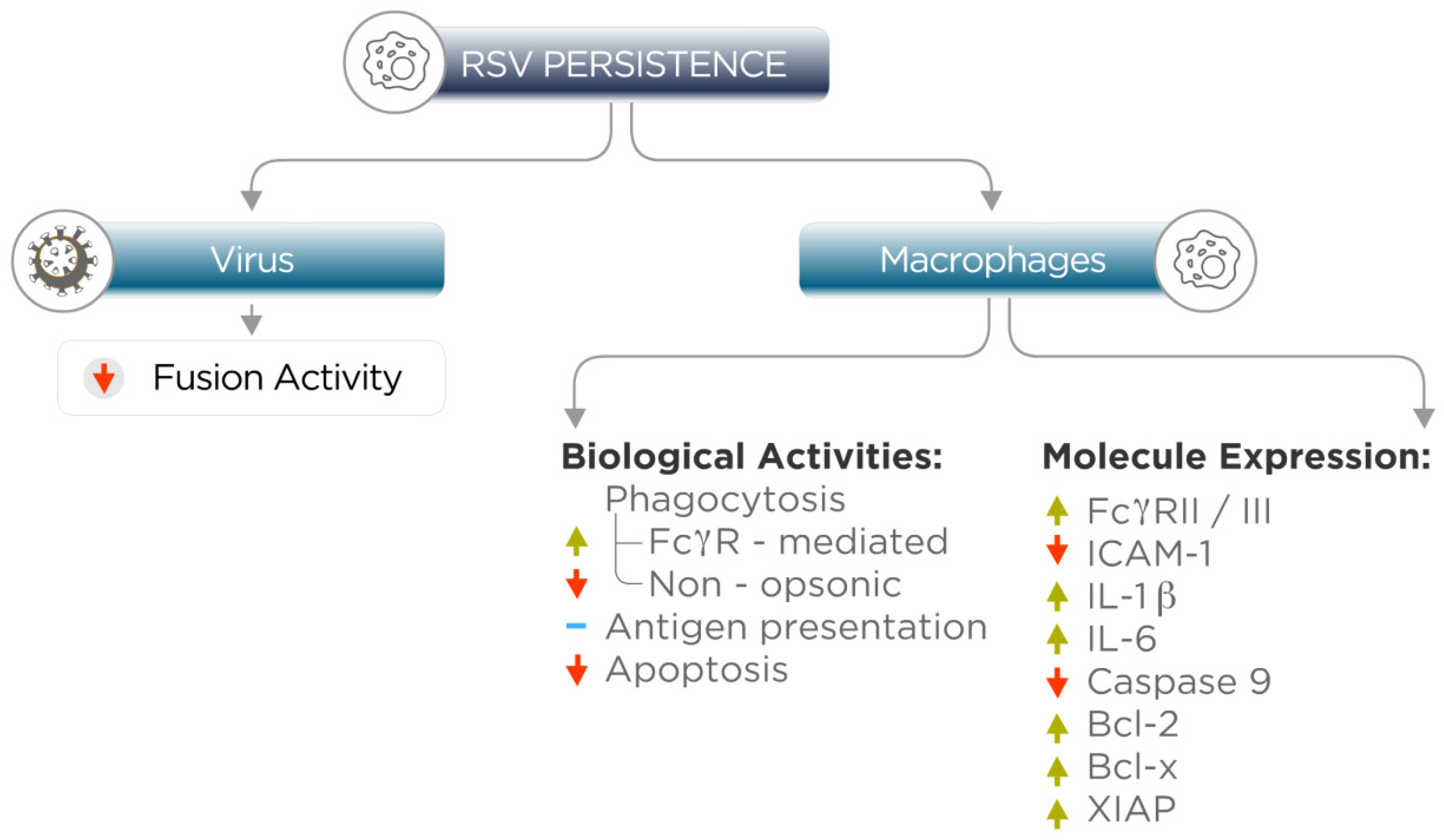
      <p>Dendritic cells, macrophages, and B lymphocytes are “professional” antigen-presenting cells (APCs). Although dendritic cells and their subsets are the most potent stimulators of T lymphocytes, the relevance of particular APCs can be determined according to their abundance in a particular tissue [<xref ref-type="bibr" rid="B51-viruses-04-03270">51</xref>]. Alveolar macrophages comprise 95% of the cells of the lung lavage with the remaining portion consisting mostly of leukocytes, thus indicating that macrophages may be important in establishing an early non-specific defense and by functioning as presenting cells to initiate the adaptive immune response in the lung [<xref ref-type="bibr" rid="B52-viruses-04-03270">52</xref>]. A study by Guerrero-Plata <italic>et al.</italic> [<xref ref-type="bibr" rid="B53-viruses-04-03270">53</xref>], which focused on determining whether MφP preserve their ability to present antigens, showed that persistent infection with RSV increases expression levels of alleles K and D of the MHC class-I molecules to levels similar to those obtained at 24-h post-acute infection. The augmented MHC-I expression in MφP correlates with an efficient processing and presentation of RSV antigens to RSV-specific CD8 T cells, as determined by cytotoxicity assays. Also, MφP maintain the ability to process and present other viral antigens, such as a peptide derived from the influenza virus nucleoprotein (NP147-155). In addition, the profiles of cytokine expression in supernatants of MφP and MφN cultures indicate that the cytokines IL-1β and IL-6 are statistically significantly augmented in the MφP, suggesting that persistent RSV infection keeps macrophages in a permanently activated state [<xref ref-type="bibr" rid="B50-viruses-04-03270">50</xref>]. Acute RSV infection of lung epithelial cells and granulocytes induced prolonged survival of infected cells by increasing the expression of anti-apoptotic molecules of the Bcl-2 family [<xref ref-type="bibr" rid="B54-viruses-04-03270">54</xref>,<xref ref-type="bibr" rid="B55-viruses-04-03270">55</xref>]. MφP, under normal culture conditions, display similar viability as MφN [<xref ref-type="bibr" rid="B56-viruses-04-03270">56</xref>]. However, treatment of these macrophage cultures with staurosporine—an inhibitor of protein kinases, which induces cellular apoptosis in the original P388D1 cell line [<xref ref-type="bibr" rid="B57-viruses-04-03270">57</xref>]—induces cell death of almost all MφN after 24 h, whereas more than 75% of MφP are refractory [<xref ref-type="bibr" rid="B56-viruses-04-03270">56</xref>]. MφP resistance to apoptosis is associated with reduced expression of the protein pro-caspase 9, although its mRNA levels are normal or even higher than in MφN, suggesting that persistent infection regulates caspase 9 expression at a post-transcriptional level. Furthermore, chronic RSV infection of MφP up-regulates mRNA and the protein products of anti-apoptotic genes such as Bcl-2, Bcl-x, and XIAP, indicating that abrogation of the intrinsic pathway of apoptosis is a mechanism crucial for the establishment and maintenance of viral persistence [<xref ref-type="bibr" rid="B56-viruses-04-03270">56</xref>]. <xref ref-type="fig" rid="viruses-04-03270-f001">Figure 1</xref> summarizes changes in virus and MφP as a consequence of persistent infection.</p>
      <fig id="viruses-04-03270-f001" position="float">
        <label>Figure 1</label>
        <caption>
          <p><bold>Changes in respiratory syncytial virus (RSV) and macrophages by persistent infection</bold>. RSV persistence in macrophages leads to genotypic changes, at least in the viral membrane fusion protein F and in the profile of cellular gene expression. Arrows indicate increase or decrease in biological activities or molecule expression.</p>
        </caption>
        <graphic xmlns:xlink="http://www.w3.org/1999/xlink" xlink:href="viruses-04-03270-g001.tif"/>
      </fig>
    </sec>
    <sec>
      <title>5. Relevance of RSV Persistence in Macrophages and Epithelial Cells</title>
      <p>Understanding the virus-cell interactions during acute and persistent RSV infections is fundamental for the development of strategies to inhibit viral infection and to eliminate viral reservoirs. Models <italic>in vitro</italic> and <italic>in vivo</italic> have been useful tools in advancing comprehension both of the mechanisms by which RSV establishes persistence and of the pathology associated with chronic infection. Models <italic>in vitro</italic> with macrophages and epithelial cell lines have been particularly useful in determining, at the molecular level, alterations produced in the host cell by long-term RSV infection [<xref ref-type="bibr" rid="B32-viruses-04-03270">32</xref>,<xref ref-type="bibr" rid="B42-viruses-04-03270">42</xref>,<xref ref-type="bibr" rid="B53-viruses-04-03270">53</xref>,<xref ref-type="bibr" rid="B56-viruses-04-03270">56</xref>]. To date, in addition to MφP, the only other cell model of persistent infection by RSV, in which changes in cellular gene expression have been studied, are persistently infected HEp-2 epithelial cells. Martínez <italic>et al.</italic> [<xref ref-type="bibr" rid="B32-viruses-04-03270">32</xref>] reported that, as determined by microarray analysis, several genes with diverse functional categories were either up- or down-regulated in persistently RSV-infected HEp-2 cells. In particular, it was observed that some of the genes that were up-regulated were those involved in cell survival, such as those encoding for the anti-apoptotic molecules TRAF-1 and BIRC3, and that some of the genes that were down-regulated were pro-apoptotic genes, such as tnf-α, bcl2l11, and caspase 9. In contrast to that in MφP, persistent RSV infection in HEp-2 cells regulates caspase 9 expression at the translational level. The study also showed that, although the chemokines CCL3 and RANTES are up-regulated during acute and persistent RSV infection, the levels of these chemokines in persistently infected HEp-2 cells are up to two-fold greater than those in acutely infected HEp-2 cells. It has also been reported that, in a model of RSV persistence in human epithelial cells A549, the level of the cytokine IL-8, evaluated by ELISA in supernatants, is up to 2.6-fold greater than that in mock-infected cells [<xref ref-type="bibr" rid="B34-viruses-04-03270">34</xref>]. Thus, when taken together, the findings 1) that RSV can establish persistent infection in macrophages and epithelial cell <italic>in vitro</italic>, 2) that alterations in gene expression lead to survival of persistently infected cells, and 3) that persistently infected cells produce excessive level of cytokines and chemokines that are associated with chronic inflammation lend strong support to the hypothesis that RSV persistence in patients may be a cause of chronic respiratory diseases. It is still to be determined whether altered expression of membrane molecules related to antigen uptake by macrophages occurs in models <italic>in vivo</italic> and, if so, whether such altered expression is relevant to pathogenesis.</p>
    </sec>
    <sec>
      <title>6. Conclusion</title>
      <p>RSV can productively infect macrophages <italic>in vivo</italic> and <italic>in vitro</italic> and can establish persistent infection in macrophage-like cells <italic>in vitro</italic>. The consequence of persistent RSV infection in macrophages is the altered expression of genes coding for pro-inflammatory cytokines, for trans-membrane proteins related to antigen uptake, and for those proteins related to cell survival. The evidence suggests that macrophages may be one of the cell populations that can serve as viral reservoirs for RSV <italic>in vivo</italic>. Understanding how RSV manipulates host cells during persistent infection may provide important insights into new approaches for rational drug design and vaccines.</p>
    </sec>
  </body>
  <back>
    <ack>
      <title>Acknowledgments</title>
      <p>The authors thank Enrique Graue Wiechers for his support, Andi Espinoza-Sánchez for his help in figure preparation and Veronica Yakoleff for revision of the original English version, editing of the manuscript, and helpful comments.</p>
    </ack>
    <notes>
      <title>Conflict of Interest</title>
      <p>The authors have no conflict of interest to declare.</p>
    </notes>
    <ref-list>
      <title>References</title>
      <ref id="B1-viruses-04-03270">
        <label>1.</label>
        <citation citation-type="journal">
          <person-group person-group-type="author">
            <name>
              <surname>Cane</surname>
              <given-names>P.A.</given-names>
            </name>
          </person-group>
          <article-title>Molecular epidemiology of respiratory syncytial virus</article-title>
          <source>Rev. Med. Virol.</source>
          <year>2007</year>
          <volume>11</volume>
          <fpage>103</fpage>
          <lpage>116</lpage>
          <pub-id pub-id-type="doi">10.1002/rmv.305</pub-id>
        </citation>
      </ref>
      <ref id="B2-viruses-04-03270">
        <label>2.</label>
        <citation citation-type="journal">
          <person-group person-group-type="author">
            <name>
              <surname>Collins</surname>
              <given-names>P.L.</given-names>
            </name>
            <name>
              <surname>Graham</surname>
              <given-names>B.S.</given-names>
            </name>
          </person-group>
          <article-title>Viral and host factors in human respiratory syncytial virus pathogenesis</article-title>
          <source>J. Virol.</source>
          <year>2008</year>
          <volume>82</volume>
          <fpage>2040</fpage>
          <lpage>2055</lpage>
          <pub-id pub-id-type="doi">10.1128/JVI.01625-07</pub-id>
        </citation>
      </ref>
      <ref id="B3-viruses-04-03270">
        <label>3.</label>
        <citation citation-type="journal">
          <person-group person-group-type="author">
            <name>
              <surname>Ogra</surname>
              <given-names>P.L.</given-names>
            </name>
          </person-group>
          <article-title>Respiratory syncytial virus: The virus, the disease and the immune response</article-title>
          <source>Paediatr. Respir. Rev.</source>
          <year>2004</year>
          <volume>5</volume>
          <fpage>119</fpage>
          <lpage>126</lpage>
          <pub-id pub-id-type="doi">10.1016/S1526-0542(04)90023-1</pub-id>
        </citation>
      </ref>
      <ref id="B4-viruses-04-03270">
        <label>4.</label>
        <citation citation-type="journal">
          <person-group person-group-type="author">
            <name>
              <surname>Hall</surname>
              <given-names>C.B.</given-names>
            </name>
            <name>
              <surname>Weinberg</surname>
              <given-names>G.A.</given-names>
            </name>
            <name>
              <surname>Iwane</surname>
              <given-names>M.K.</given-names>
            </name>
            <name>
              <surname>Blumkin</surname>
              <given-names>A.K.</given-names>
            </name>
            <name>
              <surname>Edwards</surname>
              <given-names>K.M.</given-names>
            </name>
            <name>
              <surname>Staat</surname>
              <given-names>M.A.</given-names>
            </name>
            <name>
              <surname>Auinger</surname>
              <given-names>P.</given-names>
            </name>
            <name>
              <surname>Griffin</surname>
              <given-names>M.R.</given-names>
            </name>
            <name>
              <surname>Poehling</surname>
              <given-names>K.A.</given-names>
            </name>
            <name>
              <surname>Erdman</surname>
              <given-names>D.</given-names>
            </name>
            <etal/>
          </person-group>
          <article-title>The burden of respiratory syncytial virus infection in young children</article-title>
          <source>N. Engl. J. Med.</source>
          <year>2009</year>
          <volume>360</volume>
          <fpage>588</fpage>
          <lpage>98</lpage>
          <pub-id pub-id-type="doi">10.1056/NEJMoa0804877</pub-id>
        </citation>
      </ref>
      <ref id="B5-viruses-04-03270">
        <label>5.</label>
        <citation citation-type="journal">
          <person-group person-group-type="author">
            <name>
              <surname>Law</surname>
              <given-names>B.J.</given-names>
            </name>
            <name>
              <surname>Carbonell-Estrany</surname>
              <given-names>X.</given-names>
            </name>
            <name>
              <surname>Simoes</surname>
              <given-names>E.A.</given-names>
            </name>
          </person-group>
          <article-title>An update on respiratory syncytial virus epidemiology: A developed country perspective</article-title>
          <source>Respir. Med.</source>
          <year>2002</year>
          <volume>96</volume>
          <fpage>1</fpage>
          <lpage>7</lpage>
          <pub-id pub-id-type="doi">10.1053/rmed.2001.1207</pub-id>
        </citation>
      </ref>
      <ref id="B6-viruses-04-03270">
        <label>6.</label>
        <citation citation-type="journal">
          <person-group person-group-type="author">
            <name>
              <surname>Hervás</surname>
              <given-names>D.</given-names>
            </name>
            <name>
              <surname>Reina</surname>
              <given-names>J.</given-names>
            </name>
            <name>
              <surname>Yañez</surname>
              <given-names>A.</given-names>
            </name>
            <name>
              <surname>del Valle</surname>
              <given-names>J.M.</given-names>
            </name>
            <name>
              <surname>Figuerola</surname>
              <given-names>J.</given-names>
            </name>
            <name>
              <surname>Hervás</surname>
              <given-names>J.A.</given-names>
            </name>
          </person-group>
          <article-title>Epidemiology of hospitalization for acute bronchiolitis in children: Differences between RSV and non-RSV bronchiolitis</article-title>
          <source>Eur. J. Clin. Microbiol. Infect. Dis.</source>
          <year>2012</year>
          <volume>31</volume>
          <fpage>1975</fpage>
          <lpage>1981</lpage>
          <pub-id pub-id-type="doi">10.1007/s10096-011-1529-y</pub-id>
        </citation>
      </ref>
      <ref id="B7-viruses-04-03270">
        <label>7.</label>
        <citation citation-type="journal">
          <person-group person-group-type="author">
            <name>
              <surname>Langley</surname>
              <given-names>G.F.</given-names>
            </name>
            <name>
              <surname>Anderson</surname>
              <given-names>L.J.</given-names>
            </name>
          </person-group>
          <article-title>Epidemiology and prevention of respiratory syncytial virus infections among infants and young children</article-title>
          <source>Pediatr. Infect. Dis. J.</source>
          <year>2011</year>
          <volume>30</volume>
          <fpage>510</fpage>
          <lpage>517</lpage>
        <pub-id pub-id-type="pmid">21487331</pub-id></citation>
      </ref>
      <ref id="B8-viruses-04-03270">
        <label>8.</label>
        <citation citation-type="journal">
          <person-group person-group-type="author">
            <name>
              <surname>Welliver</surname>
              <given-names>R.C.</given-names>
            </name>
          </person-group>
          <article-title>Review of epidemiology and clinical risk factors for severe respiratory syncytial virus (RSV) infection</article-title>
          <source>J. Pediatr.</source>
          <year>2003</year>
          <volume>143</volume>
          <fpage>112</fpage>
          <lpage>117</lpage>
          <pub-id pub-id-type="doi">10.1067/S0022-3476(03)00508-0</pub-id>
        </citation>
      </ref>
      <ref id="B9-viruses-04-03270">
        <label>9.</label>
        <citation citation-type="journal">
          <person-group person-group-type="author">
            <name>
              <surname>Mejías</surname>
              <given-names>A.</given-names>
            </name>
            <name>
              <surname>Chávez-Bueno</surname>
              <given-names>S.</given-names>
            </name>
            <name>
              <surname>Ramilo</surname>
              <given-names>O.</given-names>
            </name>
          </person-group>
          <article-title>Respiratory syncytial virus pneumonia: mechanisms of inflammation and prolonged airway hyperresponsiveness</article-title>
          <source>Curr. Opin. Infect. Dis.</source>
          <year>2005</year>
          <volume>18</volume>
          <fpage>199</fpage>
          <lpage>204</lpage>
          <pub-id pub-id-type="doi">10.1097/01.qco.0000168378.07110.72</pub-id>
        </citation>
      </ref>
      <ref id="B10-viruses-04-03270">
        <label>10.</label>
        <citation citation-type="journal">
          <person-group person-group-type="author">
            <name>
              <surname>Sigurs</surname>
              <given-names>N.</given-names>
            </name>
            <name>
              <surname>Gustafsson</surname>
              <given-names>P.M.</given-names>
            </name>
            <name>
              <surname>Bjarnason</surname>
              <given-names>R.</given-names>
            </name>
            <name>
              <surname>Lundberg</surname>
              <given-names>F.</given-names>
            </name>
            <name>
              <surname>Schmidt</surname>
              <given-names>S.</given-names>
            </name>
            <name>
              <surname>Sigurbergsson</surname>
              <given-names>F.</given-names>
            </name>
            <name>
              <surname>Kjellman</surname>
              <given-names>B.</given-names>
            </name>
          </person-group>
          <article-title>Severe respiratory syncytial virus bronchiolitis in infancy and asthma and allergy at age 13</article-title>
          <source>Am. J. Respir. Crit. Care. Med.</source>
          <year>2005</year>
          <volume>171</volume>
          <fpage>137</fpage>
          <lpage>141</lpage>
        <pub-id pub-id-type="pmid">15516534</pub-id></citation>
      </ref>
      <ref id="B11-viruses-04-03270">
        <label>11.</label>
        <citation citation-type="journal">
          <person-group person-group-type="author">
            <name>
              <surname>Staat</surname>
              <given-names>M.A.</given-names>
            </name>
          </person-group>
          <article-title>Respiratory syncytial virus infections in children</article-title>
          <source>Semin. Respir. Infect.</source>
          <year>2002</year>
          <volume>17</volume>
          <fpage>15</fpage>
          <lpage>20</lpage>
          <pub-id pub-id-type="doi">10.1053/srin.2002.31688</pub-id>
        </citation>
      </ref>
      <ref id="B12-viruses-04-03270">
        <label>12.</label>
        <citation citation-type="journal">
          <person-group person-group-type="author">
            <name>
              <surname>Dowell</surname>
              <given-names>S.F.</given-names>
            </name>
            <name>
              <surname>Anderson</surname>
              <given-names>L.J.</given-names>
            </name>
            <name>
              <surname>Gary</surname>
              <given-names>H.E.</given-names>
              <suffix>Jr.</suffix>
            </name>
            <name>
              <surname>Erdman</surname>
              <given-names>D.D.</given-names>
            </name>
            <name>
              <surname>Plouffe</surname>
              <given-names>J.F.</given-names>
            </name>
            <name>
              <surname>File</surname>
              <given-names>T.M.</given-names>
              <suffix>Jr.</suffix>
            </name>
            <name>
              <surname>Marston</surname>
              <given-names>B.J.</given-names>
            </name>
            <name>
              <surname>Breiman</surname>
              <given-names>R.F.</given-names>
            </name>
          </person-group>
          <article-title>Respiratory syncytial virus is an important cause of community-acquired lower respiratory infection among hospitalized adults</article-title>
          <source>J. Infect. Dis.</source>
          <year>1996</year>
          <volume>174</volume>
          <fpage>456</fpage>
          <lpage>462</lpage>
          <pub-id pub-id-type="doi">10.1093/infdis/174.3.456</pub-id>
        </citation>
      </ref>
      <ref id="B13-viruses-04-03270">
        <label>13.</label>
        <citation citation-type="journal">
          <person-group person-group-type="author">
            <name>
              <surname>Falsey</surname>
              <given-names>A.R.</given-names>
            </name>
            <name>
              <surname>Hennessey</surname>
              <given-names>P.A.</given-names>
            </name>
            <name>
              <surname>Formica</surname>
              <given-names>M.A.</given-names>
            </name>
            <name>
              <surname>Cox</surname>
              <given-names>C.</given-names>
            </name>
            <name>
              <surname>Walsh</surname>
              <given-names>E.E.</given-names>
            </name>
          </person-group>
          <article-title>Respiratory syncytial virus infection in elderly and high-risk adults</article-title>
          <source>N. Engl. J. Med.</source>
          <year>2005</year>
          <volume>352</volume>
          <fpage>1749</fpage>
          <lpage>1759</lpage>
          <pub-id pub-id-type="doi">10.1056/NEJMoa043951</pub-id>
        </citation>
      </ref>
      <ref id="B14-viruses-04-03270">
        <label>14.</label>
        <citation citation-type="journal">
          <person-group person-group-type="author">
            <name>
              <surname>Falsey</surname>
              <given-names>A.R.</given-names>
            </name>
            <name>
              <surname>Walsh</surname>
              <given-names>E.E.</given-names>
            </name>
          </person-group>
          <article-title>Respiratory syncytial virus infection in adults</article-title>
          <source>Clin. Microbiol. Rev.</source>
          <year>2000</year>
          <volume>13</volume>
          <fpage>371</fpage>
          <lpage>384</lpage>
          <pub-id pub-id-type="doi">10.1128/CMR.13.3.371-384.2000</pub-id>
        </citation>
      </ref>
      <ref id="B15-viruses-04-03270">
        <label>15.</label>
        <citation citation-type="web">
		<collab>World Health Organization</collab>
          <article-title>Initiative for Vaccine Research: Respiratory Syncytial Virus</article-title>
          <access-date>(accessed on 22 August 2012)</access-date>
          <comment>Available online:<ext-link xmlns:xlink="http://www.w3.org/1999/xlink" xlink:href="http://www.who.int/vaccine_research/diseases/ari/en/index3.html" ext-link-type="uri">http://www.who.int/vaccine_research/diseases/ari/en/index3.html</ext-link></comment>
        </citation>
      </ref>
      <ref id="B16-viruses-04-03270">
        <label>16.</label>
        <citation citation-type="journal">
          <person-group person-group-type="author">
            <name>
              <surname>Bhatt</surname>
              <given-names>J.M.</given-names>
            </name>
            <name>
              <surname>Everard</surname>
              <given-names>M.L.</given-names>
            </name>
          </person-group>
          <article-title>Do environmental pollutants influence the onset of respiratory syncytial virus epidemics or disease severity?</article-title>
          <source>Paediatr. Respir. Rev.</source>
          <year>2004</year>
          <volume>5</volume>
          <fpage>333</fpage>
          <lpage>338</lpage>
          <pub-id pub-id-type="doi">10.1016/j.prrv.2004.07.003</pub-id>
        </citation>
      </ref>
      <ref id="B17-viruses-04-03270">
        <label>17.</label>
        <citation citation-type="journal">
          <person-group person-group-type="author">
            <name>
              <surname>Collins</surname>
              <given-names>P.L.</given-names>
            </name>
            <name>
              <surname>Melero</surname>
              <given-names>J.A.</given-names>
            </name>
          </person-group>
          <article-title>Progress in understanding and controlling respiratory syncytial virus: Still crazy after all these years</article-title>
          <source>Virus Res.</source>
          <year>2011</year>
          <volume>162</volume>
          <fpage>80</fpage>
          <lpage>99</lpage>
          <pub-id pub-id-type="doi">10.1016/j.virusres.2011.09.020</pub-id>
        </citation>
      </ref>
      <ref id="B18-viruses-04-03270">
        <label>18.</label>
        <citation citation-type="journal">
          <person-group person-group-type="author">
            <name>
              <surname>Seemungal</surname>
              <given-names>T.</given-names>
            </name>
            <name>
              <surname>Harper-Owen</surname>
              <given-names>R.</given-names>
            </name>
            <name>
              <surname>Bhowmik</surname>
              <given-names>A.</given-names>
            </name>
            <name>
              <surname>Moric</surname>
              <given-names>I.</given-names>
            </name>
            <name>
              <surname>Sanderson</surname>
              <given-names>G.</given-names>
            </name>
            <name>
              <surname>Message</surname>
              <given-names>S.</given-names>
            </name>
            <name>
              <surname>Maccallum</surname>
              <given-names>P.</given-names>
            </name>
            <name>
              <surname>Meade</surname>
              <given-names>T.W.</given-names>
            </name>
            <name>
              <surname>Jeffries</surname>
              <given-names>D.J.</given-names>
            </name>
            <name>
              <surname>Johnston</surname>
              <given-names>S.L.</given-names>
            </name>
            <name>
              <surname>Wedzicha</surname>
              <given-names>J.A.</given-names>
            </name>
          </person-group>
          <article-title>Respiratory viruses, symptoms, and inflammatory markers in acute exacerbations and stable chronic obstructive pulmonary disease</article-title>
          <source>Am. J. Respir. Crit. Care. Med.</source>
          <year>2001</year>
          <volume>164</volume>
          <fpage>1618</fpage>
          <lpage>1623</lpage>
        <pub-id pub-id-type="pmid">11719299</pub-id></citation>
      </ref>
      <ref id="B19-viruses-04-03270">
        <label>19.</label>
        <citation citation-type="journal">
          <person-group person-group-type="author">
            <name>
              <surname>Sikkel</surname>
              <given-names>M.B.</given-names>
            </name>
            <name>
              <surname>Quint</surname>
              <given-names>J.K.</given-names>
            </name>
            <name>
              <surname>Mallia</surname>
              <given-names>P.</given-names>
            </name>
            <name>
              <surname>Wedzicha</surname>
              <given-names>J.A.</given-names>
            </name>
            <name>
              <surname>Johnston</surname>
              <given-names>S.L.</given-names>
            </name>
          </person-group>
          <article-title>Respiratory syncytial virus persistence in chronic obstructive pulmonary disease</article-title>
          <source>Pediatr. Infect. Dis. J.</source>
          <year>2008</year>
          <volume>27</volume>
          <fpage>63</fpage>
          <lpage>70</lpage>
          <pub-id pub-id-type="doi">10.1097/INF.0b013e3181684d67</pub-id>
        </citation>
      </ref>
      <ref id="B20-viruses-04-03270">
        <label>20.</label>
        <citation citation-type="journal">
          <person-group person-group-type="author">
            <name>
              <surname>Kim</surname>
              <given-names>E.Y.</given-names>
            </name>
            <name>
              <surname>Battaile</surname>
              <given-names>J.T.</given-names>
            </name>
            <name>
              <surname>Patel</surname>
              <given-names>A.C.</given-names>
            </name>
            <name>
              <surname>You</surname>
              <given-names>Y.</given-names>
            </name>
            <name>
              <surname>Agapov</surname>
              <given-names>E.</given-names>
            </name>
            <name>
              <surname>Grayson</surname>
              <given-names>M.H.</given-names>
            </name>
            <name>
              <surname>Benoit</surname>
              <given-names>L.A.</given-names>
            </name>
            <name>
              <surname>Byers</surname>
              <given-names>D.E.</given-names>
            </name>
            <name>
              <surname>Alevy</surname>
              <given-names>Y.</given-names>
            </name>
            <name>
              <surname>Tucker</surname>
              <given-names>J.</given-names>
            </name>
            <etal/>
          </person-group>
          <article-title>Persistent activation of an innate immune response translates respiratory viral infection into chronic lung disease</article-title>
          <source>Nat. Med.</source>
          <year>2008</year>
          <volume>14</volume>
          <fpage>633</fpage>
          <lpage>640</lpage>
          <pub-id pub-id-type="doi">10.1038/nm1770</pub-id>
        </citation>
      </ref>
      <ref id="B21-viruses-04-03270">
        <label>21.</label>
        <citation citation-type="journal">
          <person-group person-group-type="author">
            <name>
              <surname>Di Rosa</surname>
              <given-names>F.</given-names>
            </name>
            <name>
              <surname>Barnaba</surname>
              <given-names>V.</given-names>
            </name>
          </person-group>
          <article-title>Persisting viruses and chronic inflammation: Understanding their relation to autoimmunity</article-title>
          <source>Immunol. Rev.</source>
          <year>1998</year>
          <volume>164</volume>
          <fpage>17</fpage>
          <lpage>27</lpage>
          <pub-id pub-id-type="doi">10.1111/j.1600-065X.1998.tb01204.x</pub-id>
        </citation>
      </ref>
      <ref id="B22-viruses-04-03270">
        <label>22.</label>
        <citation citation-type="journal">
          <person-group person-group-type="author">
            <name>
              <surname>Wald</surname>
              <given-names>O.</given-names>
            </name>
            <name>
              <surname>Weiss</surname>
              <given-names>I.D.</given-names>
            </name>
            <name>
              <surname>Galun</surname>
              <given-names>E.</given-names>
            </name>
            <name>
              <surname>Peled</surname>
              <given-names>A.</given-names>
            </name>
          </person-group>
          <article-title>Chemokines in hepatitis C virus infection: Pathogenesis, prognosis and therapeutics</article-title>
          <source>Cytokine.</source>
          <year>2007</year>
          <volume>39</volume>
          <fpage>50</fpage>
          <lpage>62</lpage>
          <pub-id pub-id-type="doi">10.1016/j.cyto.2007.05.013</pub-id>
        </citation>
      </ref>
      <ref id="B23-viruses-04-03270">
        <label>23.</label>
        <citation citation-type="journal">
          <person-group person-group-type="author">
            <name>
              <surname>Culley</surname>
              <given-names>F.J.</given-names>
            </name>
            <name>
              <surname>Pennycook</surname>
              <given-names>A.M.</given-names>
            </name>
            <name>
              <surname>Tregoning</surname>
              <given-names>J.S.</given-names>
            </name>
            <name>
              <surname>Hussell</surname>
              <given-names>T.</given-names>
            </name>
            <name>
              <surname>Openshaw</surname>
              <given-names>P.J.</given-names>
            </name>
          </person-group>
          <article-title>Differential chemokine expression following respiratory virus infection reflects Th1- or Th2-biased immunopathology</article-title>
          <source>J. Virol.</source>
          <year>2006</year>
          <volume>80</volume>
          <fpage>4521</fpage>
          <lpage>4527</lpage>
        <pub-id pub-id-type="doi">10.1128/JVI.80.9.4521-4527.2006</pub-id><pub-id pub-id-type="pmid">16611912</pub-id></citation>
      </ref>
      <ref id="B24-viruses-04-03270">
        <label>24.</label>
        <citation citation-type="journal">
          <person-group person-group-type="author">
            <name>
              <surname>Krishnan</surname>
              <given-names>S.</given-names>
            </name>
            <name>
              <surname>Halonen</surname>
              <given-names>M.</given-names>
            </name>
            <name>
              <surname>Welliver</surname>
              <given-names>R.C.</given-names>
            </name>
          </person-group>
          <article-title>Innate immune responses in respiratory syncytial virus infections</article-title>
          <source>Viral Immunol.</source>
          <year>2004</year>
          <volume>17</volume>
          <fpage>220</fpage>
          <lpage>233</lpage>
          <pub-id pub-id-type="doi">10.1089/0882824041310612</pub-id>
        </citation>
      </ref>
      <ref id="B25-viruses-04-03270">
        <label>25.</label>
        <citation citation-type="journal">
          <person-group person-group-type="author">
            <name>
              <surname>Mills</surname>
              <given-names>B.G.</given-names>
            </name>
            <name>
              <surname>Singer</surname>
              <given-names>F.R.</given-names>
            </name>
            <name>
              <surname>Weiner</surname>
              <given-names>L.P.</given-names>
            </name>
            <name>
              <surname>Holst</surname>
              <given-names>P.A.</given-names>
            </name>
          </person-group>
          <article-title>Immunohistological demonstration of respiratory syncytial virus antigens in Paget disease of bone</article-title>
          <source>Proc. Natl. Acad. Sci. USA</source>
          <year>1981</year>
          <volume>78</volume>
          <fpage>1209</fpage>
          <lpage>1213</lpage>
          <pub-id pub-id-type="doi">10.1073/pnas.78.2.1209</pub-id>
        </citation>
      </ref>
      <ref id="B26-viruses-04-03270">
        <label>26.</label>
        <citation citation-type="journal">
          <person-group person-group-type="author">
            <name>
              <surname>Isaia</surname>
              <given-names>G.</given-names>
            </name>
            <name>
              <surname>Teodosiu</surname>
              <given-names>O.</given-names>
            </name>
            <name>
              <surname>Popescu</surname>
              <given-names>G.</given-names>
            </name>
            <name>
              <surname>Athanasiu</surname>
              <given-names>P.</given-names>
            </name>
            <name>
              <surname>Sternberg</surname>
              <given-names>I.</given-names>
            </name>
            <name>
              <surname>Dumitriu</surname>
              <given-names>Z.</given-names>
            </name>
          </person-group>
          <article-title>Persistence of viruses in the nasopharynx of apparently healthy children aged 0-5 years. Results of investigations performed in 1982-83</article-title>
          <source>Virologie</source>
          <year>1985</year>
          <volume>36</volume>
          <fpage>175</fpage>
          <lpage>179</lpage>
        <pub-id pub-id-type="pmid">3000066</pub-id></citation>
      </ref>
      <ref id="B27-viruses-04-03270">
        <label>27.</label>
        <citation citation-type="journal">
          <person-group person-group-type="author">
            <name>
              <surname>Cubie</surname>
              <given-names>H.A.</given-names>
            </name>
            <name>
              <surname>Duncan</surname>
              <given-names>L.A.</given-names>
            </name>
            <name>
              <surname>Marshall</surname>
              <given-names>L.A.</given-names>
            </name>
            <name>
              <surname>Smith</surname>
              <given-names>N.M.</given-names>
            </name>
          </person-group>
          <article-title>Detection of respiratory syncytial virus nucleic acid in archival postmortem tissue from infants</article-title>
          <source>Pediatr. Pathol. Lab. Med.</source>
          <year>1997</year>
          <volume>17</volume>
          <fpage>927</fpage>
          <lpage>938</lpage>
          <pub-id pub-id-type="doi">10.1080/107710497174372</pub-id>
        </citation>
      </ref>
      <ref id="B28-viruses-04-03270">
        <label>28.</label>
        <citation citation-type="journal">
          <person-group person-group-type="author">
            <name>
              <surname>Rezaee</surname>
              <given-names>F.</given-names>
            </name>
            <name>
              <surname>Gibson</surname>
              <given-names>L.F.</given-names>
            </name>
            <name>
              <surname>Piktel</surname>
              <given-names>D.</given-names>
            </name>
            <name>
              <surname>Othumpangat</surname>
              <given-names>S.</given-names>
            </name>
            <name>
              <surname>Piedimonte</surname>
              <given-names>G.</given-names>
            </name>
          </person-group>
          <article-title>Respiratory syncytial virus infection in human bone marrow stromal cells</article-title>
          <source>Am. J. Respir. Cell. Mol. Biol.</source>
          <year>2011</year>
          <volume>45</volume>
          <fpage>277</fpage>
          <lpage>286</lpage>
          <pub-id pub-id-type="doi">10.1165/rcmb.2010-0121OC</pub-id>
        </citation>
      </ref>
      <ref id="B29-viruses-04-03270">
        <label>29.</label>
        <citation citation-type="journal">
          <person-group person-group-type="author">
            <name>
              <surname>Hegele</surname>
              <given-names>R.G.</given-names>
            </name>
            <name>
              <surname>Hayashi</surname>
              <given-names>S.</given-names>
            </name>
            <name>
              <surname>Bramley</surname>
              <given-names>A.M.</given-names>
            </name>
            <name>
              <surname>Hogg</surname>
              <given-names>J.C.</given-names>
            </name>
          </person-group>
          <article-title>Persistence of respiratory syncytial virus genome and protein after acute bronchiolitis in guinea pigs</article-title>
          <source>Chest.</source>
          <year>1994</year>
          <volume>105</volume>
          <fpage>1848</fpage>
          <lpage>1854</lpage>
          <pub-id pub-id-type="doi">10.1378/chest.105.6.1848</pub-id>
        </citation>
      </ref>
      <ref id="B30-viruses-04-03270">
        <label>30.</label>
        <citation citation-type="journal">
          <person-group person-group-type="author">
            <name>
              <surname>Schwarze</surname>
              <given-names>J.</given-names>
            </name>
            <name>
              <surname>O'Donnell</surname>
              <given-names>D.R.</given-names>
            </name>
            <name>
              <surname>Rohwedder</surname>
              <given-names>A.</given-names>
            </name>
            <name>
              <surname>Openshaw</surname>
              <given-names>P.J.</given-names>
            </name>
          </person-group>
          <article-title>Latency and persistence of respiratory syncytial virus despite T cell immunity</article-title>
          <source>Am. J. Respir. Crit. Care Med.</source>
          <year>2004</year>
          <volume>169</volume>
          <fpage>801</fpage>
          <lpage>805</lpage>
          <pub-id pub-id-type="doi">10.1164/rccm.200308-1203OC</pub-id>
        </citation>
      </ref>
      <ref id="B31-viruses-04-03270">
        <label>31.</label>
        <citation citation-type="journal">
          <person-group person-group-type="author">
            <name>
              <surname>Sutton</surname>
              <given-names>T.C.</given-names>
            </name>
            <name>
              <surname>Tayyari</surname>
              <given-names>F.</given-names>
            </name>
            <name>
              <surname>Khan</surname>
              <given-names>M.A.</given-names>
            </name>
            <name>
              <surname>Manson</surname>
              <given-names>H.E.</given-names>
            </name>
            <name>
              <surname>Hegele</surname>
              <given-names>R.G.</given-names>
            </name>
          </person-group>
          <article-title>T helper 1 background protects against airway hyperresponsiveness and inflammation in guinea pigs with persistent respiratory syncytial virus infection</article-title>
          <source>Pediatr. Res.</source>
          <year>2007</year>
          <volume>61</volume>
          <fpage>525</fpage>
          <lpage>529</lpage>
        <pub-id pub-id-type="pmid">17413871</pub-id></citation>
      </ref>
      <ref id="B32-viruses-04-03270">
        <label>32.</label>
        <citation citation-type="journal">
          <person-group person-group-type="author">
            <name>
              <surname>Martínez</surname>
              <given-names>I.</given-names>
            </name>
            <name>
              <surname>Lombardía</surname>
              <given-names>L.</given-names>
            </name>
            <name>
              <surname>Herranz</surname>
              <given-names>C.</given-names>
            </name>
            <name>
              <surname>García-Barreno</surname>
              <given-names>B.</given-names>
            </name>
            <name>
              <surname>Domínguez</surname>
              <given-names>O.</given-names>
            </name>
            <name>
              <surname>Melero</surname>
              <given-names>J.A.</given-names>
            </name>
          </person-group>
          <article-title>Cultures of HEp-2 cells persistently infected by human respiratory syncytial virus differ in chemokine expression and resistance to apoptosis as compared to lytic infections of the same cell type</article-title>
          <source>Virology</source>
          <year>2009</year>
          <volume>388</volume>
          <fpage>31</fpage>
          <lpage>41</lpage>
          <pub-id pub-id-type="doi">10.1016/j.virol.2009.03.008</pub-id>
        </citation>
      </ref>
      <ref id="B33-viruses-04-03270">
        <label>33.</label>
        <citation citation-type="journal">
          <person-group person-group-type="author">
            <name>
              <surname>Sarmiento</surname>
              <given-names>R.E.</given-names>
            </name>
            <name>
              <surname>Tirado</surname>
              <given-names>R.</given-names>
            </name>
            <name>
              <surname>Gómez</surname>
              <given-names>B.</given-names>
            </name>
          </person-group>
          <article-title>Characteristics of a respiratory syncytial virus persistently infected macrophage-like culture</article-title>
          <source>Virus Res.</source>
          <year>2002</year>
          <volume>84</volume>
          <fpage>45</fpage>
          <lpage>58</lpage>
          <pub-id pub-id-type="doi">10.1016/S0168-1702(01)00420-8</pub-id>
        </citation>
      </ref>
      <ref id="B34-viruses-04-03270">
        <label>34.</label>
        <citation citation-type="journal">
          <person-group person-group-type="author">
            <name>
              <surname>Tirado</surname>
              <given-names>R.</given-names>
            </name>
            <name>
              <surname>Ortega</surname>
              <given-names>A.</given-names>
            </name>
            <name>
              <surname>Sarmiento</surname>
              <given-names>R.E.</given-names>
            </name>
            <name>
              <surname>Gómez</surname>
              <given-names>B.</given-names>
            </name>
          </person-group>
          <article-title>Interleukin-8 mRNA synthesis and protein secretion are continuously up-regulated by respiratory syncytial virus persistently infected cells</article-title>
          <source>Cell Immunol.</source>
          <year>2005</year>
          <volume>233</volume>
          <fpage>61</fpage>
          <lpage>71</lpage>
          <pub-id pub-id-type="doi">10.1016/j.cellimm.2005.04.003</pub-id>
        </citation>
      </ref>
      <ref id="B35-viruses-04-03270">
        <label>35.</label>
        <citation citation-type="journal">
          <person-group person-group-type="author">
            <name>
              <surname>Valdovinos</surname>
              <given-names>M.R.</given-names>
            </name>
            <name>
              <surname>Gómez</surname>
              <given-names>B.</given-names>
            </name>
          </person-group>
          <article-title>Establishment of respiratory syncytial virus persistence in cell lines: Association with defective interfering particles</article-title>
          <source>Intervirology</source>
          <year>2003</year>
          <volume>46</volume>
          <fpage>190</fpage>
          <lpage>198</lpage>
          <pub-id pub-id-type="doi">10.1159/000071461</pub-id>
        </citation>
      </ref>
      <ref id="B36-viruses-04-03270">
        <label>36.</label>
        <citation citation-type="journal">
          <person-group person-group-type="author">
            <name>
              <surname>Hobson</surname>
              <given-names>L.</given-names>
            </name>
            <name>
              <surname>Everard</surname>
              <given-names>M.L.</given-names>
            </name>
          </person-group>
          <article-title>Persistent of respiratory syncytial virus in human dendritic cells and influence of nitric oxide</article-title>
          <source>Clin. Exp. Immunol.</source>
          <year>2008</year>
          <volume>151</volume>
          <fpage>359</fpage>
          <lpage>366</lpage>
          <pub-id pub-id-type="doi">10.1111/j.1365-2249.2007.03560.x</pub-id>
        </citation>
      </ref>
      <ref id="B37-viruses-04-03270">
        <label>37.</label>
        <citation citation-type="journal">
          <person-group person-group-type="author">
            <name>
              <surname>Midulla</surname>
              <given-names>F.</given-names>
            </name>
            <name>
              <surname>Villani</surname>
              <given-names>A.</given-names>
            </name>
            <name>
              <surname>Panuska</surname>
              <given-names>J.R.</given-names>
            </name>
            <name>
              <surname>Dab</surname>
              <given-names>I.</given-names>
            </name>
            <name>
              <surname>Kolls</surname>
              <given-names>J.K.</given-names>
            </name>
            <name>
              <surname>Merolla</surname>
              <given-names>R.</given-names>
            </name>
            <name>
              <surname>Ronchetti</surname>
              <given-names>R.</given-names>
            </name>
          </person-group>
          <article-title>Respiratory syncytial virus lung infection in infants: Immunoregulatory role of infected alveolar macrophages</article-title>
          <source>J. Infect. Dis.</source>
          <year>1993</year>
          <volume>168</volume>
          <fpage>1515</fpage>
          <lpage>1519</lpage>
          <pub-id pub-id-type="doi">10.1093/infdis/168.6.1515</pub-id>
        </citation>
      </ref>
      <ref id="B38-viruses-04-03270">
        <label>38.</label>
        <citation citation-type="journal">
          <person-group person-group-type="author">
            <name>
              <surname>Castleman</surname>
              <given-names>W.L.</given-names>
            </name>
            <name>
              <surname>Lay</surname>
              <given-names>J.C.</given-names>
            </name>
            <name>
              <surname>Dubovi</surname>
              <given-names>E.J.</given-names>
            </name>
            <name>
              <surname>Slauson</surname>
              <given-names>D.O.</given-names>
            </name>
          </person-group>
          <article-title>Experimental bovine respiratory syncytial virus infection in conventional calves: light microscopic lesions, microbiology, and studies on lavaged lung cells</article-title>
          <source>Am. J. Vet. Res.</source>
          <year>1985</year>
          <volume>46</volume>
          <fpage>547</fpage>
          <lpage>553</lpage>
        <pub-id pub-id-type="pmid">3994121</pub-id></citation>
      </ref>
      <ref id="B39-viruses-04-03270">
        <label>39.</label>
        <citation citation-type="journal">
          <person-group person-group-type="author">
            <name>
              <surname>Panuska</surname>
              <given-names>J.R.</given-names>
            </name>
            <name>
              <surname>Cirino</surname>
              <given-names>N.M.</given-names>
            </name>
            <name>
              <surname>Midulla</surname>
              <given-names>F.</given-names>
            </name>
            <name>
              <surname>Despot</surname>
              <given-names>J.E.</given-names>
            </name>
            <name>
              <surname>McFadden</surname>
              <given-names>E.R.</given-names>
              <suffix>Jr.</suffix>
            </name>
            <name>
              <surname>Huang</surname>
              <given-names>Y.T.</given-names>
            </name>
          </person-group>
          <article-title>Productive infection of isolated human alveolar macrophages by respiratory syncytial virus</article-title>
          <source>J. Clin. Invest.</source>
          <year>1990</year>
          <volume>86</volume>
          <fpage>113</fpage>
          <lpage>119</lpage>
          <pub-id pub-id-type="doi">10.1172/JCI114672</pub-id>
        </citation>
      </ref>
      <ref id="B40-viruses-04-03270">
        <label>40.</label>
        <citation citation-type="journal">
          <person-group person-group-type="author">
            <name>
              <surname>Oldstone</surname>
              <given-names>M.B.</given-names>
            </name>
          </person-group>
          <article-title>Viral persistence: parameters, mechanisms and future predictions</article-title>
          <source>Virology</source>
          <year>2006</year>
          <volume>344</volume>
          <fpage>111</fpage>
          <lpage>118</lpage>
          <pub-id pub-id-type="doi">10.1016/j.virol.2005.09.028</pub-id>
        </citation>
      </ref>
      <ref id="B41-viruses-04-03270">
        <label>41.</label>
        <citation citation-type="journal">
          <person-group person-group-type="author">
            <name>
              <surname>Koren</surname>
              <given-names>H.S.</given-names>
            </name>
            <name>
              <surname>Handwerger</surname>
              <given-names>B.S.</given-names>
            </name>
            <name>
              <surname>Wunderlich</surname>
              <given-names>J.R.</given-names>
            </name>
          </person-group>
          <article-title>Identification of macrophage-like characteristics in a cultured murine tumor line</article-title>
          <source>J. Immunol.</source>
          <year>1975</year>
          <volume>114</volume>
          <fpage>894</fpage>
          <lpage>897</lpage>
        <pub-id pub-id-type="pmid">1167564</pub-id></citation>
      </ref>
      <ref id="B42-viruses-04-03270">
        <label>42.</label>
        <citation citation-type="journal">
          <person-group person-group-type="author">
            <name>
              <surname>Arrevillaga</surname>
              <given-names>G.</given-names>
            </name>
            <name>
              <surname>Gaona</surname>
              <given-names>J.</given-names>
            </name>
            <name>
              <surname>Sánchez</surname>
              <given-names>C.</given-names>
            </name>
            <name>
              <surname>Rosales</surname>
              <given-names>V.</given-names>
            </name>
            <name>
              <surname>Gómez</surname>
              <given-names>B.</given-names>
            </name>
          </person-group>
          <article-title>Respiratory syncytial virus persistence in macrophages downregulates intercellular adhesion molecule-1 expression and reduces adhesion of non-typeable haemophilus influenzae</article-title>
          <source>Intervirology</source>
          <year>2012</year>
          <volume>55</volume>
          <fpage>442</fpage>
          <lpage>450</lpage>
          <pub-id pub-id-type="doi">10.1159/000335548</pub-id>
        </citation>
      </ref>
      <ref id="B43-viruses-04-03270">
        <label>43.</label>
        <citation citation-type="journal">
          <person-group person-group-type="author">
            <name>
              <surname>Sarmiento</surname>
              <given-names>R.E.</given-names>
            </name>
            <name>
              <surname>Arias</surname>
              <given-names>C.F.</given-names>
            </name>
            <name>
              <surname>Méndez</surname>
              <given-names>E.</given-names>
            </name>
            <name>
              <surname>Gómez</surname>
              <given-names>B.</given-names>
            </name>
          </person-group>
          <article-title>Characterization of a persistent respiratory syncytial virus showing a low-fusogenic activity associated to an impaired F protein</article-title>
          <source>Virus Res.</source>
          <year>2009</year>
          <volume>139</volume>
          <fpage>39</fpage>
          <lpage>47</lpage>
          <pub-id pub-id-type="doi">10.1016/j.virusres.2008.10.007</pub-id>
        </citation>
      </ref>
      <ref id="B44-viruses-04-03270">
        <label>44.</label>
        <citation citation-type="journal">
          <person-group person-group-type="author">
            <name>
              <surname>Matsuyama</surname>
              <given-names>S.</given-names>
            </name>
            <name>
              <surname>Delos</surname>
              <given-names>S.E.</given-names>
            </name>
            <name>
              <surname>White</surname>
              <given-names>J.M.</given-names>
            </name>
          </person-group>
          <article-title>Sequential roles of receptor binding and low pH in forming prehairpin and hairpin conformations of a retroviral envelope glycoprotein</article-title>
          <source>J. Virol.</source>
          <year>2004</year>
          <volume>78</volume>
          <fpage>8201</fpage>
          <lpage>8209</lpage>
          <pub-id pub-id-type="doi">10.1128/JVI.78.15.8201-8209.2004</pub-id>
        </citation>
      </ref>
      <ref id="B45-viruses-04-03270">
        <label>45.</label>
        <citation citation-type="journal">
          <person-group person-group-type="author">
            <name>
              <surname>Skehel</surname>
              <given-names>J.J.</given-names>
            </name>
            <name>
              <surname>Wiley</surname>
              <given-names>D.C.</given-names>
            </name>
          </person-group>
          <article-title>Receptor binding and membrane fusion in virus entry: The influenza hemagglutinin</article-title>
          <source>Annu. Rev. Biochem.</source>
          <year>2000</year>
          <volume>69</volume>
          <fpage>531</fpage>
          <lpage>569</lpage>
          <pub-id pub-id-type="doi">10.1146/annurev.biochem.69.1.531</pub-id>
        </citation>
      </ref>
      <ref id="B46-viruses-04-03270">
        <label>46.</label>
        <citation citation-type="journal">
          <person-group person-group-type="author">
            <name>
              <surname>Thoennes</surname>
              <given-names>S.</given-names>
            </name>
            <name>
              <surname>Li</surname>
              <given-names>Z.N.</given-names>
            </name>
            <name>
              <surname>Lee</surname>
              <given-names>B.J.</given-names>
            </name>
            <name>
              <surname>Langley</surname>
              <given-names>W.A.</given-names>
            </name>
            <name>
              <surname>Skehel</surname>
              <given-names>J.J.</given-names>
            </name>
            <name>
              <surname>Russell</surname>
              <given-names>R.J.</given-names>
            </name>
            <name>
              <surname>Steinhauer</surname>
              <given-names>D.A.</given-names>
            </name>
          </person-group>
          <article-title>Analysis of residues near the fusion peptide in the influenza hemagglutinin structure for roles in triggering membrane fusion</article-title>
          <source>Virology</source>
          <year>2008</year>
          <volume>370</volume>
          <fpage>403</fpage>
          <lpage>414</lpage>
          <pub-id pub-id-type="doi">10.1016/j.virol.2007.08.035</pub-id>
        </citation>
      </ref>
      <ref id="B47-viruses-04-03270">
        <label>47.</label>
        <citation citation-type="journal">
          <person-group person-group-type="author">
            <name>
              <surname>Hume</surname>
              <given-names>D.A.</given-names>
            </name>
          </person-group>
          <article-title>The mononuclear phagocyte system</article-title>
          <source>Curr. Opin. Immunol.</source>
          <year>2006</year>
          <volume>18</volume>
          <fpage>49</fpage>
          <lpage>53</lpage>
          <pub-id pub-id-type="doi">10.1016/j.coi.2005.11.008</pub-id>
        </citation>
      </ref>
      <ref id="B48-viruses-04-03270">
        <label>48.</label>
        <citation citation-type="journal">
          <person-group person-group-type="author">
            <name>
              <surname>Swanson</surname>
              <given-names>J.A.</given-names>
            </name>
            <name>
              <surname>Hoppe</surname>
              <given-names>A.D.</given-names>
            </name>
          </person-group>
          <article-title>The coordination of signaling during Fc receptor-mediated phagocytosis</article-title>
          <source>J. Leukoc. Biol.</source>
          <year>2004</year>
          <volume>76</volume>
          <fpage>1093</fpage>
          <lpage>1103</lpage>
          <pub-id pub-id-type="doi">10.1189/jlb.0804439</pub-id>
        </citation>
      </ref>
      <ref id="B49-viruses-04-03270">
        <label>49.</label>
        <citation citation-type="journal">
          <person-group person-group-type="author">
            <name>
              <surname>Van Lookeren Campagne</surname>
              <given-names>M.</given-names>
            </name>
            <name>
              <surname>Wiesmann</surname>
              <given-names>C.</given-names>
            </name>
            <name>
              <surname>Brown</surname>
              <given-names>E.J.</given-names>
            </name>
          </person-group>
          <article-title>Macrophage complement receptors and pathogen clearance</article-title>
          <source>Cell. Microbiol.</source>
          <year>2007</year>
          <volume>9</volume>
          <fpage>2095</fpage>
          <lpage>2102</lpage>
          <pub-id pub-id-type="doi">10.1111/j.1462-5822.2007.00981.x</pub-id>
        </citation>
      </ref>
      <ref id="B50-viruses-04-03270">
        <label>50.</label>
        <citation citation-type="journal">
          <person-group person-group-type="author">
            <name>
              <surname>Guerrero-Plata</surname>
              <given-names>A.</given-names>
            </name>
            <name>
              <surname>Ortega</surname>
              <given-names>E.</given-names>
            </name>
            <name>
              <surname>Gomez</surname>
              <given-names>B.</given-names>
            </name>
          </person-group>
          <article-title>Persistence of respiratory syncytial virus in macrophages alters phagocytosis and pro-inflammatory cytokine production</article-title>
          <source>Viral Immunol.</source>
          <year>2001</year>
          <volume>14</volume>
          <fpage>19</fpage>
          <lpage>30</lpage>
          <pub-id pub-id-type="doi">10.1089/08828240151061347</pub-id>
        </citation>
      </ref>
      <ref id="B51-viruses-04-03270">
        <label>51.</label>
        <citation citation-type="journal">
          <person-group person-group-type="author">
            <name>
              <surname>Liu</surname>
              <given-names>K.</given-names>
            </name>
            <name>
              <surname>Nussenzweig</surname>
              <given-names>M.C.</given-names>
            </name>
          </person-group>
          <article-title>Origin and development of dendritic cells</article-title>
          <source>Immunol. Rev.</source>
          <year>2010</year>
          <volume>234</volume>
          <fpage>45</fpage>
          <lpage>54</lpage>
          <pub-id pub-id-type="doi">10.1111/j.0105-2896.2009.00879.x</pub-id>
        </citation>
      </ref>
      <ref id="B52-viruses-04-03270">
        <label>52.</label>
        <citation citation-type="journal">
          <person-group person-group-type="author">
            <name>
              <surname>Guth</surname>
              <given-names>A.M.</given-names>
            </name>
            <name>
              <surname>Janssen</surname>
              <given-names>W.J.</given-names>
            </name>
            <name>
              <surname>Bosio</surname>
              <given-names>C.M.</given-names>
            </name>
            <name>
              <surname>Crouch</surname>
              <given-names>E.C.</given-names>
            </name>
            <name>
              <surname>Henson</surname>
              <given-names>P.M.</given-names>
            </name>
            <name>
              <surname>Dow</surname>
              <given-names>S.W.</given-names>
            </name>
          </person-group>
          <article-title>Lung environment determines unique phenotype of alveolar macrophages</article-title>
          <source>Am. J. Physiol. Lung Cell. Mol. Physiol.</source>
          <year>2009</year>
          <volume>296</volume>
          <fpage>936</fpage>
          <lpage>946</lpage>
          <pub-id pub-id-type="doi">10.1152/ajplung.90625.2008</pub-id>
        </citation>
      </ref>
      <ref id="B53-viruses-04-03270">
        <label>53.</label>
        <citation citation-type="journal">
          <person-group person-group-type="author">
            <name>
              <surname>Guerrero-Plata</surname>
              <given-names>A.</given-names>
            </name>
            <name>
              <surname>Ortega</surname>
              <given-names>E.</given-names>
            </name>
            <name>
              <surname>Ortíz-Navarrete</surname>
              <given-names>V.</given-names>
            </name>
            <name>
              <surname>Gómez</surname>
              <given-names>B.</given-names>
            </name>
          </person-group>
          <article-title>Antigen presentation by a macrophage-like cell line persistently infected with respiratory syncytial virus</article-title>
          <source>Virus Res.</source>
          <year>2004</year>
          <volume>99</volume>
          <fpage>95</fpage>
          <lpage>100</lpage>
          <pub-id pub-id-type="doi">10.1016/j.virusres.2003.10.005</pub-id>
        </citation>
      </ref>
      <ref id="B54-viruses-04-03270">
        <label>54.</label>
        <citation citation-type="journal">
          <person-group person-group-type="author">
            <name>
              <surname>Lindemans</surname>
              <given-names>C.A.</given-names>
            </name>
            <name>
              <surname>Coffer</surname>
              <given-names>P.J.</given-names>
            </name>
            <name>
              <surname>Schellens</surname>
              <given-names>I.M.</given-names>
            </name>
            <name>
              <surname>de Graaff</surname>
              <given-names>P.M.</given-names>
            </name>
            <name>
              <surname>Kimpen</surname>
              <given-names>J.L.</given-names>
            </name>
            <name>
              <surname>Koenderman</surname>
              <given-names>L.</given-names>
            </name>
          </person-group>
          <article-title>Respiratory syncytial virus inhibits granulocyte apoptosis through a phosphatidylinositol 3-kinase and NF-kappaB-dependent mechanism</article-title>
          <source>J. Immunol.</source>
          <year>2006</year>
          <volume>176</volume>
          <fpage>5529</fpage>
          <lpage>5537</lpage>
        <pub-id pub-id-type="pmid">16622022</pub-id></citation>
      </ref>
      <ref id="B55-viruses-04-03270">
        <label>55.</label>
        <citation citation-type="journal">
          <person-group person-group-type="author">
            <name>
              <surname>Monick</surname>
              <given-names>M.M.</given-names>
            </name>
            <name>
              <surname>Cameron</surname>
              <given-names>K.</given-names>
            </name>
            <name>
              <surname>Staber</surname>
              <given-names>J.</given-names>
            </name>
            <name>
              <surname>Powers</surname>
              <given-names>L.S.</given-names>
            </name>
            <name>
              <surname>Yarovinsky</surname>
              <given-names>T.O.</given-names>
            </name>
            <name>
              <surname>Koland</surname>
              <given-names>J.G.</given-names>
            </name>
            <name>
              <surname>Hunninghake</surname>
              <given-names>G.W.</given-names>
            </name>
          </person-group>
          <article-title>Activation of the epidermal growth factor receptor by respiratory syncytial virus results in increased inflammation and delayed apoptosis</article-title>
          <source>J. Biol. Chem.</source>
          <year>2005</year>
          <volume>280</volume>
          <fpage>2147</fpage>
          <lpage>2158</lpage>
        <pub-id pub-id-type="pmid">15542601</pub-id></citation>
      </ref>
      <ref id="B56-viruses-04-03270">
        <label>56.</label>
        <citation citation-type="journal">
          <person-group person-group-type="author">
            <name>
              <surname>Nakamura-López</surname>
              <given-names>Y.</given-names>
            </name>
            <name>
              <surname>Villegas-Sepúlveda</surname>
              <given-names>N.</given-names>
            </name>
            <name>
              <surname>Sarmiento-Silva</surname>
              <given-names>R.E.</given-names>
            </name>
            <name>
              <surname>Gómez</surname>
              <given-names>B.</given-names>
            </name>
          </person-group>
          <article-title>Intrinsic apoptotic pathway is subverted in mouse macrophages persistently infected by RSV</article-title>
          <source>Virus Res.</source>
          <year>2011</year>
          <volume>158</volume>
          <fpage>98</fpage>
          <lpage>107</lpage>
          <pub-id pub-id-type="doi">10.1016/j.virusres.2011.03.016</pub-id>
        </citation>
      </ref>
      <ref id="B57-viruses-04-03270">
        <label>57.</label>
        <citation citation-type="journal">
          <person-group person-group-type="author">
            <name>
              <surname>Nakamura-López</surname>
              <given-names>Y.</given-names>
            </name>
            <name>
              <surname>Sarmiento-Silva</surname>
              <given-names>R.E.</given-names>
            </name>
            <name>
              <surname>Moran-Andrade</surname>
              <given-names>J.</given-names>
            </name>
            <name>
              <surname>Gómez-García</surname>
              <given-names>B.</given-names>
            </name>
          </person-group>
          <article-title>Staurosporine-induced apoptosis in P388D1 macrophages involves both extrinsic and intrinsic pathways</article-title>
          <source>Cell Biol. Int.</source>
          <year>2009</year>
          <volume>33</volume>
          <fpage>1026</fpage>
          <lpage>1031</lpage>
          <pub-id pub-id-type="doi">10.1016/j.cellbi.2009.06.010</pub-id>
        </citation>
      </ref>
    </ref-list>
  </back>
</article>