
<?xml version="1.0" encoding="UTF-8"?>
<!DOCTYPE article PUBLIC "-//NLM//DTD Journal Publishing DTD v2.3 20070202//EN" "journalpublishing.dtd">
<article xmlns:xlink="http://www.w3.org/1999/xlink" xml:lang="en" article-type="review-article">
<front>
<journal-meta>
<journal-id journal-id-type="publisher-id">MD</journal-id>
<journal-title>Marine Drugs</journal-title>
<abbrev-journal-title>MD</abbrev-journal-title>
<issn pub-type="epub">1660-3397</issn>
<publisher>
<publisher-name>Molecular Diversity Preservation International</publisher-name></publisher></journal-meta>
<article-meta>
<article-id pub-id-type="doi">10.3390/md9030447</article-id>
<article-id pub-id-type="publisher-id">marinedrugs-09-00447</article-id>
<article-categories>
<subj-group>
<subject>Review</subject></subj-group></article-categories>
<title-group>
<article-title>Astaxanthin: A Potential Therapeutic Agent in Cardiovascular Disease</article-title></title-group>
<contrib-group>
<contrib contrib-type="author">
<name><surname>Fassett</surname><given-names>Robert G.</given-names></name><xref ref-type="aff" rid="af1-marinedrugs-09-00447"><sup>1</sup></xref><xref ref-type="aff" rid="af2-marinedrugs-09-00447"><sup>2</sup></xref><xref ref-type="corresp" rid="c1-marinedrugs-09-00447"><sup>*</sup></xref></contrib>
<contrib contrib-type="author">
<name><surname>Coombes</surname><given-names>Jeff S.</given-names></name><xref ref-type="aff" rid="af2-marinedrugs-09-00447"><sup>2</sup></xref></contrib></contrib-group>
<aff id="af1-marinedrugs-09-00447">
<label>1</label> Renal Research Royal Brisbane and Women’s Hospital and The University of Queensland School of Medicine, Level 9 Ned Hanlon Building, Butterfield Street, Brisbane, Queensland 4029, Australia</aff>
<aff id="af2-marinedrugs-09-00447">
<label>2</label> School of Human Movement Studies, The University of Queensland, St. Lucia, Brisbane, Queensland 4072, Australia; E-Mail: <email>jcoombes@uq.edu.au</email></aff>
<author-notes>
<corresp id="c1-marinedrugs-09-00447">
<label>*</label>Author to whom correspondence should be addressed; E-Mail: <email>r.fassett@uq.edu.au</email>; Tel.: +61-419399571; Fax: +61-736368572.</corresp></author-notes>
<pub-date pub-type="collection">
<year>2011</year></pub-date>
<pub-date pub-type="epub">
<day>21</day>
<month>3</month>
<year>2011</year></pub-date>
<volume>9</volume>
<issue>3</issue>
<fpage>447</fpage>
<lpage>465</lpage>
<history>
<date date-type="received">
<day>7</day>
<month>2</month>
<year>2011</year></date>
<date date-type="rev-recd">
<day>14</day>
<month>3</month>
<year>2011</year></date>
<date date-type="accepted">
<day>18</day>
<month>3</month>
<year>2011</year></date></history>
<permissions>
<copyright-statement>© 2011 by the authors; licensee MDPI, Basel, Switzerland.</copyright-statement>
<copyright-year>2011</copyright-year>
<license license-type="open-access" xlink:href="http://creativecommons.org/licenses/by/3.0">
<p>This article is an open-access article distributed under the terms and conditions of the Creative Commons Attribution license (http://creativecommons.org/licenses/by/3.0/).</p></license></permissions>
<abstract>
<p>Astaxanthin is a xanthophyll carotenoid present in microalgae, fungi, complex plants, seafood, flamingos and quail. It is an antioxidant with anti-inflammatory properties and as such has potential as a therapeutic agent in atherosclerotic cardiovascular disease. Synthetic forms of astaxanthin have been manufactured. The safety, bioavailability and effects of astaxanthin on oxidative stress and inflammation that have relevance to the pathophysiology of atherosclerotic cardiovascular disease, have been assessed in a small number of clinical studies. No adverse events have been reported and there is evidence of a reduction in biomarkers of oxidative stress and inflammation with astaxanthin administration. Experimental studies in several species using an ischaemia-reperfusion myocardial model demonstrated that astaxanthin protects the myocardium when administered both orally or intravenously prior to the induction of the ischaemic event. At this stage we do not know whether astaxanthin is of benefit when administered after a cardiovascular event and no clinical cardiovascular studies in humans have been completed and/or reported. Cardiovascular clinical trials are warranted based on the physicochemical and antioxidant properties, the safety profile and preliminary experimental cardiovascular studies of astaxanthin.</p></abstract>
<kwd-group>
<kwd>antioxidants</kwd>
<kwd>xanthophyll carotenoid</kwd>
<kwd>inflammation</kwd>
<kwd><italic>Haematococcus pluvialis</italic></kwd>
<kwd>oxidative stress</kwd></kwd-group></article-meta></front>
<body>
<sec sec-type="intro">
<label>1.</label>
<title>Introduction</title>
<p>Astaxanthin is a xanthophyll carotenoid of predominantly marine origin, with potent antioxidant and anti-inflammatory effects demonstrated in both experimental and human studies. Oxidative stress and inflammation are common pathophysiological features of atherosclerotic cardiovascular disease hence astaxanthin may have a potential therapeutic role in this condition. This review will summarise the available evidence suggesting astaxanthin may be of therapeutic value in cardiovascular disease.</p></sec>
<sec>
<label>2.</label>
<title>Oxidative Stress and Inflammation</title>
<p>Oxidative stress and inflammation are established non-traditional risk factors for atherosclerosis associated cardiovascular morbidity and mortality [<xref ref-type="bibr" rid="b1-marinedrugs-09-00447">1</xref>]. Dietary antioxidants can reduce the oxidation of lipids and proteins and have the potential to protect from the development of arterial stiffening and atherosclerosis [<xref ref-type="bibr" rid="b2-marinedrugs-09-00447">2</xref>–<xref ref-type="bibr" rid="b4-marinedrugs-09-00447">4</xref>]. Cross-sectional and prospective observational studies have demonstrated an association between the intake of dietary antioxidants and/or their plasma levels and a reduction of cardiovascular events [<xref ref-type="bibr" rid="b5-marinedrugs-09-00447">5</xref>–<xref ref-type="bibr" rid="b10-marinedrugs-09-00447">10</xref>]. This supports the theory that oxidative stress is a pathophysiological process involved in atherosclerotic vascular damage. Also, a reduced dietary antioxidant intake is associated with oxidative stress and inflammation [<xref ref-type="bibr" rid="b11-marinedrugs-09-00447">11</xref>]. Newer more potent dietary antioxidants such as astaxanthin have yet to be studied in this setting. Studies that have assessed the intake of β-carotene or dietary β-carotene supplementation have shown higher β-carotene consumption is associated with a reduction in cardiovascular disease [<xref ref-type="bibr" rid="b6-marinedrugs-09-00447">6</xref>,<xref ref-type="bibr" rid="b12-marinedrugs-09-00447">12</xref>–<xref ref-type="bibr" rid="b17-marinedrugs-09-00447">17</xref>]. Other than a few studies [<xref ref-type="bibr" rid="b18-marinedrugs-09-00447">18</xref>–<xref ref-type="bibr" rid="b20-marinedrugs-09-00447">20</xref>], cardiovascular intervention trials using antioxidants have not demonstrated benefits [<xref ref-type="bibr" rid="b21-marinedrugs-09-00447">21</xref>–<xref ref-type="bibr" rid="b23-marinedrugs-09-00447">23</xref>]. This may be because study participants did not have oxidative stress and/or the antioxidants used were insufficiently potent. In addition, it is becoming recognized that there is communication between oxidative stress and inflammatory processes leading to the additional hypothesis that antioxidants may be able to modify both deleterious events. Further research is needed studying antioxidants with different biological actions in patients with demonstrated oxidative stress.</p></sec>
<sec>
<label>3.</label>
<title>Carotenoids</title>
<p>Carotenoids are ubiquitous, and found in high concentrations in plants, algae and microorganisms. Humans and other animals cannot synthesize them and therefore are required to source them in their diet [<xref ref-type="bibr" rid="b24-marinedrugs-09-00447">24</xref>]. Carotenoids are classified, according to their chemical structure, into carotenes and xanthophylls. The carotene carotenoids include β-carotene and lycopene and the xanthophyll carotenoids include lutein, canthaxanthin, zeaxanthin, violaxanthin, capsorubin and astaxanthin [<xref ref-type="bibr" rid="b25-marinedrugs-09-00447">25</xref>,<xref ref-type="bibr" rid="b26-marinedrugs-09-00447">26</xref>].</p>
<p>The effects of carotenoids vary dependent on how they interact with cell membranes [<xref ref-type="bibr" rid="b25-marinedrugs-09-00447">25</xref>]. The effects of astaxanthin, zeaxanthin, lutein, β-carotene and lycopene on lipid peroxidation have been assessed using a polyunsaturated fatty acid enriched membrane model [<xref ref-type="bibr" rid="b25-marinedrugs-09-00447">25</xref>,<xref ref-type="bibr" rid="b27-marinedrugs-09-00447">27</xref>]. Non-polar carotene carotenoids such as lycopene and β-carotene caused membrane disorder and lipid peroxidation in contrast to the polar xanthophyll carotenoid astaxanthin, which preserved membrane structure [<xref ref-type="bibr" rid="b27-marinedrugs-09-00447">27</xref>]. Contrasting effects of different carotenoids may be responsible for the differing biological effects seen in clinical studies. For instance, in some studies the non-polar carotenoid, β-carotene has been shown to have no benefit on cardiovascular disease [<xref ref-type="bibr" rid="b28-marinedrugs-09-00447">28</xref>–<xref ref-type="bibr" rid="b32-marinedrugs-09-00447">32</xref>] and in fact it may be pro-oxidant at high doses [<xref ref-type="bibr" rid="b33-marinedrugs-09-00447">33</xref>]. In contrast, the polar carotenoid astaxanthin has protective effects on the cardiovascular system demonstrated in animal studies. However, this has not been studied in human clinical trials [<xref ref-type="bibr" rid="b34-marinedrugs-09-00447">34</xref>–<xref ref-type="bibr" rid="b36-marinedrugs-09-00447">36</xref>]. β-carotene at physiological levels may act in differing ways when ultraviolet A light A (UVA) acts on keratinocytes including vitamin A-independent pathways [<xref ref-type="bibr" rid="b37-marinedrugs-09-00447">37</xref>]. Astaxanthin, canthaxanthin and β-carotene had differential effects on UVA-induced oxidative damage [<xref ref-type="bibr" rid="b38-marinedrugs-09-00447">38</xref>]. In addition, carotenoids may also alter the immune response [<xref ref-type="bibr" rid="b39-marinedrugs-09-00447">39</xref>] and transcription [<xref ref-type="bibr" rid="b40-marinedrugs-09-00447">40</xref>].</p></sec>
<sec>
<label>4.</label>
<title>Astaxanthin</title>
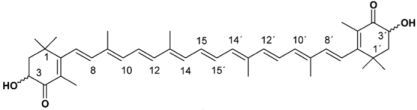
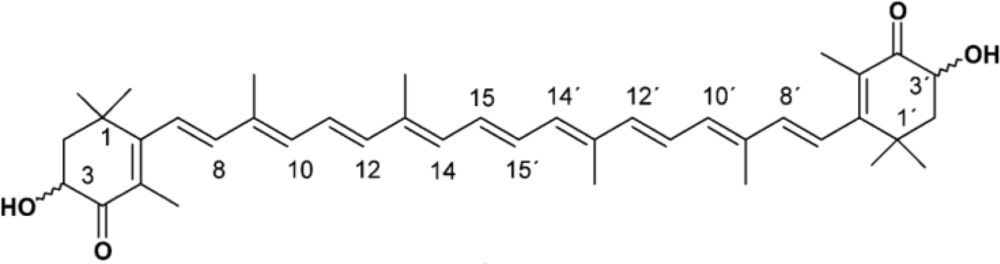
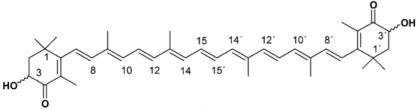
<p>Astaxanthin contains two oxygenated groups on each ring structure (see <xref ref-type="fig" rid="f1-marinedrugs-09-00447">Figure 1</xref>), which is responsible for its enhanced antioxidant features [<xref ref-type="bibr" rid="b41-marinedrugs-09-00447">41</xref>]. It is found in living organisms particularly in the marine environment where it is present in microalgae, plankton, krill and seafood. It gives salmon, trout, and crustaceans such as shrimp and lobster their distinctive reddish coloration [<xref ref-type="bibr" rid="b42-marinedrugs-09-00447">42</xref>]. It is also present in yeast, fungi, complex plants and the feathers of some birds including flamingos and quail [<xref ref-type="bibr" rid="b42-marinedrugs-09-00447">42</xref>]. In 1987, the United States Food and Drug Administration approved astaxanthin as a feed additive for use in the aquaculture industry and in 1999 it was approved for use as a dietary supplement (nutraceutical) [<xref ref-type="bibr" rid="b41-marinedrugs-09-00447">41</xref>]. The microalgae <italic>Haematococcus pluvialis</italic> produces the astaxanthin isomer (3<italic>S</italic>, 3<italic>S</italic>′), which is the same as the form found in wild salmon. Synthesis of astaxanthin is not possible in humans and it cannot be converted to vitamin A, which means excess intake will not cause hypervitaminosis A toxicity [<xref ref-type="bibr" rid="b43-marinedrugs-09-00447">43</xref>,<xref ref-type="bibr" rid="b44-marinedrugs-09-00447">44</xref>]. Astaxanthin and canthaxanthin are scavengers of free radicals, chain-breaking antioxidants and potent quenchers of reactive oxygen and nitrogen species including singlet oxygen, single and two electron oxidants [<xref ref-type="bibr" rid="b45-marinedrugs-09-00447">45</xref>–<xref ref-type="bibr" rid="b47-marinedrugs-09-00447">47</xref>]. They (astaxanthin and canthaxanthin) have terminal carbonyl groups that are conjugated to a polyene backbone [<xref ref-type="bibr" rid="b26-marinedrugs-09-00447">26</xref>] and are more potent antioxidants and scavengers of free radicals than carotene carotenoids such as β-carotene [<xref ref-type="bibr" rid="b47-marinedrugs-09-00447">47</xref>,<xref ref-type="bibr" rid="b48-marinedrugs-09-00447">48</xref>]. For these reasons dietary supplementation with astaxanthin has the potential to provide antioxidant protection of cells and from atherosclerotic cardiovascular disease [<xref ref-type="bibr" rid="b49-marinedrugs-09-00447">49</xref>].</p></sec>
<sec>
<label>5.</label>
<title>Astaxanthin Formulations</title>
<sec>
<label>5.1.</label>
<title>Astaxanthin of Marine Origin</title>
<p>Astaxanthin used in nutritional supplements is usually a mixture of configurational isomers produced by <italic>Haematococcus pluvialis</italic>, a unicellular microalga [<xref ref-type="bibr" rid="b50-marinedrugs-09-00447">50</xref>]. Astaxanthin can be produced in its natural forms on a large scale [<xref ref-type="bibr" rid="b51-marinedrugs-09-00447">51</xref>]. The initial production of astaxanthin from <italic>Haematococcus pluvialis</italic> uses closed culture systems followed by a 5–7 day, “reddening” cycle, conducted in open culture ponds. At each production stage, the cultures are closely monitored by microscopic examination to ensure they remain free of contamination. After the reddening cycle, <italic>Haematococcus pluvialis</italic> cultures are harvested, washed and dried. The final step for the production of astaxanthin is extraction of dried <italic>Haematococcus pluvialis</italic> biomass using supercritical carbon dioxide to produce a purified oleoresin, which is free of any contamination. Other sources used for the commercial production of astaxanthin include cultures of <italic>Euphausia pacifica</italic> (Pacific krill), <italic>Euphausia superba</italic> (Antarctic krill), <italic>Pandalus borealis</italic> (shrimp) and <italic>Xanthophyllomyces dendrorhous</italic>, formerly <italic>Phaffia rhodozyma</italic> (yeast). Astaxanthin from natural sources varies considerably from one organism to another. For instance, the astaxanthin found in seafood will depend on the stereoisomer ingested. Astaxanthin produced by <italic>haematococcus pluvialis</italic>, consists of the (3-<italic>S</italic>,3′-<italic>S</italic>) stereoisomer which is most commonly used in aquaculture. It is therefore the form most commonly consumed by humans.</p></sec>
<sec>
<label>5.2.</label>
<title>Synthetic Astaxanthin</title>
<p>There are three stereoisomers of astaxanthin; (3-<italic>R</italic>,3′-<italic>R</italic>), (3-<italic>R</italic>,3′-<italic>S</italic>) and (3-<italic>S</italic>,3′-<italic>S</italic>). Disodium disuccinate astaxanthin (DDA) is a synthetic astaxanthin containing a mixture of all three stereoisomers, in the proportions 1:2:1. DDA was manufactured by Cardax Pharmaceuticals and used in animal studies investigating the myocardial ischemia-reperfusion injury models [<xref ref-type="bibr" rid="b34-marinedrugs-09-00447">34</xref>–<xref ref-type="bibr" rid="b36-marinedrugs-09-00447">36</xref>,<xref ref-type="bibr" rid="b52-marinedrugs-09-00447">52</xref>–<xref ref-type="bibr" rid="b54-marinedrugs-09-00447">54</xref>]. This form of astaxanthin was touted to have better aqueous solubility, unlike other carotenoids, and this enabled both oral and intravenous administration. DDA is no longer available but the same company now produces a second synthetic astaxanthin compound; Heptax/XanCor, CDX-085. The company claims that it is developed for thrombotic protection, triglyceride reduction, metabolic syndrome, and inflammatory liver disease. In addition, it has increased water dispersibility and enhanced bioavailability compared to natural astaxanthin and DDA. The synthetic forms are metabolized via hydrolysis in the intestine yielding free astaxanthin for intestinal absorption. CDX-085 has been used in one study, discussed below [<xref ref-type="bibr" rid="b55-marinedrugs-09-00447">55</xref>].</p>
<p>It is not yet clear which form of astaxanthin should be administered in clinical studies, the natural form from the marine environment or a synthetic form. As the proportions of stereoisomers, vary between these different forms of astaxanthin they may not be therapeutically equivalent [<xref ref-type="bibr" rid="b56-marinedrugs-09-00447">56</xref>]. Thus synthetic astaxanthin could result in different outcomes when assessed clinically [<xref ref-type="bibr" rid="b57-marinedrugs-09-00447">57</xref>].</p></sec></sec>
<sec>
<label>6.</label>
<title>Astaxanthin-Experimental Studies</title>
<p>Experimental studies undertaken with astaxanthin specifically relevant to the cardiovascular system are summarised in <xref ref-type="table" rid="t1-marinedrugs-09-00447">Table 1</xref>. Astaxanthin attenuates mediators of oxidative stress and inflammation and has shown beneficial effects in non-cardiovascular models of disease [<xref ref-type="bibr" rid="b58-marinedrugs-09-00447">58</xref>–<xref ref-type="bibr" rid="b69-marinedrugs-09-00447">69</xref>]. In addition, astaxanthin has decreased markers of lipid peroxidation [<xref ref-type="bibr" rid="b70-marinedrugs-09-00447">70</xref>], inflammation [<xref ref-type="bibr" rid="b61-marinedrugs-09-00447">61</xref>,<xref ref-type="bibr" rid="b62-marinedrugs-09-00447">62</xref>,<xref ref-type="bibr" rid="b67-marinedrugs-09-00447">67</xref>,<xref ref-type="bibr" rid="b68-marinedrugs-09-00447">68</xref>] and thrombosis [<xref ref-type="bibr" rid="b55-marinedrugs-09-00447">55</xref>].</p>
<sec>
<label>6.1.</label>
<title>Cardiovascular Studies</title>
<p>A series of experiments have been conducted to assess the efficacy of DDA in protecting the myocardium using the myocardial ischemia-reperfusion model in rats, rabbits and dogs [<xref ref-type="bibr" rid="b35-marinedrugs-09-00447">35</xref>,<xref ref-type="bibr" rid="b36-marinedrugs-09-00447">36</xref>,<xref ref-type="bibr" rid="b53-marinedrugs-09-00447">53</xref>,<xref ref-type="bibr" rid="b54-marinedrugs-09-00447">54</xref>]. Prior treatment for four-days with intravenous DDA using doses of 25, 50 and 75 mg/kg body weight in Sprague-Dawley rats significantly reduced myocardial infarct size [<xref ref-type="bibr" rid="b35-marinedrugs-09-00447">35</xref>]. The degree of cardiac protection correlated with the dose of DDA administered. In a study in rabbits using a myocardial ischaemia-reperfusion model prior intravenous treatment with 50 mg/kg/day of DDA for four days resulted in a significant decrease in the size of the myocardial infarction and an improvement in myocardial salvage [<xref ref-type="bibr" rid="b52-marinedrugs-09-00447">52</xref>]. Animals treated with DDA had an attenuation of inflammation and complement activation suggesting there was a reduction in tissue inflammation [<xref ref-type="bibr" rid="b52-marinedrugs-09-00447">52</xref>]. In another study using a dog model intravenous DDA was administered daily for four-days prior to occlusion of the left anterior descending coronary artery or two hours prior to coronary artery occlusion [<xref ref-type="bibr" rid="b54-marinedrugs-09-00447">54</xref>]. After an hour of coronary occlusion and three hours of reperfusion there was a significant reduction in myocardial infarct size in the dogs treated with DDA. In the four-day treatment group, two out of three dogs had complete cardiac protection [<xref ref-type="bibr" rid="b54-marinedrugs-09-00447">54</xref>]. In a rat study, the effects of seven days of pre-treatment with oral DDA, 125 and 500 mg/kg/day on the concentrations of free astaxanthin in myocardial tissue [<xref ref-type="bibr" rid="b36-marinedrugs-09-00447">36</xref>]. The astaxanthin concentration in the myocardium was 400 nM after oral DDA at a dose of 125 mg/kg/day for seven-days and it was 1634 nM after 500 mg/kg/day. There was also a reduction of multiple lipid peroxidation products. The doses of DDA used in these experiments were quite high and at this stage it is not known whether such doses would be safe to use in humans.</p>
<p>The effects of astaxanthin on blood pressure (BP) were assessed in spontaneously hypertensive rats (SHR). There was a significant reduction in BP after 14-days of oral astaxanthin administration whereas this did not occur in normotensive Wistar Kyoto rats [<xref ref-type="bibr" rid="b71-marinedrugs-09-00447">71</xref>]. Astaxanthin administered orally for five-weeks in stroke prone SHR also resulted in a significant BP reduction [<xref ref-type="bibr" rid="b71-marinedrugs-09-00447">71</xref>]. Oral astaxanthin also enhanced nitric oxide induced vascular relaxation in the rat aortas [<xref ref-type="bibr" rid="b71-marinedrugs-09-00447">71</xref>] In experiments in SHR, oral astaxanthin significantly decreased nitric oxide end products indicating that it may be exerting its BP effects via this pathway [<xref ref-type="bibr" rid="b72-marinedrugs-09-00447">72</xref>]. Studies using the SHR aorta and coronary arteries demonstrated that astaxanthin reduced the wall/lumen ratio in coronary arteries and decreased elastin bands in the aorta [<xref ref-type="bibr" rid="b72-marinedrugs-09-00447">72</xref>]. This suggests that astaxanthin may beneficially mediate atherosclerotic CVD processes.</p>
<p>Recently, a series of two experiments were reported in the one article, one using the synthetic astaxanthin (CDX-085) and the other using free astaxanthin [<xref ref-type="bibr" rid="b55-marinedrugs-09-00447">55</xref>]. CDX-085 administered orally to C57BL/6 mice resulted in the presence of free astaxanthin in the plasma, heart, liver and platelets. Mice that were fed astaxanthin had significantly increased basal arterial blood flow and a delay in occlusive thrombosis after endothelial injury. Also, in an <italic>in vitro</italic> study, human umbilical vein endothelial cells and platelets isolated from Wistar-Kyoto rats that were treated with free astaxanthin has significantly increased nitric oxide release and a decrease in peroxynitrite levels [<xref ref-type="bibr" rid="b55-marinedrugs-09-00447">55</xref>]. The authors concluded the results support the potential of astaxanthin as a potential therapy to prevent thrombosis associated with cardiovascular disease.</p>
<p>Astaxanthin administered to C57BL/6 mice resulted in a reduction in exercise-induced increases in the oxidative stress biomarkers 8-hydroxy-2′-deoxyguanosine and 4-hydroxy-2-nonenal-modified protein in both cardiac and gastrocnemius muscle [<xref ref-type="bibr" rid="b63-marinedrugs-09-00447">63</xref>]. Increases in myeloperoxidase and creatinine kinase activity in cardiac and gastrocnemius muscle were also reduced by astaxanthin. After three-weeks of astaxanthin supplementation there was evidence of accumulation of astaxanthin in gastrocnemius and cardiac muscle. Astaxanthin given to female BALB/c mice for eight-weeks resulted in a dose dependent increase in plasma astaxanthin but no significant changes in blood glutathione or change in lymphocyte mitochondrial membrane potential and cardiac contractility index measured on echocardiography. The mice that were fed 0.08% astaxanthin in the diet had higher cardiac mitochondrial membrane potential and contractility index compared with control animals [<xref ref-type="bibr" rid="b74-marinedrugs-09-00447">74</xref>]. This suggests dietary astaxanthin provides cardiac protection. Astaxanthin administered for four weeks to eight week old ICR mice resulted in increased exercised induced fat utilization and prevention of increased hexanoyl-lysine modification of carnitine palmitoyltransferase I (CTP I) [<xref ref-type="bibr" rid="b73-marinedrugs-09-00447">73</xref>]. In a canine carotid artery thrombosis model, administration of DDA resulted in a dose-dependent reduction in carotid artery re-thrombosis and a reduction of re-thrombosis after thrombolysis but there was no effect on hemostasis [<xref ref-type="bibr" rid="b34-marinedrugs-09-00447">34</xref>].</p></sec>
<sec>
<label>6.2.</label>
<title>Diabetes Studies</title>
<p>Diabetes mellitus and its associated nephropathy is a common cause of chronic kidney disease and is complicated by accelerated atherosclerotic cardiovascular disease [<xref ref-type="bibr" rid="b75-marinedrugs-09-00447">75</xref>]. In studies involving diabetic db/db mice, supplementation with astaxanthin produced a reduction in the levels of blood glucose [<xref ref-type="bibr" rid="b60-marinedrugs-09-00447">60</xref>]. In the kidney there was significantly decreased relative mesangial area in the animals supplemented with astaxanthin. Also proteinuria and urinary excretion of 8-OHdG were attenuated. Mice supplemented with astaxanthin had less glomerular 8-OHdG immunoreactive cells [<xref ref-type="bibr" rid="b60-marinedrugs-09-00447">60</xref>]. Hyperglycemia induced reactive oxygen species production, activation of transcription factors, and cytokine expression and production by normal human mesangial cells was suppressed significantly by astaxanthin [<xref ref-type="bibr" rid="b66-marinedrugs-09-00447">66</xref>].</p></sec></sec>
<sec>
<label>7.</label>
<title>Astaxanthin Studies in Humans</title>
<p>Although no cardiovascular outcomes studies using astaxanthin have been reported in humans there have been clinical studies that have investigated the effects of astaxanthin in human health and other diseases (<xref ref-type="table" rid="t2-marinedrugs-09-00447">Table 2</xref>). The majority of these have been conducted in healthy participants who volunteered to assess astaxanthin dose, bioavailability, safety and oxidative stress, which are all potentially relevant to the cardiovascular system. Studies have also been conducted in other medical conditions such as reflux oesophagitis, where measurements of oxidative stress and/or inflammation have been included.</p>
<sec>
<label>7.1.</label>
<title>Dosing</title>
<p>Human clinical studies have used oral astaxanthin in a dose that ranges from 4 mg up to 100 mg/day, given from a one off dose up to durations of one-year (<xref ref-type="table" rid="t2-marinedrugs-09-00447">Table 2</xref>).</p></sec>
<sec>
<label>7.2.</label>
<title>Bioavailability</title>
<p>Astaxanthin bioavailability from the marine environment was assessed in a randomised double blind trial in 28 volunteers [<xref ref-type="bibr" rid="b83-marinedrugs-09-00447">83</xref>]. Participants were given either 250 g of wild salmon or aquaculture salmon (5 μg/g) to eat. Wild salmon ingest astaxanthin naturally from krill whereas aquacultured salmon acquire it from fish that are fed astaxanthin that might be derived from a synthetic source. Plasma levels of astaxanthin were higher at 3, 6, 10 and 14 days during ingestion of the aquacultured compared with the wild salmon. Plasma levels of the (3-<italic>S</italic>, 3′-S) isomer of astaxanthin appeared at higher levels than its proportionate level in the flesh of the salmon. This suggests that isomers of astaxanthin might have different bioavailability. The plasma isomers of astaxanthin have also been studied after ingestion of single oral dose of 10mg and also 100 mg over four-weeks. Astaxanthin plasma elimination half-life was 52 (SD 40) h and there was a non-linear dose response and selective absorption of z-isomers [<xref ref-type="bibr" rid="b79-marinedrugs-09-00447">79</xref>].</p></sec>
<sec>
<label>7.3.</label>
<title>Safety</title>
<p>The safety of astaxanthin administered orally was assessed in a double-blind, randomised placebo-controlled trial undertaken in healthy adults [<xref ref-type="bibr" rid="b78-marinedrugs-09-00447">78</xref>]. Volunteers took either 6 mg/day of astaxanthin or placebo for eight-weeks. BP and biochemistry measured after four and eight weeks of therapy revealed no significant differences in these parameters between treatment and placebo groups and these did not differ from baseline. The authors concluded that healthy adults could safely consume 6 mg/day of astaxanthin derived from a <italic>Haematococcus pluvialis</italic> algal extract. Measuring whole blood transit time in 20 healthy males was used to assess the effects of astaxanthin on blood rheology in humans. Six milligrams of oral astaxanthin per day for ten days improved blood rheology as evidenced by decreased whole blood transit time [<xref ref-type="bibr" rid="b82-marinedrugs-09-00447">82</xref>]. Escalating concentrations of astaxanthin were tested <italic>in vitro</italic> with blood taken from volunteers, 8 of whom were taking asprin and 12 who were not [<xref ref-type="bibr" rid="b85-marinedrugs-09-00447">85</xref>]. Even supra-therapeutic concentrations of astaxanthin had no adverse effects on indices of platelet, coagulation and fibrinolytic function. These results support the safety profile of astaxanthin for future clinical trials. No significant side effects have been reported so far in published human studies in which astaxanthin was administered to humans.</p></sec>
<sec>
<label>7.4.</label>
<title>Oxidative Stress and Inflammation</title>
<p>Oral supplementation with astaxanthin in studies in healthy human volunteers and patients with reflux oesophagitis demonstrated a significant reduction in oxidative stress, hyperlipidemia and biomarkers of inflammation [<xref ref-type="bibr" rid="b70-marinedrugs-09-00447">70</xref>,<xref ref-type="bibr" rid="b80-marinedrugs-09-00447">80</xref>,<xref ref-type="bibr" rid="b86-marinedrugs-09-00447">86</xref>]. In a study involving 24 healthy volunteers who ingested astaxanthin in doses from 1.8 to 21.6 mg/day for two weeks, LDL lag time, as a measure of susceptibility of LDL to oxidation, was significantly greater in astaxanthin treated participants indicating inhibition of the oxidation of LDL [<xref ref-type="bibr" rid="b70-marinedrugs-09-00447">70</xref>]. Plasma levels of 12- and 15-hydroxy fatty acids were significantly reduced in 40 healthy non-smoking Finnish males given astaxanthin [<xref ref-type="bibr" rid="b80-marinedrugs-09-00447">80</xref>] suggesting astaxanthin decreased the oxidation of fatty acids [<xref ref-type="bibr" rid="b80-marinedrugs-09-00447">80</xref>]. The effects of dietary astaxanthin in doses of 0, 2 or 8 mg/day, over 8 weeks, on oxidative stress and inflammation were investigated in a double blind study in 14 healthy females [<xref ref-type="bibr" rid="b84-marinedrugs-09-00447">84</xref>]. Although these participants did not have oxidative stress or inflammation those taking 2 mg/day had lower CRP at week eight. There was also a decrease in DNA damage measured using plasma 8-hydroxy-2′-deoxyguanosine after week four in those taking astaxanthin. Astaxanthin therefore appears safe, bioavailable when given orally and is suitable for further investigation in humans.</p></sec></sec>
<sec>
<label>8.</label>
<title>Clinical Trial Using Astaxanthin</title>
<p>A double-blind randomised placebo-controlled clinical trial (Xanthin study) is currently being conducted to assess the effects of astaxanthin 8mg orally day on oxidative stress, inflammation and vascular function in patients that have received a kidney transplant [<xref ref-type="bibr" rid="b87-marinedrugs-09-00447">87</xref>]. Patients in the study undertake measurements of surrogate markers of cardiovascular disease including aortic pulse wave velocity, augmentation index, brachial forearm reactivity and carotid artery intima-media thickness. Depending on the results from this pilot study a large randomised controlled trial assessing major cardiovascular outcomes such as myocardial infarction and death may be warranted.</p></sec>
<sec sec-type="conclusions">
<label>9.</label>
<title>Conclusions</title>
<p>Experimental evidence suggests astaxanthin may have protective effects on cardiovascular disease when administered prior to an induced ischemia-reperfusion event. In addition, there is evidence that astaxanthin may decrease oxidative stress and inflammation which are known accompaniments of cardiovascular disease. At this stage we do not know whether astaxanthin has any therapeutic value in human cardiovascular disease either in a preventative capacity or when administered after a cardiovascular insult. It has been proposed that astaxanthin may provide cardiovascular protection through reducing oxidative stress, which is one of the non-traditional risk factors for the development of atherosclerotic cardiovascular disease. The role of oxidative stress in cardiovascular disease is supported by evidence from observational studies that have found associations between antioxidant intake, oxidative stress and cardiovascular outcomes. Despite this, clinical intervention studies using antioxidants including vitamin E, β-carotene and vitamin C, have not proved successful [<xref ref-type="bibr" rid="b22-marinedrugs-09-00447">22</xref>,<xref ref-type="bibr" rid="b23-marinedrugs-09-00447">23</xref>]. These intervention studies may have failed because of flawed design where patients were not included based on the presence of oxidative stress. Hence, many participants may not have been in a state of oxidative stress and able to benefit from antioxidant therapy. Also, in those participants where oxidative stress may have existed there was no way of assessing whether the therapy adequately corrected this. Thus, the antioxidants used such as vitamin E, β-carotene and vitamin C may not have been effective because insufficient doses were used or an inadequate length of therapy followed to correct the oxidative stress. Some antioxidants such as β-carotene may be pro-oxidant at higher doses, which could have confounded study results.</p>
<p>Astaxanthin is a potent antioxidant and based on its physicochemical properties and the results of preliminary experimental studies in ischaemia-reperfusion models of cardiovascular disease, it warrants consideration for testing in human clinical trials. There have been no safety concerns noted so far in human clinical studies where astaxanthin has been administered. As astaxanthin is a potent antioxidant and is associated with membrane preservation, it may protect against oxidative stress and inflammation and provide cardiovascular benefits.</p></sec></body>
<back>
<ack>
<p>Cyanotech the manufacturer of BioAstin, a proprietary brand of astaxanthin, is providing financial support and astaxanthin capsules and placebo for a clinical trial being conducted by the authors. The sponsor has no role in the study itself.</p></ack>
<fn-group><fn>
<p><italic>Samples Availability:</italic> Available from the authors.</p></fn></fn-group>
<ref-list>
<title>References</title>
<ref id="b1-marinedrugs-09-00447"><label>1.</label><citation citation-type="journal"><person-group person-group-type="author"><name><surname>Dzau</surname><given-names>VJ</given-names></name><name><surname>Antman</surname><given-names>EM</given-names></name><name><surname>Black</surname><given-names>HR</given-names></name><name><surname>Hayes</surname><given-names>DL</given-names></name><name><surname>Manson</surname><given-names>JE</given-names></name><name><surname>Plutzky</surname><given-names>J</given-names></name><name><surname>Popma</surname><given-names>JJ</given-names></name><name><surname>Stevenson</surname><given-names>W</given-names></name></person-group><article-title>The cardiovascular disease continuum validated: Clinical evidence of improved patient outcomes. Part II: Clinical trial evidence (acute coronary syndromes through renal disease) and future directions</article-title><source>Circulation</source><year>2006</year><volume>114</volume><fpage>2871</fpage><lpage>2891</lpage><pub-id pub-id-type="doi">10.1161/CIRCULATIONAHA.106.655761</pub-id><pub-id pub-id-type="pmid">17179035</pub-id></citation></ref>
<ref id="b2-marinedrugs-09-00447"><label>2.</label><citation citation-type="journal"><person-group person-group-type="author"><name><surname>Ellingsen</surname><given-names>I</given-names></name><name><surname>Seljeflot</surname><given-names>I</given-names></name><name><surname>Arnesen</surname><given-names>H</given-names></name><name><surname>Tonstad</surname><given-names>S</given-names></name></person-group><article-title>Vitamin C consumption is associated with less progression in carotid intima media thickness in elderly men: A 3-year intervention study</article-title><source>Nutr Metab Cardiovasc Dis</source><year>2009</year><volume>19</volume><fpage>8</fpage><lpage>14</lpage><pub-id pub-id-type="doi">10.1016/j.numecd.2008.01.006</pub-id><pub-id pub-id-type="pmid">18472409</pub-id></citation></ref>
<ref id="b3-marinedrugs-09-00447"><label>3.</label><citation citation-type="journal"><person-group person-group-type="author"><name><surname>Carty</surname><given-names>JL</given-names></name><name><surname>Bevan</surname><given-names>R</given-names></name><name><surname>Waller</surname><given-names>H</given-names></name><name><surname>Mistry</surname><given-names>N</given-names></name><name><surname>Cooke</surname><given-names>M</given-names></name><name><surname>Lunec</surname><given-names>J</given-names></name><name><surname>Griffiths</surname><given-names>HR</given-names></name></person-group><article-title>The effects of vitamin C supplementation on protein oxidation in healthy volunteers</article-title><source>Biochem Biophys Res Commun</source><year>2000</year><volume>273</volume><fpage>729</fpage><lpage>735</lpage><pub-id pub-id-type="doi">10.1006/bbrc.2000.3014</pub-id><pub-id pub-id-type="pmid">10873672</pub-id></citation></ref>
<ref id="b4-marinedrugs-09-00447"><label>4.</label><citation citation-type="journal"><person-group person-group-type="author"><name><surname>Carpenter</surname><given-names>KL</given-names></name><name><surname>Kirkpatrick</surname><given-names>PJ</given-names></name><name><surname>Weissberg</surname><given-names>PL</given-names></name><name><surname>Challis</surname><given-names>IR</given-names></name><name><surname>Dennis</surname><given-names>IF</given-names></name><name><surname>Freeman</surname><given-names>MA</given-names></name><name><surname>Mitchinson</surname><given-names>MJ</given-names></name></person-group><article-title>Oral alpha-tocopherol supplementation inhibits lipid oxidation in established human atherosclerotic lesions</article-title><source>Free Radic Res</source><year>2003</year><volume>37</volume><fpage>1235</fpage><lpage>1244</lpage><pub-id pub-id-type="doi">10.1080/10715760310001604143</pub-id><pub-id pub-id-type="pmid">14703736</pub-id></citation></ref>
<ref id="b5-marinedrugs-09-00447"><label>5.</label><citation citation-type="journal"><person-group person-group-type="author"><name><surname>Stampfer</surname><given-names>MJ</given-names></name><name><surname>Hennekens</surname><given-names>CH</given-names></name><name><surname>Manson</surname><given-names>JE</given-names></name><name><surname>Colditz</surname><given-names>GA</given-names></name><name><surname>Rosner</surname><given-names>B</given-names></name><name><surname>Willett</surname><given-names>WC</given-names></name></person-group><article-title>Vitamin E consumption and the risk of coronary disease in women</article-title><source>N Engl J Med</source><year>1993</year><volume>328</volume><fpage>1444</fpage><lpage>1449</lpage><pub-id pub-id-type="doi">10.1056/NEJM199305203282003</pub-id><pub-id pub-id-type="pmid">8479463</pub-id></citation></ref>
<ref id="b6-marinedrugs-09-00447"><label>6.</label><citation citation-type="journal"><person-group person-group-type="author"><name><surname>Rimm</surname><given-names>EB</given-names></name><name><surname>Stampfer</surname><given-names>MJ</given-names></name><name><surname>Ascherio</surname><given-names>A</given-names></name><name><surname>Giovannucci</surname><given-names>E</given-names></name><name><surname>Colditz</surname><given-names>GA</given-names></name><name><surname>Willett</surname><given-names>WC</given-names></name></person-group><article-title>Vitamin E consumption and the risk of coronary heart disease in men</article-title><source>N Engl J Med</source><year>1993</year><volume>328</volume><fpage>1450</fpage><lpage>1456</lpage><pub-id pub-id-type="doi">10.1056/NEJM199305203282004</pub-id><pub-id pub-id-type="pmid">8479464</pub-id></citation></ref>
<ref id="b7-marinedrugs-09-00447"><label>7.</label><citation citation-type="journal"><person-group person-group-type="author"><name><surname>Gey</surname><given-names>KF</given-names></name><name><surname>Puska</surname><given-names>P</given-names></name></person-group><article-title>Plasma vitamins E and A inversely correlated to mortality from ischemic heart disease in cross-cultural epidemiology</article-title><source>Ann N Y Acad Sci</source><year>1989</year><volume>570</volume><fpage>268</fpage><lpage>282</lpage><pub-id pub-id-type="doi">10.1111/j.1749-6632.1989.tb14926.x</pub-id><pub-id pub-id-type="pmid">2629597</pub-id></citation></ref>
<ref id="b8-marinedrugs-09-00447"><label>8.</label><citation citation-type="journal"><person-group person-group-type="author"><name><surname>Willcox</surname><given-names>BJ</given-names></name><name><surname>Curb</surname><given-names>JD</given-names></name><name><surname>Rodriguez</surname><given-names>BL</given-names></name></person-group><article-title>Antioxidants in cardiovascular health and disease: Key lessons from epidemiologic studies</article-title><source>Am J Cardiol</source><year>2008</year><volume>101</volume><fpage>75D</fpage><lpage>86D</lpage><pub-id pub-id-type="pmid">18474278</pub-id></citation></ref>
<ref id="b9-marinedrugs-09-00447"><label>9.</label><citation citation-type="journal"><person-group person-group-type="author"><name><surname>Frei</surname><given-names>B</given-names></name></person-group><article-title>Cardiovascular disease and nutrient antioxidants: Role of low-density lipoprotein oxidation</article-title><source>Crit Rev Food Sci Nutr</source><year>1995</year><volume>35</volume><fpage>83</fpage><lpage>98</lpage><pub-id pub-id-type="doi">10.1080/10408399509527689</pub-id><pub-id pub-id-type="pmid">7748483</pub-id></citation></ref>
<ref id="b10-marinedrugs-09-00447"><label>10.</label><citation citation-type="journal"><person-group person-group-type="author"><name><surname>Steinberg</surname><given-names>D</given-names></name></person-group><article-title>Antioxidants in the prevention of human atherosclerosis. Summary of the proceedings of a National Heart, Lung, and Blood Institute Workshop: September 5–6, 1991, Bethesda, Maryland</article-title><source>Circulation</source><year>1992</year><volume>85</volume><fpage>2337</fpage><lpage>2344</lpage><pub-id pub-id-type="doi">10.1161/01.CIR.85.6.2337</pub-id><pub-id pub-id-type="pmid">1591855</pub-id></citation></ref>
<ref id="b11-marinedrugs-09-00447"><label>11.</label><citation citation-type="journal"><person-group person-group-type="author"><name><surname>Helmersson</surname><given-names>J</given-names></name><name><surname>Arnlov</surname><given-names>J</given-names></name><name><surname>Larsson</surname><given-names>A</given-names></name><name><surname>Basu</surname><given-names>S</given-names></name></person-group><article-title>Low dietary intake of beta-carotene, alpha-tocopherol and ascorbic acid is associated with increased inflammatory and oxidative stress status in a Swedish cohort</article-title><source>Br J Nutr</source><year>2009</year><volume>101</volume><fpage>1775</fpage><lpage>1782</lpage><pub-id pub-id-type="doi">10.1017/S0007114508147377</pub-id><pub-id pub-id-type="pmid">19079838</pub-id></citation></ref>
<ref id="b12-marinedrugs-09-00447"><label>12.</label><citation citation-type="journal"><person-group person-group-type="author"><name><surname>Osganian</surname><given-names>SK</given-names></name><name><surname>Stampfer</surname><given-names>MJ</given-names></name><name><surname>Rimm</surname><given-names>E</given-names></name><name><surname>Spiegelman</surname><given-names>D</given-names></name><name><surname>Manson</surname><given-names>JE</given-names></name><name><surname>Willett</surname><given-names>WC</given-names></name></person-group><article-title>Dietary carotenoids and risk of coronary artery disease in women</article-title><source>Am J Clin Nutr</source><year>2003</year><volume>77</volume><fpage>1390</fpage><lpage>1399</lpage><pub-id pub-id-type="pmid">12791615</pub-id></citation></ref>
<ref id="b13-marinedrugs-09-00447"><label>13.</label><citation citation-type="journal"><person-group person-group-type="author"><name><surname>Ford</surname><given-names>ES</given-names></name><name><surname>Giles</surname><given-names>WH</given-names></name></person-group><article-title>Serum vitamins, carotenoids, and angina pectoris: Findings from the National Health and Nutrition Examination Survey III</article-title><source>Ann Epidemiol</source><year>2000</year><volume>10</volume><fpage>106</fpage><lpage>116</lpage><pub-id pub-id-type="doi">10.1016/S1047-2797(99)00038-1</pub-id><pub-id pub-id-type="pmid">10691064</pub-id></citation></ref>
<ref id="b14-marinedrugs-09-00447"><label>14.</label><citation citation-type="journal"><person-group person-group-type="author"><name><surname>Klipstein-Grobusch</surname><given-names>K</given-names></name><name><surname>Geleijnse</surname><given-names>JM</given-names></name><name><surname>den Breeijen</surname><given-names>JH</given-names></name><name><surname>Boeing</surname><given-names>H</given-names></name><name><surname>Hofman</surname><given-names>A</given-names></name><name><surname>Grobbee</surname><given-names>DE</given-names></name><name><surname>Witteman</surname><given-names>JC</given-names></name></person-group><article-title>Dietary antioxidants and risk of myocardial infarction in the elderly: The Rotterdam Study</article-title><source>Am J Clin Nutr</source><year>1999</year><volume>69</volume><fpage>261</fpage><lpage>266</lpage><pub-id pub-id-type="pmid">9989690</pub-id></citation></ref>
<ref id="b15-marinedrugs-09-00447"><label>15.</label><citation citation-type="journal"><person-group person-group-type="author"><name><surname>Gaziano</surname><given-names>JM</given-names></name><name><surname>Manson</surname><given-names>JE</given-names></name><name><surname>Branch</surname><given-names>LG</given-names></name><name><surname>Colditz</surname><given-names>GA</given-names></name><name><surname>Willett</surname><given-names>WC</given-names></name><name><surname>Buring</surname><given-names>JE</given-names></name></person-group><article-title>A prospective study of consumption of carotenoids in fruits and vegetables and decreased cardiovascular mortality in the elderly</article-title><source>Ann Epidemiol</source><year>1995</year><volume>5</volume><fpage>255</fpage><lpage>260</lpage><pub-id pub-id-type="doi">10.1016/1047-2797(94)00090-G</pub-id><pub-id pub-id-type="pmid">8520706</pub-id></citation></ref>
<ref id="b16-marinedrugs-09-00447"><label>16.</label><citation citation-type="journal"><person-group person-group-type="author"><name><surname>Morris</surname><given-names>DL</given-names></name><name><surname>Kritchevsky</surname><given-names>SB</given-names></name><name><surname>Davis</surname><given-names>CE</given-names></name></person-group><article-title>Serum carotenoids and coronary heart disease. The Lipid Research Clinics Coronary Primary Prevention Trial and Follow-up Study</article-title><source>JAMA</source><year>1994</year><volume>272</volume><fpage>1439</fpage><lpage>1441</lpage><pub-id pub-id-type="doi">10.1001/jama.1994.03520180063036</pub-id><pub-id pub-id-type="pmid">7933426</pub-id></citation></ref>
<ref id="b17-marinedrugs-09-00447"><label>17.</label><citation citation-type="journal"><person-group person-group-type="author"><name><surname>Knekt</surname><given-names>P</given-names></name><name><surname>Reunanen</surname><given-names>A</given-names></name><name><surname>Jarvinen</surname><given-names>R</given-names></name><name><surname>Seppanen</surname><given-names>R</given-names></name><name><surname>Heliovaara</surname><given-names>M</given-names></name><name><surname>Aromaa</surname><given-names>A</given-names></name></person-group><article-title>Antioxidant vitamin intake and coronary mortality in a longitudinal population study</article-title><source>Am J Epidemiol</source><year>1994</year><volume>139</volume><fpage>1180</fpage><lpage>1189</lpage><pub-id pub-id-type="pmid">8209876</pub-id></citation></ref>
<ref id="b18-marinedrugs-09-00447"><label>18.</label><citation citation-type="journal"><person-group person-group-type="author"><name><surname>Stephens</surname><given-names>NG</given-names></name><name><surname>Parsons</surname><given-names>A</given-names></name><name><surname>Schofield</surname><given-names>PM</given-names></name><name><surname>Kelly</surname><given-names>F</given-names></name><name><surname>Cheeseman</surname><given-names>K</given-names></name><name><surname>Mitchinson</surname><given-names>MJ</given-names></name></person-group><article-title>Randomised controlled trial of vitamin E in patients with coronary disease: Cambridge Heart Antioxidant Study (CHAOS)</article-title><source>Lancet</source><year>1996</year><volume>347</volume><fpage>781</fpage><lpage>786</lpage><pub-id pub-id-type="doi">10.1016/S0140-6736(96)90866-1</pub-id><pub-id pub-id-type="pmid">8622332</pub-id></citation></ref>
<ref id="b19-marinedrugs-09-00447"><label>19.</label><citation citation-type="journal"><person-group person-group-type="author"><name><surname>Tepel</surname><given-names>M</given-names></name><name><surname>van der Giet</surname><given-names>M</given-names></name><name><surname>Statz</surname><given-names>M</given-names></name><name><surname>Jankowski</surname><given-names>J</given-names></name><name><surname>Zidek</surname><given-names>W</given-names></name></person-group><article-title>The antioxidant acetylcysteine reduces cardiovascular events in patients with end-stage renal failure: A randomized, controlled trial</article-title><source>Circulation</source><year>2003</year><volume>107</volume><fpage>992</fpage><lpage>995</lpage><pub-id pub-id-type="doi">10.1161/01.CIR.0000050628.11305.30</pub-id><pub-id pub-id-type="pmid">12600912</pub-id></citation></ref>
<ref id="b20-marinedrugs-09-00447"><label>20.</label><citation citation-type="journal"><person-group person-group-type="author"><name><surname>Boaz</surname><given-names>M</given-names></name><name><surname>Smetana</surname><given-names>S</given-names></name><name><surname>Weinstein</surname><given-names>T</given-names></name><name><surname>Matas</surname><given-names>Z</given-names></name><name><surname>Gafter</surname><given-names>U</given-names></name><name><surname>Iaina</surname><given-names>A</given-names></name><name><surname>Knecht</surname><given-names>A</given-names></name><name><surname>Weissgarten</surname><given-names>Y</given-names></name><name><surname>Brunner</surname><given-names>D</given-names></name><name><surname>Fainaru</surname><given-names>M</given-names></name><name><surname>Green</surname><given-names>MS</given-names></name></person-group><article-title>Secondary prevention with antioxidants of cardiovascular disease in endstage renal disease (SPACE): Randomised placebo-controlled trial</article-title><source>Lancet</source><year>2000</year><volume>356</volume><fpage>1213</fpage><lpage>1218</lpage><pub-id pub-id-type="doi">10.1016/S0140-6736(00)02783-5</pub-id><pub-id pub-id-type="pmid">11072938</pub-id></citation></ref>
<ref id="b21-marinedrugs-09-00447"><label>21.</label><citation citation-type="journal"><person-group person-group-type="author"><name><surname>Steinhubl</surname><given-names>SR</given-names></name></person-group><article-title>Why have antioxidants failed in clinical trials?</article-title><source>Am J Cardiol</source><year>2008</year><volume>101</volume><fpage>14D</fpage><lpage>19D</lpage><pub-id pub-id-type="pmid">18474268</pub-id></citation></ref>
<ref id="b22-marinedrugs-09-00447"><label>22.</label><citation citation-type="journal"><person-group person-group-type="author"><collab>Heart Protection Study Collaborative Group</collab></person-group><article-title>MRC/BHF Heart Protection Study of antioxidant vitamin supplementation in 20,536 high-risk individuals: A randomised placebo-controlled trial</article-title><source>Lancet</source><year>2002</year><volume>360</volume><fpage>23</fpage><lpage>33</lpage><pub-id pub-id-type="doi">10.1016/S0140-6736(02)09328-5</pub-id><pub-id pub-id-type="pmid">12114037</pub-id></citation></ref>
<ref id="b23-marinedrugs-09-00447"><label>23.</label><citation citation-type="journal"><person-group person-group-type="author"><name><surname>Yusuf</surname><given-names>S</given-names></name><name><surname>Dagenais</surname><given-names>G</given-names></name><name><surname>Pogue</surname><given-names>J</given-names></name><name><surname>Bosch</surname><given-names>J</given-names></name><name><surname>Sleight</surname><given-names>P</given-names></name></person-group><article-title>Vitamin E supplementation and cardiovascular events in high-risk patients. The Heart Outcomes Prevention Evaluation Study Investigators</article-title><source>N Engl J Med</source><year>2000</year><volume>342</volume><fpage>154</fpage><lpage>160</lpage><pub-id pub-id-type="doi">10.1056/NEJM200001203420302</pub-id><pub-id pub-id-type="pmid">10639540</pub-id></citation></ref>
<ref id="b24-marinedrugs-09-00447"><label>24.</label><citation citation-type="journal"><person-group person-group-type="author"><name><surname>Sandmann</surname><given-names>G</given-names></name></person-group><article-title>Carotenoid biosynthesis in microorganisms and plants</article-title><source>Eur J Biochem</source><year>1994</year><volume>223</volume><fpage>7</fpage><lpage>24</lpage><pub-id pub-id-type="doi">10.1111/j.1432-1033.1994.tb18961.x</pub-id><pub-id pub-id-type="pmid">8033911</pub-id></citation></ref>
<ref id="b25-marinedrugs-09-00447"><label>25.</label><citation citation-type="journal"><person-group person-group-type="author"><name><surname>McNulty</surname><given-names>H</given-names></name><name><surname>Jacob</surname><given-names>RF</given-names></name><name><surname>Mason</surname><given-names>RP</given-names></name></person-group><article-title>Biologic activity of carotenoids related to distinct membrane physicochemical interactions</article-title><source>Am J Cardiol</source><year>2008</year><volume>101</volume><fpage>20D</fpage><lpage>29D</lpage><pub-id pub-id-type="pmid">18474269</pub-id></citation></ref>
<ref id="b26-marinedrugs-09-00447"><label>26.</label><citation citation-type="journal"><person-group person-group-type="author"><name><surname>Jackson</surname><given-names>H</given-names></name><name><surname>Braun</surname><given-names>CL</given-names></name><name><surname>Ernst</surname><given-names>H</given-names></name></person-group><article-title>The chemistry of novel xanthophyll carotenoids</article-title><source>Am J Cardiol</source><year>2008</year><volume>101</volume><fpage>50D</fpage><lpage>57D</lpage><pub-id pub-id-type="doi">10.1016/j.amjcard.2008.02.008</pub-id><pub-id pub-id-type="pmid">18474275</pub-id></citation></ref>
<ref id="b27-marinedrugs-09-00447"><label>27.</label><citation citation-type="journal"><person-group person-group-type="author"><name><surname>McNulty</surname><given-names>HP</given-names></name><name><surname>Byun</surname><given-names>J</given-names></name><name><surname>Lockwood</surname><given-names>SF</given-names></name><name><surname>Jacob</surname><given-names>RF</given-names></name><name><surname>Mason</surname><given-names>RP</given-names></name></person-group><article-title>Differential effects of carotenoids on lipid peroxidation due to membrane interactions: X-ray diffraction analysis</article-title><source>Biochim Biophys Acta</source><year>2007</year><volume>1768</volume><fpage>167</fpage><lpage>174</lpage><pub-id pub-id-type="doi">10.1016/j.bbamem.2006.09.010</pub-id><pub-id pub-id-type="pmid">17070769</pub-id></citation></ref>
<ref id="b28-marinedrugs-09-00447"><label>28.</label><citation citation-type="journal"><person-group person-group-type="author"><name><surname>Brown</surname><given-names>BG</given-names></name><name><surname>Zhao</surname><given-names>XQ</given-names></name><name><surname>Chait</surname><given-names>A</given-names></name><name><surname>Fisher</surname><given-names>LD</given-names></name><name><surname>Cheung</surname><given-names>MC</given-names></name><name><surname>Morse</surname><given-names>JS</given-names></name><name><surname>Dowdy</surname><given-names>AA</given-names></name><name><surname>Marino</surname><given-names>EK</given-names></name><name><surname>Bolson</surname><given-names>EL</given-names></name><name><surname>Alaupovic</surname><given-names>P</given-names></name><name><surname>Frohlich</surname><given-names>J</given-names></name><name><surname>Albers</surname><given-names>JJ</given-names></name></person-group><article-title>Simvastatin and niacin, antioxidant vitamins, or the combination for the prevention of coronary disease</article-title><source>N Engl J Med</source><year>2001</year><volume>345</volume><fpage>1583</fpage><lpage>1592</lpage><pub-id pub-id-type="doi">10.1056/NEJMoa011090</pub-id><pub-id pub-id-type="pmid">11757504</pub-id></citation></ref>
<ref id="b29-marinedrugs-09-00447"><label>29.</label><citation citation-type="journal"><person-group person-group-type="author"><collab>The Alpha-Tocopherol, Beta Carotene Cancer Prevention Study Group</collab></person-group><article-title>The effect of vitamin E and beta carotene on the incidence of lung cancer and other cancers in male smokers</article-title><source>N Engl J Med</source><year>1994</year><volume>330</volume><fpage>1029</fpage><lpage>1035</lpage><pub-id pub-id-type="doi">10.1056/NEJM199404143301501</pub-id><pub-id pub-id-type="pmid">8127329</pub-id></citation></ref>
<ref id="b30-marinedrugs-09-00447"><label>30.</label><citation citation-type="journal"><person-group person-group-type="author"><name><surname>Omenn</surname><given-names>GS</given-names></name><name><surname>Goodman</surname><given-names>GE</given-names></name><name><surname>Thornquist</surname><given-names>MD</given-names></name><name><surname>Balmes</surname><given-names>J</given-names></name><name><surname>Cullen</surname><given-names>MR</given-names></name><name><surname>Glass</surname><given-names>A</given-names></name><name><surname>Keogh</surname><given-names>JP</given-names></name><name><surname>Meyskens</surname><given-names>FL</given-names></name><name><surname>Valanis</surname><given-names>B</given-names></name><name><surname>Williams</surname><given-names>JH</given-names></name><name><surname>Barnhart</surname><given-names>S</given-names></name><name><surname>Hammar</surname><given-names>S</given-names></name></person-group><article-title>Effects of a combination of beta carotene and vitamin A on lung cancer and cardiovascular disease</article-title><source>N Engl J Med</source><year>1996</year><volume>334</volume><fpage>1150</fpage><lpage>1155</lpage><pub-id pub-id-type="doi">10.1056/NEJM199605023341802</pub-id><pub-id pub-id-type="pmid">8602180</pub-id></citation></ref>
<ref id="b31-marinedrugs-09-00447"><label>31.</label><citation citation-type="journal"><person-group person-group-type="author"><name><surname>Lee</surname><given-names>IM</given-names></name><name><surname>Cook</surname><given-names>NR</given-names></name><name><surname>Manson</surname><given-names>JE</given-names></name><name><surname>Buring</surname><given-names>JE</given-names></name><name><surname>Hennekens</surname><given-names>CH</given-names></name></person-group><article-title>Beta-carotene supplementation and incidence of cancer and cardiovascular disease: The Women’s Health Study</article-title><source>J Natl Cancer Inst</source><year>1999</year><volume>91</volume><fpage>2102</fpage><lpage>2106</lpage><pub-id pub-id-type="doi">10.1093/jnci/91.24.2102</pub-id><pub-id pub-id-type="pmid">10601381</pub-id></citation></ref>
<ref id="b32-marinedrugs-09-00447"><label>32.</label><citation citation-type="journal"><person-group person-group-type="author"><name><surname>Hennekens</surname><given-names>CH</given-names></name><name><surname>Buring</surname><given-names>JE</given-names></name><name><surname>Manson</surname><given-names>JE</given-names></name><name><surname>Stampfer</surname><given-names>M</given-names></name><name><surname>Rosner</surname><given-names>B</given-names></name><name><surname>Cook</surname><given-names>NR</given-names></name><name><surname>Belanger</surname><given-names>C</given-names></name><name><surname>LaMotte</surname><given-names>F</given-names></name><name><surname>Gaziano</surname><given-names>JM</given-names></name><name><surname>Ridker</surname><given-names>PM</given-names></name><name><surname>Willett</surname><given-names>W</given-names></name><name><surname>Peto</surname><given-names>R</given-names></name></person-group><article-title>Lack of effect of long-term supplementation with beta carotene on the incidence of malignant neoplasms and cardiovascular disease</article-title><source>N Engl J Med</source><year>1996</year><volume>334</volume><fpage>1145</fpage><lpage>1149</lpage><pub-id pub-id-type="doi">10.1056/NEJM199605023341801</pub-id><pub-id pub-id-type="pmid">8602179</pub-id></citation></ref>
<ref id="b33-marinedrugs-09-00447"><label>33.</label><citation citation-type="journal"><person-group person-group-type="author"><name><surname>Burton</surname><given-names>GW</given-names></name><name><surname>Ingold</surname><given-names>KU</given-names></name></person-group><article-title>beta-Carotene: An unusual type of lipid antioxidant</article-title><source>Science</source><year>1984</year><volume>224</volume><fpage>569</fpage><lpage>573</lpage><pub-id pub-id-type="doi">10.1126/science.6710156</pub-id><pub-id pub-id-type="pmid">6710156</pub-id></citation></ref>
<ref id="b34-marinedrugs-09-00447"><label>34.</label><citation citation-type="journal"><person-group person-group-type="author"><name><surname>Lauver</surname><given-names>DA</given-names></name><name><surname>Driscoll</surname><given-names>EM</given-names></name><name><surname>Lucchesi</surname><given-names>BR</given-names></name></person-group><article-title>Disodium disuccinate astaxanthin prevents carotid artery rethrombosis and <italic>ex vivo</italic> platelet activation</article-title><source>Pharmacology</source><year>2008</year><volume>82</volume><fpage>67</fpage><lpage>73</lpage><pub-id pub-id-type="doi">10.1159/000132085</pub-id><pub-id pub-id-type="pmid">18477858</pub-id></citation></ref>
<ref id="b35-marinedrugs-09-00447"><label>35.</label><citation citation-type="journal"><person-group person-group-type="author"><name><surname>Gross</surname><given-names>GJ</given-names></name><name><surname>Lockwood</surname><given-names>SF</given-names></name></person-group><article-title>Cardioprotection and myocardial salvage by a disodium disuccinate astaxanthin derivative (Cardax)</article-title><source>Life Sci</source><year>2004</year><volume>75</volume><fpage>215</fpage><lpage>224</lpage><pub-id pub-id-type="doi">10.1016/j.lfs.2003.12.006</pub-id><pub-id pub-id-type="pmid">15120573</pub-id></citation></ref>
<ref id="b36-marinedrugs-09-00447"><label>36.</label><citation citation-type="journal"><person-group person-group-type="author"><name><surname>Gross</surname><given-names>GJ</given-names></name><name><surname>Hazen</surname><given-names>SL</given-names></name><name><surname>Lockwood</surname><given-names>SF</given-names></name></person-group><article-title>Seven day oral supplementation with Cardax (disodium disuccinate astaxanthin) provides significant cardioprotection and reduces oxidative stress in rats</article-title><source>Mol Cell Biochem</source><year>2006</year><volume>283</volume><fpage>23</fpage><lpage>30</lpage><pub-id pub-id-type="doi">10.1007/s11010-006-2217-6</pub-id><pub-id pub-id-type="pmid">16444582</pub-id></citation></ref>
<ref id="b37-marinedrugs-09-00447"><label>37.</label><citation citation-type="journal"><person-group person-group-type="author"><name><surname>Wertz</surname><given-names>K</given-names></name><name><surname>Hunziker</surname><given-names>PB</given-names></name><name><surname>Seifert</surname><given-names>N</given-names></name><name><surname>Riss</surname><given-names>G</given-names></name><name><surname>Neeb</surname><given-names>M</given-names></name><name><surname>Steiner</surname><given-names>G</given-names></name><name><surname>Hunziker</surname><given-names>W</given-names></name><name><surname>Goralczyk</surname><given-names>R</given-names></name></person-group><article-title>beta-Carotene interferes with ultraviolet light A-induced gene expression by multiple pathways</article-title><source>J Invest Dermatol</source><year>2005</year><volume>124</volume><fpage>428</fpage><lpage>434</lpage><pub-id pub-id-type="doi">10.1111/j.0022-202X.2004.23593.x</pub-id><pub-id pub-id-type="pmid">15675964</pub-id></citation></ref>
<ref id="b38-marinedrugs-09-00447"><label>38.</label><citation citation-type="journal"><person-group person-group-type="author"><name><surname>Camera</surname><given-names>E</given-names></name><name><surname>Mastrofrancesco</surname><given-names>A</given-names></name><name><surname>Fabbri</surname><given-names>C</given-names></name><name><surname>Daubrawa</surname><given-names>F</given-names></name><name><surname>Picardo</surname><given-names>M</given-names></name><name><surname>Sies</surname><given-names>H</given-names></name><name><surname>Stahl</surname><given-names>W</given-names></name></person-group><article-title>Astaxanthin, canthaxanthin and beta-carotene differently affect UVA-induced oxidative damage and expression of oxidative stress-responsive enzymes</article-title><source>Exp Dermatol</source><year>2009</year><volume>18</volume><fpage>222</fpage><lpage>231</lpage><pub-id pub-id-type="doi">10.1111/j.1600-0625.2008.00790.x</pub-id><pub-id pub-id-type="pmid">18803658</pub-id></citation></ref>
<ref id="b39-marinedrugs-09-00447"><label>39.</label><citation citation-type="journal"><person-group person-group-type="author"><name><surname>Camara</surname><given-names>B</given-names></name><name><surname>Bouvier</surname><given-names>F</given-names></name></person-group><article-title>Oxidative remodeling of plastid carotenoids</article-title><source>Arch Biochem Biophys</source><year>2004</year><volume>430</volume><fpage>16</fpage><lpage>21</lpage><pub-id pub-id-type="doi">10.1016/j.abb.2004.06.028</pub-id><pub-id pub-id-type="pmid">15325907</pub-id></citation></ref>
<ref id="b40-marinedrugs-09-00447"><label>40.</label><citation citation-type="journal"><person-group person-group-type="author"><name><surname>Sharoni</surname><given-names>Y</given-names></name><name><surname>Agbaria</surname><given-names>R</given-names></name><name><surname>Amir</surname><given-names>H</given-names></name><name><surname>Ben-Dor</surname><given-names>A</given-names></name><name><surname>Bobilev</surname><given-names>I</given-names></name><name><surname>Doubi</surname><given-names>N</given-names></name><name><surname>Giat</surname><given-names>Y</given-names></name><name><surname>Hirsh</surname><given-names>K</given-names></name><name><surname>Izumchenko</surname><given-names>G</given-names></name><name><surname>Khanin</surname><given-names>M</given-names></name><name><surname>Kirilov</surname><given-names>E</given-names></name><name><surname>Krimer</surname><given-names>R</given-names></name><name><surname>Nahum</surname><given-names>A</given-names></name><name><surname>Steiner</surname><given-names>M</given-names></name><name><surname>Walfisch</surname><given-names>Y</given-names></name><name><surname>Walfisch</surname><given-names>S</given-names></name><name><surname>Zango</surname><given-names>G</given-names></name><name><surname>Danilenko</surname><given-names>M</given-names></name><name><surname>Levy</surname><given-names>J</given-names></name></person-group><article-title>Modulation of transcriptional activity by antioxidant carotenoids</article-title><source>Mol Asp Med</source><year>2003</year><volume>24</volume><fpage>371</fpage><lpage>384</lpage><pub-id pub-id-type="doi">10.1016/S0098-2997(03)00033-5</pub-id></citation></ref>
<ref id="b41-marinedrugs-09-00447"><label>41.</label><citation citation-type="journal"><person-group person-group-type="author"><name><surname>Guerin</surname><given-names>M</given-names></name><name><surname>Huntley</surname><given-names>ME</given-names></name><name><surname>Olaizola</surname><given-names>M</given-names></name></person-group><article-title>Haematococcus astaxanthin: Applications for human health and nutrition</article-title><source>Trends Biotechnol</source><year>2003</year><volume>21</volume><fpage>210</fpage><lpage>216</lpage><pub-id pub-id-type="doi">10.1016/S0167-7799(03)00078-7</pub-id><pub-id pub-id-type="pmid">12727382</pub-id></citation></ref>
<ref id="b42-marinedrugs-09-00447"><label>42.</label><citation citation-type="journal"><person-group person-group-type="author"><name><surname>Hussein</surname><given-names>G</given-names></name><name><surname>Sankawa</surname><given-names>U</given-names></name><name><surname>Goto</surname><given-names>H</given-names></name><name><surname>Matsumoto</surname><given-names>K</given-names></name><name><surname>Watanabe</surname><given-names>H</given-names></name></person-group><article-title>Astaxanthin, a carotenoid with potential in human health and nutrition</article-title><source>J Nat Prod</source><year>2006</year><volume>69</volume><fpage>443</fpage><lpage>449</lpage><pub-id pub-id-type="doi">10.1021/np050354+</pub-id><pub-id pub-id-type="pmid">16562856</pub-id></citation></ref>
<ref id="b43-marinedrugs-09-00447"><label>43.</label><citation citation-type="book"><person-group person-group-type="author"><name><surname>Schweigert</surname><given-names>F</given-names></name></person-group><source>Metabolism of Carotenoids in Mammals</source><publisher-name>Birkhauser Verlag</publisher-name><publisher-loc>Basel, Switzerland</publisher-loc><year>1998</year></citation></ref>
<ref id="b44-marinedrugs-09-00447"><label>44.</label><citation citation-type="journal"><person-group person-group-type="author"><name><surname>Jyonouchi</surname><given-names>H</given-names></name><name><surname>Sun</surname><given-names>S</given-names></name><name><surname>Tomita</surname><given-names>Y</given-names></name><name><surname>Gross</surname><given-names>MD</given-names></name></person-group><article-title>Astaxanthin, a carotenoid without vitamin A activity, augments antibody responses in cultures including T-helper cell clones and suboptimal doses of antigen</article-title><source>J Nutr</source><year>1995</year><volume>125</volume><fpage>2483</fpage><lpage>2492</lpage><pub-id pub-id-type="pmid">7562082</pub-id></citation></ref>
<ref id="b45-marinedrugs-09-00447"><label>45.</label><citation citation-type="journal"><person-group person-group-type="author"><name><surname>Shimidzu</surname><given-names>N</given-names></name></person-group><article-title>Carotenoids as singlet oxygen quenchers in marine organisms</article-title><source>Fish Sci</source><year>1996</year><volume>62</volume><fpage>134</fpage><lpage>137</lpage><pub-id pub-id-type="doi">10.2331/suisan.62.134</pub-id></citation></ref>
<ref id="b46-marinedrugs-09-00447"><label>46.</label><citation citation-type="journal"><person-group person-group-type="author"><name><surname>Miki</surname><given-names>W</given-names></name></person-group><article-title>Biological functions and activities of animal carotenoids</article-title><source>Pure Appl Chem</source><year>1991</year><volume>63</volume><fpage>141</fpage><lpage>146</lpage><pub-id pub-id-type="doi">10.1351/pac199163010141</pub-id></citation></ref>
<ref id="b47-marinedrugs-09-00447"><label>47.</label><citation citation-type="journal"><person-group person-group-type="author"><name><surname>Krinsky</surname><given-names>NI</given-names></name></person-group><article-title>Antioxidant functions of carotenoids</article-title><source>Free Radic Biol Med</source><year>1989</year><volume>7</volume><fpage>617</fpage><lpage>635</lpage><pub-id pub-id-type="doi">10.1016/0891-5849(89)90143-3</pub-id><pub-id pub-id-type="pmid">2695406</pub-id></citation></ref>
<ref id="b48-marinedrugs-09-00447"><label>48.</label><citation citation-type="journal"><person-group person-group-type="author"><name><surname>Beutner</surname><given-names>S</given-names></name><name><surname>Bloedorn</surname><given-names>B</given-names></name><name><surname>Frixel</surname><given-names>S</given-names></name><name><surname>Blanco</surname><given-names>IH</given-names></name><name><surname>Hoffman</surname><given-names>T</given-names></name><name><surname>Martin</surname><given-names>HD</given-names></name><name><surname>Mayer</surname><given-names>B</given-names></name><name><surname>Noach</surname><given-names>P</given-names></name><name><surname>Rack</surname><given-names>C</given-names></name><name><surname>Schmidt</surname><given-names>M</given-names></name><etal/></person-group><article-title>Quantitative assessment of antioxidant properties of natural colorants and phytochemicals; carotenoids. flavonoids, phenols and indigoids: The role of β-carotene in antioxidant functions</article-title><source>J Sci Food Agric</source><year>2001</year><volume>81</volume><fpage>559</fpage><lpage>568</lpage><pub-id pub-id-type="doi">10.1002/jsfa.849</pub-id></citation></ref>
<ref id="b49-marinedrugs-09-00447"><label>49.</label><citation citation-type="journal"><person-group person-group-type="author"><name><surname>Pashkow</surname><given-names>FJ</given-names></name><name><surname>Watumull</surname><given-names>DG</given-names></name><name><surname>Campbell</surname><given-names>CL</given-names></name></person-group><article-title>Astaxanthin: A novel potential treatment for oxidative stress and inflammation in cardiovascular disease</article-title><source>Am J Cardiol</source><year>2008</year><volume>101</volume><fpage>58D</fpage><lpage>68D</lpage><pub-id pub-id-type="pmid">18474276</pub-id></citation></ref>
<ref id="b50-marinedrugs-09-00447"><label>50.</label><citation citation-type="journal"><person-group person-group-type="author"><name><surname>Kobayashi</surname><given-names>M</given-names></name><name><surname>Kakizono</surname><given-names>T</given-names></name><name><surname>Nishio</surname><given-names>N</given-names></name><name><surname>Nagai</surname><given-names>S</given-names></name><name><surname>Kurimura</surname><given-names>Y</given-names></name><name><surname>Tsuji</surname><given-names>Y</given-names></name></person-group><article-title>Antioxidant role of astaxanthin in the green alga Haematococcus pluvialis</article-title><source>Appl Microbiol Biotechnol</source><year>1997</year><volume>48</volume><fpage>351</fpage><lpage>356</lpage><pub-id pub-id-type="doi">10.1007/s002530051061</pub-id></citation></ref>
<ref id="b51-marinedrugs-09-00447"><label>51.</label><citation citation-type="journal"><person-group person-group-type="author"><name><surname>Ernst</surname><given-names>H</given-names></name></person-group><article-title>Recent advances in industrial carotenoid synthesis</article-title><source>Pure Appl Chem</source><year>2002</year><volume>74</volume><fpage>2213</fpage><lpage>2226</lpage><pub-id pub-id-type="doi">10.1351/pac200274112213</pub-id></citation></ref>
<ref id="b52-marinedrugs-09-00447"><label>52.</label><citation citation-type="journal"><person-group person-group-type="author"><name><surname>Lauver</surname><given-names>DA</given-names></name><name><surname>Lockwood</surname><given-names>SF</given-names></name><name><surname>Lucchesi</surname><given-names>BR</given-names></name></person-group><article-title>Disodium Disuccinate Astaxanthin (Cardax) attenuates complement activation and reduces myocardial injury following ischemia/reperfusion</article-title><source>J Pharmacol Exp Ther</source><year>2005</year><volume>314</volume><fpage>686</fpage><lpage>692</lpage><pub-id pub-id-type="doi">10.1124/jpet.105.087114</pub-id><pub-id pub-id-type="pmid">15872041</pub-id></citation></ref>
<ref id="b53-marinedrugs-09-00447"><label>53.</label><citation citation-type="journal"><person-group person-group-type="author"><name><surname>Lockwood</surname><given-names>SF</given-names></name><name><surname>Gross</surname><given-names>GJ</given-names></name></person-group><article-title>Disodium disuccinate astaxanthin (Cardax): Antioxidant and antiinflammatory cardioprotection</article-title><source>Cardiovasc Drug Rev</source><year>2005</year><volume>23</volume><fpage>199</fpage><lpage>216</lpage><pub-id pub-id-type="pmid">16252014</pub-id></citation></ref>
<ref id="b54-marinedrugs-09-00447"><label>54.</label><citation citation-type="journal"><person-group person-group-type="author"><name><surname>Gross</surname><given-names>GJ</given-names></name><name><surname>Lockwood</surname><given-names>SF</given-names></name></person-group><article-title>Acute and chronic administration of disodium disuccinate astaxanthin (Cardax) produces marked cardioprotection in dog hearts</article-title><source>Mol Cell Biochem</source><year>2005</year><volume>272</volume><fpage>221</fpage><lpage>227</lpage><pub-id pub-id-type="doi">10.1007/s11010-005-7555-2</pub-id><pub-id pub-id-type="pmid">16010990</pub-id></citation></ref>
<ref id="b55-marinedrugs-09-00447"><label>55.</label><citation citation-type="journal"><person-group person-group-type="author"><name><surname>Khan</surname><given-names>SK</given-names></name><name><surname>Malinski</surname><given-names>T</given-names></name><name><surname>Mason</surname><given-names>RP</given-names></name><name><surname>Kubant</surname><given-names>R</given-names></name><name><surname>Jacob</surname><given-names>RF</given-names></name><name><surname>Fujioka</surname><given-names>K</given-names></name><name><surname>Denstaedt</surname><given-names>SJ</given-names></name><name><surname>King</surname><given-names>TJ</given-names></name><name><surname>Jackson</surname><given-names>HL</given-names></name><name><surname>Hieber</surname><given-names>AD</given-names></name><name><surname>Lockwood</surname><given-names>SF</given-names></name><name><surname>Goodin</surname><given-names>TH</given-names></name><name><surname>Pashkow</surname><given-names>FJ</given-names></name><name><surname>Bodary</surname><given-names>PF</given-names></name></person-group><article-title>Novel astaxanthin prodrug (CDX-085) attenuates thrombosis in a mouse model</article-title><source>Thromb Res</source><year>2010</year><volume>126</volume><fpage>299</fpage><lpage>305</lpage><pub-id pub-id-type="doi">10.1016/j.thromres.2010.07.003</pub-id><pub-id pub-id-type="pmid">20728920</pub-id></citation></ref>
<ref id="b56-marinedrugs-09-00447"><label>56.</label><citation citation-type="book"><person-group person-group-type="author"><name><surname>Shargel</surname><given-names>L</given-names></name><name><surname>Yu</surname><given-names>A</given-names></name></person-group><source>Applied Biopharmaceutics and Pharmacokinetics</source><publisher-name>Appleton-Lange</publisher-name><publisher-loc>Stamford, CT, USA</publisher-loc><year>1999</year></citation></ref>
<ref id="b57-marinedrugs-09-00447"><label>57.</label><citation citation-type="journal"><person-group person-group-type="author"><name><surname>Rishton</surname><given-names>GM</given-names></name></person-group><article-title>Natural products as a robust source of new drugs and drug leads: Past successes and present day issues</article-title><source>Am J Cardiol</source><year>2008</year><volume>101</volume><fpage>43D</fpage><lpage>49D</lpage><pub-id pub-id-type="pmid">18474274</pub-id></citation></ref>
<ref id="b58-marinedrugs-09-00447"><label>58.</label><citation citation-type="journal"><person-group person-group-type="author"><name><surname>Kang</surname><given-names>JO</given-names></name><name><surname>Kim</surname><given-names>SJ</given-names></name><name><surname>Kim</surname><given-names>H</given-names></name></person-group><article-title>Effect of astaxanthin on the hepatotoxicity, lipid peroxidation and antioxidative enzymes in the liver of CCl4-treated rats</article-title><source>Methods Find Exp Clin Pharmacol</source><year>2001</year><volume>23</volume><fpage>79</fpage><lpage>84</lpage><pub-id pub-id-type="doi">10.1358/mf.2001.23.2.627931</pub-id><pub-id pub-id-type="pmid">11484414</pub-id></citation></ref>
<ref id="b59-marinedrugs-09-00447"><label>59.</label><citation citation-type="journal"><person-group person-group-type="author"><name><surname>Kamath</surname><given-names>BS</given-names></name><name><surname>Srikanta</surname><given-names>BM</given-names></name><name><surname>Dharmesh</surname><given-names>SM</given-names></name><name><surname>Sarada</surname><given-names>R</given-names></name><name><surname>Ravishankar</surname><given-names>GA</given-names></name></person-group><article-title>Ulcer preventive and antioxidative properties of astaxanthin from Haematococcus pluvialis</article-title><source>Eur J Pharmacol</source><year>2008</year><volume>590</volume><fpage>387</fpage><lpage>395</lpage><pub-id pub-id-type="doi">10.1016/j.ejphar.2008.06.042</pub-id><pub-id pub-id-type="pmid">18602387</pub-id></citation></ref>
<ref id="b60-marinedrugs-09-00447"><label>60.</label><citation citation-type="journal"><person-group person-group-type="author"><name><surname>Naito</surname><given-names>Y</given-names></name><name><surname>Uchiyama</surname><given-names>K</given-names></name><name><surname>Aoi</surname><given-names>W</given-names></name><name><surname>Hasegawa</surname><given-names>G</given-names></name><name><surname>Nakamura</surname><given-names>N</given-names></name><name><surname>Yoshida</surname><given-names>N</given-names></name><name><surname>Maoka</surname><given-names>T</given-names></name><name><surname>Takahashi</surname><given-names>J</given-names></name><name><surname>Yoshikawa</surname><given-names>T</given-names></name></person-group><article-title>Prevention of diabetic nephropathy by treatment with astaxanthin in diabetic db/db mice</article-title><source>Biofactors</source><year>2004</year><volume>20</volume><fpage>49</fpage><lpage>59</lpage><pub-id pub-id-type="doi">10.1002/biof.5520200105</pub-id><pub-id pub-id-type="pmid">15096660</pub-id></citation></ref>
<ref id="b61-marinedrugs-09-00447"><label>61.</label><citation citation-type="journal"><person-group person-group-type="author"><name><surname>Ohgami</surname><given-names>K</given-names></name><name><surname>Shiratori</surname><given-names>K</given-names></name><name><surname>Kotake</surname><given-names>S</given-names></name><name><surname>Nishida</surname><given-names>T</given-names></name><name><surname>Mizuki</surname><given-names>N</given-names></name><name><surname>Yazawa</surname><given-names>K</given-names></name><name><surname>Ohno</surname><given-names>S</given-names></name></person-group><article-title>Effects of astaxanthin on lipopolysaccharide-induced inflammation <italic>in vitro</italic> and <italic>in vivo</italic></article-title><source>Invest Ophthalmol Vis Sci</source><year>2003</year><volume>44</volume><fpage>2694</fpage><lpage>2701</lpage><pub-id pub-id-type="doi">10.1167/iovs.02-0822</pub-id><pub-id pub-id-type="pmid">12766075</pub-id></citation></ref>
<ref id="b62-marinedrugs-09-00447"><label>62.</label><citation citation-type="journal"><person-group person-group-type="author"><name><surname>Lee</surname><given-names>SJ</given-names></name><name><surname>Bai</surname><given-names>SK</given-names></name><name><surname>Lee</surname><given-names>KS</given-names></name><name><surname>Namkoong</surname><given-names>S</given-names></name><name><surname>Na</surname><given-names>HJ</given-names></name><name><surname>Ha</surname><given-names>KS</given-names></name><name><surname>Han</surname><given-names>JA</given-names></name><name><surname>Yim</surname><given-names>SV</given-names></name><name><surname>Chang</surname><given-names>K</given-names></name><name><surname>Kwon</surname><given-names>YG</given-names></name><name><surname>Lee</surname><given-names>SK</given-names></name><name><surname>Kim</surname><given-names>YM</given-names></name></person-group><article-title>Astaxanthin inhibits nitric oxide production and inflammatory gene expression by suppressing I(kappa)B kinase-dependent NF-kappaB activation</article-title><source>Mol Cells</source><year>2003</year><volume>16</volume><fpage>97</fpage><lpage>105</lpage><pub-id pub-id-type="pmid">14503852</pub-id></citation></ref>
<ref id="b63-marinedrugs-09-00447"><label>63.</label><citation citation-type="journal"><person-group person-group-type="author"><name><surname>Aoi</surname><given-names>W</given-names></name><name><surname>Naito</surname><given-names>Y</given-names></name><name><surname>Sakuma</surname><given-names>K</given-names></name><name><surname>Kuchide</surname><given-names>M</given-names></name><name><surname>Tokuda</surname><given-names>H</given-names></name><name><surname>Maoka</surname><given-names>T</given-names></name><name><surname>Toyokuni</surname><given-names>S</given-names></name><name><surname>Oka</surname><given-names>S</given-names></name><name><surname>Yasuhara</surname><given-names>M</given-names></name><name><surname>Yoshikawa</surname><given-names>T</given-names></name></person-group><article-title>Astaxanthin limits exercise-induced skeletal and cardiac muscle damage in mice</article-title><source>Antioxid Redox Signal</source><year>2003</year><volume>5</volume><fpage>139</fpage><lpage>144</lpage><pub-id pub-id-type="doi">10.1089/152308603321223630</pub-id><pub-id pub-id-type="pmid">12626126</pub-id></citation></ref>
<ref id="b64-marinedrugs-09-00447"><label>64.</label><citation citation-type="journal"><person-group person-group-type="author"><name><surname>Uchiyama</surname><given-names>K</given-names></name><name><surname>Naito</surname><given-names>Y</given-names></name><name><surname>Hasegawa</surname><given-names>G</given-names></name><name><surname>Nakamura</surname><given-names>N</given-names></name><name><surname>Takahashi</surname><given-names>J</given-names></name><name><surname>Yoshikawa</surname><given-names>T</given-names></name></person-group><article-title>Astaxanthin protects beta-cells against glucose toxicity in diabetic db/db mice</article-title><source>Redox Rep</source><year>2002</year><volume>7</volume><fpage>290</fpage><lpage>293</lpage><pub-id pub-id-type="doi">10.1179/135100002125000811</pub-id><pub-id pub-id-type="pmid">12688512</pub-id></citation></ref>
<ref id="b65-marinedrugs-09-00447"><label>65.</label><citation citation-type="journal"><person-group person-group-type="author"><name><surname>Nakajima</surname><given-names>Y</given-names></name><name><surname>Inokuchi</surname><given-names>Y</given-names></name><name><surname>Shimazawa</surname><given-names>M</given-names></name><name><surname>Otsubo</surname><given-names>K</given-names></name><name><surname>Ishibashi</surname><given-names>T</given-names></name><name><surname>Hara</surname><given-names>H</given-names></name></person-group><article-title>Astaxanthin, a dietary carotenoid, protects retinal cells against oxidative stress <italic>in vitro</italic> and in mice <italic>in vivo</italic></article-title><source>J Pharm Pharmacol</source><year>2008</year><volume>60</volume><fpage>1365</fpage><lpage>1374</lpage><pub-id pub-id-type="doi">10.1211/jpp.60.10.0013</pub-id><pub-id pub-id-type="pmid">18812030</pub-id></citation></ref>
<ref id="b66-marinedrugs-09-00447"><label>66.</label><citation citation-type="journal"><person-group person-group-type="author"><name><surname>Manabe</surname><given-names>E</given-names></name><name><surname>Handa</surname><given-names>O</given-names></name><name><surname>Naito</surname><given-names>Y</given-names></name><name><surname>Mizushima</surname><given-names>K</given-names></name><name><surname>Akagiri</surname><given-names>S</given-names></name><name><surname>Adachi</surname><given-names>S</given-names></name><name><surname>Takagi</surname><given-names>T</given-names></name><name><surname>Kokura</surname><given-names>S</given-names></name><name><surname>Maoka</surname><given-names>T</given-names></name><name><surname>Yoshikawa</surname><given-names>T</given-names></name></person-group><article-title>Astaxanthin protects mesangial cells from hyperglycemia-induced oxidative signaling</article-title><source>J Cell Biochem</source><year>2008</year><volume>103</volume><fpage>1925</fpage><lpage>1937</lpage><pub-id pub-id-type="doi">10.1002/jcb.21583</pub-id><pub-id pub-id-type="pmid">17955498</pub-id></citation></ref>
<ref id="b67-marinedrugs-09-00447"><label>67.</label><citation citation-type="journal"><person-group person-group-type="author"><name><surname>Nakano</surname><given-names>M</given-names></name><name><surname>Onodera</surname><given-names>A</given-names></name><name><surname>Saito</surname><given-names>E</given-names></name><name><surname>Tanabe</surname><given-names>M</given-names></name><name><surname>Yajima</surname><given-names>K</given-names></name><name><surname>Takahashi</surname><given-names>J</given-names></name><name><surname>Nguyen</surname><given-names>VC</given-names></name></person-group><article-title>Effect of astaxanthin in combination with alpha-tocopherol or ascorbic acid against oxidative damage in diabetic ODS rats</article-title><source>J Nutr Sci Vitaminol (Tokyo)</source><year>2008</year><volume>54</volume><fpage>329</fpage><lpage>334</lpage><pub-id pub-id-type="doi">10.3177/jnsv.54.329</pub-id></citation></ref>
<ref id="b68-marinedrugs-09-00447"><label>68.</label><citation citation-type="journal"><person-group person-group-type="author"><name><surname>Choi</surname><given-names>SK</given-names></name><name><surname>Park</surname><given-names>YS</given-names></name><name><surname>Choi</surname><given-names>DK</given-names></name><name><surname>Chang</surname><given-names>HI</given-names></name></person-group><article-title>Effects of astaxanthin on the production of NO and the expression of COX-2 and iNOS in LPS-stimulated BV2 microglial cells</article-title><source>J Microbiol Biotechnol</source><year>2008</year><volume>18</volume><fpage>1990</fpage><lpage>1996</lpage><pub-id pub-id-type="pmid">19131704</pub-id></citation></ref>
<ref id="b69-marinedrugs-09-00447"><label>69.</label><citation citation-type="journal"><person-group person-group-type="author"><name><surname>Liu</surname><given-names>X</given-names></name><name><surname>Shibata</surname><given-names>T</given-names></name><name><surname>Hisaka</surname><given-names>S</given-names></name><name><surname>Osawa</surname><given-names>T</given-names></name></person-group><article-title>Astaxanthin inhibits reactive oxygen species-mediated cellular toxicity in dopaminergic SH-SY5Y cells via mitochondria-targeted protective mechanism</article-title><source>Brain Res</source><year>2009</year><volume>1254</volume><fpage>18</fpage><lpage>27</lpage><pub-id pub-id-type="doi">10.1016/j.brainres.2008.11.076</pub-id><pub-id pub-id-type="pmid">19101523</pub-id></citation></ref>
<ref id="b70-marinedrugs-09-00447"><label>70.</label><citation citation-type="journal"><person-group person-group-type="author"><name><surname>Iwamoto</surname><given-names>T</given-names></name><name><surname>Hosoda</surname><given-names>K</given-names></name><name><surname>Hirano</surname><given-names>R</given-names></name><name><surname>Kurata</surname><given-names>H</given-names></name><name><surname>Matsumoto</surname><given-names>A</given-names></name><name><surname>Miki</surname><given-names>W</given-names></name><name><surname>Kamiyama</surname><given-names>M</given-names></name><name><surname>Itakura</surname><given-names>H</given-names></name><name><surname>Yamamoto</surname><given-names>S</given-names></name><name><surname>Kondo</surname><given-names>K</given-names></name></person-group><article-title>Inhibition of low-density lipoprotein oxidation by astaxanthin</article-title><source>J Atheroscler Thromb</source><year>2000</year><volume>7</volume><fpage>216</fpage><lpage>222</lpage><pub-id pub-id-type="pmid">11521685</pub-id></citation></ref>
<ref id="b71-marinedrugs-09-00447"><label>71.</label><citation citation-type="journal"><person-group person-group-type="author"><name><surname>Hussein</surname><given-names>G</given-names></name><name><surname>Nakamura</surname><given-names>M</given-names></name><name><surname>Zhao</surname><given-names>Q</given-names></name><name><surname>Iguchi</surname><given-names>T</given-names></name><name><surname>Goto</surname><given-names>H</given-names></name><name><surname>Sankawa</surname><given-names>U</given-names></name><name><surname>Watanabe</surname><given-names>H</given-names></name></person-group><article-title>Antihypertensive and neuroprotective effects of astaxanthin in experimental animals</article-title><source>Biol Pharm Bull</source><year>2005</year><volume>28</volume><fpage>47</fpage><lpage>52</lpage><pub-id pub-id-type="doi">10.1248/bpb.28.47</pub-id><pub-id pub-id-type="pmid">15635162</pub-id></citation></ref>
<ref id="b72-marinedrugs-09-00447"><label>72.</label><citation citation-type="journal"><person-group person-group-type="author"><name><surname>Hussein</surname><given-names>G</given-names></name><name><surname>Goto</surname><given-names>H</given-names></name><name><surname>Oda</surname><given-names>S</given-names></name><name><surname>Sankawa</surname><given-names>U</given-names></name><name><surname>Matsumoto</surname><given-names>K</given-names></name><name><surname>Watanabe</surname><given-names>H</given-names></name></person-group><article-title>Antihypertensive potential and mechanism of action of astaxanthin: III. Antioxidant and histopathological effects in spontaneously hypertensive rats</article-title><source>Biol Pharm Bull</source><year>2006</year><volume>29</volume><fpage>684</fpage><lpage>688</lpage><pub-id pub-id-type="doi">10.1248/bpb.29.684</pub-id><pub-id pub-id-type="pmid">16595899</pub-id></citation></ref>
<ref id="b73-marinedrugs-09-00447"><label>73.</label><citation citation-type="journal"><person-group person-group-type="author"><name><surname>Aoi</surname><given-names>W</given-names></name><name><surname>Naito</surname><given-names>Y</given-names></name><name><surname>Takanami</surname><given-names>Y</given-names></name><name><surname>Ishii</surname><given-names>T</given-names></name><name><surname>Kawai</surname><given-names>Y</given-names></name><name><surname>Akagiri</surname><given-names>S</given-names></name><name><surname>Kato</surname><given-names>Y</given-names></name><name><surname>Osawa</surname><given-names>T</given-names></name><name><surname>Yoshikawa</surname><given-names>T</given-names></name></person-group><article-title>Astaxanthin improves muscle lipid metabolism in exercise via inhibitory effect of oxidative CPT I modification</article-title><source>Biochem Biophys Res Commun</source><year>2008</year><volume>366</volume><fpage>892</fpage><lpage>897</lpage><pub-id pub-id-type="doi">10.1016/j.bbrc.2007.12.019</pub-id><pub-id pub-id-type="pmid">18082622</pub-id></citation></ref>
<ref id="b74-marinedrugs-09-00447"><label>74.</label><citation citation-type="journal"><person-group person-group-type="author"><name><surname>Nakao</surname><given-names>R</given-names></name><name><surname>Nelson</surname><given-names>OL</given-names></name><name><surname>Park</surname><given-names>JS</given-names></name><name><surname>Mathison</surname><given-names>BD</given-names></name><name><surname>Thompson</surname><given-names>PA</given-names></name><name><surname>Chew</surname><given-names>BP</given-names></name></person-group><article-title>Effect of astaxanthin supplementation on inflammation and cardiac function in BALB/c mice</article-title><source>Anticancer Res</source><year>2010</year><volume>30</volume><fpage>2721</fpage><lpage>2725</lpage><pub-id pub-id-type="pmid">20683004</pub-id></citation></ref>
<ref id="b75-marinedrugs-09-00447"><label>75.</label><citation citation-type="journal"><person-group person-group-type="author"><name><surname>Yamamoto</surname><given-names>R</given-names></name><name><surname>Kanazawa</surname><given-names>A</given-names></name><name><surname>Shimizu</surname><given-names>T</given-names></name><name><surname>Hirose</surname><given-names>T</given-names></name><name><surname>Tanaka</surname><given-names>Y</given-names></name><name><surname>Kawamori</surname><given-names>R</given-names></name><name><surname>Watada</surname><given-names>H</given-names></name></person-group><article-title>Association between atherosclerosis and newly classified chronic kidney disease stage for Japanese patients with type 2 diabetes</article-title><source>Diabetes Res Clin Pract</source><year>2009</year><volume>84</volume><fpage>39</fpage><lpage>45</lpage><pub-id pub-id-type="doi">10.1016/j.diabres.2009.01.009</pub-id><pub-id pub-id-type="pmid">19223087</pub-id></citation></ref>
<ref id="b76-marinedrugs-09-00447"><label>76.</label><citation citation-type="journal"><person-group person-group-type="author"><name><surname>Osterlie</surname><given-names>M</given-names></name><name><surname>Bjerkeng</surname><given-names>B</given-names></name><name><surname>Liaaen-Jensen</surname><given-names>S</given-names></name></person-group><article-title>Plasma appearance and distribution of astaxanthin <italic>E</italic>/<italic>Z</italic> and <italic>R</italic>/<italic>S</italic> isomers in plasma lipoproteins of men after single dose administration of astaxanthin</article-title><source>J Nutr Biochem</source><year>2000</year><volume>11</volume><fpage>482</fpage><lpage>490</lpage><pub-id pub-id-type="doi">10.1016/S0955-2863(00)00104-2</pub-id><pub-id pub-id-type="pmid">11120445</pub-id></citation></ref>
<ref id="b77-marinedrugs-09-00447"><label>77.</label><citation citation-type="journal"><person-group person-group-type="author"><name><surname>Mercke Odeberg</surname><given-names>J</given-names></name><name><surname>Lignell</surname><given-names>A</given-names></name><name><surname>Pettersson</surname><given-names>A</given-names></name><name><surname>Hoglund</surname><given-names>P</given-names></name></person-group><article-title>Oral bioavailability of the antioxidant astaxanthin in humans is enhanced by incorporation of lipid based formulations</article-title><source>Eur J Pharm Sci</source><year>2003</year><volume>19</volume><fpage>299</fpage><lpage>304</lpage><pub-id pub-id-type="doi">10.1016/S0928-0987(03)00135-0</pub-id><pub-id pub-id-type="pmid">12885395</pub-id></citation></ref>
<ref id="b78-marinedrugs-09-00447"><label>78.</label><citation citation-type="journal"><person-group person-group-type="author"><name><surname>Spiller</surname><given-names>GA</given-names></name><name><surname>Dewell</surname><given-names>A</given-names></name></person-group><article-title>Safety of an astaxanthin-rich Haematococcus pluvialis algal extract: A randomized clinical trial</article-title><source>J Med Food</source><year>2003</year><volume>6</volume><fpage>51</fpage><lpage>56</lpage><pub-id pub-id-type="doi">10.1089/109662003765184741</pub-id><pub-id pub-id-type="pmid">12804020</pub-id></citation></ref>
<ref id="b79-marinedrugs-09-00447"><label>79.</label><citation citation-type="journal"><person-group person-group-type="author"><name><surname>Coral-Hinostroza</surname><given-names>GN</given-names></name><name><surname>Ytrestoyl</surname><given-names>T</given-names></name><name><surname>Ruyter</surname><given-names>B</given-names></name><name><surname>Bjerkeng</surname><given-names>B</given-names></name></person-group><article-title>Plasma appearance of unesterified astaxanthin geometrical <italic>E</italic>/<italic>Z</italic> and optical <italic>R</italic>/<italic>S</italic> isomers in men given single doses of a mixture of optical 3 and 3′<italic>R</italic>/<italic>S</italic> isomers of astaxanthin fatty acyl diesters</article-title><source>Comp Biochem Physiol C Toxicol Pharmacol</source><year>2004</year><volume>139</volume><fpage>99</fpage><lpage>110</lpage><pub-id pub-id-type="doi">10.1016/j.cca.2004.09.011</pub-id><pub-id pub-id-type="pmid">15556071</pub-id></citation></ref>
<ref id="b80-marinedrugs-09-00447"><label>80.</label><citation citation-type="journal"><person-group person-group-type="author"><name><surname>Karppi</surname><given-names>J</given-names></name><name><surname>Rissanen</surname><given-names>TH</given-names></name><name><surname>Nyyssonen</surname><given-names>K</given-names></name><name><surname>Kaikkonen</surname><given-names>J</given-names></name><name><surname>Olsson</surname><given-names>AG</given-names></name><name><surname>Voutilainen</surname><given-names>S</given-names></name><name><surname>Salonen</surname><given-names>JT</given-names></name></person-group><article-title>Effects of astaxanthin supplementation on lipid peroxidation</article-title><source>Int J Vitam Nutr Res</source><year>2007</year><volume>77</volume><fpage>3</fpage><lpage>11</lpage><pub-id pub-id-type="doi">10.1024/0300-9831.77.1.3</pub-id><pub-id pub-id-type="pmid">17685090</pub-id></citation></ref>
<ref id="b81-marinedrugs-09-00447"><label>81.</label><citation citation-type="journal"><person-group person-group-type="author"><name><surname>Parisi</surname><given-names>V</given-names></name><name><surname>Tedeschi</surname><given-names>M</given-names></name><name><surname>Gallinaro</surname><given-names>G</given-names></name><name><surname>Varano</surname><given-names>M</given-names></name><name><surname>Saviano</surname><given-names>S</given-names></name><name><surname>Piermarocchi</surname><given-names>S</given-names></name></person-group><article-title>Carotenoids and antioxidants in age-related maculopathy italian study: Multifocal electroretinogram modifications after 1 year</article-title><source>Ophthalmology</source><year>2008</year><volume>115</volume><fpage>324</fpage><lpage>333.e2</lpage><pub-id pub-id-type="doi">10.1016/j.ophtha.2007.05.029</pub-id><pub-id pub-id-type="pmid">17716735</pub-id></citation></ref>
<ref id="b82-marinedrugs-09-00447"><label>82.</label><citation citation-type="journal"><person-group person-group-type="author"><name><surname>Miyawaki</surname><given-names>H</given-names></name><name><surname>Takahashi</surname><given-names>J</given-names></name><name><surname>Tsukahara</surname><given-names>H</given-names></name><name><surname>Takehara</surname><given-names>I</given-names></name></person-group><article-title>Effects of astaxanthin on human blood rheology</article-title><source>J Clin Biochem Nutr</source><year>2008</year><volume>43</volume><fpage>69</fpage><lpage>74</lpage><pub-id pub-id-type="doi">10.3164/jcbn.2008048</pub-id><pub-id pub-id-type="pmid">18818755</pub-id></citation></ref>
<ref id="b83-marinedrugs-09-00447"><label>83.</label><citation citation-type="journal"><person-group person-group-type="author"><name><surname>Rufer</surname><given-names>CE</given-names></name><name><surname>Moeseneder</surname><given-names>J</given-names></name><name><surname>Briviba</surname><given-names>K</given-names></name><name><surname>Rechkemmer</surname><given-names>G</given-names></name><name><surname>Bub</surname><given-names>A</given-names></name></person-group><article-title>Bioavailability of astaxanthin stereoisomers from wild (<italic>Oncorhynchus</italic> spp.) and aquacultured (<italic>Salmo salar</italic>) salmon in healthy men: A randomised, double-blind study</article-title><source>Br J Nutr</source><year>2008</year><volume>99</volume><fpage>1048</fpage><lpage>1054</lpage><pub-id pub-id-type="pmid">17967218</pub-id></citation></ref>
<ref id="b84-marinedrugs-09-00447"><label>84.</label><citation citation-type="journal"><person-group person-group-type="author"><name><surname>Park</surname><given-names>JS</given-names></name><name><surname>Chyun</surname><given-names>JH</given-names></name><name><surname>Kim</surname><given-names>YK</given-names></name><name><surname>Line</surname><given-names>LL</given-names></name><name><surname>Chew</surname><given-names>BP</given-names></name></person-group><article-title>Astaxanthin decreased oxidative stress and inflammation and enhanced immune response in humans</article-title><source>Nutr Metab (Lond)</source><year>2010</year><volume>7</volume><fpage>18</fpage><pub-id pub-id-type="doi">10.1186/1743-7075-7-18</pub-id></citation></ref>
<ref id="b85-marinedrugs-09-00447"><label>85.</label><citation citation-type="journal"><person-group person-group-type="author"><name><surname>Serebruany</surname><given-names>V</given-names></name><name><surname>Malinin</surname><given-names>A</given-names></name><name><surname>Goodin</surname><given-names>T</given-names></name><name><surname>Pashkow</surname><given-names>F</given-names></name></person-group><article-title>The <italic>in vitro</italic> effects of Xancor, a synthetic astaxanthine derivative, on hemostatic biomarkers in aspirin-naive and aspirin-treated subjects with multiple risk factors for vascular disease</article-title><source>Am J Ther</source><year>2010</year><volume>17</volume><fpage>125</fpage><lpage>132</lpage><pub-id pub-id-type="doi">10.1097/MJT.0b013e31819cdbbd</pub-id><pub-id pub-id-type="pmid">20305399</pub-id></citation></ref>
<ref id="b86-marinedrugs-09-00447"><label>86.</label><citation citation-type="journal"><person-group person-group-type="author"><name><surname>Andersen</surname><given-names>LP</given-names></name><name><surname>Holck</surname><given-names>S</given-names></name><name><surname>Kupcinskas</surname><given-names>L</given-names></name><name><surname>Kiudelis</surname><given-names>G</given-names></name><name><surname>Jonaitis</surname><given-names>L</given-names></name><name><surname>Janciauskas</surname><given-names>D</given-names></name><name><surname>Permin</surname><given-names>H</given-names></name><name><surname>Wadstrom</surname><given-names>T</given-names></name></person-group><article-title>Gastric inflammatory markers and interleukins in patients with functional dyspepsia treated with astaxanthin</article-title><source>FEMS Immunol Med Microbiol</source><year>2007</year><volume>50</volume><fpage>244</fpage><lpage>248</lpage><pub-id pub-id-type="doi">10.1111/j.1574-695X.2007.00257.x</pub-id><pub-id pub-id-type="pmid">17521392</pub-id></citation></ref>
<ref id="b87-marinedrugs-09-00447"><label>87.</label><citation citation-type="journal"><person-group person-group-type="author"><name><surname>Fassett</surname><given-names>RG</given-names></name><name><surname>Healy</surname><given-names>H</given-names></name><name><surname>Driver</surname><given-names>R</given-names></name><name><surname>Robertson</surname><given-names>IK</given-names></name><name><surname>Geraghty</surname><given-names>DP</given-names></name><name><surname>Sharman</surname><given-names>JE</given-names></name><name><surname>Coombes</surname><given-names>JS</given-names></name></person-group><article-title>Astaxanthin <italic>vs.</italic> placebo on arterial stiffness, oxidative stress and inflammation in renal transplant patients (Xanthin): A randomised controlled trial</article-title><source>BMC Nephrol</source><year>2008</year><volume>9</volume><fpage>17</fpage><pub-id pub-id-type="doi">10.1186/1471-2369-9-17</pub-id><pub-id pub-id-type="pmid">19091127</pub-id></citation></ref></ref-list>
<sec sec-type="display-objects">
<title>Figure and Tables</title>
<fig id="f1-marinedrugs-09-00447" position="float">
<label>Figure 1.</label>
<caption>
<p>Molecular structure of astaxanthin.</p></caption>
<graphic xlink:href="marinedrugs-09-00447f1.gif"/></fig>
<table-wrap id="t1-marinedrugs-09-00447" position="float">
<label>Table 1.</label>
<caption>
<p>Animal studies investigating the cardiovascular effects of astaxanthin.</p></caption>
<table frame="hsides" rules="groups">
<thead>
<tr>
<th align="center" valign="middle"><bold>Study</bold></th>
<th align="center" valign="middle"><bold>Model</bold></th>
<th align="center" valign="middle"><bold>Dosage</bold></th>
<th align="center" valign="middle"><bold>Duration/timing of supplementation</bold></th>
<th align="center" valign="middle"><bold>Effects of astaxanthin</bold></th></tr></thead>
<tbody>
<tr>
<td align="left" valign="top">Lauver <italic>et al.</italic> 2008 [<xref ref-type="bibr" rid="b34-marinedrugs-09-00447">34</xref>]</td>
<td align="left" valign="top">Dog with occlusive carotid artery thrombus</td>
<td align="left" valign="top">DDA 10, 30, or 50 mg/kg/body weight IV</td>
<td align="left" valign="top">30 min after occlusion</td>
<td align="left" valign="top">
<list list-type="simple">
<list-item>
<p>- Reduced incidence of secondary thrombosis</p></list-item></list></td></tr>
<tr>
<td align="left" valign="top">Aoi <italic>et al.</italic> 2003 [<xref ref-type="bibr" rid="b63-marinedrugs-09-00447">63</xref>]</td>
<td align="left" valign="top">C57BL/6 mice</td>
<td align="left" valign="top">Diet supplemented with astaxanthin 0.02% weight/weight and food intake recorded</td>
<td align="left" valign="top">3 weeks</td>
<td align="left" valign="top">
<list list-type="simple">
<list-item>
<p>- Attenuation of exercise increased 4-hydroxy-2-nonenal-modified protein and 8-hydroxy-2′-deoxyguanosine in cardiac and gastrocnemius muscle</p></list-item>
<list-item>
<p>- Attenuation of exercise increases in creatine kinase and myeloperoxidase activity in cardiac and gastrocnemius muscle</p></list-item>
<list-item>
<p>- Astaxanthin accumulated in cardiac and gastrocnemius muscle</p></list-item></list></td></tr>
<tr>
<td align="left" valign="top">Gross and Lockwood 2004 [<xref ref-type="bibr" rid="b35-marinedrugs-09-00447">35</xref>]</td>
<td align="left" valign="top">Myocardial infarct model Sprague-Dawley rats</td>
<td align="left" valign="top">DDA 25/50/75 mg/kg body weight intravenously daily</td>
<td align="left" valign="top">4 days prior to myocardial infarction</td>
<td align="left" valign="top">
<list list-type="simple">
<list-item>
<p>- Myocardial infarct size significantly reduced</p></list-item></list></td></tr>
<tr>
<td align="left" valign="top">Hussein <italic>et al.</italic> 2005 [<xref ref-type="bibr" rid="b71-marinedrugs-09-00447">71</xref>]</td>
<td align="left" valign="top">Stroke prone Spontaneously hypertensive rats</td>
<td align="left" valign="top">Astaxanthin 50 mg/kg body weight/day</td>
<td align="left" valign="top">5 weeks</td>
<td align="left" valign="top">
<list list-type="simple">
<list-item>
<p>- Significant blood pressure reduction</p></list-item>
<list-item>
<p>- Delayed incidence of stroke</p></list-item></list></td></tr>
<tr>
<td align="left" valign="top">Lauver <italic>et al.</italic> 2005 [<xref ref-type="bibr" rid="b52-marinedrugs-09-00447">52</xref>]</td>
<td align="left" valign="top">Rabbit model of myocardial ischemia/reperfusion</td>
<td align="left" valign="top">DDA 50 mg/kg body weight/day intravenously</td>
<td align="left" valign="top">5 days</td>
<td align="left" valign="top">
<list list-type="simple">
<list-item>
<p>- Significant reduction in complement activation</p></list-item>
<list-item>
<p>- Significant reduction in myocardial infarct size</p></list-item></list></td></tr>
<tr>
<td align="left" valign="top">Gross <italic>et al.</italic> 2005 [<xref ref-type="bibr" rid="b54-marinedrugs-09-00447">54</xref>]</td>
<td align="left" valign="top">Canine model of myocardial ischemia/reperfusion</td>
<td align="left" valign="top">DDA 50 mg/kg body weight/day intravenously</td>
<td align="left" valign="top">2 h or daily for four days</td>
<td align="left" valign="top">
<list list-type="simple">
<list-item>
<p>- Significant reduction in myocardial infarct size</p></list-item>
<list-item>
<p>- Two of three dogs treated for four days had 100% cardiac protection</p></list-item></list></td></tr>
<tr>
<td align="left" valign="top">Gross <italic>et al.</italic> 2006 [<xref ref-type="bibr" rid="b36-marinedrugs-09-00447">36</xref>]</td>
<td align="left" valign="top">Sprague-Dawley rats Left anterior descending coronary artery occlusion/reperfusion</td>
<td align="left" valign="top">DDA 125 or 500 mg/kg body weight/day orally</td>
<td align="left" valign="top">7 days</td>
<td align="left" valign="top">
<list list-type="simple">
<list-item>
<p>- Astaxanthin loading of myocardium indicating good bioavailability</p></list-item>
<list-item>
<p>- Trends in lowering of lipid peroxidation products</p></list-item>
<list-item>
<p>- Significant reduction in myocardial infarct size</p></list-item></list></td></tr>
<tr>
<td align="left" valign="top">Hussein <italic>et al.</italic> 2006 [<xref ref-type="bibr" rid="b72-marinedrugs-09-00447">72</xref>]</td>
<td align="left" valign="top">Spontaneously hypertensive rats</td>
<td align="left" valign="top">Astaxanthin 5% in olive oil (5 mg/kg/day orally)</td>
<td align="left" valign="top">7 days</td>
<td align="left" valign="top">
<list list-type="simple">
<list-item>
<p>- Significant reduction in nitric oxide end products</p></list-item>
<list-item>
<p>- Significant reduction in elastin bands in aorta</p></list-item>
<list-item>
<p>- Significant reduction in wall/lumen arterial ratio in coronary arteries</p></list-item></list></td></tr>
<tr>
<td align="left" valign="top">Aoi <italic>et al.</italic> 2008 [<xref ref-type="bibr" rid="b73-marinedrugs-09-00447">73</xref>]</td>
<td align="left" valign="top">ICR mice</td>
<td align="left" valign="top">Astaxanthin 0.02% w/w</td>
<td align="left" valign="top">4 weeks</td>
<td align="left" valign="top">
<list list-type="simple">
<list-item>
<p>Astaxanthin increased fat utilization during exercise and prolonged exercise</p></list-item>
<list-item>
<p>Astaxanthin prevented increase in hexanoyl-lysine modification of CPT I with exercise</p></list-item></list></td></tr>
<tr>
<td align="left" valign="top">Nakao <italic>et al.</italic> 2010 [<xref ref-type="bibr" rid="b74-marinedrugs-09-00447">74</xref>]</td>
<td align="left" valign="top">BALC/c mice</td>
<td align="left" valign="top">Astaxanthin 0, 0.02, 0.08% orally/day</td>
<td align="left" valign="top">8 weeks</td>
<td align="left" valign="top">
<list list-type="simple">
<list-item>
<p>- No change in blood glutathione concentration</p></list-item>
<list-item>
<p>- No change in lymphocyte mitochondrial membrane potential</p></list-item>
<list-item>
<p>- Higher myocardial mitochondrial membrane potential and contractility index</p></list-item></list></td></tr>
<tr>
<td align="left" valign="top" rowspan="2">Khan <italic>et al.</italic> 2010 [<xref ref-type="bibr" rid="b55-marinedrugs-09-00447">55</xref>]</td>
<td align="left" valign="top">C57BL/6 mice</td>
<td align="left" valign="top">CDX-085 500 mg/kg body weight/day</td>
<td align="left" valign="top">14 days</td>
<td align="left" valign="top" rowspan="2">
<list list-type="simple">
<list-item>
<p>- CDX-085 administered orally to C57BL/6 mice was associated with presence of free astaxanthin in the plasma, heart, liver and platelets</p></list-item>
<list-item>
<p>- Mice fed astaxanthin had significantly increased basal arterial blood flow and delay in occlusive thrombosis after endothelial injury</p></list-item>
<list-item>
<p>- Human umbilical vein endothelial cells and platelets from Wistar-Kyoto rats treated with free astaxanthin has significantly increased release of nitric oxide and decreased peroxynitrite levels</p></list-item></list></td></tr>
<tr>
<td align="left" valign="top">Human umbilical vein endothelial cells and platelets from Wistar-Kyoto rats</td>
<td align="left" valign="top"/>
<td align="left" valign="top"/></tr></tbody></table></table-wrap>
<table-wrap id="t2-marinedrugs-09-00447" position="float">
<label>Table 2.</label>
<caption>
<p>Clinical studies investigating the safety, bioavailability and effects of astaxanthin on oxidative stress.</p></caption>
<table frame="hsides" rules="groups">
<thead>
<tr>
<th align="center" valign="middle"><bold>Study</bold></th>
<th align="center" valign="middle"><bold>Study population (<italic>n</italic> = subject numbers)</bold></th>
<th align="center" valign="middle"><bold>Dosage</bold></th>
<th align="center" valign="middle"><bold>Study design</bold></th>
<th align="center" valign="middle"><bold>Duration of supplementation</bold></th>
<th align="center" valign="middle"><bold>Effects of astaxanthin</bold></th></tr></thead>
<tbody>
<tr>
<td align="left" valign="top">Iwamoto <italic>et al.</italic> 2000 [<xref ref-type="bibr" rid="b70-marinedrugs-09-00447">70</xref>]</td>
<td align="left" valign="top">Volunteers (<italic>n</italic> = 24)</td>
<td align="left" valign="top">Different doses: 1.8, 3.6, 14.4, 21.6 mg/day</td>
<td align="left" valign="top">Open labelled</td>
<td align="left" valign="top">2 weeks</td>
<td align="left" valign="top">
<list list-type="simple">
<list-item>
<p>- Reduction of LDL oxidation</p></list-item></list></td></tr>
<tr>
<td align="left" valign="top">Osterlie <italic>et al.</italic> 2000 [<xref ref-type="bibr" rid="b76-marinedrugs-09-00447">76</xref>]</td>
<td align="left" valign="top">Middle aged male volunteers (<italic>n</italic> = 3)</td>
<td align="left" valign="top">100 mg</td>
<td align="left" valign="top">Open labelled</td>
<td align="left" valign="top">Single dose</td>
<td align="left" valign="top">
<list list-type="simple">
<list-item>
<p>- Astaxanthin taken up by VLDL chylomicrons</p></list-item></list></td></tr>
<tr>
<td align="left" valign="top">Mercke Odeberg <italic>et al.</italic> 2003 [<xref ref-type="bibr" rid="b77-marinedrugs-09-00447">77</xref>]</td>
<td align="left" valign="top">Healthy male volunteers (<italic>n</italic> = 32)</td>
<td align="left" valign="top">40 mg</td>
<td align="left" valign="top">Open labelled parallel</td>
<td align="left" valign="top">Single dose</td>
<td align="left" valign="top">
<list list-type="simple">
<list-item>
<p>- Enhanced bioavailability with lipid based formulation</p></list-item></list></td></tr>
<tr>
<td align="left" valign="top">Spiller <italic>et al.</italic> 2003 [<xref ref-type="bibr" rid="b78-marinedrugs-09-00447">78</xref>]</td>
<td align="left" valign="top">Healthy adults (<italic>n</italic> = 35)</td>
<td align="left" valign="top">6 mg/day (3 × 2 mg tablets/day)</td>
<td align="left" valign="top">Randomised, double blind, placebo controlled</td>
<td align="left" valign="top">8 weeks</td>
<td align="left" valign="top">
<list list-type="simple">
<list-item>
<p>- Demonstrated safety assessed by measures of blood pressure and biochemistry</p></list-item></list></td></tr>
<tr>
<td align="left" valign="top">Coral-Hinostroza <italic>et al.</italic> 2005 [<xref ref-type="bibr" rid="b79-marinedrugs-09-00447">79</xref>]</td>
<td align="left" valign="top">Healthy adult males (<italic>n</italic> = 3)</td>
<td align="left" valign="top">10 mg and 100 mg</td>
<td align="left" valign="top">Open labelled</td>
<td align="left" valign="top">Single dose or 4 weeks</td>
<td align="left" valign="top">
<list list-type="simple">
<list-item>
<p>- C<sub>max</sub> 0.28 mg/L at 11.5 h at high dose and 0.08 mg/L at low dose</p></list-item>
<list-item>
<p>- Elimination half life 52 ± 40 h</p></list-item>
<list-item>
<p>- <italic>z</italic>-isomer selectively absorbed</p></list-item></list></td></tr>
<tr>
<td align="left" valign="top">Karppi <italic>et al.</italic> 2007 [<xref ref-type="bibr" rid="b80-marinedrugs-09-00447">80</xref>]</td>
<td align="left" valign="top">Healthy non-smoking Finnish males (<italic>n</italic> = 40)</td>
<td align="left" valign="top">8 mg/day</td>
<td align="left" valign="top">Randomised, double blind, placebo controlled</td>
<td align="left" valign="top">12 weeks</td>
<td align="left" valign="top">
<list list-type="simple">
<list-item>
<p>- Intestinal absorption adequate with capsules</p></list-item>
<list-item>
<p>- Reduced levels of plasma 12 and 15 hydroxy fatty acids</p></list-item>
<list-item>
<p>- Decreased oxidation of fatty acids</p></list-item></list></td></tr>
<tr>
<td align="left" valign="top">Parisi <italic>et al.</italic> 2008 [<xref ref-type="bibr" rid="b81-marinedrugs-09-00447">81</xref>]</td>
<td align="left" valign="top">Non-advanced age related macular degeneration (<italic>n</italic> = 27)</td>
<td align="left" valign="top">4 mg/day</td>
<td align="left" valign="top">Randomised controlled trial open labelled no placebo</td>
<td align="left" valign="top">12 months</td>
<td align="left" valign="top">
<list list-type="simple">
<list-item>
<p>- Improved central retinal dysfunction in age related macular degeneration when administered with other antioxidants</p></list-item></list></td></tr>
<tr>
<td align="left" valign="top">Miyawaki <italic>et al.</italic> 2008 [<xref ref-type="bibr" rid="b82-marinedrugs-09-00447">82</xref>]</td>
<td align="left" valign="top">Healthy males (<italic>n</italic> = 20)</td>
<td align="left" valign="top">6 mg/day</td>
<td align="left" valign="top">Single blind, placebo controlled</td>
<td align="left" valign="top">10 days</td>
<td align="left" valign="top">
<list list-type="simple">
<list-item>
<p>- Decreased whole blood transit time (improved blood rheology)</p></list-item></list></td></tr>
<tr>
<td align="left" valign="top">Rufer <italic>et al.</italic> 2008 [<xref ref-type="bibr" rid="b83-marinedrugs-09-00447">83</xref>]</td>
<td align="left" valign="top">Healthy males (<italic>n</italic> = 28)</td>
<td align="left" valign="top">5 μg/g salmon flesh (wild <italic>vs.</italic> aquacultured)</td>
<td align="left" valign="top">Randomised, double blind, placebo controlled</td>
<td align="left" valign="top">4 weeks</td>
<td align="left" valign="top">
<list list-type="simple">
<list-item>
<p>- Bioavailability initially better with ingestion of aquacultured salmon but equivalent at day 28.</p>
<p>Isomer (3<italic>S</italic>, 3′<italic>S</italic>) greater in plasma compared with isomer proportion in salmon flesh</p></list-item></list></td></tr>
<tr>
<td align="left" valign="top">Park <italic>et al.</italic> 2010 [<xref ref-type="bibr" rid="b84-marinedrugs-09-00447">84</xref>]</td>
<td align="left" valign="top">Healthy females (<italic>n</italic> = 14)</td>
<td align="left" valign="top">0, 2, 8 mg/day</td>
<td align="left" valign="top">Randomised, double blind, placebo controlled</td>
<td align="left" valign="top">8 weeks</td>
<td align="left" valign="top">
<list list-type="simple">
<list-item>
<p>- Decreased plasma 8-hydroxy-2′-deoxyguanosine after week four in those taking astaxanthin.</p></list-item>
<list-item>
<p>- Lower CRP after week four in those taking 2 mg/day astaxanthin</p></list-item></list></td></tr></tbody></table></table-wrap></sec></back></article>