
<?xml version="1.0" encoding="UTF-8"?>
<!DOCTYPE article PUBLIC "-//NLM//DTD Journal Publishing DTD v2.3 20070202//EN" "journalpublishing.dtd">
<article xmlns:xlink="http://www.w3.org/1999/xlink" xml:lang="en" article-type="review-article">
<front>
<journal-meta>
<journal-id journal-id-type="publisher-id">Pharmaceuticals</journal-id>
<journal-title>Pharmaceuticals</journal-title>
<issn pub-type="epub">1424-8247</issn>
<publisher>
<publisher-name>Molecular Diversity Preservation International (MDPI)</publisher-name></publisher></journal-meta>
<article-meta>
<article-id pub-id-type="doi">10.3390/ph4020419</article-id>
<article-id pub-id-type="publisher-id">pharmaceuticals-04-00419</article-id>
<article-categories>
<subj-group>
<subject>Review</subject></subj-group></article-categories>
<title-group>
<article-title>Metallo-β-Lactamases and Aptamer-Based Inhibition</article-title></title-group>
<contrib-group>
<contrib contrib-type="author">
<name><surname>Schlesinger</surname><given-names>Sara R.</given-names></name></contrib>
<contrib contrib-type="author">
<name><surname>Lahousse</surname><given-names>Mieke J.</given-names></name></contrib>
<contrib contrib-type="author">
<name><surname>Foster</surname><given-names>Taylor O.</given-names></name></contrib>
<contrib contrib-type="author">
<name><surname>Kim</surname><given-names>Sung-Kun</given-names></name><xref ref-type="corresp" rid="c1-pharmaceuticals-04-00419"><sup>*</sup></xref></contrib>
<aff id="af1-pharmaceuticals-04-00419">Department of Chemistry and Biochemistry and the Institute of Biomedical Studies, Baylor University, Waco, TX 76798, USA</aff></contrib-group>
<author-notes>
<corresp id="c1-pharmaceuticals-04-00419">
<label>*</label>Author to whom correspondence should be addressed; E-Mail: <email>Sung-Kun_Kim@baylor.edu</email>; Tel.: +1-254-710-2581.</corresp></author-notes>
<pub-date pub-type="collection">
<year>2011</year></pub-date>
<pub-date pub-type="epub">
<day>18</day>
<month>02</month>
<year>2011</year></pub-date>
<volume>4</volume>
<issue>2</issue>
<fpage>419</fpage>
<lpage>428</lpage>
<history>
<date date-type="received">
<day>14</day>
<month>01</month>
<year>2011</year></date>
<date date-type="rev-recd">
<day>08</day>
<month>02</month>
<year>2011</year></date>
<date date-type="accepted">
<day>16</day>
<month>02</month>
<year>2011</year></date></history>
<permissions>
<copyright-statement>© 2011 by the authors; licensee MDPI, Basel, Switzerland.</copyright-statement>
<copyright-year>2011</copyright-year>
<license>
<p>This article is an open access article distributed under the terms and conditions of the Creative Commons Attribution license (http://creativecommons.org/licenses/by/3.0/).</p></license></permissions>
<abstract>
<p>An evolution of antibiotic-resistant bacteria has resulted in the need for new antibiotics. β-Lactam based drugs are the most predominantly prescribed antibiotics to combat bacterial infections; however, production of β-lactamases, which catalyze the hydrolysis of the β-lactam bond of this class of antibiotics, by pathogenic bacteria such as <italic>Bacillus cereus</italic>, are rendering them useless. Some inhibitors of β-lactamases have been found, but there are no inhibitors against a class of β-lactamases known as metallo-β-lactamases, and it has been reported that the number of bacteria that produce metallo-β-lactamases is on the rise. Finding inhibitors of metallo-β-lactamases is thus an urgent necessity. One way to approach the problem is by employing the combinatorial method SELEX. The SELEX method is significant in discovering and producing new classes of inhibitors, as well as providing insight into the development of these inhibitors and paves the way for future aptamer applications that further novel drug discovery.</p></abstract>
<kwd-group>
<kwd>metallo-β-lactamase</kwd>
<kwd>aptamer</kwd>
<kwd>SELEX</kwd>
<kwd>inhibitor</kwd>
<kwd><italic>Bacillus cereus</italic></kwd></kwd-group></article-meta></front>
<body>
<sec sec-type="intro">
<label>1.</label>
<title>Introduction</title>
<p>A male patient who lived in Sweden often traveled to India and was found to be infected with an extended-spectrum β-lactamase (ESBL)-producing <italic>Klebsiella pneumoniae</italic> [<xref ref-type="bibr" rid="b1-pharmaceuticals-04-00419">1</xref>]. The β-lactamase isolate from New Dehli has been named NDM-1 or bla<sub>NDM-1</sub>, which stands for New Dehli Metallo-β-lactamase. The emergence of the NDM-1 plasmid is a disturbing development because it carries resistance to not only β-lactams, but also macrolides, aminoglycosides, rifampicin, sulfamethoxazole and aztreonam [<xref ref-type="bibr" rid="b1-pharmaceuticals-04-00419">1</xref>]. This multi-drug resistant <italic>Klebsiella pneumoniae</italic> containing NDM-1 has thusly been named a ‘superbug’. NDM-1 is mainly found in <italic>K. pneumoniae</italic>, but recently other bacteria such as Enterobacteriaceae and <italic>Acinetobacter baumannii</italic> display NDM-1 activity as a result of the genetic plasticity of the plasmid that carries the genes responsible for producing the resistant mechanisms [<xref ref-type="bibr" rid="b1-pharmaceuticals-04-00419">1</xref>]. NDM-1 has spread throughout the world, including the USA, UK, Canada, Australia, continental Europe, Eastern Europe, the Middle East, Africa and South East Asia (<xref ref-type="fig" rid="f1-pharmaceuticals-04-00419">Figure 1</xref>) [<xref ref-type="bibr" rid="b1-pharmaceuticals-04-00419">1</xref>,<xref ref-type="bibr" rid="b2-pharmaceuticals-04-00419">2</xref>]. To overcome the issue of bacterial antibiotic resistance, one solution is to discover inhibitors of metallo-β-lactamases (MBLs). Industries and academia have therefore focused intensively on discovering inhibitors of MBLs; however, no compounds are hitherto approaching phase 1 clinical trials. Hence, it is an exceedingly pressing issue when we consider the more than eight years typically necessary to approve new inhibitors as being safe enough to appear in pharmaceutical markets. The recent discovery of aptamer-based inhibitors of MBL from <italic>Bacillus cereus</italic> is interesting enough to catch our attention. In this review, we will discuss β-lactamases, development of aptamers against MBL from <italic>B. cereus</italic>, and aptamer-based inhibition tests of MBL.</p></sec>
<sec>
<label>2.</label>
<title>β-Lactamases</title>
<p>β-Lactamases (β-lactam hydrolyases, EC 3.5.2.6) are highly efficient enzymes that inactivate β-lactam antibiotics by catalyzing the hydrolysis of the four-membered β-lactam ring of the antibiotics. So far, more than 700 β-lactamases have been identified, and are classified into four groups, A–D [<xref ref-type="bibr" rid="b3-pharmaceuticals-04-00419">3</xref>]. The class A, C, and D β-lactamases use a serine residue in the active site as a nucleophile to attack substrates, and these enzymes are called serine-β-lactamases [<xref ref-type="bibr" rid="b4-pharmaceuticals-04-00419">4</xref>,<xref ref-type="bibr" rid="b5-pharmaceuticals-04-00419">5</xref>]. The class A β-lactamases tend to attack penicillins, while the class C β-lactamases have a tendency to attack cephalosporins [<xref ref-type="bibr" rid="b4-pharmaceuticals-04-00419">4</xref>,<xref ref-type="bibr" rid="b5-pharmaceuticals-04-00419">5</xref>]. In the case of class D β-lactamases, the serine in the active site prefers to hydrolyze oxacillin [<xref ref-type="bibr" rid="b4-pharmaceuticals-04-00419">4</xref>,<xref ref-type="bibr" rid="b5-pharmaceuticals-04-00419">5</xref>]. However, the β-lactamases in the class B require one or two zinc ions for their full catalytic activity, and these enzymes are therefore called metallo-β-lactamases (MBLs) [<xref ref-type="bibr" rid="b4-pharmaceuticals-04-00419">4</xref>,<xref ref-type="bibr" rid="b5-pharmaceuticals-04-00419">5</xref>]. The enzymes have a wide range of substrate specificity [<xref ref-type="bibr" rid="b6-pharmaceuticals-04-00419">6</xref>].</p>
<p>The first MBL was found in an innocuous strain of <italic>Bacillus cereus</italic>, and MBL-mediated resistance has rapidly spread to pathogenic bacteria [<xref ref-type="bibr" rid="b4-pharmaceuticals-04-00419">4</xref>]. These MBLs can be categorized into three subgroups, B1–B3. The B1 enzymes require one or two zinc ion(s) for the activity, where the tightly bound zinc is referred to as Zn<sub>1</sub> and the less tightly bound zinc is called as Zn<sub>2</sub> [<xref ref-type="bibr" rid="b4-pharmaceuticals-04-00419">4</xref>,<xref ref-type="bibr" rid="b5-pharmaceuticals-04-00419">5</xref>]. In the case of Zn<sub>1</sub>, a tetrahedral geometry is coordinated by three histidines and one solvent molecule [<xref ref-type="bibr" rid="b4-pharmaceuticals-04-00419">4</xref>]. A distorted trigonal bipyramidal geometry is the coordination of Zn<sub>2</sub> by three amino acids (His, Cys, Asp), a water molecule and a solvent (e.g., H<sub>2</sub>O and glycerol) that also serves as a ligand to Zn<sub>1</sub> [<xref ref-type="bibr" rid="b4-pharmaceuticals-04-00419">4</xref>]. For the B2 enzymes, a salient feature is that the B2 enzymes require only one zinc ion for their full activity [<xref ref-type="bibr" rid="b4-pharmaceuticals-04-00419">4</xref>]. Lastly, the B3 enzymes require two zinc ions for the full activity, but the difference between B1 and B3 enzymes is that the Zn<sub>2</sub> ion in B3 is coordinated to another His in place of Cys [<xref ref-type="bibr" rid="b4-pharmaceuticals-04-00419">4</xref>]. The most notable plasmid- and chromosome-mediated MBLs today are listed in <xref ref-type="table" rid="t1-pharmaceuticals-04-00419">Table 1</xref>, along with their classification and the bacteria they have been identified in. It should be mentioned here that typically plasmid-encoded β-lactamases that are more transferable may confer resistance to expanded-spectrum β-lactams, whereas chromosome-encoded β-lactamases may confer narrow-spectrum β-lactams. This infers that the plasmid-encoded β-lactamases draw more attention than chromosome-encoded β-lactamases.</p>
<p>To protect β-lactam antibiotics, inhibitors of β-lactamases are needed. Mechanism-based irreversible inhibitors, such as clavulanic acid, sulbactam, and tazobactam, have been used to inactivate serine-β-lactamases, which are metal-independent-β-lactamases [<xref ref-type="bibr" rid="b5-pharmaceuticals-04-00419">5</xref>]. The co-administration of an antibiotic with one of these inhibitors has been commercially applied to cure β-lactam antibiotic resistant bacterial infections. It has been demonstrated that some potential inhibitors for serine-β-lactamase have the ability to inactivate MBLs [<xref ref-type="bibr" rid="b7-pharmaceuticals-04-00419">7</xref>]. However, none of the commercially available inhibitors of metal independent-β-lactamases are effective against MBLs.</p>
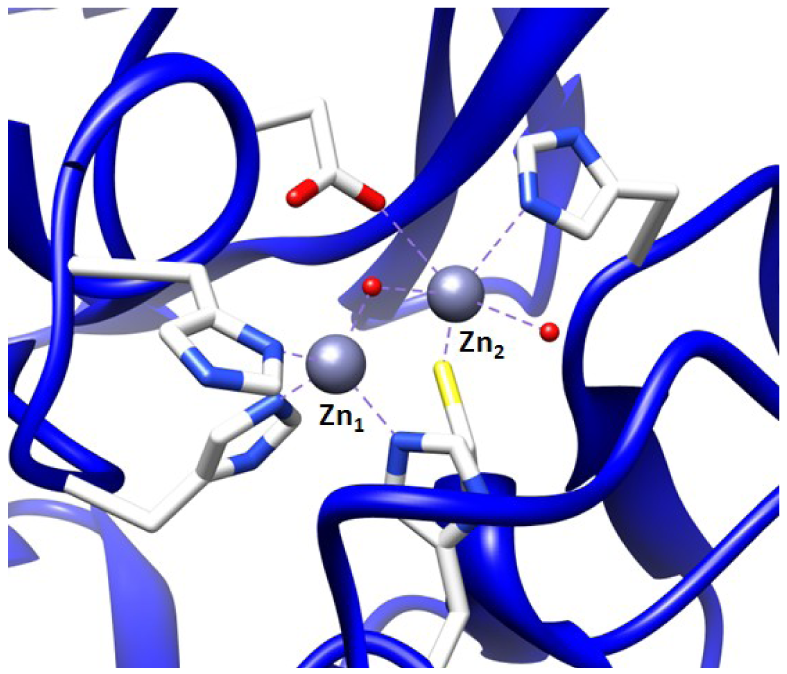
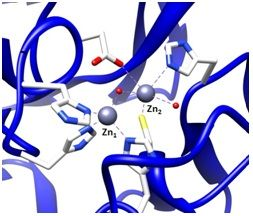
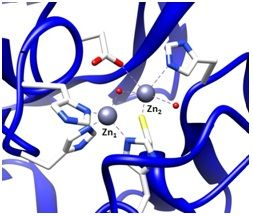
<p>To find inhibitors of the metallo-β-lactamase BcII from <italic>B. cereus</italic>, whose active site is shown in <xref ref-type="fig" rid="f2-pharmaceuticals-04-00419">Figure 2</xref>, the combinatorial approach SELEX was employed. Through combinatorial chemistry a wide variety of compounds can be effectively tested for promising drug activity. Combinatorial methods have been widely adopted by biotechnology and pharmaceutical companies over the past ten years.</p></sec>
<sec>
<label>3.</label>
<title>SELEX Technology</title>
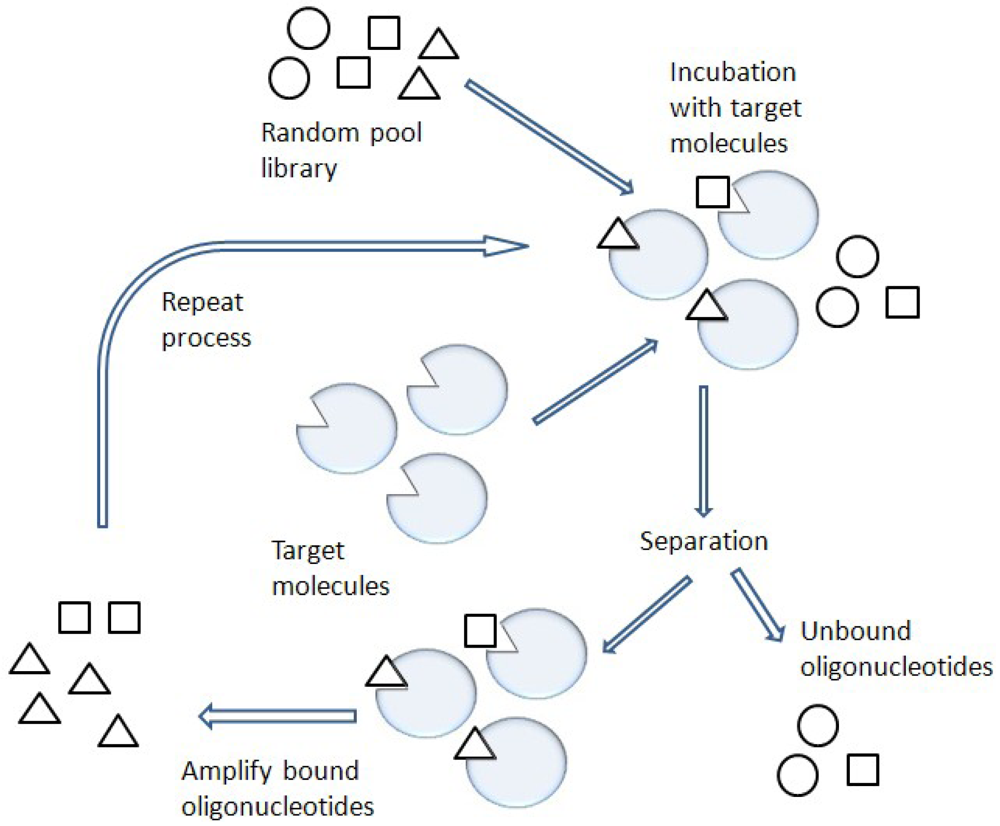
<p>One of the most promising combinatorial chemistry techniques is known as SELEX [<xref ref-type="bibr" rid="b8-pharmaceuticals-04-00419">8</xref>] (<xref ref-type="fig" rid="f3-pharmaceuticals-04-00419">Figure 3</xref>). This SELEX method is also known as <italic>in vitro</italic> selection or <italic>in vitro</italic> evolution, allowing the simultaneous screening of a large number of nucleic acid molecules.</p>
<p>Functional nucleic acid molecules are selected from the mainly non-functional pool of oligonucleotides by column chromatography or other selection techniques such as a gel shift assay [<xref ref-type="bibr" rid="b9-pharmaceuticals-04-00419">9</xref>-<xref ref-type="bibr" rid="b11-pharmaceuticals-04-00419">11</xref>]. The functional nucleic acids are called aptamers, which are usually short single-stranded (ss) nucleic acids such as ssDNA and RNA [<xref ref-type="bibr" rid="b9-pharmaceuticals-04-00419">9</xref>]. Many of the selected aptamers display affinities for their target comparable to those observed for monoclonal antibodies. However, unlike antibodies, facile modification of the selected aptamers can improve their binding to target molecules and enhance the stability of the aptamers against nuclease activity under physiological conditions [<xref ref-type="bibr" rid="b12-pharmaceuticals-04-00419">12</xref>].</p>
<p>The application of aptamers has been significant in the medical and pharmaceutical research fields. A recent example of a commercial product developed using SELEX technology is an aptamer against vascular endothelial growth factor (VEGF). In fact, this is the only commercially available aptamer-based therapy. The anti-VEGF aptamer blocks vessel growth and inhibits neovascularization [<xref ref-type="bibr" rid="b13-pharmaceuticals-04-00419">13</xref>,<xref ref-type="bibr" rid="b14-pharmaceuticals-04-00419">14</xref>] with very high affinity (dissociation constant, <italic>K</italic><sub>d</sub> = 50 pM) [<xref ref-type="bibr" rid="b15-pharmaceuticals-04-00419">15</xref>] (this aptamer affinity is as good as the antibody affinity (<italic>K</italic><sub>d</sub> = 54 pM) for VEGF [<xref ref-type="bibr" rid="b16-pharmaceuticals-04-00419">16</xref>]). The aptamer tightly binds to abnormally over-expressed VEGF and thus the binding reaction from VEGF to a receptor cannot proceed. This aptamer, known as Macugen<sup>®</sup>, was approved by the Food and Drug Administration (FDA) in 2004 and is currently used to cure age-related macular degeneration [<xref ref-type="bibr" rid="b17-pharmaceuticals-04-00419">17</xref>,<xref ref-type="bibr" rid="b18-pharmaceuticals-04-00419">18</xref>].</p>
<p>Although the anti-VEGF aptamer is based on RNA SELEX, recently we reported that ssDNA SELEX for the <italic>B. cereus</italic> metallo-β-lactamase was used to find ssDNA aptamers which act as inhibitors of the enzyme, thus providing the possibility of an antibacterial drug against this specific β-lactam resistant bacterial infection [<xref ref-type="bibr" rid="b19-pharmaceuticals-04-00419">19</xref>]. Other potential drug candidates using ssDNA SELEX technology have been developed. For example, thrombin, a protein that serves as essential role in regulation of the coagulation pathway in human, has been targeted for the development of ssDNA aptamers; an ssDNA aptamer of thrombin has been identified and shows a very promising anticoagulant drug activity [<xref ref-type="bibr" rid="b20-pharmaceuticals-04-00419">20</xref>,<xref ref-type="bibr" rid="b21-pharmaceuticals-04-00419">21</xref>]. Anti-inflammatory aptamers for L-selectin [<xref ref-type="bibr" rid="b20-pharmaceuticals-04-00419">20</xref>], viral infection prevention aptamers for Hemagglutinin from the influenza virus [<xref ref-type="bibr" rid="b22-pharmaceuticals-04-00419">22</xref>], and anti-progressive renal disease aptamers for platelet-derived growth factor [<xref ref-type="bibr" rid="b23-pharmaceuticals-04-00419">23</xref>] have been developed using ssDNA SELEX technology as well. Except for the aptamers of <italic>B. cereus</italic> metallo-β-lactamase, other aptamers functions by tightly binding to target molecules and interfering with the target molecules' next binding step. In the following section, introducing true enzymatic inhibition to <italic>B. cereus</italic> metallo-β-lactamase in an aptamer-based inhibition manner will draw our attention as to how we can screen for enzyme inhibiting aptamers.</p></sec>
<sec>
<label>4.</label>
<title>SELEX for <italic>B. Cereus</italic> Metallo-β-Lactamase Using ssDNA</title>
<p>Previously, the metallo-β-lactamase BcII from <italic>B. cereus</italic>, a class B MBL, as a target molecule to find aptamers using SELEX technology has been studied. <italic>B. cereus</italic> was chosen because it is a pathogen that causes food poisoning and because the three-dimensional X-ray structure of BcII has been resolved (Protein Data Bank entry code: 1BC2), which increases the chances of improving our understanding of binding between potential inhibitors and BcII. This project was very successful, and this work was recently published [<xref ref-type="bibr" rid="b19-pharmaceuticals-04-00419">19</xref>]. This study had three aims, which were: (a) to find aptamers that inhibit BcII; (b) to determine inhibition values of the found aptamers by kinetic analyses, and explore the binding relationship between the aptamers and metal ions in the active site of the enzyme; (c) and to test the specificity of the aptamers and the growth inhibition of <italic>B. cereus</italic> by the aptamers in combination with an existing antibiotic.</p>
<sec>
<label>4.1.</label>
<title>Identification of Aptamers that Can Inhibit the Target Enzyme</title>
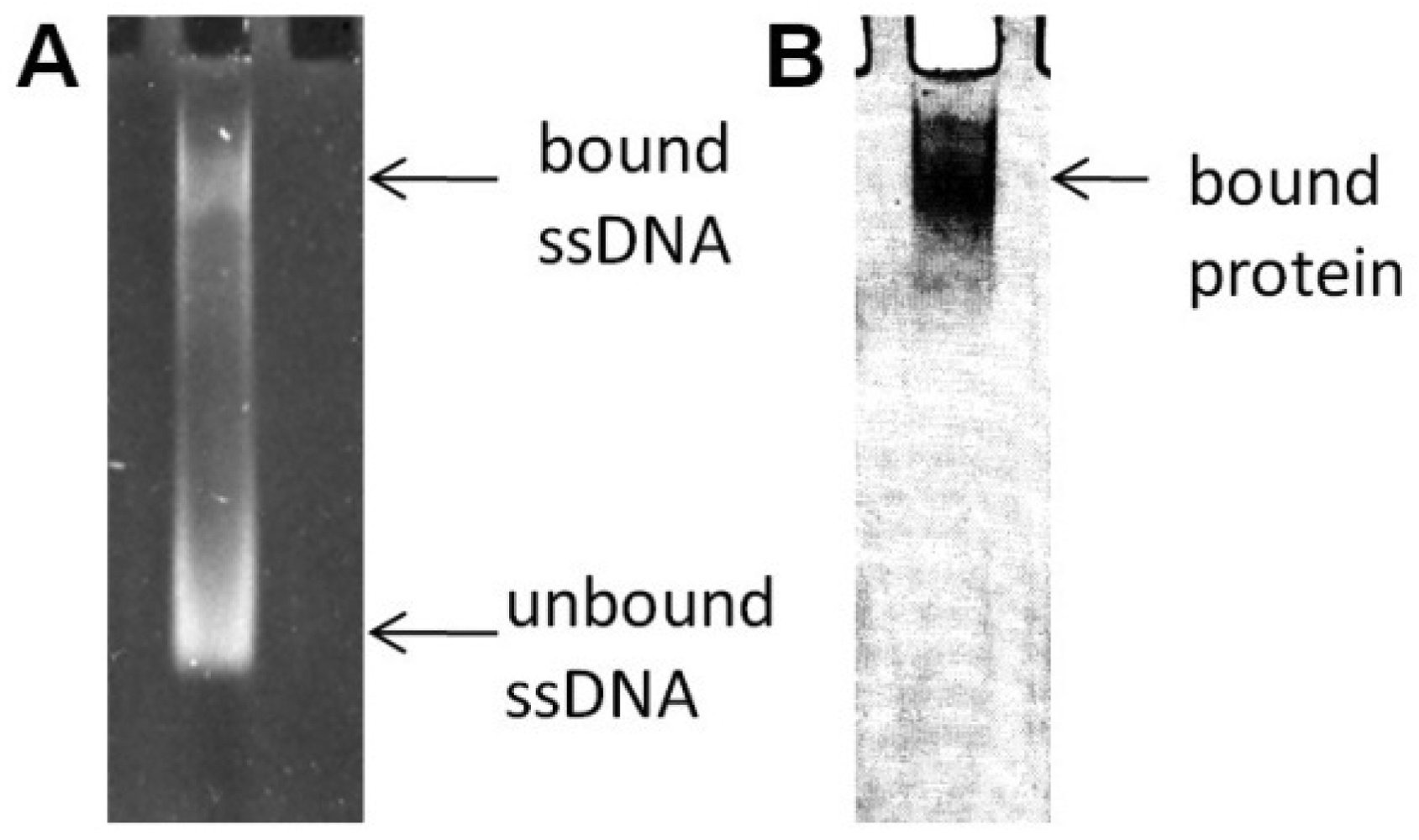
<p>In the previously reported literature [<xref ref-type="bibr" rid="b19-pharmaceuticals-04-00419">19</xref>], the SELEX method was used to screen aptamers against the <italic>B. cereus</italic> MBL. Randomly degenerated ssDNA and the target enzyme were incubated for an appropriate period of time. A complex formation between ssDNA and the MBL was confirmed on a native gel, as shown in <xref ref-type="fig" rid="f4-pharmaceuticals-04-00419">Figure 4</xref>. In an effort to confirm the complex, the sample was loaded in two different gel lanes on the same native gel. The gel was soaked in an ethidium bromide solution to illuminate the bound ssDNA to the enzyme after completion of the electrophoresis; the same gel was stained in Coomassie Blue to identify the existence of the enzyme. In the native gel, any non-complexed enzyme would not enter the gel due to its high isoelectric point value, but the complex migrates toward the gel bottom because it contains anionic ssDNA. During the iterative process of SELEX, to sequester tightly bound aptamers from both unbound and non-specific bound ssDNAs, more stringent selection was exerted by an increasing NaCl concentration. A typical gel after loading the sample under such conditions clearly showed two bands by ethidium bromide staining; that is, the enzyme:ssDNA complex and the unbound ssDNA (<xref ref-type="fig" rid="f4-pharmaceuticals-04-00419">Figure 4</xref>).</p>
<p>The purpose was to identify aptamers that inhibit BcII, thus it was of great importance that enzyme inhibition assays be carried out during the SELEX rounds [<xref ref-type="bibr" rid="b19-pharmaceuticals-04-00419">19</xref>]. To test whether ssDNA could bind and inhibit BcII, the selected ssDNA pools were subjected to inhibition assays and only one oligonucleotide was identified after DNA sequencing, which was 30 residues in length. To understand the binding between the aptamer and the target molecule, it is necessary to recognize the importance of secondary structures formed by the ssDNA. The secondary structure of the found sequence was predicted by MFold, a secondary structural nucleic acid prediction program [<xref ref-type="bibr" rid="b25-pharmaceuticals-04-00419">25</xref>]. This program uses energy rules to predict optimal secondary structures for an RNA molecule as well as an ssDNA molecule [<xref ref-type="bibr" rid="b26-pharmaceuticals-04-00419">26</xref>,<xref ref-type="bibr" rid="b27-pharmaceuticals-04-00419">27</xref>]. By using the MFold program, two different secondary structures of the aptamer (a 30 residue ssDNA) were predicted. The two different structures commonly contained a 10 residue stem-loop structure, therefore this sequence was considered to be important to enzyme inhibition. Hence, further investigation was carried out using the 10 residue ssDNA.</p></sec>
<sec>
<label>4.2.</label>
<title>The Determination of IC<sub>50</sub> and Kinetic Parameters</title>
<p>The IC<sub>50</sub>value, the concentration of inhibitor necessary to inhibit 50% of the enzyme's activity, for the aptamers were determined by measuring the rate of enzymatic hydrolysis of a substrate [<xref ref-type="bibr" rid="b19-pharmaceuticals-04-00419">19</xref>]. The IC<sub>50</sub> of the 30-oligonucleotide ssDNA was 1.2 nM, and the IC<sub>50</sub> of the 10 residue ssDNA was also 1.2 nM [<xref ref-type="bibr" rid="b19-pharmaceuticals-04-00419">19</xref>]. These results indicate that the 10 residue ssDNA was the crucial sequence for enzyme inhibition. The remainder of the sequence was tested to determine whether other portions of the 30 residue ssDNA contributed to the inhibition, but no inhibition was found [<xref ref-type="bibr" rid="b19-pharmaceuticals-04-00419">19</xref>]. This data provides evidence to support the idea that the 10 residue ssDNA is responsible for the observed inhibition.</p>
<p>The steady state enzyme kinetic data of the inhibition of BcII were obtained by various concentrations of the 10 and 30 residue ssDNAs [<xref ref-type="bibr" rid="b19-pharmaceuticals-04-00419">19</xref>]. The inhibition data showed reversible, mixed inhibitions for both the 10 and 30 residue ssDNAs, with dissociation constants for the enzyme-inhibitor complex (<italic>K<sub>i</sub></italic>) and the enzyme-substrate-inhibitor (<italic>K<sub>i</sub>′</italic>) in the nanomolar range, demonstrating that inhibition by those ssDNA aptamers is very effective. Previously, possible inhibitors had been developed by rational-drug approach with <italic>K<sub>i</sub></italic> values in the micromolar range [<xref ref-type="bibr" rid="b7-pharmaceuticals-04-00419">7</xref>]. This comparison strongly suggests that the findings (10 and 30 residue ssDNAs) are of great value in further investigating the binding of the aptamers to the target molecule.</p></sec>
<sec>
<label>4.3.</label>
<title>The Test of the Effect of the Aptamer Binding to the Enzyme by Co<sup>2+</sup> Reconstitution</title>
<p>It is possible to prepare an apoenzyme of a metallo-β-lactamase and reconstitute the original enzymatic activity by the addition of cobalt (II) sulfate [<xref ref-type="bibr" rid="b28-pharmaceuticals-04-00419">28</xref>]. Given that the Co<sup>2+</sup>-reconstituted MBL can provide a signature feature in the UV-Vis range, the reconstituted enzyme is then useful in investigating the binding relationship between the metal ion and the ssDNA aptamer. The preparation of Co<sup>2+</sup>-reconstitution was successful in BcII from <italic>B. cereus</italic> and thus was used for UV-Vis spectroscopy [<xref ref-type="bibr" rid="b19-pharmaceuticals-04-00419">19</xref>]. The observation of the visible electronic spectra of the Co<sup>2+</sup> reconstituted enzyme in the absence and the presence of the 10 residue ssDNA showed significant differences [<xref ref-type="bibr" rid="b19-pharmaceuticals-04-00419">19</xref>].The changes in the spectrum observed by addition of the ssDNA at the cysteine-Co<sup>2+</sup> charge transfer band were observed particularly at a wavelength of 347 nm. Similar changes were observed in the presence of an excess of substrates such as cephalosporin C [<xref ref-type="bibr" rid="b28-pharmaceuticals-04-00419">28</xref>,<xref ref-type="bibr" rid="b29-pharmaceuticals-04-00419">29</xref>]. Therefore, the change at 347 nm indicates that the cysteine thiol group located in the active site of the enzyme, where the cysteine thiol group serves as a ligand to the zinc ion at the Zn<sub>2</sub> position (<xref ref-type="fig" rid="f2-pharmaceuticals-04-00419">Figure 2</xref>), was affected by the ssDNA addition. Thus, the observation of the change of active site by the addition of the ssDNA aptamer supports the proposal that the ssDNA aptamer's binding to the enzyme elicits inhibition of the metallo-β-lactamase.</p></sec>
<sec>
<label>4.4.</label>
<title>Specificity</title>
<p>One of the most important aspects of inhibitor design is that the inhibitors should be specific to the enzyme. To test the specificity, porcine carboxypeptidase A, a zinc metalloenzyme, and <italic>B. cereus</italic> serine-β-lactamase were used [<xref ref-type="bibr" rid="b19-pharmaceuticals-04-00419">19</xref>]. The addition of ssDNA aptamers (both 10 and 30 residue ssDNAs) to porcine carboxypeptidase A exerted no influence on its enzymatic activity, thus suggesting that the ssDNA aptamer do not affect all zinc binding sites indiscriminately [<xref ref-type="bibr" rid="b19-pharmaceuticals-04-00419">19</xref>]. The fact that addition of the ssDNA aptamer to the <italic>B. cereus</italic> serine-β-lactamase had no impact on the enzyme activity [<xref ref-type="bibr" rid="b19-pharmaceuticals-04-00419">19</xref>] provides additional evidence for the specificity of the ssDNA aptamer to the metallo-β-lactamase. In addition, the observation that the <italic>K</italic><sub>i</sub> value of the Co<sup>2+</sup>-reconstituted enzyme by the 10 residue ssDNA was almost 4 orders of magnitude higher than that of the normal metallo (Zn<sup>2+</sup>)-β-lactamase further demonstrates the exquisite specificity of the ssDNA aptamer in that the DNA is able to distinguish between the zinc and cobalt forms of the enzyme, even though both enzyme forms possess the same enzymatic activity.</p></sec>
<sec>
<label>4.5.</label>
<title>Inhibition Tests in Bacteria</title>
<p>To explore the possibility that co-administration of the found aptamer and a β-lactam antibiotic have the capacity to negatively impact the growth of β-lactam antibiotic resistant bacteria, the combination of the 10 residue ssDNA with a β-lactam antibiotic, cephalexin, was applied to <italic>B. cereus</italic> 5/B/6, which produces the MBL [<xref ref-type="bibr" rid="b19-pharmaceuticals-04-00419">19</xref>]. The bacterial growth was suppressed over a 20 h period at 30 °C. As control experiments, either the antibiotic alone or the aptamer alone was used, and those had no effect on the bacterial growth; however, to obtain cell death, in the presence of 5 μM cephalexin, 75 μM of the 10 residue aptamer was needed [<xref ref-type="bibr" rid="b19-pharmaceuticals-04-00419">19</xref>]. This indicates that some nuclease activities may degrade the nucleotide aptamer under cell culture conditions. This observation suggests that modification of the aptamer is necessary to retain its strong potency as an enzyme inhibitor.</p></sec></sec>
<sec>
<label>5.</label>
<title>Future Studies</title>
<p>In this review, we describe the potential of an aptamers-based method using SELEX technology to discover novel inhibitors of the metallo-β-lactamase BcII from <italic>Bacillus cereus</italic>. Although we should mention that there is a possibility that the aptamers-based inhibitors to BcII would be limited to chromosome-encoded β-lactamases that may structurally differ from plasmid-encoded β-lactamases, there has been success in finding potential inhibitors to BcII in an aptamers-based inhibition fashion. To further improve the inhibition for those ssDNA aptamers, modifications of the aptamers are likely needed so that they can survive degradation by nucleases and have more potential as novel drug candidates. For example, phosphorothioate modification, which takes place at a non-bridging oxygen in the phosphate backbone at the 5′-and/or 3′-end of the aptamers, would be a good choice. This modification leads to resistance to degradation from endo- and exonuclease cleavage. Another issue in developing oligonucleotide therapeutics is the relatively short half-lives of the aptamers in the body. To overcome this problem, conjugation to polyethylene glycol (PEG) increases the molecular weight of the aptamer and extends its elimination half-life by slowing renal filtration and distribution from the central compartment. This PEG conjugation has emerged as an effective strategy to extend the circulating half-life [<xref ref-type="bibr" rid="b30-pharmaceuticals-04-00419">30</xref>]. For instance, the use of 40 kDa PEG conjugated to an aptamer was reported to extend the serum half-life time to a significant extent [<xref ref-type="bibr" rid="b31-pharmaceuticals-04-00419">31</xref>]. These strategies to optimize aptamer therapeutics are important in combination with SELEX technology to identify a new class of drug candidates that may be used in the battle against the proliferation of antibiotic-resistant bacteria.</p></sec></body>
<back>
<sec sec-type="display-objects">
<title>Figures and Table</title>
<fig id="f1-pharmaceuticals-04-00419" position="float">
<label>Figure 1.</label>
<caption>
<p>The global distribution of NDM-1 (adopted from reference [<xref ref-type="bibr" rid="b2-pharmaceuticals-04-00419">2</xref>]).</p></caption>
<graphic xlink:href="pharmaceuticals-04-00419f1.gif"/></fig>
<fig id="f2-pharmaceuticals-04-00419" position="float">
<label>Figure 2.</label>
<caption>
<p>X-ray structure of BcII (PDB: 1BC2). The sulfur of the cysteine residue in active site of BcII is colored in yellow.</p></caption>
<graphic xlink:href="pharmaceuticals-04-00419f2.gif"/></fig>
<fig id="f3-pharmaceuticals-04-00419" position="float">
<label>Figure 3.</label>
<caption>
<p>Scheme of SELEX. Target molecules are incubated with a library of oligonucleotides. The separation occurs by the degree of binding affinities of the oligonucleotides. The bound oligonucleotides are amplified by PCR. The iterative process is performed to find functional aptamers.</p></caption>
<graphic xlink:href="pharmaceuticals-04-00419f3.gif"/></fig>
<fig id="f4-pharmaceuticals-04-00419" position="float">
<label>Figure 4.</label>
<caption>
<p>Electrophoretic Mobility Shift Assay. (<bold>A</bold>). The typical separation between bound oligonucleotides and unbound oligonucleotides. The 6% polyacrylamide gel was stained by ethidium bromide; (<bold>B</bold>). The gel was stained by Coomassie Brilliant Blue R-250 to confirm the complex form of the target protein and ssDNA (taken from reference [<xref ref-type="bibr" rid="b24-pharmaceuticals-04-00419">24</xref>]).</p></caption>
<graphic xlink:href="pharmaceuticals-04-00419f4.gif"/></fig>
<table-wrap id="t1-pharmaceuticals-04-00419" position="float">
<label>Table 1.</label>
<caption>
<p>Description of most common plasmid- and chromosome-mediated MBLs, their classification, and the bacteria in which they are found.</p></caption>
<table frame="hsides" rules="groups">
<thead>
<tr>
<th align="center" valign="top"><bold>Name</bold></th>
<th align="center" valign="top"><bold>Class</bold></th>
<th align="center" valign="top"><bold>Bacteria</bold></th>
<th align="center" valign="top"><bold>Encoding</bold></th></tr></thead>
<tbody>
<tr>
<td align="center" valign="middle">IMP</td>
<td align="center" valign="middle">B1</td>
<td align="center" valign="middle"><italic>Pseudomonas aeruginosa</italic>, <italic>Acinetobacter baumannii</italic>, <italic>Serratia marcesens</italic>, <italic>Enterobacter aerogenes</italic></td>
<td align="center" valign="middle">Plasmid</td></tr>
<tr>
<td align="center" valign="middle">VIM</td>
<td align="center" valign="middle">B1</td>
<td align="center" valign="middle"><italic>Pseudomonas aeruginosa</italic>, <italic>Acinetobacter baumannii</italic>, <italic>Klebsiella pneumoniae</italic>, <italic>Enterobacter aerogenes</italic></td>
<td align="center" valign="middle">Plasmid</td></tr>
<tr>
<td align="center" valign="top">SPM</td>
<td align="center" valign="top">B1</td>
<td align="center" valign="top"><italic>Pseudomonas aeruginosa</italic></td>
<td align="center" valign="top">Plasmid</td></tr>
<tr>
<td align="center" valign="top">GIM</td>
<td align="center" valign="top">B1</td>
<td align="center" valign="top"><italic>Pseudomonas aeruginosa</italic></td>
<td align="center" valign="top">Plasmid</td></tr>
<tr>
<td align="center" valign="top">AIM</td>
<td align="center" valign="top">B3</td>
<td align="center" valign="top"><italic>Pseudomonas aeruginosa</italic></td>
<td align="center" valign="top">Plasmid</td></tr>
<tr>
<td align="center" valign="top">SIM</td>
<td align="center" valign="top">B1</td>
<td align="center" valign="top"><italic>Pseudomonas aeruginosa</italic>, <italic>Acinetobacter baumannii</italic></td>
<td align="center" valign="top">Plasmid</td></tr>
<tr>
<td align="center" valign="top">NDM</td>
<td align="center" valign="top">unknown</td>
<td align="center" valign="top"><italic>Klebsiella pneumoniae</italic></td>
<td align="center" valign="top">Plasmid</td></tr>
<tr>
<td align="center" valign="top">DIM</td>
<td align="center" valign="top">B1</td>
<td align="center" valign="top"><italic>Pseudomonas stutzeri</italic></td>
<td align="center" valign="top">Plasmid</td></tr>
<tr>
<td align="center" valign="top">KHM</td>
<td align="center" valign="top">unknown</td>
<td align="center" valign="top"><italic>Citrobacter freundii</italic></td>
<td align="center" valign="top">Plasmid</td></tr>
<tr>
<td align="center" valign="top">BcII</td>
<td align="center" valign="top">B1</td>
<td align="center" valign="top"><italic>Bacillus cereus</italic></td>
<td align="center" valign="top">Chromosome</td></tr>
<tr>
<td align="center" valign="top">Bla2</td>
<td align="center" valign="top">B1</td>
<td align="center" valign="top"><italic>Bacillus anthracis</italic></td>
<td align="center" valign="top">Chromosome</td></tr>
<tr>
<td align="center" valign="top">CcrA</td>
<td align="center" valign="top">B1</td>
<td align="center" valign="top"><italic>Bacteroides fragilis</italic></td>
<td align="center" valign="top">Chromosome</td></tr>
<tr>
<td align="center" valign="top">ImiS</td>
<td align="center" valign="top">B2</td>
<td align="center" valign="top"><italic>Aeromonas sobria</italic></td>
<td align="center" valign="top">Chromosome</td></tr>
<tr>
<td align="center" valign="top">L1</td>
<td align="center" valign="top">B3</td>
<td align="center" valign="top"><italic>Stenotrophomonas maltophilia</italic></td>
<td align="center" valign="top">Chromosome</td></tr></tbody></table></table-wrap></sec>
<ref-list>
<title>References</title>
<ref id="b1-pharmaceuticals-04-00419"><label>1.</label><citation citation-type="journal"><person-group person-group-type="author"><name><surname>Yong</surname><given-names>D.</given-names></name><name><surname>Toleman</surname><given-names>M.A.</given-names></name><name><surname>Giske</surname><given-names>C.G.</given-names></name><name><surname>Cho</surname><given-names>H.S.</given-names></name><name><surname>Sundman</surname><given-names>K.</given-names></name><name><surname>Lee</surname><given-names>K.</given-names></name><name><surname>Walsh</surname><given-names>T.R.</given-names></name></person-group><article-title>Characterization of a new metallo-beta-lactamase gene, bla(NDM-1), and a novel erythromycin esterase gene carried on a unique genetic structure in Klebsiella pneumoniae sequence type 14 from India</article-title><source>Antimicrob. Agents Chemother.</source><year>2009</year><volume>53</volume><fpage>5046</fpage><lpage>5054</lpage><pub-id pub-id-type="doi">10.1128/AAC.00774-09</pub-id><pub-id pub-id-type="pmid">19770275</pub-id></citation></ref>
<ref id="b2-pharmaceuticals-04-00419"><label>2.</label><citation citation-type="journal"><person-group person-group-type="author"><name><surname>Walsh</surname><given-names>T.R.</given-names></name></person-group><article-title>Emerging carbapenemases: a global perspective</article-title><source>Int. J. Antimicrob. Agents</source><year>2010</year><volume>36</volume><supplement>Suppl. 3</supplement><fpage>S8</fpage><lpage>S14</lpage><pub-id pub-id-type="pmid">21129630</pub-id></citation></ref>
<ref id="b3-pharmaceuticals-04-00419"><label>3.</label><citation citation-type="journal"><person-group person-group-type="author"><name><surname>Perez</surname><given-names>F.</given-names></name><name><surname>Endimiani</surname><given-names>A.</given-names></name><name><surname>Hujer</surname><given-names>K.M.</given-names></name><name><surname>Bonomo</surname><given-names>R.A.</given-names></name></person-group><article-title>The continuing challenge of ESBLs</article-title><source>Curr. Opin. Pharmacol.</source><year>2007</year><volume>7</volume><fpage>459</fpage><lpage>469</lpage><pub-id pub-id-type="doi">10.1016/j.coph.2007.08.003</pub-id><pub-id pub-id-type="pmid">17875405</pub-id></citation></ref>
<ref id="b4-pharmaceuticals-04-00419"><label>4.</label><citation citation-type="journal"><person-group person-group-type="author"><name><surname>Walsh</surname><given-names>C.</given-names></name><name><surname>Wright</surname><given-names>G.</given-names></name></person-group><article-title>Introduction: Antibiotic resistance</article-title><source>Chem. Rev.</source><year>2005</year><volume>105</volume><fpage>391</fpage><lpage>394</lpage><pub-id pub-id-type="doi">10.1021/cr030100y</pub-id><pub-id pub-id-type="pmid">15700949</pub-id></citation></ref>
<ref id="b5-pharmaceuticals-04-00419"><label>5.</label><citation citation-type="journal"><person-group person-group-type="author"><name><surname>Crowder</surname><given-names>M.W.</given-names></name><name><surname>Spencer</surname><given-names>J.</given-names></name><name><surname>Vila</surname><given-names>A.J.</given-names></name></person-group><article-title>Metallo-beta-lactamases: novel weaponry for antibiotic resistance in bacteria</article-title><source>Acc. Chem. Res.</source><year>2006</year><volume>39</volume><fpage>721</fpage><lpage>728</lpage><pub-id pub-id-type="doi">10.1021/ar0400241</pub-id><pub-id pub-id-type="pmid">17042472</pub-id></citation></ref>
<ref id="b6-pharmaceuticals-04-00419"><label>6.</label><citation citation-type="journal"><person-group person-group-type="author"><name><surname>Walsh</surname><given-names>T.R.</given-names></name><name><surname>Toleman</surname><given-names>M.A.</given-names></name><name><surname>Poirel</surname><given-names>L.</given-names></name><name><surname>Nordmann</surname><given-names>P.</given-names></name></person-group><article-title>Metallo-beta-lactamases: the quiet before the storm?</article-title><source>Clin. Microbiol. Rev.</source><year>2005</year><volume>18</volume><fpage>306</fpage><lpage>325</lpage><pub-id pub-id-type="doi">10.1128/CMR.18.2.306-325.2005</pub-id><pub-id pub-id-type="pmid">15831827</pub-id></citation></ref>
<ref id="b7-pharmaceuticals-04-00419"><label>7.</label><citation citation-type="journal"><person-group person-group-type="author"><name><surname>Buynak</surname><given-names>J.D.</given-names></name><name><surname>Chen</surname><given-names>H.</given-names></name><name><surname>Vogeti</surname><given-names>L.</given-names></name><name><surname>Gadhachanda</surname><given-names>V.R.</given-names></name><name><surname>Buchanan</surname><given-names>C.A.</given-names></name><name><surname>Palzkill</surname><given-names>T.</given-names></name><name><surname>Shaw</surname><given-names>R.W.</given-names></name><name><surname>Spencer</surname><given-names>J.</given-names></name><name><surname>Walsh</surname><given-names>T.R.</given-names></name></person-group><article-title>Penicillin-derived inhibitors that simultaneously target both metallo- and serine-beta-lactamases</article-title><source>Bioorg. Med. Chem. Lett.</source><year>2004</year><volume>14</volume><fpage>1299</fpage><lpage>1304</lpage><pub-id pub-id-type="doi">10.1016/j.bmcl.2003.12.037</pub-id><pub-id pub-id-type="pmid">14980686</pub-id></citation></ref>
<ref id="b8-pharmaceuticals-04-00419"><label>8.</label><citation citation-type="journal"><person-group person-group-type="author"><name><surname>Tuerk</surname><given-names>C.</given-names></name><name><surname>Gold</surname><given-names>L.</given-names></name></person-group><article-title>Systematic evolution of ligands by exponential enrichment: RNA ligands to bacteriophage T4 DNA polymerase</article-title><source>Science</source><year>1990</year><volume>249</volume><fpage>505</fpage><lpage>510</lpage><pub-id pub-id-type="doi">10.1126/science.2200121</pub-id><pub-id pub-id-type="pmid">2200121</pub-id></citation></ref>
<ref id="b9-pharmaceuticals-04-00419"><label>9.</label><citation citation-type="journal"><person-group person-group-type="author"><name><surname>Ellington</surname><given-names>A.D.</given-names></name><name><surname>Szostak</surname><given-names>J.W.</given-names></name></person-group><article-title><italic>In vitro</italic> selection of RNA molecules that bind specific ligands</article-title><source>Nature</source><year>1990</year><volume>346</volume><fpage>818</fpage><lpage>822</lpage><pub-id pub-id-type="doi">10.1038/346818a0</pub-id><pub-id pub-id-type="pmid">1697402</pub-id></citation></ref>
<ref id="b10-pharmaceuticals-04-00419"><label>10.</label><citation citation-type="journal"><person-group person-group-type="author"><name><surname>Joyce</surname><given-names>G.F.</given-names></name></person-group><article-title>Amplification, mutation and selection of catalytic RNA</article-title><source>Gene</source><year>1989</year><volume>82</volume><fpage>83</fpage><lpage>87</lpage><pub-id pub-id-type="doi">10.1016/0378-1119(89)90033-4</pub-id><pub-id pub-id-type="pmid">2684778</pub-id></citation></ref>
<ref id="b11-pharmaceuticals-04-00419"><label>11.</label><citation citation-type="journal"><person-group person-group-type="author"><name><surname>Gold</surname><given-names>L.</given-names></name><name><surname>Polisky</surname><given-names>B.</given-names></name><name><surname>Uhlenbeck</surname><given-names>O.</given-names></name><name><surname>Yarus</surname><given-names>M.</given-names></name></person-group><article-title>Diversity of oligonucleotide functions</article-title><source>Annu. Rev. Biochem.</source><year>1995</year><volume>64</volume><fpage>763</fpage><lpage>797</lpage><pub-id pub-id-type="doi">10.1146/annurev.bi.64.070195.003555</pub-id><pub-id pub-id-type="pmid">7574500</pub-id></citation></ref>
<ref id="b12-pharmaceuticals-04-00419"><label>12.</label><citation citation-type="journal"><person-group person-group-type="author"><name><surname>Jayasena</surname><given-names>S.D.</given-names></name></person-group><article-title>Aptamers: an emerging class of molecules that rival antibodies in diagnostics</article-title><source>Clin. Chem.</source><year>1999</year><volume>45</volume><fpage>1628</fpage><lpage>1650</lpage><pub-id pub-id-type="pmid">10471678</pub-id></citation></ref>
<ref id="b13-pharmaceuticals-04-00419"><label>13.</label><citation citation-type="journal"><person-group person-group-type="author"><name><surname>Maberley</surname><given-names>D.</given-names></name></person-group><article-title>Pegaptanib for neovascular age-related macular degeneration</article-title><source>Issues Emerg. Health Technol.</source><year>2005</year><volume>76</volume><fpage>1</fpage><lpage>4</lpage><pub-id pub-id-type="pmid">16544440</pub-id></citation></ref>
<ref id="b14-pharmaceuticals-04-00419"><label>14.</label><citation citation-type="journal"><person-group person-group-type="author"><name><surname>Chapman</surname><given-names>J.A.</given-names></name><name><surname>Beckey</surname><given-names>C.</given-names></name></person-group><article-title>Pegaptanib: A novel approach to ocular neovascularization</article-title><source>Ann. Pharmacother.</source><year>2006</year><volume>40</volume><fpage>1322</fpage><lpage>1326</lpage><pub-id pub-id-type="doi">10.1345/aph.1G604</pub-id><pub-id pub-id-type="pmid">16849623</pub-id></citation></ref>
<ref id="b15-pharmaceuticals-04-00419"><label>15.</label><citation citation-type="journal"><person-group person-group-type="author"><name><surname>Lee</surname><given-names>J.H.</given-names></name><name><surname>Canny</surname><given-names>M.D.</given-names></name><name><surname>Erkendez</surname><given-names>A.D.</given-names></name><name><surname>Krilleke</surname><given-names>D.</given-names></name><name><surname>Ng</surname><given-names>Y.S.</given-names></name><name><surname>Shima</surname><given-names>D.T.</given-names></name><name><surname>Pardi</surname><given-names>A.</given-names></name><name><surname>Jucker</surname><given-names>F.</given-names></name></person-group><article-title>A therapeutic aptamer inhibits angiogenesis by specifically targeting the heparin binding domain of VEGF165</article-title><source>Proc. Natl. Acad. Sci. USA</source><year>2005</year><volume>102</volume><fpage>18902</fpage><lpage>18907</lpage><pub-id pub-id-type="doi">10.1073/pnas.0509069102</pub-id><pub-id pub-id-type="pmid">16357200</pub-id></citation></ref>
<ref id="b16-pharmaceuticals-04-00419"><label>16.</label><citation citation-type="journal"><person-group person-group-type="author"><name><surname>Wu</surname><given-names>Y.</given-names></name><name><surname>Zhong</surname><given-names>Z.</given-names></name><name><surname>Huber</surname><given-names>J.</given-names></name><name><surname>Bassi</surname><given-names>R.</given-names></name><name><surname>Finnerty</surname><given-names>B.</given-names></name><name><surname>Corcoran</surname><given-names>E.</given-names></name><name><surname>Li</surname><given-names>H.</given-names></name><name><surname>Navarro</surname><given-names>E.</given-names></name><name><surname>Balderes</surname><given-names>P.</given-names></name><name><surname>Jimenez</surname><given-names>X.</given-names></name><name><surname>Koo</surname><given-names>H.</given-names></name><name><surname>Mangalampalli</surname><given-names>V.R.</given-names></name><name><surname>Ludwig</surname><given-names>D.L.</given-names></name><name><surname>Tonra</surname><given-names>J.R.</given-names></name><name><surname>Hicklin</surname><given-names>D.J.</given-names></name></person-group><article-title>Anti-vascular endothelial growth factor receptor-1 antagonist antibody as a therapeutic agent for cancer</article-title><source>Clin. Cancer Res.</source><year>2006</year><volume>12</volume><fpage>6573</fpage><lpage>6584</lpage><pub-id pub-id-type="doi">10.1158/1078-0432.CCR-06-0831</pub-id><pub-id pub-id-type="pmid">17085673</pub-id></citation></ref>
<ref id="b17-pharmaceuticals-04-00419"><label>17.</label><citation citation-type="journal"><person-group person-group-type="author"><name><surname>Tucker</surname><given-names>C.E.</given-names></name><name><surname>Chen</surname><given-names>L.S.</given-names></name><name><surname>Judkins</surname><given-names>M.B.</given-names></name><name><surname>Farmer</surname><given-names>J.A.</given-names></name><name><surname>Gill</surname><given-names>S.C.</given-names></name><name><surname>Drolet</surname><given-names>D.W.</given-names></name></person-group><article-title>Detection and plasma pharmacokinetics of an anti-vascular endothelial growth factor oligonucleotide-aptamer (NX1838) in rhesus monkeys</article-title><source>J. Chromatogr. B Biomed. Sci. Appl.</source><year>1999</year><volume>732</volume><fpage>203</fpage><lpage>212</lpage><pub-id pub-id-type="doi">10.1016/S0378-4347(99)00285-6</pub-id><pub-id pub-id-type="pmid">10517237</pub-id></citation></ref>
<ref id="b18-pharmaceuticals-04-00419"><label>18.</label><citation citation-type="journal"><person-group person-group-type="author"><name><surname>Ng</surname><given-names>E.W.</given-names></name><name><surname>Shima</surname><given-names>D.T.</given-names></name><name><surname>Calias</surname><given-names>P.</given-names></name><name><surname>Cunningham</surname><given-names>E.T.</given-names><suffix>Jr.</suffix></name><name><surname>Guyer</surname><given-names>D.R.</given-names></name><name><surname>Adamis</surname><given-names>A.P.</given-names></name></person-group><article-title>Pegaptanib, a targeted anti-VEGF aptamer for ocular vascular disease</article-title><source>Nat. Rev. Drug Discov.</source><year>2006</year><volume>5</volume><fpage>123</fpage><lpage>132</lpage><pub-id pub-id-type="doi">10.1038/nrd1955</pub-id><pub-id pub-id-type="pmid">16518379</pub-id></citation></ref>
<ref id="b19-pharmaceuticals-04-00419"><label>19.</label><citation citation-type="journal"><person-group person-group-type="author"><name><surname>Kim</surname><given-names>S.K.</given-names></name><name><surname>Sims</surname><given-names>C.L.</given-names></name><name><surname>Wozniak</surname><given-names>S.E.</given-names></name><name><surname>Drude</surname><given-names>S.H.</given-names></name><name><surname>Whitson</surname><given-names>D.</given-names></name><name><surname>Shaw</surname><given-names>R.W.</given-names></name></person-group><article-title>Antibiotic resistance in bacteria: novel metalloenzyme inhibitors</article-title><source>Chem. Biol. Drug Des.</source><year>2009</year><volume>74</volume><fpage>343</fpage><lpage>348</lpage><pub-id pub-id-type="doi">10.1111/j.1747-0285.2009.00879.x</pub-id><pub-id pub-id-type="pmid">19751419</pub-id></citation></ref>
<ref id="b20-pharmaceuticals-04-00419"><label>20.</label><citation citation-type="journal"><person-group person-group-type="author"><name><surname>Bock</surname><given-names>L.C.</given-names></name><name><surname>Griffin</surname><given-names>L.C.</given-names></name><name><surname>Latham</surname><given-names>J.A.</given-names></name><name><surname>Vermaas</surname><given-names>E.H.</given-names></name><name><surname>Toole</surname><given-names>J.J.</given-names></name></person-group><article-title>Selection of single-stranded DNA molecules that bind and inhibit human thrombin</article-title><source>Nature</source><year>1992</year><volume>355</volume><fpage>564</fpage><lpage>566</lpage><pub-id pub-id-type="doi">10.1038/355564a0</pub-id><pub-id pub-id-type="pmid">1741036</pub-id></citation></ref>
<ref id="b21-pharmaceuticals-04-00419"><label>21.</label><citation citation-type="journal"><person-group person-group-type="author"><name><surname>Griffin</surname><given-names>L.C.</given-names></name><name><surname>Tidmarsh</surname><given-names>G.F.</given-names></name><name><surname>Bock</surname><given-names>L.C.</given-names></name><name><surname>Toole</surname><given-names>J.J.</given-names></name><name><surname>Leung</surname><given-names>L.L.</given-names></name></person-group><article-title><italic>In vivo</italic> anticoagulant properties of a novel nucleotide-based thrombin inhibitor and demonstration of regional anticoagulation in extracorporeal circuits</article-title><source>Blood</source><year>1993</year><volume>81</volume><fpage>3271</fpage><lpage>3276</lpage><pub-id pub-id-type="pmid">8507864</pub-id></citation></ref>
<ref id="b22-pharmaceuticals-04-00419"><label>22.</label><citation citation-type="journal"><person-group person-group-type="author"><name><surname>Fukuda</surname><given-names>K.</given-names></name><name><surname>Vishinuvardhan</surname><given-names>D.</given-names></name><name><surname>Sekiya</surname><given-names>S.</given-names></name><name><surname>Kakiuchi</surname><given-names>N.</given-names></name><name><surname>Shimotohno</surname><given-names>K.</given-names></name><name><surname>Kumar</surname><given-names>P.K.</given-names></name><name><surname>Nishikawa</surname><given-names>S.</given-names></name></person-group><article-title>Specific RNA aptamers to NS3 protease domain of hepatitis C virus</article-title><source>Nucleic Acids Symp. Ser.</source><year>1997</year><volume>37</volume><fpage>237</fpage><lpage>238</lpage><pub-id pub-id-type="pmid">9586087</pub-id></citation></ref>
<ref id="b23-pharmaceuticals-04-00419"><label>23.</label><citation citation-type="journal"><person-group person-group-type="author"><name><surname>Pietras</surname><given-names>K.</given-names></name><name><surname>Ostman</surname><given-names>A.</given-names></name><name><surname>Sjoquist</surname><given-names>M.</given-names></name><name><surname>Buchdunger</surname><given-names>E.</given-names></name><name><surname>Reed</surname><given-names>R.K.</given-names></name><name><surname>Heldin</surname><given-names>C.H.</given-names></name><name><surname>Rubin</surname><given-names>K.</given-names></name></person-group><article-title>Inhibition of platelet-derived growth factor receptors reduces interstitial hypertension and increases transcapillary transport in tumors</article-title><source>Cancer Res.</source><year>2001</year><volume>61</volume><fpage>2929</fpage><lpage>2934</lpage><pub-id pub-id-type="pmid">11306470</pub-id></citation></ref>
<ref id="b24-pharmaceuticals-04-00419"><label>24.</label><citation citation-type="thesis"><person-group person-group-type="author"><name><surname>Kim</surname><given-names>S.K.</given-names></name></person-group><article-title>Inhibition of Metallo-Beta-Lactamase by Rational and Combinatorial Approaches</article-title><source>Ph.D. Dissertation.</source><publisher-name>Texas Tech University</publisher-name><publisher-loc>Lubbock, TX, USA</publisher-loc><year>2002</year></citation></ref>
<ref id="b25-pharmaceuticals-04-00419"><label>25.</label><citation citation-type="journal"><person-group person-group-type="author"><name><surname>Zuker</surname><given-names>M.</given-names></name></person-group><article-title>On finding all suboptimal foldings of an RNA molecule</article-title><source>Science</source><year>1989</year><volume>244</volume><fpage>48</fpage><lpage>52</lpage><pub-id pub-id-type="doi">10.1126/science.2468181</pub-id><pub-id pub-id-type="pmid">2468181</pub-id></citation></ref>
<ref id="b26-pharmaceuticals-04-00419"><label>26.</label><citation citation-type="journal"><person-group person-group-type="author"><name><surname>Turner</surname><given-names>D.H.</given-names></name><name><surname>Sugimoto</surname><given-names>N.</given-names></name><name><surname>Freier</surname><given-names>S.M.</given-names></name></person-group><article-title>RNA structure prediction</article-title><source>Annu. Rev. Biophys. Biophys. Chem.</source><year>1988</year><volume>17</volume><fpage>167</fpage><lpage>192</lpage><pub-id pub-id-type="doi">10.1146/annurev.bb.17.060188.001123</pub-id><pub-id pub-id-type="pmid">2456074</pub-id></citation></ref>
<ref id="b27-pharmaceuticals-04-00419"><label>27.</label><citation citation-type="journal"><person-group person-group-type="author"><name><surname>Allawi</surname><given-names>H.T.</given-names></name><name><surname>SantaLucia</surname><given-names>J.</given-names><suffix>Jr.</suffix></name></person-group><article-title>Thermodynamics and NMR of internal G.T mismatches in DNA</article-title><source>Biochemistry</source><year>1997</year><volume>36</volume><fpage>10581</fpage><lpage>10594</lpage><pub-id pub-id-type="doi">10.1021/bi962590c</pub-id><pub-id pub-id-type="pmid">9265640</pub-id></citation></ref>
<ref id="b28-pharmaceuticals-04-00419"><label>28.</label><citation citation-type="journal"><person-group person-group-type="author"><name><surname>Bicknell</surname><given-names>R.</given-names></name><name><surname>Schaffer</surname><given-names>A.</given-names></name><name><surname>Waley</surname><given-names>S.G.</given-names></name><name><surname>Auld</surname><given-names>D.S.</given-names></name></person-group><article-title>Changes in the coordination geometry of the active-site metal during catalysis of benzylpenicillin hydrolysis by Bacillus cereus beta-lactamase II</article-title><source>Biochemistry</source><year>1986</year><volume>25</volume><fpage>7208</fpage><lpage>7215</lpage><pub-id pub-id-type="doi">10.1021/bi00370a066</pub-id><pub-id pub-id-type="pmid">3099831</pub-id></citation></ref>
<ref id="b29-pharmaceuticals-04-00419"><label>29.</label><citation citation-type="journal"><person-group person-group-type="author"><name><surname>Bicknell</surname><given-names>R.</given-names></name><name><surname>Waley</surname><given-names>S.G.</given-names></name></person-group><article-title>Cryoenzymology of Bacillus cereus beta-lactamase II</article-title><source>Biochemistry</source><year>1985</year><volume>24</volume><fpage>6876</fpage><lpage>6887</lpage><pub-id pub-id-type="doi">10.1021/bi00345a021</pub-id><pub-id pub-id-type="pmid">3935166</pub-id></citation></ref>
<ref id="b30-pharmaceuticals-04-00419"><label>30.</label><citation citation-type="journal"><person-group person-group-type="author"><name><surname>Fishburn</surname><given-names>C.S.</given-names></name></person-group><article-title>The pharmacology of PEGylation: balancing PD with PK to generate novel therapeutics</article-title><source>J. Pharm. Sci.</source><year>2008</year><volume>97</volume><fpage>4167</fpage><lpage>4183</lpage><pub-id pub-id-type="doi">10.1002/jps.21278</pub-id><pub-id pub-id-type="pmid">18200508</pub-id></citation></ref>
<ref id="b31-pharmaceuticals-04-00419"><label>31.</label><citation citation-type="journal"><person-group person-group-type="author"><name><surname>Zeuzem</surname><given-names>S.</given-names></name><name><surname>Welsch</surname><given-names>C.</given-names></name><name><surname>Herrmann</surname><given-names>E.</given-names></name></person-group><article-title>Pharmacokinetics of peginterferons</article-title><source>Semin. Liver. Dis.</source><year>2003</year><volume>23</volume><fpage>23</fpage><lpage>28</lpage><pub-id pub-id-type="doi">10.1055/s-2003-41631</pub-id><pub-id pub-id-type="pmid">12934165</pub-id></citation></ref></ref-list></back></article>