
<?xml version="1.0" encoding="UTF-8"?>
<!DOCTYPE article PUBLIC "-//NLM//DTD Journal Publishing DTD v2.3 20070202//EN" "journalpublishing.dtd">
<article xmlns:xlink="http://www.w3.org/1999/xlink" xml:lang="en" article-type="review-article">
<front>
<journal-meta>
<journal-id journal-id-type="publisher-id">ijms</journal-id>
<journal-title>International Journal of Molecular Sciences</journal-title>
<abbrev-journal-title>Int. J. Mol. Sci.</abbrev-journal-title>
<issn pub-type="epub">1422-0067</issn>
<publisher>
<publisher-name>Molecular Diversity Preservation International (MDPI)</publisher-name></publisher></journal-meta>
<article-meta>
<article-id pub-id-type="doi">10.3390/ijms131216514</article-id>
<article-id pub-id-type="publisher-id">ijms-13-16514</article-id>
<article-categories>
<subj-group>
<subject>Review</subject></subj-group></article-categories>
<title-group>
<article-title>Biotransformations Utilizing β-Oxidation Cycle Reactions in the Synthesis of Natural Compounds and Medicines</article-title></title-group>
<contrib-group>
<contrib contrib-type="author">
<name><surname>Œwizdor</surname><given-names>Alina</given-names></name><xref ref-type="corresp" rid="c1-ijms-13-16514">*</xref></contrib>
<contrib contrib-type="author">
<name><surname>Panek</surname><given-names>Anna</given-names></name></contrib>
<contrib contrib-type="author">
<name><surname>Milecka-Tronina</surname><given-names>Natalia</given-names></name></contrib>
<contrib contrib-type="author">
<name><surname>Kołek</surname><given-names>Teresa</given-names></name></contrib>
<aff id="af1-ijms-13-16514">Department of Chemistry, Wroclaw University of Environmental and Life Sciences, Norwida 25, 50-375 Wroclaw, Poland; E-Mails: <email>anna.szpineter@up.wroc.pl</email> (A.P.); <email>natalia.milecka@gmail.com</email> (N.M.-T.); <email>teresa.kolek@interia.pl</email> (T.K.)</aff></contrib-group>
<author-notes>
<corresp id="c1-ijms-13-16514">
<label>*</label>Author to whom correspondence should be addressed; E-Mail: <email>alina.swizdor@up.wroc.pl</email>; Tel.: +48-71-3205-252; Fax: +48-71-3284-124.</corresp></author-notes>
<pub-date pub-type="collection">
<year>2012</year></pub-date>
<pub-date pub-type="epub">
<day>05</day>
<month>12</month>
<year>2012</year></pub-date>
<volume>13</volume>
<issue>12</issue>
<fpage>16514</fpage>
<lpage>16543</lpage>
<history>
<date date-type="received">
<day>31</day>
<month>08</month>
<year>2012</year></date>
<date date-type="rev-recd">
<day>19</day>
<month>11</month>
<year>2012</year></date>
<date date-type="accepted">
<day>21</day>
<month>11</month>
<year>2012</year></date></history>
<permissions>
<copyright-statement>© 2012 by the authors; licensee Molecular Diversity Preservation International, Basel, Switzerland.</copyright-statement>
<copyright-year>2012</copyright-year>
<license license-type="open-access" xlink:href="http://creativecommons.org/licenses/by/3.0">
<p>This article is an open-access article distributed under the terms and conditions of the Creative Commons Attribution license (http://creativecommons.org/licenses/by/3.0/).</p></license></permissions>
<abstract>
<p>β-Oxidation cycle reactions, which are key stages in the metabolism of fatty acids in eucaryotic cells and in processes with a significant role in the degradation of acids used by microbes as a carbon source, have also found application in biotransformations. One of the major advantages of biotransformations based on the β-oxidation cycle is the possibility to transform a substrate in a series of reactions catalyzed by a number of enzymes. It allows the use of sterols as a substrate base in the production of natural steroid compounds and their analogues. This route also leads to biologically active compounds of therapeutic significance. Transformations of natural substrates via β-oxidation are the core part of the synthetic routes of natural flavors used as food additives. Stereoselectivity of the enzymes catalyzing the stages of dehydrogenation and addition of a water molecule to the double bond also finds application in the synthesis of chiral biologically active compounds, including medicines. Recent advances in genetic, metabolic engineering, methods for the enhancement of bioprocess productivity and the selectivity of target reactions are also described.</p></abstract>
<kwd-group>
<kwd>β-oxidation</kwd>
<kwd>biotransformation</kwd>
<kwd>bioconversion</kwd>
<kwd>sterol side-chain degradation</kwd>
<kwd>steroidal pharmaceuticals</kwd>
<kwd>flavoring lactones</kwd>
<kwd><sc>l</sc>-carnitine</kwd>
<kwd>β-hydroxyisobutyric acid</kwd>
<kwd>vanilla flavor</kwd></kwd-group></article-meta></front>
<body>
<sec sec-type="intro">
<title>1. Introduction</title>
<p>The literature continually brings to light a growing number of cases indicating that the stereochemical structure of a given compound determines its bioactivity (among others, its olfactory properties, activity as an insect pheromone), and that chirality is an important factor in drug efficacy [<xref ref-type="bibr" rid="b1-ijms-13-16514">1</xref>,<xref ref-type="bibr" rid="b2-ijms-13-16514">2</xref>]. For these reasons, there is a vast range of research activity related to synthesis routes leading to the specific enantiomers of chiral biologically active compounds. Efforts within this field are directed mostly towards such major tasks as the synthesis of optically active medicines and nutrient components. The design of synthesis of a chiral drug is preceded by studies establishing the bioactivity of the stereoisomers and their metabolic fates.</p>
<p>The basic paradigm of synthetic schemes for optically active compounds, either those based on specially designed chiral building blocks or those employing chiral centers in naturally occurring compounds—synthesis intermediates, is stereoselectivity of the enzymatic action. Enzymes exhibit high activity as well as selectivity, including chemo-, regio-, stereo- and enantioselectivity, therefore biocatalysis is widely applied in the synthesis of optically active compounds [<xref ref-type="bibr" rid="b3-ijms-13-16514">3</xref>]. Syntheses of food additives and substrates used in the production of natural steroid hormones and their analogs utilize reactions catalyzed by enzymes, among which the enzymes of the β-oxidation cycle are frequently found [<xref ref-type="bibr" rid="b4-ijms-13-16514">4</xref>,<xref ref-type="bibr" rid="b5-ijms-13-16514">5</xref>].</p>
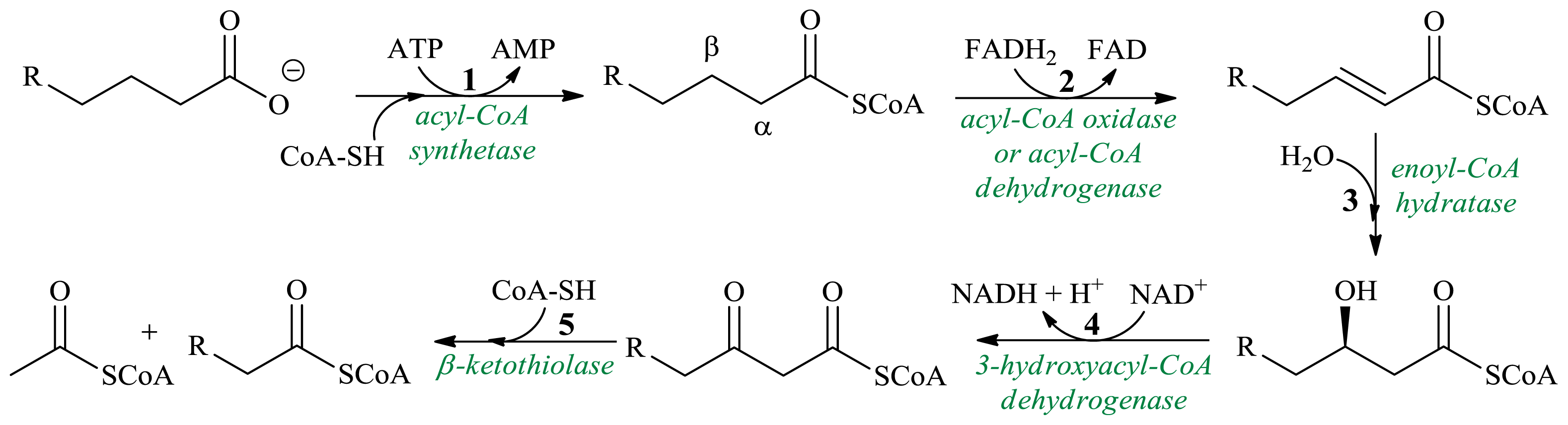
<p>β-Oxidation is the metabolic pathway of fatty acids oxidation by which fatty acids, in the form of acyl-CoA molecules, are broken down (<xref ref-type="fig" rid="f1-ijms-13-16514">Figure 1</xref>). Acetyl-CoA and a CoA thioester of an acid shorter by two carbon atoms are the products of a single round of the β-oxidation cycle of unbranched chain fatty acids. Subsequently, the shortened fatty acyl-CoA undergoes a further round of the β-oxidation cycle.</p>
<p>Oxidative reactions of the β-oxidation cycle are preceded by activation of the fatty acid to its thioester with coenzyme A (CoA) catalyzed by ATP-dependent ligase (<xref ref-type="fig" rid="f1-ijms-13-16514">Figure 1</xref>, step 1). As a result of dehydrogenation of the thioester, the enoyl-CoA is formed, and after hydration with the participation of enoyl-CoA hydratase, the hydroxyacyl-CoA is produced. The dehydrogenation reactions and the addition of a water molecule to the enoyl-CoA are stereoselective (<xref ref-type="fig" rid="f1-ijms-13-16514">Figure 1</xref>, steps 2 and 3). The enoyl-CoA hydratases exhibit significant enantioselectivity: the vast majority of hydratases described in the literature catalyze the addition of a water molecule to <italic>trans</italic> and <italic>cis</italic> enoyl-CoA, however the <sc>l</sc>-hydroxy product is the product of hydration of the <italic>trans</italic> bond, while the result of hydration of the <italic>cis</italic> substrate is the <sc>d</sc>-isomer. The third reaction of this pathway is the oxidation of the hydroxyl group, catalyzed by the 3-hydroxyacyl-CoA dehydrogenase. The thiolase catalyzes the thiolytic cleavage of β-ketoacyl-CoA into two molecules of acyl-CoA as products (<xref ref-type="fig" rid="f1-ijms-13-16514">Figure 1</xref>, step 5). The β-Oxidation process occurs in both mitochondria and peroxisomes. Generally, both models differ in metabolic fluxes. Mitochondrial β-oxidation is very efficient, usually converting R-CoA to the final product—acetyl-CoA. This pathway constitutes the major process by which fatty acids are oxidized to generate energy. Peroxisomal β-oxidation does not proceed via channelization, and its intermediates may accumulate in cells.</p>
<p>Xenobiotic molecules, such as certain drugs and environmental pollutants, can also be metabolized along with the fatty acids by β-oxidation in mammalian organisms. <italic>In vitro</italic> and <italic>in vivo</italic> investigations have shown that lovastatin is metabolized by rat and mouse liver microsomes to the reaction products of the β-oxidation cycle [<xref ref-type="bibr" rid="b6-ijms-13-16514">6</xref>]. Other cholesterol-lowering drugs such as simvastatin, pravestatin, and fluvastatin are believed to undergo a typical β-oxidation of the heptanoic side chain [<xref ref-type="bibr" rid="b7-ijms-13-16514">7</xref>]. 4-Heptanone, identified in human urine, is probably a product of the β-oxidation of 2-ethylhexanoic acid from plasticisers [<xref ref-type="bibr" rid="b8-ijms-13-16514">8</xref>]. Last year the results of a study were published which indicate the contributions of the peroxime and β-oxidation cycle to biotin synthesis in <italic>Aspergillus nidulans</italic>; it is believed that an analogous synthesis also occurs in other fungal strains [<xref ref-type="bibr" rid="b9-ijms-13-16514">9</xref>]. Many strains of bacteria metabolize carboxylic acids of various structures within the β-oxidation cycle, as well as other substrates after their conversion to the product with a carboxylic group [<xref ref-type="bibr" rid="b10-ijms-13-16514">10</xref>,<xref ref-type="bibr" rid="b11-ijms-13-16514">11</xref>]. These strains can use the metabolized compounds as the sole carbon and energy sources. This review mainly focuses on the application of the reaction of the β-oxidation cycle in biotransformation processes, therefore some cases are not covered, e.g., the industrially most important example is the synthesis of polyhydroxyalkanoates (biodegradable polymers) and chiral 3-hydroxyacids.</p>
<p>One of the major advantages of the synthetic use of β-oxidation cycle reactions is the possibility of substrate transformation along a series of reactions, catalyzed by a series of enzymes, in one biotechnological step utilizing whole cells of microorganisms. On the other hand, these biotransformation processes suffer from the fact that the desired product is further transformed in the culture of the microorganism. Typically, the desired metabolite is a reaction product of some fragment of the metabolic pathway, while the strain produces enzymes catalyzing the whole path of substrate oxidation to CO<sub>2</sub> and H<sub>2</sub>O. Further degradation of the freshly formed product, formation and accumulation of side products, inhibition of enzymatic activity at higher concentrations of the product and its toxicity are the major factors limiting efficiency of such biotransformation processes. Research is aimed at development of the operating conditions for production of a selected valuable product with the highest performance (e.g., to determine the effect of pH and dissolved oxygen concentration, which is necessary for the regeneration of the cofactors FAD and, more indirectly, NAD<sup>+</sup>). Mutants are selected, or recombinant biocatalysts are constructed, which exhibit a deficit of enzymes catalyzing further transformation of the desired product or synthesis of side products. Process workflow methodologies are also developed to reduce the toxicity of the product towards the biocatalyst.</p></sec>
<sec>
<title>2. Production of Optically Active Compounds</title>
<sec>
<title>2.1. Syntheses Employing Chiral Stereogenic Centers of a Natural Product</title>
<p>The majority of chiral natural compounds are present in only one specific enantiomeric form, as they are products of enzymatic reactions. Chiral center(s) present in a molecule of a natural optically active compound can be a base for a number of syntheses of optically active compounds. For example, <sc>d</sc>-glucose is a substrate in the syntheses of, among others, <sc>l</sc>-ascorbic acid (vitamin C) [<xref ref-type="bibr" rid="b12-ijms-13-16514">12</xref>] and optically active 1-deoxynojirimycin [<xref ref-type="bibr" rid="b13-ijms-13-16514">13</xref>]. The current article discusses the synthesis of flavoring lactones from lipids as well as selective degradation of the sterol side chain to C-19 or C-22 product(s). The pharmaceutical industry has expressed interest in selective sterol side chain degradation, because this process results in formation of steroid intermediates which can be used as building blocks for further synthesis of bioactive steroids of medicinal use.</p>
<sec>
<title>2.1.1. Production of Flavor-Active Lactones</title>
<p>Use of biocatalysts in the production of flavoring compounds structurally identical with those present in natural sources is preferred, because of, among others, formal (regulatory) reasons. According to the U.S. and European regulations (e.g., CFR 1990 and EEC 1334/2008), compounds isolated from natural resources, or obtained in microbial or enzymatic processes involving precursors isolated from nature, are classified as “natural”. Flavoring compounds found in nature, but obtained by chemical routes, are referred to as “nature-identical”. Consumer preferences reflecting the trends towards “healthy lifestyle” decide that the vast majority of fragrance food additives are compounds classified as “natural”. Lactones are a family of flavors and fragrances that are affected by such a trend. They are widely distributed in food, beverages and cosmetic preparations. Among these compounds one can find decalactone (4-decanolide), which provides a suitable characteristic aroma of peaches, apricots or strawberries. The price of γ-decalactone was 20 thousand US$/kg before the development of biotechnological methods of its synthesis. The possibility of producing this lactone from natural oils reduced the price of this product down to 1.2 thousand US$/kg (1986) and after the optimization of the fermentation, there was a further reduction of this price to 500 US$/kg (1998) and ca 300 US$/kg in 2004 [<xref ref-type="bibr" rid="b4-ijms-13-16514">4</xref>,<xref ref-type="bibr" rid="b14-ijms-13-16514">14</xref>].</p>
<p>A general metabolic pathway for the production of lactones from hydroxy fatty acids consists of the β-oxidation cycle and intramolecular esterification. Depending on the position of the hydroxyl group of the carboxylic acid, lactonisation can give γ-, δ- or ɛ-lactones. It is worth mentioning that lactones obtained by biocatalysis have a very high optical purity—their stereochemistry is determined by chirality of the asymmetric centers of their hydroxy fatty acid precursors.</p>
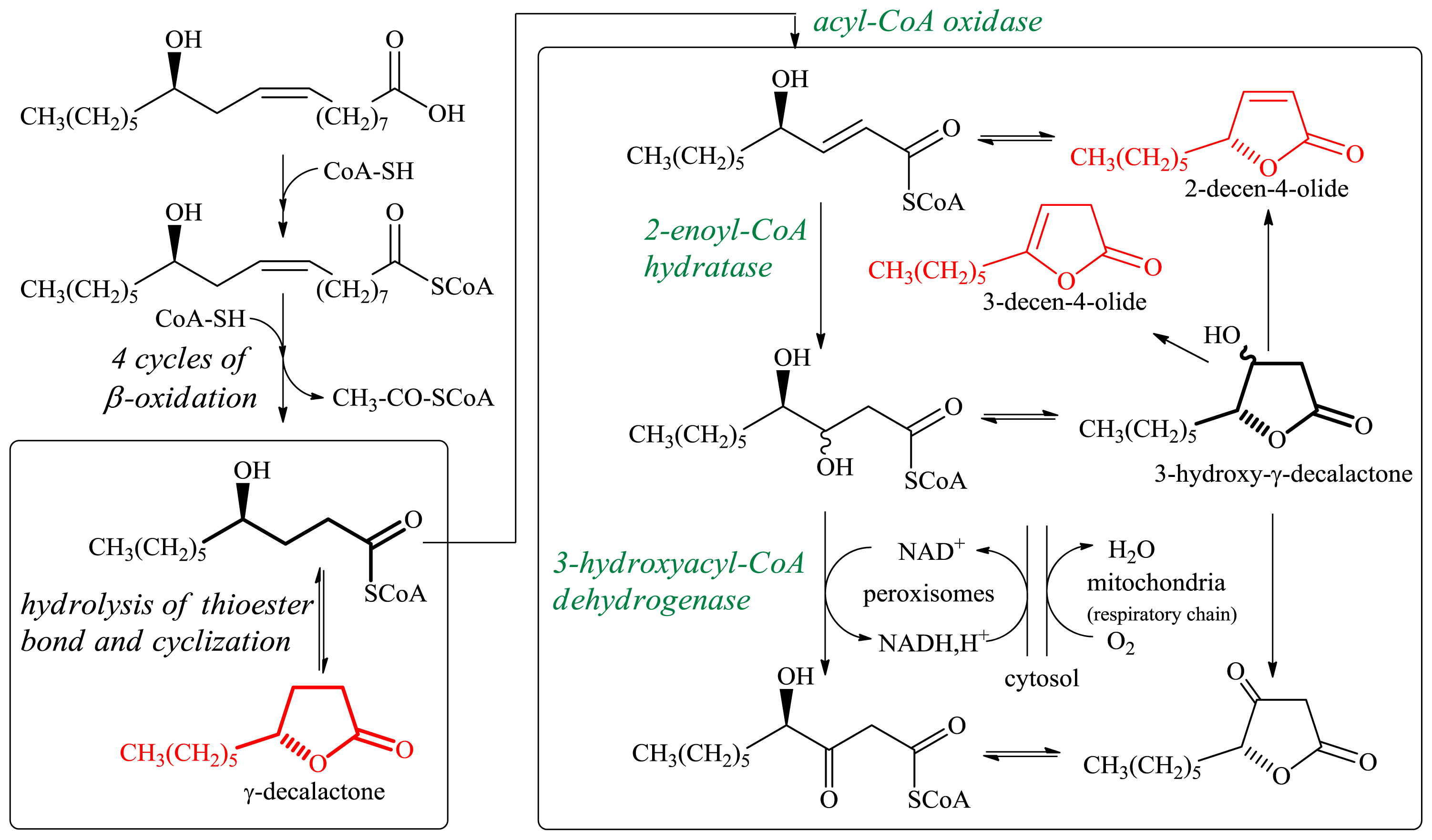
<p>Studies on the development of the efficient synthesis of γ-decalactone by biocatalysis were started by selecting a strain capable of conversion of ricinoleic acid (or its methyl ester) to 4-hydroxydecanoic acid [<xref ref-type="bibr" rid="b15-ijms-13-16514">15</xref>], which can be lactonised spontaneously under acidic conditions (pH 2) and/or after heating. Ricinoleic acid is one of only a few natural hydroxy fatty acids available in large quantities. The hydrolysis product of castor oil contains about 90% of this acid. The transformation of ricinoleic acid to 4-hydroxydecanoic acid includes four β-oxidation cycles; at each cycle a two-carbon-shorter metabolite—SCoA and an acetyl-CoA are produced (<xref ref-type="fig" rid="f2-ijms-13-16514">Figure 2</xref>).</p>
<p>Many processes using the bioconversion of ricinoleic acid to produce γ-decalactone have been patented (see in [<xref ref-type="bibr" rid="b16-ijms-13-16514">16</xref>]). The oxidation of ricinoleic acid is conducted by microorganisms belonging to <italic>Yarrowia</italic>, <italic>Saccharomyces</italic>, <italic>Candida</italic>, <italic>Rhodotorula</italic>, <italic>Sporobolomyces</italic>, <italic>Monilia</italic>, <italic>Pichia</italic>, <italic>Aspergillus</italic>, <italic>Mucor</italic> and <italic>Cladosporium</italic> genera. The processes with the highest product concentrations use <italic>Candida sorbophila</italic>[<xref ref-type="bibr" rid="b17-ijms-13-16514">17</xref>] and <italic>Yarrowia lipolytica</italic> strains [<xref ref-type="bibr" rid="b18-ijms-13-16514">18</xref>,<xref ref-type="bibr" rid="b19-ijms-13-16514">19</xref>]. The conversion of ricinoleic acid by <italic>Candida sorbophila</italic> can produce about 50 g/L of γ-decalactone [<xref ref-type="bibr" rid="b17-ijms-13-16514">17</xref>]. The maximum production of γ-decalactone by <italic>Yarrowia lipolytica</italic>, in the optimum conditions of agitation and aeration, was more than 11 g/L in less than 70 h [<xref ref-type="bibr" rid="b19-ijms-13-16514">19</xref>].</p>
<p>There are two main reasons for commonly much lower (up to 4–5 g/L) yields of γ-decalactone. The first one is the degradation of newly synthesized lactone by the producing yeast. The second one is only a partial use of ricinoleic acid or intermediate at the C<sub>10</sub> level, which is simultaneously the precursor for other γ-lactones (3-hydroxy-γ-decalactone and the products of its dehydration—dec-2-en-4-olide and dec-3-en-4-olide) (<xref ref-type="fig" rid="f2-ijms-13-16514">Figure 2</xref>).</p>
<p>The β-oxidation loop in the mitochondrial catabolism of fatty acids is theoretically repeated until the complete degradation of the substrate. In yeast, peroxisomal β-oxidation does not proceed via channelization, and at each stage, the metabolite can be hydrolyzed and accumulated depending on the pool of free CoA and acetyl-CoA, the pool of necessary cofactors or the saturation of the next enzyme of the cascade [<xref ref-type="bibr" rid="b21-ijms-13-16514">21</xref>]. Thus, the amount of produced lactone is a result of competition between different reactions. The research on the improvements in the productivity of γ-decalactone focuses on the role of the genes that encode the isozymes of acyl-CoA oxidase (Aox1 to 6, encoded by <italic>POX1</italic> to <italic>6</italic>[<xref ref-type="bibr" rid="b22-ijms-13-16514">22</xref>]) catalysing the first step of β-oxidation. Aox is generally considered as the fundamental rate-limiting enzyme. The best-known ones are the Aox isoenzymes from <italic>Yarrowia lipolytica</italic>. The specific role of each acyl-CoA oxidase was presented in several reviews [<xref ref-type="bibr" rid="b14-ijms-13-16514">14</xref>,<xref ref-type="bibr" rid="b21-ijms-13-16514">21</xref>]. It was confirmed that short-chain-specific Aox3 is involved in the oxidation after the C<sub>10</sub> level and the disruption of the <italic>POX3</italic> gene decreases lactone degradation [<xref ref-type="bibr" rid="b23-ijms-13-16514">23</xref>,<xref ref-type="bibr" rid="b24-ijms-13-16514">24</xref>]. Aox4 and Aox5 are non-chain-length-specific acyl-CoA oxidases and their activity is weak, albeit directed towards the wide range of substrates, whereas Aox1 is inactive [<xref ref-type="bibr" rid="b25-ijms-13-16514">25</xref>]. The long-chain-specific Aox2 was significant for conversion of ricinoleic acid and hence for the production of γ-decalactone. Deleting all the <italic>POX3–5</italic> genes resulted in an increased accumulation and an inhibition of γ-decalactone degradation [<xref ref-type="bibr" rid="b22-ijms-13-16514">22</xref>,<xref ref-type="bibr" rid="b26-ijms-13-16514">26</xref>]. The designed mutant produced 10 times more lactone than the wild type, and its growth was only slightly altered in comparison to the native strain. Recently, a recombinant of the diploid strain <italic>Y. lipolytica</italic>, with expression of <italic>POX2</italic> gene and disruption of <italic>POX3</italic> genes on two chromosomes (but without disruption of <italic>POX4</italic> and <italic>POX5</italic> genes) was constructed, and this mutant could be grown in the continuous fermentation of methyl ricinoleate. Compared with the wild type, the production of γ-decalactone was increased 4-fold, and there was no re-consumption of the product. It could be concluded that Aox2’s positive effect had a greater influence than the Aox3’s negative action to the γ-decalactone production [<xref ref-type="bibr" rid="b27-ijms-13-16514">27</xref>].</p>
<p>Another problem is the modification of β-oxidation flux, which allows a shift in the equilibrium between production of γ-decalactone and production of 3-hydroxy-γ-decalactone. It can however be achieved by decreasing the Aox2 and Aox3 activity. For a mutant with disrupted <italic>POX2</italic> and <italic>POX3</italic> genes the production of hydroxylactone was minimized [<xref ref-type="bibr" rid="b14-ijms-13-16514">14</xref>,<xref ref-type="bibr" rid="b21-ijms-13-16514">21</xref>,<xref ref-type="bibr" rid="b24-ijms-13-16514">24</xref>]. It was confirmed that accumulation of 3-hydroxy-γ-decalactone occurs when the amount of oxygen is lowered [<xref ref-type="bibr" rid="b20-ijms-13-16514">20</xref>,<xref ref-type="bibr" rid="b21-ijms-13-16514">21</xref>]. Low aeration conditions (e.g., during cell growth) resulted in low 3-hydroxy-acyl-CoA dehydrogenase activity, because its cofactor regeneration (NAD<sup>+</sup>) is not sufficient (<xref ref-type="fig" rid="f2-ijms-13-16514">Figure 2</xref>). This cofactor is regenerated through a shuttle mechanism, which probably depends on mitochondrial respiration. Under the hypoxiation regime, a lack of oxygen stopped the fluxes of the oxidation cascade at earlier stages and causes the accumulation of γ-decalactone. 3-Hydroxy-γ-decalactone is the precursor of two decenolides with flavoring properties (<xref ref-type="table" rid="t1-ijms-13-16514">Table 1</xref>). Although both decenolides are characterized by interesting sensory properties, they are not commercially produced because of the lack of simple methods for their separation [<xref ref-type="bibr" rid="b14-ijms-13-16514">14</xref>].</p>
<p>Apart from β-oxidation activity, another factor influencing the yield is the toxicity of the γ-decalactone and its C<sub>10</sub>-precursor against the producing strains. The mechanism involved in this toxicity is linked with the fact that the side-chain of the lactone interacts with cellular membranes, increasing their fluidity and decreasing their integrity [<xref ref-type="bibr" rid="b28-ijms-13-16514">28</xref>]<italic>Sporidiobolus</italic> strains are particularly sensitive to the presence of γ-decalactone [<xref ref-type="bibr" rid="b29-ijms-13-16514">29</xref>]. A number of strategies were developed to reduce the cytotoxity of γ-decalactone (e.g., adsorption on porous hydrophobic sorbents, inclusion in β-cyclodextrins, utilization of immobilization, addition of natural gum, surfactant and natural inert oils—mainly hydrogenated coconut oil or a mixture of tripalmitin, tristearin, triolein). For more details we refer the reader to the recent reviews and research articles [<xref ref-type="bibr" rid="b14-ijms-13-16514">14</xref>,<xref ref-type="bibr" rid="b21-ijms-13-16514">21</xref>,<xref ref-type="bibr" rid="b27-ijms-13-16514">27</xref>,<xref ref-type="bibr" rid="b30-ijms-13-16514">30</xref>].</p>
<p>Besides γ-decalactone, many other lactones can be produced by biotechnological processes (<xref ref-type="table" rid="t1-ijms-13-16514">Table 1</xref>). Their price depends on the availability of the corresponding hydroxy fatty acids. Moreover, microorganisms can also perform the step for the introduction of the hydroxyl group, if adequate substrates (hydroxyacids) are not available.</p>
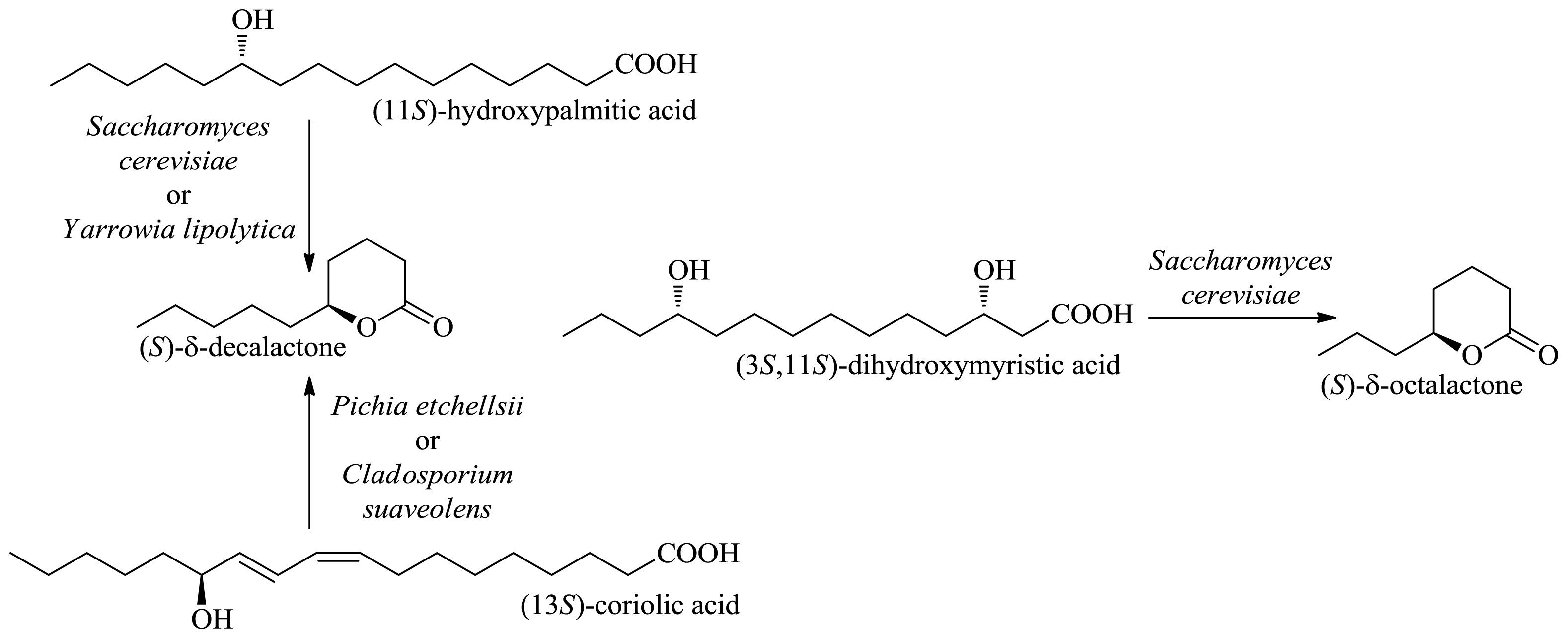
<p>(11<italic>S</italic>)-Hydroxypalmitic acid (jalapinolic acid) and (3<italic>S</italic>,11<italic>S</italic>)-dihydroxymyristic acid (ipurolic acid) can be extracted from a jalap resin or sweet potato for the purpose of their use in producing natural (<italic>S</italic>)-δ-deca- and (<italic>S</italic>)-δ-octalactone, respectively [<xref ref-type="bibr" rid="b31-ijms-13-16514">31</xref>]. (<italic>R</italic>)-δ-Decalactone can be obtained by the β-oxidative degradation of (13<italic>R</italic>)-coriolic acid, which is the major fatty acid of the seed oil of <italic>Coriaria nepalensis</italic>, whilst (<italic>S</italic>)-δ-decalactone can be produced from (13<italic>S</italic>)-coriolic acid of <italic>Monnina emarginata</italic> seed oil [<xref ref-type="bibr" rid="b32-ijms-13-16514">32</xref>] (<xref ref-type="fig" rid="f3-ijms-13-16514">Figure 3</xref>).</p>
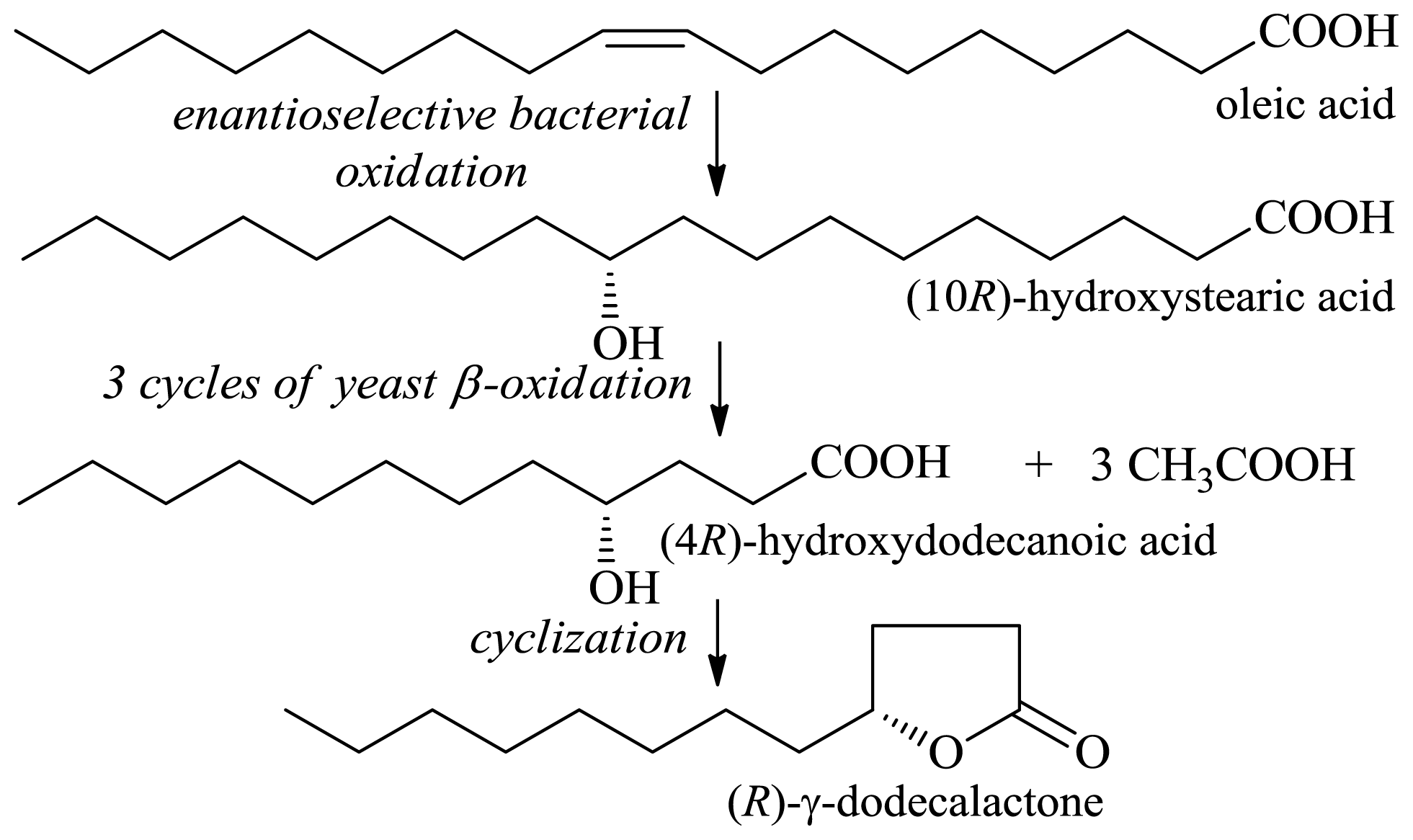
<p>Industrially useful lactones can be readily produced in large amounts from inexpensive fatty acids. γ-Dodecalactone is obtained from oleic acid in a process involving two biocatalysts [<xref ref-type="bibr" rid="b33-ijms-13-16514">33</xref>,<xref ref-type="bibr" rid="b34-ijms-13-16514">34</xref>]. A Gram-positive strain of bacteria catalyzed the conversion of oleic acid to (10<italic>R</italic>)-hydroxystearic acid, which was subsequently oxidized by bakers’ yeast to (4<italic>R</italic>)-hydroxydodecanoic acid (<xref ref-type="fig" rid="f4-ijms-13-16514">Figure 4</xref>). After cyclization, (<italic>R</italic>)-γ-dodecalactone was obtained in over 22% yield with respect to the initial substrate, oleic acid [<xref ref-type="bibr" rid="b33-ijms-13-16514">33</xref>].</p>
<p>Many studies have focused on 10-hydroxystearic acid production from oleic acid. Recently, it has been reported that whole cells of recombinant <italic>Escherichia coli</italic> containing oleate hydratase from <italic>Stenotrophomonas maltophilia</italic> produced 49 g/L of 10-hydroxystearic acid in 4 h, with a conversion yield of 98% and a volumetric productivity of 12.3 g/L/h—the highest thus far among cells, which can make a significant contribution in the industrial synthesis of this hydroxyacid [<xref ref-type="bibr" rid="b35-ijms-13-16514">35</xref>].</p>
<p>Linoleic acid and α-linolenic acid can be converted using microorganisms belonging to the genus <italic>Pediococcus</italic> or <italic>Bifidobacterium</italic> into 13-hydroxy-9-octadecenoic and 13-hydroxy-9,15-octadecadienoic acids, which are good substrates for the production of δ-decalactone and δ-jasminlactone by microorganisms belonging to the genus <italic>Kluyveromyces</italic> or <italic>Zygosaccharomyces</italic>, respectively [<xref ref-type="bibr" rid="b36-ijms-13-16514">36</xref>] (<xref ref-type="fig" rid="f5-ijms-13-16514">Figure 5</xref>).</p>
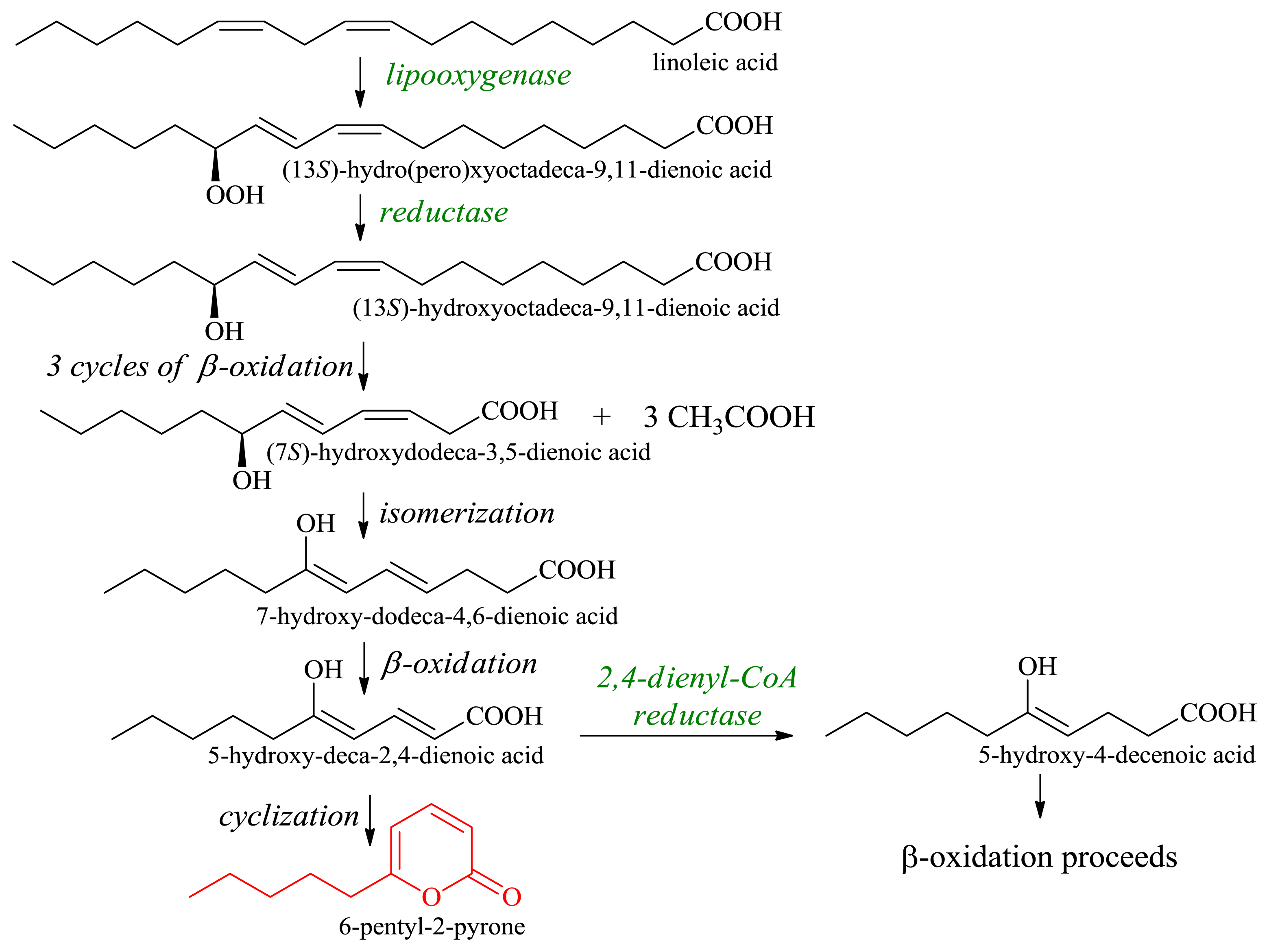
<p>Using different vegetable oils containing hydroxylated or non-hydroxylated fatty acids, it is possible to produce 6-pentyl-2-pyrone—an unsaturated δ-lactone with a strong odor of coconut [<xref ref-type="bibr" rid="b37-ijms-13-16514">37</xref>,<xref ref-type="bibr" rid="b38-ijms-13-16514">38</xref>] (<xref ref-type="fig" rid="f6-ijms-13-16514">Figure 6</xref>).</p>
<p>The biosynthesis of this lactone from linoleic acid in the <italic>Trichoderma</italic> species is initiated by a lipoxygenation at C-13 of the fatty acid with the formation of 13-hydroperoxide. The lipoxygenase reaction is followed by β-oxidation and isomerization to form 5-hydroxy-deca-2,4-dienoic acid. Low activity of the NADPH-dependent 2,4-dienyl-CoA reductase is essential for achieving good performance and yields of 6-pentyl-2-pyrone.</p></sec>
<sec>
<title>2.1.2. Microbiological Degradation of the Side Chain of Sterols</title>
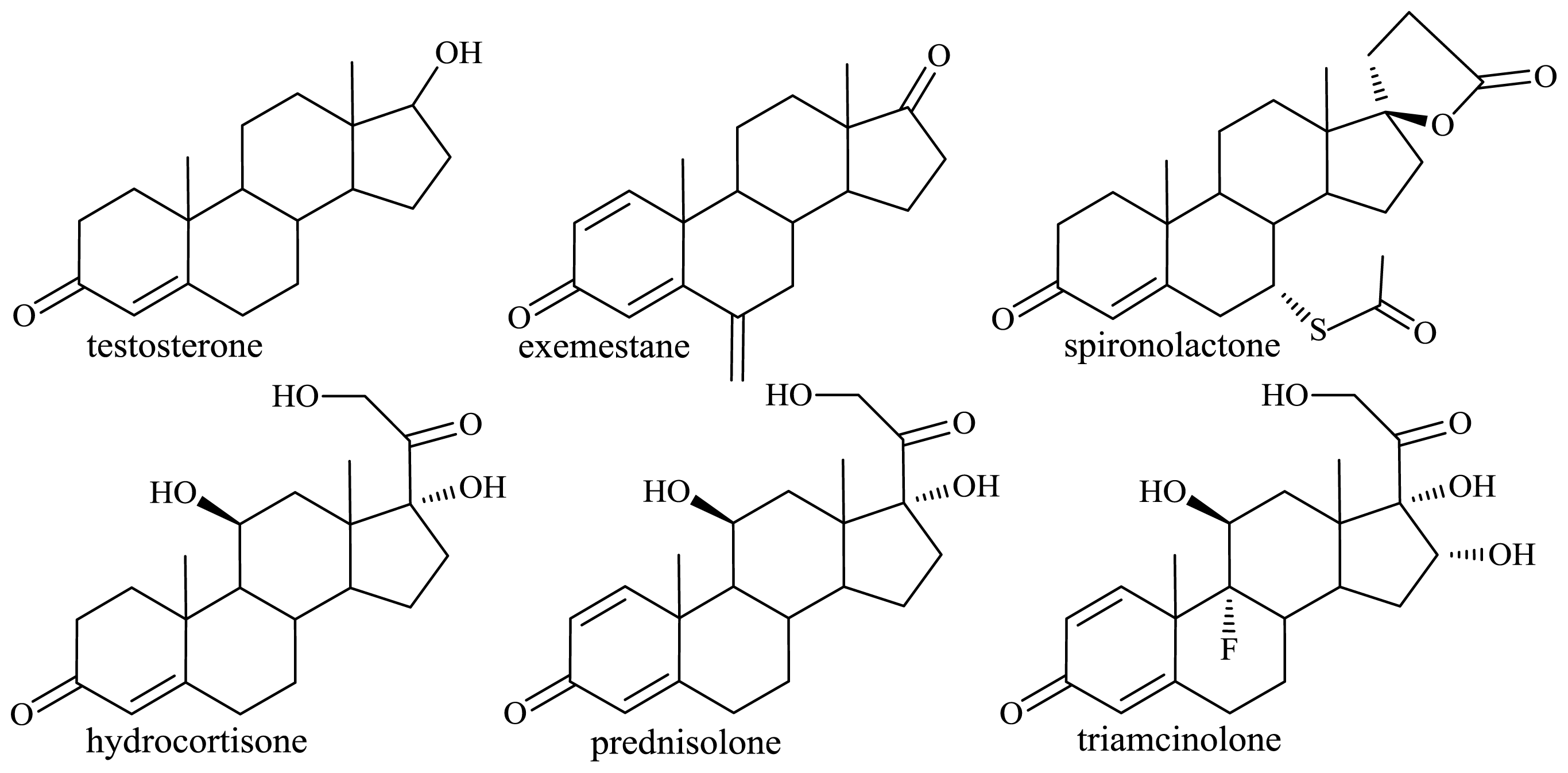
<p>Steroids secreted in animals by the sexual organs and adrenal cortex (e.g., sex hormone—testosterone) play a critical regulatory role in development of reproductive structures, they also influence many aspects of metabolism and immune function (hydrocortisone—glucocorticoids), help maintain blood volume and control renal excretion of electrolytes (mineralocorticoids). Steroid compounds have a wide therapeutic activity spectrum, namely anti-inflammatory, anti-allergy, anti-fungal, anti-viral, anti-tumor, neuroprotective and immunosuppressive. They are used as agents for prevention and therapy of some disorders, for example neurodegenerative diseases, hormone-dependent breast and prostate cancer, colon cancer; metabolic, cardiovascular and central nervous system disorders (<xref ref-type="fig" rid="f7-ijms-13-16514">Figure 7</xref>). Steroids, frequently found among the most marketed medical products, constitute the second largest group of pharmaceuticals, next to antibiotics [<xref ref-type="bibr" rid="b39-ijms-13-16514">39</xref>].</p>
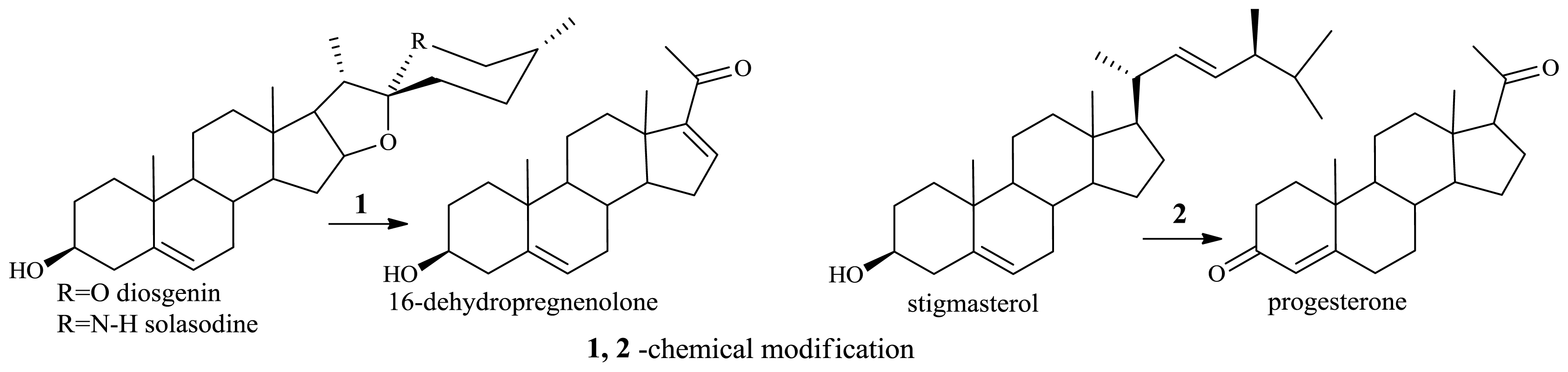
<p>Availability of raw materials is one of the fundamental issues related to the production of steroid drugs. The majority of hormones and steroidal drugs are synthesized by semi-synthesis using natural steroids as starting material. Sapogenins and sterols produced in large scale by plants are the raw material in the production of steroidal drugs. Sapogenins (which include diosgenin, hecogenin, solasodine) and stigmasterol (a sterol with the double bond in the side chain) are chemically transformed to C<sub>21</sub> products (16-dehydropregnenolone, progesterone), which are convenient intermediates in the synthesis of steroidal pharmaceuticals [<xref ref-type="bibr" rid="b40-ijms-13-16514">40</xref>] (<xref ref-type="fig" rid="f8-ijms-13-16514">Figure 8</xref>).</p>
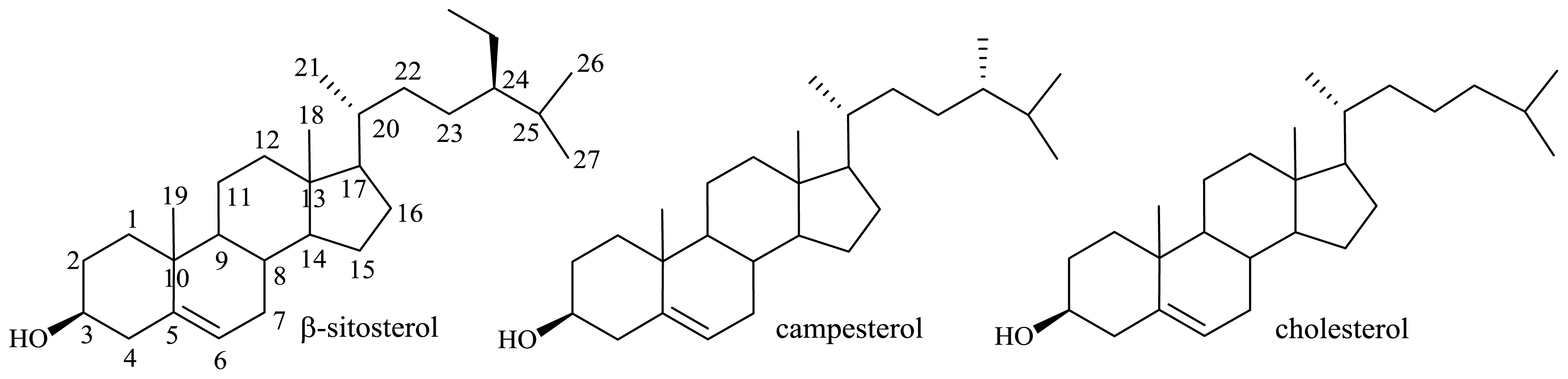
<p>The limited and unstable supply of diosgenin (for many years the major raw material in steroid production), together with the increase in the production of steroidal pharmaceuticals, were impulses to carry out research on transformations of (phyto)sterols with a saturated side chain (β-sitosterol, campesterol, cholesterol) to give valuable steroidal pharmaceutical intermediates (<xref ref-type="fig" rid="f9-ijms-13-16514">Figure 9</xref>). Phytosterols are the major raw materials resulting from the processing of vegetable oils, from sugarcane, and from the paper industry. A deodorizate waste product of vegetable oil processing can contain over 95%, while tall-oil effluent of a paper pulp industry—over 80% of phytosterols—mainly β-sitosterol, stigmasterol, campesterol [<xref ref-type="bibr" rid="b41-ijms-13-16514">41</xref>].</p>
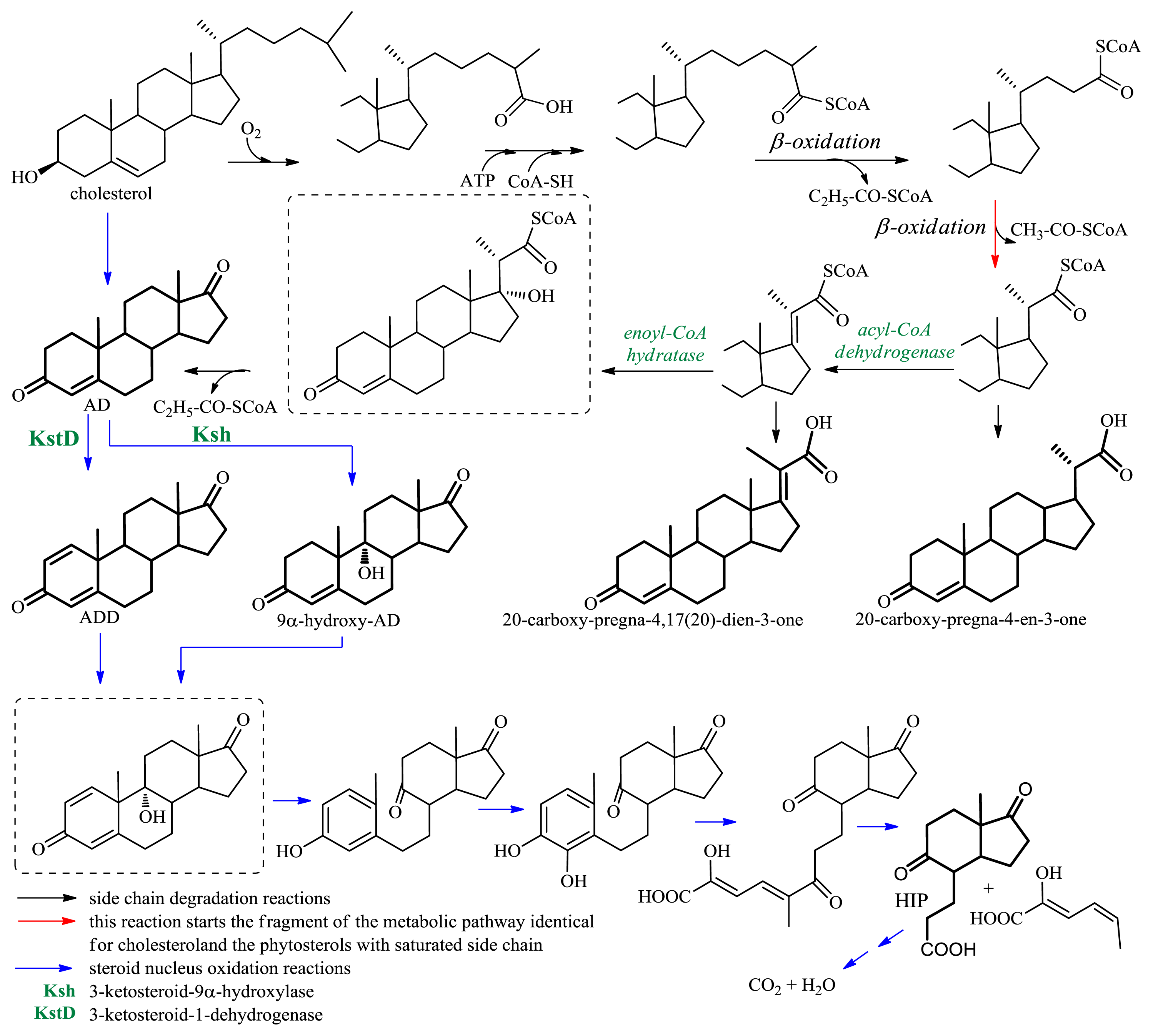
<p>In sterol molecules there is a double bond at C-5 and a hydroxyl group at the 3β-position, which can be easily converted to a 4-en-3-oxo moiety, present in the majority of steroids used in clinical settings [<xref ref-type="bibr" rid="b40-ijms-13-16514">40</xref>] (<xref ref-type="fig" rid="f7-ijms-13-16514">Figure 7</xref>); unfortunately, attempts failed to develop effective methods for chemical degradation of the 17β-aliphatic side chain of sterols [<xref ref-type="bibr" rid="b42-ijms-13-16514">42</xref>]. It was rational to assume that, due to the selectivity of enzymes, it would be possible to carry out selective degradation of the aliphatic side chain of sterols by microbial transformation. A number of strains of Gram-positive (<italic>Rhodococcus</italic>, <italic>Mycobacterium</italic>, <italic>Streptomyces</italic>, <italic>Brevibacterium</italic>) and Gram-negative (<italic>Pseudomonas</italic>, <italic>Comamonas</italic>, <italic>Burkholderia</italic>, <italic>Chromobacterium</italic>) bacteria can use sterols as the sole carbon source [<xref ref-type="bibr" rid="b43-ijms-13-16514">43</xref>] (<xref ref-type="fig" rid="f10-ijms-13-16514">Figure 10</xref>). CO<sub>2</sub> and H<sub>2</sub>O are the final products of microbial degradation of sterols, but among the metabolites there were identified synthetically useful C<sub>19</sub> steroids: androsta-4-en-3,17-dione (AD), androsta-1,4-dien-3,17-dione (ADD), 9α-hydroxy-androsta-1,4-dien-3,17-dione (9α-hydroxy-ADD), or the C<sub>22</sub> products: 20-carboxy-pregna-4-en-3-one, 20-carboxy-pregna-4,17(20)-dien-3-one. Also 3aα-H-4α(3′-priopionic acid)-7aβ-methylhexahydro-1,5-indanedione (HIP)—the product of partial degradation of steroidal skeleton—is the starting compound for the synthesis of medically important steroids, such as 19-norsteroids [<xref ref-type="bibr" rid="b44-ijms-13-16514">44</xref>] (<xref ref-type="fig" rid="f10-ijms-13-16514">Figure 10</xref>).</p>
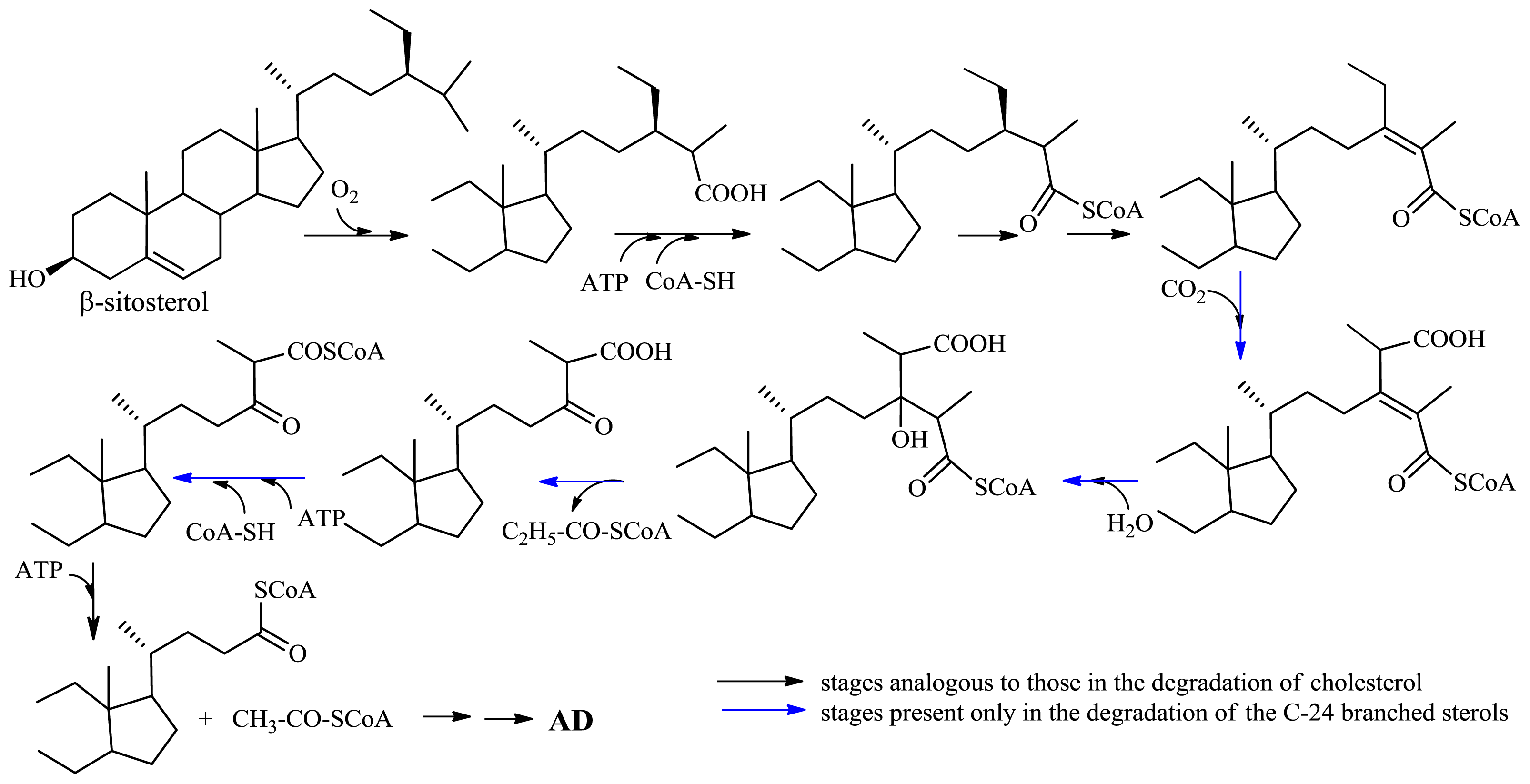
<p>During microbiological transformation, cleavage of the aliphatic side chain of sterols occurs as a result of β-oxidation of an acid containing the carboxyl group at C-26; the said acid is formed in two subsequent redox reactions: hydroxylation at C-26 and oxidation of the introduced hydroxyl group to the carboxyl function [<xref ref-type="bibr" rid="b42-ijms-13-16514">42</xref>]. AD is obtained as the result of oxidative degradation of the side chain of cholesterol after subsequent cleavage of propionyl-CoA, acetyl-CoA and propionyl-CoA, respectively. In the process of degradation of the C-24 branched sterols (β-sitosterol, campesterol) to AD, the C-28-carboxylation additionally occurs and there are released two molecules of propionyl-CoA, then acetyl-CoA, and finally propionyl-CoA; initial stages of degradation of the side chain of C-24 branched sterols and cholesterol are analogous (<xref ref-type="fig" rid="f11-ijms-13-16514">Figure 11</xref>). After formation of enoyl-CoA, before the first propionyl-CoA molecule is released, carboxylation of the allylic position (C-28) occurs. Subsequently, the product of hydration of the double bond releases propionyl-CoA in the course of a retro-aldol reaction. After CoA activation of the simultaneously formed β-keto-C26-oic product, its side-chain degradation occurs to AD, as in cholesterol [<xref ref-type="bibr" rid="b45-ijms-13-16514">45</xref>] (<xref ref-type="fig" rid="f11-ijms-13-16514">Figure 11</xref>).</p>
<p>Many research groups experimented on selecting a strain able to carry out selective degradation of the sterol side chain to product(s) with a conserved steroid nucleus. Hundreds of microorganisms were tested, some among them efficiently metabolized sterols, but none of the studied strains converted a sterol to either a C<sub>19</sub> or C<sub>22</sub> steroid as a major product. Studies on microbiological degradation of sterols established that during transformations by wild-type strains, besides oxidative degradation of the side chain of the sterol, also oxidation of the steroid nucleus occurs. The key role in the process of steroid nucleus degradation is played by oxidative reactions in the rings A and B: 1,2-dehydrogenation and 9α-hydroxylation. 9α-Hydroxy-androsta-1,4-dien-3,17-dione (9α-hydroxy-ADD) is a structurally unstable chemical, spontaneously reacting by opening of ring B and aromatization of ring A (<xref ref-type="fig" rid="f10-ijms-13-16514">Figure 10</xref>). Inhibition of activity of 3-ketosteroid-9α-hydroxylase (Ksh) or/and 3-ketosteroid-1-dehydrogenase (KstD) is significant in the design of microbiological transformations of sterols leading to industrially valuable intermediates (C<sub>19</sub> or C<sub>22</sub> steroids).</p>
<p>During transformation of cholesterol by <italic>Mycobacterium phlei</italic>, in the presence of α,α-dipyridyl, 8-hydroxyquinoline or Ni<sup>2+</sup> cations—9α-hydroxylase inhibitors, a mixture of AD and ADD was obtained with a good yield [<xref ref-type="bibr" rid="b11-ijms-13-16514">11</xref>]. The accumulation of AD and ADD suggests that the side-chain degradation occurs prior to sterol ring degradation. Due to environmental concerns and production costs, optimal methods of selective degradation of the sterol side chain are such transformations in which the biocatalysts are mutants of wild-type strains with either 9α-hydroxylase or 1,2-dehydrogenase deficit (or both). After isolation of the first mutant of <italic>Mycobacterium</italic> sp. which performed degradation of sterols to AD, a number of mutants were described and patented [<xref ref-type="bibr" rid="b11-ijms-13-16514">11</xref>,<xref ref-type="bibr" rid="b46-ijms-13-16514">46</xref>]. These mutants were obtained by chemical or physicochemical mutagenesis of the native strains performing effective degradation of sterols. After identification in 2000 and 2002 of the KstD and Ksh genes responsible for the catabolism of sterols in <italic>Rhodococcus erythropolis</italic> SQ1 [<xref ref-type="bibr" rid="b47-ijms-13-16514">47</xref>–<xref ref-type="bibr" rid="b49-ijms-13-16514">49</xref>], rapid progress has been noted in the studies on identification of the genes involved in microbial degradation of sterols [<xref ref-type="bibr" rid="b50-ijms-13-16514">50</xref>–<xref ref-type="bibr" rid="b52-ijms-13-16514">52</xref>]. In 2007, a wealth of information on sterol catabolism was provided by the discovery of the existence of a gene cluster encoding sterol catabolism in <italic>Rhodococcus</italic> and <italic>Mycobacterium</italic> species [<xref ref-type="bibr" rid="b51-ijms-13-16514">51</xref>]. Further, a steroid-coenzyme A ligase (FadD19) was identified and characterized as having an essential <italic>in vivo</italic> role in the degradation of the side chains of C-24 branched-chain sterols in <italic>Rhodococcus rhodochrous</italic> DSM43269 [<xref ref-type="bibr" rid="b52-ijms-13-16514">52</xref>]. Currently, conventional mutagenesis based on random mutations induced by UV/chemical treatments is more and more frequently replaced by targeted disruption of genes encoding either Ksh or KstD to generate highly selective strains [<xref ref-type="bibr" rid="b50-ijms-13-16514">50</xref>,<xref ref-type="bibr" rid="b53-ijms-13-16514">53</xref>]. Genetic manipulation is potentially able to overcome a problem, significant for industrial applications, connected with the fact that most of the mutant strains in practical use produce AD and ADD simultaneously [<xref ref-type="bibr" rid="b46-ijms-13-16514">46</xref>]. A mutant of <italic>Mycobacterium neoaurum</italic> NwIB-01 after inactivation of the KstD-encoding gene produced mainly AD (AD:ADD 11:1). Another mutant of <italic>M. neoaurum</italic> NwIB-01, in which the KstD was augmented, proved to be a good ADD-producing strain (AD:ADD 1:50); during transformation by <italic>M. neoaurum</italic> NwIB-01 a mixture of AD and ADD was formed with a 1:2.5 ratio [<xref ref-type="bibr" rid="b54-ijms-13-16514">54</xref>]. An important pharmaceutical androgen—testosterone—can also be the product of microbiological transformation of sterols. Testosterone is obtained from the AD(D) either by a four-step chemical synthesis, or using microbial 17β-reduction by yeasts or fungi [<xref ref-type="bibr" rid="b55-ijms-13-16514">55</xref>]. Microbial conversion of sterols to testosterone by using the strains capable of both sterol side chain cleavage and 17β-reduction of AD allows formation of testosterone in one biotechnological step. The strain of <italic>Mycobacterium</italic> sp. VKM Ac-1815D, capable of sterol side chain degradation and expressing 17β-hydroxysteroid dehydrogenase activity, converted β-sitosterol (5 g/L) to testosterone with 50%–55% molar yield [<xref ref-type="bibr" rid="b55-ijms-13-16514">55</xref>].</p>
<p>Ergosterol—a sterol with the 5,7-diene system and a double bond in the side chain—is produced mainly by fungi and phytoplankton. Some strains able to catalyze transformation of β-sitosterol to C<sub>19</sub> products were also able to oxidize ergosterol to AD [<xref ref-type="bibr" rid="b56-ijms-13-16514">56</xref>,<xref ref-type="bibr" rid="b57-ijms-13-16514">57</xref>]. During conversion of ergosterol, besides side chain degradation and transformation of the 3β-hydroxy-5-ene to the 3-oxo-4-ene moiety, hydrogenation of the double bond at C-7 also occurred. Conversion of ergosterol led to much lower yields of AD when compared to the sterol substrates mentioned earlier, therefore reports on microbiological degradation of ergosterol are rare [<xref ref-type="bibr" rid="b57-ijms-13-16514">57</xref>]. Products of transformations of ergosterol derivatives (the C<sub>3</sub>-OH hydrogen atom substituted by a group which is not eliminated under the conditions of the transformation) by wild-type strains can be C<sub>22</sub> and/or C<sub>19</sub> products with a preserved 5,7-diene system [<xref ref-type="bibr" rid="b57-ijms-13-16514">57</xref>,<xref ref-type="bibr" rid="b58-ijms-13-16514">58</xref>] (<xref ref-type="fig" rid="f12-ijms-13-16514">Figure 12</xref>).</p>
<p>Transformation of 3β-methoxy-methoxy-ergosterol by the strain <italic>Mycobacterium</italic> sp. VKM Ac-1815D led to a mixture of 3β-methoxy-methoxy-androsta-5,7-dien-17-one (the major metabolite) and (20<italic>S</italic>)-3β-methoxy-methoxy-20-hydroxymethyl-pregna-5,7-diene [<xref ref-type="bibr" rid="b57-ijms-13-16514">57</xref>]. Modification of the ring A structure of ergosterol has not exerted significant influence on the process of side chain degradation by <italic>Mycobacterium</italic> sp. VKM Ac-1815D; the major product was obtained with 60% yield, at the 5 g/L substrate concentration. 3β-Hydroxy-androsta-5,7-diene-17-one is a key intermediate for the synthesis of novel vitamin D derivatives. Naturally occurring forms of vitamin D (<italic>i.e.</italic>, 1α,25-dihydroxylated ergo- or cholecalciferol derivatives) can produce hypercalcemia or phosphatemia when administered in pharmacologically relevant doses. For this reason, natural and synthetic analogs of vitamins D<sub>2</sub> and D<sub>3</sub>, called deltanoids, have been actively investigated, and modifications include the rings as well as the side chain of the vitamin [<xref ref-type="bibr" rid="b59-ijms-13-16514">59</xref>,<xref ref-type="bibr" rid="b60-ijms-13-16514">60</xref>].</p>
<p>Since the 1980s, products of microbiological degradation of sterols have found practical applications [<xref ref-type="bibr" rid="b5-ijms-13-16514">5</xref>]; currently, almost half of the starting materials for steroid drug production are obtained by the bioconversion process of sterols [<xref ref-type="bibr" rid="b40-ijms-13-16514">40</xref>]. Efforts are continuing to increase the efficiency of the process of microbiological degradation of sterols to valuable steroids. The efficiency of the enzymatic transformation of sterols is limited mainly by the low water solubility of (phyto)sterols and the fact that the final products are toxic to microorganisms. The preferred method of enhancing the bioavailability of phytosterols by improving their solubility is surfactant-facilitated emulsification [<xref ref-type="bibr" rid="b61-ijms-13-16514">61</xref>,<xref ref-type="bibr" rid="b62-ijms-13-16514">62</xref>]. During the transformation process, sterol uptake occurs by direct contact between microbial cells and the phytosterol particles [<xref ref-type="bibr" rid="b61-ijms-13-16514">61</xref>,<xref ref-type="bibr" rid="b63-ijms-13-16514">63</xref>,<xref ref-type="bibr" rid="b64-ijms-13-16514">64</xref>]. Therefore some microorganisms can use poorly water-soluble hydrocarbons as carbon sources, especially if these microorganisms have the following features: lipophilic cell walls, active transporters and membrane-associated enzymes, as well as the capacity to secrete biosurfactants or bioemulsifiers increasing the availability of hydrophobic compounds [<xref ref-type="bibr" rid="b65-ijms-13-16514">65</xref>–<xref ref-type="bibr" rid="b67-ijms-13-16514">67</xref>]. The cell walls of actinobacteria contain <italic>ca.</italic> 60% (dry mass) of the long-chained mycolate acids. These can be modified to form a thick and rigid envelope, which enables the microorganisms to decompose a wide range of hydrophobic compounds [<xref ref-type="bibr" rid="b67-ijms-13-16514">67</xref>,<xref ref-type="bibr" rid="b68-ijms-13-16514">68</xref>] and to enhance the uptake and bioavailability of phytosterols.</p>
<p>Hydrophobic phytosterols show in water a tendency to form agglomerates, which also limits their bioaccessibility. Addition of synthetic surfactants facilitated emulsification, inhibiting the aggregation of substrates, although the presence of artificial surfactants is usually toxic to bacteria and leads to necrosis and cell lysis [<xref ref-type="bibr" rid="b69-ijms-13-16514">69</xref>]. It is known that in natural environments bacteria secrete bioemulsifiers or biosurfactants to make the hydrophobic substrates more available, for example mycolate-containing <italic>Mycobacteriun</italic> and <italic>Rhodococcus</italic>, which use phytosterols as carbon sources, synthesize biosurfactants [<xref ref-type="bibr" rid="b65-ijms-13-16514">65</xref>]. Pursuing this property might become an alternative to the addition of artificial surfactants.</p>
<p>The mechanism of the cellular uptake of sterols, especially its transmembrane phase, is not yet fully understood, but its understanding would improve rational genetic modifications. Electron microscopy results led to a “flexible multi-component mesophase” model [<xref ref-type="bibr" rid="b63-ijms-13-16514">63</xref>] providing a sharp concentration gradient in the mesophase between particles of sterols and the membrane. The model suggests that there should exist channels of proteins, stretching from the cytoplasm to the surface of the cell, capable of sterol binding or transformation, thus enhancing the transport. Further studies [<xref ref-type="bibr" rid="b51-ijms-13-16514">51</xref>,<xref ref-type="bibr" rid="b70-ijms-13-16514">70</xref>] confirmed the presence of a locus containing 10 genes, conserved in various mycolate-containing actinobacteria, which—if deactivated—resulted in inhibition of the sterol uptake.</p>
<p>The second major factor which limits conversion of phytosterols to steroid products is their toxicity to microbial cells. For example, AD and ADD are considered to inhibit cell growth and inhibit the enzyme activity in the sterol degradation pathway [<xref ref-type="bibr" rid="b71-ijms-13-16514">71</xref>]. The tolerance of microorganisms towards toxicity of steroid products is one of the important features which can improve the strains to be able to transform phytosterols, although the mechanisms which allow the strains to stay resistant are still unknown. The improvement of the product yield is carried out by extracting the steroid products from the reaction media (<italic>in situ</italic> product recovery) and by creating mutants which are tolerant to the steroid products [<xref ref-type="bibr" rid="b62-ijms-13-16514">62</xref>,<xref ref-type="bibr" rid="b71-ijms-13-16514">71</xref>]. Amberlite XAD-7 resin, dimethyl siloxane and cyclodextrins are used to recover AD and ADD from the reaction media [<xref ref-type="bibr" rid="b72-ijms-13-16514">72</xref>], also organic-aqueous two-phase systems are useful for the immediate recovery of the steroid product during the biotransformations [<xref ref-type="bibr" rid="b62-ijms-13-16514">62</xref>].</p>
<p>The effective means of solving the problem of toxic products is to develop mutants with improved tolerance to toxicity of the steroids. This can be achieved by an increase in the efflux capability of the cell, or by directed evolutionary mutagenesis towards steroid-tolerant mutants. In the literature there are reports concerning improving the resistance and product yield by adding high amounts of androstanes to the culture after nitrosoguanidine mutagenesis, and further isolation of steroid-tolerant mutants [<xref ref-type="bibr" rid="b71-ijms-13-16514">71</xref>].</p>
<p>In view of the fact that currently only the location of genes directly responsible for sterol catabolism is known in <italic>Rhodococcus</italic> and <italic>Mycobacterium</italic>, but usually not the function of the encoded proteins [<xref ref-type="bibr" rid="b51-ijms-13-16514">51</xref>], the literature suggests that the immediate tasks are characterization of the mechanisms of phytosterol catabolism, phytosterol uptake, tolerance to toxic products, and global regulations involved in the sterol metabolism [<xref ref-type="bibr" rid="b46-ijms-13-16514">46</xref>]. This might not be easy using known microorganisms of good performance, because the metabolic processes are complicated and interlaced. Therefore, instead of modifying microorganisms already known to transform phytosterols, the route suggested by Wang <italic>et al.</italic> is a complete reconstruction of the transformation pathway leading from phytosterols to the desired steroids in a heterologous host organism with suitable physiological trains. This can be achieved in two ways: First, by selecting a robust host which already is superior to the known phytosterol-transforming microorganisms with respect to phytosterol uptake and resistance to the product toxicity. This route would require thorough determination and understanding of the phytosterol metabolism, including degradation of the C-17 side chains. An alternative would be to follow the studies on yeast [<xref ref-type="bibr" rid="b73-ijms-13-16514">73</xref>] where it is possible to achieve rerouting of the native biosynthesis of ergosterol to analogous brassicasterol and campesterol. Such reconstitution of the phytosterol transformation system in yeast has the advantage of being based on an already proven route and well-known microorganism and fermentation process, but one of the disadvantages is that yeast is vulnerable to the toxic effects of the steroid products; therefore, intensive research is necessary to utilize industrially this promising route.</p>
<p>A biocatalyst for industrial use should be easily cultured and non-pathogenic. This, unfortunately, is not the case with <italic>Mycobacteria</italic> which exhibit the overall best performance in transformations. There are however pathogens or opportunistic pathogens, not easily cultured, and slow in transformation (taking even a week). Future investigations might be therefore directed towards the less explored genera <italic>Arthrobacter</italic>, <italic>Bacillus</italic>, <italic>Brevibacterium</italic>, <italic>Corynebacterium</italic>, <italic>Norcardia</italic>, <italic>Rhodococcus</italic>, and others [<xref ref-type="bibr" rid="b46-ijms-13-16514">46</xref>]. Experiments are ongoing on the isolation of new, useful biocatalysts from the natural environment, whose catalytic properties differ from currently known cases. An Actinomycete <italic>Gordonia neofelifaecis</italic>, isolated recently from the faeces of <italic>Neofelis nebulosa</italic>, carries out the conversion of cholesterol giving ADD as practically the sole product (<italic>ca</italic>. 90%) [<xref ref-type="bibr" rid="b53-ijms-13-16514">53</xref>].</p>
<p>Microbial sterol side chain degradation is also a powerful tool for generation of novel biologically active steroid compounds. Some products of this process and their derivatives are highly cytotoxic or possess immune system stimulating properties, effective against various infections (<xref ref-type="fig" rid="f13-ijms-13-16514">Figure 13</xref>). (20<italic>S</italic>)-20-Hydroxymethylpregna-1,4-dien-3-one showed strong cytotoxicity against HeLa cell lines; cytotoxic activity is also exhibited by its 15β-hydroxy derivative [<xref ref-type="bibr" rid="b74-ijms-13-16514">74</xref>]. 3β-Hydroxyandrosta-5,7-diene-17-one—a product of microbial degradation of 3β-methoxy-methoxy-ergosterol, is a precursor of androsta-5,7-diene-3β,17β-diol [<xref ref-type="bibr" rid="b75-ijms-13-16514">75</xref>]. Another steroidal 5,7-diene—3β-hydroxyandrosta-5,7-dien-17β-carboxylic acid—was tested in the context of inhibition of the proliferation of normal keratinocytes and normal and malignant melanocytes. It was also effective as a condition-dependent regulator of fibroblast proliferation, finally it stimulated leukemia cell differentiation [<xref ref-type="bibr" rid="b76-ijms-13-16514">76</xref>].</p></sec></sec>
<sec>
<title>2.2. Production of Optically Active β-Hydroxyacids</title>
<p>Optically active β-hydroxyacids are the chiral building blocks in the asymmetric synthesis of drugs, vitamins, pheromones, fragrances and numerous other bioactive compounds [<xref ref-type="bibr" rid="b77-ijms-13-16514">77</xref>]. Enantiomerically pure β-hydroxyacids can be obtained in various stereoselective enzymatic reactions: by reduction of the carbonyl group of β-ketoacids or β-ketoesters, oxidation of 1,3-diols, hydration of α,β-unsaturated acids [<xref ref-type="bibr" rid="b78-ijms-13-16514">78</xref>], and by oxidation of an acid in the course of the partial β-oxidation cycle [<xref ref-type="bibr" rid="b77-ijms-13-16514">77</xref>]. Significant practical applications among the products of the β-oxidation cycle were found for <italic>R</italic> and <italic>S</italic> enantiomers of β-hydroxyisobutyric acid (<xref ref-type="fig" rid="f14-ijms-13-16514">Figure 14</xref>), and <sc>l</sc>-carnitine.</p>
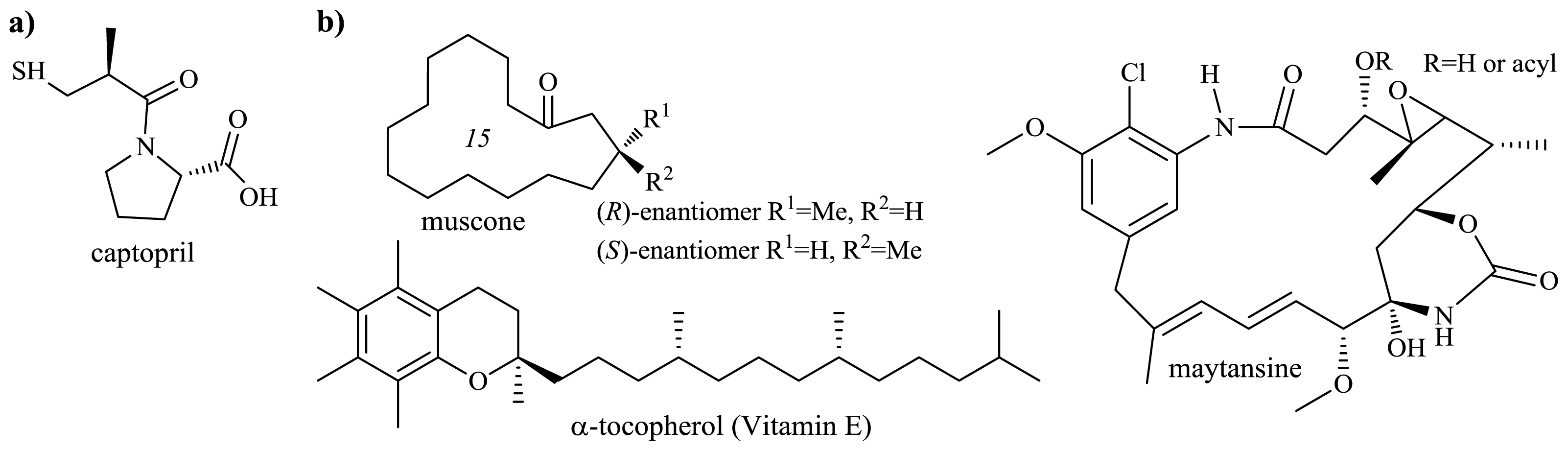
<p>Both enantiomers of β-hydroxyisobutyric acid find application in the synthesis of biologically active compounds, including drugs, vitamins and food additives [<xref ref-type="bibr" rid="b77-ijms-13-16514">77</xref>,<xref ref-type="bibr" rid="b78-ijms-13-16514">78</xref>] (<xref ref-type="fig" rid="f15-ijms-13-16514">Figure 15</xref>). Microbial hydroxylation of isobutyric acid is carried out with high enantioselectivity, although the molar yield of the product, particularly in the processes carried out at a higher concentration of substrate, was usually less than 50% [<xref ref-type="bibr" rid="b79-ijms-13-16514">79</xref>,<xref ref-type="bibr" rid="b80-ijms-13-16514">80</xref>], mainly due to degradation of the formed hydroxyacid by the producing strain. A high molar conversion yield was achieved using a mutant defective in β-hydroxyisobutyric acid dehydrogenase—the enzyme catalyzing subsequent to the hydration, reaction in the β-oxidation cycle [<xref ref-type="bibr" rid="b81-ijms-13-16514">81</xref>]. For the industrial production of β-hydroxyisobutyric acid it is important to determine the optimal composition of the medium for cell growth and high activity of the enzymes catalyzing transformation, the elements necessary to ensure that the product is obtained with high molar conversion yield. Experiments have shown that both the cell growth of the microorganisms and the β-hydroxyisobutyric acid production decreased as the substrate concentration increased; a considerable degradation of the hydroxyacid product was observed when the substrate, isobutyric acid, was depleted in the medium. The production rate of β-hydroxyisobutyric acid increased as the glucose concentration decreased, while the conversion yield of isobutyric acid to β-hydroxyisobutyric acid showed an opposite trend. With controlled feeding of isobutyric acid and glucose, a high titer of β-hydroxyisobutyric acid was obtained by a fed-batch cultivation of the producing strain [<xref ref-type="bibr" rid="b82-ijms-13-16514">82</xref>,<xref ref-type="bibr" rid="b83-ijms-13-16514">83</xref>].</p>
<p><italic>Candida rugosa</italic> IFO 0750 is the effective biocatalyst for the oxidation of isobutyric acid to (<italic>R</italic>)-β-hydroxyisobutyric acid [<xref ref-type="bibr" rid="b81-ijms-13-16514">81</xref>,<xref ref-type="bibr" rid="b82-ijms-13-16514">82</xref>]. Under optimal conditions the product was obtained with a concentration of 100 g/L (productivity 0.83 g/L/h), but the molar conversion yield of the product did not exceed 40% [<xref ref-type="bibr" rid="b82-ijms-13-16514">82</xref>]. The low molar conversion yield was caused by the fact that the hydroxyacid was further metabolized into methylmalonic acid semialdehyde by (<italic>R</italic>)-β-hydroxyisobutyric acid dehydrogenase. The biocatalyst allowing higher yields of the product to be obtained was selected from among the mutants of <italic>C. rugosa</italic> IFO 0750 (mutations induced by UV/chemical treatments), which were not able to assimilate propionic acid. A stable mutant of <italic>C. rugosa</italic> MME 1259 transformed isobutyric acid to (<italic>R</italic>)-β-hydroxyisobutyric acid in a concentration of 150 g/L and with the molar conversion yield of over 80% [<xref ref-type="bibr" rid="b84-ijms-13-16514">84</xref>]. (<italic>R</italic>)-β-Hydroxyisobutyric acid is a building block for the synthesis of captopril, which is known as a blood pressure-lowering agent [<xref ref-type="bibr" rid="b83-ijms-13-16514">83</xref>] (<xref ref-type="fig" rid="f15-ijms-13-16514">Figure 15</xref>).</p>
<p>Strains of <italic>Pseudomonas putida</italic> and <italic>Y. lipolytica</italic> conduct enantioselective oxidation of isobutyric acid to (<italic>S</italic>)-β-hydroxyisobutyric acid [<xref ref-type="bibr" rid="b79-ijms-13-16514">79</xref>,<xref ref-type="bibr" rid="b83-ijms-13-16514">83</xref>] (<xref ref-type="fig" rid="f14-ijms-13-16514">Figure 14</xref>). A method of synthesis of (<italic>S</italic>)-β-hydroxyisobutyric acid from isobutyric or methacrylic acids by <italic>Pseudomonas aeruginosa</italic> was developed and patented [<xref ref-type="bibr" rid="b85-ijms-13-16514">85</xref>]. (<italic>S</italic>)-β-Hydroxyisobutyric acid is an intermediate for the synthesis of α-tocoferol and calcimycin, both enantiomers of muscone, and maytansine—an antitumor-acting alkaloid [<xref ref-type="bibr" rid="b78-ijms-13-16514">78</xref>,<xref ref-type="bibr" rid="b83-ijms-13-16514">83</xref>] (<xref ref-type="fig" rid="f15-ijms-13-16514">Figure 15</xref>).</p></sec>
<sec>
<title>2.3. Production of <sc>l</sc>-Carnitine</title>
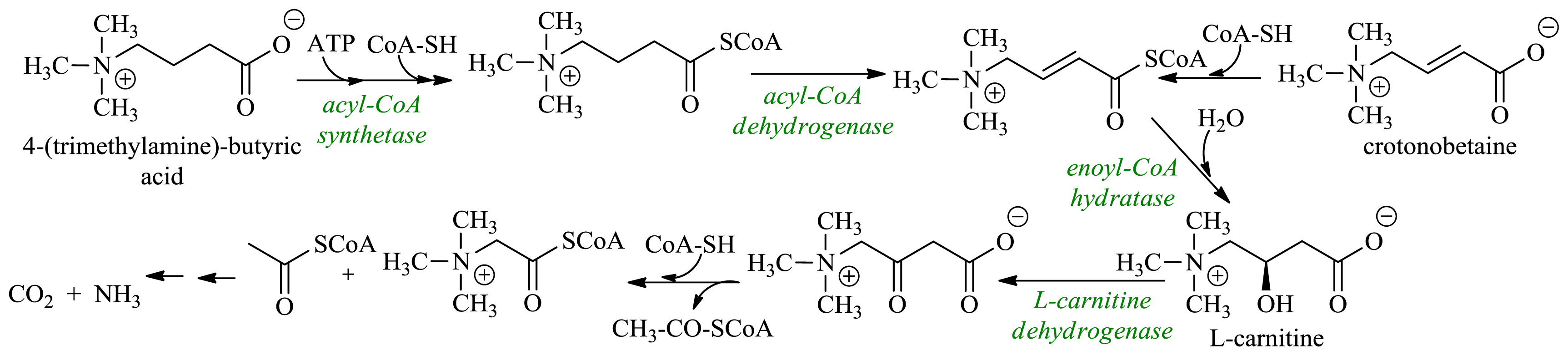
<p>Among numerous important nutritional and medical applications found for <sc>l</sc>-carnitine [(<italic>R</italic>)-3-hydroxy-4-(trimethylamine)-butanoic acid] over the last 30 years, the most prominent are: protective action in heart diseases (<italic>angina pectoris</italic>) and asthma, weight-loss food supplementation, male infertility and osteoporosis treatment. Its metabolic role results from its participation in the β-oxidation cycle: carnitine helps transport fatty acids into the mitochondria, where the degradation process to acyl-CoA takes place. Global annual production of <sc>l</sc>-carnitine, reaching several thousand tons, is mostly carried out by microbial transformations, and successful artificial routes often include enzymatic kinetic resolution steps [<xref ref-type="bibr" rid="b86-ijms-13-16514">86</xref>]. However, synthetic, racemic carnitine is not pharmacologically active; the (<italic>S</italic>) enantiomer inhibits carnitine acyltransferases and related proteins transporting carnitine through the mitochondrial membrane [<xref ref-type="bibr" rid="b87-ijms-13-16514">87</xref>,<xref ref-type="bibr" rid="b88-ijms-13-16514">88</xref>]. Microbial, enantioselective hydroxylation of 4-(trimethylamine)-butyric acid by a mutant HK13 is the core part of the synthesis of <sc>l</sc>-carnitine by the Swiss company Lonza [<xref ref-type="bibr" rid="b89-ijms-13-16514">89</xref>]. The wild-type strain HK4, taxonomically related to <italic>Agrobacterium</italic> and <italic>Rhizobium</italic>, metabolizes the 4-(trimethylamine)-butyric acid and crotonobetaine to CO<sub>2</sub> and ammonia (<xref ref-type="fig" rid="f16-ijms-13-16514">Figure 16</xref>), and the metabolite mixture contains identifiable, but small amounts of <sc>l</sc>-carnitine. The study indicates that <sc>l</sc>-carnitine, formed from the 4-(trimethylamine)-butyric acid (in the sequence of reactions: thioesterification with CoA → α,β-dehydrogenation → double bond hydration), is metabolized to CO<sub>2</sub> and NH<sub>3</sub>. The HK4 strain was then subjected to mutagenesis and the mutant HK13 was isolated, which exhibited deficit of <sc>l</sc>-dehydrogenase. The mutant HK13 transforms the 4-(trimethylamine)-butyric acid into <sc>l</sc>-carnitine in quantitative yield.</p>
<p>A similar synthesis involving two enzymes (activation of crotonobetaine by thioesterification with CoA, and double bond hydration) was proposed for the transformation of crotonobetaine to <sc>l</sc>-carnitine in <italic>Proteus</italic> sp. [<xref ref-type="bibr" rid="b90-ijms-13-16514">90</xref>]. This transformation, along with its analogue in <italic>E. coli</italic>[<xref ref-type="bibr" rid="b91-ijms-13-16514">91</xref>], is, however, reversible and constitutes a pathway of carnitine degradation in microbes. Therefore, it is necessary to optimize the process in the desired direction: from crotonobetaine to <sc>l</sc>-carnitine. This was carried out by theoretical modeling of the kinetics of the process [<xref ref-type="bibr" rid="b92-ijms-13-16514">92</xref>], as well as by various experimental means: increase in the permeability of the <italic>E. coli</italic> cells by addition of surfactants resulted in yields of up to 94% with the <italic>E. coli</italic> K38 T7-5KE32 strain [<xref ref-type="bibr" rid="b93-ijms-13-16514">93</xref>]; increased availability of CoA and cofactor engineering resulting in redirection of metabolic fluxes were named as necessary steps in optimizing <sc>l</sc>-carnitine production by a variety of <italic>E. coli</italic> strains [<xref ref-type="bibr" rid="b94-ijms-13-16514">94</xref>].</p></sec></sec>
<sec>
<title>3. β-Oxidation in Synthesis of Achiral Products</title>
<sec>
<title>3.1. Production of β-Hydroxy-β-Methylbutyric Acid</title>
<p>Numerous experimentations on animals have shown that β-hydroxy-β-methylbutyric acid exhibits anti-catabolic and anabolic effects and exerts positive impact on growth and health [<xref ref-type="bibr" rid="b95-ijms-13-16514">95</xref>,<xref ref-type="bibr" rid="b96-ijms-13-16514">96</xref>]. It is used as a dietary supplement for sportsmen, especially for bodybuilders, because it increases muscle fatigue resistance and promotes faster growth of muscle tissue [<xref ref-type="bibr" rid="b97-ijms-13-16514">97</xref>]. In addition, β-hydroxy-β-methylbutyric acid induces proliferation of macrophages, stimulates phagocytosis [<xref ref-type="bibr" rid="b95-ijms-13-16514">95</xref>], decreases muscle tissue reduction associated with autoimmune diseases (e.g., AIDS), prevents devastating effects of cancer, improves blood pressure and regulates the content of LDL-cholesterol [<xref ref-type="bibr" rid="b97-ijms-13-16514">97</xref>].</p>
<p>In mammals β-hydroxy-β-methylbutyrate is produced from leucine via transformation to α-ketocaproate (approximately 5% of leucine is metabolized into β-hydroxy-β-methylbutyrate) [<xref ref-type="bibr" rid="b97-ijms-13-16514">97</xref>,<xref ref-type="bibr" rid="b98-ijms-13-16514">98</xref>]. Enzymatic or microbiological approaches to β-hydroxy-β-methylbutyric acid syntheses are of interest due to the fact that the chemical method generates environmentally undesirable byproducts and residues. High levels of β-hydroxy-β-methylbutyric acid (0.38 g/L) can be synthesized by cultures of <italic>Galactomyces reessii</italic> (formerly <italic>Endomyces reessii</italic>) with β-methylbutyric acid (isovaleric acid) as the substrate [<xref ref-type="bibr" rid="b99-ijms-13-16514">99</xref>,<xref ref-type="bibr" rid="b100-ijms-13-16514">100</xref>], however the molar conversion yield of β-hydroxy-β-methylbutyric acid did not exceed 50% [<xref ref-type="bibr" rid="b99-ijms-13-16514">99</xref>] (<xref ref-type="fig" rid="f17-ijms-13-16514">Figure 17</xref>).</p>
<p>Attempts have been made to verify the biocatalytic capabilities of <italic>G. reessii</italic> enzymes involved in β-methylbutyric acid to β-hydroxy-β-methylbutyric acid conversions. Activities of enzymes and the synthesis of β-hydroxy-β-methylbutyric acid from metabolic intermediates with cell-free extracts of <italic>G. reessii</italic> clearly showed that β-methylbutyric acid is transformed to β-hydroxy-β-methylbutyric acid via the leucine catabolic pathway [<xref ref-type="bibr" rid="b100-ijms-13-16514">100</xref>] (<xref ref-type="fig" rid="f17-ijms-13-16514">Figure 17</xref>). The purified hydratase isolated from <italic>G. reessii</italic> catalyzed the hydration of crotonyl-CoA and methylcrotonyl-CoA; leucine and isovaleric acid are effective inducers of this enzyme. Competitive inhibition of <italic>G. reessii</italic> enoyl-CoA hydratase by acetyl-CoA, propionyl-CoA and acetoacetyl-CoA versus β-methylcrotonyl-CoA suggests a link between the hydratase and metabolites of the fatty acid β-oxidation [<xref ref-type="bibr" rid="b101-ijms-13-16514">101</xref>]. An understanding of the kinetics, temperature, substrate specificities, inhibition and other aspects of the key enzyme could lead to further optimization of the whole cell process, and a considerable further improvement in β-hydroxy-β-methylbutyric acid yields.</p></sec>
<sec>
<title>3.2. Production of Vanillic Acid and Vanillin</title>
<p>Vanillic acid is one of the major components of “natural vanilla” aroma and it is used as a flavoring agent. It has also an antioxidant and antimicrobial activity and therefore it can be considered as a potential food preservative [<xref ref-type="bibr" rid="b102-ijms-13-16514">102</xref>]. The highest amount of vanillic acid has been found in the roots of <italic>Angelica sinensis</italic>, a plant used in traditional Chinese medicine. Various studies have provided evidence of the pharmacological action of vanillic acid and its potential in the treatment of inflammation and immune disorders [<xref ref-type="bibr" rid="b103-ijms-13-16514">103</xref>].</p>
<p>Vanillic acid is a valuable product for biotechnological applications since it is used as the starting material in the chemical synthesis of vanillin—one of the world’s most important flavoring compounds [<xref ref-type="bibr" rid="b104-ijms-13-16514">104</xref>]. The high price of natural vanillin, with a demand significantly larger than the supply of vanilla extracted from vanilla beans, as well as the increase in consumer interest in products which can be labeled “natural”, are the combined causes of intensive research on the development of alternative technologies for the acquisition of vanillin. These efforts are mainly focused on the search of natural compounds that can be microbially converted to vanillin and the selection of an efficient biocatalyst capable of transforming the substrate. Since vanilin or vanillic acid are products in the microbial degradation of ferulic acid, eugenol and isoeugenol, these compounds are considered to be the best precursors for bioconversion processes [<xref ref-type="bibr" rid="b102-ijms-13-16514">102</xref>,<xref ref-type="bibr" rid="b105-ijms-13-16514">105</xref>]. The ferulic acid is an intermediate in the conversion of eugenol to vanillin by a number of microbial strains [<xref ref-type="bibr" rid="b106-ijms-13-16514">106</xref>]. It is abundantly available from different natural sources, such as wood, sugar beet molasses, bran from corn and rice [<xref ref-type="bibr" rid="b107-ijms-13-16514">107</xref>].</p>
<p>The bioconversion of ferulic acid to vanillin or vanillic acid has been studied with a wide range of microorganisms (see in [<xref ref-type="bibr" rid="b108-ijms-13-16514">108</xref>]). A vanillin concentration not exceeding 16 g/L was obtained with <italic>Streptomyces setonii</italic>[<xref ref-type="bibr" rid="b109-ijms-13-16514">109</xref>], and at least 7 g/L with <italic>Amycolatopsis</italic> sp. DSM 9992 [<xref ref-type="bibr" rid="b110-ijms-13-16514">110</xref>]. The highest production of vanillin from an actinomycete using an adsorbent resin was 19.2 g/L with molar conversion yield of 54.4% [<xref ref-type="bibr" rid="b111-ijms-13-16514">111</xref>]. Usually, the accumulation of vanillin in the culture of the microorganism is low, because it is further metabolized to vanillic acid by vanillin dehydrogenase (<italic>vdh</italic>) or other products utilized by microorganisms as a source of carbon and energy. The transformation of vanillin to vanillic acid or vanillic alcohol is a part of the strain’s defense mechanism—vanillin has toxic effects [<xref ref-type="bibr" rid="b104-ijms-13-16514">104</xref>,<xref ref-type="bibr" rid="b112-ijms-13-16514">112</xref>], and at concentrations above 1 g/L prevents growth of the vanillin-producing microorganisms. The increasing knowledge regarding enzymes that are responsible for the transformation of ferulic acid, as well as the identification of the genes coding them, offers opportunities of identifying metabolic pathways and construction of recombinant strains limiting further degradation.</p>
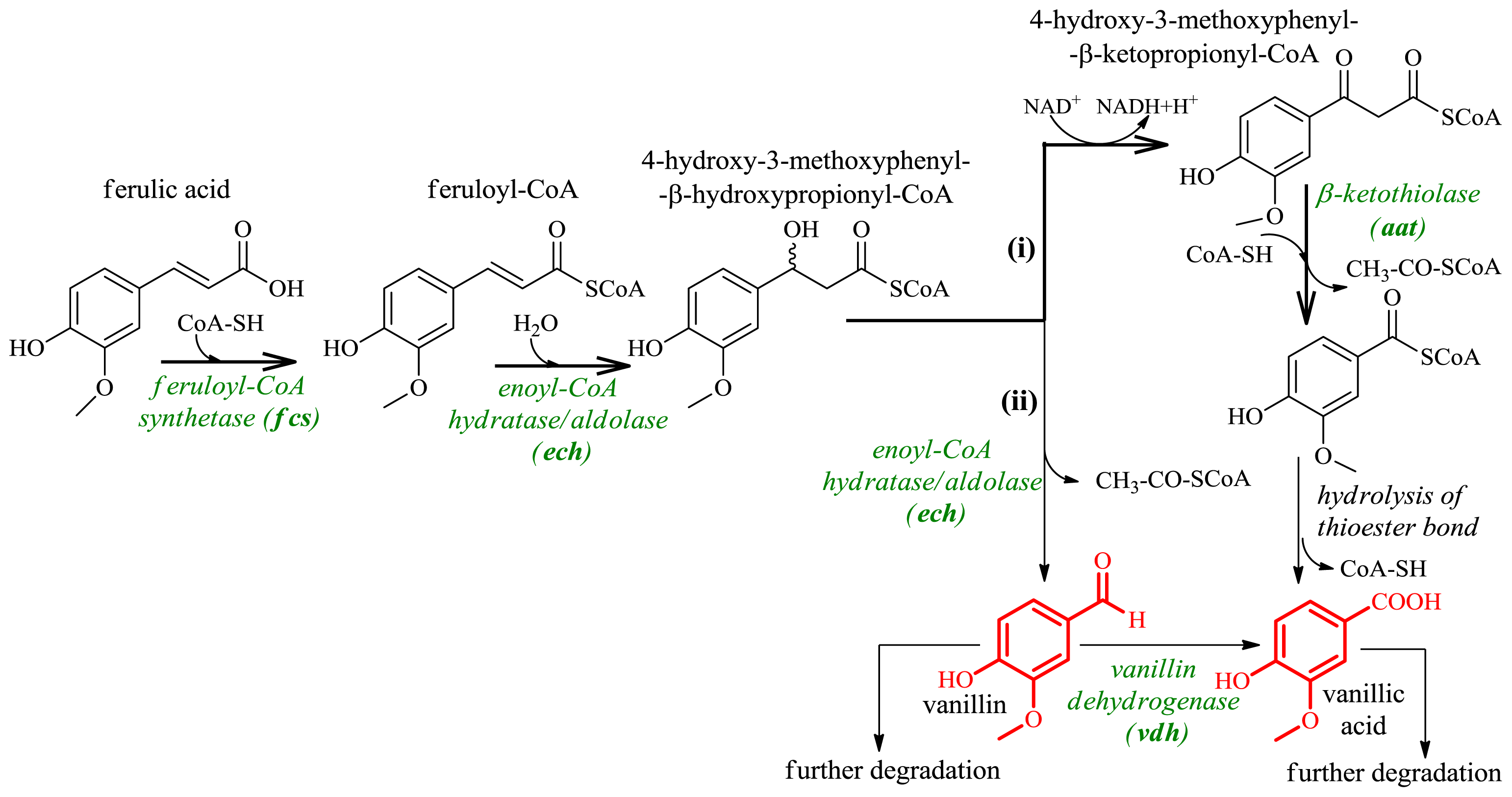
<p>One of the pathways involved in the conversion of ferulic acid to vanillic acid or vanillin in microorganisms is the β-oxidation process that occurs by a mechanism analogous to the β-oxidation of fatty acids. Ferulic acid is activated to the CoA thioester by feruloyl-CoA synthetase (encoded by <italic>fcs</italic> genes), feruloyl-CoA is subsequently hydrated, and the pathway includes the thioclastic cleavage of 4-hydroxy-3-methoxyphenyl-β-ketopropionyl-CoA to acetyl-CoA and vanillyl-CoA, catalyzed by the β-ketothiolase (encoded by <italic>aat</italic> genes) (<xref ref-type="fig" rid="f18-ijms-13-16514">Figure 18</xref>, route (i)).</p>
<p>The β-Oxidative means of ferulic acid degradation was proposed with <italic>Rhodotorula rubra</italic>[<xref ref-type="bibr" rid="b113-ijms-13-16514">113</xref>], <italic>Rhodococcus</italic> I24 [<xref ref-type="bibr" rid="b114-ijms-13-16514">114</xref>], and white-rot fungus <italic>Pycnoporus cinnabarinus</italic>[<xref ref-type="bibr" rid="b115-ijms-13-16514">115</xref>]. The penultimate strain tolerates high concentrations of eugenol, toxic to most microorganisms, and which therefore can be considered as a suitable candidate for vanillic acid or vanillin production from eugenol, a much cheaper substrate than the natural ferulic acid [<xref ref-type="bibr" rid="b112-ijms-13-16514">112</xref>,<xref ref-type="bibr" rid="b116-ijms-13-16514">116</xref>]. A technology for transforming ferulic acid, obtained from the waste residue of rice brain oil, into vanillin (with achieved yield of 2.8 g/L) was developed with the use of a combination of fungal strains <italic>Aspergillus niger</italic> and <italic>Pycnoporus cinnabarinus</italic>[<xref ref-type="bibr" rid="b117-ijms-13-16514">117</xref>].</p>
<p>The much more common pathway of ferulic acid degradation in microorganisms is the mechanism in which, after hydration of feruloyl-CoA, 4-hydroxy-3-methoxyphenyl-β-hydroxypropionyl-CoA is cleaved to vanillin and acetyl-CoA (<xref ref-type="fig" rid="f18-ijms-13-16514">Figure 18</xref>, route (ii)). Both reactions are catalyzed by one enzyme enoyl-CoA hydratase/aldolase (encoded by <italic>ech</italic> genes). This mechanism has been described, among others, for <italic>Pseudomonas</italic> sp. HR199 [<xref ref-type="bibr" rid="b112-ijms-13-16514">112</xref>], <italic>P. fluorescens</italic> BF13 [<xref ref-type="bibr" rid="b118-ijms-13-16514">118</xref>], <italic>Streptomyces setonii</italic>[<xref ref-type="bibr" rid="b116-ijms-13-16514">116</xref>], <italic>S. sannanensis</italic>[<xref ref-type="bibr" rid="b119-ijms-13-16514">119</xref>], <italic>Amycolatopsis</italic> sp. HR167 [<xref ref-type="bibr" rid="b120-ijms-13-16514">120</xref>], <italic>Rhodococcus opacus</italic> PD630 [<xref ref-type="bibr" rid="b114-ijms-13-16514">114</xref>]. Recently, genetic engineering was applied to produce vanillin from ferulic acid using metabolically engineered <italic>Escherichia coli</italic>[<xref ref-type="bibr" rid="b105-ijms-13-16514">105</xref>,<xref ref-type="bibr" rid="b106-ijms-13-16514">106</xref>,<xref ref-type="bibr" rid="b121-ijms-13-16514">121</xref>,<xref ref-type="bibr" rid="b122-ijms-13-16514">122</xref>]. It was demonstrated that derivatives of the strain <italic>P. fluorescens</italic> BF13 accumulated vanillin if inactivation of the <italic>vdh</italic> gene was associated with expression of the <italic>fcs</italic> and <italic>ech</italic> genes [<xref ref-type="bibr" rid="b106-ijms-13-16514">106</xref>]. This strain produced up to 8.41 mM of vanillin, which is the highest level for recombinant <italic>Pseudomonas</italic> strains.</p></sec></sec>
<sec sec-type="conclusions">
<title>4. Conclusions</title>
<p>There is a growing interest in exploiting microbial bioconversions for the production of high value-added products. In general, the advantages of biotechnological processes are: high substrate- or product specificity leading to only one isomer of the product, relatively mild reaction conditions and fewer environmental problems. Biotransformations involving β-oxidation reactions are exemplary for the practical utilization of enzymes and regulatory mechanisms developed in the course of the evolutionary refinement of cellular processes during the adaptation of microorganisms to the environmental conditions. Such biotransformations allow the production of valuable products from renewable, cheaper and natural raw materials; this includes also products unavailable via chemical syntheses. Various strategies have been pursued to achieve this goal. Finding the strains with the highest catalysis capability, modification of metabolic pathways to increase the accumulation of the desired product, as well as process optimization and recovery of the target products are desirable. However, until now, in most biotransformations the yields of the products are typically too low to make the biotechnological process workable; further studies are necessary to overcome the limitations found to date. Such studies aiming at novel efficient synthetic routes are stimulated by, and in turn also stimulate, progress in the fields of e.g., microbial physiology, biochemistry and genetics; thus, the respective metabolic pathways become clearer. This conclusion suggests that future studies will focus on the isolation of enzymes and genes involved in such pathways.</p></sec></body>
<back>
<ref-list>
<title>References</title>
<ref id="b1-ijms-13-16514"><label>1</label><citation citation-type="journal"><person-group person-group-type="author"><name><surname>Leffingwell</surname><given-names>J.C.</given-names></name></person-group><article-title>Chirality &amp; bioactivity I.: Pharmacology</article-title><source>Leffingwell Rep</source><year>2003</year><volume>3</volume><fpage>1</fpage><lpage>27</lpage></citation></ref>
<ref id="b2-ijms-13-16514"><label>2</label><citation citation-type="journal"><person-group person-group-type="author"><name><surname>Brenna</surname><given-names>E.</given-names></name><name><surname>Fuganti</surname><given-names>C.</given-names></name><name><surname>Serra</surname><given-names>S.</given-names></name></person-group><article-title>Enantioselective perception of chiral odorants</article-title><source>Tetrahedron: Asymmetry</source><year>2003</year><volume>14</volume><fpage>1</fpage><lpage>42</lpage><pub-id pub-id-type="doi">10.1016/S0957-4166(02)00713-9</pub-id></citation></ref>
<ref id="b3-ijms-13-16514"><label>3</label><citation citation-type="journal"><person-group person-group-type="author"><name><surname>Breuer</surname><given-names>M.</given-names></name><name><surname>Ditrich</surname><given-names>K.</given-names></name><name><surname>Habicher</surname><given-names>T.</given-names></name><name><surname>Hauer</surname><given-names>B.</given-names></name><name><surname>Keβeler</surname><given-names>M.</given-names></name><name><surname>Stürmer</surname><given-names>R.</given-names></name><name><surname>Zelinski</surname><given-names>T.</given-names></name></person-group><article-title>Industrial methods for the production of optically active intermediates</article-title><source>Angew. Chem. Int. Edit</source><year>2004</year><volume>43</volume><fpage>788</fpage><lpage>824</lpage><pub-id pub-id-type="doi">10.1002/anie.200300599</pub-id></citation></ref>
<ref id="b4-ijms-13-16514"><label>4</label><citation citation-type="journal"><person-group person-group-type="author"><name><surname>Schrader</surname><given-names>J.</given-names></name><name><surname>Etschmann</surname><given-names>M.M.W.</given-names></name><name><surname>Sell</surname><given-names>D.</given-names></name><name><surname>Hilmer</surname><given-names>J.M.</given-names></name><name><surname>Rabenhorst</surname><given-names>H.</given-names></name></person-group><article-title>Applied biocatalysis for the synthesis of natural flavor compound—current industrial processes and future prospects</article-title><source>Biotechnol. Lett</source><year>2004</year><volume>26</volume><fpage>463</fpage><lpage>472</lpage><pub-id pub-id-type="doi">10.1023/B:BILE.0000019576.80594.0e</pub-id><pub-id pub-id-type="pmid">15127786</pub-id></citation></ref>
<ref id="b5-ijms-13-16514"><label>5</label><citation citation-type="journal"><person-group person-group-type="author"><name><surname>Kieslich</surname><given-names>K.</given-names></name></person-group><article-title>Microbial side-chain degradation of sterols</article-title><source>J. Basic Microbiol</source><year>1985</year><volume>25</volume><fpage>461</fpage><lpage>474</lpage><pub-id pub-id-type="doi">10.1002/jobm.3620250713</pub-id><pub-id pub-id-type="pmid">3903107</pub-id></citation></ref>
<ref id="b6-ijms-13-16514"><label>6</label><citation citation-type="journal"><person-group person-group-type="author"><name><surname>Vyas</surname><given-names>K.P.</given-names></name><name><surname>Kari</surname><given-names>P.H.</given-names></name><name><surname>Pitzenberger</surname><given-names>S.M.</given-names></name><name><surname>Halpin</surname><given-names>R.A.</given-names></name><name><surname>Ramjit</surname><given-names>H.G.</given-names></name><name><surname>Arison</surname><given-names>B.</given-names></name><name><surname>Murphy</surname><given-names>J.S.</given-names></name><name><surname>Hoffman</surname><given-names>W.F.</given-names></name><name><surname>Schwartz</surname><given-names>M.S.</given-names></name><name><surname>Ulm</surname><given-names>E.H.</given-names></name></person-group><article-title>Biotransformation of lovastatin. I. Structure elucidation of <italic>in vitro</italic> and <italic>in vivo</italic> metabolites in the rat and mouse</article-title><source>Drug Metab. Dispos</source><year>1990</year><volume>18</volume><fpage>203</fpage><lpage>211</lpage><pub-id pub-id-type="pmid">1971574</pub-id></citation></ref>
<ref id="b7-ijms-13-16514"><label>7</label><citation citation-type="journal"><person-group person-group-type="author"><name><surname>Prueksaritanont</surname><given-names>T.</given-names></name><name><surname>Ma</surname><given-names>B.</given-names></name><name><surname>Fang</surname><given-names>X.</given-names></name><name><surname>Subramanian</surname><given-names>R.</given-names></name><name><surname>Yu</surname><given-names>J.</given-names></name><name><surname>Lin</surname><given-names>J.H.</given-names></name></person-group><article-title>β-Oxidation of simvastatin in mouse liver preparations</article-title><source>Drug Metab. Dispos</source><year>2001</year><volume>29</volume><fpage>1251</fpage><lpage>1255</lpage><pub-id pub-id-type="pmid">11560866</pub-id></citation></ref>
<ref id="b8-ijms-13-16514"><label>8</label><citation citation-type="journal"><person-group person-group-type="author"><name><surname>Walker</surname><given-names>V.</given-names></name><name><surname>Mills</surname><given-names>G.A.</given-names></name></person-group><article-title>Urine 4-heptanone: A β-oxidation product of 2-ethylhexanoic acid from plasticizers</article-title><source>Clin. Chim. Acta</source><year>2001</year><volume>306</volume><fpage>51</fpage><lpage>61</lpage><pub-id pub-id-type="doi">10.1016/S0009-8981(01)00390-4</pub-id><pub-id pub-id-type="pmid">11282094</pub-id></citation></ref>
<ref id="b9-ijms-13-16514"><label>9</label><citation citation-type="journal"><person-group person-group-type="author"><name><surname>Magliano</surname><given-names>P.</given-names></name><name><surname>Flipphi</surname><given-names>M.</given-names></name><name><surname>Arpat</surname><given-names>B.A.</given-names></name><name><surname>Delessert</surname><given-names>S.</given-names></name><name><surname>Poirier</surname><given-names>Y.</given-names></name></person-group><article-title>Contributions of the peroxisome and β-oxidation cycle to biotin synthesis in fungi</article-title><source>J. Biol. Chem</source><year>2011</year><volume>286</volume><fpage>42133</fpage><lpage>42140</lpage><pub-id pub-id-type="doi">10.1074/jbc.M111.279687</pub-id><pub-id pub-id-type="pmid">21998305</pub-id></citation></ref>
<ref id="b10-ijms-13-16514"><label>10</label><citation citation-type="journal"><person-group person-group-type="author"><name><surname>Rorije</surname><given-names>E.</given-names></name><name><surname>Peijnenburg</surname><given-names>W.J.G.M.</given-names></name><name><surname>Klopman</surname><given-names>G.</given-names></name></person-group><article-title>Structural requirements for anaerobic biodegradation of organic chemicals: A fragment model analysis</article-title><source>Environ. Toxicol. Chem</source><year>1998</year><volume>17</volume><fpage>1943</fpage><lpage>1950</lpage><pub-id pub-id-type="doi">10.1002/etc.5620171008</pub-id></citation></ref>
<ref id="b11-ijms-13-16514"><label>11</label><citation citation-type="journal"><person-group person-group-type="author"><name><surname>Szentirmai</surname><given-names>A.</given-names></name></person-group><article-title>Microbial physiology of sidechain degradation of sterols</article-title><source>J. Ind. Microbiol</source><year>1990</year><volume>6</volume><fpage>101</fpage><lpage>116</lpage><pub-id pub-id-type="doi">10.1007/BF01576429</pub-id></citation></ref>
<ref id="b12-ijms-13-16514"><label>12</label><citation citation-type="book"><person-group person-group-type="author"><name><surname>Crueger</surname><given-names>A.</given-names></name><name><surname>Crueger</surname><given-names>W</given-names></name></person-group><article-title>Carbohydrates</article-title><source>Biotechnology, A Comprehensive Treatise in 8 Volumes</source><person-group person-group-type="editor"><name><surname>Rehm</surname><given-names>H.J.</given-names></name><name><surname>Reed</surname><given-names>G.</given-names></name><name><surname>Ebel</surname><given-names>H.F.</given-names></name></person-group><publisher-name>Verlag-Chemie</publisher-name><publisher-loc>Weinheim, Germany</publisher-loc><year>1984</year><volume>6a</volume><fpage>421</fpage><lpage>457</lpage></citation></ref>
<ref id="b13-ijms-13-16514"><label>13</label><citation citation-type="book"><person-group person-group-type="author"><name><surname>Schedel</surname><given-names>M</given-names></name></person-group><article-title>Regioselective Oxidation of Aminosorbitol with <italic>Gluconobacter oxydans</italic>, Key Reaction in the Industrial 1-Deoxynojirimycin Synthesis</article-title><source>Biotechnology, Biotransformations II</source><person-group person-group-type="editor"><name><surname>Rehm</surname><given-names>H.J.</given-names></name><name><surname>Reed</surname><given-names>G.</given-names></name><name><surname>Kelly,</surname><given-names>D.R.</given-names></name></person-group><publisher-name>Verlag-Chemie</publisher-name><publisher-loc>Weinheim, Germany</publisher-loc><year>2000</year><volume>8b</volume><fpage>295</fpage><lpage>311</lpage></citation></ref>
<ref id="b14-ijms-13-16514"><label>14</label><citation citation-type="journal"><person-group person-group-type="author"><name><surname>Waché</surname><given-names>Y.</given-names></name><name><surname>Aguedo</surname><given-names>M.</given-names></name><name><surname>Nicaud</surname><given-names>J.M.</given-names></name><name><surname>Belin</surname><given-names>J.M.</given-names></name></person-group><article-title>Catabolism of hydroxyacids and biotechnological production of lactones by <italic>Yarrowia lipolytica</italic></article-title><source>Appl. Microbiol. Biotechnol</source><year>2003</year><volume>61</volume><fpage>393</fpage><lpage>404</lpage><pub-id pub-id-type="pmid">12764554</pub-id></citation></ref>
<ref id="b15-ijms-13-16514"><label>15</label><citation citation-type="patent"><person-group person-group-type="author"><name><surname>Meyer</surname><given-names>J</given-names></name></person-group><article-title>γ-Decalactone microbial production from alkyl ricinoleate by hydrolysis, β-oxidation, and chemical cyclisation of 4-hydroxy decanoic acid produced for flavoring and perfume</article-title><source>German Patent DE 4</source><volume>126</volume><fpage>997</fpage><day>18</day><month>February</month><year>1993</year></citation></ref>
<ref id="b16-ijms-13-16514"><label>16</label><citation citation-type="journal"><person-group person-group-type="author"><name><surname>Aguedo</surname><given-names>M.</given-names></name><name><surname>Ly</surname><given-names>M.H.</given-names></name><name><surname>Belo</surname><given-names>I.</given-names></name><name><surname>Teixeira</surname><given-names>J.A.</given-names></name><name><surname>Belin</surname><given-names>J.M.</given-names></name><name><surname>Waché</surname><given-names>Y.</given-names></name></person-group><article-title>The use of enzymes and microorganisms for the production of aroma compounds from lipids</article-title><source>Food Technol. Biotechnol</source><year>2004</year><volume>42</volume><fpage>327</fpage><lpage>336</lpage></citation></ref>
<ref id="b17-ijms-13-16514"><label>17</label><citation citation-type="patent"><person-group person-group-type="author"><name><surname>Mitsuhashi</surname><given-names>K.</given-names></name><name><surname>Iimori</surname><given-names>M</given-names></name></person-group><article-title>Method for producing lactone</article-title><source>U.S. Patent</source><patent>US7,129,067</patent><day>31</day><month>October</month><year>2006</year></citation></ref>
<ref id="b18-ijms-13-16514"><label>18</label><citation citation-type="journal"><person-group person-group-type="author"><name><surname>Pagot</surname><given-names>Y.</given-names></name><name><surname>Endrizzi</surname><given-names>A.</given-names></name><name><surname>Nicaud</surname><given-names>J.M.</given-names></name><name><surname>Belin</surname><given-names>J.M.</given-names></name></person-group><article-title>Utilization of an auxotrophic strain of the yeast <italic>Yarrowia lipolytica</italic> to improve γ-decalactone production yields</article-title><source>Lett. Appl. Microbiol</source><year>1997</year><volume>25</volume><fpage>113</fpage><lpage>116</lpage><pub-id pub-id-type="doi">10.1046/j.1472-765X.1997.00182.x</pub-id><pub-id pub-id-type="pmid">9281859</pub-id></citation></ref>
<ref id="b19-ijms-13-16514"><label>19</label><citation citation-type="patent"><person-group person-group-type="author"><name><surname>Rabenhorst</surname><given-names>J.</given-names></name><name><surname>Gatfield</surname><given-names>I</given-names></name></person-group><article-title>Method of producing γ-decalactone using <italic>Yarrowia lipolytica</italic> strain HR 145 (DSM 12397)</article-title><source>U.S. Patent</source><patent>US6,451,565</patent><day>17</day><month>September</month><year>2002</year></citation></ref>
<ref id="b20-ijms-13-16514"><label>20</label><citation citation-type="journal"><person-group person-group-type="author"><name><surname>Escamilla-García</surname><given-names>E.</given-names></name><name><surname>Aguedo</surname><given-names>M.</given-names></name><name><surname>Gomes</surname><given-names>N.</given-names></name><name><surname>Choquet</surname><given-names>A.</given-names></name><name><surname>Belo</surname><given-names>I.</given-names></name><name><surname>Teixeira</surname><given-names>J.A.</given-names></name><name><surname>Belin</surname><given-names>J.M.</given-names></name><name><surname>Waché</surname><given-names>Y.</given-names></name></person-group><article-title>Production of 3-hydroxy-γ-decalactone, the precursor of two decanolides with flavouring properties, by the yeast <italic>Yarrowia lipolytica</italic></article-title><source>J. Mol. Catal. B Enzym</source><year>2009</year><volume>57</volume><fpage>22</fpage><lpage>26</lpage><pub-id pub-id-type="doi">10.1016/j.molcatb.2008.06.010</pub-id></citation></ref>
<ref id="b21-ijms-13-16514"><label>21</label><citation citation-type="journal"><person-group person-group-type="author"><name><surname>Romero-Guido</surname><given-names>C.</given-names></name><name><surname>Belo</surname><given-names>I.</given-names></name><name><surname>Ta</surname><given-names>T.M.N.</given-names></name><name><surname>Cao-Hoang</surname><given-names>L.</given-names></name><name><surname>Alchihab</surname><given-names>M.</given-names></name><name><surname>Gomes</surname><given-names>N.</given-names></name><name><surname>Thonart</surname><given-names>P.</given-names></name><name><surname>Teixeira</surname><given-names>J.A.</given-names></name><name><surname>Destain</surname><given-names>J.</given-names></name><name><surname>Waché</surname><given-names>Y.</given-names></name></person-group><article-title>Biochemistry of lactone formation in yeast and fungi and its utilisation for the production of flavour and fragrance compounds</article-title><source>Appl. Microbiol. Biotechnol</source><year>2011</year><volume>89</volume><fpage>535</fpage><lpage>547</lpage><pub-id pub-id-type="doi">10.1007/s00253-010-2945-0</pub-id><pub-id pub-id-type="pmid">20981417</pub-id></citation></ref>
<ref id="b22-ijms-13-16514"><label>22</label><citation citation-type="journal"><person-group person-group-type="author"><name><surname>Fickers</surname><given-names>P.</given-names></name><name><surname>Benetti</surname><given-names>P.H.</given-names></name><name><surname>Waché</surname><given-names>Y.</given-names></name><name><surname>Marty</surname><given-names>A.</given-names></name><name><surname>Mauersberger</surname><given-names>S.</given-names></name><name><surname>Smit</surname><given-names>M.S.</given-names></name><name><surname>Nicaud</surname><given-names>J.M.</given-names></name></person-group><article-title>Hydrophobic substrate utilisation by the yeast <italic>Yarrowia lipolytica</italic>, and its potential application</article-title><source>FEMS Yeast Res</source><year>2005</year><volume>5</volume><fpage>527</fpage><lpage>543</lpage><pub-id pub-id-type="doi">10.1016/j.femsyr.2004.09.004</pub-id><pub-id pub-id-type="pmid">15780653</pub-id></citation></ref>
<ref id="b23-ijms-13-16514"><label>23</label><citation citation-type="journal"><person-group person-group-type="author"><name><surname>Waché</surname><given-names>Y.</given-names></name><name><surname>Laroche</surname><given-names>C.</given-names></name><name><surname>Bergmark</surname><given-names>K.</given-names></name><name><surname>Müller-Andersen</surname><given-names>C.</given-names></name><name><surname>Aguedo</surname><given-names>M.</given-names></name><name><surname>Le Dall</surname><given-names>M.T.</given-names></name><name><surname>Wang</surname><given-names>H.</given-names></name><name><surname>Nicaud</surname><given-names>J.M.</given-names></name><name><surname>Belin</surname><given-names>J.M.</given-names></name></person-group><article-title>Involvement of acyl coenzyme A oxidase isozymes in biotransformation of metyl ricinoleate into γ-decalactone by <italic>Yarrowia lipolytica</italic></article-title><source>Appl. Environ. Microbiol</source><year>2000</year><volume>66</volume><fpage>1233</fpage><lpage>1236</lpage><pub-id pub-id-type="doi">10.1128/AEM.66.3.1233-1236.2000</pub-id><pub-id pub-id-type="pmid">10698800</pub-id></citation></ref>
<ref id="b24-ijms-13-16514"><label>24</label><citation citation-type="journal"><person-group person-group-type="author"><name><surname>Waché</surname><given-names>Y.</given-names></name><name><surname>Aguedo</surname><given-names>M.</given-names></name><name><surname>Choquet</surname><given-names>A.</given-names></name></person-group><article-title>Role of β-oxidation enzymes in γ-decalactone production by the yeast <italic>Yarrowia lipolytica</italic></article-title><source>Appl. Environ. Microbiol</source><year>2001</year><volume>12</volume><fpage>5700</fpage><lpage>5704</lpage></citation></ref>
<ref id="b25-ijms-13-16514"><label>25</label><citation citation-type="journal"><person-group person-group-type="author"><name><surname>Waché</surname><given-names>Y.</given-names></name><name><surname>Aguedo</surname><given-names>M.</given-names></name><name><surname>Le Dall</surname><given-names>M.T.</given-names></name><name><surname>Nicaud</surname><given-names>J.M.</given-names></name><name><surname>Belin</surname><given-names>J.M.</given-names></name></person-group><article-title>Optimization of <italic>Yarrowia lipolytica</italic>’s β-oxidation pathway for lactones production</article-title><source>J. Mol. Catal. B Enzym</source><year>2002</year><volume>153</volume><fpage>347</fpage><lpage>351</lpage></citation></ref>
<ref id="b26-ijms-13-16514"><label>26</label><citation citation-type="journal"><person-group person-group-type="author"><name><surname>Groguenin</surname><given-names>A.</given-names></name><name><surname>Waché</surname><given-names>Y.</given-names></name><name><surname>Garcia</surname><given-names>E.E.</given-names></name><name><surname>Aguedo</surname><given-names>M.</given-names></name><name><surname>Husson</surname><given-names>F.</given-names></name><name><surname>LeDall</surname><given-names>M.T.</given-names></name><name><surname>Nicaud</surname><given-names>J.M.</given-names></name><name><surname>Belin</surname><given-names>J.M.</given-names></name></person-group><article-title>Genetic engineering of the β-oxidation pathway in the yeast <italic>Yarrowia lipolytica</italic> to increase the production of aroma compounds</article-title><source>J. Mol. Catal. B Enzym</source><year>2004</year><volume>28</volume><fpage>75</fpage><lpage>79</lpage><pub-id pub-id-type="doi">10.1016/j.molcatb.2004.01.006</pub-id></citation></ref>
<ref id="b27-ijms-13-16514"><label>27</label><citation citation-type="journal"><person-group person-group-type="author"><name><surname>Guo</surname><given-names>Y.</given-names></name><name><surname>Song</surname><given-names>H.</given-names></name><name><surname>Wang</surname><given-names>Z.</given-names></name><name><surname>Ding</surname><given-names>Y.</given-names></name></person-group><article-title>Expression of <italic>POX2</italic> gene and disruption of <italic>POX3</italic> genes in the industrial <italic>Yarrowia lipolytica</italic> on the γ-decalactone production</article-title><source>Microbiol. Res</source><year>2012</year><volume>167</volume><fpage>246</fpage><lpage>252</lpage><pub-id pub-id-type="doi">10.1016/j.micres.2011.10.003</pub-id><pub-id pub-id-type="pmid">22115771</pub-id></citation></ref>
<ref id="b28-ijms-13-16514"><label>28</label><citation citation-type="journal"><person-group person-group-type="author"><name><surname>Aguedo</surname><given-names>M.</given-names></name><name><surname>Beney</surname><given-names>L.</given-names></name><name><surname>Waché</surname><given-names>Y.</given-names></name><name><surname>Belin</surname><given-names>J.M.</given-names></name></person-group><article-title>Mechanism underlying the toxicity of lactone aroma compounds towards the producing yeast cells</article-title><source>J. Appl. Microbiol</source><year>2003</year><volume>94</volume><fpage>258</fpage><lpage>265</lpage><pub-id pub-id-type="doi">10.1046/j.1365-2672.2003.01828.x</pub-id><pub-id pub-id-type="pmid">12534817</pub-id></citation></ref>
<ref id="b29-ijms-13-16514"><label>29</label><citation citation-type="journal"><person-group person-group-type="author"><name><surname>Feron</surname><given-names>G.</given-names></name><name><surname>Dufosse</surname><given-names>L.</given-names></name><name><surname>Pierard</surname><given-names>E.</given-names></name><name><surname>Bonnarme</surname><given-names>P.</given-names></name><name><surname>Quere</surname><given-names>J.L.</given-names></name><name><surname>Spinnler</surname><given-names>H.E.</given-names></name></person-group><article-title>Production, identification, and toxicity of γ-decalactone and 4-hydroxydecenoic acid from <italic>Sporidiobolus</italic> spp</article-title><source>Appl. Environ. Microbiol</source><year>1996</year><volume>62</volume><fpage>2826</fpage><lpage>2831</lpage><pub-id pub-id-type="pmid">16535376</pub-id></citation></ref>
<ref id="b30-ijms-13-16514"><label>30</label><citation citation-type="journal"><person-group person-group-type="author"><name><surname>Alchihab</surname><given-names>M.</given-names></name><name><surname>Destain</surname><given-names>J.</given-names></name><name><surname>Aguedo</surname><given-names>M.</given-names></name><name><surname>Wathelet</surname><given-names>J.P.</given-names></name><name><surname>Thonart</surname><given-names>P.</given-names></name></person-group><article-title>The utilization of gum tragacanth to improve the growth of <italic>Rhodotorula aurantiaca</italic> and the production of γ-decalactone in large scale</article-title><source>Appl. Biochem. Biotechnol</source><year>2010</year><volume>162</volume><fpage>233</fpage><lpage>241</lpage><pub-id pub-id-type="doi">10.1007/s12010-009-8739-0</pub-id><pub-id pub-id-type="pmid">19680818</pub-id></citation></ref>
<ref id="b31-ijms-13-16514"><label>31</label><citation citation-type="patent"><person-group person-group-type="author"><name><surname>Boog</surname><given-names>A.L.G.M.</given-names></name><name><surname>Peters</surname><given-names>A.L.J.</given-names></name><name><surname>Roos</surname><given-names>R</given-names></name></person-group><article-title>Process for producing δ-lactones from 11-hydroxy fatty acids</article-title><source>U.S. Patent</source><patent>US5,215,901</patent><day>1</day><month>June</month><year>1993</year></citation></ref>
<ref id="b32-ijms-13-16514"><label>32</label><citation citation-type="patent"><person-group person-group-type="author"><name><surname>Cardillo</surname><given-names>R.</given-names></name><name><surname>Fuganti</surname><given-names>C.</given-names></name><name><surname>Barbieri</surname><given-names>M.</given-names></name><name><surname>Cabella</surname><given-names>P.</given-names></name><name><surname>Guarda</surname><given-names>P.A.</given-names></name><name><surname>Allegrone</surname><given-names>G.A.</given-names></name></person-group><article-title>Process for the microbiological production of γ- and δ-lactones</article-title><source>U.S. Patent</source><patent>US5,168,054</patent><day>1</day><month>December</month><year>1992</year></citation></ref>
<ref id="b33-ijms-13-16514"><label>33</label><citation citation-type="journal"><person-group person-group-type="author"><name><surname>Gocho</surname><given-names>S.</given-names></name><name><surname>Tabogami</surname><given-names>N.</given-names></name><name><surname>Inagaki</surname><given-names>M.</given-names></name><name><surname>Kawabata</surname><given-names>C.</given-names></name><name><surname>Komai</surname><given-names>T.</given-names></name></person-group><article-title>Biotransformation of oleic acid to optically active γ-dodecalactone</article-title><source>Biosci. Biotechnol. Biochem</source><year>1995</year><volume>59</volume><fpage>1571</fpage><lpage>1572</lpage><pub-id pub-id-type="doi">10.1271/bbb.59.1571</pub-id></citation></ref>
<ref id="b34-ijms-13-16514"><label>34</label><citation citation-type="patent"><person-group person-group-type="author"><name><surname>Hosoi</surname><given-names>K.</given-names></name><name><surname>Okawa</surname><given-names>T</given-names></name></person-group><article-title>Production of γ-dodecalactone</article-title><source>Japanese Patent</source><patent>JP3,479,337</patent><day>3</day><month>October</month><year>2003</year></citation></ref>
<ref id="b35-ijms-13-16514"><label>35</label><citation citation-type="journal"><person-group person-group-type="author"><name><surname>Joo</surname><given-names>Y.C.</given-names></name><name><surname>Seo</surname><given-names>E.S.</given-names></name><name><surname>Kim</surname><given-names>Y.S.</given-names></name><name><surname>Kim</surname><given-names>K.R.</given-names></name><name><surname>Park</surname><given-names>J.B.</given-names></name><name><surname>Oh</surname><given-names>D.K.</given-names></name></person-group><article-title>Production of 10-hydroxystearic acid from oleic acid by whole cells of recombinant <italic>Escherichia coli</italic> containing oleate hydratase from <italic>Stenotrophomonas maltophilia</italic></article-title><source>J. Biotechnol</source><year>2012</year><volume>158</volume><fpage>17</fpage><lpage>23</lpage><pub-id pub-id-type="doi">10.1016/j.jbiotec.2012.01.002</pub-id><pub-id pub-id-type="pmid">22261174</pub-id></citation></ref>
<ref id="b36-ijms-13-16514"><label>36</label><citation citation-type="patent"><person-group person-group-type="author"><name><surname>Saitoh</surname><given-names>C.</given-names></name><name><surname>Masuda</surname><given-names>Y.</given-names></name><name><surname>Yashiro</surname><given-names>A.</given-names></name><name><surname>Ishiguro</surname><given-names>H</given-names></name></person-group><article-title>Process for producing hydroxylated fatty acid and δ-lactone</article-title><source>U.S. Patent</source><patent>US6,777,211</patent><day>17</day><month>August</month><year>2004</year></citation></ref>
<ref id="b37-ijms-13-16514"><label>37</label><citation citation-type="journal"><person-group person-group-type="author"><name><surname>Serrano-Carreon</surname><given-names>L.</given-names></name><name><surname>Hathout</surname><given-names>Y.</given-names></name><name><surname>Bensoussan</surname><given-names>M.</given-names></name><name><surname>Belin</surname><given-names>J.M.</given-names></name></person-group><article-title>Metabolism of linoleic acid or mevalonate and 6-pentyl-alpha-pyrone biosynthesis by <italic>Trichoderma</italic> species</article-title><source>Appl. Environ. Microbiol</source><year>1993</year><volume>59</volume><fpage>2945</fpage><lpage>2950</lpage><pub-id pub-id-type="pmid">16349040</pub-id></citation></ref>
<ref id="b38-ijms-13-16514"><label>38</label><citation citation-type="journal"><person-group person-group-type="author"><name><surname>Bonnarme</surname><given-names>P.</given-names></name><name><surname>Djian</surname><given-names>A.</given-names></name><name><surname>Latrasse</surname><given-names>A.</given-names></name><name><surname>Féron</surname><given-names>G.</given-names></name><name><surname>Giniès</surname><given-names>C.</given-names></name><name><surname>Durand</surname><given-names>A.</given-names></name><name><surname>Le Quéré</surname><given-names>J.L.</given-names></name></person-group><article-title>Production of 6-pentyl-α-pyrone by <italic>Trichoderma</italic> sp. from vegetable oils</article-title><source>J. Biotechnol</source><year>1997</year><volume>56</volume><fpage>143</fpage><lpage>150</lpage><pub-id pub-id-type="doi">10.1016/S0168-1656(97)00108-9</pub-id></citation></ref>
<ref id="b39-ijms-13-16514"><label>39</label><citation citation-type="journal"><person-group person-group-type="author"><name><surname>Tong</surname><given-names>W.Y.</given-names></name><name><surname>Dong</surname><given-names>X.</given-names></name></person-group><article-title>Microbial biotransformation: Recent developments on steroid drugs</article-title><source>Recent Pat. Biotechnol</source><year>2009</year><volume>3</volume><fpage>141</fpage><lpage>153</lpage><pub-id pub-id-type="doi">10.2174/187220809788700157</pub-id><pub-id pub-id-type="pmid">19519569</pub-id></citation></ref>
<ref id="b40-ijms-13-16514"><label>40</label><citation citation-type="book"><person-group person-group-type="author"><name><surname>Dewick</surname><given-names>P.M.</given-names></name></person-group><source>Medicinal Natural Products, A Biosynthetic Approach</source><publisher-name>John Wiley &amp; Sons</publisher-name><publisher-loc>Chichester, UK</publisher-loc><year>2009</year><fpage>187</fpage><lpage>310</lpage></citation></ref>
<ref id="b41-ijms-13-16514"><label>41</label><citation citation-type="journal"><person-group person-group-type="author"><name><surname>Fernandes</surname><given-names>P.</given-names></name><name><surname>Cabral</surname><given-names>J.M.S.</given-names></name></person-group><article-title>Phytosterols: Applications and recovery methods</article-title><source>Bioresour. Technol</source><year>2007</year><volume>98</volume><fpage>2335</fpage><lpage>2350</lpage><pub-id pub-id-type="doi">10.1016/j.biortech.2006.10.006</pub-id><pub-id pub-id-type="pmid">17123816</pub-id></citation></ref>
<ref id="b42-ijms-13-16514"><label>42</label><citation citation-type="book"><person-group person-group-type="author"><name><surname>Smith</surname><given-names>L.L.</given-names></name></person-group><article-title>Steroids</article-title><source>Biotechnology, A Comprehensive Treatise in 8 Volumes</source><person-group person-group-type="editor"><name><surname>Rehm</surname><given-names>H.J.</given-names></name><name><surname>Reed</surname><given-names>G.</given-names></name><name><surname>Ebel</surname><given-names>H.F.</given-names></name></person-group><publisher-name>Verlag-Chemie</publisher-name><publisher-loc>Weinheim, Germany</publisher-loc><year>1984</year><volume>6a</volume><fpage>31</fpage><lpage>78</lpage></citation></ref>
<ref id="b43-ijms-13-16514"><label>43</label><citation citation-type="patent"><person-group person-group-type="author"><name><surname>Van der Waard</surname><given-names>W.F.</given-names></name></person-group><article-title>Process for the microbiological preparation of steroids</article-title><source>Netherlands Patent</source><patent>6,513,718</patent><day>22</day><month>October</month><year>1965</year></citation></ref>
<ref id="b44-ijms-13-16514"><label>44</label><citation citation-type="patent"><person-group person-group-type="author"><name><surname>Van der Geize</surname><given-names>R.</given-names></name><name><surname>Hessels</surname><given-names>G.I.</given-names></name><name><surname>Dijkhuizen</surname><given-names>L</given-names></name></person-group><article-title>Method for the production of modified steroid degrading microorganisms and their use</article-title><source>U.S. Patent</source><patent>US0,189,390</patent><day>23</day><month>July</month><year>2009</year></citation></ref>
<ref id="b45-ijms-13-16514"><label>45</label><citation citation-type="journal"><person-group person-group-type="author"><name><surname>Fujimoto</surname><given-names>Y.</given-names></name><name><surname>Chen</surname><given-names>C.S.</given-names></name><name><surname>Szeleczky</surname><given-names>Z.</given-names></name><name><surname>Ditullio</surname><given-names>D.</given-names></name><name><surname>Sih</surname><given-names>C.J.</given-names></name></person-group><article-title>Microbial degradation of the phytosterol side chain. Enzymic conversion of 3-oxo-24-ethylcholest-4-en-26-oic acid into 3-oxochol-4-en-24-oic acid and androst-4-ene-3,17-dione</article-title><source>J. Am. Chem. Soc</source><year>1982</year><volume>104</volume><fpage>4718</fpage><lpage>4720</lpage><pub-id pub-id-type="doi">10.1021/ja00381a055</pub-id></citation></ref>
<ref id="b46-ijms-13-16514"><label>46</label><citation citation-type="book"><person-group person-group-type="author"><name><surname>Wang</surname><given-names>F.Q.</given-names></name><name><surname>Yao</surname><given-names>K.</given-names></name><name><surname>Wei</surname><given-names>D.Z.</given-names></name></person-group><article-title>From Soybean Phytosterols to Steroid Hormones</article-title><source>Soybean and Health</source><person-group person-group-type="editor"><name><surname>El-Shemy</surname><given-names>H.A.</given-names></name></person-group><publisher-name>InTech</publisher-name><publisher-loc>Rijeka, Croatia</publisher-loc><year>2011</year><fpage>241</fpage><lpage>263</lpage></citation></ref>
<ref id="b47-ijms-13-16514"><label>47</label><citation citation-type="journal"><person-group person-group-type="author"><name><surname>Van der Geize</surname><given-names>R.</given-names></name><name><surname>Hessels</surname><given-names>G.I.</given-names></name><name><surname>Dijkhuizen</surname><given-names>L.</given-names></name></person-group><article-title>Molecular and functional characterization of the kstD2 gene of <italic>Rhodococcus erythropolis</italic> SQ1 encoding a second 3-ketosteroid Δ<sup>1</sup>-dehydrogenase isoenzyme</article-title><source>Microbiology</source><year>2002</year><volume>148</volume><fpage>3285</fpage><lpage>3292</lpage><pub-id pub-id-type="pmid">12368462</pub-id></citation></ref>
<ref id="b48-ijms-13-16514"><label>48</label><citation citation-type="journal"><person-group person-group-type="author"><name><surname>Van der Geize</surname><given-names>R.</given-names></name><name><surname>Hessels</surname><given-names>G.I.</given-names></name><name><surname>van Gerwen</surname><given-names>R.</given-names></name><name><surname>van der Meijden</surname><given-names>P.</given-names></name><name><surname>Dijkhuizen</surname><given-names>L.</given-names></name></person-group><article-title>Unmarked gene deletion mutagenesis of kstD, Encoding 3-Ketosteroid δ(1)-dehydrogenase, in <italic>Rhodococcus erythropolis</italic> SQ1 using sacB as counterselectable marker</article-title><source>FEMS Microbiol. Lett</source><year>2001</year><volume>205</volume><fpage>197</fpage><lpage>202</lpage><pub-id pub-id-type="pmid">11750802</pub-id></citation></ref>
<ref id="b49-ijms-13-16514"><label>49</label><citation citation-type="journal"><person-group person-group-type="author"><name><surname>Van der Geize</surname><given-names>R.</given-names></name><name><surname>Hessels</surname><given-names>G.I.</given-names></name><name><surname>van Gerwen</surname><given-names>R.</given-names></name><name><surname>van der Meijden</surname><given-names>R.</given-names></name><name><surname>Dijkhuizen</surname><given-names>L.</given-names></name></person-group><article-title>Molecular and functional characterization of kshA and kshB, encoding two components of 3-ketosteroid-9- alpha-hydroxylase, a class IA monooxygenase, in <italic>Rhodococcus erythropolis</italic> strain SQ1</article-title><source>Mol. Microbiol</source><year>2002</year><volume>45</volume><fpage>1007</fpage><lpage>1018</lpage><pub-id pub-id-type="doi">10.1046/j.1365-2958.2002.03069.x</pub-id><pub-id pub-id-type="pmid">12180920</pub-id></citation></ref>
<ref id="b50-ijms-13-16514"><label>50</label><citation citation-type="journal"><person-group person-group-type="author"><name><surname>Donova</surname><given-names>M.V.</given-names></name><name><surname>Egorova</surname><given-names>O.V.</given-names></name></person-group><article-title>Microbial steroid transformations: Current state and prospects</article-title><source>Appl. Microbiol. Biotechnol</source><year>2012</year><volume>94</volume><fpage>1423</fpage><lpage>1447</lpage><pub-id pub-id-type="doi">10.1007/s00253-012-4078-0</pub-id><pub-id pub-id-type="pmid">22562163</pub-id></citation></ref>
<ref id="b51-ijms-13-16514"><label>51</label><citation citation-type="journal"><person-group person-group-type="author"><name><surname>Van der Geize</surname><given-names>R.</given-names></name><name><surname>Yam</surname><given-names>K.</given-names></name><name><surname>Heuser</surname><given-names>T.</given-names></name><name><surname>Wilbrink</surname><given-names>M.H.</given-names></name><name><surname>Hara</surname><given-names>H.</given-names></name><name><surname>Anderton</surname><given-names>M.C.</given-names></name><name><surname>Sim</surname><given-names>E.</given-names></name><name><surname>Dijkhuizen</surname><given-names>L.</given-names></name><name><surname>Davies</surname><given-names>J.E.</given-names></name><name><surname>Mohn</surname><given-names>W.W.</given-names></name><etal/></person-group><article-title>A gene cluster encoding cholesterol catabolism in a soil actinomycete provides insight into <italic>Mycobacterium tuberculosis</italic> survival in macrophages</article-title><source>Proc. Natl. Acad. Sci. USA</source><year>2007</year><volume>104</volume><fpage>1947</fpage><lpage>1952</lpage><pub-id pub-id-type="doi">10.1073/pnas.0605728104</pub-id><pub-id pub-id-type="pmid">17264217</pub-id></citation></ref>
<ref id="b52-ijms-13-16514"><label>52</label><citation citation-type="journal"><person-group person-group-type="author"><name><surname>Wilbrink</surname><given-names>M.H.</given-names></name><name><surname>Petrusma</surname><given-names>M.</given-names></name><name><surname>Dijkhuizen</surname><given-names>L.</given-names></name><name><surname>van der Geize</surname><given-names>R.</given-names></name></person-group><article-title>FadD19 of <italic>Rhodococcus rhodochrous</italic> DSM43269, a steroid-coenzyme A ligase essential for degradation of C-24 branched sterol side chains</article-title><source>Appl. Environ. Microbiol</source><year>2011</year><volume>77</volume><fpage>4455</fpage><lpage>4464</lpage><pub-id pub-id-type="doi">10.1128/AEM.00380-11</pub-id><pub-id pub-id-type="pmid">21602385</pub-id></citation></ref>
<ref id="b53-ijms-13-16514"><label>53</label><citation citation-type="journal"><person-group person-group-type="author"><name><surname>Liu</surname><given-names>Y.</given-names></name><name><surname>Chen</surname><given-names>G.</given-names></name><name><surname>Ge</surname><given-names>F.</given-names></name><name><surname>Li</surname><given-names>W.</given-names></name><name><surname>Zeng</surname><given-names>L.</given-names></name><name><surname>Cao</surname><given-names>W.</given-names></name></person-group><article-title>Efficient biotransformation of cholesterol to androsta-1,4-diene-3,17-dione by a newly isolated actinomycete <italic>Gordonia neofelifaecis</italic></article-title><source>World J. Microbiol. Biotechnol</source><year>2011</year><volume>27</volume><fpage>759</fpage><lpage>765</lpage><pub-id pub-id-type="doi">10.1007/s11274-010-0513-5</pub-id></citation></ref>
<ref id="b54-ijms-13-16514"><label>54</label><citation citation-type="journal"><person-group person-group-type="author"><name><surname>Wei</surname><given-names>W.</given-names></name><name><surname>Wang</surname><given-names>F.Q.</given-names></name><name><surname>Fan</surname><given-names>S.Y.</given-names></name><name><surname>Wei</surname><given-names>D.Z.</given-names></name></person-group><article-title>Inactivation and augmentation of the primary 3-ketosteroid-{γ}1-dehydrogenase in <italic>Mycobacterium neoaurum</italic> NwIB-01: Biotransformation of soybean phytosterols to 4-androstene-3,17-dione or 1,4-androstadiene-3,17-dione</article-title><source>Appl. Environ. Microbiol.</source><year>2010</year><volume>76</volume><fpage>4578</fpage><lpage>4582</lpage><pub-id pub-id-type="doi">10.1128/AEM.00448-10</pub-id><pub-id pub-id-type="pmid">20453136</pub-id></citation></ref>
<ref id="b55-ijms-13-16514"><label>55</label><citation citation-type="journal"><person-group person-group-type="author"><name><surname>Egorova</surname><given-names>O.V.</given-names></name><name><surname>Nikolayeva</surname><given-names>V.M.</given-names></name><name><surname>Sukhodolskaya</surname><given-names>G.V.</given-names></name><name><surname>Donova</surname><given-names>M.V.</given-names></name></person-group><article-title>Transformation of C<sub>19</sub>-steroids and testosterone production by sterol-transforming strains of <italic>Mycobacterium</italic> spp</article-title><source>J. Mol. Catal. B: Enzym</source><year>2009</year><volume>57</volume><fpage>198</fpage><lpage>203</lpage><pub-id pub-id-type="doi">10.1016/j.molcatb.2008.09.003</pub-id></citation></ref>
<ref id="b56-ijms-13-16514"><label>56</label><citation citation-type="patent"><person-group person-group-type="author"><name><surname>Weber</surname><given-names>A.</given-names></name><name><surname>Kennecke</surname><given-names>M</given-names></name></person-group><article-title>Process for the production of 4-androstene-3,17-dione and 1,4-androstadiene-3,17-dione from ergosterol with <italic>Mycobacterium</italic></article-title><source>U.S. Patent</source><patent>US5,516,649</patent><day>14</day><month>May</month><year>1996</year></citation></ref>
<ref id="b57-ijms-13-16514"><label>57</label><citation citation-type="journal"><person-group person-group-type="author"><name><surname>Dovbnya</surname><given-names>D.V.</given-names></name><name><surname>Egorova</surname><given-names>O.V.</given-names></name><name><surname>Donova</surname><given-names>M.V.</given-names></name></person-group><article-title>Microbial side-chain degradation of ergosterol and its 3-substituted derivatives: a new route for obtaining of deltanoids</article-title><source>Steroids</source><year>2010</year><volume>75</volume><fpage>653</fpage><lpage>658</lpage><pub-id pub-id-type="doi">10.1016/j.steroids.2010.04.001</pub-id><pub-id pub-id-type="pmid">20385161</pub-id></citation></ref>
<ref id="b58-ijms-13-16514"><label>58</label><citation citation-type="patent"><person-group person-group-type="author"><name><surname>Weber</surname><given-names>A.</given-names></name><name><surname>Kennekke</surname><given-names>M.</given-names></name><name><surname>Neef</surname><given-names>G</given-names></name></person-group><article-title>Process for the production of 20-methyl-5,7-pregnadiene- 3β,21-diol derivatives using mycobacterium</article-title><source>U.S. Patent</source><patent>US5,429,934</patent><day>4</day><month>July</month><year>1995</year></citation></ref>
<ref id="b59-ijms-13-16514"><label>59</label><citation citation-type="journal"><person-group person-group-type="author"><name><surname>Agoston</surname><given-names>E.S.</given-names></name></person-group><article-title>Anticancer agents</article-title><source>Med. Chem</source><year>2006</year><volume>6</volume><fpage>53</fpage><lpage>71</lpage></citation></ref>
<ref id="b60-ijms-13-16514"><label>60</label><citation citation-type="patent"><person-group person-group-type="author"><name><surname>Steinmeyer</surname><given-names>A.</given-names></name><name><surname>Kirsch</surname><given-names>G.</given-names></name><name><surname>Neef</surname><given-names>G.</given-names></name><name><surname>Schwarz</surname><given-names>K.</given-names></name><name><surname>Thieroff-Ekerdt</surname><given-names>R.</given-names></name><name><surname>Wiesinger</surname><given-names>H.</given-names></name><name><surname>Haberey</surname><given-names>M.</given-names></name><name><surname>Fahnrich</surname><given-names>M</given-names></name></person-group><article-title>Vitamin D derivatives with carbo- or heterocyclic substituents at C-25, a process for their production, intermediate products and their use for producing medicaments</article-title><source>U.S. Patent</source><patent>US6,600,058</patent><day>29</day><month>July</month><year>2003</year></citation></ref>
<ref id="b61-ijms-13-16514"><label>61</label><citation citation-type="journal"><person-group person-group-type="author"><name><surname>Fernandes</surname><given-names>P.</given-names></name><name><surname>Cruz</surname><given-names>A.</given-names></name><name><surname>Angelova</surname><given-names>B.</given-names></name><name><surname>Pinheiro</surname><given-names>H.M.</given-names></name><name><surname>Cabral</surname><given-names>J.M.S.</given-names></name></person-group><article-title>Microbial conversion of steroid compounds: Recent developments</article-title><source>Enzyme Microb. Technol</source><year>2003</year><volume>32</volume><fpage>688</fpage><lpage>705</lpage><pub-id pub-id-type="doi">10.1016/S0141-0229(03)00029-2</pub-id></citation></ref>
<ref id="b62-ijms-13-16514"><label>62</label><citation citation-type="journal"><person-group person-group-type="author"><name><surname>Malaviya</surname><given-names>A.</given-names></name><name><surname>Gomes</surname><given-names>J.</given-names></name></person-group><article-title>Androstenedione production by biotransformation of phytosterols</article-title><source>Bioresour. Technol</source><year>2008</year><volume>99</volume><fpage>6725</fpage><lpage>6737</lpage><pub-id pub-id-type="doi">10.1016/j.biortech.2008.01.039</pub-id><pub-id pub-id-type="pmid">18329874</pub-id></citation></ref>
<ref id="b63-ijms-13-16514"><label>63</label><citation citation-type="journal"><person-group person-group-type="author"><name><surname>Atrat</surname><given-names>P.</given-names></name><name><surname>Hösel</surname><given-names>P.</given-names></name><name><surname>Richter</surname><given-names>W.</given-names></name><name><surname>Meyer</surname><given-names>H.</given-names></name><name><surname>Hörhold</surname><given-names>C.</given-names></name></person-group><article-title>Interactions of <italic>Mycobacterium fortuitum</italic> with solid sterol substrate particles</article-title><source>J. Basic Microbiol</source><year>1991</year><volume>31</volume><fpage>413</fpage><lpage>422</lpage><pub-id pub-id-type="doi">10.1002/jobm.3620310605</pub-id></citation></ref>
<ref id="b64-ijms-13-16514"><label>64</label><citation citation-type="journal"><person-group person-group-type="author"><name><surname>Goetschel</surname><given-names>R.</given-names></name><name><surname>Bar</surname><given-names>R.</given-names></name></person-group><article-title>Formation of mixed crystals in microbial conversion of sterols and steroids</article-title><source>Enzyme Microb. Technol</source><year>1992</year><volume>14</volume><fpage>462</fpage><lpage>469</lpage><pub-id pub-id-type="doi">10.1016/0141-0229(92)90138-E</pub-id></citation></ref>
<ref id="b65-ijms-13-16514"><label>65</label><citation citation-type="book"><person-group person-group-type="author"><name><surname>Perfumo</surname><given-names>A.</given-names></name><name><surname>Smyth</surname><given-names>T.J.P.</given-names></name><name><surname>Marchant</surname><given-names>R.</given-names></name><name><surname>Banat</surname><given-names>I.M.</given-names></name></person-group><article-title>Production and Roles of Biosurfactants and Bioemulsifiers in Accessing Hydrophobic Substrates</article-title><source>Handbook of Hydrocarbon and Lipid Microbiology</source><person-group person-group-type="editor"><name><surname>Timmis</surname><given-names>K.N.</given-names></name></person-group><publisher-name>Springer</publisher-name><publisher-loc>Berlin, Germany</publisher-loc><year>2010</year><fpage>1501</fpage><lpage>1512</lpage></citation></ref>
<ref id="b66-ijms-13-16514"><label>66</label><citation citation-type="book"><person-group person-group-type="author"><name><surname>Parales</surname><given-names>R.E.</given-names></name><name><surname>Ditty</surname><given-names>J.L.</given-names></name></person-group><article-title>Substrate Transport</article-title><source>Handbook of Hydrocarbon and Lipid Microbiology</source><person-group person-group-type="editor"><name><surname>Timmis</surname><given-names>K.N.</given-names></name></person-group><publisher-name>Springer</publisher-name><publisher-loc>Berlin, Germany</publisher-loc><year>2010</year><fpage>1545</fpage><lpage>1553</lpage></citation></ref>
<ref id="b67-ijms-13-16514"><label>67</label><citation citation-type="book"><person-group person-group-type="author"><name><surname>Heipieper</surname><given-names>H.J.</given-names></name><name><surname>Cornelissen</surname><given-names>S.</given-names></name><name><surname>Pepi</surname><given-names>M</given-names></name></person-group><article-title>Surface Properties and Cellular Energetics of Bacteria in Response to the Presence of Hydrocarbons</article-title><source>Handbook of Hydrocarbon and Lipid Microbiology</source><person-group person-group-type="editor"><name><surname>Timmis</surname><given-names>K.N.</given-names></name></person-group><publisher-name>Springer</publisher-name><publisher-loc>Berlin, Germany</publisher-loc><year>2010</year><fpage>1615</fpage><lpage>1624</lpage></citation></ref>
<ref id="b68-ijms-13-16514"><label>68</label><citation citation-type="journal"><person-group person-group-type="author"><name><surname>Korycka-Machala</surname><given-names>M.</given-names></name><name><surname>Rumijowska-Galewicz</surname><given-names>A.</given-names></name><name><surname>Dziadek</surname><given-names>J.</given-names></name></person-group><article-title>The effect of ethambutol on mycobacterial cell wall permeability to hydrophobic compounds</article-title><source>Pol. J. Microbiol</source><year>2005</year><volume>54</volume><fpage>5</fpage><lpage>11</lpage><pub-id pub-id-type="pmid">16209089</pub-id></citation></ref>
<ref id="b69-ijms-13-16514"><label>69</label><citation citation-type="journal"><person-group person-group-type="author"><name><surname>Li</surname><given-names>J.L.</given-names></name><name><surname>Chen</surname><given-names>B.H.</given-names></name></person-group><article-title>Surfactant-mediated biodegradation of polycyclic aromatic hydrocarbons</article-title><source>Materials</source><year>2009</year><volume>2</volume><fpage>76</fpage><lpage>94</lpage><pub-id pub-id-type="doi">10.3390/ma2010076</pub-id></citation></ref>
<ref id="b70-ijms-13-16514"><label>70</label><citation citation-type="journal"><person-group person-group-type="author"><name><surname>Mohn</surname><given-names>W.W.</given-names></name><name><surname>van der Geize</surname><given-names>R.</given-names></name><name><surname>Stewart</surname><given-names>G.R.</given-names></name><name><surname>Okamoto</surname><given-names>S.</given-names></name><name><surname>Liu</surname><given-names>J.</given-names></name><name><surname>Dijkhuizen</surname><given-names>L.</given-names></name><name><surname>Eltis</surname><given-names>L.D.</given-names></name></person-group><article-title>The actinobacterial mce4 locus encodes a steroid transporter</article-title><source>J. Biol. Chem</source><year>2008</year><volume>283</volume><fpage>35368</fpage><lpage>35374</lpage><pub-id pub-id-type="doi">10.1074/jbc.M805496200</pub-id><pub-id pub-id-type="pmid">18955493</pub-id></citation></ref>
<ref id="b71-ijms-13-16514"><label>71</label><citation citation-type="journal"><person-group person-group-type="author"><name><surname>Perez</surname><given-names>C.</given-names></name><name><surname>Falero</surname><given-names>A.</given-names></name><name><surname>Llanes</surname><given-names>N.</given-names></name><name><surname>Hung</surname><given-names>B.R.</given-names></name><name><surname>Herve</surname><given-names>M.E.</given-names></name><name><surname>Palmero</surname><given-names>A</given-names></name><name><surname>Martii</surname><given-names>E.</given-names></name></person-group><article-title>Resistance to androstanes as an approach for androstandienedione yield enhancement in industrial mycobacteria</article-title><source>J. Ind. Microbiol. Biotechnol.</source><year>2003</year><volume>30</volume><fpage>623</fpage><lpage>626</lpage><pub-id pub-id-type="doi">10.1007/s10295-003-0079-4</pub-id><pub-id pub-id-type="pmid">13680387</pub-id></citation></ref>
<ref id="b72-ijms-13-16514"><label>72</label><citation citation-type="journal"><person-group person-group-type="author"><name><surname>Huang</surname><given-names>C.L.</given-names></name><name><surname>Chen</surname><given-names>Y.R.</given-names></name><name><surname>Liu</surname><given-names>W.H.</given-names></name></person-group><article-title>Production of androstenones from phytosterol by mutants of <italic>Mycobacterium</italic> sp</article-title><source>Enzyme Microb. Technol</source><year>2006</year><volume>39</volume><fpage>296</fpage><lpage>300</lpage><pub-id pub-id-type="doi">10.1016/j.enzmictec.2005.10.017</pub-id></citation></ref>
<ref id="b73-ijms-13-16514"><label>73</label><citation citation-type="journal"><person-group person-group-type="author"><name><surname>Dumas</surname><given-names>B.</given-names></name><name><surname>Brocard-Masson</surname><given-names>C.</given-names></name><name><surname>Assemat-Lebrun</surname><given-names>K.</given-names></name><name><surname>Achstetter</surname><given-names>T.</given-names></name></person-group><article-title>Hydrocortisone made in yeast: Metabolic engineering turns a unicellular microorganism into a drug-synthesizing factory</article-title><source>Biotechnol. J</source><year>2006</year><volume>1</volume><fpage>299</fpage><lpage>307</lpage><pub-id pub-id-type="doi">10.1002/biot.200500046</pub-id><pub-id pub-id-type="pmid">16897710</pub-id></citation></ref>
<ref id="b74-ijms-13-16514"><label>74</label><citation citation-type="journal"><person-group person-group-type="author"><name><surname>Choudhary</surname><given-names>M.I.</given-names></name><name><surname>Erum</surname><given-names>S.</given-names></name><name><surname>Atif</surname><given-names>M.</given-names></name><name><surname>Malik</surname><given-names>R.</given-names></name><name><surname>Khan</surname><given-names>N.T.</given-names></name><name><surname>Atta-ur-Rahman</surname></name></person-group><article-title>Biotransformation of (20<italic>S</italic>)-20-hydroxymethylpregna-1,4-dien-3-one by four filamentous fungi</article-title><source>Steroids</source><year>2011</year><volume>76</volume><fpage>1288</fpage><lpage>1296</lpage><pub-id pub-id-type="pmid">21762714</pub-id></citation></ref>
<ref id="b75-ijms-13-16514"><label>75</label><citation citation-type="patent"><person-group person-group-type="author"><name><surname>Gates</surname><given-names>S.</given-names></name><name><surname>Loria</surname><given-names>R.M.</given-names></name></person-group><article-title>Compositions for regulation of immune responses</article-title><source>U.S. Patent</source><patent>US5,776,921</patent><day>7</day><month>July</month><year>1998</year></citation></ref>
<ref id="b76-ijms-13-16514"><label>76</label><citation citation-type="journal"><person-group person-group-type="author"><name><surname>Kim</surname><given-names>T.K.</given-names></name><name><surname>Chen</surname><given-names>J.</given-names></name><name><surname>Li</surname><given-names>W.</given-names></name><name><surname>Zjawiony</surname><given-names>J.</given-names></name><name><surname>Miller</surname><given-names>D.</given-names></name><name><surname>Janjetovic</surname><given-names>Z.</given-names></name><name><surname>Tuckey</surname><given-names>R.C.</given-names></name><name><surname>Slominski</surname><given-names>A.</given-names></name></person-group><article-title>A new steroidal 5,7-diene derivative, 3β-hydroxyandrosta-5,7-diene-17β-carboxylic acid, shows potent anti-proliferative activity</article-title><source>Steroids</source><year>2010</year><volume>75</volume><fpage>230</fpage><lpage>239</lpage><pub-id pub-id-type="doi">10.1016/j.steroids.2009.12.004</pub-id><pub-id pub-id-type="pmid">20025893</pub-id></citation></ref>
<ref id="b77-ijms-13-16514"><label>77</label><citation citation-type="book"><person-group person-group-type="author"><name><surname>Hasegawa</surname><given-names>J.</given-names></name><name><surname>Nagashima</surname><given-names>N</given-names></name></person-group><article-title>Production of Chiral β-Hydroxy Acids and Its Application in Organic Synthesis</article-title><source>Stereoselective Biocatalysis</source><person-group person-group-type="editor"><name><surname>Patel</surname><given-names>R.N.</given-names></name></person-group><publisher-name>Marcel Dekker</publisher-name><publisher-loc>New York, NY, USA</publisher-loc><year>2000</year><fpage>343</fpage><lpage>363</lpage></citation></ref>
<ref id="b78-ijms-13-16514"><label>78</label><citation citation-type="journal"><person-group person-group-type="author"><name><surname>Meyers</surname><given-names>A.I.</given-names></name><name><surname>Hudspeth</surname><given-names>R.A.</given-names></name></person-group><article-title>Enantioselective synthesis of C<sub>3</sub>–C<sub>10</sub> fragment (northeastern zone) of maytansinoids with 4-chiral centers (4<italic>S</italic>,5<italic>S</italic>,6<italic>R</italic>,7<italic>S</italic>)</article-title><source>Tetrahedron Lett</source><year>1981</year><volume>22</volume><fpage>3925</fpage><lpage>3928</lpage><pub-id pub-id-type="doi">10.1016/S0040-4039(01)82028-1</pub-id></citation></ref>
<ref id="b79-ijms-13-16514"><label>79</label><citation citation-type="journal"><person-group person-group-type="author"><name><surname>Goodhoue</surname><given-names>C.T.</given-names></name><name><surname>Schafler</surname><given-names>J.R.</given-names></name></person-group><article-title>Preparation of l(+)-β-hydroxyisobutyric acid by bacterial oxidation of isobutyric acid</article-title><source>Biotechnol. Bioeng</source><year>1971</year><volume>13</volume><fpage>203</fpage><lpage>214</lpage><pub-id pub-id-type="doi">10.1002/bit.260130204</pub-id><pub-id pub-id-type="pmid">5580680</pub-id></citation></ref>
<ref id="b80-ijms-13-16514"><label>80</label><citation citation-type="journal"><person-group person-group-type="author"><name><surname>Hasegawa</surname><given-names>J.</given-names></name><name><surname>Hamaguchi</surname><given-names>S.</given-names></name><name><surname>Ogura</surname><given-names>M.</given-names></name><name><surname>Watanabe</surname><given-names>K.</given-names></name></person-group><article-title>Production of β-hydroxycarboxylic acids from aliphatic carboxylic acids by microorganisms</article-title><source>J. Ferment. Technol</source><year>1981</year><volume>59</volume><fpage>257</fpage><lpage>262</lpage></citation></ref>
<ref id="b81-ijms-13-16514"><label>81</label><citation citation-type="journal"><person-group person-group-type="author"><name><surname>Hasegawa</surname><given-names>J.</given-names></name><name><surname>Ogura</surname><given-names>M.</given-names></name><name><surname>Kanema</surname><given-names>H.</given-names></name><name><surname>Noda</surname><given-names>N.</given-names></name><name><surname>Kawaharada</surname><given-names>H.</given-names></name><name><surname>Watanabe</surname><given-names>K.</given-names></name></person-group><article-title>Production of β-hydroxyisobutyric acid by <italic>Candida rugosa</italic> and its mutant</article-title><source>J. Ferment. Technol</source><year>1982</year><volume>60</volume><fpage>501</fpage><lpage>508</lpage></citation></ref>
<ref id="b82-ijms-13-16514"><label>82</label><citation citation-type="journal"><person-group person-group-type="author"><name><surname>Lee</surname><given-names>I.Y.</given-names></name><name><surname>Hong</surname><given-names>W.K.</given-names></name><name><surname>Hwang</surname><given-names>Y.B.</given-names></name><name><surname>Kim</surname><given-names>C.H.</given-names></name><name><surname>Choi</surname><given-names>E.S.</given-names></name><name><surname>Rhee</surname><given-names>S.K.</given-names></name><name><surname>Park</surname><given-names>Y.H.</given-names></name></person-group><article-title>Production of d-β-hydroxybutyric acid from isobutyric acid by <italic>Candida rugosa</italic></article-title><source>J. Ferment. Bioeng</source><year>1996</year><volume>81</volume><fpage>79</fpage><lpage>82</lpage><pub-id pub-id-type="doi">10.1016/0922-338X(96)83126-6</pub-id></citation></ref>
<ref id="b83-ijms-13-16514"><label>83</label><citation citation-type="journal"><person-group person-group-type="author"><name><surname>Kim</surname><given-names>H.S.</given-names></name><name><surname>Ju</surname><given-names>J.Y.</given-names></name><name><surname>Shin</surname><given-names>C.S.</given-names></name></person-group><article-title>Optimized fed-batch fermentation of l-β-hydroxyisobutyric acid by <italic>Yarrowia lipolytica</italic></article-title><source>Bioproc. Biosyst. Eng</source><year>1999</year><volume>20</volume><fpage>189</fpage><lpage>193</lpage></citation></ref>
<ref id="b84-ijms-13-16514"><label>84</label><citation citation-type="journal"><person-group person-group-type="author"><name><surname>Kim</surname><given-names>C.H.</given-names></name><name><surname>Hong</surname><given-names>W.K.</given-names></name><name><surname>Lee</surname><given-names>I.Y.</given-names></name><name><surname>Choi</surname><given-names>E.S</given-names></name><name><surname>Rhee</surname><given-names>S.K.</given-names></name></person-group><article-title>Enhanced production of d-β-hydroxyisobutyric acid through strain improvement</article-title><source>J. Biotechnol.</source><year>1999</year><volume>69</volume><fpage>75</fpage><lpage>79</lpage><pub-id pub-id-type="doi">10.1016/S0168-1656(99)00003-6</pub-id></citation></ref>
<ref id="b85-ijms-13-16514"><label>85</label><citation citation-type="patent"><person-group person-group-type="author"><name><surname>Robinson</surname><given-names>R.S.</given-names></name><name><surname>Doremus</surname><given-names>M.G.</given-names></name></person-group><article-title>Method of preparing l-(+)-β-hydroxyisobutyric acid by fermentation</article-title><source>U.S. Patent</source><patent>US4,618,583</patent><day>21</day><month>October</month><year>1986</year></citation></ref>
<ref id="b86-ijms-13-16514"><label>86</label><citation citation-type="journal"><person-group person-group-type="author"><name><surname>Kamal</surname><given-names>A.</given-names></name><name><surname>Krishnaji</surname><given-names>T.</given-names></name><name><surname>Khan</surname><given-names>M.N.A.</given-names></name></person-group><article-title>Lipase-catalysed resolution of <italic>N</italic>-(3-cyano-2-hydroxy propan-1-yl)phthalimide: Synthesis of (<italic>R</italic>)-GABOB and (<italic>R</italic>)-carnitine</article-title><source>J. Mol. Catal. B: Enzym</source><year>2007</year><volume>47</volume><fpage>1</fpage><lpage>5</lpage><pub-id pub-id-type="doi">10.1016/j.molcatb.2007.03.002</pub-id></citation></ref>
<ref id="b87-ijms-13-16514"><label>87</label><citation citation-type="journal"><person-group person-group-type="author"><name><surname>Obón</surname><given-names>J.M.</given-names></name><name><surname>Maiquez</surname><given-names>J.R.</given-names></name><name><surname>Canovas</surname><given-names>M.</given-names></name><name><surname>Kleber</surname><given-names>H.P.</given-names></name><name><surname>Iborra</surname><given-names>J.L.</given-names></name></person-group><article-title>l(−)-Carnitine production with immobilized <italic>Escherichia coli</italic> cells in continuous reactors</article-title><source>Enzyme Microb. Technol</source><year>1997</year><volume>21</volume><fpage>531</fpage><lpage>536</lpage><pub-id pub-id-type="doi">10.1016/S0141-0229(97)00063-X</pub-id></citation></ref>
<ref id="b88-ijms-13-16514"><label>88</label><citation citation-type="book"><person-group person-group-type="author"><name><surname>Meier</surname><given-names>P.J.</given-names></name></person-group><article-title>d-Carnitine Harmlos?</article-title><source>Carnitine in der Medizin</source><person-group person-group-type="editor"><name><surname>Gitzelmann</surname><given-names>R.</given-names></name><name><surname>Baerlocher</surname><given-names>K.</given-names></name><name><surname>Steinmann</surname><given-names>B.</given-names></name></person-group><publisher-name>Shattauer</publisher-name><publisher-loc>Stuttgart, Germany</publisher-loc><year>1987</year><fpage>101</fpage><lpage>104</lpage></citation></ref>
<ref id="b89-ijms-13-16514"><label>89</label><citation citation-type="journal"><person-group person-group-type="author"><name><surname>Kulla</surname><given-names>H.G.</given-names></name></person-group><article-title>Enzymatic hydroxylations in industrial application</article-title><source>Chimia</source><year>1991</year><volume>45</volume><fpage>81</fpage><lpage>85</lpage></citation></ref>
<ref id="b90-ijms-13-16514"><label>90</label><citation citation-type="journal"><person-group person-group-type="author"><name><surname>Engemann</surname><given-names>C.</given-names></name><name><surname>Elssner</surname><given-names>T.</given-names></name><name><surname>Kleber</surname><given-names>H.P.</given-names></name></person-group><article-title>Biotransformation of crotonobetaine to l(−)-carnitine in <italic>Proteus</italic> sp</article-title><source>Arch. Microbiol</source><year>2001</year><volume>175</volume><fpage>353</fpage><lpage>359</lpage><pub-id pub-id-type="doi">10.1007/s002030100272</pub-id><pub-id pub-id-type="pmid">11409545</pub-id></citation></ref>
<ref id="b91-ijms-13-16514"><label>91</label><citation citation-type="journal"><person-group person-group-type="author"><name><surname>Elssner</surname><given-names>T.</given-names></name><name><surname>Hennig</surname><given-names>L.</given-names></name><name><surname>Frauendorf</surname><given-names>H.</given-names></name><name><surname>Haferburg</surname><given-names>D.</given-names></name><name><surname>Kleber</surname><given-names>H.P.</given-names></name></person-group><article-title>Isolation, identification, and synthesis of γ-butyrobetainyl-CoA and crotonobetainyl-CoA, compounds involved in carnitine metabolism of <italic>E. coli</italic></article-title><source>Biochemistry</source><year>2000</year><volume>39</volume><fpage>10761</fpage><lpage>10769</lpage><pub-id pub-id-type="doi">10.1021/bi000776c</pub-id><pub-id pub-id-type="pmid">10978161</pub-id></citation></ref>
<ref id="b92-ijms-13-16514"><label>92</label><citation citation-type="journal"><person-group person-group-type="author"><name><surname>Guebel</surname><given-names>D.V.</given-names></name><name><surname>Torres</surname><given-names>N.V.</given-names></name><name><surname>Cánovas</surname><given-names>M.</given-names></name></person-group><article-title>Modeling analysis of the l(−)-carnitine production process by <italic>Escherichia coli</italic></article-title><source>Process Biochem</source><year>2006</year><volume>41</volume><fpage>281</fpage><lpage>288</lpage><pub-id pub-id-type="doi">10.1016/j.procbio.2005.08.013</pub-id></citation></ref>
<ref id="b93-ijms-13-16514"><label>93</label><citation citation-type="journal"><person-group person-group-type="author"><name><surname>Cánovas</surname><given-names>M.</given-names></name><name><surname>Torroglosa</surname><given-names>T.</given-names></name><name><surname>Iborra</surname><given-names>J.L.</given-names></name></person-group><article-title>Permeabilization of <italic>Escherichia coli</italic> cells in the biotransformation of trimethylammonium compounds into l-carnitine</article-title><source>Enzyme Microb. Technol</source><year>2005</year><volume>37</volume><fpage>300</fpage><lpage>308</lpage><pub-id pub-id-type="doi">10.1016/j.enzmictec.2004.07.023</pub-id></citation></ref>
<ref id="b94-ijms-13-16514"><label>94</label><citation citation-type="journal"><person-group person-group-type="author"><name><surname>Bernal</surname><given-names>V.</given-names></name><name><surname>Masdemont</surname><given-names>B.</given-names></name><name><surname>Arense</surname><given-names>P.</given-names></name><name><surname>Cánovas</surname><given-names>M.</given-names></name><name><surname>Iborra</surname><given-names>J.L.</given-names></name></person-group><article-title>Redirecting metabolic fluxes through cofactor engineering: Role of CoA-esters pool during l(−)-carnitine production by <italic>Escherichia coli</italic></article-title><source>J. Biotechnol</source><year>2007</year><volume>132</volume><fpage>110</fpage><lpage>117</lpage><pub-id pub-id-type="doi">10.1016/j.jbiotec.2007.05.034</pub-id><pub-id pub-id-type="pmid">17617487</pub-id></citation></ref>
<ref id="b95-ijms-13-16514"><label>95</label><citation citation-type="journal"><person-group person-group-type="author"><name><surname>Nissen</surname><given-names>S.L.</given-names></name><name><surname>Fuller</surname><given-names>J.J.</given-names></name><name><surname>Sell</surname><given-names>J.</given-names></name><name><surname>Ferket</surname><given-names>P.R.</given-names></name><name><surname>Rives</surname><given-names>D.Y.</given-names></name></person-group><article-title>The effect of β-hydroxy-β-methylbutyrate on growth, mortality and carcass qualities of broiler chickens</article-title><source>Poult. Sci</source><year>1994</year><volume>73</volume><fpage>137</fpage><lpage>155</lpage><pub-id pub-id-type="doi">10.3382/ps.0730137</pub-id><pub-id pub-id-type="pmid">8165160</pub-id></citation></ref>
<ref id="b96-ijms-13-16514"><label>96</label><citation citation-type="journal"><person-group person-group-type="author"><name><surname>Nissen</surname><given-names>S.L.</given-names></name><name><surname>Faidley</surname><given-names>T.D.</given-names></name><name><surname>Zimmerman</surname><given-names>D.R.</given-names></name><name><surname>Izard</surname><given-names>R.</given-names></name><name><surname>Fisher</surname><given-names>C.T.</given-names></name></person-group><article-title>Colostral milk fat percentage and pig performance are enhanced by feeding the leucine metabolite β-hydroxy-β-methyl butyrate to sows</article-title><source>J. Anim. Sci</source><year>1994</year><volume>72</volume><fpage>2332</fpage><lpage>2337</lpage></citation></ref>
<ref id="b97-ijms-13-16514"><label>97</label><citation citation-type="journal"><person-group person-group-type="author"><name><surname>Wilson</surname><given-names>G.J.</given-names></name><name><surname>Wilson</surname><given-names>J.M.</given-names></name><name><surname>Manninen</surname><given-names>A.H.</given-names></name></person-group><article-title>Effects of β-hydroxy-β-methylbutyrate (HMB) on exercise performance and body composition across varying levels of age, sex, and training experience</article-title><source>Nutr. Metab</source><year>2008</year><volume>5</volume><fpage>1</fpage><lpage>17</lpage><pub-id pub-id-type="doi">10.1186/1743-7075-5-1</pub-id></citation></ref>
<ref id="b98-ijms-13-16514"><label>98</label><citation citation-type="journal"><person-group person-group-type="author"><name><surname>Van Kovering</surname><given-names>M.</given-names></name><name><surname>Nissen</surname><given-names>S.L.</given-names></name></person-group><article-title>Oxidation of leucine and alphaketoisocaproate to β-hydroxy-β-methylbutyrate <italic>in vivo</italic></article-title><source>Am. J. Physiol. Endocrinol. Metab</source><year>1992</year><volume>26</volume><fpage>27</fpage><lpage>31</lpage></citation></ref>
<ref id="b99-ijms-13-16514"><label>99</label><citation citation-type="journal"><person-group person-group-type="author"><name><surname>Lee</surname><given-names>I.Y.</given-names></name><name><surname>Nissen</surname><given-names>S.L.</given-names></name><name><surname>Rosazza</surname><given-names>J.P.N.</given-names></name></person-group><article-title>Conversion of β-methylbutyric acid to β-hydroxy-β-methylbutyric acid by <italic>Galactomyces reessii</italic></article-title><source>Appl. Environ. Microbiol</source><year>1997</year><volume>63</volume><fpage>4191</fpage><lpage>4195</lpage><pub-id pub-id-type="pmid">9361403</pub-id></citation></ref>
<ref id="b100-ijms-13-16514"><label>100</label><citation citation-type="journal"><person-group person-group-type="author"><name><surname>Lee</surname><given-names>I.Y.</given-names></name><name><surname>Rosazza</surname><given-names>J.P.N.</given-names></name></person-group><article-title>Enzyme analyses demonstrate that β-methylbutyric acid is converted to β-hydroxy-β-methylbutyric acid via the leucine catabolic pathway by <italic>Galactomyces reessii</italic></article-title><source>Arch. Microbiol</source><year>1998</year><volume>169</volume><fpage>257</fpage><lpage>262</lpage><pub-id pub-id-type="doi">10.1007/s002030050569</pub-id><pub-id pub-id-type="pmid">9477261</pub-id></citation></ref>
<ref id="b101-ijms-13-16514"><label>101</label><citation citation-type="journal"><person-group person-group-type="author"><name><surname>Dhar</surname><given-names>A.</given-names></name><name><surname>Dhar</surname><given-names>K.</given-names></name><name><surname>Rosazza</surname><given-names>J.P.N.</given-names></name></person-group><article-title>Purification and properties of an <italic>Galactomyces reessii</italic> hydratase that converts 3-methylcrotonic acid to 3-hydroxy-3-methylbutyric acid</article-title><source>J. Ind. Microbiol. Biotechnol</source><year>2002</year><volume>28</volume><fpage>81</fpage><lpage>87</lpage><pub-id pub-id-type="pmid">12074056</pub-id></citation></ref>
<ref id="b102-ijms-13-16514"><label>102</label><citation citation-type="journal"><person-group person-group-type="author"><name><surname>Ashengroph</surname><given-names>M.</given-names></name><name><surname>Nahvi</surname><given-names>I.</given-names></name><name><surname>Zarkesh-Esfahani</surname><given-names>H.</given-names></name><name><surname>Momenbeik</surname><given-names>F.</given-names></name></person-group><article-title><italic>Candida galli</italic> strain PGO6: A novel isolated yeast strain capable of transformation of isoeugenol into vanillin and vanillic acid</article-title><source>Curr. Microbiol</source><year>2011</year><volume>62</volume><fpage>990</fpage><lpage>998</lpage><pub-id pub-id-type="doi">10.1007/s00284-010-9815-y</pub-id><pub-id pub-id-type="pmid">21086130</pub-id></citation></ref>
<ref id="b103-ijms-13-16514"><label>103</label><citation citation-type="journal"><person-group person-group-type="author"><name><surname>Kim</surname><given-names>M.C.</given-names></name><name><surname>Kim</surname><given-names>S.J.</given-names></name><name><surname>Kim</surname><given-names>D.S.</given-names></name><name><surname>Jeon</surname><given-names>Y.D.</given-names></name><name><surname>Park</surname><given-names>S.J.</given-names></name><name><surname>Lee</surname><given-names>H.S.</given-names></name><name><surname>Um</surname><given-names>J.Y.</given-names></name><name><surname>Hong</surname><given-names>S.H.</given-names></name></person-group><article-title>Vanillic acid inhibits inflammatory mediators by suppressing NF-κB in lipopolysaccharide-stimulated mouse peritoneal macrophages</article-title><source>Immunopharmacol. Immunotoxicol</source><year>2011</year><volume>33</volume><fpage>525</fpage><lpage>532</lpage><pub-id pub-id-type="doi">10.3109/08923973.2010.547500</pub-id><pub-id pub-id-type="pmid">21250779</pub-id></citation></ref>
<ref id="b104-ijms-13-16514"><label>104</label><citation citation-type="journal"><person-group person-group-type="author"><name><surname>Priefert</surname><given-names>H.</given-names></name><name><surname>Rabenhorst</surname><given-names>J.</given-names></name><name><surname>Steinbüchel</surname><given-names>A.</given-names></name></person-group><article-title>Biotechnological production of vanillin</article-title><source>Appl. Microbiol. Biotechnol</source><year>2001</year><volume>56</volume><fpage>296</fpage><lpage>314</lpage><pub-id pub-id-type="doi">10.1007/s002530100687</pub-id><pub-id pub-id-type="pmid">11548997</pub-id></citation></ref>
<ref id="b105-ijms-13-16514"><label>105</label><citation citation-type="journal"><person-group person-group-type="author"><name><surname>Yoon</surname><given-names>S.H.</given-names></name><name><surname>Li</surname><given-names>C.</given-names></name><name><surname>Lee</surname><given-names>Y.M.</given-names></name><name><surname>Lee</surname><given-names>S.H.</given-names></name><name><surname>Kim</surname><given-names>S.H.</given-names></name><name><surname>Choi</surname><given-names>M.S.</given-names></name><name><surname>Seo</surname><given-names>W.T.</given-names></name><name><surname>Yang</surname><given-names>J.-K.</given-names></name><name><surname>Kim</surname><given-names>J-Y.</given-names></name><name><surname>Kim</surname><given-names>S-W.</given-names></name></person-group><article-title>Production of vanillin from ferulic acid using recombinant strains of <italic>Escherichia coli</italic></article-title><source>Biotechnol. Bioprocess Eng.</source><year>2005</year><volume>10</volume><fpage>378</fpage><lpage>384</lpage><pub-id pub-id-type="doi">10.1007/BF02931859</pub-id></citation></ref>
<ref id="b106-ijms-13-16514"><label>106</label><citation citation-type="journal"><person-group person-group-type="author"><name><surname>Di Gioia</surname><given-names>D.</given-names></name><name><surname>Luziatelli</surname><given-names>F.</given-names></name><name><surname>Negroni</surname><given-names>A.</given-names></name><name><surname>Ficca</surname><given-names>A.G.</given-names></name><name><surname>Fava</surname><given-names>F.</given-names></name><name><surname>Ruzzi</surname><given-names>M.</given-names></name></person-group><article-title>Metabolic engineering of <italic>Pseudomonas fluorescens</italic> for the production of vanillin from ferulic acid</article-title><source>J. Biotechnol</source><year>2011</year><volume>156</volume><fpage>309</fpage><lpage>316</lpage><pub-id pub-id-type="doi">10.1016/j.jbiotec.2011.08.014</pub-id></citation></ref>
<ref id="b107-ijms-13-16514"><label>107</label><citation citation-type="journal"><person-group person-group-type="author"><name><surname>Converti</surname><given-names>A.</given-names></name><name><surname>Aliakbarian</surname><given-names>B.</given-names></name><name><surname>Domínguez</surname><given-names>J.M.</given-names></name><name><surname>Bustos Vázquez</surname><given-names>G.</given-names></name><name><surname>Perego</surname><given-names>P.</given-names></name></person-group><article-title>Microbial production of biovanillin</article-title><source>Braz. J. Microbiol</source><year>2010</year><volume>41</volume><fpage>519</fpage><lpage>530</lpage><pub-id pub-id-type="doi">10.1590/S1517-83822010000300001</pub-id></citation></ref>
<ref id="b108-ijms-13-16514"><label>108</label><citation citation-type="journal"><person-group person-group-type="author"><name><surname>Ashengroph</surname><given-names>M.</given-names></name><name><surname>Nahvi</surname><given-names>I.</given-names></name><name><surname>Zarkesh-Esfahani</surname><given-names>H.</given-names></name><name><surname>Momenbeik</surname><given-names>F.</given-names></name></person-group><article-title>Novel strain of <italic>Bacillus licheniformis</italic> SHL1 with potential converting ferulic acid into vanillic acid</article-title><source>Ann. Microbiol</source><year>2012</year><volume>62</volume><fpage>553</fpage><lpage>558</lpage><pub-id pub-id-type="doi">10.1007/s13213-011-0291-9</pub-id></citation></ref>
<ref id="b109-ijms-13-16514"><label>109</label><citation citation-type="patent"><person-group person-group-type="author"><name><surname>Muheim</surname><given-names>A.</given-names></name><name><surname>Münch</surname><given-names>T.</given-names></name><name><surname>Wetli</surname><given-names>M</given-names></name></person-group><article-title>Microbiological process for producing vanillin</article-title><source>U.S. Patent</source><patent>US6,235,507</patent><day>22</day><month>May</month><year>2001</year></citation></ref>
<ref id="b110-ijms-13-16514"><label>110</label><citation citation-type="patent"><person-group person-group-type="author"><name><surname>Rabenhorst</surname><given-names>J.</given-names></name><name><surname>Hoop</surname><given-names>R</given-names></name></person-group><article-title>Process for the preparation of vanillin and microorganisms suitable therefor</article-title><source>U.S. Patent</source><patent>US6,133,003</patent><day>17</day><month>October</month><year>2000</year></citation></ref>
<ref id="b111-ijms-13-16514"><label>111</label><citation citation-type="journal"><person-group person-group-type="author"><name><surname>Hua</surname><given-names>D.</given-names></name><name><surname>Ma</surname><given-names>C.</given-names></name><name><surname>Song</surname><given-names>L.</given-names></name><name><surname>Lin</surname><given-names>S.</given-names></name><name><surname>Zhang</surname><given-names>Z.</given-names></name><name><surname>Deng</surname><given-names>Z.</given-names></name><name><surname>Xu</surname><given-names>P.</given-names></name></person-group><article-title>Enhanced vanillin production from ferulic acid using adsorbent resin</article-title><source>Appl. Microbiol. Biotechnol</source><year>2007</year><volume>74</volume><fpage>783</fpage><lpage>790</lpage><pub-id pub-id-type="doi">10.1007/s00253-006-0735-5</pub-id><pub-id pub-id-type="pmid">17124580</pub-id></citation></ref>
<ref id="b112-ijms-13-16514"><label>112</label><citation citation-type="journal"><person-group person-group-type="author"><name><surname>Overhage</surname><given-names>J.</given-names></name><name><surname>Priefert</surname><given-names>H.</given-names></name><name><surname>Steinbüchel</surname><given-names>A.</given-names></name></person-group><article-title>Biochemical and genetic analyses of ferulic acid catabolism in <italic>Pseudomonas</italic> sp. strain HR199</article-title><source>Appl. Environ. Microbiol</source><year>1999</year><volume>65</volume><fpage>4837</fpage><lpage>4847</lpage><pub-id pub-id-type="pmid">10543794</pub-id></citation></ref>
<ref id="b113-ijms-13-16514"><label>113</label><citation citation-type="journal"><person-group person-group-type="author"><name><surname>Huang</surname><given-names>Z.</given-names></name><name><surname>Dostal</surname><given-names>L.</given-names></name><name><surname>Rosazza</surname><given-names>J.P.N.</given-names></name></person-group><article-title>Mechanism of ferulic acid conversions to vanillic acid and guaiacol by <italic>Rhodotorula rubra</italic></article-title><source>J. Biol. Chem</source><year>1993</year><volume>268</volume><fpage>23954</fpage><lpage>23958</lpage><pub-id pub-id-type="pmid">8226936</pub-id></citation></ref>
<ref id="b114-ijms-13-16514"><label>114</label><citation citation-type="journal"><person-group person-group-type="author"><name><surname>Plaggenborg</surname><given-names>R.</given-names></name><name><surname>Overhage</surname><given-names>J.</given-names></name><name><surname>Loos</surname><given-names>A.</given-names></name><name><surname>Archer</surname><given-names>J.A.C.</given-names></name><name><surname>Lessard</surname><given-names>P.</given-names></name><name><surname>Sinskey</surname><given-names>A.J.</given-names></name><name><surname>Steinbüchel</surname><given-names>A.</given-names></name><name><surname>Priefert</surname><given-names>H.</given-names></name></person-group><article-title>Potential of <italic>Rhodococcus</italic> strains for biotechnological vanillin production from ferulic acid and eugenol</article-title><source>Appl. Microbiol. Biotechnol</source><year>2006</year><volume>72</volume><fpage>745</fpage><lpage>755</lpage><pub-id pub-id-type="doi">10.1007/s00253-005-0302-5</pub-id><pub-id pub-id-type="pmid">16421716</pub-id></citation></ref>
<ref id="b115-ijms-13-16514"><label>115</label><citation citation-type="journal"><person-group person-group-type="author"><name><surname>Krings</surname><given-names>U.</given-names></name><name><surname>Pilawa</surname><given-names>S.</given-names></name><name><surname>Theobald</surname><given-names>C.</given-names></name><name><surname>Berger</surname><given-names>R.G.</given-names></name></person-group><article-title>Phenyl propenoic side chain degradation of ferulic acid by <italic>Pycnoporus cinnabarinus</italic>—elucidation of metabolic pathways using [5-<sup>2</sup>H]-ferulic acid</article-title><source>J. Biotechnol</source><year>2001</year><volume>85</volume><fpage>305</fpage><lpage>314</lpage><pub-id pub-id-type="doi">10.1016/S0168-1656(00)00396-5</pub-id><pub-id pub-id-type="pmid">11173097</pub-id></citation></ref>
<ref id="b116-ijms-13-16514"><label>116</label><citation citation-type="journal"><person-group person-group-type="author"><name><surname>Muheim</surname><given-names>A.</given-names></name><name><surname>Lerch</surname><given-names>K.</given-names></name></person-group><article-title>Towards a high-yield bioconversion of ferulic acid to vanillin</article-title><source>Appl. Microbiol. Biotechnol</source><year>1999</year><volume>51</volume><fpage>456</fpage><lpage>461</lpage><pub-id pub-id-type="doi">10.1007/s002530051416</pub-id></citation></ref>
<ref id="b117-ijms-13-16514"><label>117</label><citation citation-type="journal"><person-group person-group-type="author"><name><surname>Zheng</surname><given-names>L.</given-names></name><name><surname>Zheng</surname><given-names>P.</given-names></name><name><surname>Sun</surname><given-names>Z.</given-names></name><name><surname>Bai</surname><given-names>Y.</given-names></name><name><surname>Wang</surname><given-names>J.</given-names></name><name><surname>Guo</surname><given-names>X</given-names></name></person-group><article-title>Production of vanillin from waste residua of rice brain oil by <italic>Aspergillus niger</italic> and <italic>Pycnoporus cinnabarinus</italic></article-title><source>Bioresour. Technol.</source><year>2007</year><volume>98</volume><fpage>1115</fpage><lpage>1119</lpage><pub-id pub-id-type="doi">10.1016/j.biortech.2006.03.028</pub-id><pub-id pub-id-type="pmid">16782330</pub-id></citation></ref>
<ref id="b118-ijms-13-16514"><label>118</label><citation citation-type="journal"><person-group person-group-type="author"><name><surname>Calisti</surname><given-names>C.</given-names></name><name><surname>Ficca</surname><given-names>A.G.</given-names></name><name><surname>Barghini</surname><given-names>P.</given-names></name><name><surname>Ruzzi</surname><given-names>M.</given-names></name></person-group><article-title>Regulation of ferulic catabolic genes in <italic>Pseudomonas fluorescens</italic> BF13: Involvement of a MarR family regulator</article-title><source>Appl. Microbiol. Biotechnol</source><year>2008</year><volume>80</volume><fpage>475</fpage><lpage>483</lpage><pub-id pub-id-type="doi">10.1007/s00253-008-1557-4</pub-id><pub-id pub-id-type="pmid">18575856</pub-id></citation></ref>
<ref id="b119-ijms-13-16514"><label>119</label><citation citation-type="journal"><person-group person-group-type="author"><name><surname>Ghosh</surname><given-names>S.</given-names></name><name><surname>Sachan</surname><given-names>A.</given-names></name><name><surname>Sen</surname><given-names>S.K.</given-names></name><name><surname>Mitra</surname><given-names>A.</given-names></name></person-group><article-title>Microbial transformation of ferulic acid to vanillic acid by <italic>Streptomyces sannanensis</italic> MTCC 6637</article-title><source>J. Ind. Microbiol. Biotechnol</source><year>2007</year><volume>34</volume><fpage>131</fpage><lpage>138</lpage><pub-id pub-id-type="doi">10.1007/s10295-006-0177-1</pub-id><pub-id pub-id-type="pmid">17043806</pub-id></citation></ref>
<ref id="b120-ijms-13-16514"><label>120</label><citation citation-type="journal"><person-group person-group-type="author"><name><surname>Achterholt</surname><given-names>S.</given-names></name><name><surname>Priefert</surname><given-names>H.</given-names></name><name><surname>Steinbüchel</surname><given-names>A.</given-names></name></person-group><article-title>Identification of <italic>Amycolatopsis</italic> sp. strain HR167 genes, involved in the bioconversion of ferulic acid to vanillin</article-title><source>Appl. Microbiol. Biotechnol</source><year>2000</year><volume>54</volume><fpage>799</fpage><lpage>807</lpage><pub-id pub-id-type="doi">10.1007/s002530000431</pub-id><pub-id pub-id-type="pmid">11152072</pub-id></citation></ref>
<ref id="b121-ijms-13-16514"><label>121</label><citation citation-type="journal"><person-group person-group-type="author"><name><surname>Yoon</surname><given-names>S.-H.</given-names></name><name><surname>Li</surname><given-names>C.</given-names></name><name><surname>Kim</surname><given-names>J.-E.</given-names></name><name><surname>Lee</surname><given-names>S.-H.</given-names></name><name><surname>Yoon</surname><given-names>J.-Y.</given-names></name><name><surname>Choi</surname><given-names>M.-S.</given-names></name><name><surname>Seo</surname><given-names>W.-T.</given-names></name><name><surname>Yang</surname><given-names>J.-K.</given-names></name><name><surname>Kim</surname><given-names>J.-Y.</given-names></name><name><surname>Kim</surname><given-names>S.-W.</given-names></name></person-group><article-title>Production of vanillin by metabolically engineered <italic>Escherichia coli</italic></article-title><source>Biotechnol. Lett</source><year>2005</year><volume>27</volume><fpage>1829</fpage><lpage>1832</lpage><pub-id pub-id-type="doi">10.1007/s10529-005-3561-4</pub-id><pub-id pub-id-type="pmid">16314978</pub-id></citation></ref>
<ref id="b122-ijms-13-16514"><label>122</label><citation citation-type="journal"><person-group person-group-type="author"><name><surname>Barghini</surname><given-names>P.</given-names></name><name><surname>Di Gioia</surname><given-names>D.</given-names></name><name><surname>Fava</surname><given-names>F.</given-names></name><name><surname>Ruzzi</surname><given-names>M.</given-names></name></person-group><article-title>Vanillin production using metabolically engineered <italic>Escherichia coli</italic> under non-growing conditions</article-title><source>Microb. Cell Fact.</source><year>2007</year><volume>6</volume><pub-id pub-id-type="doi">10.1186/1475-2859-6-13</pub-id></citation></ref></ref-list>
<sec sec-type="display-objects">
<title>Figures and Table</title>
<fig id="f1-ijms-13-16514" position="float">
<label>Figure 1</label>
<caption>
<p>Scheme of the β-oxidation cycle.</p></caption>
<graphic xlink:href="ijms-13-16514f1.gif"/></fig>
<fig id="f2-ijms-13-16514" position="float">
<label>Figure 2</label>
<caption>
<p>Biochemical pathway of the formation of different lactones from ricinoleic acid (modified from [<xref ref-type="bibr" rid="b20-ijms-13-16514">20</xref>]). The reactions and enzymes implicated in β-oxidation at the C<sub>10</sub> stage are shown in the rectangles.</p></caption>
<graphic xlink:href="ijms-13-16514f2.gif"/></fig>
<fig id="f3-ijms-13-16514" position="float">
<label>Figure 3</label>
<caption>
<p>Formation of saturated δ-lactones from hydroxy fatty acids.</p></caption>
<graphic xlink:href="ijms-13-16514f3.gif"/></fig>
<fig id="f4-ijms-13-16514" position="float">
<label>Figure 4</label>
<caption>
<p>Conversion of oleic acid to (<italic>R</italic>)-γ-dodecalatone by biocatalysis.</p></caption>
<graphic xlink:href="ijms-13-16514f4.gif"/></fig>
<fig id="f5-ijms-13-16514" position="float">
<label>Figure 5</label>
<caption>
<p>Formation of saturated δ-lactones from unsaturated fatty acids.</p></caption>
<graphic xlink:href="ijms-13-16514f5.gif"/></fig>
<fig id="f6-ijms-13-16514" position="float">
<label>Figure 6</label>
<caption>
<p>6-Pentyl-2-pyrone generation from linoleic acid by the <italic>Trichoderma</italic> species (adapted from [<xref ref-type="bibr" rid="b37-ijms-13-16514">37</xref>])</p></caption>
<graphic xlink:href="ijms-13-16514f6.gif"/></fig>
<fig id="f7-ijms-13-16514" position="float">
<label>Figure 7</label>
<caption>
<p>Structures of important C<sub>19</sub> and C<sub>21</sub> steroid hormones and their selected analogues with therapeutic action.</p></caption>
<graphic xlink:href="ijms-13-16514f7.gif"/></fig>
<fig id="f8-ijms-13-16514" position="float">
<label>Figure 8</label>
<caption>
<p>Diosgenin, solasodine and stigmasterol are chemically transformed to C<sub>21</sub> products.</p></caption>
<graphic xlink:href="ijms-13-16514f8.gif"/></fig>
<fig id="f9-ijms-13-16514" position="float">
<label>Figure 9</label>
<caption>
<p>Structures of (phyto)sterols with a saturated side chain.</p></caption>
<graphic xlink:href="ijms-13-16514f9.gif"/></fig>
<fig id="f10-ijms-13-16514" position="float">
<label>Figure 10</label>
<caption>
<p>Microbial catabolic pathway of cholesterol (structures of valuable steroid drug intermediates marked by thickened line; the symbols of key enzymes in the steroid nucleus decomposition pathway are given).</p></caption>
<graphic xlink:href="ijms-13-16514f10.gif"/></fig>
<fig id="f11-ijms-13-16514" position="float">
<label>Figure 11</label>
<caption>
<p>Initial fragment of the catabolic pathway of the C-24 branched sterols.</p></caption>
<graphic xlink:href="ijms-13-16514f11.gif"/></fig>
<fig id="f12-ijms-13-16514" position="float">
<label>Figure 12</label>
<caption>
<p>Degradation of 3β-methoxy-methoxy-ergosterol to products with the 5,7-diene system.</p></caption>
<graphic xlink:href="ijms-13-16514f12.gif"/></fig>
<fig id="f13-ijms-13-16514" position="float">
<label>Figure 13</label>
<caption>
<p>Products of microbiological degradation of sterols and their derivatives with proven biological activity.</p></caption>
<graphic xlink:href="ijms-13-16514f13.gif"/></fig>
<fig id="f14-ijms-13-16514" position="float">
<label>Figure 14</label>
<caption>
<p>Enantioselective, microbiological hydroxylation of isobutyric acid.</p></caption>
<graphic xlink:href="ijms-13-16514f14.gif"/></fig>
<fig id="f15-ijms-13-16514" position="float">
<label>Figure 15</label>
<caption>
<p>Structures of optically active products obtained from (<bold>a</bold>) (<italic>R</italic>)- and (<bold>b</bold>) (<italic>S</italic>)-β-hydroxyisobutyric acid intermediates.</p></caption>
<graphic xlink:href="ijms-13-16514f15.gif"/></fig>
<fig id="f16-ijms-13-16514" position="float">
<label>Figure 16</label>
<caption>
<p>Scheme of microbiological degradation of 4-(trimethylamine)-butyric acid and crotonobetaine.</p></caption>
<graphic xlink:href="ijms-13-16514f16.gif"/></fig>
<fig id="f17-ijms-13-16514" position="float">
<label>Figure 17</label>
<caption>
<p>Microbial conversion of β-methylbutyric acid to β-hydroxy-β-methylbutyric acid is a part of the leucine catabolic pathway.</p></caption>
<graphic xlink:href="ijms-13-16514f17.gif"/></fig>
<fig id="f18-ijms-13-16514" position="float">
<label>Figure 18</label>
<caption>
<p>Enzymatic conversion of ferulic acid to vanillin and vanillic acid. Fine arrows indicate β-oxidative pathway. Thick arrows indicate non-β-oxidative degradation.</p></caption>
<graphic xlink:href="ijms-13-16514f18.gif"/></fig>
<table-wrap id="t1-ijms-13-16514" position="float">
<label>Table 1</label>
<caption>
<p>Some lactones with attractive fragrance properties for the food industry and perfumery available through biotechnology involving the β-oxidation cycle of fatty acids.</p></caption>
<table frame="hsides" rules="groups">
<thead>
<tr>
<th align="left" valign="middle">Fatty acid (substrate)</th>
<th align="left" valign="middle">Lactone (product)</th>
<th align="center" valign="middle">Odor description</th></tr></thead>
<tbody>
<tr>
<td align="left" valign="middle" rowspan="4">ricinoleic</td>
<td align="left" valign="middle">γ-decalactone</td>
<td align="left" valign="middle">fatty, creamy, coconut, buttery, vanilla sweet</td></tr>
<tr>
<td align="left" valign="middle">3-hydroxy-γ-decalactone</td>
<td align="left" valign="middle">odorless</td></tr>
<tr>
<td align="left" valign="middle">dec-3-en-4-olide</td>
<td align="left" valign="middle">fruity, oily, fatty</td></tr>
<tr>
<td align="left" valign="middle">dec-2-en-4-olide</td>
<td align="left" valign="middle">mushroom</td></tr>
<tr>
<td colspan="3" align="left" valign="middle">
<hr/></td></tr>
<tr>
<td align="left" valign="middle">jalapinolic or coriolic or linoleic</td>
<td align="left" valign="middle">δ-decalactone</td>
<td align="left" valign="middle">sweet, creamy, milky, peach, nut; peach, buttery on dilution</td></tr>
<tr>
<td colspan="3" align="left" valign="middle">
<hr/></td></tr>
<tr>
<td align="left" valign="middle">ipurolic</td>
<td align="left" valign="middle">δ-octalactone</td>
<td align="left" valign="middle">sweet, creamy, fatty with tropical and dairy nuances</td></tr>
<tr>
<td colspan="3" align="left" valign="middle">
<hr/></td></tr>
<tr>
<td align="left" valign="middle">linoleic</td>
<td align="left" valign="middle">6-pentyl-2-pyrone</td>
<td align="left" valign="middle">coconut, creamy, sweet, brown with a fatty waxy nuance</td></tr>
<tr>
<td colspan="3" align="left" valign="middle">
<hr/></td></tr>
<tr>
<td align="left" valign="middle">α-linolenic</td>
<td align="left" valign="middle">δ-jasminlactone</td>
<td align="left" valign="middle">powerful, creamy, jasmine-peachy-coconut</td></tr>
<tr>
<td colspan="3" align="left" valign="middle">
<hr/></td></tr>
<tr>
<td align="left" valign="middle">oleic</td>
<td align="left" valign="middle">γ-dodecalactone</td>
<td align="left" valign="middle">fatty, fruity, peach</td></tr></tbody></table></table-wrap></sec></back></article>