
<?xml version="1.0" encoding="UTF-8"?>
<!DOCTYPE article PUBLIC "-//NLM//DTD Journal Publishing DTD v2.3 20070202//EN" "journalpublishing.dtd">
<article xmlns:mml="http://www.w3.org/1998/Math/MathML" xmlns:xlink="http://www.w3.org/1999/xlink" xml:lang="en" article-type="research-article">
<front>
<journal-meta>
<journal-id journal-id-type="publisher-id">ijms</journal-id>
<journal-title>International Journal of Molecular Sciences</journal-title>
<abbrev-journal-title>Int. J. Mol. Sci.</abbrev-journal-title>
<issn pub-type="epub">1422-0067</issn>
<publisher>
<publisher-name>Molecular Diversity Preservation International (MDPI)</publisher-name></publisher></journal-meta>
<article-meta>
<article-id pub-id-type="doi">10.3390/ijms131216291</article-id>
<article-id pub-id-type="publisher-id">ijms-13-16291</article-id>
<article-categories>
<subj-group>
<subject>Article</subject></subj-group></article-categories>
<title-group>
<article-title><italic>In Vitro</italic> Antifungal Activity of <italic>Burkholderia gladioli</italic> pv. <italic>agaricicola</italic> against Some Phytopathogenic Fungi</article-title></title-group>
<contrib-group>
<contrib contrib-type="author">
<name><surname>Elshafie</surname><given-names>Hazem S.</given-names></name><xref ref-type="aff" rid="af1-ijms-13-16291">1</xref><xref ref-type="aff" rid="af2-ijms-13-16291">2</xref></contrib>
<contrib contrib-type="author">
<name><surname>Camele</surname><given-names>Ippolito</given-names></name><xref ref-type="aff" rid="af2-ijms-13-16291">2</xref><xref ref-type="corresp" rid="c1-ijms-13-16291">*</xref></contrib>
<contrib contrib-type="author">
<name><surname>Racioppi</surname><given-names>Rocco</given-names></name><xref ref-type="aff" rid="af1-ijms-13-16291">1</xref><xref ref-type="author-notes" rid="fn1-ijms-13-16291">†</xref></contrib>
<contrib contrib-type="author">
<name><surname>Scrano</surname><given-names>Laura</given-names></name><xref ref-type="aff" rid="af1-ijms-13-16291">1</xref><xref ref-type="author-notes" rid="fn1-ijms-13-16291">†</xref></contrib>
<contrib contrib-type="author">
<name><surname>Iacobellis</surname><given-names>Nicola S.</given-names></name><xref ref-type="aff" rid="af2-ijms-13-16291">2</xref><xref ref-type="author-notes" rid="fn1-ijms-13-16291">†</xref></contrib>
<contrib contrib-type="author">
<name><surname>Bufo</surname><given-names>Sabino A.</given-names></name><xref ref-type="aff" rid="af1-ijms-13-16291">1</xref><xref ref-type="author-notes" rid="fn1-ijms-13-16291">†</xref></contrib></contrib-group>
<aff id="af1-ijms-13-16291">
<label>1</label>Department of Science, University of Basilicata, Viale dell’Ateneo Lucano, 85100 Potenza, Italy; E-Mails: <email>hazem.elshafie@yahoo.com</email> (H.E.); <email>rocco.racioppi@unibas.it</email> (R.R.); <email>laura.scrano@unibas.it</email> (L.S.); <email>sabino.bufo@unibas.it</email> (S.A.B.)</aff>
<aff id="af2-ijms-13-16291">
<label>2</label>School of Agricultural, Forestry, Food and Environmental Sciences, University of Basilicata, Viale dell’Ateneo Lucano, 85100 Potenza, Italy; E-Mail: <email>nicola.iacobellis@unibas.it</email></aff>
<author-notes>
<corresp id="c1-ijms-13-16291">
<label>*</label>Author to whom correspondence should be addressed; E-Mail: <email>ippolito.camele@unibas.it</email>; Tel.: +39-0971-205544; Fax: +39-0971-205503.</corresp><fn id="fn1-ijms-13-16291">
<label>†</label>
<p>These authors contributed equally to this work.</p></fn></author-notes>
<pub-date pub-type="collection">
<year>2012</year></pub-date>
<pub-date pub-type="epub">
<day>03</day>
<month>12</month>
<year>2012</year></pub-date>
<volume>13</volume>
<issue>12</issue>
<fpage>16291</fpage>
<lpage>16302</lpage>
<history>
<date date-type="received">
<day>13</day>
<month>11</month>
<year>2012</year></date>
<date date-type="rev-recd">
<day>27</day>
<month>11</month>
<year>2012</year></date>
<date date-type="accepted">
<day>29</day>
<month>11</month>
<year>2012</year></date></history>
<permissions>
<copyright-statement>© 2012 by the authors; licensee Molecular Diversity Preservation International, Basel, Switzerland.</copyright-statement>
<copyright-year>2012</copyright-year>
<license license-type="open-access" xlink:href="http://creativecommons.org/licenses/by/3.0">
<p>This article is an open-access article distributed under the terms and conditions of the Creative Commons Attribution license (http://creativecommons.org/licenses/by/3.0/).</p></license></permissions>
<abstract>
<p>The trend to search novel microbial natural biocides has recently been increasing in order to avoid the environmental pollution from use of synthetic pesticides. Among these novel natural biocides are the bioactive secondary metabolites of <italic>Burkholderia gladioli</italic> pv. <italic>agaricicola</italic> (<italic>Bga</italic>). The aim of this study is to determine antifungal activity of <italic>Bga</italic> strains against some phytopathogenic fungi. The fungicidal tests were carried out using cultures and cell-free culture filtrates against <italic>Botrytis cinerea</italic>, <italic>Aspergillus flavus</italic>, <italic>Aspergillus niger</italic>, <italic>Penicillium digitatum</italic>, <italic>Penicillium expansum</italic>, <italic>Sclerotinia sclerotiorum and Phytophthora cactorum.</italic> Results demonstrated that all tested strains exert antifungal activity against all studied fungi by producing diffusible metabolites which are correlated with their ability to produce extracellular hydrolytic enzymes. All strains significantly reduced the growth of studied fungi and the bacterial cells were more bioactive than bacterial filtrates. All tested <italic>Bulkholderia</italic> strains produced volatile organic compounds (VOCs), which inhibited the fungal growth and reduced the growth rate of <italic>Fusarium oxysporum</italic> and <italic>Rhizoctonia solani</italic>. GC/MS analysis of VOCs emitted by strain <italic>Bga</italic> 11096 indicated the presence of a compound that was identified as 1-methyl-4-(1-methylethenyl)-cyclohexene, a liquid hydrocarbon classified as cyclic terpene. This compound could be responsible for the antifungal activity, which is also in agreement with the work of other authors.</p></abstract>
<kwd-group>
<kwd><italic>Burkholderia gladioli</italic> pv. <italic>agaricicola</italic></kwd>
<kwd>antifungal activity</kwd>
<kwd>volatile organic compounds</kwd>
<kwd>extracellular enzymes</kwd>
<kwd>biological control</kwd></kwd-group></article-meta></front>
<body>
<sec sec-type="intro">
<title>1. Introduction</title>
<p>The biological control of plant diseases, insects and nematodes by microorganisms has been proposed as an alternative or a supplement to chemical control [<xref ref-type="bibr" rid="b1-ijms-13-16291">1</xref>,<xref ref-type="bibr" rid="b2-ijms-13-16291">2</xref>]. The biological control activity of several bacteria is exerted either directly through antagonism of pathogen development, or indirectly by eliciting a plant-mediated resistance response [<xref ref-type="bibr" rid="b3-ijms-13-16291">3</xref>]. Mechanisms responsible for antagonistic activity include: inhibition of the pathogen growth; competition for colonization sites, nutrients and minerals; parasitism; and, mycophagy [<xref ref-type="bibr" rid="b4-ijms-13-16291">4</xref>–<xref ref-type="bibr" rid="b6-ijms-13-16291">6</xref>]. It is a common strategy of bacterial antagonists to inhibit the plant pathogens by excretion of antimicrobial metabolites (AMMs). Well-known AMMs are antibiotics, toxins and bio-surfactants [<xref ref-type="bibr" rid="b7-ijms-13-16291">7</xref>]. Recently, it was demonstrated that volatile organic compounds (VOCs), including hydrocarbons, alcohols, ketones, aldehydes, ethers, esters, terpenes, terpene derivatives, and several heteroaromatic compounds produced by some bacteria can influence the growth of fungi [<xref ref-type="bibr" rid="b8-ijms-13-16291">8</xref>–<xref ref-type="bibr" rid="b10-ijms-13-16291">10</xref>].</p>
<p><italic>Burkholderia gladioli</italic> pv. <italic>agaricicola</italic> (<italic>Bga</italic>) is an important pathogen in the mushroom industry, since it causes soft rot of <italic>Agaricus bitorquis</italic> and <italic>A. bisporus</italic>[<xref ref-type="bibr" rid="b11-ijms-13-16291">11</xref>–<xref ref-type="bibr" rid="b13-ijms-13-16291">13</xref>]. <italic>Burkholderia gladioli</italic> possesses a great potential as a plant pathogen antagonist [<xref ref-type="bibr" rid="b14-ijms-13-16291">14</xref>–<xref ref-type="bibr" rid="b17-ijms-13-16291">17</xref>]. In particular, the LMG 18920 strain of <italic>B. gladioli</italic> (<italic>Pseudomonas antimicrobica</italic>) showed antagonistic activity <italic>in vitro</italic> against a wide range of fungal and bacterial species [<xref ref-type="bibr" rid="b15-ijms-13-16291">15</xref>–<xref ref-type="bibr" rid="b17-ijms-13-16291">17</xref>]. Metabolites produced by this bacterium caused a significant inhibition of the conidial germination of <italic>Botrytis cinerea</italic>[<xref ref-type="bibr" rid="b16-ijms-13-16291">16</xref>,<xref ref-type="bibr" rid="b17-ijms-13-16291">17</xref>]. Recent experiments performed in an apricot tree field proved its efficacy as a biocontrol agent against <italic>Monilia laxa</italic>[<xref ref-type="bibr" rid="b18-ijms-13-16291">18</xref>], and it also showed completely <italic>in vitro</italic> inhibition for the conidial germination of <italic>Penicillium digitatum</italic> and <italic>Penicillium expansum</italic>[<xref ref-type="bibr" rid="b18-ijms-13-16291">18</xref>]. Components of <italic>B. gladioli</italic> showed high ability to produce extracellular hydrolytic enzymes such as chitinase, protease, cellulase, amylase and glucanase that may have direct effect on the fungal growth [<xref ref-type="bibr" rid="b19-ijms-13-16291">19</xref>–<xref ref-type="bibr" rid="b23-ijms-13-16291">23</xref>]. Among these enzymes, chitinase is able to degrade chitin in chitooligosaccharides which have numerous and important applications in pharmaceutical and industrial fields [<xref ref-type="bibr" rid="b21-ijms-13-16291">21</xref>]. Jijakli and Lepoivre [<xref ref-type="bibr" rid="b22-ijms-13-16291">22</xref>] demonstrated that <italic>in vivo</italic> and <italic>in vitro</italic> antifungal activity of <italic>Pichia anomala</italic> are directly related to a β-1,3-exoglucanase enzyme production. Saligkarias <italic>et al.</italic>[<xref ref-type="bibr" rid="b23-ijms-13-16291">23</xref>] reported that protease enzyme has been shown to have antifungal activity against phytopathogenic fungi <italic>in vivo</italic> and <italic>in vitro</italic>.</p>
<p>This work aims to evaluate the bioactivity of of four <italic>Bga</italic> strains and their culture filtrates against the plant pathogenic and plant-associated fungi: <italic>B. cinerea</italic> Pers., <italic>Aspergillus flavus</italic> Link ex Gray<italic>, Aspergillus niger</italic> van Tieghem, <italic>P. digitatum</italic> Sacc., <italic>P. expansum</italic> Link, <italic>Sclerotinia sclerotiorum</italic> (Lib.) de Bary <italic>and Phytophthora cactorum</italic> (Leb. and Cohn) Schröeter, and to assess the effect of <italic>Bga</italic>-produced VOCs on the growth rate and suppression of <italic>Fusarium oxysporum</italic> Schlect and <italic>Rhizoctonia solani</italic> J.G. Kühn.</p></sec>
<sec sec-type="results|discussion">
<title>2. Results and Discussion</title>
<sec>
<title>2.1. Screening of Antifungal Activity</title>
<p>Many species of bacteria have been reported to be able to suppress the growth of several fungal and bacterial pathogens and nematodes through antagonist behavior. Among them are included: <italic>Agrobacterium radiobacter</italic>, <italic>Bacillus subtillis</italic>, <italic>B. megaterium</italic>, <italic>B. pumilus</italic>, <italic>B. cereus</italic>, <italic>Burkholderia cepacia</italic>, <italic>Pasteuria penetrans</italic>, <italic>Pseudomonas aeruginosa</italic>, <italic>P. fluorescent</italic>, <italic>P. putida</italic>, <italic>P. syringae</italic>, <italic>Serratia marcescens</italic>, <italic>Serratia sp</italic>., <italic>and Sternotrophomonas maltophilia</italic>[<xref ref-type="bibr" rid="b24-ijms-13-16291">24</xref>–<xref ref-type="bibr" rid="b28-ijms-13-16291">28</xref>].</p>
<p>In this study, a preliminary experiment was carried out to evaluate in the dual plate assay the ability of four <italic>B.g.</italic> pv. <italic>agaricicola</italic> strains and of their respective culture filtrates to inhibit the growth of the phytopathogenic and plant-associated fungi <italic>B. cinerea</italic>, <italic>A. flavus</italic>, <italic>A. niger</italic>, <italic>P. digitatum</italic>, <italic>P. expansum</italic>, <italic>S. sclerotiorum</italic> and <italic>P. cactorum</italic>. Results showed that <italic>Bga</italic> strains and their culture filtrates inhibited the growth of the selected fungi. Similar antifungal activities have been reported for <italic>Burkholderia</italic> spp. [<xref ref-type="bibr" rid="b19-ijms-13-16291">19</xref>,<xref ref-type="bibr" rid="b29-ijms-13-16291">29</xref>,<xref ref-type="bibr" rid="b30-ijms-13-16291">30</xref>]. Although in some of the cases the microbial activity was proposed to be mostly due to the fungal cell wall lytic enzymes [<xref ref-type="bibr" rid="b30-ijms-13-16291">30</xref>], other antifungal metabolites such as antibiotics, Fe-chelating siderophores, ammonia and cyanide were also reported [<xref ref-type="bibr" rid="b19-ijms-13-16291">19</xref>].</p>
<p>Mycelia growth of target fungi in dual plate assays was significantly different from the control (<italic>p</italic> &lt; 0.05). Strain ICMP 11096 of <italic>B.g.</italic> pv. <italic>agaricicola</italic> revealed the highest significant fungitoxicity against <italic>A. flavus</italic>, <italic>A. niger</italic>, <italic>B. cinerea</italic>, <italic>P. expansum</italic>, <italic>P. cactorum</italic> and <italic>S. sclerotiorum</italic> (<xref ref-type="table" rid="t1-ijms-13-16291">Table 1</xref>). In contrast, strain <italic>Bga</italic> ICMP 12220 showed the highest significant antifungal activity against <italic>P. digitatum</italic> (<xref ref-type="table" rid="t1-ijms-13-16291">Table 1</xref>).</p></sec>
<sec>
<title>2.2. Comparing the Fungitoxicity of Bacterial Culture and Filtrate</title>
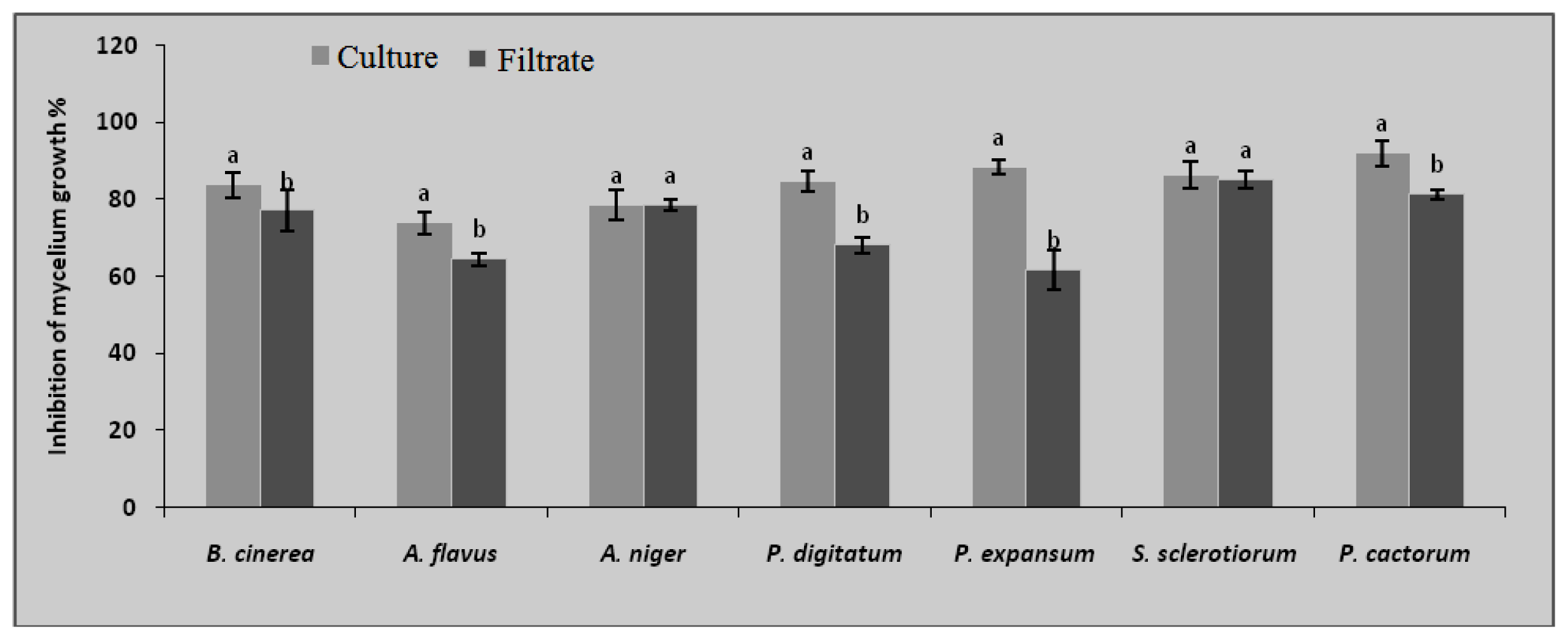
<p><italic>Bga</italic> strain ICMP 11096 has been selected for comparing the fungitoxicity of either whole culture or cell-free culture filtrate according to the percentage of fungal mycelium inhibition (PGI). The culture filtrate of bacterial strain ICMP 11096 inhibited the growth of all tested fungi on PDA agar plate assay (<xref ref-type="fig" rid="f1-ijms-13-16291">Figure 1</xref>). The size of the inhibition zones produced by bacterial cells was significantly higher than that produced by the corresponding culture filtrate. On the other hand, there is no significant difference between filtrate and bacterial cells regarding <italic>A. niger</italic> and <italic>S. sclerotiorum</italic>, which achieved the same fungitoxicity percentage.</p></sec>
<sec>
<title>2.3. Extracellular Hydrolytic Activities</title>
<p><italic>Bga</italic> strains showed chitinase, protease and glucanase activities, forming clear zones on chitin, skim milk and Lichenan media plates ranging from 13 to 25 mm, 25 to 36 mm and 20 to 26 mm, respectively. On the contrary, the selected strains did not show cellulase, amylase, pectinase and polygalacturonase activities. The production of chitinase and glucanase could contribute to the growth inhibition control of the phytopathogenic fungi through degradation of fungal cell walls [<xref ref-type="bibr" rid="b31-ijms-13-16291">31</xref>]. Protease enzymes as cell wall lytic enzymes, may play a significant role in degrading the fungal cell wall, since fungal cell wall “skeletal” components are embedded in a protein matrix [<xref ref-type="bibr" rid="b23-ijms-13-16291">23</xref>] and proteolytic activity is necessary for the lysis of whole fungal cells.</p></sec>
<sec>
<title>2.4. Antifungal Activity of Volatile Organic Compounds</title>
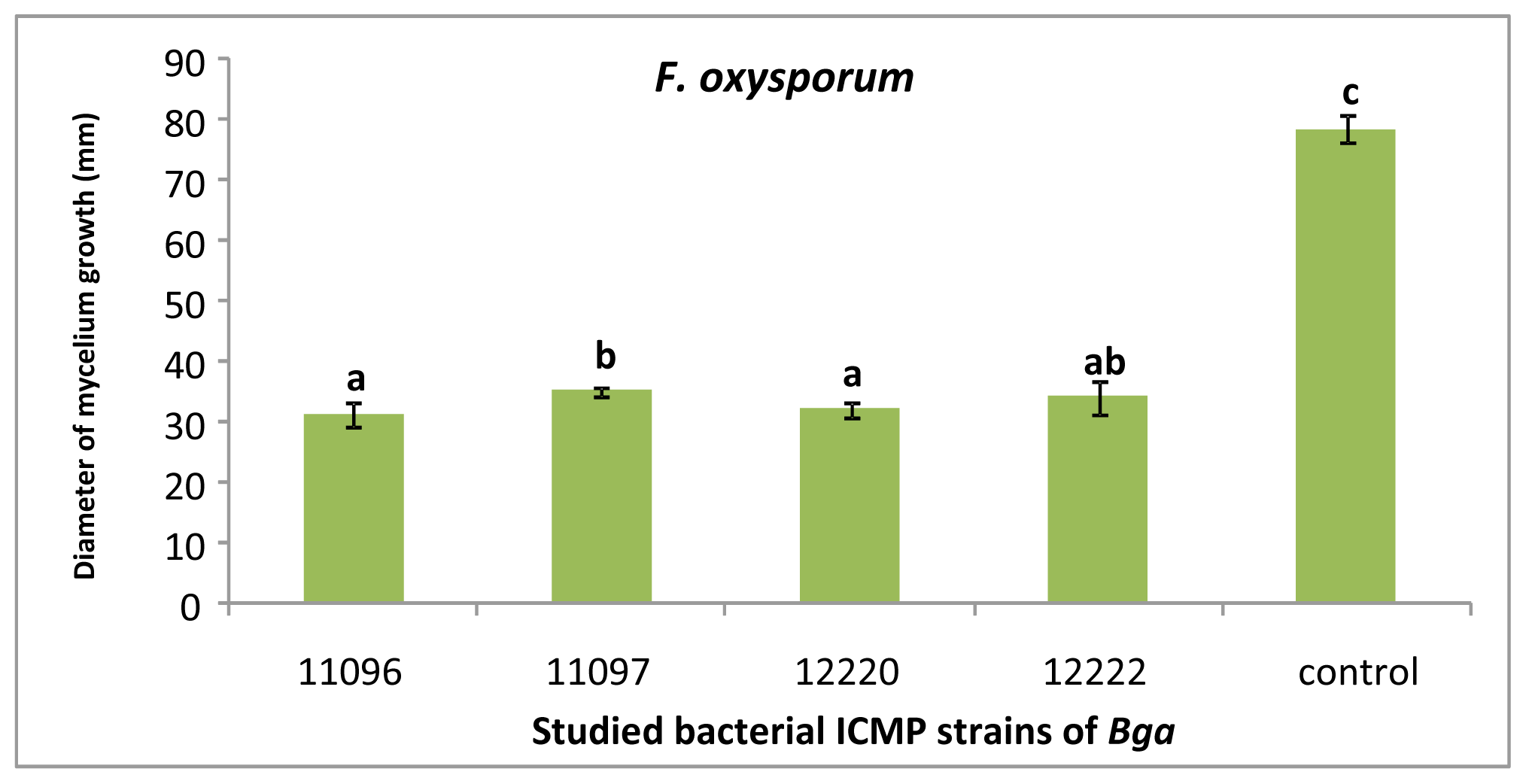
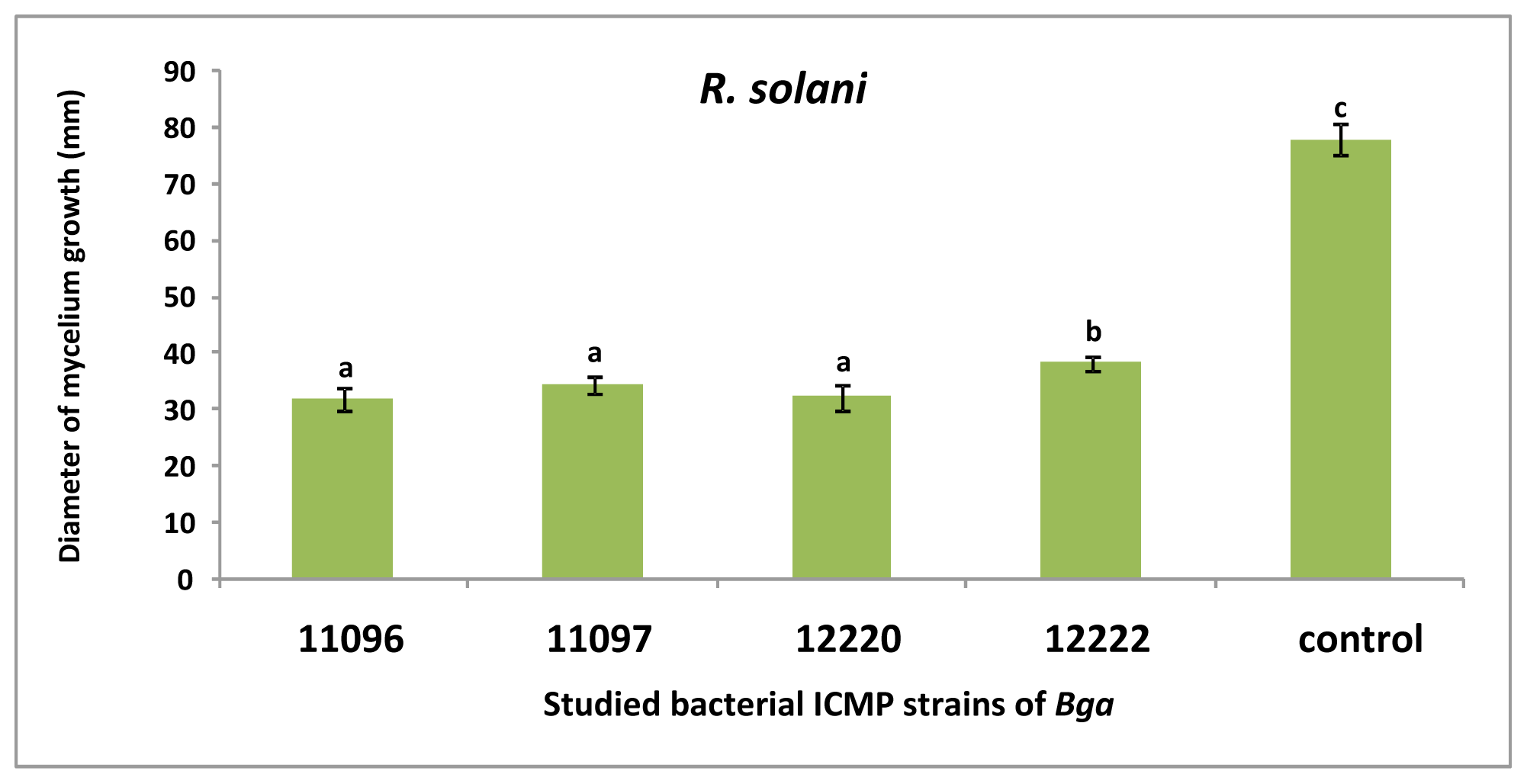
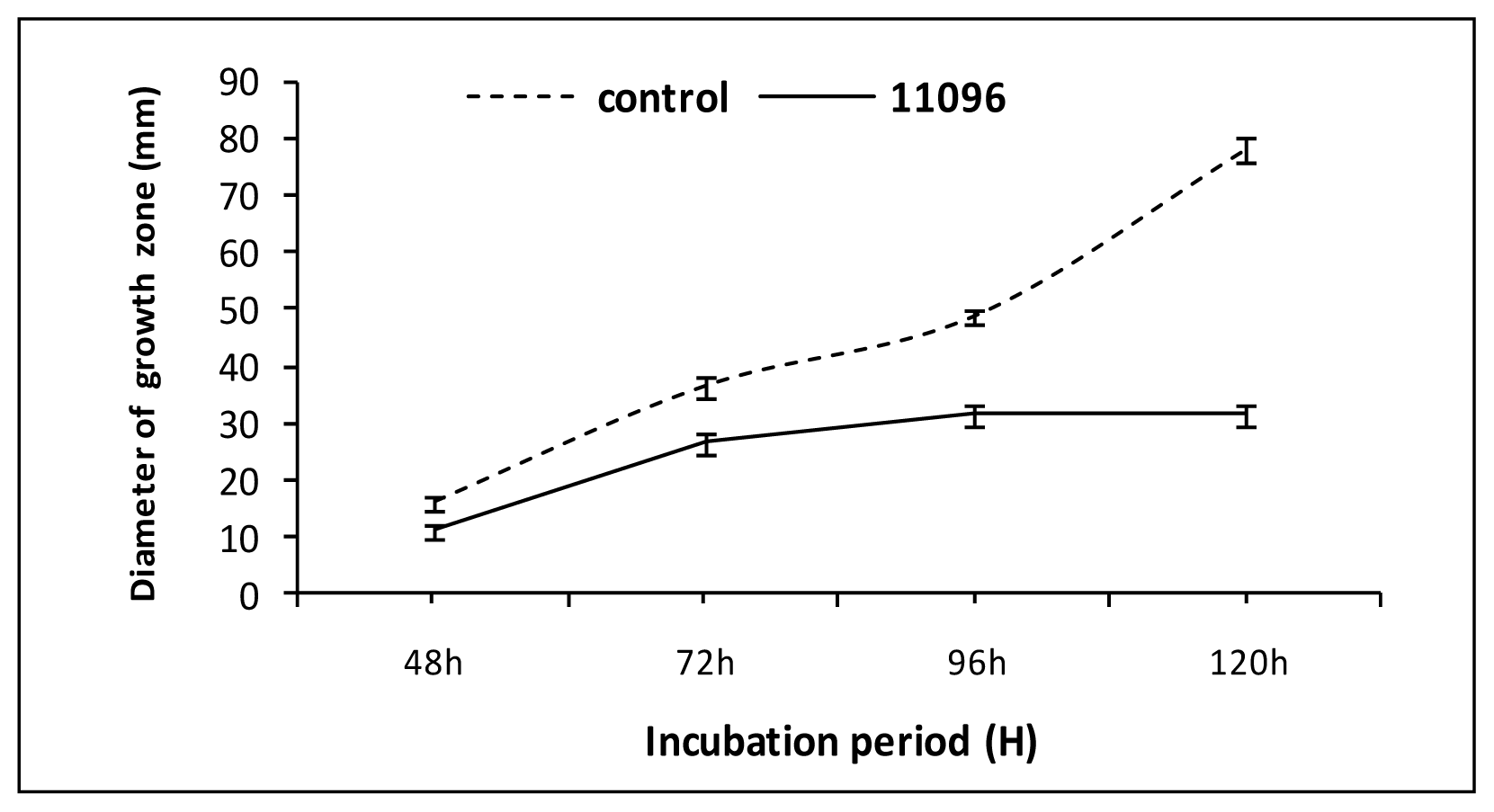
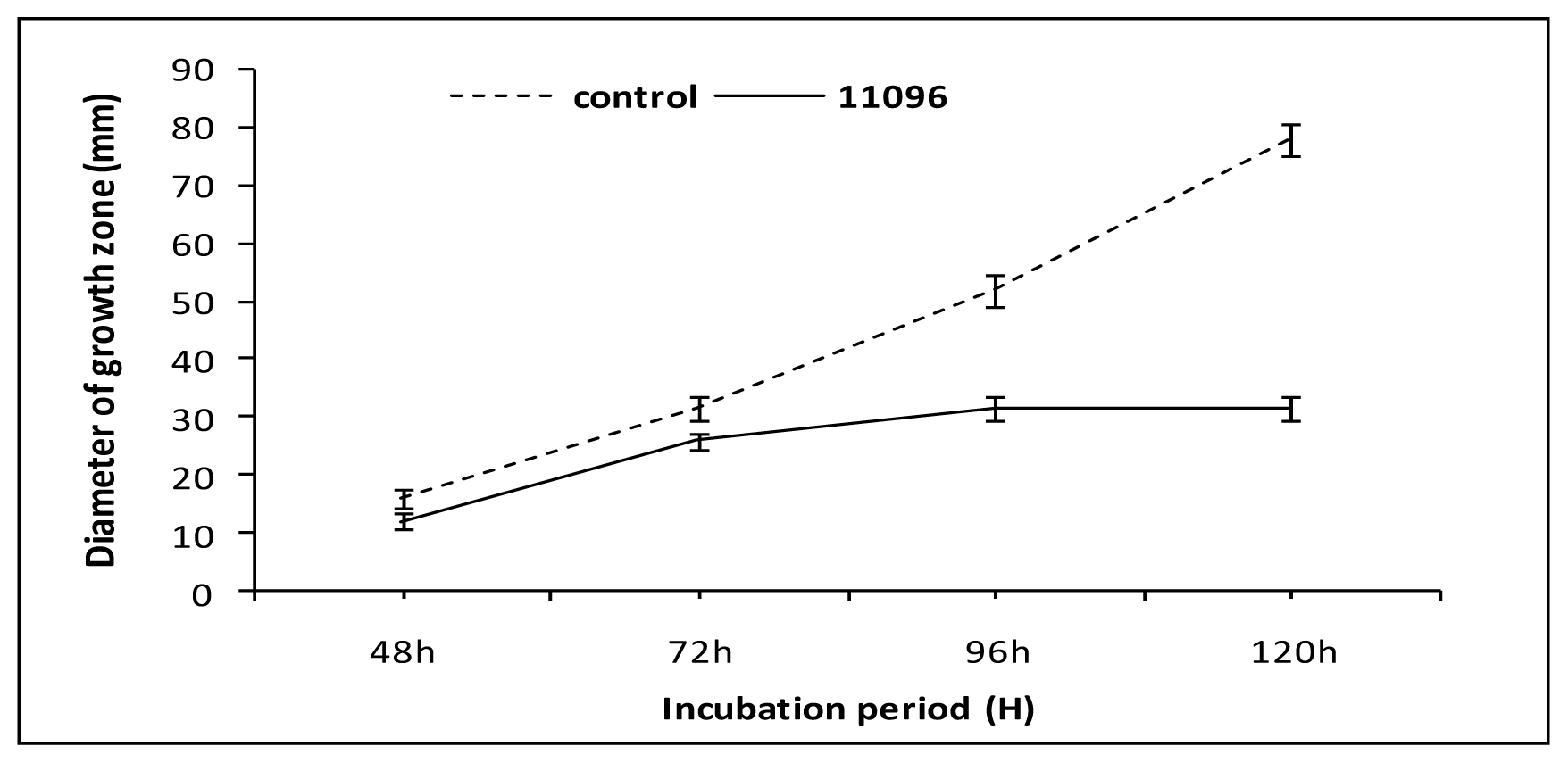
<p>Strains of <italic>Bga</italic> produced VOCs which reduced the mycelium growth of <italic>F. oxysporum</italic> (<xref ref-type="fig" rid="f2-ijms-13-16291">Figure 2</xref>). Strains <italic>Bga</italic> ICMP11096 and ICMP12220 showed the highest significant reduction of fungal growth compared to other studied strains. Strain <italic>Bga</italic> ICMP11096 has been selected for studying the effect of its VOCs on the fungal growth rate of <italic>F. oxysporum</italic> (<xref ref-type="fig" rid="f3-ijms-13-16291">Figure 3</xref>). After four days of incubation, the fungal growth appeared to be almost stopped. Similar results were obtained when the above assays were performed versus <italic>R. solani</italic> (<xref ref-type="fig" rid="f4-ijms-13-16291">Figure 4</xref>). Strains <italic>Bga</italic> ICMP11096, ICMP11097 and ICMP 12220 showed the highest significant reduction of fungal growth compared to strain Bga ICMP 12322. In contrast, Kai <italic>et al.</italic>[<xref ref-type="bibr" rid="b32-ijms-13-16291">32</xref>] found that volatiles of <italic>Pseudomonas</italic> spp., <italic>Serratia</italic> spp., <italic>Stenotrophomonas</italic> spp. drastically inhibited the growth of <italic>R. solani</italic>, while a moderate or no inhibition was observed with the volatile substances of <italic>B. cepacia and Staphylococcus epidermidis</italic>, respectively.</p>
<p>Also in this case the strain <italic>Bga</italic> ICMP 11096 was able to block completely the mycelium growth after four days of incubation (<xref ref-type="fig" rid="f5-ijms-13-16291">Figure 5</xref>).</p></sec>
<sec sec-type="methods">
<title>2.5. Analysis of VOCs by GC-MS</title>
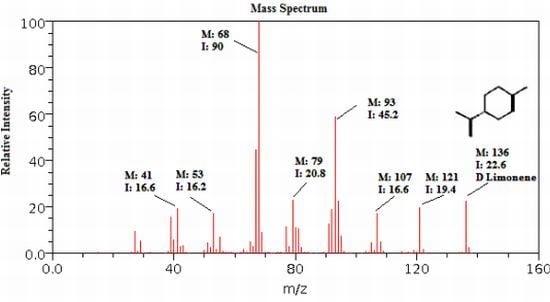
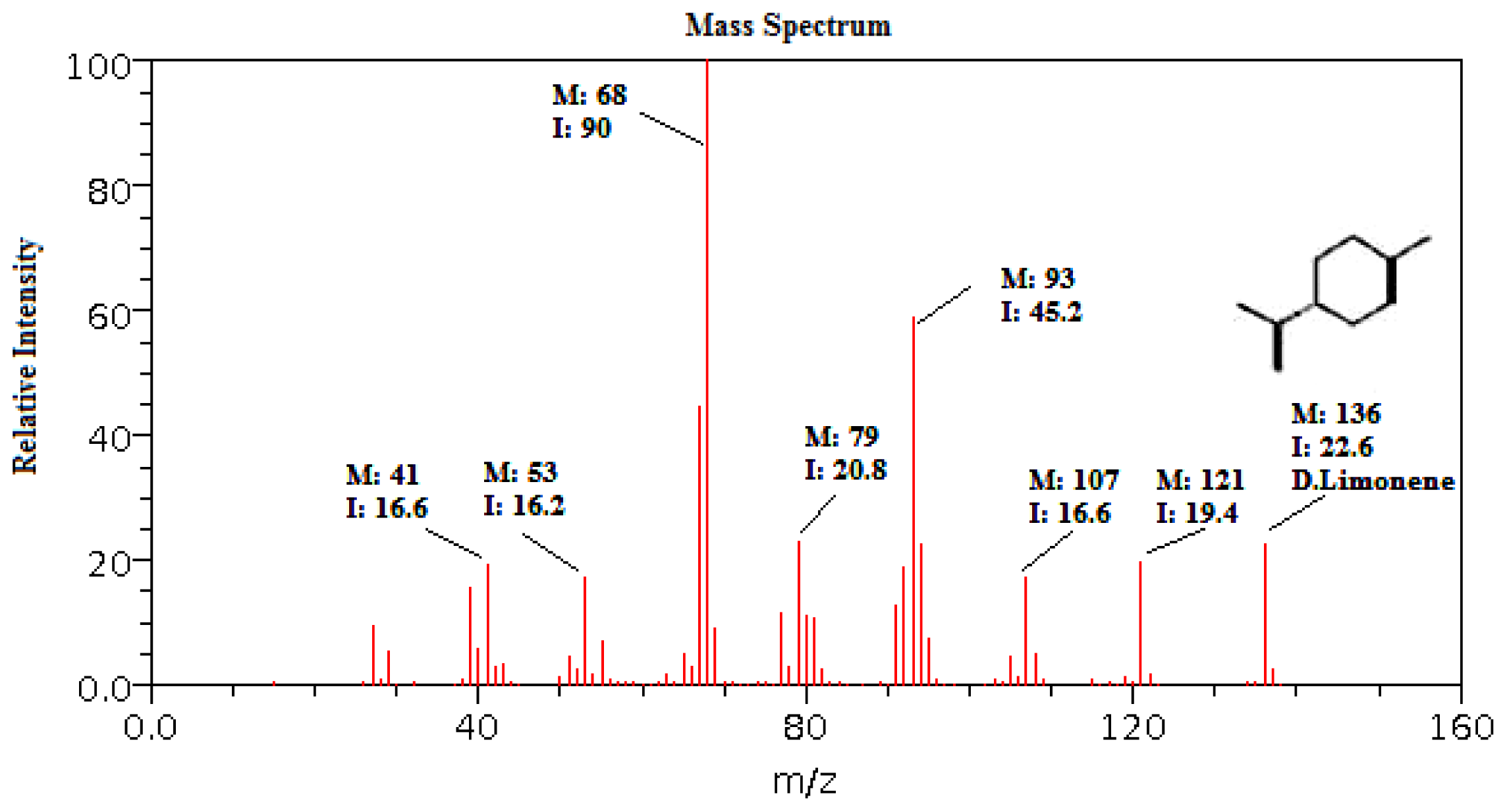
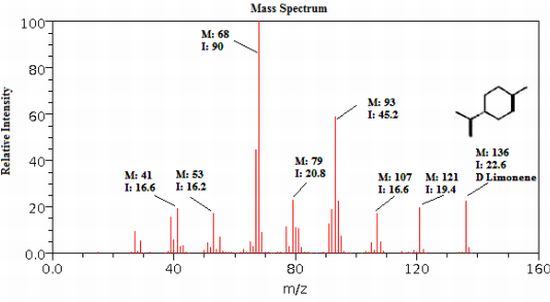
<p>GC-MS analysis of VOCs produced by <italic>Bga</italic> strain ICMP 11096 indicated the presence of 1-methyl-4-(1-methylethenyl)-cyclohexene, which was detected at retention time 11.61 min and has a molecular weight of 136 (<xref ref-type="fig" rid="f6-ijms-13-16291">Figure 6</xref>). This isolated main volatile compound is a liquid hydrocarbon that can be classified as cyclic terpene. This compound could be responsible for the antifungal activity of <italic>Bga</italic> strain ICMP 11096 against all studied phytopathogenic fungi.</p></sec></sec>
<sec>
<title>3. Experimental Section</title>
<sec sec-type="methods">
<title>3.1. Bacterial and Fungal Strains Used in this Study</title>
<p>The phytopathogenic as well as plant-associated fungi <italic>B. cinerea</italic>, <italic>A. flavus</italic>, <italic>A. niger</italic>, <italic>P. digitatum</italic>, <italic>P. expansum</italic>, <italic>S. sclerotiorum</italic>, <italic>P. cactorum</italic>, <italic>F. oxysporum</italic> and <italic>R. solani</italic>, were grown and maintained on potato dextrose agar (PDA) or corn meal agar (CMA). <italic>Bga</italic> strains ICMP 11096, 11097, 12220 and 12322, isolated from <italic>Agaricus bitorquis</italic> (Quelet) Saccardo, were obtained from International Collection of Micro-organisms from Plants (ICMP) (Landcare Research, Auckland, New Zealand). Bacterial strains were maintained as lyophils at 4 °C and subcultures were obtained on the medium King Agar B (KB) for 48 h at 25 °C.</p></sec>
<sec>
<title>3.2. Antifungal Assays</title>
<p>The antifungal activity of of <italic>Bga</italic> strains against fungi was carried out by growing the bacterial strains on KB medium and incubated at 30 °C for 24 h. Then 1 cm<sup>2</sup> agar disc was cut off with a cork borer and placed onto the surface of fungal plates containing PDA medium using bacterial disc method [<xref ref-type="bibr" rid="b33-ijms-13-16291">33</xref>]. The plates were incubated at 25 °C for 4–5 days.</p>
<p>The antifungal activity of cell-free filtrates of <italic>Bga</italic> against fungi grown on PDA was conducted using the diffusion method [<xref ref-type="bibr" rid="b34-ijms-13-16291">34</xref>]. Erlenmeyer flask containing 150 mL of liquid minimal mineral medium (MM) were inoculated with 1.5 mL bacterial suspension containing 10<sup>8</sup> CFU mL<sup>−1</sup> and incubated under rotary shaking (180 rpm) at 25 °C for 7 days [<xref ref-type="bibr" rid="b35-ijms-13-16291">35</xref>]. Then, the culture was centrifuged at 20,000× <italic>g</italic> for 15 min and membrane filtered (Millipore, 0.20 μm), then 10 μL of filtrate was deposited on 14 mL solid PDA medium inoculated with 1 cm<sup>2</sup> of fungal disc. After 4–5 days of incubation, the diameter of the fungal colonies were scored and measured in mm.</p></sec>
<sec>
<title>3.3. Comparing the Fungitoxicity of Bacterial Cultures and Filtrates</title>
<p>According to the screening test, the agar diffusion method was used for testing the antifungal activity of cell-free culture filtrates for the highest bioactive antagonistic bacterial strain of <italic>Bga</italic>. The antifungal activity of bacterial cultures and filtrates was determined against all studied phytopathogenic fungi and the fungitoxicity was expressed as percentage of growth inhibition (PGI) and calculated according to Zygadlo et al. formula [<xref ref-type="bibr" rid="b36-ijms-13-16291">36</xref>] (<xref rid="FD1" ref-type="disp-formula">Equation 1</xref>).</p>
<disp-formula id="FD1">
<label>(1)</label>
<mml:math id="mm1" display="block">
<mml:semantics id="sm1">
<mml:mrow>
<mml:mtext>PGI </mml:mtext>
<mml:mo stretchy="false">(</mml:mo>
<mml:mo>%</mml:mo>
<mml:mo stretchy="false">)</mml:mo>
<mml:mo>=</mml:mo>
<mml:mn>100</mml:mn>
<mml:mi> </mml:mi>
<mml:mo stretchy="false">(</mml:mo>
<mml:mtext>GC</mml:mtext>
<mml:mo>-</mml:mo>
<mml:mtext>GT</mml:mtext>
<mml:mo stretchy="false">)</mml:mo>
<mml:mo>/</mml:mo>
<mml:mtext>GC</mml:mtext></mml:mrow></mml:semantics></mml:math></disp-formula>
<p>where GC represents the average diameter of fungi grown in PDA (control); GT represents the average diameter of fungi cultivated on the treated PDA dish containing the antagonistic bacteria.</p></sec>
<sec>
<title>3.4. Extracellular Hydrolytic Activities</title>
<p>Chitinase and protease activities of <italic>Bga</italic> strains were determined according to Tahtamouni <italic>et al.</italic>[<xref ref-type="bibr" rid="b37-ijms-13-16291">37</xref>] on plates of KB containing chitin (1%) and skim milk (1%) respectively. Cellulase activity was detected according to the Essghaier <italic>et al.</italic> method [<xref ref-type="bibr" rid="b38-ijms-13-16291">38</xref>] using carboxymethyl cellulose (0.4%). Glucanase activity was detected according to Teather and Wood method [<xref ref-type="bibr" rid="b39-ijms-13-16291">39</xref>] using Lichenan (0.2%).</p>
<p>Amylase, pectinase and polygalacturanase activities were detected using soluble starch (1%), pectin (0.5%) and polygalacturanic acid (1%), respectively [<xref ref-type="bibr" rid="b40-ijms-13-16291">40</xref>,<xref ref-type="bibr" rid="b41-ijms-13-16291">41</xref>]. After incubation at 30 °C for 4–5 days, the plates were flooded with specific staining solutions; congo red 0.03% for chitinase, cellulase and glucanase; lugol solution for amylase; CTAB 2% for pectinase; and, ruthenium red 0.1% for polygalacturanase. The enzymatic activity was taken as evidence by appearance of clear zones around the colonies and their diameters were measured in millimeters.</p></sec>
<sec>
<title>3.5. Antifungal Activity of Volatile Secondary Metabolites</title>
<p>The assays were carried out by plating 100 μL of bacterial suspension containing 10<sup>8</sup> CFU mL<sup>−1</sup> on the surface of Petri dishes containing 14 mL KB incubated at 25 °C for 24 h, whereas fungi were grown on Petri dishes containing 14 mL PDA incubated at 30 °C for 96 h. The bottom parts of the plates were tightly joined with parafilm and incubated in the darkness at 30 °C for 4–5 days. Fungitoxicity of volatile metabolites was expressed by measuring the diameter of mycelium growth (mm). All treatments of the experiment were carried out twice with three replicates. The highest bioactive antagonistic strain was selected to study the effect of its volatile metabolites on fungal growth rate using the Evmert <italic>et al.</italic> method [<xref ref-type="bibr" rid="b42-ijms-13-16291">42</xref>].</p></sec>
<sec sec-type="methods">
<title>3.6. Analysis of Volatile Substances by GC-MS</title>
<p>For the production of VOCs, the <italic>Bga</italic> strains were grown on KB and 100 μL bacterial suspensions of about 10<sup>8</sup> CFU mL<sup>−1</sup> were used to inoculate 25 mL glass vials containing 10 mL KB. Vials were sealed with a plastic cap fitted with a Teflon/silicon septum and then incubated for 5 days at 25 °C.</p>
<p>An SPME fiber coated with 100 μm of nongrafted poly-dimethylsiloxane (PDMS) phase (Supelco 57300-U on a Supelco 57330 support) was conditioned for 1 h at 250 °C in helium stream; after that, the fiber was inserted into the headspace of the glass vial containing the inoculated strain and was maintained there for 20 min at 25 °C. The fiber was then introduced into the injection port of a HP 6890 plus gas chromatograph equipped with a Phenomenex Zebron ZB-5 MS capillary column (30 m × 0.25 mm ID × 0.25 μm film thickness). The HP5973 mass selective detector was used (mass range: 15–800 mAU; scan rate: 1.9 scan/s; EM voltage: 1435), helium at 0.8 mL min<sup>−1</sup> was adopted as carrier gas. The injection port, equipped with glass insert (internal diameter 0.75 mm) was splitless at 250 °C. The desorption time of 1.0 min was used. The oven temperature was fixed at 40 °C for 2 min, then increased up to 250 °C (8 °C min<sup>−1</sup>); finally, it was maintained for 10 min. All the analyses were performed in triplicate. A blank run was performed after each analysis in order to confirm that no residual compound was polluting the fiber or the column. The chromatograms obtained from the total ion current (TIC) were integrated without any correction for coelutions and results were expressed as percent of the total area of peaks. All the peaks were identified from their mass spectra by comparison with spectra in Wiley 6N and NIST98 libraries.</p></sec>
<sec sec-type="methods">
<title>3.7. Statistical Analysis</title>
<p>The experimental data of the antifungal activity of diffusible and volatile bioactive substances of <italic>Bga</italic> strains on the phytopathogenic and plant-associated fungi growth were analyzed statistically by one-way ANOVA, Duncan and Tukey B <italic>post hoc</italic> test using SPSS statistical software (version 13.0, Prentice Hall: Chicago, IL, USA, 2004).</p></sec></sec>
<sec sec-type="conclusions">
<title>4. Conclusions</title>
<p>The genus <italic>Burkholderia</italic> in recent years has been phylogenetically well defined, consisting of species that are functionally remarkably diverse [<xref ref-type="bibr" rid="b43-ijms-13-16291">43</xref>]. In fact, <italic>Burkholderia</italic> species have been isolated from many different environmental niches, including soil and water, and can form associations with plants, animals and humans. Several <italic>Burkholderia</italic> spp. are widespread in nature and some of them are considered to be beneficial in the natural environment [<xref ref-type="bibr" rid="b15-ijms-13-16291">15</xref>]. <italic>Burkholderia gladioli</italic> pv. <italic>agaricicola</italic> is an important pathogen in the mushroom industry; it causes soft rot of <italic>Agaricus bitorquis</italic> and <italic>A. bisporus</italic>[<xref ref-type="bibr" rid="b11-ijms-13-16291">11</xref>–<xref ref-type="bibr" rid="b13-ijms-13-16291">13</xref>].</p>
<p>In the present study we verified the biological and metabolic properties of selected strains of <italic>Bga</italic>, which can be exploited for the biological control of fungal diseases. Strains of <italic>Bga</italic> have been shown to antagonize a wide range of important phytopathogenic and plant-associated fungi, including <italic>B. cinerea</italic>, <italic>A. flavus</italic>, <italic>A. niger</italic>, <italic>P. digitatum</italic>, <italic>P. expansum</italic>, <italic>S. sclerotiorum</italic> and <italic>P. cactorum.</italic> In other studies the ability of this mushroom pathogen to inhibit the growth of yeast, Gram-positive and Gram-negative bacteria has been reported [<xref ref-type="bibr" rid="b11-ijms-13-16291">11</xref>,<xref ref-type="bibr" rid="b12-ijms-13-16291">12</xref>,<xref ref-type="bibr" rid="b18-ijms-13-16291">18</xref>–<xref ref-type="bibr" rid="b20-ijms-13-16291">20</xref>]. The highest level of antifungal activity was recorded when bacterial cultures of <italic>Bga</italic> were used in antagonist dual tests. This antifungal activity could be attributed to the ability of studied bacterial strains to produce some extracellular hydrolytic enzymes such as chitinase, protease and glucanase. The production of hydrolytic enzymes is considered one of the most important mechanisms explaining the biocontrol of phytopathogenic fungi by the degradation of fungal cell walls [<xref ref-type="bibr" rid="b44-ijms-13-16291">44</xref>].</p>
<p>On the other hand, <italic>Bga</italic> produced VOCs, which apparently reduced the fungal growth rate of <italic>F. oxysporum</italic> and <italic>R. solani</italic> and completely blocked their growth after five days of incubation. GC-MS analysis of bulk VOCs produced by <italic>Bga</italic> strain ICMP11096 showed that the main compound was 1-methyl-4-(1-methylethenyl)-cyclohexene, a cyclic terpene considered one of the most common D isomer of limonene. This VOC is apparently responsible for the antifungal activity against phytopathogenic and plant-associated fungi in agreement with Ayoola <italic>et al.</italic>[<xref ref-type="bibr" rid="b45-ijms-13-16291">45</xref>] that reported the antimicrobial activity of D limonene against a wide range of organisms including fungi. On the other hand, Hossain <italic>et al.</italic>[<xref ref-type="bibr" rid="b46-ijms-13-16291">46</xref>] showed the remarkable antifungal effect of <italic>Orthosiphon stamineus</italic> essential oil against some phytopathogenic fungi. The activity of <italic>O. stamineus</italic> essential oil has been attributed to the presence of caryophyllene, humulene, elemene, bourbonene, pinene, caryophyllene oxide, camphene and limonene, which significantly inhibited the growth of all the phytopathogens tested as <italic>B. cinerea</italic>, <italic>R. solani</italic>, <italic>Fusarium solani</italic>, <italic>Colletotricum capsici</italic> and <italic>Phytophthora capsici.</italic></p>
<p>We can speculate that the potential biological control of selected <italic>Bga</italic> strains could be correlated with their ability to produce extracellular hydrolytic enzymes and diffusible and volatile secondary metabolites. Although the preliminary results of this study suggest <italic>Bga</italic> as biocontrol agents for the diseases caused by tested fungi, further investigation appears necessary in this regard, as well as the chemical and biological characterization of bioactive secondary metabolites, which are currently under examination in our laboratories.</p></sec></body>
<back>
<ack>
<title>Acknowledgments</title>
<p>We are grateful to the Italian Ministry of Foreign Affairs for the research grant assigned to Hazem Elshafie, and to UNIBAS-CLA for English revision.</p></ack>
<fn-group><fn id="fn2-ijms-13-16291">
<p><bold>Conflict of Interest</bold></p>
<p>The authors declare no conflict of interest</p></fn></fn-group>
<ref-list>
<title>References</title>
<ref id="b1-ijms-13-16291"><label>1</label><citation citation-type="journal"><person-group person-group-type="author"><name><surname>Parke</surname><given-names>J.L.</given-names></name><name><surname>Gurian-Sherman</surname><given-names>D.</given-names></name></person-group><article-title>Diversity of the <italic>Burkholderia cepacia</italic>com plex and implications for risk assessment of biological control strains</article-title><source>Annu. Rev. Phytopathol</source><year>2001</year><volume>39</volume><fpage>225</fpage><lpage>258</lpage><pub-id pub-id-type="doi">10.1146/annurev.phyto.39.1.225</pub-id><pub-id pub-id-type="pmid">11701865</pub-id></citation></ref>
<ref id="b2-ijms-13-16291"><label>2</label><citation citation-type="journal"><person-group person-group-type="author"><name><surname>Gerhardson</surname><given-names>B.</given-names></name></person-group><article-title>Biological substitutes for pesticides</article-title><source>Trends Biotechnol</source><year>2002</year><volume>20</volume><fpage>338</fpage><lpage>343</lpage><pub-id pub-id-type="doi">10.1016/S0167-7799(02)02021-8</pub-id><pub-id pub-id-type="pmid">12127281</pub-id></citation></ref>
<ref id="b3-ijms-13-16291"><label>3</label><citation citation-type="journal"><person-group person-group-type="author"><name><surname>Bordiec</surname><given-names>S.</given-names></name><name><surname>Paquis</surname><given-names>S.</given-names></name><name><surname>Lacroix</surname><given-names>H.</given-names></name><name><surname>Dhond</surname><given-names>S.</given-names></name><name><surname>Barka</surname><given-names>E.A.</given-names></name><name><surname>Kauffmann</surname><given-names>S.</given-names></name><name><surname>Jeandet</surname><given-names>P.</given-names></name><name><surname>Gourbeyre</surname><given-names>F.M.</given-names></name><name><surname>Clement</surname><given-names>C.</given-names></name><name><surname>Baillieul</surname><given-names>F.</given-names></name><etal/></person-group><article-title>Comparative analysis of defence responses induced by the endophytic plant growth-promoting rhizobacterium Burkholderia phytofirmans strain PsJN and the non-host bacterium <italic>Pseudomonas syringae</italic> pv. Pisi in grapevine cell suspensions</article-title><source>J. Exp. Bot</source><year>2010</year><volume>62</volume><fpage>595</fpage><lpage>603</lpage><pub-id pub-id-type="pmid">20881012</pub-id></citation></ref>
<ref id="b4-ijms-13-16291"><label>4</label><citation citation-type="journal"><person-group person-group-type="author"><name><surname>Bais</surname><given-names>H.P.</given-names></name><name><surname>Park</surname><given-names>S.W.</given-names></name><name><surname>Weir</surname><given-names>T.L.</given-names></name><name><surname>Callaway</surname><given-names>R.M.</given-names></name><name><surname>Vivanco</surname><given-names>J.M.</given-names></name></person-group><article-title>How plants communicate using the underground information superhighway</article-title><source>Trends Plant Sci</source><year>2004</year><volume>9</volume><fpage>26</fpage><lpage>32</lpage><pub-id pub-id-type="doi">10.1016/j.tplants.2003.11.008</pub-id><pub-id pub-id-type="pmid">14729216</pub-id></citation></ref>
<ref id="b5-ijms-13-16291"><label>5</label><citation citation-type="journal"><person-group person-group-type="author"><name><surname>Walker</surname><given-names>T.S.</given-names></name><name><surname>Bais</surname><given-names>H.P.</given-names></name><name><surname>Grotewold</surname><given-names>E.</given-names></name><name><surname>Vivanco</surname><given-names>M.J.</given-names></name></person-group><article-title>Update on root exudation and rhizosphere biology</article-title><source>Plant Physiol</source><year>2003</year><volume>132</volume><fpage>44</fpage><lpage>51</lpage><pub-id pub-id-type="doi">10.1104/pp.102.019661</pub-id><pub-id pub-id-type="pmid">12746510</pub-id></citation></ref>
<ref id="b6-ijms-13-16291"><label>6</label><citation citation-type="journal"><person-group person-group-type="author"><name><surname>Haas</surname><given-names>D.</given-names></name><name><surname>Defago</surname><given-names>G.</given-names></name></person-group><article-title>Biological control of soil-borne pathogens by fluorescent pseudomonads</article-title><source>Nat. Rev. Microbiol</source><year>2005</year><volume>10</volume><fpage>1</fpage><lpage>13</lpage></citation></ref>
<ref id="b7-ijms-13-16291"><label>7</label><citation citation-type="journal"><person-group person-group-type="author"><name><surname>Raaijmakers</surname><given-names>J.M.</given-names></name><name><surname>Vlami</surname><given-names>M.</given-names></name><name><surname>de Sou</surname><given-names>J.T.</given-names></name></person-group><article-title>Antibiotic production by bacterial biocontrol agents</article-title><source>Antonie van Leeuwenhoek</source><year>2002</year><volume>81</volume><fpage>537</fpage><lpage>547</lpage><pub-id pub-id-type="doi">10.1023/A:1020501420831</pub-id><pub-id pub-id-type="pmid">12448749</pub-id></citation></ref>
<ref id="b8-ijms-13-16291"><label>8</label><citation citation-type="journal"><person-group person-group-type="author"><name><surname>Alstrom</surname><given-names>S.</given-names></name></person-group><article-title>Characteristics of bacteria from oil seed rape in relation to their biocontrol of activity against <italic>Verticillium dahlia</italic></article-title><source>J. Phytopathol</source><year>2001</year><volume>149</volume><fpage>57</fpage><lpage>64</lpage><pub-id pub-id-type="doi">10.1046/j.1439-0434.2001.00585.x</pub-id></citation></ref>
<ref id="b9-ijms-13-16291"><label>9</label><citation citation-type="journal"><person-group person-group-type="author"><name><surname>Wheatley</surname><given-names>R.E.</given-names></name></person-group><article-title>The consequences of volatile organic compound mediated bacterial and fungal interactions</article-title><source>Antonie van Leeuwenhoek</source><year>2002</year><volume>81</volume><fpage>357</fpage><lpage>364</lpage><pub-id pub-id-type="doi">10.1023/A:1020592802234</pub-id><pub-id pub-id-type="pmid">12448734</pub-id></citation></ref>
<ref id="b10-ijms-13-16291"><label>10</label><citation citation-type="journal"><person-group person-group-type="author"><name><surname>Schalchli</surname><given-names>H.</given-names></name><name><surname>Hormazabal</surname><given-names>E.</given-names></name><name><surname>Becerra</surname><given-names>J.</given-names></name><name><surname>Birkett</surname><given-names>M.</given-names></name><name><surname>Alvear</surname><given-names>M.</given-names></name><name><surname>Vidal</surname><given-names>J.</given-names></name><name><surname>Quiroz</surname><given-names>A.</given-names></name></person-group><article-title>Antifungal activity of volatile metabolites emitted by mycelial cultures of saprophytic fungi</article-title><source>J. Chem. Ecol</source><year>2011</year><volume>27</volume><fpage>503</fpage><lpage>513</lpage><pub-id pub-id-type="doi">10.1080/02757540.2011.596832</pub-id></citation></ref>
<ref id="b11-ijms-13-16291"><label>11</label><citation citation-type="journal"><person-group person-group-type="author"><name><surname>Andolfi</surname><given-names>A.</given-names></name><name><surname>Cimmino</surname><given-names>A.</given-names></name><name><surname>Lo Cantore</surname><given-names>P.</given-names></name><name><surname>Iacobellis</surname><given-names>N.S.</given-names></name><name><surname>Evidente</surname><given-names>A.</given-names></name></person-group><article-title>Bioactive and structural metabolites of <italic>Pseudomonas</italic> and <italic>Burkholderia</italic> species causal agents of cultivated mushrooms diseases</article-title><source>Perspect. Med. Chem</source><year>2008</year><volume>2</volume><fpage>81</fpage><lpage>112</lpage></citation></ref>
<ref id="b12-ijms-13-16291"><label>12</label><citation citation-type="book"><person-group person-group-type="author"><name><surname>Lamorte</surname><given-names>D.</given-names></name><name><surname>Elshafie</surname><given-names>H.</given-names></name><name><surname>Lelario</surname><given-names>F.</given-names></name><name><surname>Bufo</surname><given-names>S.A.</given-names></name><name><surname>Iacobellis</surname><given-names>N.S.</given-names></name></person-group><source>Production of Bioactive Secondary Metabolites by <italic>Burkholderia gladioli</italic> Pathovars</source><conf-name>Pesticides 2010, Proceedings of 6th European Conference “Pesticides and Related Organic Micropollutants in the Environment—12th Symposium on Chemistry and Fate of Modern Pesticides”</conf-name><conf-loc>Matera, Italy</conf-loc><conf-date>7–10 September 2010</conf-date><person-group person-group-type="editor"><name><surname>Bufo</surname><given-names>S.A.</given-names></name><name><surname>Scrano</surname><given-names>L.</given-names></name></person-group><publisher-name>Digilabs</publisher-name><publisher-loc>Bari, Italy</publisher-loc><year>2010</year><fpage>350</fpage><lpage>351</lpage></citation></ref>
<ref id="b13-ijms-13-16291"><label>13</label><citation citation-type="journal"><person-group person-group-type="author"><name><surname>Prashanth</surname><given-names>S.N.</given-names></name><name><surname>Bianco</surname><given-names>G.</given-names></name><name><surname>Cataldi</surname><given-names>T.R.</given-names></name><name><surname>Iacobellis</surname><given-names>N.S.</given-names></name></person-group><article-title>Acyl homoserine lactone production by bacteria associated with cultivated Mushrooms</article-title><source>J. Agric. Food Chem</source><year>2011</year><volume>59</volume><fpage>11461</fpage><lpage>11472</lpage><pub-id pub-id-type="doi">10.1021/jf202313j</pub-id><pub-id pub-id-type="pmid">21942309</pub-id></citation></ref>
<ref id="b14-ijms-13-16291"><label>14</label><citation citation-type="journal"><person-group person-group-type="author"><name><surname>Chiou</surname><given-names>A.L.</given-names></name><name><surname>Wu</surname><given-names>W.S.</given-names></name></person-group><article-title>Isolation, identification and evaluation of bacterial antagonists against <italic>Botrytis ellipticaon</italic> lily</article-title><source>J. Phytopathol</source><year>2001</year><volume>149</volume><fpage>319</fpage><lpage>324</lpage><pub-id pub-id-type="doi">10.1046/j.1439-0434.2001.00627.x</pub-id></citation></ref>
<ref id="b15-ijms-13-16291"><label>15</label><citation citation-type="journal"><person-group person-group-type="author"><name><surname>Compant</surname><given-names>S.</given-names></name><name><surname>Nowak</surname><given-names>J.</given-names></name><name><surname>Coenye</surname><given-names>T.</given-names></name><name><surname>Clement</surname><given-names>C.</given-names></name><name><surname>Ait Barka</surname><given-names>E.</given-names></name></person-group><article-title>Diversity and occurrence of <italic>Burkholderia</italic> spp. in the natural environment</article-title><source>FEMS Microbiol. Rev</source><year>2008</year><volume>32</volume><fpage>607</fpage><lpage>626</lpage><pub-id pub-id-type="doi">10.1111/j.1574-6976.2008.00113.x</pub-id><pub-id pub-id-type="pmid">18422616</pub-id></citation></ref>
<ref id="b16-ijms-13-16291"><label>16</label><citation citation-type="journal"><person-group person-group-type="author"><name><surname>Walker</surname><given-names>R.</given-names></name><name><surname>Emslie</surname><given-names>K.A.</given-names></name><name><surname>Allan</surname><given-names>E.J.</given-names></name></person-group><article-title>Bioassay methods for the detection of antifungal activity by <italic>Pseudomonas antimicrobica</italic> against the grey mould pathogen <italic>Botrytis cinerea</italic></article-title><source>J. Appl. Bacteriol</source><year>1996</year><volume>81</volume><fpage>531</fpage><lpage>537</lpage><pub-id pub-id-type="pmid">8939031</pub-id></citation></ref>
<ref id="b17-ijms-13-16291"><label>17</label><citation citation-type="journal"><person-group person-group-type="author"><name><surname>Walker</surname><given-names>R.</given-names></name><name><surname>Innes</surname><given-names>C.M.J.</given-names></name><name><surname>Allan</surname><given-names>E.J.</given-names></name></person-group><article-title>The potential biocontrol agent <italic>Pseudomonas antimicrobica</italic> inhibits germination of conidia and outgrowth of <italic>Botrytis cinerea</italic></article-title><source>Lett. Appl. Microbiol</source><year>2001</year><volume>32</volume><fpage>346</fpage><lpage>348</lpage><pub-id pub-id-type="doi">10.1046/j.1472-765X.2001.00915.x</pub-id><pub-id pub-id-type="pmid">11328503</pub-id></citation></ref>
<ref id="b18-ijms-13-16291"><label>18</label><citation citation-type="journal"><person-group person-group-type="author"><name><surname>Altindag</surname><given-names>M.</given-names></name><name><surname>Sahin</surname><given-names>M.</given-names></name><name><surname>Esitken</surname><given-names>A.</given-names></name><name><surname>Ercisli</surname><given-names>S.</given-names></name><name><surname>Guleryuz</surname><given-names>M.</given-names></name><name><surname>Donmez</surname><given-names>M.F.</given-names></name><name><surname>Sahin</surname><given-names>F.</given-names></name></person-group><article-title>Biological control of brown rot (<italic>Monilinia laxa</italic> Er.) on apricot (<italic>Prunus armeniaca</italic> L. cv. <italic>Hacihaliloglu</italic>) by <italic>Bacillus</italic>, <italic>Burkholderia</italic>, and <italic>Pseudomonas</italic> application under <italic>in vitro</italic> and <italic>in vivo</italic> conditions</article-title><source>Biol. Control</source><year>2006</year><volume>38</volume><fpage>369</fpage><lpage>372</lpage><pub-id pub-id-type="doi">10.1016/j.biocontrol.2006.04.015</pub-id></citation></ref>
<ref id="b19-ijms-13-16291"><label>19</label><citation citation-type="journal"><person-group person-group-type="author"><name><surname>Hu</surname><given-names>F.-P</given-names></name><name><surname>Young</surname><given-names>J.M.</given-names></name></person-group><article-title>Biocidal activity in plant pathogenic <italic>Acidovorax</italic>, <italic>Burkholderia</italic>, <italic>Herbaspirillum</italic>, <italic>Ralstonia</italic> and <italic>Xanthomonas</italic> spp</article-title><source>J. Appl. Microbiol.</source><year>1998</year><volume>84</volume><fpage>263</fpage><lpage>271</lpage><pub-id pub-id-type="doi">10.1046/j.1365-2672.1998.00340.x</pub-id><pub-id pub-id-type="pmid">9633641</pub-id></citation></ref>
<ref id="b20-ijms-13-16291"><label>20</label><citation citation-type="journal"><person-group person-group-type="author"><name><surname>Scuderi</surname><given-names>G.</given-names></name><name><surname>Bonaccorsi</surname><given-names>A.</given-names></name><name><surname>Panebianco</surname><given-names>S.</given-names></name><name><surname>Vitale</surname><given-names>A.</given-names></name><name><surname>Polizzi</surname><given-names>G.</given-names></name><name><surname>Cirvilleri</surname><given-names>G.</given-names></name></person-group><article-title>Some strains of <italic>Burkholderia gladioli</italic> are potential candidates for postharvest biocontrol of fungal rots in citrus and apple fruits</article-title><source>J. Plant Pathol</source><year>2009</year><volume>91</volume><fpage>207</fpage><lpage>213</lpage></citation></ref>
<ref id="b21-ijms-13-16291"><label>21</label><citation citation-type="journal"><person-group person-group-type="author"><name><surname>Wang</surname><given-names>Y.</given-names></name><name><surname>Zhou</surname><given-names>P.</given-names></name><name><surname>Yu</surname><given-names>J.</given-names></name><name><surname>Pan</surname><given-names>X.</given-names></name><name><surname>Wang</surname><given-names>P.</given-names></name><name><surname>Lan</surname><given-names>W.</given-names></name><name><surname>Tao</surname><given-names>S.</given-names></name></person-group><article-title>Antimicrobial effect of chitooligosaccharides produced by chitosanase from <italic>Pseudomonas</italic> CUY8</article-title><source>Asia Pac. J. Clin. Nutr</source><year>2007</year><volume>16</volume><fpage>174</fpage><lpage>177</lpage><pub-id pub-id-type="pmid">17392099</pub-id></citation></ref>
<ref id="b22-ijms-13-16291"><label>22</label><citation citation-type="journal"><person-group person-group-type="author"><name><surname>Jijakli</surname><given-names>M.W.</given-names></name><name><surname>Lepoivre</surname><given-names>P.</given-names></name></person-group><article-title>Characterization of an exo-beta-1,3-glucanase produced by <italic>Pichia anomala</italic> strain K, antagonist of <italic>Botrytis cinerea</italic> on apples</article-title><source>Phytophatology</source><year>1998</year><volume>88</volume><fpage>335</fpage><lpage>343</lpage><pub-id pub-id-type="doi">10.1094/PHYTO.1998.88.4.335</pub-id></citation></ref>
<ref id="b23-ijms-13-16291"><label>23</label><citation citation-type="journal"><person-group person-group-type="author"><name><surname>Saligkarias</surname><given-names>I.D.</given-names></name><name><surname>Gravanis</surname><given-names>F.T.</given-names></name><name><surname>Harry</surname><given-names>A.S.</given-names></name></person-group><article-title>Biological control of <italic>Botrytis cinerea</italic> on tomato plants by the use of epiphytic yeasts <italic>Candida guilliermondii</italic> strains 101 and US 7 and <italic>Candida oleophila</italic> strain I-182: II. A study on mode of action</article-title><source>Biol. Control</source><year>2002</year><volume>25</volume><fpage>151</fpage><lpage>161</lpage><pub-id pub-id-type="doi">10.1016/S1049-9644(02)00052-X</pub-id></citation></ref>
<ref id="b24-ijms-13-16291"><label>24</label><citation citation-type="journal"><person-group person-group-type="author"><name><surname>Fulton</surname><given-names>E.W.</given-names></name><name><surname>Dickson</surname><given-names>D.W.</given-names></name><name><surname>Whitty</surname><given-names>E.B.</given-names></name></person-group><article-title>Suppression of <italic>Meloidogyne incognita</italic> and <italic>M. javanica</italic> by <italic>Pasteuria penetransin</italic> field soil</article-title><source>J. Nematol</source><year>1996</year><volume>28</volume><fpage>43</fpage><lpage>49</lpage><pub-id pub-id-type="pmid">19277344</pub-id></citation></ref>
<ref id="b25-ijms-13-16291"><label>25</label><citation citation-type="journal"><person-group person-group-type="author"><name><surname>Donmez</surname><given-names>M.F.</given-names></name><name><surname>Esitken</surname><given-names>A.</given-names></name><name><surname>Yildiz</surname><given-names>S.</given-names></name></person-group><article-title>Biocontrol of <italic>botrytis cinerea</italic> on strawberry fruit by plant growth promoting bacteria</article-title><source>J. Anim. Plant Sci</source><year>2011</year><volume>21</volume><fpage>758</fpage><lpage>763</lpage></citation></ref>
<ref id="b26-ijms-13-16291"><label>26</label><citation citation-type="journal"><person-group person-group-type="author"><name><surname>Heydari</surname><given-names>A.</given-names></name><name><surname>Misaghi</surname><given-names>I.J.</given-names></name></person-group><article-title>Biocontrol activity <italic>Burkholderia cepacia</italic> against <italic>Rhizoctonia solani</italic> in herbicide-treated soil</article-title><source>Plant Soil</source><year>1998</year><volume>202</volume><fpage>109</fpage><lpage>116</lpage><pub-id pub-id-type="doi">10.1023/A:1004370810139</pub-id></citation></ref>
<ref id="b27-ijms-13-16291"><label>27</label><citation citation-type="journal"><person-group person-group-type="author"><name><surname>Miyagawa</surname><given-names>H.</given-names></name></person-group><article-title>Biocontrol of bacterial seedling blight of rice caused by <italic>Burkholderia gladioli</italic> using with its avirulent isolate</article-title><source>Ann. Phytopathol. Soc. Jpn</source><year>2000</year><volume>66</volume><fpage>232</fpage><lpage>238</lpage><pub-id pub-id-type="doi">10.3186/jjphytopath.66.232</pub-id></citation></ref>
<ref id="b28-ijms-13-16291"><label>28</label><citation citation-type="book"><person-group person-group-type="author"><name><surname>Vesudevan</surname><given-names>P.</given-names></name><name><surname>Kavitha</surname><given-names>S.</given-names></name><name><surname>Priyadarisini</surname><given-names>V.B.</given-names></name><name><surname>Bubejee</surname><given-names>L.</given-names></name><name><surname>Gnanamanickam</surname><given-names>S.S.</given-names></name></person-group><article-title>Biological Control of Rice Diseases</article-title><person-group person-group-type="editor"><name><surname>Gnanamanickam</surname><given-names>S.S.</given-names></name></person-group><source>Progress in Biological Control</source><publisher-name>Springer</publisher-name><publisher-loc>New York, NY, USA</publisher-loc><year>2002</year><volume>2</volume><fpage>11</fpage><lpage>32</lpage></citation></ref>
<ref id="b29-ijms-13-16291"><label>29</label><citation citation-type="journal"><person-group person-group-type="author"><name><surname>Sindhu</surname><given-names>S.S.</given-names></name><name><surname>Dadarwal</surname><given-names>K.R.</given-names></name></person-group><article-title>Chitinolytic and cellulolytic <italic>Pseudomonas</italic> spp. Antagonistic to fungal pathogens enhances nodulation by <italic>Mesorhizobium</italic> spp. Cicer in chickpea</article-title><source>Microbiol. Rev</source><year>2001</year><volume>56</volume><fpage>662</fpage><lpage>676</lpage></citation></ref>
<ref id="b30-ijms-13-16291"><label>30</label><citation citation-type="journal"><person-group person-group-type="author"><name><surname>Weller</surname><given-names>D.M.</given-names></name></person-group><article-title><italic>Pseudomonas</italic> biocontrol agents of soilborne pathogens: Looking back over 30 years</article-title><source>Phytopathology</source><year>2007</year><volume>97</volume><fpage>250</fpage><lpage>256</lpage><pub-id pub-id-type="doi">10.1094/PHYTO-97-2-0250</pub-id><pub-id pub-id-type="pmid">18944383</pub-id></citation></ref>
<ref id="b31-ijms-13-16291"><label>31</label><citation citation-type="journal"><person-group person-group-type="author"><name><surname>Ordentlich</surname><given-names>A.</given-names></name><name><surname>Elad</surname><given-names>Y.</given-names></name><name><surname>Chet</surname><given-names>I.</given-names></name></person-group><article-title>The role of chitinase of <italic>Serratia marcescens</italic> in biocontrol <italic>Sclerotium rolfsii</italic></article-title><source>Phytopathology</source><year>1988</year><volume>78</volume><fpage>84</fpage><lpage>87</lpage></citation></ref>
<ref id="b32-ijms-13-16291"><label>32</label><citation citation-type="journal"><person-group person-group-type="author"><name><surname>Kai</surname><given-names>M.</given-names></name><name><surname>Evmert</surname><given-names>U.</given-names></name><name><surname>Berg</surname><given-names>G.</given-names></name><name><surname>Piechulla</surname><given-names>B.</given-names></name></person-group><article-title>Volatiles of bacterial antagonists inhibit mycelial growth of the plant pathogen <italic>Rhizoctonia solani</italic></article-title><source>Arch. Microbiol</source><year>2007</year><volume>187</volume><fpage>351</fpage><lpage>360</lpage><pub-id pub-id-type="doi">10.1007/s00203-006-0199-0</pub-id><pub-id pub-id-type="pmid">17180381</pub-id></citation></ref>
<ref id="b33-ijms-13-16291"><label>33</label><citation citation-type="journal"><person-group person-group-type="author"><name><surname>Tomas</surname><given-names>M.J.E.</given-names></name><name><surname>Simone</surname><given-names>P.M.D.</given-names></name><name><surname>Congergado</surname><given-names>F.</given-names></name><name><surname>Suarez</surname><given-names>F.G.</given-names></name></person-group><article-title>Methods to assess antagonism of soil microorganisms towards fungal spore germination</article-title><source>Soil Biol. Biochem</source><year>1980</year><volume>12</volume><fpage>197</fpage><lpage>198</lpage><pub-id pub-id-type="doi">10.1016/0038-0717(80)90060-7</pub-id></citation></ref>
<ref id="b34-ijms-13-16291"><label>34</label><citation citation-type="journal"><person-group person-group-type="author"><name><surname>Mehmood</surname><given-names>Z.</given-names></name><name><surname>Ahmed</surname><given-names>I.</given-names></name><name><surname>Mohammad</surname><given-names>F.</given-names></name><name><surname>Ahmed</surname><given-names>S.</given-names></name></person-group><article-title>Indian medicinal plants: A potential source of anticandidial drug</article-title><source>Pharm. Biol</source><year>1999</year><volume>37</volume><fpage>237</fpage><lpage>242</lpage><pub-id pub-id-type="doi">10.1076/phbi.37.3.237.6296</pub-id></citation></ref>
<ref id="b35-ijms-13-16291"><label>35</label><citation citation-type="journal"><person-group person-group-type="author"><name><surname>Lavermicocca</surname><given-names>P.</given-names></name><name><surname>Iacobellis</surname><given-names>N.S.</given-names></name><name><surname>Simmaco</surname><given-names>M.</given-names></name><name><surname>Graniti</surname><given-names>A.</given-names></name></person-group><article-title>Biological properties and spectrum of activity of <italic>Pseudomonas syringae</italic> pv. <italic>Syringae</italic> toxins</article-title><source>Physiol. Mol. Plant Pathol</source><year>1997</year><volume>50</volume><fpage>129</fpage><lpage>140</lpage><pub-id pub-id-type="doi">10.1006/pmpp.1996.0078</pub-id></citation></ref>
<ref id="b36-ijms-13-16291"><label>36</label><citation citation-type="journal"><person-group person-group-type="author"><name><surname>Zygadlo</surname><given-names>J.A.</given-names></name><name><surname>Guzman</surname><given-names>C.A.</given-names></name><name><surname>Grosso</surname><given-names>N.R.</given-names></name></person-group><article-title>Antifungal properties of the leaf oils of <italic>Tagetes minuta</italic> L., <italic>T. filifolia</italic> Lag</article-title><source>J. Essent. Oil Res</source><year>1994</year><volume>6</volume><fpage>617</fpage><lpage>621</lpage><pub-id pub-id-type="doi">10.1080/10412905.1994.9699353</pub-id></citation></ref>
<ref id="b37-ijms-13-16291"><label>37</label><citation citation-type="journal"><person-group person-group-type="author"><name><surname>Tahtamouni</surname><given-names>M.E.W.</given-names></name><name><surname>Hameed</surname><given-names>K.M.</given-names></name><name><surname>Saadoun</surname><given-names>I.M.</given-names></name></person-group><article-title>Biological control of <italic>Sclerotinia sclerotiorum</italic> using indigenous chitolytic actinomycetes in Jordan</article-title><source>J. Plant Pathol</source><year>2006</year><volume>22</volume><fpage>107</fpage><lpage>114</lpage><pub-id pub-id-type="doi">10.5423/PPJ.2006.22.2.107</pub-id></citation></ref>
<ref id="b38-ijms-13-16291"><label>38</label><citation citation-type="journal"><person-group person-group-type="author"><name><surname>Essghaier</surname><given-names>B.</given-names></name><name><surname>Fardeau</surname><given-names>M.L.</given-names></name><name><surname>Cayol</surname><given-names>J.L.</given-names></name><name><surname>Haijaoui</surname><given-names>M.R.</given-names></name><name><surname>Boudabous</surname><given-names>A.</given-names></name><name><surname>Jijakli</surname><given-names>H.</given-names></name><name><surname>Zouaoui</surname><given-names>N.S.</given-names></name></person-group><article-title>Biological control of grey mould in strawberry fruits by halophilic bacteria</article-title><source>J. Appl. Microbiol</source><year>2009</year><volume>106</volume><fpage>833</fpage><lpage>846</lpage><pub-id pub-id-type="doi">10.1111/j.1365-2672.2008.04053.x</pub-id><pub-id pub-id-type="pmid">19191973</pub-id></citation></ref>
<ref id="b39-ijms-13-16291"><label>39</label><citation citation-type="journal"><person-group person-group-type="author"><name><surname>Teather</surname><given-names>R.M.</given-names></name><name><surname>Wood</surname><given-names>P.J.</given-names></name></person-group><article-title>Use of Congo red-polysacchatide interaction in enumeration and characterization of cellulolytic bacteria from the bovine rumen</article-title><source>Appl. Environ. Microbiol</source><year>1998</year><volume>43</volume><fpage>777</fpage><lpage>780</lpage></citation></ref>
<ref id="b40-ijms-13-16291"><label>40</label><citation citation-type="journal"><person-group person-group-type="author"><name><surname>Sung</surname><given-names>N.</given-names></name><name><surname>Keun</surname><given-names>K.</given-names></name><name><surname>Sung</surname><given-names>H.C.</given-names></name></person-group><article-title>Isolation of soil bacteria secreting raw-starch-digesting enzyme and the enzyme production</article-title><source>J. Microbiol. Biotechnol</source><year>1993</year><volume>3</volume><fpage>99</fpage><lpage>107</lpage></citation></ref>
<ref id="b41-ijms-13-16291"><label>41</label><citation citation-type="confproc"><person-group person-group-type="author"><name><surname>Bhardwaj</surname><given-names>V.</given-names></name><name><surname>Garg</surname><given-names>N</given-names></name></person-group><article-title>Exploitation of Micro-Organisms for Isolation and Screening of Pectinase from Environment</article-title><conf-name>Proceedings of 8th International Conference, Making Innovation Work for Society: Linking, Leveraging and Learning</conf-name><conf-loc>University of Malaya, Kuala Lumpur, Malaysia</conf-loc><conf-date>1–3 November 2010</conf-date></citation></ref>
<ref id="b42-ijms-13-16291"><label>42</label><citation citation-type="journal"><person-group person-group-type="author"><name><surname>Evmert</surname><given-names>M.K.</given-names></name><name><surname>Gabriele</surname><given-names>B.G.</given-names></name><name><surname>Piechulla</surname><given-names>B.</given-names></name></person-group><article-title>Volatiles of bacterial antagonists inhibit mycelial growth of the plant pathogen <italic>Rhizoctonia solani</italic></article-title><source>Arch. Microbiol</source><year>2007</year><volume>187</volume><fpage>351</fpage><lpage>360</lpage><pub-id pub-id-type="doi">10.1007/s00203-006-0199-0</pub-id><pub-id pub-id-type="pmid">17180381</pub-id></citation></ref>
<ref id="b43-ijms-13-16291"><label>43</label><citation citation-type="journal"><person-group person-group-type="author"><name><surname>Coenye</surname><given-names>T.</given-names></name><name><surname>Vandamme</surname><given-names>P.</given-names></name></person-group><article-title>Diversity and significance of <italic>Burkholderia</italic> species occupying diverse ecological niches</article-title><source>Environ. Microbiol</source><year>2003</year><volume>5</volume><fpage>719</fpage><lpage>729</lpage><pub-id pub-id-type="doi">10.1046/j.1462-2920.2003.00471.x</pub-id><pub-id pub-id-type="pmid">12919407</pub-id></citation></ref>
<ref id="b44-ijms-13-16291"><label>44</label><citation citation-type="journal"><person-group person-group-type="author"><name><surname>Cherif</surname><given-names>M.</given-names></name><name><surname>Benhamou</surname><given-names>N.</given-names></name><name><surname>Belanger</surname><given-names>R.R.</given-names></name></person-group><article-title>Occurrence of cellulose and chitin in the hyphal cell walls of <italic>Pythium ultimum</italic>: A comparative study with other plant pathogenic fungi</article-title><source>Can. J. Microbiol</source><year>1992</year><volume>39</volume><fpage>213</fpage><lpage>222</lpage></citation></ref>
<ref id="b45-ijms-13-16291"><label>45</label><citation citation-type="journal"><person-group person-group-type="author"><name><surname>Ayoola</surname><given-names>G.A.</given-names></name><name><surname>Johnson</surname><given-names>O.O.</given-names></name><name><surname>Adelowotan</surname><given-names>T.</given-names></name><name><surname>Aibinu</surname><given-names>I.E.</given-names></name><name><surname>Adenipekun</surname><given-names>E.</given-names></name><name><surname>Adepoju-Bello</surname><given-names>A.A.</given-names></name><name><surname>Coker</surname><given-names>H.A.B.</given-names></name><name><surname>Odugbemi</surname><given-names>T.O.</given-names></name></person-group><article-title>Evaluation of the chemical constituents and the antimicrobial activity of the volatile oil of <italic>Citrus reticulata</italic> fruit (Tangerine fruit peel) from South West Nigeria</article-title><source>Afr. J. Biotechnol</source><year>2008</year><volume>7</volume><fpage>2227</fpage><lpage>2231</lpage></citation></ref>
<ref id="b46-ijms-13-16291"><label>46</label><citation citation-type="journal"><person-group person-group-type="author"><name><surname>Hossain</surname><given-names>M.A</given-names></name><name><surname>Ismail</surname><given-names>Z.</given-names></name><name><surname>Rahman</surname><given-names>A.</given-names></name><name><surname>Kang</surname><given-names>S.C.</given-names></name></person-group><article-title>Chemical composition and anti-fungal properties of the essential oils and crude extracts of <italic>Orthosiphon stamineus</italic> Benth</article-title><source>Ind. Crop Prod.</source><year>2008</year><volume>27</volume><fpage>328</fpage><lpage>334</lpage><pub-id pub-id-type="doi">10.1016/j.indcrop.2007.11.008</pub-id></citation></ref></ref-list>
<sec sec-type="display-objects">
<title>Figures and Table</title>
<fig id="f1-ijms-13-16291" position="float">
<label>Figure 1</label>
<caption>
<p>Percentage of growth inhibition (PGI) for cell-free culture filtrate and bacterial culture of <italic>Bga</italic> ICMP 11096. Bars with different letters indicate mean values significantly different at <italic>p</italic> &lt; 0.05 according to Tukey B test. Data are expressed as mean of three replicates ± SD.</p></caption>
<graphic xlink:href="ijms-13-16291f1.gif"/></fig>
<fig id="f2-ijms-13-16291" position="float">
<label>Figure 2</label>
<caption>
<p>Antifungal activity of volatile organic compounds of <italic>Bga</italic> strains <italic>vs. F. oxysporum</italic> (5 days growth). Bars with different letters indicate mean values significantly different at <italic>p</italic> &lt; 0.05 according to Duncan test. Data are expressed as mean of three replicates ± SD.</p></caption>
<graphic xlink:href="ijms-13-16291f2.gif"/></fig>
<fig id="f3-ijms-13-16291" position="float">
<label>Figure 3</label>
<caption>
<p>Effect of volatile secondary metabolites of <italic>Bga</italic> ICMP11096 on the growth rate of <italic>F. oxysporum.</italic> Data are expressed as a mean of three replicates ± SD.</p></caption>
<graphic xlink:href="ijms-13-16291f3.gif"/></fig>
<fig id="f4-ijms-13-16291" position="float">
<label>Figure 4</label>
<caption>
<p>Antifungal activity of volatile secondary metabolites of <italic>Bga</italic> strains <italic>vs. R. solani</italic> (five days). Bars with different letters indicate mean values significantly different at <italic>p</italic> &lt; 0.05 according to Duncan test. Data are expressed as mean of three replicates ± SD.</p></caption>
<graphic xlink:href="ijms-13-16291f4.gif"/></fig>
<fig id="f5-ijms-13-16291" position="float">
<label>Figure 5</label>
<caption>
<p>Effect of volatile secondary metabolites of <italic>Bga</italic> 11096 on growth rate of <italic>R. solani.</italic> Data are expressed as mean of three replicates ± SD.</p></caption>
<graphic xlink:href="ijms-13-16291f5.gif"/></fig>
<fig id="f6-ijms-13-16291" position="float">
<label>Figure 6</label>
<caption>
<p>Mass spectrum of the main volatile compound produced by <italic>Bga</italic> ICMP11096, a cyclic terpene (an isomer of limonene).</p></caption>
<graphic xlink:href="ijms-13-16291f6.gif"/></fig>
<table-wrap id="t1-ijms-13-16291" position="float">
<label>Table 1</label>
<caption>
<p><italic>In vitro</italic> antagonistic activity of bacterial cultures and cell-free culture filtrates recorded as the mean diameter of fungal mycelium growth (mm) ± Standard Deviation. Values followed by the same letter in each vertical column are not significantly different according to Duncan test at <italic>p</italic> &lt; 0.05. Data were obtained on three replicates.</p></caption>
<table frame="hsides" rules="none">
<thead>
<tr>
<th colspan="8" align="center" valign="middle">Fungal pathogens (Mean diameter of fungal mycelium growth mm ± SD)</th></tr>
<tr>
<th colspan="8" align="left" valign="middle">
<hr/></th></tr>
<tr>
<th align="center" valign="middle">Bacterial Filtrates</th>
<th align="center" valign="middle"><italic>B. cinerea</italic></th>
<th align="center" valign="middle"><italic>A. flavus</italic></th>
<th align="center" valign="middle"><italic>A. niger</italic></th>
<th align="center" valign="middle"><italic>P. digitatum</italic></th>
<th align="center" valign="middle"><italic>P. expansum</italic></th>
<th align="center" valign="middle"><italic>S. sclerotiorum</italic></th>
<th align="center" valign="middle"><italic>P. cactorum</italic></th></tr></thead>
<tbody>
<tr>
<td align="center" valign="middle">11096</td>
<td align="center" valign="middle">10.5 ± 2.12 c</td>
<td align="center" valign="middle">13.0 ± 1.41 c</td>
<td align="center" valign="middle">11.0 ± 1.41 c</td>
<td align="center" valign="middle">11.5 ± 2.12 b</td>
<td align="center" valign="middle">11.0 ± 1.41 b</td>
<td align="center" valign="middle">6.5 ± 0.71 c</td>
<td align="center" valign="middle">7.5 ± 0.71 b</td></tr>
<tr>
<td align="center" valign="middle">11097</td>
<td align="center" valign="middle">15.5 ± 2.12 b</td>
<td align="center" valign="middle">18.0 ± 1.41 b</td>
<td align="center" valign="middle">15.0 ± 1.41 b,c</td>
<td align="center" valign="middle">13.0 ± 1.41 b</td>
<td align="center" valign="middle">13.5 ± 0.71 b</td>
<td align="center" valign="middle">9.5 ± 0.71 b</td>
<td align="center" valign="middle">10.0 ± 2.83 b</td></tr>
<tr>
<td align="center" valign="middle">12220</td>
<td align="center" valign="middle">11.0 ± 1.41 b,c</td>
<td align="center" valign="middle">16.5 ± 0.71 b,c</td>
<td align="center" valign="middle">16.0 ± 1.41 b</td>
<td align="center" valign="middle">9.5 ± 0.71 b</td>
<td align="center" valign="middle">14.5 ± 0.71 b</td>
<td align="center" valign="middle">8.5 ± 0.71 b,c</td>
<td align="center" valign="middle">11.0 ± 1.41 b</td></tr>
<tr>
<td align="center" valign="middle">12322</td>
<td align="center" valign="middle">14.0 ± 1.41 b,c</td>
<td align="center" valign="middle">16.5 ± 2.12 b,c</td>
<td align="center" valign="middle">15.0 ± 1.41 b,c</td>
<td align="center" valign="middle">7.5 ± 0.71 b</td>
<td align="center" valign="middle">13.5 ± 2.12 b</td>
<td align="center" valign="middle">9.5 ± 0.71 b</td>
<td align="center" valign="middle">8.5 ± 0.71 b</td></tr>
<tr>
<td align="center" valign="middle">Control</td>
<td align="center" valign="middle">46.0 ± 1.41 a</td>
<td align="center" valign="middle">36.5 ± 2.12 a</td>
<td align="center" valign="middle">47.0 ± 2.83 a</td>
<td align="center" valign="middle">36.0 ± 4.24 a</td>
<td align="center" valign="middle">27.0 ± 2.83 a</td>
<td align="center" valign="middle">44.0 ± 1.41 a</td>
<td align="center" valign="middle">40.0 ± 1.41 a</td></tr>
<tr>
<td align="center" valign="middle"><bold>Bacterial Cultures</bold></td>
<td align="center" valign="middle"><bold><italic>B. cinerea</italic></bold></td>
<td align="center" valign="middle"><bold><italic>A. flavus</italic></bold></td>
<td align="center" valign="middle"><bold><italic>A. niger</italic></bold></td>
<td align="center" valign="middle"><bold><italic>P. digitatum</italic></bold></td>
<td align="center" valign="middle"><bold><italic>P. expansum</italic></bold></td>
<td align="center" valign="middle"><bold><italic>S. sclerotiorum</italic></bold></td>
<td align="center" valign="middle"><bold><italic>P. cactorum</italic></bold></td></tr>
<tr>
<td align="center" valign="middle">11096</td>
<td align="center" valign="middle">5.5 ± 1.4 c</td>
<td align="center" valign="middle">12.6 ± 0.7 c</td>
<td align="center" valign="middle">9.0 ± 2.1 c</td>
<td align="center" valign="middle">6.0 ± 1.4 c</td>
<td align="center" valign="middle">5.0 ± 2.1 c</td>
<td align="center" valign="middle">6.0 ± 1.4 c</td>
<td align="center" valign="middle">2.5 ± 0.7 c</td></tr>
<tr>
<td align="center" valign="middle">11097</td>
<td align="center" valign="middle">8.5 ± 2.1 b</td>
<td align="center" valign="middle">17.0 ± 0.7 b</td>
<td align="center" valign="middle">14.0 ± 2.1 b</td>
<td align="center" valign="middle">8.5 ± 2.8 b</td>
<td align="center" valign="middle">8.0 ± 2.8 b</td>
<td align="center" valign="middle">11.5 ± 2.5 b</td>
<td align="center" valign="middle">5.5 ± 0.7</td></tr>
<tr>
<td align="center" valign="middle">12220</td>
<td align="center" valign="middle">9.0 ± 1.4 b</td>
<td align="center" valign="middle">14.0 ± 1.4 b,c</td>
<td align="center" valign="middle">13.0 ± 2.1 b</td>
<td align="center" valign="middle">4.5 ± 0.7 b,c</td>
<td align="center" valign="middle">6.0 ± 2.1 b,c</td>
<td align="center" valign="middle">9.5 ± 2.1 b</td>
<td align="center" valign="middle">3.5 ± 0.7 b,c</td></tr>
<tr>
<td align="center" valign="middle">12322</td>
<td align="center" valign="middle">8.0 ± 2.1 b</td>
<td align="center" valign="middle">19.0 ± 1.4 b</td>
<td align="center" valign="middle">14.0 ± 1.4 b</td>
<td align="center" valign="middle">11.5 ± 2.1 b</td>
<td align="center" valign="middle">9.5 ± 2.1 b</td>
<td align="center" valign="middle">9.5 ± 0.7 b</td>
<td align="center" valign="middle">7.5 ± 0.7</td></tr>
<tr>
<td align="center" valign="middle">Control</td>
<td align="center" valign="middle">27.5 ± 2.1 a</td>
<td align="center" valign="middle">48.0 ± 2.8 a</td>
<td align="center" valign="middle">42.0 ± 2.1 a</td>
<td align="center" valign="middle">39.0 ± 1.4 a</td>
<td align="center" valign="middle">47.0 ± 2.8 a</td>
<td align="center" valign="middle">44.5 ± 2.1 a</td>
<td align="center" valign="middle">31.5 ± 2.1 a</td></tr></tbody></table></table-wrap></sec></back></article>