
<?xml version="1.0" encoding="UTF-8"?>
<!DOCTYPE article PUBLIC "-//NLM//DTD Journal Publishing DTD v2.3 20070202//EN" "journalpublishing.dtd">
<article xmlns:xlink="http://www.w3.org/1999/xlink" xml:lang="en" article-type="review-article">
<front>
<journal-meta>
<journal-id journal-id-type="publisher-id">ijms</journal-id>
<journal-title>International Journal of Molecular Sciences</journal-title>
<abbrev-journal-title>Int. J. Mol. Sci.</abbrev-journal-title>
<issn pub-type="epub">1422-0067</issn>
<publisher>
<publisher-name>Molecular Diversity Preservation International (MDPI)</publisher-name></publisher></journal-meta>
<article-meta>
<article-id pub-id-type="doi">10.3390/ijms12129216</article-id>
<article-id pub-id-type="publisher-id">ijms-12-09216</article-id>
<article-categories>
<subj-group>
<subject>Review</subject></subj-group></article-categories>
<title-group>
<article-title>Hormonal Influence on Coenzyme Q<sub>10</sub> Levels in Blood Plasma</article-title></title-group>
<contrib-group>
<contrib contrib-type="author">
<name><surname>Mancini</surname><given-names>Antonio</given-names></name><xref ref-type="aff" rid="af1-ijms-12-09216">1</xref><xref ref-type="corresp" rid="c1-ijms-12-09216">*</xref></contrib>
<contrib contrib-type="author">
<name><surname>Festa</surname><given-names>Roberto</given-names></name><xref ref-type="aff" rid="af2-ijms-12-09216">2</xref></contrib>
<contrib contrib-type="author">
<name><surname>Raimondo</surname><given-names>Sebastiano</given-names></name><xref ref-type="aff" rid="af1-ijms-12-09216">1</xref></contrib>
<contrib contrib-type="author">
<name><surname>Pontecorvi</surname><given-names>Alfredo</given-names></name><xref ref-type="aff" rid="af1-ijms-12-09216">1</xref></contrib>
<contrib contrib-type="author">
<name><surname>Littarru</surname><given-names>Gian Paolo</given-names></name><xref ref-type="aff" rid="af3-ijms-12-09216">3</xref></contrib></contrib-group>
<aff id="af1-ijms-12-09216">
<label>1</label>Department of Internal Medicine, Division of Endocrinology, Catholic University of the Sacred Heart, Largo Gemelli, 1-00168 Rome, Italy; E-Mails: <email>bastio984@hotmail.com</email> (S.R.); <email>a.pontecorvi@rm.unicatt.it</email> (A.P.)</aff>
<aff id="af2-ijms-12-09216">
<label>2</label>Department of Molecular and Clinical Sciences, Polytechnic University of Marche, Via Tronto 10, A-60020, Ancona, Italy; E-Mail: <email>festa7r@libero.it</email></aff>
<aff id="af3-ijms-12-09216">
<label>3</label>Department of Biology, Biochemistry and Genetics, Polytechnic University of Marche, Via Ranieri, Montedago, 60128, Ancona, Italy; E-Mail: <email>g.littarru@univpm.it</email></aff>
<author-notes>
<corresp id="c1-ijms-12-09216">
<label>*</label>Author to whom correspondence should be addressed; E-Mail: <email>mancini.giac@mclink.it</email>; Tel.: +39-30154440; Fax: +39-0630157232.</corresp></author-notes>
<pub-date pub-type="collection">
<year>2011</year></pub-date>
<pub-date pub-type="epub">
<day>09</day>
<month>12</month>
<year>2011</year></pub-date>
<volume>12</volume>
<issue>12</issue>
<fpage>9216</fpage>
<lpage>9225</lpage>
<history>
<date date-type="received">
<day>01</day>
<month>11</month>
<year>2011</year></date>
<date date-type="rev-recd">
<day>19</day>
<month>11</month>
<year>2011</year></date>
<date date-type="accepted">
<day>29</day>
<month>11</month>
<year>2011</year></date></history>
<permissions>
<copyright-statement>© 2011 by the authors; licensee MDPI, Basel, Switzerland.</copyright-statement>
<copyright-year>2011</copyright-year>
<license license-type="open-access" xlink:href="http://creativecommons.org/licenses/by/3.0">
<p>This article is an open-access article distributed under the terms and conditions of the Creative Commons Attribution license (http://creativecommons.org/licenses/by/3.0/).</p></license></permissions>
<abstract>
<p>Coenzyme Q<sub>10</sub> (CoQ<sub>10</sub>), also known as ubiquinone for its presence in all body cells, is an essential part of the cell energy-producing system. However, it is also a powerful lipophilic antioxidant protecting lipoproteins and cell membranes. Due to these two actions, CoQ<sub>10</sub> is commonly used in clinical practice in chronic heart failure, male infertility, and neurodegenerative disease. However, it is also taken as an anti-aging substance by healthy people aiming for long-term neuroprotection and by sportsmen to improve endurance. Many hormones are known to be involved in body energy regulation, in terms of production, consumption and dissipation, and their influence on CoQ<sub>10</sub> body content or blood values may represent an important pathophysiological mechanism. We summarize the main findings of the literature about the link between hormonal systems and circulating CoQ<sub>10</sub> levels. In particular the role of thyroid hormones, directly involved in the regulation of energy homeostasis, is discussed. There is also a link with gonadal and adrenal hormones, partially due to the common biosynthetic pathway with CoQ<sub>10</sub>, but also to the increased oxidative stress found in hypogonadism and hypoadrenalism.</p></abstract>
<kwd-group>
<kwd>coenzyme Q<sub>10</sub></kwd>
<kwd>thyroid</kwd>
<kwd>oxidative stress</kwd>
<kwd>antioxidants</kwd>
<kwd>pituitary</kwd></kwd-group></article-meta></front>
<body>
<sec sec-type="intro">
<title>1. Introduction</title>
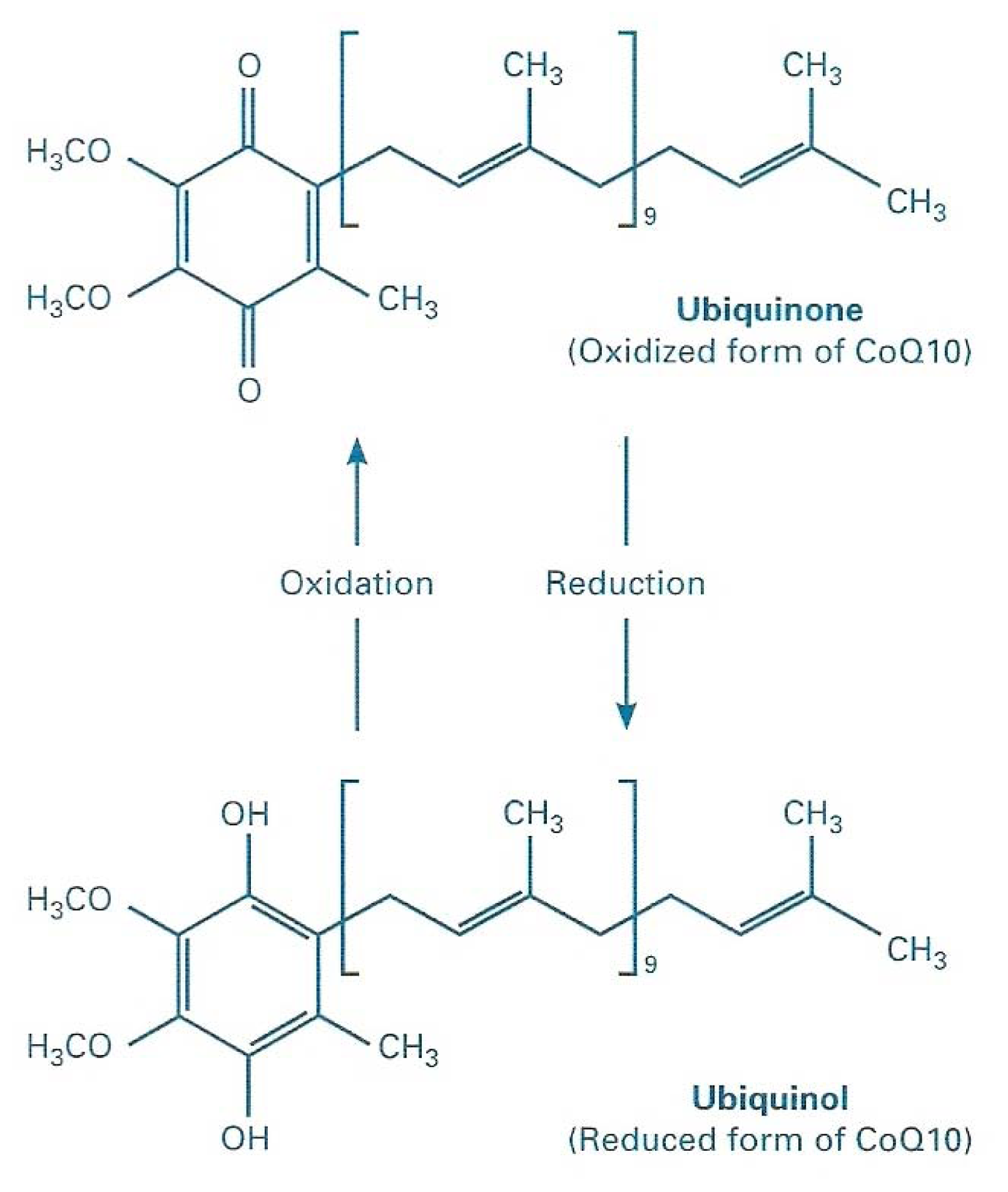
<p>Coenzyme Q<sub>10</sub> (CoQ<sub>10</sub>) is the predominant form of ubiquinone in man. The name ubiquinone (or ubidecarenone) refers to its ubiquitous diffusion in organisms and tissues. It is a key component of the ATP-producing oxidative phosphorylation chain, placed in the inner mitochondrial membrane, and linking flavoproteins and cytochroms. However, it is also a powerful lipophilic antioxidant, in particular in its reduced form, ubiquinol (<xref ref-type="fig" rid="f1-ijms-12-09216">Figure 1</xref>), which represents more than 80% of the total CoQ<sub>10</sub> in human plasma and protects biological membranes and lipoproteins. Furthermore, new roles in different cellular functions have been discovered recently, regarding other cell organelles like lysosomes, Golgi apparatus and plasmatic membranes [<xref ref-type="bibr" rid="b1-ijms-12-09216">1</xref>]. Finally, CoQ<sub>10</sub> can participate in many aspects of the oxido-reductive control of the cellular signaling pathways, at least via the auto-oxidation of semi-quinon which can be a primary source of H<sub>2</sub>O<sub>2</sub> generation [<xref ref-type="bibr" rid="b2-ijms-12-09216">2</xref>]. Also CoQ<sub>10</sub> involvement in cell proliferation was investigated [<xref ref-type="bibr" rid="b1-ijms-12-09216">1</xref>], but most data at present concerns its energetic and antioxidant roles [<xref ref-type="bibr" rid="b3-ijms-12-09216">3</xref>]. CoQ<sub>10</sub> levels in biological fluids can be accurately measured by HPLC, with a method standardized by the International CoQ<sub>10</sub> Association. Furthermore, electrochemical detection (HPLC-EC) allows measuring both the reduced (ubiquinol) and oxidized (ubiquinone) forms of CoQ<sub>10</sub> [<xref ref-type="bibr" rid="b4-ijms-12-09216">4</xref>]. The CoQ<sub>10</sub> normal value range in human plasma is 0.8–1.2 mg/L. Since CoQ<sub>10</sub> in the blood stream is prevalently transported in lipoproteins and above all low-density lipoproteins (LDL), CoQ<sub>10</sub> values are commonly normalized for those of cholesterol (nmol/mmol), in order to minimize the confounding effect of cholesterol. Systemic hormones are variously involved in the regulation of metabolism, and act as a certain modulation on body antioxidant systems, both in physiological and pathological conditions, with hormone excess or deficiency [<xref ref-type="bibr" rid="b5-ijms-12-09216">5</xref>]. The aim of this paper is to summarize the main findings of the literature about the link between hormonal systems and circulating CoQ<sub>10</sub> levels.</p></sec>
<sec>
<title>2. CoQ<sub>10</sub> Functions</title>
<sec>
<title>2.1. Bioenergetical Role of CoQ<sub>10</sub></title>
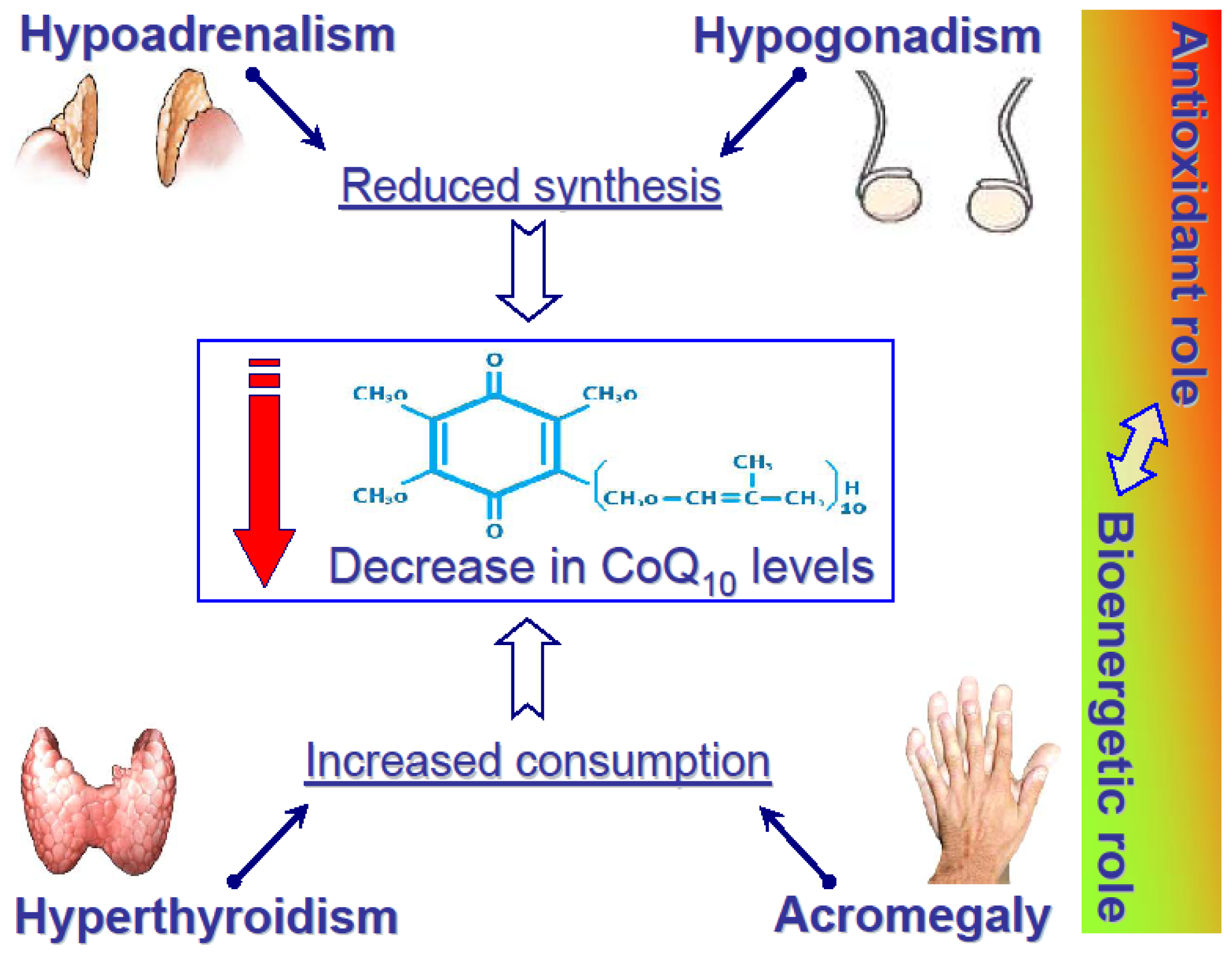
<p>CoQ<sub>10</sub> was initially isolated as a yellow compound in 1957, from beef heart mitochondria by the group of Dr. D. Green at the University of Wisconsin. Then, Dr. K. Folkers determined its structure at the research laboratories of Merck in New Jersey; it is a moderately large worm shaped lipid molecule about 4 nm long, which can be described as: 2,3-dimethoxy-5-methyl-6-decaprenil-1,4-benzoquinone. CoQ<sub>10</sub> was soon recognized as essential for the bioenergetics of cell respiration and named a coenzyme because of its activity in the enzyme systems of mitochondria. The letter Q indicates its quinonic group, while 10 are the isoprenoid units in its sidechain. CoQ<sub>10</sub> carries hydrogens through the respiratory chain catalytic centres in the mitochondrial christae membrane, allowing coupling of the translocation of electrons to the translocation of protons, needed for the formation of chemiosmotic gradient for the functioning of ATP synthetase. Since CoQ<sub>10</sub> affinity for the enzymes it interacts with, is not high enough to saturate them at its physiological concentration in the membrane, then the velocity of respiratory chain is very sensitive to variations of total CoQ<sub>10</sub> or ubiquinole/ubiquinone ratio [<xref ref-type="bibr" rid="b6-ijms-12-09216">6</xref>]. This concept links together the classical bioenergetic role of CoQ<sub>10</sub> and its antioxidant role: any condition of increased oxidative stress, with the involvement of CoQ<sub>10</sub> as antioxidant, might decrease its availability for oxidative phosphorylation (<xref ref-type="fig" rid="f2-ijms-12-09216">Figure 2</xref>). This is also the rationale for the clinical use of exogenous CoQ<sub>10</sub> in different conditions and diseases.</p></sec>
<sec>
<title>2.2. CoQ<sub>10</sub> and Oxidative Stress</title>
<p>Oxidative stress is defined as the unbalance between production of free radicals, molecules characterized by high chemical reactivity, and antioxidant defenses, in the biological systems. Oxidative stress is considered an important basic pathogenetic mechanism in different diseases. CoQ<sub>10</sub> is an important mechanism of defense against oxidative stress. In fact, the most important and studied free radicals are reactive oxygen species (ROS), normally produced during oxidative processes of energetic substrates in the mitochondrial respiratory chain [<xref ref-type="bibr" rid="b7-ijms-12-09216">7</xref>,<xref ref-type="bibr" rid="b8-ijms-12-09216">8</xref>]. An increase in ROS production can be due to an increase in the electronic flow in the respiratory chain, resulting from an augmented energetic demand or an augmented disposal of substrates [<xref ref-type="bibr" rid="b9-ijms-12-09216">9</xref>]. In leukocytes as well as many other cytotypes (endothelial and mesangial cells, fibroblasts, thyreocytes, oocytes, Leydig cells, adipocytes, Epstein-Barr and neoplastic cells) ROS generation was shown to have a positive pathophysiologic role, different from respiratory burst [<xref ref-type="bibr" rid="b10-ijms-12-09216">10</xref>]. However an uncontrolled production of free radicals was linked to many pathologic events, such as rheumatoid arthritis and myocardial infarction, and in general ROS damage occurs in inflamed tissues, characterized from cellular lysis and intracellular content release. Moreover, in diabetes mellitus, oxidation, accompanying non-enzymatic glycation, supports the formation of irreversible chemical modifications on proteins and other kinds of molecules. The formation of these glycoxidation products depends not only on the relative glucose concentrations, but also on the local oxidative environment. On the other hand, in diabetic patients antioxidant capacity is decreased, finally resulting in an increased susceptibility to oxidative stress [<xref ref-type="bibr" rid="b11-ijms-12-09216">11</xref>].</p>
<p>It is possible to characterize different cellular defensive mechanisms against the free radical damage, which act in the endoplasmic network, mitochondria, plasmatic membrane, peroxisomes and cytosol, as well as extracellular ambient. The first mechanism is the prevention of production or the rapid inactivation of free radicals, thanks to the action of enzymes, like catalase, peroxidase glutathion complex and superoxydedismutase (SOD), or of transition-metals binding proteins, like transferrin, ferritin and ceruloplasmin. The second mechanism interrupts propagation of the lipid peroxidation chain by inactivating the intermediate radicals. This mechanism is carried out by molecules called “scavengers”, which can be water-soluble, such as albumin, bilirubin, ascorbic acid, urates and thiols, or liposoluble, e.g., vitamin E and CoQ<sub>10</sub>, the only liposoluble antioxidant synthesized in living organisms. The mobility of scavengers, particularly the liposoluble ones and, most especially at the membrane level, allows interception of radicals and transforms them into more stable molecules and therefore stops damaging the chain. Sometimes scavengers can be regenerated, that is the case of CoQ<sub>10</sub>. The third defensive mechanism uses processes which remove molecules damaged by oxidative attack, allowing the reconstitution of normal structures; for instance, specific phospholypases remove the peroxidized fatty acids, enabling the re-acylation of damaged molecules by an acyl-CoA and the respective enzyme [<xref ref-type="bibr" rid="b12-ijms-12-09216">12</xref>].</p></sec></sec>
<sec>
<title>3. Clinical Significance of CoQ<sub>10</sub> Measurement</title>
<p>The clinical value of CoQ<sub>10</sub> is clear with respect to the antioxidant protection of lipoproteins. In fact, circulating LDLs are particularly prone to oxidative damage with generation of cytotoxic products, associated with atherosclerosis [<xref ref-type="bibr" rid="b13-ijms-12-09216">13</xref>]. In LDLs, CoQ<sub>10</sub> is oxidized before vitamin E, and the appearance of fat acids hydroperoxides occurs only after ubiquinol depletion [<xref ref-type="bibr" rid="b14-ijms-12-09216">14</xref>], indicating CoQ<sub>10</sub> as a first-line barrier against oxidative stress. Moreover, the treatment <italic>per os</italic> with exogenous CoQ<sub>10</sub> in normal subjects induces an increase of ubiquinol levels in plasma and lipoproteins and an augmented resistance to LDL peroxidation [<xref ref-type="bibr" rid="b15-ijms-12-09216">15</xref>]. Oxidative stress, obesity, metabolic syndrome and insulin resistance are crucial elements in the pathogenesis of atherosclerosis and cardiovascular disease, because of the association with lipoproteins rich in triglycerides (small and dense LDLs), oxidized LDLs, antibodies anti-oxidized LDLs and other oxidized and glycated particles, F2-isoprostans, soluble adhesion molecules, augmented levels of fibrinogen and PAI-1 e low levels of t-PA, an increase in CRP, IL-6, AA, omocistein, advanced glycation products [<xref ref-type="bibr" rid="b16-ijms-12-09216">16</xref>–<xref ref-type="bibr" rid="b18-ijms-12-09216">18</xref>]. Dealing with diabetes, blood plasma and cellular antioxidant defense is often reduced [<xref ref-type="bibr" rid="b19-ijms-12-09216">19</xref>], and also CoQ<sub>10</sub> plasma levels were found to be decreased in diabetic patients [<xref ref-type="bibr" rid="b20-ijms-12-09216">20</xref>]. So we understand why lipoproteins isolated by diabetic subjects are more susceptible to the oxidation process.</p>
<p>The significance of oxidative stress in coronary cardiopathy has been investigated in a case-control study [<xref ref-type="bibr" rid="b21-ijms-12-09216">21</xref>] and in two important cohort studies, the “Nurses’ Health Study” [<xref ref-type="bibr" rid="b22-ijms-12-09216">22</xref>] and the “Physicians’ Health Study” [<xref ref-type="bibr" rid="b23-ijms-12-09216">23</xref>]. The positive effect of the treatment with CoQ10 on angina pectoris, total arrhythmias, and left ventricular function after myocardial infarction was shown in the short term [<xref ref-type="bibr" rid="b24-ijms-12-09216">24</xref>], as well as the long-term prognosis [<xref ref-type="bibr" rid="b25-ijms-12-09216">25</xref>]. In conclusion, there is a relationship between low concentrations of plasma CoQ<sub>10</sub> and coronary disease, even if this correlation is not so strong as even to be considered a casual relation [<xref ref-type="bibr" rid="b26-ijms-12-09216">26</xref>]. However, ubiquinol/ubiquinone ratio is considered an oxidative stress marker in coronary disease and LDL/CoQ<sub>10</sub> ratio was proposed as an index of coronary risk factor [<xref ref-type="bibr" rid="b20-ijms-12-09216">20</xref>].</p>
<p>There are a lot of medical investigations concerning the potential therapeutic usefulness of CoQ<sub>10</sub> in the treatment of various diseases, including endocrine ones: cardiovascular, neurological, muscular, immunologic, dental, diabetes, male infertility [<xref ref-type="bibr" rid="b3-ijms-12-09216">3</xref>,<xref ref-type="bibr" rid="b27-ijms-12-09216">27</xref>].</p></sec>
<sec>
<title>4. CoQ<sub>10</sub> and Thyroid</title>
<p>Both hyperthyroidism and hypothyroidism are associated with enhanced oxidative stress involving enzymatic and non-enzymatic antioxidants [<xref ref-type="bibr" rid="b28-ijms-12-09216">28</xref>]. In particular, hyperthyroidism is associated with reduced circulating levels of α-tocopherol [<xref ref-type="bibr" rid="b29-ijms-12-09216">29</xref>,<xref ref-type="bibr" rid="b30-ijms-12-09216">30</xref>] and CoQ<sub>10</sub> [<xref ref-type="bibr" rid="b31-ijms-12-09216">31</xref>,<xref ref-type="bibr" rid="b32-ijms-12-09216">32</xref>], and some complications of hyperthyroidism are due to oxidative stress in target tissues [<xref ref-type="bibr" rid="b33-ijms-12-09216">33</xref>]. Increasing CoQ<sub>10</sub> values were found when going from hyper- to hypo-thyroidism, with euthyroism in the middle [<xref ref-type="bibr" rid="b34-ijms-12-09216">34</xref>], and in a previous study we showed a significant inverse correlation between thyroid hormones and plasma CoQ<sub>10</sub> [<xref ref-type="bibr" rid="b35-ijms-12-09216">35</xref>]. This correlation was further confirmed in other studies and in a larger group of patients [<xref ref-type="bibr" rid="b32-ijms-12-09216">32</xref>], and could cover diagnostic usefulness in those clinical conditions characterized by uncoupling of thyroid hormone levels and metabolic status, like amiodarone-induced thyroid dysfunction [<xref ref-type="bibr" rid="b35-ijms-12-09216">35</xref>] and inappropriate thyroid stimulating hormone secretion.</p>
<p>Values of CoQ<sub>10</sub> in hyperthyroid patients are among the lowest reported in different human diseases (<xref ref-type="table" rid="t1-ijms-12-09216">Table 1</xref>). The reasons for this phenomenon include: decreased synthesis related to competition for tyrosine, which is a common substrate for CoQ<sub>10</sub> and thyroxin synthesis (but this hypothesis was disconfirmed by experimental data in animals; increased CoQ<sub>10</sub> utilization, due to the increased metabolic demand; increased degradation; decreased levels of carriers in serum, since it is demonstrated that release of very-low-density lipoproteins from liver is decreased in hyperthyroidism. Symmetrical mechanisms can be invoked to explain high CoQ<sub>10</sub> levels in hypothyroid patients.</p>
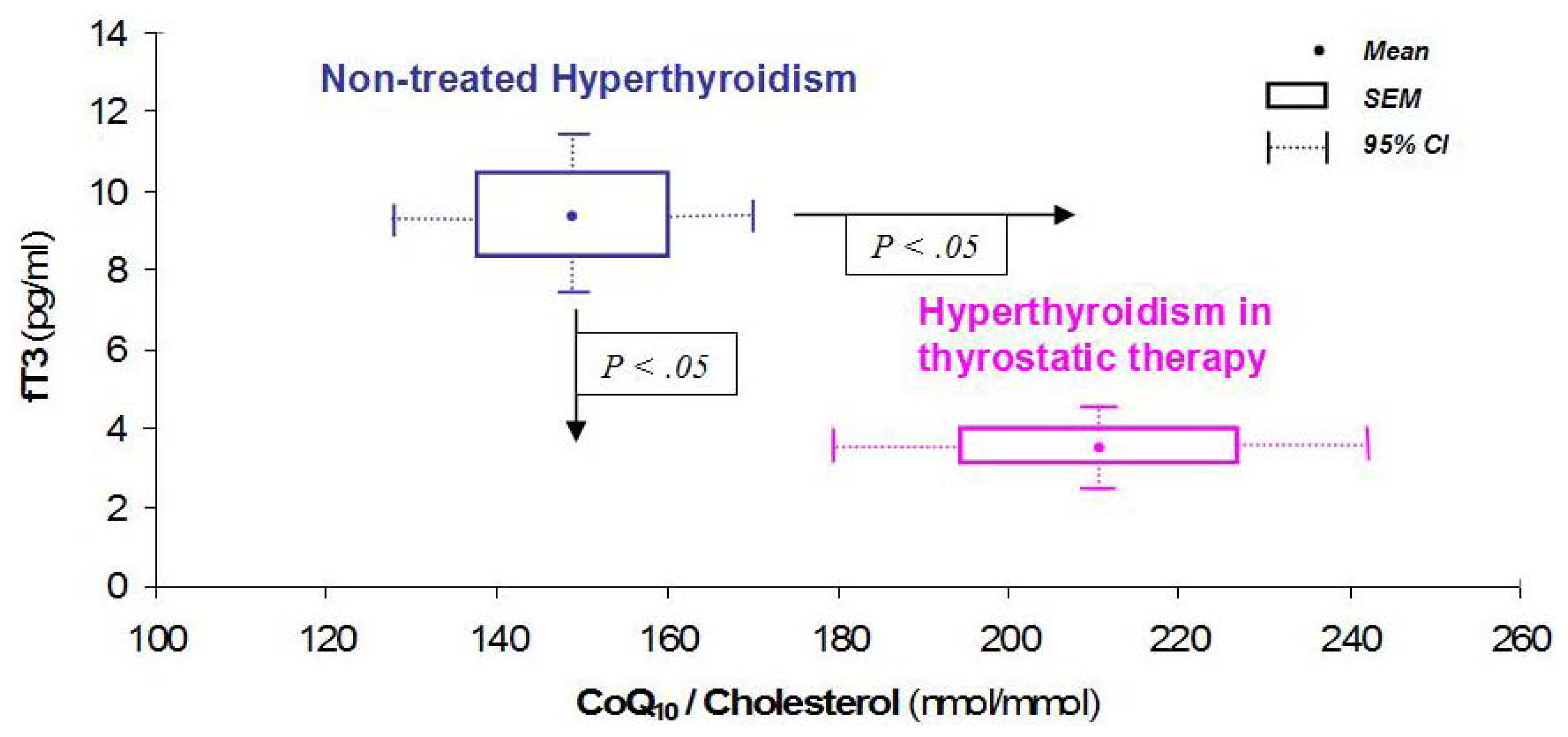
<p>In patients who underwent total thyroidectomy for papillary carcinoma or multinodular goiter, we found that patients with non toxic multinodular goiter exhibited low CoQ<sub>10</sub> values in pathological areas, probably related to colloid accumulation; on the contrary, in active proliferating tissues (toxic goiter or neoplasm) CoQ<sub>10</sub> concentrations were greater than in unaffected areas [<xref ref-type="bibr" rid="b32-ijms-12-09216">32</xref>]. These data pointed toward increased CoQ<sub>10</sub> uptake related to increased metabolic demand. Pharmacological treatment with metimazole, restoring normal values of thyroid hormones, also normalizes CoQ<sub>10</sub> values (<xref ref-type="fig" rid="f3-ijms-12-09216">Figure 3</xref>), as seen in hyperthyroidal children too, even after CoQ<sub>10</sub> was adjusted to cholesterol concentration, confirming a lipid-independent effect (apart from a decreased carrier capacity in serum) of the hyperthyroid state on the CoQ<sub>10</sub> levels [<xref ref-type="bibr" rid="b5-ijms-12-09216">5</xref>,<xref ref-type="bibr" rid="b36-ijms-12-09216">36</xref>].</p>
<p>More recently, we tested a group of patients with low-T<sub>3</sub> syndrome due to chronic obstructive pulmonary disease: again CoQ<sub>10</sub> was higher than patients with the same disease and normal T<sub>3</sub> levels, suggesting that real hypothyroidism could be present in such situation [<xref ref-type="bibr" rid="b37-ijms-12-09216">37</xref>].</p></sec>
<sec>
<title>5. CoQ<sub>10</sub> in Other Endocrine Diseases</title>
<sec>
<title>5.1. Adrenal Disease</title>
<p>Due to the importance of oxidative stress in the pathophysiology of adrenal gland, we performed studies evaluating both blood plasma Total antioxidant capacity (TAC) and CoQ<sub>10</sub>. A further rationale for studying CoQ<sub>10</sub> in pituitary-adrenal disease was the common biosynthetic pathway of cholesterol and ubiquinone. CoQ<sub>10</sub> levels were significantly lower in isolated hypoadrenalism than in patients with adrenal hyperplasia and multiple pituitary deficiencies [<xref ref-type="bibr" rid="b38-ijms-12-09216">38</xref>]. These preliminary data indicate that secretion of adrenal hormones is in some way related to CoQ<sub>10</sub> levels, both in augmented and reduced conditions. However in secondary hypoadrenalism, some other pituitary dependent axes can be affected. Therefore we compared patients with post-surgical isolated hypoadrenalism with those who also presented hypothyroidism. Since thyroid hormones play an important role in modulating CoQ<sub>10</sub> levels and metabolism, when coexistent (<xref ref-type="table" rid="t1-ijms-12-09216">Table 1</xref>), thyroid deficiency seems to play a prevalent role instead of adrenal deficiency [<xref ref-type="bibr" rid="b39-ijms-12-09216">39</xref>].</p></sec>
<sec>
<title>5.2. Gonadal Disease</title>
<p>To investigate the role of gonadal steroids in systemic antioxidant regulation, we determined plasma CoQ<sub>10</sub> and its contribution to TAC in post-surgical hypopituitaric patients. Sixteen out of 26 patients presented low testosterone values and were also studied after treatment with testosterone enantate. CoQ<sub>10</sub> levels were significantly lower in isolated hypogonadism than in normogonadism. Testosterone treatment induced a significant change both in CoQ<sub>10</sub> level and TAC. CoQ<sub>10</sub> and TAC values significantly correlated, suggesting an inter-relationship between different antioxidants [<xref ref-type="bibr" rid="b40-ijms-12-09216">40</xref>].</p>
<p>Our data suggest that hypogonadism could represent a condition of oxidative stress, in turn related with augmented cardiovascular risk. Once again, when hypogonadism was associated to hypothyroidism, the effect of the latter was prevalent (<xref ref-type="table" rid="t1-ijms-12-09216">Table 1</xref>).</p></sec>
<sec>
<title>5.3. Growth Hormone</title>
<p>A previous study of our group also evaluated acromegalic patients [<xref ref-type="bibr" rid="b41-ijms-12-09216">41</xref>], harboring a GH-secreting pituitary adenoma. In this case, we observed lower CoQ<sub>10</sub> values; however sometimes the pituitary adenoma can damage other pituitary cell lines or disrupt the connection with hypothalamus, causing defects in other pituitary dependent axes (thyroid, adrenal, gonadal). In the case of secondary hypothyroidism, as seen above, this last phenomenon can be prevalent; therefore in acromegalic patients with concomitant hypothyroidism, CoQ<sub>10</sub> plasma levels are increased (<xref ref-type="table" rid="t1-ijms-12-09216">Table 1</xref>). Growth hormone probably influences CoQ<sub>10</sub> consumption, due to accelerated metabolism, as in the case of hyperthyroidism.</p></sec></sec>
<sec sec-type="conclusions">
<title>6. Conclusions</title>
<p>Antioxidant systems represent a key defense mechanism in our body and an unbalance of these systems can underly a wide spectrum of human disease. The reported experimental data show that systemic hormones can affect their levels, both in physiological and pathological conditions. However CoQ10 can be affected by different mechanisms; its low levels in plasma, in fact, can be due to accelerated metabolism and/or consumption, such as in hyperthyroidism and acromegaly, or a reduced synthesis, such as in hypoadrenalism and hypogonadism (<xref ref-type="fig" rid="f2-ijms-12-09216">Figure 2</xref>).</p>
<p>All pituitary hormones and the dependent glands (thyroid, adrenal, gonads) are involved, even if an unequivocal picture is far from being designed. However, it seems clear that in all the considered conditions, the effect of thyroid hormones is predominant on other hormones in influencing CoQ<sub>10</sub> plasma levels. Even though more controlled studies are needed, the clinical usefulness of CoQ<sub>10</sub> determination for a diagnosis refinement, or CoQ<sub>10</sub> oral supplementation as a support to the specific endocrine therapy, has already been demonstrated in many cases.</p></sec></body>
<back>
<ref-list>
<title>References</title>
<ref id="b1-ijms-12-09216"><label>1</label><citation citation-type="journal"><person-group person-group-type="author"><name><surname>Crane</surname><given-names>F.L.</given-names></name></person-group><article-title>Biochemical functions of coenzyme Q10</article-title><source>J. Am. Coll. Nutr</source><year>2001</year><volume>20</volume><fpage>591</fpage><lpage>598</lpage><pub-id pub-id-type="pmid">11771674</pub-id></citation></ref>
<ref id="b2-ijms-12-09216"><label>2</label><citation citation-type="journal"><person-group person-group-type="author"><name><surname>Kaltschmidt</surname><given-names>B.</given-names></name><name><surname>Sparna</surname><given-names>T.</given-names></name><name><surname>Kaltschmidt</surname><given-names>C.</given-names></name></person-group><article-title>Activation of NFκB by reactive oxygen intermediates in the nervous system</article-title><source>Antioxid. Redox Signal</source><year>1999</year><volume>1</volume><fpage>129</fpage><lpage>144</lpage><pub-id pub-id-type="doi">10.1089/ars.1999.1.2-129</pub-id><pub-id pub-id-type="pmid">11228742</pub-id></citation></ref>
<ref id="b3-ijms-12-09216"><label>3</label><citation citation-type="journal"><person-group person-group-type="author"><name><surname>Littarru</surname><given-names>G.P.</given-names></name><name><surname>Tiano</surname><given-names>L.</given-names></name></person-group><article-title>Clinical aspects of coenzyme Q10: An update</article-title><source>Nutrition</source><year>2010</year><volume>26</volume><fpage>250</fpage><lpage>254</lpage><pub-id pub-id-type="doi">10.1016/j.nut.2009.08.008</pub-id><pub-id pub-id-type="pmid">19932599</pub-id></citation></ref>
<ref id="b4-ijms-12-09216"><label>4</label><citation citation-type="journal"><person-group person-group-type="author"><name><surname>Littarru</surname><given-names>G.P.</given-names></name><name><surname>Mosca</surname><given-names>F.</given-names></name><name><surname>Fattorini</surname><given-names>D.</given-names></name><name><surname>Bompadre</surname><given-names>S.</given-names></name><name><surname>Battino</surname><given-names>M.</given-names></name></person-group><article-title>Assay of coenzyme Q10 in plasma by a single dilution step</article-title><source>Methods Enzymol</source><year>2004</year><volume>378</volume><fpage>170</fpage><lpage>176</lpage><pub-id pub-id-type="pmid">15038968</pub-id></citation></ref>
<ref id="b5-ijms-12-09216"><label>5</label><citation citation-type="journal"><person-group person-group-type="author"><name><surname>Mancini</surname><given-names>A.</given-names></name><name><surname>Festa</surname><given-names>R.</given-names></name><name><surname>Di Donna</surname><given-names>V.</given-names></name><name><surname>Leone</surname><given-names>E.</given-names></name><name><surname>Littarru</surname><given-names>G.P.</given-names></name><name><surname>Silvestrini</surname><given-names>A.</given-names></name><name><surname>Meucci</surname><given-names>E.</given-names></name><name><surname>Pontecorvi</surname><given-names>A.</given-names></name></person-group><article-title>Hormones and antioxidant systems: Role of pituitary and pituitary-dependent axes</article-title><source>J. Endocrinol. Invest</source><year>2010</year><volume>33</volume><fpage>422</fpage><lpage>433</lpage><pub-id pub-id-type="pmid">20631494</pub-id></citation></ref>
<ref id="b6-ijms-12-09216"><label>6</label><citation citation-type="book"><person-group person-group-type="author"><name><surname>Littarru</surname><given-names>G.P.</given-names></name></person-group><article-title>The Mitochondrion: A Main Energy Plant</article-title><source>Energy and Defence</source><publisher-name>CESI</publisher-name><publisher-loc>Roma, Italy</publisher-loc><year>1994</year><fpage>14</fpage><lpage>21</lpage></citation></ref>
<ref id="b7-ijms-12-09216"><label>7</label><citation citation-type="book"><person-group person-group-type="author"><name><surname>Littarru</surname><given-names>G.P.</given-names></name></person-group><article-title>Radical Formation <italic>in vivo</italic></article-title><source>Energy and Defence</source><publisher-name>CESI</publisher-name><publisher-loc>Roma, Italy</publisher-loc><year>1994</year><fpage>28</fpage><lpage>30</lpage></citation></ref>
<ref id="b8-ijms-12-09216"><label>8</label><citation citation-type="journal"><person-group person-group-type="author"><name><surname>Kang</surname><given-names>D.</given-names></name><name><surname>Hamasaki</surname><given-names>N.</given-names></name></person-group><article-title>Mitochondrial oxidative stress and mitochondrial DNA</article-title><source>Clin. Chem. Lab. Med</source><year>2003</year><volume>41</volume><fpage>1281</fpage><lpage>1288</lpage><pub-id pub-id-type="pmid">14580153</pub-id></citation></ref>
<ref id="b9-ijms-12-09216"><label>9</label><citation citation-type="journal"><person-group person-group-type="author"><name><surname>Turrens</surname><given-names>J.F.</given-names></name><name><surname>Boveris</surname><given-names>A.</given-names></name></person-group><article-title>Generation of superoxyde anion by the NADH dehydrogenase of bovine mitochondria</article-title><source>Biochem. J</source><year>1980</year><volume>191</volume><fpage>421</fpage><lpage>427</lpage><pub-id pub-id-type="pmid">6263247</pub-id></citation></ref>
<ref id="b10-ijms-12-09216"><label>10</label><citation citation-type="journal"><person-group person-group-type="author"><name><surname>Cross</surname><given-names>A.R.</given-names></name><name><surname>Jones</surname><given-names>O.T.G.</given-names></name></person-group><article-title>Enzymic mechanism of superoxyde production</article-title><source>Biochem. Biophys. Acta</source><year>1991</year><volume>1057</volume><fpage>281</fpage><lpage>284</lpage><pub-id pub-id-type="doi">10.1016/S0005-2728(05)80140-9</pub-id><pub-id pub-id-type="pmid">1851438</pub-id></citation></ref>
<ref id="b11-ijms-12-09216"><label>11</label><citation citation-type="journal"><person-group person-group-type="author"><name><surname>Wolff</surname><given-names>S.P.</given-names></name><name><surname>Jiang</surname><given-names>Z.Y.</given-names></name><name><surname>Hunt</surname><given-names>J.V.</given-names></name></person-group><article-title>Protein glycation and oxidative stress in diabetes mellitus and ageing</article-title><source>Free Radical. Biol. Med</source><year>1991</year><volume>10</volume><fpage>339</fpage><lpage>352</lpage><pub-id pub-id-type="doi">10.1016/0891-5849(91)90040-A</pub-id></citation></ref>
<ref id="b12-ijms-12-09216"><label>12</label><citation citation-type="book"><person-group person-group-type="author"><name><surname>Littarru</surname><given-names>G.P.</given-names></name></person-group><article-title>Antioxidant Mechanisms</article-title><source>Energy and Defence</source><publisher-name>CESI</publisher-name><publisher-loc>Roma, Italy</publisher-loc><year>1994</year><fpage>42</fpage><lpage>45</lpage></citation></ref>
<ref id="b13-ijms-12-09216"><label>13</label><citation citation-type="journal"><person-group person-group-type="author"><name><surname>Thomas</surname><given-names>S.R.</given-names></name><name><surname>Witting</surname><given-names>P.K.</given-names></name><name><surname>Stocker</surname><given-names>R.</given-names></name></person-group><article-title>A role for reduced coenzyme Q in atherosclerosis?</article-title><source>Biofactors</source><year>1999</year><volume>9</volume><fpage>207</fpage><lpage>224</lpage><pub-id pub-id-type="doi">10.1002/biof.5520090216</pub-id><pub-id pub-id-type="pmid">10416033</pub-id></citation></ref>
<ref id="b14-ijms-12-09216"><label>14</label><citation citation-type="journal"><person-group person-group-type="author"><name><surname>Stocker</surname><given-names>R.</given-names></name><name><surname>Bowry</surname><given-names>V.W.</given-names></name><name><surname>Frei</surname><given-names>B.</given-names></name></person-group><article-title>Ubiquinol-10 protects human low density lipoprotein more efficiently against lipid peroxidation than does α-tocopherol</article-title><source>Proc. Natl. Acad. Sci. USA</source><year>1991</year><volume>88</volume><fpage>1646</fpage><lpage>1650</lpage><pub-id pub-id-type="doi">10.1073/pnas.88.5.1646</pub-id><pub-id pub-id-type="pmid">2000375</pub-id></citation></ref>
<ref id="b15-ijms-12-09216"><label>15</label><citation citation-type="journal"><person-group person-group-type="author"><name><surname>Mohr</surname><given-names>D.</given-names></name><name><surname>Bowry</surname><given-names>V.W.</given-names></name><name><surname>Stocker</surname><given-names>R.</given-names></name></person-group><article-title>Dietary supplementation with coenzyme Q10 results in increased levels of ubiquinol-10 within circulating lipoproteins and increased resistance of human low-density lipoprotein to the initiation of lipid peroxidation</article-title><source>Biochim. Biophys. Acta</source><year>1992</year><volume>1126</volume><fpage>247</fpage><lpage>254</lpage><pub-id pub-id-type="doi">10.1016/0005-2760(92)90237-P</pub-id><pub-id pub-id-type="pmid">1637852</pub-id></citation></ref>
<ref id="b16-ijms-12-09216"><label>16</label><citation citation-type="journal"><person-group person-group-type="author"><name><surname>Lakka</surname><given-names>H.M.</given-names></name><name><surname>Laaksonen</surname><given-names>D.E.</given-names></name><name><surname>Lakka</surname><given-names>T.A.</given-names></name><name><surname>Niskanen</surname><given-names>L.K.</given-names></name><name><surname>Kumpusalo</surname><given-names>E.</given-names></name><name><surname>Tuomilehto</surname><given-names>J.</given-names></name><name><surname>Salonen</surname><given-names>J.T.</given-names></name></person-group><article-title>The metabolic syndrome and total and cardiovascular disease mortality in middle-aged men</article-title><source>JAMA</source><year>2002</year><volume>288</volume><fpage>2709</fpage><lpage>2716</lpage><pub-id pub-id-type="doi">10.1001/jama.288.21.2709</pub-id><pub-id pub-id-type="pmid">12460094</pub-id></citation></ref>
<ref id="b17-ijms-12-09216"><label>17</label><citation citation-type="journal"><person-group person-group-type="author"><name><surname>Isomaa</surname><given-names>B.</given-names></name><name><surname>Almgren</surname><given-names>P.</given-names></name><name><surname>Tuomi</surname><given-names>T.</given-names></name><name><surname>Forsén</surname><given-names>B.</given-names></name><name><surname>Lahti</surname><given-names>K.</given-names></name><name><surname>Nissén</surname><given-names>M.</given-names></name><name><surname>Taskinen</surname><given-names>M.R.</given-names></name><name><surname>Groop</surname><given-names>L.</given-names></name></person-group><article-title>Cardiovascular morbidity and mortality associated with the metabolic syndrome</article-title><source>Diabetes Care</source><year>2001</year><volume>24</volume><fpage>683</fpage><lpage>689</lpage><pub-id pub-id-type="doi">10.2337/diacare.24.4.683</pub-id><pub-id pub-id-type="pmid">11315831</pub-id></citation></ref>
<ref id="b18-ijms-12-09216"><label>18</label><citation citation-type="journal"><person-group person-group-type="author"><name><surname>Griffth</surname><given-names>R.L.</given-names></name><name><surname>Virella</surname><given-names>G.T.</given-names></name><name><surname>Stevenson</surname><given-names>H.C.</given-names></name><name><surname>Lopes-Virella</surname><given-names>M.F.</given-names></name></person-group><article-title>Low density lipoprotein metabolism by human macrophages activated with low density lipoprotein immune complexes. A possible mechanism of foam cell formation</article-title><source>J. Exp. Med</source><year>1988</year><volume>168</volume><fpage>1041</fpage><lpage>1059</lpage><pub-id pub-id-type="doi">10.1084/jem.168.3.1041</pub-id><pub-id pub-id-type="pmid">3171477</pub-id></citation></ref>
<ref id="b19-ijms-12-09216"><label>19</label><citation citation-type="journal"><person-group person-group-type="author"><name><surname>Tsai</surname><given-names>E.C.</given-names></name><name><surname>Hirsch</surname><given-names>I.B.</given-names></name><name><surname>Brunzell</surname><given-names>J.D.</given-names></name><name><surname>Chait</surname><given-names>A.</given-names></name></person-group><article-title>Reduced plasma peroxyl radical trapping capacity and increased susceptibility of LDL to oxidation in poorly controlled IDDM</article-title><source>Diabetes</source><year>1994</year><volume>43</volume><fpage>1010</fpage><lpage>1014</lpage><pub-id pub-id-type="doi">10.2337/diabetes.43.8.1010</pub-id><pub-id pub-id-type="pmid">8039594</pub-id></citation></ref>
<ref id="b20-ijms-12-09216"><label>20</label><citation citation-type="journal"><person-group person-group-type="author"><name><surname>Tomasetti</surname><given-names>M.</given-names></name><name><surname>Alleva</surname><given-names>R.</given-names></name><name><surname>Solenghi</surname><given-names>M.D.</given-names></name><name><surname>Littarru</surname><given-names>G.P.</given-names></name></person-group><article-title>Distribution of antioxidants among blood components and lipoproteins: Significance of lipids/CoQ10 ratio as a possible marker of increased risk for atherosclerosis</article-title><source>Biofactors</source><year>1999</year><volume>9</volume><fpage>231</fpage><lpage>240</lpage><pub-id pub-id-type="doi">10.1002/biof.5520090218</pub-id><pub-id pub-id-type="pmid">10416035</pub-id></citation></ref>
<ref id="b21-ijms-12-09216"><label>21</label><citation citation-type="journal"><person-group person-group-type="author"><name><surname>Stampfer</surname><given-names>M.J.</given-names></name><name><surname>Hennekens</surname><given-names>C.H.</given-names></name><name><surname>Manson</surname><given-names>J.E.</given-names></name><name><surname>Colditz</surname><given-names>G.A.</given-names></name><name><surname>Rosner</surname><given-names>B.</given-names></name><name><surname>Willett</surname><given-names>W.C.</given-names></name></person-group><article-title>Vitamin E consumption and the risk of coronary disease in women</article-title><source>N. Engl. J. Med</source><year>1993</year><volume>328</volume><fpage>1444</fpage><lpage>1449</lpage><pub-id pub-id-type="doi">10.1056/NEJM199305203282003</pub-id><pub-id pub-id-type="pmid">8479463</pub-id></citation></ref>
<ref id="b22-ijms-12-09216"><label>22</label><citation citation-type="journal"><person-group person-group-type="author"><name><surname>Riemersma</surname><given-names>R.A.</given-names></name><name><surname>Wood</surname><given-names>D.A.</given-names></name><name><surname>Macintyre</surname><given-names>C.C.</given-names></name><name><surname>Elton</surname><given-names>R.A.</given-names></name><name><surname>Gey</surname><given-names>K.F.</given-names></name><name><surname>Oliver</surname><given-names>M.F.</given-names></name></person-group><article-title>Anti-oxidants and pro-oxidants in coronary heart disease</article-title><source>Lancet</source><year>1991</year><volume>337</volume><fpage>677</fpage><pub-id pub-id-type="pmid">1672018</pub-id></citation></ref>
<ref id="b23-ijms-12-09216"><label>23</label><citation citation-type="journal"><person-group person-group-type="author"><name><surname>Rimm</surname><given-names>E.B.</given-names></name><name><surname>Stampfer</surname><given-names>M.J.</given-names></name><name><surname>Ascherio</surname><given-names>A.</given-names></name><name><surname>Giovannucci</surname><given-names>E.</given-names></name><name><surname>Colditz</surname><given-names>G.A.</given-names></name><name><surname>Willett</surname><given-names>W.C.</given-names></name></person-group><article-title>Vitamin E consumption and the risk of coronary heart disease in men</article-title><source>N. Engl. J. Med</source><year>1993</year><volume>328</volume><fpage>1450</fpage><lpage>1456</lpage><pub-id pub-id-type="doi">10.1056/NEJM199305203282004</pub-id><pub-id pub-id-type="pmid">8479464</pub-id></citation></ref>
<ref id="b24-ijms-12-09216"><label>24</label><citation citation-type="journal"><person-group person-group-type="author"><name><surname>Singh</surname><given-names>R.B.</given-names></name><name><surname>Wander</surname><given-names>G.S.</given-names></name><name><surname>Rastogi</surname><given-names>A.</given-names></name><name><surname>Shukla</surname><given-names>P.K.</given-names></name><name><surname>Mittal</surname><given-names>A.</given-names></name><name><surname>Sharma</surname><given-names>J.P.</given-names></name><name><surname>Mehrotra</surname><given-names>S.K.</given-names></name><name><surname>Kapoor</surname><given-names>R.</given-names></name><name><surname>Chopra</surname><given-names>R.K.</given-names></name></person-group><article-title>Randomized, double-blind placebo-controlled trial of coenzyme Q10 in patients with acute myocardial infarction</article-title><source>Cardiovasc. Drugs Ther</source><year>1998</year><volume>12</volume><fpage>347</fpage><lpage>353</lpage><pub-id pub-id-type="doi">10.1023/A:1007764616025</pub-id><pub-id pub-id-type="pmid">9825179</pub-id></citation></ref>
<ref id="b25-ijms-12-09216"><label>25</label><citation citation-type="journal"><person-group person-group-type="author"><name><surname>Kuklinski</surname><given-names>B.</given-names></name><name><surname>Weissenbacher</surname><given-names>E.</given-names></name><name><surname>Fähnrich</surname><given-names>A.</given-names></name></person-group><article-title>Coenzyme Q<sub>10</sub> and antioxidants in acute myocardial infarction</article-title><source>Mol. Aspects Med</source><year>1994</year><volume>15</volume><fpage>S143</fpage><lpage>S147</lpage><pub-id pub-id-type="doi">10.1016/0098-2997(94)90023-X</pub-id><pub-id pub-id-type="pmid">7752825</pub-id></citation></ref>
<ref id="b26-ijms-12-09216"><label>26</label><citation citation-type="journal"><person-group person-group-type="author"><name><surname>Yalcin</surname><given-names>A.</given-names></name><name><surname>Kilinc</surname><given-names>E.</given-names></name><name><surname>Sagcan</surname><given-names>A.</given-names></name><name><surname>Kultursay</surname><given-names>H.</given-names></name></person-group><article-title>Coenzime Q<sub>10</sub> concentrations in coronary artery disease</article-title><source>Clin. Biochem</source><year>2004</year><volume>37</volume><fpage>706</fpage><lpage>709</lpage><pub-id pub-id-type="doi">10.1016/j.clinbiochem.2004.02.008</pub-id><pub-id pub-id-type="pmid">15302616</pub-id></citation></ref>
<ref id="b27-ijms-12-09216"><label>27</label><citation citation-type="journal"><person-group person-group-type="author"><name><surname>Golbidi</surname><given-names>S.</given-names></name><name><surname>Laher</surname><given-names>I</given-names></name></person-group><article-title>Antioxidant therapy in human endocrine disorders</article-title><source>Med. Sci. Monit</source><year>2010</year><volume>16</volume><fpage>RA9</fpage><lpage>24</lpage><pub-id pub-id-type="pmid">20037503</pub-id></citation></ref>
<ref id="b28-ijms-12-09216"><label>28</label><citation citation-type="journal"><person-group person-group-type="author"><name><surname>Resch</surname><given-names>U.</given-names></name><name><surname>Helsel</surname><given-names>G.</given-names></name><name><surname>Tatzber</surname><given-names>F.</given-names></name><name><surname>Sinzinger</surname><given-names>H.</given-names></name></person-group><article-title>Antioxidant status in thyroid dysfunction</article-title><source>Clin. Chem. Lab. Med</source><year>2002</year><volume>40</volume><fpage>1132</fpage><lpage>1134</lpage><pub-id pub-id-type="pmid">12521231</pub-id></citation></ref>
<ref id="b29-ijms-12-09216"><label>29</label><citation citation-type="journal"><person-group person-group-type="author"><name><surname>Ademoglu</surname><given-names>E.</given-names></name><name><surname>Gokkusu</surname><given-names>C.</given-names></name><name><surname>Yarman</surname><given-names>S.</given-names></name><name><surname>Azizlerli</surname><given-names>H.</given-names></name></person-group><article-title>The effect of methimazole on oxidants and antioxidants system in patients with hyperthyroidism</article-title><source>Pharmacol. Res</source><year>1998</year><volume>38</volume><fpage>93</fpage><lpage>96</lpage><pub-id pub-id-type="doi">10.1006/phrs.1998.0336</pub-id><pub-id pub-id-type="pmid">9721594</pub-id></citation></ref>
<ref id="b30-ijms-12-09216"><label>30</label><citation citation-type="journal"><person-group person-group-type="author"><name><surname>Bianchi</surname><given-names>G.</given-names></name><name><surname>Solaroli</surname><given-names>E.</given-names></name><name><surname>Zaccheroni</surname><given-names>V.</given-names></name><name><surname>Grossi</surname><given-names>G.</given-names></name><name><surname>Bargossi</surname><given-names>A.M.</given-names></name><name><surname>Melchionda</surname><given-names>N.</given-names></name><name><surname>Marchesini</surname><given-names>G.</given-names></name></person-group><article-title>Oxidative stress and anti-oxidant metabolites in patients with hyperthyroidism: effect of treatment</article-title><source>Horm. Metab. Res</source><year>1990</year><volume>31</volume><fpage>620</fpage><lpage>624</lpage></citation></ref>
<ref id="b31-ijms-12-09216"><label>31</label><citation citation-type="book"><person-group person-group-type="author"><name><surname>Mancini</surname><given-names>A.</given-names></name><name><surname>de Marinis</surname><given-names>L.</given-names></name><name><surname>Calabrò</surname><given-names>F.</given-names></name><name><surname>Fiumara</surname><given-names>C.</given-names></name><name><surname>Goglia</surname><given-names>A.</given-names></name><name><surname>Littarru</surname><given-names>G.P.</given-names></name></person-group><article-title>Physiopathological Relevance of Coenzyme Q<sub>10</sub> in Thyroid Disorders: CoQ<sub>10</sub> Concentrations in Normal and Diseased Human Thyroid Tissue</article-title><source>Biomedical and Clinical Aspects of Coenzyme Q</source><person-group person-group-type="editor"><name><surname>Folkers</surname><given-names>K.</given-names></name><name><surname>Littarru</surname><given-names>G.P.</given-names></name><name><surname>Yamagami</surname><given-names>T.</given-names></name></person-group><publisher-name>Elsevier</publisher-name><publisher-loc>Amsterdam, The Netherlands</publisher-loc><year>1991</year><fpage>441</fpage><lpage>448</lpage></citation></ref>
<ref id="b32-ijms-12-09216"><label>32</label><citation citation-type="journal"><person-group person-group-type="author"><name><surname>Mancini</surname><given-names>A.</given-names></name><name><surname>Conte</surname><given-names>G.</given-names></name><name><surname>de Marinis</surname><given-names>L.</given-names></name><name><surname>Oradei</surname><given-names>A.</given-names></name><name><surname>Littarru</surname><given-names>G.P.</given-names></name></person-group><article-title>Thyroid hormone and oxidative metabolism: Coenzyme Q<sub>10</sub> in thyroid’s disease</article-title><source>Coenzyme Q Biol. Med</source><year>1993</year><volume>1</volume><fpage>25</fpage><lpage>34</lpage></citation></ref>
<ref id="b33-ijms-12-09216"><label>33</label><citation citation-type="journal"><person-group person-group-type="author"><name><surname>Asayama</surname><given-names>K.</given-names></name><name><surname>Kato</surname><given-names>K.</given-names></name></person-group><article-title>Oxidative muscular injury and its relevance to hyperthyroidism</article-title><source>Free Radic. Biol. Med</source><year>2000</year><volume>8</volume><fpage>293</fpage><lpage>303</lpage></citation></ref>
<ref id="b34-ijms-12-09216"><label>34</label><citation citation-type="journal"><person-group person-group-type="author"><name><surname>Pandolfi</surname><given-names>C.</given-names></name><name><surname>FerrarI</surname><given-names>D.</given-names></name><name><surname>Stanic</surname><given-names>I.</given-names></name><name><surname>Pellegrini</surname><given-names>L.</given-names></name></person-group><article-title>Circulating levels of CoQ10 in hypo- and hyperthyroidism</article-title><source>Minerva Endocrinol</source><year>1994</year><volume>19</volume><fpage>139</fpage><lpage>142</lpage><pub-id pub-id-type="pmid">7799896</pub-id></citation></ref>
<ref id="b35-ijms-12-09216"><label>35</label><citation citation-type="journal"><person-group person-group-type="author"><name><surname>Mancini</surname><given-names>A.</given-names></name><name><surname>de Marinis</surname><given-names>L.</given-names></name><name><surname>Calabrò</surname><given-names>F.</given-names></name><name><surname>Sciuto</surname><given-names>R.</given-names></name><name><surname>Oradei</surname><given-names>A.</given-names></name><name><surname>Lippa</surname><given-names>S.</given-names></name><name><surname>Sandric</surname><given-names>S.</given-names></name><name><surname>Littarru</surname><given-names>G.P.</given-names></name><name><surname>Barbarino</surname><given-names>A.</given-names></name></person-group><article-title>Evaluation of metabolic status in amiodarone-induced thyroid disorders: Plasma coenzyme Q<sub>10</sub> determination</article-title><source>J. Endocrinol. Invest</source><year>1989</year><volume>12</volume><fpage>511</fpage><lpage>516</lpage><pub-id pub-id-type="pmid">2592737</pub-id></citation></ref>
<ref id="b36-ijms-12-09216"><label>36</label><citation citation-type="journal"><person-group person-group-type="author"><name><surname>Menke</surname><given-names>T.</given-names></name><name><surname>Niklowitz</surname><given-names>P.</given-names></name><name><surname>Reinehr</surname><given-names>T.</given-names></name><name><surname>de Sousa</surname><given-names>G.J.</given-names></name><name><surname>Andler</surname><given-names>W.</given-names></name></person-group><article-title>Plasma levels of coenzyme Q10 in children with hyperthyroidism</article-title><source>Horm. Res</source><year>2004</year><volume>61</volume><fpage>153</fpage><lpage>158</lpage><pub-id pub-id-type="doi">10.1159/000075670</pub-id><pub-id pub-id-type="pmid">14685015</pub-id></citation></ref>
<ref id="b37-ijms-12-09216"><label>37</label><citation citation-type="journal"><person-group person-group-type="author"><name><surname>Mancini</surname><given-names>A.</given-names></name><name><surname>Corbo</surname><given-names>G.M.</given-names></name><name><surname>Gaballo</surname><given-names>A.</given-names></name><name><surname>Valente</surname><given-names>S.</given-names></name><name><surname>Gigliotti</surname><given-names>P.</given-names></name><name><surname>Cimino</surname><given-names>V.</given-names></name><name><surname>de Marinis</surname><given-names>L.</given-names></name><name><surname>Principi</surname><given-names>F.</given-names></name><name><surname>Littarru</surname><given-names>G.P.</given-names></name></person-group><article-title>Relationships between plasma CoQ<sub>10</sub> levels and thyroid hormones in chronic obstructive pulmonary disease</article-title><source>Biofactors</source><year>2005</year><volume>25</volume><fpage>201</fpage><lpage>204</lpage><pub-id pub-id-type="doi">10.1002/biof.5520250124</pub-id><pub-id pub-id-type="pmid">16873947</pub-id></citation></ref>
<ref id="b38-ijms-12-09216"><label>38</label><citation citation-type="journal"><person-group person-group-type="author"><name><surname>Mancini</surname><given-names>A.</given-names></name><name><surname>Bianchi</surname><given-names>A.</given-names></name><name><surname>Fusco</surname><given-names>A.</given-names></name><name><surname>Sacco</surname><given-names>E.</given-names></name><name><surname>Leone</surname><given-names>E.</given-names></name><name><surname>Tilaro</surname><given-names>L.</given-names></name><name><surname>Porcelli</surname><given-names>T.</given-names></name><name><surname>Giampietro</surname><given-names>A.</given-names></name><name><surname>Principi</surname><given-names>F.</given-names></name><name><surname>de Marinis</surname><given-names>L.</given-names></name><etal/></person-group><article-title>Coenzyme Q<sub>10</sub> evaluation in pituitary-adrenal axis disease: preliminary data</article-title><source>Biofactors</source><year>2005</year><volume>25</volume><fpage>197</fpage><lpage>199</lpage><pub-id pub-id-type="doi">10.1002/biof.5520250123</pub-id><pub-id pub-id-type="pmid">16873946</pub-id></citation></ref>
<ref id="b39-ijms-12-09216"><label>39</label><citation citation-type="journal"><person-group person-group-type="author"><name><surname>Mancini</surname><given-names>A.</given-names></name><name><surname>Leone</surname><given-names>E.</given-names></name><name><surname>Silvestrini</surname><given-names>A.</given-names></name><name><surname>Festa</surname><given-names>R.</given-names></name><name><surname>Di Donna</surname><given-names>V.</given-names></name><name><surname>de Marinis</surname><given-names>L.</given-names></name><name><surname>Pontecorvi</surname><given-names>A.</given-names></name><name><surname>Littarru</surname><given-names>G.P.</given-names></name><name><surname>Meucci</surname><given-names>E.</given-names></name></person-group><article-title>Evaluation of antioxidant systems in pituitary-adrenal axis diseases</article-title><source>Pituitary</source><year>2010</year><volume>13</volume><fpage>138</fpage><lpage>145</lpage><pub-id pub-id-type="doi">10.1007/s11102-009-0213-z</pub-id><pub-id pub-id-type="pmid">20012698</pub-id></citation></ref>
<ref id="b40-ijms-12-09216"><label>40</label><citation citation-type="journal"><person-group person-group-type="author"><name><surname>Mancini</surname><given-names>A.</given-names></name><name><surname>Leone</surname><given-names>E.</given-names></name><name><surname>Festa</surname><given-names>R.</given-names></name><name><surname>Grande</surname><given-names>G.</given-names></name><name><surname>Silvestrini</surname><given-names>A.</given-names></name><name><surname>de Marinis</surname><given-names>L.</given-names></name><name><surname>Pontecorvi</surname><given-names>A.</given-names></name><name><surname>Maira</surname><given-names>G.</given-names></name><name><surname>Gianpaolo</surname><given-names>L.</given-names></name><name><surname>Meucci</surname><given-names>E.</given-names></name></person-group><article-title>Effects of testosterone on antioxidant systems in male secondary hypogonadism</article-title><source>J. Androl</source><year>2008</year><volume>29</volume><fpage>622</fpage><lpage>629</lpage><pub-id pub-id-type="doi">10.2164/jandrol.107.004838</pub-id><pub-id pub-id-type="pmid">18641414</pub-id></citation></ref>
<ref id="b41-ijms-12-09216"><label>41</label><citation citation-type="journal"><person-group person-group-type="author"><name><surname>Mancini</surname><given-names>A.</given-names></name><name><surname>Calabrò</surname><given-names>F.</given-names></name><name><surname>Fiumara</surname><given-names>C.</given-names></name><name><surname>Conte</surname><given-names>G.</given-names></name><name><surname>Oradei</surname><given-names>A.</given-names></name><name><surname>Lippa</surname><given-names>S.</given-names></name><name><surname>de Marinis</surname><given-names>L.</given-names></name><name><surname>Littarru</surname><given-names>G.P.</given-names></name></person-group><article-title>Plasma Coenzyme Q1O determination in acromegaly</article-title><source>Exp. Clin. Endocrinol. Life Sci. Adv</source><year>1992</year><volume>11</volume><fpage>55</fpage><lpage>60</lpage></citation></ref></ref-list>
<sec sec-type="display-objects">
<title>Figures and Table</title>
<fig id="f1-ijms-12-09216" position="float">
<label>Figure 1</label>
<caption>
<p>Chemical structure of Coenzyme Q<sub>10</sub>, in its two redox forms.</p></caption>
<graphic xlink:href="ijms-12-09216f1.gif"/></fig>
<fig id="f2-ijms-12-09216" position="float">
<label>Figure 2</label>
<caption>
<p>Alteration of CoQ<sub>10</sub> levels in four “paradigmatic” endocrine disorders. The column on the right side refers to the pathophysiological phenomenon that if CoQ<sub>10</sub> is involved largely as an antioxidant, then its bioenergetical role may be impaired, and <italic>vice versa</italic>.</p></caption>
<graphic xlink:href="ijms-12-09216f2.gif"/></fig>
<fig id="f3-ijms-12-09216" position="float">
<label>Figure 3</label>
<caption>
<p>Effect of thyrostatic therapy on CoQ<sub>10</sub> levels. Adapted with permission from [<xref ref-type="bibr" rid="b5-ijms-12-09216">5</xref>].</p></caption>
<graphic xlink:href="ijms-12-09216f3.gif"/></fig>
<table-wrap id="t1-ijms-12-09216" position="float">
<label>Table 1</label>
<caption>
<p>Effect of thyroid function and other hormonal disorders, alone and combined with hypothyroidism, on CoQ<sub>10</sub> plasma levels (values are mean ± SEM).</p></caption>
<table frame="hsides" rules="groups">
<thead>
<tr>
<th align="left" valign="top"/>
<th align="center" valign="middle"><bold>Patients</bold> (No)</th>
<th align="center" valign="middle"><bold>CoQ</bold><bold><sub>10</sub></bold> (μg/mL)</th>
<th align="center" valign="middle"><bold>CoQ</bold><bold><sub>10</sub></bold><bold>/Chol.</bold> (nmol/mmol)</th>
<th align="center" valign="middle"><bold>Ref</bold>.</th></tr></thead>
<tbody>
<tr>
<td align="left" valign="top"><bold>Control subjects</bold></td>
<td align="center" valign="top">21</td>
<td align="center" valign="top">0.68 ± 0.04</td>
<td align="center" valign="top">217.2 ± 20.3</td>
<td align="center" valign="middle" rowspan="3"><xref ref-type="bibr" rid="b32-ijms-12-09216">32</xref></td></tr>
<tr>
<td align="left" valign="top"><bold>Hyperthyroidism</bold></td>
<td align="center" valign="top">25</td>
<td align="center" valign="top">0.45 ± 0.03</td>
<td align="center" valign="top">167.0 ± 20.5</td></tr>
<tr>
<td align="left" valign="top"><bold>Hypothyroidism</bold></td>
<td align="center" valign="top">27</td>
<td align="center" valign="top">1.04 ± 0.07</td>
<td align="center" valign="top">211.1 ± 11.2</td></tr>
<tr>
<td align="left" valign="top"/>
<td colspan="4" align="left" valign="top">
<hr/></td></tr>
<tr>
<td align="left" valign="top"><bold>Hypoadrenalism</bold></td>
<td align="center" valign="top">19</td>
<td align="center" valign="top">0.67 ± 0.06</td>
<td align="center" valign="top">188.1 ± 10.2</td>
<td align="center" valign="middle" rowspan="2"><xref ref-type="bibr" rid="b39-ijms-12-09216">39</xref></td></tr>
<tr>
<td align="left" valign="top"><bold>Hypoadrenalism &amp; Hypothyroidism</bold></td>
<td align="center" valign="top">19</td>
<td align="center" valign="top">0.92 ± 0.07</td>
<td align="center" valign="top">231.6 ± 32.4</td></tr>
<tr>
<td align="left" valign="top"/>
<td colspan="4" align="left" valign="top">
<hr/></td></tr>
<tr>
<td align="left" valign="top"><bold>Hypogonadism</bold></td>
<td align="center" valign="top">10</td>
<td align="center" valign="top">0.66 ± 0.06</td>
<td align="center" valign="top">190.8 ± 13.0</td>
<td align="center" valign="middle" rowspan="2"><xref ref-type="bibr" rid="b40-ijms-12-09216">40</xref></td></tr>
<tr>
<td align="left" valign="top"><bold>Hypogonadism &amp; Hypothyroidism</bold></td>
<td align="center" valign="top">6</td>
<td align="center" valign="top">1.11 ± 0.02</td>
<td align="center" valign="top">216.0 ± 25.0</td></tr>
<tr>
<td align="left" valign="top"/>
<td colspan="4" align="left" valign="top">
<hr/></td></tr>
<tr>
<td align="left" valign="top"><bold>Acromegaly</bold></td>
<td align="center" valign="top">10</td>
<td align="center" valign="top">0.50 ± 0.02</td>
<td align="center" valign="top">122.6 ± 11.6</td>
<td align="center" valign="middle" rowspan="2"><xref ref-type="bibr" rid="b41-ijms-12-09216">41</xref></td></tr>
<tr>
<td align="left" valign="top"><bold>Acromegaly &amp; Hypothyroidism</bold></td>
<td align="center" valign="top">4</td>
<td align="center" valign="top">0.98 ± 0.05</td>
<td align="center" valign="top">202.2 ± 15.3</td></tr></tbody></table></table-wrap></sec></back></article>