
<?xml version="1.0" encoding="UTF-8"?>
<!DOCTYPE article PUBLIC "-//NLM//DTD Journal Publishing DTD v2.3 20070202//EN" "journalpublishing.dtd">
<article xmlns:xlink="http://www.w3.org/1999/xlink" xml:lang="en" article-type="research-article">
<front>
<journal-meta>
<journal-id journal-id-type="publisher-id">ijms</journal-id>
<journal-title>International Journal of Molecular Sciences</journal-title>
<abbrev-journal-title>Int. J. Mol. Sci.</abbrev-journal-title>
<issn pub-type="epub">1422-0067</issn>
<publisher>
<publisher-name>Molecular Diversity Preservation International (MDPI)</publisher-name></publisher></journal-meta>
<article-meta>
<article-id pub-id-type="doi">10.3390/ijms11093195</article-id>
<article-id pub-id-type="publisher-id">ijms-11-03195</article-id>
<article-categories>
<subj-group>
<subject>Article</subject></subj-group></article-categories>
<title-group>
<article-title>Expression of an Organic Solvent Stable Lipase from <italic>Staphylococcus epidermidis</italic> AT2</article-title></title-group>
<contrib-group>
<contrib contrib-type="author">
<name><surname>Rahman</surname><given-names>Raja Noor Zaliha Raja Abd.</given-names></name><xref ref-type="aff" rid="af1-ijms-11-03195">1</xref><xref ref-type="aff" rid="af2-ijms-11-03195">2</xref><xref ref-type="corresp" rid="c1-ijms-11-03195">*</xref></contrib>
<contrib contrib-type="author">
<name><surname>Kamarudin</surname><given-names>Nor Hafizah Ahmad</given-names></name><xref ref-type="aff" rid="af1-ijms-11-03195">1</xref></contrib>
<contrib contrib-type="author">
<name><surname>Yunus</surname><given-names>Jalimah</given-names></name><xref ref-type="aff" rid="af1-ijms-11-03195">1</xref></contrib>
<contrib contrib-type="author">
<name><surname>Salleh</surname><given-names>Abu Bakar</given-names></name><xref ref-type="aff" rid="af1-ijms-11-03195">1</xref><xref ref-type="aff" rid="af2-ijms-11-03195">2</xref></contrib>
<contrib contrib-type="author">
<name><surname>Basri</surname><given-names>Mahiran</given-names></name><xref ref-type="aff" rid="af2-ijms-11-03195">2</xref><xref ref-type="aff" rid="af3-ijms-11-03195">3</xref></contrib></contrib-group>
<aff id="af1-ijms-11-03195">
<label>1</label> Faculty of Biotechnology and Biomolecular Sciences, Universiti Putra Malaysia, Serdang, Selangor, Malaysia; E-Mail: <email>hafizah.kamarudin@gmail.com</email> (N.H.A.K.)</aff>
<aff id="af2-ijms-11-03195">
<label>2</label> Institute of Biosciences, Universiti Putra Malaysia, Serdang, Selangor, Malaysia</aff>
<aff id="af3-ijms-11-03195">
<label>3</label> Faculty of Sciences, Universiti Putra Malaysia, Serdang, Selangor, Malaysia</aff>
<author-notes>
<corresp id="c1-ijms-11-03195">* Author to whom correspondence should be addressed; E-Mail: <email>rnzaliha@biotech.upm.edu.my</email>.</corresp></author-notes>
<pub-date pub-type="collection">
<year>2010</year></pub-date>
<pub-date pub-type="epub">
<day>13</day>
<month>9</month>
<year>2010</year></pub-date>
<volume>11</volume>
<issue>9</issue>
<fpage>3195</fpage>
<lpage>3208</lpage>
<history>
<date date-type="received">
<day>28</day>
<month>7</month>
<year>2010</year></date>
<date date-type="rev-recd">
<day>11</day>
<month>8</month>
<year>2010</year></date>
<date date-type="accepted">
<day>7</day>
<month>9</month>
<year>2010</year></date></history>
<permissions>
<copyright-statement>© 2010 by the authors; licensee Molecular Diversity Preservation International, Basel, Switzerland.</copyright-statement>
<copyright-year>2010</copyright-year>
<license license-type="open-access" xlink:href="http://creativecommons.org/licenses/by/3.0">
<p>This article is an open-access article distributed under the terms and conditions of the Creative Commons Attribution license (http://creativecommons.org/licenses/by/3.0/).</p></license></permissions>
<abstract>
<p>An organic solvent tolerant lipase gene from <italic>Staphylococcus epidermidis</italic> AT2 was successfully cloned and expressed with pTrcHis2 in <italic>E. coli</italic> TOP10. Sequence analysis revealed an open reading frame (ORF) of 1,933 bp in length which coded for a polypeptide of 643 amino acid residues. The polypeptide comprised of a signal peptide (37 amino acids), pro-peptide and a mature protein of 390 amino acids. Expression of AT2 lipase resulted in an 18-fold increase in activity, upon the induction of 0.6 mM IPTG after a 10 h incubation period. Interestingly, this lipase was stable in various organic solvents (25% (v/v), mainly toluene, octanol, p-xylene and <italic>n</italic>-hexane). Literature shows that most of the organic solvent stable bacterial lipases were produced by <italic>Pseudomonas</italic> sp. and <italic>Bacillus</italic> sp., but very few from <italic>Staphylococcus</italic> sp. This lipase demonstrates great potential to be employed in various industrial applications.</p></abstract>
<kwd-group>
<kwd>Staphylococcus epidermidis</kwd>
<kwd>prokaryotic system</kwd>
<kwd>organic solvent stable</kwd></kwd-group></article-meta></front>
<body>
<sec sec-type="intro">
<title>1. Introduction</title>
<p>Lipases are a class of enzymes that catalyze the hydrolysis of long chain triacylglycerols. The importance of microbial lipases like these from Staphylococcal proteins, is not only in their involvement in some pathogenic processes but also in industrial sectors due to their ability to catalyze many reactions based on chain length selectivity, regiospecificity, and chiral selectivity [<xref ref-type="bibr" rid="b1-ijms-11-03195">1</xref>]. These days, the ability of an enzyme to retain its activity in the presence of organic solvents is an attractive property, as many reaction media for enzymatic reactions involve the use of organic solvents. Organic solvents are basically known to be toxic to most bacteria as it compromises the structural and functional integrity of the cell [<xref ref-type="bibr" rid="b2-ijms-11-03195">2</xref>,<xref ref-type="bibr" rid="b3-ijms-11-03195">3</xref>]. Organic solvent tolerant bacteria exhibit certain adaptations to circumvent the toxic effect, such as, by having solvent efflux pump, rapid membrane repair, decreased cell surface hydrophobicity, lower cell membrane permeability and increased membrane rigidity. Inoue and Horikoshi (1989) made the first discovery of organic solvent stable bacterium, a strain of <italic>Pseudomonas putida</italic> IH-2000 which could actively grow and multiply in the presence of 50% (v/v) toluene [<xref ref-type="bibr" rid="b4-ijms-11-03195">4</xref>]. The enzymes produced by these organic solvent tolerant microbes are logically stable in a solvent-rich environment [<xref ref-type="bibr" rid="b5-ijms-11-03195">5</xref>]. The earliest study on such an organic solvent tolerant lipase was reported by Ogino <italic>et al.</italic>, (1994) wherein the lipolytic activity of <italic>P. aeroginosa</italic> LST-03 increased in the presence of toluene, cyclohexane, ethanol and acetone [<xref ref-type="bibr" rid="b6-ijms-11-03195">6</xref>]. Since then, many organic solvent tolerant lipases were isolated; mainly from <italic>Pseudomonas</italic> and <italic>Bacillus</italic>. Previously, seven putative lipase producers were isolated from contaminated soil at a car service station in Port Dickson, Negeri Sembilan, Malaysia. Among them, isolate AT2, with the highest lipase production of 0.2937 U/mL, was selected for further study. This isolate was found to be stable in 40% (v/v) BTEX (benzene, toluene, ethyl-benzene and xylene) and identified as <italic>S. epidermidis</italic> AT2 [<xref ref-type="bibr" rid="b7-ijms-11-03195">7</xref>]. In this paper, the cloning and expression of this organic solvent-tolerant lipase by PCR technique and its stability in organic solvents was studied. To date, only one report on organic solvent tolerant lipase isolated from <italic>S. epidermidis</italic> is available [<xref ref-type="bibr" rid="b8-ijms-11-03195">8</xref>].</p></sec>
<sec sec-type="results|discussion">
<title>2. Results and Discussion</title>
<sec>
<title>2.1. Cloning and Nucleotide Sequence of the Lipase AT2 Gene</title>
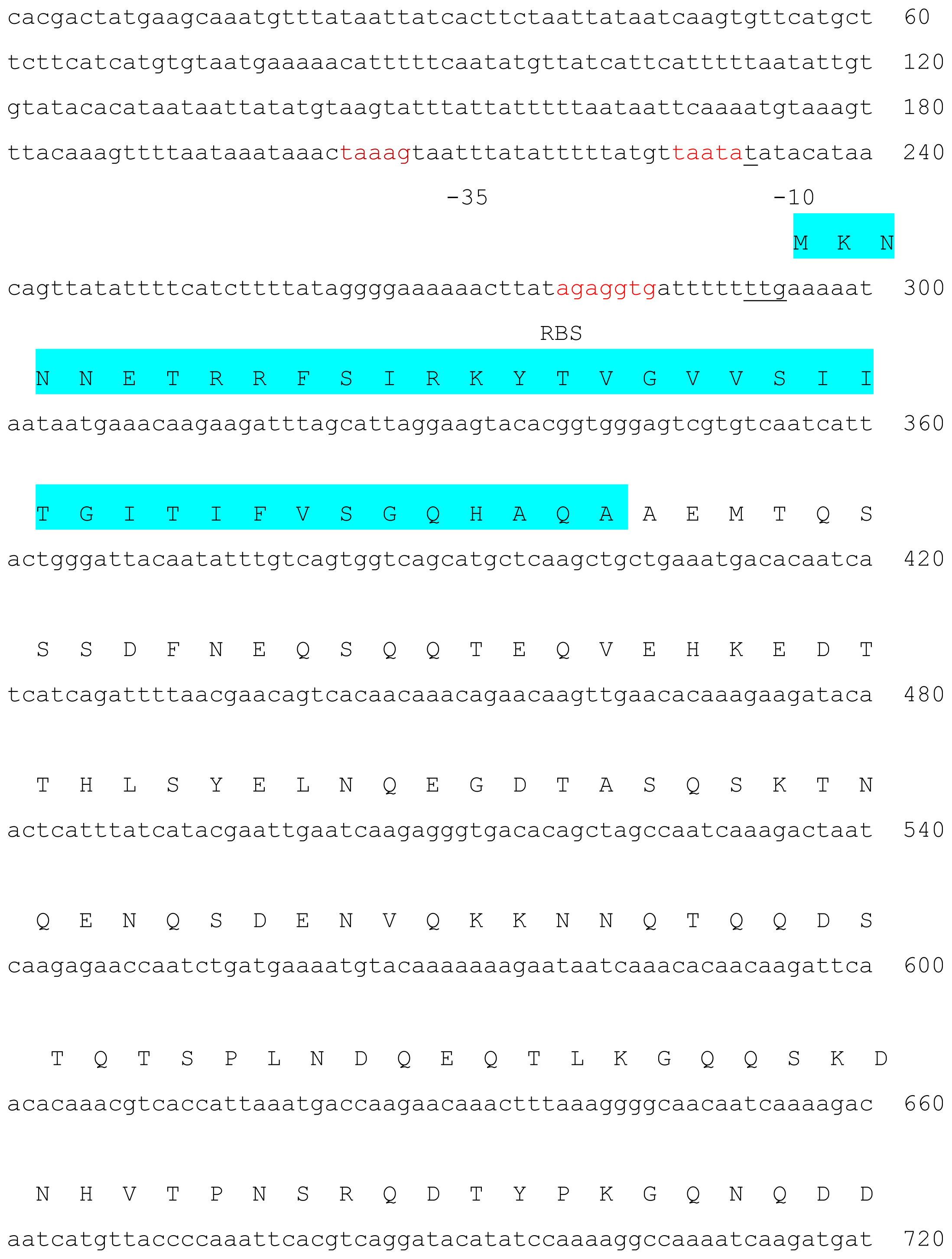
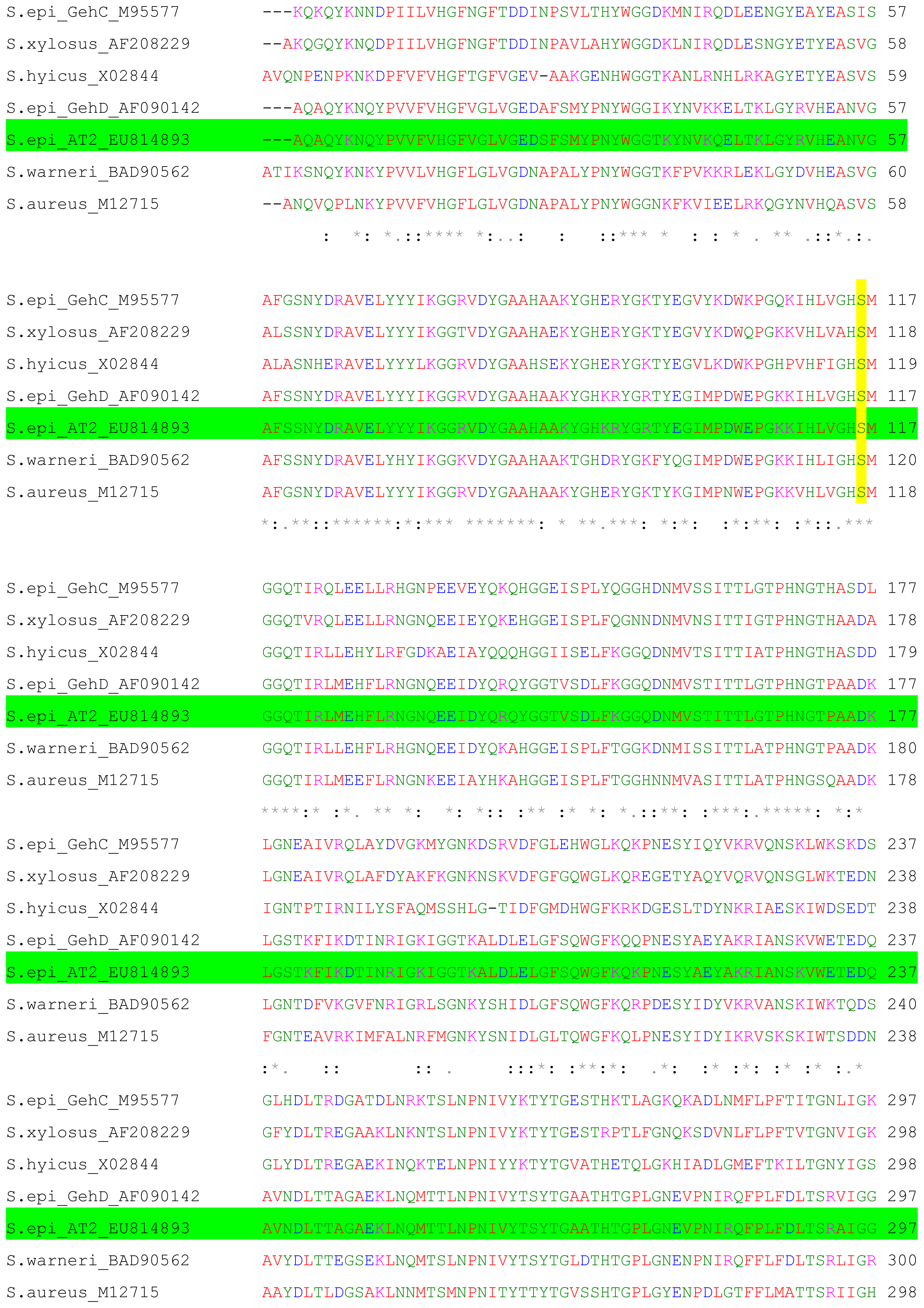
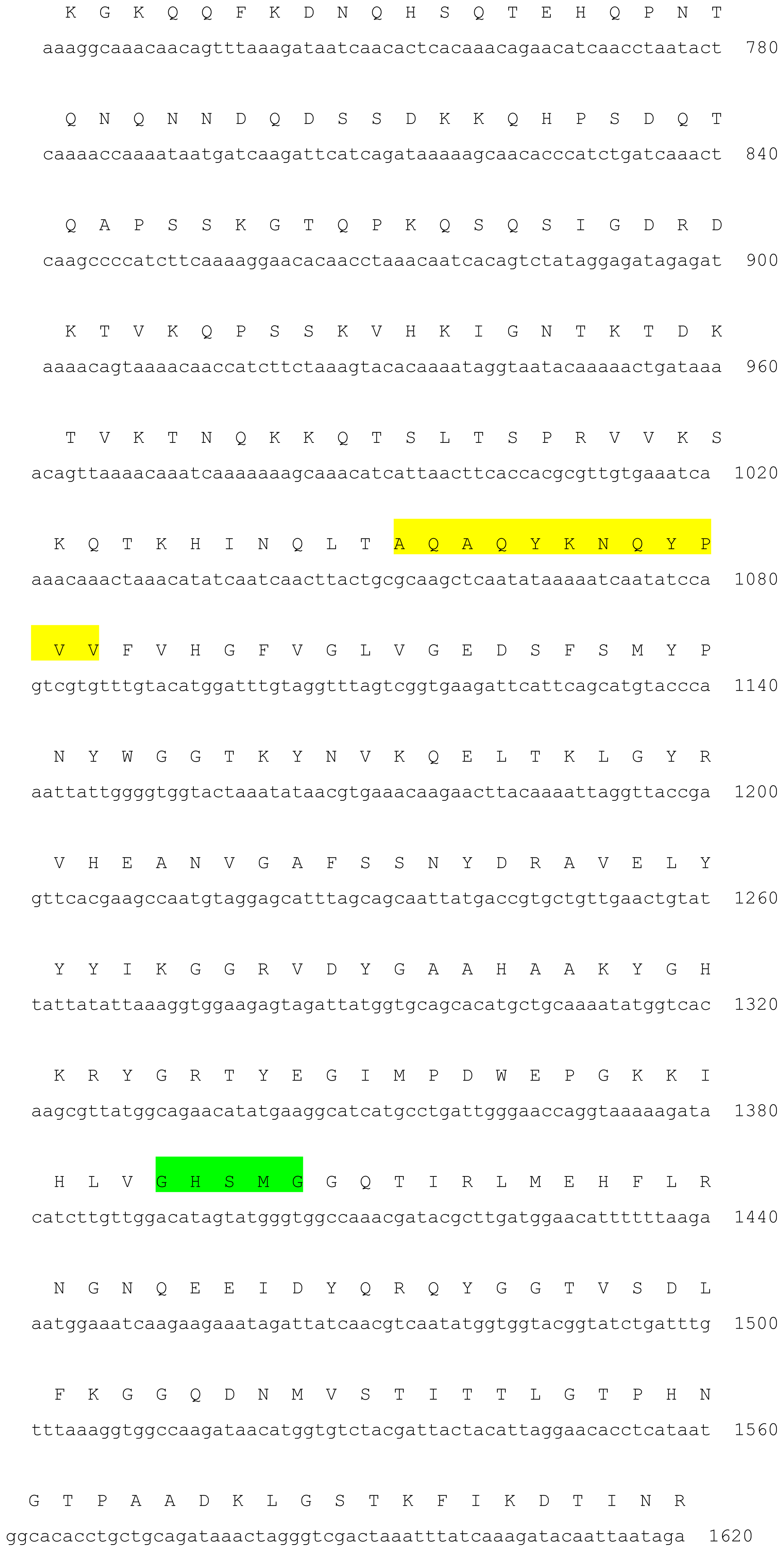
<p>The entire 2.3 kb containing the putative lipase gene was sequenced and found to contain a single open reading frame (ORF) comprising 1933 bp extending from 293 to 2226 (<xref ref-type="fig" rid="f1-ijms-11-03195">Figure 1</xref>), which coded for 643 amino acids. From the analysis of the nucleotide sequence data, the translation initiation codon was predicted to be TTG. The same finding was also reported for other Staphylococcal proteins including <italic>gehD</italic> [<xref ref-type="bibr" rid="b9-ijms-11-03195">9</xref>]. The initiation codon was found to be preceded by a potential ribosome-binding site, AGAGGTG, identical to that found upstream of <italic>gehD</italic>. According to sequence comparisons, staphylococcal lipases are generally translated in the form of pre-pro-enzyme; comprising of signal peptide, pro-peptide and mature active form [<xref ref-type="bibr" rid="b10-ijms-11-03195">10</xref>]. The <italic>N</italic>-terminal pre-peptide or signal peptide of <italic>S. epidermidis</italic> AT2 lipase consisted of 37 amino acids (Met to Ala). The amino acids sequence which coded for the signal peptide were; –′M K N N N E T R R F S I R K Y T V G V V S I I T G I T I F V S G Q H A Q A′–. The function of signal peptides is mainly in the transport of proteins and the secretion pathway. The putative signal peptide cleavage site was located in between Ala-37 and Ala-38 when predicted by using the SignalP V2.0 World Wide Web server. The pro-peptide sequence consisted of 216 amino acids; located in between the signal peptide and mature AT2 lipase form (Ala-38 to Thr-216). The role of pro-peptide was still unclear, however, according to a study on <italic>S. hyicus</italic> lipase, the pro-peptide involved in stabilization against proteolysis and protein translocation [<xref ref-type="bibr" rid="b11-ijms-11-03195">11</xref>,<xref ref-type="bibr" rid="b12-ijms-11-03195">12</xref>] The deduced molecular mass and pI, based on the ORF were calculated to be 72.2 kDa and 8.1, respectively. The complete sequence of the ORF of AT2 lipase gene was submitted to GenBank and assigned an accession number EU814893. The nucleotide sequence of the open reading frame of the recombinant AT2 lipase had a very high homology with that of the lipase <italic>gehD</italic> of <italic>S. epidermidis</italic> 9 (99%). Therefore, <italic>S. epidermidis</italic> AT2 was identified as a lipase producer. The nucleotide sequence of the structural gene of AT2 mature lipase and its nearby sequences were the same as those of lipase of <italic>S. epidermidis</italic> 9 (AF090142)<italic>, S. epidermidis</italic> RP62A<italic>, S. xylosus</italic> (AF208229), <italic>S. hyicus</italic> (X02844), <italic>S. aureus</italic> (M12715) and <italic>S. warneri</italic> (BAD90265) except for some nucleotides. However, none of these lipases were reported to be organic solvent tolerant. Multiple alignments of the amino acid sequences of lipase AT2 with those lipases from <italic>S. aureus, S. haemolyticus</italic> and <italic>S. hyicus</italic> showed that the translation products consisted of three distinct domains which corresponded well with the predicted locations of the signal peptide, pro-peptide and mature lipase.</p>
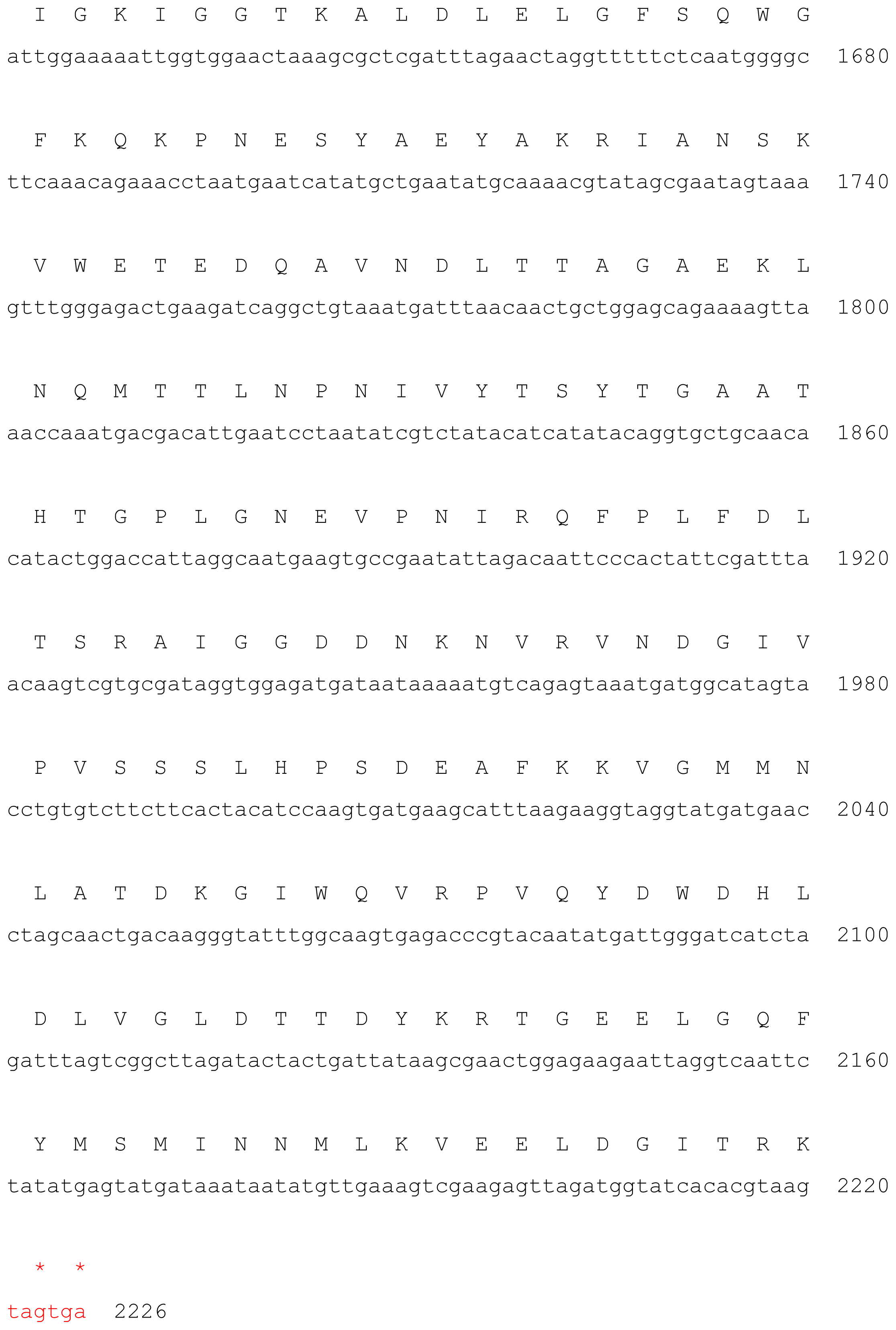
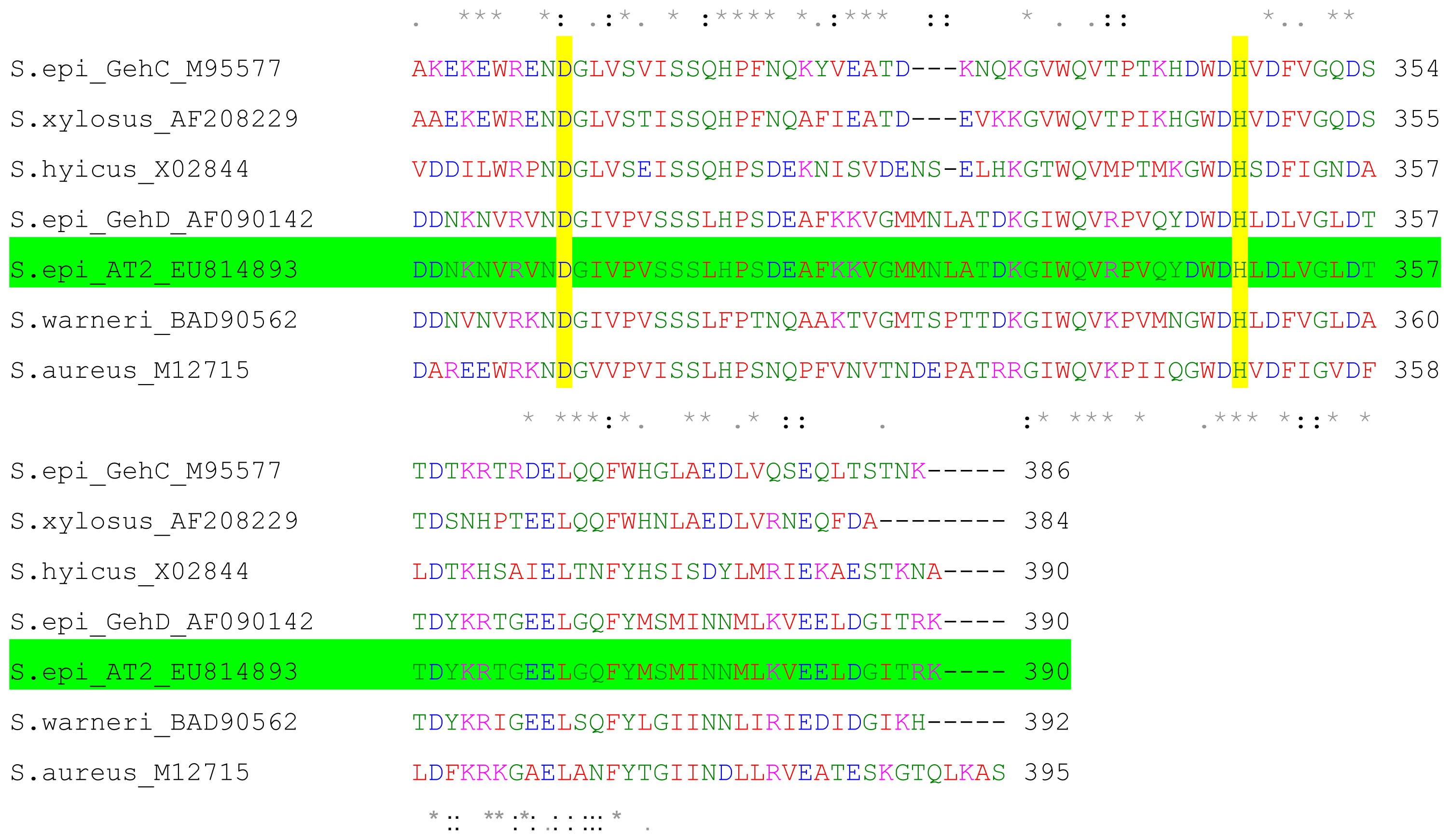
<p>Microbial enzymes held some common elements in the secondary and tertiary structure although they are structurally diverse [<xref ref-type="bibr" rid="b9-ijms-11-03195">9</xref>]. The mature lipase region in particular, showed a high degree of conservation between all staphylococcal lipase sequences as shown in <xref ref-type="fig" rid="f2-ijms-11-03195">Figure 2</xref>. Ser-116 in the mature AT2 lipase was located in the conserved G-X-S-X-G sequence around the active site serine residue based on its sequence alignment with those other staphylococcal lipases. This Ser-His-Asp residue was the common catalytic site triad for lipases and also similar was found in serine proteases. The nucleophilic serine was present in the highly conserved pentapeptide motif Gly-X<sub>1</sub>-Ser-X<sub>2</sub>-Gly [<xref ref-type="bibr" rid="b10-ijms-11-03195">10</xref>].</p>
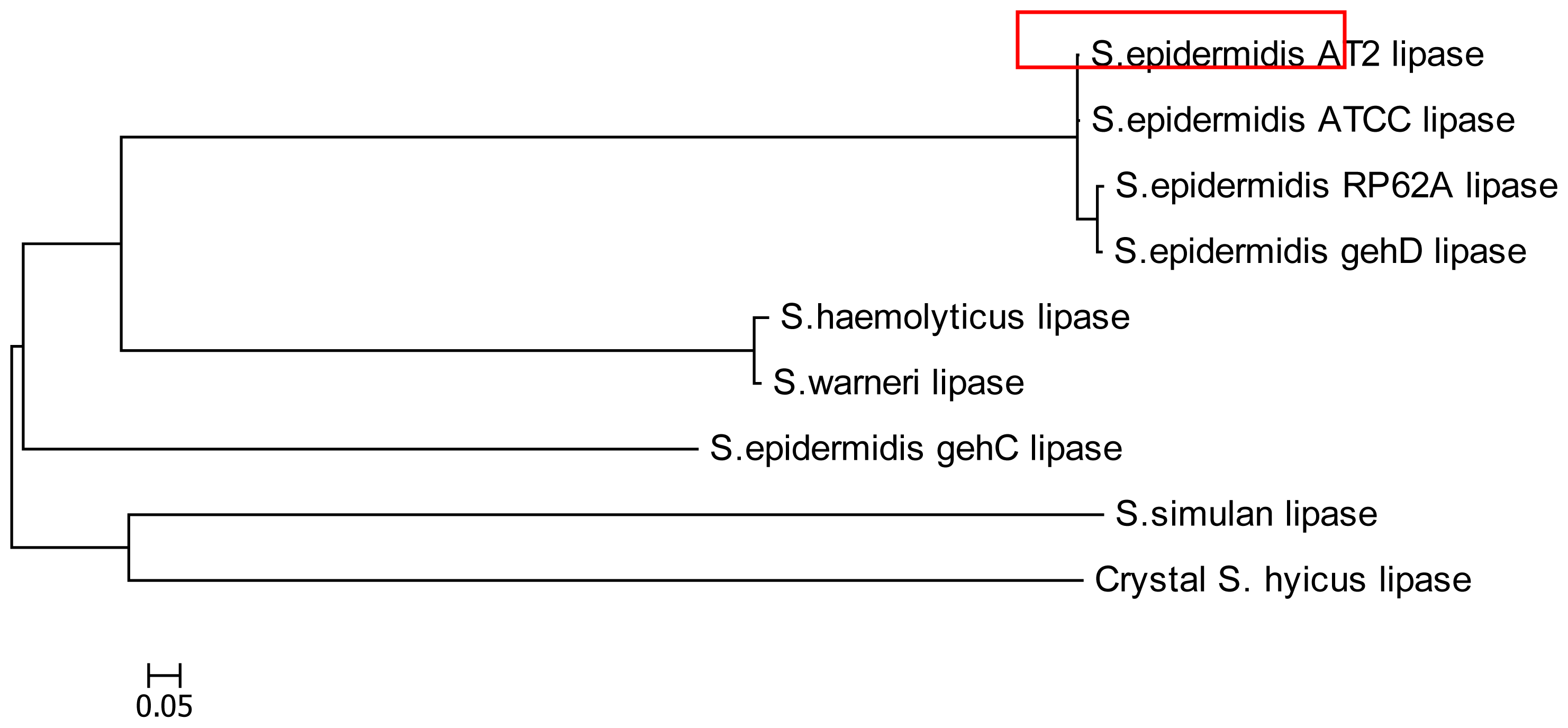
<p>The phylogenetic tree for AT2 lipase was constructed through multiple sequence alignments with other members of <italic>Staphylococcal</italic> lipases by Molecular Evolutionary Genetics Analysis (MEGA4). The result of phylogenetic tree AT2 lipase is represented in <xref ref-type="fig" rid="f3-ijms-11-03195">Figure 3</xref>. AT2 lipase was closely related to lipase ATCC, <italic>gehD</italic> and RP62A. Both <italic>gehD</italic> and <italic>gehC</italic> were originated from <italic>S. epidermidis</italic> 9, however, within the <italic>Staphylococcal</italic> lipase family, the two lipases of <italic>S. epidermidis</italic> 9 were grouped into separately branched clusters.</p></sec>
<sec>
<title>2.2. Expression of AT2 Lipase in Prokaryotic System</title>
<p>The mature lipase gene was successfully cloned and expressed in pTrcHis2, an expression vector carrying IPTG inducible <italic>trc</italic> promoter, with <italic>E. coli</italic> TOP10 as the host. Optimization of the IPTG concentration was carried out and resulted in an increase of lipase activity by 500% upon the induction of 0.1 mM IPTG compared to the non-inducible culture (data not shown).</p>
<p>Enhancement of the activity was observed when a higher concentration of IPTG was applied to the recombinant clones, and reached its maximum activity of 5.3 U/mL, a 16-fold increase at 0.6 mM IPTG. At higher concentrations of IPTG (&gt;0.6 mM), the lipase activity gradually dropped. Over production and accumulation of the gene products probably caused misfolding of the enzymes, and thus promoted the formation of inclusion bodies and aggregations [<xref ref-type="bibr" rid="b13-ijms-11-03195">13</xref>]. In the expression of soluble cytoplasmic recombinant proteins, the optimal IPTG concentration for <italic>trc</italic> or other derived promoters were widely reported to be around 1.00 mM. However, for production purposes, a small amount of IPTG was sufficient to ensure the economical feasibility [<xref ref-type="bibr" rid="b14-ijms-11-03195">14</xref>].</p>
<p>The post induction time-course study was also investigated at 0.6 mM IPTG induction (data not shown). At 0 h induction time, lipase activity detected was very low (0.36 U/mL). A significant increase was observed after 4 h of induction (2.11 U/mL) and increased continuously up to 10 h of induction with 5.58 U/mL. The expression level decreased gradually after 20 to 24 h with 32% loss in lipase activity. The outgrowing of non-induced cells containing plasmid in the later phase could have caused the gradual drop of the expression level.</p>
<p>This result suggested that the AT2 mature lipase gene was successfully cloned and expressed in <italic>E. coli</italic> system with high level of protein expression (~18-fold) compared to its wild type. Lipase from <italic>S. haemolyticus</italic> L62 which had been successfully expressed in pBluescript II SK (+) in <italic>E. coli</italic> XL1 Blue; showed a low expression level although the <italic>N</italic>-terminal signal sequence of the preproenzyme was correctly removed [<xref ref-type="bibr" rid="b15-ijms-11-03195">15</xref>]. In another case, the expression of <italic>S. hyicus</italic> lipase in <italic>Lactococcus lactis</italic> had lead to a 10-fold increase of lipolytic activity [<xref ref-type="bibr" rid="b16-ijms-11-03195">16</xref>].</p></sec>
<sec sec-type="methods">
<title>2.3. SDS PAGE Analysis</title>
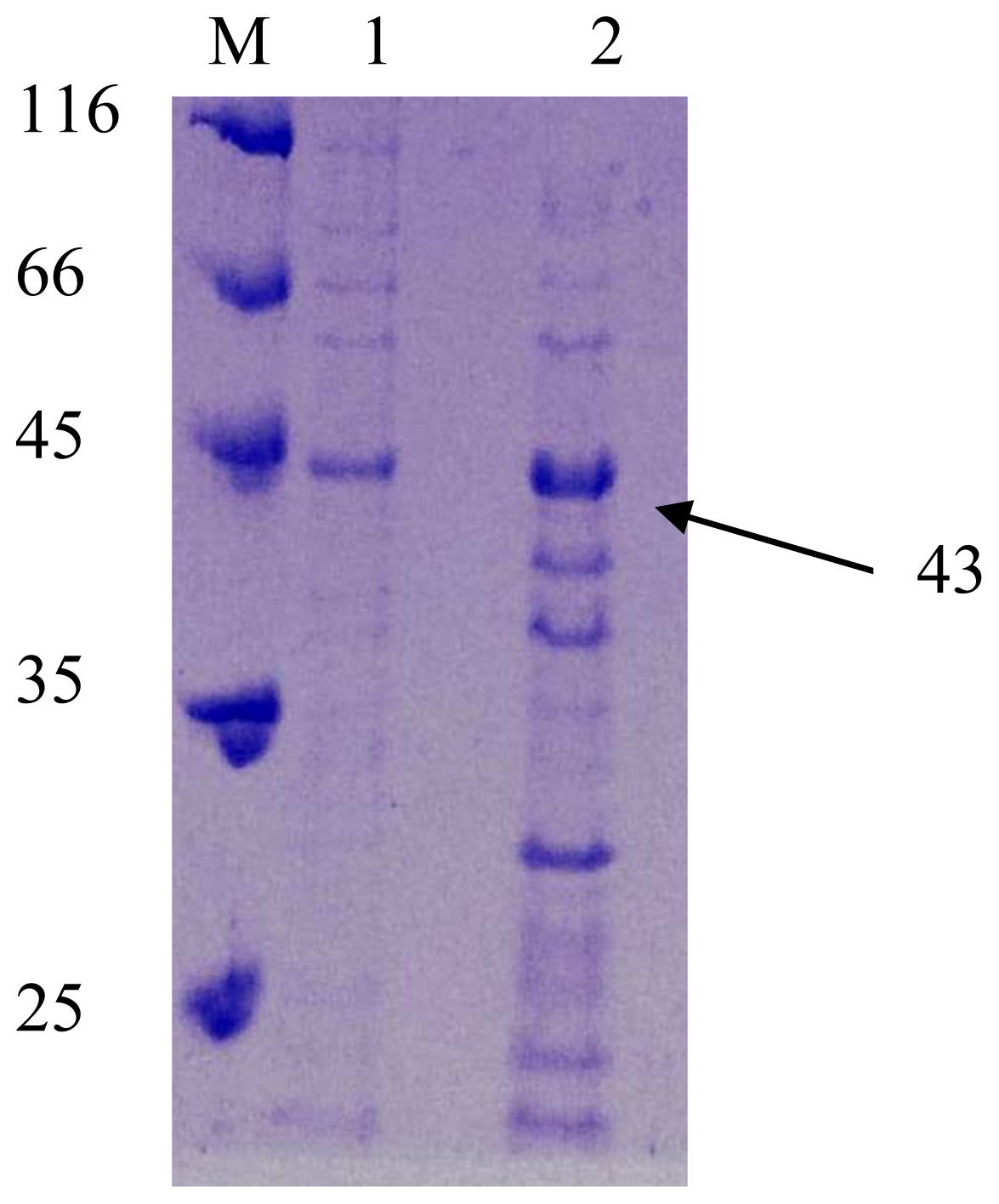
<p>Based on the sequence comparison, literature showed that all staphylococcal lipases were primarily synthesized as pre-pro lipase. Many staphylococcal lipases were reported to produce a ~80-kDa preproenzyme and secreted into the culture medium as a ~45-kDa mature form due to proteolytic processing [<xref ref-type="bibr" rid="b15-ijms-11-03195">15</xref>]. In this study, the mature AT2 lipase was detected by SDS-PAGE analysis. The molecular weight of this mature lipase as predicted by ExPASy (Expert Protein Analysis System) (<ext-link xlink:href="http://expasy.org/tools/" ext-link-type="uri">http://expasy.org/tools/</ext-link>) was 43.6 kDa. In this regard, <xref ref-type="fig" rid="f4-ijms-11-03195">Figure 4</xref> revealed a ~43 kDa protein of the recombinant AT2 lipase that was successfully expressed.</p></sec>
<sec>
<title>2.4. Stability of Recombinant Lipase in Various Organic Solvents</title>
<p>AT2 lipase was identified as an organic solvent stable enzyme in the previous study. The stability of recombinant AT2 lipase in the presence and absence of organic solvents was determined. The enzyme was treated for 30 min in 25% (v/v) organic solvents and assayed for lipase activity. The relative activity after 30 min incubation in 25% (v/v) of organic solvent is as shown in <xref ref-type="table" rid="t1-ijms-11-03195">Table 1</xref>. Log P was used as the quantitative measure of the solvent polarity. It is the logarithm of the partition coefficient, P, of the solvent in a defined 1-octanol-water mixture [<xref ref-type="bibr" rid="b17-ijms-11-03195">17</xref>]. In the presence of water miscible organic solvent AT2 lipase did not retain its activity except for dimethylsulfoxide (DMSO), with 112% of the relative activity. In agreement, purified recombinant lipase from <italic>B. sphaericus</italic> 205y was also reported to be activated in the presence of DMSO by ~50% increase in the activity [<xref ref-type="bibr" rid="b18-ijms-11-03195">18</xref>] while lipase from <italic>P. aeroginosa</italic> LST-03 showed high stability in 25% (v/v) DMSO for 15 days [<xref ref-type="bibr" rid="b19-ijms-11-03195">19</xref>]. Purified lipase from <italic>Cryptococcus</italic> sp. S-2, a yeast, was also activated by 5–10% (v/v) DMSO [<xref ref-type="bibr" rid="b20-ijms-11-03195">20</xref>]. In contrast, the crude lipase of <italic>B. sphaericus</italic> 205y was inhibited by DMSO, as well as purified recombinant lipase from <italic>P. fluorescence</italic> JCM6963 [<xref ref-type="bibr" rid="b21-ijms-11-03195">21</xref>,<xref ref-type="bibr" rid="b22-ijms-11-03195">22</xref>]. Water miscible organic solvents had a greater tendency to inactivate lipases and esterases. The enzymatic activity was affected due to the direct contact of the organic solvent with the enzyme [<xref ref-type="bibr" rid="b23-ijms-11-03195">23</xref>].</p>
<p>Organic solvents with log <italic>P</italic> between 1.5 to 4, such as benzene (log <italic>P</italic> = 2.0), toluene (log <italic>P</italic> = 2.5), octanol (log <italic>P</italic> = 2.9) and n- hexane (log <italic>P</italic> = 3.5), were very toxic to microorganisms as they could accumulate in the cell membrane thus, causing cell disruption [<xref ref-type="bibr" rid="b24-ijms-11-03195">24</xref>]. Interestingly, AT2 lipase was greatly activated by some water immiscible solvents including toluene, octanol, p-xylene and n-hexane to more than ~50% increment. Lipase from <italic>S. saprophyticus</italic> M36 showed a similar finding except for its stability in the presence of benzene [<xref ref-type="bibr" rid="b25-ijms-11-03195">25</xref>]. By contrast, AT2 lipase showed a reduction of activity by ~40% in benzene. The interaction of hydrophobic solvent and hydrophobic amino acid residues, present in the lid of the enzyme, enhanced the activity as the lid was in its open conformation [<xref ref-type="bibr" rid="b23-ijms-11-03195">23</xref>,<xref ref-type="bibr" rid="b26-ijms-11-03195">26</xref>].</p>
<p>The stability of enzymes was suggested to be influenced by the solvent polarity; however, correlations between a simple parameter such as log <italic>P</italic> and an even more complicated factor such as denaturation capacity, can never exactly predict the effects of solvents on enzymes in general. There are large individual variations among enzymes and no particular trend of the inactivating effect of the organic solvents towards enzymes [<xref ref-type="bibr" rid="b27-ijms-11-03195">27</xref>–<xref ref-type="bibr" rid="b29-ijms-11-03195">29</xref>].</p></sec></sec>
<sec>
<title>3. Experimental Section</title>
<sec>
<title>3.1. Sources of Bacteria</title>
<p>A pure culture of <italic>S. epidermidis</italic> AT2 was obtained from stock culture from Enzyme and Microbial Technology laboratories, UPM. It was previously isolated from contaminated soil at a car service station in Port Dickson, Negeri Sembilan.</p></sec>
<sec>
<title>3.2. DNA Manipulation</title>
<p>Genomic DNA from <italic>S. epidermidis</italic> AT2 was prepared according to standard procedures with some modification [<xref ref-type="bibr" rid="b30-ijms-11-03195">30</xref>]. Plasmid DNA was isolated with a QIAGEN miniprep spin kit (QIAGEN; Hilden, Germany) according to the manufacturer’s instructions. The PCR product was purified with GeneClean Kit (Qbiogene; Carlbad, USA) as described by the manufacturer. Competent cells of <italic>E. coli</italic> TOP 10 was prepared by using a conventional calcium chloride method.</p></sec>
<sec sec-type="methods">
<title>3.3. Sequencing and Analysis of Lipase Gene</title>
<p>The recombinant plasmid was sequenced with an ABI PRISM 377 DNA automated sequencer (Applied Biosystem, USA). The nucleotide sequence of AT2 lipase gene was identified and deposited into Genbank under accession number EU814893. The comparison of the DNA sequence was carried out by using the database of the National Centre of Biotechnology (<ext-link xlink:href="http://www.ncbi.nih.gov" ext-link-type="uri">http://www.ncbi.nih.gov</ext-link>). Meanwhile, the analysis of the lipase gene was achieved with Biology Workbench (<ext-link xlink:href="http://www.biology.ncsa.sdsc.edu" ext-link-type="uri">http://www.biology.ncsa.sdsc.edu</ext-link>) and ExPASy (Expert Protein Analysis System) (<ext-link xlink:href="http://www.expasy.org.tools" ext-link-type="uri">http://www.expasy.org.tools</ext-link>)</p></sec>
<sec>
<title>3.4. Cloning of an Organic Solvent-Tolerant AT2 Lipase Gene</title>
<p>A set of primers were designed based on the sequence of <italic>S. epidermidis gehD</italic> (AF090142) conserved region.</p>
<disp-quote>
<p>FOR: 5′-CAG TGG TCA GCA TGC TCA AGC-3′</p>
<p>REV: 5′-GCT AGG TTC ATC ATA CCT ACC TTC-3′</p></disp-quote>
<p>The part of the gene encoding the mature lipase was amplified by using PCR from genomic DNA of <italic>S. epidermidis</italic> AT2. A set of degenerated primer was designed based on sequence from <italic>S. epidermidis</italic> lipase precursor (<italic>gehD</italic>)(AF090142).</p>
<disp-quote>
<p>Fm: 5′-CAA TCA ACT TAC TGC GCA AGC-3′</p>
<p>Rm: 5′-CAC TAC TTA CGT GTG ATA CCA-3′</p></disp-quote>
<p>Amplification process was carried out in a reaction mixture containing 50–100 ng DNA template, 30 pmol each forward and reverse primers, 0.2 mM dNTP mix, 2 mM MgCl<sub>2</sub>, 2U <italic>Taq</italic> DNA polymerase (MBI Fermentas; St. Leon-Rot, Germany), 10× PCR buffer with the following PCR conditions: an initial denaturation step at 94 °C for 4 min, 35 cycles at 94 °C for 1 min, annealing at 45 °C for 1 min, and extension at 72 °C for 1 min, except for the final extension of 7 min, and preservation at 4 °C.</p>
<p>The PCR product was electrophoresed using 1% (w/v) agarose gel and purified by using a Gel Extraction kit (Qiagen, USA). The purified PCR product was cloned into pGEM-Teasy vector (Promega, USA) according to the manufacturer’s instructions and transformed into <italic>E. coli</italic> Top 10 competent cells. The positive clones were obtained on the screening agar; tributyrin-LB agar plate (100 μg/mL ampicillin), and further confirmed on triolein and rhodamine B-LB agar (100 μg/mL ampicillin) plates. The positive transformants were then screened by using colony PCR.</p></sec>
<sec>
<title>3.5. Expression of AT2 Lipase with pTrcHis2 TOPO TA</title>
<p>For expression purposes, the purified PCR product of the mature lipase gene region was cloned into pTrcHis2 TOPO TA expression vector (Invitrogen; Groningen, Netherlands), and transformed in <italic>E. coli</italic> Top 10 competent cells. The positive colony was cultured in LB broth, at 37 °C, overnight. The culture harboring recombinant plasmids; pTrcHis2/AT2 was then inoculated in a 1 L blue cap bottle containing 200 mL sterilized LB broth supplemented with 100 μg/mL ampicillin and incubated on a rotary shaker (200 rpm) at 37 °C. IPTG (0.6 mM) was added at OD<sub>600nm</sub> ~ 0.5 for 10 h. The culture (10 mL) was harvested by centrifugation and resuspended with 2 mL of 50 mM phosphate buffer (pH 7) before sonication (Branson 250 sonifier: output 2, duty cycle 30 and 2 min) and cleared by centrifugation (8500 × <italic>g</italic>, 20 min). The clear crude lysate was assayed for lipase activity according to the Kwon and Rhee method [<xref ref-type="bibr" rid="b31-ijms-11-03195">31</xref>].</p></sec>
<sec>
<title>3.6. Lipase Activity Assay</title>
<p>Liberated free fatty acids were determined by calorimetric method using olive oil as a substrate. An equal volume of olive oil (Bertoli, Italy) and 50 mM phosphate buffer (pH 7) was mixed to prepare the emulsion. One milliliter of enzyme was added to 2.5 mL of the emulsion plus 20 μL of 0.02 M CaCl<sub>2</sub> and was shaken at 200 rpm for 30 min at 37 °C. One milliliter of 6 N HCl and 5 mL of isooctane were then added to stop the enzyme reaction. This was followed by a vigorous mixing for 30 s with a vortex mixer. Four milliliters of the upper isooctane layer was transferred to a test tube containing 1 mL of copper reagent. The copper reagent was prepared by 5% (w/v) copper (II) acetate-1-hydrate and the pH was adjusted to 6.1 with pyridine. The absorbance of the upper layer which contained the liberated fatty acids was read at 715 nm. Lipase activity was determined by measuring the amount of free fatty acid released by referring to the standard curves of free fatty acids. One unit of lipase activity was defined as the rate of 1 μmol of fatty acid released per minute.</p></sec>
<sec>
<title>3.7. Electrophoresis</title>
<p>SDS PAGE was performed on 12% running gels based on the Laemmli’s method [<xref ref-type="bibr" rid="b32-ijms-11-03195">32</xref>]. A broad range of protein standard markers (MBI Fermantas; St. Leon-Rot, Germany) were used as the molecular weight markers.</p></sec>
<sec>
<title>3.8. Effect of Organic Solvents on Crude Enzyme Stability</title>
<p>One milliliter of organic solvent was added to 3 mL of the crude cell lysate and preincubated at 37 °C, with an agitation at 150 rpm for 30 min to ensure the continuous mixing of the enzyme and solvent. The enzyme stability was expressed as the remaining activity assayed according to the Kwon and Rhee (1986) method [<xref ref-type="bibr" rid="b31-ijms-11-03195">31</xref>] relative to the control value. Distilled water was used instead of solvent as the control.</p></sec></sec>
<sec sec-type="conclusions">
<title>4. Conclusions</title>
<p>An organic solvent tolerant lipase from <italic>S. epidermidis</italic> AT2 was successfully cloned and expressed in a prokaryotic system with higher activity compared to its wild type. Generally, thermostable enzymes showed a positive correlation with the stability in organic solvents [<xref ref-type="bibr" rid="b33-ijms-11-03195">33</xref>]. Interestingly, this recombinant AT2 lipase, a mesophilic enzyme, exhibited a good tolerance and stability towards organic solvents, whereby the activity was significantly activated by 25% (v/v) water immiscible organic solvents mainly of octanol, toluene, <italic>p</italic>-xylene and n-hexane after 30 minutes incubation at 37 °C. This organic solvent tolerant lipase will be useful in a variety of biotechnological fields such as catalysis in organic synthesis, biotransformation and optical resolution of chiral compounds.</p></sec></body>
<back>
<ack>
<title>Acknowledgements</title>
<p>This project was supported by the Ministry of Science, Technology and Innovation (MOSTI), Malaysia (02-01-04-SF0212).</p></ack>
<ref-list>
<title>References</title>
<ref id="b1-ijms-11-03195"><label>1</label><citation citation-type="journal"><person-group person-group-type="author"><name><surname>Sakinc</surname><given-names>T</given-names></name><name><surname>Kleine</surname><given-names>B</given-names></name><name><surname>Gatermann</surname><given-names>SG</given-names></name></person-group><article-title>Biochemical characterization of the surface associated lipase of <italic>Staphylococcus saprophyticus</italic></article-title><source>FEMS Microbiol. Lett</source><year>2007</year><volume>274</volume><fpage>335</fpage><lpage>341</lpage><pub-id pub-id-type="doi">10.1111/j.1574-6968.2007.00857.x</pub-id><pub-id pub-id-type="pmid">17645523</pub-id></citation></ref>
<ref id="b2-ijms-11-03195"><label>2</label><citation citation-type="journal"><person-group person-group-type="author"><name><surname>Sardessai</surname><given-names>Y</given-names></name><name><surname>Bhosle</surname><given-names>S</given-names></name></person-group><article-title>Tolerance of bacteria to organic solvents</article-title><source>Res Microbiol</source><year>2002</year><volume>153</volume><fpage>263</fpage><lpage>268</lpage><pub-id pub-id-type="doi">10.1016/S0923-2508(02)01319-0</pub-id><pub-id pub-id-type="pmid">12160316</pub-id></citation></ref>
<ref id="b3-ijms-11-03195"><label>3</label><citation citation-type="journal"><person-group person-group-type="author"><name><surname>de Bont</surname><given-names>JAM</given-names></name></person-group><article-title>Solvent-tolerant bacteria in biocatalysis</article-title><source>Trends Biotechnol</source><year>1998</year><volume>16</volume><fpage>493</fpage><lpage>499</lpage><pub-id pub-id-type="doi">10.1016/S0167-7799(98)01234-7</pub-id></citation></ref>
<ref id="b4-ijms-11-03195"><label>4</label><citation citation-type="journal"><person-group person-group-type="author"><name><surname>Inoue</surname><given-names>A</given-names></name><name><surname>Horikoshi</surname><given-names>K</given-names></name></person-group><article-title><italic>Pseudomonas</italic> thrives in high concentrations of toluene</article-title><source>Nature</source><year>1989</year><volume>338</volume><fpage>264</fpage><lpage>266</lpage><pub-id pub-id-type="doi">10.1038/338264a0</pub-id></citation></ref>
<ref id="b5-ijms-11-03195"><label>5</label><citation citation-type="journal"><person-group person-group-type="author"><name><surname>Gupta</surname><given-names>A</given-names></name><name><surname>Khare</surname><given-names>SK</given-names></name></person-group><article-title>Enzymes from solvent-tolerant microbes: Useful biocatalyst for nonaqueous enzymology</article-title><source>Crit. Rev. Biotechnol</source><year>2009</year><volume>29</volume><fpage>44</fpage><lpage>54</lpage><pub-id pub-id-type="doi">10.1080/07388550802688797</pub-id><pub-id pub-id-type="pmid">19514902</pub-id></citation></ref>
<ref id="b6-ijms-11-03195"><label>6</label><citation citation-type="journal"><person-group person-group-type="author"><name><surname>Ogino</surname><given-names>H</given-names></name><name><surname>Miyamoto</surname><given-names>K</given-names></name><name><surname>Ishikiwa</surname><given-names>H</given-names></name></person-group><article-title>Organic solvent stable-tolerant bacterium which secretes an organic solvent-stable lipolytic enzyme</article-title><source>Appl. Environ. Microbiol</source><year>1994</year><volume>60</volume><fpage>3884</fpage><lpage>3886</lpage><pub-id pub-id-type="pmid">16349423</pub-id></citation></ref>
<ref id="b7-ijms-11-03195"><label>7</label><citation citation-type="thesis"><person-group person-group-type="author"><name><surname>Yunus</surname><given-names>J</given-names></name></person-group><article-title>Cloning and Expression of an organic solvent tolerant lipase from <italic>Staphylococcus epidermidis</italic> AT2</article-title><source>Master Thesis</source><publisher-name>Universiti Putra Malaysia</publisher-name><publisher-loc>Serdang, Malaysia</publisher-loc><year>2009</year></citation></ref>
<ref id="b8-ijms-11-03195"><label>8</label><citation citation-type="journal"><person-group person-group-type="author"><name><surname>Esakkiraj</surname><given-names>P</given-names></name><name><surname>Rajkumarbharathi</surname><given-names>M</given-names></name><name><surname>Palavesam</surname><given-names>A</given-names></name><name><surname>Immanuel</surname><given-names>G</given-names></name></person-group><article-title>Lipase production by <italic>Staphylococcus epidermidis</italic> CMST-Pi 1 isolated from the gut of shrimp <italic>Penaeus indicus</italic></article-title><source>Ann. Microbiol</source><year>2010</year><volume>60</volume><fpage>37</fpage><lpage>42</lpage><pub-id pub-id-type="doi">10.1007/s13213-009-0003-x</pub-id></citation></ref>
<ref id="b9-ijms-11-03195"><label>9</label><citation citation-type="journal"><person-group person-group-type="author"><name><surname>Longshaw</surname><given-names>CM</given-names></name><name><surname>Farrell</surname><given-names>AM</given-names></name><name><surname>Wright</surname><given-names>JD</given-names></name><name><surname>Holland</surname><given-names>KT</given-names></name></person-group><article-title>Identification of a second lipase gene, <italic>gehD</italic>, in <italic>Staphylococcus epidermidis</italic>: comparison of a sequence with those of other staphylococcal lipases</article-title><source>Microbiology</source><year>2000</year><volume>146</volume><fpage>1419</fpage><lpage>1427</lpage><pub-id pub-id-type="pmid">10846220</pub-id></citation></ref>
<ref id="b10-ijms-11-03195"><label>10</label><citation citation-type="journal"><person-group person-group-type="author"><name><surname>Rosenstein</surname><given-names>R</given-names></name><name><surname>Götz</surname><given-names>F</given-names></name></person-group><article-title>Staphylococcal lipases: Biochemical and molecular characterization</article-title><source>J. Biochem</source><year>2000</year><volume>82</volume><fpage>1005</fpage><lpage>1014</lpage><pub-id pub-id-type="doi">10.1016/S0300-9084(00)01180-9</pub-id></citation></ref>
<ref id="b11-ijms-11-03195"><label>11</label><citation citation-type="journal"><person-group person-group-type="author"><name><surname>Liebl</surname><given-names>W</given-names></name><name><surname>Götz</surname><given-names>F</given-names></name></person-group><article-title>Studies on lipase directed export of <italic>E. coli</italic> β-lactamse in <italic>Staphylococcus carnosus</italic></article-title><source>Mol. Gen. Genet</source><year>1986</year><volume>204</volume><fpage>166</fpage><lpage>173</lpage><pub-id pub-id-type="doi">10.1007/BF00330205</pub-id><pub-id pub-id-type="pmid">3018441</pub-id></citation></ref>
<ref id="b12-ijms-11-03195"><label>12</label><citation citation-type="journal"><person-group person-group-type="author"><name><surname>Demleitner</surname><given-names>G</given-names></name><name><surname>Götz</surname><given-names>F</given-names></name></person-group><article-title>Evidence for importance of the <italic>Staphylococcus hyicus</italic> lipase pro-peptide in lipase secretion, stability and activity</article-title><source>FEMS Microbiol. Lett</source><year>1994</year><volume>121</volume><fpage>189</fpage><lpage>197</lpage><pub-id pub-id-type="doi">10.1111/j.1574-6968.1994.tb07098.x</pub-id><pub-id pub-id-type="pmid">7926670</pub-id></citation></ref>
<ref id="b13-ijms-11-03195"><label>13</label><citation citation-type="journal"><person-group person-group-type="author"><name><surname>Rahman</surname><given-names>RNZRA</given-names></name><name><surname>Baharum</surname><given-names>SN</given-names></name><name><surname>Basri</surname><given-names>M</given-names></name><name><surname>Salleh</surname><given-names>AB</given-names></name></person-group><article-title>High-yield purification of an organic solvent-tolerant lipase from <italic>Pseudomonas</italic> sp. Strain S5</article-title><source>Anal. Biochem</source><year>2005</year><volume>341</volume><fpage>267</fpage><lpage>274</lpage><pub-id pub-id-type="doi">10.1016/j.ab.2005.03.006</pub-id><pub-id pub-id-type="pmid">15907872</pub-id></citation></ref>
<ref id="b14-ijms-11-03195"><label>14</label><citation citation-type="thesis"><person-group person-group-type="author"><name><surname>Yusoff</surname><given-names>N</given-names></name></person-group><article-title>Purification and characterization of organic solvent tolerant protease from <italic>Pseudomonas aeroginosa</italic> strain K</article-title><source>Master Thesis</source><publisher-name>Universiti Putra Malaysia</publisher-name><publisher-loc>Serdang, Malaysia</publisher-loc><year>2007</year></citation></ref>
<ref id="b15-ijms-11-03195"><label>15</label><citation citation-type="journal"><person-group person-group-type="author"><name><surname>Oh</surname><given-names>BC</given-names></name><name><surname>Kim</surname><given-names>HK</given-names></name><name><surname>Lee</surname><given-names>JK</given-names></name><name><surname>Kang</surname><given-names>SC</given-names></name><name><surname>Oh</surname><given-names>TK</given-names></name></person-group><article-title><italic>Staphylococcus haemolyticus</italic> lipase: biochemical properties, substrate specificity and gene cloning</article-title><source>FEMS Microbiol. Lett</source><year>1999</year><volume>179</volume><fpage>385</fpage><lpage>392</lpage><pub-id pub-id-type="doi">10.1111/j.1574-6968.1999.tb08753.x</pub-id><pub-id pub-id-type="pmid">10518741</pub-id></citation></ref>
<ref id="b16-ijms-11-03195"><label>16</label><citation citation-type="journal"><person-group person-group-type="author"><name><surname>Drouault</surname><given-names>S</given-names></name><name><surname>Corthier</surname><given-names>G</given-names></name><name><surname>Ehrlich</surname><given-names>SD</given-names></name><name><surname>Renault</surname><given-names>P</given-names></name></person-group><article-title>Expression of the <italic>Staphylococcus hyicus</italic> lipase in <italic>Lactococcus lactis</italic></article-title><source>Appl. Environ. Microbiol</source><year>2000</year><volume>66</volume><fpage>588</fpage><lpage>598</lpage><pub-id pub-id-type="doi">10.1128/AEM.66.2.588-598.2000</pub-id><pub-id pub-id-type="pmid">10653722</pub-id></citation></ref>
<ref id="b17-ijms-11-03195"><label>17</label><citation citation-type="journal"><person-group person-group-type="author"><name><surname>Laane</surname><given-names>C</given-names></name><name><surname>Boeren</surname><given-names>S</given-names></name><name><surname>Vos</surname><given-names>K</given-names></name><name><surname>Veeger</surname><given-names>C</given-names></name></person-group><article-title>Rules for the optimization of biocatalysis in organic solvents</article-title><source>Biotechnol. Bioeng</source><year>1987</year><volume>30</volume><fpage>81</fpage><lpage>87</lpage><pub-id pub-id-type="doi">10.1002/bit.260300112</pub-id><pub-id pub-id-type="pmid">18576586</pub-id></citation></ref>
<ref id="b18-ijms-11-03195"><label>18</label><citation citation-type="journal"><person-group person-group-type="author"><name><surname>Sulong</surname><given-names>MR</given-names></name><name><surname>Rahman</surname><given-names>RNZRA</given-names></name><name><surname>Salleh</surname><given-names>AB</given-names></name><name><surname>Basri</surname><given-names>M</given-names></name></person-group><article-title>A novel organic solvent tolerant lipase from <italic>Bacillus sphaericus</italic> 205y: Extracellular expression of a novel OST-lipase gene</article-title><source>Protein Express. Pur</source><year>2006</year><volume>49</volume><fpage>190</fpage><lpage>195</lpage><pub-id pub-id-type="doi">10.1016/j.pep.2006.04.015</pub-id></citation></ref>
<ref id="b19-ijms-11-03195"><label>19</label><citation citation-type="journal"><person-group person-group-type="author"><name><surname>Ogino</surname><given-names>H</given-names></name><name><surname>Miyamoto</surname><given-names>K</given-names></name><name><surname>Yasuda</surname><given-names>M</given-names></name><name><surname>Ishimi</surname><given-names>K</given-names></name><name><surname>Ishikawa</surname><given-names>H</given-names></name></person-group><article-title>Growth of organic solventtolerant <italic>Pseudomonas aeruginosa</italic> LST-03 in the presence of various organic solvents and production of lipolytic enzymes in the presence of cyclohexane</article-title><source>Biochem. Eng. J</source><year>1999</year><volume>4</volume><fpage>1</fpage><lpage>6</lpage><pub-id pub-id-type="doi">10.1016/S1369-703X(99)00026-1</pub-id></citation></ref>
<ref id="b20-ijms-11-03195"><label>20</label><citation citation-type="journal"><person-group person-group-type="author"><name><surname>Kamini</surname><given-names>NR</given-names></name><name><surname>Fujii</surname><given-names>T</given-names></name><name><surname>Kurosu</surname><given-names>T</given-names></name><name><surname>Iefuji</surname><given-names>H</given-names></name></person-group><article-title>Production, purification and characterization of an extracellular lipase from the yeast, <italic>Cryptocococcus</italic> sp. S-2</article-title><source>Proc. Biochem</source><year>2000</year><volume>36</volume><fpage>317</fpage><lpage>324</lpage><pub-id pub-id-type="doi">10.1016/S0032-9592(00)00228-4</pub-id></citation></ref>
<ref id="b21-ijms-11-03195"><label>21</label><citation citation-type="journal"><person-group person-group-type="author"><name><surname>Hun</surname><given-names>CJ</given-names></name><name><surname>Rahman</surname><given-names>RNZA</given-names></name><name><surname>Salleh</surname><given-names>AB</given-names></name><name><surname>Basri</surname><given-names>M</given-names></name></person-group><article-title>A newly isolated organic solvent tolerant <italic>Bacillus spahericus</italic> 205y producing organic solvent-stable lipase</article-title><source>Biochem. Eng. J</source><year>2003</year><volume>15</volume><fpage>147</fpage><lpage>151</lpage><pub-id pub-id-type="doi">10.1016/S1369-703X(02)00185-7</pub-id></citation></ref>
<ref id="b22-ijms-11-03195"><label>22</label><citation citation-type="journal"><person-group person-group-type="author"><name><surname>Zhang</surname><given-names>A</given-names></name><name><surname>Gao</surname><given-names>R</given-names></name><name><surname>Diao</surname><given-names>N</given-names></name><name><surname>Xie</surname><given-names>G</given-names></name><name><surname>Gao</surname><given-names>G</given-names></name><name><surname>Cao</surname><given-names>S</given-names></name></person-group><article-title>Cloning, expression and characterization of an organic solvent tolerant from <italic>Pseudomonas fluorencens</italic> JCM5963</article-title><source>J. Mol. Catal. B: Enzym</source><year>2009</year><volume>56</volume><fpage>78</fpage><lpage>84</lpage><pub-id pub-id-type="doi">10.1016/j.molcatb.2008.06.021</pub-id></citation></ref>
<ref id="b23-ijms-11-03195"><label>23</label><citation citation-type="journal"><person-group person-group-type="author"><name><surname>Doukyu</surname><given-names>N</given-names></name><name><surname>Ogino</surname><given-names>H</given-names></name></person-group><article-title>Organic solvent-tolerant enzymes</article-title><source>Biochem. Eng. J</source><year>2010</year><volume>48</volume><fpage>270</fpage><lpage>282</lpage><pub-id pub-id-type="doi">10.1016/j.bej.2009.09.009</pub-id></citation></ref>
<ref id="b24-ijms-11-03195"><label>24</label><citation citation-type="journal"><person-group person-group-type="author"><name><surname>Ramos</surname><given-names>JL</given-names></name><name><surname>Duque</surname><given-names>E</given-names></name><name><surname>Gallegos</surname><given-names>MT</given-names></name><name><surname>Godoy</surname><given-names>P</given-names></name><name><surname>Ramos-Gonzalez</surname><given-names>MI</given-names></name><name><surname>Rojas</surname><given-names>A</given-names></name><name><surname>Terán</surname><given-names>W</given-names></name><name><surname>Segura</surname><given-names>A</given-names></name></person-group><article-title>Mechanism of solvent tolerance in Gram negative bacteria</article-title><source>Annu. Rev. Microbiol</source><year>2002</year><volume>56</volume><fpage>743</fpage><lpage>768</lpage><pub-id pub-id-type="doi">10.1146/annurev.micro.56.012302.161038</pub-id><pub-id pub-id-type="pmid">12142492</pub-id></citation></ref>
<ref id="b25-ijms-11-03195"><label>25</label><citation citation-type="journal"><person-group person-group-type="author"><name><surname>Fang</surname><given-names>Y</given-names></name><name><surname>Lu</surname><given-names>Z</given-names></name><name><surname>Lv</surname><given-names>F</given-names></name><name><surname>Bie</surname><given-names>X</given-names></name><name><surname>Liu</surname><given-names>S</given-names></name><name><surname>Ding</surname><given-names>Z</given-names></name><name><surname>Xu</surname><given-names>W</given-names></name></person-group><article-title>A newly isolated organic solvent tolerant <italic>Staphylococcus saprophyticus</italic> M36 Produced organic solvent stable lipase</article-title><source>Curr. Microbiol</source><year>2006</year><volume>53</volume><fpage>510</fpage><lpage>515</lpage><pub-id pub-id-type="doi">10.1007/s00284-006-0260-x</pub-id><pub-id pub-id-type="pmid">17089221</pub-id></citation></ref>
<ref id="b26-ijms-11-03195"><label>26</label><citation citation-type="journal"><person-group person-group-type="author"><name><surname>Rúa</surname><given-names>ML</given-names></name><name><surname>Díaz-Mauriño</surname><given-names>T</given-names></name><name><surname>Fernández</surname><given-names>VM</given-names></name><name><surname>Otero</surname><given-names>C</given-names></name><name><surname>Ballesteros</surname><given-names>A</given-names></name></person-group><article-title>Purification and characterization of two distinct lipases from <italic>Candida cylindracea</italic></article-title><source>Biochim. Biophys. Acta</source><year>1993</year><volume>1156</volume><fpage>181</fpage><lpage>189</lpage><pub-id pub-id-type="doi">10.1016/0304-4165(93)90134-T</pub-id><pub-id pub-id-type="pmid">8427877</pub-id></citation></ref>
<ref id="b27-ijms-11-03195"><label>27</label><citation citation-type="book"><person-group person-group-type="author"><name><surname>Adlercreutz</surname><given-names>P</given-names></name></person-group><person-group person-group-type="editor"><name><surname>Koskinen</surname><given-names>AMP</given-names></name><name><surname>Klibanov</surname><given-names>AM</given-names></name></person-group><article-title>Modes of using enzymes in organic media</article-title><source>Enzymatic Reactions in Organic Media</source><publisher-name>Chapman &amp; Hall</publisher-name><publisher-loc>London, UK</publisher-loc><year>1996</year><fpage>9</fpage><lpage>37</lpage></citation></ref>
<ref id="b28-ijms-11-03195"><label>28</label><citation citation-type="journal"><person-group person-group-type="author"><name><surname>Geok</surname><given-names>LP</given-names></name><name><surname>Razak</surname><given-names>CNA</given-names></name><name><surname>Rahman</surname><given-names>RNZA</given-names></name><name><surname>Basri</surname><given-names>M</given-names></name><name><surname>Salleh</surname><given-names>AB</given-names></name></person-group><article-title>Isolation and screening of an extracellular organic solvent tolerant protease producer</article-title><source>Biochem. Eng. J</source><year>2003</year><volume>13</volume><fpage>73</fpage><lpage>77</lpage><pub-id pub-id-type="doi">10.1016/S1369-703X(02)00137-7</pub-id></citation></ref>
<ref id="b29-ijms-11-03195"><label>29</label><citation citation-type="journal"><person-group person-group-type="author"><name><surname>Ghatorae</surname><given-names>AS</given-names></name><name><surname>Bell</surname><given-names>G</given-names></name><name><surname>Halling</surname><given-names>PJ</given-names></name></person-group><article-title>Inactivation of enzymes by organic solvents: new technique with well-defined interfacial area</article-title><source>Biotechnol. Bioeng</source><year>1994</year><volume>43</volume><fpage>331</fpage><lpage>336</lpage><pub-id pub-id-type="doi">10.1002/bit.260430410</pub-id><pub-id pub-id-type="pmid">18615697</pub-id></citation></ref>
<ref id="b30-ijms-11-03195"><label>30</label><citation citation-type="book"><person-group person-group-type="author"><name><surname>Sambrook</surname><given-names>J</given-names></name><name><surname>Fritsch</surname><given-names>EF</given-names></name><name><surname>Maniatis</surname><given-names>T</given-names></name></person-group><source>Molecular Cloning: A Laboratory Manual</source><edition>2nd ed</edition><publisher-name>Cold Spring Harbor Laboratory</publisher-name><publisher-loc>New York, NY, USA</publisher-loc><year>1989</year></citation></ref>
<ref id="b31-ijms-11-03195"><label>31</label><citation citation-type="journal"><person-group person-group-type="author"><name><surname>Kwon</surname><given-names>DY</given-names></name><name><surname>Rhee</surname><given-names>JS</given-names></name></person-group><article-title>A simple and rapid colorimetric method for determination of free fatty acid for lipase assay</article-title><source>J. Am. Oil Chem. Soc</source><year>1986</year><volume>63</volume><fpage>82</fpage><lpage>89</lpage></citation></ref>
<ref id="b32-ijms-11-03195"><label>32</label><citation citation-type="journal"><person-group person-group-type="author"><name><surname>Laemmli</surname><given-names>UK</given-names></name></person-group><article-title>Most commonly used discontinuous buffer system for SDS electrophoresis</article-title><source>Nature</source><year>1970</year><volume>227</volume><fpage>680</fpage><lpage>686</lpage><pub-id pub-id-type="doi">10.1038/227680a0</pub-id><pub-id pub-id-type="pmid">5432063</pub-id></citation></ref>
<ref id="b33-ijms-11-03195"><label>33</label><citation citation-type="journal"><person-group person-group-type="author"><name><surname>Sellek</surname><given-names>GA</given-names></name><name><surname>Chaudhuri</surname><given-names>JB</given-names></name></person-group><article-title>Biocatalysis in organic media using enzymes from extremophiles</article-title><source>Enzyme Microb. Technol</source><year>1999</year><volume>25</volume><fpage>471</fpage><lpage>482</lpage><pub-id pub-id-type="doi">10.1016/S0141-0229(99)00075-7</pub-id></citation></ref></ref-list>
<sec sec-type="display-objects">
<title>Figures and Table</title>
<fig id="f1-ijms-11-03195" position="float">
<label>Figure 1</label>
<caption>
<p>Nucleotide and deduced amino acid sequences of the organic solvent tolerant lipase gene of <italic>S. epidermidis</italic> AT2.</p>
<p>Note: The predicted promoter region (−10 and −35 promoter) and ribosome binding site (RBS) are highlighted in red and part of the mature enzymes are highlighted in yellow. The signal peptide is highlighted in blue. The pro-peptides are located in between the signal peptide and mature part. The conserved pentapeptide is highlighted in green, start and stop codon are underlined and indicated by (*), respectively. The AT2 lipase sequence has been submitted to GenBank database under the accession number EU814893.</p></caption><graphic xlink:href="ijms-11-03195f1a.gif"/><graphic xlink:href="ijms-11-03195f1b.gif"/><graphic xlink:href="ijms-11-03195f1c.gif"/></fig>
<fig id="f2-ijms-11-03195" position="float">
<label>Figure 2</label>
<caption>
<p>Amino acid sequence alignment of the mature domain of <italic>S. epidermidis</italic> AT2 lipase with those from other Staphylococcal lipases.</p>
<p>Note: Identical amino acid residues are indicated in bold type with asterisks below. The conserved serine, aspartic acid and histidine residues, which are predicted to be important in the lipase active site, are highlighted in yellow. Amino acid numbers are shown on the right. AT2 lipase (EU814893) is highlighted in green.</p></caption><graphic xlink:href="ijms-11-03195f2a.gif"/><graphic xlink:href="ijms-11-03195f2b.gif"/></fig>
<fig id="f3-ijms-11-03195" position="float">
<label>Figure 3</label>
<caption>
<p>The phylogenetic analysis showed that AT2 lipase is closely related to <italic>S. epidermidis</italic> ATCC lipase, <italic>S. epidermidis</italic> RP62A lipase and lipase <italic>gehD</italic> from <italic>S. epidermidis</italic> 9.</p>
<p>Note: The evolutionary distances are in the units of the number of amino acid substitutions per site.</p></caption><graphic xlink:href="ijms-11-03195f3.gif"/></fig>
<fig id="f4-ijms-11-03195" position="float">
<label>Figure 4</label>
<caption>
<p>SDS PAGE analysis of AT2 in (1) the absence of 0.6 mM IPTG as inducer; (2) and its presence; (M) Protein molecular weight marker. The expression product was electrophoresed on 12% (w/v) of SDS-PAGE and stained with Coomassie Blue.</p></caption><graphic xlink:href="ijms-11-03195f4.gif"/></fig>
<table-wrap id="t1-ijms-11-03195" position="float">
<label>Table 1</label>
<caption>
<p>Effect of various organic solvents on AT2 lipase stability.</p></caption>
<table frame="hsides" rules="groups">
<thead>
<tr>
<th align="left" valign="bottom">Solvent</th>
<th align="left" valign="bottom">Log <italic>P</italic><xref ref-type="table-fn" rid="tfn1-ijms-11-03195">*</xref></th>
<th align="left" valign="bottom">Relative activity (%)</th></tr></thead>
<tbody>
<tr>
<td align="left" valign="top">Control</td>
<td align="left" valign="top">-</td>
<td align="left" valign="top">100</td></tr>
<tr>
<td align="left" valign="top">Dimethylsulfoxide</td>
<td align="left" valign="top">−1.3</td>
<td align="left" valign="top">112</td></tr>
<tr>
<td align="left" valign="top">Methanol</td>
<td align="left" valign="top">−0.76</td>
<td align="left" valign="top">1.2</td></tr>
<tr>
<td align="left" valign="top">Acetonitrile</td>
<td align="left" valign="top">−0.33</td>
<td align="left" valign="top">0</td></tr>
<tr>
<td align="left" valign="top">Ethanol</td>
<td align="left" valign="top">−0.24</td>
<td align="left" valign="top">0</td></tr>
<tr>
<td align="left" valign="top">Acetone</td>
<td align="left" valign="top">−0.23</td>
<td align="left" valign="top">0</td></tr>
<tr>
<td align="left" valign="top">Diethylether</td>
<td align="left" valign="top">0.68</td>
<td align="left" valign="top">0</td></tr>
<tr>
<td align="left" valign="top">Ethylacetate</td>
<td align="left" valign="top">0.68</td>
<td align="left" valign="top">15</td></tr>
<tr>
<td align="left" valign="top">Chloroform</td>
<td align="left" valign="top">2.0</td>
<td align="left" valign="top">14</td></tr>
<tr>
<td align="left" valign="top">Benzene</td>
<td align="left" valign="top">2.0</td>
<td align="left" valign="top">56</td></tr>
<tr>
<td align="left" valign="top">Toluene</td>
<td align="left" valign="top">2.5</td>
<td align="left" valign="top">230</td></tr>
<tr>
<td align="left" valign="top">Octanol</td>
<td align="left" valign="top">2.9</td>
<td align="left" valign="top">295</td></tr>
<tr>
<td align="left" valign="top">Ethylbenzene</td>
<td align="left" valign="top">3.1</td>
<td align="left" valign="top">58</td></tr>
<tr>
<td align="left" valign="top">p-xylene</td>
<td align="left" valign="top">3.1</td>
<td align="left" valign="top">190</td></tr>
<tr>
<td align="left" valign="top">n-hexane</td>
<td align="left" valign="top">3.5</td>
<td align="left" valign="top">154</td></tr></tbody></table>
<table-wrap-foot><fn id="tfn1-ijms-11-03195">
<label>*</label>
<p>Adapted from Laane <italic>et al.</italic>, 1987 [<xref ref-type="bibr" rid="b17-ijms-11-03195">17</xref>]</p></fn><fn id="tfn2-ijms-11-03195">
<p>Note: Three mL of the crude enzyme was incubated with 1 mL of organic solvent (3:1 ratio) at 37 °C with shaking at 150 rpm for 30 min and the remaining lipase activity was assayed.</p></fn></table-wrap-foot></table-wrap></sec></back></article>