
<?xml version="1.0" encoding="UTF-8"?>
<!DOCTYPE article PUBLIC "-//NLM//DTD Journal Publishing DTD v2.3 20070202//EN" "journalpublishing.dtd">
<article xmlns:xlink="http://www.w3.org/1999/xlink" xml:lang="en" article-type="research-article">
<front>
<journal-meta>
<journal-id journal-id-type="publisher-id">ijms</journal-id>
<journal-title>International Journal of Molecular Sciences</journal-title>
<abbrev-journal-title>Int. J. Mol. Sci.</abbrev-journal-title>
<issn pub-type="epub">1422-0067</issn>
<publisher>
<publisher-name>Molecular Diversity Preservation International (MDPI)</publisher-name></publisher></journal-meta>
<article-meta>
<article-id pub-id-type="doi">10.3390/ijms11052109</article-id>
<article-id pub-id-type="publisher-id">ijms-11-02109</article-id>
<article-categories>
<subj-group>
<subject>Article</subject></subj-group></article-categories>
<title-group>
<article-title>Lutein Protects RGC-5 Cells Against Hypoxia and Oxidative Stress</article-title></title-group>
<contrib-group>
<contrib contrib-type="author">
<name><surname>Li</surname><given-names>Suk-Yee</given-names></name><xref ref-type="aff" rid="af1-ijms-11-02109">1</xref></contrib>
<contrib contrib-type="author">
<name><surname>Lo</surname><given-names>Amy C. Y.</given-names></name><xref ref-type="aff" rid="af1-ijms-11-02109">1</xref><xref ref-type="aff" rid="af2-ijms-11-02109">2</xref><xref ref-type="corresp" rid="c1-ijms-11-02109">*</xref></contrib></contrib-group>
<aff id="af1-ijms-11-02109">
<label>1</label> Eye Institute, Li Ka Shing Faculty of Medicine, The University of Hong Kong, Pokfulam, Hong Kong; E-Mail: 
<email>sukyeeli@hku.hk</email></aff>
<aff id="af2-ijms-11-02109">
<label>2</label> Research Centre of Heart, Brain, Hormone and Healthy Aging, The University of Hong Kong, Pokfulam, Hong Kong</aff>
<author-notes>
<corresp id="c1-ijms-11-02109">
<label>*</label>Author to whom correspondence should be addressed; E-Mail: 
<email>amylo@hku.hk</email>; Tel.: +852-2819-9859; Fax: +852-2817-0491.</corresp></author-notes>
<pub-date pub-type="epub">
<day>11</day>
<month>5</month>
<year>2010</year></pub-date>
<pub-date pub-type="collection">
<year>2010</year></pub-date>
<volume>11</volume>
<issue>5</issue>
<fpage>2109</fpage>
<lpage>2117</lpage>
<history>
<date date-type="received">
<day>28</day>
<month>3</month>
<year>2010</year></date>
<date date-type="rev-recd">
<day>13</day>
<month>4</month>
<year>2010</year></date>
<date date-type="accepted">
<day>3</day>
<month>5</month>
<year>2010</year></date></history>
<permissions>
<copyright-statement>© 2010 by the authors; licensee Molecular Diversity Preservation International, Basel, Switzerland.</copyright-statement>
<copyright-year>2010</copyright-year>
<license license-type="open-access" xlink:href="http://creativecommons.org/licenses/by/3.0">
<p>This article is an open-access article distributed under the terms and conditions of the Creative Commons Attribution license (http://creativecommons.org/licenses/by/3.0/).</p></license></permissions>
<abstract>
<p>Retinal ischemia and oxidative stress lead to neuronal death in many ocular pathologies. Recently, we found that lutein, an oxy-carotenoid, protected the inner retina from ischemia/reperfusion injury. However, it is uncertain whether lutein directly protects retinal ganglion cells (RGCs). Here, an <italic>in vitro</italic> model of hypoxia and oxidative stress was used to further investigate the neuroprotective role of lutein in RGCs. Cobalt chloride (CoCl<sub>2</sub>) and hydrogen peroxide (H<sub>2</sub>O<sub>2</sub>) were added to a transformed RGC cell line, RGC-5, to induce chemical hypoxia and oxidative stress, respectively. Either lutein or vehicle was added to cultured cells. A higher cell count was observed in the lutein-treated cells compared with the vehicle-treated cells. Our data from this <italic>in vitro</italic> model revealed that lutein might protect RGC-5 cells from damage when exposed to either CoCl<sub>2</sub>-induced chemical hypoxia or H<sub>2</sub>O<sub>2</sub>-induced oxidative stress. These results suggest that lutein may play a role as a neuroprotectant.</p></abstract>
<kwd-group>
<kwd>antioxidants</kwd>
<kwd>carotenoids</kwd>
<kwd>cobalt chloride</kwd>
<kwd>hydrogen peroxide</kwd>
<kwd>ischemia</kwd>
<kwd>RGC-5</kwd></kwd-group></article-meta></front>
<body>
<sec sec-type="intro">
<label>1.</label>
<title>Introduction</title>
<p>Retinal ischemia leads to irreversible neuronal injury and visual impairment in many ocular pathologies such as glaucoma, diabetic retinopathy (DR) and retinal vessel occlusion [<xref ref-type="bibr" rid="b1-ijms-11-02109">1</xref>]. Retinal ganglion cell (RGC) death is common in these ocular pathologies. During ischemia, depletion of ATP stores, ions imbalance, glutamate excitotoxicity, apoptosis and free radical production eventually lead to RGC death [<xref ref-type="bibr" rid="b1-ijms-11-02109">1</xref>–<xref ref-type="bibr" rid="b3-ijms-11-02109">3</xref>]. Reperfusion following ischemia results in oxidative stress, which also plays a role in RGC damage [<xref ref-type="bibr" rid="b4-ijms-11-02109">4</xref>,<xref ref-type="bibr" rid="b5-ijms-11-02109">5</xref>]. Investigations have been carried out to study the neuroprotection of RGCs using carotenoids [<xref ref-type="bibr" rid="b6-ijms-11-02109">6</xref>].</p>
<p>Lutein ((3<italic>R</italic>,39<italic>R</italic>,69<italic>R</italic>)-b,e-carotene-3,39-diol) is a member of xanthophyll dietary carotenoids and structurally similar to zeaxanthin [<xref ref-type="bibr" rid="b7-ijms-11-02109">7</xref>,<xref ref-type="bibr" rid="b8-ijms-11-02109">8</xref>]. These xanthophylls have a chemical formula of C<sub>40</sub>H<sub>56</sub>O<sub>2</sub> with a hydroxyl group attached to each end of the molecule. The difference between lutein and zeaxanthin is the position of a double bond in one of the hydroxyl groups [<xref ref-type="bibr" rid="b8-ijms-11-02109">8</xref>]. The unique structure enables lutein to react more strongly with singlet oxygen than other carotenoids [<xref ref-type="bibr" rid="b9-ijms-11-02109">9</xref>]. Like zeaxanthin, lutein is predominately present in the macular region and acts as an efficient pigment for absorbing high energy blue light and a direct free radical scavenger to prevent macular damage [<xref ref-type="bibr" rid="b8-ijms-11-02109">8</xref>,<xref ref-type="bibr" rid="b10-ijms-11-02109">10</xref>]. However, lutein cannot be synthesized in the body and need to be obtained in the diet. It is richly found in dark green leafy vegetables and eggs [<xref ref-type="bibr" rid="b11-ijms-11-02109">11</xref>].</p>
<p>Recently, our group demonstrated that lutein protected the inner retina from damage after ischemia/reperfusion <italic>in vivo</italic> [<xref ref-type="bibr" rid="b12-ijms-11-02109">12</xref>]. We showed that lutein was anti-apoptotic and prevented cell damage by decreasing oxidative stress. However, the effect of lutein on specific cell populations is unknown. In this study, a transformed cell line of RGC, RGC-5, was used. This cell line was originally derived by transforming postnatal day one rat retinal cells with Ψ<sub>2</sub> E1A virus [<xref ref-type="bibr" rid="b13-ijms-11-02109">13</xref>]. RGC-5 cells express RGC-specific markers such as Brn-3c and Thy-1 although they are mitotically active which is different from RGCs. Here, we sought to investigate whether lutein could reverse the cytotoxic effect of hypoxia or oxidative stress, key events during ischemic injury, specifically on RGC-5 <italic>in vitro</italic>.</p></sec>
<sec sec-type="results|discussion">
<label>2.</label>
<title>Results and Discussion</title>
<sec sec-type="results">
<label>2.1.</label>
<title>Results</title>
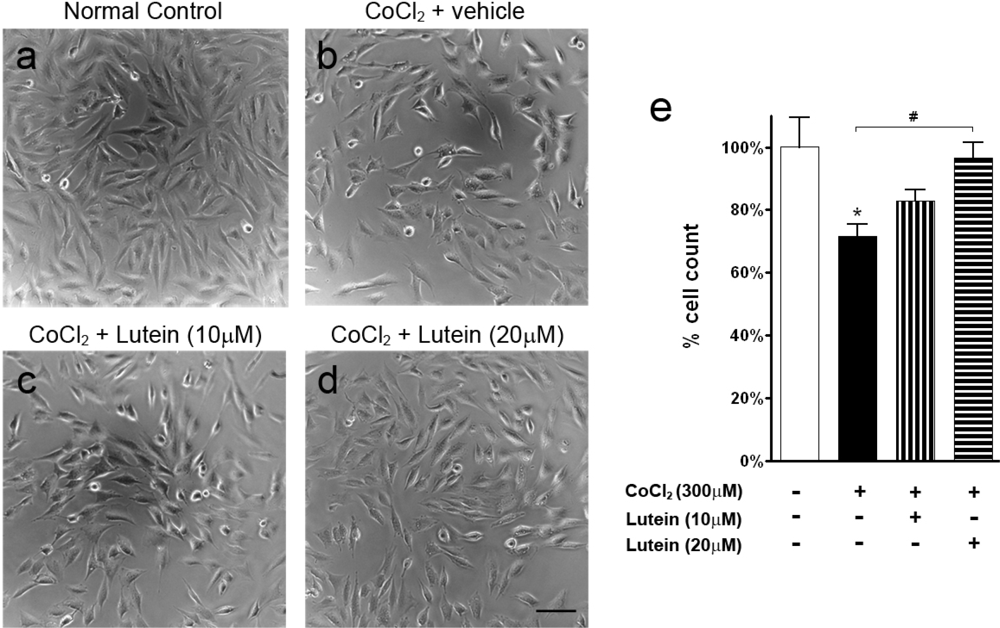
<p>Chemical hypoxia was induced in RGC-5 cells using cobalt (II) chloride (CoCl<sub>2</sub>). After hypoxia, profound cell loss was observed in the vehicle-treated hypoxic group (<xref ref-type="fig" rid="f1-ijms-11-02109">Figure 1b,e</xref>; p &lt; 0.05 <italic>versus</italic> normal control). Cells appeared to be more round, with loss of processes (<xref ref-type="fig" rid="f1-ijms-11-02109">Figure 1b</xref>) when compared with the normal control (<xref ref-type="fig" rid="f1-ijms-11-02109">Figure 1a</xref>). However, lutein treatment reversed the cytotoxic effect of CoCl<sub>2</sub> and led to less damage to RGC-5 cells (<xref ref-type="fig" rid="f1-ijms-11-02109">Figure 1c,d</xref>). Cells treated with 20 μM lutein (<xref ref-type="fig" rid="f1-ijms-11-02109">Figure 1d</xref>) showed morphology similar to that of the normal control (<xref ref-type="fig" rid="f1-ijms-11-02109">Figure 1a</xref>). Quantitative analysis by cell counting showed that more RGC-5 cells were observed in the lutein-treated group (<xref ref-type="fig" rid="f1-ijms-11-02109">Figure 1e</xref>; p &lt; 0.05 at 20 μM <italic>versus</italic> vehicle-treated group).</p>
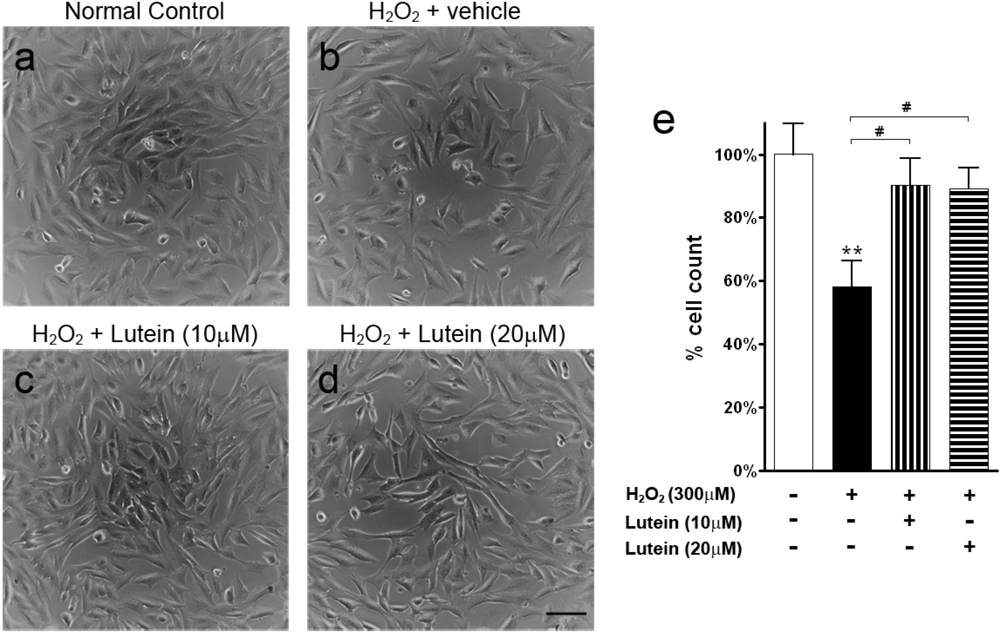
<p>Hydrogen peroxide (H<sub>2</sub>O<sub>2</sub>) was used to induce oxidative stress. Exposure to H<sub>2</sub>O<sub>2</sub> led to cell death in the vehicle-treated group (<xref ref-type="fig" rid="f2-ijms-11-02109">Figure 2b,e</xref>; p &lt; 0.01 <italic>versus</italic> normal control). Upon lutein treatment at both at 10 μM and 20 μM, the number of RGC-5 cells was increased (<xref ref-type="fig" rid="f2-ijms-11-02109">Figure 2c,d,e</xref>; p &lt; 0.05 <italic>versus</italic> vehicle-treated group) to a number similar to that of the normal control (<xref ref-type="fig" rid="f2-ijms-11-02109">Figure 2e</xref>; p &gt; 0.05).</p></sec>
<sec sec-type="discussion">
<label>2.2.</label>
<title>Discussion</title>
<p>Ischemia and oxidative stress are common causes of many ocular diseases, which lead to irreversible RGC damage. In the present study, we examined the neuroprotective effect of lutein on RGC-5 cells against CoCl<sub>2</sub>-induced chemical hypoxia and H<sub>2</sub>O<sub>2</sub>-induced oxidative stress <italic>in vitro</italic>. Our data demonstrated that lutein exerted neuroprotection on RGC-5 cells against hypoxia and oxidative stress.</p>
<p>Retinal ischemia is a feature of many ocular pathologies such as glaucoma, DR and retinal vessel occlusion [<xref ref-type="bibr" rid="b1-ijms-11-02109">1</xref>]. In experimental studies, CoCl<sub>2</sub> is one of the common agents to induce hypoxia [<xref ref-type="bibr" rid="b14-ijms-11-02109">14</xref>–<xref ref-type="bibr" rid="b18-ijms-11-02109">18</xref>]. CoCl<sub>2</sub> treatment simulates hypoxia, a key event during ischemic injury, by altering gene and protein expression similarly to ischemia [<xref ref-type="bibr" rid="b19-ijms-11-02109">19</xref>]. It induces hypoxia by blocking the degradation of hypoxia-inducible factor-1α (HIF-1α) and subsequent HIF-1α accumulation [<xref ref-type="bibr" rid="b20-ijms-11-02109">20</xref>]. Moreover, CoCl<sub>2</sub> also induced apoptosis through activation of caspase-3/8, cleavage of anti-apoptotic protein Mcl-1 and generation of reactive oxygen species (ROS) in a variety of <italic>in vitro</italic> studies [<xref ref-type="bibr" rid="b17-ijms-11-02109">17</xref>,<xref ref-type="bibr" rid="b21-ijms-11-02109">21</xref>]. In animal studies, CoCl<sub>2</sub> has been shown to induce apoptosis and retinal photoreceptor degeneration [<xref ref-type="bibr" rid="b22-ijms-11-02109">22</xref>]. In addition, CoCl<sub>2</sub>-induced hypoxia has been adopted in RGC <italic>in vitro</italic> [<xref ref-type="bibr" rid="b16-ijms-11-02109">16</xref>,<xref ref-type="bibr" rid="b23-ijms-11-02109">23</xref>] and <italic>in vivo</italic> [<xref ref-type="bibr" rid="b16-ijms-11-02109">16</xref>]. Accumulation of HIF-1α protein increased expression of heat shock protein-27, and generation of β-amyloid peptide [<xref ref-type="bibr" rid="b23-ijms-11-02109">23</xref>] was shown in CoCl<sub>2</sub>-treated RGC-5 cells. In our results, we demonstrated that CoCl<sub>2</sub> attributed to hypoxia-induced injury in RGC-5 cells.</p>
<p>Oxidative stress is one of the key factors leading to neuronal injury. The retina is highly susceptible to oxidative stress because of the high content of polyunsaturated fatty acids and high oxygen consumption [<xref ref-type="bibr" rid="b24-ijms-11-02109">24</xref>]. Under normal situations, cells possess several intrinsic antioxidant enzymes such as superoxide dismutase, catalase and glutathione peroxidase to cope with oxidative stress resulted from normal metabolism in our body [<xref ref-type="bibr" rid="b3-ijms-11-02109">3</xref>]. However, during injuries such as in ischemia/reperfusion, glaucoma and DR, overproduction of ROS and free radicals overwhelms the intrinsic antioxidant mechanisms [<xref ref-type="bibr" rid="b1-ijms-11-02109">1</xref>,<xref ref-type="bibr" rid="b3-ijms-11-02109">3</xref>]. RGC is sensitive to oxidative stress in pathological situations <italic>in vivo</italic> [<xref ref-type="bibr" rid="b3-ijms-11-02109">3</xref>] and <italic>in vitro</italic> [<xref ref-type="bibr" rid="b25-ijms-11-02109">25</xref>]. In experimental studies, H<sub>2</sub>O<sub>2</sub> is widely used to induce oxidative stress [<xref ref-type="bibr" rid="b25-ijms-11-02109">25</xref>]. Exogenous H<sub>2</sub>O<sub>2</sub> increases intracellular accumulation of ROS [<xref ref-type="bibr" rid="b26-ijms-11-02109">26</xref>], apoptosis and leads to loss of cell viability [<xref ref-type="bibr" rid="b25-ijms-11-02109">25</xref>] in RGC-5. H<sub>2</sub>O<sub>2</sub>-induced apoptosis in RGCs has been shown to be caspase-independent and yet involves the activation of poly(ADP-ribose) polymerase and apoptosis-inducing factor [<xref ref-type="bibr" rid="b25-ijms-11-02109">25</xref>]. In the present study, H<sub>2</sub>O<sub>2</sub> also induced significant cell damage to RGC-5 cells, which was comparable to previously found [<xref ref-type="bibr" rid="b25-ijms-11-02109">25</xref>].</p>
<p>In the macula, lutein absorbs high energy blue light and protects the retina from oxidative injury [<xref ref-type="bibr" rid="b10-ijms-11-02109">10</xref>]. Low levels of lutein intake have been shown to associate with the prevalence of AMD [<xref ref-type="bibr" rid="b27-ijms-11-02109">27</xref>]. Lutein supplementation has been shown to improve vision and retard progression of AMD in clinical trial studies [<xref ref-type="bibr" rid="b28-ijms-11-02109">28</xref>,<xref ref-type="bibr" rid="b29-ijms-11-02109">29</xref>]. To our knowledge, there is no reported toxic effect of lutein even at a high dose of intake [<xref ref-type="bibr" rid="b30-ijms-11-02109">30</xref>]. No significant clinical, hematological, biochemical or histopathological side effects were noted in rats fed with 733 mg/kg per day of purified crystalline lutein [<xref ref-type="bibr" rid="b10-ijms-11-02109">10</xref>,<xref ref-type="bibr" rid="b30-ijms-11-02109">30</xref>]. More importantly, lutein has been regarded and approved safe to be used as a daily supplement and to be included into certain food and beverage application in USA [<xref ref-type="bibr" rid="b10-ijms-11-02109">10</xref>]. However, the use of lutein is still limited in treating AMD, which is an outer retinal disease.</p>
<p>Recently, intensive efforts have been made to explicate the neuroprotective effects of carotenoids in ocular diseases <italic>in vivo</italic> [<xref ref-type="bibr" rid="b12-ijms-11-02109">12</xref>,<xref ref-type="bibr" rid="b31-ijms-11-02109">31</xref>,<xref ref-type="bibr" rid="b32-ijms-11-02109">32</xref>] and <italic>in vitro</italic> [<xref ref-type="bibr" rid="b5-ijms-11-02109">5</xref>,<xref ref-type="bibr" rid="b33-ijms-11-02109">33</xref>]. Lutein treatment in DR mice restored malondialdehyde and glutathione protein levels, glutathione peroxidase activity as well as electroretinogram response to control values [<xref ref-type="bibr" rid="b31-ijms-11-02109">31</xref>]. Lutein also reversed the activation of factor-kappa B transcription, which is involved in oxidative stress and inflammation response [<xref ref-type="bibr" rid="b31-ijms-11-02109">31</xref>]. In mice with retinal inflammation, lutein reduced inflammatory response and oxidative stress through reversal of STAT3 activation, downstream of inflammatory cytokine signals [<xref ref-type="bibr" rid="b32-ijms-11-02109">32</xref>]. In addition, the activation of glial fibrillary acidic protein, an indicator of pathological change of Muller glial cells, was prevented in animal treated with lutein. In our recently reported study, we found that lutein was also protective to inner retinal neurons in ischemia/reperfusion injury <italic>in vivo</italic> [<xref ref-type="bibr" rid="b12-ijms-11-02109">12</xref>]. Reduced immunoreactivity of nitrotyrosine and poly(ADP-ribose) in the inner retina, indicating a reduced oxidative stress, was observed in lutein-treated ischemic retina. Effects of carotenoids on a specific cell population were investigated using an <italic>in vitro</italic> approach. Zeaxanthin and astaxanthin have been shown to protect RGC-5 cells from oxidative injuries [<xref ref-type="bibr" rid="b5-ijms-11-02109">5</xref>,<xref ref-type="bibr" rid="b33-ijms-11-02109">33</xref>]. In the present study, our results suggested that lutein treatment protected RGC-5 from CoCl<sub>2</sub>-induced chemical hypoxia and H<sub>2</sub>O<sub>2</sub>-induced oxidative stress. Indeed, it has been proposed that lutein can effectively reduce the intracellular accumulation of H<sub>2</sub>O<sub>2</sub> by scavenging H<sub>2</sub>O<sub>2</sub> and superoxide as well as inhibit NFκB-regulated inflammatory gene expression in lipopolysaccharide-stimulated macrophages <italic>in vivo</italic> and <italic>in vitro</italic> [<xref ref-type="bibr" rid="b34-ijms-11-02109">34</xref>]. This indicates that lutein is able to penetrate into cells and scavenge intracellular H<sub>2</sub>O<sub>2</sub> to prevent cell damage. Furthermore, lutein-binding protein [<xref ref-type="bibr" rid="b35-ijms-11-02109">35</xref>] and retinal tubulin [<xref ref-type="bibr" rid="b36-ijms-11-02109">36</xref>] are found in the ganglion cell layer of primate retina and bovine retina. These proteins are suggested to be involved in lutein transport. However, further study is necessary to investigate the expression and localization of lutein-bind protein in rodents and the RGC-5 cell line.</p>
<p>The RGC-5 cell line was previously used as a RGC-specific <italic>in vitro</italic> model [<xref ref-type="bibr" rid="b4-ijms-11-02109">4</xref>,<xref ref-type="bibr" rid="b5-ijms-11-02109">5</xref>,<xref ref-type="bibr" rid="b18-ijms-11-02109">18</xref>,<xref ref-type="bibr" rid="b26-ijms-11-02109">26</xref>,<xref ref-type="bibr" rid="b33-ijms-11-02109">33</xref>]. However, several recent reports have questioned the validity of this cell line. It was demonstrated that RGC-5 cells lack critical biochemical and physiological RGC properties [<xref ref-type="bibr" rid="b37-ijms-11-02109">37</xref>–<xref ref-type="bibr" rid="b39-ijms-11-02109">39</xref>]. In addition, RGC-5 cells do not express RGC-specific markers such as neurofilaments or Thy 1.2 [<xref ref-type="bibr" rid="b38-ijms-11-02109">38</xref>]. Moreover, RGC-5 cells are unexcitable, with no voltage-dependent inward Na<sup>+</sup> or Ca<sup>2+</sup> currents or action potentials, which are critical properties of cultured postnatal and adult rat RGCs [<xref ref-type="bibr" rid="b37-ijms-11-02109">37</xref>]. All these pieces of evidence imply the limitation of using the RGC-5 cell line as an <italic>in vitro</italic> model of RGCs. Primary RGC culture may be a more appropriate <italic>in vitro</italic> model of RGC study.</p></sec></sec>
<sec>
<label>3.</label>
<title>Experimental Section</title>
<p>RGC-5 cells (ATCC, VA, USA) were routinely maintained in Dulbecco’s modified Eagle’s medium (DMEM; Gibco, Carlsbad, CA, USA) supplemented with 10% fetal bovine serum (FBS; Gibco), 100 U/mL penicillin and 100 μg/mL streptomycin (Gibco). Cells were grown in a humidified incubator of 95% air and 5% CO<sub>2</sub> at 37 °C. Cells were passaged when 80% confluent.</p>
<p>For cell counting studies, RGC-5 cells were seeded in 96-well plates at a density of 5,000 cells/well in DMEM with 10% FBS for 24 hours. Hypoxia and oxidative stress was induced by incubating the cells with CoCl<sub>2</sub> (300 μM; Sigma-Aldrich, St. Louis, MO, USA) and H<sub>2</sub>O<sub>2</sub> (300 μM; BDH Chemicals Ltd., Atherstone, UK) in DMEM with 1% FBS for 24 hours. Either Lutein (10 μM and 20 μM; Sigma) or vehicle (0.01% dimethyl sulfoxide (DMSO); Sigma) was added to the culture medium at the onset of injury. The concentrations of CoCl<sub>2</sub>, H<sub>2</sub>O<sub>2,</sub> and lutein used were adopted from previous studies [<xref ref-type="bibr" rid="b4-ijms-11-02109">4</xref>,<xref ref-type="bibr" rid="b14-ijms-11-02109">14</xref>,<xref ref-type="bibr" rid="b18-ijms-11-02109">18</xref>,<xref ref-type="bibr" rid="b34-ijms-11-02109">34</xref>,<xref ref-type="bibr" rid="b40-ijms-11-02109">40</xref>]. Photographs from each well of the culture plates were captured under light microscope (Eclipse TE2000-5; Nikon, Tokyo, Japan) using a digital camera (Spot Flex; Diagnostic Instruments, Inc., Sterling Heights, MI, USA). Five fields (300 μm × 300 μm) were selected from each photograph for cell counting. The experiments were performed in duplicate and repeated four times.</p>
<p>Quantitative results were expressed as mean ± SEM. One-way ANOVA tests, followed by Bonferroni’s multiple comparison tests, were used to test the statistical significance of differences among the groups. Significance was set at p &lt; 0.05.</p></sec>
<sec sec-type="conclusions">
<label>4.</label>
<title>Conclusions</title>
<p>In the present study, we demonstrated that lutein can protect RGC-5 cells from injury induced by CoCl<sub>2</sub>-induced chemical hypoxia or H<sub>2</sub>O<sub>2</sub>-induced hypoxia or oxidative stress. These results suggest that lutein may play a role as a neuroprotectant.</p></sec></body>
<back>
<ack>
<p>This study was supported by the University Development Fund and the Small Project Funding (Suk-Yee Li) from The University of Hong Kong.</p></ack>
<ref-list>
<title>References and Notes</title>
<ref id="b1-ijms-11-02109"><label>1.</label><citation citation-type="journal"><person-group person-group-type="author"><name><surname>Osborne</surname><given-names>NN</given-names></name><name><surname>Casson</surname><given-names>RJ</given-names></name><name><surname>Wood</surname><given-names>JPM</given-names></name><name><surname>Chidlow</surname><given-names>G</given-names></name><name><surname>Graham</surname><given-names>M</given-names></name><name><surname>Melena</surname><given-names>J</given-names></name></person-group><article-title>Retinal ischemia: mechanisms of damage and potential therapeutic strategies</article-title><source>Prog. Retin. Eye Res</source><year>2004</year><volume>23</volume><fpage>91</fpage><lpage>147</lpage><pub-id pub-id-type="doi">10.1016/j.preteyeres.2003.12.001</pub-id><pub-id pub-id-type="pmid">14766318</pub-id></citation></ref>
<ref id="b2-ijms-11-02109"><label>2.</label><citation citation-type="journal"><person-group person-group-type="author"><name><surname>McKinnon</surname><given-names>SJ</given-names></name></person-group><article-title>Glaucoma, apoptosis, and neuroprotection</article-title><source>Curr. Opin. Ophthalmol</source><year>1997</year><volume>8</volume><fpage>28</fpage><lpage>37</lpage><pub-id pub-id-type="doi">10.1097/00055735-199704000-00006</pub-id><pub-id pub-id-type="pmid">10168354</pub-id></citation></ref>
<ref id="b3-ijms-11-02109"><label>3.</label><citation citation-type="journal"><person-group person-group-type="author"><name><surname>Tezel</surname><given-names>G</given-names></name></person-group><article-title>Oxidative stress in glaucomatous neurodegeneration: mechanisms and consequences</article-title><source>Prog. Retin. Eye Res</source><year>2006</year><volume>25</volume><fpage>490</fpage><lpage>513</lpage><pub-id pub-id-type="doi">10.1016/j.preteyeres.2006.07.003</pub-id><pub-id pub-id-type="pmid">16962364</pub-id></citation></ref>
<ref id="b4-ijms-11-02109"><label>4.</label><citation citation-type="journal"><person-group person-group-type="author"><name><surname>Nakajima</surname><given-names>Y</given-names></name><name><surname>Inokuchi</surname><given-names>Y</given-names></name><name><surname>Nishi</surname><given-names>M</given-names></name><name><surname>Shimazawa</surname><given-names>M</given-names></name><name><surname>Otsubo</surname><given-names>K</given-names></name><name><surname>Hara</surname><given-names>H</given-names></name></person-group><article-title>Coenzyme Q10 protects retinal cells against oxidative stress <italic>in vitro</italic> and <italic>in vivo</italic></article-title><source>Brain Res</source><year>2008</year><volume>1226</volume><fpage>226</fpage><lpage>233</lpage><pub-id pub-id-type="doi">10.1016/j.brainres.2008.06.026</pub-id><pub-id pub-id-type="pmid">18598676</pub-id></citation></ref>
<ref id="b5-ijms-11-02109"><label>5.</label><citation citation-type="journal"><person-group person-group-type="author"><name><surname>Nakajima</surname><given-names>Y</given-names></name><name><surname>Inokuchi</surname><given-names>Y</given-names></name><name><surname>Shimazawa</surname><given-names>M</given-names></name><name><surname>Otsubo</surname><given-names>K</given-names></name><name><surname>Ishibashi</surname><given-names>T</given-names></name><name><surname>Hara</surname><given-names>H</given-names></name></person-group><article-title>Astaxanthin, a dietary carotenoid, protects retinal cells against oxidative stress <italic>in vitro</italic> and in mice <italic>in vivo</italic></article-title><source>J. Pharm. Pharmacol</source><year>2008</year><volume>60</volume><fpage>1365</fpage><lpage>1374</lpage><pub-id pub-id-type="doi">10.1211/jpp.60.10.0013</pub-id><pub-id pub-id-type="pmid">18812030</pub-id></citation></ref>
<ref id="b6-ijms-11-02109"><label>6.</label><citation citation-type="journal"><person-group person-group-type="author"><name><surname>Aydemir</surname><given-names>O</given-names></name><name><surname>Celebi</surname><given-names>S</given-names></name><name><surname>Yilmaz</surname><given-names>T</given-names></name><name><surname>Yekeler</surname><given-names>H</given-names></name><name><surname>Kukner</surname><given-names>AS</given-names></name></person-group><article-title>Protective effects of vitamin E forms (alpha-tocopherol, gamma-tocopherol and d-alpha-tocopherol polyethylene glycol 1000 succinate) on retinal edema during ischemia-reperfusion injury in the guinea pig retina</article-title><source>Int. Ophthalmol</source><year>2004</year><volume>25</volume><fpage>283</fpage><lpage>289</lpage><pub-id pub-id-type="doi">10.1007/s10792-005-2034-z</pub-id><pub-id pub-id-type="pmid">16532291</pub-id></citation></ref>
<ref id="b7-ijms-11-02109"><label>7.</label><citation citation-type="journal"><person-group person-group-type="author"><name><surname>Calvo</surname><given-names>MM</given-names></name></person-group><article-title>Lutein: A valuable ingredient of fruit and vegetables</article-title><source>Crit. Rev. Food Sci. Nutr</source><year>2005</year><volume>45</volume><fpage>671</fpage><lpage>696</lpage><pub-id pub-id-type="doi">10.1080/10408690590957034</pub-id><pub-id pub-id-type="pmid">16371334</pub-id></citation></ref>
<ref id="b8-ijms-11-02109"><label>8.</label><citation citation-type="journal"><person-group person-group-type="author"><name><surname>Carpentier</surname><given-names>S</given-names></name><name><surname>Knaus</surname><given-names>M</given-names></name><name><surname>Suh</surname><given-names>M</given-names></name></person-group><article-title>Associations between lutein, zeaxanthin, and age-related macular degeneration: an overview</article-title><source>Crit. Rev. Food Sci. Nutr</source><year>2009</year><volume>49</volume><fpage>313</fpage><lpage>326</lpage><pub-id pub-id-type="doi">10.1080/10408390802066979</pub-id><pub-id pub-id-type="pmid">19234943</pub-id></citation></ref>
<ref id="b9-ijms-11-02109"><label>9.</label><citation citation-type="journal"><person-group person-group-type="author"><name><surname>Ojima</surname><given-names>F</given-names></name><name><surname>Sakamoto</surname><given-names>H</given-names></name><name><surname>Ishiguro</surname><given-names>Y</given-names></name><name><surname>Terao</surname><given-names>J</given-names></name></person-group><article-title>Consumption of carotenoids in photosensitized oxidation of human plasma and plasma low-density lipoprotein</article-title><source>Free Radic. Biol. Med</source><year>1993</year><volume>15</volume><fpage>377</fpage><lpage>384</lpage><pub-id pub-id-type="doi">10.1016/0891-5849(93)90037-U</pub-id><pub-id pub-id-type="pmid">8225019</pub-id></citation></ref>
<ref id="b10-ijms-11-02109"><label>10.</label><citation citation-type="journal"><person-group person-group-type="author"><name><surname>Alves-Rodrigues</surname><given-names>A</given-names></name><name><surname>Shao</surname><given-names>A</given-names></name></person-group><article-title>The science behind lutein</article-title><source>Toxicol. Lett</source><year>2004</year><volume>150</volume><fpage>57</fpage><lpage>83</lpage><pub-id pub-id-type="doi">10.1016/j.toxlet.2003.10.031</pub-id><pub-id pub-id-type="pmid">15068825</pub-id></citation></ref>
<ref id="b11-ijms-11-02109"><label>11.</label><citation citation-type="journal"><person-group person-group-type="author"><name><surname>Sommerburg</surname><given-names>O</given-names></name><name><surname>Keunen</surname><given-names>JE</given-names></name><name><surname>Bird</surname><given-names>AC</given-names></name><name><surname>van Kuijk</surname><given-names>FJ</given-names></name></person-group><article-title>Fruits and vegetables that are sources for lutein and zeaxanthin: the macular pigment in human eyes</article-title><source>Br. J. Ophthalmol</source><year>1998</year><volume>82</volume><fpage>907</fpage><lpage>910</lpage><pub-id pub-id-type="doi">10.1136/bjo.82.8.907</pub-id><pub-id pub-id-type="pmid">9828775</pub-id></citation></ref>
<ref id="b12-ijms-11-02109"><label>12.</label><citation citation-type="journal"><person-group person-group-type="author"><name><surname>Li</surname><given-names>SY</given-names></name><name><surname>Fu</surname><given-names>ZJ</given-names></name><name><surname>Ma</surname><given-names>H</given-names></name><name><surname>Jang</surname><given-names>WC</given-names></name><name><surname>So</surname><given-names>KF</given-names></name><name><surname>Wong</surname><given-names>D</given-names></name><name><surname>Lo</surname><given-names>AC</given-names></name></person-group><article-title>Effect of lutein on retinal neurons and oxidative stress in a model of acute retinal ischemia/reperfusion</article-title><source>Invest. Ophthalmol. Vis. Sci</source><year>2009</year><volume>50</volume><fpage>836</fpage><lpage>843</lpage><pub-id pub-id-type="pmid">18936152</pub-id></citation></ref>
<ref id="b13-ijms-11-02109"><label>13.</label><citation citation-type="journal"><person-group person-group-type="author"><name><surname>Krishnamoorthy</surname><given-names>RR</given-names></name><name><surname>Agarwal</surname><given-names>P</given-names></name><name><surname>Prasanna</surname><given-names>G</given-names></name><name><surname>Vopat</surname><given-names>K</given-names></name><name><surname>Lambert</surname><given-names>W</given-names></name><name><surname>Sheedlo</surname><given-names>HJ</given-names></name><name><surname>Pang</surname><given-names>IH</given-names></name><name><surname>Shade</surname><given-names>D</given-names></name><name><surname>Wordinger</surname><given-names>RJ</given-names></name><name><surname>Yorio</surname><given-names>T</given-names></name><name><surname>Clark</surname><given-names>AF</given-names></name><name><surname>Agarwal</surname><given-names>N</given-names></name></person-group><article-title>Characterization of a transformed rat retinal ganglion cell line</article-title><source>Brain Res. Mol. Brain Res</source><year>2001</year><volume>86</volume><fpage>1</fpage><lpage>12</lpage><pub-id pub-id-type="doi">10.1016/S0169-328X(00)00224-2</pub-id><pub-id pub-id-type="pmid">11165366</pub-id></citation></ref>
<ref id="b14-ijms-11-02109"><label>14.</label><citation citation-type="journal"><person-group person-group-type="author"><name><surname>Das</surname><given-names>S</given-names></name><name><surname>Lin</surname><given-names>D</given-names></name><name><surname>Jena</surname><given-names>S</given-names></name><name><surname>Shi</surname><given-names>A</given-names></name><name><surname>Battina</surname><given-names>S</given-names></name><name><surname>Hua</surname><given-names>DH</given-names></name><name><surname>Allbaugh</surname><given-names>R</given-names></name><name><surname>Takemoto</surname><given-names>DJ</given-names></name></person-group><article-title>Protection of retinal cells from ischemia by a novel gap junction inhibitor</article-title><source>Biochem. Biophys. Res. Commun</source><year>2008</year><volume>373</volume><fpage>504</fpage><lpage>508</lpage><pub-id pub-id-type="doi">10.1016/j.bbrc.2008.06.069</pub-id><pub-id pub-id-type="pmid">18590704</pub-id></citation></ref>
<ref id="b15-ijms-11-02109"><label>15.</label><citation citation-type="journal"><person-group person-group-type="author"><name><surname>Guo</surname><given-names>M</given-names></name><name><surname>Song</surname><given-names>LP</given-names></name><name><surname>Jiang</surname><given-names>Y</given-names></name><name><surname>Liu</surname><given-names>W</given-names></name><name><surname>Yu</surname><given-names>Y</given-names></name><name><surname>Chen</surname><given-names>GQ</given-names></name></person-group><article-title>Hypoxia-mimetic agents desferrioxamine and cobalt chloride induce leukemic cell apoptosis through different hypoxia-inducible factor-1alpha independent mechanisms</article-title><source>Apoptosis</source><year>2006</year><volume>11</volume><fpage>67</fpage><lpage>77</lpage><pub-id pub-id-type="doi">10.1007/s10495-005-3085-3</pub-id><pub-id pub-id-type="pmid">16374551</pub-id></citation></ref>
<ref id="b16-ijms-11-02109"><label>16.</label><citation citation-type="journal"><person-group person-group-type="author"><name><surname>Whitlock</surname><given-names>NA</given-names></name><name><surname>Agarwal</surname><given-names>N</given-names></name><name><surname>Ma</surname><given-names>JX</given-names></name><name><surname>Crosson</surname><given-names>CE</given-names></name></person-group><article-title>Hsp27 upregulation by HIF-1 signaling offers protection against retinal ischemia in rats</article-title><source>Invest. Ophthalmol. Vis. Sci</source><year>2005</year><volume>46</volume><fpage>1092</fpage><lpage>1098</lpage><pub-id pub-id-type="doi">10.1167/iovs.04-0043</pub-id><pub-id pub-id-type="pmid">15728570</pub-id></citation></ref>
<ref id="b17-ijms-11-02109"><label>17.</label><citation citation-type="journal"><person-group person-group-type="author"><name><surname>Yang</surname><given-names>SJ</given-names></name><name><surname>Pyen</surname><given-names>J</given-names></name><name><surname>Lee</surname><given-names>I</given-names></name><name><surname>Lee</surname><given-names>H</given-names></name><name><surname>Kim</surname><given-names>Y</given-names></name><name><surname>Kim</surname><given-names>T</given-names></name></person-group><article-title>Cobalt chloride-induced apoptosis and extracellular signal-regulated protein kinase 1/2 activation in rat C6 glioma cells</article-title><source>J. Biochem. Mol. Biol</source><year>2004</year><volume>37</volume><fpage>480</fpage><lpage>486</lpage><pub-id pub-id-type="doi">10.5483/BMBRep.2004.37.4.480</pub-id><pub-id pub-id-type="pmid">15469737</pub-id></citation></ref>
<ref id="b18-ijms-11-02109"><label>18.</label><citation citation-type="journal"><person-group person-group-type="author"><name><surname>Zhu</surname><given-names>X</given-names></name><name><surname>Zhou</surname><given-names>W</given-names></name><name><surname>Cui</surname><given-names>Y</given-names></name><name><surname>Zhu</surname><given-names>L</given-names></name><name><surname>Li</surname><given-names>J</given-names></name><name><surname>Feng</surname><given-names>X</given-names></name><name><surname>Shao</surname><given-names>B</given-names></name><name><surname>Qi</surname><given-names>H</given-names></name><name><surname>Zheng</surname><given-names>J</given-names></name><name><surname>Wang</surname><given-names>H</given-names></name><name><surname>Chen</surname><given-names>H</given-names></name></person-group><article-title>Pilocarpine protects cobalt chloride-induced apoptosis of RGC-5 cells: Involvement of muscarinic receptors and HIF-1alpha pathway</article-title><source>Cell Mol. Neurobiol</source><year>2009</year><volume>30</volume><fpage>427</fpage><lpage>435</lpage><pub-id pub-id-type="pmid">19816768</pub-id></citation></ref>
<ref id="b19-ijms-11-02109"><label>19.</label><citation citation-type="journal"><person-group person-group-type="author"><name><surname>Goldberg</surname><given-names>MA</given-names></name><name><surname>Schneider</surname><given-names>TJ</given-names></name></person-group><article-title>Similarities between the oxygen-sensing mechanisms regulating the expression of vascular endothelial growth factor and erythropoietin</article-title><source>J. Biol. Chem</source><year>1994</year><volume>269</volume><fpage>4355</fpage><lpage>4359</lpage><pub-id pub-id-type="pmid">8308005</pub-id></citation></ref>
<ref id="b20-ijms-11-02109"><label>20.</label><citation citation-type="journal"><person-group person-group-type="author"><name><surname>An</surname><given-names>WG</given-names></name><name><surname>Kanekal</surname><given-names>M</given-names></name><name><surname>Simon</surname><given-names>MC</given-names></name><name><surname>Maltepe</surname><given-names>E</given-names></name><name><surname>Blagosklonny</surname><given-names>MV</given-names></name><name><surname>Neckers</surname><given-names>LM</given-names></name></person-group><article-title>Stabilization of wild-type p53 by hypoxia-inducible factor 1alpha</article-title><source>Nature</source><year>1998</year><volume>392</volume><fpage>405</fpage><lpage>408</lpage><pub-id pub-id-type="doi">10.1038/32925</pub-id><pub-id pub-id-type="pmid">9537326</pub-id></citation></ref>
<ref id="b21-ijms-11-02109"><label>21.</label><citation citation-type="journal"><person-group person-group-type="author"><name><surname>Zou</surname><given-names>W</given-names></name><name><surname>Yan</surname><given-names>M</given-names></name><name><surname>Xu</surname><given-names>W</given-names></name><name><surname>Huo</surname><given-names>H</given-names></name><name><surname>Sun</surname><given-names>L</given-names></name><name><surname>Zheng</surname><given-names>Z</given-names></name><name><surname>Liu</surname><given-names>X</given-names></name></person-group><article-title>Cobalt chloride induces PC12 cells apoptosis through reactive oxygen species and accompanied by AP-1 activation</article-title><source>J. Neurosci. Res</source><year>2001</year><volume>64</volume><fpage>646</fpage><lpage>653</lpage><pub-id pub-id-type="doi">10.1002/jnr.1118</pub-id><pub-id pub-id-type="pmid">11398189</pub-id></citation></ref>
<ref id="b22-ijms-11-02109"><label>22.</label><citation citation-type="journal"><person-group person-group-type="author"><name><surname>Hara</surname><given-names>A</given-names></name><name><surname>Niwa</surname><given-names>M</given-names></name><name><surname>Aoki</surname><given-names>H</given-names></name><name><surname>Kumada</surname><given-names>M</given-names></name><name><surname>Kunisada</surname><given-names>T</given-names></name><name><surname>Oyama</surname><given-names>T</given-names></name><name><surname>Yamamoto</surname><given-names>T</given-names></name><name><surname>Kozawa</surname><given-names>O</given-names></name><name><surname>Mori</surname><given-names>H</given-names></name></person-group><article-title>A new model of retinal photoreceptor cell degeneration induced by a chemical hypoxia-mimicking agent, cobalt chloride</article-title><source>Brain Res</source><year>2006</year><volume>1109</volume><fpage>192</fpage><lpage>200</lpage><pub-id pub-id-type="doi">10.1016/j.brainres.2006.06.037</pub-id><pub-id pub-id-type="pmid">16863645</pub-id></citation></ref>
<ref id="b23-ijms-11-02109"><label>23.</label><citation citation-type="journal"><person-group person-group-type="author"><name><surname>Zhu</surname><given-names>X</given-names></name><name><surname>Zhou</surname><given-names>W</given-names></name><name><surname>Cui</surname><given-names>Y</given-names></name><name><surname>Zhu</surname><given-names>L</given-names></name><name><surname>Li</surname><given-names>J</given-names></name><name><surname>Xia</surname><given-names>Z</given-names></name><name><surname>Shao</surname><given-names>B</given-names></name><name><surname>Wang</surname><given-names>H</given-names></name><name><surname>Chen</surname><given-names>H</given-names></name></person-group><article-title>Muscarinic activation attenuates abnormal processing of beta-amyloid precursor protein induced by cobalt chloride-mimetic hypoxia in retinal ganglion cells</article-title><source>Biochem. Biophys. Res. Commun</source><year>2009</year><volume>384</volume><fpage>110</fpage><lpage>113</lpage><pub-id pub-id-type="doi">10.1016/j.bbrc.2009.04.080</pub-id><pub-id pub-id-type="pmid">19393223</pub-id></citation></ref>
<ref id="b24-ijms-11-02109"><label>24.</label><citation citation-type="journal"><person-group person-group-type="author"><name><surname>Bazan</surname><given-names>NG</given-names></name></person-group><article-title>The metabolism of omega-3 polyunsaturated fatty acids in the eye: the possible role of docosahexaenoic acid and docosanoids in retinal physiology and ocular pathology</article-title><source>Prog. Clin. Biol. Res</source><year>1989</year><volume>312</volume><fpage>95</fpage><lpage>112</lpage><pub-id pub-id-type="pmid">2529559</pub-id></citation></ref>
<ref id="b25-ijms-11-02109"><label>25.</label><citation citation-type="journal"><person-group person-group-type="author"><name><surname>Li</surname><given-names>GY</given-names></name><name><surname>Osborne</surname><given-names>NN</given-names></name></person-group><article-title>Oxidative-induced apoptosis to an immortalized ganglion cell line is caspase independent but involves the activation of poly(ADP-ribose)polymerase and apoptosis-inducing factor</article-title><source>Brain Res</source><year>2008</year><volume>1188</volume><fpage>35</fpage><lpage>43</lpage><pub-id pub-id-type="doi">10.1016/j.brainres.2007.10.073</pub-id><pub-id pub-id-type="pmid">18053973</pub-id></citation></ref>
<ref id="b26-ijms-11-02109"><label>26.</label><citation citation-type="journal"><person-group person-group-type="author"><name><surname>Shimazawa</surname><given-names>M</given-names></name><name><surname>Nakajima</surname><given-names>Y</given-names></name><name><surname>Mashima</surname><given-names>Y</given-names></name><name><surname>Hara</surname><given-names>H</given-names></name></person-group><article-title>Docosahexaenoic acid (DHA) has neuroprotective effects against oxidative stress in retinal ganglion cells</article-title><source>Brain Res</source><year>2009</year><volume>1251</volume><fpage>269</fpage><lpage>275</lpage><pub-id pub-id-type="doi">10.1016/j.brainres.2008.11.031</pub-id><pub-id pub-id-type="pmid">19056360</pub-id></citation></ref>
<ref id="b27-ijms-11-02109"><label>27.</label><citation citation-type="journal"><person-group person-group-type="author"><name><surname>Goldberg</surname><given-names>J</given-names></name><name><surname>Flowerdew</surname><given-names>G</given-names></name><name><surname>Smith</surname><given-names>E</given-names></name><name><surname>Brody</surname><given-names>JA</given-names></name><name><surname>Tso</surname><given-names>MO</given-names></name></person-group><article-title>Factors associated with age-related macular degeneration. An analysis of data from the first National Health and Nutrition Examination Survey</article-title><source>Am. J. Epidemiol</source><year>1988</year><volume>128</volume><fpage>700</fpage><lpage>710</lpage><pub-id pub-id-type="pmid">3421236</pub-id></citation></ref>
<ref id="b28-ijms-11-02109"><label>28.</label><citation citation-type="journal"><person-group person-group-type="author"><name><surname>Richer</surname><given-names>S</given-names></name><name><surname>Devenport</surname><given-names>J</given-names></name><name><surname>Lang</surname><given-names>JC</given-names></name></person-group><article-title>LAST II: Differential temporal responses of macular pigment optical density in patients with atrophic age-related macular degeneration to dietary supplementation with xanthophylls</article-title><source>Optometry</source><year>2007</year><volume>78</volume><fpage>213</fpage><lpage>219</lpage><pub-id pub-id-type="doi">10.1016/j.optm.2006.10.019</pub-id><pub-id pub-id-type="pmid">17478338</pub-id></citation></ref>
<ref id="b29-ijms-11-02109"><label>29.</label><citation citation-type="journal"><person-group person-group-type="author"><name><surname>Richer</surname><given-names>S</given-names></name><name><surname>Stiles</surname><given-names>W</given-names></name><name><surname>Statkute</surname><given-names>L</given-names></name><name><surname>Pulido</surname><given-names>J</given-names></name><name><surname>Frankowski</surname><given-names>J</given-names></name><name><surname>Rudy</surname><given-names>D</given-names></name><name><surname>Pei</surname><given-names>K</given-names></name><name><surname>Tsipursky</surname><given-names>M</given-names></name><name><surname>Nyland</surname><given-names>J</given-names></name></person-group><article-title>Double-masked, placebo-controlled, randomized trial of lutein and antioxidant supplementation in the intervention of atrophic age-related macular degeneration: the Veterans LAST study (Lutein Antioxidant Supplementation Trial)</article-title><source>Optometry</source><year>2004</year><volume>75</volume><fpage>216</fpage><lpage>230</lpage><pub-id pub-id-type="doi">10.1016/S1529-1839(04)70049-4</pub-id><pub-id pub-id-type="pmid">15117055</pub-id></citation></ref>
<ref id="b30-ijms-11-02109"><label>30.</label><citation citation-type="journal"><person-group person-group-type="author"><name><surname>Kruger</surname><given-names>CL</given-names></name><name><surname>Murphy</surname><given-names>M</given-names></name><name><surname>DeFreitas</surname><given-names>Z</given-names></name><name><surname>Pfannkuch</surname><given-names>F</given-names></name><name><surname>Heimbach</surname><given-names>J</given-names></name></person-group><article-title>An innovative approach to the determination of safety for a dietary ingredient derived from a new source: case study using a crystalline lutein product</article-title><source>Food Chem. Toxicol</source><year>2002</year><volume>40</volume><fpage>1535</fpage><lpage>1549</lpage><pub-id pub-id-type="doi">10.1016/S0278-6915(02)00131-X</pub-id><pub-id pub-id-type="pmid">12176081</pub-id></citation></ref>
<ref id="b31-ijms-11-02109"><label>31.</label><citation citation-type="journal"><person-group person-group-type="author"><name><surname>Muriach</surname><given-names>M</given-names></name><name><surname>Bosch-Morell</surname><given-names>F</given-names></name><name><surname>Alexander</surname><given-names>G</given-names></name><name><surname>Blomhoff</surname><given-names>R</given-names></name><name><surname>Barcia</surname><given-names>J</given-names></name><name><surname>Arnal</surname><given-names>E</given-names></name><name><surname>Almansa</surname><given-names>I</given-names></name><name><surname>Romero</surname><given-names>FJ</given-names></name><name><surname>Miranda</surname><given-names>M</given-names></name></person-group><article-title>Lutein effect on retina and hippocampus of diabetic mice</article-title><source>Free Radic. Biol. Med</source><year>2006</year><volume>41</volume><fpage>979</fpage><lpage>984</lpage><pub-id pub-id-type="doi">10.1016/j.freeradbiomed.2006.06.023</pub-id><pub-id pub-id-type="pmid">16934681</pub-id></citation></ref>
<ref id="b32-ijms-11-02109"><label>32.</label><citation citation-type="journal"><person-group person-group-type="author"><name><surname>Sasaki</surname><given-names>M</given-names></name><name><surname>Ozawa</surname><given-names>Y</given-names></name><name><surname>Kurihara</surname><given-names>T</given-names></name><name><surname>Noda</surname><given-names>K</given-names></name><name><surname>Imamura</surname><given-names>Y</given-names></name><name><surname>Kobayashi</surname><given-names>S</given-names></name><name><surname>Ishida</surname><given-names>S</given-names></name><name><surname>Tsubota</surname><given-names>K</given-names></name></person-group><article-title>Neuroprotective effect of an antioxidant, lutein, during retinal inflammation</article-title><source>Invest. Ophthalmol. Vis. Sci</source><year>2009</year><volume>50</volume><fpage>1433</fpage><lpage>1439</lpage><pub-id pub-id-type="pmid">18997089</pub-id></citation></ref>
<ref id="b33-ijms-11-02109"><label>33.</label><citation citation-type="journal"><person-group person-group-type="author"><name><surname>Nakajima</surname><given-names>Y</given-names></name><name><surname>Shimazawa</surname><given-names>M</given-names></name><name><surname>Otsubo</surname><given-names>K</given-names></name><name><surname>Ishibashi</surname><given-names>T</given-names></name><name><surname>Hara</surname><given-names>H</given-names></name></person-group><article-title>Zeaxanthin, a retinal carotenoid, protects retinal cells against oxidative stress</article-title><source>Curr. Eye Res</source><year>2009</year><volume>34</volume><fpage>311</fpage><lpage>318</lpage><pub-id pub-id-type="doi">10.1080/02713680902745408</pub-id><pub-id pub-id-type="pmid">19373580</pub-id></citation></ref>
<ref id="b34-ijms-11-02109"><label>34.</label><citation citation-type="journal"><person-group person-group-type="author"><name><surname>Kim</surname><given-names>JH</given-names></name><name><surname>Na</surname><given-names>HJ</given-names></name><name><surname>Kim</surname><given-names>CK</given-names></name><name><surname>Kim</surname><given-names>JY</given-names></name><name><surname>Ha</surname><given-names>KS</given-names></name><name><surname>Lee</surname><given-names>H</given-names></name><name><surname>Chung</surname><given-names>HT</given-names></name><name><surname>Kwon</surname><given-names>HJ</given-names></name><name><surname>Kwon</surname><given-names>YG</given-names></name><name><surname>Kim</surname><given-names>YM</given-names></name></person-group><article-title>The non-provitamin A carotenoid, lutein, inhibits NF-kappaB-dependent gene expression through redox-based regulation of the phosphatidylinositol 3-kinase/PTEN/Akt and NF-kappaB-inducing kinase pathways: role of H<sub>2</sub>O<sub>2</sub> in NF-kappaB activation</article-title><source>Free Radic. Biol. Med</source><year>2008</year><volume>45</volume><fpage>885</fpage><lpage>896</lpage><pub-id pub-id-type="doi">10.1016/j.freeradbiomed.2008.06.019</pub-id><pub-id pub-id-type="pmid">18620044</pub-id></citation></ref>
<ref id="b35-ijms-11-02109"><label>35.</label><citation citation-type="journal"><person-group person-group-type="author"><name><surname>Bhosale</surname><given-names>P</given-names></name><name><surname>Li</surname><given-names>B</given-names></name><name><surname>Sharifzadeh</surname><given-names>M</given-names></name><name><surname>Gellermann</surname><given-names>W</given-names></name><name><surname>Frederick</surname><given-names>JM</given-names></name><name><surname>Tsuchida</surname><given-names>K</given-names></name><name><surname>Bernstein</surname><given-names>PS</given-names></name></person-group><article-title>Purification and partial characterization of a lutein-binding protein from human retina</article-title><source>Biochemistry</source><year>2009</year><volume>48</volume><fpage>4798</fpage><lpage>4807</lpage><pub-id pub-id-type="doi">10.1021/bi9004478</pub-id><pub-id pub-id-type="pmid">19402606</pub-id></citation></ref>
<ref id="b36-ijms-11-02109"><label>36.</label><citation citation-type="journal"><person-group person-group-type="author"><name><surname>Bernstein</surname><given-names>PS</given-names></name><name><surname>Balashov</surname><given-names>NA</given-names></name><name><surname>Tsong</surname><given-names>ED</given-names></name><name><surname>Rando</surname><given-names>RR</given-names></name></person-group><article-title>Retinal tubulin binds macular carotenoids</article-title><source>Invest. Ophthalmol. Vis. Sci</source><year>1997</year><volume>38</volume><fpage>167</fpage><lpage>175</lpage><pub-id pub-id-type="pmid">9008641</pub-id></citation></ref>
<ref id="b37-ijms-11-02109"><label>37.</label><citation citation-type="journal"><person-group person-group-type="author"><name><surname>Moorhouse</surname><given-names>AJ</given-names></name><name><surname>Li</surname><given-names>S</given-names></name><name><surname>Vickery</surname><given-names>RM</given-names></name><name><surname>Hill</surname><given-names>MA</given-names></name><name><surname>Morley</surname><given-names>JW</given-names></name></person-group><article-title>A patch-clamp investigation of membrane currents in a novel mammalian retinal ganglion cell line</article-title><source>Brain Res</source><year>2004</year><volume>1003</volume><fpage>205</fpage><lpage>208</lpage><pub-id pub-id-type="doi">10.1016/j.brainres.2004.01.027</pub-id><pub-id pub-id-type="pmid">15019582</pub-id></citation></ref>
<ref id="b38-ijms-11-02109"><label>38.</label><citation citation-type="journal"><person-group person-group-type="author"><name><surname>van Bergen</surname><given-names>NJ</given-names></name><name><surname>Wood</surname><given-names>JP</given-names></name><name><surname>Chidlow</surname><given-names>G</given-names></name><name><surname>Trounce</surname><given-names>IA</given-names></name><name><surname>Casson</surname><given-names>RJ</given-names></name><name><surname>Ju</surname><given-names>WK</given-names></name><name><surname>Weinreb</surname><given-names>RN</given-names></name><name><surname>Crowston</surname><given-names>JG</given-names></name></person-group><article-title>Recharacterization of the RGC-5 retinal ganglion cell line</article-title><source>Invest. Ophthalmol. Vis. Sci</source><year>2009</year><volume>50</volume><fpage>4267</fpage><lpage>4272</lpage><pub-id pub-id-type="doi">10.1167/iovs.09-3484</pub-id><pub-id pub-id-type="pmid">19443730</pub-id></citation></ref>
<ref id="b39-ijms-11-02109"><label>39.</label><citation citation-type="journal"><person-group person-group-type="author"><name><surname>Wood</surname><given-names>JP</given-names></name><name><surname>Chidlow</surname><given-names>G</given-names></name><name><surname>Tran</surname><given-names>T</given-names></name><name><surname>Crowston</surname><given-names>J</given-names></name><name><surname>Casson</surname><given-names>RJ</given-names></name></person-group><article-title>A comparison of differentiation protocols for Rgc-5 cells</article-title><source>Invest Ophthalmol Vis Sci</source><year>2010</year>, doi:10.1167/iovs.09-4305.</citation></ref>
<ref id="b40-ijms-11-02109"><label>40.</label><citation citation-type="journal"><person-group person-group-type="author"><name><surname>Rafi</surname><given-names>MM</given-names></name><name><surname>Shafaie</surname><given-names>Y</given-names></name></person-group><article-title>Dietary lutein modulates inducible nitric oxide synthase (iNOS) gene and protein expression in mouse macrophage cells (RAW 264.7)</article-title><source>Mol. Nutr. Food Res</source><year>2007</year><volume>51</volume><fpage>333</fpage><lpage>340</lpage><pub-id pub-id-type="doi">10.1002/mnfr.200600170</pub-id><pub-id pub-id-type="pmid">17340577</pub-id></citation></ref></ref-list>
<sec sec-type="display-objects">
<title>Figures</title>
<fig id="f1-ijms-11-02109" position="float">
<label>Figure 1.</label>
<caption>
<p>Light micrographs and cell count of RGC-5 cells treated with cobalt (II) chloride (CoCl<sub>2</sub>; 300 μM). (<bold>a</bold>) Normal control. (<bold>b</bold>) Vehicle treatment. (<bold>c</bold>) Lutein treatment at 10 μM. (<bold>d</bold>) Lutein treatment at 20 μM. CoCl<sub>2</sub>-induced hypoxia led to cell death in the vehicle-treated group (b) compared with control (a). However, 20 μM lutein treatment reversed the cytotoxic effect of CoCl<sub>2</sub> (d). (<bold>e</bold>) Count of RGC-5 cells treated with CoCl<sub>2</sub> referenced to the normal control. A decreased cell number was observed for the vehicle-treated group (*p &lt; 0.05 <italic>versus</italic> control). However, an increased RGC-5 cell number was observed after 20μM lutein treatment (<sup>#</sup>p &lt; 0.05 <italic>versus</italic> vehicle-treated). Scale bar, 25 μm. Error bars, SEM.</p></caption><graphic xlink:href="ijms-11-02109f1.gif"/></fig>
<fig id="f2-ijms-11-02109" position="float">
<label>Figure 2.</label>
<caption>
<p>Light micrographs and cell count of RGC-5 cells treated with hydrogen peroxide (H<sub>2</sub>O<sub>2</sub>; 300 μM). (<bold>a</bold>) Normal control. (<bold>b</bold>) Vehicle treatment. (<bold>c</bold>) Lutein treatment at 10 μM. (<bold>d</bold>) Lutein treatment at 20 μM. H<sub>2</sub>O<sub>2</sub>-induced oxidative stress led to cell death in the vehicle-treated group (b). Lutein treatment reversed the cytotoxic effect (c and d). (<bold>e</bold>) Cell count in RGC-5 cells treated with H<sub>2</sub>O<sub>2</sub>. Cell count referenced to the normal control. H<sub>2</sub>O<sub>2</sub> exposure led to a decrease in cell number in the vehicle-treated group (**p &lt; 0.01 <italic>versus</italic> control). However, both 10 μM and 20 μM lutein treatment protected RGC-5 cells from damage (<sup>#</sup>p &lt; 0.05 <italic>versus</italic> vehicle-treated control). Scale bar, 25 μM. Error bars, SEM.</p></caption><graphic xlink:href="ijms-11-02109f2.gif"/></fig></sec></back></article>