
Monolayer-directed Assembly and Magnetic Properties of FePt Nanoparticles on Patterned Aluminum Oxide

Abstract
:1. Introduction
2. Results and Discussion
2.1. FePt Nanoparticles
2.2. SAM Formation
2.3. Assembly of FePt NPs
2.4. Structural and Magnetic Properties
3. Experimental Section
3.1. Materials
3.2. Synthesis of FePt NPs
3.3. Sample Preparation
3.4. Microcontact Printing
3.5. Nanoparticle Assembly
3.6. Thermal Annealing
3.7. Measurements
4. Conclusions
Supplementary Information
Preparation and Characterization of SAMs on Al2O3

| SAM | C/P (XPS) | C/P (calcd) | N/P (XPS) | N/P (calcd) |
|---|---|---|---|---|
| TDP (C14PO4) | 15.60±0.59 | 14 | - | - |
| PNDA(C11PO5) | 11.76±0.7 2 | 11 | - | - |
| ABP (C4NPO3) | 13.760±50 | 4 | 0.81±0.12 | 1 |
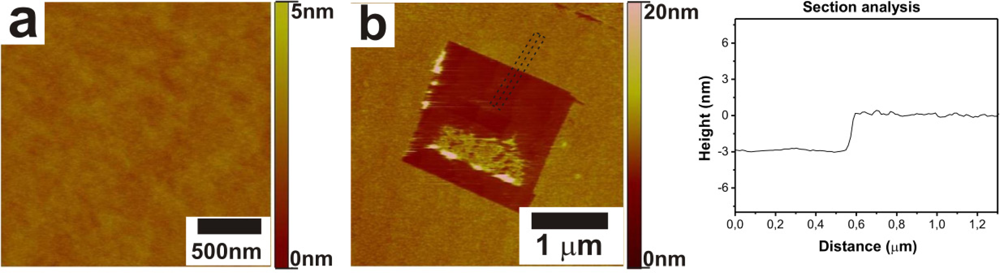
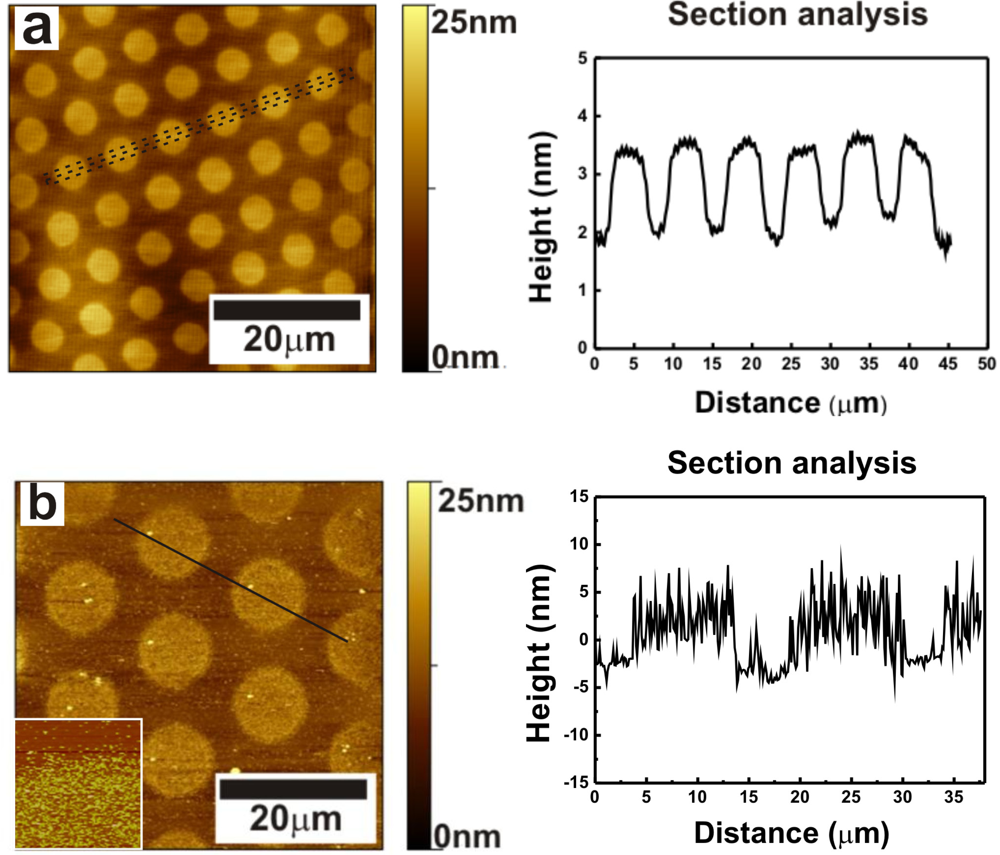
AFM image of (a) PEI-modified alumina (TM), (b) PEI scratched by AFM tip (CM).
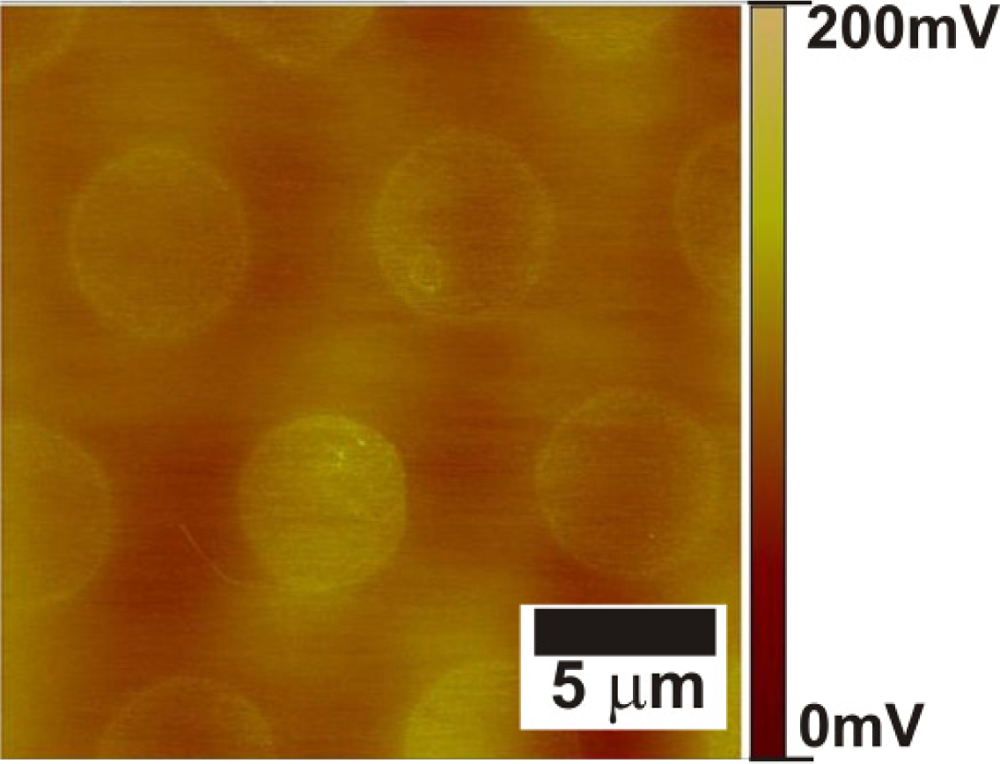
AFM image of ABP patterns on alumina prepared by microcontact printing, friction mode.
References
- Messerschmidt, C; Schwartz, DK. Growth mechanisms of octadecylphosphonic acid self-assembled monolayers on sapphire (corundum): Evidence for a quasi-equilibrium triple point. Langmuir 2001, 17, 462–467. [Google Scholar]
- Yoshimoto, M; Maeda, T; Ohnishi, T; Koinuma, H; Ishiyama, O; Shinohara, M; Kubo, M; Miura, R; Miyamoto, A. Atomic-Scale Formation Of Ultrasmooth Surfaces On Sapphire Substrates For High-Quality Thin-Film Fabrication. Appl. Phys. Lett 1995, 67, 2615–2617. [Google Scholar]
- Textor, M; Ruiz, L; Hofer, R; Rossi, A; Feldman, K; Hahner, G; Spencer, ND. Structural chemistry of self-assembled monolayers of octadecylphosphoric acid on tantalum oxide surfaces. Langmuir 2000, 16, 3257–3271. [Google Scholar]
- Gawalt, ES; Avaltroni, MJ; Koch, N; Schwartz, J. Self-Assembly and bonding of alkanephosphonic acids on the native oxide surface of titanium. Langmuir 2001, 17, 5736–5738. [Google Scholar]
- Spori, DM; Venkataraman, NV; Tosatti, SGP; Durmaz, F; Spencer, ND; Zurcher, S. Influence of alkyl chain length on phosphate self-assembled monolayers. Langmuir 2007, 23, 8053–8060. [Google Scholar]
Acknowledgments
References and Notes
- Sun, SH; Anders, S; Thomson, T; Baglin, JEE; Toney, MF; Hamann, HF; Murray, CB; Terris, BD. Controlled synthesis and assembly of FePt nanoparticles. J. Phys. Chem. B 2003, 107, 5419–5425. [Google Scholar]
- Acet, M; Mayer, C; Muth, O; Terheiden, A; Dyker, G. Formation of extended ordered monolayers of FePt nanoparticles. J. Cryst. Growth 2005, 285, 365–371. [Google Scholar]
- Huang, TW; Huang, YH; Tu, TH; Lee, CH. X-ray diffraction and absorption spectroscopy studies of the structure of self-assembled FePt nanoparticles during annealing. J. Magn. Magn. Mater 2004, 282, 127–130. [Google Scholar]
- Huang, TW; Yu, KL; Liao, YF; Lee, CH. Enhance the structural stability of the FePt nanoparticle monolayer by adding gold overlayer. Colloids Surf., A 2006, 284, 603–606. [Google Scholar]
- Huang, TW; Yu, KL; Liao, YF; Lee, CH. Anomalous grazing-incidence small-angle X-ray scattering investigation on the surface morphology of an FePt magnetic nanoparticle monolayer on functional modulated substrates. J. Appl. Crystallogr 2007, 40, S480–S484. [Google Scholar]
- Hyeon, T. Chemical synthesis of magnetic nanoparticles. Chem. Commun 2003, 927–934. [Google Scholar]
- Jeong, U; Teng, XW; Wang, Y; Yang, H; Xia, YN. Superparamagnetic colloids: Controlled synthesis and niche applications. Adv. Mater 2007, 19, 33–60. [Google Scholar]
- Lee, SJ; Yu, ACC; Lo, CCH; Fan, M. Optical properties of monodispersive FePt nanoparticle films. Phys. Status Solidi A-Appl. Res 2004, 201, 3031–3036. [Google Scholar]
- Sun, SH. Recent advances in chemical synthesis, self-assembly, and applications of FePt nanoparticles. Adv. Mater 2006, 18, 393–403. [Google Scholar]
- Sun, SH; Anders, S; Hamann, HF; Thiele, JU; Baglin, JEE; Thomson, T; Fullerton, EE; Murray, CB; Terris, BD. Polymer mediated self-assembly of magnetic nanoparticles. J. Am. Chem. Soc 2002, 124, 2884–2885. [Google Scholar]
- Sun, SH; Murray, CB; Weller, D; Folks, L; Moser, A. Monodisperse FePt nanoparticles and ferromagnetic FePt nanocrystal superlattices. Science 2000, 287, 1989–1992. [Google Scholar]
- Tartaj, P; Morales, MP; Gonzalez-Carreno, T; Veintemillas-Verdaguer, S; Serna, CJ. Advances in magnetic nanoparticles for biotechnology applications. J. Magn. Magn. Mater 2005, 290, 28–34. [Google Scholar]
- Yu, ACC; Mizuno, M; Sasaki, Y; Inoue, M; Kondo, H; Ohta, I; Djayaprawira, D; Takahashi, M. Fabrication of monodispersive FePt nanoparticle films stabilized on rigid substrates. Appl. Phys. Lett 2003, 82, 4352–4354. [Google Scholar]
- Zeng, H; Sun, SH; Sandstrom, RL; Murray, CB. Chemical ordering of FePt nanoparticle self-assemblies by rapid thermal annealing. J. Magn. Magn. Mater 2003, 266, 227–232. [Google Scholar]
- Schrefl, T; Hrkac, G; Suess, D; Scholz, W; Fidler, J. Coercivity and remanence in self-assembled FePt nanoparticle arrays. J. Appl. Phys 2003, 93, 7041–7043. [Google Scholar]
- Ahn, CH; Triscone, JM; Mannhart, J. Electric field effect in correlated oxide systems. Nature 2003, 424, 1015–1018. [Google Scholar]
- Dagotto, E. Complexity in strongly correlated electronic systems. Science 2005, 309, 257–262. [Google Scholar]
- Hwang, HY. Atomic control of the electron structure at complex oxide heterointerfaces. MRS Bull 2006, 31, 28–35. [Google Scholar]
- Schlom, DG; Chen, LQ; Pan, XQ; Schmehl, A; Zurbuchen, MA. A thin film approach to engineering functionality into oxides. J. Am. Ceram. Soc 2008, 91, 2429–2454. [Google Scholar]
- Delage, T; Champeaux, C; Catherinot, A; Seaux, JF; Madrangeas, V; Cros, D; Pailloux, F; Gaboriaud, RJ. Epitaxial bilayers and trilayers of superconducting and high K materials grown by PLD for microwave applications. Thin Solid Films 2004, 453, 273–278. [Google Scholar]
- Huijben, M; Rijnders, G; Blank, DHA; Bals, S; Van Aert, S; Verbeeck, J; Van Tendeloo, G; Brinkman, A; Hilgenkamp, H. Electronically coupled complementary interfaces between perovskite band insulators. Nat. Mater 2006, 5, 556–560. [Google Scholar]
- Yamaki, T; Sumita, T; Yamamoto, S; Miyashita, A. Preparation of epitaxial TiO2 films by PLD for photocatalyst applications. J. Cryst. Growth 2002, 237, 574–579. [Google Scholar]
- Zhao, H; Hu, LZ; Wang, ZY; Wang, ZJ; Zhang, HQ; Zhao, Y; Liang, XP. Epitaxial growth of ZnO thin films on Si substrates by PLD technique. J. Cryst. Growth 2005, 280, 455–461. [Google Scholar]
- Kinge, S; Gang, T; Naber, WJM; Boschker, H; Rijnders, G; Reinhoudt, DN; van der Wiel, WG. Low-Temperature Solution Synthesis of Chemically Functional Ferromagnetic FePtAu Nanoparticles. Nano Lett 2009, 9, 3220–3224. [Google Scholar]
- Sun, SQ; Leggett, GJ. Micrometer and nanometer scale photopatterning of self-assembled monolayers of phosphonic acids on aluminum oxide. Nano Lett 2007, 7, 3753–3758. [Google Scholar]
- Kita, T; Chiba, D; Ohno, Y; Ohno, H. (In,Ga)As gated-vertical quantum dot with an Al2O3 insulator. Appl. Phys. Lett 2007, 90, 3. [Google Scholar]
- Oleynik, II; Tsymbal, EY. Metal–oxide interfaces in magnetic tunnel junctions. Interface Sci 2004, 12, 105–116. [Google Scholar]
- Schmalhorst, J; Reiss, G. Transport properties of magnetic tunnel junctions with ion irradiated AlOx barriers. J. Magn. Magn. Mater 2004, 272, E1485–E1486. [Google Scholar]
- Wang, DX; Nordman, C; Daughton, JM; Qian, ZH; Fink, J. 70% TMR at room temperature for SDT sandwich junctions with CoFeB as free and reference layers. IEEE Trans. Magn 2004, 40, 2269–2271. [Google Scholar]
- Yuasa, S; Nagahama, T; Suzuki, Y. Spin-polarized resonant tunneling in magnetic tunnel junctions. Science 2002, 297, 234–237. [Google Scholar]
- Messerschmidt, C; Schwartz, DK. Growth mechanisms of octadecylphosphonic acid self-assembled monolayers on sapphire (corundum): Evidence for a quasi-equilibrium triple point. Langmuir 2001, 17, 462–467. [Google Scholar]
- Yoshimoto, M; Maeda, T; Ohnishi, T; Koinuma, H; Ishiyama, O; Shinohara, M; Kubo, M; Miura, R; Miyamoto, A. Atomic-Scale formation of ultrasmooth surfaces on sapphire substrates for high-quality thin-film fabrication. Appl. Phys. Lett 1995, 67, 2615–2617. [Google Scholar]
- Onclin, S; Ravoo, BJ; Reinhoudt, DN. Engineering silicon oxide surfaces using self-assembled monolayers. Angew. Chem.-Int. Edit 2005, 44, 6282–6304. [Google Scholar]
- Schreiber, F. Structure and growth of self-assembling monolayers. Prog. Surf. Sci 2000, 65, 151–256. [Google Scholar]
- Gawalt, ES; Avaltroni, MJ; Koch, N; Schwartz, J. Self-assembly and bonding of alkanephosphonic acids on the native oxide surface of titanium. Langmuir 2001, 17, 5736–5738. [Google Scholar]
- Gnauck, M; Jaehne, E; Blaettler, T; Tosatti, S; Textor, M; Adler, HJP. Carboxy-terminated oligo(ethylene glycol)-alkane phosphate: Synthesis and self-assembly on titanium oxide surfaces. Langmuir 2007, 23, 377–381. [Google Scholar]
- Hahner, G; Hofer, R; Klingenfuss, I. Order and orientation in self-assembled long chain alkanephosphate monolayers adsorbed on metal oxide surfaces. Langmuir 2001, 17, 7047–7052. [Google Scholar]
- Liakos, IL; Newman, RC; McAlpine, E; Alexander, MR. Study of the resistance of SAMs on aluminium to acidic and basic solutions using dynamic contact angle measurement. Langmuir 2007, 23, 995–999. [Google Scholar]
- Pawsey, S; Yach, K; Reven, L. Self-assembly of carboxyalkylphosphonic acids on metal oxide powders. Langmuir 2002, 18, 5205–5212. [Google Scholar]
- Textor, M; Ruiz, L; Hofer, R; Rossi, A; Feldman, K; Hahner, G; Spencer, ND. Structural chemistry of self-assembled monolayers of octadecylphosphoric acid on tantalum oxide surfaces. Langmuir 2000, 16, 3257–3271. [Google Scholar]
- Spori, DM; Venkataraman, NV; Tosatti, SGP; Durmaz, F; Spencer, ND; Zurcher, S. Influence of alkyl chain length on phosphate self-assembled monolayers. Langmuir 2007, 23, 8053–8060. [Google Scholar]
- Zwahlen, M; Tosatti, S; Textor, M; Hahner, G. Orientation in methyl-and hydroxyl terminated self-assembled alkanephosphate monolayers on titanium oxide surfaces investigated with soft x-ray absorption. Langmuir 2002, 18, 3957–3962. [Google Scholar]
- Harrell, JW; Nikles, DE; Kang, SS; Sun, XC; Jia, Z; Shi, S; Lawson, J; Thompson, GB; Srivastava, C; Seetala, NV. Effect of metal additives on L1(0) ordering of chemically synthesized FePt nanoparticles. Scr. Mater 2005, 53, 411–416. [Google Scholar]
- Kang, SS; Jia, ZY; Nikles, DE; Harrell, JW. Synthesis, self-assembly, and magnetic properties of [FePt](1-x)Au-x nanoparticles. IEEE Trans. Magn 2003, 39, 2753–2757. [Google Scholar]
- Yu, CH; Caiulo, N; Lo, CCH; Tam, K; Tsang, SC. Synthesis and fabrication of a thin film containing silica-encapsulated face-centered tetragonal FePt nanoparticles. Adv. Mater 2006, 18, 2312–2314. [Google Scholar]
- Skomski, R; Liu, JP; Rong, CB; Sellmyer, DJ. Hysteresis of ultrasmall Fe-Pt particles. J. Appl. Phys 2008, 103, 3. [Google Scholar]
- Rozkiewicz, DI; Kraan, Y; Werten, MWT; de Wolf, FA; Subramaniam, V; Ravoo, BJ; Reinhoudt, DN. Covalent microcontact printing of proteins for cell patterning. Chem. Eur. J 2006, 12, 6290–6297. [Google Scholar]
- Rozkiewicz, DI; Ravoo, BJ; Reinhoudt, DN. Reversible covalent patterning of self-assembled monolayers on gold and silicon oxide surfaces. Langmuir 2005, 21, 6337–6343. [Google Scholar]
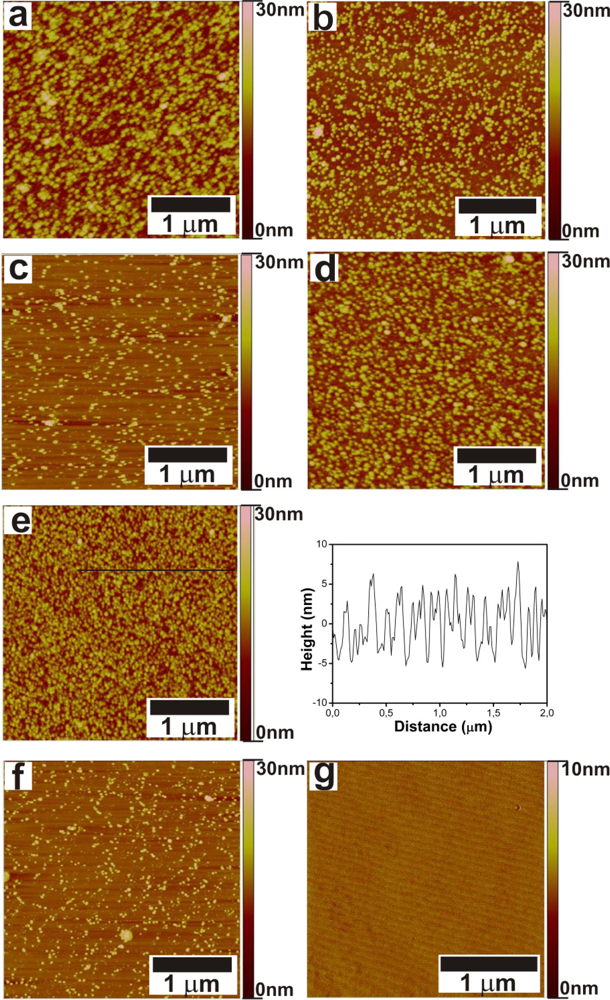
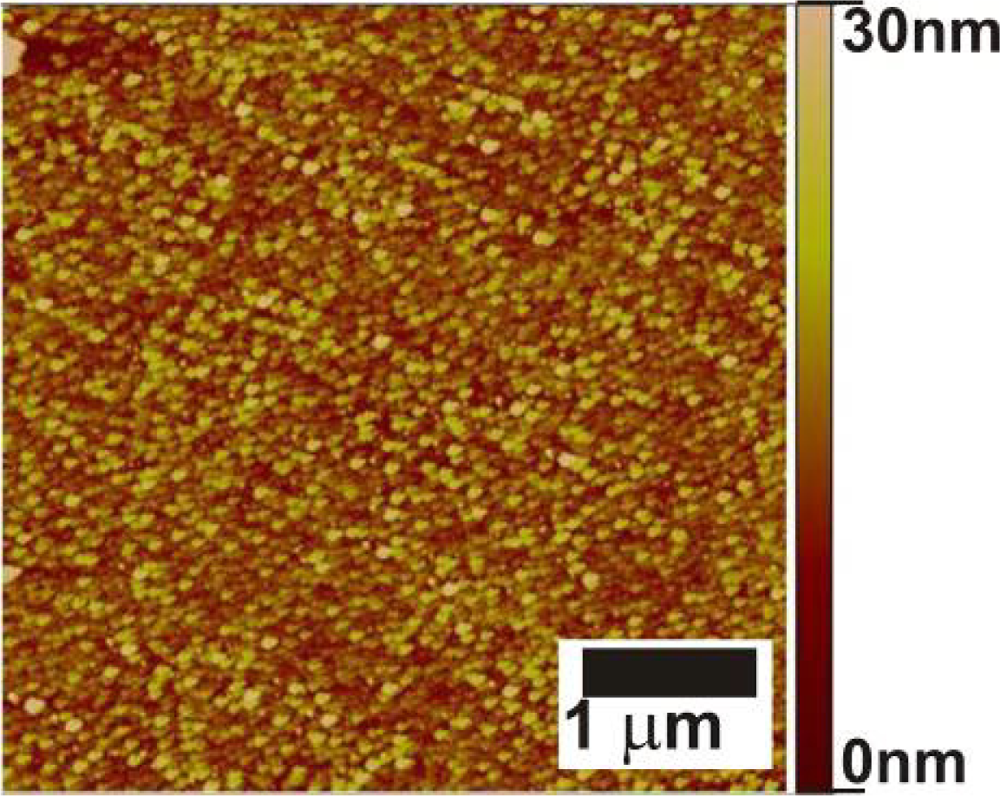
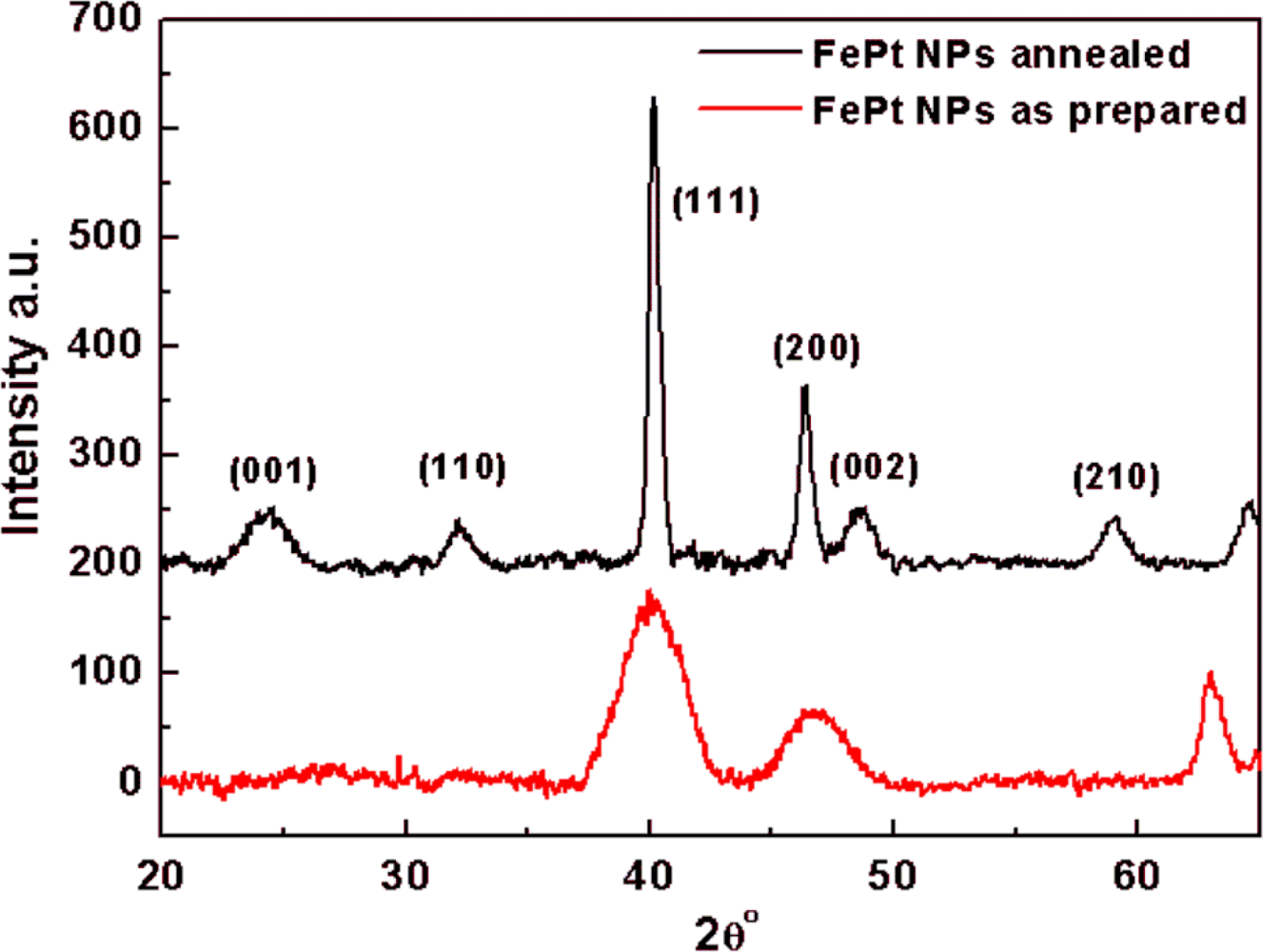
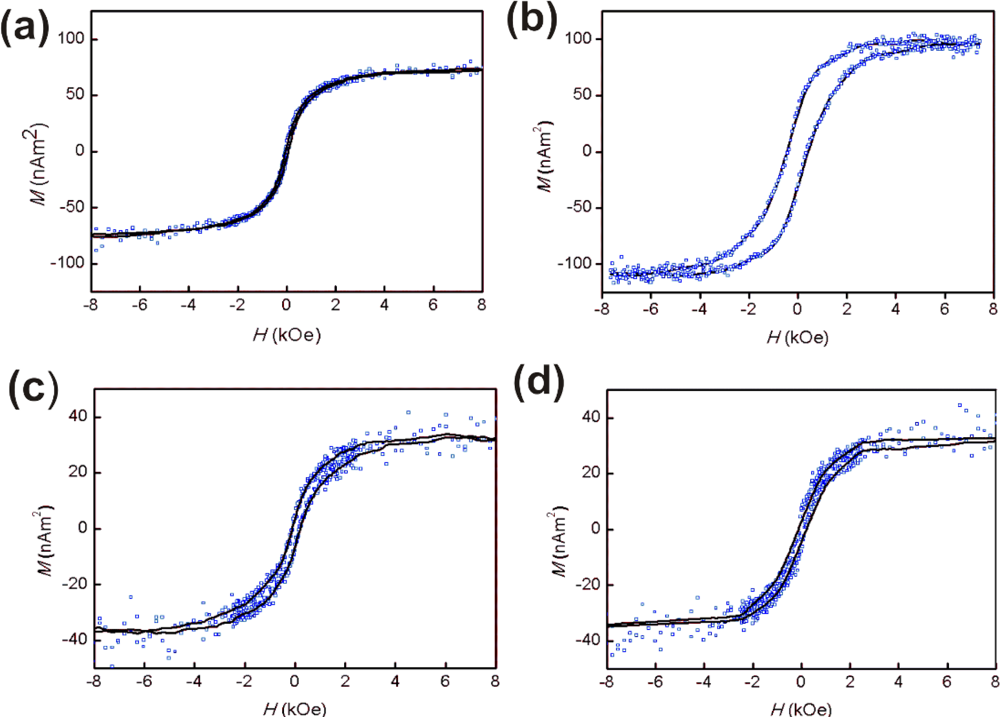
| Surface modification | Immersion time (min) | NP density x1010 (NPs/cm2) | Saturation magnetization M (nAm2) |
|---|---|---|---|
| PNDA | 15 | 1.8±0.1 | 32 |
| PEI | 15 | 1.8±0.1 | n.m |
| ABP | 15 | 1.0±0.05 | n.m |
| PEI | 90 | 2.0±0.1 | 100 |
| ABP | 90 | 2.2±0.1 | 32 |
| Bare Al2O3 | 90 | 0.8±0.04 | n.m |
| TDP | 90 | 0.0 | n.m |
© 2010 by the authors; licensee Molecular Diversity Preservation International, Basel, Switzerland. This article is an open-access article distributed under the terms and conditions of the Creative Commons Attribution license (http://creativecommons.org/licenses/by/3.0/).
Share and Cite
Yildirim, O.; Gang, T.; Kinge, S.; Reinhoudt, D.N.; Blank, D.H.A.; Van der Wiel, W.G.; Rijnders, G.; Huskens, J. Monolayer-directed Assembly and Magnetic Properties of FePt Nanoparticles on Patterned Aluminum Oxide. Int. J. Mol. Sci. 2010, 11, 1162-1179. https://doi.org/10.3390/iijms11031162
Yildirim O, Gang T, Kinge S, Reinhoudt DN, Blank DHA, Van der Wiel WG, Rijnders G, Huskens J. Monolayer-directed Assembly and Magnetic Properties of FePt Nanoparticles on Patterned Aluminum Oxide. International Journal of Molecular Sciences. 2010; 11(3):1162-1179. https://doi.org/10.3390/iijms11031162
Chicago/Turabian StyleYildirim, Oktay, Tian Gang, Sachin Kinge, David N. Reinhoudt, Dave H. A. Blank, Wilfred G. Van der Wiel, Guus Rijnders, and Jurriaan Huskens. 2010. "Monolayer-directed Assembly and Magnetic Properties of FePt Nanoparticles on Patterned Aluminum Oxide" International Journal of Molecular Sciences 11, no. 3: 1162-1179. https://doi.org/10.3390/iijms11031162