
<?xml version="1.0" encoding="UTF-8"?>
<!DOCTYPE article PUBLIC "-//NLM//DTD Journal Publishing DTD v2.3 20070202//EN" "journalpublishing.dtd">
<article xmlns:xlink="http://www.w3.org/1999/xlink" xml:lang="en" article-type="review-article">
<front>
<journal-meta>
<journal-id journal-id-type="publisher-id">ijms</journal-id>
<journal-title>International Journal of Molecular Sciences</journal-title>
<abbrev-journal-title>Int. J. Mol. Sci.</abbrev-journal-title>
<issn pub-type="epub">1422-0067</issn>
<publisher>
<publisher-name>Molecular Diversity Preservation International (MDPI)</publisher-name></publisher></journal-meta>
<article-meta>
<article-id pub-id-type="doi">10.3390/ijms10073076</article-id>
<article-id pub-id-type="publisher-id">ijms-10-03076</article-id>
<article-categories>
<subj-group>
<subject>Review</subject></subj-group></article-categories>
<title-group>
<article-title>Bacterial Stressors in Minimally Processed Food</article-title></title-group>
<contrib-group>
<contrib contrib-type="author">
<name><surname>Capozzi</surname><given-names>Vittorio</given-names></name><xref ref-type="aff" rid="af1-ijms-10-03076">1</xref></contrib>
<contrib contrib-type="author">
<name><surname>Fiocco</surname><given-names>Daniela</given-names></name><xref ref-type="aff" rid="af2-ijms-10-03076">2</xref></contrib>
<contrib contrib-type="author">
<name><surname>Amodio</surname><given-names>Maria Luisa</given-names></name><xref ref-type="aff" rid="af3-ijms-10-03076">3</xref></contrib>
<contrib contrib-type="author">
<name><surname>Gallone</surname><given-names>Anna</given-names></name><xref ref-type="aff" rid="af2-ijms-10-03076">2</xref></contrib>
<contrib contrib-type="author">
<name><surname>Spano</surname><given-names>Giuseppe</given-names></name><xref ref-type="aff" rid="af1-ijms-10-03076">1</xref><xref ref-type="corresp" rid="c1-ijms-10-03076">*</xref></contrib></contrib-group>
<aff id="af1-ijms-10-03076">
<label>1</label>Department of Food Science, University of Foggia, via Napoli 25, 71100 Foggia, Italy; E-Mail:
<email>vittorio.capozzi@gmail.com</email> (V.C.)</aff>
<aff id="af2-ijms-10-03076">
<label>2</label>Department of Biomedical Sciences, University of Foggia, via L. Pinto 1, 71100 Foggia, Italy; E-Mails:
<email>d.fiocco@unifg.it</email> (D.F.);
<email>a.gallone@unifg.it</email> (A.G.)</aff>
<aff id="af3-ijms-10-03076">
<label>3</label>Department of Production Sciences, Engineering, and Economics for Agricultural Systems (PrIME), University of Foggia, via Napoli 25, 71100 Foggia, Italy; E-Mail:
<email>m.amodio@unifg.it</email> (M.L.A.)</aff>
<author-notes>
<corresp id="c1-ijms-10-03076">
<label>*</label>Author to whom correspondence should be addressed; E-Mail:
<email>g.spano@unifg.it</email> (G.S.); Tel. +39-0-881-589303; Fax: +39-0-881-740211</corresp></author-notes>
<pub-date pub-type="epub">
<day>8</day>
<month>7</month>
<year>2009</year></pub-date>
<pub-date pub-type="collection">
<month>7</month>
<year>2009</year></pub-date>
<volume>10</volume>
<issue>7</issue>
<fpage>3076</fpage>
<lpage>3105</lpage>
<history>
<date date-type="received">
<day>10</day>
<month>6</month>
<year>2009</year></date>
<date date-type="rev-recd">
<day>29</day>
<month>6</month>
<year>2009</year></date>
<date date-type="accepted">
<day>29</day>
<month>6</month>
<year>2009</year></date></history>
<permissions>
<copyright-statement>© 2009 by the authors; licensee Molecular Diversity Preservation International, Basel, Switzerland.</copyright-statement>
<copyright-year>2009</copyright-year>
<license license-type="open-access" xlink:href="http://creativecommons.org/licenses/by/3.0">
<p>This article is an open-access article distributed under the terms and conditions of the Creative Commons Attribution license (http://creativecommons.org/licenses/by/3.0/).</p></license></permissions>
<abstract>
<p>Stress responses are of particular importance to microorganisms, because their habitats are subjected to continual changes in temperature, osmotic pressure, and nutrients availability. Stressors (and stress factors), may be of chemical, physical, or biological nature. While stress to microorganisms is frequently caused by the surrounding environment, the growth of microbial cells on its own may also result in induction of some kinds of stress such as starvation and acidity. During production of fresh-cut produce, cumulative mild processing steps are employed, to control the growth of microorganisms. Pathogens on plant surfaces are already stressed and stress may be increased during the multiple mild processing steps, potentially leading to very hardy bacteria geared towards enhanced survival. Cross-protection can occur because the overlapping stress responses enable bacteria exposed to one stress to become resistant to another stress. A number of stresses have been shown to induce cross protection, including heat, cold, acid and osmotic stress. Among other factors, adaptation to heat stress appears to provide bacterial cells with more pronounced cross protection against several other stresses. Understanding how pathogens sense and respond to mild stresses is essential in order to design safe and effective minimal processing regimes.</p></abstract>
<kwd-group>
<kwd>stress</kwd>
<kwd>stressors</kwd>
<kwd>fresh cut</kwd>
<kwd>pathogens</kwd></kwd-group></article-meta></front>
<body>
<sec sec-type="intro">
<label>1.</label>
<title>Introduction</title>
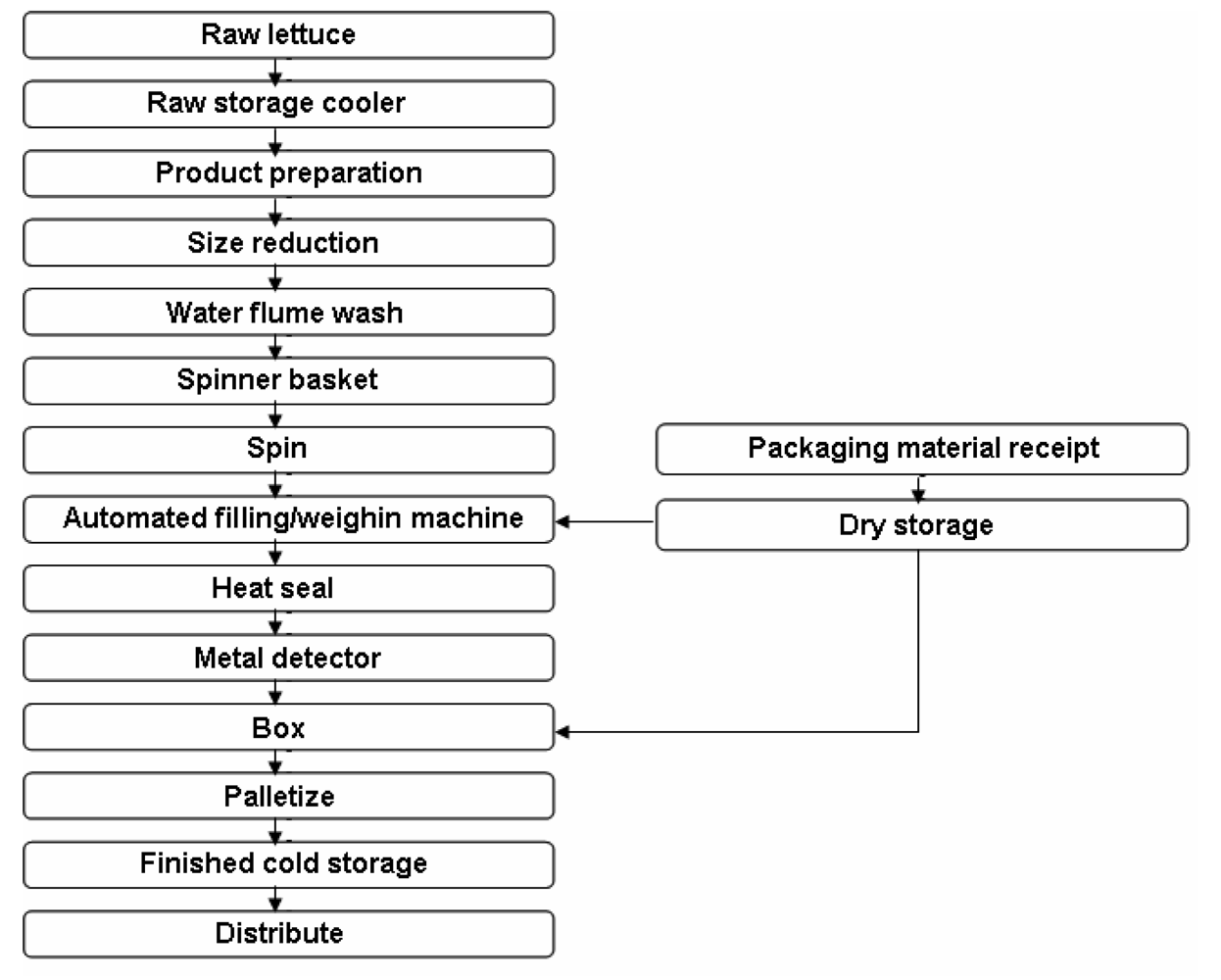
<p>Different organizations (WHO, FAO, USDA, EFSA) recommend the regular consumption of fruit and vegetables for promoting/maintaining good health. Freshly prepared, ready-to-eat fruits and vegetables are a good example of convenient foods within the context of our modern life. Driven by consumers’ tendencies, the fresh-cut fruit and vegetable industry has expanded rapidly in recent years; as a consequence the production and manufacture of these products is at a stage of innovative dynamics. Consumers require high quality and convenience; to harmonize these demands without compromising safety, it is necessary to implement new preservation technologies. Moreover, some of these new preservation technologies aim at energy saving and being environmentally friendly. Fresh-cut are raw fruits and vegetables that have been washed, peeled, sliced, chopped or shredded prior to being packaged for consumption. These products are typically preserved within semi-permeable packages and stored at refrigeration temperatures. The unit operations in use usually led to the destruction of surface cells making available a potentially richer source of nutrients for microorganisms [<xref ref-type="bibr" rid="b1-ijms-10-03076">1</xref>,<xref ref-type="bibr" rid="b2-ijms-10-03076">2</xref>]. These factors combined with high a<sub>w</sub> and either close to neutral (vegetables) or low acidic (many fruits) tissue pH, make easy rapid microbial growth [<xref ref-type="bibr" rid="b3-ijms-10-03076">3</xref>,<xref ref-type="bibr" rid="b4-ijms-10-03076">4</xref>]. A number of important human pathogens can contaminate fresh-cut produce and there has been an augment in the number of food produce-linked foodborne outbreaks in recent years [<xref ref-type="bibr" rid="b5-ijms-10-03076">5</xref>]. In food processing, “mild technologies” are used to describe the technologies for the storage or processing of foods that, in principle, allow to minimize the thermal damage, mechanical and oxidative and chemical and biological contamination that usually accompany such operations unit. Many of these mild preservation technologies aim at being energy saving and environmentally friendly. Ohlsson [<xref ref-type="bibr" rid="b6-ijms-10-03076">6</xref>] suggested that minimal processing techniques have emerged to replace traditional harsher methods of food preservation as they retain nutritional and sensory quality better. “Minimal processing” describes non-thermal technologies to process food in a manner to guarantee the food safety and preservation as well as to preserve as much as possible the fresh-like attributes of fruits and vegetables (<xref ref-type="fig" rid="f1-ijms-10-03076">Figure 1</xref>).</p>
<p>This has stimulated interest in the use of mild preservation procedures and the development of the combined effects of several antimicrobial principles in multifactorial preservation approach or hurdle technology [<xref ref-type="bibr" rid="b7-ijms-10-03076">7</xref>]. This approach is based on the observation that antimicrobial factors act co-operatively or synergistically with their combined antimicrobial effect being greater than the sum of the individual factors. Numerous reports described such observations for a range of different hurdles [<xref ref-type="bibr" rid="b8-ijms-10-03076">8</xref>,<xref ref-type="bibr" rid="b9-ijms-10-03076">9</xref>]. The practical outcome of this is that the combined effect of several relatively mild antimicrobial hurdles may offer the desired shelf life and safety properties while retaining many desirable sensory characteristics.</p>
<p>Targeted application of the hurdle concept has become more available as a result of the important improvements in our understanding of the principles of main preservative factors and their interactions [<xref ref-type="bibr" rid="b10-ijms-10-03076">10</xref>]. On exposure to stressful conditions such as drying, cold, heat and low pH, stressed bacterial cells may lose their viability, become injured, or express adaptive mechanisms that would help them to survive or even continue growth during stress. These mechanisms begin with stress-sensing followed by producing signals that induce the development of a response that aids adaptation. On sensing stress and developing a signal, cells synthesize mechanisms to cope with the emergent hardship. These mechanisms involve modifications of gene expression and protein activities aiming at preventing or reducing injures to cellular structures and components.</p>
<p>In this paper, we review the molecular basis of bacterial stress response to classical and new stressors that deal with some mild technologies and minimal processing. Our goal is to stimulate the research and the development of molecular targets in order to analyse bacterial cell response in minimally processed food and, particularly, “cross protection”. This biological mechanism, might have an important role in optimizing food preservation procedures and improve process sustainability and global quality of fresh-cut produce, from safety to the healthy properties.</p></sec>
<sec>
<label>2.</label>
<title>Bacterial Pathogens</title>
<p>Food-produce contamination can occur during agricultural production (via animals or insects, soil, water, dirty equipment and human handling), harvesting, processing (cutting, shredding, washing, contaminated work surfaces/equipment, hygiene practices of workers), packaging (contaminated packaging materials/equipment) and transportation and distribution.</p>
<p><italic>Salmonella</italic> is the most common cause of disease outbreaks linked to fresh fruit and vegetables. Salmonellae are abundant in faecal material and sewage-polluted water; consequently they may contaminate soil and crops with which they come into contact. Salmonellae from a range of food-produce, including sprouted seeds, cantaloupe melons, tomatoes, unpasteurised citrus juices, rocket and lettuce, have been responsible for several food poisoning outbreaks [<xref ref-type="bibr" rid="b11-ijms-10-03076">11</xref>].</p>
<p><italic>Escherichia coli</italic> O157:H7 is a member of the enterohemorrhagic group of pathogenic <italic>E. coli</italic> that has emerged as a foodborne and waterborne pathogen of major public health concern [<xref ref-type="bibr" rid="b12-ijms-10-03076">12</xref>]. Fresh produce was not considered a significant vector for the transmission of <italic>E. coli</italic> O157:H7 until the mid-1990s, when a series of outbreaks associated with minimally processed horticultural products clearly showed that contamination can occur by indirect routes [<xref ref-type="bibr" rid="b13-ijms-10-03076">13</xref>,<xref ref-type="bibr" rid="b14-ijms-10-03076">14</xref>]. The largest <italic>E. coli</italic> O157:H7 outbreak ocurred in 1996, when &gt;6,000 school children in Japan were infected with <italic>E. coli</italic> O157:H7 from white radish seed sprouts. Since 1993, 26 reported outbreaks of <italic>E. coli</italic> O157:H7 infection have been traced to contaminated lettuce and leafy green vegetables [<xref ref-type="bibr" rid="b15-ijms-10-03076">15</xref>]. A recent multi-state outbreak in the USA linked to bagged fresh spinaches caused approximately 205 confirmed illnesses, 31 cases of hemolytic uremic syndrome and three deaths [<xref ref-type="bibr" rid="b16-ijms-10-03076">16</xref>,<xref ref-type="bibr" rid="b17-ijms-10-03076">17</xref>]. This outbreak was followed by two restaurant associated outbreaks linked to the consumption of pre-washed lettuce [<xref ref-type="bibr" rid="b18-ijms-10-03076">18</xref>]. These recent outbreaks have highlighted the dangers of centralised distribution and the great distances that fresh produce travels.</p>
<p>The Gram-positive bacterium <italic>Listeria monocytogenes</italic> is a food-borne pathogen of both public health and food safety significance. <italic>L. monocytogenes</italic> is widespread on plants and on agricultural environment generally, and is capable of surviving a variety of environmental stresses, including refrigeration temperatures [<xref ref-type="bibr" rid="b19-ijms-10-03076">19</xref>], gas atmospheres commonly present within modified atmosphere packaging (MAP) produce and relatively low pH. Although there is a large amount of literature dedicated to researches concerning with the isolation, attachment, survival and growth of <italic>L. monocytogenes</italic> on food-produce [<xref ref-type="bibr" rid="b20-ijms-10-03076">20</xref>,<xref ref-type="bibr" rid="b21-ijms-10-03076">21</xref>], only two fresh-cut produce related listeriosis outbreaks have been documented [<xref ref-type="bibr" rid="b22-ijms-10-03076">22</xref>,<xref ref-type="bibr" rid="b23-ijms-10-03076">23</xref>].</p></sec>
<sec>
<label>3.</label>
<title>Key Factors Affecting the Survival and Growth of Pathogens</title>
<p>Pathogen survival and growth on food-produce is influenced by a number of interdependent factors, principally storage temperature, product type/combinations, minimal processing operations (e.g. slicing, shredding, washing and decontamination treatments), mild technologies, package atmosphere and competition from the natural microflora present on food-produce. First, each product type has an exclusive combination of compositional and physical characteristics and will have specific growing, harvesting and processing practices, and storage conditions; pathogen growth on food-produce varies significantly with the type of product [<xref ref-type="bibr" rid="b24-ijms-10-03076">24</xref>,<xref ref-type="bibr" rid="b25-ijms-10-03076">25</xref>]. Storage of food-produce at adequate refrigeration temperatures is probably the single most important factor affecting survival and growth of pathogens. Washing with tap water removes soil and other debris, some of the surface microflora, cell contents and nutrients released throughout slicing that support growth of microorganisms [<xref ref-type="bibr" rid="b26-ijms-10-03076">26</xref>]. However, while washing in tap water removes bacteria from exposed surfaces, substantial numbers will remain in hollows at the connection of epidermal cells and in folds in the epidermis [<xref ref-type="bibr" rid="b27-ijms-10-03076">27</xref>–<xref ref-type="bibr" rid="b29-ijms-10-03076">29</xref>]. In addition, due to the re-use of wash water in industry, washing may result in bacterial enrichment and cross-contamination of products rather than decontamination [<xref ref-type="bibr" rid="b3-ijms-10-03076">3</xref>,<xref ref-type="bibr" rid="b30-ijms-10-03076">30</xref>]. A variety of antimicrobial wash solutions have been used to diminish populations of microorganisms on fresh produce. Chlorine added to water as a solid, liquid or gas is the most frequently used disinfectant for fresh fruits and vegetables [<xref ref-type="bibr" rid="b30-ijms-10-03076">30</xref>,<xref ref-type="bibr" rid="b31-ijms-10-03076">31</xref>]; however, a wide variety of other disinfectants, including acidic electrolysed water [<xref ref-type="bibr" rid="b32-ijms-10-03076">32</xref>], peroxyacetic acid [<xref ref-type="bibr" rid="b33-ijms-10-03076">33</xref>], chlorine dioxide [<xref ref-type="bibr" rid="b34-ijms-10-03076">34</xref>], hydrogen peroxide [<xref ref-type="bibr" rid="b35-ijms-10-03076">35</xref>], organic acids [<xref ref-type="bibr" rid="b36-ijms-10-03076">36</xref>], trisodium phosphate [<xref ref-type="bibr" rid="b34-ijms-10-03076">34</xref>] and ozone [<xref ref-type="bibr" rid="b37-ijms-10-03076">37</xref>] have been also evaluated [<xref ref-type="bibr" rid="b38-ijms-10-03076">38</xref>]. Natural antimicrobials from edible plants such as oilseeds, herbs, spices, fruit and vegetables, have been studied for their potential as possible replacements for chemical additives because of their safety for human consumption and broad acceptance from consumers [<xref ref-type="bibr" rid="b39-ijms-10-03076">39</xref>,<xref ref-type="bibr" rid="b40-ijms-10-03076">40</xref>]. Phenolic compounds present in plant essential oils (EOs) have been shown to possess antimicrobial activity and some are classified as generally recognised as safe (GRAS), and consequently may be useful to prevent post-harvest growth of spoilage and pathogenic bacteria [<xref ref-type="bibr" rid="b41-ijms-10-03076">41</xref>]. Efforts to improve the overall effectiveness of the washing step by the use of classical physical treatments, such as mild heat or ethanol vapours, may enhance pathogen destruction. Novel decontamination techniques, including ultra-violet (UV) irradiation, high-pressure treatment, pulsed electric fields, microwave, high intensity pulsed light and thermal destruction using condensing steam, warrant supplementary investigation [<xref ref-type="bibr" rid="b42-ijms-10-03076">42</xref>]. When a fresh-cut product is packaged, it continues to breath thereby modifying the gas atmosphere inside the package, hence the term modified atmosphere packaging (MAP). Ideally, O<sub>2</sub> levels will fall from 21% in air to 2–5%, and CO<sub>2</sub> levels will increase to the 3–10% range. The gas mixtures control the product’s biochemical and enzymatic reactions, inhibit the growth of microorganisms and make longer the shelf-life.</p>
<p>MAP produce harbour large populations of microorganisms including pseudomonads, lactic acid bacteria (LAB) and Enterobacteriaceae [<xref ref-type="bibr" rid="b28-ijms-10-03076">28</xref>,<xref ref-type="bibr" rid="b43-ijms-10-03076">43</xref>]. The background microflora supply indicators of temperature abuse largely by causing detectable spoilage, and levels can vary considerably for each product and during storage. LAB can exert antibacterial effects due to one or more of the following mechanisms: lowering the pH; generating H<sub>2</sub>O<sub>2</sub> [<xref ref-type="bibr" rid="b44-ijms-10-03076">44</xref>]; competing for nutrients; and by producing antimicrobial compounds, such as bacteriocins [<xref ref-type="bibr" rid="b45-ijms-10-03076">45</xref>]. The bacteriocins alone were also used in biocontrol of fresh-cut microflora. One other biotic factor to control bacterial pathogens on fresh-cut produce is represented by the use of bacteriophages.</p></sec>
<sec>
<label>4.</label>
<title>Stressors and Related Bacterial Stress Response</title>
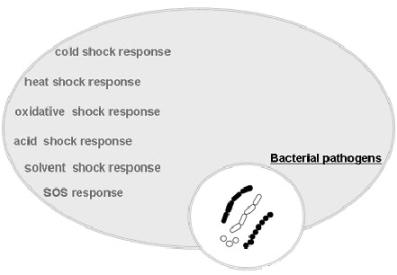
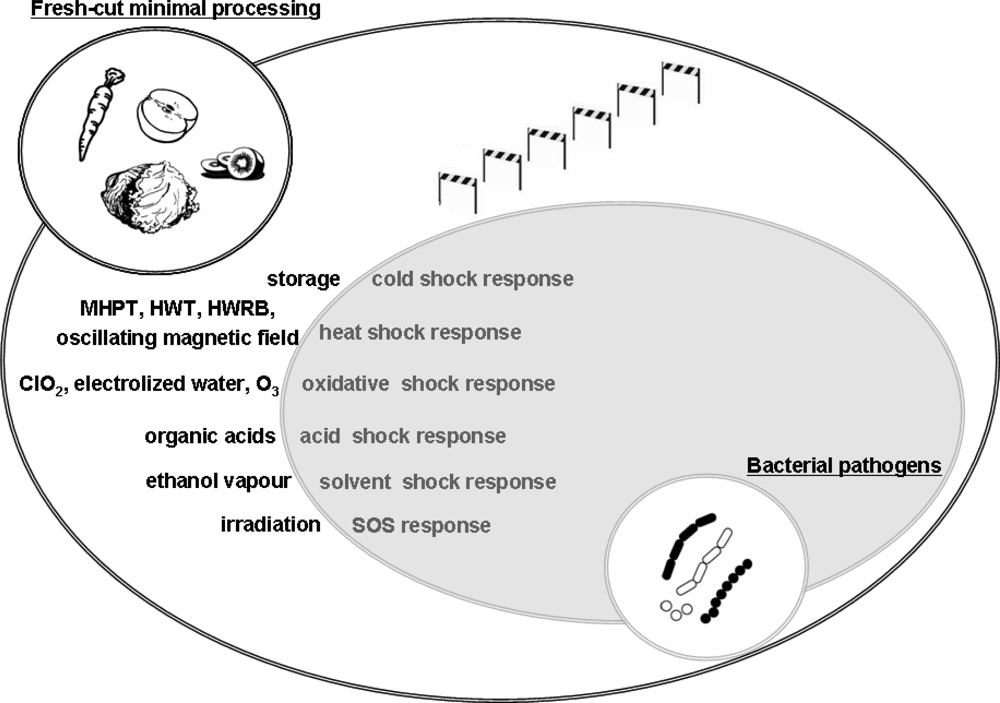
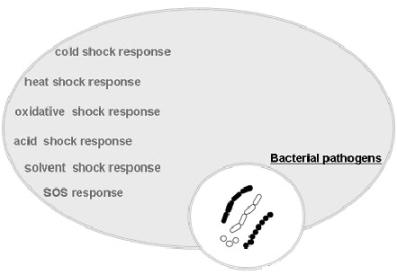
<p>Acid adapted <italic>L. monocytogenes</italic>, <italic>Salmonella</italic> and <italic>E. coli</italic> O157:H7 were shown to survive significantly better in acidic foods such as fruit juices, than their non-acid adapted counterpart cells [<xref ref-type="bibr" rid="b46-ijms-10-03076">46</xref>,<xref ref-type="bibr" rid="b47-ijms-10-03076">47</xref>]. This is due to a specific stress response characteristic of acid stressor, that involved the induction of a specific subset of genes organized into regulons, constituting the acid shock stimulon. A general overview of the stress responses to each single key factor affecting pathogen survival, is shown in <xref ref-type="fig" rid="f2-ijms-10-03076">Figure 2</xref>.</p>
<sec>
<label>4.1.</label>
<title>Cold Stress</title>
<p>Exposure to cold temperatures following harvest in order to minimize and/or inhibit the effects of wounding stress is recognized as one of the principal factors controlling the quality of fresh-cut leafy vegetables [<xref ref-type="bibr" rid="b48-ijms-10-03076">48</xref>,<xref ref-type="bibr" rid="b49-ijms-10-03076">49</xref>]. Although 0 °C is usually the desirable temperature for most fresh-cut products, in practice many of them are shipped and marketed at temperatures ranging from 5 to 10 °C [<xref ref-type="bibr" rid="b50-ijms-10-03076">50</xref>].</p>
<p>In response to temperature downshift, a number of changes take place in prokaryotic cellular physiology such as, (i) decrease in membrane fluidity, (ii) stabilization of secondary structures of nucleic acids leading to reduced efficiency of mRNA translation and transcription, (iii) inefficient folding of some proteins, and (iv) hampered ribosome function [<xref ref-type="bibr" rid="b51-ijms-10-03076">51</xref>]. A number of cold shock proteins are induced to cope with these harmful effects of temperature downshift. For all organisms, maintenance of functional cell membranes is a limiting factor for survival. Upon cold shock the physical status of biological membranes is altered from being fluid to becoming rigid. In a process generally termed homeoviscous adaptation, with decreasing temperature, bacteria incorporate fatty acids of lower melting points into lipids in a species-specific mode to re-establish membrane integrity and hence function. In this picture, the introduction of double bonds into acyl chains can either be achieved anaerobically during fatty acids synthesis or aerobically by modification of readily synthesized fatty acids through fatty acid desaturase enzymes. Transcription and translation are closely coupled in bacterial cells. However, transcription machinery and ribosomes generally occupy different subcellular regions in bacteria such as <italic>Escherichia coli</italic> and <italic>Bacillus subtilis</italic>, indicating the need for (a) mechanism(s) coupling these processes. A prime function of this mechanism(s) would be ensuring the transfer of unfolded mRNA from the nucleoid to the ribosomes, which need linear mRNA for the initiation of translation. During conditions of a sudden decrease in temperature (cold shock), secondary structures in mRNA would pose an even greater problem for the initiation process. Two conserved classes of proteins, cold shock proteins (CSPs) and cold induced RNA helicases (CSHs), appear to be key players in the prevention of secondary mRNA structures and in transcription/translation coupling. CSPs are general mRNA-binding proteins, and like CSH-type RNA helicases, the presence of at least one csp gene in the cell is essential for viability [<xref ref-type="bibr" rid="b52-ijms-10-03076">52</xref>]. <italic>E. coli</italic> contains nine CSPs (CspA to CspI), of which four (CspA, -B, -G, and -I) are cold shock inducible [<xref ref-type="bibr" rid="b53-ijms-10-03076">53</xref>]. CspA, CspC, and CspE are RNA-binding proteins which function as transcriptional antiterminators by preventing the formation of secondary structures in the nascent RNA. Csp-induced transcriptional antitermination is responsible for the increased expression of several genes [<xref ref-type="bibr" rid="b54-ijms-10-03076">54</xref>,<xref ref-type="bibr" rid="b55-ijms-10-03076">55</xref>]. <italic>B. subtilis</italic> contains three CSPs (CspB, -C, and -D); CspB is essential for cellular growth in a strain lacking CspC and CspD and plays an important role for efficient protein synthesis at optimal and low temperatures [<xref ref-type="bibr" rid="b56-ijms-10-03076">56</xref>], while CspB and CspC are major stationary phase-induced proteins [<xref ref-type="bibr" rid="b57-ijms-10-03076">57</xref>].</p></sec>
<sec>
<label>4.2.</label>
<title>Heat Stress</title>
<p>The use of hot water or steam may be a possibility to replace disinfection. Martín-Diana <italic>et al.</italic> [<xref ref-type="bibr" rid="b58-ijms-10-03076">58</xref>] reported that short time exposure of fresh-cut (FC) lettuce to water steam reduced the respiration rate (RR), partially inactivated browning-related enzymes, and kept the mesophilic load as low as with a chlorine treatment. In FC fruits, mild heat pre-treatments (MHPT) (40 °C/70 min or 46 °C for 75 min) were effective in inducing firmness and avoiding browning of the cut surface while preserving their nutritional quality [<xref ref-type="bibr" rid="b59-ijms-10-03076">59</xref>,<xref ref-type="bibr" rid="b60-ijms-10-03076">60</xref>]. In the post-harvesting of fresh-cut vegetables hot water immersion treatment (HWT) and hot water rinsing and brushing (HWRB) technologies were successfully used [<xref ref-type="bibr" rid="b61-ijms-10-03076">61</xref>]. HWT is applied at temperatures between 43 °C and 53 °C for periods of several minutes for the fresh cut, while HWRB is employed commercially for 10-25 s at temperatures between 48 °C and 63 °C. Additionally, oscillating magnetic fields (ohmic heating, dielectric heating, microwaves) represent alternative ways to heating food matrices. The application of high temperatures has been widely used for the elimination of foodborne pathogens. This is due to the effectiveness of heat and its ability to cause damage to diverse structures and components in microbial cells including outer and cytoplasmic membranes, RNA and DNA. It also causes protein denaturation leading to destruction of enzyme activity and enzyme-controlled metabolism in microorganisms [<xref ref-type="bibr" rid="b62-ijms-10-03076">62</xref>,<xref ref-type="bibr" rid="b63-ijms-10-03076">63</xref>]. Traditional heat treatment techniques widely adopted in food industry, such as pasteurization and sterilization are too harsh to be resisted by vegetative bacterial cells. An interesting concept has been also proposed on sensing environmental stresses including heat. According to this theory, cells produce extracellular proteins to sense stress and act as “alarmones” of the emergent environmental changes [<xref ref-type="bibr" rid="b64-ijms-10-03076">64</xref>]. The production of these extracellular components are suggested to provide early warning of stress compared to the cytoplasmic membrane and ribosomes. Following stress-sensing, cells set up strategies to cope with the emergent hardship. These mechanisms involve changes of gene expression and protein activities aiming at preventing or reducing damage to cellular structures and components. An important change is the induction of the synthesis of the so-called “heat shock proteins” (HSPs) [<xref ref-type="bibr" rid="b65-ijms-10-03076">65</xref>]. These are highly conserved proteins that act as molecular chaperones or proteases affecting protein folding, repair and degradation under normal and stress conditions [<xref ref-type="bibr" rid="b66-ijms-10-03076">66</xref>]. For example, during heat stress, several HSPs such as DnaJ, DnaK, GrpE and GroEL function as chaperones preventing or repairing protein misfolding and thus ensuring their proper functioning. Whereas, other HSPs including ClpP, ClpX and Lon act as proteases catalyzing the degradation of misfolded proteins generated by exposure to stress. Both functions of HSPs help to provide cells with functional proteins which allow survival or growth during heat stress. In a study on heat shock proteins synthesis and heat resistance of S<italic>almonella typhimurium</italic>, Mackey and Derrick [<xref ref-type="bibr" rid="b67-ijms-10-03076">67</xref>] found four important heat shock proteins, with molecular weights ranging from 25 to 83 KDa, and correlated them with DnaK and GroEL reported in <italic>E. coli</italic>. The chaperone GroEL was found to diminish heat inactivation of a range of enzymes <italic>in vitro</italic> [<xref ref-type="bibr" rid="b68-ijms-10-03076">68</xref>].</p></sec>
<sec>
<label>4.3.</label>
<title>Acid and Solvent Stress</title>
<p>A decontamination step with lactic acid was evaluated to reduce the microbial contamination of minimally processed vegetables [<xref ref-type="bibr" rid="b69-ijms-10-03076">69</xref>]. The antimicrobial effect of 1% and 2% lactic acid was established in potable tap water. Citric acid has been widely accepted as effective in reducing superficial pH of cut fruits [<xref ref-type="bibr" rid="b70-ijms-10-03076">70</xref>]. Well documented is the antimicrobial effect of the treatments based on calcium salts on fruits and vegetables [<xref ref-type="bibr" rid="b58-ijms-10-03076">58</xref>]. While calcium has a prevalent technological importance, on the other hand, organic calcium salts, with lowering pH (i.e. calcium lactate), may have antimicrobial properties [<xref ref-type="bibr" rid="b71-ijms-10-03076">71</xref>].</p>
<p>In recent years, the acid stress response of several prokaryotes has been studied with both proteomics and transcriptomics approaches. A few reports describe the use of these approaches to study the organic acid stress response caused by lactate [<xref ref-type="bibr" rid="b73-ijms-10-03076">73</xref>], acetate [<xref ref-type="bibr" rid="b74-ijms-10-03076">74</xref>], propionate [<xref ref-type="bibr" rid="b74-ijms-10-03076">74</xref>] and formate [<xref ref-type="bibr" rid="b75-ijms-10-03076">75</xref>]. In other prokaryotes some enzymatic-transport systems have been found to play a role in pH control or in the maintenance of the proton motive force: a proton-translocating F<sub>1</sub> F<sub>0</sub> -ATPase [<xref ref-type="bibr" rid="b76-ijms-10-03076">76</xref>]; several sodium-proton antiporters [<xref ref-type="bibr" rid="b77-ijms-10-03076">77</xref>]; amino acid decarboxylases that use an intracellular hydrogen ion for the decarboxylation of an imported amino acid [<xref ref-type="bibr" rid="b76-ijms-10-03076">76</xref>,<xref ref-type="bibr" rid="b78-ijms-10-03076">78</xref>]. Several theories have been postulated to explain the toxic effect of organic acids in more detail. One of these considers organic acids as uncouplers that transport protons towards the inside of the cell, which is a pH-driven process. Eventually, this influx could lead to a complete dissipation of the proton motive force [<xref ref-type="bibr" rid="b79-ijms-10-03076">79</xref>]. A second aspect relates to the deleterious effects of the lower intracellular pH, caused by the lactic acid. However, whereas many organisms aim at maintaining a constant intracellular pH [<xref ref-type="bibr" rid="b80-ijms-10-03076">80</xref>], most anaerobic fermenting species avoid a basic pH keeping a lower intracellular pH, and, as a result, increasing their tolerance to organic acids [<xref ref-type="bibr" rid="b81-ijms-10-03076">81</xref>]. A third factor explaining the inhibitory effect of organic acids is the intracellular accumulation of anions, which could lead to both end-product inhibition and a loss of water activity (a<sub>w</sub>) [<xref ref-type="bibr" rid="b82-ijms-10-03076">82</xref>].</p>
<p>A link between acid, ethanol and stress response has been demonstrated in a number of Gram-positive bacteria including food-borne pathogens. The expression of some stress inducible genes identified so far in bacteria is also affected by low pH values and ethanol, suggesting the intersection of different regulatory pathways and overlapping control of gene expression. For instance, acid and solvents such as ethanol and buthanol, induces several heat shock proteins, including DnaK and GroEL. Moreover, the Clp-ATP dependent proteases which degrade aberrant and nonfunctional proteins, arising from stress conditions are also responsible for adaptation to multiple stresses and are inducible by low pH or high ethanol [<xref ref-type="bibr" rid="b83-ijms-10-03076">83</xref>].</p>
<p>Ethanol kills organisms by denaturing their proteins and dissolving their lipids and is effective against most bacteria, but is ineffective against bacterial spores [<xref ref-type="bibr" rid="b84-ijms-10-03076">84</xref>]. Additionally, ethanol causes water stress by lowering a<sub>w</sub> and thereby interferes with hydrogen bonds within and between hydrated cell components, ultimately disrupting enzyme and membrane structure and function [<xref ref-type="bibr" rid="b85-ijms-10-03076">85</xref>].</p>
<p>Plotto <italic>et al.</italic> [<xref ref-type="bibr" rid="b86-ijms-10-03076">86</xref>] tested ethanol vapours on fresh cut fruit and showed that at lower application rates (8–10 h exposure), ethanol could be used as a safe microbial control in a fresh-cut production sanitation system. Ethanol vapors applied to whole apples reduced ethylene and CO<sub>2</sub> production of fresh-cut apples, and their shelf life was increased due to maintenance of visual quality [<xref ref-type="bibr" rid="b87-ijms-10-03076">87</xref>].</p></sec>
<sec>
<label>4.4.</label>
<title>Oxidative Stress</title>
<p>Chlorine dioxide is a stable dissolved gas, having a high oxidation and penetration power; ClO<sub>2</sub> is a strong bactericide: with minimal contact time, it is highly efficient against pathogenic organisms such as <italic>Legionella</italic>, <italic>Amoebal cysts</italic>, <italic>Giardia cysts</italic>, <italic>E. coli</italic>, and <italic>Cryptosporidium</italic> [<xref ref-type="bibr" rid="b88-ijms-10-03076">88</xref>]. Hyrdogen peroxide is a powerful bactericide (including spores) and oxidant, being able to generate other cytotoxic oxidising chemical species such as hydroxyl radicals [<xref ref-type="bibr" rid="b89-ijms-10-03076">89</xref>]. Electrolyzed water (EW) is formed by adding a very small amount of NaCl (usually about 0.1%) to pure water, and conducting a current across an anode and cathode [<xref ref-type="bibr" rid="b90-ijms-10-03076">90</xref>], the cathode area produces alkaline reducing water while the anode area produces acidic oxidizing water [<xref ref-type="bibr" rid="b90-ijms-10-03076">90</xref>]; upon release of O•, O<sub>3</sub> acts as a strong oxidizing agent being very effective in destroying microorganisms [<xref ref-type="bibr" rid="b91-ijms-10-03076">91</xref>]. O<sub>3</sub> destroys microorganisms by the progressive oxidation of vital cell components, preventing microbial growth and extending the shelf-life of many fruit and vegetables, and its industrial use is increasing [<xref ref-type="bibr" rid="b92-ijms-10-03076">92</xref>].</p>
<p>Oxidative stress is a key stress in bacteria, caused by an imbalance between intracellular oxidant concentration, cellular antioxidant protection and oxidative change of macromolecules (membrane lipids, proteins and DNA repair enzymes) [<xref ref-type="bibr" rid="b93-ijms-10-03076">93</xref>,<xref ref-type="bibr" rid="b94-ijms-10-03076">94</xref>]. The reactive oxygen species (ROS) and nitrogen species (RNS) are the main causes of oxidative stress [<xref ref-type="bibr" rid="b95-ijms-10-03076">95</xref>]. They are principally constituted by the hydroxyl radical (<sup>•</sup>OH), the superoxide anion (O<sub>2</sub><sup>−</sup>), hydrogen peroxide (H<sub>2</sub>O<sub>2</sub>), organic hydroperoxide (ROOH), peroxynitrite (OONO) and nitric oxide (NO). ROS and RNS cause damages to proteins [<xref ref-type="bibr" rid="b96-ijms-10-03076">96</xref>], DNA molecules [<xref ref-type="bibr" rid="b97-ijms-10-03076">97</xref>], RNA and lipids leading to negative repercussions of the cellular metabolism functions [<xref ref-type="bibr" rid="b98-ijms-10-03076">98</xref>]. The toxicity of ROS/RNS discloses the significant role of competent protection subsystems, for instance the detoxification subsystem that numbers enzymes classified with regard to their substrates, or thioredoxin that help in the cellular defense against several oxidative stresses [<xref ref-type="bibr" rid="b99-ijms-10-03076">99</xref>]. Catalases are common enzymes found in almost all-living organisms that catalyze the decomposition of hydrogen peroxide to produce oxygen and water [<xref ref-type="bibr" rid="b100-ijms-10-03076">100</xref>]. Peroxidases reduce hydrogen or organic peroxides into water and alcohol moiety. This class of enzymes includes a wide number of phylogenetically unrelated families such as peroxiredoxins [<xref ref-type="bibr" rid="b101-ijms-10-03076">101</xref>], rubrerythrins [<xref ref-type="bibr" rid="b102-ijms-10-03076">102</xref>], glutathione-peroxidases [<xref ref-type="bibr" rid="b103-ijms-10-03076">103</xref>] or haloperoxidases [<xref ref-type="bibr" rid="b104-ijms-10-03076">104</xref>]. Superoxide dismutases (SOD) dismute superoxide into hydrogen peroxide and oxygen [<xref ref-type="bibr" rid="b105-ijms-10-03076">105</xref>]. An additional mechanism lately reported involves superoxide reductases (SOR), that are non-heme iron proteins [<xref ref-type="bibr" rid="b106-ijms-10-03076">106</xref>]. The latter catalyzes the one-electron reduction of superoxide into hydrogen peroxide. Moreover, RNS-scavenging enzymes are essentially globins and nitric oxide reductases [<xref ref-type="bibr" rid="b107-ijms-10-03076">107</xref>].</p></sec>
<sec>
<label>4.5.</label>
<title>Osmotic Stress</title>
<p>The inner osmotic pressure of a bacterial cell is normally maintained higher than that of the surrounding medium [<xref ref-type="bibr" rid="b108-ijms-10-03076">108</xref>,<xref ref-type="bibr" rid="b109-ijms-10-03076">109</xref>], and this is generally referred to as “turgor pressure”. To maintain this turgor pressure in a medium with a high concentration of solutes and to mitigate the osmotic stress resulting from low water availability, microbial cells tend to increase their internal cytoplasmic solute concentration through different mechanisms [<xref ref-type="bibr" rid="b110-ijms-10-03076">110</xref>]. Water availability in a food environment is usually assessed by measuring the water activity (a<sub>w</sub>). Water activity (a<sub>w</sub>) is defined as the ratio of the water vapour pressure of the food or solution to that of pure water at the same temperature. It indicates the quantity of water available in a material for microbial growth. The values of water activity are represented in a scale range between 0 (no available water) and 1 (pure water). While most bacteria show rapid growth at high a<sub>w</sub> (0.99), microbial growth does not occur at a<sub>w</sub> below 0.6 [<xref ref-type="bibr" rid="b111-ijms-10-03076">111</xref>]. Several osmosensors are known to be involved in osmotic stress induced responses [<xref ref-type="bibr" rid="b112-ijms-10-03076">112</xref>]. As mentioned above, the solute concentration in the bacterial cytoplasm is normally maintained above that of the external environment. However, immediately, following an osmotic up-shift (decrease in a<sub>w</sub>) in the environment, bacterial cells respond by activation of transporters that aid the cell increase the internal solute concentration by either uptake of inorganic ions into the cell or synthesis and concentration of specific organic solutes to counter the osmotic stress [<xref ref-type="bibr" rid="b113-ijms-10-03076">113</xref>]. Under mild osmotic stress, only the ionic solutes are accumulated, whereas other compatible solutes become progressively more important on exposure to severe osmotic stress [<xref ref-type="bibr" rid="b114-ijms-10-03076">114</xref>]. These accumulated solutes must not interfere with biochemical processes within the cell and they are thus termed “compatible” solutes [<xref ref-type="bibr" rid="b108-ijms-10-03076">108</xref>]. Potassium ions (K<sup>+</sup>), glutamate (as ionic solutes), glycine betaine, trehalose and proline (as non ionic solutes) are the most important compatible solutes accumulated by bacterial cells [<xref ref-type="bibr" rid="b114-ijms-10-03076">114</xref>,<xref ref-type="bibr" rid="b115-ijms-10-03076">115</xref>]. Members of the <italic>Enterobactereaceae</italic> family are reported to synthesize glutamate and trehalose, while K<sup>+</sup>, glycine betaine and proline are taken up from the medium [<xref ref-type="bibr" rid="b110-ijms-10-03076">110</xref>]. Accumulation of K<sup>+</sup> during osmotic stress takes place in the initial response, which is then accompanied by increased synthesis of glutamate to preserve electroneutrality in the cytoplasm. This is followed by the accumulation of other compatible solutes such as glycine betaine, proline and trehalose [<xref ref-type="bibr" rid="b114-ijms-10-03076">114</xref>,<xref ref-type="bibr" rid="b115-ijms-10-03076">115</xref>]. The accumulation of the latter molecules was found to influence that of the originally accumulated compatible solutes since increased levels of trehalose were associated with decreased accumulation of K<sup>+</sup> and glutamate [<xref ref-type="bibr" rid="b114-ijms-10-03076">114</xref>]. The above mechanism of solute accumulation appears to be affected by environmental temperatures as trehalose accumulation was reported to be enhanced at higher temperatures (45°C) in <italic>S. typhimurium</italic> [<xref ref-type="bibr" rid="b116-ijms-10-03076">116</xref>].</p></sec>
<sec>
<label>4.6.</label>
<title>Irradiation</title>
<p>Radiations have been used both to delay ripening-associated processes and to diminish microorganism growth. Several studies have been published, and in recent times, UV-C has been used as an alternative treatment to preserve the quality of different fruits and vegetables [<xref ref-type="bibr" rid="b117-ijms-10-03076">117</xref>]. The use of non-ionizing, germicidal and artificial UV at a wavelength of 190–280nm (UV-C) was found to be effective for surface decontamination of fresh-cut products. Lado and Yousef [<xref ref-type="bibr" rid="b118-ijms-10-03076">118</xref>] reported that UV-C radiation from 0.5 to 20 kJm<sup>−2</sup> inhibited microbial growth by inducing the formation of pyrimidine dimers which alter the DNA helix and block microbial cell replication. Therefore, cells which are unable to repair radiation damaged DNA die and sub-lethally injured cells are often subject to mutations. Treatment with ultraviolet light is simple to use and lethal to most types of microorganisms [<xref ref-type="bibr" rid="b119-ijms-10-03076">119</xref>]. Intense light pulses (ILP) are an interesting decontamination method for food surfaces approved by the US Food and Drug Administration (FDA) that could be appropriate for disinfecting fresh-cut produce. ILP kills microorganisms using short time (from 85 ns to 0.3 ms) high frequency pulses (from 0.45 to 15 Hz) and energy per pulse ranging from 3 to 551 J of an intense broad spectrum, rich in UV-C light [<xref ref-type="bibr" rid="b120-ijms-10-03076">120</xref>]. This treatment seems to induce structural changes of microbial DNA, similarly to the effect caused by continuous UV sources, although further mechanisms seem to be involved [<xref ref-type="bibr" rid="b121-ijms-10-03076">121</xref>].</p>
<p>Irradiation of DNA with UV light produces a variety of photoproducts, of which the main species are cyclobutane pyrimidine dimers (CPDs) and pyrimidine-pyrimidone. Both lesions, if not repaired, provoke mutagenesis and cell death. To survive in a UV-rich environment, <italic>E. coli</italic> developed an inducible response known as the SOS response regulated by the <italic>recA-lexA</italic> regulon. The SOS response aids survival by combining increased expression of genes involved in Nucleotide Excision Repair (NER) and recombinational repair mechanisms. The genes <italic>recA</italic> for the recombination enzyme, RecA, and <italic>uvrA</italic> and <italic>uvrB</italic> for subunits of the UvrABC NER enzymes, UvrA and UvrB, have SOS boxes that are bound by the LexA repressor under physiological conditions. Upon UV irradiation, the constitutive amount of RecA protein binds single-stranded DNA resulting from replication blocks and acts as a coprotease for inactivation of LexA, consequently the levels of RecA, UvrA and UvrB increase. Upon completion of repair, the inducing signal disappears and cells return to the preinduction state [<xref ref-type="bibr" rid="b122-ijms-10-03076">122</xref>].</p></sec>
<sec>
<label>4.7.</label>
<title>High Pressure Stress</title>
<p>High pressure treatments of fruits and vegetables have been applied on processed products typically having been processed to some degree [<xref ref-type="bibr" rid="b123-ijms-10-03076">123</xref>,<xref ref-type="bibr" rid="b124-ijms-10-03076">124</xref>]. High pressures have been used to inhibit enzymes, microorganisms and spores, and to preserve aroma compounds [<xref ref-type="bibr" rid="b125-ijms-10-03076">125</xref>]. Yanga <italic>et al.</italic> [<xref ref-type="bibr" rid="b126-ijms-10-03076">126</xref>] indicate an undesirable effect of hyperbaric storage on the synthesis of peach volatiles immediately after storage, however, the post-storage potential for recovery of normal synthesis has not been assessed.</p>
<p>Pressure effects on any physiological or biochemical system basically result from the compression of the system, according to Le Chatelier’s principle, which states that at equilibrium a system tends to minimise the effects of troubling external factors. In lipid membranes, a pressure increase of 1,000 atm is equivalent to a temperature decrease of 20 °C [<xref ref-type="bibr" rid="b127-ijms-10-03076">127</xref>]. Pressure increase and temperature decrease result in similar effects, i.e. by ordering structures and reducing flexibility in lipids, nucleic acids and carbohydrates [<xref ref-type="bibr" rid="b128-ijms-10-03076">128</xref>]. For proteins, pressure and temperature act in synergy and promote protein denaturation and loss of function [<xref ref-type="bibr" rid="b129-ijms-10-03076">129</xref>]. In <italic>E.coli</italic> O 157:H7, high pressure affected the transcription of many genes involved in a variety of intracellular mechanisms, including the stress response, the thioldisulfide redox system and the Fe-S cluster assembly [<xref ref-type="bibr" rid="b130-ijms-10-03076">130</xref>].</p></sec>
<sec>
<label>4.8.</label>
<title>Modified Atmosphere Packaging (MAP)</title>
<p>Producers mainly rely on produce sanitation, refrigeration temperatures, and, more recently MAP to extend shelf life and to reduce microbial load [<xref ref-type="bibr" rid="b131-ijms-10-03076">131</xref>]. Modifying the internal atmosphere of a package lowers the oxygen (O<sub>2</sub>) concentration, from 20% to 0%, hence slowing down the growth of aerobic organisms and the speed of oxidation reactions. The removed oxygen can be replaced with nitrogen (N<sub>2</sub>), commonly acknowledged as an inert gas, or carbon dioxide (CO<sub>2</sub>), which can inhibit the growth of bacteria. Although there is a wide literature describing how MAP affects microbial load on various food-produce [<xref ref-type="bibr" rid="b132-ijms-10-03076">132</xref>,<xref ref-type="bibr" rid="b133-ijms-10-03076">133</xref>], little is known about how growth under subatmospheric oxygen partial pressures would impact the enteric pathogens’ ability to breach the gastric stomach barrier and increase the risk of disease. CO<sub>2</sub> inhibits the growth of bacteria by (i) affecting cellular enzymes and decreasing the rate of metabolic reactions, (ii) CO<sub>2</sub> product repression of carboxylases and decarboxylases, (iii) disrupting cell membrane structural integrity and/or specific functions, (iv) decreasing the substrate and intra-cellular pH, or by a combination of these mechanisms [<xref ref-type="bibr" rid="b134-ijms-10-03076">134</xref>]. The extent of inhibition by CO<sub>2</sub> varies with the microorganism, CO<sub>2</sub> concentration, temperature of incubation, and type of food [<xref ref-type="bibr" rid="b134-ijms-10-03076">134</xref>,<xref ref-type="bibr" rid="b135-ijms-10-03076">135</xref>].</p></sec>
<sec>
<label>4.9.</label>
<title>Biological Compounds</title>
<p>Greater consumer awareness and concern regarding synthetic chemical additives have led researchers and food processors to look for natural food additives with a broad spectrum of antimicrobial activity [<xref ref-type="bibr" rid="b136-ijms-10-03076">136</xref>]. This is an heterogeneous category: some examples. Plant essential oils and natural aroma compounds are gaining interest for their potential as preservative ingredients or decontaminating treatments, as they have GRAS status and a wide acceptance from consumers [<xref ref-type="bibr" rid="b137-ijms-10-03076">137</xref>,<xref ref-type="bibr" rid="b138-ijms-10-03076">138</xref>]. The antimicrobial components are commonly found in the essential oil fractions and it is well established that many have a wide spectrum of antimicrobial activity, with potential for control of <italic>L. monocytogenes</italic> and spoilage bacteria within food systems [<xref ref-type="bibr" rid="b139-ijms-10-03076">139</xref>]. Oregano (<italic>Origanum vulgare</italic>) and thyme (<italic>Thymus vulgaris</italic>) are amongst the most active EOs, while lemon balm (<italic>Melissa officinalis</italic>) and marjoram (<italic>Origanum majorana</italic>) exhibit a good antimicrobial action against Gram-positive and Gram-negative bacteria, respectively [<xref ref-type="bibr" rid="b140-ijms-10-03076">140</xref>]. Chitosan, which is a cationic polysaccharide extracted from source of shellfish exoskeletons or the cell walls of some microorganisms and fungi, has been used to preserve the quality of post-harvest fruits and vegetables [<xref ref-type="bibr" rid="b141-ijms-10-03076">141</xref>,<xref ref-type="bibr" rid="b142-ijms-10-03076">142</xref>]. Martin-Diana <italic>et al.</italic> [<xref ref-type="bibr" rid="b143-ijms-10-03076">143</xref>] tested whey permeate at different concentrations (0.5%, 1.5% and 3%) in the washing treatment of lettuce and carrots, and the results suggest that whey permeate could be a promising alternative for sanitizing fresh-cut vegetables.</p></sec>
<sec>
<label>4.10.</label>
<title>Antagonistic Microflora</title>
<p>Packaged produce harbour large populations of microorganisms including pseudomonads, lactic and bacteria (LAB) and <italic>Enterobacteriaceae</italic> [<xref ref-type="bibr" rid="b28-ijms-10-03076">28</xref>,<xref ref-type="bibr" rid="b43-ijms-10-03076">43</xref>]. The background microflora provide indicators of temperature abuse largely by causing detectable spoilage, and levels can vary appreciably for each product and during storage. LAB can exert antibacterial effects due to one or more of the following mechanisms: lowering the pH; generating H<sub>2</sub>O<sub>2</sub>; competing for nutrients; and by producing antimicrobial compounds, such as bacteriocins [<xref ref-type="bibr" rid="b45-ijms-10-03076">45</xref>]. Cai <italic>et al.</italic> [<xref ref-type="bibr" rid="b144-ijms-10-03076">144</xref>] reported that a large portion of LAB isolates from beansprouts inhibited the growth of <italic>L. monocytogenes</italic>. Strains of LAB were reported to inhibit <italic>Aeromonas hydrophila</italic>, <italic>L. monocytogenes</italic> and <italic>S. typhimurium</italic>, on vegetable salads [<xref ref-type="bibr" rid="b145-ijms-10-03076">145</xref>]. Various researchers have reported antagonism by the native microflora of vegetables against <italic>Listeria</italic> [<xref ref-type="bibr" rid="b146-ijms-10-03076">146</xref>,<xref ref-type="bibr" rid="b147-ijms-10-03076">147</xref>]. Reducing the background microflora of endive leaves and shredded lettuce resulted in enhanced growth of <italic>Listeria</italic> [<xref ref-type="bibr" rid="b148-ijms-10-03076">148</xref>]. However, the inhibitory effects were dependent on gas atmosphere; in 3% O<sub>2</sub> (balance N<sub>2</sub>) growth of the mixed population was inhibited while <italic>L. monocytogenes</italic> proliferated [<xref ref-type="bibr" rid="b149-ijms-10-03076">149</xref>]. <italic>Enterobacter</italic> isolates significantly reduced <italic>L. monocytogenes</italic> growth during storage on a model lettuce medium; however, the inhibitory activities of <italic>Enterobacter</italic> decreased as the concentration of CO<italic><sub>2</sub></italic> increased [<xref ref-type="bibr" rid="b149-ijms-10-03076">149</xref>]. Competitive microflora had a significant effect on the growth of <italic>E. coli</italic> O157:H7 in broth media [<xref ref-type="bibr" rid="b150-ijms-10-03076">150</xref>]. Little is known about the mechanism by which <italic>Salmonella</italic> manages to compete with natural microflora and survive on plant products [<xref ref-type="bibr" rid="b151-ijms-10-03076">151</xref>]. Generally, the complex interactions with the indigenous microflora may have significant effects on survival, growth and biocontrol of pathogens.</p></sec>
<sec>
<label>4.11.</label>
<title>Bacteriocins</title>
<p>Bacteriocins are antimicrobial peptides or proteins produced by strains of different bacterial species. The antimicrobial activity of this set of natural substances against foodborne pathogenic, as well as spoilage bacteria, has raised considerable interest for their application in food preservation [<xref ref-type="bibr" rid="b152-ijms-10-03076">152</xref>].</p>
<p>Nisin is the only commercially available bacteriocin recognized as a safe and legal biological food preservative (number E234) by the Food and Agriculture Organization and World Health Organization as well as the FDA. Nisin, a broad-spectrum, pore-forming bacteriocin, is produced by lactic acid bacteria that are often found on food-produce [<xref ref-type="bibr" rid="b153-ijms-10-03076">153</xref>]. It is active against many Gram-positive bacteria, including <italic>L. monocytogenes</italic> [<xref ref-type="bibr" rid="b154-ijms-10-03076">154</xref>]. Nisin is particularly active at the lower pH values typical of many fruits and some vegetables [<xref ref-type="bibr" rid="b155-ijms-10-03076">155</xref>].</p>
<p>The production of bacteriocin must thus be coupled with a mechanism by which the producing strain can protect itself from the lethal action of its own antimicrobial compound. This mechanism is referred to as immunity. In non-nisin-producing <italic>Lactococcus lactis</italic>, nisin resistance could be conferred by a specific nisin resistance gene (<italic>nsr</italic>), which encodes a 35-kDa nisin resistance protein (NSR). NSR is a nisin-degrading protease [<xref ref-type="bibr" rid="b156-ijms-10-03076">156</xref>], however, the mechanism underlying NSR-mediated nisin resistance is poorly understood.</p></sec>
<sec>
<label>4.12.</label>
<title>Bacteriophages</title>
<p>Leverentz <italic>et al.</italic> [<xref ref-type="bibr" rid="b157-ijms-10-03076">157</xref>] reported a study on the control of <italic>Salmonella</italic> by phages on fresh-cut fruits. The use of naturally occurring lytic phages to reduce contamination of fresh-cut produce with foodborne pathogens has several advantages over the use of chemical sanitizers and washes [<xref ref-type="bibr" rid="b38-ijms-10-03076">38</xref>]. For example, methods commonly used in industry, such as aqueous washes containing chlorine formulations or plain water, are nonspecific and can achieve a less-than-10-fold reduction in <italic>Listeria</italic> populations on cut-produce surfaces [<xref ref-type="bibr" rid="b158-ijms-10-03076">158</xref>]. Conversely, specific phages attack the targeted pathogens only, thus preserving the competitive potential of the indigenous microflora [<xref ref-type="bibr" rid="b38-ijms-10-03076">38</xref>]. Leverentz <italic>et al.</italic> [<xref ref-type="bibr" rid="b159-ijms-10-03076">159</xref>] found that treatment with a <italic>Listeria</italic>-specific lytic phage cocktail alone or in combination with nisin is an effective method for reducing <italic>L. monocytogenes</italic> contamination on fresh-cut fruit.</p>
<p>Bacteria have evolved different sophisticated natural bacteriophage defense systems that can interfere with bacteriophage proliferation at different steps during the lytic cycle. These consist of natural phage defense mechanisms that impede the adsorption of the bacteriophage to the cell, mechanisms that inhibit the injection of DNA into the cell, restriction-modification systems, and numerous systems that abort the infection at various points in the replication cycle [<xref ref-type="bibr" rid="b160-ijms-10-03076">160</xref>,<xref ref-type="bibr" rid="b161-ijms-10-03076">161</xref>,<xref ref-type="bibr" rid="b162-ijms-10-03076">162</xref>]. Additionally, Hazan and Engelberg-Kulka [<xref ref-type="bibr" rid="b163-ijms-10-03076">163</xref>] demonstrated that <italic>E. coli mazEF</italic>-mediated cell death acts as a suicide-defense mechanism to protect the bacterial culture against the spread of P1 phage infection.</p></sec></sec>
<sec>
<label>5.</label>
<title>Hurdle Technologies and Cross Protection</title>
<p>The adaptation of bacterial cells to a certain stress is often associated with enhanced protection against other subsequent stresses, which is referred to as “cross protection” [<xref ref-type="bibr" rid="b164-ijms-10-03076">164</xref>]. This has important implications in food safety and risk assessment programs, given that preservative tools (stresses) applied for different food products are designed to eliminate microbial loads that have been grown under optimal rather than stress conditions [<xref ref-type="bibr" rid="b165-ijms-10-03076">165</xref>]. Several stresses have been shown to induce cross protection, including heat stress [<xref ref-type="bibr" rid="b166-ijms-10-03076">166</xref>], cold stress [<xref ref-type="bibr" rid="b167-ijms-10-03076">167</xref>], acid stress [<xref ref-type="bibr" rid="b168-ijms-10-03076">168</xref>] and osmotic stress [<xref ref-type="bibr" rid="b169-ijms-10-03076">169</xref>].</p>
<p>Instead of one robust method such as heat sterilisation, minimal processing involves the use of a number of synergic mild preservation techniques known as hurdles. According to this approach we can look to cross protection as “hurdle stresses” to better understand the effectiveness and the challenges of hurdle technologies. While individually not effective in preventing microbial growth, the right combination of hurdles is a very powerful tool in preventing microbial outgrowth and in minimising organoleptic changes in foods.</p>
<p>The molecular basis of cross response and cross response genes are widely analysed in model Gram-negative and Gram-positive pathogenic bacteria. For instance, CspC and CspE from <italic>E. coli</italic> regulate the expression of RpoS-regulated stress proteins, such as OsmY, Dps, ProP and KatG, possibly thorough regulation of RpoS itself. These proteins are induced in response to osmotic stress, oxidative stress, or upon stationary phase. CspE and CspC also regulate expression of Universal protein A, UspA, a protein responding to numerous stresses [<xref ref-type="bibr" rid="b170-ijms-10-03076">170</xref>]. In addition, CspA homologues are involved in diverse phenomena, such as response to freezing conditions, stationary phase, osmotic stress, starvation, antibiotic biosynthesis, resistance to antimicrobial peptides, inhibition of replication, heat resistance of the spores, UV sensitivity etc. [<xref ref-type="bibr" rid="b171-ijms-10-03076">171</xref>,<xref ref-type="bibr" rid="b172-ijms-10-03076">172</xref>,<xref ref-type="bibr" rid="b173-ijms-10-03076">173</xref>,<xref ref-type="bibr" rid="b174-ijms-10-03076">174</xref>]. <italic>L. monocytogenes</italic> possesses three small, highly homologous protein members of the cold shock protein (Csp) family. Schmid <italic>et al.</italic> [<xref ref-type="bibr" rid="b175-ijms-10-03076">175</xref>] used gene expression analysis and a set of mutants with single, double, and triple deletions of the <italic>csp</italic> genes to evaluate the roles of CspA, CspB, and CspD in the cold and osmotic (NaCl) stress adaptation responses of <italic>L. monocytogenes</italic>. The hierarchies of their functional importance differed, depending on the environmental stress conditions: CspA&gt;CspD&gt;CspB in response to cold stress versus CspD&gt;CspA/CspB in response to NaCl salt osmotic stress. The fact that Csps are promoting <italic>L. monocytogenes</italic> adaptation against both cold and NaCl stress has significant implications in view of practical food microbial control measures, in fact the combined or sequential exposure of <italic>L. monocytogenes</italic> cells to these two stresses in food environments might inadvertently induce cross-protection responses.</p>
<p>Among other factors, adaptation to heat stress appears to provide bacterial cells with more pronounced cross protection against several other stresses [<xref ref-type="bibr" rid="b176-ijms-10-03076">176</xref>]. The ability of chaperones, both protein-based and chemical, to confer cold tolerance in bacteria might be maneuvered to improve the growth rate at low temperatures of some mesophilic bacteria [<xref ref-type="bibr" rid="b177-ijms-10-03076">177</xref>]. Heat adaptation of <italic>Salmonella</italic> is reported to provide protection against subsequent heat treatment [<xref ref-type="bibr" rid="b178-ijms-10-03076">178</xref>] and low pH conditions. Similarly, <italic>S. typhimurium</italic> showed increased resistance to heat and salt following adaptation to acidic condition [<xref ref-type="bibr" rid="b47-ijms-10-03076">47</xref>]. This was linked to the observation that the expression of about half the acid shock proteins induced following exposure to acidic conditions were also stimulated by subjecting cells to heat shock [<xref ref-type="bibr" rid="b179-ijms-10-03076">179</xref>]. Rowbury [<xref ref-type="bibr" rid="b64-ijms-10-03076">64</xref>] reported that damage to DNA is probably the most lethal event in thermal inactivation. Single strand breaks were shown in heat-treated <italic>S. typhimurium</italic> and other microorganisms. Addition of NaCl (lowering a<sub>w</sub>) markedly protected DNA against loss of biological activity after heating at 121°C for 15 minutes [<xref ref-type="bibr" rid="b180-ijms-10-03076">180</xref>]; probably, NaCl inactivated nuclease rather than lowering a<sub>w</sub> per se. It is reported that the master stress regulator RpoS may be involved in mediating cross protection in bacteria. This is indicated by the increased level of the alternative sigma factor σs (encoded by the <italic>rpoS</italic> gene) following exposure to stresses such as osmotic stress, heat stress and starvation [<xref ref-type="bibr" rid="b64-ijms-10-03076">64</xref>,<xref ref-type="bibr" rid="b108-ijms-10-03076">108</xref>].</p>
<p>El-Sharoud [<xref ref-type="bibr" rid="b181-ijms-10-03076">181</xref>] reported that increasing acid resistance of a given bacterium following exposure to other stressful conditions differs among bacteria species. Kim <italic>et al.</italic> [<xref ref-type="bibr" rid="b182-ijms-10-03076">182</xref>] and Abram <italic>et al.</italic> [<xref ref-type="bibr" rid="b183-ijms-10-03076">183</xref>] reported that sigma factor genes <italic>sigh</italic> (heat shock), <italic>sigR</italic> (oxidative stress), <italic>sigB</italic> (osmotic shock), and <italic>hrdD</italic>, which plays a major role in the secondary metabolism, were all strongly upregulated by the pH shock. A number of heat shock proteins including the DnaK family and chaperones such as GroEL were also observed to be upregulated by the pH shock, while their repressor <italic>hspR</italic> was strongly downregulated. Oxidative stress-related proteins such as thioredoxin, catalase, superoxide dismutase, peroxidase, and osmotic shock-related protein, such as vesicle synthases, were also upregulated in overall. An interlink between the cold tolerance and acid tolerance of <italic>Lactobacillus delbrueckii</italic> has been evidenced very recently by the enhanced freeze-tolerance of some cells that were acidified at pH 5.25 for 30 min at the end of fermentation [<xref ref-type="bibr" rid="b184-ijms-10-03076">184</xref>].</p>
<p>Studying alternative sigma factor interactions in <italic>Salmonella</italic> during oxidative stress, Bang <italic>et al.</italic> [<xref ref-type="bibr" rid="b185-ijms-10-03076">185</xref>] discovered that interactions between alternative sigma factors permitted the integration of diverse stress signals to produce coordinated genetic responses, suggesting the hierarchical interactions between alternative sigma factors control sequential gene expression in Gram-positive bacteria, whereas alternative sigma factors in Gram-negative bacteria are generally regarded to direct expression of discrete gene subsets. This consideration is confirmed in <italic>Mycobacterium smegmatis</italic>, where the alternative sigma factor SigF is required for survival to heat shock, acidic pH and oxidative stress [<xref ref-type="bibr" rid="b186-ijms-10-03076">186</xref>]. The response of aerobically grown <italic>E. coli</italic> cells to the cold shock induced by the rapid lowering of growth temperature from 37 to 20 °C was found to be basically the same as the oxidative stress response [<xref ref-type="bibr" rid="b187-ijms-10-03076">187</xref>].</p>
<p>Proteolysis is a powerful mechanism used by cells to control adaptation and recovery after exposure to a variety of stress conditions, first of all characteristic of heat stress response. <italic>E. coli</italic> has five ATP-dependent proteases: ClpAP, ClpXP, FtsH, HslUV and Lon [<xref ref-type="bibr" rid="b188-ijms-10-03076">188</xref>,<xref ref-type="bibr" rid="b189-ijms-10-03076">189</xref>,<xref ref-type="bibr" rid="b190-ijms-10-03076">190</xref>]. A proteomic study indicated that UvrA is a substrate for degradation by ClpXP [<xref ref-type="bibr" rid="b191-ijms-10-03076">191</xref>]. During post-UV recovery, UvrA levels decrease principally as a result of ClpXP-dependent protein degradation, revealing that a complex network of interactions contribute to tuning the level of UvrA in the cell in response to the extent of DNA damage [<xref ref-type="bibr" rid="b192-ijms-10-03076">192</xref>].</p>
<p>With respect to solvent stress, among the three characterized small heat shock genes from <italic>Lactobacillus plantarum</italic> [<xref ref-type="bibr" rid="b193-ijms-10-03076">193</xref>,<xref ref-type="bibr" rid="b194-ijms-10-03076">194</xref>], Fiocco <italic>et al</italic>. [<xref ref-type="bibr" rid="b195-ijms-10-03076">195</xref>] suggested a potential role for Hsp 18.55 and Hsp 19.3 (small Heat shock proteins) in solvent tolerance. In fact, overproduction of Hsp 18.55 and Hsp 19.3 led to an enhanced survival in the presence of butanol (1% v/v) or ethanol (12% v/v) treatment.</p>
<p>Concerning high pressure and cross-protection, under high hydrostatic pressure the syntheses of some HSPs and CSPs were found to be induced in <italic>E. coli</italic> [<xref ref-type="bibr" rid="b196-ijms-10-03076">196</xref>]. Bacterial ribosomes seem to play the role of intracellular sensors, which integrate the adaptation of the organism to high temperatures, low temperatures and high pressure. In contrast, differences in pressure tolerance of <italic>L. monocytogenes</italic> strains are not correlated with other stress tolerances [<xref ref-type="bibr" rid="b197-ijms-10-03076">197</xref>].</p>
<p>McDougald <italic>et al.</italic> [<xref ref-type="bibr" rid="b198-ijms-10-03076">198</xref>] have found evidence for a large degree of overlap in the cell’s use of global regulators to deal with both starvation and oxidative stress. In addition, the post-transcriptional regulator CsrA (or RsmA) has been reported to play a central role in cross protection (starvation, oxidative stress, virulence) and in the adaptation of baterial pathogens to different stages of infection in animals and also in vegetable/fruit [<xref ref-type="bibr" rid="b199-ijms-10-03076">199</xref>].</p>
<p>Giotis <italic>et al.</italic> [<xref ref-type="bibr" rid="b200-ijms-10-03076">200</xref>], in <italic>L. monocytogenes</italic>, found that alkaline conditions induced cross-protection against osmotic and ethanol challenges; this phenomenon may have serious implications for food safety and human health because such stress conditions are routinely used as part of food preservation and surface cleaning processes.</p>
<p>With respect to biological compounds, we may only remember that: i) it is also well documented that some compounds called chemical chaperones (e.g. glycine, betaine and proline), which are known to stabilize the native conformation of cellular proteins, were found to have a protective role against cold stress, salt stress and thermal stress in bacteria [<xref ref-type="bibr" rid="b201-ijms-10-03076">201</xref>,<xref ref-type="bibr" rid="b202-ijms-10-03076">202</xref>,<xref ref-type="bibr" rid="b203-ijms-10-03076">203</xref>]; ii) treating bacterial cells with two different groups of antibiotics (which all acted on ribosomes), which were found to mimic temperature upshift and downshift of <italic>E. coli</italic> cells, led to the synthesis of HSPs and cold shock proteins (CSPs), respectively [<xref ref-type="bibr" rid="b204-ijms-10-03076">204</xref>].</p>
<p>With regards to biotic stressor, we only underline that <italic>psp</italic> operon induction, first depicted as a response of <italic>E. coli</italic> upon infection with filamentous phages [<xref ref-type="bibr" rid="b205-ijms-10-03076">205</xref>], was oserved also under more general stress conditions, including extreme heat shock, hyperosmotic stress, ethanol treatment, and uncoupling of proton motive force [<xref ref-type="bibr" rid="b206-ijms-10-03076">206</xref>,<xref ref-type="bibr" rid="b207-ijms-10-03076">207</xref>].</p></sec>
<sec sec-type="conclusions">
<label>6.</label>
<title>Conclusions</title>
<p>Minimally processed food is easily contaminated by food borne pathogens either directly or via cross-contamination during food preparation. For instance, in addition to <italic>Salmonella</italic>, <italic>L. monocytogenes</italic> and <italic>E.coli</italic> O157:H7, fresh cut produce have been identified as a transmission vehicle for pathogens such as <italic>Campylobacter</italic> species [<xref ref-type="bibr" rid="b208-ijms-10-03076">208</xref>]. The ability of pathogens to survive stress requires specific, co-ordinated responses, which induce resistance to the stressful conditions. The molecular mechanisms involved are complex and there are a number of genes involved in bacterial stress response. For instance, the ability of <italic>L. monocytogenes</italic> and several Gram-positive bacteria (such as <italic>B. subtilis</italic> and <italic>Staphylococcus aureus</italic>) to resist many adverse environmental conditions has been attributed in part to activation of the alternative sigma factor σ<sup>B</sup>, encoded by the <italic>sigB</italic> gene. Survival under stress involves adaptive responses mediated by a set of conserved proteins (usualy called heat-shock proteins), that are upregulated upon exposure to heat shock, low pH, oxidative agents, toxic chemical compounds, starvation, and in general, any situation in which bacterial growth is arrested indicating a protective role in the general stress response.</p>
<p>Apart from the enhanced survival in foods and increased resistance to subsequent food processing treatments, adapted or hardened pathogens may also have enhanced virulence. Stress response and cross-protection must be considered when current processing technologies are being modified or when new preservation technologies are being developed for fresh-cut produce. These responses are particularly significant in minimal processing technologies used in preparation of fresh-cut produce, where the imposition of one sub-lethal stress may lead to the induction of multiple stress responses that may reduce the efficacy of subsequent treatments [<xref ref-type="bibr" rid="b209-ijms-10-03076">209</xref>,<xref ref-type="bibr" rid="b210-ijms-10-03076">210</xref>,<xref ref-type="bibr" rid="b211-ijms-10-03076">211</xref>]. More research on how to use cumulative sub-lethal hurdles and safe practical interventions, without inducing stress response, is needed.</p>
<p>Finally, the combination of well designed integrated production, handling, processing and distribution chains for fresh-cut produces is crucial for achieving the high quality and safety demanded by consumers [<xref ref-type="bibr" rid="b212-ijms-10-03076">212</xref>]. One important strategy might be studying the molecular basis of cross response of human pathogens to develop the most suitable combination of synergic “hurdles”. Moreover, we should take into account that synergic and antagonistic actions of hurdle technologies may be pathogen dependent, and that selected hurdle technology combinations may also improve the bacterial pathogens ability to survive gastric acid conditions without enhancing virulence.</p></sec></body>
<back>
<ack>
<p>Vittorio Capozzi was partially supported by a <italic>SfAM Research Development Fund</italic> grant.</p></ack>
<ref-list>
<title>References</title>
<ref id="b1-ijms-10-03076"><label>1.</label><citation citation-type="book"><person-group person-group-type="author"><name><surname>Brackett</surname><given-names>RE</given-names></name></person-group><article-title>Microbiological spoilage and pathogens in minimally processed refrigerated fruits and vegetables</article-title><source>Minimally processed refrigerated fruits and vegetables</source><person-group person-group-type="editor"><name><surname>Wiley</surname><given-names>RC</given-names></name></person-group><publisher-name>Chapman and Hall</publisher-name><publisher-loc>New York, NY, USA</publisher-loc><year>1994</year><fpage>269</fpage><lpage>312</lpage></citation></ref>
<ref id="b2-ijms-10-03076"><label>2.</label><citation citation-type="journal"><person-group person-group-type="author"><name><surname>Barry-Ryan</surname><given-names>C</given-names></name><name><surname>Pacussi</surname><given-names>JM</given-names></name><name><surname>O’Beirne</surname><given-names>D</given-names></name></person-group><article-title>Quality of shredded carrots as affected by packaging film and storage temperature</article-title><source>J. Food Sci</source><year>2000</year><volume>65</volume><fpage>726</fpage><lpage>730</lpage><pub-id pub-id-type="doi">10.1111/j.1365-2621.2000.tb16080.x</pub-id></citation></ref>
<ref id="b3-ijms-10-03076"><label>3.</label><citation citation-type="journal"><person-group person-group-type="author"><name><surname>Beuchat</surname><given-names>LR</given-names></name></person-group><article-title>Pathogenic microorganisms associated with fresh produce</article-title><source>J. Food Prot</source><year>1996</year><volume>59</volume><fpage>204</fpage><lpage>216</lpage></citation></ref>
<ref id="b4-ijms-10-03076"><label>4.</label><citation citation-type="journal"><person-group person-group-type="author"><name><surname>Parish</surname><given-names>ME</given-names></name><name><surname>Beuchat</surname><given-names>LR</given-names></name><name><surname>Suslow</surname><given-names>TV</given-names></name><name><surname>Harris</surname><given-names>LJ</given-names></name><name><surname>Garrett</surname><given-names>EH</given-names></name><name><surname>Farber</surname><given-names>JN</given-names></name><name><surname>Busta</surname><given-names>FF</given-names></name></person-group><article-title>Methods to reduce/eliminate pathogens from fresh cut produce</article-title><source>Comp. Rev. Food Sci. Food Safety</source><year>2003</year><volume>2</volume><fpage>16</fpage><lpage>173</lpage></citation></ref>
<ref id="b5-ijms-10-03076"><label>5.</label><citation citation-type="web"><person-group person-group-type="author"><collab>FDA, US Food and Drug Administration</collab></person-group><source>Guidance for Industry. Guide to Minimize Microbial Food Safety Hazards of Fresh-cut Fruits and Vegetables. Guidance Contains Nonbinding Recommendations</source><comment>Available online: <ext-link xlink:href="http://www.cfsan.fda.gov/~dms/prodgui4.html#appe" ext-link-type="uri">http://www.cfsan.fda.gov/~dms/prodgui4.html#appe</ext-link>, Last updates: February 2008, accessed February 29, 2008.</comment></citation></ref>
<ref id="b6-ijms-10-03076"><label>6.</label><citation citation-type="book"><person-group person-group-type="author"><name><surname>Ohlsson</surname><given-names>T</given-names></name></person-group><source>Minimal processing technologies in the food industry</source><person-group person-group-type="editor"><name><surname>Ohlsson</surname><given-names>T</given-names></name><name><surname>Bengtsson</surname><given-names>N</given-names></name></person-group><publisher-name>Woodhead Publishing</publisher-name><publisher-loc>Cambridge, UK</publisher-loc><year>2002</year></citation></ref>
<ref id="b7-ijms-10-03076"><label>7.</label><citation citation-type="book"><person-group person-group-type="author"><name><surname>Leistner</surname><given-names>L</given-names></name><name><surname>Gould</surname><given-names>GW</given-names></name></person-group><source>Hurdle Technologies: Combination Treatment for Food Stability, Safety and Quality</source><publisher-name>Kluwer Academic/Plenum Publishers</publisher-name><publisher-loc>New York, NY, USA</publisher-loc><year>2002</year></citation></ref>
<ref id="b8-ijms-10-03076"><label>8.</label><citation citation-type="journal"><person-group person-group-type="author"><name><surname>Thomas</surname><given-names>LV</given-names></name><name><surname>Wimpenny</surname><given-names>JWT</given-names></name></person-group><article-title>Investigation of the effect of combined variations in temperature, pH and NaCl concentrations on nisin inhibition of <italic>Listeria monocytogenes</italic> and <italic>Staphylococcus aureus</italic></article-title><source>Appl. Environ. Microbiol</source><year>1996</year><volume>62</volume><fpage>2006</fpage><lpage>2012</lpage><pub-id pub-id-type="pmid">8787399</pub-id></citation></ref>
<ref id="b9-ijms-10-03076"><label>9.</label><citation citation-type="journal"><person-group person-group-type="author"><name><surname>McMeekin</surname><given-names>TA</given-names></name><name><surname>Presser</surname><given-names>K</given-names></name><name><surname>Ratkowsky</surname><given-names>D</given-names></name><name><surname>Ross</surname><given-names>T</given-names></name><name><surname>Salter</surname><given-names>M</given-names></name><name><surname>Tienungoon</surname><given-names>S</given-names></name></person-group><article-title>Quantifying the hurdle concept by modelling the bacterial growth/no growth interface</article-title><source>Int. J. Food Microbiol</source><year>2000</year><volume>55</volume><fpage>93</fpage><lpage>98</lpage><pub-id pub-id-type="doi">10.1016/S0168-1605(00)00182-3</pub-id><pub-id pub-id-type="pmid">10791724</pub-id></citation></ref>
<ref id="b10-ijms-10-03076"><label>10.</label><citation citation-type="journal"><person-group person-group-type="author"><name><surname>Leistner</surname><given-names>L</given-names></name></person-group><article-title>Basic aspects of food preservation by hurdle technology</article-title><source>Int. J. Food Microbiol</source><year>2000</year><volume>55</volume><fpage>181</fpage><lpage>186</lpage><pub-id pub-id-type="doi">10.1016/S0168-1605(00)00161-6</pub-id><pub-id pub-id-type="pmid">10791741</pub-id></citation></ref>
<ref id="b11-ijms-10-03076"><label>11.</label><citation citation-type="journal"><person-group person-group-type="author"><name><surname>Jones</surname><given-names>K</given-names></name><name><surname>Heaton</surname><given-names>J</given-names></name></person-group><article-title>Microbial contamination of fruit and vegetables: evidence and issues</article-title><source>Microbiol</source><year>2006</year><volume>7</volume><fpage>28</fpage><lpage>31</lpage></citation></ref>
<ref id="b12-ijms-10-03076"><label>12.</label><citation citation-type="journal"><person-group person-group-type="author"><name><surname>Beneduce</surname><given-names>L</given-names></name><name><surname>Spano</surname><given-names>G</given-names></name><name><surname>Massa</surname><given-names>S</given-names></name></person-group><article-title><italic>Escherichia coli</italic> O157:H7 general characteristics, isolation and identification techniques</article-title><source>Annal. Microbiol</source><year>2003</year><volume>53</volume><fpage>511</fpage><lpage>527</lpage></citation></ref>
<ref id="b13-ijms-10-03076"><label>13.</label><citation citation-type="journal"><person-group person-group-type="author"><name><surname>Delaquis</surname><given-names>P</given-names></name><name><surname>Bach</surname><given-names>S</given-names></name><name><surname>Dinu</surname><given-names>LD</given-names></name></person-group><article-title>Behavior of <italic>Escherichia coli</italic> O157:H7 in leafy vegetables</article-title><source>J. Food Prot</source><year>2007</year><volume>70</volume><fpage>1966</fpage><lpage>1974</lpage><pub-id pub-id-type="pmid">17803159</pub-id></citation></ref>
<ref id="b14-ijms-10-03076"><label>14.</label><citation citation-type="journal"><person-group person-group-type="author"><name><surname>Harris</surname><given-names>LJ</given-names></name><name><surname>Farber</surname><given-names>JN</given-names></name><name><surname>Beuchat</surname><given-names>LR</given-names></name><name><surname>Parish</surname><given-names>ME</given-names></name><name><surname>Suslow</surname><given-names>TV</given-names></name><name><surname>Garrett</surname><given-names>EH</given-names></name><name><surname>Busta</surname><given-names>FF</given-names></name></person-group><article-title>Outbreaks associated with fresh produce: incidence, growth and survival of pathogens in fresh and fresh-cut produce</article-title><source>Comp. Rev. Food Sci. Food Safety</source><year>2003</year><volume>2</volume><fpage>78</fpage><lpage>141</lpage><pub-id pub-id-type="doi">10.1111/j.1541-4337.2003.tb00031.x</pub-id></citation></ref>
<ref id="b15-ijms-10-03076"><label>15.</label><citation citation-type="journal"><person-group person-group-type="author"><name><surname>Maki</surname><given-names>D</given-names></name></person-group><article-title>Don’t eat the spinach - controlling foodborne infectious disease</article-title><source>New Engl. J. Med</source><year>2006</year><volume>355</volume><fpage>1952</fpage><lpage>1955</lpage><pub-id pub-id-type="doi">10.1056/NEJMp068225</pub-id><pub-id pub-id-type="pmid">17093245</pub-id></citation></ref>
<ref id="b16-ijms-10-03076"><label>16.</label><citation citation-type="web"><person-group person-group-type="author"><collab>California Food Emergency Response Team 2007</collab></person-group><article-title>Investigation of an <italic>Escherichia coli</italic> O157:H7 outbreak associated with dole pre-packaged spinach</article-title><publisher-name>California Department of Health Services</publisher-name><publisher-loc>Scaramento, CA, USA</publisher-loc><publisher-name>US Food and Drug Admin</publisher-name><publisher-loc>Washington, D.C., USA</publisher-loc>, Final March, 2007; Available online: <ext-link xlink:href="http://www.marlerclark.com/2006_Spinach_Report_Final_01.pdf/" ext-link-type="uri">http://www.marlerclark.com/2006_Spinach_Report_Final_01.pdf/</ext-link>.</citation></ref>
<ref id="b17-ijms-10-03076"><label>17.</label><citation citation-type="journal"><person-group person-group-type="author"><name><surname>Thurston-Enriquez</surname><given-names>J</given-names></name><name><surname>Watt</surname><given-names>P</given-names></name><name><surname>Dowd</surname><given-names>SE</given-names></name><name><surname>Enriquez</surname><given-names>R</given-names></name><name><surname>Pepper</surname><given-names>IL</given-names></name><name><surname>Gerbe</surname><given-names>CP</given-names></name></person-group><article-title>Detection of protozoan parasites and microsporidia in irrigation waters for crop production</article-title><source>J. Food Prot</source><year>2002</year><volume>65</volume><fpage>378</fpage><lpage>382</lpage><pub-id pub-id-type="pmid">11848571</pub-id></citation></ref>
<ref id="b18-ijms-10-03076"><label>18.</label><citation citation-type="confproc"><person-group person-group-type="author"><name><surname>Iwamoto</surname><given-names>M</given-names></name><name><surname>Taco</surname><given-names>Bell</given-names></name><name><surname>Taco</surname><given-names>Johns</given-names></name></person-group><article-title><italic>Escherichia coli</italic> in lettuce outbreaks 2006. CDC Outbreak Response and Surveillance Team Enteric Diseases Epidemiology Branch</article-title><conf-name>Proceedings of the International Association of Food Protection’s 94th Annual Meeting (IAFP 2007)</conf-name><conf-loc>Disney's Contemporary Resort, Lake Buena Vista, FL, USA</conf-loc><conf-date>July 8–11, 2007</conf-date></citation></ref>
<ref id="b19-ijms-10-03076"><label>19.</label><citation citation-type="book"><person-group person-group-type="author"><name><surname>Bell</surname><given-names>C</given-names></name><name><surname>Kyriakides</surname><given-names>A</given-names></name></person-group><source>Background, Listeria a practical approach to the organism and its control in foods</source><person-group person-group-type="editor"><name><surname>Bell</surname><given-names>C</given-names></name><name><surname>Kyriakides</surname><given-names>A</given-names></name></person-group><publisher-name>Chapman and Hall</publisher-name><publisher-loc>London, UK</publisher-loc><year>1998</year><fpage>3</fpage><lpage>29</lpage></citation></ref>
<ref id="b20-ijms-10-03076"><label>20.</label><citation citation-type="journal"><person-group person-group-type="author"><name><surname>MacGowan</surname><given-names>AP</given-names></name><name><surname>Bowker</surname><given-names>K</given-names></name><name><surname>McLauchlin</surname><given-names>J</given-names></name><name><surname>Bennett</surname><given-names>PM</given-names></name><name><surname>Reeves</surname><given-names>DS</given-names></name></person-group><article-title>The occurrence and seasonal changes in the isolation of <italic>Listeria</italic> spp. in shop bought food stuffs, human faeces, sewage and soil from urban sources</article-title><source>Int. J. Food Microbiol</source><year>1994</year><volume>21</volume><fpage>325</fpage><lpage>334</lpage><pub-id pub-id-type="doi">10.1016/0168-1605(94)90062-0</pub-id><pub-id pub-id-type="pmid">8043351</pub-id></citation></ref>
<ref id="b21-ijms-10-03076"><label>21.</label><citation citation-type="journal"><person-group person-group-type="author"><name><surname>Ukuku</surname><given-names>DO</given-names></name><name><surname>Fett</surname><given-names>W</given-names></name></person-group><article-title>2002, Behaviour of <italic>Listeria monocytogenes</italic> inoculated on cantaloupe surfaces and efficacy of washing treatments to reduce transfer from rind to fresh-cut pieces</article-title><source>J. Food Prot</source><year>2002</year><volume>65</volume><fpage>924</fpage><lpage>930</lpage><pub-id pub-id-type="pmid">12092724</pub-id></citation></ref>
<ref id="b22-ijms-10-03076"><label>22.</label><citation citation-type="journal"><person-group person-group-type="author"><name><surname>Ho</surname><given-names>JL</given-names></name><name><surname>Shands</surname><given-names>KN</given-names></name><name><surname>Freidland</surname><given-names>G</given-names></name><name><surname>Eckind</surname><given-names>P</given-names></name><name><surname>Fraser</surname><given-names>DW</given-names></name></person-group><article-title>An outbreak of type 4b <italic>Listeria monocytogenes</italic> infection involving patients from eight Boston hospitals</article-title><source>Arch. Internal. Med</source><year>1986</year><volume>146</volume><fpage>520</fpage><lpage>524</lpage><pub-id pub-id-type="doi">10.1001/archinte.1986.00360150134016</pub-id></citation></ref>
<ref id="b23-ijms-10-03076"><label>23.</label><citation citation-type="journal"><person-group person-group-type="author"><name><surname>Schlech</surname><given-names>WF</given-names></name><name><surname>Lavigne</surname><given-names>PM</given-names></name><name><surname>Bortolussi</surname><given-names>RA</given-names></name><name><surname>Allen</surname><given-names>AC</given-names></name><name><surname>Haldane</surname><given-names>EV</given-names></name><name><surname>Wort</surname><given-names>AJ</given-names></name><name><surname>Hightower</surname><given-names>AW</given-names></name><name><surname>Johnson</surname><given-names>SE</given-names></name><name><surname>King</surname><given-names>SH</given-names></name><name><surname>Nicholls</surname><given-names>ES</given-names></name><name><surname>Broome</surname><given-names>CV</given-names></name></person-group><article-title>Epidemic listeriosis-evidence for transmission by food</article-title><source>New Eng. J. Med</source><year>1983</year><volume>308</volume><fpage>203</fpage><lpage>206</lpage><pub-id pub-id-type="doi">10.1056/NEJM198301273080407</pub-id><pub-id pub-id-type="pmid">6401354</pub-id></citation></ref>
<ref id="b24-ijms-10-03076"><label>24.</label><citation citation-type="journal"><person-group person-group-type="author"><name><surname>Austin</surname><given-names>JW</given-names></name><name><surname>Dodds</surname><given-names>KL</given-names></name><name><surname>Blanchfield</surname><given-names>B</given-names></name><name><surname>Farber</surname><given-names>JM</given-names></name></person-group><article-title>Growth and toxin production by <italic>Clostridium botulinum</italic> on inoculated fresh-cut packaged vegetables</article-title><source>J. Food Prot</source><year>1998</year><volume>61</volume><fpage>324</fpage><lpage>328</lpage><pub-id pub-id-type="pmid">9708304</pub-id></citation></ref>
<ref id="b25-ijms-10-03076"><label>25.</label><citation citation-type="journal"><person-group person-group-type="author"><name><surname>Jacxsens</surname><given-names>L</given-names></name><name><surname>Devlieghere</surname><given-names>F</given-names></name><name><surname>Falcato</surname><given-names>P</given-names></name><name><surname>Debevere</surname><given-names>J</given-names></name></person-group><article-title>Behaviour of <italic>Listeria monocytogenes</italic> and <italic>Aeromonas</italic> spp. on fresh-cut produce packaged under equilibrium-modified atmosphere</article-title><source>J. Food Prot</source><year>1999</year><volume>62</volume><fpage>1128</fpage><lpage>1135</lpage><pub-id pub-id-type="pmid">10528715</pub-id></citation></ref>
<ref id="b26-ijms-10-03076"><label>26.</label><citation citation-type="journal"><person-group person-group-type="author"><name><surname>Bolin</surname><given-names>HR</given-names></name><name><surname>Stafford</surname><given-names>AE</given-names></name><name><surname>King</surname><given-names>AD</given-names><suffix>Jr</suffix></name><name><surname>Huxsoll</surname><given-names>CC</given-names></name></person-group><article-title>Factors affecting the storage stability of shredded lettuce</article-title><source>J. Food Sci</source><year>1977</year><volume>42</volume><fpage>1319</fpage><lpage>1321</lpage><pub-id pub-id-type="doi">10.1111/j.1365-2621.1977.tb14487.x</pub-id></citation></ref>
<ref id="b27-ijms-10-03076"><label>27.</label><citation citation-type="journal"><person-group person-group-type="author"><name><surname>Beuchat</surname><given-names>LR</given-names></name></person-group><article-title>Surface disinfection of raw produce</article-title><source>Dairy, Food Environ. Sanitat</source><year>1992</year><volume>12</volume><fpage>6</fpage><lpage>9</lpage></citation></ref>
<ref id="b28-ijms-10-03076"><label>28.</label><citation citation-type="journal"><person-group person-group-type="author"><name><surname>Nguyen-the</surname><given-names>C</given-names></name><name><surname>Carlin</surname><given-names>F</given-names></name></person-group><article-title>The microbiology of minimally processed fresh fruits and vegetables</article-title><source>Crit. Rev. Food Sci</source><year>1994</year><volume>34</volume><fpage>371</fpage><lpage>401</lpage><pub-id pub-id-type="doi">10.1080/10408399409527668</pub-id></citation></ref>
<ref id="b29-ijms-10-03076"><label>29.</label><citation citation-type="journal"><person-group person-group-type="author"><name><surname>Izumi</surname><given-names>H</given-names></name></person-group><article-title>Electrolyzed water as a disinfectant for fresh-cut vegetables</article-title><source>J. Food Sci</source><year>1999</year><volume>64</volume><fpage>536</fpage><lpage>539</lpage><pub-id pub-id-type="doi">10.1111/j.1365-2621.1999.tb15079.x</pub-id></citation></ref>
<ref id="b30-ijms-10-03076"><label>30.</label><citation citation-type="journal"><person-group person-group-type="author"><name><surname>Beuchat</surname><given-names>LR</given-names></name><name><surname>Ryu</surname><given-names>J-H</given-names></name></person-group><article-title>Produce handling and processing practices</article-title><source>Emerg. Infect. Dis</source><year>1997</year><volume>3</volume><fpage>459</fpage><lpage>465</lpage><pub-id pub-id-type="doi">10.3201/eid0304.970407</pub-id><pub-id pub-id-type="pmid">9366597</pub-id></citation></ref>
<ref id="b31-ijms-10-03076"><label>31.</label><citation citation-type="journal"><person-group person-group-type="author"><name><surname>Adams</surname><given-names>MR</given-names></name><name><surname>Hartley</surname><given-names>AD</given-names></name><name><surname>Cox</surname><given-names>LJ</given-names></name></person-group><article-title>Factors affecting the efficacy of washing procedures used in the production of prepared salads</article-title><source>Food Microbiol</source><year>1989</year><volume>6</volume><fpage>69</fpage><lpage>77</lpage><pub-id pub-id-type="doi">10.1016/S0740-0020(89)80039-5</pub-id></citation></ref>
<ref id="b32-ijms-10-03076"><label>32.</label><citation citation-type="journal"><person-group person-group-type="author"><name><surname>Park</surname><given-names>C-M</given-names></name><name><surname>Hung</surname><given-names>Y-C</given-names></name><name><surname>Doyle</surname><given-names>MP</given-names></name><name><surname>Ezeike</surname><given-names>GOI</given-names></name><name><surname>Kim</surname><given-names>C</given-names></name></person-group><article-title>Pathogen reduction and quality of lettuce treated with electrolysed oxidizing and acidified chlorinated water</article-title><source>J. Food Sci</source><year>2001</year><volume>66</volume><fpage>1368</fpage><lpage>1372</lpage><pub-id pub-id-type="doi">10.1111/j.1365-2621.2001.tb15216.x</pub-id></citation></ref>
<ref id="b33-ijms-10-03076"><label>33.</label><citation citation-type="journal"><person-group person-group-type="author"><name><surname>Park</surname><given-names>C-M</given-names></name><name><surname>Beuchat</surname><given-names>LR</given-names></name></person-group><article-title>Evaluation of sanitizers for killing <italic>Escherichia coli</italic> O157:H7, <italic>Salmonella</italic> and naturally occurring microorganisms on cantaloupes, honeydew melons and asparagus</article-title><source>Dairy, Food Environ. Sanit</source><year>1999</year><volume>19</volume><fpage>842</fpage><lpage>847</lpage></citation></ref>
<ref id="b34-ijms-10-03076"><label>34.</label><citation citation-type="journal"><person-group person-group-type="author"><name><surname>Zhang</surname><given-names>S</given-names></name><name><surname>Farber</surname><given-names>JM</given-names></name></person-group><article-title>The effects of various disinfectants against <italic>Listeria monocytogenes</italic> on fresh-cut vegetables</article-title><source>Food Microbiol</source><year>1996</year><volume>13</volume><fpage>311</fpage><lpage>321</lpage><pub-id pub-id-type="doi">10.1006/fmic.1996.0037</pub-id></citation></ref>
<ref id="b35-ijms-10-03076"><label>35.</label><citation citation-type="journal"><person-group person-group-type="author"><name><surname>Sapers</surname><given-names>GM</given-names></name><name><surname>Simmons</surname><given-names>GF</given-names></name></person-group><article-title>Hydrogen peroxide disinfection of minimally processed fruits and vegetables</article-title><source>Food Technol</source><year>1998</year><volume>52</volume><fpage>48</fpage><lpage>52</lpage></citation></ref>
<ref id="b36-ijms-10-03076"><label>36.</label><citation citation-type="journal"><person-group person-group-type="author"><name><surname>Karapinar</surname><given-names>M</given-names></name><name><surname>Gonul</surname><given-names>SA</given-names></name></person-group><article-title>Effects of sodium bicarbonate, vinegar, acetic and citric acids on growth and survival of <italic>Yersinia enterocolitica</italic></article-title><source>Int. J. Food Microbiol</source><year>1992</year><volume>16</volume><fpage>343</fpage><lpage>347</lpage><pub-id pub-id-type="doi">10.1016/0168-1605(92)90036-3</pub-id><pub-id pub-id-type="pmid">1333784</pub-id></citation></ref>
<ref id="b37-ijms-10-03076"><label>37.</label><citation citation-type="journal"><person-group person-group-type="author"><name><surname>Burrows</surname><given-names>JP</given-names></name><name><surname>Weber</surname><given-names>M</given-names></name><name><surname>Buchwitz</surname><given-names>M</given-names></name><name><surname>Rozanov</surname><given-names>V</given-names></name><name><surname>Ladsttter-Weienmayer</surname><given-names>A</given-names></name><name><surname>Richter</surname><given-names>A</given-names></name><name><surname>de Beek</surname><given-names>R</given-names></name><name><surname>Hoogen</surname><given-names>R</given-names></name><name><surname>Bramstedt</surname><given-names>K</given-names></name><name><surname>Eichmann</surname><given-names>K-U</given-names></name><name><surname>Eisinger</surname><given-names>M</given-names></name><name><surname>Perner</surname><given-names>D</given-names></name></person-group><article-title>The Global Ozone Monitoring Experiment (GOME): Mission Concept and First Scientific Results</article-title><source>J. Atmos. Sci</source><year>1999</year><volume>56</volume><fpage>151</fpage><lpage>175</lpage><pub-id pub-id-type="doi">10.1175/1520-0469(1999)056&lt;0151:TGOMEG&gt;2.0.CO;2</pub-id></citation></ref>
<ref id="b38-ijms-10-03076"><label>38.</label><citation citation-type="journal"><person-group person-group-type="author"><name><surname>Beuchat</surname><given-names>LR</given-names></name></person-group><article-title>Survival of enterohemorrhagic <italic>Escherichia coli</italic> O157:H7 in bovine feces applied to lettuce and the effectiveness of chlorinated water as a disinfectant</article-title><source>J. Food Prot</source><year>1999</year><volume>62</volume><fpage>845</fpage><lpage>849</lpage><pub-id pub-id-type="pmid">10456734</pub-id></citation></ref>
<ref id="b39-ijms-10-03076"><label>39.</label><citation citation-type="journal"><person-group person-group-type="author"><name><surname>Aureli</surname><given-names>P</given-names></name><name><surname>Costantini</surname><given-names>A</given-names></name><name><surname>Zolea</surname><given-names>S</given-names></name></person-group><article-title>Antimicrobial activity of some plant essential oils against <italic>Listeria monocytogenes</italic></article-title><source>J. Food Prot</source><year>1992</year><volume>55</volume><fpage>344</fpage><lpage>348</lpage></citation></ref>
<ref id="b40-ijms-10-03076"><label>40.</label><citation citation-type="journal"><person-group person-group-type="author"><name><surname>Skandamis</surname><given-names>PN</given-names></name><name><surname>Nychas</surname><given-names>GJE</given-names></name></person-group><article-title>Effect of oregano essential oil on microbiological and physical-chemical attributes of minced meat stored in air and modified atmosphere</article-title><source>J. App. Microbiol</source><year>2001</year><volume>91</volume><fpage>1011</fpage><lpage>1022</lpage><pub-id pub-id-type="doi">10.1046/j.1365-2672.2001.01467.x</pub-id></citation></ref>
<ref id="b41-ijms-10-03076"><label>41.</label><citation citation-type="journal"><person-group person-group-type="author"><name><surname>Singh</surname><given-names>N</given-names></name><name><surname>Singh</surname><given-names>RK</given-names></name><name><surname>Bhunia</surname><given-names>AK</given-names></name><name><surname>Stroshine</surname><given-names>RL</given-names></name></person-group><article-title>Efficacy of chlorine dioxide, ozone and thyme essential oil or a sequential washing in killing <italic>Escherichia coli</italic> O157:H7 on lettuce and baby carrots</article-title><source>Lebensm. Wiss. U. Technol</source><year>2002</year><volume>35</volume><fpage>720</fpage><lpage>729</lpage><pub-id pub-id-type="doi">10.1006/fstl.2002.0933</pub-id></citation></ref>
<ref id="b42-ijms-10-03076"><label>42.</label><citation citation-type="confproc"><person-group person-group-type="author"><name><surname>James</surname><given-names>SJ</given-names></name></person-group><article-title>Novel physical methods for decontamination of produce</article-title><conf-name>Proceedings of IAFP’s Third European Symposium on Food Safety: Advancements in Food Safety</conf-name><conf-loc>Rome, Italy</conf-loc><conf-date>October 18–19, 2007</conf-date></citation></ref>
<ref id="b43-ijms-10-03076"><label>43.</label><citation citation-type="journal"><person-group person-group-type="author"><name><surname>Francis</surname><given-names>GA</given-names></name><name><surname>Thomas</surname><given-names>C</given-names></name><name><surname>O’Beirne</surname><given-names>D</given-names></name></person-group><article-title>Review paper: The microbiological safety of minimally processed vegetables</article-title><source>Int. J. Food Sci. Technol</source><year>1999</year><volume>34</volume><fpage>1</fpage><lpage>22</lpage><pub-id pub-id-type="doi">10.1046/j.1365-2621.1999.00253.x</pub-id></citation></ref>
<ref id="b44-ijms-10-03076"><label>44.</label><citation citation-type="journal"><person-group person-group-type="author"><name><surname>Price</surname><given-names>RJ</given-names></name><name><surname>Lee</surname><given-names>JS</given-names></name></person-group><article-title>Inhibition of <italic>Pseudomonas</italic> species by hydrogen peroxide producing lactobacilli</article-title><source>J. Milk Food Technol</source><year>1970</year><volume>33</volume><fpage>13</fpage><lpage>18</lpage></citation></ref>
<ref id="b45-ijms-10-03076"><label>45.</label><citation citation-type="journal"><person-group person-group-type="author"><name><surname>Arihara</surname><given-names>K</given-names></name><name><surname>Cassens</surname><given-names>RG</given-names></name><name><surname>Luchansky</surname><given-names>JB</given-names></name></person-group><article-title>Characterization of bacteriocins from <italic>Enterococcus faecium</italic> with activity against <italic>Listeria monocytogenes</italic></article-title><source>Int. J. Food Microbiol</source><year>1993</year><volume>19</volume><fpage>123</fpage><lpage>134</lpage><pub-id pub-id-type="doi">10.1016/0168-1605(93)90178-J</pub-id><pub-id pub-id-type="pmid">8398626</pub-id></citation></ref>
<ref id="b46-ijms-10-03076"><label>46.</label><citation citation-type="journal"><person-group person-group-type="author"><name><surname>Gahan</surname><given-names>CGM</given-names></name><name><surname>O’Driscoll</surname><given-names>B</given-names></name><name><surname>Hill</surname><given-names>C</given-names></name></person-group><article-title>Acid adaptation of <italic>Listeria monocytogenes</italic> can enhance survival in acidic foods and during milk fermentation</article-title><source>Appl. Environ. Microbiol</source><year>1996</year><volume>62</volume><fpage>3128</fpage><lpage>3132</lpage><pub-id pub-id-type="pmid">8795199</pub-id></citation></ref>
<ref id="b47-ijms-10-03076"><label>47.</label><citation citation-type="journal"><person-group person-group-type="author"><name><surname>Leyer</surname><given-names>GL</given-names></name><name><surname>Johnson</surname><given-names>EA</given-names></name></person-group><article-title>Acid adaptation promotes survival of <italic>Salmonella</italic> spp. in cheese</article-title><source>Appl. Environ. Microbiol</source><year>1992</year><volume>58</volume><fpage>2075</fpage><lpage>2080</lpage><pub-id pub-id-type="pmid">1622286</pub-id></citation></ref>
<ref id="b48-ijms-10-03076"><label>48.</label><citation citation-type="journal"><person-group person-group-type="author"><name><surname>Artés</surname><given-names>F</given-names></name><name><surname>Allende</surname><given-names>A</given-names></name></person-group><article-title>Processing lines and alternative preservation techniques to prolong the shelf-life of minimally fresh processed leafy vegetables</article-title><source>Eur. J. Hortic. Sci</source><year>2005</year><volume>70</volume><fpage>231</fpage><lpage>245</lpage></citation></ref>
<ref id="b49-ijms-10-03076"><label>49.</label><citation citation-type="journal"><person-group person-group-type="author"><name><surname>Hodges</surname><given-names>DM</given-names></name><name><surname>Toivonen</surname><given-names>PMA</given-names></name></person-group><article-title>Quality of fresh-cut fruits and vegetables as affected by exposure to abiotic stress</article-title><source>Postharvest Biol. Technol</source><year>2008</year><volume>48</volume><fpage>155</fpage><lpage>162</lpage><pub-id pub-id-type="doi">10.1016/j.postharvbio.2007.10.016</pub-id></citation></ref>
<ref id="b50-ijms-10-03076"><label>50.</label><citation citation-type="journal"><person-group person-group-type="author"><name><surname>Aguayo</surname><given-names>E</given-names></name><name><surname>Escalona</surname><given-names>V</given-names></name><name><surname>Artés</surname><given-names>F</given-names></name></person-group><article-title>Quality of fresh-cut tomato as affected by type of cut, packaging, temperature and storage time</article-title><source>Eur. Food Res. Technol</source><year>2004</year><volume>219</volume><fpage>492</fpage><lpage>499</lpage><pub-id pub-id-type="doi">10.1007/s00217-004-0989-z</pub-id></citation></ref>
<ref id="b51-ijms-10-03076"><label>51.</label><citation citation-type="journal"><person-group person-group-type="author"><name><surname>Phadtare</surname><given-names>S</given-names></name></person-group><article-title>Recent Developments in Bacterial Cold-Shock Response</article-title><source>Curr. Issues Mol. Biol</source><year>2004</year><volume>6</volume><fpage>125</fpage><lpage>136</lpage><pub-id pub-id-type="pmid">15119823</pub-id></citation></ref>
<ref id="b52-ijms-10-03076"><label>52.</label><citation citation-type="journal"><person-group person-group-type="author"><name><surname>El-Sharoud</surname><given-names>WM</given-names></name><name><surname>Graumann</surname><given-names>PL</given-names></name></person-group><article-title>Cold shock proteins aid coupling of transcription and translation in bacteria</article-title><source>Sci. Prog</source><year>2007</year><volume>90</volume><fpage>15</fpage><lpage>27</lpage><pub-id pub-id-type="doi">10.3184/003685007780440549</pub-id><pub-id pub-id-type="pmid">17455763</pub-id></citation></ref>
<ref id="b53-ijms-10-03076"><label>53.</label><citation citation-type="journal"><person-group person-group-type="author"><name><surname>Wang</surname><given-names>N</given-names></name><name><surname>Yamanaka</surname><given-names>K</given-names></name><name><surname>Inouye</surname><given-names>M</given-names></name></person-group><article-title>CspI, the ninth member of the CspA family of <italic>Escherichia coli</italic> is induced upon cold shock</article-title><source>J. Bacteriol</source><year>1999</year><volume>181</volume><fpage>1603</fpage><lpage>1609</lpage><pub-id pub-id-type="pmid">10049393</pub-id></citation></ref>
<ref id="b54-ijms-10-03076"><label>54.</label><citation citation-type="journal"><person-group person-group-type="author"><name><surname>Bae</surname><given-names>W</given-names></name><name><surname>Xia</surname><given-names>B</given-names></name><name><surname>Inouye</surname><given-names>M</given-names></name><name><surname>Severinov</surname><given-names>K</given-names></name></person-group><article-title><italic>Escherichia coli</italic> CspA-family RNA chaperones are transcription antiterminators</article-title><source>Proc. Natl. Acad. Sci. USA</source><year>2000</year><volume>97</volume><fpage>7784</fpage><lpage>7789</lpage><pub-id pub-id-type="doi">10.1073/pnas.97.14.7784</pub-id><pub-id pub-id-type="pmid">10884409</pub-id></citation></ref>
<ref id="b55-ijms-10-03076"><label>55.</label><citation citation-type="journal"><person-group person-group-type="author"><name><surname>Phadtare</surname><given-names>S</given-names></name><name><surname>Tyagi</surname><given-names>S</given-names></name><name><surname>Inouye</surname><given-names>M</given-names></name><name><surname>Severinov</surname><given-names>K</given-names></name></person-group><article-title>Three amino acids in <italic>Escherichia coli</italic> CspE surface-exposed aromatic patch are critical for nucleic acid melting activity leading to transcription antitermination and cold acclimation of cells</article-title><source>J. Biol. Chem</source><year>2002</year><volume>277</volume><fpage>46706</fpage><lpage>46711</lpage><pub-id pub-id-type="doi">10.1074/jbc.M208118200</pub-id><pub-id pub-id-type="pmid">12324471</pub-id></citation></ref>
<ref id="b56-ijms-10-03076"><label>56.</label><citation citation-type="journal"><person-group person-group-type="author"><name><surname>Graumann</surname><given-names>P</given-names></name><name><surname>Wendrich</surname><given-names>TM</given-names></name><name><surname>Weber</surname><given-names>MHW</given-names></name><name><surname>Schröder</surname><given-names>K</given-names></name><name><surname>Marahiel</surname><given-names>MA</given-names></name></person-group><article-title>A family of cold shock proteins in <italic>Bacillus subtilis</italic> is essential for cellular growth and for efficient protein synthesis at optimal and low temperature</article-title><source>Mol Microbiol</source><year>1997</year><volume>25</volume><fpage>741</fpage><lpage>756</lpage><pub-id pub-id-type="doi">10.1046/j.1365-2958.1997.5121878.x</pub-id><pub-id pub-id-type="pmid">9379903</pub-id></citation></ref>
<ref id="b57-ijms-10-03076"><label>57.</label><citation citation-type="journal"><person-group person-group-type="author"><name><surname>Graumann</surname><given-names>P</given-names></name><name><surname>Marahiel</surname><given-names>MA</given-names></name></person-group><article-title>Cold shock proteins CspB and CspC are major stationary-phase-induced proteins in <italic>B. subtilis</italic></article-title><source>Arch. Microbiol</source><year>1999</year><volume>171</volume><fpage>135</fpage><lpage>138</lpage><pub-id pub-id-type="doi">10.1007/s002030050690</pub-id><pub-id pub-id-type="pmid">9914312</pub-id></citation></ref>
<ref id="b58-ijms-10-03076"><label>58.</label><citation citation-type="journal"><person-group person-group-type="author"><name><surname>Martín-Diana</surname><given-names>A</given-names></name><name><surname>Rico</surname><given-names>D</given-names></name><name><surname>Barry-Ryan</surname><given-names>C</given-names></name><name><surname>Frías</surname><given-names>J</given-names></name><name><surname>Henehan</surname><given-names>G</given-names></name><name><surname>Barat</surname><given-names>J</given-names></name></person-group><article-title>Efficacy of steamer jet-injection as alternative to chlorine in fresh-cut lettuce</article-title><source>Postharvest Biol. Technol</source><year>2007</year><volume>45</volume><fpage>97</fpage><lpage>107</lpage><pub-id pub-id-type="doi">10.1016/j.postharvbio.2007.01.013</pub-id></citation></ref>
<ref id="b59-ijms-10-03076"><label>59.</label><citation citation-type="journal"><person-group person-group-type="author"><name><surname>Kim</surname><given-names>Y</given-names></name><name><surname>Lounds-Singleton</surname><given-names>AJ</given-names></name><name><surname>Talcott</surname><given-names>ST</given-names></name></person-group><article-title>Antioxidant phytochemical and quality changes associated with hot water immersion treatment of mangoes (<italic>Mangifera indica</italic> L.)</article-title><source>Food Chem</source><year>2009</year><volume>115</volume><fpage>989</fpage><lpage>993</lpage><pub-id pub-id-type="doi">10.1016/j.foodchem.2009.01.019</pub-id></citation></ref>
<ref id="b60-ijms-10-03076"><label>60.</label><citation citation-type="journal"><person-group person-group-type="author"><name><surname>Steiner</surname><given-names>A</given-names></name><name><surname>Abreu</surname><given-names>M</given-names></name><name><surname>Correia</surname><given-names>L</given-names></name><name><surname>Beirão-da-Costa</surname><given-names>S</given-names></name><name><surname>Leitão</surname><given-names>E</given-names></name><name><surname>Beirão-da-Costa</surname><given-names>ML</given-names></name><name><surname>Empis</surname><given-names>J</given-names></name><name><surname>Moldão-Martins</surname><given-names>M</given-names></name></person-group><article-title>Metabolic response to combined mild heat pre-treatments and modified atmosphere packaging on fresh-cut peach</article-title><source>Eur. Food Res. Technol</source><year>2006</year><volume>222</volume><fpage>217</fpage><lpage>222</lpage><pub-id pub-id-type="doi">10.1007/s00217-005-0025-y</pub-id></citation></ref>
<ref id="b61-ijms-10-03076"><label>61.</label><citation citation-type="journal"><person-group person-group-type="author"><name><surname>Fallik</surname><given-names>E</given-names></name></person-group><article-title>Prestorage hot water treatments (immersion, rinsing and brushing)</article-title><source>Postharvest Biol. Technol</source><year>2004</year><volume>32</volume><fpage>125</fpage><lpage>134</lpage><pub-id pub-id-type="doi">10.1016/j.postharvbio.2003.10.005</pub-id></citation></ref>
<ref id="b62-ijms-10-03076"><label>62.</label><citation citation-type="journal"><person-group person-group-type="author"><name><surname>Ray</surname><given-names>B</given-names></name></person-group><article-title>Methods to Detect Stressed Microorganisms</article-title><source>J. Food Prot</source><year>1979</year><volume>42</volume><fpage>346</fpage><lpage>355</lpage></citation></ref>
<ref id="b63-ijms-10-03076"><label>63.</label><citation citation-type="journal"><person-group person-group-type="author"><name><surname>Mackey</surname><given-names>BM</given-names></name><name><surname>Miles</surname><given-names>CA</given-names></name><name><surname>Parsons</surname><given-names>SE</given-names></name><name><surname>Seymour</surname><given-names>DA</given-names></name></person-group><article-title>Thermal denaturation of whole cells and cell components of <italic>Escherishia coli</italic> examined by differential scanning calorimetry</article-title><source>J. Gen. Microbiol</source><year>1991</year><volume>137</volume><fpage>2361</fpage><lpage>2374</lpage><pub-id pub-id-type="pmid">1722814</pub-id></citation></ref>
<ref id="b64-ijms-10-03076"><label>64.</label><citation citation-type="book"><person-group person-group-type="author"><name><surname>Rowbury</surname><given-names>RJ</given-names></name></person-group><article-title>Basis of Stress Adaptation, with Particular Reference to the Subversion of Stress Adaptation, and to the Invovement of Extracellular Components in Adaptation</article-title><source>Microbial Stress Adaptation and Food Safety</source><person-group person-group-type="editor"><name><surname>Yousef</surname><given-names>AE</given-names></name><name><surname>Juneja</surname><given-names>VK</given-names></name></person-group><publisher-name>CRC Press</publisher-name><publisher-loc>Boca Raton, FL, USA</publisher-loc><year>2002</year><comment>Chapter 8.</comment></citation></ref>
<ref id="b65-ijms-10-03076"><label>65.</label><citation citation-type="journal"><person-group person-group-type="author"><name><surname>Bardwell</surname><given-names>JCA</given-names></name><name><surname>Craig</surname><given-names>EA</given-names></name></person-group><article-title>Major heat shock gene of <italic>Drosophila</italic> and the <italic>Escherichia coli</italic> heat inducible <italic>dnaK</italic> gene are homologous</article-title><source>Proc. Natl. Acad. Sci. USA</source><year>1984</year><volume>81</volume><fpage>848</fpage><lpage>852</lpage><pub-id pub-id-type="doi">10.1073/pnas.81.3.848</pub-id><pub-id pub-id-type="pmid">6322174</pub-id></citation></ref>
<ref id="b66-ijms-10-03076"><label>66.</label><citation citation-type="book"><person-group person-group-type="author"><name><surname>Yura</surname><given-names>T</given-names></name><name><surname>Kanemori</surname><given-names>M</given-names></name><name><surname>Morita</surname><given-names>MT</given-names></name></person-group><article-title>The heat shock response: regulation and function</article-title><source>Bacterial Stress Responses</source><person-group person-group-type="editor"><name><surname>Stortz</surname><given-names>G</given-names></name><name><surname>Hengge-Aronis</surname><given-names>R</given-names></name></person-group><publisher-name>ASM Press</publisher-name><publisher-loc>Washington, D.C., USA</publisher-loc><year>2000</year><fpage>3</fpage><lpage>18</lpage></citation></ref>
<ref id="b67-ijms-10-03076"><label>67.</label><citation citation-type="journal"><person-group person-group-type="author"><name><surname>Mackey</surname><given-names>BM</given-names></name><name><surname>Derrick</surname><given-names>C</given-names></name></person-group><article-title>Heat shock protein synthesis and thermotolerance in <italic>Salmonella typhimurium</italic></article-title><source>J. Appl. Bacteriol</source><year>1990</year><volume>69</volume><fpage>373</fpage><lpage>383</lpage><pub-id pub-id-type="doi">10.1111/j.1365-2672.1990.tb01527.x</pub-id><pub-id pub-id-type="pmid">2246142</pub-id></citation></ref>
<ref id="b68-ijms-10-03076"><label>68.</label><citation citation-type="journal"><person-group person-group-type="author"><name><surname>Mendoza</surname><given-names>JA</given-names></name><name><surname>Wilson</surname><given-names>M</given-names></name><name><surname>Joves</surname><given-names>F</given-names></name><name><surname>Ackermann</surname><given-names>E</given-names></name></person-group><article-title>Thermostabilization of enzymes by the chaperonin GroEL</article-title><source>Biotechnol. Tech</source><year>1996</year><volume>10</volume><fpage>535</fpage><lpage>540</lpage></citation></ref>
<ref id="b69-ijms-10-03076"><label>69.</label><citation citation-type="journal"><person-group person-group-type="author"><name><surname>Uyttendaele</surname><given-names>M</given-names></name><name><surname>Neyts</surname><given-names>K</given-names></name><name><surname>Vanderswalmen</surname><given-names>H</given-names></name><name><surname>Notebaert</surname><given-names>E</given-names></name><name><surname>Debevere</surname><given-names>J</given-names></name></person-group><article-title>Control of <italic>Aeromonas</italic> on minimally processed vegetables by decontamination with lactic acid, chlorinated water, or thyme essential oil solution</article-title><source>Int. J. Food Microbiol</source><year>2004</year><volume>90</volume><fpage>263</fpage><lpage>271</lpage><pub-id pub-id-type="doi">10.1016/S0168-1605(03)00309-X</pub-id><pub-id pub-id-type="pmid">14751681</pub-id></citation></ref>
<ref id="b70-ijms-10-03076"><label>70.</label><citation citation-type="journal"><person-group person-group-type="author"><name><surname>Soliva-Fortuny</surname><given-names>RC</given-names></name><name><surname>Martìn-Belloso</surname><given-names>O</given-names></name></person-group><article-title>New advances in extending the shelflife of fresh-cut fruits: a review</article-title><source>Trends Food Sci. Tech</source><year>2003</year><volume>14</volume><fpage>341</fpage><lpage>353</lpage><pub-id pub-id-type="doi">10.1016/S0924-2244(03)00054-2</pub-id></citation></ref>
<ref id="b71-ijms-10-03076"><label>71.</label><citation citation-type="journal"><person-group person-group-type="author"><name><surname>Alandes</surname><given-names>L</given-names></name><name><surname>Hernando</surname><given-names>I</given-names></name><name><surname>Quiles</surname><given-names>A</given-names></name><name><surname>Perez-Munuera</surname><given-names>I</given-names></name><name><surname>Lluch</surname><given-names>MA</given-names></name></person-group><article-title>Cell wall stability of fresh-cut Fuji apples treated with calcium lactate</article-title><source>J. Food Sci</source><year>2006</year><volume>71</volume><fpage>615</fpage><lpage>620</lpage><pub-id pub-id-type="doi">10.1111/j.1750-3841.2006.00180.x</pub-id></citation></ref>
<ref id="b72-ijms-10-03076"><label>72.</label><citation citation-type="journal"><person-group person-group-type="author"><name><surname>Pieterse</surname><given-names>B</given-names></name><name><surname>Leer</surname><given-names>RJ</given-names></name><name><surname>Schuren</surname><given-names>FHJ</given-names></name><name><surname>van der Werf</surname><given-names>MJ</given-names></name></person-group><article-title>Unravelling the multiple effects of lactic acid stress on <italic>Lactobacillus plantarum</italic> by transcription profiling</article-title><source>Microbiol</source><year>2005</year><volume>151</volume><fpage>3881</fpage><lpage>3894</lpage><pub-id pub-id-type="doi">10.1099/mic.0.28304-0</pub-id></citation></ref>
<ref id="b73-ijms-10-03076"><label>73.</label><citation citation-type="journal"><person-group person-group-type="author"><name><surname>Hartke</surname><given-names>A</given-names></name><name><surname>Bouche</surname><given-names>S</given-names></name><name><surname>Giard</surname><given-names>J-C</given-names></name><name><surname>Benachour</surname><given-names>A</given-names></name><name><surname>Boutibonnes</surname><given-names>P</given-names></name><name><surname>Auffray</surname><given-names>Y</given-names></name></person-group><article-title>The lactic acid stress response of <italic>Lactococcus lactis</italic> subsp. <italic>lactis</italic></article-title><source>Curr. Microbiol</source><year>1996</year><volume>33</volume><fpage>194</fpage><lpage>199</lpage><pub-id pub-id-type="doi">10.1007/s002849900099</pub-id><pub-id pub-id-type="pmid">8672097</pub-id></citation></ref>
<ref id="b74-ijms-10-03076"><label>74.</label><citation citation-type="journal"><person-group person-group-type="author"><name><surname>Polen</surname><given-names>T</given-names></name><name><surname>Rittmann</surname><given-names>D</given-names></name><name><surname>Wendisch</surname><given-names>VF</given-names></name><name><surname>Sahm</surname><given-names>H</given-names></name></person-group><article-title>DNA Microarray analyses of the long-term adaptive response of <italic>Escherichia coli</italic> to acetate and propionate</article-title><source>Appl. Environ. Microbiol</source><year>2003</year><volume>69</volume><fpage>1759</fpage><lpage>1774</lpage><pub-id pub-id-type="doi">10.1128/AEM.69.3.1759-1774.2003</pub-id><pub-id pub-id-type="pmid">12620868</pub-id></citation></ref>
<ref id="b75-ijms-10-03076"><label>75.</label><citation citation-type="journal"><person-group person-group-type="author"><name><surname>Kirkpatrick</surname><given-names>C</given-names></name><name><surname>Maurer</surname><given-names>LM</given-names></name><name><surname>Oyelakin</surname><given-names>NE</given-names></name><name><surname>Yoncheva</surname><given-names>YN</given-names></name><name><surname>Maurer</surname><given-names>R</given-names></name><name><surname>Slonczewski</surname><given-names>JL</given-names></name></person-group><article-title>Acetate and formate stress, opposite responses in the proteome of <italic>Escherichia coli</italic></article-title><source>J. Bacteriol</source><year>2001</year><volume>183</volume><fpage>6466</fpage><lpage>6477</lpage><pub-id pub-id-type="doi">10.1128/JB.183.21.6466-6477.2001</pub-id><pub-id pub-id-type="pmid">11591692</pub-id></citation></ref>
<ref id="b76-ijms-10-03076"><label>76.</label><citation citation-type="journal"><person-group person-group-type="author"><name><surname>Cotter</surname><given-names>PD</given-names></name><name><surname>Hill</surname><given-names>C</given-names></name></person-group><article-title>Surviving the acid test, responses of Gram-positive bacteria to low pH</article-title><source>Microbiol. Mol. Biol. Rev</source><year>2003</year><volume>67</volume><fpage>429</fpage><lpage>453</lpage><pub-id pub-id-type="doi">10.1128/MMBR.67.3.429-453.2003</pub-id><pub-id pub-id-type="pmid">12966143</pub-id></citation></ref>
<ref id="b77-ijms-10-03076"><label>77.</label><citation citation-type="journal"><person-group person-group-type="author"><name><surname>Cotter</surname><given-names>PD</given-names></name><name><surname>Gahan</surname><given-names>CG</given-names></name><name><surname>Hill</surname><given-names>C</given-names></name></person-group><article-title>A glutamate decarboxylase system protects <italic>Listeria monocytogenes</italic> in gastric fluid</article-title><source>Mol Microbiol</source><year>2001</year><volume>40</volume><fpage>465</fpage><lpage>475</lpage><pub-id pub-id-type="doi">10.1046/j.1365-2958.2001.02398.x</pub-id><pub-id pub-id-type="pmid">11309128</pub-id></citation></ref>
<ref id="b78-ijms-10-03076"><label>78.</label><citation citation-type="journal"><person-group person-group-type="author"><name><surname>Azcarate-Peril</surname><given-names>MA</given-names></name><name><surname>Altermann</surname><given-names>E</given-names></name><name><surname>Hoover-Fitzula</surname><given-names>RL</given-names></name><name><surname>Cano</surname><given-names>RJ</given-names></name><name><surname>Klaenhammer</surname><given-names>TR</given-names></name></person-group><article-title>Identification and inactivation of genetic loci involved with <italic>Lactobacillus acidophilus</italic> acid tolerance</article-title><source>Appl. Environ. Microbiol</source><year>2004</year><volume>70</volume><fpage>5315</fpage><lpage>5322</lpage><pub-id pub-id-type="doi">10.1128/AEM.70.9.5315-5322.2004</pub-id><pub-id pub-id-type="pmid">15345415</pub-id></citation></ref>
<ref id="b79-ijms-10-03076"><label>79.</label><citation citation-type="journal"><person-group person-group-type="author"><name><surname>Axe</surname><given-names>DD</given-names></name><name><surname>Bailey</surname><given-names>JE</given-names></name></person-group><article-title>Transport of lactate and acetate through the energized cytoplasmic membrane of <italic>Escherichia coli</italic></article-title><source>Biotechnol. Bioeng</source><year>1995</year><volume>47</volume><fpage>8</fpage><lpage>19</lpage><pub-id pub-id-type="doi">10.1002/bit.260470103</pub-id><pub-id pub-id-type="pmid">18623362</pub-id></citation></ref>
<ref id="b80-ijms-10-03076"><label>80.</label><citation citation-type="journal"><person-group person-group-type="author"><name><surname>Shelef</surname><given-names>LA</given-names></name></person-group><article-title>Antimicrobial effects of lactates, a review</article-title><source>J. Food Prot</source><year>1994</year><volume>57</volume><fpage>445</fpage><lpage>450</lpage></citation></ref>
<ref id="b81-ijms-10-03076"><label>81.</label><citation citation-type="journal"><person-group person-group-type="author"><name><surname>Diez-Gonzalez</surname><given-names>F</given-names></name><name><surname>Russell</surname><given-names>JB</given-names></name></person-group><article-title>The effects of carbonylcyanide-m-chlorophenylhydrazone (CCCP) and acetate on <italic>Escherichia coli</italic> O157, H7 and K-12, uncoupling versus anion accumulation</article-title><source>FEMS Microbiol. Lett</source><year>1997</year><volume>151</volume><fpage>71</fpage><lpage>76</lpage><pub-id pub-id-type="doi">10.1111/j.1574-6968.1997.tb10396.x</pub-id><pub-id pub-id-type="pmid">9198284</pub-id></citation></ref>
<ref id="b82-ijms-10-03076"><label>82.</label><citation citation-type="journal"><person-group person-group-type="author"><name><surname>Russell</surname><given-names>JB</given-names></name><name><surname>Diez-Gonzalez</surname><given-names>F</given-names></name></person-group><article-title>The effects of fermentation acids on bacterial growth</article-title><source>Adv. Microbial. Physiol</source><year>1998</year><volume>39</volume><fpage>205</fpage><lpage>234</lpage></citation></ref>
<ref id="b83-ijms-10-03076"><label>83.</label><citation citation-type="journal"><person-group person-group-type="author"><name><surname>Lemos</surname><given-names>JA</given-names></name><name><surname>Chen</surname><given-names>YY</given-names></name><name><surname>Burne</surname><given-names>RA</given-names></name></person-group><year>2001</year><article-title>Genetic and physiologic analysis of the groE operon and role of the HrcA repressor in stress gene regulation and acid tolerance in Streptococcus mutans</article-title><source>J. Bacteriol</source><year>2001</year><volume>183</volume><fpage>6074</fpage><lpage>6084</lpage><pub-id pub-id-type="doi">10.1128/JB.183.20.6074-6084.2001</pub-id><pub-id pub-id-type="pmid">11567008</pub-id></citation></ref>
<ref id="b84-ijms-10-03076"><label>84.</label><citation citation-type="journal"><person-group person-group-type="author"><name><surname>Mcdonnell</surname><given-names>G</given-names></name><name><surname>Denver</surname><given-names>RA</given-names></name></person-group><article-title>Antiseptics and Disinfectants: Activity, Action, and Resistance</article-title><source>Clin. Microbiol. Rev</source><year>1999</year><volume>12</volume><fpage>147</fpage><lpage>179</lpage><pub-id pub-id-type="pmid">9880479</pub-id></citation></ref>
<ref id="b85-ijms-10-03076"><label>85.</label><citation citation-type="journal"><person-group person-group-type="author"><name><surname>Hallsworth</surname><given-names>JE</given-names></name></person-group><article-title>Ethanol-Induced Water Stress in Yeast</article-title><source>J. Ferment. Bioeng</source><year>1998</year><volume>85</volume><fpage>125</fpage><lpage>137</lpage><pub-id pub-id-type="doi">10.1016/S0922-338X(97)86756-6</pub-id></citation></ref>
<ref id="b86-ijms-10-03076"><label>86.</label><citation citation-type="journal"><person-group person-group-type="author"><name><surname>Plotto</surname><given-names>A</given-names></name><name><surname>Baib</surname><given-names>J</given-names></name><name><surname>Narciso</surname><given-names>JA</given-names></name><name><surname>Brecht</surname><given-names>JK</given-names></name><name><surname>Baldwin</surname><given-names>EA</given-names></name></person-group><article-title>Ethanol vapor prior to processing extends fresh-cut mango storage by decreasing spoilage, but does not always delay ripening</article-title><source>Postharvest Biol. Technol</source><year>2006</year><volume>39</volume><fpage>134</fpage><lpage>145</lpage><pub-id pub-id-type="doi">10.1016/j.postharvbio.2005.09.009</pub-id></citation></ref>
<ref id="b87-ijms-10-03076"><label>87.</label><citation citation-type="journal"><person-group person-group-type="author"><name><surname>Bai</surname><given-names>J</given-names></name><name><surname>Baldwin</surname><given-names>EA</given-names></name><name><surname>Soliva Fortuny</surname><given-names>RC</given-names></name><name><surname>Mattheis</surname><given-names>JP</given-names></name><name><surname>Stanley</surname><given-names>R</given-names></name><name><surname>Perera</surname><given-names>C</given-names></name><name><surname>Brecht</surname><given-names>JK</given-names></name></person-group><article-title>Effect of pretreatment of intact ‘Gala’ apple with ethanol vapor, heat, or 1 methylcyclopropene on quality and shelf life of fresh-cut slices</article-title><source>J. Am. Soc. Hort. Sci</source><year>2004</year><volume>129</volume><fpage>583</fpage><lpage>593</lpage></citation></ref>
<ref id="b88-ijms-10-03076"><label>88.</label><citation citation-type="book"><person-group person-group-type="author"><name><surname>Xie</surname><given-names>F</given-names></name></person-group><article-title>Disinfection byproducts in drinking water: form, analysis and control</article-title><source>Technology &amp; Industrial Arts</source><publisher-name>CRC Press</publisher-name><publisher-loc>Boca Raton, FL, USA</publisher-loc><year>2003</year><fpage>176</fpage></citation></ref>
<ref id="b89-ijms-10-03076"><label>89.</label><citation citation-type="journal"><person-group person-group-type="author"><name><surname>Khadre</surname><given-names>MA</given-names></name><name><surname>Yousef</surname><given-names>AE</given-names></name></person-group><article-title>Sporicidal action of ozone and hydrogen peroxide: a comparative study</article-title><source>Int. J. Food Microbiol</source><year>2001</year><volume>71</volume><fpage>131</fpage><lpage>138</lpage><pub-id pub-id-type="doi">10.1016/S0168-1605(01)00561-X</pub-id><pub-id pub-id-type="pmid">11789930</pub-id></citation></ref>
<ref id="b90-ijms-10-03076"><label>90.</label><citation citation-type="journal"><person-group person-group-type="author"><name><surname>Ongeng</surname><given-names>D</given-names></name><name><surname>Devlieghere</surname><given-names>F</given-names></name><name><surname>Devevere</surname><given-names>J</given-names></name><name><surname>Coosemans</surname><given-names>J</given-names></name><name><surname>Ryckeboer</surname><given-names>J</given-names></name></person-group><article-title>The efficacy of electrolysed oxidising water for inactivating spoilage microorganisms in process water on minimally processed vegetables</article-title><source>Int. J. Food Microbiol</source><year>2006</year><volume>109</volume><fpage>187</fpage><lpage>197</lpage><pub-id pub-id-type="doi">10.1016/j.ijfoodmicro.2005.12.013</pub-id><pub-id pub-id-type="pmid">16504328</pub-id></citation></ref>
<ref id="b91-ijms-10-03076"><label>91.</label><citation citation-type="journal"><person-group person-group-type="author"><name><surname>Guzel-Seydim</surname><given-names>Z</given-names></name><name><surname>Bever</surname><given-names>PI</given-names></name><name><surname>Greene</surname><given-names>A</given-names></name></person-group><article-title>Efficacy of ozone to reduce bacterial populations in the presence of food components</article-title><source>Food Microbiol</source><year>2004</year><volume>21</volume><fpage>475</fpage><lpage>479</lpage><pub-id pub-id-type="doi">10.1016/j.fm.2003.10.001</pub-id></citation></ref>
<ref id="b92-ijms-10-03076"><label>92.</label><citation citation-type="journal"><person-group person-group-type="author"><name><surname>Parish</surname><given-names>M</given-names></name><name><surname>Beuchat</surname><given-names>L</given-names></name><name><surname>Suslow</surname><given-names>T</given-names></name><name><surname>Harris</surname><given-names>L</given-names></name><name><surname>Garret</surname><given-names>E</given-names></name><name><surname>Farber</surname><given-names>J</given-names></name><name><surname>Busta</surname><given-names>F</given-names></name></person-group><article-title>Methods to reduce or eliminate pathogens from fresh and fresh-cut produce</article-title><source>Comp. Rev. Food Sci. Food Safety</source><year>2003</year><volume>2</volume><fpage>161</fpage><lpage>173</lpage><pub-id pub-id-type="doi">10.1111/j.1541-4337.2003.tb00033.x</pub-id></citation></ref>
<ref id="b93-ijms-10-03076"><label>93.</label><citation citation-type="journal"><person-group person-group-type="author"><name><surname>Storz</surname><given-names>G</given-names></name><name><surname>Imlay</surname><given-names>JA</given-names></name></person-group><article-title>Oxidative stress</article-title><source>Curr. Opin. Microbiol</source><year>1999</year><volume>2</volume><fpage>188</fpage><lpage>194</lpage><pub-id pub-id-type="doi">10.1016/S1369-5274(99)80033-2</pub-id><pub-id pub-id-type="pmid">10322176</pub-id></citation></ref>
<ref id="b94-ijms-10-03076"><label>94.</label><citation citation-type="journal"><person-group person-group-type="author"><name><surname>Thybert</surname><given-names>D</given-names></name><name><surname>Avner</surname><given-names>S</given-names></name><name><surname>Lucchetti-Miganeh</surname><given-names>C</given-names></name><name><surname>Chéron</surname><given-names>A</given-names></name><name><surname>Barloy-Hubler</surname><given-names>F</given-names></name></person-group><article-title>OxyGene: an innovative platform for investigating oxidative-response genes in whole prokaryotic genomes</article-title><source>BMC Genomics</source><year>2008</year><volume>9</volume><fpage>637</fpage><pub-id pub-id-type="doi">10.1186/1471-2164-9-637</pub-id><pub-id pub-id-type="pmid">19117520</pub-id></citation></ref>
<ref id="b95-ijms-10-03076"><label>95.</label><citation citation-type="journal"><person-group person-group-type="author"><name><surname>Cabiscol</surname><given-names>E</given-names></name><name><surname>Tamarit</surname><given-names>J</given-names></name><name><surname>Ros</surname><given-names>J</given-names></name></person-group><article-title>Oxidative stress in bacteria and protein damage by reactive oxygen species</article-title><source>Int. Microbiol</source><year>2000</year><volume>3</volume><fpage>3</fpage><lpage>8</lpage><pub-id pub-id-type="pmid">10963327</pub-id></citation></ref>
<ref id="b96-ijms-10-03076"><label>96.</label><citation citation-type="journal"><person-group person-group-type="author"><name><surname>Poole</surname><given-names>LB</given-names></name><name><surname>Karplus</surname><given-names>PA</given-names></name><name><surname>Claiborne</surname><given-names>A</given-names></name></person-group><article-title>Protein sulfenic acids in redox signaling</article-title><source>Annu. Rev. Pharmacol. Toxicol</source><year>2004</year><volume>44</volume><fpage>325</fpage><lpage>347</lpage><pub-id pub-id-type="doi">10.1146/annurev.pharmtox.44.101802.121735</pub-id><pub-id pub-id-type="pmid">14744249</pub-id></citation></ref>
<ref id="b97-ijms-10-03076"><label>97.</label><citation citation-type="journal"><person-group person-group-type="author"><name><surname>Aydogan</surname><given-names>B</given-names></name><name><surname>Marshall</surname><given-names>DT</given-names></name><name><surname>Swarts</surname><given-names>SG</given-names></name><name><surname>Turner</surname><given-names>JE</given-names></name><name><surname>Boone</surname><given-names>AJ</given-names></name><name><surname>Richards</surname><given-names>NG</given-names></name><name><surname>Bolch</surname><given-names>WE</given-names></name></person-group><article-title>Site-specific OH attack to the sugar moiety of DNA: a comparison of experimental data and computational simulation</article-title><source>Radiat. Res</source><year>2002</year><volume>157</volume><fpage>38</fpage><lpage>44</lpage><pub-id pub-id-type="doi">10.1667/0033-7587(2002)157[0038:SSOATT]2.0.CO;2</pub-id><pub-id pub-id-type="pmid">11754640</pub-id></citation></ref>
<ref id="b98-ijms-10-03076"><label>98.</label><citation citation-type="journal"><person-group person-group-type="author"><name><surname>Rivett</surname><given-names>AJ</given-names></name></person-group><article-title>Regulation of intracellular protein turnover: covalent modification as a mechanism of marking proteins for degradation</article-title><source>Curr. Top. Cell. Regul</source><year>1986</year><volume>28</volume><fpage>291</fpage><lpage>337</lpage><pub-id pub-id-type="pmid">2878793</pub-id></citation></ref>
<ref id="b99-ijms-10-03076"><label>99.</label><citation citation-type="journal"><person-group person-group-type="author"><name><surname>Ritz</surname><given-names>D</given-names></name><name><surname>Patel</surname><given-names>H</given-names></name><name><surname>Doan</surname><given-names>B</given-names></name><name><surname>Zheng</surname><given-names>M</given-names></name><name><surname>Aslund</surname><given-names>F</given-names></name><name><surname>Storz</surname><given-names>G</given-names></name><name><surname>Beckwith</surname><given-names>J</given-names></name></person-group><article-title>Thioredoxin 2 is involved in the oxidative stress response in <italic>Escherichia coli</italic></article-title><source>J. Biol. Chem</source><year>2000</year><volume>275</volume><fpage>2505</fpage><lpage>2512</lpage><pub-id pub-id-type="doi">10.1074/jbc.275.4.2505</pub-id><pub-id pub-id-type="pmid">10644706</pub-id></citation></ref>
<ref id="b100-ijms-10-03076"><label>100.</label><citation citation-type="journal"><person-group person-group-type="author"><name><surname>Smulevich</surname><given-names>G</given-names></name><name><surname>Jakopitsch</surname><given-names>C</given-names></name><name><surname>Droghetti</surname><given-names>E</given-names></name><name><surname>Obinger</surname><given-names>C</given-names></name></person-group><article-title>Probing the structure and bifunctionality of catalase-peroxidase (KatG)</article-title><source>J. Inorg. Biochem</source><year>2006</year><volume>100</volume><fpage>568</fpage><lpage>585</lpage><pub-id pub-id-type="doi">10.1016/j.jinorgbio.2006.01.033</pub-id><pub-id pub-id-type="pmid">16516299</pub-id></citation></ref>
<ref id="b101-ijms-10-03076"><label>101.</label><citation citation-type="journal"><person-group person-group-type="author"><name><surname>Jonsson</surname><given-names>TJ</given-names></name><name><surname>Lowther</surname><given-names>WT</given-names></name></person-group><article-title>The peroxiredoxin repair proteins</article-title><source>Subcell. Biochem</source><year>2007</year><volume>44</volume><fpage>115</fpage><lpage>141</lpage><pub-id pub-id-type="pmid">18084892</pub-id></citation></ref>
<ref id="b102-ijms-10-03076"><label>102.</label><citation citation-type="journal"><person-group person-group-type="author"><name><surname>Putz</surname><given-names>S</given-names></name><name><surname>Gelius-Dietrich</surname><given-names>G</given-names></name><name><surname>Piotrowski</surname><given-names>M</given-names></name><name><surname>Henze</surname><given-names>K</given-names></name></person-group><article-title>Rubrerythrin and peroxiredoxin: two novel putative peroxidases in the hydrogenosomes of the microaerophilic protozoon <italic>Trichomonas vaginalis</italic></article-title><source>Mol. Biochem. Parasitol</source><year>2005</year><volume>142</volume><fpage>212</fpage><lpage>223</lpage><pub-id pub-id-type="doi">10.1016/j.molbiopara.2005.04.003</pub-id><pub-id pub-id-type="pmid">15904985</pub-id></citation></ref>
<ref id="b103-ijms-10-03076"><label>103.</label><citation citation-type="journal"><person-group person-group-type="author"><name><surname>Smith</surname><given-names>J</given-names></name><name><surname>Shrift</surname><given-names>A</given-names></name></person-group><article-title>Phylogenetic distribution of glutathione peroxidase</article-title><source>Comp. Biochem. Physiol. B</source><year>1979</year><volume>63</volume><fpage>39</fpage><lpage>44</lpage><pub-id pub-id-type="pmid">400960</pub-id></citation></ref>
<ref id="b104-ijms-10-03076"><label>104.</label><citation citation-type="journal"><person-group person-group-type="author"><name><surname>van Pee</surname><given-names>KH</given-names></name></person-group><article-title>Bacterial haloperoxidases and their role in secondary metabolism</article-title><source>Biotechnol. Adv</source><year>1990</year><volume>8</volume><fpage>185</fpage><lpage>205</lpage><pub-id pub-id-type="pmid">14545910</pub-id></citation></ref>
<ref id="b105-ijms-10-03076"><label>105.</label><citation citation-type="journal"><person-group person-group-type="author"><name><surname>Wuerges</surname><given-names>J</given-names></name><name><surname>Lee</surname><given-names>JW</given-names></name><name><surname>Yim</surname><given-names>YI</given-names></name><name><surname>Yim</surname><given-names>HS</given-names></name><name><surname>Kang</surname><given-names>SO</given-names></name><name><surname>Djinovic Carugo</surname><given-names>K</given-names></name></person-group><article-title>Crystal structure of nickel-containing superoxide dismutase reveals another type of active site</article-title><source>Proc. Natl. Acad. Sci. USA</source><year>2004</year><volume>101</volume><fpage>8569</fpage><lpage>8574</lpage><pub-id pub-id-type="doi">10.1073/pnas.0308514101</pub-id><pub-id pub-id-type="pmid">15173586</pub-id></citation></ref>
<ref id="b106-ijms-10-03076"><label>106.</label><citation citation-type="journal"><person-group person-group-type="author"><name><surname>Lombard</surname><given-names>M</given-names></name><name><surname>Touati</surname><given-names>D</given-names></name><name><surname>Fontecave</surname><given-names>M</given-names></name><name><surname>Niviere</surname><given-names>V</given-names></name></person-group><article-title>Superoxide reductase as a unique defense system against superoxide stress in the microaerophile <italic>Treponema pallidum</italic></article-title><source>J. Biol. Chem</source><year>2000</year><volume>275</volume><fpage>27021</fpage><lpage>27026</lpage><pub-id pub-id-type="pmid">10867007</pub-id></citation></ref>
<ref id="b107-ijms-10-03076"><label>107.</label><citation citation-type="journal"><person-group person-group-type="author"><name><surname>Heylen</surname><given-names>K</given-names></name><name><surname>Vanparys</surname><given-names>B</given-names></name><name><surname>Gevers</surname><given-names>D</given-names></name><name><surname>Wittebolle</surname><given-names>L</given-names></name><name><surname>Boon</surname><given-names>N</given-names></name><name><surname>De Vos</surname><given-names>P</given-names></name></person-group><article-title>Nitric oxide reductase (<italic>norB</italic>) gene sequence analysis reveals discrepancies with nitrite reductase (<italic>nir</italic>) gene phylogeny in cultivated denitrifiers</article-title><source>Environ. Microbiol</source><year>2007</year><volume>9</volume><fpage>1072</fpage><lpage>1077</lpage><pub-id pub-id-type="doi">10.1111/j.1462-2920.2006.01194.x</pub-id><pub-id pub-id-type="pmid">17359277</pub-id></citation></ref>
<ref id="b108-ijms-10-03076"><label>108.</label><citation citation-type="journal"><person-group person-group-type="author"><name><surname>Abee</surname><given-names>T</given-names></name><name><surname>Wouters</surname><given-names>JA</given-names></name></person-group><article-title>Microbial stress response in minimal processing</article-title><source>Int. J. Food Microbiol</source><year>1999</year><volume>50</volume><fpage>65</fpage><lpage>91</lpage><pub-id pub-id-type="doi">10.1016/S0168-1605(99)00078-1</pub-id><pub-id pub-id-type="pmid">10488845</pub-id></citation></ref>
<ref id="b109-ijms-10-03076"><label>109.</label><citation citation-type="journal"><person-group person-group-type="author"><name><surname>Wood</surname><given-names>JM</given-names></name><name><surname>Bremer</surname><given-names>E</given-names></name><name><surname>Csonka</surname><given-names>LN</given-names></name><name><surname>Kraemer</surname><given-names>R</given-names></name><name><surname>Poolman</surname><given-names>B</given-names></name><name><surname>van der Heide</surname><given-names>T</given-names></name><name><surname>Smith</surname><given-names>LT</given-names></name></person-group><article-title>Osmosensing and osmoregulatory compatible solute accumulation by bacteria</article-title><source>Comp. Biochem. Physiol. A Mol. Integr. Physiol</source><year>2001</year><volume>130</volume><fpage>437</fpage><lpage>460</lpage><pub-id pub-id-type="doi">10.1016/S1095-6433(01)00442-1</pub-id><pub-id pub-id-type="pmid">11913457</pub-id></citation></ref>
<ref id="b110-ijms-10-03076"><label>110.</label><citation citation-type="journal"><person-group person-group-type="author"><name><surname>Csonka</surname><given-names>LN</given-names></name></person-group><article-title>Physiological and Genetic Responses of Bacteria to Osmotic-Stress</article-title><source>Microbiol. Rev</source><year>1989</year><volume>53</volume><fpage>121</fpage><lpage>147</lpage><pub-id pub-id-type="pmid">2651863</pub-id></citation></ref>
<ref id="b111-ijms-10-03076"><label>111.</label><citation citation-type="journal"><person-group person-group-type="author"><name><surname>Corry</surname><given-names>JEL</given-names></name></person-group><article-title>The Water Relations and Heat Resistance of Micro-organisms</article-title><source>Prog. Ind. Microbiol</source><year>1972</year><volume>12</volume><fpage>73</fpage><lpage>108</lpage></citation></ref>
<ref id="b112-ijms-10-03076"><label>112.</label><citation citation-type="journal"><person-group person-group-type="author"><name><surname>Poolman</surname><given-names>B</given-names></name><name><surname>Spitzer</surname><given-names>JJ</given-names></name><name><surname>Wood</surname><given-names>JM</given-names></name></person-group><article-title>Bacterial osmosensing: roles of membrane structure and electrostatics in lipid-protein and protein-protein interactions</article-title><source>Biochim Biophys Acta</source><year>2004</year><volume>1666</volume><fpage>88</fpage><lpage>104</lpage><pub-id pub-id-type="doi">10.1016/j.bbamem.2004.06.013</pub-id><pub-id pub-id-type="pmid">15519310</pub-id></citation></ref>
<ref id="b113-ijms-10-03076"><label>113.</label><citation citation-type="journal"><person-group person-group-type="author"><name><surname>Poolman</surname><given-names>B</given-names></name><name><surname>Blount</surname><given-names>P</given-names></name><name><surname>Folgering</surname><given-names>JHA</given-names></name><name><surname>Friesen</surname><given-names>RHE</given-names></name><name><surname>Moe</surname><given-names>PC</given-names></name><name><surname>van der Heide</surname><given-names>T</given-names></name></person-group><article-title>How do membrane proteins sense water stress</article-title><source>Mol. Microbiol</source><year>2002</year><volume>44</volume><fpage>889</fpage><lpage>902</lpage><pub-id pub-id-type="doi">10.1046/j.1365-2958.2002.02894.x</pub-id><pub-id pub-id-type="pmid">12010487</pub-id></citation></ref>
<ref id="b114-ijms-10-03076"><label>114.</label><citation citation-type="journal"><person-group person-group-type="author"><name><surname>McLaggan</surname><given-names>D</given-names></name><name><surname>Naprstek</surname><given-names>J</given-names></name><name><surname>Buurman</surname><given-names>E</given-names></name><name><surname>Epstein</surname><given-names>W</given-names></name></person-group><article-title>Interdependence of K<sup>+</sup> and glutamate accumulation during osmotic adaptation of <italic>Escherichia coli</italic></article-title><source>J. Biol. Chem</source><year>1994</year><volume>269</volume><fpage>1911</fpage><lpage>1917</lpage><pub-id pub-id-type="pmid">7904996</pub-id></citation></ref>
<ref id="b115-ijms-10-03076"><label>115.</label><citation citation-type="book"><person-group person-group-type="author"><name><surname>Samelis</surname><given-names>J</given-names></name><name><surname>Sofos</surname><given-names>JN</given-names></name></person-group><article-title>Chapter 9: Strategies to Control Stress-Adapted Pathogens</article-title><source>Microbial Stress Adaptation and Food Safety</source><person-group person-group-type="editor"><name><surname>Yousef</surname><given-names>AE</given-names></name><name><surname>Juneja</surname><given-names>VK</given-names></name></person-group><publisher-name>CRC Press</publisher-name><publisher-loc>Boca Raton, FL, USA</publisher-loc><year>2002</year></citation></ref>
<ref id="b116-ijms-10-03076"><label>116.</label><citation citation-type="journal"><person-group person-group-type="author"><name><surname>Canovas</surname><given-names>D</given-names></name><name><surname>Fletcher</surname><given-names>SA</given-names></name><name><surname>Hayashi</surname><given-names>M</given-names></name><name><surname>Csonka</surname><given-names>LN</given-names></name></person-group><article-title>Role of Trehalose in Growth at High Temperature of <italic>Salmonella enterica</italic> Serovar Typhimurium</article-title><source>J. Bacteriol</source><year>2001</year><volume>183</volume><fpage>3365</fpage><lpage>3371</lpage><pub-id pub-id-type="doi">10.1128/JB.183.11.3365-3371.2001</pub-id><pub-id pub-id-type="pmid">11344144</pub-id></citation></ref>
<ref id="b117-ijms-10-03076"><label>117.</label><citation citation-type="book"><person-group person-group-type="author"><name><surname>González-Aguilar</surname><given-names>GA</given-names></name><name><surname>Ruiz-Cruz</surname><given-names>S</given-names></name><name><surname>Cruz-Valenzuela</surname><given-names>R</given-names></name><name><surname>Ayala-Zavala</surname><given-names>JF</given-names></name><name><surname>de la Rosa</surname><given-names>LA</given-names></name><name><surname>Alvarez-Parrilla</surname><given-names>E</given-names></name><name><surname>Gutiérrez-López</surname><given-names>GF</given-names></name></person-group><article-title>New Technologies to Preserve Quality of Fresh-Cut Produce</article-title><source>Food Engineering: Integrated Approaches</source><person-group person-group-type="editor"><name><surname>Barbosa-Cánovas</surname><given-names>GV</given-names></name><name><surname>Welti-Chanes</surname><given-names>J</given-names></name><name><surname>Parada-Arias</surname><given-names>E</given-names></name></person-group><publisher-name>Springer</publisher-name><publisher-loc>Berlin, Germany</publisher-loc><year>2008</year></citation></ref>
<ref id="b118-ijms-10-03076"><label>118.</label><citation citation-type="journal"><person-group person-group-type="author"><name><surname>Lado</surname><given-names>B</given-names></name><name><surname>Yousef</surname><given-names>A</given-names></name></person-group><article-title>Alternative food-preservation technologies: efficacy and mechanisms</article-title><source>Microbes Infect</source><year>2002</year><volume>4</volume><fpage>433</fpage><lpage>440</lpage><pub-id pub-id-type="doi">10.1016/S1286-4579(02)01557-5</pub-id><pub-id pub-id-type="pmid">11932194</pub-id></citation></ref>
<ref id="b119-ijms-10-03076"><label>119.</label><citation citation-type="journal"><person-group person-group-type="author"><name><surname>Bintsis</surname><given-names>T</given-names></name><name><surname>Litopoulou-Tzanetaki</surname><given-names>E</given-names></name><name><surname>Robinson</surname><given-names>R</given-names></name></person-group><article-title>Existing and potential applications of ultraviolet light in the food industry—a critical review</article-title><source>J. Sci. Food Agric</source><year>2000</year><volume>80</volume><fpage>637</fpage><lpage>645</lpage><pub-id pub-id-type="doi">10.1002/(SICI)1097-0010(20000501)80:6&lt;637::AID-JSFA603&gt;3.0.CO;2-1</pub-id></citation></ref>
<ref id="b120-ijms-10-03076"><label>120.</label><citation citation-type="journal"><person-group person-group-type="author"><name><surname>Gómez-López</surname><given-names>V</given-names></name><name><surname>Devlieghere</surname><given-names>F</given-names></name><name><surname>Bonduellea</surname><given-names>V</given-names></name><name><surname>Debevere</surname><given-names>J</given-names></name></person-group><article-title>Intense light pulses decontamination of minimally processed vegetables and their shelf-life</article-title><source>Int. J. Food Microbiol</source><year>2005</year><volume>103</volume><fpage>79</fpage><lpage>89</lpage><pub-id pub-id-type="doi">10.1016/j.ijfoodmicro.2004.11.028</pub-id><pub-id pub-id-type="pmid">16084268</pub-id></citation></ref>
<ref id="b121-ijms-10-03076"><label>121.</label><citation citation-type="journal"><person-group person-group-type="author"><name><surname>Takeshita</surname><given-names>K</given-names></name><name><surname>Shibato</surname><given-names>J</given-names></name><name><surname>Sameshima</surname><given-names>T</given-names></name><name><surname>Fukunaga</surname><given-names>S</given-names></name><name><surname>Isobe</surname><given-names>S</given-names></name><name><surname>Arihara</surname><given-names>K</given-names></name><name><surname>Itoh</surname><given-names>M</given-names></name></person-group><article-title>Damage of yeast cells induced by pulsed light irradiation</article-title><source>Int. J. Food Microbiol</source><year>2003</year><volume>85</volume><fpage>151</fpage><lpage>158</lpage><pub-id pub-id-type="doi">10.1016/S0168-1605(02)00509-3</pub-id><pub-id pub-id-type="pmid">12810279</pub-id></citation></ref>
<ref id="b122-ijms-10-03076"><label>122.</label><citation citation-type="journal"><person-group person-group-type="author"><name><surname>Kiyosawa</surname><given-names>K</given-names></name><name><surname>Tanaka</surname><given-names>M</given-names></name><name><surname>Matsunaga</surname><given-names>T</given-names></name><name><surname>Nikaido</surname><given-names>O</given-names></name><name><surname>Yamamoto</surname><given-names>K</given-names></name></person-group><article-title>Amplified UvrA protein can ameliorate the ultraviolet sensitivity of an <italic>Escherichia coli recA</italic> mutant</article-title><source>Mutat. Rese</source><year>2001</year><volume>487</volume><fpage>149</fpage><lpage>156</lpage><pub-id pub-id-type="doi">10.1016/S0921-8777(01)00114-8</pub-id></citation></ref>
<ref id="b123-ijms-10-03076"><label>123.</label><citation citation-type="book"><person-group person-group-type="author"><name><surname>Lopez-Malo</surname><given-names>A</given-names></name><name><surname>Palou</surname><given-names>E</given-names></name><name><surname>Barboza-Canovas</surname><given-names>GV</given-names></name><name><surname>Swanson</surname><given-names>BG</given-names></name><name><surname>Welit-Chanes</surname><given-names>J</given-names></name></person-group><article-title>Minimally processed foods with high hydrostatic pressure</article-title><source>Trends in Food Engineering</source><person-group person-group-type="editor"><name><surname>Lozano</surname><given-names>JE</given-names></name></person-group><publisher-name>Technomic Pub Co</publisher-name><publisher-loc>Lancaster, PA, USA</publisher-loc><year>2000</year><fpage>267</fpage><lpage>286</lpage></citation></ref>
<ref id="b124-ijms-10-03076"><label>124.</label><citation citation-type="journal"><person-group person-group-type="author"><name><surname>Ikeda</surname><given-names>F</given-names></name><name><surname>Baba</surname><given-names>T</given-names></name><name><surname>Como</surname><given-names>G</given-names></name><name><surname>Ohtsubo</surname><given-names>T</given-names></name><name><surname>Lizada</surname><given-names>MCC</given-names></name></person-group><article-title>Effect of hydrostatic pressure on postharvest physiology in fruit</article-title><source>Acta. Hortic</source><year>2000</year><volume>518</volume><fpage>101</fpage><lpage>106</lpage></citation></ref>
<ref id="b125-ijms-10-03076"><label>125.</label><citation citation-type="journal"><person-group person-group-type="author"><name><surname>Dede</surname><given-names>S</given-names></name><name><surname>Alps</surname><given-names>H</given-names></name><name><surname>Bayindirli</surname><given-names>A</given-names></name></person-group><article-title>High hydrostatic pressure treatment and storage of carrot and tomato juices: antioxidant activity and microbial safety</article-title><source>J. Sci. Food Agric</source><year>2007</year><volume>87</volume><fpage>773</fpage><lpage>782</lpage><pub-id pub-id-type="doi">10.1002/jsfa.2758</pub-id></citation></ref>
<ref id="b126-ijms-10-03076"><label>126.</label><citation citation-type="journal"><person-group person-group-type="author"><name><surname>Yanga</surname><given-names>DS</given-names></name><name><surname>Balandrán-Quintanab</surname><given-names>RR</given-names></name><name><surname>Ruizc</surname><given-names>CF</given-names></name><name><surname>Toledoc</surname><given-names>RT</given-names></name><name><surname>Kaysa</surname><given-names>SJ</given-names></name></person-group><article-title>Effect of hyperbaric, controlled atmosphere, and UV treatments on peach volatiles</article-title><source>Postharvest Biol. Technol</source><year>2009</year><volume>51</volume><fpage>334</fpage><lpage>341</lpage><pub-id pub-id-type="doi">10.1016/j.postharvbio.2008.09.005</pub-id></citation></ref>
<ref id="b127-ijms-10-03076"><label>127.</label><citation citation-type="journal"><person-group person-group-type="author"><name><surname>Pradillon</surname><given-names>F</given-names></name><name><surname>Gaill</surname><given-names>F</given-names></name></person-group><article-title>Pressure and life: some biological strategies</article-title><source>Rev. Environ. Sci. Biotechnol</source><year>2007</year><volume>6</volume><fpage>181</fpage><lpage>195</lpage><pub-id pub-id-type="doi">10.1007/s11157-006-9111-2</pub-id></citation></ref>
<ref id="b128-ijms-10-03076"><label>128.</label><citation citation-type="journal"><person-group person-group-type="author"><name><surname>Balny</surname><given-names>C</given-names></name><name><surname>Masson</surname><given-names>P</given-names></name><name><surname>Heremans</surname><given-names>K</given-names></name></person-group><article-title>High pressure effects on biological macromolecules: from structural changes to alteration of cellular processes</article-title><source>Biochim. Biophys. Acta</source><year>2002</year><volume>1595</volume><fpage>3</fpage><lpage>10</lpage><pub-id pub-id-type="doi">10.1016/S0167-4838(01)00331-4</pub-id><pub-id pub-id-type="pmid">11983383</pub-id></citation></ref>
<ref id="b129-ijms-10-03076"><label>129.</label><citation citation-type="journal"><person-group person-group-type="author"><name><surname>Balny</surname><given-names>C</given-names></name><name><surname>Mozhaev</surname><given-names>VV</given-names></name><name><surname>Lange</surname><given-names>R</given-names></name></person-group><article-title>Hydrostatic pressure and proteins: Basic concepts and new data</article-title><source>Comp. Biochem. Physiol</source><year>1997</year><volume>116</volume><fpage>299</fpage><lpage>304</lpage><pub-id pub-id-type="doi">10.1016/S0300-9629(96)00355-6</pub-id></citation></ref>
<ref id="b130-ijms-10-03076"><label>130.</label><citation citation-type="journal"><person-group person-group-type="author"><name><surname>Malone</surname><given-names>AS</given-names></name><name><surname>Chung</surname><given-names>Y-K</given-names></name><name><surname>Yousef</surname><given-names>AE</given-names></name></person-group><article-title>Genes of <italic>Escherichia coli</italic> O157:H7 that are involved in high-pressure resistance</article-title><source>Appl. Environ. Microbiol</source><year>2006</year><volume>72</volume><fpage>2661</fpage><lpage>2671</lpage><pub-id pub-id-type="doi">10.1128/AEM.72.4.2661-2671.2006</pub-id><pub-id pub-id-type="pmid">16597971</pub-id></citation></ref>
<ref id="b131-ijms-10-03076"><label>131.</label><citation citation-type="journal"><person-group person-group-type="author"><name><surname>Rico</surname><given-names>D</given-names></name><name><surname>Martin-Diana</surname><given-names>AB</given-names></name><name><surname>Barat</surname><given-names>JM</given-names></name><name><surname>Barry-Ryan</surname><given-names>C</given-names></name></person-group><article-title>Extending and measuring the quality of fresh-cut fruit and vegetables: a review</article-title><source>Trends Food Sci. Technol</source><year>2007</year><volume>18</volume><fpage>373</fpage><lpage>386</lpage><pub-id pub-id-type="doi">10.1016/j.tifs.2007.03.011</pub-id></citation></ref>
<ref id="b132-ijms-10-03076"><label>132.</label><citation citation-type="book"><person-group person-group-type="author"><name><surname>Novak</surname><given-names>JS</given-names></name><name><surname>Sapers</surname><given-names>GM</given-names></name><name><surname>Juneja</surname><given-names>VK</given-names></name></person-group><source>Microbial Safety of Minimally Processed Foods</source><publisher-name>CRC Press</publisher-name><publisher-loc>Boca Raton, FL, USA</publisher-loc><year>2003</year></citation></ref>
<ref id="b133-ijms-10-03076"><label>133.</label><citation citation-type="book"><person-group person-group-type="author"><name><surname>Matthews</surname><given-names>KR</given-names></name></person-group><source>Microbiology of Fresh Produce</source><publisher-name>ASM Press</publisher-name><publisher-loc>Washington, D.C., USA</publisher-loc><year>2006</year></citation></ref>
<ref id="b134-ijms-10-03076"><label>134.</label><citation citation-type="journal"><person-group person-group-type="author"><name><surname>Dixon</surname><given-names>NM</given-names></name><name><surname>Kell</surname><given-names>DB</given-names></name></person-group><article-title>The inhibition by CO<sub>2</sub> of the growth and metabolism of micro-organisms: a review</article-title><source>J. Appl. Bacteriol</source><year>1989</year><volume>67</volume><fpage>109</fpage><lpage>136</lpage><pub-id pub-id-type="doi">10.1111/j.1365-2672.1989.tb03387.x</pub-id><pub-id pub-id-type="pmid">2509409</pub-id></citation></ref>
<ref id="b135-ijms-10-03076"><label>135.</label><citation citation-type="journal"><person-group person-group-type="author"><name><surname>Hudson</surname><given-names>JA</given-names></name><name><surname>Mott</surname><given-names>SJ</given-names></name><name><surname>Penney</surname><given-names>N</given-names></name></person-group><article-title>Growth of <italic>Listeria monocytogenes</italic>, <italic>Aeromonas hydrophila</italic> and <italic>Yersinia enterocolitica</italic> on vacuum and saturated carbon dioxide controlled atmosphere packaged sliced roast beef</article-title><source>J. Food Prot</source><year>1994</year><volume>57</volume><fpage>204</fpage><lpage>208</lpage></citation></ref>
<ref id="b136-ijms-10-03076"><label>136.</label><citation citation-type="journal"><person-group person-group-type="author"><name><surname>Marino</surname><given-names>M</given-names></name><name><surname>Bersani</surname><given-names>C</given-names></name><name><surname>Comi</surname><given-names>G</given-names></name></person-group><article-title>Impedance measurement to study antimicrobial activity of essential oils from Lamiaceae and Compositae</article-title><source>Int. J. Food Microbiol</source><year>2001</year><volume>67</volume><fpage>187</fpage><lpage>195</lpage><pub-id pub-id-type="doi">10.1016/S0168-1605(01)00447-0</pub-id><pub-id pub-id-type="pmid">11518428</pub-id></citation></ref>
<ref id="b137-ijms-10-03076"><label>137.</label><citation citation-type="journal"><person-group person-group-type="author"><name><surname>Burt</surname><given-names>S</given-names></name></person-group><article-title>Essential oils: their antibacterial properties and potential applications in foods - a review</article-title><source>Int. J. Food Microbiol</source><year>2004</year><volume>94</volume><fpage>223</fpage><lpage>253</lpage><pub-id pub-id-type="doi">10.1016/j.ijfoodmicro.2004.03.022</pub-id><pub-id pub-id-type="pmid">15246235</pub-id></citation></ref>
<ref id="b138-ijms-10-03076"><label>138.</label><citation citation-type="journal"><person-group person-group-type="author"><name><surname>Lanciotti</surname><given-names>R</given-names></name><name><surname>Gianotti</surname><given-names>A</given-names></name><name><surname>Patrignani</surname><given-names>F</given-names></name><name><surname>Belletti</surname><given-names>N</given-names></name><name><surname>Guerzoni</surname><given-names>ME</given-names></name><name><surname>Gardini</surname><given-names>F</given-names></name></person-group><article-title>Use of natural aroma compounds to improve shelflife and safety of minimally processed fruits</article-title><source>Trends Food Sci. Technol</source><year>2004</year><volume>15</volume><fpage>201</fpage><lpage>208</lpage><pub-id pub-id-type="doi">10.1016/j.tifs.2003.10.004</pub-id></citation></ref>
<ref id="b139-ijms-10-03076"><label>139.</label><citation citation-type="journal"><person-group person-group-type="author"><name><surname>Gutierrez</surname><given-names>J</given-names></name><name><surname>Rodriguez</surname><given-names>G</given-names></name><name><surname>Barry-Ryan</surname><given-names>C</given-names></name><name><surname>Bourke</surname><given-names>P</given-names></name></person-group><article-title>Efficacy of plant essential oils against food-borne pathogens and spoilage bacteria associated with ready to eat vegetables: antimicrobial and sensory screening</article-title><source>J. Food Prot</source><year>2008</year><volume>71</volume><fpage>1846</fpage><lpage>1854</lpage><pub-id pub-id-type="pmid">18810868</pub-id></citation></ref>
<ref id="b140-ijms-10-03076"><label>140.</label><citation citation-type="journal"><person-group person-group-type="author"><name><surname>Gutierrez</surname><given-names>J</given-names></name><name><surname>Barry-Ryan</surname><given-names>C</given-names></name><name><surname>Bourke</surname><given-names>P</given-names></name></person-group><article-title>Antimicrobial activity of plant essential oils using food model media: Efficacy, synergistic potential and interactions with food components</article-title><source>Food Microbiol</source><year>2009</year><volume>26</volume><fpage>142</fpage><lpage>150</lpage><pub-id pub-id-type="doi">10.1016/j.fm.2008.10.008</pub-id><pub-id pub-id-type="pmid">19171255</pub-id></citation></ref>
<ref id="b141-ijms-10-03076"><label>141.</label><citation citation-type="journal"><person-group person-group-type="author"><name><surname>Campaniello</surname><given-names>D</given-names></name><name><surname>Bevilacqua</surname><given-names>A</given-names></name><name><surname>Sinigaglia</surname><given-names>M</given-names></name><name><surname>Corbo</surname><given-names>MR</given-names></name></person-group><article-title>Chitosan: Antimicrobial activity and potential applications for preservino minimally processed strawberries</article-title><source>Food Microbiol</source><year>2009</year><volume>25</volume><fpage>992</fpage><lpage>1000</lpage></citation></ref>
<ref id="b142-ijms-10-03076"><label>142.</label><citation citation-type="journal"><person-group person-group-type="author"><name><surname>Chien</surname><given-names>PJ</given-names></name><name><surname>Sheu</surname><given-names>F</given-names></name><name><surname>Lin</surname><given-names>HR</given-names></name></person-group><article-title>Coating citrus (<italic>Murcott tangor</italic>) fruit with low molecular weight chitosan increases postharvest quality and shelf life</article-title><source>Food Chem</source><year>2007</year><volume>100</volume><fpage>1160</fpage><lpage>1164</lpage><pub-id pub-id-type="doi">10.1016/j.foodchem.2005.10.068</pub-id></citation></ref>
<ref id="b143-ijms-10-03076"><label>143.</label><citation citation-type="journal"><person-group person-group-type="author"><name><surname>Martin-Diana</surname><given-names>AB</given-names></name><name><surname>Rico</surname><given-names>D</given-names></name><name><surname>Frias</surname><given-names>J</given-names></name><name><surname>Mulcahy</surname><given-names>J</given-names></name><name><surname>Henehan</surname><given-names>GTM</given-names></name><name><surname>Barry-Ryan</surname><given-names>C</given-names></name></person-group><article-title>Whey permeate as a bio-preservative for shelf life maintenance of fresh-cut vegetables</article-title><source>Inn. Food Sci. Emerg. Tech</source><year>2006</year><volume>7</volume><fpage>112</fpage><lpage>123</lpage><pub-id pub-id-type="doi">10.1016/j.ifset.2005.08.002</pub-id></citation></ref>
<ref id="b144-ijms-10-03076"><label>144.</label><citation citation-type="journal"><person-group person-group-type="author"><name><surname>Cai</surname><given-names>Y</given-names></name><name><surname>Ng</surname><given-names>LK</given-names></name><name><surname>Farber</surname><given-names>JM</given-names></name></person-group><article-title>Isolation and characterization of nisin-producing <italic>Lactococcus lactis</italic> subsp. <italic>lactis</italic> from bean-sprouts</article-title><source>J. Appl. Microbiol</source><year>1997</year><volume>83</volume><fpage>499</fpage><lpage>507</lpage><pub-id pub-id-type="doi">10.1046/j.1365-2672.1997.00262.x</pub-id><pub-id pub-id-type="pmid">9351230</pub-id></citation></ref>
<ref id="b145-ijms-10-03076"><label>145.</label><citation citation-type="journal"><person-group person-group-type="author"><name><surname>Vescovo</surname><given-names>M</given-names></name><name><surname>Torriani</surname><given-names>S</given-names></name><name><surname>Orsi</surname><given-names>C</given-names></name><name><surname>Macchiarolo</surname><given-names>F</given-names></name><name><surname>Scolari</surname><given-names>G</given-names></name></person-group><article-title>Application of antimicrobial-producing lactic acid bacteria to control pathogens in ready-to-use vegetables</article-title><source>J. Appl. Bacteriol</source><year>1996</year><volume>81</volume><fpage>113</fpage><lpage>119</lpage><pub-id pub-id-type="doi">10.1111/j.1365-2672.1996.tb04487.x</pub-id><pub-id pub-id-type="pmid">8760320</pub-id></citation></ref>
<ref id="b146-ijms-10-03076"><label>146.</label><citation citation-type="journal"><person-group person-group-type="author"><name><surname>Liao</surname><given-names>C-H</given-names></name><name><surname>Sapers</surname><given-names>GM</given-names></name></person-group><article-title>Influence of soft rot bacteria on growth of <italic>Listeria monocytogenes</italic> on potato tuber slices</article-title><source>J. Food Prot</source><year>1999</year><volume>62</volume><fpage>343</fpage><lpage>348</lpage><pub-id pub-id-type="pmid">10419206</pub-id></citation></ref>
<ref id="b147-ijms-10-03076"><label>147.</label><citation citation-type="journal"><person-group person-group-type="author"><name><surname>Allende</surname><given-names>A</given-names></name><name><surname>Martinez</surname><given-names>B</given-names></name><name><surname>Selma</surname><given-names>V</given-names></name><name><surname>Gil</surname><given-names>MI</given-names></name><name><surname>Suarez</surname><given-names>JE</given-names></name><name><surname>Rodriguez</surname><given-names>A</given-names></name></person-group><article-title>Growth and bacteriocin production by lactic acid bacteria in vegetable broth and their effectiveness at reducing <italic>Listeria monocytogenes in vitro</italic> and in fresh-cut lettuce</article-title><source>Food Microbiol</source><year>2007</year><volume>24</volume><fpage>759</fpage><lpage>766</lpage><pub-id pub-id-type="doi">10.1016/j.fm.2007.03.002</pub-id><pub-id pub-id-type="pmid">17613374</pub-id></citation></ref>
<ref id="b148-ijms-10-03076"><label>148.</label><citation citation-type="journal"><person-group person-group-type="author"><name><surname>Carlin</surname><given-names>F</given-names></name><name><surname>Nguyen-the</surname><given-names>C</given-names></name><name><surname>Morris</surname><given-names>CE</given-names></name></person-group><article-title>The influence of the background microflora on the fate of <italic>Listeria monocytogenes</italic> on minimally processed fresh broad leaved endive (<italic>Cichorium endivia</italic> var. <italic>latifolia</italic>)</article-title><source>J. Food Prot</source><year>1996</year><volume>59</volume><fpage>698</fpage><lpage>703</lpage></citation></ref>
<ref id="b149-ijms-10-03076"><label>149.</label><citation citation-type="journal"><person-group person-group-type="author"><name><surname>Francis</surname><given-names>GA</given-names></name><name><surname>O’Beirne</surname><given-names>D</given-names></name></person-group><article-title>Effects of storage atmosphere on <italic>Listeria monocytogenes</italic> and competing microflora using a surface model system</article-title><source>Int. J. Food Sci. Technol</source><year>1998</year><volume>33</volume><fpage>465</fpage><lpage>476</lpage><pub-id pub-id-type="doi">10.1046/j.1365-2621.1998.00198.x</pub-id></citation></ref>
<ref id="b150-ijms-10-03076"><label>150.</label><citation citation-type="journal"><person-group person-group-type="author"><name><surname>Duffy</surname><given-names>G</given-names></name><name><surname>Whiting</surname><given-names>RC</given-names></name><name><surname>Sheridan</surname><given-names>JJ</given-names></name></person-group><article-title>The effects of a competitive microflora, pH and temperature on the growth kenetics of <italic>Escherichia coli</italic> O157:H7</article-title><source>Food Microbiol</source><year>1999</year><volume>16</volume><fpage>299</fpage><lpage>307</lpage><pub-id pub-id-type="doi">10.1006/fmic.1998.0242</pub-id></citation></ref>
<ref id="b151-ijms-10-03076"><label>151.</label><citation citation-type="journal"><person-group person-group-type="author"><name><surname>Liao</surname><given-names>C-H</given-names></name><name><surname>Cooke</surname><given-names>PH</given-names></name></person-group><article-title>Response to trisodium phosphate treatment of <italic>Salmonella</italic> Chester attached to fresh-cut green pepper slices</article-title><source>Can. J. Microbiol</source><year>2001</year><volume>47</volume><fpage>25</fpage><lpage>32</lpage><pub-id pub-id-type="pmid">15049446</pub-id></citation></ref>
<ref id="b152-ijms-10-03076"><label>152.</label><citation citation-type="journal"><person-group person-group-type="author"><name><surname>Galvez</surname><given-names>A</given-names></name><name><surname>Lopez</surname><given-names>RL</given-names></name><name><surname>Abriouel</surname><given-names>H</given-names></name><name><surname>Valdivia</surname><given-names>E</given-names></name><name><surname>Omar</surname><given-names>NB</given-names></name></person-group><article-title>Application of bacteriocins in the control of foodborne pathogenic and spoilage bacteria</article-title><source>Crit. Rev. Biotechnol</source><year>2008</year><volume>28</volume><fpage>125</fpage><lpage>152</lpage><pub-id pub-id-type="doi">10.1080/07388550802107202</pub-id><pub-id pub-id-type="pmid">18568851</pub-id></citation></ref>
<ref id="b153-ijms-10-03076"><label>153.</label><citation citation-type="journal"><person-group person-group-type="author"><name><surname>Bennik</surname><given-names>MHJ</given-names></name><name><surname>Vorstman</surname><given-names>W</given-names></name><name><surname>Smid</surname><given-names>EJ</given-names></name><name><surname>Gorris</surname><given-names>LGM</given-names></name></person-group><article-title>The influence of oxygen and carbon dioxide on the growth of prevalent <italic>Enterobacteriaceae</italic> and <italic>Pseudomonas</italic> species isolated from fresh and controlled-atmosphere-stored vegetables</article-title><source>Food Microbiol</source><year>1998</year><volume>15</volume><fpage>459</fpage><lpage>469</lpage><pub-id pub-id-type="doi">10.1006/fmic.1998.0187</pub-id></citation></ref>
<ref id="b154-ijms-10-03076"><label>154.</label><citation citation-type="journal"><person-group person-group-type="author"><name><surname>Barry-Ryan</surname><given-names>C</given-names></name><name><surname>Pacussi</surname><given-names>JM</given-names></name><name><surname>O’Beirne</surname><given-names>D</given-names></name></person-group><article-title>Quality of shredded carrots as affected by packaging film and storage temperature</article-title><source>J. Food Sci</source><year>2000</year><volume>65</volume><fpage>726</fpage><lpage>730</lpage><pub-id pub-id-type="doi">10.1111/j.1365-2621.2000.tb16080.x</pub-id></citation></ref>
<ref id="b155-ijms-10-03076"><label>155.</label><citation citation-type="web"><person-group person-group-type="author"><name><surname>Beuchat</surname><given-names>LR</given-names></name></person-group><source>Surface decontamination of fruits and vegetables eaten raw: a review</source><publisher-name>World Health Organization, Food Safety Unit</publisher-name><publisher-loc>Geneva, Switzerland</publisher-loc><year>1998</year><comment>WHO/FSF/FOS/98.2, Available online: <ext-link xlink:href="http://www.who.int/foodsafety/publications/fs_management/en/surface_decon.pdf/" ext-link-type="uri">http://www.who.int/foodsafety/publications/fs_management/en/surface_decon.pdf/</ext-link> (accessed May 25, 2009).</comment></citation></ref>
<ref id="b156-ijms-10-03076"><label>156.</label><citation citation-type="journal"><person-group person-group-type="author"><name><surname>Sun</surname><given-names>Z</given-names></name><name><surname>Zhong</surname><given-names>J</given-names></name><name><surname>Liang</surname><given-names>X</given-names></name><name><surname>Liu</surname><given-names>J</given-names></name><name><surname>Chen</surname><given-names>X</given-names></name><name><surname>Huan</surname><given-names>L</given-names></name></person-group><article-title>Novel Mechanism for Nisin Resistance via Proteolytic Degradation of Nisin by the Nisin Resistance Protein NSR</article-title><source>Antimicrob. Agents Chemother</source><year>2009</year><volume>53</volume><fpage>1964</fpage><lpage>1973</lpage><pub-id pub-id-type="doi">10.1128/AAC.01382-08</pub-id><pub-id pub-id-type="pmid">19273681</pub-id></citation></ref>
<ref id="b157-ijms-10-03076"><label>157.</label><citation citation-type="journal"><person-group person-group-type="author"><name><surname>Leverentz</surname><given-names>B</given-names></name><name><surname>Conway</surname><given-names>WS</given-names></name><name><surname>Alavidze</surname><given-names>Z</given-names></name><name><surname>Janisiewicz</surname><given-names>WJ</given-names></name><name><surname>Fuchs</surname><given-names>Y</given-names></name><name><surname>Camp</surname><given-names>MJ</given-names></name><name><surname>Chighladze</surname><given-names>E</given-names></name><name><surname>Sulakvelidze</surname><given-names>A</given-names></name></person-group><article-title>Examination of bacteriophage as a biocontrol method for <italic>Salmonella</italic> on fresh-cut fruit—a model study</article-title><source>J. Food Prot</source><year>2001</year><volume>64</volume><fpage>1116</fpage><lpage>1121</lpage><pub-id pub-id-type="pmid">11510645</pub-id></citation></ref>
<ref id="b158-ijms-10-03076"><label>158.</label><citation citation-type="journal"><person-group person-group-type="author"><name><surname>Barry-Ryan</surname><given-names>C</given-names></name><name><surname>O’Beirne</surname><given-names>D</given-names></name></person-group><article-title>Effects of slicing method on the quality and storage-life of modified atmosphere packaged carrot discs</article-title><source>J. Food Sci</source><year>1998</year><volume>63</volume><fpage>851</fpage><lpage>856</lpage><pub-id pub-id-type="doi">10.1111/j.1365-2621.1998.tb17913.x</pub-id></citation></ref>
<ref id="b159-ijms-10-03076"><label>159.</label><citation citation-type="journal"><person-group person-group-type="author"><name><surname>Leverentz</surname><given-names>B</given-names></name><name><surname>Conway</surname><given-names>WS</given-names></name><name><surname>Camp</surname><given-names>MJ</given-names></name><name><surname>Janisiewicz</surname><given-names>WJ</given-names></name><name><surname>Abuladze</surname><given-names>T</given-names></name><name><surname>Yang</surname><given-names>M</given-names></name><name><surname>Saftner</surname><given-names>R</given-names></name><name><surname>Sulakvelidze</surname><given-names>A</given-names></name></person-group><article-title>Biocontrol of <italic>Listeria monocytogenes</italic> on Fresh-Cut Produce by Treatment with Lytic Bacteriophages and a Bacteriocin</article-title><source>Appl. Environ. Microbiol</source><year>2003</year><volume>69</volume><fpage>4519</fpage><lpage>4526</lpage><pub-id pub-id-type="doi">10.1128/AEM.69.8.4519-4526.2003</pub-id><pub-id pub-id-type="pmid">12902237</pub-id></citation></ref>
<ref id="b160-ijms-10-03076"><label>160.</label><citation citation-type="journal"><person-group person-group-type="author"><name><surname>Coffey</surname><given-names>A</given-names></name><name><surname>Ross</surname><given-names>RP</given-names></name></person-group><article-title>Bacteriophage-resistance systems in dairy starter strains: molecular analysis to application</article-title><source>Antonie Leeuwenhoek</source><year>2002</year><volume>82</volume><fpage>303</fpage><lpage>321</lpage><pub-id pub-id-type="doi">10.1023/A:1020639717181</pub-id><pub-id pub-id-type="pmid">12369198</pub-id></citation></ref>
<ref id="b161-ijms-10-03076"><label>161.</label><citation citation-type="journal"><person-group person-group-type="author"><name><surname>Yang</surname><given-names>JM</given-names></name><name><surname>DeUrraza</surname><given-names>PJ</given-names></name><name><surname>Matvienko</surname><given-names>N</given-names></name><name><surname>O’Sullivan</surname><given-names>DJ</given-names></name></person-group><article-title>Involvement of the LlaKR2I Methylase in Expression of the AbiR Bacteriophage Defense System in <italic>Lactococcus lactis</italic> subsp. <italic>lactis</italic> biovar diacetylactis KR2</article-title><source>J. Bacteriol</source><year>2006</year><volume>188</volume><fpage>1920</fpage><lpage>1928</lpage><pub-id pub-id-type="doi">10.1128/JB.188.5.1920-1928.2006</pub-id><pub-id pub-id-type="pmid">16484203</pub-id></citation></ref>
<ref id="b162-ijms-10-03076"><label>162.</label><citation citation-type="journal"><person-group person-group-type="author"><name><surname>Chopin</surname><given-names>M-C</given-names></name><name><surname>Chopin</surname><given-names>A</given-names></name><name><surname>Bidnenko</surname><given-names>E</given-names></name></person-group><article-title>Phage abortive infection in lactococci: variations on a theme</article-title><source>Curr. Opin. Microbiol</source><year>2005</year><volume>8</volume><fpage>473</fpage><lpage>479</lpage><pub-id pub-id-type="doi">10.1016/j.mib.2005.06.006</pub-id><pub-id pub-id-type="pmid">15979388</pub-id></citation></ref>
<ref id="b163-ijms-10-03076"><label>163.</label><citation citation-type="journal"><person-group person-group-type="author"><name><surname>Hazan</surname><given-names>R</given-names></name><name><surname>Engelberg-Kulka</surname><given-names>H</given-names></name></person-group><article-title><italic>Escherichia coli</italic> mazEF-mediated cell death as a defense mechanism that inhibits the spread of phage P1</article-title><source>Mol. Gen. Genomics</source><year>2004</year><volume>272</volume><fpage>227</fpage><lpage>234</lpage></citation></ref>
<ref id="b164-ijms-10-03076"><label>164.</label><citation citation-type="book"><person-group person-group-type="author"><name><surname>Johnson</surname><given-names>EA</given-names></name></person-group><article-title>Chapter 4: Microbial Adaptation and Survival in Foods</article-title><source>Microbial Stress Adaptation and Food Safety</source><person-group person-group-type="editor"><name><surname>Yousef</surname><given-names>AE</given-names></name><name><surname>Juneja</surname><given-names>VK</given-names></name></person-group><publisher-name>CRC Press</publisher-name><publisher-loc>Boca Raton, FL, USA</publisher-loc><year>2002</year></citation></ref>
<ref id="b165-ijms-10-03076"><label>165.</label><citation citation-type="journal"><person-group person-group-type="author"><name><surname>Rowe</surname><given-names>MT</given-names></name><name><surname>Kirk</surname><given-names>RB</given-names></name></person-group><article-title>Cross-protection phenomenon in <italic>Escherichia coli</italic> strains harbouring cytotoxic necrotizing factors and cytolethal distending toxins.”</article-title><source>Lett. Appl. Microbiol</source><year>2001</year><volume>32</volume><fpage>67</fpage><lpage>70</lpage><pub-id pub-id-type="doi">10.1046/j.1472-765x.2001.00856.x</pub-id><pub-id pub-id-type="pmid">11169045</pub-id></citation></ref>
<ref id="b166-ijms-10-03076"><label>166.</label><citation citation-type="journal"><person-group person-group-type="author"><name><surname>Lou</surname><given-names>YQ</given-names></name><name><surname>Yousef</surname><given-names>AE</given-names></name></person-group><article-title>Adaptation to sublethal environmental stresses protects <italic>Listeria monocytogenes</italic> against lethal preservation factors</article-title><source>Appl. Environ. Microbiol</source><year>1997</year><volume>63</volume><fpage>1252</fpage><lpage>1255</lpage><pub-id pub-id-type="pmid">9097420</pub-id></citation></ref>
<ref id="b167-ijms-10-03076"><label>167.</label><citation citation-type="journal"><person-group person-group-type="author"><name><surname>Periago</surname><given-names>PM</given-names></name><name><surname>Schaik</surname><given-names>WV</given-names></name><name><surname>Abee</surname><given-names>T</given-names></name><name><surname>Wouters</surname><given-names>JA</given-names></name></person-group><article-title>Identification of Proteins Involved in the Heat Stress Response of <italic>Bacillus cereus</italic> ATCC 14579</article-title><source>Appl. Environ. Microbiol</source><year>2002</year><volume>68</volume><fpage>3486</fpage><lpage>3495</lpage><pub-id pub-id-type="doi">10.1128/AEM.68.7.3486-3495.2002</pub-id><pub-id pub-id-type="pmid">12089032</pub-id></citation></ref>
<ref id="b168-ijms-10-03076"><label>168.</label><citation citation-type="journal"><person-group person-group-type="author"><name><surname>Leyer</surname><given-names>GJ</given-names></name><name><surname>Johnson</surname><given-names>EA</given-names></name></person-group><article-title>Acid Adaptation Induces Cross-Protection against Environmental Stresses in <italic>Salmonella Typhimurium</italic></article-title><source>Appl. Environ. Microbiol</source><year>1993</year><volume>59</volume><fpage>1842</fpage><lpage>1847</lpage><pub-id pub-id-type="pmid">8328803</pub-id></citation></ref>
<ref id="b169-ijms-10-03076"><label>169.</label><citation citation-type="journal"><person-group person-group-type="author"><name><surname>Mattick</surname><given-names>KL</given-names></name><name><surname>Jorgensen</surname><given-names>F</given-names></name><name><surname>Legan</surname><given-names>JD</given-names></name><name><surname>Lappin-Scott</surname><given-names>HM</given-names></name><name><surname>Humphrey</surname><given-names>TJ</given-names></name></person-group><article-title>Habituation of <italic>Salmonella</italic> spp. at Reduced Water Activity and Its Effect on Heat Tolerance</article-title><source>Appl. Environ. Microbiol</source><year>2000</year><volume>66</volume><fpage>4921</fpage><lpage>4925</lpage><pub-id pub-id-type="doi">10.1128/AEM.66.11.4921-4925.2000</pub-id><pub-id pub-id-type="pmid">11055944</pub-id></citation></ref>
<ref id="b170-ijms-10-03076"><label>170.</label><citation citation-type="journal"><person-group person-group-type="author"><name><surname>Phadtare</surname><given-names>S</given-names></name><name><surname>Inouye</surname><given-names>M</given-names></name></person-group><article-title>Role of CspC and CspE in regulation of expression of RpoS and UspA, the stress response proteins in <italic>Escherichia coli</italic></article-title><source>J. Bacteriol</source><year>2001</year><volume>183</volume><fpage>1205</fpage><lpage>1214</lpage><pub-id pub-id-type="doi">10.1128/JB.183.4.1205-1214.2001</pub-id><pub-id pub-id-type="pmid">11157932</pub-id></citation></ref>
<ref id="b171-ijms-10-03076"><label>171.</label><citation citation-type="journal"><person-group person-group-type="author"><name><surname>Derzelle</surname><given-names>S</given-names></name><name><surname>Hallet</surname><given-names>B</given-names></name><name><surname>Ferain</surname><given-names>T</given-names></name><name><surname>Delcour</surname><given-names>J</given-names></name><name><surname>Hols</surname><given-names>P</given-names></name></person-group><article-title>Improved adaptation to cold-shock, stationary phase, and freezing stresses in <italic>Lactobacillus plantarum</italic> overproducing cold-shock proteins</article-title><source>Appl. Environ. Microbiol</source><year>2003</year><volume>69</volume><fpage>4285</fpage><lpage>4290</lpage><pub-id pub-id-type="doi">10.1128/AEM.69.7.4285-4290.2003</pub-id><pub-id pub-id-type="pmid">12839816</pub-id></citation></ref>
<ref id="b172-ijms-10-03076"><label>172.</label><citation citation-type="journal"><person-group person-group-type="author"><name><surname>Katzif</surname><given-names>S</given-names></name><name><surname>Danavall</surname><given-names>D</given-names></name><name><surname>Bowers</surname><given-names>S</given-names></name><name><surname>Balthazar</surname><given-names>JT</given-names></name><name><surname>Shafer</surname><given-names>WM</given-names></name></person-group><article-title>The major cold shock gene, <italic>cspA</italic>, is involved in the susceptibility of <italic>Staphylococcus aureus</italic> to an antimicrobial peptide of human cathepsin</article-title><source>G Infect. Immun</source><year>2003</year><volume>71</volume><fpage>4304</fpage><lpage>4312</lpage><pub-id pub-id-type="doi">10.1128/IAI.71.8.4304-4312.2003</pub-id></citation></ref>
<ref id="b173-ijms-10-03076"><label>173.</label><citation citation-type="journal"><person-group person-group-type="author"><name><surname>Mangoli</surname><given-names>S</given-names></name><name><surname>Sanzgiri</surname><given-names>VR</given-names></name><name><surname>Mahajan</surname><given-names>SK</given-names></name></person-group><article-title>A common regulator of cold and radiation response in <italic>Escherichia coli</italic></article-title><source>J. Environ. Pathol. Toxicol. Oncol</source><year>2001</year><volume>20</volume><fpage>23</fpage><lpage>26</lpage><pub-id pub-id-type="pmid">11215702</pub-id></citation></ref>
<ref id="b174-ijms-10-03076"><label>174.</label><citation citation-type="journal"><person-group person-group-type="author"><name><surname>Yamanaka</surname><given-names>K</given-names></name><name><surname>Inouye</surname><given-names>M</given-names></name></person-group><article-title>Growth-phasedependent expression of cspD, encoding a member of the CspA family in <italic>Escherichia coli</italic></article-title><source>J. Bacteriol</source><year>1997</year><volume>179</volume><fpage>5126</fpage><lpage>5130</lpage><pub-id pub-id-type="pmid">9260955</pub-id></citation></ref>
<ref id="b175-ijms-10-03076"><label>175.</label><citation citation-type="journal"><person-group person-group-type="author"><name><surname>Schmid</surname><given-names>B</given-names></name><name><surname>Klumpp</surname><given-names>J</given-names></name><name><surname>Raimann</surname><given-names>E</given-names></name><name><surname>Loessner</surname><given-names>MJ</given-names></name><name><surname>Stephan</surname><given-names>R</given-names></name><name><surname>Tasara</surname><given-names>T</given-names></name></person-group><article-title>Role of cold shock proteins in growth of <italic>Listeria monocytogenes</italic> under cold and osmotic stress conditions</article-title><source>Appl. Environ. Microbiol</source><year>2009</year><volume>75</volume><fpage>1621</fpage><lpage>1627</lpage><pub-id pub-id-type="doi">10.1128/AEM.02154-08</pub-id><pub-id pub-id-type="pmid">19151183</pub-id></citation></ref>
<ref id="b176-ijms-10-03076"><label>176.</label><citation citation-type="book"><person-group person-group-type="author"><name><surname>Ravishankar</surname><given-names>S</given-names></name><name><surname>Juneja</surname><given-names>VK</given-names></name></person-group><article-title>Adaptation or Resistance Responses of Microorganisms to Stresses in the Food Processing Environment</article-title><source>Microbial Stress Adaptation and Food Safety</source><person-group person-group-type="editor"><name><surname>Yousef</surname><given-names>AE</given-names></name><name><surname>Juneja</surname><given-names>VK</given-names></name></person-group><publisher-name>CRC Press</publisher-name><publisher-loc>Boca Raton, FL, USA</publisher-loc><year>2002</year><comment>Chapter 5.</comment></citation></ref>
<ref id="b177-ijms-10-03076"><label>177.</label><citation citation-type="journal"><person-group person-group-type="author"><name><surname>Ferrer</surname><given-names>M</given-names></name><name><surname>Chernikova</surname><given-names>TN</given-names></name><name><surname>Yakimov</surname><given-names>MM</given-names></name><name><surname>Golyshin</surname><given-names>PN</given-names></name><name><surname>Timmis</surname><given-names>KN</given-names></name></person-group><article-title>Chaperonins govern growth of <italic>Escherichia coli</italic> at low temperatures</article-title><source>Nat. Biotechnol</source><year>2003</year><volume>21</volume><fpage>1266</fpage><lpage>1267</lpage><pub-id pub-id-type="doi">10.1038/nbt1103-1266</pub-id><pub-id pub-id-type="pmid">14595348</pub-id></citation></ref>
<ref id="b178-ijms-10-03076"><label>178.</label><citation citation-type="journal"><person-group person-group-type="author"><name><surname>Juneja</surname><given-names>VK</given-names></name><name><surname>Klein</surname><given-names>PG</given-names></name><name><surname>Marmer</surname><given-names>BS</given-names></name></person-group><article-title>Heat shock and thermotolerance of <italic>Escherichia coli</italic> O157:H7 in a model beef gravy system and ground beef</article-title><source>J. Appl. Microbiol</source><year>1998</year><volume>84</volume><fpage>677</fpage><lpage>684</lpage><pub-id pub-id-type="doi">10.1046/j.1365-2672.1998.00396.x</pub-id><pub-id pub-id-type="pmid">9633665</pub-id></citation></ref>
<ref id="b179-ijms-10-03076"><label>179.</label><citation citation-type="journal"><person-group person-group-type="author"><name><surname>Foster</surname><given-names>JW</given-names></name></person-group><article-title>Low pH adaptation and the acid tolerance response of <italic>Salmonella typhimurium</italic></article-title><source>Crit. Rev. Microbiol</source><year>1995</year><volume>21</volume><fpage>215</fpage><lpage>237</lpage><pub-id pub-id-type="doi">10.3109/10408419509113541</pub-id><pub-id pub-id-type="pmid">8688153</pub-id></citation></ref>
<ref id="b180-ijms-10-03076"><label>180.</label><citation citation-type="journal"><person-group person-group-type="author"><name><surname>Masters</surname><given-names>CI</given-names></name><name><surname>Miles</surname><given-names>CA</given-names></name><name><surname>Mackey</surname><given-names>BM</given-names></name></person-group><article-title>Survival and biological activity of heat damaged DNA</article-title><source>Lett. Appl. Microbiol</source><year>1998</year><volume>27</volume><fpage>279</fpage><lpage>282</lpage><pub-id pub-id-type="doi">10.1046/j.1472-765X.1998.00447.x</pub-id><pub-id pub-id-type="pmid">9830145</pub-id></citation></ref>
<ref id="b181-ijms-10-03076"><label>181.</label><citation citation-type="journal"><person-group person-group-type="author"><name><surname>El-Sharoud</surname><given-names>WM</given-names></name></person-group><article-title>Ribosome inactivation for preservation: concepts and reservations</article-title><source>Sci. Progr</source><year>2004</year><volume>87</volume><fpage>137</fpage><lpage>152</lpage><pub-id pub-id-type="doi">10.3184/003685004783238517</pub-id></citation></ref>
<ref id="b182-ijms-10-03076"><label>182.</label><citation citation-type="journal"><person-group person-group-type="author"><name><surname>Kim</surname><given-names>YJ</given-names></name><name><surname>Moon</surname><given-names>MH</given-names></name><name><surname>Song</surname><given-names>JY</given-names></name><name><surname>Smith</surname><given-names>CP</given-names></name><name><surname>Hong</surname><given-names>S-K</given-names></name><name><surname>Chang</surname><given-names>YK</given-names></name></person-group><article-title>Acidic pH shock induces the expressions of a wide range of stress-response genes</article-title><source>BMC Genomics</source><year>2008</year><volume>9</volume><fpage>604</fpage><pub-id pub-id-type="doi">10.1186/1471-2164-9-604</pub-id><pub-id pub-id-type="pmid">19087294</pub-id></citation></ref>
<ref id="b183-ijms-10-03076"><label>183.</label><citation citation-type="journal"><person-group person-group-type="author"><name><surname>Abram</surname><given-names>F</given-names></name><name><surname>Starr</surname><given-names>E</given-names></name><name><surname>Karatzas</surname><given-names>KAG</given-names></name><name><surname>Matlawska-Wasowska</surname><given-names>K</given-names></name><name><surname>Boyd</surname><given-names>A</given-names></name><name><surname>Wiedmann</surname><given-names>M</given-names></name><name><surname>Boor</surname><given-names>KJ</given-names></name><name><surname>Connally</surname><given-names>D</given-names></name><name><surname>O’Byrne</surname><given-names>CP</given-names></name></person-group><article-title>Identification of Components of the Sigma B Regulon in <italic>Listeria monocytogenes</italic> That Contribute to Acid and Salt Tolerance</article-title><source>Appl. Environ. Microbiol</source><year>2008</year><volume>74</volume><fpage>6848</fpage><lpage>6858</lpage><pub-id pub-id-type="doi">10.1128/AEM.00442-08</pub-id><pub-id pub-id-type="pmid">18806006</pub-id></citation></ref>
<ref id="b184-ijms-10-03076"><label>184.</label><citation citation-type="journal"><person-group person-group-type="author"><name><surname>Streit</surname><given-names>F</given-names></name><name><surname>Delettre</surname><given-names>J</given-names></name><name><surname>Corrieu</surname><given-names>G</given-names></name><name><surname>Béal</surname><given-names>C</given-names></name></person-group><article-title>Acid adaptation of <italic>Lactobacillus delbrueckii</italic> subsp. <italic>bulgaricus</italic> induces physiological responses at membrane and cytosolic levels that improves cryotolerance</article-title><source>J. Appl. Microbiol</source><year>2008</year><volume>105</volume><fpage>1071</fpage><lpage>1080</lpage><pub-id pub-id-type="doi">10.1111/j.1365-2672.2008.03848.x</pub-id><pub-id pub-id-type="pmid">18498349</pub-id></citation></ref>
<ref id="b185-ijms-10-03076"><label>185.</label><citation citation-type="journal"><person-group person-group-type="author"><name><surname>Bang</surname><given-names>I-S</given-names></name><name><surname>Frye</surname><given-names>JG</given-names></name><name><surname>McClelland</surname><given-names>M</given-names></name><name><surname>Velayudhan</surname><given-names>J</given-names></name><name><surname>Fang</surname><given-names>FC</given-names></name></person-group><article-title>Alternative sigma factor interactions in <italic>Salmonella</italic> : σE and σH promote antioxidant defences by enhancing σS levels</article-title><source>Mol. Microbiol</source><year>2005</year><volume>56</volume><fpage>811</fpage><lpage>823</lpage><pub-id pub-id-type="doi">10.1111/j.1365-2958.2005.04580.x</pub-id><pub-id pub-id-type="pmid">15819634</pub-id></citation></ref>
<ref id="b186-ijms-10-03076"><label>186.</label><citation citation-type="journal"><person-group person-group-type="author"><name><surname>Gebhard</surname><given-names>S</given-names></name><name><surname>Hümpel</surname><given-names>A</given-names></name><name><surname>McLellan</surname><given-names>AD</given-names></name><name><surname>Cook</surname><given-names>GM</given-names></name></person-group><article-title>The alternative sigma factor SigF of <italic>Mycobacterium smegmatis</italic> is required for survival of heat shock, acidic pH and oxidative stress</article-title><source>Microbiol</source><year>2008</year><volume>154</volume><fpage>2786</fpage><lpage>2795</lpage><pub-id pub-id-type="doi">10.1099/mic.0.2008/018044-0</pub-id></citation></ref>
<ref id="b187-ijms-10-03076"><label>187.</label><citation citation-type="journal"><person-group person-group-type="author"><name><surname>Smirnova</surname><given-names>GV</given-names></name><name><surname>Zakirova</surname><given-names>ON</given-names></name><name><surname>Oktyabrskii</surname><given-names>ON</given-names></name></person-group><article-title>The Role of Antioxidant Systems in the Cold Stress Response of <italic>Escherichia coli</italic></article-title><source>Microbiology</source><year>2001</year><volume>70</volume><fpage>45</fpage><lpage>50</lpage><pub-id pub-id-type="doi">10.1023/A:1004840720600</pub-id><pub-id pub-id-type="pmid">11338835</pub-id></citation></ref>
<ref id="b188-ijms-10-03076"><label>188.</label><citation citation-type="journal"><person-group person-group-type="author"><name><surname>Gottesman</surname><given-names>S</given-names></name></person-group><article-title>Proteolysis in bacterial regulatory circuits</article-title><source>Annu. Rev. Cell Dev. Biol</source><year>2003</year><volume>19</volume><fpage>565</fpage><lpage>587</lpage><pub-id pub-id-type="doi">10.1146/annurev.cellbio.19.110701.153228</pub-id><pub-id pub-id-type="pmid">14570582</pub-id></citation></ref>
<ref id="b189-ijms-10-03076"><label>189.</label><citation citation-type="journal"><person-group person-group-type="author"><name><surname>Sauer</surname><given-names>RT</given-names></name><name><surname>Bolon</surname><given-names>DN</given-names></name><name><surname>Burton</surname><given-names>BM</given-names></name><name><surname>Burton</surname><given-names>RE</given-names></name><name><surname>Flynn</surname><given-names>JM</given-names></name><name><surname>Grant</surname><given-names>RA</given-names></name></person-group><article-title>Sculpting the proteome with AAA(+) proteases and disassembly machines</article-title><source>Cell</source><year>2004</year><volume>119</volume><fpage>9</fpage><lpage>18</lpage><pub-id pub-id-type="doi">10.1016/j.cell.2004.09.020</pub-id><pub-id pub-id-type="pmid">15454077</pub-id></citation></ref>
<ref id="b190-ijms-10-03076"><label>190.</label><citation citation-type="journal"><person-group person-group-type="author"><name><surname>Hanson</surname><given-names>PI</given-names></name><name><surname>Whiteheart</surname><given-names>SW</given-names></name></person-group><article-title>AAA+ proteins: have engine, will work</article-title><source>Nat. Rev. Mol. Cell Biol</source><year>2005</year><volume>6</volume><fpage>519</fpage><lpage>529</lpage><pub-id pub-id-type="pmid">16072036</pub-id></citation></ref>
<ref id="b191-ijms-10-03076"><label>191.</label><citation citation-type="journal"><person-group person-group-type="author"><name><surname>Neher</surname><given-names>SB</given-names></name><name><surname>Villen</surname><given-names>J</given-names></name><name><surname>Oakes</surname><given-names>EC</given-names></name><name><surname>Bakalarski</surname><given-names>CE</given-names></name><name><surname>Sauer</surname><given-names>RT</given-names></name><name><surname>Gygi</surname><given-names>SP</given-names></name><name><surname>Baker</surname><given-names>TA</given-names></name></person-group><article-title>Proteomic profiling of ClpXP substrates after DNA damage reveals extensive instability within SOS regulon</article-title><source>Mol. Cell</source><year>2006</year><volume>22</volume><fpage>193</fpage><lpage>204</lpage><pub-id pub-id-type="doi">10.1016/j.molcel.2006.03.007</pub-id><pub-id pub-id-type="pmid">16630889</pub-id></citation></ref>
<ref id="b192-ijms-10-03076"><label>192.</label><citation citation-type="journal"><person-group person-group-type="author"><name><surname>Pruteanu</surname><given-names>M</given-names></name><name><surname>Baker</surname><given-names>TA</given-names></name></person-group><article-title>Controlled degradation by ClpXP protease tunes the levels of the excision repair protein UvrA to the extent of DNA damage</article-title><source>Mol. Microbiol</source><year>2009</year><volume>71</volume><fpage>912</fpage><lpage>924</lpage><pub-id pub-id-type="doi">10.1111/j.1365-2958.2008.06574.x</pub-id><pub-id pub-id-type="pmid">19183285</pub-id></citation></ref>
<ref id="b193-ijms-10-03076"><label>193.</label><citation citation-type="journal"><person-group person-group-type="author"><name><surname>Spano</surname><given-names>G</given-names></name><name><surname>Capozzi</surname><given-names>V</given-names></name><name><surname>Vernile</surname><given-names>A</given-names></name><name><surname>Massa</surname><given-names>S</given-names></name></person-group><article-title>Cloning, molecular characterization and expression analysis of two small heat shock genes isolated from wine <italic>Lactobacillus plantarum</italic></article-title><source>J. Appl. Microbiol</source><year>2004</year><volume>97</volume><fpage>774</fpage><lpage>782</lpage><pub-id pub-id-type="doi">10.1111/j.1365-2672.2004.02359.x</pub-id><pub-id pub-id-type="pmid">15357727</pub-id></citation></ref>
<ref id="b194-ijms-10-03076"><label>194.</label><citation citation-type="journal"><person-group person-group-type="author"><name><surname>Spano</surname><given-names>G</given-names></name><name><surname>Beneduce</surname><given-names>L</given-names></name><name><surname>Perrotta</surname><given-names>C</given-names></name><name><surname>Massa</surname><given-names>S</given-names></name></person-group><article-title>Cloning and characterization of the <italic>hsp 18.55</italic> gene, a new member of the small heat shock genes family isolated from wine <italic>Lactobacillus plantarum</italic></article-title><source>Res. Microbiol</source><year>2005</year><volume>156</volume><fpage>219</fpage><lpage>224</lpage><pub-id pub-id-type="doi">10.1016/j.resmic.2004.09.014</pub-id><pub-id pub-id-type="pmid">15748987</pub-id></citation></ref>
<ref id="b195-ijms-10-03076"><label>195.</label><citation citation-type="journal"><person-group person-group-type="author"><name><surname>Fiocco</surname><given-names>D</given-names></name><name><surname>Capozzi</surname><given-names>V</given-names></name><name><surname>Goffin</surname><given-names>P</given-names></name><name><surname>Hols</surname><given-names>P</given-names></name><name><surname>Spano</surname><given-names>G</given-names></name></person-group><article-title>Improved adaptation to heat, cold, and solvent tolerance in <italic>Lactobacillus plantarum</italic></article-title><source>Appl. Microbiol. Biotechnol</source><year>2007</year><volume>77</volume><fpage>909</fpage><lpage>915</lpage><pub-id pub-id-type="doi">10.1007/s00253-007-1228-x</pub-id><pub-id pub-id-type="pmid">17960374</pub-id></citation></ref>
<ref id="b196-ijms-10-03076"><label>196.</label><citation citation-type="journal"><person-group person-group-type="author"><name><surname>Welch</surname><given-names>TJ</given-names></name><name><surname>Farewell</surname><given-names>A</given-names></name><name><surname>Neidhardt</surname><given-names>FC</given-names></name><name><surname>Bartlett</surname><given-names>DH</given-names></name></person-group><article-title>Stress response of <italic>Escherichia coli</italic> to elevated hydrostatic pressure</article-title><source>J. Bacteriol</source><year>1993</year><volume>175</volume><fpage>7170</fpage><lpage>7177</lpage><pub-id pub-id-type="pmid">8226663</pub-id></citation></ref>
<ref id="b197-ijms-10-03076"><label>197.</label><citation citation-type="journal"><person-group person-group-type="author"><name><surname>Chen</surname><given-names>H</given-names></name><name><surname>Neetoo</surname><given-names>H</given-names></name><name><surname>Ye</surname><given-names>M</given-names></name><name><surname>Joerger</surname><given-names>RD</given-names></name></person-group><article-title>Differences in pressure tolerance of <italic>Listeria monocytogene</italic>s strains are not correlated with other stress tolerances and are not based on differences in CtsR</article-title><source>Food Microbiol</source><year>2009</year><volume>26</volume><fpage>404</fpage><lpage>408</lpage><pub-id pub-id-type="doi">10.1016/j.fm.2009.01.007</pub-id><pub-id pub-id-type="pmid">19376462</pub-id></citation></ref>
<ref id="b198-ijms-10-03076"><label>198.</label><citation citation-type="journal"><person-group person-group-type="author"><name><surname>McDougald</surname><given-names>D</given-names></name><name><surname>Gong</surname><given-names>L</given-names></name><name><surname>Srinivasan</surname><given-names>S</given-names></name><name><surname>Hild</surname><given-names>E</given-names></name><name><surname>Thompson</surname><given-names>L</given-names></name><name><surname>Takayama</surname><given-names>K</given-names></name><name><surname>Rice</surname><given-names>SA</given-names></name><name><surname>Kjelleberg</surname><given-names>S</given-names></name></person-group><article-title>Defences against oxidative stress during starvation in bacteria</article-title><source>Antonie van Leeuwenhoek</source><year>2002</year><volume>81</volume><fpage>3</fpage><lpage>13</lpage><pub-id pub-id-type="doi">10.1023/A:1020540503200</pub-id><pub-id pub-id-type="pmid">12448700</pub-id></citation></ref>
<ref id="b199-ijms-10-03076"><label>199.</label><citation citation-type="journal"><person-group person-group-type="author"><name><surname>Lucchetti-Miganeh</surname><given-names>C</given-names></name><name><surname>Burrowes</surname><given-names>E</given-names></name><name><surname>Baysse</surname><given-names>C</given-names></name><name><surname>Ermel</surname><given-names>G</given-names></name></person-group><article-title>The post-transcriptional regulator CsrA plays a central role in the adaptation of bacterial pathogens to different stages of infection in animal hosts</article-title><source>Microbiology</source><year>2008</year><volume>154</volume><fpage>16</fpage><lpage>29</lpage><pub-id pub-id-type="doi">10.1099/mic.0.2007/012286-0</pub-id><pub-id pub-id-type="pmid">18174122</pub-id></citation></ref>
<ref id="b200-ijms-10-03076"><label>200.</label><citation citation-type="journal"><person-group person-group-type="author"><name><surname>Giotis</surname><given-names>ES</given-names></name><name><surname>Julotok</surname><given-names>M</given-names></name><name><surname>Wilkinson</surname><given-names>BJ</given-names></name><name><surname>Blair</surname><given-names>IS</given-names></name><name><surname>McDowell</surname><given-names>DA</given-names></name></person-group><article-title>Role of sigma B factor in the alkaline tolerance response of <italic>Listeria monocytogenes</italic> 10403S and cross-protection against subsequent ethanol and osmotic stress</article-title><source>J. Food Prot</source><year>2008</year><volume>71</volume><fpage>1481</fpage><lpage>1485</lpage><pub-id pub-id-type="pmid">18680951</pub-id></citation></ref>
<ref id="b201-ijms-10-03076"><label>201.</label><citation citation-type="journal"><person-group person-group-type="author"><name><surname>Shahjee</surname><given-names>HM</given-names></name><name><surname>Banerjee</surname><given-names>K</given-names></name><name><surname>Ahmad</surname><given-names>F</given-names></name></person-group><article-title>Comparative analysis of naturally occurring L-amino acid osmolytes and their D-isomers on protection of <italic>Escherichia coli</italic> against environmental stresses</article-title><source>J. Biosci</source><year>2002</year><volume>27</volume><fpage>515</fpage><lpage>520</lpage><pub-id pub-id-type="doi">10.1007/BF02705049</pub-id><pub-id pub-id-type="pmid">12381876</pub-id></citation></ref>
<ref id="b202-ijms-10-03076"><label>202.</label><citation citation-type="journal"><person-group person-group-type="author"><name><surname>Chattopadhyay</surname><given-names>MK</given-names></name></person-group><article-title>The cryoprotective effects of glycine betaine on bacteria</article-title><source>Trends Microbiol</source><year>2002</year><volume>10</volume><fpage>311</fpage></citation></ref>
<ref id="b203-ijms-10-03076"><label>203.</label><citation citation-type="journal"><person-group person-group-type="author"><name><surname>Chattopadhyay</surname><given-names>MK</given-names></name><name><surname>Kern</surname><given-names>R</given-names></name><name><surname>Mistou</surname><given-names>MY</given-names></name><name><surname>Dandekar</surname><given-names>AM</given-names></name><name><surname>Uratsu</surname><given-names>SL</given-names></name><name><surname>Richarme</surname><given-names>G</given-names></name></person-group><article-title>The chemical chaperone proline relieves the thermosensitivity of a <italic>dnaK</italic> deletion mutant at 42°C</article-title><source>J. Bacteriol</source><year>2004</year><volume>186</volume><fpage>8149</fpage><lpage>8152</lpage><pub-id pub-id-type="doi">10.1128/JB.186.23.8149-8152.2004</pub-id><pub-id pub-id-type="pmid">15547289</pub-id></citation></ref>
<ref id="b204-ijms-10-03076"><label>204.</label><citation citation-type="journal"><person-group person-group-type="author"><name><surname>VanBogelen</surname><given-names>RA</given-names></name><name><surname>Neidhardt</surname><given-names>FC</given-names></name></person-group><article-title>Ribosomes as sensors of heat and cold shock in <italic>Escherichia coli</italic></article-title><source>Proc. Natl. Acad. Sci. USA</source><year>1990</year><volume>87</volume><fpage>5589</fpage><lpage>5593</lpage><pub-id pub-id-type="doi">10.1073/pnas.87.15.5589</pub-id><pub-id pub-id-type="pmid">2198567</pub-id></citation></ref>
<ref id="b205-ijms-10-03076"><label>205.</label><citation citation-type="journal"><person-group person-group-type="author"><name><surname>Brissette</surname><given-names>JL</given-names></name><name><surname>Russel</surname><given-names>M</given-names></name><name><surname>Weiner</surname><given-names>L</given-names></name><name><surname>Model</surname><given-names>P</given-names></name></person-group><article-title>Phage shock protein, a stress protein of <italic>Escherichia coli</italic></article-title><source>Proc. Natl. Acad. Sci. USA</source><year>1990</year><volume>87</volume><fpage>862</fpage><lpage>866</lpage><pub-id pub-id-type="doi">10.1073/pnas.87.3.862</pub-id><pub-id pub-id-type="pmid">2105503</pub-id></citation></ref>
<ref id="b206-ijms-10-03076"><label>206.</label><citation citation-type="journal"><person-group person-group-type="author"><name><surname>Lloyd</surname><given-names>LJ</given-names></name><name><surname>Jones</surname><given-names>SE</given-names></name><name><surname>Jovanovic</surname><given-names>G</given-names></name></person-group><article-title>Identification of a new member of the phage shock protein response in <italic>Escherichia coli</italic>, the phage shock protein G (PspG)</article-title><source>J. Biol. Chem</source><year>2004</year><volume>279</volume><fpage>55707</fpage><lpage>55714</lpage><pub-id pub-id-type="doi">10.1074/jbc.M408994200</pub-id><pub-id pub-id-type="pmid">15485810</pub-id></citation></ref>
<ref id="b207-ijms-10-03076"><label>207.</label><citation citation-type="journal"><person-group person-group-type="author"><name><surname>Hassani</surname><given-names>AS</given-names></name><name><surname>Malekzadeh</surname><given-names>F</given-names></name><name><surname>Amirmozafari</surname><given-names>N</given-names></name><name><surname>Hamdi</surname><given-names>K</given-names></name><name><surname>Ordouzadeh</surname><given-names>N</given-names></name><name><surname>Ghaemi</surname><given-names>A</given-names></name></person-group><article-title>Phage Shock Protein G. A Novel Ethanol-Induced Stress Protein in <italic>Salmonella typhimurium</italic></article-title><source>Curr. Microbiol</source><year>2009</year><volume>58</volume><fpage>239</fpage><lpage>244</lpage><pub-id pub-id-type="doi">10.1007/s00284-008-9314-6</pub-id><pub-id pub-id-type="pmid">19018590</pub-id></citation></ref>
<ref id="b208-ijms-10-03076"><label>208.</label><citation citation-type="journal"><person-group person-group-type="author"><name><surname>Hussain</surname><given-names>I</given-names></name><name><surname>Mahmood</surname><given-names>MS</given-names></name><name><surname>Akhtar</surname><given-names>M</given-names></name><name><surname>Khan</surname><given-names>A</given-names></name></person-group><article-title>Prevalence of <italic>Campylobacter</italic> species in meat, milk and other food commodities in Pakistan</article-title><source>Food Microbiol</source><year>2007</year><volume>24</volume><fpage>219</fpage><lpage>222</lpage><pub-id pub-id-type="doi">10.1016/j.fm.2006.06.001</pub-id><pub-id pub-id-type="pmid">17188200</pub-id></citation></ref>
<ref id="b209-ijms-10-03076"><label>209.</label><citation citation-type="book"><person-group person-group-type="author"><name><surname>Bhagwat</surname><given-names>AA</given-names></name></person-group><article-title>Microbiological safety of fresh-cut produce: where are we now?</article-title><source>Microbiology of Fresh Produce</source><person-group person-group-type="editor"><name><surname>Matthews</surname><given-names>KR</given-names></name></person-group><publisher-name>American Society for Microbiology</publisher-name><publisher-loc>Washington, D.C., USA</publisher-loc><year>2006</year><fpage>121</fpage><lpage>165</lpage></citation></ref>
<ref id="b210-ijms-10-03076"><label>210.</label><citation citation-type="journal"><person-group person-group-type="author"><name><surname>Skandamisa</surname><given-names>PN</given-names></name><name><surname>Yoona</surname><given-names>Y</given-names></name><name><surname>Stopfortha</surname><given-names>JD</given-names></name><name><surname>Kendallb</surname><given-names>PA</given-names></name><name><surname>Sofos</surname><given-names>JN</given-names></name></person-group><article-title>Heat and acid tolerance of <italic>Listeria monocytogenes</italic> after exposure to single and multiple sublethal stresses</article-title><source>Food Microbiol</source><year>2008</year><volume>25</volume><fpage>294</fpage><lpage>303</lpage><pub-id pub-id-type="doi">10.1016/j.fm.2007.10.008</pub-id><pub-id pub-id-type="pmid">18206772</pub-id></citation></ref>
<ref id="b211-ijms-10-03076"><label>211.</label><citation citation-type="journal"><person-group person-group-type="author"><name><surname>Chua</surname><given-names>DK</given-names></name><name><surname>Goh</surname><given-names>R</given-names></name><name><surname>Saftner</surname><given-names>A</given-names></name><name><surname>Bhagwat</surname><given-names>AA</given-names></name></person-group><article-title>Fresh-Cut Lettuce in Modified Atmosphere Packages Stored at Improper Temperatures Supports Enterohemorrhagic <italic>E. coli</italic> Isolates to Survive Gastric Acid Challenge</article-title><source>J. Food Sci</source><year>2008</year><volume>73</volume><fpage>M148</fpage><lpage>153</lpage><pub-id pub-id-type="doi">10.1111/j.1750-3841.2008.00698.x</pub-id><pub-id pub-id-type="pmid">18387118</pub-id></citation></ref>
<ref id="b212-ijms-10-03076"><label>212.</label><citation citation-type="journal"><person-group person-group-type="author"><name><surname>Artés</surname><given-names>F</given-names></name><name><surname>Gómez</surname><given-names>P</given-names></name><name><surname>Aguayo</surname><given-names>E</given-names></name><name><surname>Escalona</surname><given-names>V</given-names></name><name><surname>Artés-Hernández</surname><given-names>F</given-names></name></person-group><article-title>Sustainable sanitation techniques for keeping quality and safety of fresh-cut plant commodities</article-title><source>Postharvest Biol. Technol</source><year>2009</year><volume>51</volume><fpage>287</fpage><lpage>296</lpage><pub-id pub-id-type="doi">10.1016/j.postharvbio.2008.10.003</pub-id></citation></ref></ref-list>
<sec sec-type="display-objects">
<title>Figures</title>
<fig id="f1-ijms-10-03076" position="float">
<label>Figure 1.</label>
<caption>
<p>Example of fresh-cut lettuce operation.</p></caption>
<graphic xlink:href="ijms-10-03076f1.gif"/></fig>
<fig id="f2-ijms-10-03076" position="float">
<label>Figure 2.</label>
<caption>
<p>Exemplificative interdependent factors that influence pathogens survival and growth on fresh-cut minimal processing [mild heat pre-treatments (MHPT); hot water immersion treatment (HWT); hot water rinsing and brushing (HWRB); oscillating magnetic fields (ohmic heating, dielectric heating, microwaves)]. Combined effects of several antimicrobial strategies is known as “hurdle technology”.</p></caption>
<graphic xlink:href="ijms-10-03076f2.gif"/></fig></sec></back></article>