
<?xml version="1.0" encoding="UTF-8"?>
<!DOCTYPE article PUBLIC "-//NLM//DTD Journal Publishing DTD v2.3 20070202//EN" "journalpublishing.dtd">
<article xmlns:mml="http://www.w3.org/1998/Math/MathML" xmlns:xlink="http://www.w3.org/1999/xlink" xml:lang="en" article-type="research-article">
  <front>
    <journal-meta>
      <journal-id journal-id-type="publisher-id">molecules</journal-id>
      <journal-title>Molecules</journal-title>
      <abbrev-journal-title abbrev-type="publisher">Molecules</abbrev-journal-title>
      <abbrev-journal-title abbrev-type="pubmed">Molecules</abbrev-journal-title>
      <issn pub-type="epub">1420-3049</issn>
      <publisher>
        <publisher-name>MDPI</publisher-name>
      </publisher>
    </journal-meta>
    <article-meta>
      <article-id pub-id-type="doi">10.3390/molecules17089443</article-id>
      <article-id pub-id-type="publisher-id">molecules-17-09443</article-id>
      <article-categories>
        <subj-group>
          <subject>Article</subject>
        </subj-group>
      </article-categories>
      <title-group>
        <article-title>Echinoclerodane A: A New Bioactive Clerodane-Type Diterpenoid from a Gorgonian Coral <italic>Echinomuricea</italic> sp</article-title>
      </title-group>
      <contrib-group>
        <contrib contrib-type="author">
          <name>
            <surname>Cheng</surname>
            <given-names>Ching-Hsiao</given-names>
          </name>
          <xref rid="af1-molecules-17-09443" ref-type="aff">1</xref>
        </contrib>
        <contrib contrib-type="author">
          <name>
            <surname>Chung</surname>
            <given-names>Hsu-Ming</given-names>
          </name>
          <xref rid="af2-molecules-17-09443" ref-type="aff">2</xref>
          <xref rid="af3-molecules-17-09443" ref-type="aff">3</xref>
        </contrib>
        <contrib contrib-type="author">
          <name>
            <surname>Hwang</surname>
            <given-names>Tsong-Long</given-names>
          </name>
          <xref rid="af4-molecules-17-09443" ref-type="aff">4</xref>
        </contrib>
        <contrib contrib-type="author">
          <name>
            <surname>Lu</surname>
            <given-names>Mei-Chin</given-names>
          </name>
          <xref rid="af3-molecules-17-09443" ref-type="aff">3</xref>
          <xref rid="af5-molecules-17-09443" ref-type="aff">5</xref>
        </contrib>
        <contrib contrib-type="author">
          <name>
            <surname>Wen</surname>
            <given-names>Zhi-Hong</given-names>
          </name>
          <xref rid="af2-molecules-17-09443" ref-type="aff">2</xref>
        </contrib>
        <contrib contrib-type="author">
          <name>
            <surname>Kuo</surname>
            <given-names>Yueh-Hsiung</given-names>
          </name>
          <xref rid="af6-molecules-17-09443" ref-type="aff">6</xref>
        </contrib>
        <contrib contrib-type="author">
          <name>
            <surname>Wang</surname>
            <given-names>Wei-Hsien</given-names>
          </name>
          <xref rid="af2-molecules-17-09443" ref-type="aff">2</xref>
          <xref rid="af3-molecules-17-09443" ref-type="aff">3</xref>
          <xref rid="c1-molecules-17-09443" ref-type="corresp">*</xref>
        </contrib>
        <contrib contrib-type="author">
          <name>
            <surname>Sung</surname>
            <given-names>Ping-Jyun</given-names>
          </name>
          <xref rid="af2-molecules-17-09443" ref-type="aff">2</xref>
          <xref rid="af3-molecules-17-09443" ref-type="aff">3</xref>
          <xref rid="af5-molecules-17-09443" ref-type="aff">5</xref>
          <xref rid="c1-molecules-17-09443" ref-type="corresp">*</xref>
        </contrib>
      </contrib-group>
      <aff id="af1-molecules-17-09443"><label>1 </label>Department of Neurosurgery, Chang Gung Memorial Hospital-Kaohsiung Medical Center, Kaohsiung 833, Taiwan; Email: <email>ma4200@adm.cgmh.org.tw</email></aff>
      <aff id="af2-molecules-17-09443"><label>2 </label>Department of Marine Biotechnology and Resources and Asia-Pacific Ocean Research Center, National Sun Yat-sen University, Kaohsiung 833, Taiwan; Email: <email>shiuanmin@yahoo.com.tw</email> (H.-M.C.); <email>wzh@mail.nsysu.edu.tw</email> (Z.-H.W.)</aff>
      <aff id="af3-molecules-17-09443"><label>3 </label>National Museum of Marine Biology and Aquarium, Pingtung 944, Taiwan; Email: <email>jinx6609@nmmba.gov.tw</email></aff>
      <aff id="af4-molecules-17-09443"><label>4 </label>Graduate Institute of Natural Products, Chang Gung University, Taoyuan 333, Taiwan; Email: <email>htl@mail.cgu.edu.tw</email></aff>
      <aff id="af5-molecules-17-09443"><label>5 </label>Graduate Institute of Marine Biotechnology and Department of Life Science and Institute of Biotechnology, National Dong Hwa University, Pingtung 944, Taiwan</aff>
      <aff id="af6-molecules-17-09443"><label>6 </label>Tsuzuki Institute for Traditional Medicine, China Medical University, Taichung 404, Taiwan; Email: <email>kuoyh@mail.cmu.edu.tw</email></aff>
      <author-notes>
        <corresp id="c1-molecules-17-09443"><label>*</label> Authors  to whom correspondence should be addressed; Email: <email>whw@nmmba.gov.tw</email> (W.-H.W.); <email>pjsung@nmmba.gov.tw</email> (P.-J.S.); Tel.: +886-8-882-5001 (ext. 5047) (W.-H.W.); 
Fax: +886-8-882-4488 (W.-H.W.); Tel.: +886-8-882-5037 (P.-J.S.); Fax: +886-8-882-5087 (P.-J.S.). </corresp>
      </author-notes>
      <pub-date pub-type="epub">
        <day>07</day>
        <month>08</month>
        <year>2012</year>
      </pub-date>
      <pub-date pub-type="collection"><month>08</month>
        <year>2012</year>
      </pub-date>
      <volume>17</volume>
      <issue>8</issue>
      <fpage>9443</fpage>
      <lpage>9450</lpage>
      <history>
        <date date-type="received">
          <day>09</day>
          <month>07</month>
          <year>2012</year>
        </date>
        <date date-type="rev-recd">
          <day>01</day>
          <month>08</month>
          <year>2012</year>
        </date>
        <date date-type="accepted">
          <day>02</day>
          <month>08</month>
          <year>2012</year>
        </date>
      </history>
      <permissions>
        <copyright-statement>© 2012 by the authors; licensee MDPI, Basel, Switzerland.</copyright-statement>
        <copyright-year>2012</copyright-year>
        <license xmlns:xlink="http://www.w3.org/1999/xlink" license-type="open-access" xlink:href="http://creativecommons.org/licenses/by/3.0/">
          <p>This article is an open-access article distributed under the terms and conditions of the Creative Commons Attribution license (http://creativecommons.org/licenses/by/3.0/).</p>
        </license>
      </permissions>
      <abstract>
        <p> A new clerodane-type diterpenoid, echinoclerodane A (<bold>1</bold>), was isolated from a Formosan gorgonian coral <italic>Echinomuricea</italic> sp. The structure of <bold>1</bold> was elucidated by spectroscopic methods. Echinoclerodane A (<bold>1</bold>) is the first clerodane-type compound obtained from the marine organisms belonging to the phylum Cnidaria. Echinoclerodane A (<bold>1</bold>) exhibited moderate cytotoxicity toward MOLT-4, HL-60, DLD-1 and LoVo tumor cells and inhibitory effects on the generation of superoxide anion and the release of elastase by human neutrophils.</p>
      </abstract>
      <kwd-group>
        <kwd>
          <italic>Echinomuricea</italic>
        </kwd>
        <kwd>clerodane diterpene</kwd>
        <kwd>echinoclerodane</kwd>
        <kwd>cytotoxicity</kwd>
        <kwd>superoxide anion</kwd>
        <kwd>elastase</kwd>
      </kwd-group>
    </article-meta>
  </front>
  <body>
    <sec sec-type="intro">
      <title>1. Introduction</title>
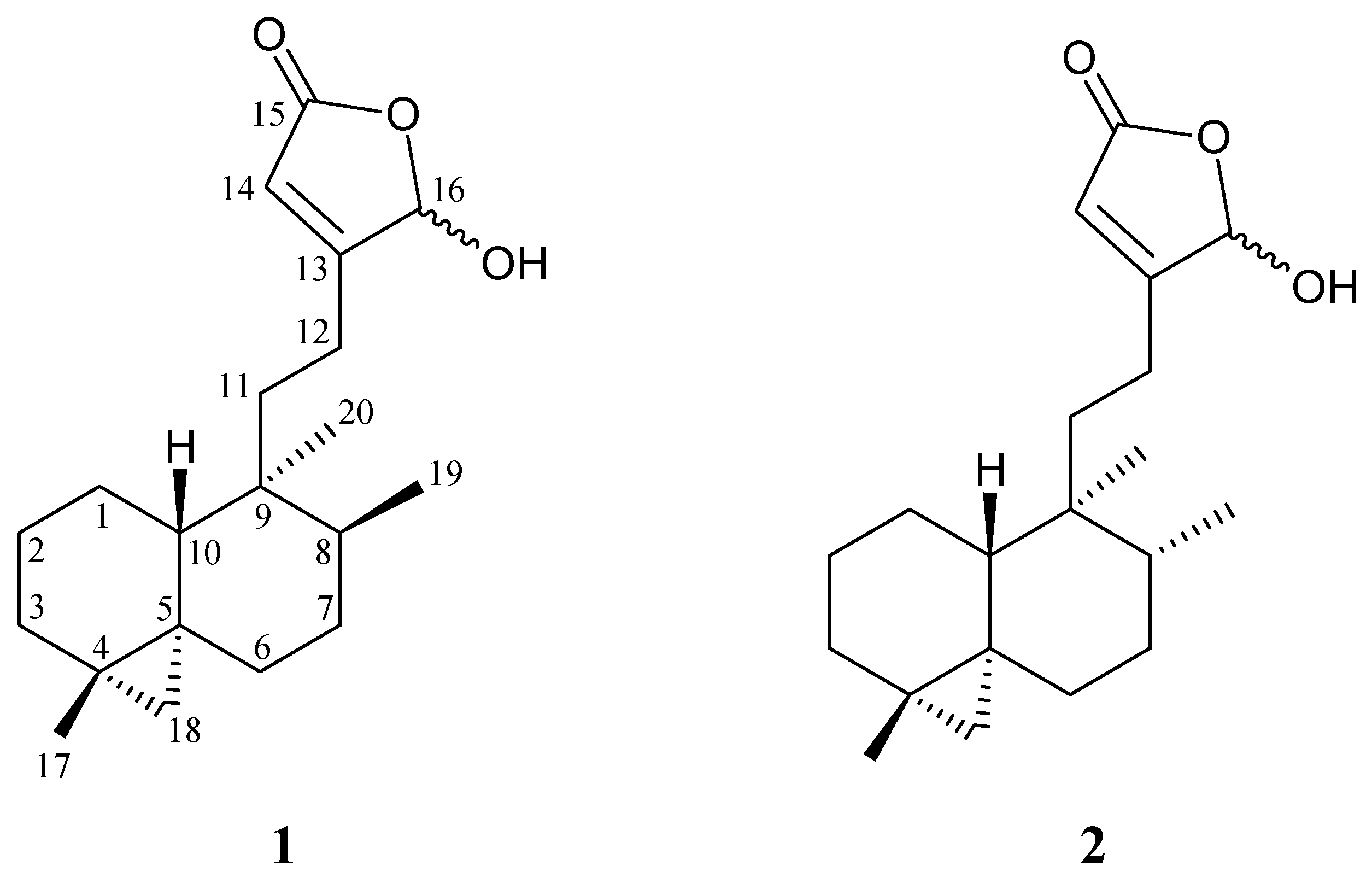
      <p>The search for bioactive natural products from marine organisms has been remarkably successful and gorgonian corals have proven to be rich sources of interesting natural terpenoid derivatives [<xref ref-type="bibr" rid="B1-molecules-17-09443">1</xref>,<xref ref-type="bibr" rid="B2-molecules-17-09443">2</xref>]. In previous studies, two bisabolane-type sesquiterpenoids, (7<italic>S</italic>,10<italic>R</italic>)-(+)-10,11-epoxycurcuphenol and (+)-curcuphenol; a labdane-type diterpenoid, echinolabdane A; and a steroid analogue, 6-<italic>epi</italic>-yonarasterol B, had been isolated from a Formosan gorgonian coral identified as <italic>Echinomuricea</italic> sp. (Plexauridae) [<xref ref-type="bibr" rid="B3-molecules-17-09443">3</xref>,<xref ref-type="bibr" rid="B4-molecules-17-09443">4</xref>]. In continuation of our search for new natural products from the marine invertebrates collected off the waters of Taiwan at the intersection of the Kuroshio current and the South China Sea surface current, we have further isolated a new clerodane-type diterpenoid, echinoclerodane A (<bold>1</bold>), from <italic>Echinomuricea</italic> sp. (<xref ref-type="fig" rid="molecules-17-09443-f001">Figure 1</xref>). In this paper, we describe the isolation, structure determination and biological activities of diterpenoid <bold>1</bold>.</p>
      <fig id="molecules-17-09443-f001" position="anchor">
        <label>Figure 1</label>
        <caption>
          <p>Structures of echinoclerodane A (<bold>1</bold>) and dytesinin A (<bold>2</bold>).</p>
        </caption>
        <graphic xmlns:xlink="http://www.w3.org/1999/xlink" xlink:href="molecules-17-09443-g001.tif"/>
      </fig>
    </sec>
    <sec sec-type="results">
      <title>2. Results and Discussion</title>
      <p>Echinoclerodane A (<bold>1</bold>) was isolated as an oil and its molecular formula was determined to be C<sub>20</sub>H<sub>30</sub>O<sub>3</sub> (<italic>m/z</italic> 341.2095 [M+Na]<sup>+</sup>) using HRESIMS. The IR spectrum of <bold>1</bold> showed bands at 3,318 and 1,741 cm<sup>–1</sup>, consistent with the presence of hydroxy and ester carbonyl groups. The <sup>13</sup>C-NMR for <bold>1</bold> confirmed the presence of 20 carbon signals (<xref ref-type="table" rid="molecules-17-09443-t001">Table 1</xref>), which were characterized by the DEPT spectrum as three methyls, eight sp<sup>3</sup> methylenes, three sp<sup>3</sup> methines, three sp<sup>3</sup> quaternary carbons, one sp<sup>2</sup> methine and two sp<sup>2</sup> quaternary carbons. A suite of resonances at <italic>δ</italic><sub>C</sub> 171.8 (s, C-15), 171.2 (s, C-13), 116.9 (d, C-14) and 99.2 (s, C-16), could be assigned to an α,β-unsaturated-γ-hydroxy-γ-lactone moiety. Thus, from the reported data, the proposed skeleton of <bold>1</bold> was suggested to be a diterpenoid with four rings. </p>
      <table-wrap id="molecules-17-09443-t001" position="anchor">
        <object-id pub-id-type="pii">molecules-17-09443-t001_Table 1</object-id>
        <label>Table 1</label>
        <caption>
          <p><sup>1</sup>H- (400 MHz, CDCl<sub>3</sub>) and <sup>13</sup>C- (100 MHz, CDCl<sub>3</sub>) NMR data, <sup>1</sup>H–<sup>1</sup>H COSY and HMBC correlations for diterpenoid <bold>1</bold>.</p>
        </caption>
        <table>
          <thead>
            <tr>
              <th align="left" valign="top">Position</th>
              <th align="left" valign="top"><italic>δ</italic><sub>H</sub> (<italic>J</italic> in Hz)</th>
              <th align="left" valign="top"><italic>δ</italic><sub>C</sub>, Mult.</th>
              <th align="left" valign="top"><sup>1</sup>H–<sup>1</sup>H COSY</th>
              <th align="left" valign="top">HMBC (H→C)</th>
            </tr>
          </thead>
          <tbody>
            <tr style="border-top:solid thin">
              <td align="left" valign="top">1a/b</td>
              <td align="left" valign="top">0.75 dd (8.4, 2.8); 1.42 m</td>
              <td align="left" valign="top">19.9, CH<sub>2</sub></td>
              <td align="left" valign="top">H<sub>2</sub>-2, H-10</td>
              <td align="left" valign="top">C-9, -10</td>
            </tr>
            <tr>
              <td align="left" valign="top">2a/b</td>
              <td align="left" valign="top">1.19 m; 1.49 m</td>
              <td align="left" valign="top">23.2, CH<sub>2</sub></td>
              <td align="left" valign="top">H<sub>2</sub>-1, H<sub>2</sub>-3 </td>
              <td align="left" valign="top">C-1, -3, -4</td>
            </tr>
            <tr>
              <td align="left" valign="top">3</td>
              <td align="left" valign="top">1.58 m</td>
              <td align="left" valign="top">32.1, CH<sub>2</sub></td>
              <td align="left" valign="top">H<sub>2</sub>-2</td>
              <td align="left" valign="top">C-4, -18</td>
            </tr>
            <tr>
              <td align="left" valign="top">4</td>
              <td align="left" valign="top"> </td>
              <td align="left" valign="top">17.4, C</td>
              <td align="left" valign="top"> </td>
              <td align="left" valign="top"> </td>
            </tr>
            <tr>
              <td align="left" valign="top">5</td>
              <td align="left" valign="top"> </td>
              <td align="left" valign="top">26.3, C</td>
              <td align="left" valign="top"> </td>
              <td align="left" valign="top"> </td>
            </tr>
            <tr>
              <td align="left" valign="top">6a/b</td>
              <td align="left" valign="top">1.02 m; 1.80 td (14.0, 2.8)</td>
              <td align="left" valign="top">27.6, CH<sub>2</sub></td>
              <td align="left" valign="top">H<sub>2</sub>-7 </td>
              <td align="left" valign="top">C-5, -7, -8, -10, -18</td>
            </tr>
            <tr>
              <td align="left" valign="top">7a/b</td>
              <td align="left" valign="top">1.35 m; 1.92 tt (14.0, 4.0)</td>
              <td align="left" valign="top">27.9, CH<sub>2</sub></td>
              <td align="left" valign="top">H<sub>2</sub>-6, H-8</td>
              <td align="left" valign="top">C-6, -8, -19</td>
            </tr>
            <tr>
              <td align="left" valign="top">8</td>
              <td align="left" valign="top">1.68 m</td>
              <td align="left" valign="top">35.6, CH</td>
              <td align="left" valign="top">H<sub>2</sub>-7, H<sub>3</sub>-19</td>
              <td align="left" valign="top">C-6, -7, -9, -19</td>
            </tr>
            <tr>
              <td align="left" valign="top">9</td>
              <td align="left" valign="top"> </td>
              <td align="left" valign="top">39.1, C</td>
              <td align="left" valign="top"> </td>
              <td align="left" valign="top"> </td>
            </tr>
            <tr>
              <td align="left" valign="top">10</td>
              <td align="left" valign="top">1.64 dd (12.4, 4.0)</td>
              <td align="left" valign="top">40.9, CH</td>
              <td align="left" valign="top">H<sub>2</sub>-1</td>
              <td align="left" valign="top">C-8, -9, -10, -20</td>
            </tr>
            <tr>
              <td align="left" valign="top">11</td>
              <td align="left" valign="top">1.39 m; 1.59 m</td>
              <td align="left" valign="top">35.5, CH<sub>2</sub></td>
              <td align="left" valign="top">H<sub>2</sub>-12 </td>
              <td align="left" valign="top">C-8, -9, -12</td>
            </tr>
            <tr>
              <td align="left" valign="top">12</td>
              <td align="left" valign="top">2.35 dd (8.8, 7.2)</td>
              <td align="left" valign="top">21.5, CH<sub>2</sub></td>
              <td align="left" valign="top">H<sub>2</sub>-11, H-14 </td>
              <td align="left" valign="top">C-11, -13, -14, -16</td>
            </tr>
            <tr>
              <td align="left" valign="top">13</td>
              <td align="left" valign="top"> </td>
              <td align="left" valign="top">171.2, C</td>
              <td align="left" valign="top"> </td>
              <td align="left" valign="top"> </td>
            </tr>
            <tr>
              <td align="left" valign="top">14</td>
              <td align="left" valign="top">5.84 br s</td>
              <td align="left" valign="top">116.9, CH</td>
              <td align="left" valign="top">H<sub>2</sub>-12</td>
              <td align="left" valign="top">C-12, -13,-15</td>
            </tr>
            <tr>
              <td align="left" valign="top">15</td>
              <td align="left" valign="top"> </td>
              <td align="left" valign="top">171.8, C</td>
              <td align="left" valign="top"> </td>
              <td align="left" valign="top"> </td>
            </tr>
            <tr>
              <td align="left" valign="top">16</td>
              <td align="left" valign="top">6.01 s</td>
              <td align="left" valign="top">99.2, CH</td>
              <td align="left" valign="top"> </td>
              <td align="left" valign="top">C-13, -15</td>
            </tr>
            <tr>
              <td align="left" valign="top">17</td>
              <td align="left" valign="top">1.04 s</td>
              <td align="left" valign="top">22.4, CH<sub>3</sub></td>
              <td align="left" valign="top"> </td>
              <td align="left" valign="top">C-3, -4, -5</td>
            </tr>
            <tr>
              <td align="left" valign="top">18a/b</td>
              <td align="left" valign="top">0.13 d (4.4); 0.52 d (4.4)</td>
              <td align="left" valign="top">24.5, CH<sub>2</sub></td>
              <td align="left" valign="top"> </td>
              <td align="left" valign="top">C-3, -4, -5, -6, -10, -17</td>
            </tr>
            <tr>
              <td align="left" valign="top">19</td>
              <td align="left" valign="top">0.97 d (7.2)</td>
              <td align="left" valign="top">14.2, CH<sub>3</sub></td>
              <td align="left" valign="top">H-8</td>
              <td align="left" valign="top">C-7, -8, -9</td>
            </tr>
            <tr>
              <td align="left" valign="top">20</td>
              <td align="left" valign="top">1.00 s</td>
              <td align="left" valign="top">19.8, CH<sub>3</sub></td>
              <td align="left" valign="top"> </td>
              <td align="left" valign="top">C-8, -9</td>
            </tr>
          </tbody>
        </table>
      </table-wrap>
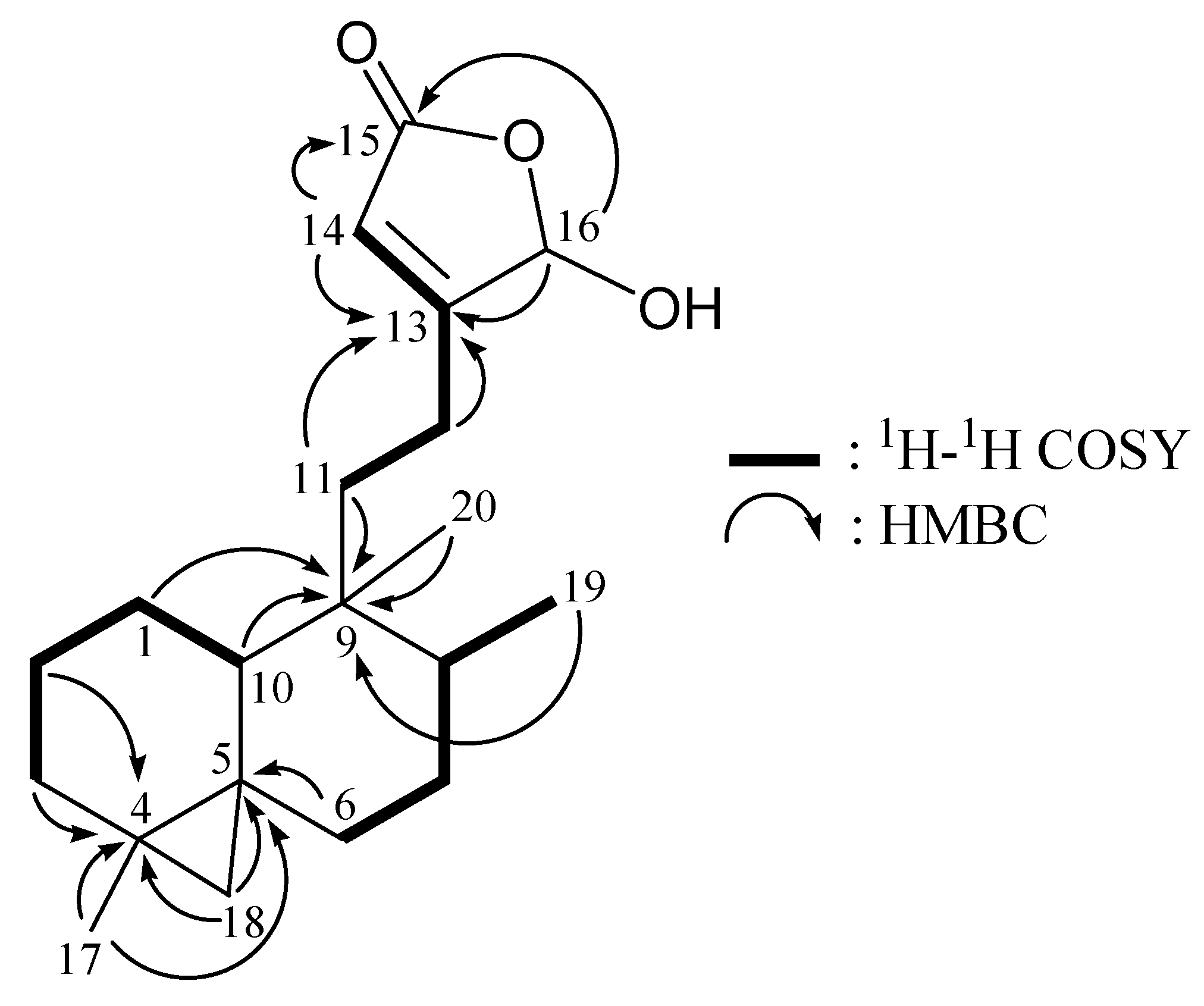
      <p>From a <sup>1</sup>H–<sup>1</sup>H COSY experiment (<xref ref-type="table" rid="molecules-17-09443-t001">Table 1</xref> and <xref ref-type="fig" rid="molecules-17-09443-f002">Figure 2</xref>), it was possible to establish the spin systems that map out the proton sequences from H-10/H<sub>2</sub>-1/H<sub>2</sub>-2/H<sub>2</sub>-3, H<sub>2</sub>-6/H<sub>2</sub>-7/H-8/H<sub>3</sub>-19, H<sub>2</sub>-11/H<sub>2</sub>-12 and H<sub>2</sub>-12/H-14 (by allylic coupling), which was accomplished with the assistance of an HMBC experiment (<xref ref-type="table" rid="molecules-17-09443-t001">Table 1</xref> and <xref ref-type="fig" rid="molecules-17-09443-f002">Figure 2</xref>).</p>
      <fig id="molecules-17-09443-f002" position="anchor">
        <label>Figure 2</label>
        <caption>
          <p>The <sup>1</sup>H–<sup>1</sup>H COSY and selective key HMBC (protons→quaternary carbons) correlations for <bold>1</bold>.</p>
        </caption>
        <graphic xmlns:xlink="http://www.w3.org/1999/xlink" xlink:href="molecules-17-09443-g002.tif"/>
      </fig>
      <p>The key HMBC correlations between the protons and quaternary carbons of <bold>1</bold>, including H<sub>2</sub>-2, H<sub>2</sub>-3, H<sub>3</sub>-17, H<sub>2</sub>-18/C-4; H<sub>2</sub>-6, H<sub>3</sub>-17, H<sub>2</sub>-18/C-5; H<sub>2</sub>-1, H-8, H-10, H<sub>2</sub>-11, H<sub>3</sub>-19, H<sub>3</sub>-20/C-9; H<sub>2</sub>-12, H-14, H-16/C-13; and H-14, H-16/C-15, permitted elucidation of the carbon skeleton. The tertiary methyls at C-4 and C-9 were confirmed by the HMBC correlations between H<sub>3</sub>-17/C-3, -4, -5 and H<sub>3</sub>-20/C-8, -9. The methine unit at <italic>δ</italic><sub>C</sub> 99.2 (d, C-16) was more shielded than expected for an oxygenated C-atom and correlated with a methine proton at <italic>δ</italic><sub>H</sub> 6.01 (H-16) in the HMQC spectrum, and this proton showed a <sup>2</sup><italic>J</italic>-correlation and a <sup>3</sup><italic>J</italic>-correlation with C-13 and C-15, respectively, in the HMBC spectrum and concluded to be a part of a hemiketal constellation.</p>
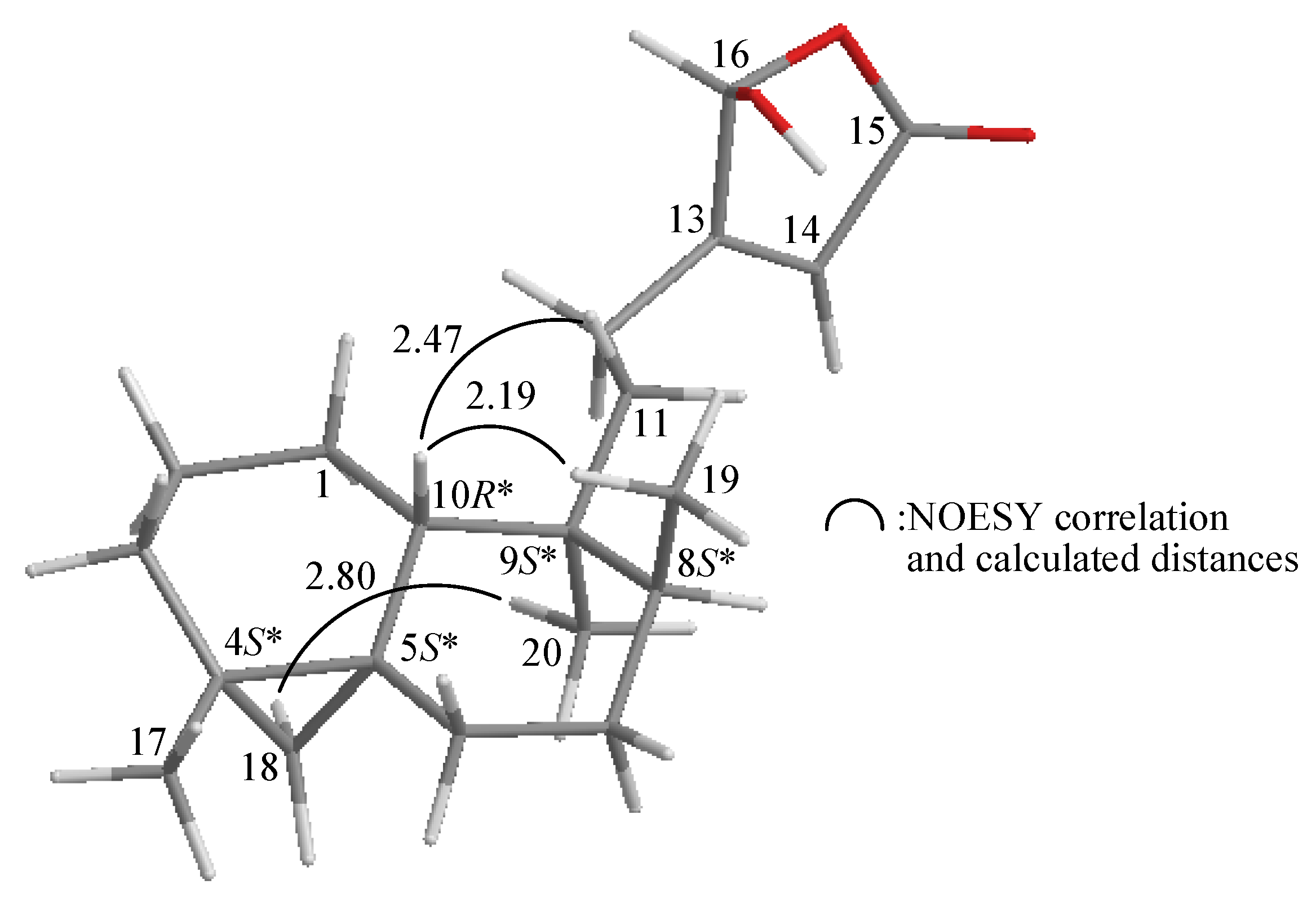
      <p>The relative configuration of <bold>1</bold> was elucidated mainly from a NOESY spectrum as being compatible with that of <bold>1</bold> offered by computer modeling [<xref ref-type="bibr" rid="B5-molecules-17-09443">5</xref>], in which the close contacts of atoms in space calculated were consistent with the NOESY correlations (<xref ref-type="fig" rid="molecules-17-09443-f003">Figure 3</xref>). In the NOESY spectrum of <bold>1</bold>, the correlations of H-10 with H<sub>2</sub>-11 and H<sub>3</sub>-19, indicated that these protons (H-10, H<sub>2</sub>-11 and H<sub>3</sub>-19) were situated on the same face and these were assigned as β protons, since the C-20 methyl is an α-substituent at C-9. An <italic>endo</italic> H-C18 proton exhibited a correlation with Me-20, suggesting that the cyclopropane moiety between C-4/5 was α-oriented. Based on the above findings, the main structure of <bold>1</bold> was elucidated unambiguously, and the chiral carbons for <bold>1</bold> were assigned as 4<italic>S</italic>*, 5<italic>S</italic>*, 8<italic>S</italic>*, 9<italic>S</italic>*, 10<italic>R</italic>* although the relative configuration for 16-hydroxy group could not be determined at this stage by this method. By comparison of the spectral data, echinoclerodane A (<bold>1</bold>) was found to be the 8-epimer of a known marine-derived clerodane-type diterpenoid, dytesinin A (<bold>2</bold>) (<xref ref-type="fig" rid="molecules-17-09443-f001">Figure 1</xref>), isolated from an Okinawa tunicate <italic>Cystodytes</italic> sp. [<xref ref-type="bibr" rid="B6-molecules-17-09443">6</xref>].</p>
      <fig id="molecules-17-09443-f003" position="anchor">
        <label>Figure 3</label>
        <caption>
          <p>The computer-generated model of <bold>1</bold> using MM2 force field calculations and the calculated distances (Å) between selected protons with key NOESY correlations. </p>
        </caption>
        <graphic xmlns:xlink="http://www.w3.org/1999/xlink" xlink:href="molecules-17-09443-g003.tif"/>
      </fig>
      <p>The cytotoxicity of diterpenoid <bold>1</bold> against the K562 (human erythromyeloblastoid leukemia), MOLT-4 (human acute lymphoblastic leukemia), HL-60 (human acute promyelocytic leukemia), DLD-1 (human colorectal adenocarcinoma), LoVo (human colorectal adenocarcinoma) and DU-145 (human prostate carcinoma) cells was studied, and the results were shown in <xref ref-type="table" rid="molecules-17-09443-t002">Table 2</xref>. These data showed that echinoclerodane A exhibited moderate cytotoxicity against MOLT-4, HL-60, DLD-1 and LoVo cells. The <italic>in vitro</italic> anti-inflammatory effects of diterpenoid <bold>1</bold> were also tested. Echinoclerodane A (<bold>1</bold>) displayed a significant inhibition effect on the generation of superoxide anion (inhibition rate 68.6%) and this compound showed a moderately inhibition effect (inhibition rate 35.4%) on the release of elastase by human neutrophils at a concentration of 10 μg/mL, respectively [<xref ref-type="bibr" rid="B7-molecules-17-09443">7</xref>].</p>
      <table-wrap id="molecules-17-09443-t002" position="anchor">
        <object-id pub-id-type="pii">molecules-17-09443-t002_Table 2</object-id>
        <label>Table 2</label>
        <caption>
          <p>Cytotoxic activity of diterpenoid <bold>1</bold>. </p>
        </caption>
      <table>
          <thead>
            <tr>
              <th rowspan="2" align="center" valign="middle">Compounds</th>
              <th colspan="6" align="center" valign="top" style="border-bottom:solid thin">Cell lines IC<sub>50</sub> (μM)</th>
            </tr>
            <tr>
              <th align="center" valign="top">K562</th>
              <th align="center" valign="top">MOLT-4</th>
              <th align="center" valign="top">HL-60</th>
              <th align="center" valign="top">DLD-1</th>
              <th align="center" valign="top">LoVo</th>
              <th align="center" valign="top">DU-145</th>
            </tr>
          </thead>
          <tbody>
            <tr style="border-top:solid thin">
              <td align="center" valign="top"><bold>1</bold></td>
              <td align="center" valign="top">37.05</td>
              <td align="center" valign="top">13.18</td>
              <td align="center" valign="top">14.89</td>
              <td align="center" valign="top">23.44</td>
              <td align="center" valign="top">21.69</td>
              <td align="center" valign="top">53.93</td>
            </tr>
            <tr>
              <td align="center" valign="top">Doxorubicin 
              <italic><sup>a</sup></italic></td>
              <td align="center" valign="top">0.29</td>
              <td align="center" valign="top">0.001</td>
              <td align="center" valign="top">0.08</td>
              <td align="center" valign="top">4.00</td>
              <td align="center" valign="top">1.65</td>
              <td align="center" valign="top">0.01</td>
            </tr>
          </tbody>
        </table>
      <table-wrap-foot><fn><p><italic><sup>a</sup></italic> Doxorubicin was used as positive control.</p></fn></table-wrap-foot>
	  </table-wrap>
    </sec>
    <sec sec-type="methods">
      <title>3. Experimental</title>
      <sec sec-type="methods">
        <title>3.1. General Experimental Procedures</title>
        <p>Optical rotation values were measured with a Jasco-P1010 digital polarimeter. Infrared spectra were obtained on a Varian Diglab FTS 1000 FT-IR spectrophotometer. NMR spectra were recorded on a Varian Mercury Plus 400 FT-NMR at 400 MHz for <sup>1</sup>H and 100 MHz for <sup>13</sup>C in CDCl<sub>3</sub> at 25 °C. Proton chemical shifts were referenced to the residual CHCl<sub>3</sub> signal (<italic>δ</italic><sub>H</sub> 7.26 ppm). <sup>13</sup>C-NMR spectra were referenced to the center peak of CDCl<sub>3</sub> at <italic>δ</italic><sub>C</sub> 77.1 ppm. ESIMS and HRESIMS data were recorded on Bruker APEX II mass spectrometer. Column chromatography was performed on silica gel (230–400 mesh, Merck, Darmstadt, Germany). TLC was carried out on precoated Kieselgel 60 F<sub>254</sub> (0.25 mm, Merck) and spots were visualized by spraying with 10% H<sub>2</sub>SO<sub>4</sub> solution followed by heating. HPLC was performed using a system comprised of a Hitachi L-7100 pump, a Hitachi L-7455 photodiode array detector and a Rheodyne 7725 injection port. A normal phase column (Hibar 250 × 10 mm, Merck, silica gel 60, 5 μm) was used for HPLC.</p>
      </sec>
      <sec>
        <title>3.2. Animal Material</title>
        <p>Specimens of the gorgonian coral <italic>Echinomuricea</italic> sp. were collected by hand using scuba equipment off the coast of the southern Taiwan and stored in a freezer until extraction. This organism was identified by comparison with previous descriptions [<xref ref-type="bibr" rid="B8-molecules-17-09443">8</xref>,<xref ref-type="bibr" rid="B9-molecules-17-09443">9</xref>]. A voucher specimen (NMMBA-TW-GC-127) was deposited in the National Museum of Marine Biology and Aquarium, Taiwan.</p>
      </sec>
      <sec>
        <title>3.3. Extraction and Isolation</title>
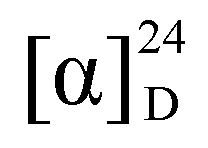
        <p>The freeze-dried and minced material of <italic>Echinomuricea</italic> sp. (wet weight 1.68 kg, dry weight 428 g) was extracted with a 1:1 mixture of methanol (MeOH) and dichloromethane (CH<sub>2</sub>Cl<sub>2</sub>). The residue was partitioned with ethyl acetate (EtOAc) and H<sub>2</sub>O. The EtOAc phase was further partitioned between MeOH and <italic>n</italic>-hexane. The <italic>n</italic>-hexane phase was separated by silica gel and eluted using <italic>n</italic>-hexane/EtOAc/MeOH to yield 21 fractions A–U. Fraction N was separated on Sephadex LH-20 and eluted using a 1:1 mixture of MeOH/CH<sub>2</sub>Cl<sub>2</sub> to yield 13 fractions. Fraction N3 was purified by NP-HPLC using a mixture of <italic>n</italic>-hexane and EtOAc (8:1, flow rate 5 mL/min) as the mobile phase to afford compound echinoclerodane A (<bold>1</bold>) (8.3 mg); oil; <inline-graphic xmlns:xlink="http://www.w3.org/1999/xlink" xlink:href="molecules-17-09443-i001.tif"/> −43 (<italic>c</italic> 0.07, CHCl<sub>3</sub>); IR (neat) ν<sub>max</sub> 3,318, 1,741 cm<sup>–1</sup>; <sup>1</sup>H- (CDCl<sub>3</sub>, 400 MHz) and <sup>13</sup>C- (CDCl<sub>3</sub>, 100 MHz) NMR data, see <xref ref-type="table" rid="molecules-17-09443-t001">Table 1</xref>; ESIMS <italic>m/z</italic> 341 [M+Na]<sup>+</sup>; HRESIMS: <italic>m/z</italic> 341.2095 (calcd. for C<sub>20</sub>H<sub>30</sub>O<sub>3</sub>Na, 341.2093).</p>
      </sec>
      <sec>
        <title>3.4. Molecular Mechanics Calculations</title>
        <p>The implementation of the MM2 force field [<xref ref-type="bibr" rid="B5-molecules-17-09443">5</xref>] in the CHEM3D PRO software from CambridgeSoft Corporation (Cambridge, MA, USA; ver. 9.0, 2005) was used to calculate the molecular models.</p>
      </sec>
      <sec>
        <title>3.5. Cytotoxicity Testing</title>
        <p>The cytotoxicity of diterpenoid <bold>1</bold> was assayed with a modification of the 3-(4,5-dimethylthiazol-2-yl)-2,5-diphenyltetrazolium bromide (MTT) colorimetric method according to previously described procedures [<xref ref-type="bibr" rid="B10-molecules-17-09443">10</xref>,<xref ref-type="bibr" rid="B11-molecules-17-09443">11</xref>].</p>
      </sec>
      <sec>
        <title>3.6. Superoxide Anion Generation and Elastase Release by Human Neutrophils</title>
        <p>Human neutrophils were obtained by means of dextran sedimentation and Ficoll centrifugation. Superoxide generation and elastase release were carried out according to the procedures described previously [<xref ref-type="bibr" rid="B12-molecules-17-09443">12</xref>,<xref ref-type="bibr" rid="B13-molecules-17-09443">13</xref>]. Briefly, superoxide anion production was assayed by monitoring the superoxide dismutase-inhibitable reduction of ferricytochrome <italic>c</italic>. Elastase release experiments were performed using MeO-Suc-Ala-Ala-Pro-Valp-nitroanilide as the elastase substrate.</p>
      </sec>
    </sec>
    <sec sec-type="conclusions">
      <title>4. Conclusions</title>
      <p>Clerodane-type diterpenoids are extensively present in terrestrial plants [<xref ref-type="bibr" rid="B14-molecules-17-09443">14</xref>], and compounds of this type were also obtained from tunicates [<xref ref-type="bibr" rid="B6-molecules-17-09443">6</xref>]. Octocorals have been proven to be rich sources of natural terpenoid derivatives and terpenoid analogues are often found in large amounts in marine invertebrates [<xref ref-type="bibr" rid="B15-molecules-17-09443">15</xref>]. It is worth noting that the new clerodane metabolite <bold>1</bold> (echinoclerodane A) is the first clerodane-type derivative isolated from the marine organisms belonging to the phylum Cnidaria and this compound exhibited cytotoxicity and anti-inflammatory activity. The study material <italic>Echinomuricea</italic> sp. has begun to be transplanted to culturing tanks with a flow-through sea water system located in the National Museum of Marine Biology and Aquarium, Taiwan for the extraction of additional natural products in order to establish a stable supply of bioactive material.</p>
      <fn-group><fn><p><italic>Sample Availability</italic>: Not Available. </p></fn></fn-group>
    </sec>
    </body>
  <back>
    <ack>
      <title>Acknowledgments</title>
      <p>This work was supported by grants from the National Dong Hwa University; the National Museum of Marine Biology and Aquarium (Grant No. 10120022); the Division of Marine Biotechnology, Asia-Pacific Ocean Research Center, National Sun Yat-sen University, (Grant No. 00C-0302-05); and the National Science Council (Grant No. NSC 101-2325-B-291-001, 100-2325-B-291-001, 101-2320-B-291-001-MY3 and 98-2320-B-291-001-MY3), Taiwan, awarded to P.-J.S.</p>
    </ack>
  <ref-list>
      <title>References</title>
      <ref id="B1-molecules-17-09443">
        <label>1.</label>
        <citation citation-type="journal">
          <person-group person-group-type="author">
            <name>
              <surname>Blunt</surname>
              <given-names>J.W.</given-names>
            </name>
            <name>
              <surname>Copp</surname>
              <given-names>B.R.</given-names>
            </name>
            <name>
              <surname>Keyzers</surname>
              <given-names>R.A.</given-names>
            </name>
            <name>
              <surname>Munro</surname>
              <given-names>M.H.G.</given-names>
            </name>
            <name>
              <surname>Prinsep</surname>
              <given-names>M.R.</given-names>
            </name>
          </person-group>
          <article-title>Marine natural products</article-title>
          <source>Nat. Prod. Rep.</source>
          <year>2012</year>
          <volume>29</volume>
          <fpage>144</fpage>
          <lpage>222</lpage>
          <pub-id pub-id-type="doi">10.1039/c2np00090c</pub-id>
        </citation>
      </ref>
      <ref id="B2-molecules-17-09443">
        <label>2.</label>
        <citation citation-type="journal">
          <person-group person-group-type="author">
            <name>
              <surname>Berrue</surname>
              <given-names>F.</given-names>
            </name>
            <name>
              <surname>Kerr</surname>
              <given-names>R.G.</given-names>
            </name>
          </person-group>
          <article-title>Diterpenes from gorgonian corals</article-title>
          <source>Nat. Prod. Rep.</source>
          <year>2009</year>
          <volume>26</volume>
          <fpage>681</fpage>
          <lpage>710</lpage>
          <pub-id pub-id-type="doi">10.1039/b821918b</pub-id>
        </citation>
      </ref>
      <ref id="B3-molecules-17-09443">
        <label>3.</label>
        <citation citation-type="journal">
          <person-group person-group-type="author">
            <name>
              <surname>Chung</surname>
              <given-names>H.-M.</given-names>
            </name>
            <name>
              <surname>Hwang</surname>
              <given-names>T.-L.</given-names>
            </name>
            <name>
              <surname>Wang</surname>
              <given-names>W.-H.</given-names>
            </name>
            <name>
              <surname>Fang</surname>
              <given-names>L.-S.</given-names>
            </name>
            <name>
              <surname>Sung</surname>
              <given-names>P.-J.</given-names>
            </name>
          </person-group>
          <article-title>Curcuphenol derivatives from the gorgonian <italic>Echinomuricea</italic> sp</article-title>
          <source>Heterocycles</source>
          <year>2009</year>
          <volume>78</volume>
          <fpage>2595</fpage>
          <lpage>2600</lpage>
          <pub-id pub-id-type="doi">10.3987/COM-09-11771</pub-id>
        </citation>
      </ref>
      <ref id="B4-molecules-17-09443">
        <label>4.</label>
        <citation citation-type="journal">
          <person-group person-group-type="author">
            <name>
              <surname>Chung</surname>
              <given-names>H.-M.</given-names>
            </name>
            <name>
              <surname>Hong</surname>
              <given-names>P.-H.</given-names>
            </name>
            <name>
              <surname>Su</surname>
              <given-names>J.-H.</given-names>
            </name>
            <name>
              <surname>Hwang</surname>
              <given-names>T.-L.</given-names>
            </name>
            <name>
              <surname>Lu</surname>
              <given-names>M.-C.</given-names>
            </name>
            <name>
              <surname>Fang</surname>
              <given-names>L.-S.</given-names>
            </name>
            <name>
              <surname>Wu</surname>
              <given-names>Y.-C.</given-names>
            </name>
            <name>
              <surname>Li</surname>
              <given-names>J.-J.</given-names>
            </name>
            <name>
              <surname>Chen</surname>
              <given-names>J.-J.</given-names>
            </name>
            <name>
              <surname>Wang</surname>
              <given-names>W.-H.</given-names>
            </name>
            <etal/>
          </person-group>
          <article-title>Bioactive compounds from a gorgonian coral <italic>Echinomuricea</italic> sp. (Plexauridae)</article-title>
          <year>2012</year>
          <volume>10</volume>
          <fpage>1169</fpage>
          <lpage>1179</lpage>
        </citation>
      </ref>
      <ref id="B5-molecules-17-09443">
        <label>5.</label>
        <citation citation-type="journal">
          <person-group person-group-type="author">
            <name>
              <surname>Allinger</surname>
              <given-names>N.L.</given-names>
            </name>
          </person-group>
          <article-title>Conformation analysis. 130. MM2. A hydrocarbon force field utilizing <italic>V1</italic> and <italic>V2</italic> torsional terms</article-title>
          <source>J. Am. Chem. Soc.</source>
          <year>1977</year>
          <volume>99</volume>
          <fpage>8127</fpage>
          <lpage>8134</lpage>
          <pub-id pub-id-type="doi">10.1021/ja00467a001</pub-id>
        </citation>
      </ref>
      <ref id="B6-molecules-17-09443">
        <label>6.</label>
        <citation citation-type="journal">
          <person-group person-group-type="author">
            <name>
              <surname>Shimbo</surname>
              <given-names>K.</given-names>
            </name>
            <name>
              <surname>Tsuda</surname>
              <given-names>M.</given-names>
            </name>
            <name>
              <surname>Fukushi</surname>
              <given-names>E.</given-names>
            </name>
            <name>
              <surname>Kawabata</surname>
              <given-names>J.</given-names>
            </name>
            <name>
              <surname>Kobayashi</surname>
              <given-names>J.</given-names>
            </name>
          </person-group>
          <article-title>Dytesinins A and B, new clerodane-type diterpenes with a cyclopropane ring from the tunicate <italic>Cystodytes</italic> sp</article-title>
          <source>Tetrahedron</source>
          <year>2000</year>
          <volume>56</volume>
          <fpage>7923</fpage>
          <lpage>7926</lpage>
          <pub-id pub-id-type="doi">10.1016/S0040-4020(00)00711-0</pub-id>
        </citation>
      </ref>
      <ref id="B7-molecules-17-09443">
        <label>7.</label>
          <note>
		  <p>In the <italic>in vitro</italic> anti-inflammatory bioassay, the inhibitory effect on the generation of superoxide anion and the release of elastase by activated neutrophils were used as indicators. To indicate significant activity of pure compounds, an inhibition rate &gt; 40% is required (inhibition rate &lt; 10%, not active, 20% &gt; inhibition rate &gt; 10%, weakly anti-inflammatory; 40% &gt; inhibition rate &gt; 20%, modestly anti-inflammatory). Diphenyl indonium (DPI) and elastatinal were used as reference compounds in anti-inflammatory activity testing. DPI display an inhibitory effect on the generation of superoxide anion (IC<sub>50</sub> = 0.9 μg/mL), and elastatinal exhibited an inhibitory effect on the release of elastase (IC<sub>50</sub> = 30.1 μg/mL) by human neutrophils, respectively</p>
		  </note>
      </ref>
      <ref id="B8-molecules-17-09443">
        <label>8.</label>
        <citation citation-type="journal">
          <person-group person-group-type="author">
            <name>
              <surname>Bayer</surname>
              <given-names>F.M.</given-names>
            </name>
          </person-group>
          <article-title>Key to the genera of Octocorallia exclusive of Pennatulacea (Coelenterata: Anthozoa), with diagnoses of new taxa</article-title>
          <source>Proc. Biol. Soc. Wash.</source>
          <year>1981</year>
          <volume>94</volume>
          <fpage>902</fpage>
          <lpage>947</lpage>
        </citation>
      </ref>
      <ref id="B9-molecules-17-09443">
        <label>9.</label>
        <citation citation-type="book">
          <person-group person-group-type="author">
            <name>
              <surname>Fabricius</surname>
              <given-names>K.</given-names>
            </name>
            <name>
              <surname>Alderslade</surname>
              <given-names>P.</given-names>
            </name>
          </person-group>
          <source>Soft Corals and Sea Fans—A Comprehensive Guide to the Tropical Shallow-Water Genera of the Central-West Pacific, the Indian Ocean and the Red Sea, 1st ed</source>
          <publisher-name>Australian Institute of Marine Science</publisher-name>
          <publisher-loc>Queensland, Australia</publisher-loc>
          <year>2001</year>
          <fpage>59</fpage>
          <lpage>60</lpage>
		  <fpage>194</fpage>
          <lpage>195</lpage>
        </citation>
      </ref>
      <ref id="B10-molecules-17-09443">
        <label>10.</label>
        <citation citation-type="journal">
          <person-group person-group-type="author">
            <name>
              <surname>Alley</surname>
              <given-names>M.C.</given-names>
            </name>
            <name>
              <surname>Scudiero</surname>
              <given-names>D.A.</given-names>
            </name>
            <name>
              <surname>Monks</surname>
              <given-names>A.</given-names>
            </name>
            <name>
              <surname>Hursey</surname>
              <given-names>M.L.</given-names>
            </name>
            <name>
              <surname>Czerwinski</surname>
              <given-names>M.J.</given-names>
            </name>
            <name>
              <surname>Fine</surname>
              <given-names>D.L.</given-names>
            </name>
            <name>
              <surname>Abbott</surname>
              <given-names>B.J.</given-names>
            </name>
            <name>
              <surname>Mayo</surname>
              <given-names>J.G.</given-names>
            </name>
            <name>
              <surname>Shoemaker</surname>
              <given-names>R.H.</given-names>
            </name>
            <name>
              <surname>Boyd</surname>
              <given-names>M.R.</given-names>
            </name>
          </person-group>
          <article-title>Feasibility of drug screening with panels of human tumor cell lines using a microculture tetrazolium assay</article-title>
          <source>Cancer Res.</source>
          <year>1988</year>
          <volume>48</volume>
          <fpage>589</fpage>
          <lpage>601</lpage>
        <pub-id pub-id-type="pmid">3335022</pub-id></citation>
      </ref>
      <ref id="B11-molecules-17-09443">
        <label>11.</label>
        <citation citation-type="journal">
          <person-group person-group-type="author">
            <name>
              <surname>Scudiero</surname>
              <given-names>D.A.</given-names>
            </name>
            <name>
              <surname>Shoemaker</surname>
              <given-names>R.H.</given-names>
            </name>
            <name>
              <surname>Paull</surname>
              <given-names>K.D.</given-names>
            </name>
            <name>
              <surname>Monks</surname>
              <given-names>A.</given-names>
            </name>
            <name>
              <surname>Tierney</surname>
              <given-names>S.</given-names>
            </name>
            <name>
              <surname>Nofziger</surname>
              <given-names>T.H.</given-names>
            </name>
            <name>
              <surname>Currens</surname>
              <given-names>M.J.</given-names>
            </name>
            <name>
              <surname>Seniff</surname>
              <given-names>D.</given-names>
            </name>
            <name>
              <surname>Boyd</surname>
              <given-names>M.R.</given-names>
            </name>
          </person-group>
          <article-title>Evaluation of a soluble tetrazolium/formazan assay for cell growth and drug sensitivity in culture using human and other tumor cell lines</article-title>
          <source>Cancer Res.</source>
          <year>1988</year>
          <volume>48</volume>
          <fpage>4827</fpage>
          <lpage>4833</lpage>
        <pub-id pub-id-type="pmid">3409223</pub-id></citation>
      </ref>
      <ref id="B12-molecules-17-09443">
        <label>12.</label>
        <citation citation-type="journal">
          <person-group person-group-type="author">
            <name>
              <surname>Yu</surname>
              <given-names>H.-P.</given-names>
            </name>
            <name>
              <surname>Hsieh</surname>
              <given-names>P.-W.</given-names>
            </name>
            <name>
              <surname>Chang</surname>
              <given-names>Y.-J.</given-names>
            </name>
            <name>
              <surname>Chung</surname>
              <given-names>P.-J.</given-names>
            </name>
            <name>
              <surname>Kuo</surname>
              <given-names>L.-M.</given-names>
            </name>
            <name>
              <surname>Hwang</surname>
              <given-names>T.-L.</given-names>
            </name>
          </person-group>
          <article-title>2-(2-Fluorobenz-amido)benzoate ethyl ester (EFB-1) inhibits superoxide production by human neutrophils and attenuates hemorrhagic shock-induced organ dysfunction in rats</article-title>
          <source>Free Radical Biol. Med.</source>
          <year>2011</year>
          <volume>50</volume>
          <fpage>1737</fpage>
          <lpage>1748</lpage>
          <pub-id pub-id-type="doi">10.1016/j.freeradbiomed.2011.03.026</pub-id>
        </citation>
      </ref>
      <ref id="B13-molecules-17-09443">
        <label>13.</label>
        <citation citation-type="journal">
          <person-group person-group-type="author">
            <name>
              <surname>Hwang</surname>
              <given-names>T.-L.</given-names>
            </name>
            <name>
              <surname>Wang</surname>
              <given-names>C.-C.</given-names>
            </name>
            <name>
              <surname>Kuo</surname>
              <given-names>Y.-H.</given-names>
            </name>
            <name>
              <surname>Huang</surname>
              <given-names>H.-C.</given-names>
            </name>
            <name>
              <surname>Wu</surname>
              <given-names>Y.-C.</given-names>
            </name>
            <name>
              <surname>Kuo</surname>
              <given-names>L.-M.</given-names>
            </name>
            <name>
              <surname>Wu</surname>
              <given-names>Y.-H.</given-names>
            </name>
          </person-group>
          <article-title>The hederagenin saponin SMG-1 is a natural FMLP receptor inhibitor that suppresses human neutrophil activation</article-title>
          <source>Biochem. Pharmacol.</source>
          <year>2010</year>
          <volume>80</volume>
          <fpage>1190</fpage>
          <lpage>1200</lpage>
          <pub-id pub-id-type="doi">10.1016/j.bcp.2010.06.028</pub-id>
        </citation>
      </ref>
      <ref id="B14-molecules-17-09443">
        <label>14.</label>
        <citation citation-type="journal">
          <person-group person-group-type="author">
            <name>
              <surname>Hanson</surname>
              <given-names>J.R.</given-names>
            </name>
          </person-group>
          <article-title>Diterpenoids of terrestrial origin</article-title>
          <source>Nat. Prod. Rep.</source>
          <year>2011</year>
          <volume>28</volume>
          <fpage>1755</fpage>
          <lpage>1772</lpage>
          <pub-id pub-id-type="doi">10.1039/c1np90021h</pub-id>
        </citation>
      </ref>
      <ref id="B15-molecules-17-09443">
        <label>15.</label>
        <citation citation-type="book">
          <person-group person-group-type="author">
            <name>
              <surname>Harper</surname>
              <given-names>M.K.</given-names>
            </name>
            <name>
              <surname>Bugni</surname>
              <given-names>T.S.</given-names>
            </name>
            <name>
              <surname>Copp</surname>
              <given-names>B.R.</given-names>
            </name>
            <name>
              <surname>James</surname>
              <given-names>R.D.</given-names>
            </name>
            <name>
              <surname>Lindsay</surname>
              <given-names>B.S.</given-names>
            </name>
            <name>
              <surname>Richardson</surname>
              <given-names>A.D.</given-names>
            </name>
            <name>
              <surname>Schnabel</surname>
              <given-names>P.C.</given-names>
            </name>
            <name>
              <surname>Tasdemir</surname>
              <given-names>D.</given-names>
            </name>
            <name>
              <surname>van Wagoner</surname>
              <given-names>R.M.</given-names>
            </name>
            <name>
              <surname>Verbitski</surname>
              <given-names>S.M.</given-names>
            </name>
            <etal/>
          </person-group>
          <article-title>Introduction to the Chemical Ecology of Marine Natural Products</article-title>
          <source>Marine Chemical Ecology</source>
          <person-group person-group-type="editor">
            <name>
              <surname>McClintock</surname>
              <given-names>J.B.</given-names>
            </name>
            <name>
              <surname>Baker</surname>
              <given-names>B.J.</given-names>
            </name>
          </person-group>
          <publisher-name>CRC Press</publisher-name>
          <publisher-loc>Washington, DC, USA</publisher-loc>
          <year>2001</year>
          <fpage>3</fpage>
          <lpage>69</lpage>
        </citation>
      </ref>
    </ref-list>
  </back>
</article>